Shiliin Bogd
Shiliin Bogd, Mongolia
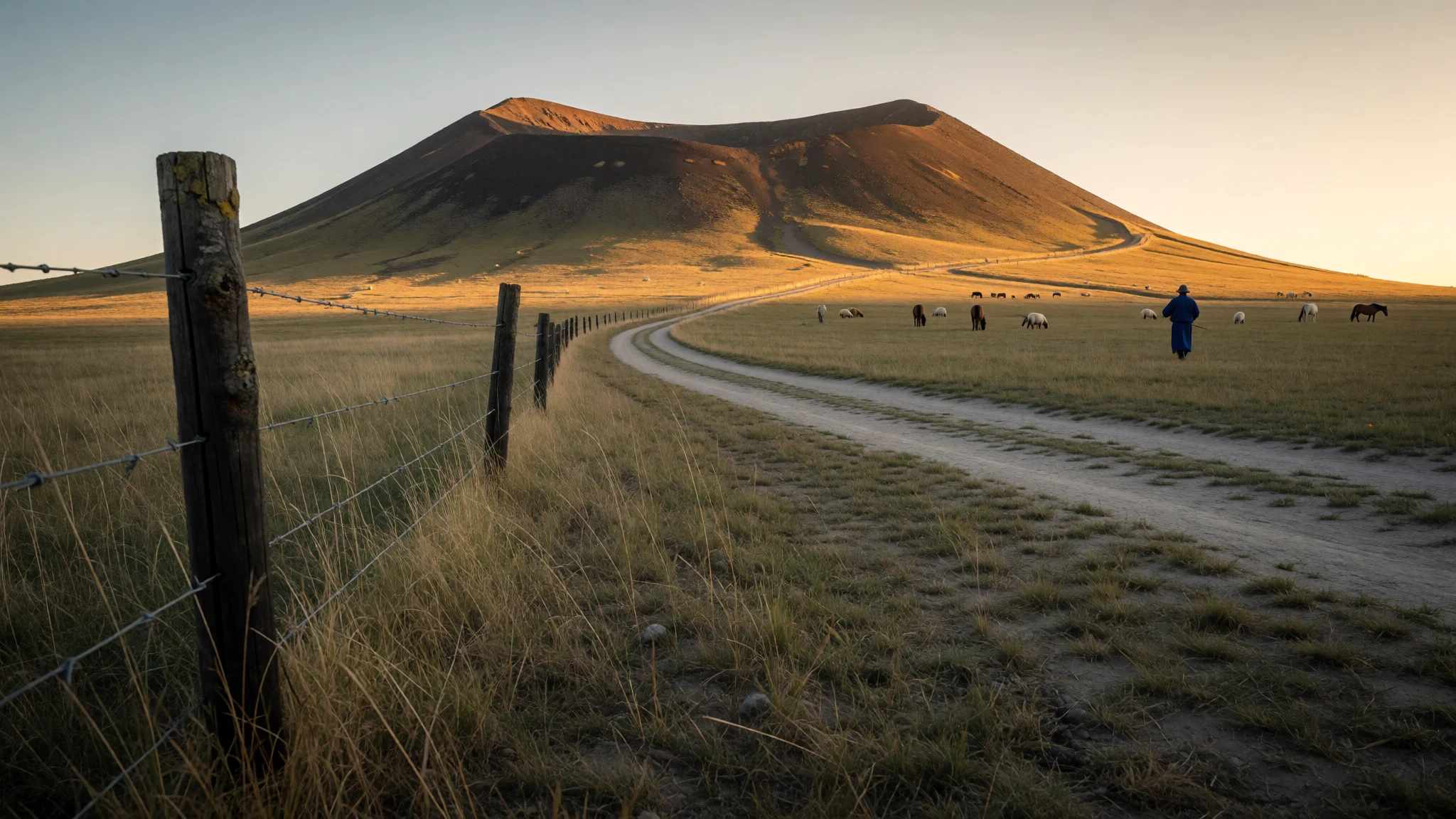
Shiliin Bogd is a lonely extinct volcano on Mongolia's eastern steppe, a revered peak with a vast crater and almost no crowds.
The place
Shiliin Bogd (Шилийн богд) is an extinct volcano in Sükhbaatar Province, in the far east of Mongolia, and at 1,778 m it is the highest summit in the province. It rises from open grassland rather than from a mountain chain, so it reads as a single broad landmark against a very wide horizon. The crater is about 2 km across and more than 300 m deep, a bowl that is easier to grasp from the rim than from any photograph. The mountain belongs to the Dariganga area, a volcanic steppe where old cones and lava ground are scattered through grazing country. Altan Ovoo, a landmark at the centre of the Dariganga district, lies about 70 km away, and the two are usually thought of together. The name hints at the land itself: shil is linked to scarce water, which helps explain why few herding families live nearby. That emptiness is part of the appeal and part of the difficulty. Tracks are unsigned in places, services are thin, and the weather can turn quickly on a high, exposed cone. Most people who come are Mongolians, many of them making a deliberate trip because the mountain matters to them. Anyone else arrives as a guest in that setting, ideally with a local driver and a plan for water, fuel and a place to sleep.
Its story
Shiliin Bogd began as a volcano and is now a quiet one. It is classed as extinct, and what remains is a cone with a deep crater and a skirt of volcanic ground across the Dariganga steppe. The geology is the older story, but the name carries the one that matters to people. In Mongolian, bogd is a title of reverence, given to mountains that are treated as sacred rather than merely tall. Calling this peak a bogd places it among the landscapes that Mongolians honour with offerings and cairns. Published accounts say it is a place many Mongolians choose to visit, men especially, because of their beliefs about it. Those beliefs are not set out in detail, and it would be wrong to guess at them, so this reading leaves them to local people to explain. What can be said is that the mountain's pull is cultural before it is scenic. The second strand is the dry land. Shil points to scarce water, and the shortage shapes who lives here: few herding families, wide gaps between camps, and a long summer of grazing on thin grass. A visit therefore sits across two stories, one of fire and stone that ended long ago, and one of reverence and sparse settlement that carries on. Neither is staged for travellers, which is both the charm and the reason to arrive well prepared.
What to see
- The crater rim — Summit of Shiliin Bogd, Sükhbaatar Province
The rim is the main reason to come. The bowl is about 2 km wide and over 300 m deep, and walking part of the edge shows the scale far better than any photograph. Wind is common up here, so a windproof layer matters even on a warm day. Take care near the drop.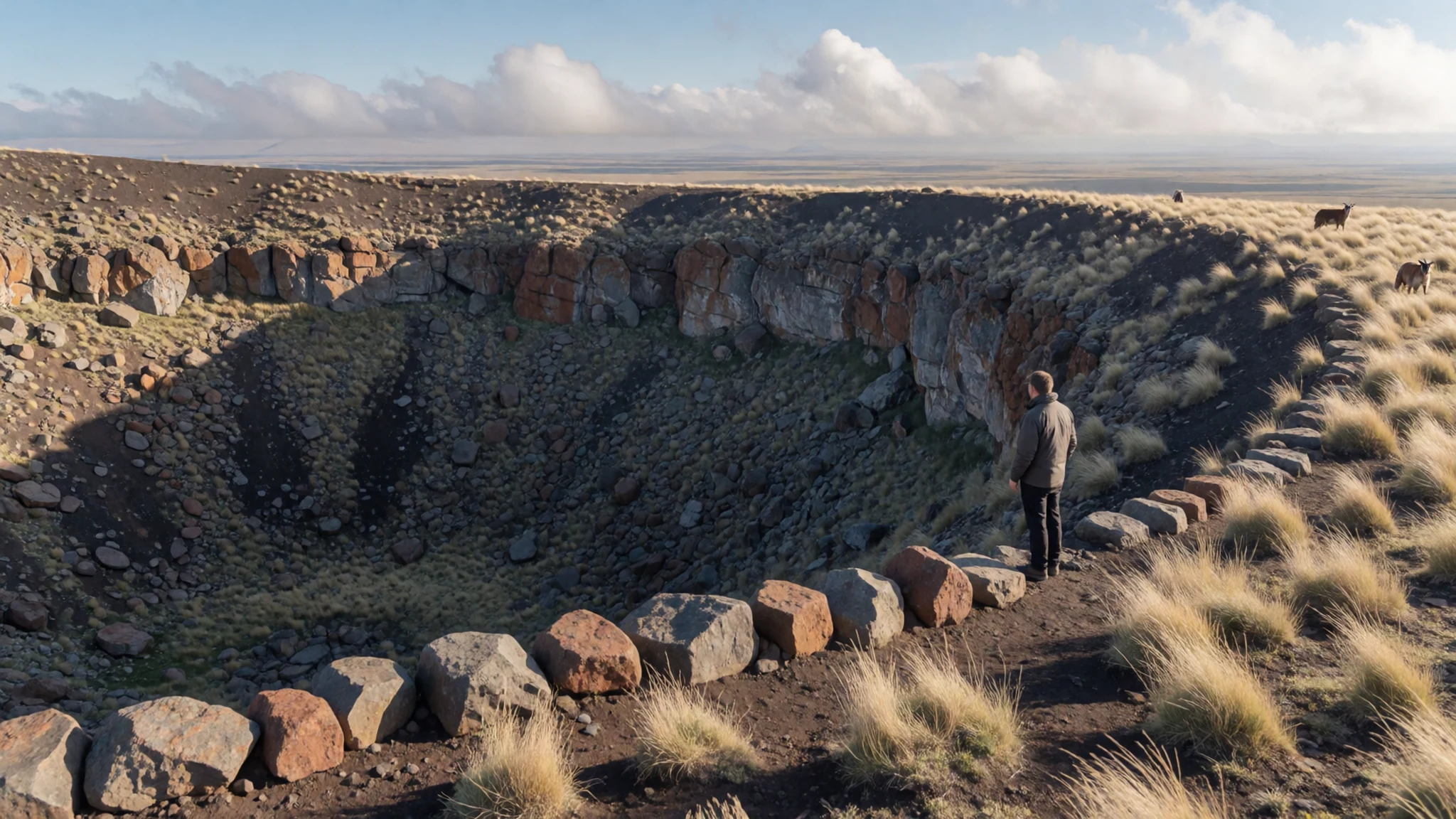
- Sunrise from the summit — Upper slopes and summit of Shiliin Bogd
The summit, at 1,778 m, is the highest ground in Sükhbaatar Province, and the reward is a long view over flat steppe. Dawn light is the favourite moment for photographers, as the reference sunrise picture suggests. Catching it means camping or sleeping nearby the night before, then climbing in the dark with a torch.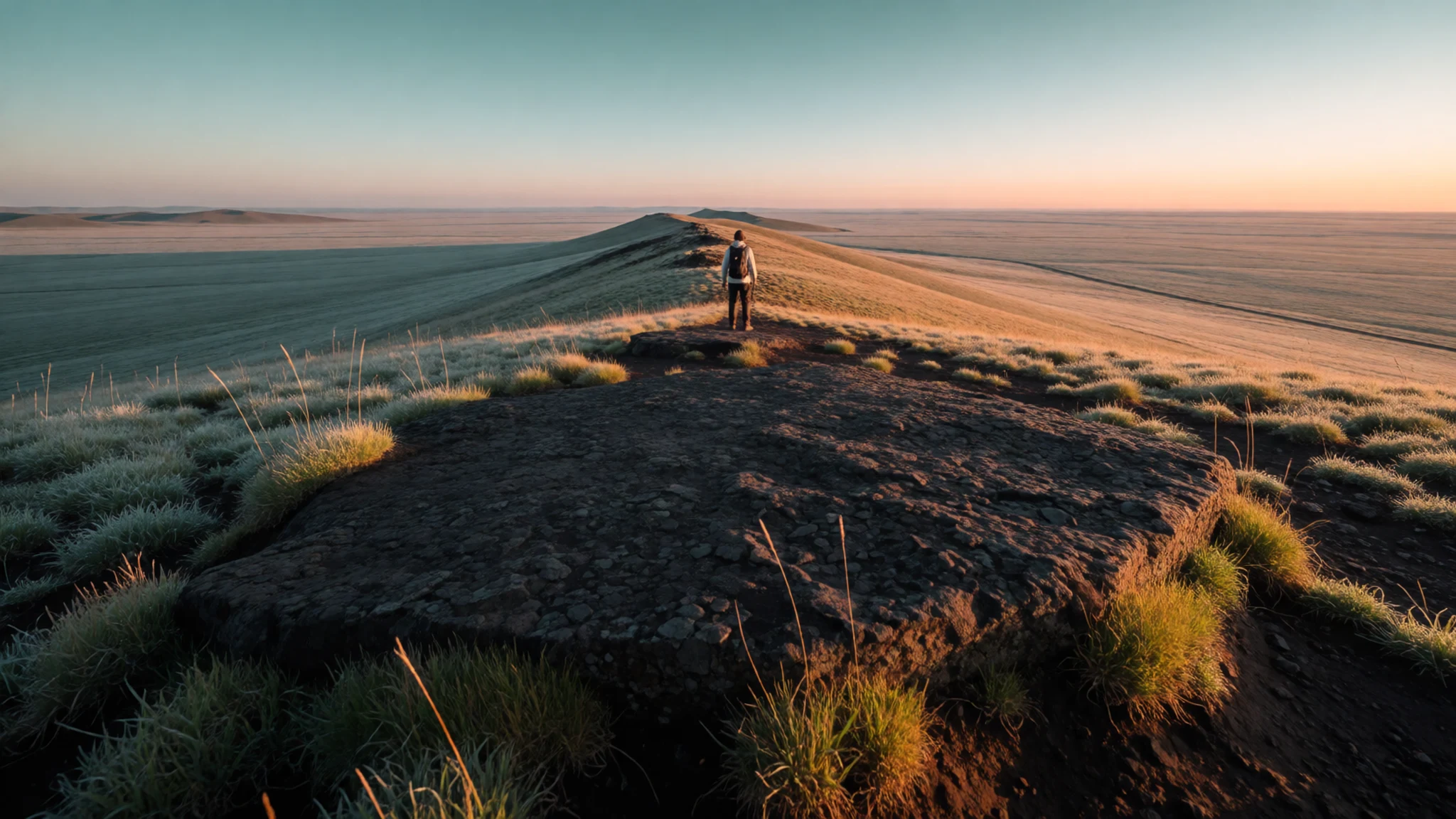
- Altan Ovoo — Dariganga district, Sükhbaatar Province
Altan Ovoo is a landmark at the centre of the Dariganga district, about 70 km from the volcano. It makes a sensible second stop or base for the area. The track between the two crosses open grassland with few markers. Local people can explain what the site means to them; ask before climbing or photographing ceremonies.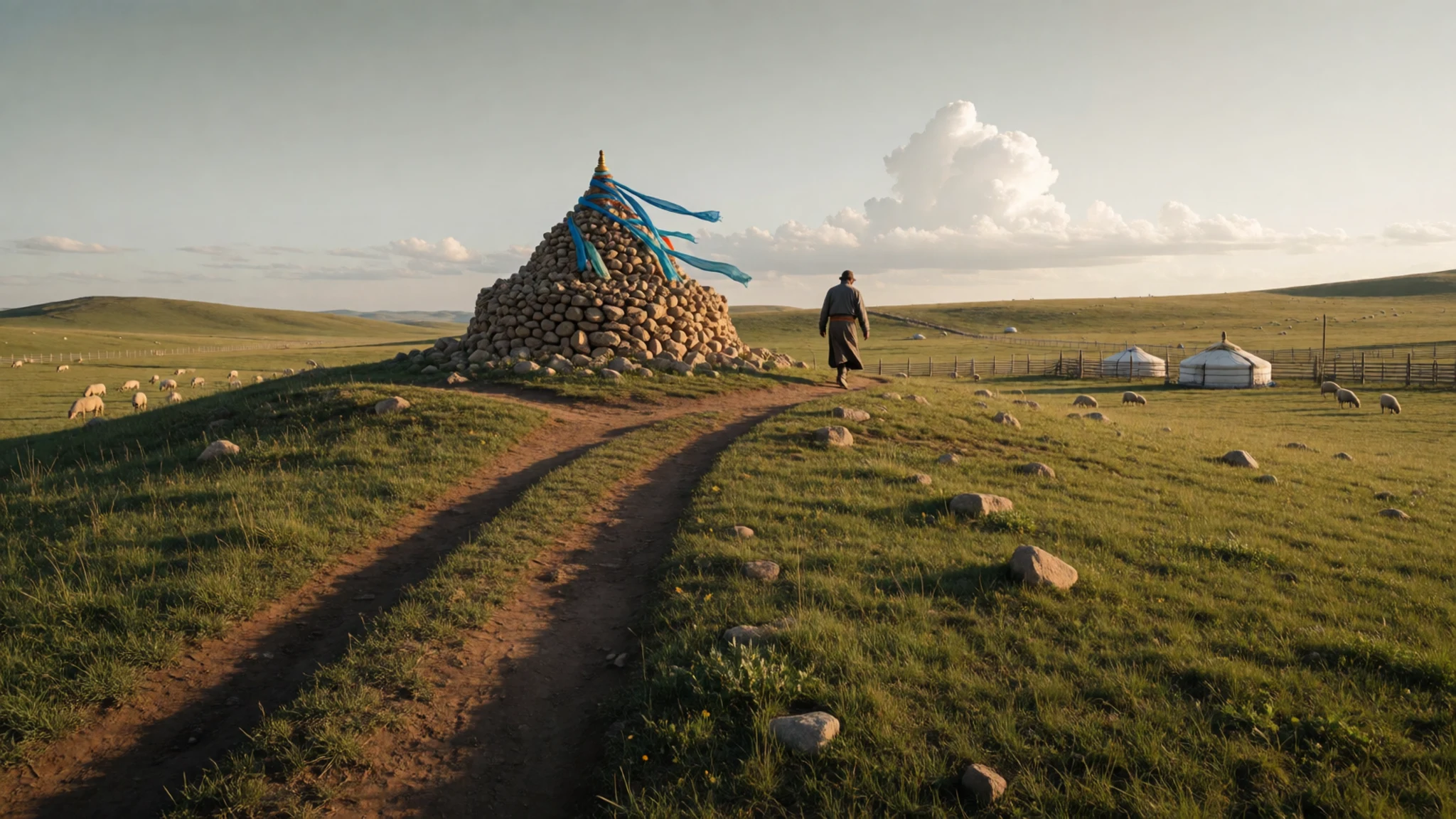
- The Dariganga volcanic steppe — Grassland between Shiliin Bogd and Altan Ovoo
The land around the mountain is volcanic grassland, with old cones and dark lava ground breaking up the flat horizon. It is best seen slowly, by stopping the vehicle often and walking a short way from the track. Expect big skies, grazing animals, and very few other people.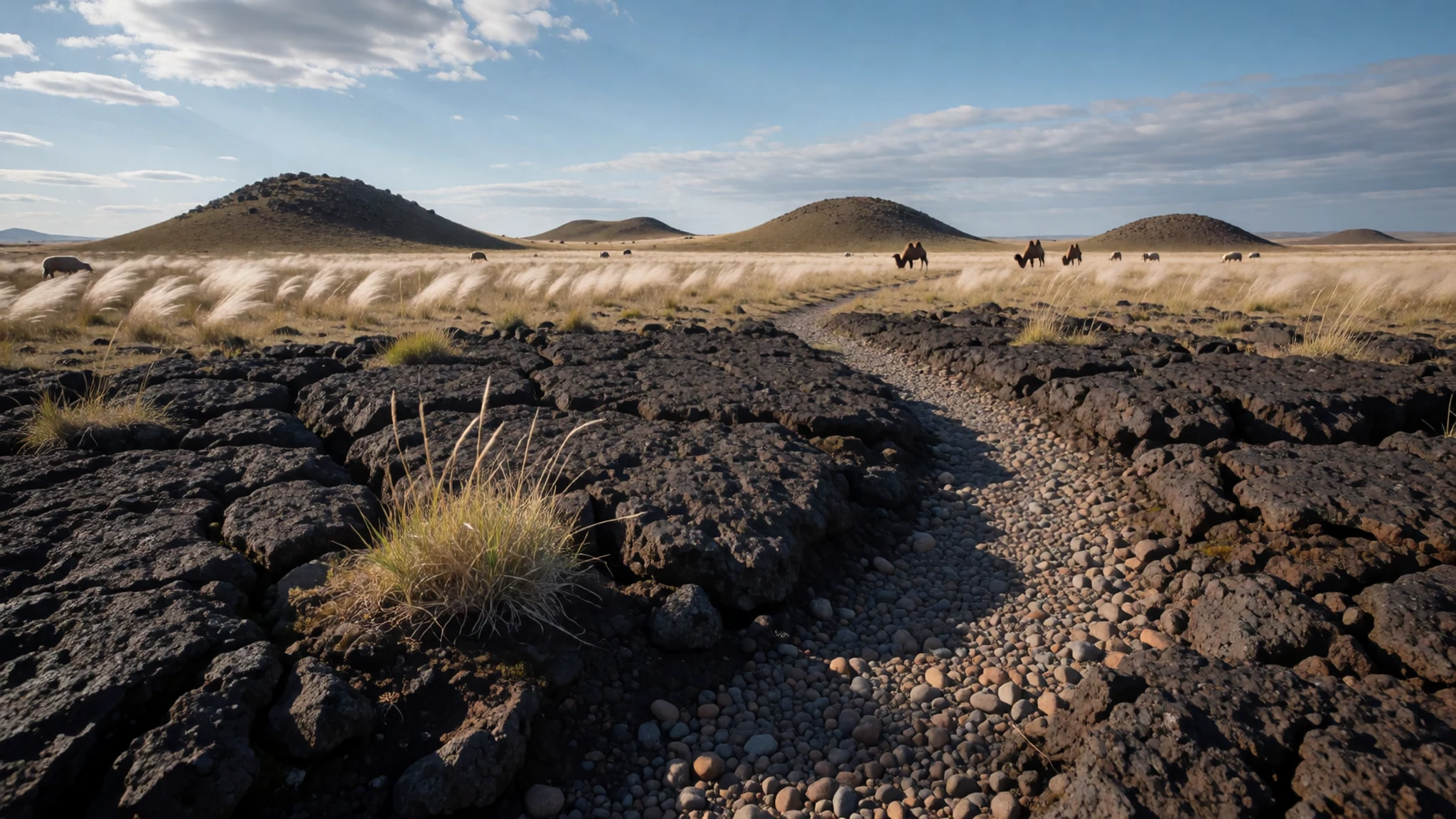
- Herding camps on the approach — Steppe tracks approaching Shiliin Bogd
Few families live near the mountain because water is scarce, so each ger camp passed on the approach is a notable sight. Herders manage horses, sheep, goats and camels across wide pastures. A polite stop for directions or tea is normal, but these are homes, not attractions, so keep visits short and respectful.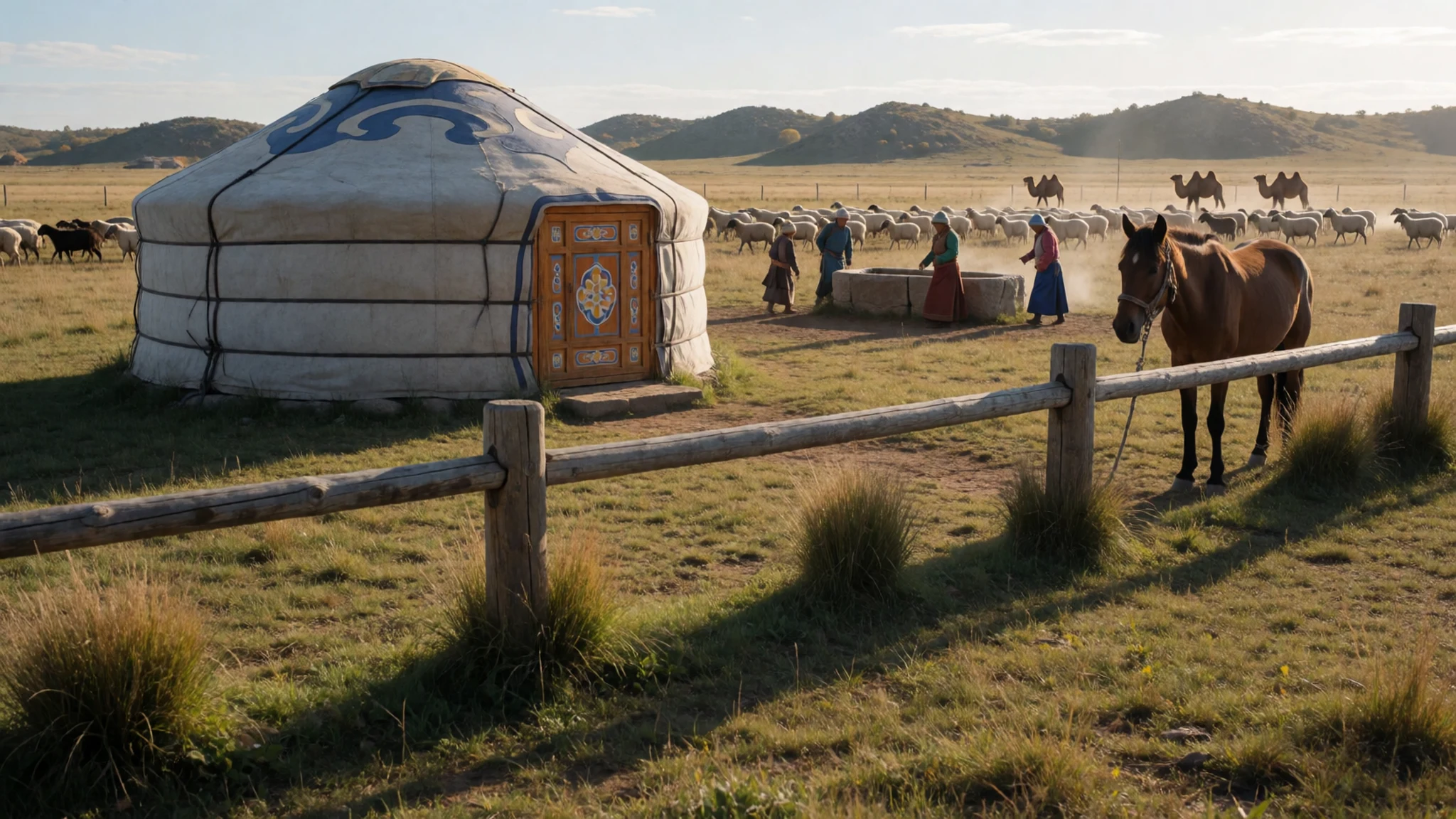
Culture
Shiliin Bogd sits inside a Mongolian tradition of honouring mountains, and the word bogd marks this one as revered. Sacred peaks are often marked by an ovoo, a cairn of stones, branches or ribbons, where people pause, walk round it clockwise and add a stone. Visits here are described as especially important to many Mongolian men, so the mountain can feel more like a place of purpose than a viewpoint, and the mood near the top is often quiet. Herding is the way of life on the surrounding steppe, and hospitality is taken seriously. A passing visitor may be offered salty tea or fermented mare's milk, and refusing outright can seem abrupt. Accept with the right hand, supported by the left at the elbow, take at least a sip, and return the cup politely. Ger families keep a clear sense of space: the place of honour is opposite the door, the threshold is not stepped on, and visitors wait to be shown where to sit. Remote camps are not tourist sites, so ask before photographing people, animals or ceremonies. Walk clockwise round any ovoo, leave its stones where they are, and ask a local before climbing or photographing near it.
What to wear
Around Shiliin Bogd, traditional dress means the deel, a long wrap-over robe that fastens on the right and is held with a sash. Winter deels are lined or padded and may be trimmed with fur, while summer ones are lighter cotton or silk, often in deep blues, greens and reds. Boots with upturned toes and felt or fur hats belong to the same tradition. Deels are worn mostly for festivals and family occasions, though some older herders still wear them daily. Everyday clothes are practical: jeans or work trousers, a fleece or padded jacket, a cap or scarf, and sturdy boots, or rubber ones in mud. Motorbikes and trucks are as common as horses for herding work. For a visitor, layers matter more than style. Mornings and nights can be cold even in summer, wind on the crater rim cuts through thin clothing, and the sun is strong on open steppe, so bring a windproof shell, a warm layer, a hat and sunscreen. Boots with ankle support suit loose volcanic ground. Near any ovoo or sacred spot, dress modestly, with shoulders and knees covered, and take off your hat when greeting elders at a ger.
What to eat
- Buuz — Ger family kitchens and small eateries in Dariganga or the provincial centre
Steamed dumplings filled with minced mutton or beef, seasoned simply with salt and onion. They are a staple of Mongolian family tables and a filling meal after a day on the steppe, usually eaten by hand while still hot.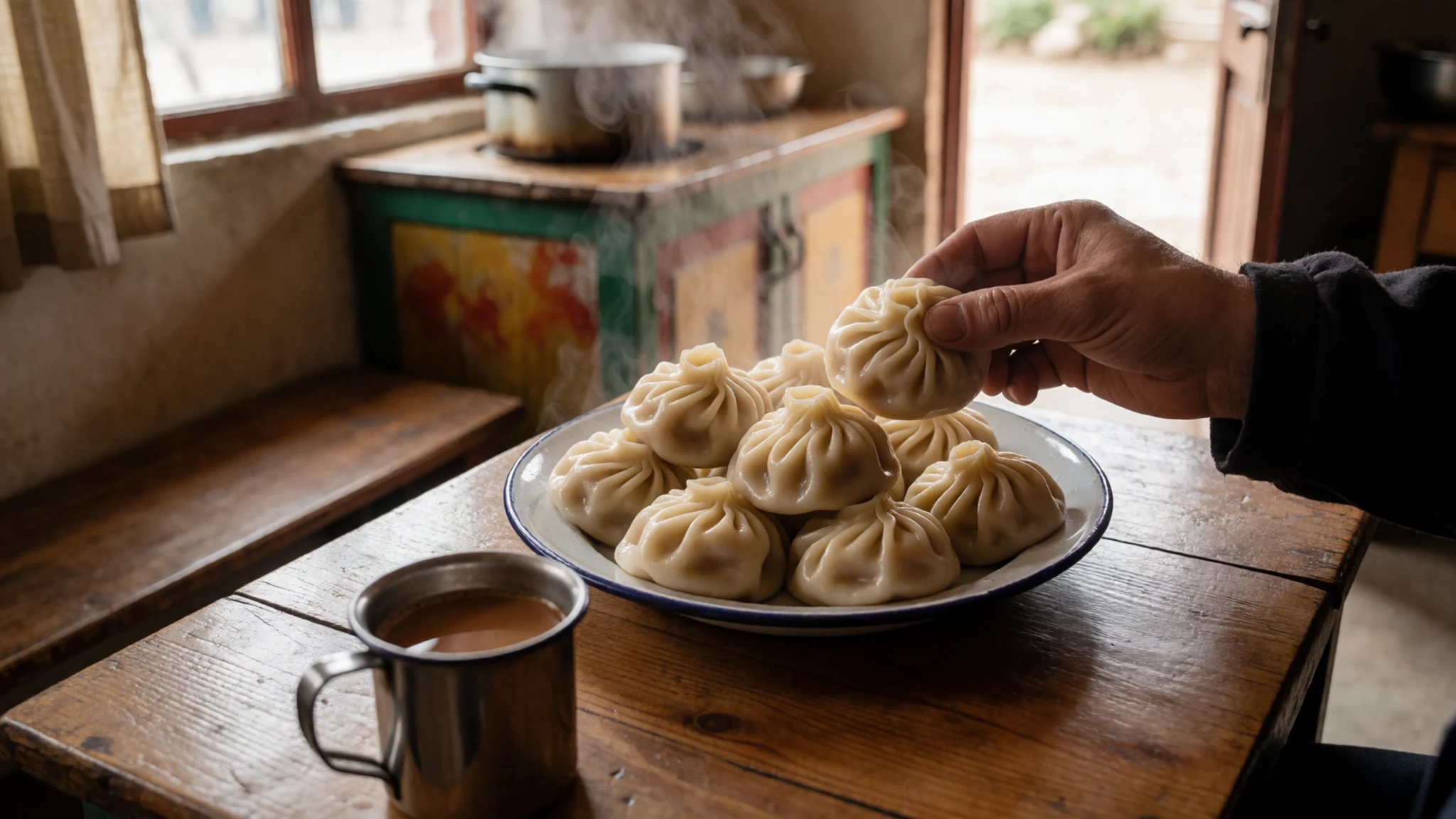
- Khuushuur — Roadside canteens and small eateries in district centres
A flat fried pasty of minced meat in thin dough, crisp at the edge and juicy inside. It travels well, which makes it a common road meal on long drives across the eastern steppe, and it is best eaten hot.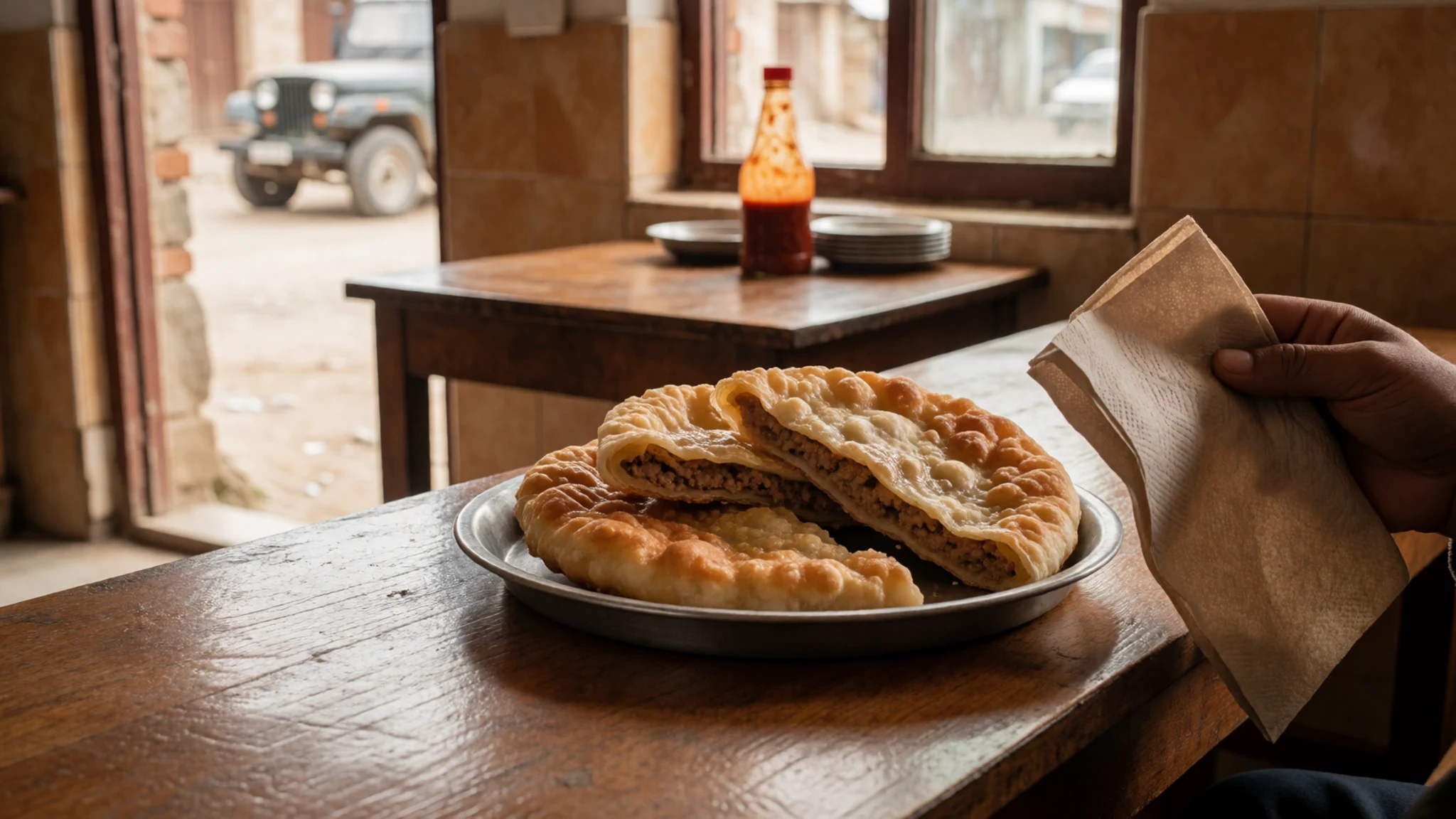
- Suutei tsai — Any herder's ger, offered on arrival
Salty milk tea, made with water, tea and milk and often with a little fat or millet added. It is the first thing offered to a guest in a ger, and it is warming on cold mornings near the mountain. - Aaruul — Herder camps, and small shops or markets in district towns
Dried curds, hard and sour, shaped into small pieces and left to dry in the sun. Herding families make them in summer and carry them as a snack. They need a slow bite, and a sip of tea helps. - Airag — Herder camps in summer
Fermented mare's milk, lightly fizzy and distinctly sour, made through the warm months. It is a drink of hospitality, offered in a bowl, and a small sip is enough to be polite if the taste is new.
Plan it
Best time. June to August for the warmest weather and green grass, with September a cooler, calmer alternative. Winters on the eastern steppe are long and very cold, and spring can be windy, so check conditions with a local operator before going.
How long. 3–4
Getting there. Fly to Ulaanbaatar, then travel east by road towards Baruun-Urt, the provincial centre of Sükhbaatar, and on to Dariganga. The last leg is on unsurfaced steppe tracks, so most visitors hire a 4x4 with a local driver. Check current flight and road options before booking.
Budget. mid
Tips
- Hire a driver who knows the tracks; signage is thin and mobile signal is patchy
- Carry all the drinking water, fuel and spare food you will need, because water is scarce
- Start the climb early, before the wind rises, and bring a windproof layer even in summer
- Carry cash, as cards are unlikely to work outside the provincial centre
- Book a ger stay or camping arrangements ahead in summer, as options are limited
Etiquette
- Ask before photographing people, animals or ceremonies
- Walk clockwise round any ovoo and do not move its stones
- Accept offered tea or milk with the right hand, and take at least a sip
Nearby
Sources
- Wikidata Q7496648 (CC0)
- Wikipedia: Shiliin Bogd (rev 1369709597) (CC BY-SA 4.0)
- Sunrising in Shiliin bogd — Gologmine, via Wikimedia Commons (CC BY-SA 4.0)
- Relief map of Mongolia — NordNordWest, derivative work Виктор_В, via Wikimedia Commons (CC BY 3.0)
- Wikivoyage (CC BY-SA 4.0)

