Shihmen Reservoir
Shihmen Reservoir, Taiwan
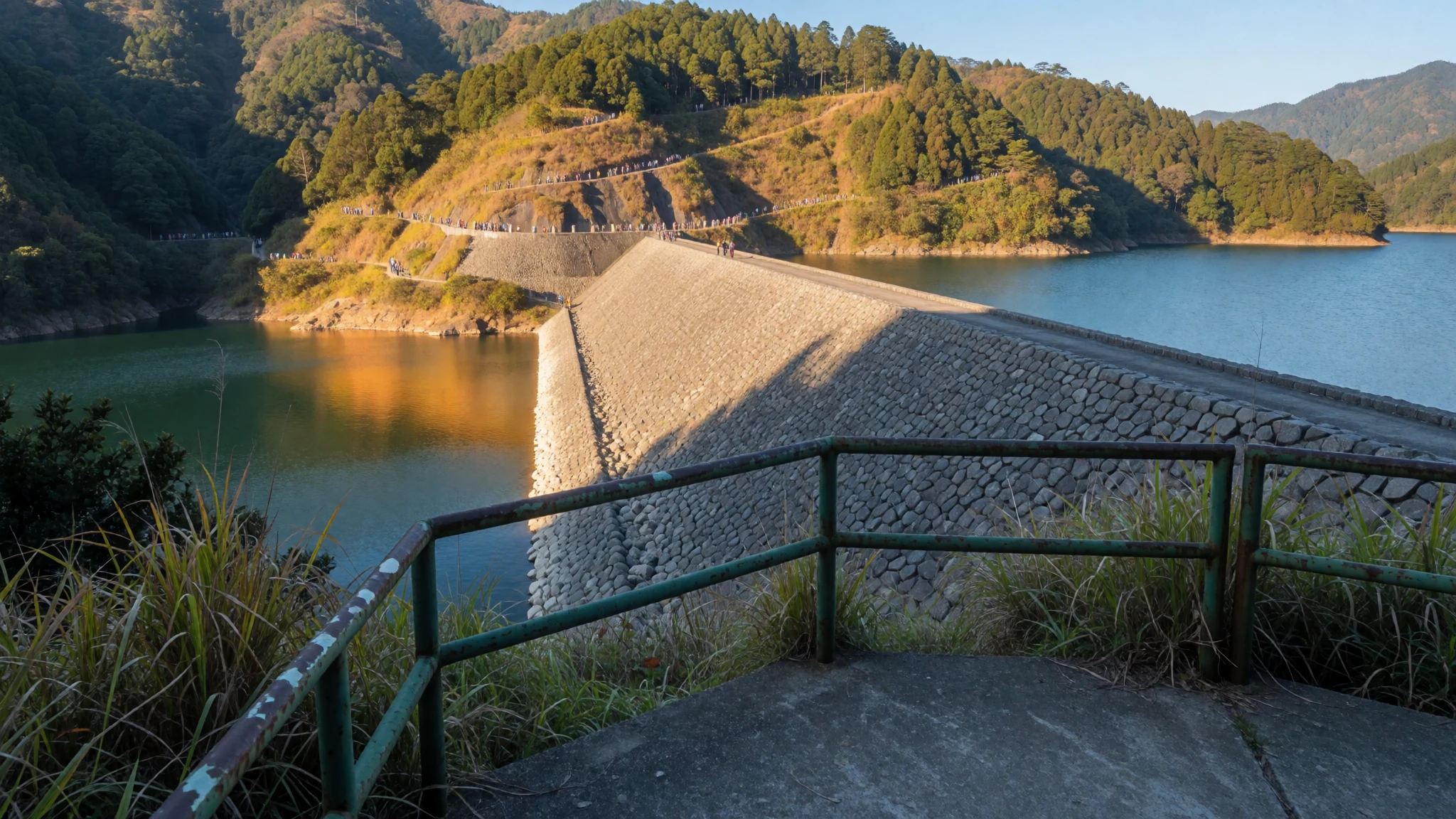
Visit Shihmen Reservoir to witness Taiwan's pioneering engineering project, set amid forested hills, scenic walking trails, and historic old streets.
The place
Shihmen Reservoir spans northern Taoyuan City as an artificial lake held back by a rock fill barrier across the Dahan River. Created as a multi-purpose water project, the site addresses regional irrigation needs, regulates floodwaters in the downstream basin, and generates hydroelectric power for millions of residents across northern Taiwan. The surrounding landscape features steep canyon walls and green hillsides where paths wind through forested terrain, offering panoramic viewpoints over the water. While primarily functioning as a vital utility hub, the area draws travellers seeking respite from urban density, with recreational boat tours, walking trails, and local eateries clustered near the shore. Visitors approaching the destination navigate through a region characterised by bustling transit links and industrial activity, which transitions quickly into quieter mountain approaches as roads climb towards the water's edge. Despite challenges with sediment accumulation that affect water storage capacity, the lake remains a prominent geographic landmark in the district, framed by rolling green topography and connected to a network of historic canals that shape the surrounding agricultural plains.
Its story
The creation of Shihmen Reservoir transformed a turbulent mountain river into a controlled waterway, addressing historical water shortages on the plateau. For centuries, farmers relied on scattered ponds and a colonial-era canal to irrigate fields, yet dry seasons frequently left crops parched. Proposals for a major barrier at the stone gates canyon emerged decades earlier, but industrial strains delayed construction until post-war government initiatives aimed to secure economic self-sufficiency. Construction began under a dedicated development commission, bringing together engineers and labourers to tame the Dahan River's seasonal floods. The massive earthworks project required displacing local communities, marking a profound shift in the region's human and physical geography. Over subsequent decades, the reservoir fulfilled its promise of bolstering agricultural yields and supplying domestic water, though ongoing siltation has required continuous management efforts. Today, the lake stands as a testament to mid-century infrastructural ambition, reflecting both the triumphs of engineering and the complex environmental trade-offs inherent in modifying major river systems.
What to see
- Shihmen Reservoir Dam — Taoyuan City
The colossal rock fill barrier forms the core of the landscape, offering sweeping observation decks where visitors can look out over the expansive blue water, inspect the massive spillway structures, and observe the engineering scale that transformed northern river management. - Daxi Old Street — Daxi District
Historic commercial facades line this vibrant street near the reservoir, showcasing ornate baroque carvings on traditional brick shophouses. Travellers explore bustling pedestrian arcades filled with local artisans, traditional pastry shops, and vendors selling regional delicacies crafted from local ingredients. - Cihu Mausoleum — Daxi District
Set within tranquil gardens and reflective ponds, this site offers a peaceful environment for visitors to explore the surrounding natural beauty. Quiet walking paths draw curious onlookers to the serene grounds, which are framed by dense woodlands and scenic vistas. - Taoyuan Martyr's Shrine — Taoyuan District
Located in the surrounding hills, this local landmark features traditional architecture and serene gardens that blend into the natural landscape. Peaceful courtyards offer commanding views across the green valley toward distant mountain ridges. - Lala Shan Nature Reserve — Fuxing District
Lush forests tower over damp trails in this protected highland zone, where diverse native trees anchor a misty ecosystem. Wooden boardwalks guide hikers through the shaded canopy, revealing diverse flora and cool mountain air within the highland terrain.
Culture
The social fabric around Shihmen Reservoir reflects a blend of traditional agrarian customs and contemporary multicultural influences, shaped by decades of industrial development and migration. Hakka communities, indigenous groups, and newer residents from diverse backgrounds contribute to a rich tapestry of local festivals, culinary traditions, and community gatherings. Religious life spans quiet neighbourhood shrines, historic Buddhist academies, and newer places of worship that serve the district's expanding populace. Visitors engaging with local communities will find an atmosphere of pragmatic hospitality, where daily routines revolve around market trading, family commerce, and outdoor recreation near the water. When entering temples, memorial halls, or sacred nature sites around Shihmen Reservoir, always remove your shoes where indicated and maintain a respectful, quiet demeanour.
What to wear
Around Shihmen Reservoir and the wider Taoyuan district, traditional Hakka and indigenous textile heritage appears during local festivals, featuring indigo-dyed cottons and woven patterns suited for manual labour in fields and mountains. In daily life, residents dress in practical, contemporary urban casual wear, prioritising comfort amid humid subtropical conditions with lightweight shirts, breathable trousers, and durable walking shoes. For travellers exploring the area, practical gear is essential: lightweight, moisture-wicking layers work best for warm daytime temperatures, while a sturdy waterproof shell is necessary for sudden downpours. Sturdy trainers or walking shoes are recommended for navigating steep dam walkways, uneven old street paving stones, and damp forest paths in nearby nature reserves. Modest attire that covers shoulders and knees is appreciated when visiting local temples, shrines, and memorial complexes throughout the district.
What to eat
- Scallion Pancakes — Daxi Old Street markets
Cooked fresh on hot griddles by street vendors, these layered dough pastries are fluffed up and seared with scrambled eggs and savoury toppings. - Reservoir Fish Specialties — Restaurants surrounding the dam area
Local lakeside eateries prepare fresh catches from the lake in diverse styles, including steamed preparations with ginger and scallions or rich braised casseroles. - Traditional Braised Tofu — Historic shops in Daxi
Soaked in aromatic master broths infused with star anise and soy, local artisanal bean curd blocks absorb deep umami flavours and tender textures. - Hakka Noodles — Family-run noodle stalls across the district
Handcrafted flat noodles tossed in shallot oil and pork broth, garnished with crispy fried shallots, sliced pork, and fresh chopped spring onions.
Plan it
Best time. December to February offers the most comfortable temperatures, while June to September are the hottest and wettest months of the year.
How long. 2–3
Getting there. Arrive at Taiwan Taoyuan International Airport, then take the Airport MRT rail connection or a regional bus directly into the district, followed by local taxi or bus to the reservoir.
Budget. mid
Tips
- Start outdoor walks early in the morning to beat the midday humidity and afternoon crowds.
- Keep small cash notes handy for purchasing street snacks and paying minor entry fees at local sites.
- Carry a refillable water bottle and sun protection gear when exploring open dam overlooks.
- Check local transport schedules in advance as rural bus routes run less frequently.
Etiquette
- Remove shoes promptly when stepping inside traditional temple halls or designated indoor exhibition spaces.
- Keep voices lowered when visiting solemn memorial sites and active places of worship.
- Ask permission before photographing local artisans or worshippers engaged in daily rituals.
Nearby
Sources
- Wikidata Q101230894 (CC0)
- Wikipedia (CC BY-SA 4.0)
- Wikivoyage (CC BY-SA 4.0)
- Photo 1 (CC BY 2.5)
- Photo 2 (CC BY 3.0)
- Photo 3 (CC BY 3.0)
- Photo 4 (CC BY 3.0)


