Sumgait
Sumgait, Azerbaijan
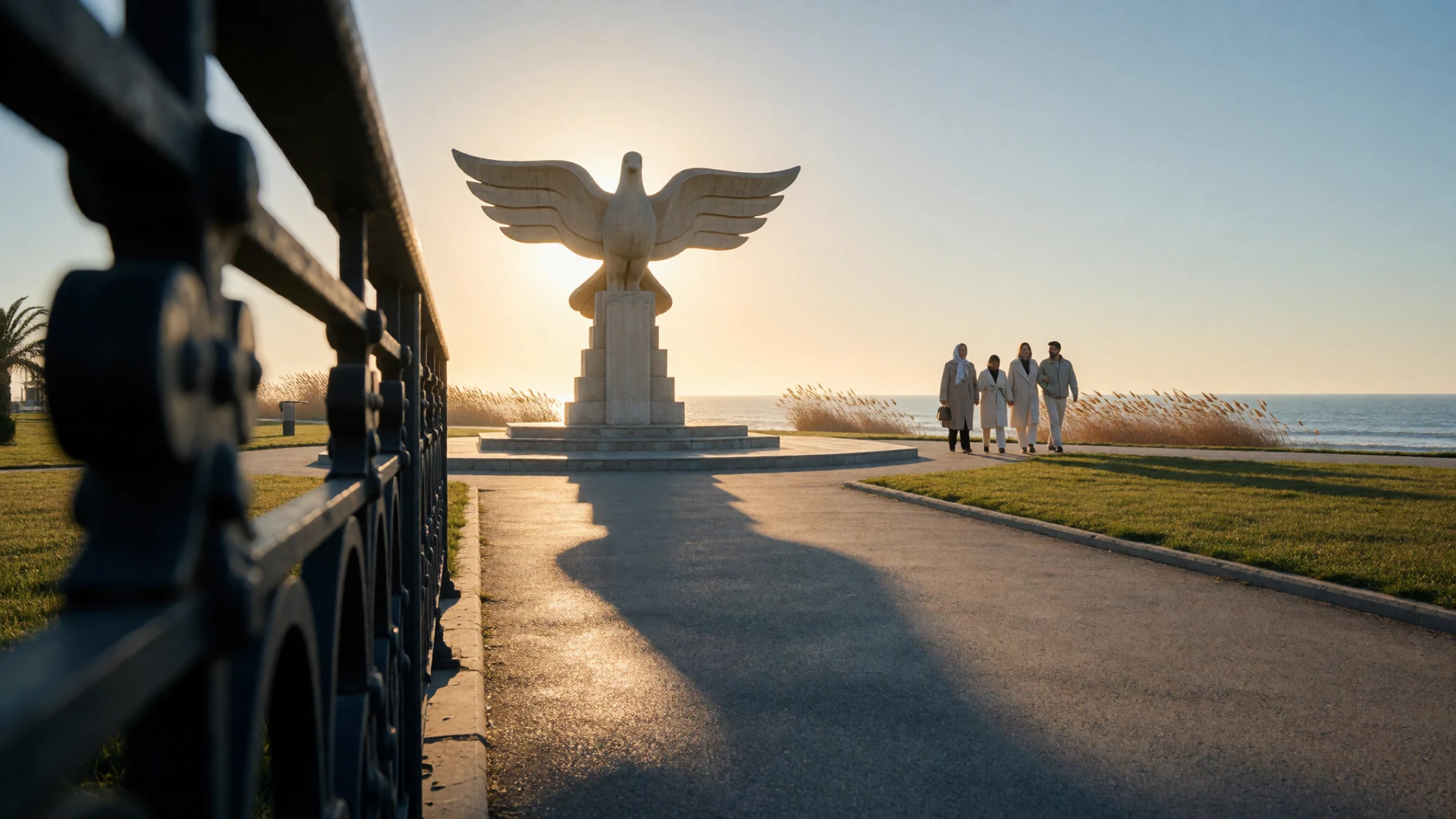
Sumgait is a Soviet-planned industrial city on the Caspian, worth a half day for its seafront, its odd history and its tea-house calm.
The place
Sumgait sits on the Absheron Peninsula, where Azerbaijan's land pushes out into the Caspian Sea, a short run along the coast from Baku. About 422,600 people live here, at an elevation of just 26 metres, on flat, wind-scoured ground with a cold semi-arid climate: dry air, hot summers, cool winters and little shade beyond what planners planted. The city was laid out from scratch rather than grown from an old town, and it shows. Wide avenues, numbered micro-districts of apartment blocks, a long seafront boulevard and civic buildings set in open squares give it the look of a planner's drawing that residents have since softened with trees, shop signs and washing lines. The municipality covers about 83 square kilometres and also takes in the settlements of Jorat and Haji Zeynalabdin. A state university keeps a young crowd on the streets. Industry defined the place: chemical, metal and rubber plants drew workers here, and the legacy is mixed. Pollution on this stretch of the peninsula was severe, and the southwest edge still holds derelict plants, sometimes with sheep grazing between them. Visitors should not expect a polished tourist town. What Sumgait offers is a plain look at how a planned industrial centre ages, a seafront that locals clearly love, and an easy day out from the capital. Summers are hot and the wind can be strong, so the shoreline is where most people gather in the evenings.
Its story
Sumgait's recorded past is thin. Historians link Median tribes to the area, and builders digging the foundations of the executive authority building turned up the remains of an old caravanserai, with everyday objects and kitchenware, a reminder that traders once passed along this coast. An English traveller mentioned the place in 1580, and Alexandre Dumas touched on it in his Caucasus memoir in 1858, yet nothing substantial stood here until the Soviet era. In 1935 Moscow decided to build up heavy industry on the Absheron Peninsula, and this site won because it lay close to Baku and on existing railway lines. A thermal power station came first, built between 1938 and 1941 to feed Baku's oil economy. War paused the work, which restarted in 1944 with metallurgical and chemical plants, and the new jobs created a need for homes and a resident population. Sumgait became a city in 1949. Tube-rolling, synthetic rubber, steel and aluminium works followed through the 1950s. The city also carries a painful memory. In February 1988, during the unrest around Nagorno-Karabakh, a pogrom against the Armenian minority left over thirty dead and sent thousands fleeing, an early flashpoint in the Karabakh conflict. After the first Nagorno-Karabakh war, Sumgait took in many displaced Azerbaijani families, chiefly from Qubadli and Zengilan. Industry declined after independence, leaving the city to look for a new purpose.
What to see
- The Peace Dove — Nasimi Culture and Leisure Park, seafront
The Peace Dove is a concrete sculpture raised in 1978 as the city's emblem of peace, designed by chief artist Vagif Nazirov with architect A. Guliyev. It stands in Nasimi Culture and Leisure Park on the shore, and locals sometimes call the whole waterfront Goyerchin, 'the dove'. Evenings bring families out along the paths. - Seafront boulevard and Culture and Leisure Park — Caspian shoreline
The Culture and Leisure Park was laid out along the Caspian shore in 1967 on about 23 hectares. Today it is the city's open-air living room: a long promenade for walking, ice cream, sea air and people-watching. Wind off the water can be sharp, so bring a layer even in warm months.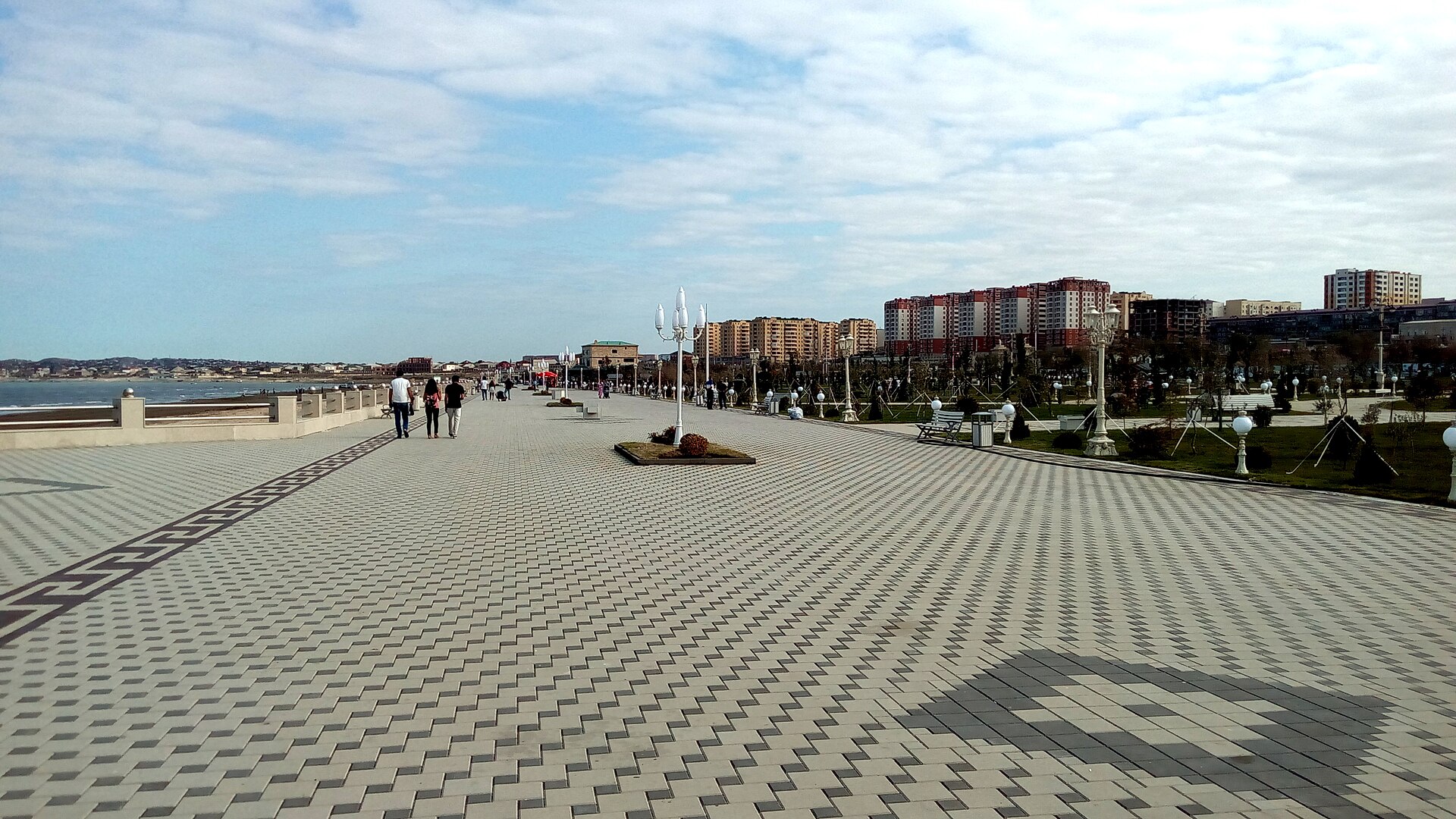
- Municipality building and the centre — Town centre
The city's executive authority building anchors the town centre, and its foundations are where remains of an ancient caravanserai came to light. Nearby, a football stadium accredited by UEFA can be used for exercise. The wide, orderly squares here show Soviet planning at its most deliberate.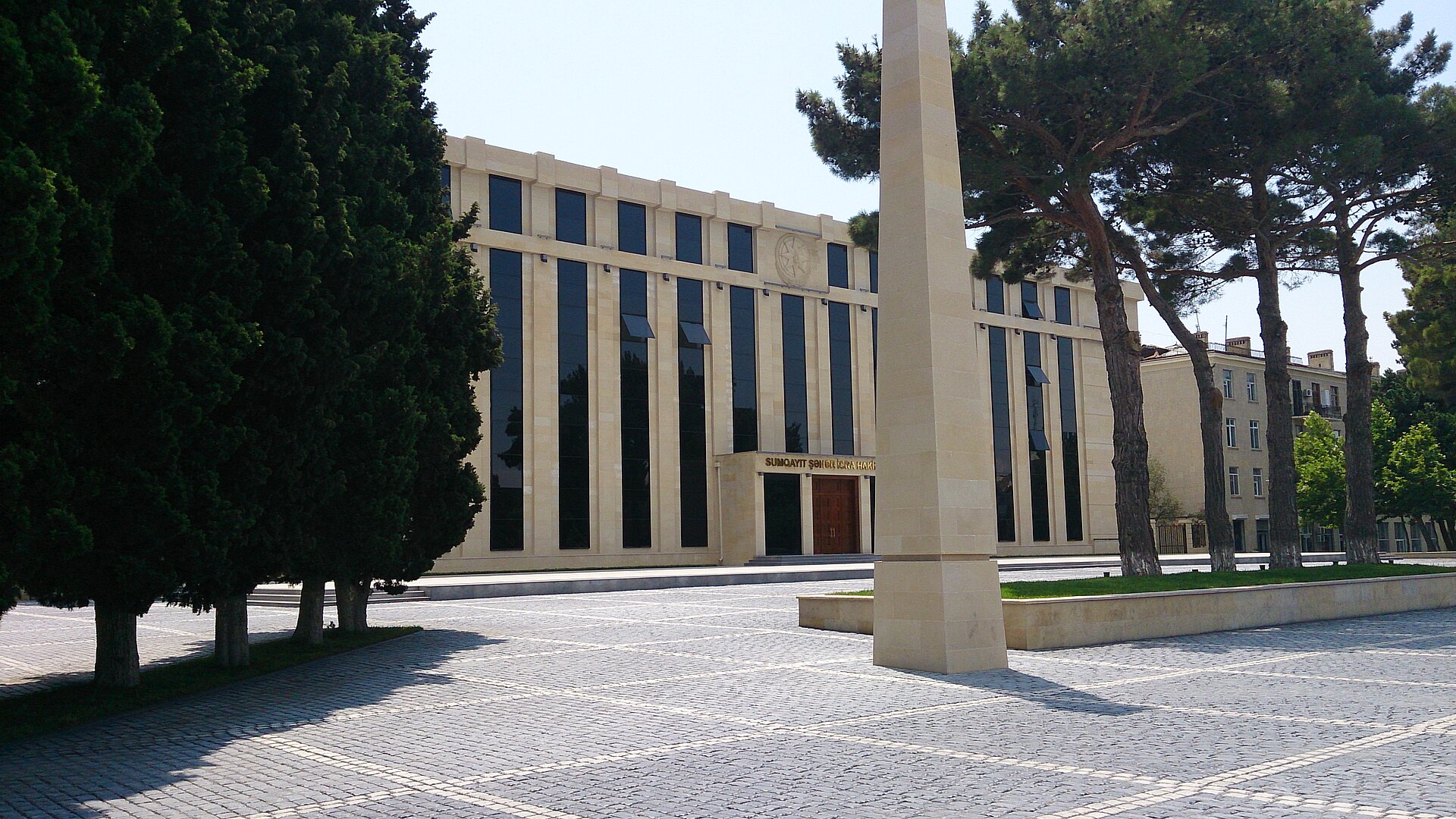
- Juma mosque — Central Sumgait
The Juma mosque (Cümə məscidi) serves Friday prayers, as its name says. It is a modern building rather than an old one, so go for the calm and the architecture, not for antiquity. Avoid prayer times, dress modestly and ask before stepping inside or taking photographs.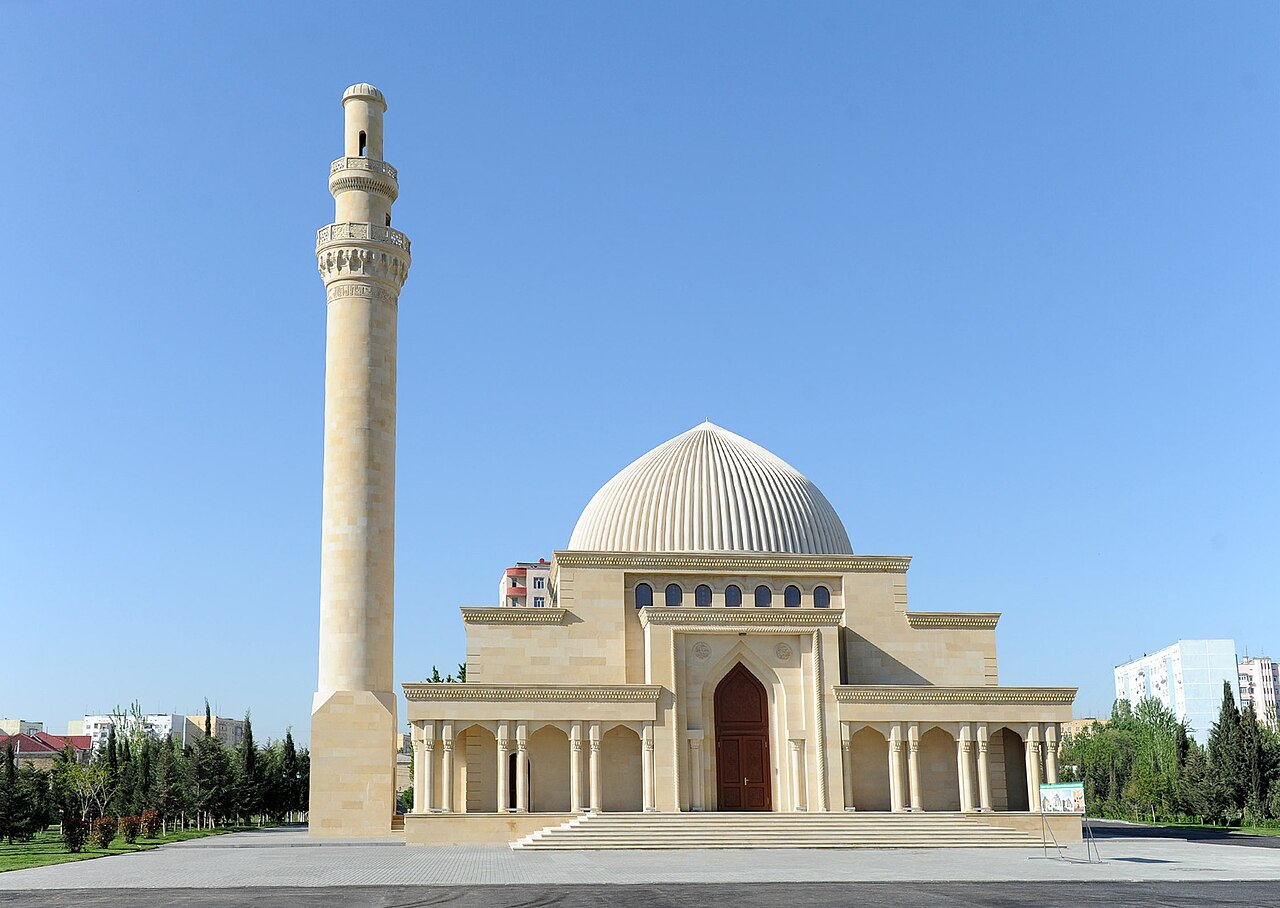
- The industrial southwest — Southwest of the centre
The region southwest of the centre holds decaying industrial buildings, sometimes with sheep grazing between them, and it appeals to photographers who like post-Soviet landscapes. Some plants may still work, so stay on public roads, do not trespass, and keep a respectful distance from anything fenced.
Culture
Sumgait calls itself the City of Youth. It is a young city, founded in 1949, and it held the title of Youth Capital for 2025. That identity shows in the student crowds around the state university and in the music: in the 1990s local rock bands such as Yuxu, Miraj, Mozalan and Sirr gave the city a reputation well beyond its own streets. A regional television channel and a newspaper are based here, and a Jewish media centre was established in 2020. The built environment is the other cultural text. Architect and scholar Kamal Mammadbeyov carried out the first studies of the city's planning and gave many of his drawings to the City Museum, while a Flag Museum opened in 2017. Parks carry much of daily life: the Culture and Leisure Park was laid out along the shore in 1967, and families still treat it as the town's living room. Social life otherwise runs on tea. Older men gather in board game cafés over glasses of black tea and long games, and a curious outsider is usually welcomed to watch. When visiting a mosque in Sumgait, dress modestly, take off your shoes at the door and ask before photographing worshippers or the men playing board games.
What to wear
Sumgait, a city built from scratch in Soviet times, relies on the wider Azerbaijani wardrobe for traditional dress. Men's formal wear historically meant the chokha, a long wool coat with cartridge pockets across the chest, worn with a tall sheepskin papakha; today these appear mainly at weddings, folk concerts and national holidays. Women's tradition includes the kelaghayi, a light printed silk headscarf, and embroidered fabrics for celebrations. Everyday clothing in the city is plainly modern: jeans, jackets and trainers among the young, tailored trousers and shirts for office and factory work, and headscarves worn by some older and more observant women. Dress is generally neat rather than flashy, and evenings along the seafront bring out smarter outfits. Visitors should plan for the cold semi-arid climate: light, breathable layers for hot summers, a windproof jacket for the shore and a warmer coat in winter. Comfortable flat shoes suit paved boulevards and the rough ground near the old plants. For mosques, carry a scarf for covering hair and keep shoulders and knees covered. Elsewhere, ordinary smart-casual clothes draw no attention.
What to eat
- Plov — Family-style restaurants around the town centre
Fragrant rice, often tinted with saffron and served with lamb, dried fruit or chestnuts. It is a celebration dish, cooked slowly and served in generous portions, so it is worth ordering for a table to share rather than for one. - Qutab — Small bakeries and snack eateries
A thin flatbread folded around chopped greens, minced meat or sometimes pumpkin, then cooked on a hot griddle. It arrives with a dusting of sumac, and is quick, filling and easy to eat on the move. - Dolma — Home-style canteens and neighbourhood restaurants
Minced lamb and rice rolled in vine or cabbage leaves and simmered gently, usually served with a spoonful of yoghurt. Vine-leaf versions are the classic; the cabbage kind is a hearty winter cousin. - Lyulya kebab — Grill houses near the seafront boulevard
Minced lamb pressed onto a flat skewer and grilled over charcoal, then wrapped in flatbread with raw onion and sumac. It is simple, smoky and a safe choice for anyone new to Azerbaijani food. - Black tea with sweets — Board game cafés and tea houses in the centre
Strong black tea in small waisted glasses, taken with sugar lumps, jam or lemon and a plate of sweets. The ritual matters more than the drink; it is how conversations in Sumgait start and how long afternoons pass.
Plan it
Best time. May–June and September–October, when the cold semi-arid climate gives dry, comfortable days for walking the seafront; July and August are hot and the shoreline wind can be strong, while winter is cool.
How long. 1
Getting there. Fly into Heydar Aliyev International Airport in Baku, then take a bus, shared marshrutka minibus or taxi along the coast to Sumgait, about an hour's journey. Marshrutkas also run directly from Ismailli.
Budget. low
Tips
- Treat Sumgait as a day trip from Baku and leave time for the seafront at dusk
- Agree the taxi fare before setting off, and bargain politely
- Carry some cash for tea houses and small eateries
- Bring water and a hat for summer walks, as shade is scarce
- Check the municipality's official site, http://www.sumqayit-ih.gov.az/, for events and museum opening details
Etiquette
- Dress modestly and remove shoes before entering a mosque
- Ask permission before photographing people, and avoid photographing fenced industrial sites
- Accept an offer of tea as hospitality, and say thank you
Nearby
Sources
- Wikidata Q179833 (CC0)
- Wikipedia: Sumgait (rev 1380061559) (CC BY-SA 4.0)
- Wikivoyage: Sumqayit (rev 5082760) (CC BY-SA 4.0)
- Photo: Sumqayıt şəhəri, Eylin Mehri (CC BY-SA 4.0)
- Photo: Sumqayit City Municipiality building, Electronic Arts (CC BY 3.0)
- Photo: Sumqayıtçay, Qolcomaq (CC BY-SA 4.0)
- Photo: Sumqayıt şəhəri 8-ci mikrorayon, Cavid Sumqayıtlı (CC BY-SA 4.0)
- Photo: Sumqayit Juma mosque, Press Service of the President of the Republic of Azerbaijan (CC BY 4.0)
- Photo: Sumqayıt bulvarı, Tərxan Paşazadə (CC BY-SA 4.0)
- Photo: Герб Сумгаита, Eldar Gasumov (CC BY-SA 4.0)
- Photo: Sumqayıt Heydər Əliyev prospekti, Cavid Sumqayıtlı (CC BY-SA 4.0)


