Seven Mile Beach
Seven Mile Beach, United Kingdom
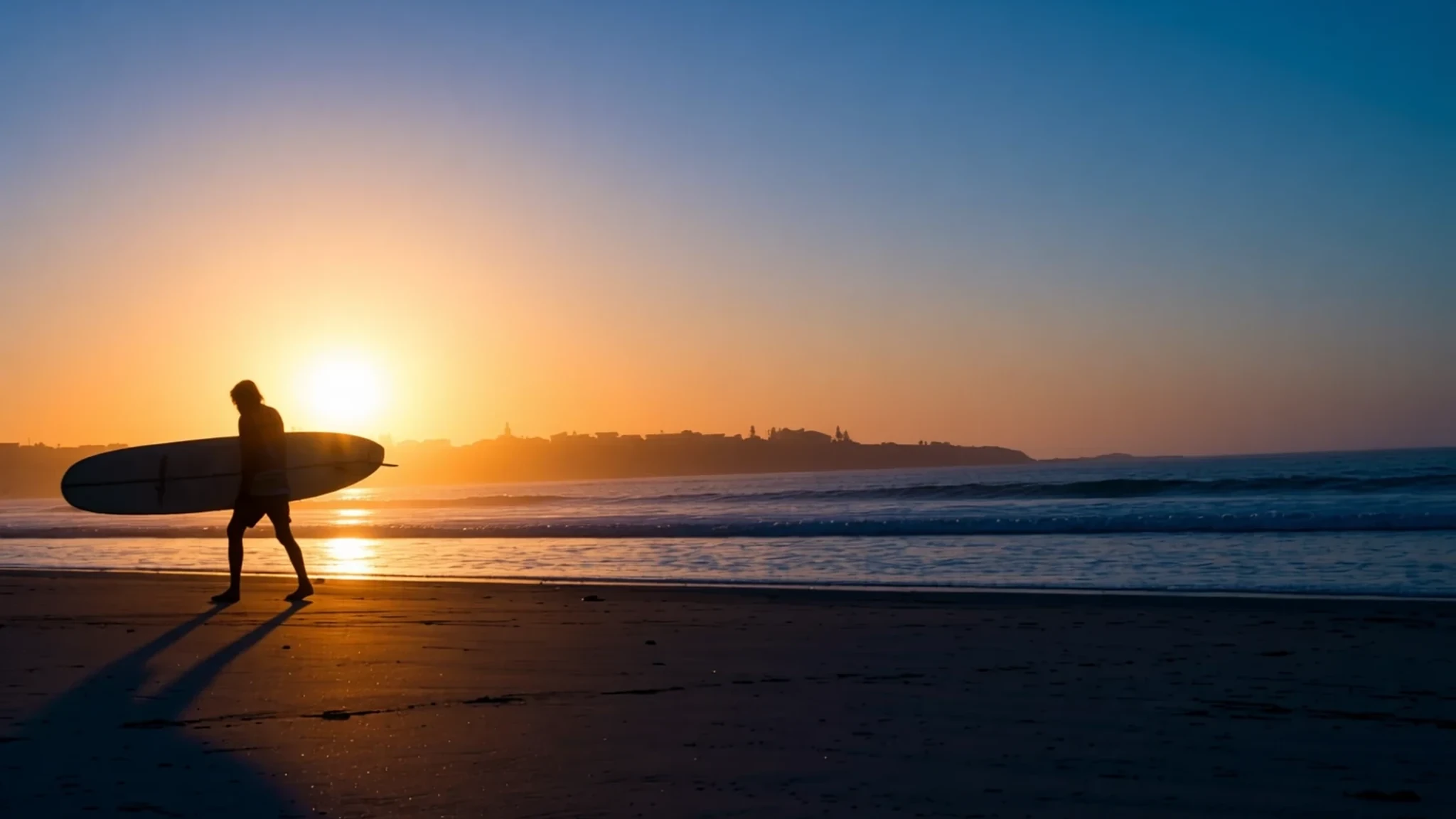
Seven Mile Beach is a long west-facing strand of pale sand on Grand Cayman, calm enough for a slow swim and busy with resort life.
The place
Seven Mile Beach is Grand Cayman's resort shore, a west-facing ribbon of pale sand with open sea in front and hotels close behind. It lies in the Cayman Islands, a British Overseas Territory, and the water over the sandy bottom is usually clear. The beach faces west, so the day ends with the sun dropping into open sea. Behind the sand, hotels, condominiums and low resort buildings follow West Bay Road, with public footpaths cutting between them to the shore.
The strand sits on the leeward side of the island. An offshore reef knocks down much of the swell, so swimming is often gentle compared with a windward Caribbean coast. Snorkellers find reef and sea grass a short paddle out, especially toward the northern end, where the buildings thin and the bottom grows rockier. The southern end lies closer to George Town, the capital and harbour, and feels like the edge of a small city.
Life on the sand is shaped by the resorts. Loungers and umbrellas belong to the properties behind them; nearer the water, people walk, swim and set their own towels. Mornings are quieter. By late morning the chairs fill and music drifts from beach bars. When cruise ships are in George Town the town grows busier, while the beach itself stays mostly guests and locals. Afternoons are hot, and the open sand has little shade.
Around the beach the island is low, old coral limestone. Rain often comes in short bursts, and hurricane season is a real part of the year. After heavy rain the water clears again. Seven Mile Beach is an easy urban shore, built up behind and still a plain pleasure on a calm morning.
Its story
Seven Mile Beach became a holiday shore only after it had already been a working one. People on Grand Cayman lived from turtles, fish and the salvage of ships that broke on the reefs, and the sheltered west coast was where boats could land with less trouble than on the windward side. Ties to Britain set the language, the courts and the left-hand road; African-Caribbean families and a long seafaring habit set the food, the speech and the everyday use of the water.
The change visitors see now is the building line. Hotels and condominiums grew up along West Bay Road because this was the calm, sandy stretch, and the old mix of yards, boats and open lots gave way to rooms sold by the week. Memory of the turtle trade has not disappeared. It sits in family stories, in a turtle centre over in West Bay, and in dishes older Caymanians still cook, while many guests eat from a resort menu and never hear that history.
Storms have written as much of the coast as builders have. Hurricanes strip sand, flood low ground and force repairs, and the beach has been rebuilt and reshaped after hard seasons. The pale ribbon looks permanent; part of it is a shoreline people keep putting back. Softer coral, heavy use of the nearshore water, and the press of cruise days in George Town are the quieter pressures. On a busy afternoon, swimmers, tenders and small motorboats share the same strip of sea.
Seven Mile Beach holds that compromise in the sand itself: a long walk and clear water inside an economy built to rent the view.
What to see
- The strand — West Bay Road, Grand Cayman
Seven Mile Beach is the long pale strand itself, west-facing and backed by resorts. Walk it in the morning, when the sand is cooler and the chairs are still empty. The swimming bottom is mostly sand, with sea grass and reef patches further out. Public footpaths between the buildings lead onto the shore for visitors who are not in a front-row property.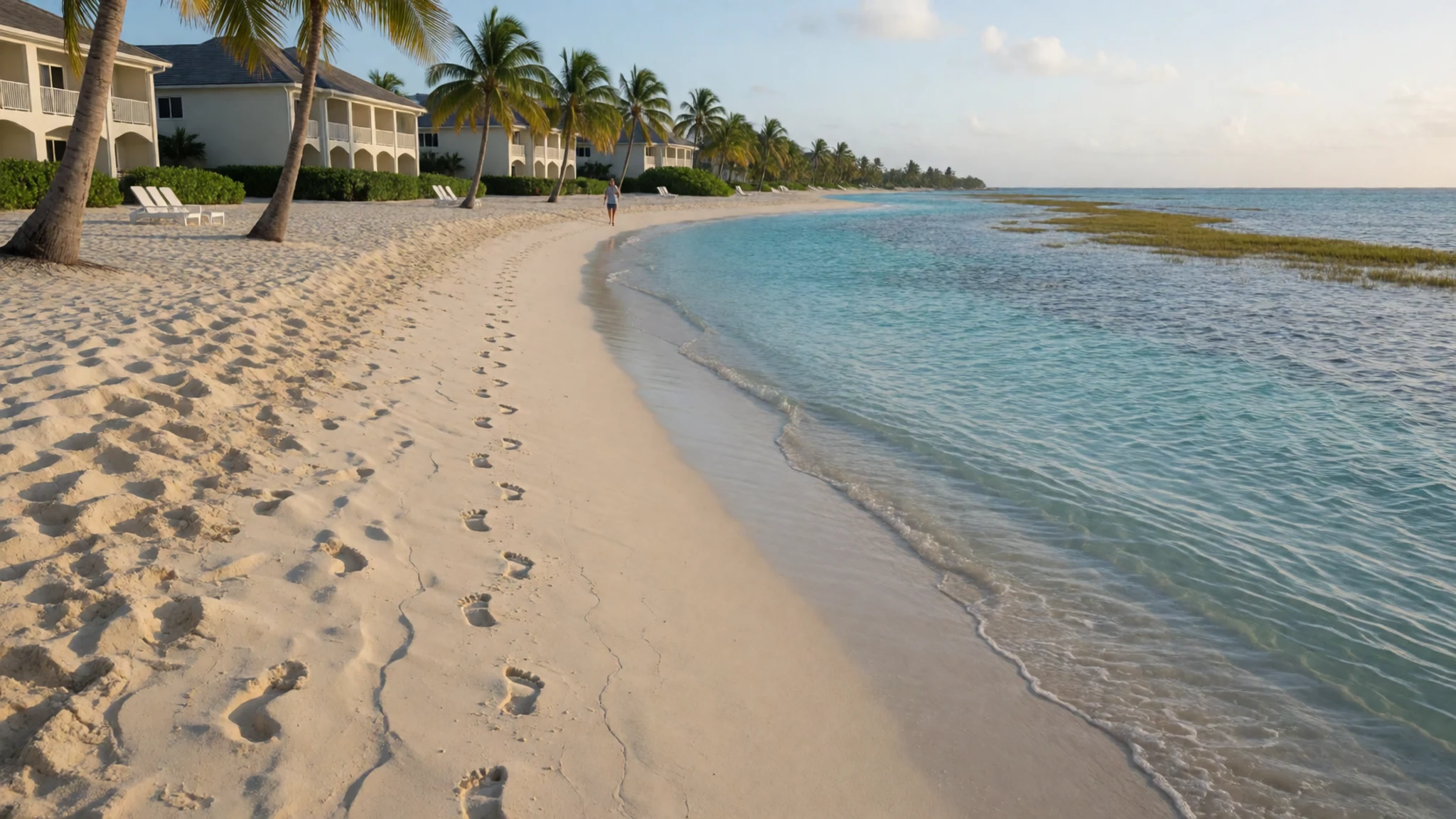
- Northern snorkel end — Northern end, toward West Bay
The northern end of Seven Mile Beach, toward West Bay, is rockier, while the hotel midsection is equally good for a snorkel. Buildings thin out, the reef sits closer in, and fish hold around coral heads and sea grass. Water shoes help on the stone. Arrive early, before boat traffic builds, and do not stand on coral. This end is less arranged than the resort centre.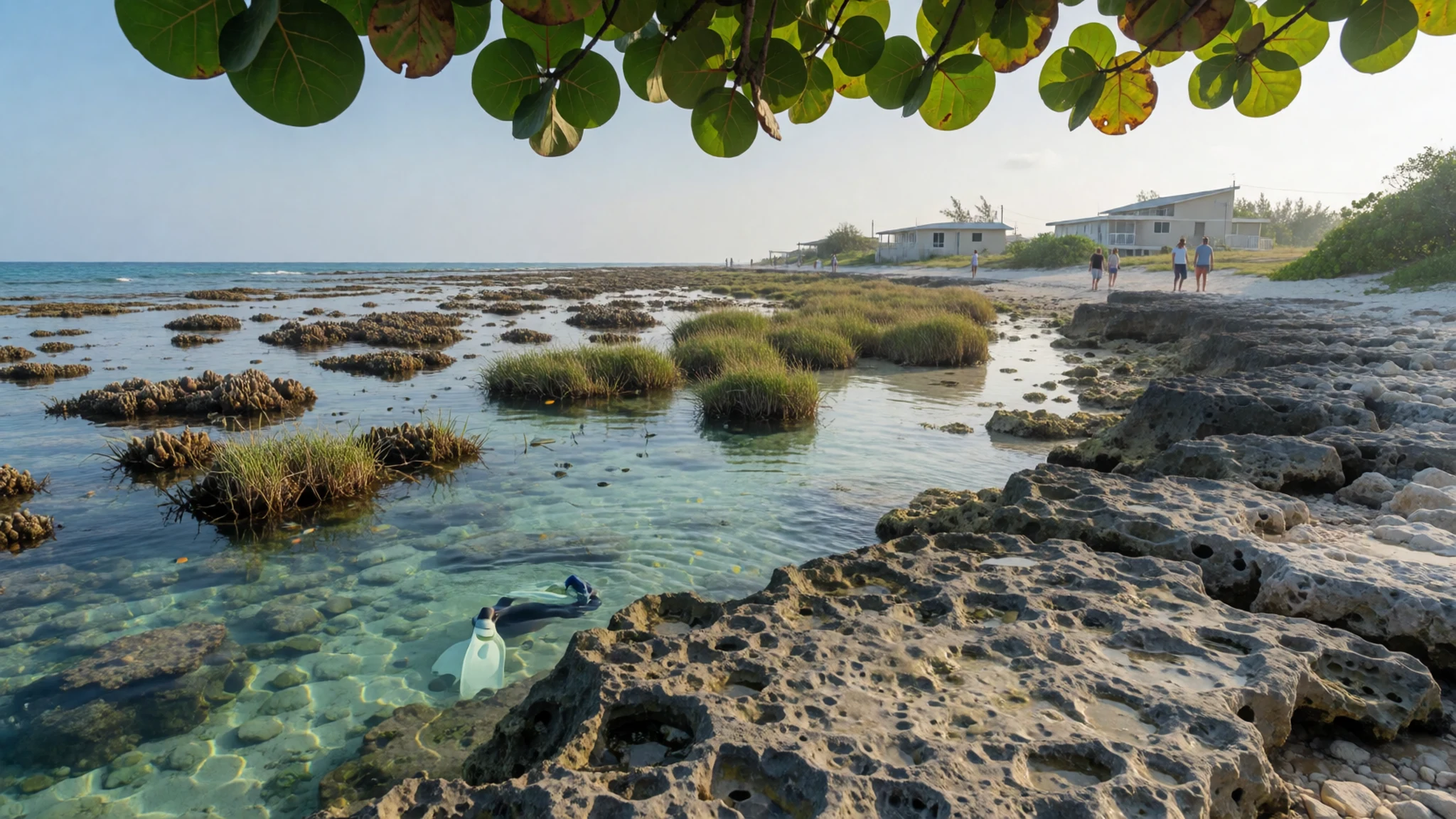
- George Town — George Town
George Town is the small capital at the southern end of Seven Mile Beach, built around a harbour where cruise ships tender in. The waterfront is for a stroll, duty-free windows and the craft market, not for swimming. Fort George survives as a scrap of old harbour defence among modern streets. Ship days fill the pavements; a morning with no ships is the quiet version of town.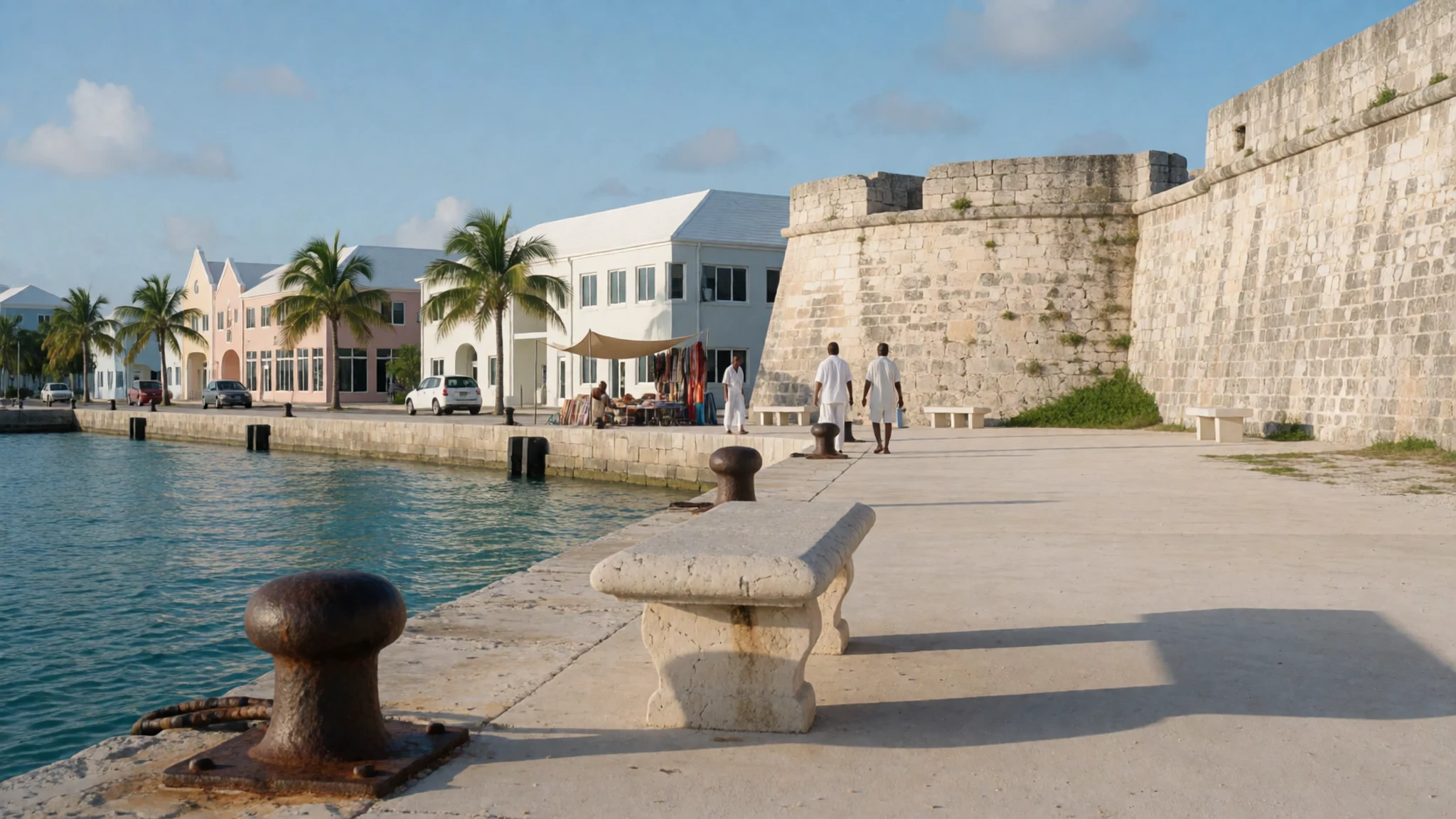
- Camana Bay — Camana Bay
Camana Bay is a planned waterfront district beside the southern half of Seven Mile Beach, with a marina, shops, lawns and a walkway open to the public. It is built land and landscaping rather than wild shore, useful when the sand is too hot or a storm has closed the swim. Evening events and weekend markets turn up in season; check what is on, since the programme changes.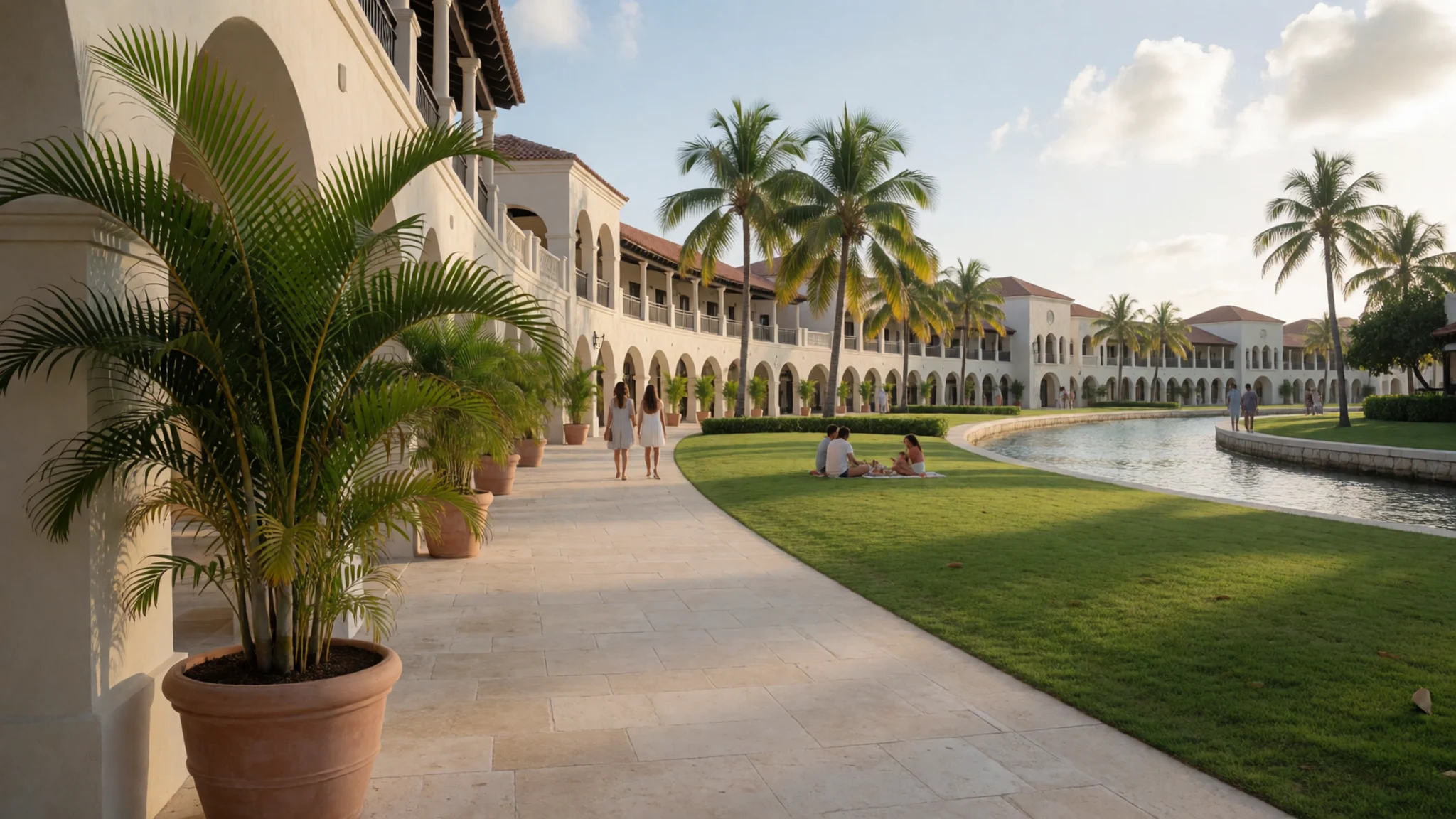
- West Bay Road at sunset — West Bay Road
West Bay Road is the spine behind Seven Mile Beach: resorts, condominiums, small eateries and public access lanes. The evening draw is the water itself. The beach faces west, so sunset happens along the whole strand, not at a single lookout. Carry a cover-up for hotel lobbies. On busy ship days the road crawls, and a bicycle or the local bus is the easier short hop.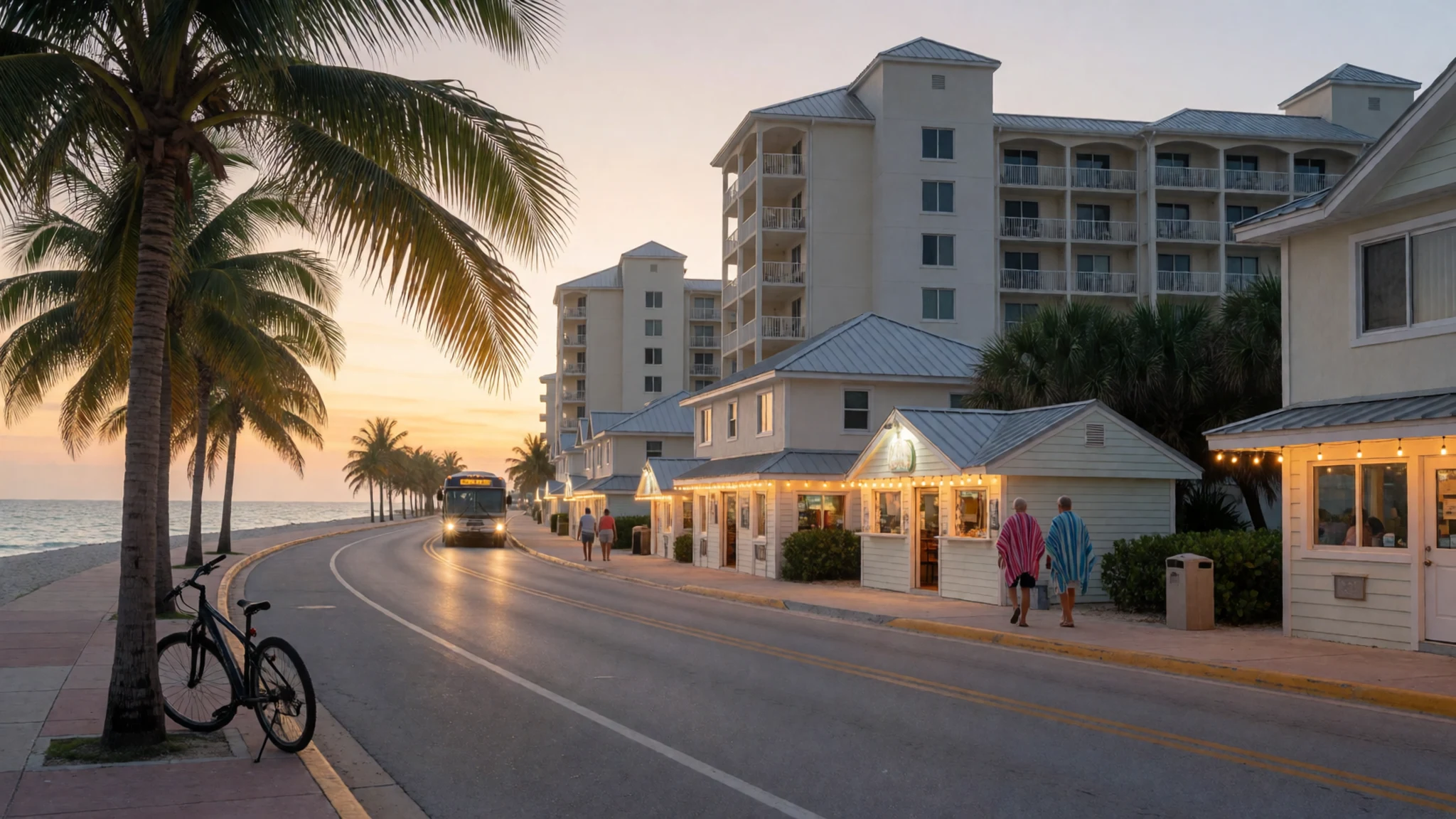
Culture
Seven Mile Beach sits in a small-island culture that is Caribbean in food and family life and distinctly Caymanian in tone: orderly, church-influenced, and more reserved than the party coasts further east. English is the everyday language, with a local accent that borrows from Jamaica and from the islands' own seafaring past. Sundays still slow the place down; many shops close or shorten hours, and a beach afternoon is more usual than a loud street party. The old economy of turtles and the sea shows up in festivals, in stories, and in a pride that visitors sometimes miss if they stay inside one resort. A greeting before a question goes a long way in a shop or on a boat. Tipping follows the North American habit in restaurants and for beach and taxi staff, and it is part of how service wages work. The reef is treated as a common good under pressure: touching coral, standing on it, or collecting shells is poorly regarded. On Seven Mile Beach, keep music low beside other groups, do not block the walk with tents or loungers, and ask before photographing people on the sand.
What to wear
Seven Mile Beach has no single ceremonial costume that people wear to the sand, but Caymanian dress for heritage days is modest and practical: light cotton, long skirts or tailored dresses for women, and white or pale shirts for men, echoing church clothes and a hot maritime climate. Thatch and palm once mattered more as building craft than as a textile for clothes. What shows up at festivals is closer to carnival costume, especially during the island's pirate-themed week, when visitors and locals both dress up; that is costume, not daily wear. On an ordinary day the beach uniform is swimwear, with a shirt or cover-up the moment someone leaves the sand for West Bay Road, a shop or a bus. Evenings at resort restaurants move toward collared shirts, sundresses and covered shoes; flip-flops read as beach, not dinner. Fabrics that work are linen, light cotton and quick-dry cloth. A visitor should pack for heat, sun and air-conditioned rooms that run cold. Bring a hat, reef-safe sunscreen, and sandals that can get wet, plus water shoes if the plan includes the rocky northern end. Shoulders covered is the right instinct at a church. Nude or topless sunbathing is not the local norm on Seven Mile Beach; keep swimwear on, and put a layer over it off the sand.
What to eat
- Conch fritters — West Bay Road beach bars and George Town harbour stalls
Conch fritters on Seven Mile Beach are chopped queen conch in seasoned batter, fried and eaten with hot pepper sauce. They show up at beach bars and casual eateries on West Bay Road and at harbour stalls in George Town. Order a small basket and a cold drink.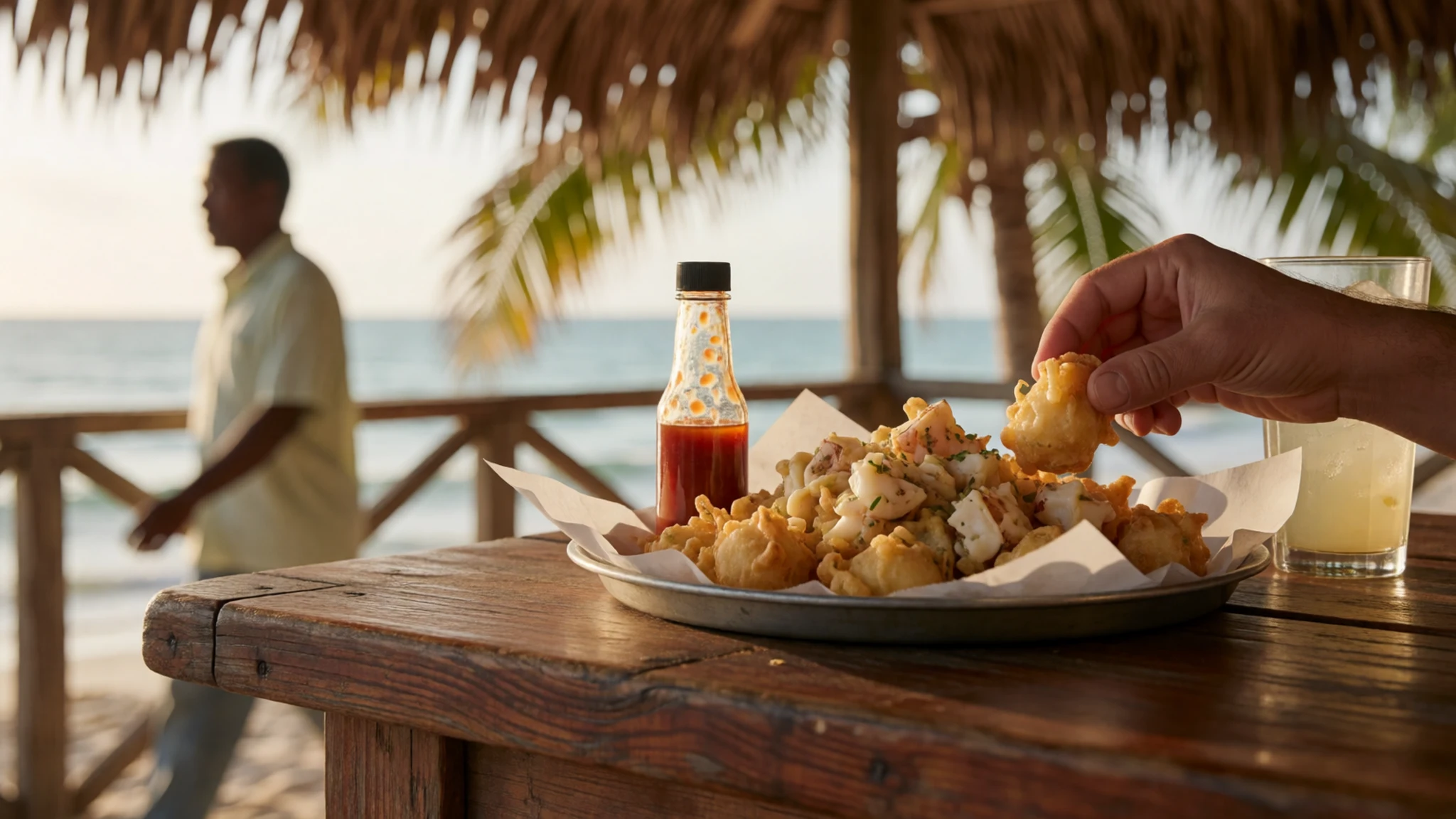
- Fish rundown — West Bay and George Town lunch counters
On Seven Mile Beach, fish rundown is a coconut-milk stew of local fish with onion, pepper and dumpling, cooked until thick. Caymanian cooks and small eateries off the resort strip still make it; try a West Bay or George Town lunch counter.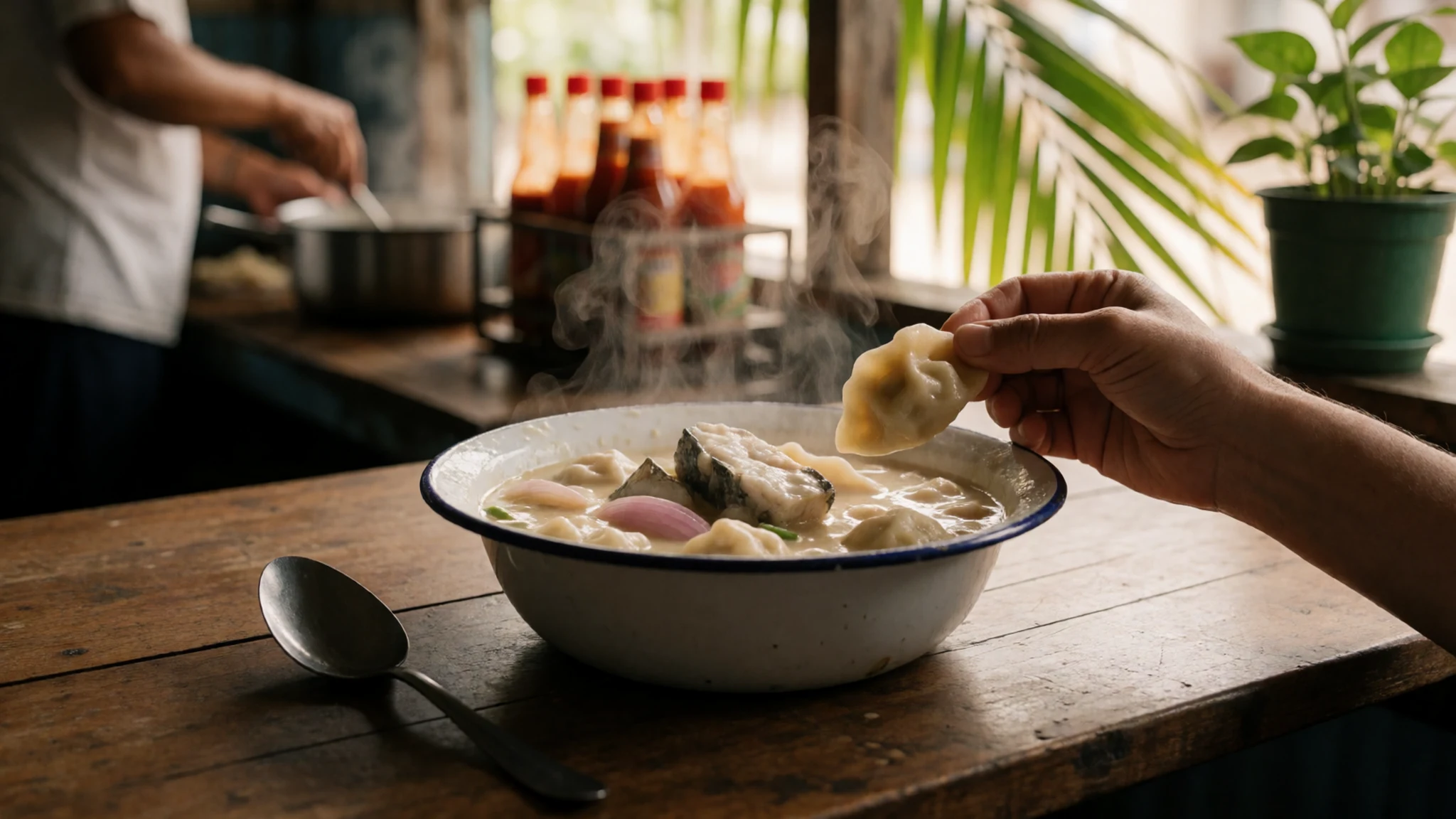
- Heavy cake — George Town bakeries and weekend markets
Heavy cake, a traditional Caymanian sweet sold near Seven Mile Beach, is a dense bake of grated cassava and coconut, nothing like a light sponge. Bakeries in George Town and stalls at weekend markets or heritage events are the places to find a slice. - Jerk chicken — West Bay Road takeaway windows
Jerk chicken is the pepper-hot grill Cayman eats all along Seven Mile Beach. It is picnic food from takeaway windows on West Bay Road and from casual jerk stands set back from the sand. Eat it with rice and peas. - Lionfish — George Town and West Bay Road eateries
Lionfish is an invasive reef fish that local kitchens have turned into a menu item, usually fried, in tacos, or as ceviche-style bites. Ordering it helps because the fish crowds out native species. Look for it at eateries in George Town and on West Bay Road behind Seven Mile Beach.
Plan it
Best time. December to April is the easier stretch on Seven Mile Beach: drier air, lighter rain, and seas that are more often calm. June to November is hotter, wetter and inside hurricane season, with lower room demand and a real chance of a storm week.
How long. 3–4
Getting there. Fly into Owen Roberts International Airport beside George Town, then a taxi, hotel transfer or local bus north on West Bay Road. Seven Mile Beach is a short ride from the airport; the island has no railway. Cruise passengers tender into George Town harbour and reach the sand by bus or taxi. Check official sites before travelling.
Budget. high
Tips
- Book rooms on the sand well ahead for the winter and spring weeks; hurricane season is easier to find space.
- Start swims early; by late morning the sun is harsh and the loungers fill.
- Carry some cash, since small buses and beach stalls may prefer it, though cards are widely taken.
- Use reef-safe sunscreen and drink more water than feels necessary; shade on the open sand is scarce.
- If a storm watch is posted, follow hotel and government guidance and stay out of the sea.
Etiquette
- Do not take coral, shells or sand, and do not stand on the reef.
- Keep voices and speakers low near other groups, and leave a path along the water.
- Ask before photographing people, and wear a cover-up off the beach.
Nearby
Sources
- Wikidata (CC0)
- Wikipedia (CC BY-SA 4.0)
- Wikivoyage (CC BY-SA 4.0)