Sepik River
Sepik River, Indonesia
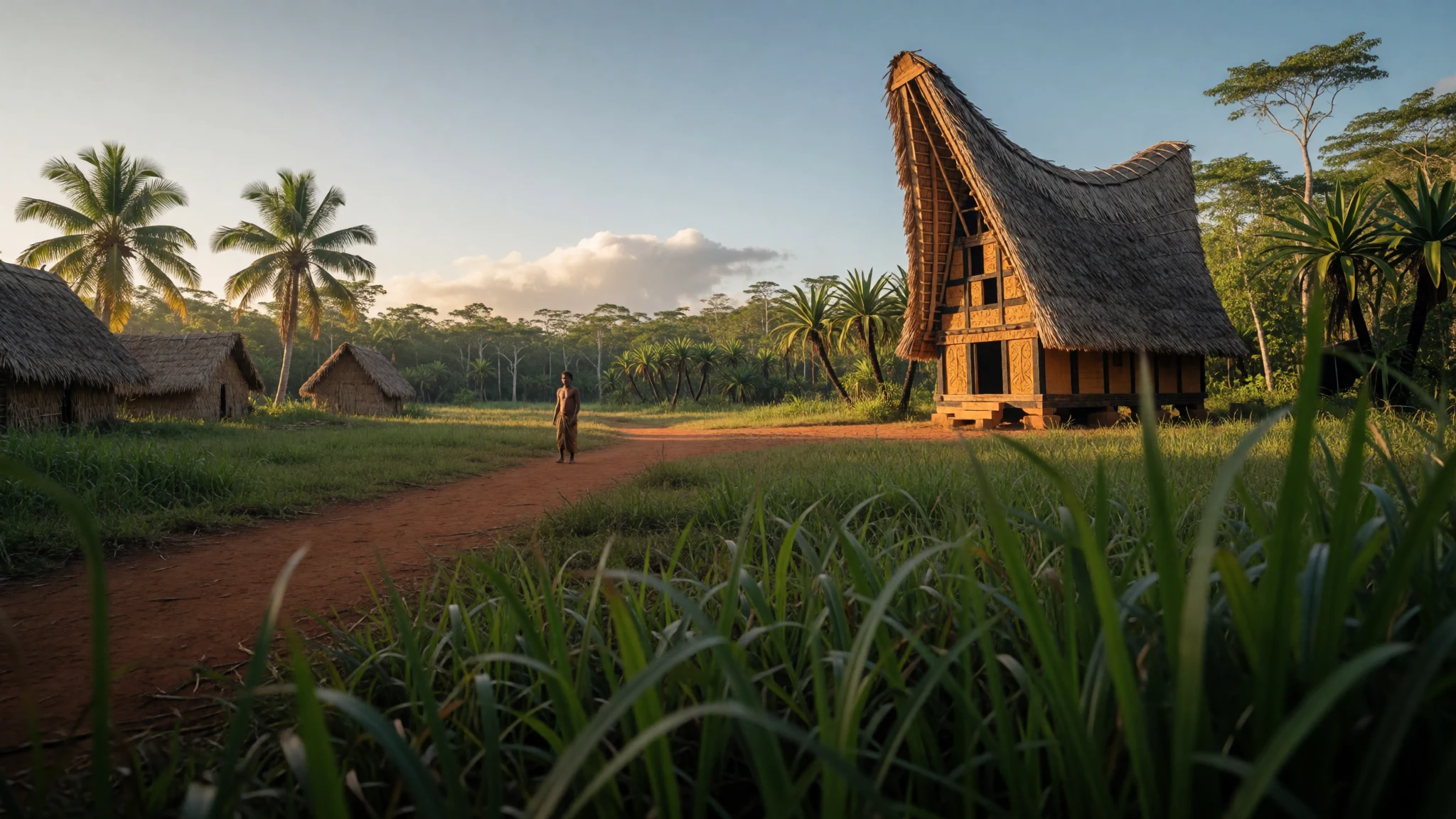
Sepik River is a slow, winding lowland river in Papua New Guinea where villages, spirit houses and carved art still follow the water.
The place
The Sepik River rises in the mountains of central Papua New Guinea and spends most of its length crossing flat, wet country on its way to the Bismarck Sea. Nearly all of it lies in the provinces of Sandaun and East Sepik. A short stretch passes through Indonesian Papua, which is why Wikidata lists two countries. From its headwaters near Telefomin the river leaves the hills quite abruptly, swings across the border, then turns back north-east along a broad trough between two mountain ranges, collecting tributaries from both sides.
Once on the plain the river barely falls at all. It loops and doubles back on itself, leaving oxbow lagoons, small lakes and swamp forest on either bank, and the water runs silty brown. Dugout canoes are the everyday transport. Roads are thin, and only a few villages, among them Angoram, Pagwi and Timbunke, can be reached by road from the coastal town of Wewak.
There is no delta. The Sepik runs straight into the sea about 100 km east of Wewak, and its muddy plume is visible far out beyond the shore. Along the banks stand at least a hundred villages and hamlets, each with its own art, language and ceremonial life. This is not an easy place to visit: it is hot, humid, buggy and slow, and distances are measured in hours of paddling or engine time rather than kilometres. The reward is a way of life that is still organised around water, sago and yams.
Its story
Sepik River has been home to villagers for many thousands of years, long before any outsider drew it on a map. The water supplied fish and sago, carried people between settlements, and shaped what they carved, sang and believed. Each stretch of the river developed its own style, which is why a trained eye can often tell where a piece of carving came from.
European contact is recent by comparison. In 1885, soon after Germany claimed the northern part of New Guinea as a colony, the explorer Otto Finsch reached the river mouth aboard the steamer Samoa. He named the river Kaiserin Augusta, after the German empress. The name did not stay in local use, and Sepik took over. A year later a smaller vessel launched from the Samoa pushed some way upstream, and steam-powered expeditions over the following couple of years mapped much more of the lower and middle river.
German interest was practical. The colonial company wanted to learn what the river might yield commercially, to gather artefacts, and to recruit local men for coconut plantations on the coast and islands. Missionaries of the Society of the Divine Word began working along the river in the 1890s, and Sepik objects, including ritual drums, can now be seen in the order's museum in Poland. Traders, officials, anthropologists and, much later, tourists followed. The story since has largely been one of villages adapting to outsiders while keeping the ceremonial houses and exchange networks that tie them together.
What to see
- Haus tambaran at Maprik — Maprik district, East Sepik
The Maprik area of East Sepik has several well-known haus tambaran, the tall ceremonial houses that serve as men's meeting places and settings for initiation. They are linked to the yam cult, and their painted interiors are treated as sacred work. Entry is the village's decision, so arrange a guide and ask permission before going inside or raising a camera.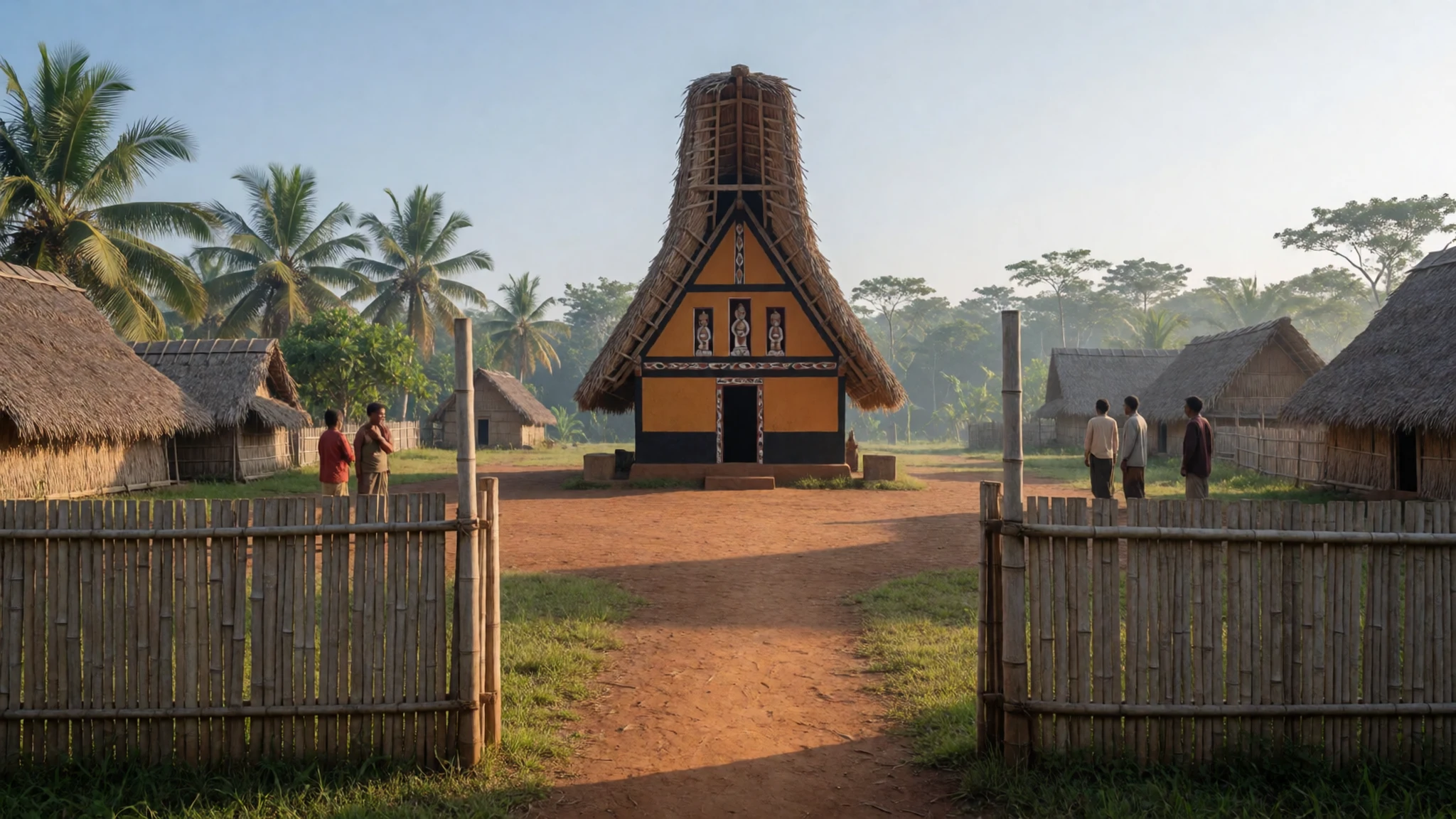
- A dugout trip on the river — Middle and lower river
A canoe journey is the heart of any visit to the Sepik River. The current is slow, the banks shift between reed, swamp forest and village landings, and birds and crocodiles are part of the scene. Operators offer paddled canoe trips and, for more comfort, covered riverboat cruises. Expect long, hot days on the water and plan around them.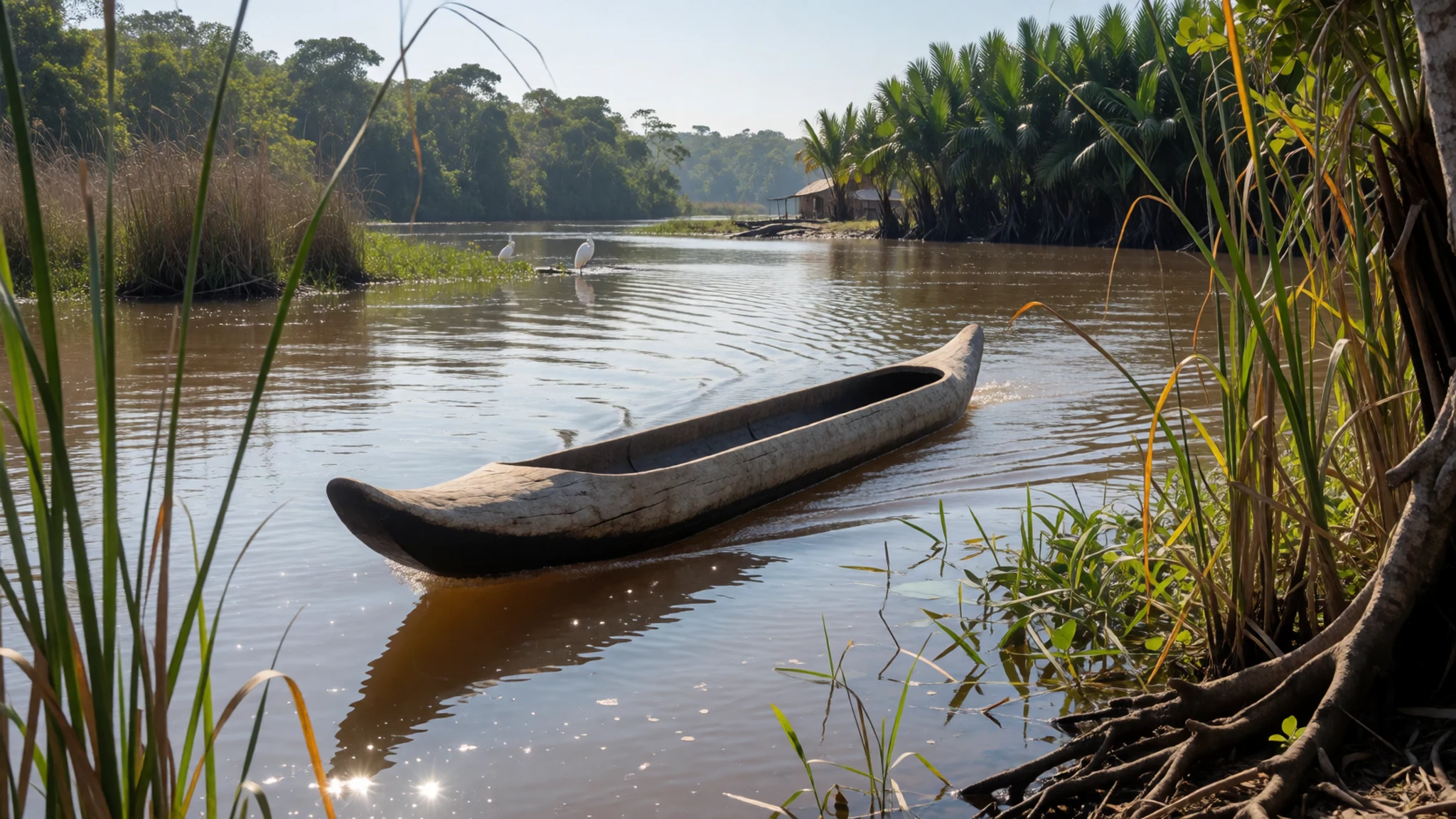
- Angoram, Pagwi and Timbunke — Lower to middle Sepik
These three villages are the ones reachable by road from Wewak, which makes them the usual gateways onto the water. Roads in the region can be rough, so leave slack in the schedule. From these landings a canoe can be hired to reach smaller settlements where carving, weaving and market exchange carry on much as before.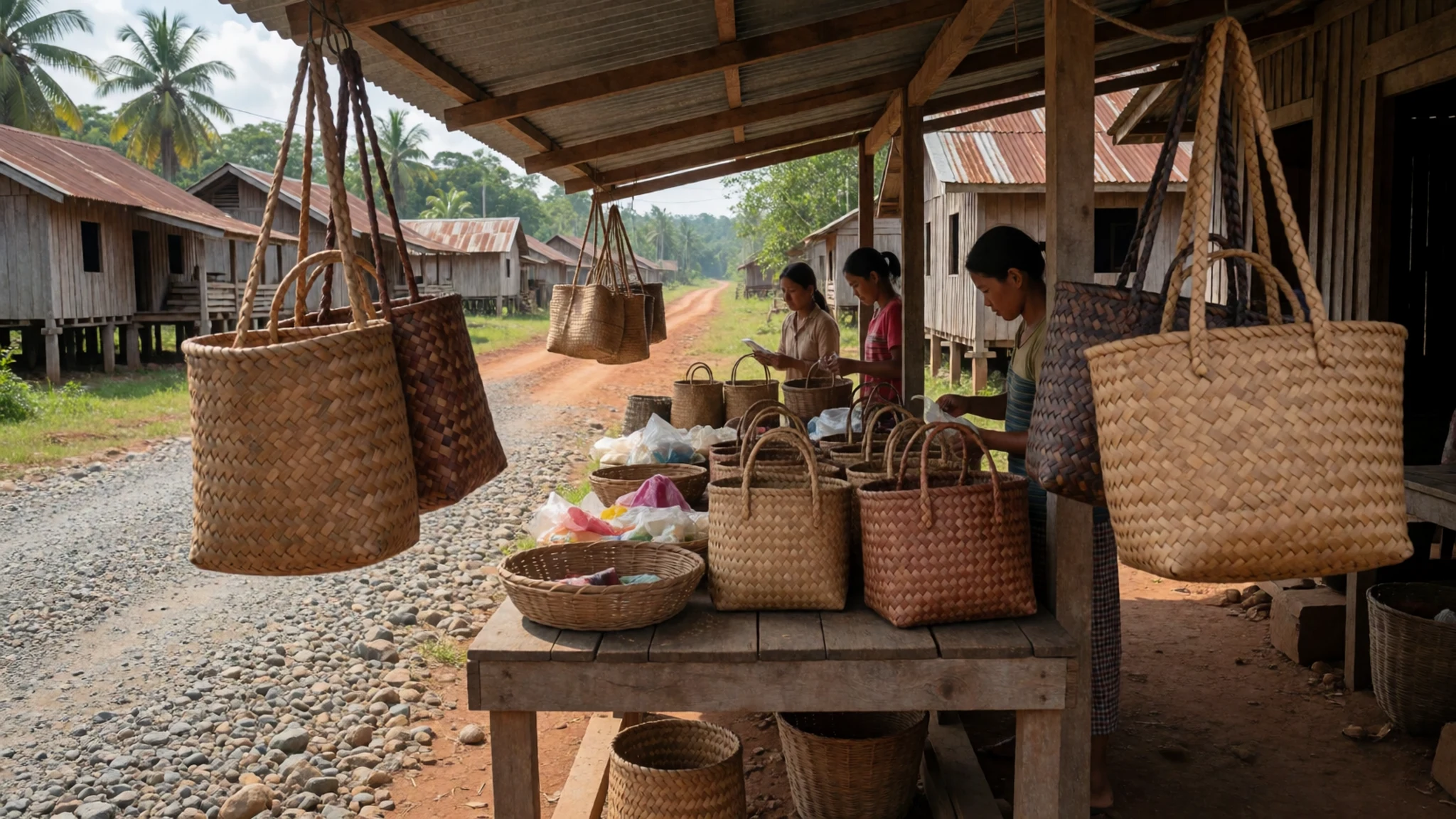
- Village life at the landing — Riverside villages
Daily routine on the Sepik River happens at the water's edge: paddling, washing, fishing, processing sago, children playing among canoes. Staying in or near a village gives time to watch it properly. Photographs of people and sacred objects need permission first, and a small gift or fee agreed through the guide is the polite way to say thanks.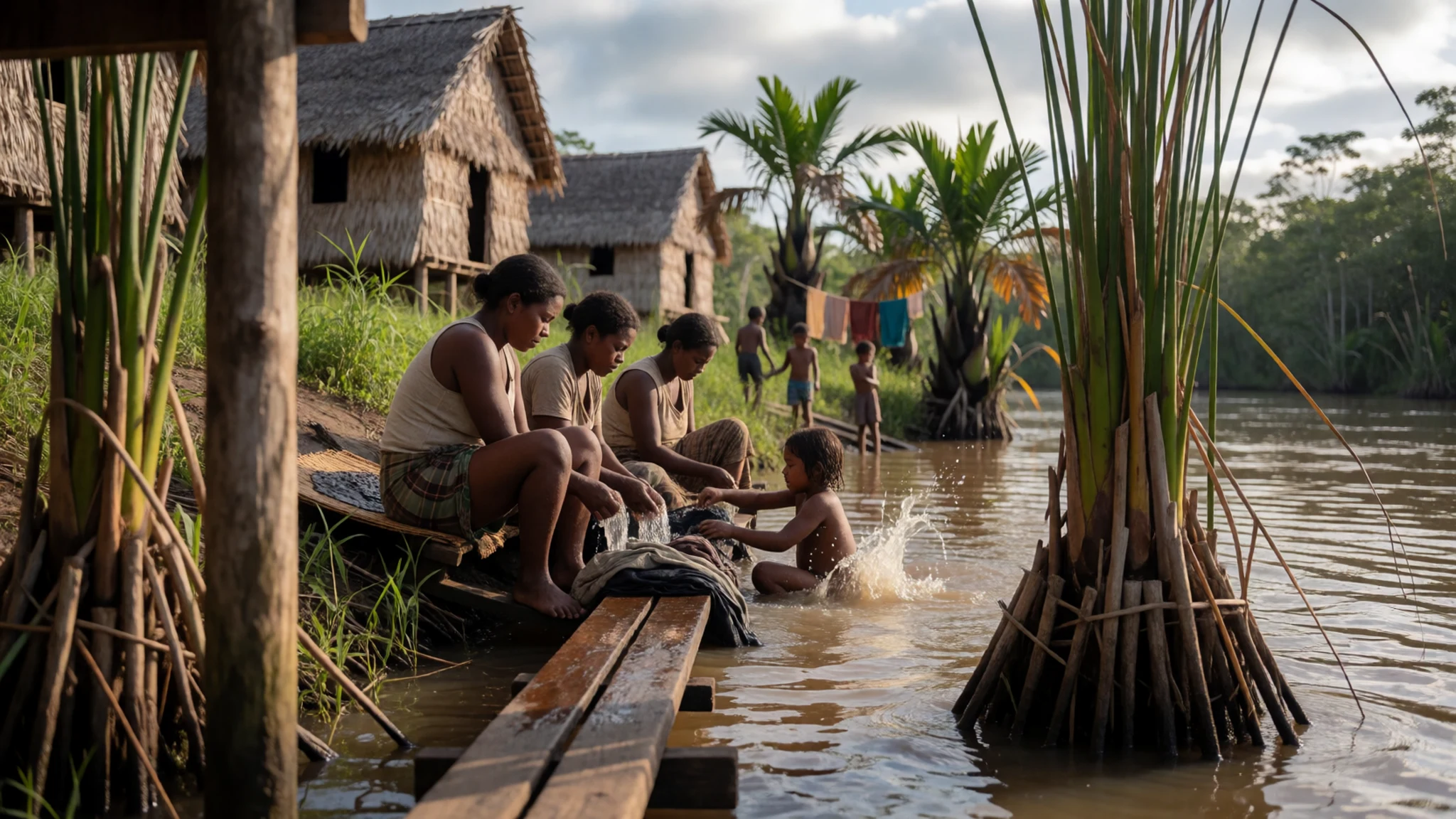
- Birdlife and wildlife — Middle Sepik, including Kaminabit
Birds are part of village life as well as the wild margins. A black-capped lory perched on a boy's head at Kaminabit in the middle Sepik is the kind of scene that photographers come away with. Early mornings on the water are best for waterbirds. Crocodiles are a real presence, so keep hands and feet out of the water.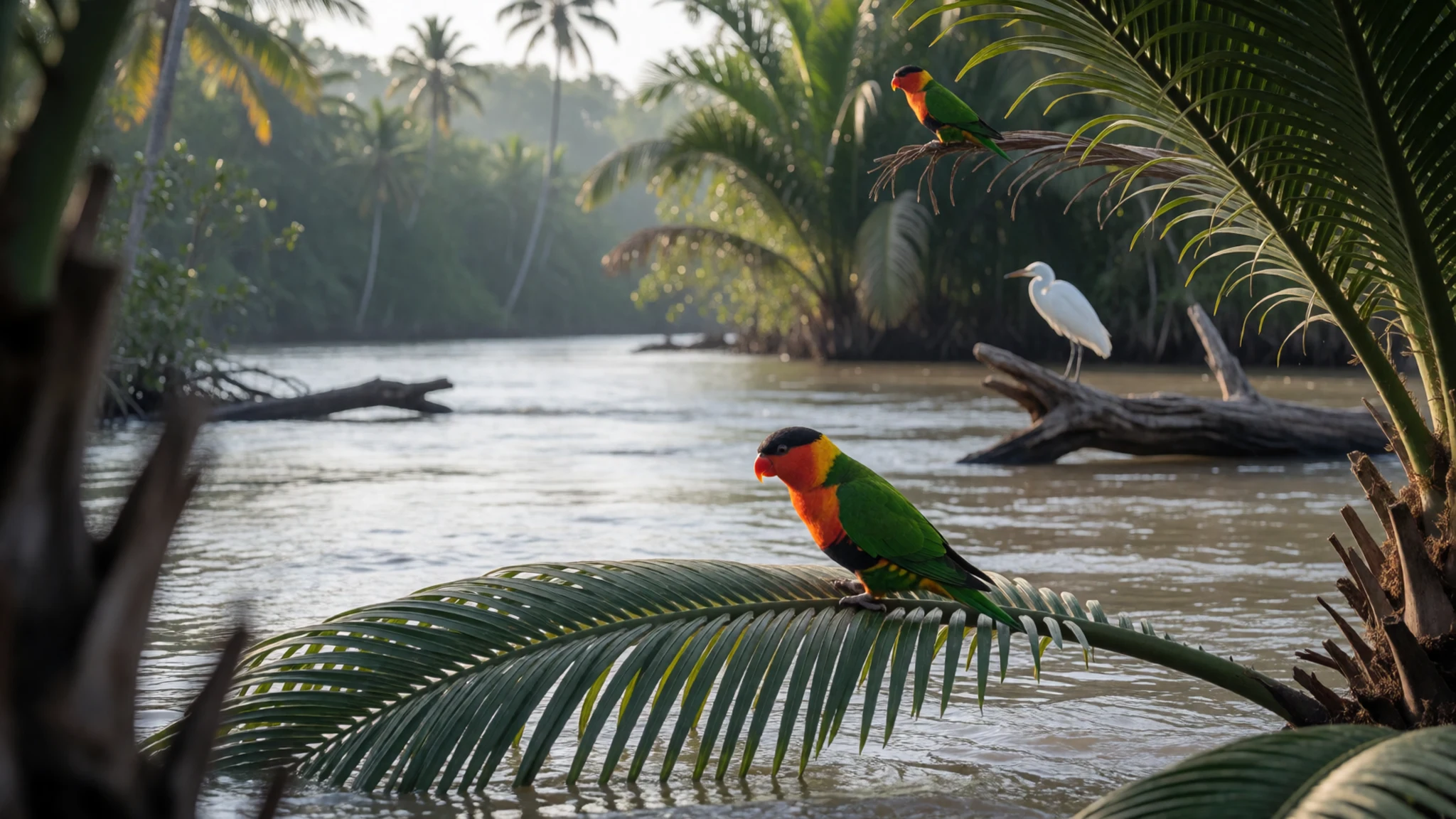
- The river mouth — Coast east of Wewak
The Sepik meets the Bismarck Sea about 100 km east of Wewak with no delta, so the river simply spills into open water. A line of debris and muddy water marks where fresh meets salt far offshore. Reaching the mouth needs a boat and local arrangements, and most visitors stay upstream, where villages and wildlife are easier to reach.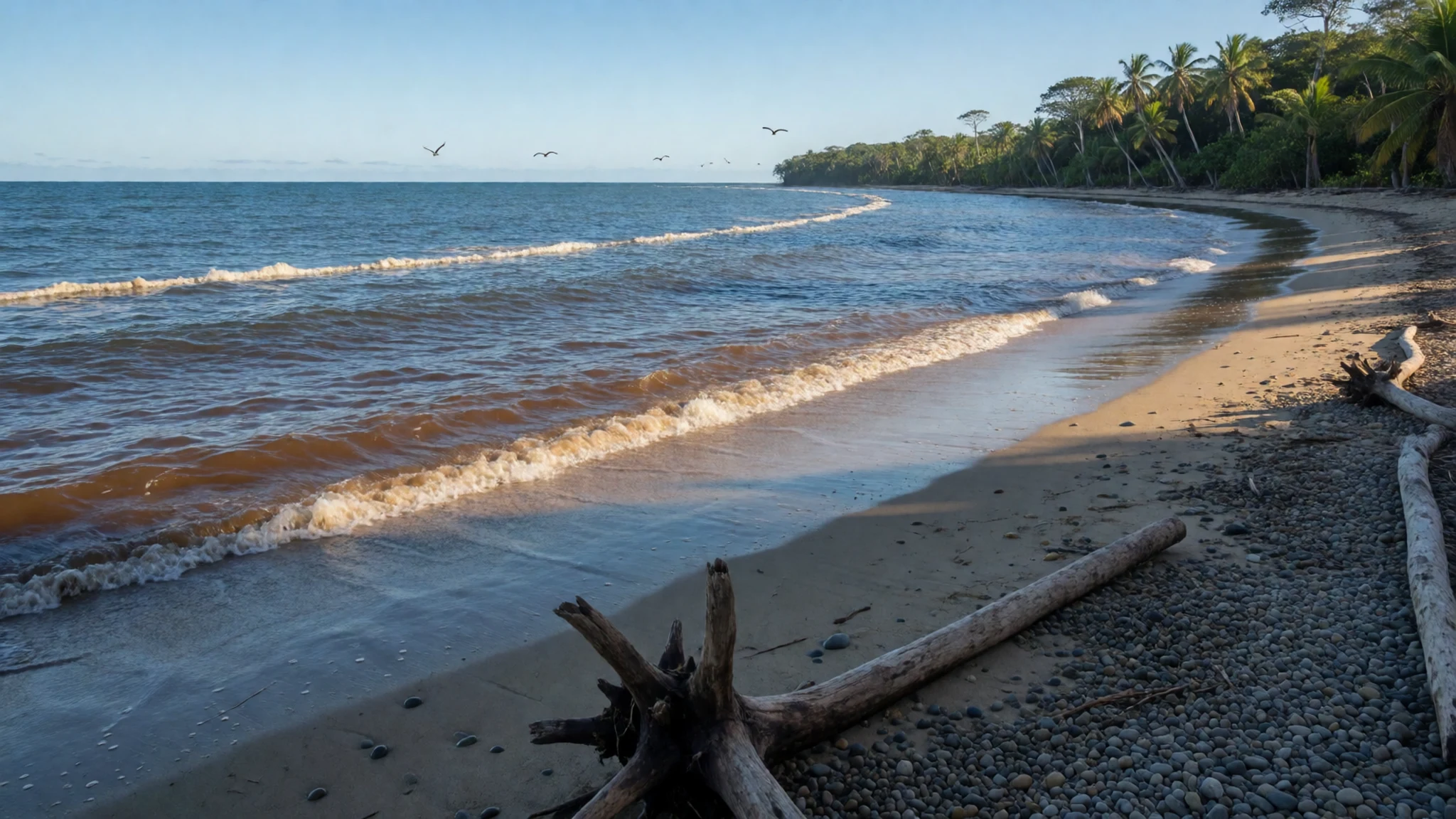
Culture
Sepik River culture is built around water, yams, sago and the spirit houses that hold men's ritual life together. Each village keeps its own art style, and carving is more than decoration: masks, figures, hooks and slit drums carry ancestral and spirit meaning. The haus tambaran is the centre of male ceremonial activity, including initiation, and a spirit is said to speak through sounds heard from inside. Some of these houses may be closed to women and to the uninitiated, so ask before assuming anything.
The yam is the staple crop and has rituals of its own, with rules about diet, abstinence and cleansing around planting, and growers compete to produce the biggest tubers. Christian missions have been active along the river since the 1890s, so church and custom sit side by side in many villages, and visitors will meet both.
Land and water rights matter. The bank, the lagoon and the sago stand usually belong to a family or clan, not to everyone, and visits are best arranged through a guide or a local contact who knows the right people. Carvings sold along the river are an important source of income, so bargain politely, and buy directly from the maker where possible.
Ask your guide before entering a haus tambaran or photographing people, carvings or ritual objects, and agree any village fee beforehand.
What to wear
Traditional dress along the Sepik River is less about tailoring than about decoration, often called bilas in Tok Pisin. For ceremonies, initiations and festivals, people wear feather headdresses, shell necklaces and armbands, boars' tusks, woven fibre and bark cloth, with clay and paint on the face and body. Grass or fibre skirts are worn on these occasions. This is ceremonial wear, put on for particular events rather than every day.
Day to day, most people wear what is practical in the heat: T-shirts and shorts, and the laplap, a printed wrap of cloth worn by men and women alike. Women often wear loose, bright cotton dresses or blouses. Rubber sandals are common, and Sunday brings out the best clothes for church.
A visitor should dress for heat, mosquitoes and modesty at the same time. Lightweight, quick-dry long sleeves and trousers cover skin against insects and sun, and a wide-brimmed hat helps on the water. Knees and shoulders should be covered in villages, and swimwear is best kept for the coast, not the river or village landings. Sandals that can get wet and grip a muddy bank or a canoe floor are more useful than boots, and a light rain jacket earns its space in the bag.
What to eat
- Sago — Village kitchens and swamp-edge sago stands
Starch washed from the pith of the sago palm, then steamed or fried into a pancake, or cooked into a thick paste. It is the daily staple of many river households. Watching a palm being processed is worth the muddy walk into the swamp.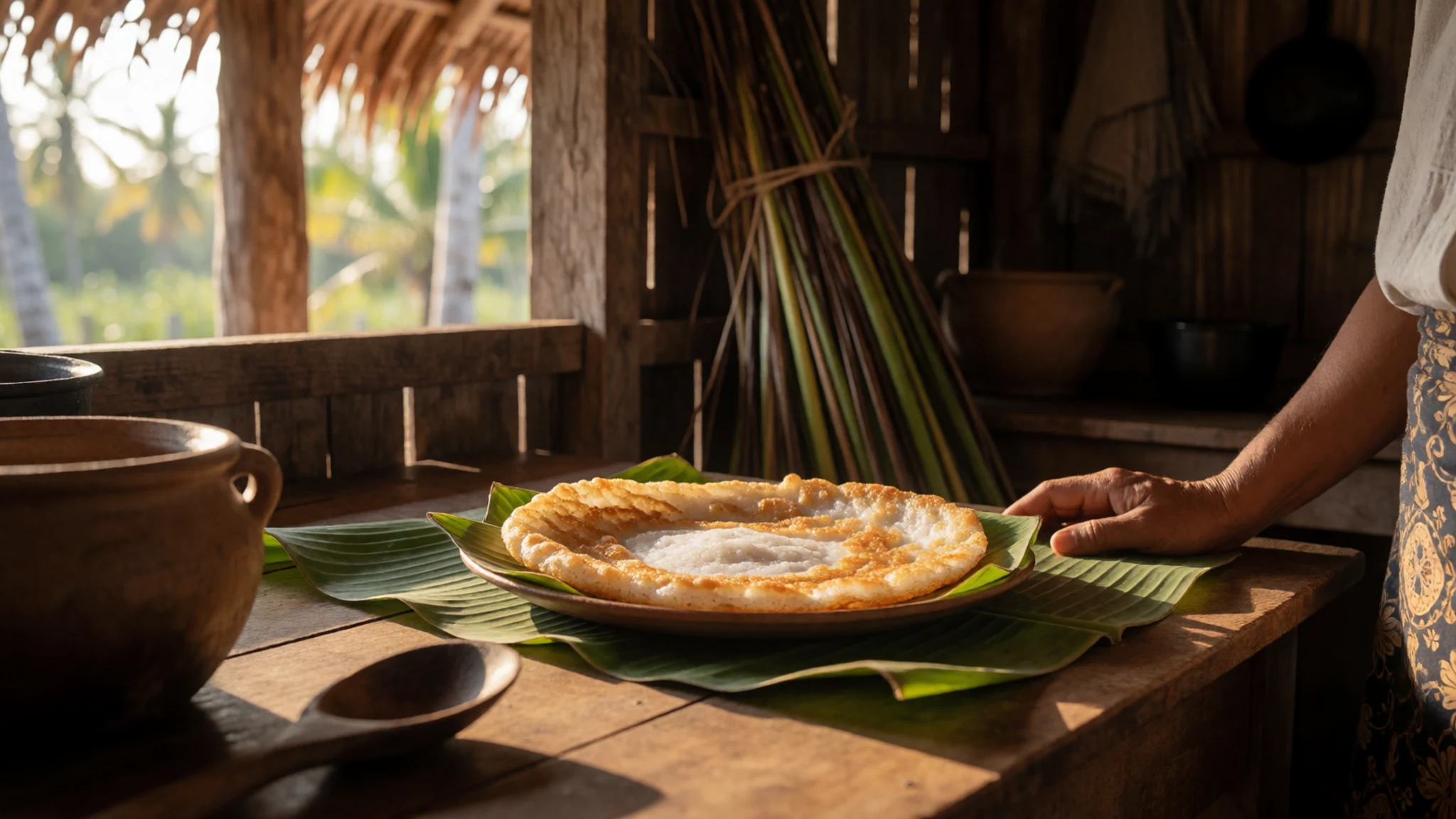
- Yam — Village meals and garden plots, especially around Maprik
Yam is both a staple and a status crop, with ritual attached to planting and pride in growing large ones. Boiled or roasted, it is plain, filling food, often served alongside greens or fish. It features most prominently in village life around harvest time.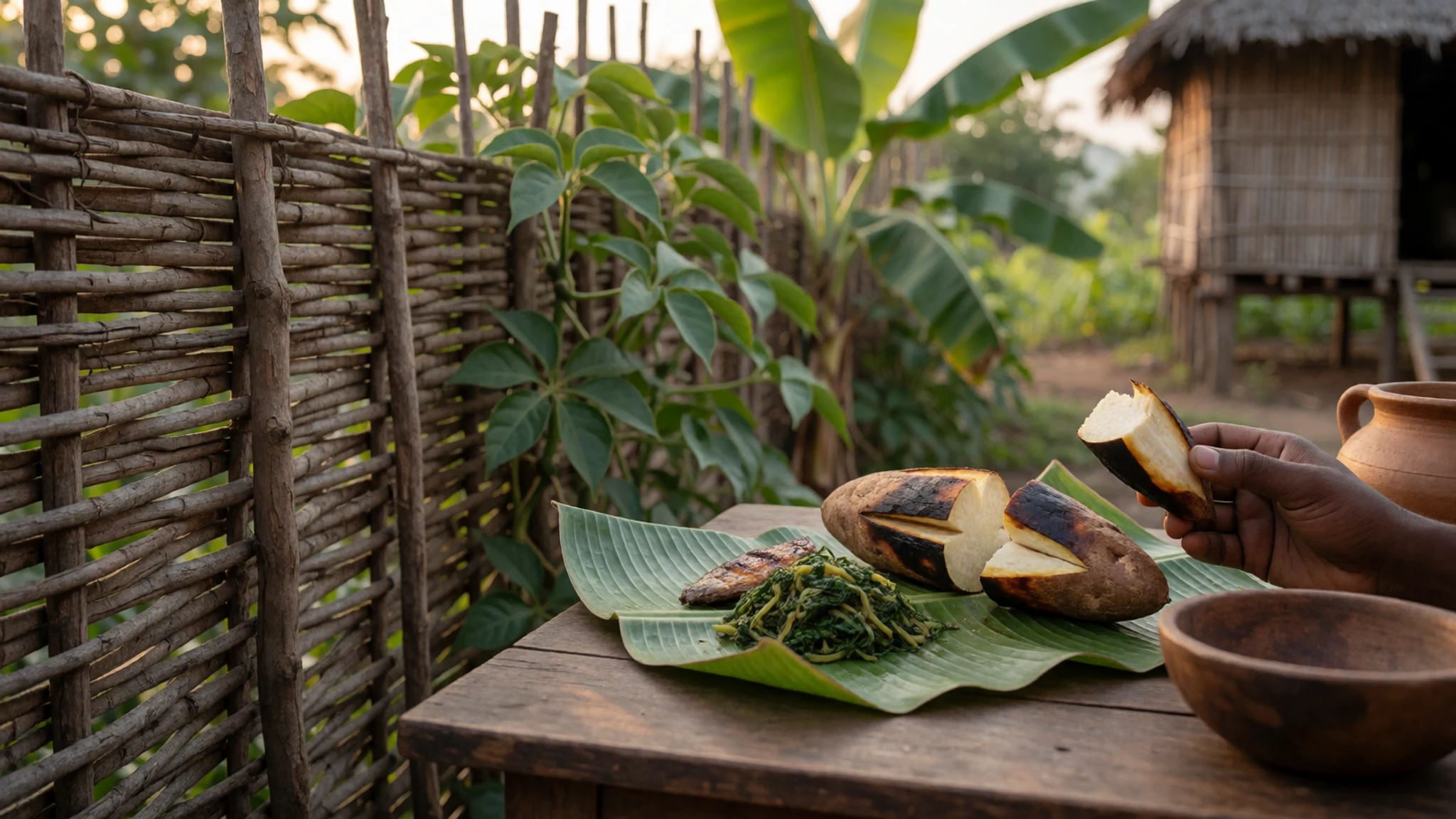
- Smoked or grilled river fish — Canoe landings and village markets along the river
Fish caught from the river and lagoons are usually cooked over a fire, often smoked to keep longer, and eaten with sago or yam. Flavours are simple and smoky. Ask your guide where the catch came from and how it was kept. - Sago grubs — Villages near sago swamps
The fat grubs that live in rotting sago palms are a traditional treat, eaten roasted or sometimes raw. Brave visitors may be offered one as a sign of hospitality. A polite refusal is fine if it is too much. - Greens in coconut milk — Village meals and the town market at Wewak
Leafy greens simmered in coconut milk are a common side dish that rounds out a meal of sago or yam. It is mild, creamy and filling. Cooked in a pot over a fire, it is usually the most vegetable-heavy dish on offer.
Plan it
Best time. The drier months, roughly May to October, tend to be easier for canoe and road travel. The wetter months bring heavier rain, higher water and muddier roads. It is hot and humid throughout the year, so check current conditions with your operator before booking.
How long. 4–7
Getting there. Fly to Wewak: Air Niugini has daily flights from Port Moresby, and PNG Air links Wewak with Madang and Mount Hagen. Check the airlines' sites for current schedules. From Wewak, go by road to Pagwi, Angoram or Timbunke, then continue by canoe or riverboat with an operator.
Budget. mid
Tips
- Book a guide and a canoe or river cruise through an operator before you arrive; village visits go more smoothly when arranged in advance.
- Carry cash in small notes, as cards are unlikely to work outside Wewak.
- Start early on the water for cooler air and better birdwatching; midday is hot and still.
- Bring safe drinking water or a purification method, plus insect repellent, and speak to a travel clinic about malaria before you go.
- Leave spare days in the plan, as flights and road journeys can change at short notice.
Etiquette
- Ask before photographing people, carvings or ritual objects.
- Cover knees and shoulders in villages and follow your guide's lead on spirit houses.
- Agree any village fee or carving purchase price before the visit, and keep to what was agreed.
Nearby
Sources
- Wikidata Q848308 (CC0)
- Wikipedia — Sepik (CC BY-SA 4.0)
- Wikivoyage — Sepik (CC BY-SA 4.0)
- Photo: Snapshot of the daily life of the villagers — Top1963 (CC BY 3.0)
- Photo: Sepik River watershed map — Mheberger (CC BY-SA 4.0)
- Photo: Fresh/saline water interface off the Sepik mouth — LawrieM (CC BY-SA 4.0)
- Photo: Government anthropologist at work in the middle Sepik — unknown author (Public domain)
- Photo: Inside a Haus Tambaran, Maprik district — Sylt-Tinto (CC BY-SA 4.0)
- Photo: Garamut ritual drum, Pieniężno museum — Adam Kliczek (CC BY 3.0)
- Photo: Korogo Village, Sepik River, 1975 — Franz Luthi, uploaded by John Hill (CC BY 3.0)
- Photo: Black-capped Lory at Kaminabit village — Top1963 (CC BY 3.0)


Wildlife
- Black-capped lory (animal)
The black-capped lory is a bright parrot that looks as though it is wearing a small black hat. Its wings are green, its head and body red, its underwings yellow, and its legs and belly blue. It is widespread and common in New Guinea, and at Kaminabit, in the middle Sepik, one has been photographed perched on a boy's head, the sort of picture photographers hope to bring home.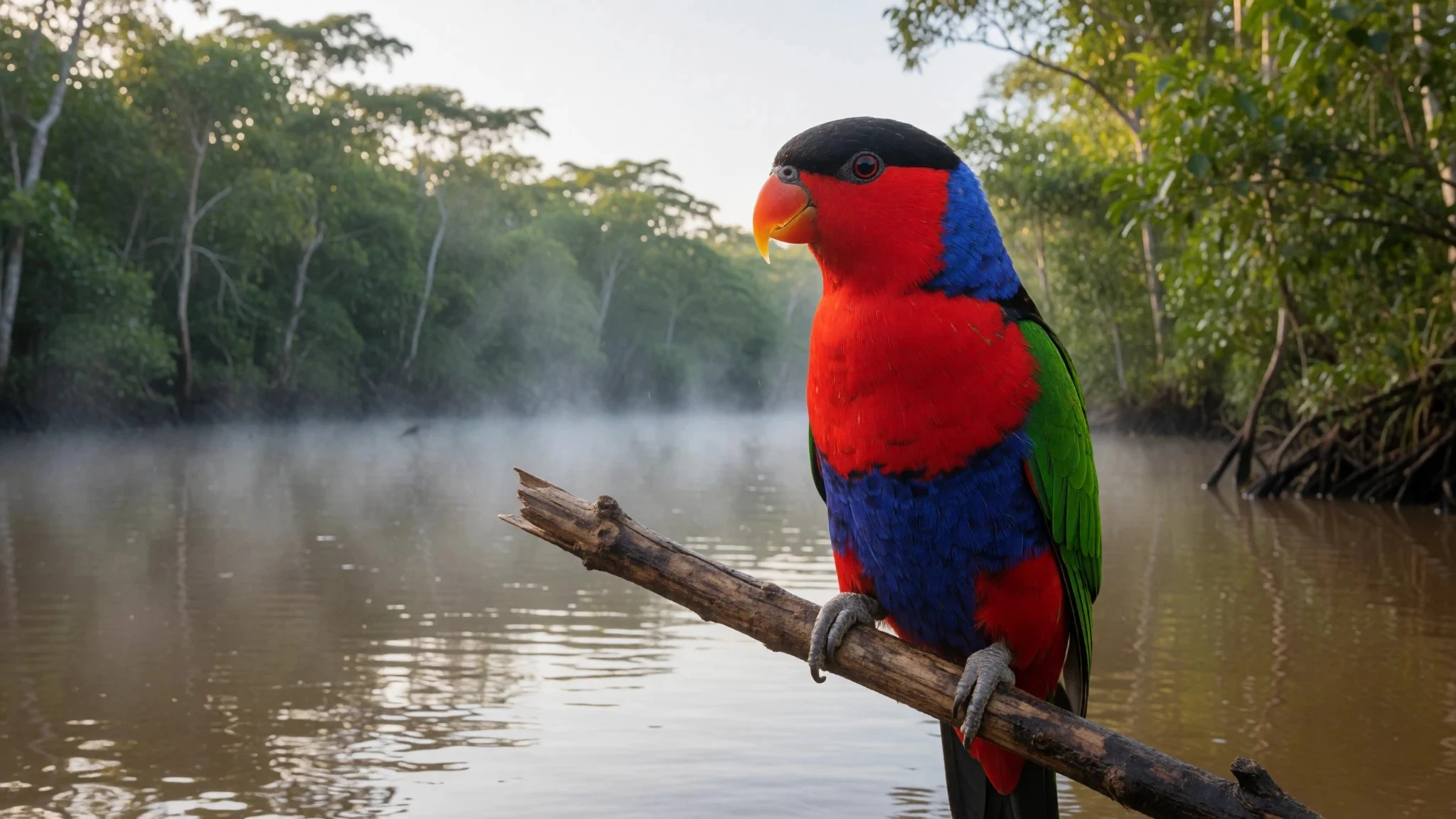
- New guinea crocodile (animal)
The New Guinea crocodile is a small crocodile that hunts fish and other little animals once darkness falls. It lives mostly in freshwater swamps and lakes on the northern side of the island's central mountain ridge, and it is most active at night. Crocodiles are a real presence along the Sepik, so keep your hands and feet well out of the water at all times. Once heavily hunted for its skin, it now benefits from conservation and is listed as of Least Concern.
- Black-capped lory (bird)
The black-capped lory is a bright parrot that looks as though it is wearing a small black hat. Its wings are green, its head and body red, its underwings yellow, and its legs and belly blue. It is widespread and common in New Guinea, and at Kaminabit, in the middle Sepik, one has been photographed perched on a boy's head, the sort of picture photographers hope to bring home.