Borobudur
Borobudur, Indonesia
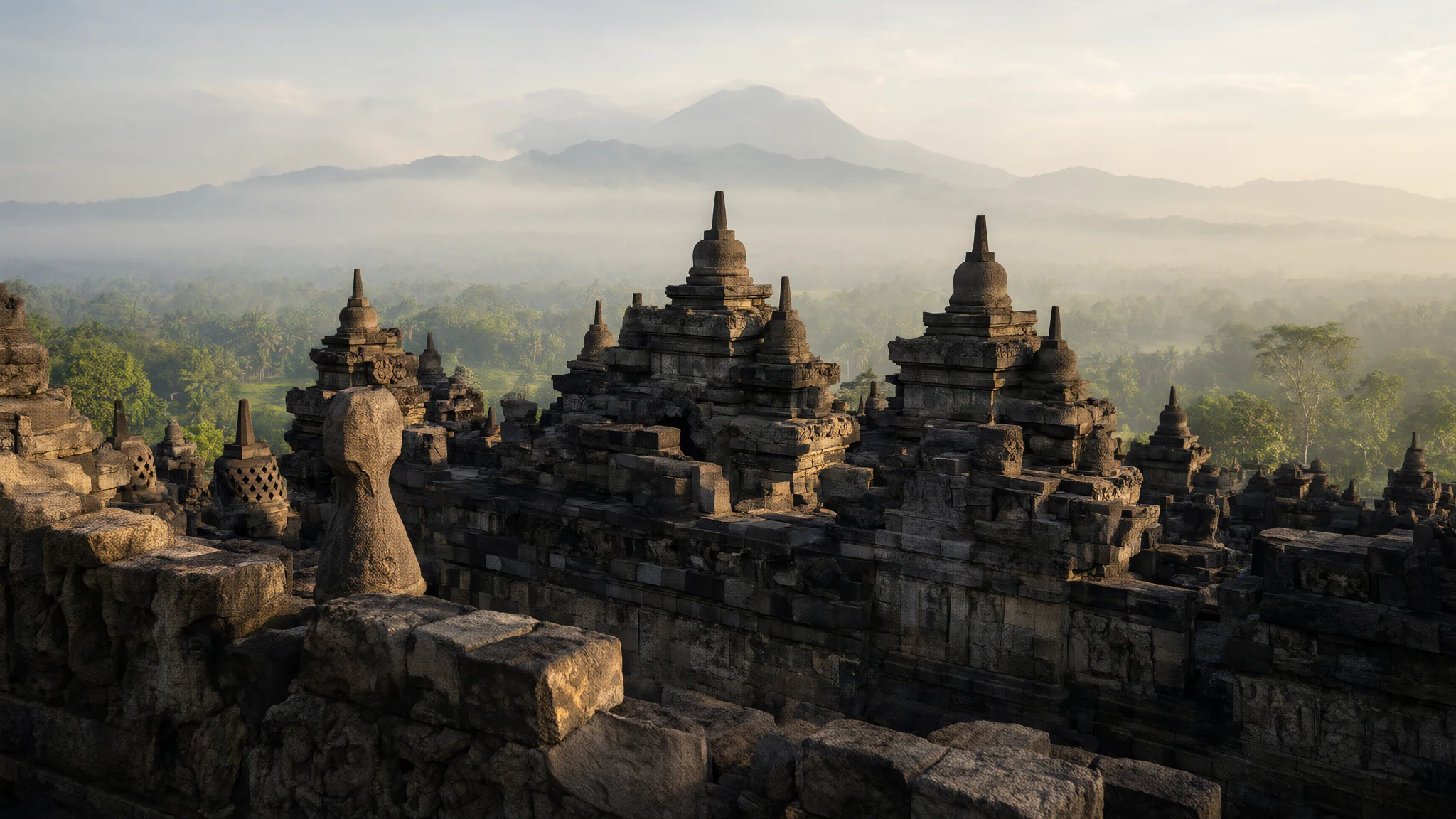
Rise before dawn to watch mist clear from an immense ninth-century stone mandala standing amid the volcanoes of Central Java.
The place
Borobudur stands in the fertile Kedu Plain of Central Java, northwest of Yogyakarta and close to the town of Muntilan. Built from grey andesite-like stone around the start of the ninth century, the monument functions as a massive three-dimensional stone mandala. Its architecture maps the Buddhist cosmos, rising from the realm of human desire through ascending stages of spiritual awakening towards ultimate liberation. The complex is engineered around a natural hill, forming nine stacked platforms. The lower six tiers are square in plan, while the upper three tiers shift to concentric circles crowned by a massive central dome. Intricate stone reliefs wrap around the walls and balustrades in an unbroken ribbon of craftsmanship, illustrating moral teachings and scenes from Buddhist texts. Pierced lattice stupas encircle the upper terraces, each containing a seated stone statue of the Buddha gazing out across the surrounding valleys and volcanic peaks. Over centuries, shifts in trade routes, regional conflicts, and the island's conversion to Islam left the monument abandoned to the tropical rainforest. Volcanic ash and creeping jungle vines covered the stone structures until European administrators rediscovered the ruins during the early nineteenth century. Today, extensive restoration efforts protect the stone masonry from moisture damage and shifting foundations, allowing visitors to once again walk the ancient corridors where generations of monks and pilgrims once practiced ritual circumambulation.
Its story
The construction of Borobudur unfolded during the golden age of the Sailendra dynasty, an influential ruling house that promoted Mahayana Buddhism across Java. Historical records offer no written diary or royal decree detailing who planned the monument or exactly how long the massive engineering project took to complete. Modern scholars piece together its timeline by examining stylistic changes in the carved stone reliefs, comparing the work on the hidden base with the refined panels on the upper galleries. Architectural analysis indicates that builders expanded and modified the original design several times to ensure structural stability on the sloping clay hill. During the same era, Hindu and Buddhist communities raised sanctuaries side by side nearby, including the sprawling temple compounds at Prambanan, demonstrating a remarkable period of religious patronage and peaceful coexistence across the Central Javanese plains. As political power shifted eastward toward the Brantas River valley, royal court patronage dried up, and the great sanctuaries of the Kedu Plain fell silent. Local folk tales later wrapped the abandoned ruins in mystery, treating the moss-covered stone mounds as places charged with spiritual power and misfortune. Rediscovery began when colonial administrators cleared away the thick overgrowth and excavated the buried base. twentieth-century conservation projects, supported by international bodies, dismantled sections of the monument to install modern drainage systems, ensuring the stone terraces survive for future generations.
What to see
- Borobudur Main Monument — Central Borobudur Archaeological Park
Explore the tiered stone galleries, examine the thousands of narrative relief panels, and view the serene stone Buddhas seated inside openwork lattice stupas along the upper circular terraces.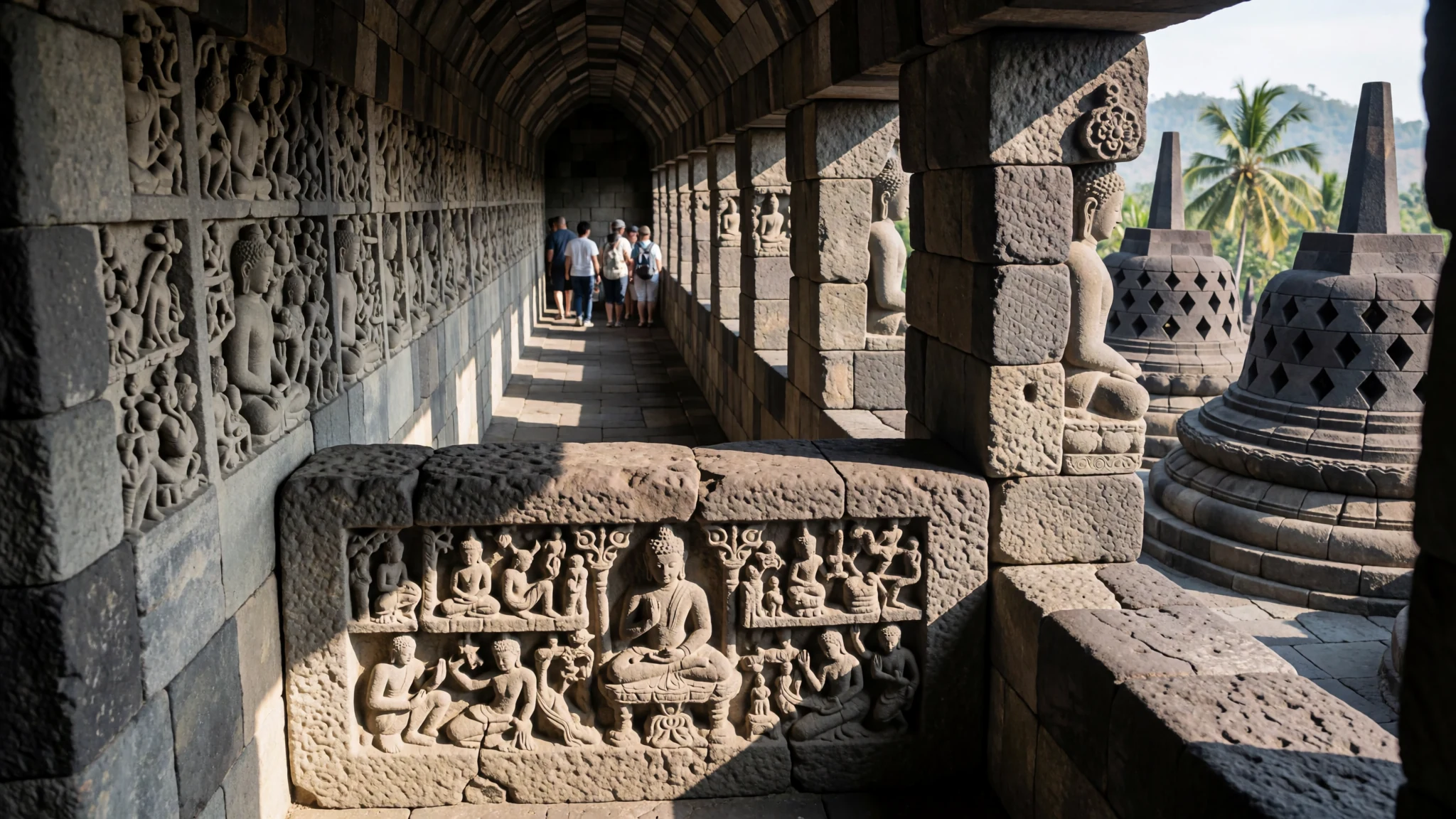
- Karmawibhanga Museum — Archaeological Park grounds
View archaeological fragments recovered during restoration work, study displays explaining conservation techniques, and examine photographs of the hidden base reliefs that depict the law of karma.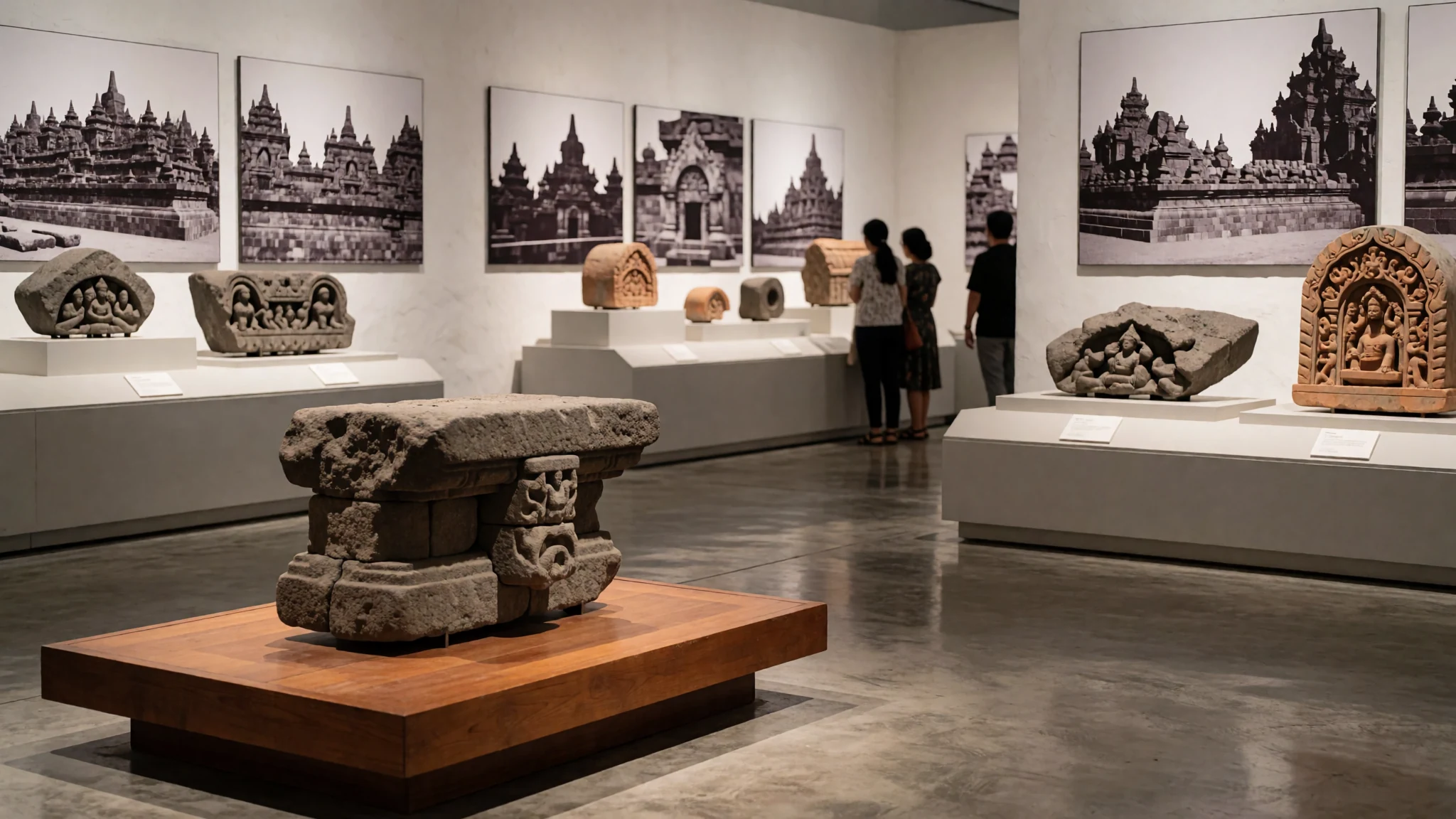
- Samudraraksa Museum — North of the main temple
Inspect a full-scale wooden replica of an ancient double-outrigger ship built using traditional maritime techniques depicted on the temple walls, celebrating historic trade networks across the Indian Ocean.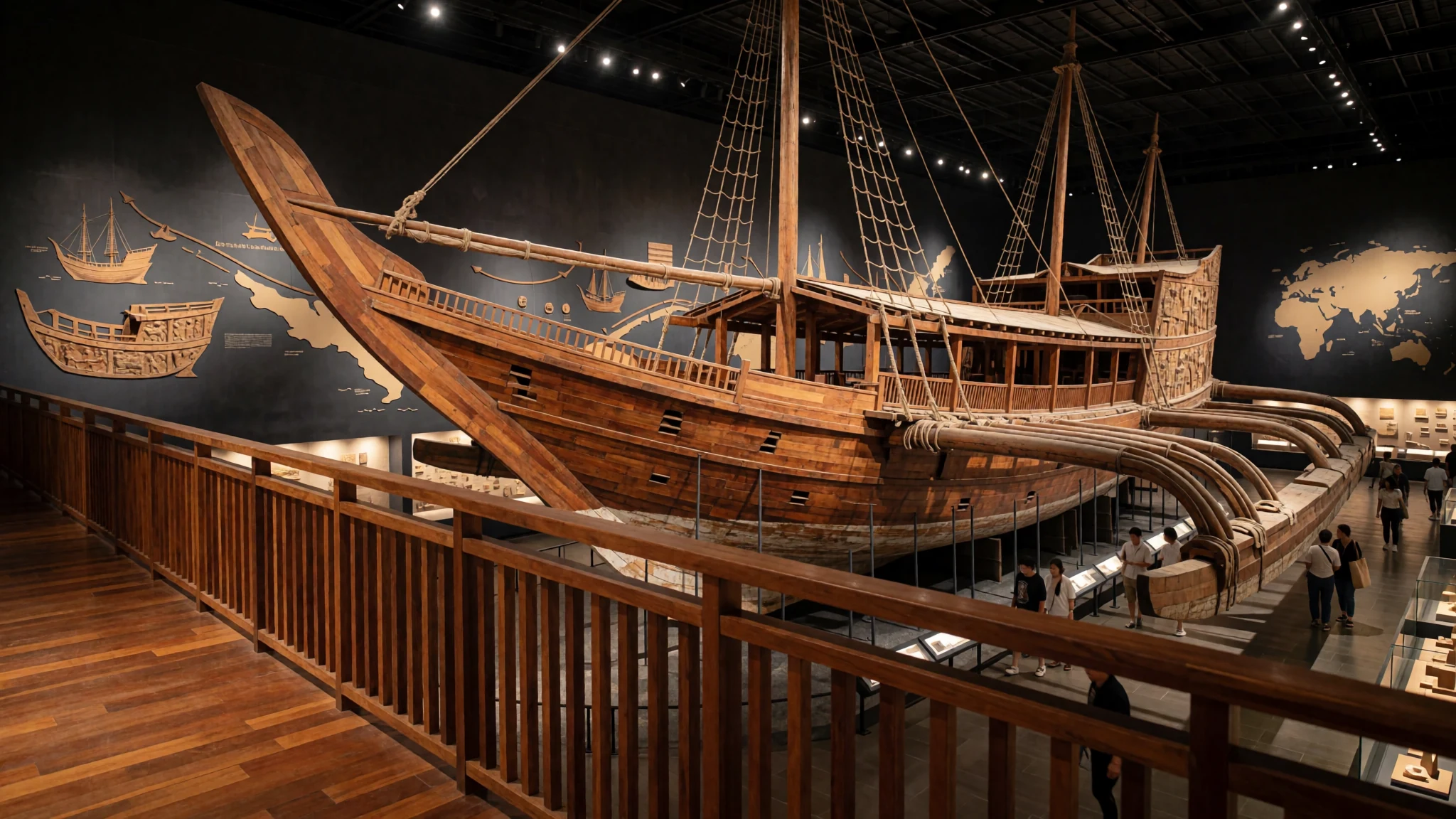
- Candi Mendut — Mendut village, east of Borobudur
Visit this smaller ninth-century Buddhist temple situated nearby, featuring a soaring inner chamber housing three monumental stone statues carved with exceptional artistic refinement.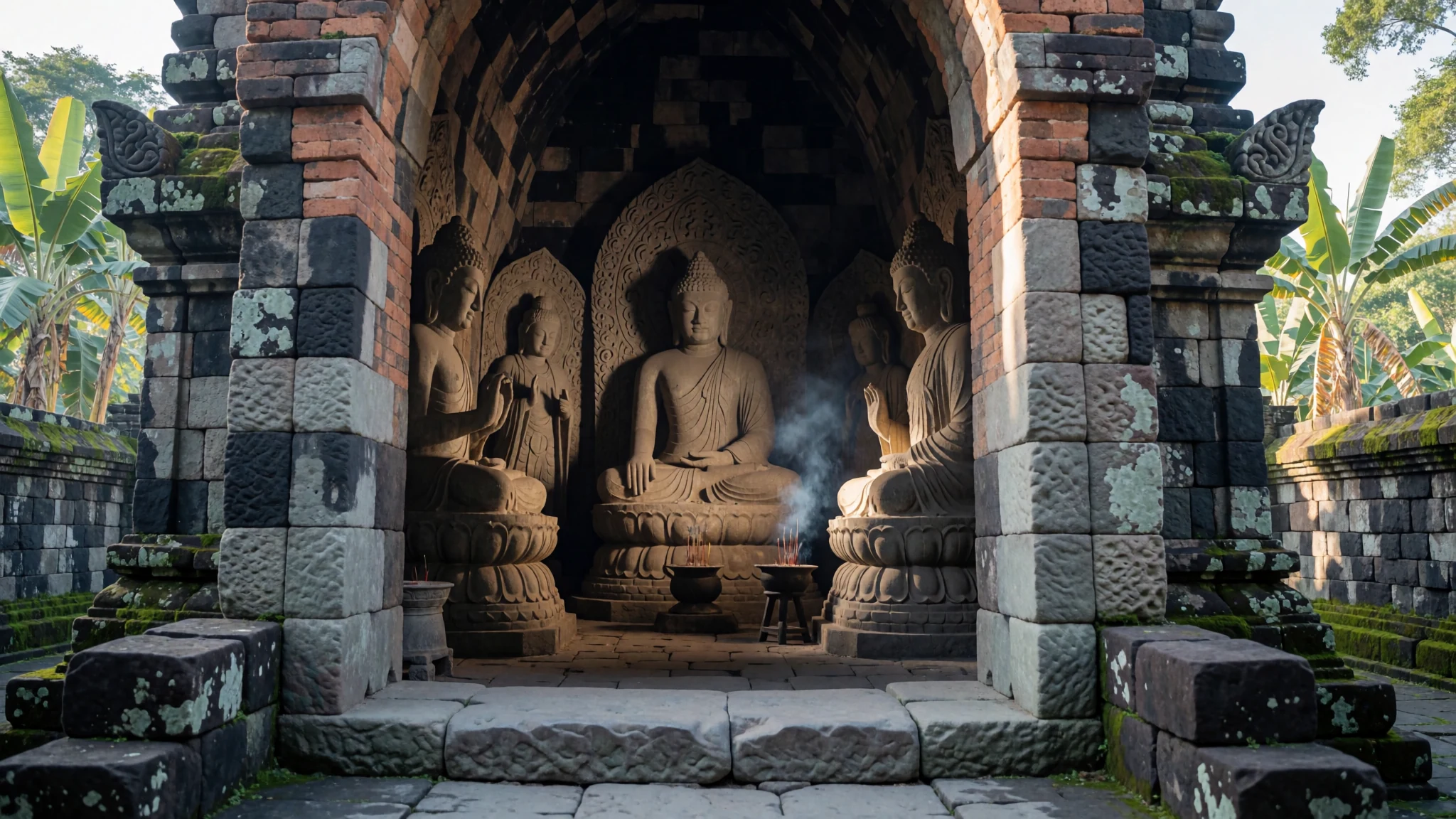
- Candi Pawon — Between Mendut and Borobudur
Stop at this small, elegant shrine positioned along the traditional alignment between Mendut and Borobudur, noted for its fine exterior carvings of celestial beings and wealth-bestowing figures.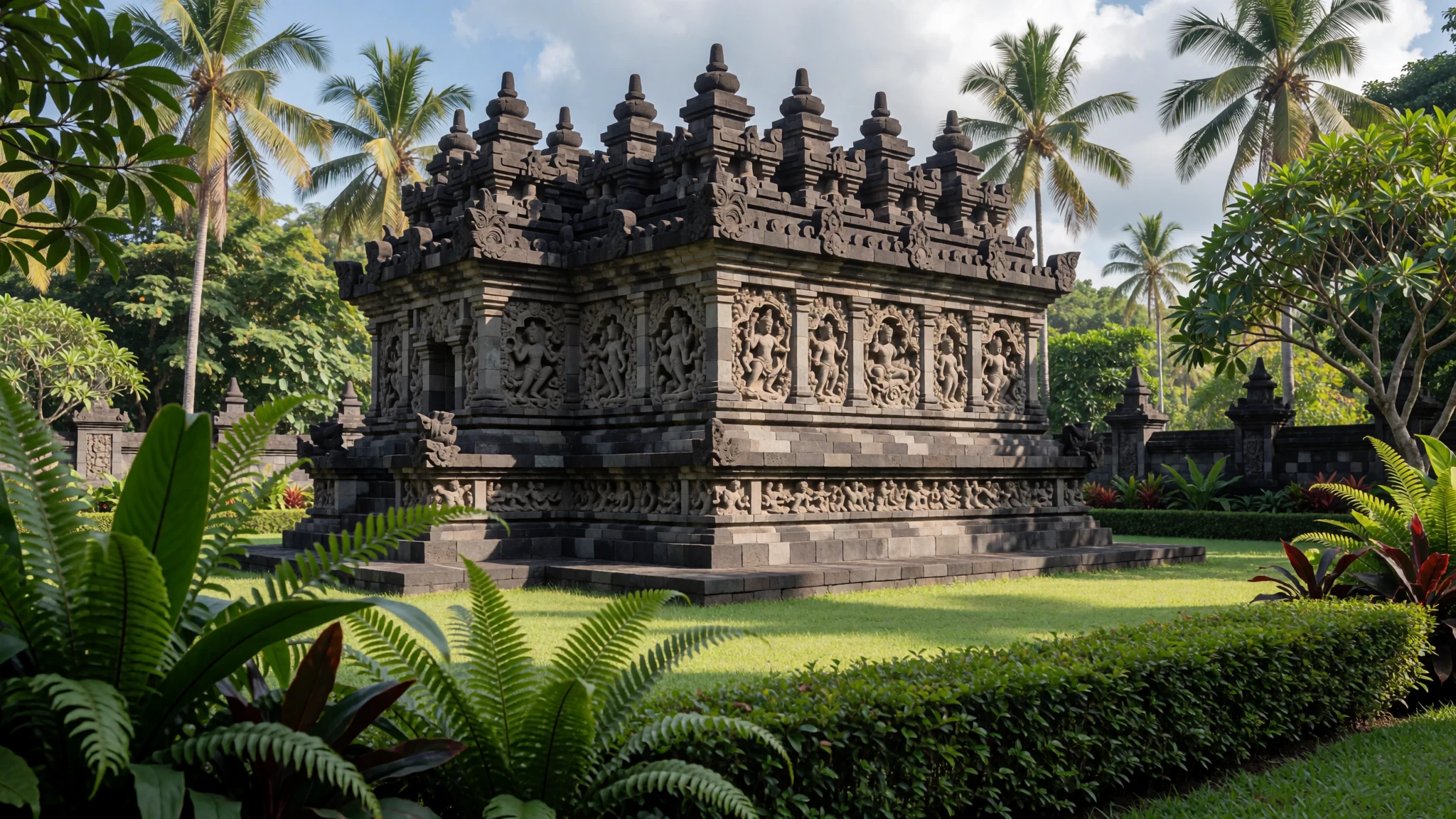
Culture
Central Java preserves a distinct cultural identity rooted in Javanese tradition, court arts, and rural community life. The surrounding region of Yogyakarta serves as a major student hub, meaning visitors frequently encounter curious local university groups eager to practice conversational English and learn about international perspectives. Vendors operate busily around the approaches to the park, offering souvenirs, snacks, and guided assistance; a polite, firm refusal combined with steady walking is all it takes to manage persistent sales pitches. Visitors should appreciate that the monument remains a living place of reverence for Buddhists across Indonesia, particularly during annual celebrations like Vesak when monks gather for candlelight processions. Dress modestly out of respect for the sacred site, ensuring shoulders and knees remain covered by loose garments. Always remove your shoes or slip on provided temple footwear when entering sensitive inner sanctuaries or local prayer spaces.
What to wear
Traditional Javanese attire centers on the versatile batik textile, featuring intricate hand-drawn or stamped wax-resist patterns dyed in earthy indigo, brown, and cream tones. Men traditionally wear a folded batik headcloth known as a blangkon alongside a wrapped sarong skirt, while women drape elegant batik cloth wrapped around the waist paired with lace blouses called kebaya. In daily contemporary life across the towns and university districts near Borobudur, younger residents dress in casual Western-style streetwear, including denim, t-shirts, and sneakers, reserving traditional garments for weddings, formal university ceremonies, and cultural festivals. For travelers visiting the temple complex, clothing must balance tropical warmth with modest cultural expectations. Lightweight, breathable linen or cotton trousers and shirts that cover the shoulders and knees are ideal for walking under the midday sun. Visitors are typically provided with a traditional fabric sash to tie around the waist when entering the monument precinct, serving as a sign of respect for the sacred space. Sturdy walking shoes or sandals with good grip are essential for navigating the steep stone steps and uneven stone corridors.
What to eat
- Gudeg — Local eateries and street stalls around Yogyakarta
A signature Central Javanese specialty made from young unripe jackfruit simmered slowly for hours in palm sugar and coconut milk, infused with aromatic teak leaves and served alongside rice, chicken, and egg.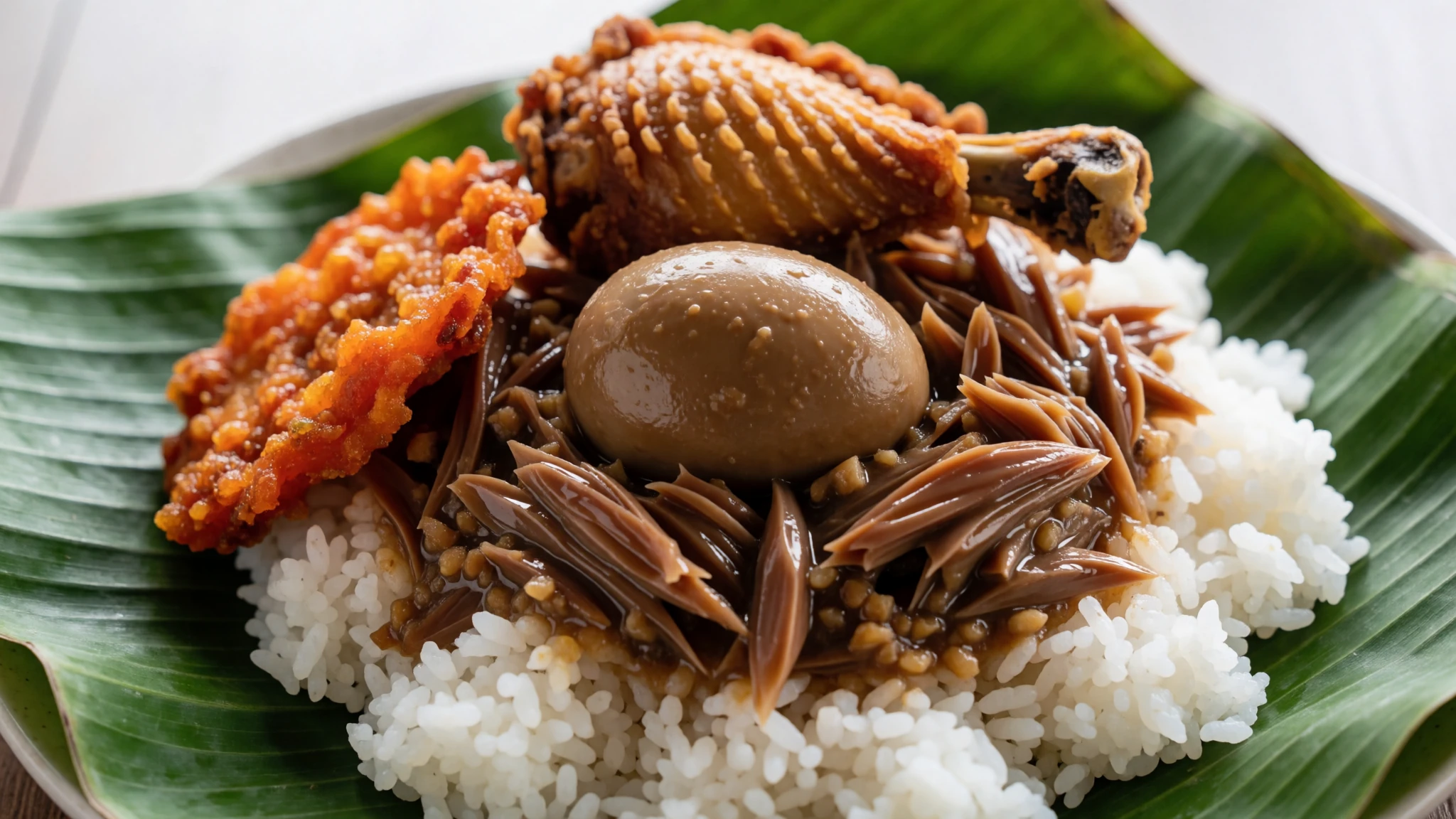
- Bakpia — Bakeries and markets across Magelang and Yogyakarta
Small, round baked pastry rolls filled with sweet mung bean paste, offering a crumbly outer crust that makes an ideal accompaniment to local tea or coffee.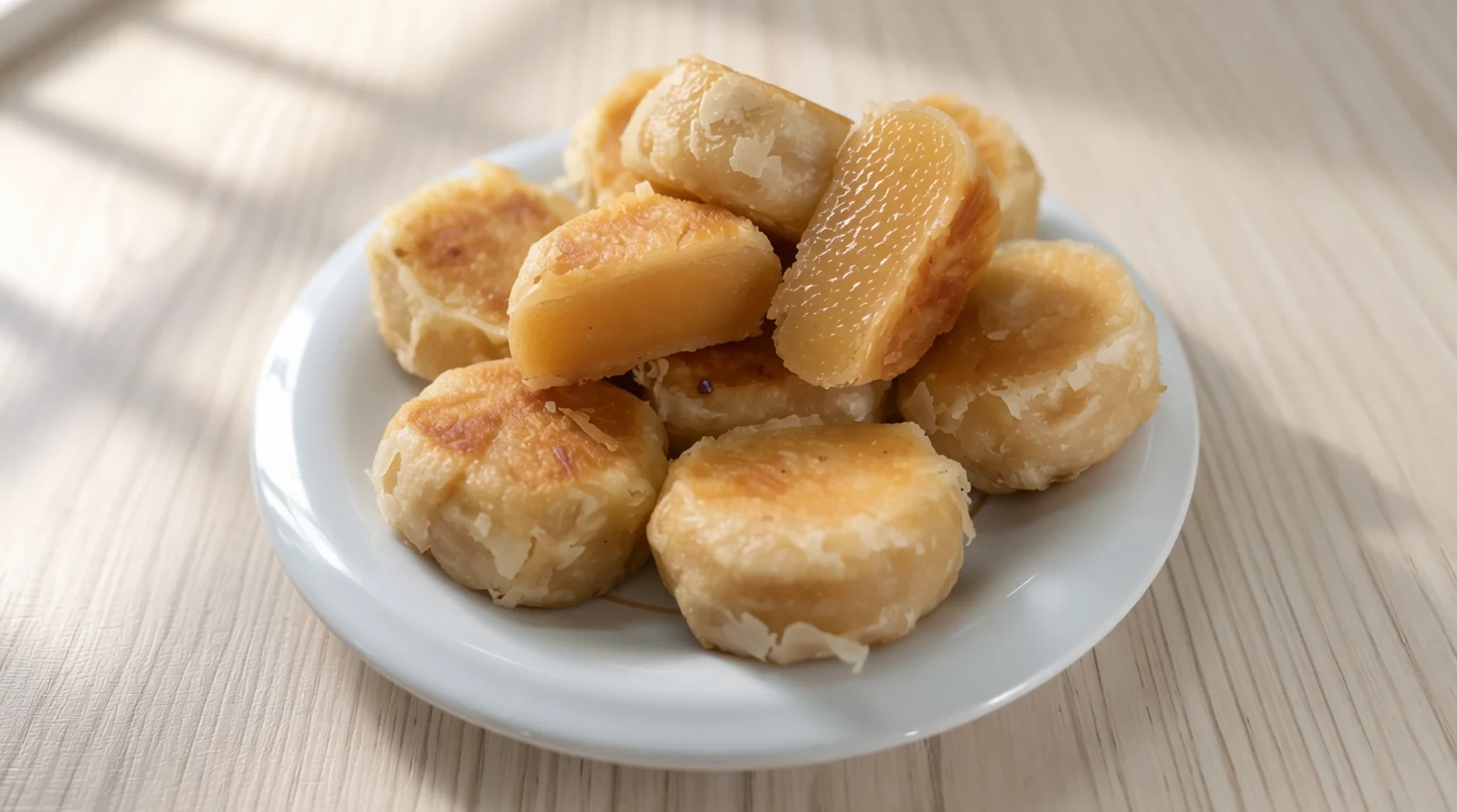
- Mie Ayam — Hawker stalls near regional bus stations
Comforting bowls of yellow wheat noodles topped with seasoned diced chicken, chopped spring onions, and wontons, served in a clear savoury broth with soy sauce seasoning.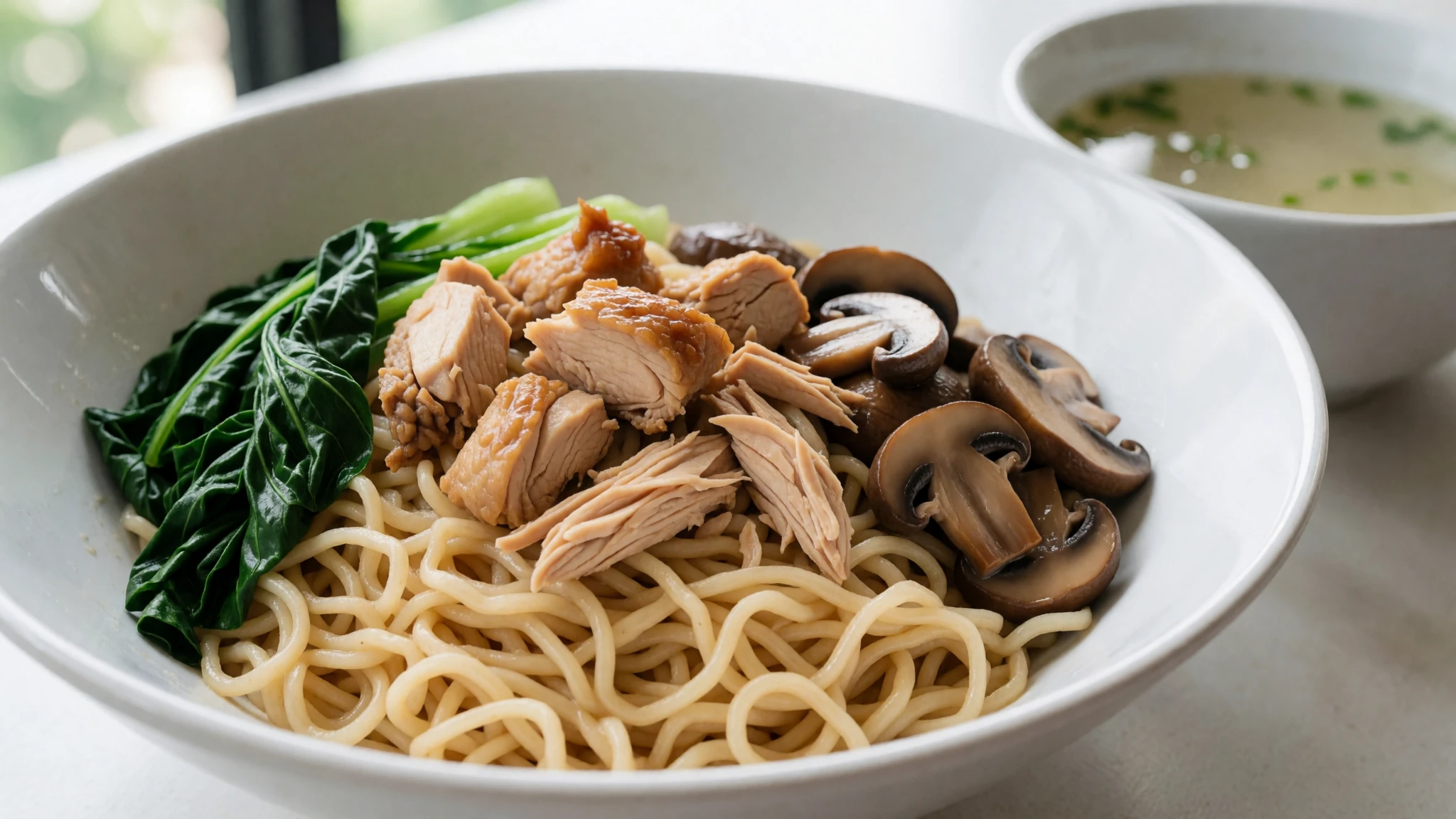
- Es Dawet — Roadside drink carts and village markets
A refreshing traditional iced beverage featuring green rice flour jelly droplets, rich coconut milk, and molten palm sugar syrup served over crushed ice.
Plan it
Best time. June to September, during the dry season, when July and August bring the least rain and clear morning skies offer uninterrupted views over the volcanic plains.
How long. 2–3
Getting there. Fly into Yogyakarta's Adisucipto International Airport or Solo's Adisumarmo International Airport, then complete the journey by taxi, bus, or organized tour vehicle.
Budget. mid
Tips
- Arrive early in the morning to catch the sunrise light across the stone stupas before daytime heat builds.
- Book temple access permits well in advance, as daily visitor numbers to the upper monument tiers are strictly controlled.
- Carry cash in local currency for small village purchases, market snacks, and local transport fares.
- Drink plenty of bottled water to stay hydrated while climbing the exposed stone staircases in the tropical sun.
- Wear comfortable footwear with strong grip for walking on uneven volcanic stone steps.
Etiquette
- Dress modestly by covering your shoulders and knees before entering the temple grounds.
- Maintain a quiet, respectful demeanor as monks and pilgrims perform religious rituals.
- Ask permission before photographing local students or worshippers participating in ceremonies.
Nearby
Sources
- Wikidata Q42798 (CC0)
- Wikipedia (CC BY-SA 4.0)
- Wikivoyage (CC BY-SA 4.0)