Belitung
Belitung, Indonesia
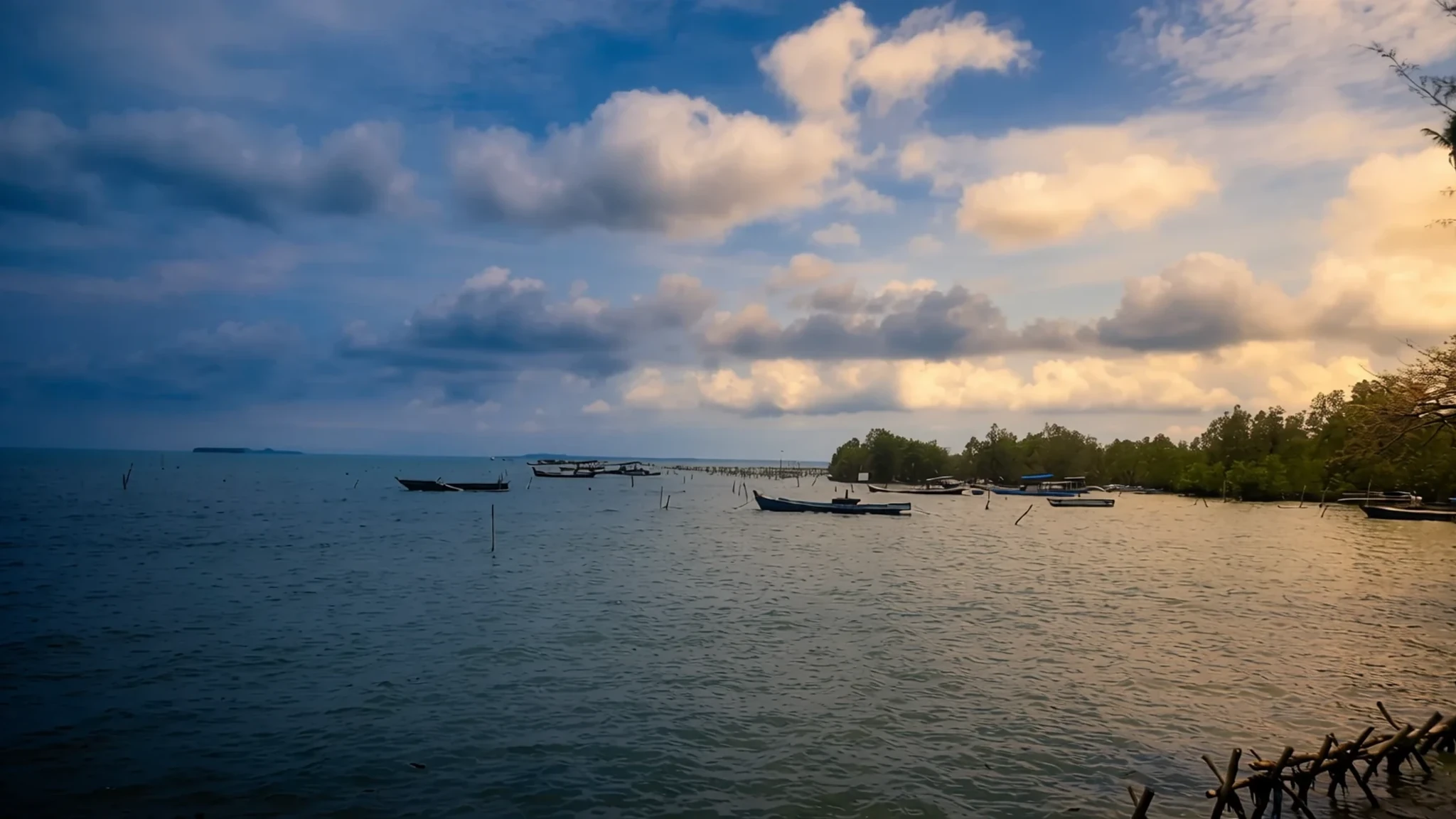
Belitung is an island of granite boulders, sheltered bays and pale sand, easiest reached by flying into Tanjung Pandan.
The place
Belitung is an island off the east coast of Sumatra, part of Indonesia's Bangka Belitung Islands province. Tanjungpandan is the seat of the regency that governs the western half of the island and the smaller Mendanau off its western coast. The regency once covered the whole island, but in 2003 the eastern districts were split off to form a separate regency, so today's Belitung is the western portion.
The island's appeal lies in its coastline. Wide bays hold fine, pale sand, and rounded grey granite boulders rise from the shallows and line the shore, so the scenery changes sharply from one cove to the next. The water is often calm, which suits swimming and snorkelling. Several islets lie a short boat ride offshore and make ready day trips.
Tourism is growing but the island still feels relaxed. Bangka, the larger neighbour, is more developed, with more people and the provincial capital at Pangkal Pinang. Belitung has become a weekend escape for office workers from Jakarta and Palembang, and visitors who want quieter beaches often choose it over the busier resort strips elsewhere in the region. Mining, fishing and farming remain part of daily life, and the island's economy still reflects its tin history.
Its story
Belitung's story is largely a story of tin. In the 17th century the rulers of Palembang recognised the island's deposits and set up mines there. Tin then became the main reason the Dutch brought contract workers to the island, and Hakka Chinese families from mainland China were among the first to arrive. Their presence is still visible in family names, temples and the food on town streets. Earlier, Chinese migrants had already settled in the wider Bangka region from the 13th century onwards.
The Dutch also brought Bugis and Javanese workers. Bugis men had a seafaring tradition, and the tin operations used large dredging boats that drew many of them into work on the water. Over time, Balinese and Madurese communities arrived through later government resettlement schemes, so the island's population became a mix of several cultures. Malay customs remain strong, and Malay is the everyday language for many people.
Some of the Chinese miners went home, but many stayed. Their descendants now live across Indonesia, and many return to Belitung at Chinese New Year to visit older relatives. The island's most famous recent story is on screen: the beach at Tanjung Tinggi was a filming location for the film Laskar Pelangi, and visitors who know the book or film come to see its setting.
What to see
- Tanjung Tinggi beach
Tanjung Tinggi beach, near Tanjungpandan, is the location used for scenes in the film Laskar Pelangi, which draws visitors who know the story. The sand is fine and the granite boulders make a striking backdrop at low tide. Come early or late in the day, because the midday sun is fierce and shade is limited to a few trees and simple stalls.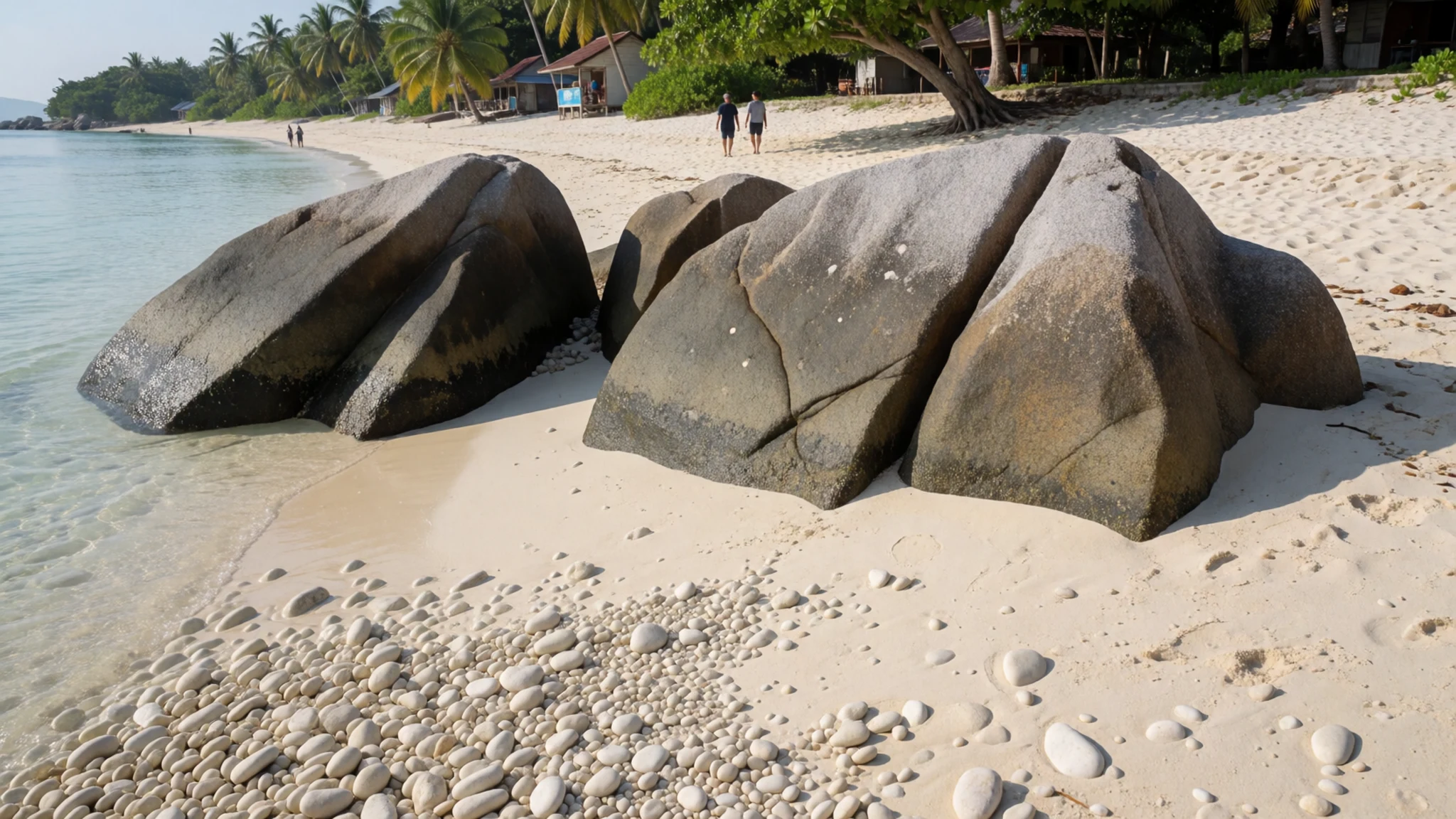
- Lengkuas Island lighthouse
The Dutch lighthouse on Lengkuas Island is an 18-storey tower built in 1889, and visitors can climb it. The stairs are steep and narrow, so take them slowly and expect to pause on the way up. From the top you see the granite islets and the sea around them. Local boat operators run trips out to the island, so ask at your accommodation.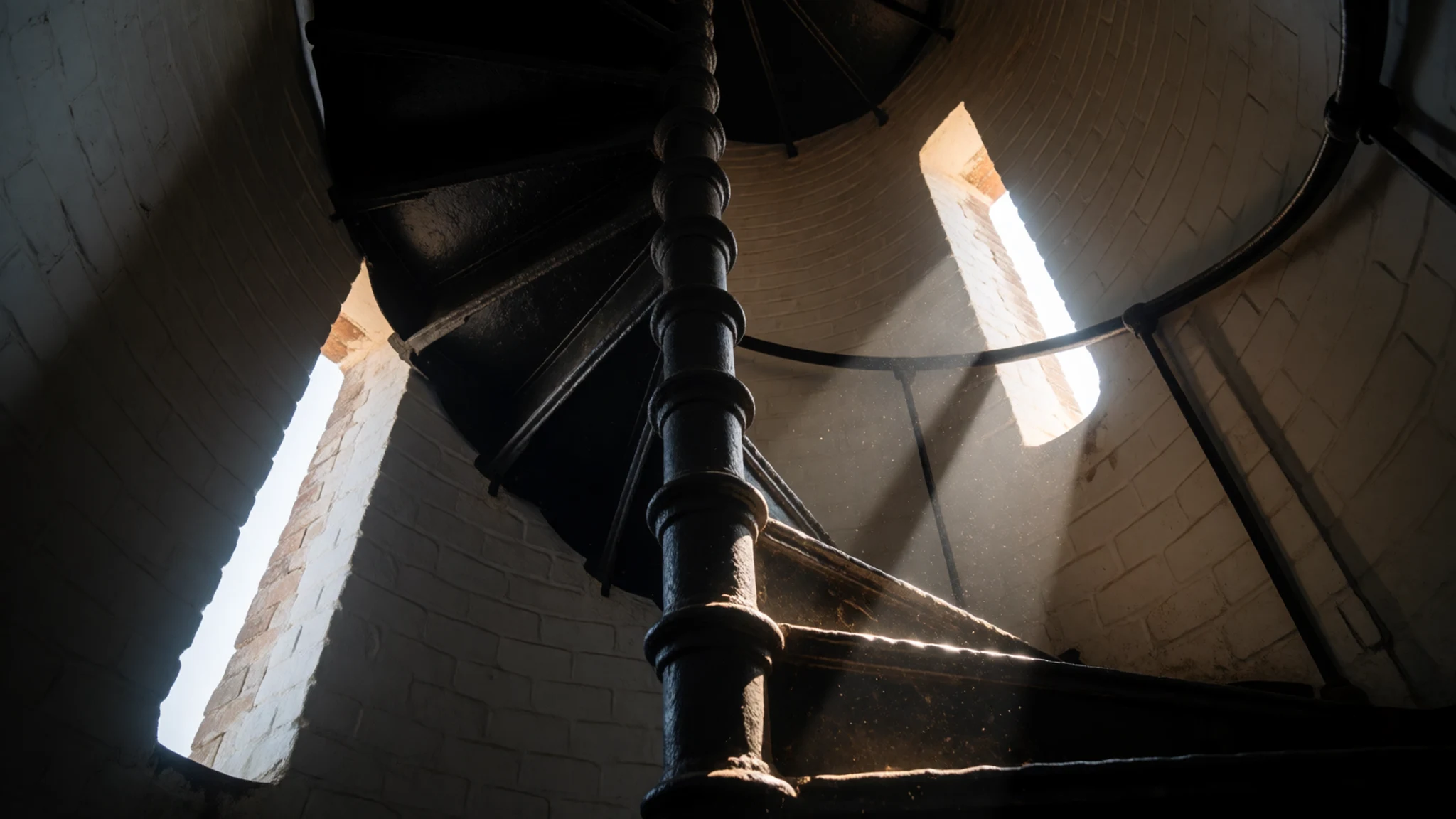
- Penyabong Beach
Penyabong Beach, in Membalong district, has the same pale sand and boulder shoreline found across the island, but it is quieter than many of the better-known bays. People come for an afternoon swim and to photograph the rock formations as the tide drops. There are few facilities, so bring water, sun protection and enough food for the day.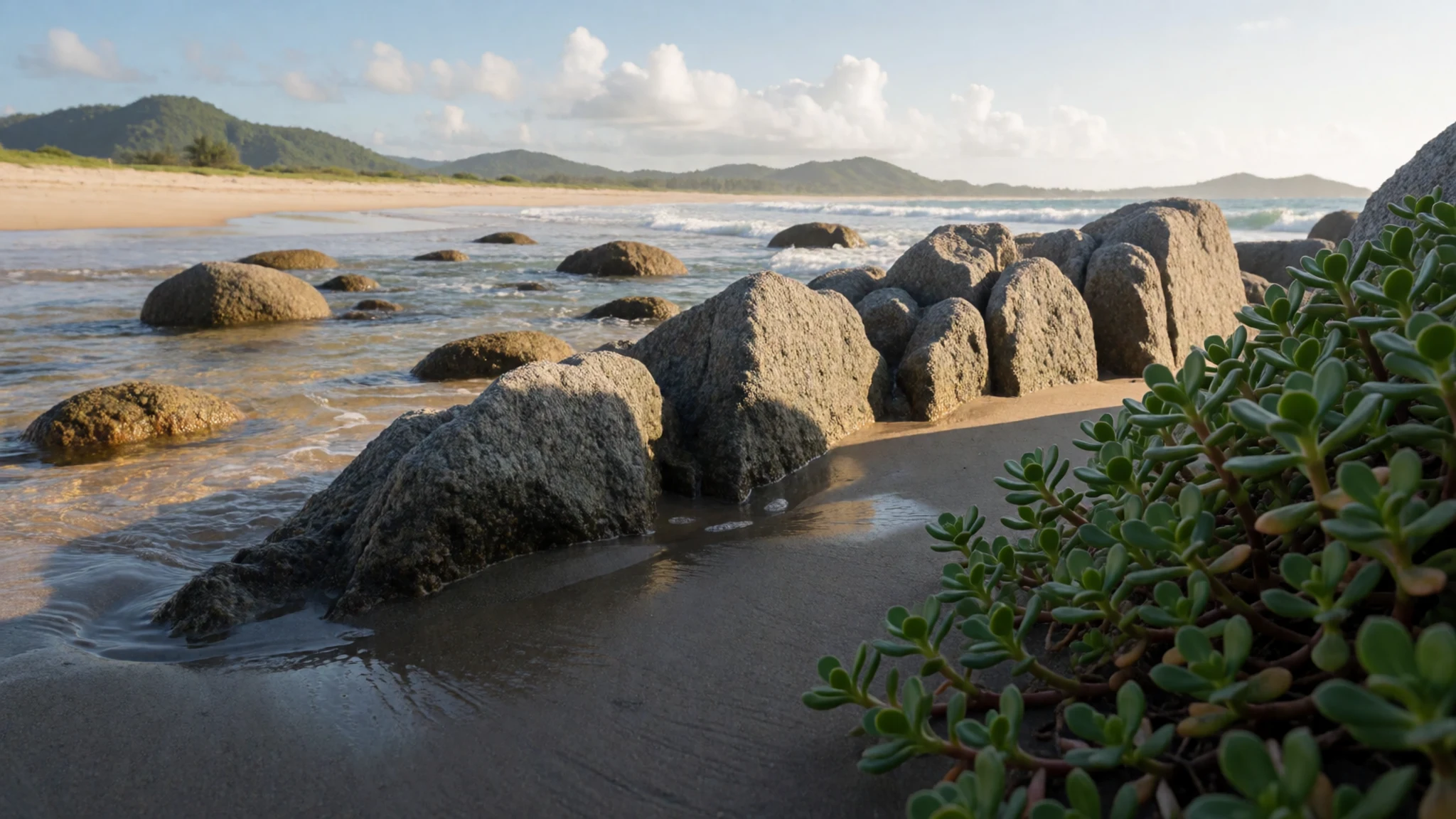
- Tanjung Kelayang
Tanjung Kelayang is the base for many visitors who want the beach close at hand. Kelayang Beach Cottages can arrange boat trips to nearby islands and inland excursions, which makes it a practical place to plan your days. If you intend to spend the afternoon on the sand, choose accommodation with a sea view.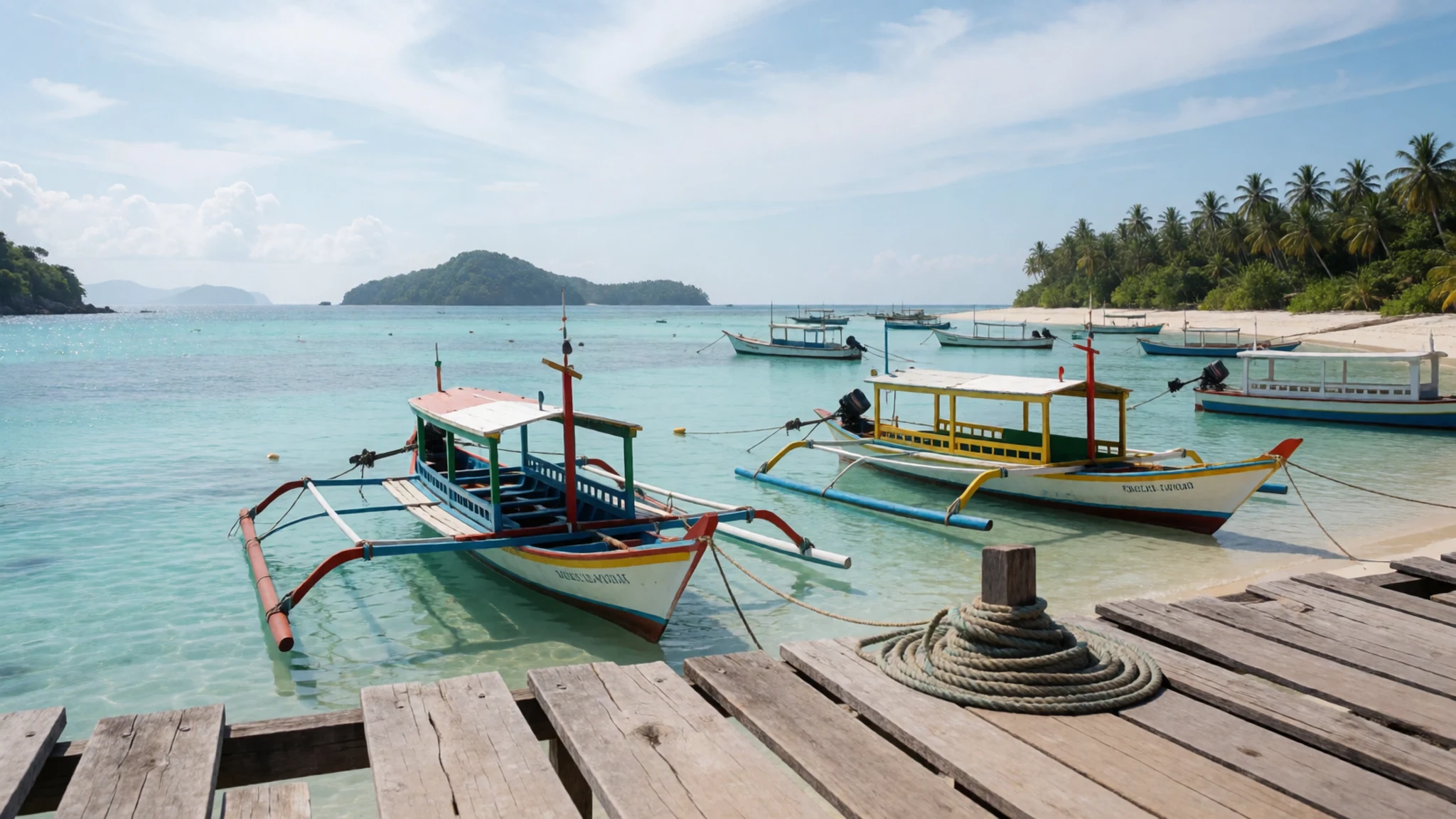
Culture
Belitung's society is shaped by Malay and Hakka Chinese traditions, with large Bugis and Javanese communities and smaller Balinese and Madurese villages. Chinese New Year is a major occasion, marked by family visits, and many people who left the island return for it. Malay Muslims observe prayer times, so mosques and village streets are quieter at those hours. Hakka and Chinese family temples are part of everyday life, and worshippers there treat the sites with care. Because the island is a relaxed place, visitors are often welcomed warmly, but a little reserve goes a long way. Ask before photographing people at the market or in a village, and cover your shoulders and knees when you walk through residential streets.
What to wear
Traditional dress in Belitung follows Malay custom. Many women wear the baju kurung, a loose long tunic over a long skirt, usually in cotton or a lightweight blend, while men may wear a long-sleeved shirt with a sarong or trousers. For weddings and formal events, songket, a woven cloth with metallic thread patterns, appears as a sash, shawl or fabric for a jacket. Chinese families mark festivals with red, the colour of luck, in clothing and decoration.
What people wear now is practical. In town, shirts, cotton trousers and simple dresses are common, while on the beaches people wear swimwear or light shorts. Head coverings are often worn by Muslim women, and many local men and women dress modestly in villages and near mosques.
For a visit, light, breathable cotton is the best choice because the heat and humidity are constant. Long trousers or a knee-length skirt, plus a light top with sleeves, suit mosques and villages. Carry a sarong or light shawl to cover up at religious sites. For the beaches, quick-drying sandals or water shoes protect your feet on wet granite and sharp shell, and a hat and sunglasses help in the strong midday sun.
What to eat
- Gangan asam — The morning market in Tanjungpandan
A sour fish soup flavoured with tamarind, chilli and fresh herbs, often made with local reef fish. It reflects the island's Malay cooking and is an easy lunch dish. Look for it at the morning market in Tanjungpandan, where cooks serve it from big pots early in the day.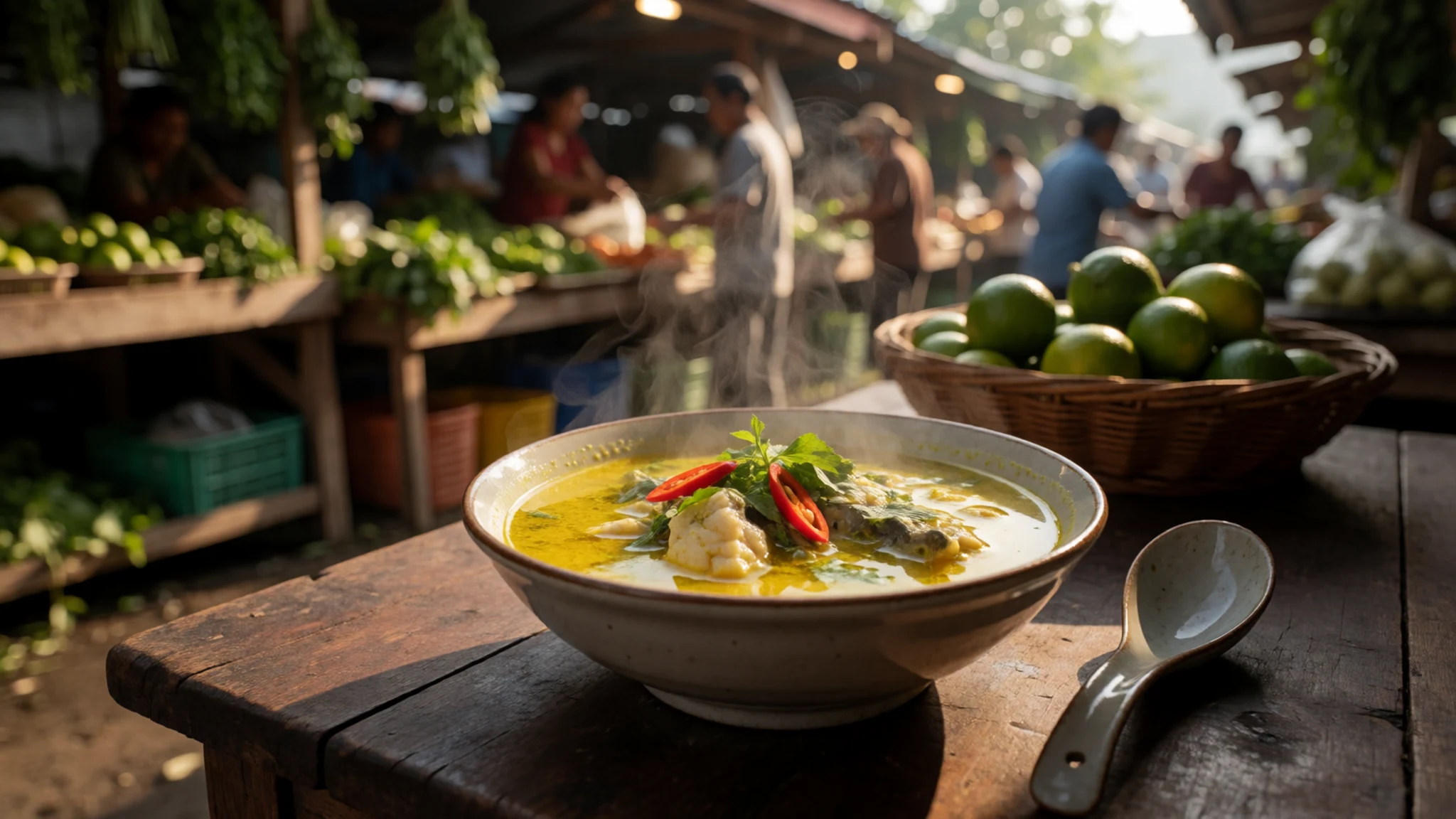
- Lempah kuning — Small local eateries across the island
A yellow fish stew from the wider Bangka Belitung islands, built on turmeric, lemongrass and fish, with a mild tang. It is a homely dish that people share at family meals. Ask at a small eatery serving local food, and expect it to be served with rice.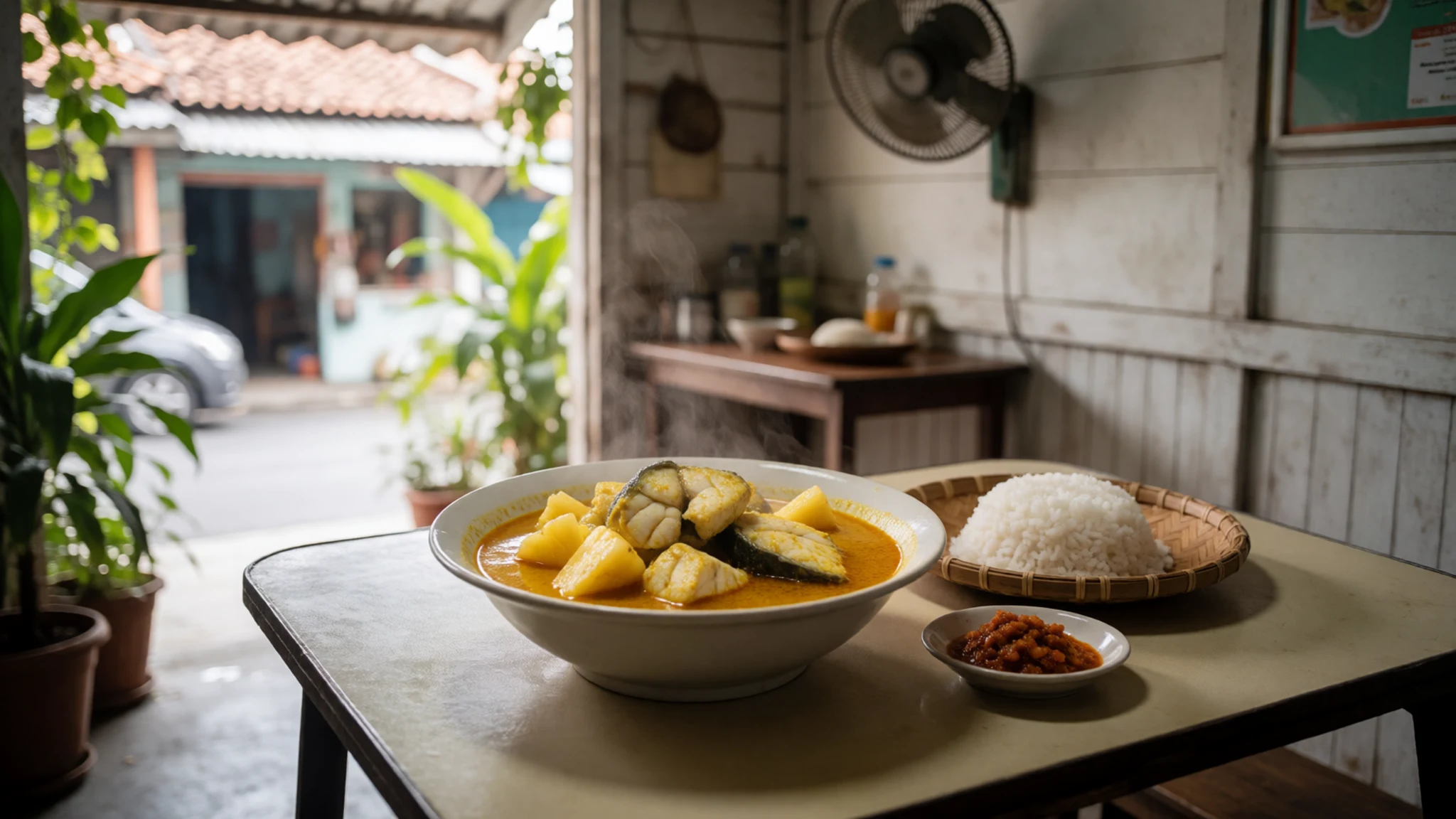
- Mie Belitung — Chinese-run coffee shops in Tanjungpandan
A noodle dish with a Chinese-Malay character, typically served with prawns or pork, fried shallots and a light sauce. It is a popular breakfast or snack in town. Chinese-run coffee shops often serve it, and the dish shows the island's Hakka and Malay influences together. - Otak-otak — Seafront stalls in the late afternoon
Fish paste mixed with spices and wrapped in leaves, then grilled over charcoal until smoky. It is a snack from Bangka, and the seafood stalls along the coast sell it in the late afternoon. Eat it warm, with chilli sauce, while you watch the tide.
Plan it
Best time. The drier stretch runs roughly from August to October, when rainy days are fewer; the rest of the year is wetter, so expect showers and plan beach days around them.
How long. 3–4
Getting there. Fly into Tanjung Pandan (TJQ) from Jakarta's Soekarno-Hatta International Airport, then take a road transfer to your accommodation. Slow PELNI ferries reach Belitung only about once every two weeks, so flying is the practical option.
Budget. mid
Tips
- Book flights into Tanjung Pandan early, and avoid the weeks around Chinese New Year, when fares and hotel prices rise sharply.
- Plan boat trips for the morning, before the afternoon wind builds.
- Carry cash for warungs and small boat operators, as cards are less widely accepted outside the main resorts.
- Drink bottled or filtered water, and carry sun cream, because sand and granite reflect a lot of heat.
- Arrange boat tours through your accommodation and agree the price before you set off.
Etiquette
- Keep swimming away from river mouths, where saltwater crocodiles are present but rarely seen near tourist beaches.
- Dress modestly in villages and near mosques.
- Ask before photographing people, especially at markets.
Nearby
Sources
- Wikidata Q8164 (CC0)
- Wikipedia: Belitung Regency (rev 1374137338) (CC BY-SA 4.0)
- Wikivoyage: Bangka-Belitung (rev 5341371) (CC BY-SA 4.0)
- Berlayar di Semenanjung Belitung, Tesatj (CC BY-SA 4.0)
- Balap Karung Ibu Ibu, Herusutimbul (CC BY-SA 4.0)
- Bertengger Manis di Pantai Penyabong, Stella Nostra G. A (CC BY-SA 4.0)
- Bukit Berahu, Oleg Teplyakov (CC BY 3.0)
- Bukit Berahu hotel, Oleg Teplyakov (CC BY 3.0)
- Garuda Island, Belitung, JS Barry (CC BY 3.0)
- Lokasi Film Laskar Pelangi - Pantai Tanjung Tinggi, Raflinoer32 (CC BY-SA 4.0)
- Mercusuar Pulau Lengkuas, Raflinoer32 (CC BY-SA 4.0)


