Uluru
Uluru, Australia
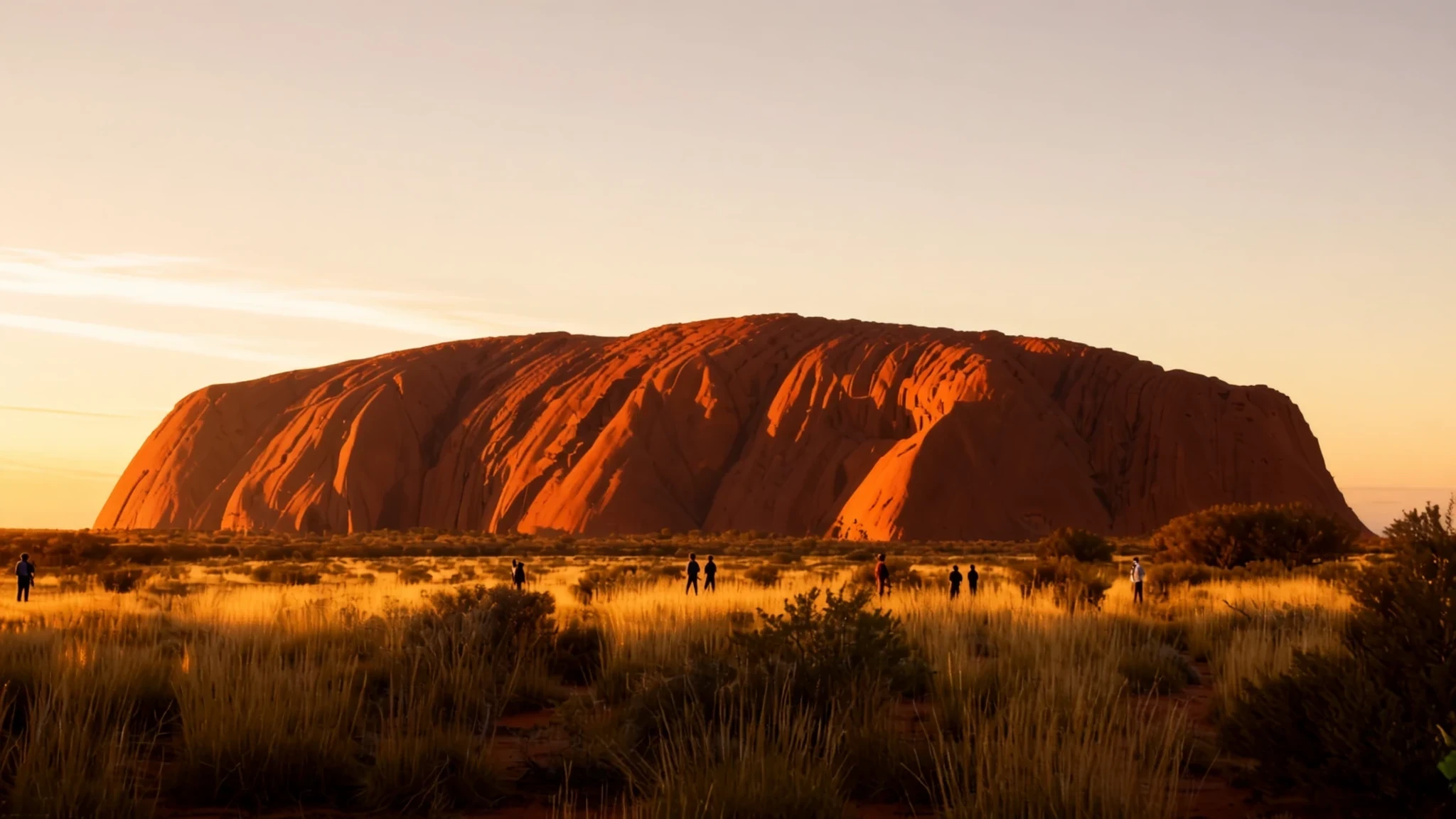
Rise early to watch this sacred red sandstone monolith glow in the vast Australian desert light.
The place
Uluru stands in the red heart of the Australian continent, rising from the flat desert plains of the Northern Territory. As an enormous sandstone monolith, it commands the surrounding landscape and serves as one of the most recognisable natural landmarks on earth. Most of the rock's immense bulk lies hidden beneath the surface, while the exposed section towers high above the arid earth. Throughout the day, the mineral composition of the stone causes it to shift in appearance, transforming through shades of ochre, rust and violet as the sun moves across the sky. At dawn and dusk, the iron oxide within the sandstone ignites into a vivid crimson glow that draws travellers from across the globe. The surrounding national park features sparse desert vegetation, ancient waterholes, sheltered caves and deep gullies carved by infrequent rains. Nearby, the rounded domes of Kata Tjuta rise from the earth, forming a complementary geological wonder within the same protected reserve. The arid climate brings intense heat during the summer months, while winter brings crisp, clear days and cold desert nights. Despite the remote location, visitors arrive continuously to witness the stark beauty of the Australian interior and experience the profound stillness of the desert environment.
Its story
Human history in this remote desert region stretches back many millennia, with archaeological excavations confirming that Indigenous communities inhabited the surrounding areas long before European arrival. For the Pitjantjatjara and Yankunytjatjara peoples, known collectively as the Aṉangu, Uluru is the sacred centre of their traditional lands and the foundation of their ancestral laws. The geological formations and water sources across the site are deeply entwined with creation stories that dictate how the land must be cared for and respected. European exploration of the interior accelerated during the nineteenth century as expeditions sought new routes and pastoral lands following the construction of telegraph lines across the continent. In the early eighteen-seventies, explorers mapped the remote desert features, with William Gosse eventually reaching the great monolith and naming it in honour of a colonial official from South Australia. Subsequent decades brought pastoralists and increased interaction between the traditional owners and European settlers, often resulting in conflict over vital water sources and bush food resources during periods of severe drought. Over the generations, the Aṉangu fought tirelessly to regain ownership of their sacred heritage, eventually securing formal title to the land and managing the national park jointly with the government to protect both the natural environment and their ancient cultural traditions.
What to see
- Uluru Base Walk — Uluṟu-Kata Tjuṯa National Park
Walking the complete perimeter of Uluru brings you close to the sheer sandstone walls, intricate gullies, and ancient waterholes. The track reveals hidden caves, rock art sites, and sheltered pockets where desert trees cling tenaciously to the weathered rock face.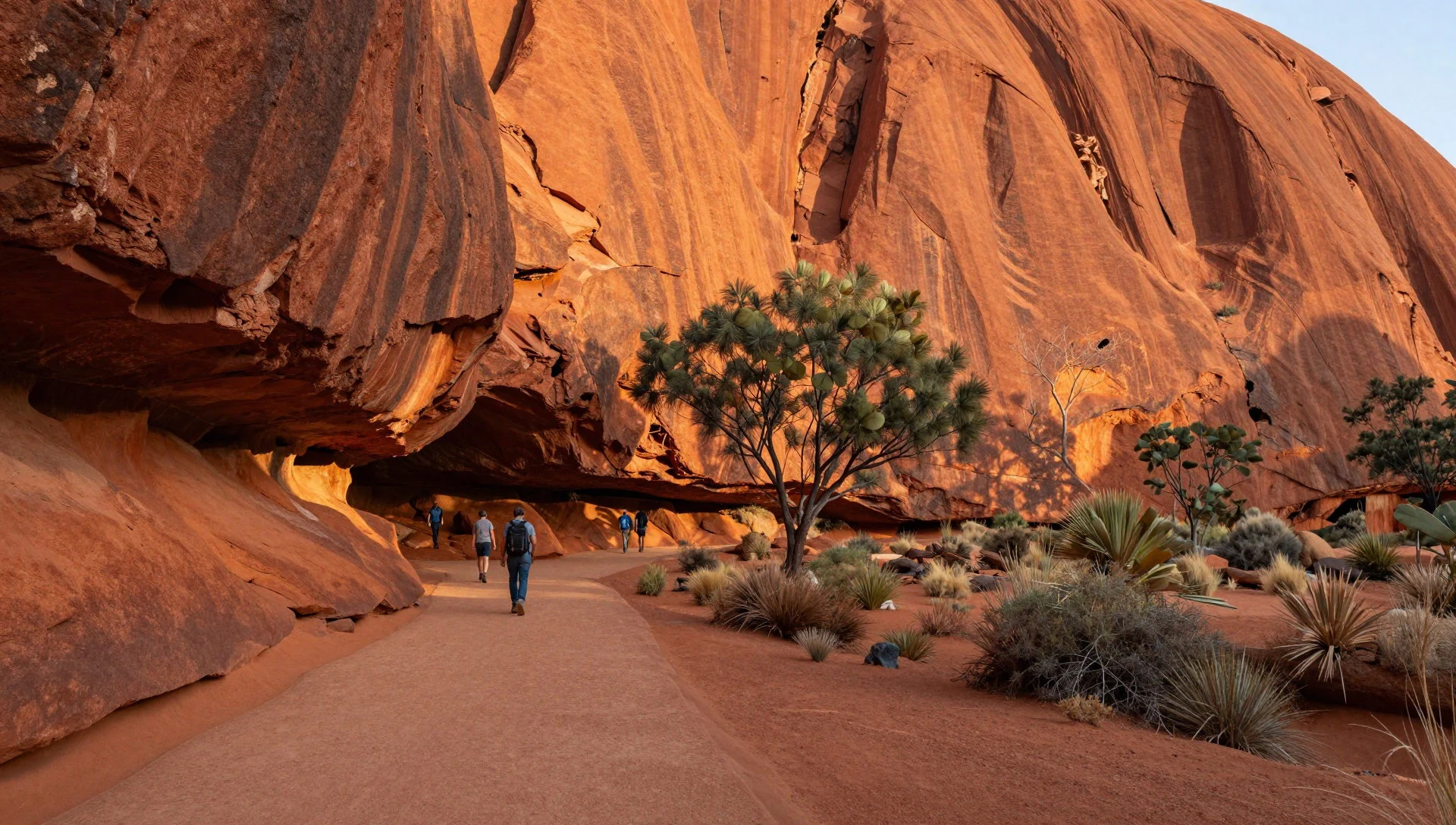
- Kata Tjuta — Uluṟu-Kata Tjuṯa National Park
Located a short distance west of the main monolith, these towering conglomerate domes provide dramatic walking trails through deep valleys. The narrow gorge paths offer stunning perspectives on desert geology and the expansive surrounding wilderness.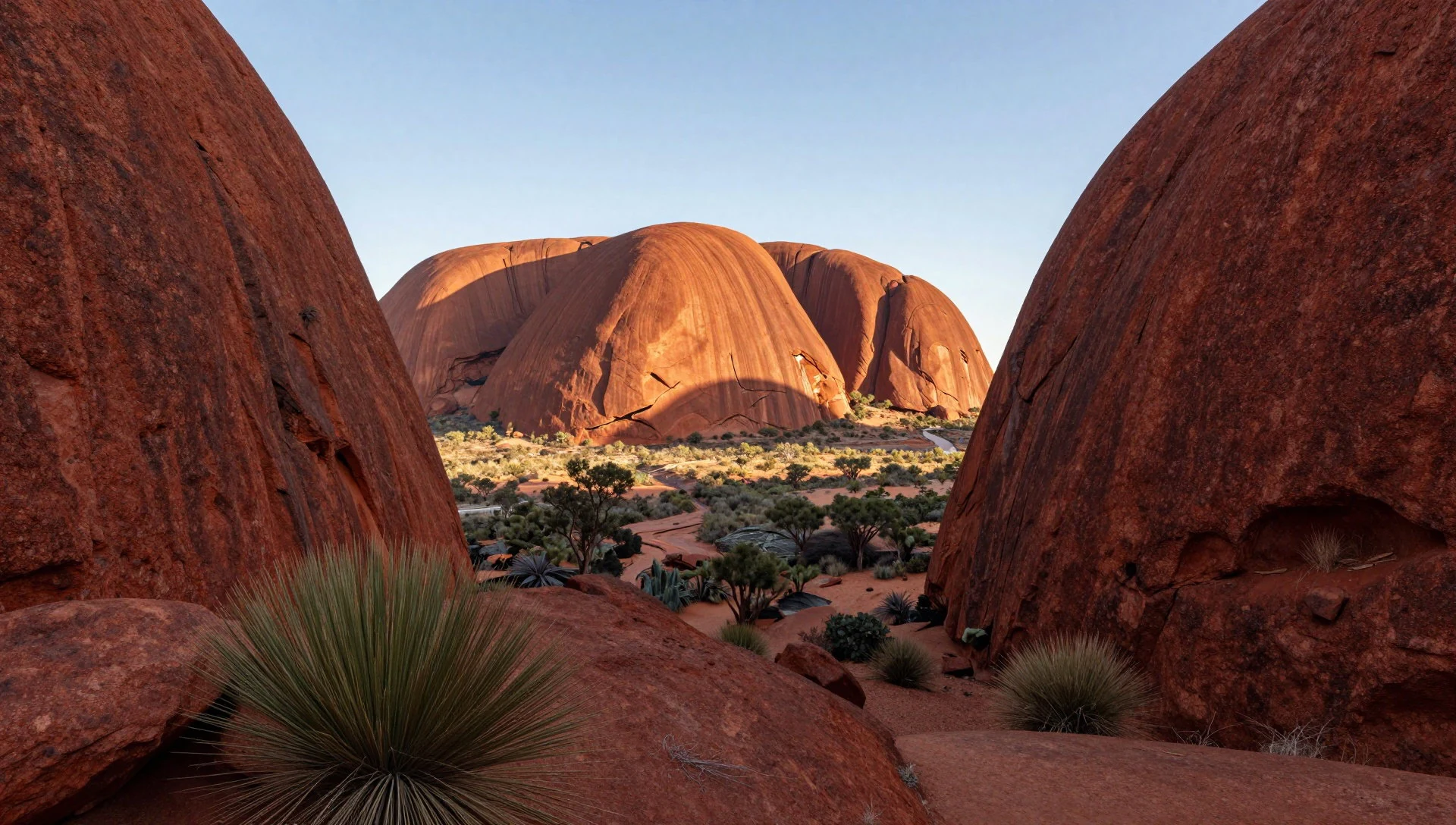
- Cultural Centre — Park Entrance Road
Exhibits at the visitor centre introduce travellers to Aṉangu culture, traditional laws, and the creation stories tied to the park. Local artists display traditional crafts, paintings, and interpretive displays explaining the deep significance of the landscape.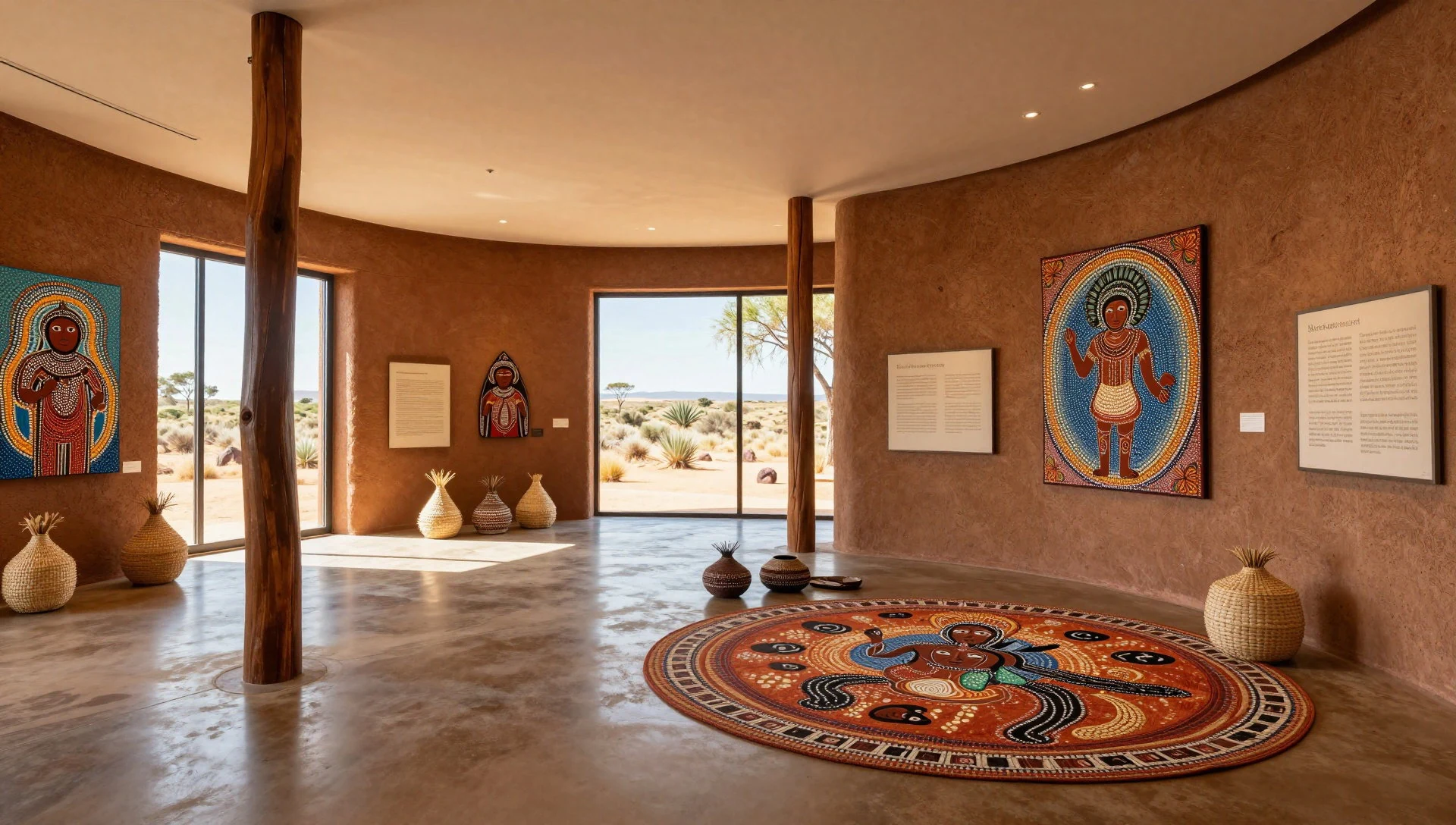
- Mutitjulu Waterhole — Southern base of Uluru
Situated at the base of the monolith, this permanent water source supports lush greenery and ancient rock art panels. Visitors can walk quietly along the path to observe petroglyphs and understand why this sheltered spot was historically vital for survival.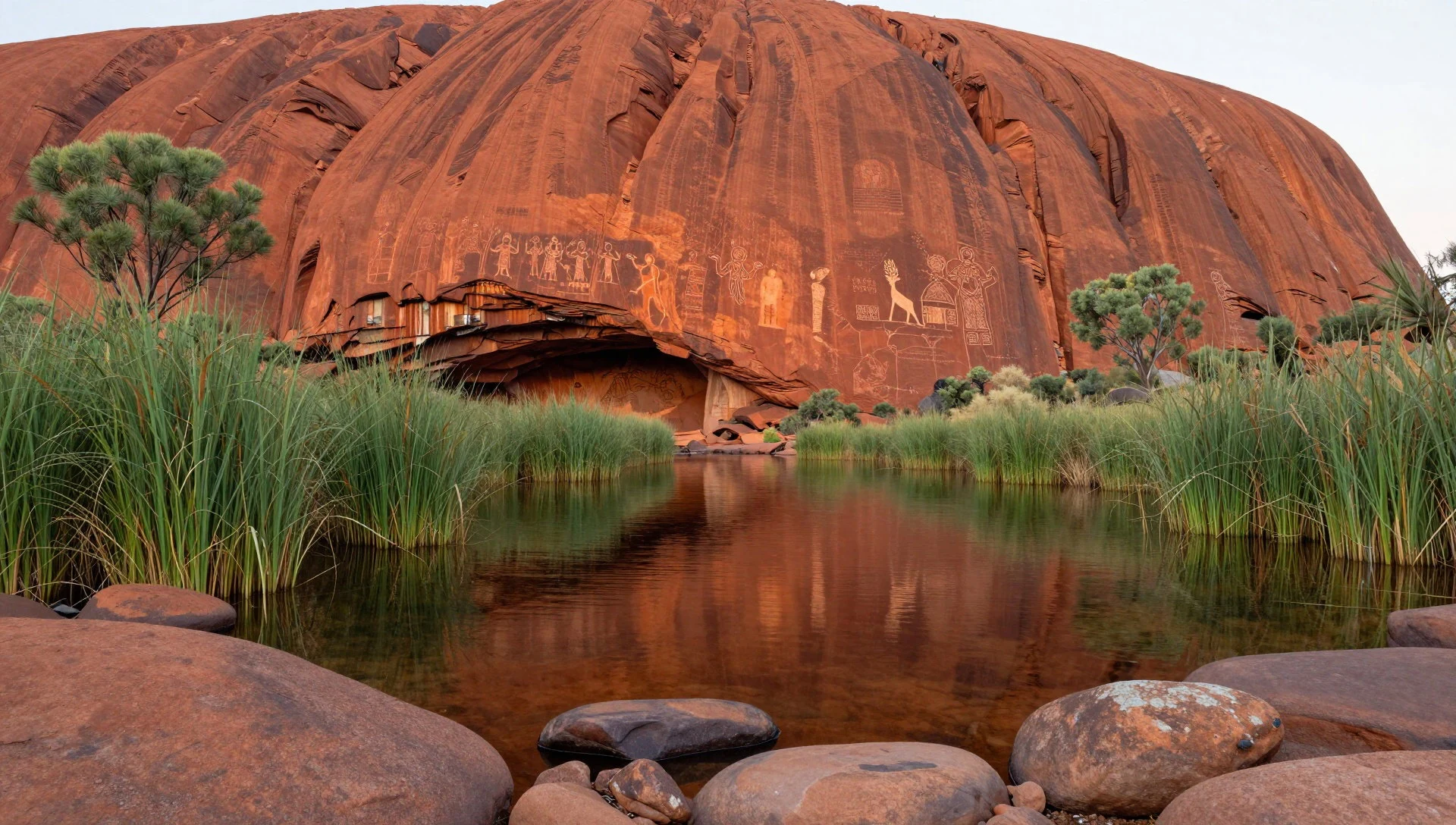
Culture
Culture at Uluru is inseparable from the spiritual traditions of the Aṉangu, whose connection to the land spans countless generations. Traditional life was guided by ancestral laws governing the management of water, plants, and animals in an unforgiving desert environment. Art and storytelling are central to passing down vital survival knowledge and sacred histories from elders to younger generations. Today, the local community plays an active role in managing the national park, ensuring that visitors understand the spiritual significance of the sacred sites. Travellers will notice that certain areas of the monolith are restricted from photography out of respect for sacred ceremonies and sensitive ancestral stories. Respect the cultural wishes of the traditional owners by adhering strictly to all photography restrictions and staying on designated walking tracks.
What to wear
Uluru calls for practical, lightweight clothing designed to withstand extreme desert conditions and intense sun exposure. Traditional Aṉangu culture relied on minimal clothing woven or adapted from natural desert materials, combined with body paint and ceremonial adornments for gatherings. Today, locals and park staff wear comfortable, sun-protective garments suitable for hot outdoor environments. Visitors should pack breathable cotton or linen shirts, sturdy walking shoes or boots for rocky terrain, a wide-brimmed hat, and quality sunglasses to combat glare. Because ultraviolet levels remain exceptionally high throughout much of the year, lightweight long sleeves and trousers offer essential protection against sunburn and desert spinifex grass. Bring warm layers including a fleece or windproof jacket, as desert temperatures plummet rapidly after sunset during the cooler months.
What to eat
- Resort Outback Dining — Yulara resort township
Dining venues near the national park incorporate native Australian ingredients such as lemon myrtle, wattleseed, and bush tomato into contemporary menus, offering guests a taste of traditional flavors paired with modern culinary techniques. - Darwin Night Markets — Parap and Mindil Beach markets, Darwin
Coastal markets feature vibrant open-air food stalls serving multicultural dishes, fresh seafood, and tropical treats, reflecting the diverse culinary influences of northern Australia. - Harbour Seafood — Cullen Bay and Stokes Hill Wharf, Darwin
Waterfront eateries and wharves serve freshly caught barramundi and regional seafood paired with tropical fruits and local beverages, providing relaxed dining with expansive harbour views. - Outback Pub Fare — Darwin CBD and regional outback towns
Classic regional pubs offer hearty meals, classic steaks, and casual comfort food in relaxed settings, serving as popular gathering spots for travellers crossing the vast expanse of the Northern Territory.
Plan it
Best time. April to October offers cooler daytime temperatures and comfortable weather for walking, avoiding the extreme heat of the summer months.
How long. 2–3
Getting there. Fly directly into Ayers Rock Airport or take domestic flights via major Australian capitals, followed by a short resort shuttle transfer.
Budget. high
Tips
- Start all walking trails early in the morning to beat the intense desert heat.
- Carry ample drinking water at all times while exploring the park.
- Wear high-factor sunscreen and a wide-brimmed hat due to extreme ultraviolet levels.
- Book resort accommodation well in advance during peak dry season months.
Etiquette
- Do not photograph restricted cultural sites marked by signs.
- Stay strictly on designated walking tracks to protect fragile desert ecosystems.
Nearby
Sources
- Wikidata Q33910 (CC0)
- Wikipedia (rev 1374764083) (CC BY-SA 4.0)
- Wikivoyage (rev 5383968) (CC BY-SA 4.0)