Banda Islands
Banda Islands, Indonesia
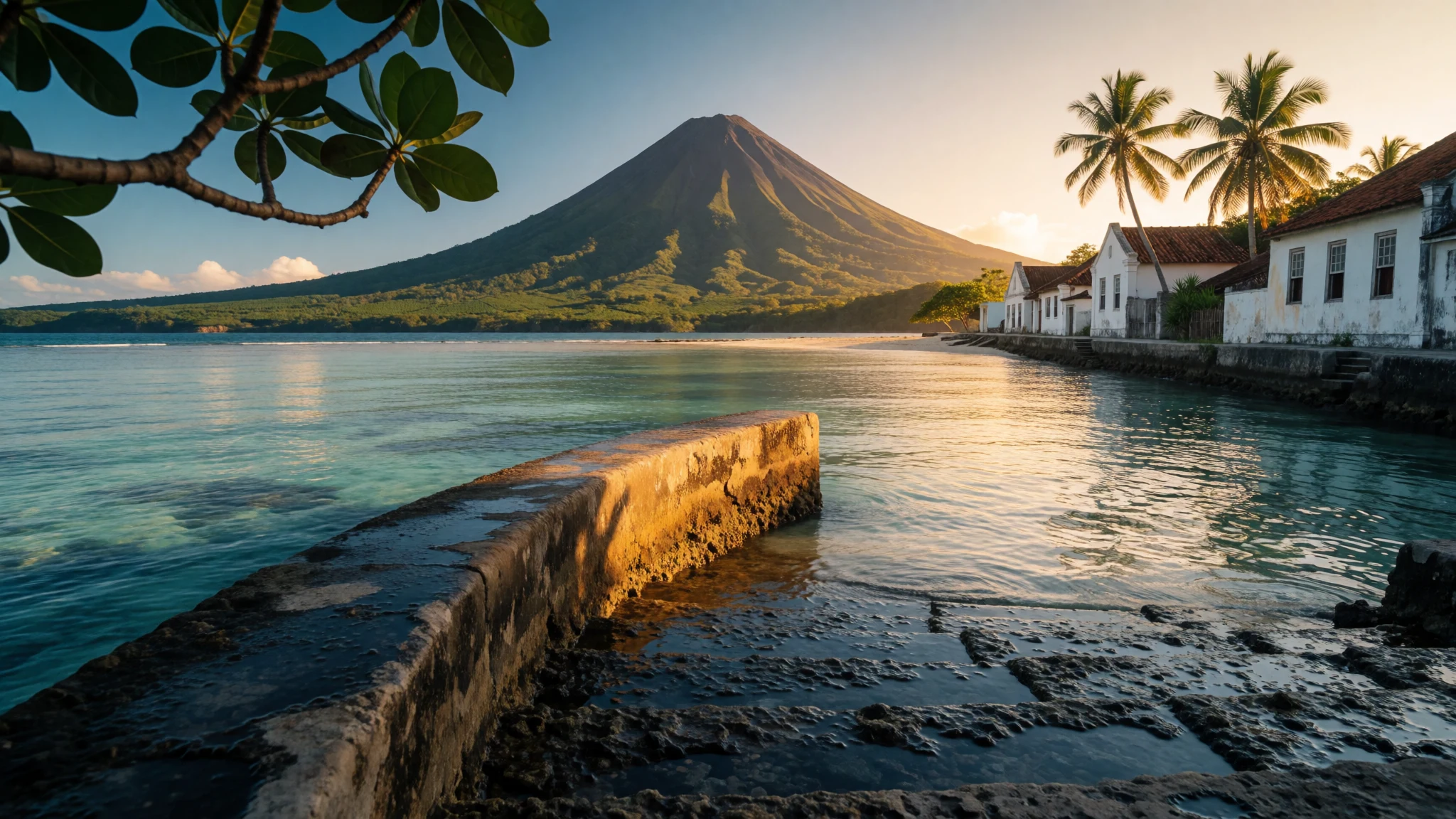
The Banda Islands are small volcanic specks in eastern Indonesia where nutmeg once steered world trade, now offering forts, reefs and a climbable volcano.
The place
The Banda Islands are a cluster of ten small volcanic islands in the Banda Sea, part of Maluku province in eastern Indonesia and a long way from the country's busy centres. Ambon is the usual gateway, and from there the final stretch is a flight in a tiny plane or a boat crossing. The islands rise steeply from very deep water, which explains both the clear blue colour and the sharp drop-offs that draw divers. Seven of the islands are inhabited and the rest are empty. Banda Neira is the main town and administrative centre, a low waterfront of old colonial buildings, guesthouses, a harbour and a short airstrip. Across a narrow channel stands Gunung Api, a conical volcano whose slopes run almost straight into the sea. Banda Besar curves along the far side of the harbour and holds most of the nutmeg groves, while Ai, Run and Hatta lie further out and are reached by boat. Life here is unhurried. Roughly twenty thousand people live across the group, most of them descended from migrants and plantation labourers from other parts of Indonesia, alongside Bandanese families. Distances are small, so a walk around Banda Neira, a boat hop and a swim fit comfortably into one day. Plans bend with the weather, though. Boats and flights are cancelled often enough that anyone coming should leave generous slack in the itinerary. The islands reward patience far more than a checklist.
Its story
The history of the Banda Islands follows one small tree. People were using a rock shelter on Pulau Ay at least 8,000 years ago, and Chinese records mention the islands from about 200 BCE. Trade with the Srivijaya kingdom followed, and from the late thirteenth century Islam arrived and took root. Before Europeans turned up, Bandanese society was run by a group of leading men called orang kaya, and its merchants traded actively across the archipelago. Nutmeg and mace, prized as flavouring, medicine and a way to preserve food, grew nowhere else. Arab traders carried them west and sold them on to Venice at steep prices, keeping the source secret, so no European could work out where they came from. The Portuguese eventually closed that gap. The apothecary Tomé Pires, living in Malacca in the early sixteenth century, questioned Malay sailors, visited Banda several times and wrote the first known European account in his Suma Oriental, putting the population at a few thousand. The Dutch later invaded, ended the old trading order and replaced it with plantations worked by labourers brought in from across Indonesia, which is why the population is so mixed today. Nutmeg remained a Banda monopoly until the mid-nineteenth century. The forts, plantation houses and exile residences of Banda Neira are the visible leftovers of that story, and the groves still stand.
What to see
- Fort Belgica — Banda Neira
Fort Belgica is the Dutch-built fortress above Banda Neira town, and the best viewpoint over the harbour. From the upper walls the volcano, the channel and the long ridge of Banda Besar sit in a single frame. Go early or late, when the stone is cooler and the light is soft.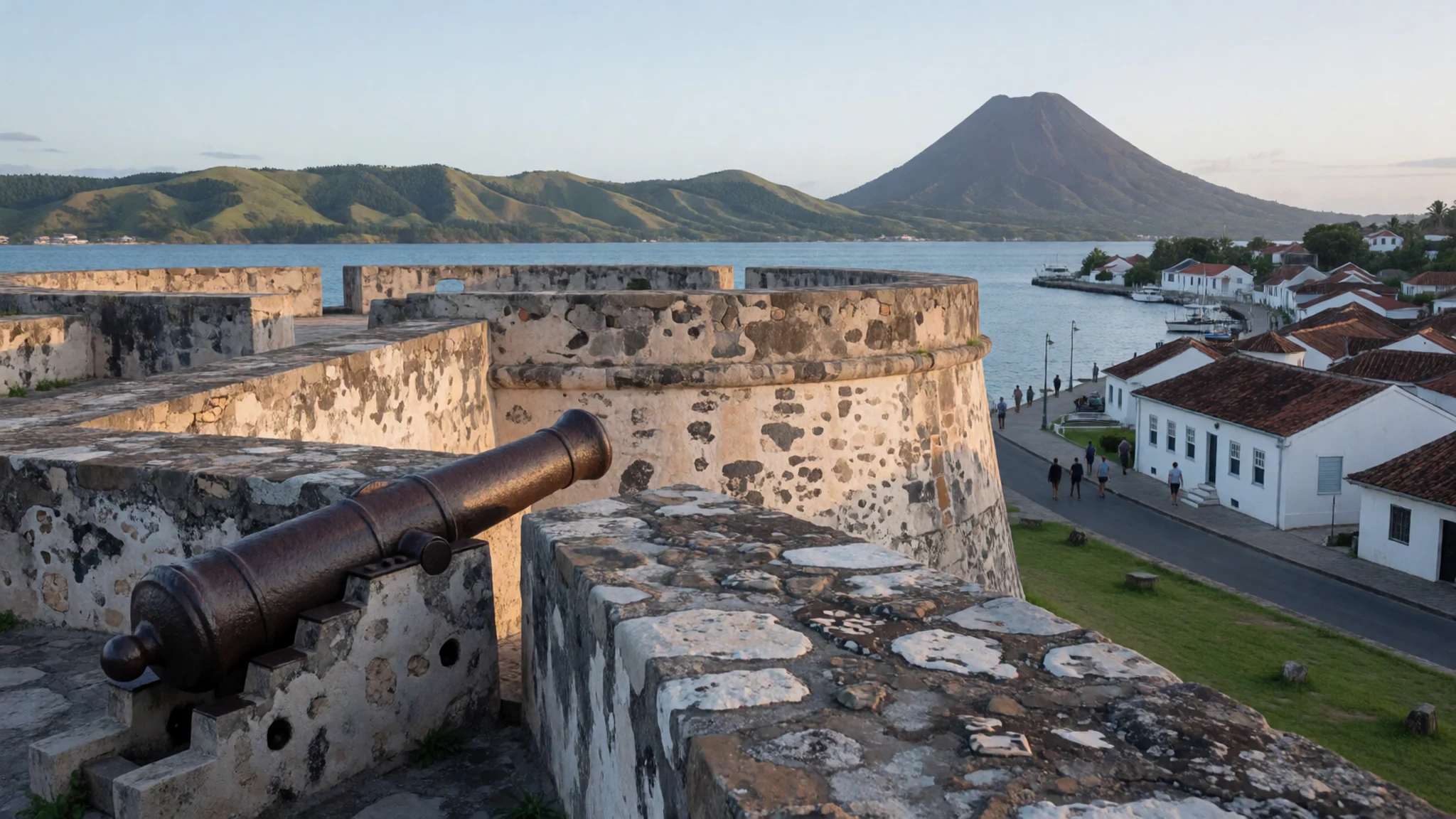
- Climbing Gunung Api — Gunung Api
Gunung Api is the volcano facing Banda Neira, and the climb rewards effort with views across the whole island group. The trail starts near the few houses on the eastern shore and, though unmarked, is easy to follow. Start before dawn to beat the heat, and wear shoes with grip for loose ground.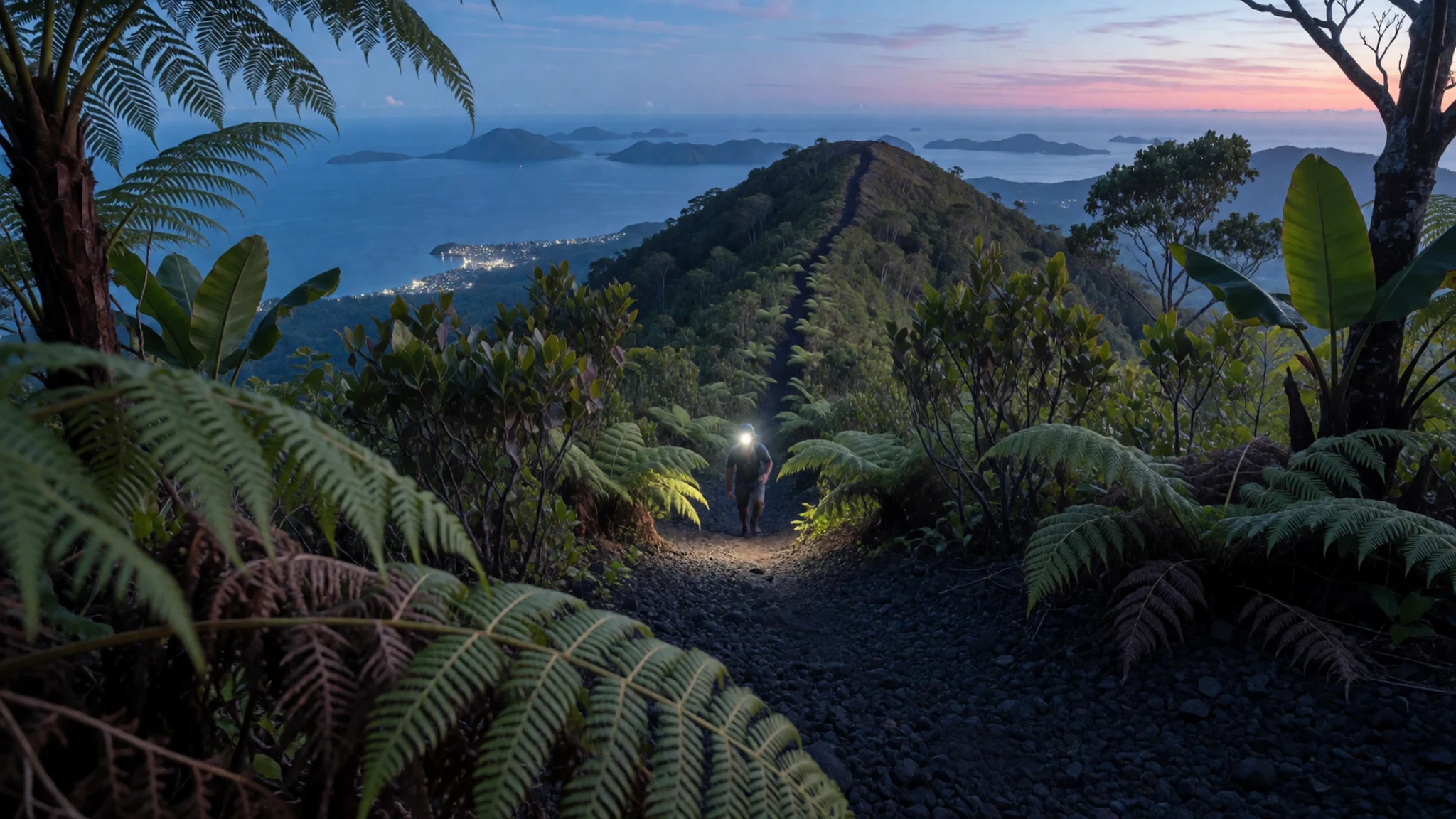
- Nutmeg groves of Banda Besar and Run — Banda Besar and Run
Nutmeg trees are still grown on Banda Besar and Run, and walking through the groves explains why these islands mattered so much. Shade is heavy, the air smells faintly of spice, and the fruit is split open to show the red mace around the seed. Local guides can be found through guesthouses.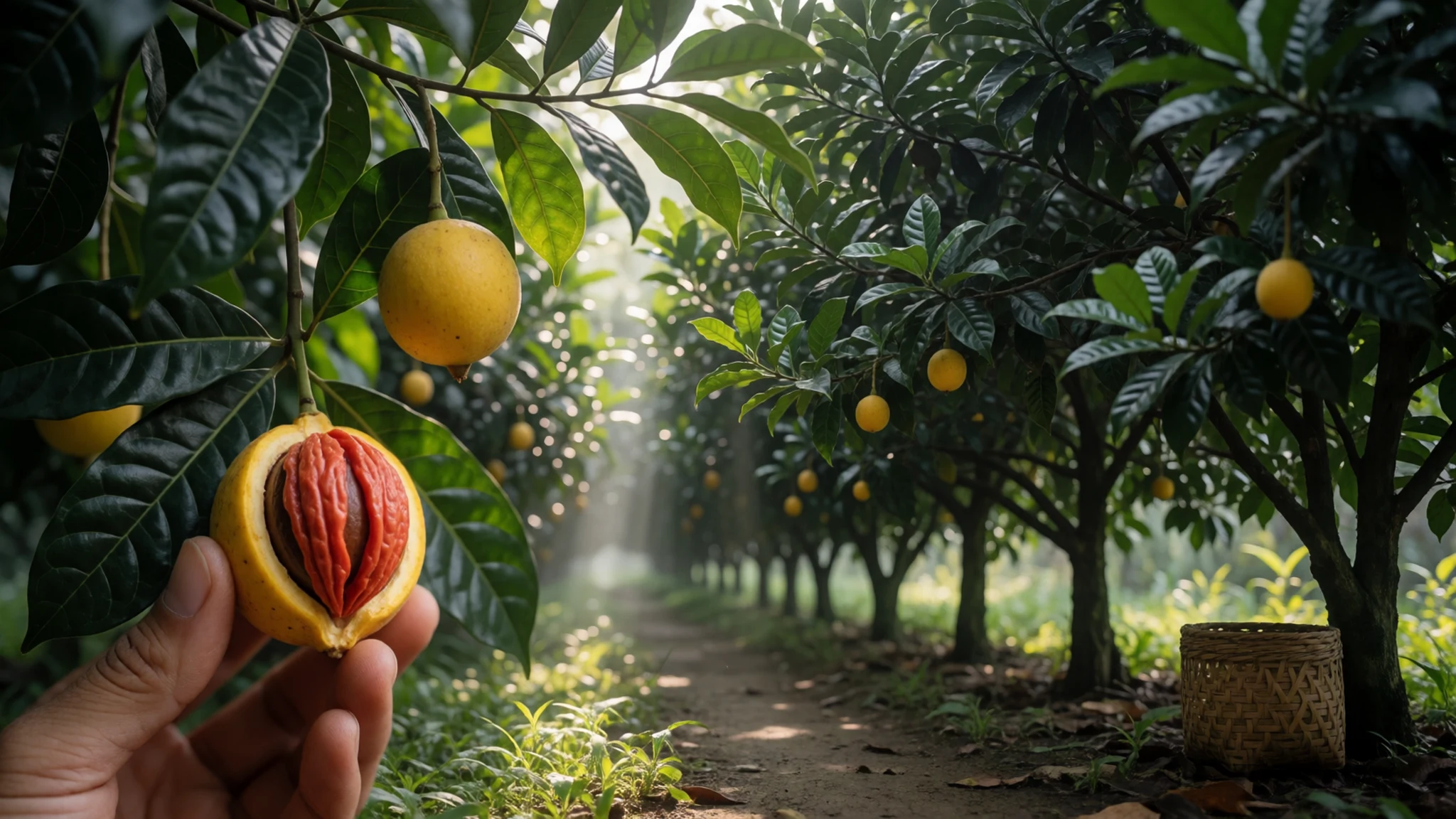
- Snorkelling and diving — Hatta, Ai, Pisang and Gunung Api shore
The reefs of Banda are the main reason many people come. Good drop-offs lie around Hatta, Pisang, Ai, Batu Kapal and the northern shore of Gunung Api. Snorkelling trips can be arranged through guesthouses or boat owners in Banda Neira, and there are dive operators on Banda Neira and on Hatta.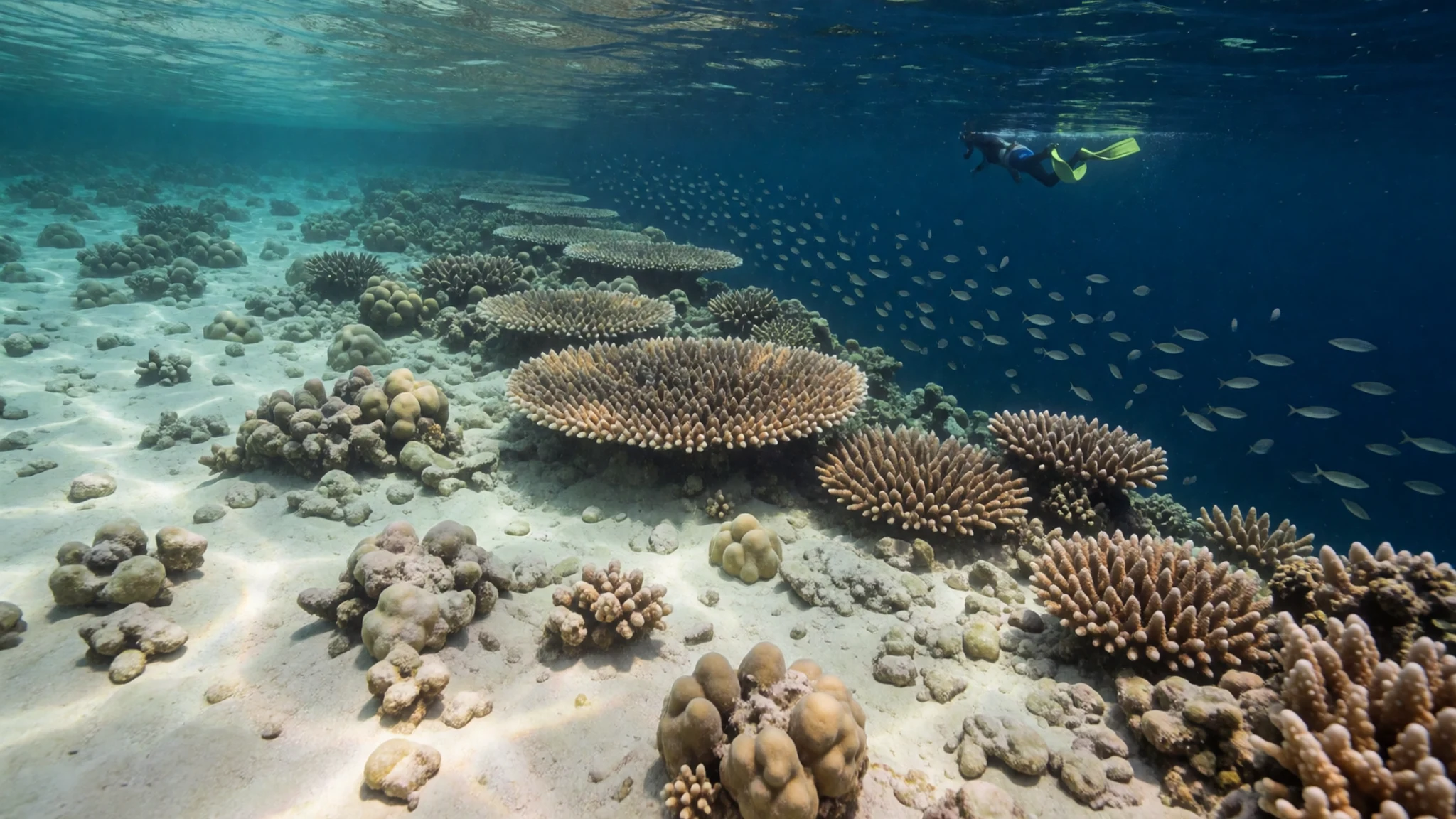
- Banda Neira's historic streets — Banda Neira town
Banda Neira is small enough to explore on foot, and its old buildings record two eras: Dutch colonial rule and the struggle for Indonesian independence. The Mohammad Hatta Exile House is the best-known stop of the second kind. Walk on to the northern villages and the airstrip for a quieter view of daily life.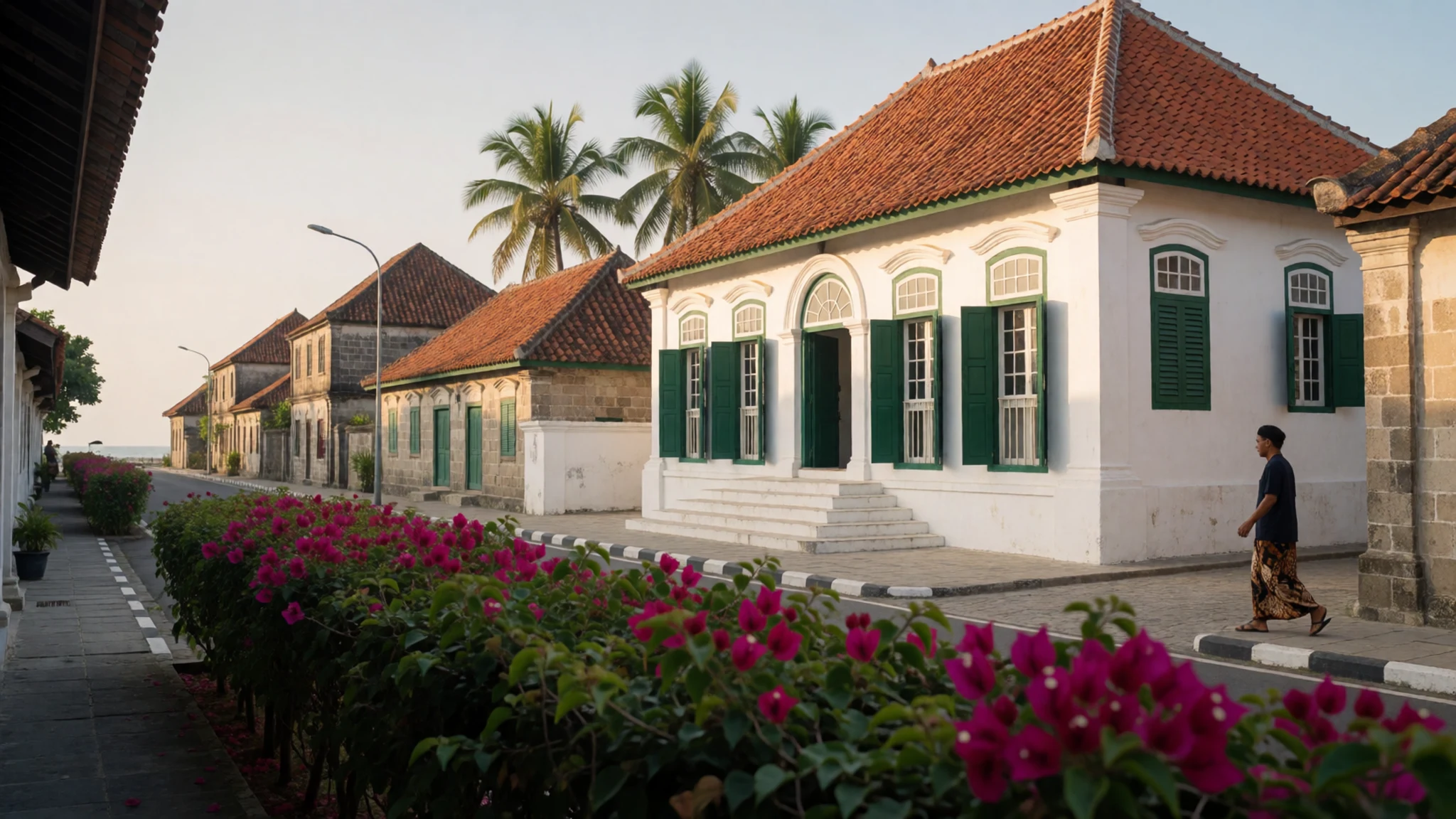
Culture
The Banda Islands carry a layered culture, shaped by centuries of trade, conquest and migration. Most people living here today descend from settlers and plantation labourers who came from many parts of Indonesia, together with the indigenous Bandanese. From that mix has grown a distinctly local identity. Some rituals from before the colonial era are still valued and performed, and they tie communities to particular places, families and the sea. Islam reached the region from the late thirteenth century and is firmly established, so the rhythm of the day follows the call to prayer, Friday is quieter, and the fasting month changes how and when people eat. Spice history is part of everyday talk. Families still tend nutmeg trees, and the fruit shows up in sweets, drinks and cooking. Hospitality is warm and unforced. Guesthouse owners often double as guides, boat arrangers and cooks, and conversations tend to be slow and friendly. Banda Neira has an open, small-town feel where people greet strangers in the street. Visitors who come with time, a few words of Indonesian and some curiosity about the history are generally met with interest rather than suspicion. Dress modestly away from the beach, and ask before photographing people, especially at mosques or during any ritual.
What to wear
Banda Islands dress today is everyday Indonesian island wear, with a few older garments still seen on formal days. Traditional clothing is the sarong, usually in batik or woven cotton, worn with a kebaya blouse by women and with a shirt and a peci cap by men, mainly for Friday prayers, weddings, religious festivals and official occasions. Many women also wear a headscarf. The group has no single costume that visitors are likely to meet in daily life, so expect the pan-Indonesian styles. On an ordinary day, people wear light cotton T-shirts, long trousers or skirts, football shirts and flip-flops, with a sarong for the mosque or the home. Fishermen and boat crews dress for sun and spray in long sleeves and caps. Visitors should pack lightweight cotton or quick-dry clothing, with shoulders and knees covered in villages and around mosques, and keep swimwear for the beach and the boat. Bring a wide-brimmed hat, strong sun protection and reef shoes for rocky entries. Walking shoes with decent grip help on Gunung Api, where the ground is loose, and a thin rain jacket is useful because showers can arrive quickly at sea.
What to eat
- Ikan bakar — Guesthouses and local eateries (rumah makan) in Banda Neira
Grilled fish, usually barracuda or tuna, is the staple on Banda. Guesthouses and small local eateries serve it with rice and sambal. Fresh fish is bought each morning, so order a day ahead or go to the market with the cook.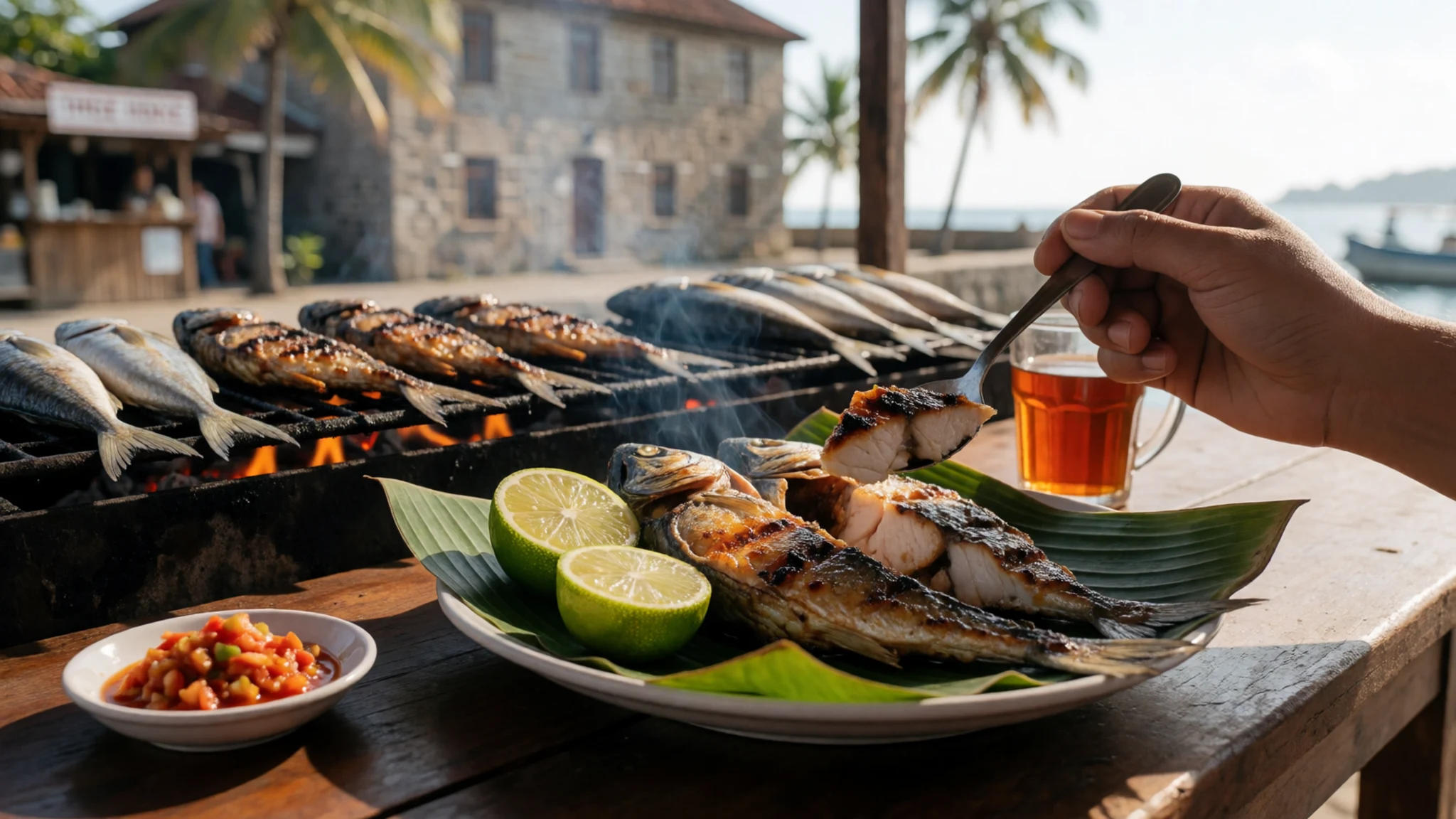
- Ikan kuah pala Banda — Guesthouses and family-run eateries
Fish in a sour nutmeg soup is the island's signature dish. It is clear and tangy rather than yellow with turmeric, and the nutmeg adds a warm, slightly sweet edge. Ask for it at guesthouses, preferably the day before.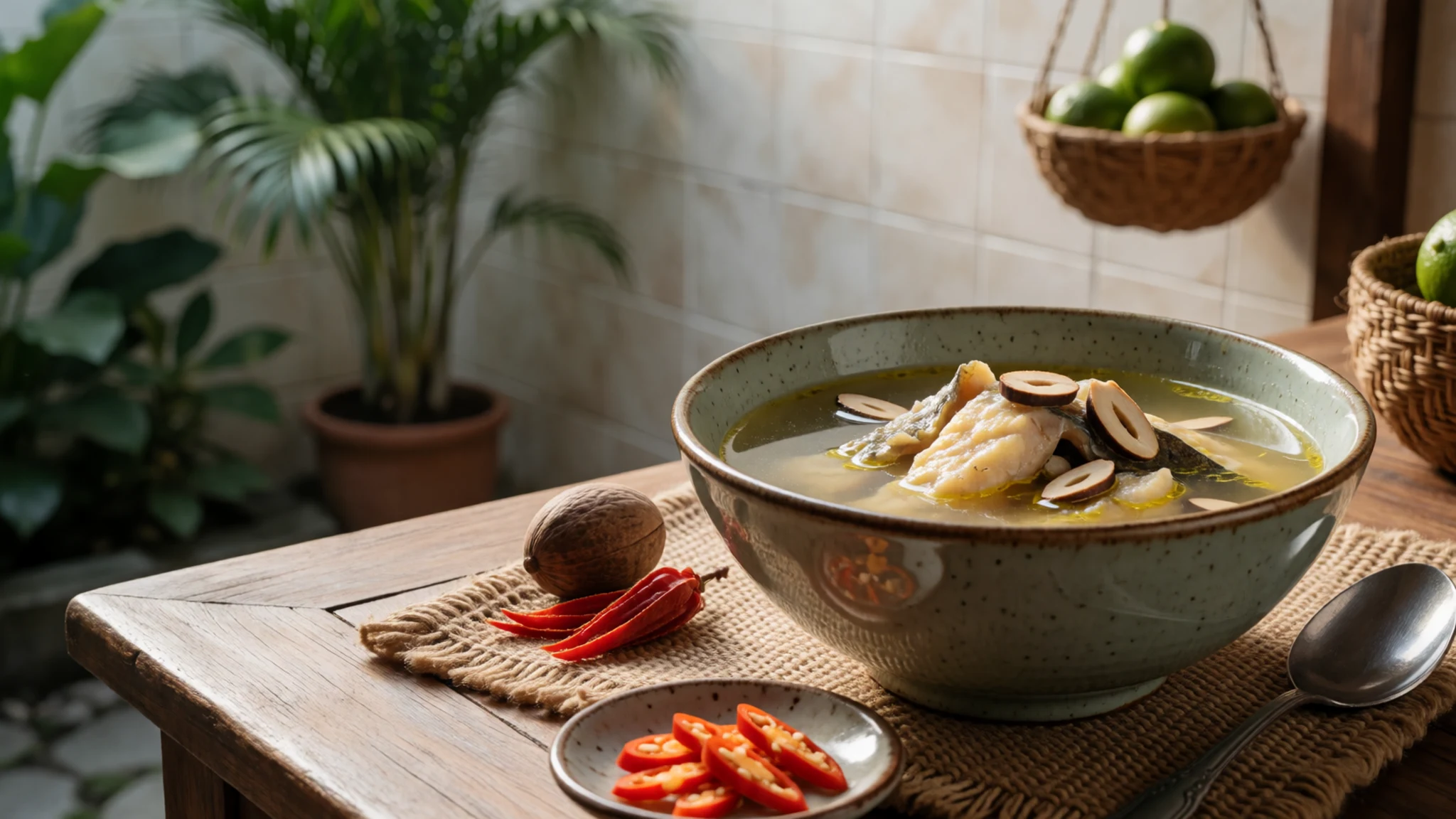
- Sambal pala — Alongside grilled fish at local eateries
Nutmeg sambal is a chilli relish that uses the fruit of the tree, giving the heat a sharp, aromatic twist. It arrives as a side dish with grilled fish and rice, and is worth tasting even if you normally avoid hot food. - Manisan pala and nutmeg jam — Small shops and guesthouses in Banda Neira
Manisan pala is candied nutmeg fruit, sticky and sweet with a slight bite. Nutmeg jam is spread on bread at breakfast. Both make easy edible souvenirs and taste of the island in a way few other foods here do. - Kue manto — Local eateries and harbour-side stalls
Kue manto is a fish roll served in thick coconut milk and topped with celery and fried shallots. It is rich, savoury and filling, and often turns up as a snack or part of a shared meal rather than a main course.
Plan it
Best time. Roughly October to December, when the sea is usually calmer and boats run more reliably. The middle of the year can bring rough water on the Banda Sea, and bad weather regularly cancels crossings. It is hot and humid year-round, so early mornings suit walking and the volcano.
How long. 4–5
Getting there. Fly to Ambon first. From Ambon, a small propeller plane lands at Bandaneira Airport (NDA), or a fast boat leaves Tulehu Harbour for Banda Neira on set days. Slower Pelni ships also call, cheaper but less comfortable. Schedules change often, so confirm everything in Ambon.
Budget. mid
Tips
- Leave spare days at both ends, because flights and boats are cancelled often
- Carry enough cash for the whole stay, and check the latest schedules in Ambon
- Order grilled fish a day ahead, as fresh catch is bought each morning
- Keep valuables close at the ferry terminal and when boarding or leaving Pelni ships
- Book snorkelling trips and boat hire through your guesthouse
Etiquette
- Dress modestly in villages and around mosques
- Ask before photographing people or any ritual
- Greet people when you pass them and be patient when plans change
Nearby
Sources
- Wikidata Q739411 (CC0)
- Wikipedia: Banda Islands (rev 1374268490) (CC BY-SA 4.0)
- Wikivoyage: Banda Islands (rev 5277357) (CC BY-SA 4.0)
- Banda Besar seen from Fort Belgica, Mark Richards (CC BY 3.0)
- Map of Maluku Islands, Lencer (CC BY 3.0)
- Map of Banda Islands, Lencer (CC BY 3.0)
- BandaVolcano, Mark Richards (CC BY 3.0)
- The Banda Islands from Gunung Api, Anton Leddin (CC BY 3.0)
- Two of the Banda Islands (1724) (Public domain)
- View of the Island of Banda-Neira (1810) (Public domain)
- Spices on the island of Banda Besar, WiDi (CC BY-SA 4.0)


