Borneo
Borneo, Indonesia
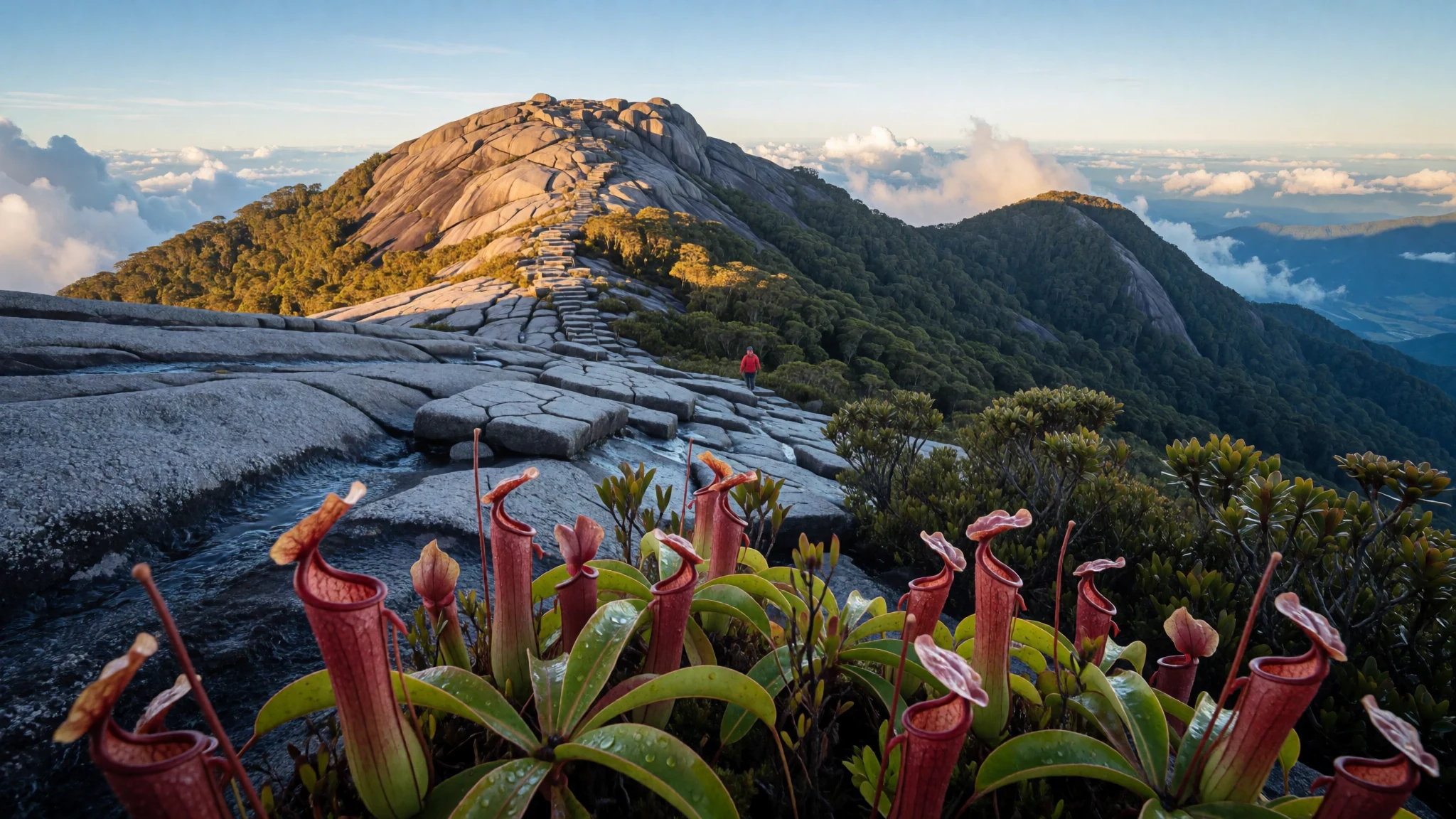
Borneo is an equator-crossing rainforest island where orangutans, river journeys, coral walls and ancient caves sit within reach of each other.
The place
Borneo sits astride the equator in Maritime Southeast Asia, with Java to the south, Sulawesi to the east and Sumatra to the west. Three countries share it. Most of the land is Indonesian, where the island is called Kalimantan and divided into five provinces. The northern part belongs to the Malaysian states of Sabah and Sarawak, and the small state of Brunei occupies a stretch of the north-western coast. About 18.6 million people live here, and the surprise for many first-time visitors is how much of that life runs along rivers and the coast, with the interior far less settled. The island ranks third among the world's islands by area, so distances are real: a journey from one end to the other is a matter of flights, long river trips and rough roads, not an afternoon's drive. Geology and history explain the wildlife. Borneo was once joined to the Asian mainland and was cut off when the seas rose after the last ice age, leaving forests that evolved in isolation. The result is a mix of lowland rainforest, peat swamp, mountain slopes and lakes, with many species found nowhere else. The highest ground rises to 4,095 m. Hundreds of Indigenous communities, many grouped under the wide label Dayak, live across this landscape alongside Malay, Chinese, Banjar and other communities, and each country has its own mood, food and pace.
Its story
Borneo has been lived in for a very long time, and its caves are the best witnesses. Excavations at Niah in Sarawak, and in valleys near Lahad Datu and Kunak in Sabah, have turned up stone tools and human remains from tens of thousands of years ago. In the limestone of East Kalimantan, a cave called Lubang Jeriji Saléh holds a painting of an animal that researchers reported in 2018 as more than 40,000 years old, placing it among the earliest known figurative art. Later, the island plugged into sea trade. Chinese, Indian and Japanese records describe western coastal ports operating by the first millennium of the common era, shipping out gold, camphor, hornbill ivory, rattan, beeswax, bird's nests, spices and scented woods. Indian writers called the island the Land of Gold and the Camphor Island, while Javanese sources used a name meaning Diamond Island. Power then gathered on the coasts. The Majapahit of Java, the Sultanate of Brunei and the Sultanate of Sulu all held influence at various times, while the interior stayed in the hands of many local communities rather than a single ruler. Britain, the Netherlands and Japan each controlled parts of the island in later centuries. After decolonisation, Borneo settled into the three-way division that exists today, with Indonesia holding about 73 per cent of the land.
What to see
- Tanjung Putting National Park — Central Kalimantan, Indonesia
Reached by chartered wooden riverboat from the town of Pangkalan Bun in Central Kalimantan, this park is the classic place to see wild and rehabilitated Bornean orangutans. Boats serve as floating bedrooms, drifting past black-water channels and proboscis monkeys. Feeding platforms draw crowds in the drier months, so go early and keep quiet.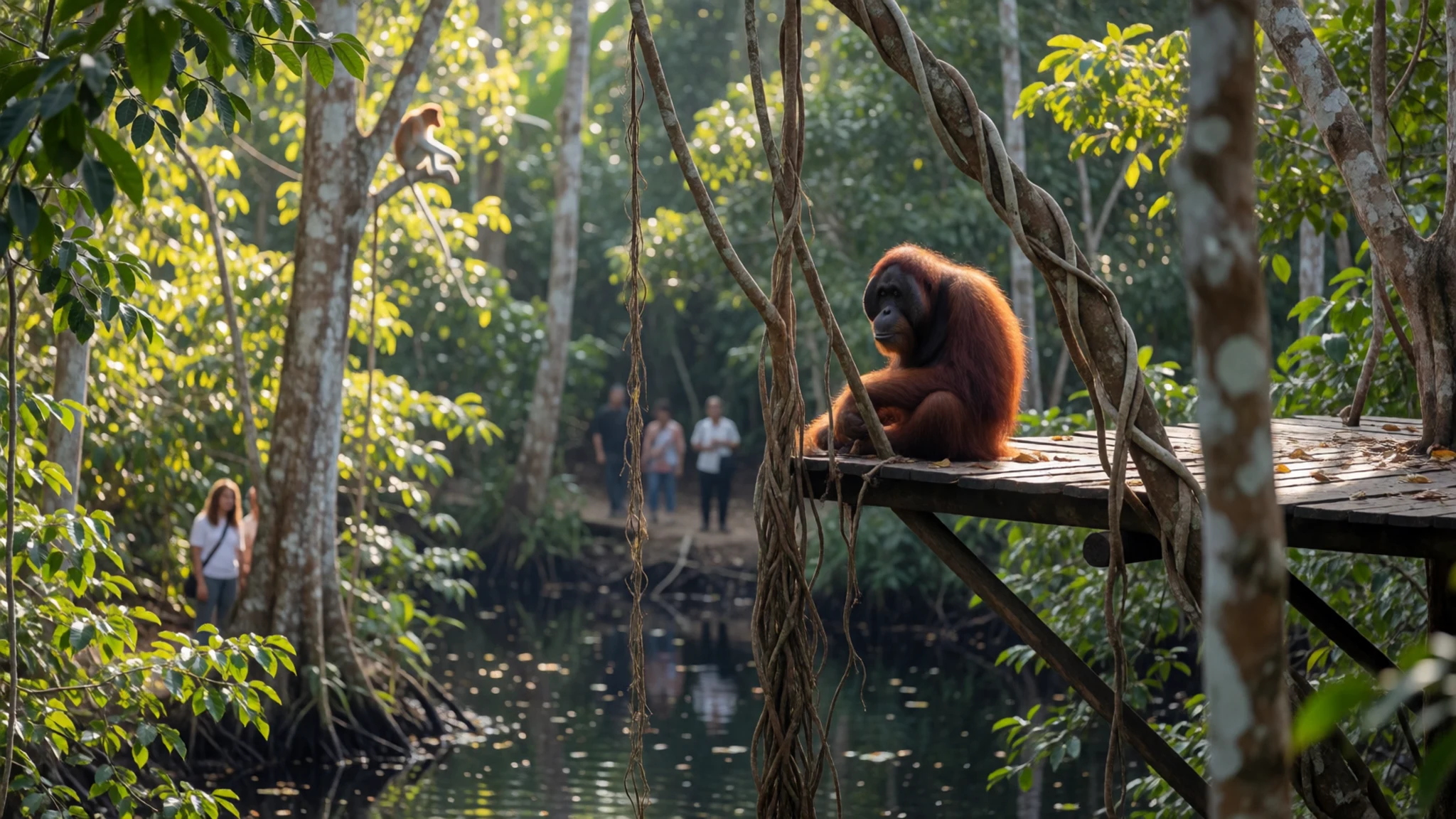
- Danau Sentarum National Park — West Kalimantan, Indonesia
A wetland of lakes and flooded forest in West Kalimantan that swells and shrinks with the rains. Communities live in stilt houses and floating homes, fishing and collecting honey. It is remote, with slow travel by small boat, so allow extra days and arrange a local guide in advance.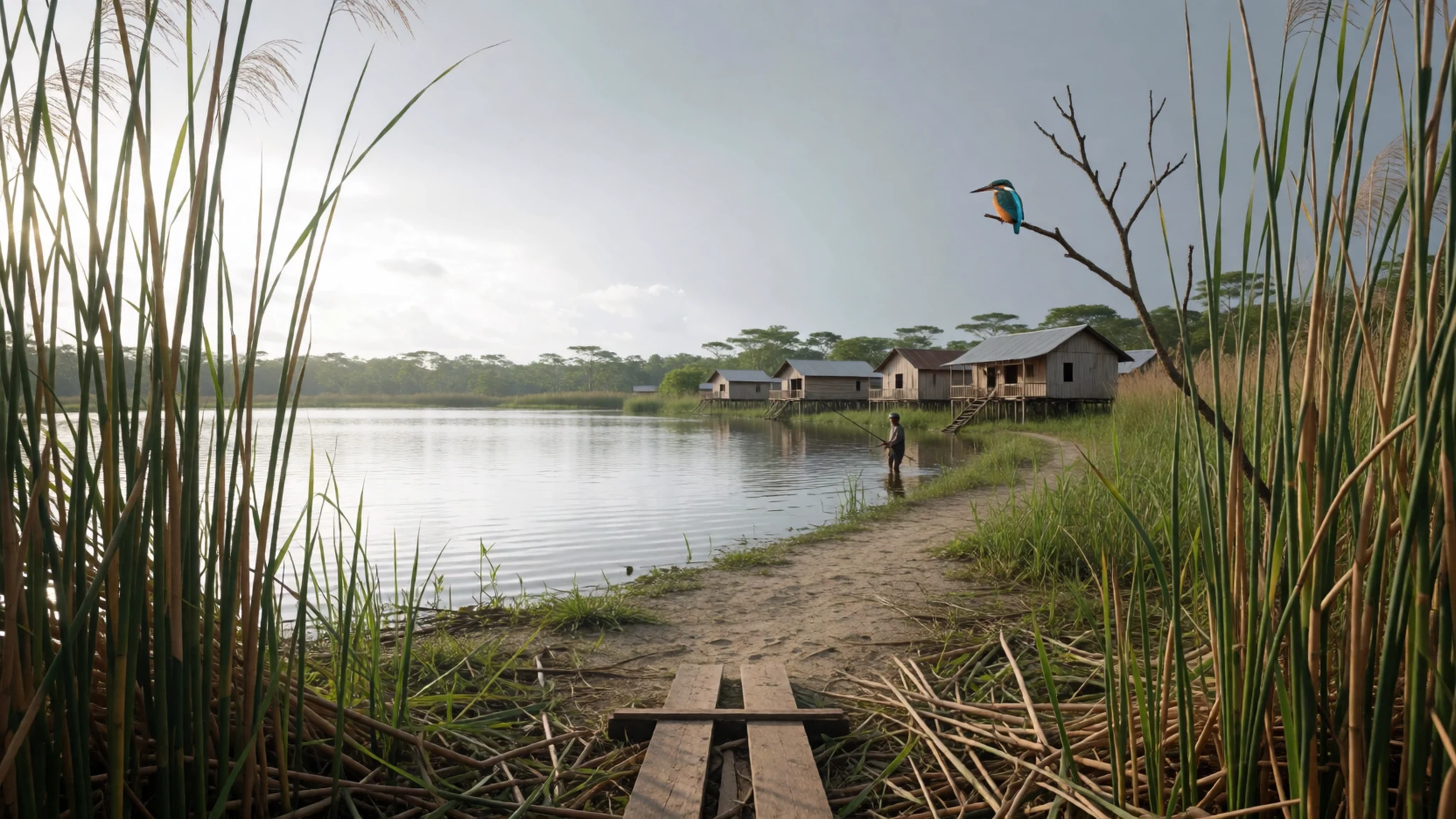
- Sipadan Island — Off Semporna, Sabah, Malaysia
A small oceanic island off Sabah, known among divers for reef sharks, jacks and turtles close to a steep drop-off. Diving here is controlled by a permit system, so book through an operator well ahead and check current rules. Most people base themselves on the nearby coast, since staying on the island itself is not allowed.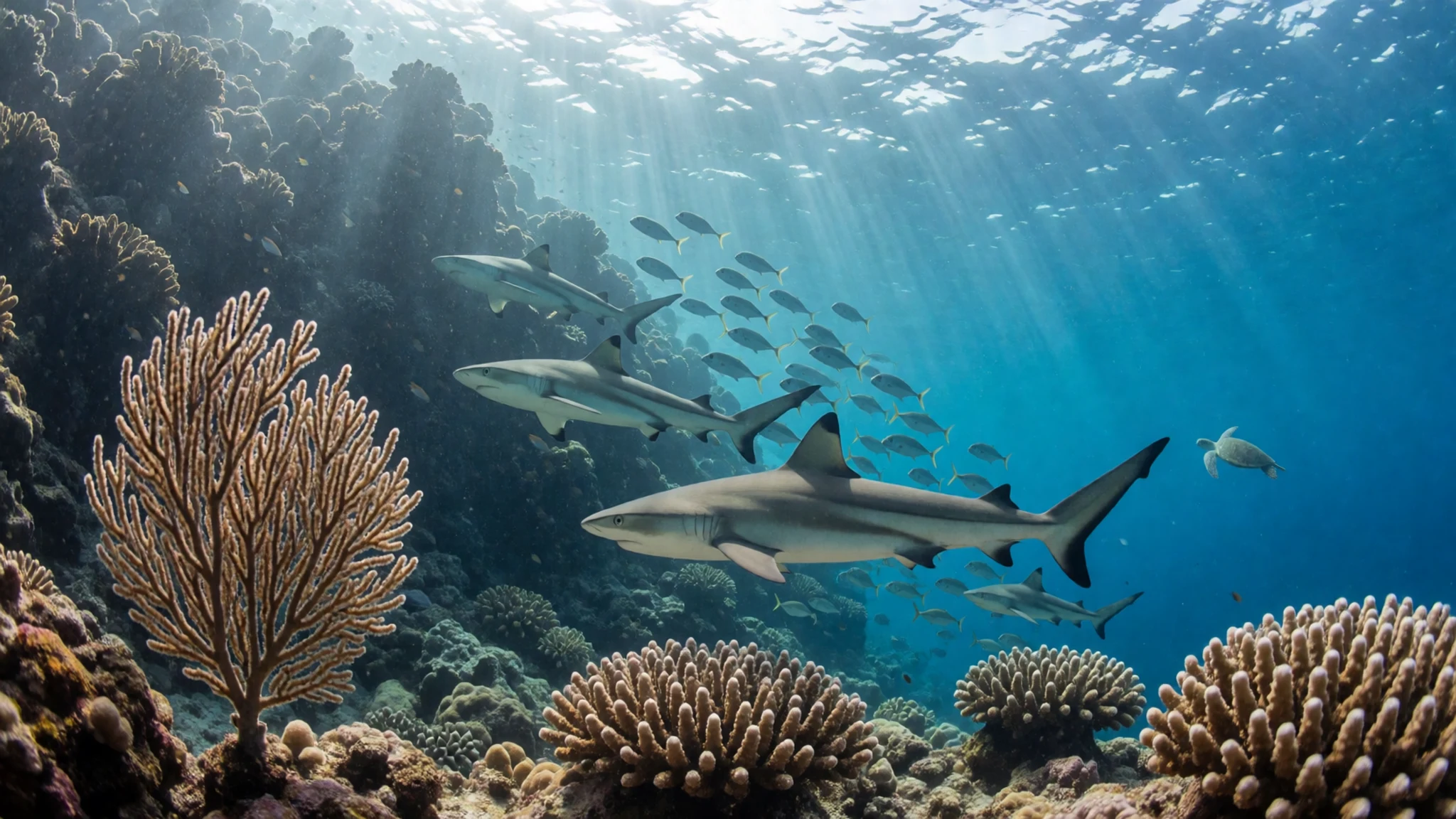
- Niah Caves — Near Miri, Sarawak, Malaysia
A limestone cave complex in Sarawak where people lived and left remains for tens of thousands of years. Boardwalks lead through enormous chambers where swiftlets nest and bats roost. The path is slippery and humid, so wear shoes with grip, bring a torch and expect guano underfoot.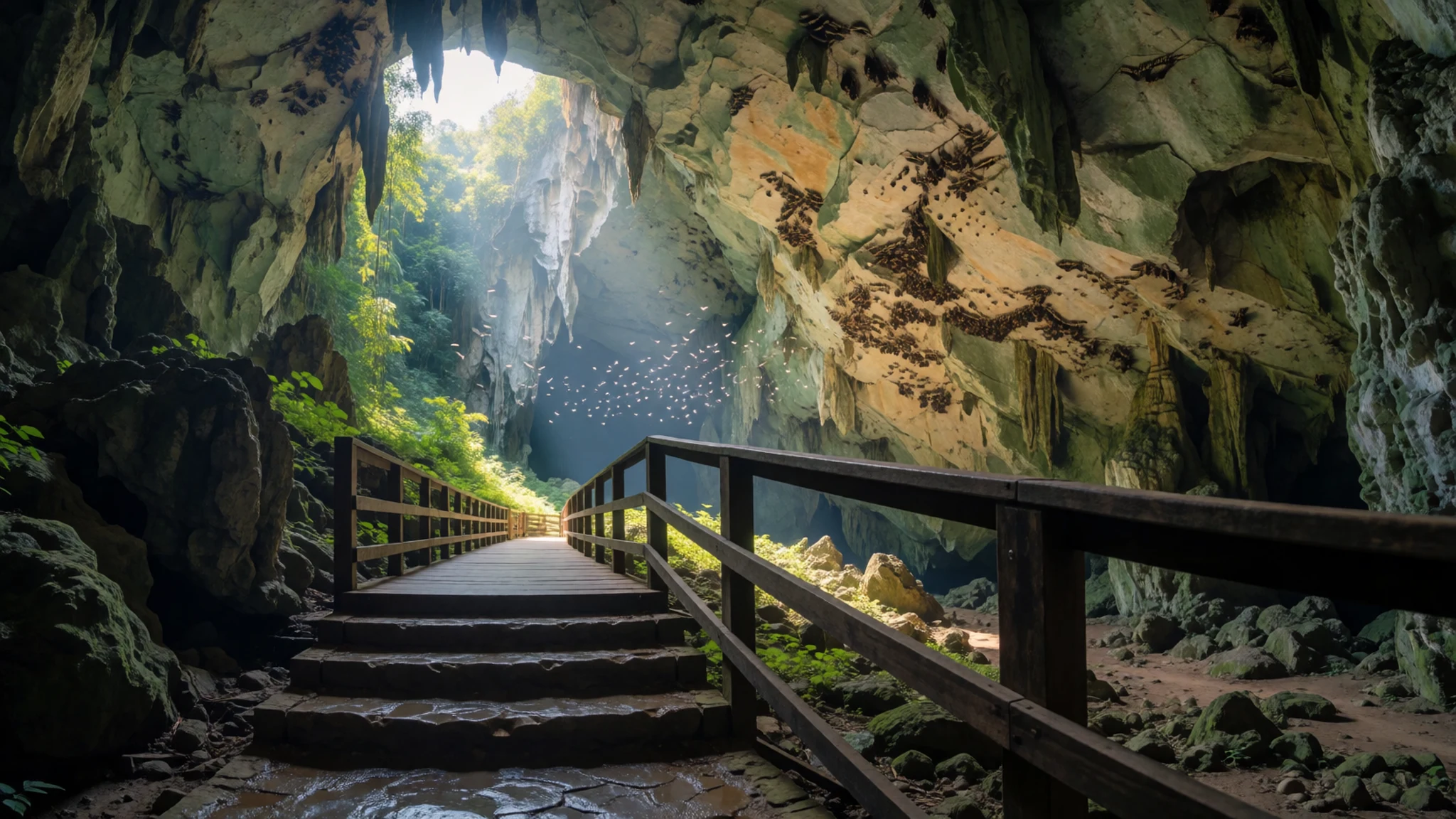
- Kinabalu Park — Near Ranau, Sabah, Malaysia
The mountain here gives Borneo its high ground and a cool, misty climate far from the sticky lowlands. Even without climbing, the park offers short forest trails with ferns, orchids and pitcher plants. Summit attempts need advance booking through official channels, so check the park's website for current arrangements.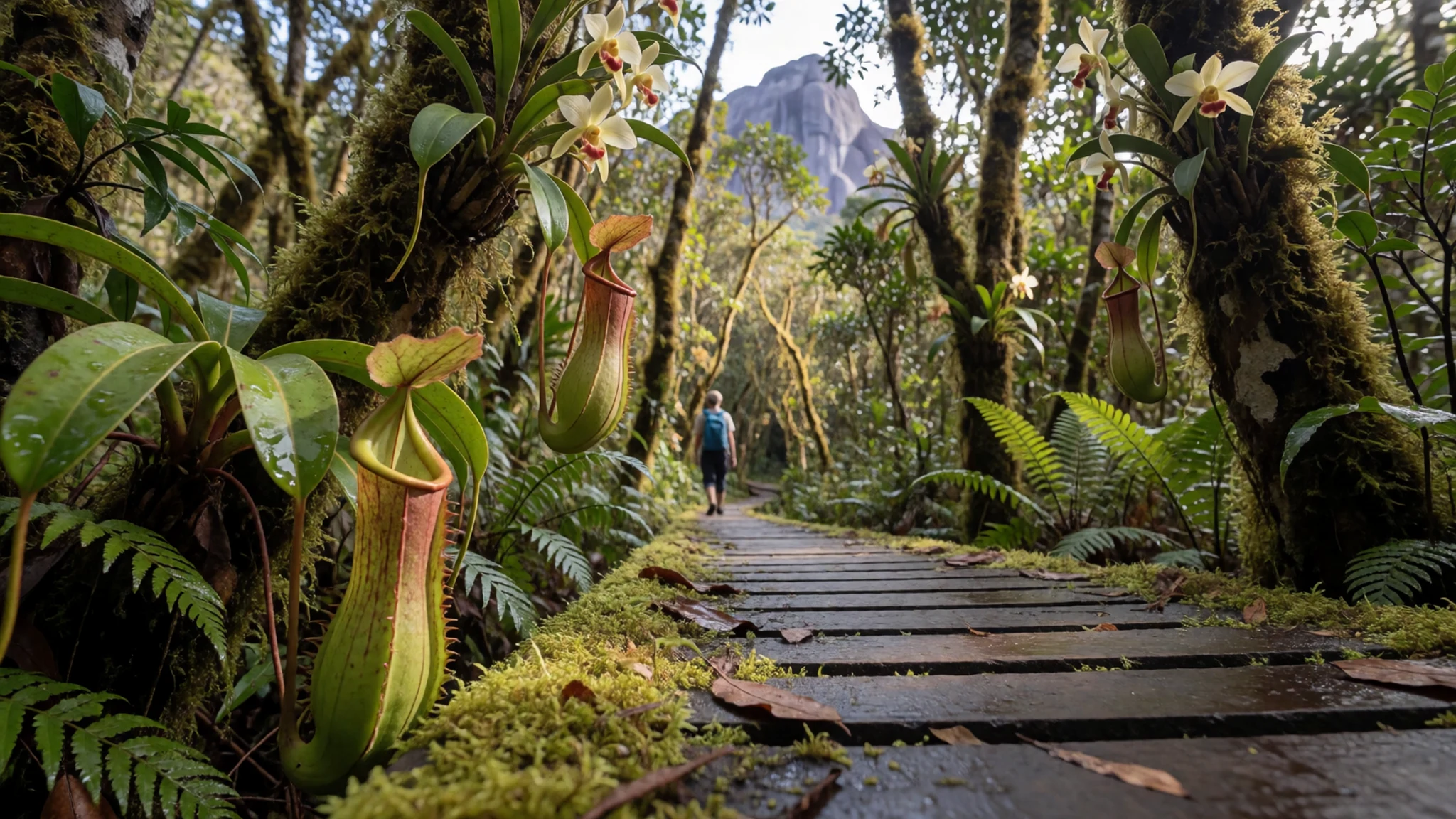
Culture
Borneo is a patchwork of cultures rather than a single one. In the interior, Dayak communities such as the Iban, Kenyah, Kayan and Dayak Ngaju have traditionally lived in longhouses, shared buildings where many families live under one roof along a long communal veranda. Rice farming, river fishing and forest foraging shaped their calendars, and harvest festivals still bring people home from towns and cities. Carved wood, beadwork, tattoos and woven cloth carry family and community identity. Along the coasts, Malay and Banjar communities have long followed Islam, and Brunei is a sultanate where Malay royal customs remain central to public life. Chinese communities, concentrated in towns such as Kuching and Pontianak, add temples, kopitiam coffee shops and festival calendars. Christianity is widespread among many Indigenous groups in Sarawak and Sabah, so Sunday is quiet in some villages. Logging, plantations and mining have changed the forest, and conversations about land rights and conservation are part of everyday life, so visitors will meet strong opinions. Guides from local communities are often the best route into this, both for the explanations they offer and because the money stays nearby. Ask the headman or your guide before photographing people or ceremonies, and when invited into a longhouse, accept the offered seat, remove your shoes at the door and bring a small gift for the community.
What to wear
Fashion in Borneo reflects its mix of peoples. Traditionally, many Dayak groups made cloth from cotton, bark or plant fibre, and beadwork, feathers and carved ornaments marked rank and occasion. The Iban of Sarawak are known for ceremonial woven textiles, usually patterned with dyed thread, which are worn or displayed at festivals, weddings and rites of passage. In Brunei and among coastal Malay communities, silk or cotton songket woven with metallic thread is worn for weddings and formal events, along with baju kurung and other Malay dress. Banjarmasin is associated with sasirangan, a stitched and dyed cloth. Everyday clothing now is modern and practical: T-shirts, jeans and light cotton shirts in the cities, headscarves for many Muslim women, and rubber boots for farmers and boatmen. Traditional dress comes out for harvest festivals, weddings and cultural performances. Visitors should dress for heat, humidity and sudden rain. Light, quick-drying long sleeves and trousers protect against sun, insects and leeches on forest trails. Sturdy shoes with grip suit wet boardwalks and muddy paths, and sandals are useful for boats. A thin rain jacket is better than an umbrella. For mosques, temples and village visits, cover shoulders and knees, and women may need a scarf for mosques. Swimwear belongs at the beach or on dive boats, not in towns.
What to eat
- Sarawak laksa — Kopitiam coffee shops in Kuching
A noodle soup built on a spiced paste, with prawns, shredded egg and chicken, sour and rich in the same bowl. Locals eat it at breakfast, so look for it in Kuching's kopitiam coffee shops and morning markets.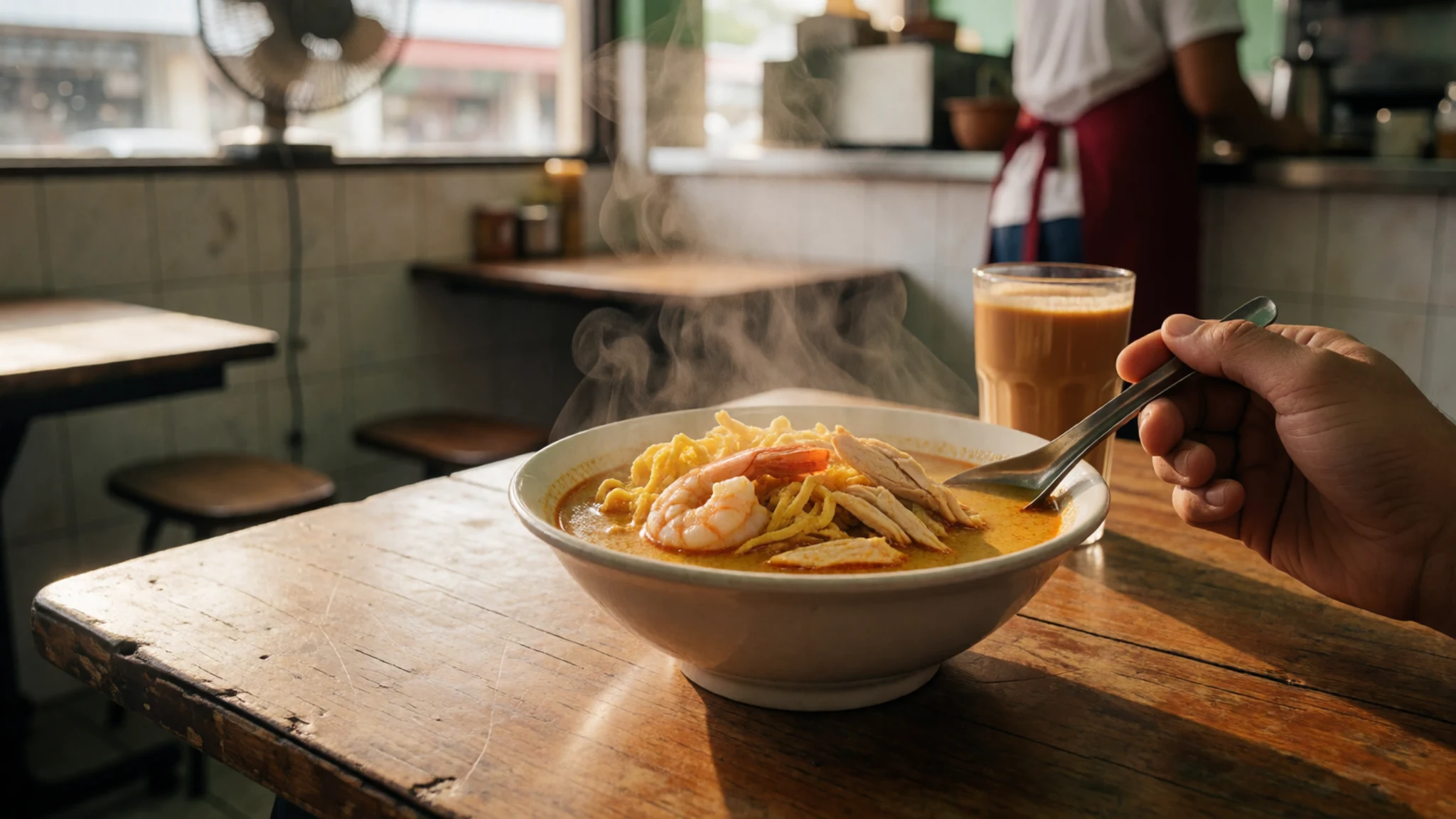
- Soto Banjar — Eateries near the river in Banjarmasin
A fragrant chicken soup from the Banjar people of South Kalimantan, clear but heavily spiced, served with rice cake or vermicelli, boiled egg and fried shallots. It is a staple of local eateries around the river markets.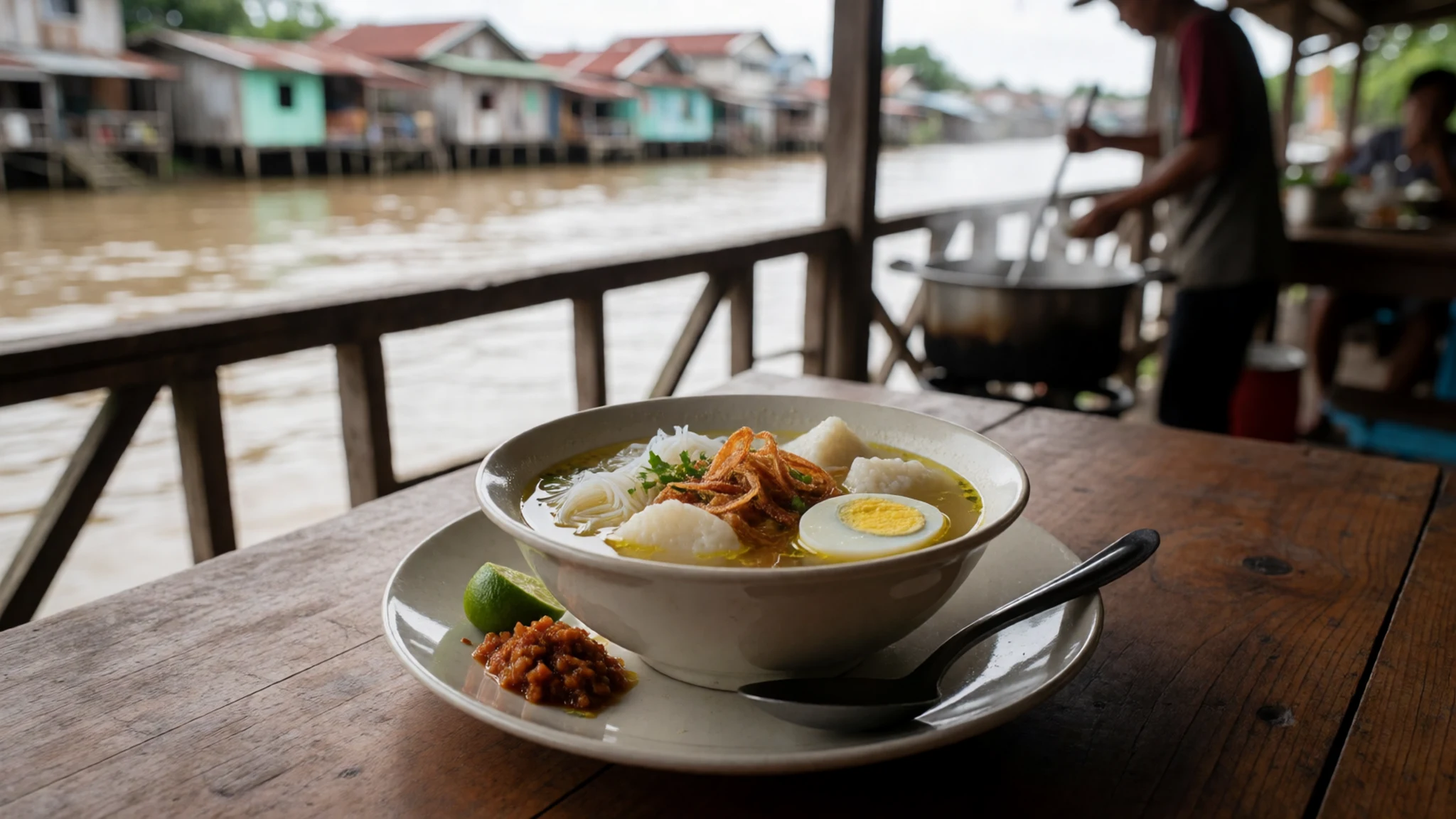
- Ambuyat — Family-style Malay eateries in Brunei
Brunei's best-known dish is a thick, sticky paste made from sago starch. Diners twirl it onto a bamboo fork and dunk it in sour, spicy sauces served alongside vegetables and fish. It is an acquired taste but worth trying once. - Umai — Seafood stalls and eateries along the Sarawak coast
A raw fish salad from coastal Sarawak, cured in lime juice with onion, chilli and ginger. It is light and sharp, and eaten as a snack or side dish. Order it where the fish is clearly fresh. - Ayam pansuh — Longhouse meals and Dayak restaurants in Sarawak
Chicken cooked inside a length of bamboo with lemongrass, ginger and tapioca leaves, a method used by Iban and other Dayak communities. The meat is tender and smoky. It often appears at festivals and in longhouse meals.
Plan it
Best time. Roughly March to September is usually the easier stretch, with less rain for river trips, forest walks and diving, though weather differs between coasts and the equatorial heat and humidity are constant. Rain is heavier in many areas from about November to February, when roads and rivers can disrupt plans.
How long. 7–10
Getting there. Main gateways are Kota Kinabalu and Kuching in Malaysia, Brunei International Airport, and Balikpapan, Pontianak and Banjarmasin in Indonesia. From there, the last leg is often a domestic flight, a long road transfer or a boat, so check the schedule for your route.
Budget. mid
Tips
- Pick one or two regions rather than crossing the whole island, since distances are large
- Book permits for diving and mountain climbs well ahead and check the official park websites
- Carry cash for villages, markets and boat operators, because cards are unreliable outside cities
- Start forest walks and wildlife trips early, before the heat and afternoon rain
- Drink bottled or treated water and carry insect repellent
Etiquette
- Ask permission before photographing people or entering a longhouse
- Cover shoulders and knees at mosques and religious sites
- Keep distance from wildlife and never feed orangutans or monkeys
Nearby
Sources
- Wikidata Q36117 (CC0)
- Wikipedia: Borneo (rev 1384970798) (CC BY-SA 4.0)
- Wikivoyage: Borneo (rev 5194985) (CC BY-SA 4.0)
- Gunung Kongkemul Borneo, NASA (Public domain)
- Administrative map of Borneo (Indonesian), M. Adiputra (CC BY 3.0)
- Borneo Topography, Sadalmelik (Public domain)
- Jack fish and reef sharks, Avoini (CC BY 3.0)
- Lahan basah Taman Nasional Danau Sentarum, RaiyaniM (CC BY-SA 4.0)
- Bornean orangutan, Tanjung Putting National Park, Thomas Fuhrmann (CC BY-SA 4.0)
- Borneo 19 May 2002, Jacques Descloitres, MODIS Land Rapid Response Team, NASA/GSFC (Public domain)
- Logging in Borneo, Dr. Alexey Yakovlev (CC BY-SA 2.0)


