Baliem Valley
Baliem Valley, Indonesia
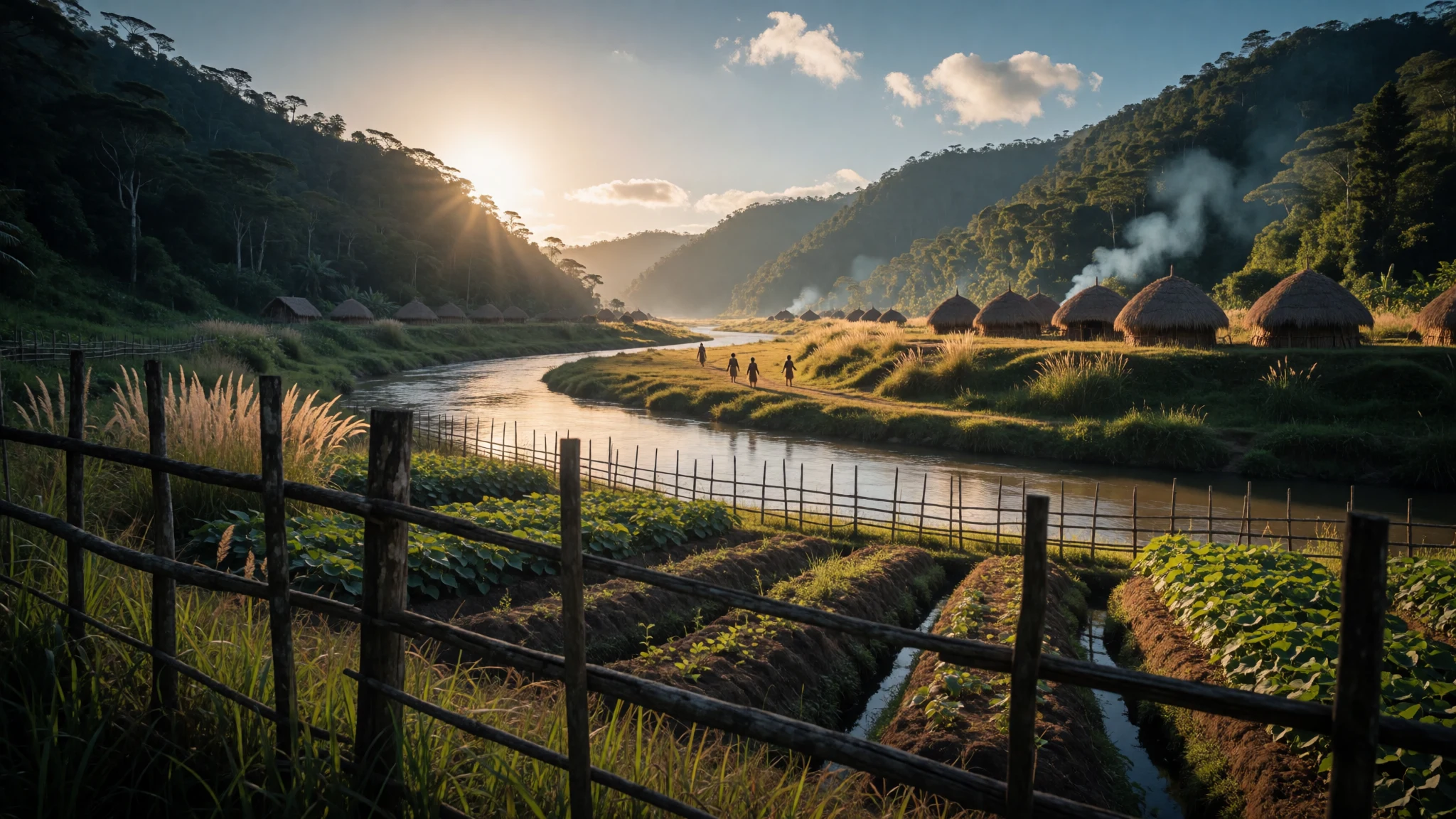
Baliem Valley is a high, farmed basin in Papua where round thatched huts, pig feasts and mountain walks still shape daily life.
The place
Baliem Valley sits in the Central Highlands of Western New Guinea, in Indonesia's Highland Papua province. It is a long, flat-floored basin, roughly 80 km from end to end and 20 km across, ringed by steep forested ridges. The Baliem River winds down the middle, and the whole floor is stitched with garden plots, drainage ditches and fenced hamlets. The valley is also known as the Grand Valley, and in Indonesian as Lembah Baliem.
The main town is Wamena, a busy, slightly rough-edged place that works as the base for almost every visit. Its markets, bicycle rickshaws and small eateries give way within minutes to villages, sweet potato terraces and footpaths that climb into the hills. Accommodation is simple. Anyone expecting resort comforts will be disappointed, but guesthouses in town are adequate for walkers.
The valley's air is cool and thin compared with the lowlands of the island, and mornings often start clear before cloud builds over the ridges. Evenings can feel chilly, and there is little street lighting once the sun goes down.
People here are farmers first. Sweet potato is the staple, pigs carry wealth and social weight, and many families still live in clusters of round houses. Most visitors go with a local guide, partly because information is thin and partly because walking routes pass through land that belongs to particular families. Wamena is reached by air only, which keeps numbers modest and the pace slow.
Its story
Outsiders only learnt of Baliem Valley's size and population in 1938. A zoological expedition led by Richard Archbold flew a survey flight south from the north coast and found, where maps showed empty mountains, a broad basin full of tended fields and fenced villages. The team called it the Grand Valley. A ground party followed with soldiers and carriers, collecting plants and animals, and the encounter was clumsy: nobody shared a language, and a local man was shot dead without warning.
The society they had stumbled on was dense and organised. Neighbouring villages formed clusters, clusters joined into confederations, and confederations into larger alliances of several thousand people. Though everyone spoke the same language and shared one culture, alliances were locked in cycles of ritual warfare, each death calling for a reprisal against the other side. That tradition is the root of the staged battles seen at the valley's annual festival today.
The next episode came in 1945, when a US Army transport plane crashed into the mountains beside the valley. Three survivors, including Margaret Hastings, were found alive, and a rescue team of paratroopers dropped in to help. They stayed until the end of June, trading visits with the villagers, and the story later became a well-known wartime adventure.
Since then missionaries, administrators and the Indonesian state have all arrived, and Wamena has grown into a regional town. Farming, pig exchange and house-building still follow older rhythms, which is much of why people travel here.
What to see
- Wamena markets — Wamena town
Wamena has several big open-air markets, easily reached on foot or by bicycle rickshaw. Alongside heaps of sweet potato, greens and fruit, stalls sell clothing, tinned food, tools, electronics and spare parts. It is a good first morning: relaxed, safe to wander, and a clear picture of how highland families trade.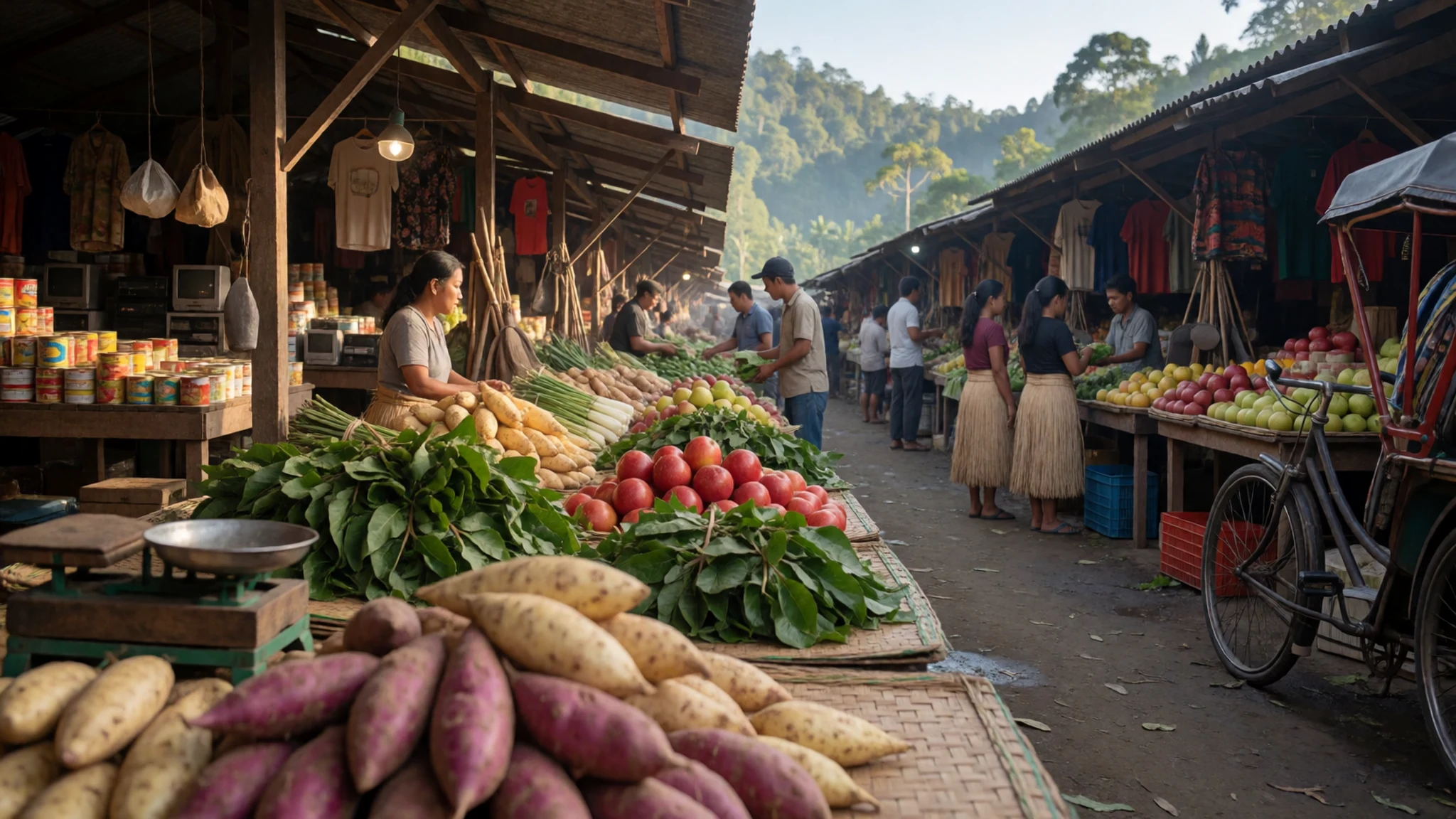
- Jiwika mummy village — Jiwika, north of Wamena
Jiwika is a village set up for visitors, known for an ancestral mummy preserved by smoking. Guides explain who the man was and how the body is kept. Ask about any fee before pointing a camera, since photographing the mummy alongside villagers can carry a charge agreed with them.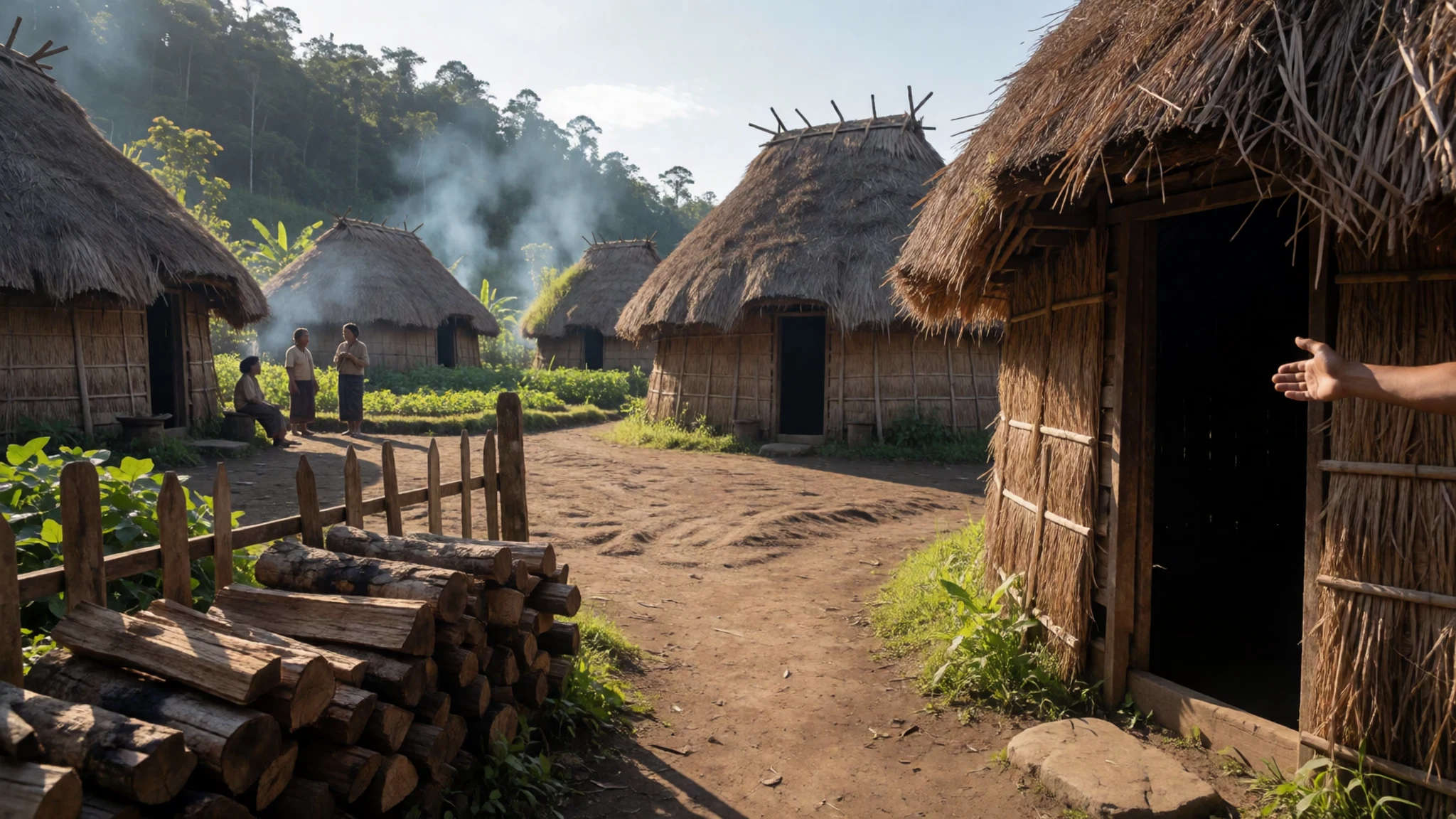
- Village walks — Villages across the valley floor
Footpaths link round-house compounds, sweet potato gardens and small streams across the valley. A guide arranges permission, introduces hosts and keeps you off private land. Walks of a few hours are easy on the flat; longer routes climb into the hills and need decent fitness, sturdy boots and rain cover.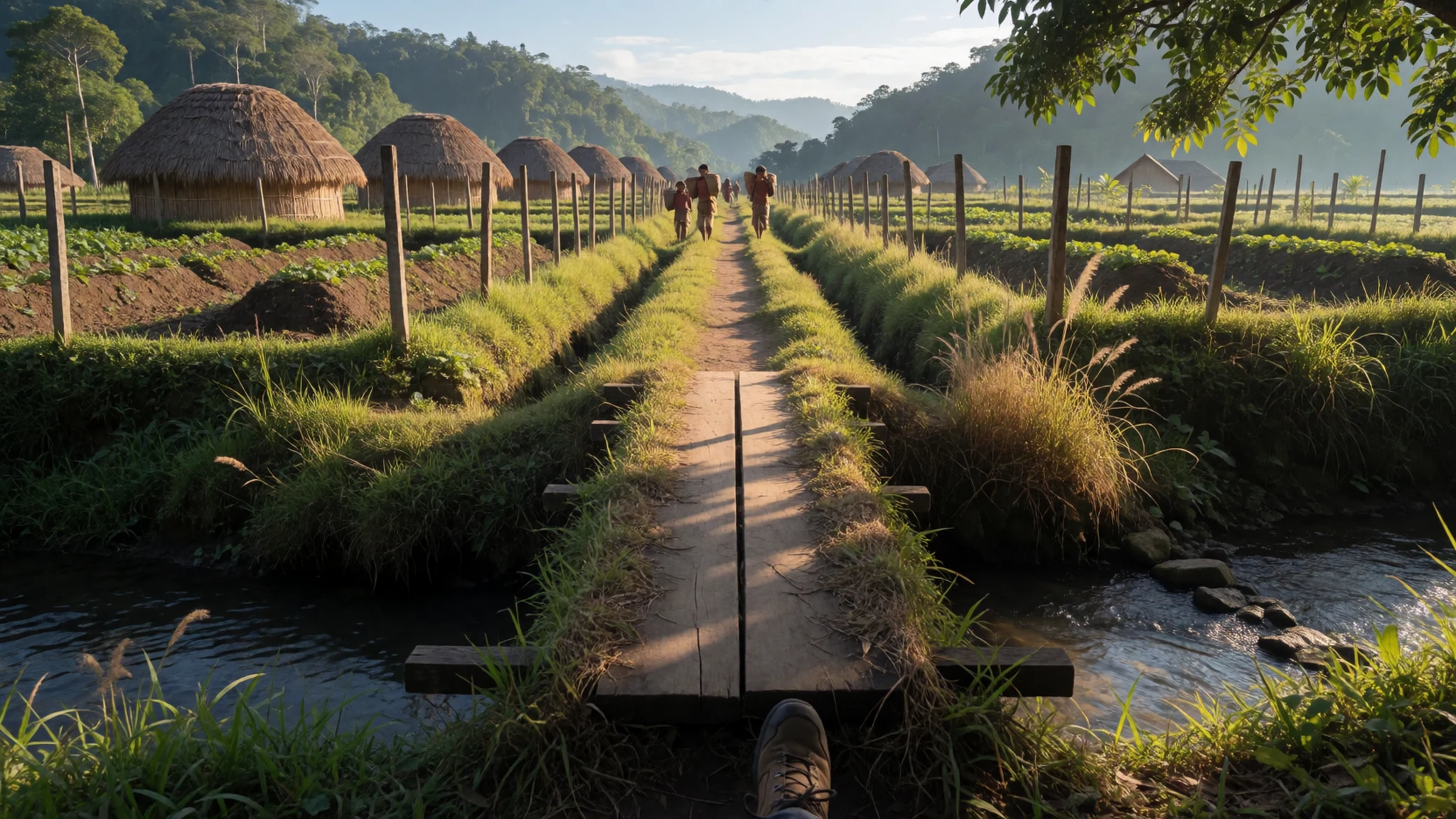
- Lake Habema — Western highlands above the valley
Lake Habema is a high mountain lake reached from Wamena by a rough track, well above the valley floor. The air is noticeably colder, the vegetation changes, and the scene is far from farmland. Bring warm layers, and allow a full day with a driver or guide.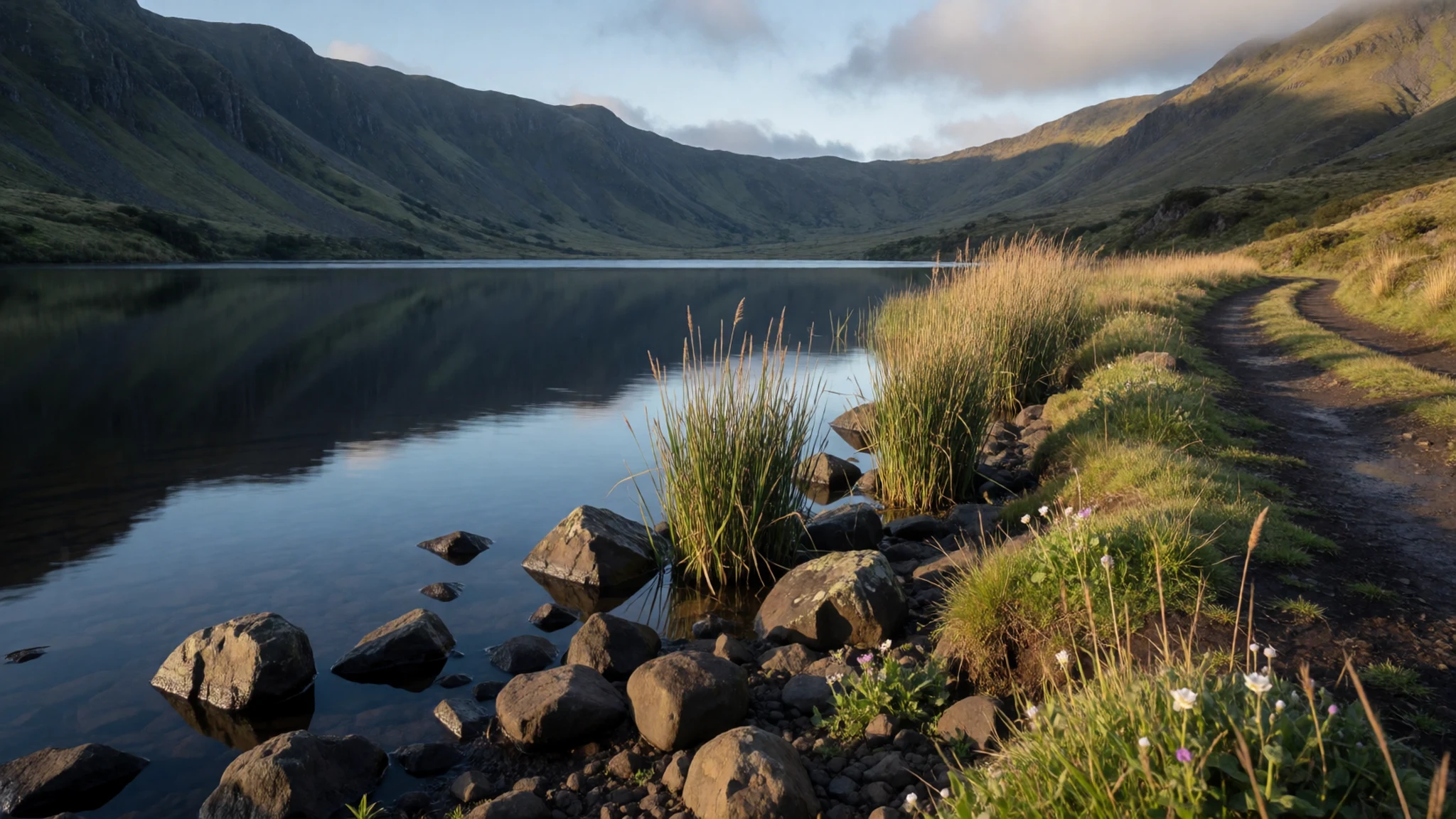
- Mbua Waterfall — Hills west of Wamena
Mbua Waterfall lies in the hills southwest of the main valley, a trip for people who like remote, uncrowded places. Roads and tracks are rough, so arrange transport through a guide. Wet ground makes footing slippery, and a dry spell makes the journey easier.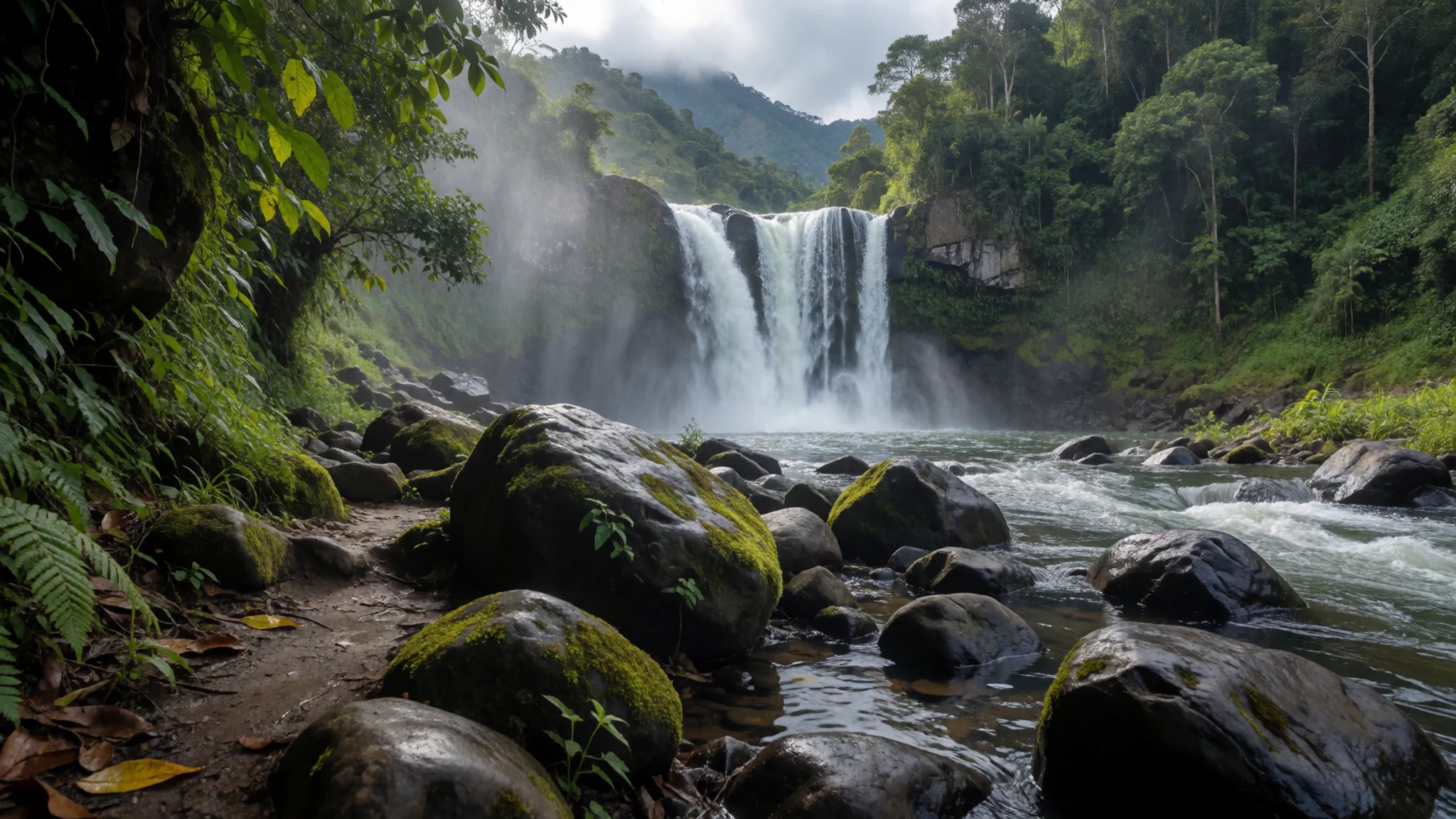
- Festival Budaya Lembah Baliem — Near Wamena
This annual cultural festival brings together highland groups for dancing, music and staged tribal battles. It gives a compact introduction to local customs for visitors who cannot visit many villages. Dates change from year to year, so check with local tourism offices and book transport and rooms well ahead.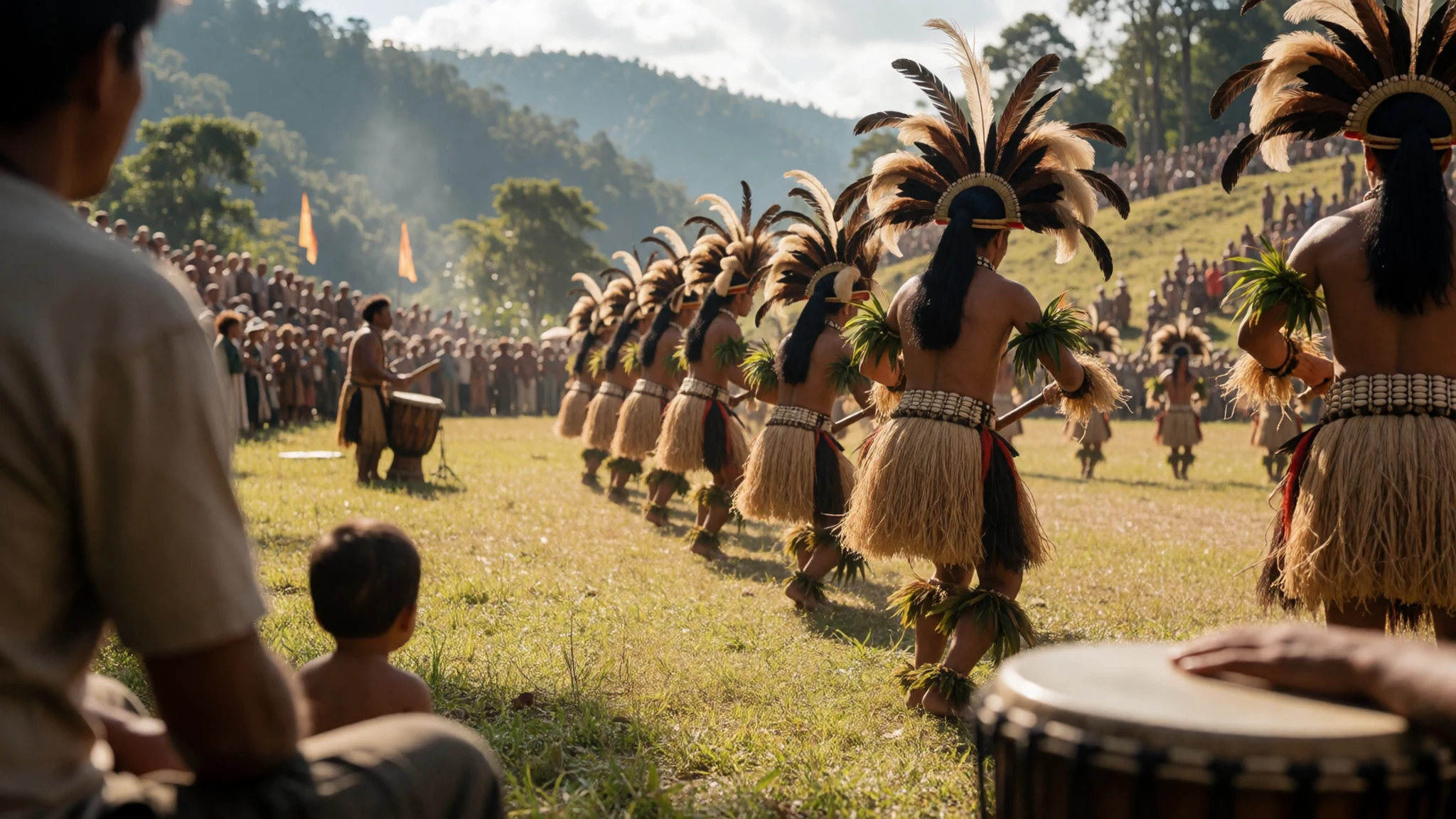
Culture
Baliem Valley's culture is built around gardens, pigs and kinship. Sweet potato is the daily food, and pigs are exchanged at weddings, funerals and settlements of disputes, so a family's herd is a measure of standing as well as a source of meat. Many households live in compounds of round thatched houses, with separate dwellings for men, for women and for animals, grouped around a shared yard and a fire.
Ancestors matter. In a few villages smoked mummies of respected men are kept and shown to visitors, a reminder that the dead remain part of the community. Warfare once structured relations between alliances, and today it survives as ritual display, most visibly at the annual festival, where teams in paint and feathers stage battles and dances.
Most people in the valley now also belong to Christian churches, and Sunday is quiet in towns and villages. Indonesian is the shared language of administration and schools, while local languages are used at home.
Alcohol is illegal and unavailable in the valley, so expect none at meals or festivals. Visitors usually travel with a guide who knows the families on each route, and who handles introductions, small gifts and payment for hosting or photography.
Always ask a person, and agree any fee with them or your guide, before photographing them, their home or a mummy.
What to wear
Traditional dress in Baliem Valley is made from plant materials. Men have worn the koteka, a dried gourd sheath, with feather headdresses, shell and bone ornaments, and boar-tusk or fibre necklaces on ceremonial days. Women have worn skirts of woven fibre or grass, and carried the noken, a string bag looped from bark or plant fibre and slung from the forehead, used for sweet potatoes, firewood and even small children. Pig grease and soot are sometimes used on skin for ceremonies, and body paint appears at festivals and staged battles.
Day to day, most people now dress much as elsewhere in Indonesia: shirts, T-shirts, trousers, skirts and jackets, with rubber sandals or boots for muddy paths and warm layers for the cool evenings. Traditional dress is mostly kept for the festival, for performances for visitors and for special family events, and some older people still wear it more regularly in remote villages.
Visitors should dress for a cool, wet highland and for conservative communities. Pack long trousers, light long-sleeved tops that dry fast, a fleece for evenings and a proper rain jacket. Sturdy, grippy walking shoes matter on slippery paths, and spare socks help. Avoid shorts, vests and revealing clothes in villages and towns, and do not wear anything imitating local costume or ornaments. A hat and sun protection are useful, as the sun is strong at this altitude.
What to eat
- Sweet potato — Wamena markets and village gardens
Sweet potato is the valley's staple, grown on mounded garden plots and eaten daily. It is usually roasted in embers or steamed, plain and filling. Heaps of different varieties fill the Wamena markets, and village hosts often offer it to guests.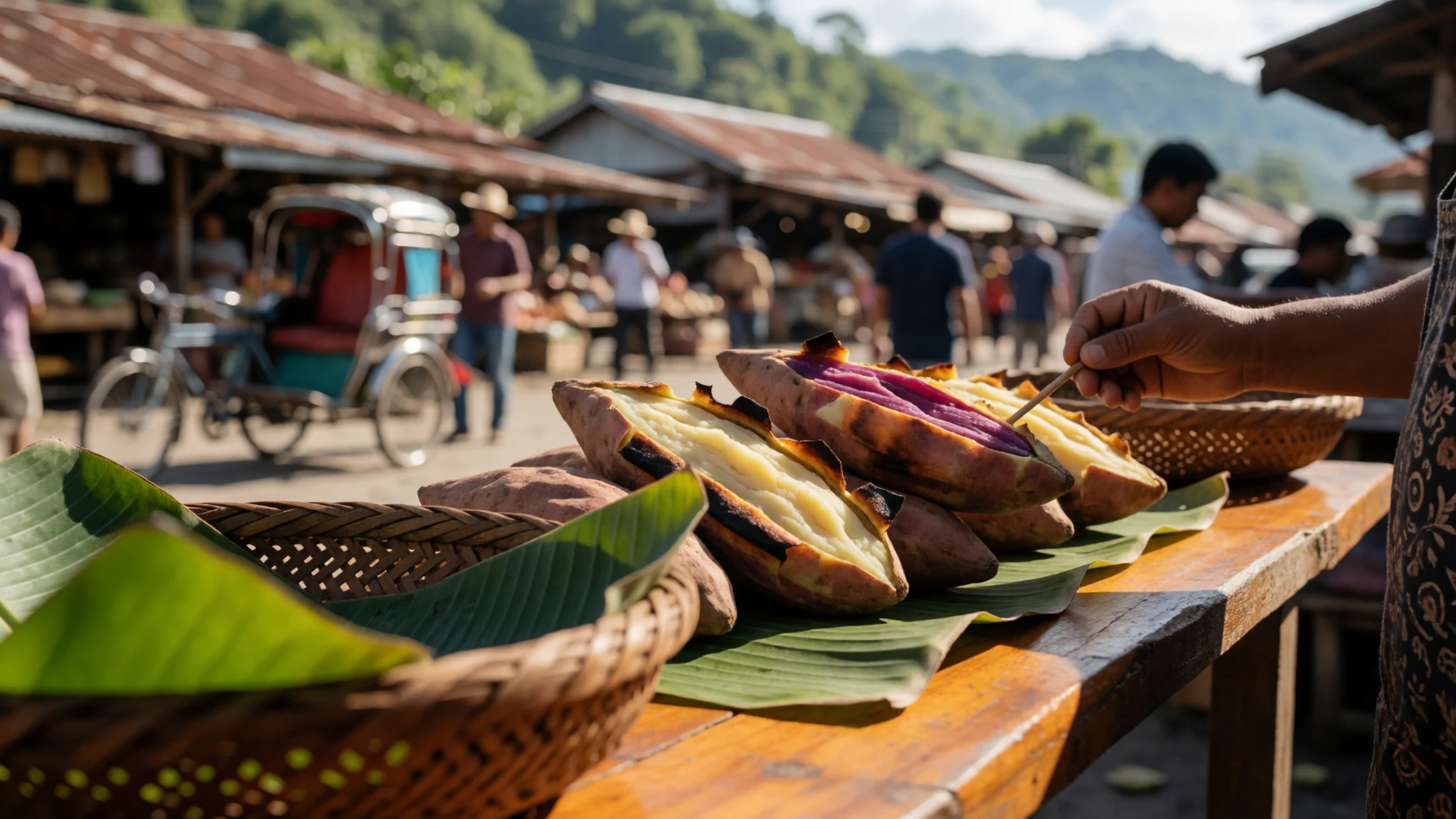
- Bakar batu pit feast — Festivals and village celebrations, arranged through a guide
For ceremonies, pork, sweet potato and greens are layered with hot stones in an earth pit and left to steam. The result is soft, smoky and shared by many. Visitors can sometimes join a feast through a guide or at the annual festival.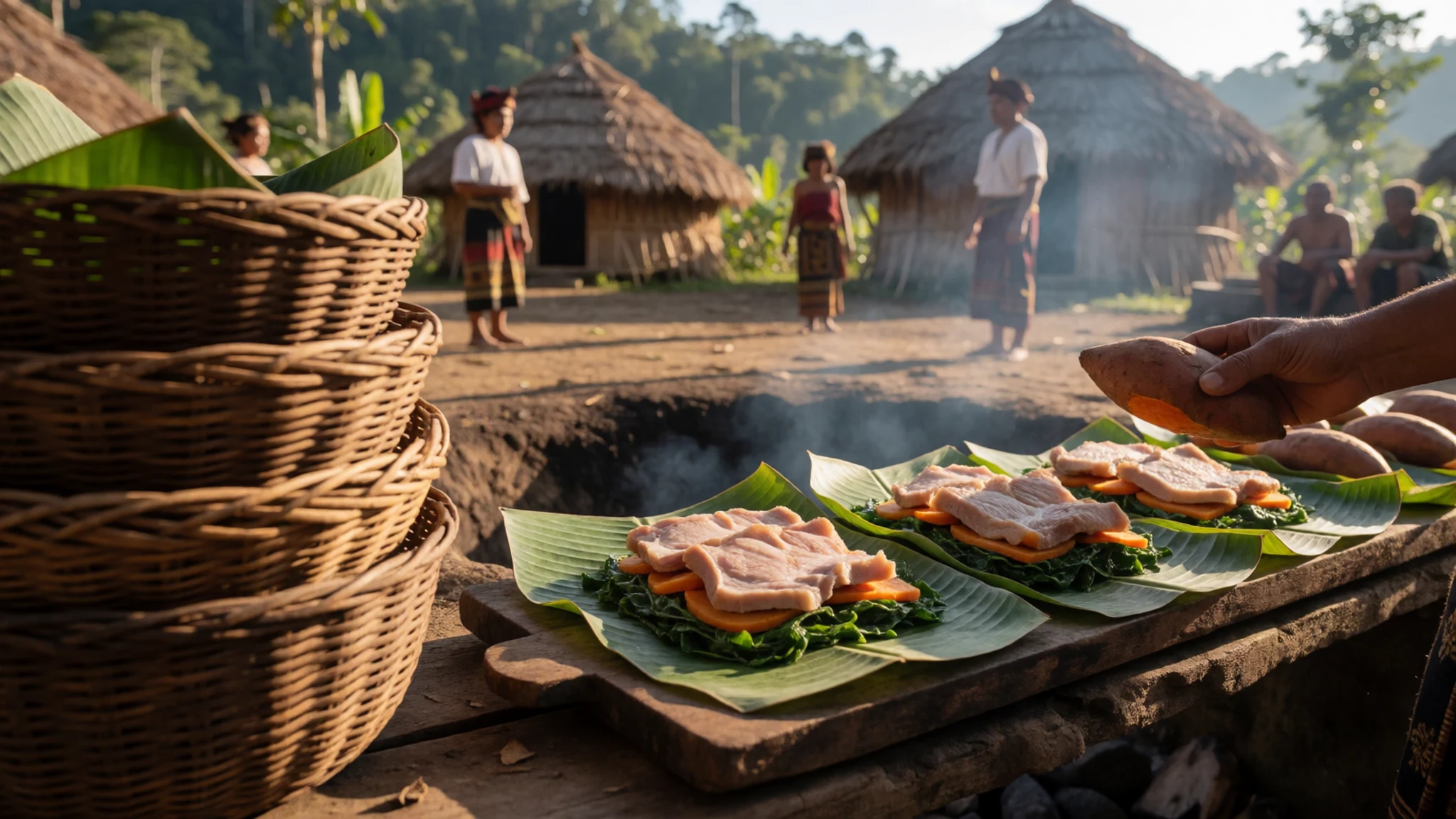
- Martabak — Evening food stalls in Wamena
Martabak, sweet or savoury, is a thick fried pancake sold from stalls in Wamena. The sweet version is stuffed with chocolate, cheese or peanut, and the savoury one holds egg and minced meat. It is warm, cheap-feeling comfort food after a day's walking. - Coffee and pastries — Cafes and bakeries in Wamena
Wamena has a handful of cafes and bakeries where coffee is served with cakes and bread. They are useful for a decent breakfast before a hike or a break from rice-heavy meals. Choices are limited, so do not expect a long menu.
Plan it
Best time. June to September is usually the more comfortable stretch for walking, but highland weather is changeable and rain can arrive in any month. Mornings are best for clear views, evenings are cool, and the annual cultural festival has its own dates, so check them before booking.
How long. 4–5
Getting there. There is no road from Jayapura to Wamena, so fly from Jayapura, a short hop over the mountains. Check current airline schedules and baggage limits, as flights can be delayed by weather. From Wamena's small airport, take a bicycle rickshaw or arrange a driver for your guesthouse and village trips.
Budget. mid
Tips
- Arrange a local guide for village walks and remote sites, since permission, route knowledge and introductions matter
- Carry enough cash from Jayapura, as cards and cash machines are unreliable in Wamena
- Wamena tap water is not safe: drink bottled water or boiled and filtered water, and carry a filter for backcountry hikes
- Keep flight dates flexible, because weather can delay planes in and out
- Bring warm layers, rain gear and a torch, as nights are cool and street lighting is poor
Etiquette
- Ask before photographing people, houses or mummies, and agree any fee first
- Dress modestly and avoid wearing anything that imitates local costume
- Do not bring or offer alcohol, as it is illegal in the valley
Nearby
Sources
- Wikidata Q804967 (CC0)
- Wikipedia: Baliem Valley (rev 1359979453) (CC BY-SA 4.0)
- Wikivoyage: Baliem Valley (rev 5394296) (CC BY-SA 4.0)
- Photo 01: Philomène Martinelli Globe-Trotting.com (CC BY-SA 4.0)
- Photo 02: Lasthib (CC BY-SA 4.0)
- Photo 03: 710928003 (CC BY 2.5)
- Photo 04: anmede (CC BY-SA 2.0)
- Photo 05: Lasthib (CC BY-SA 4.0)
- Photo 06: Lasthib (CC BY-SA 4.0)
- Photo 07: Lasthib (CC BY-SA 4.0)
- Photo 08: Lasthib (CC BY-SA 4.0)


