Baluran National Park
Baluran National Park, Indonesia
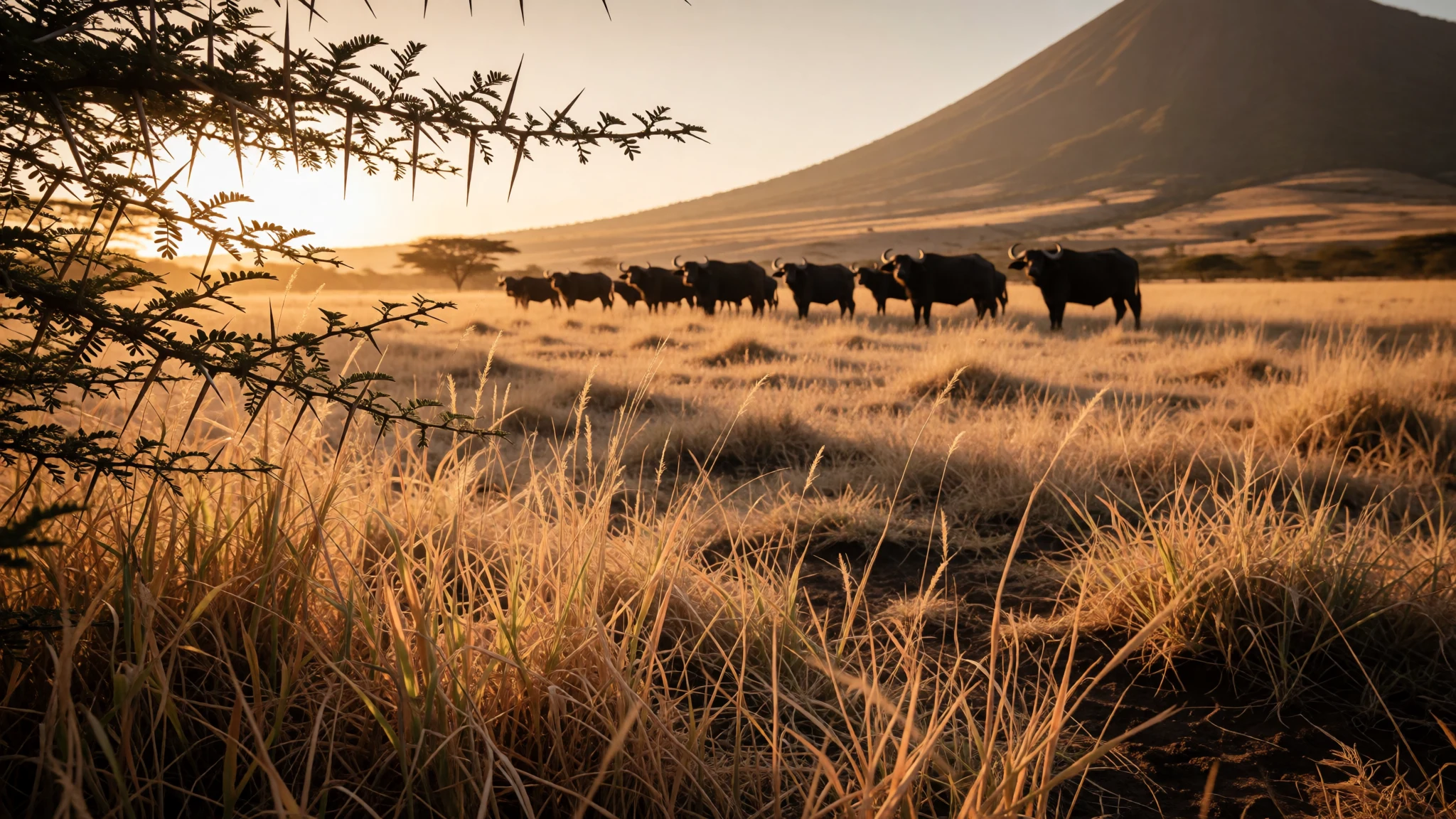
Baluran National Park is a dry East Java savannah where deer and buffalo gather under an old volcano, a short ride from the Bali ferry.
The place
Baluran National Park occupies the north-eastern corner of Java, in Situbondo Regency, East Java, Indonesia. The Madura Strait lies along its northern side and the Bali Strait along the east, which puts the protected land just inland of the ferry run toward Bali. The Bajulmati river, by Wonorejo village, marks the west, and the Klokoran, by Sumberanyar, marks the south. The boundary reads as a rough circle with the volcano Mount Baluran in the middle. Around it the country is open grass and thorny acacia, quite unlike the closed wet forest of much of Java.
About two-fifths of Baluran National Park is savannah. Lowland forest, mangrove and hills fill in the rest. The elevation recorded for the park is 49 metres, a figure that belongs to the coastal plain rather than the summit. Taken together the reserve covers 25,000 hectares, arranged as five zones: a main zone, a wilderness zone that includes both land and water, a zone for heavier visitor use, a specific-use zone and a rehabilitation zone. The shore at Bama, pale sand with mangroves and coral a short swim out, lies about 15 kilometres from the main gate.
Wonorejo is the town that actually leads into Baluran National Park; it stands on the road that follows the northern shore and links Banyuwangi with Probolinggo. Past the gate the tracks are rough, but the visit itself is simple. People settle at Bekol, where animals come to a waterhole, and go on from there to the beach or the mountain. The grass has picked up the nickname Africa van Java: scattered trees, dry ground and herds in the open, with the volcano behind them.
Its story
The first written notice of Baluran National Park dates from 1928, when A. H. Loedeboer, called a botanist in the travel guide and a hunter in the historical account, described what was unusual about this dry corner of Java. In 1937 the colonial government set the area aside as a refuge for wildlife. Park status came in 1980, the year the record gives as its founding; a travel guide instead puts that step in 1984, and those published dates simply disagree. Legal protection is old. Trips for pleasure took much longer to appear.
What now defines Baluran National Park is the state of the grass. Banteng, Java's wild cattle, have lost the most ground. Illegal hunting is the pressure named most often, and a ProFauna Indonesia account says it has involved people from nearby communities and members of the military. Acacia thorn had taken over 6,000 hectares or more of the plain, so the cattle could no longer find enough to eat. Counts differ: 338 in 1996 and 26 in 2012, and intensive breeding had raised the herd to about 200 by 2020. Those figures describe a low point, and the herd has since recovered.
Deer still cross the Bekol grass, and buffalo still soak at the waterhole, with Mount Baluran behind them. The Africa van Java nickname belongs to that picture. It stays meaningful only if the plain can be grazed and the cattle are still there to be seen. The argument over Baluran National Park began when outsiders first wrote it down, and it has not been settled.
What to see
- Bekol Savannah — Bekol
Bekol is the savannah watchpoint of Baluran National Park, and the place the Africa van Java nickname comes from. Open grass runs toward Mount Baluran, and animals gather at the water to drink. Buffalo wallow here toward evening; deer use the same ground. Simple rooms and a campground sit by the watchpoint, with a stall for drinks. Motorcycle taxis often wait for the onward ride to Bama.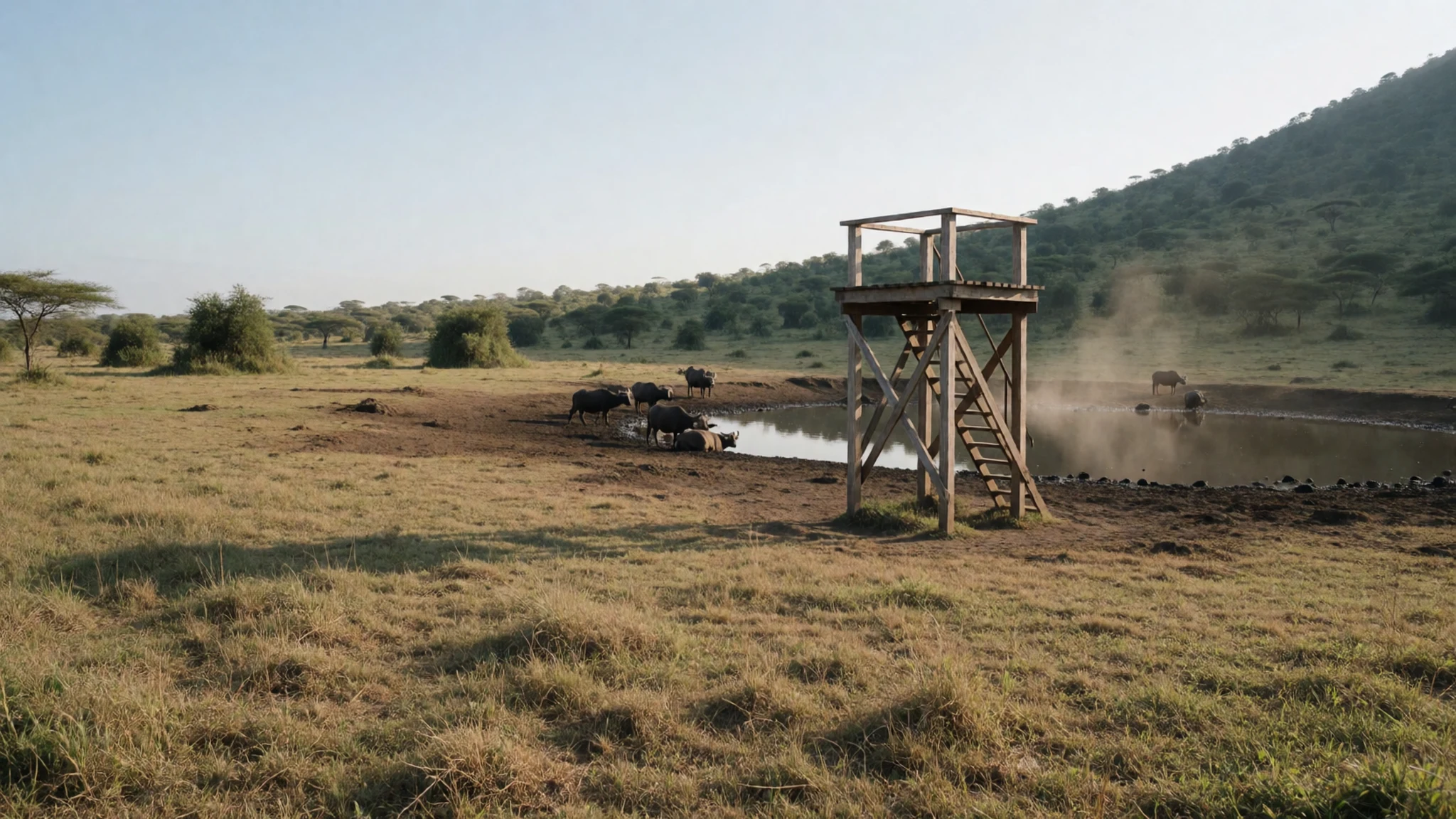
- Bama Beach — Bama
Bama Beach is the shore of Baluran National Park, about 15 kilometres from the main gate and usually a motorcycle-taxi ride from Bekol. Pale sand meets mangroves, and coral grows a short swim from the beach, which is why people snorkel here. Javan rusa are often on the ground near Bama Point. A simple shop sells drinks, and basic lodging is available.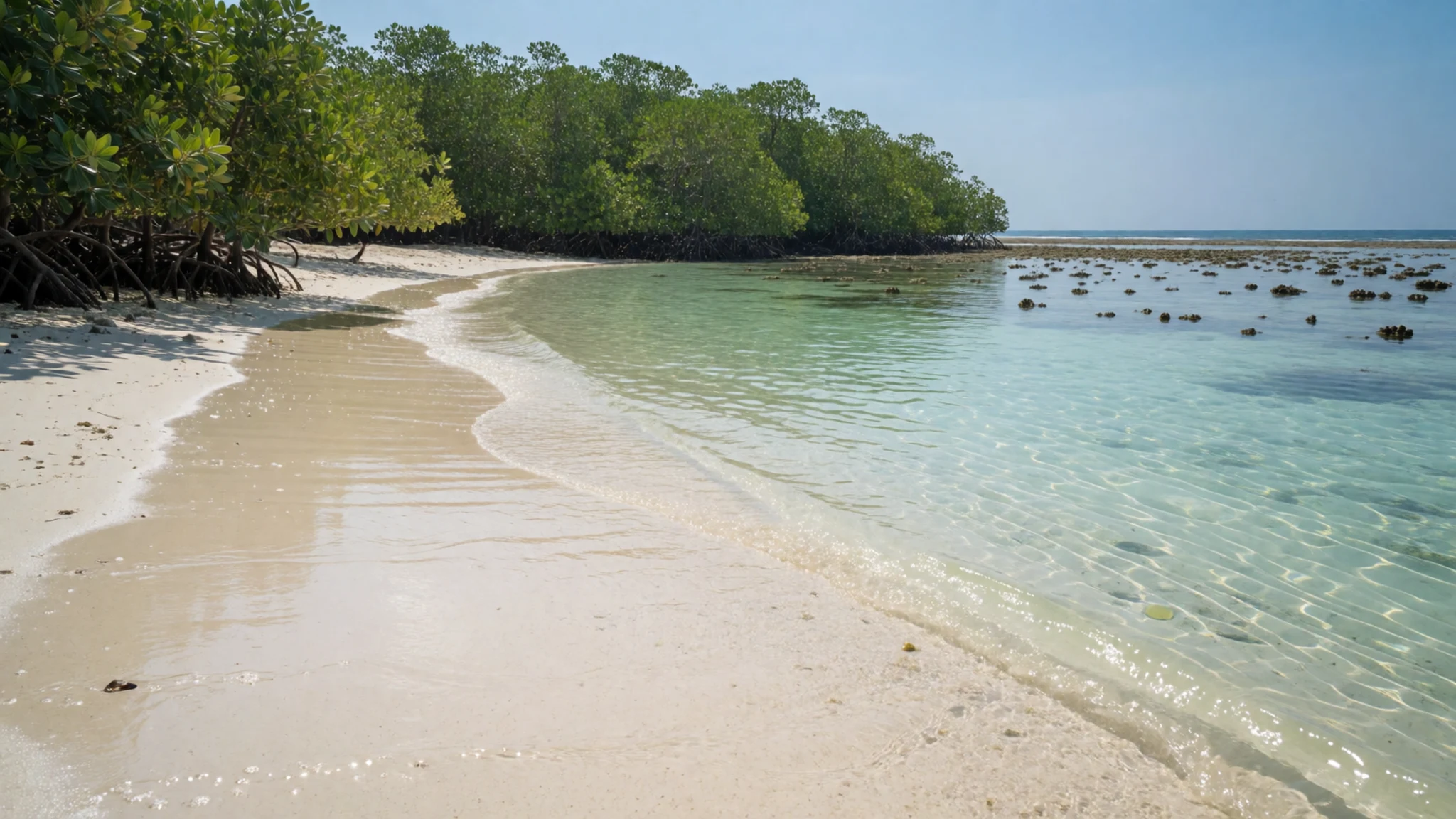
- Mount Baluran — centre of the park
Mount Baluran is the volcano at the centre of Baluran National Park and the shape behind every savannah view. The summit is 1,247 metres above the plain, lower than Java's famous cones, with sea on several sides. From the top the grass, the coast and the Madura Strait sit in a single view, and Bali can appear across the water when the air is clear.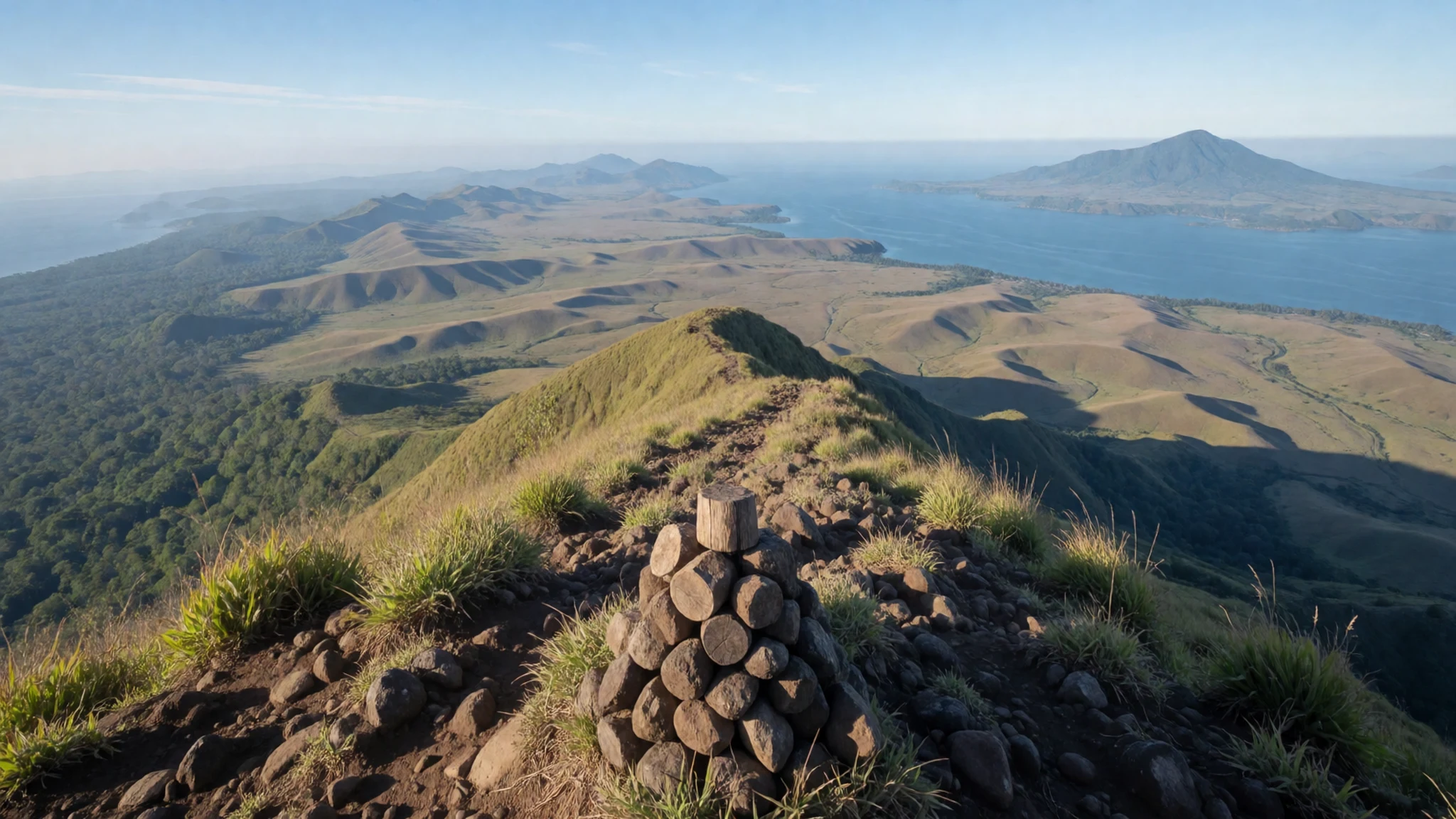
- Rusa, kijang and buffalo — Bekol and Bama Point
Javan rusa and kijang are the deer most often seen in Baluran National Park, near Bama Point and on the Bekol grass. Feral buffalo soak at the Bekol waterhole toward dusk. Banteng, the wild cattle, are much harder to find: counts have run from 338 in 1996 to 26 in 2012, and intensive breeding had lifted the herd to about 200 by 2020, with hunting and acacia thorn both named as causes. Any view of them should stay distant, from the watchpoint.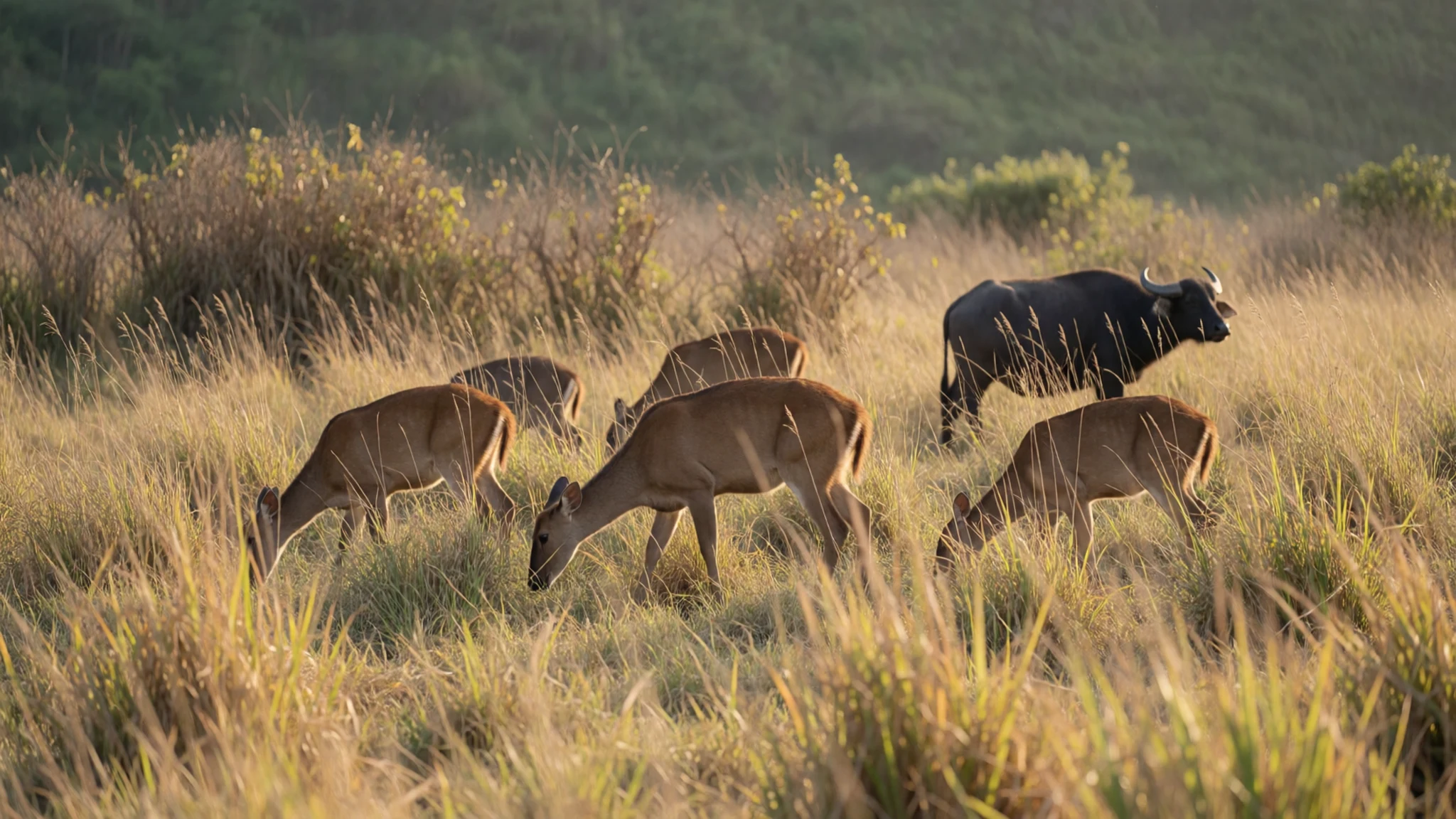
- Mangroves, reef and thorn scrub — Bama coast and Bekol plain
Away from the grass, Baluran National Park changes character. Monsoon forest and mangroves take over toward Bama, and the reef just off the beach belongs to that coastal edge. On the Bekol plain itself, wild Ziziphus mauritiana stands among the acacia. Thorn, coastal forest and coral are all inside the same boundary, which is easy to miss if the visit stays on the waterhole alone.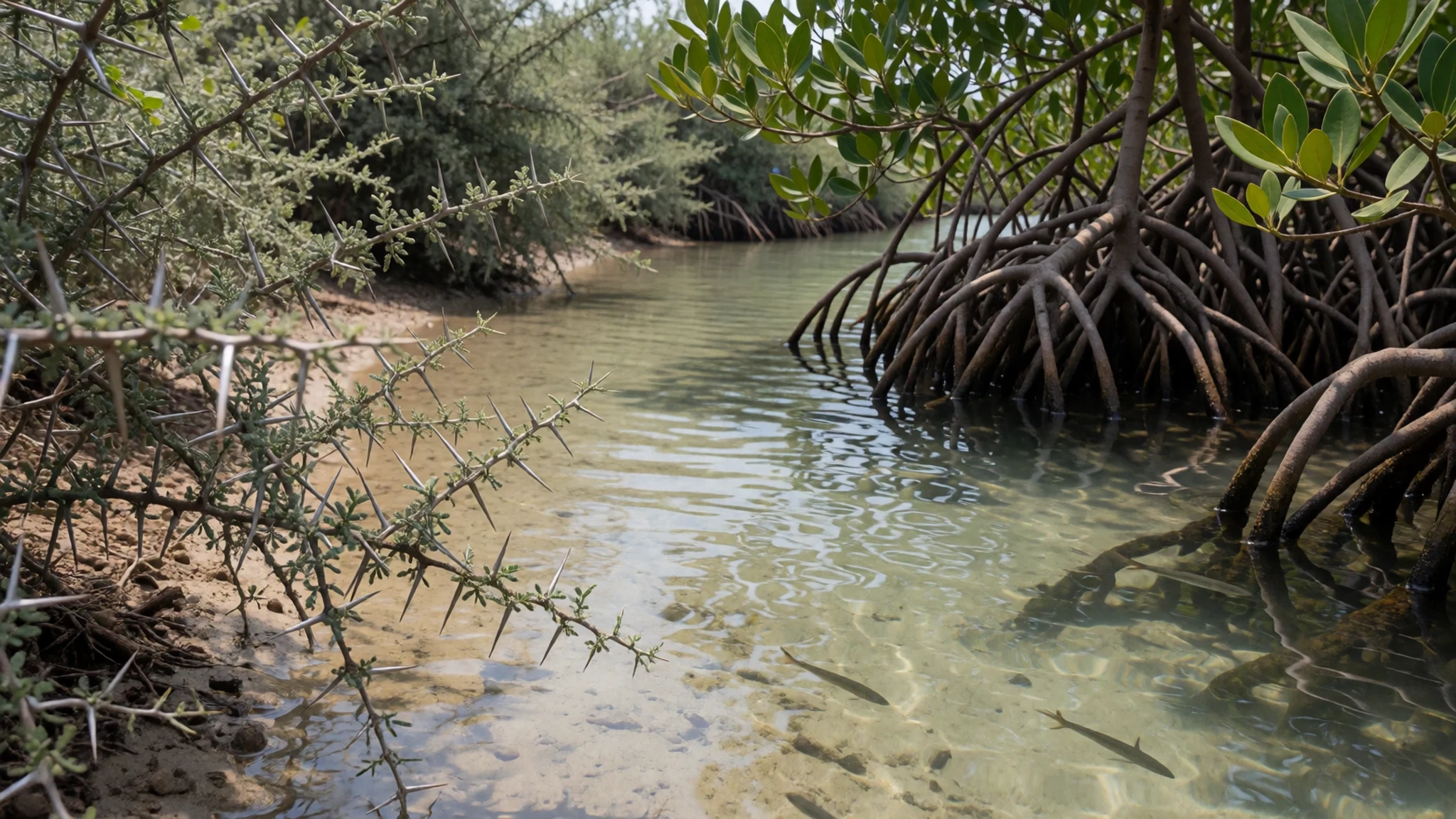
Culture
Baluran National Park sits in a lived-in corner of East Java, not a blank wilderness. Situbondo Regency faces the Madura Strait, and the towns on its edge — Wonorejo toward the gate, Banyuwangi toward the ferry — are ordinary north-coast places of small shops, buses and family journeys. A visit follows that plain pattern. The draw is a savannah people here call Africa van Java. Guests sleep in simple rooms at Bekol or camp beside the watchpoint, then take a motorcycle taxi to the beach. Protection was written down from 1928, became a wildlife refuge in 1937 and a national park in 1980, yet pleasure trips grew slowly, so the park still feels like a watchpoint and a shore rather than a resort coast.
The uneasy part is the wildlife. A ProFauna Indonesia account says poaching of banteng has involved people from nearby communities and members of the military, while acacia thorn has crowded the grazing. Treating the grass as a safari backdrop, and ignoring that pressure, misreads Baluran National Park. Watch the animals from the watchpoint, do not feed them, and leave the waterhole, the reef and the scrub as you found them.
What to wear
Baluran National Park has no dress of its own; clothing follows the East Java coast around Situbondo and the Madura Strait. For ceremonies, weddings and Friday prayer, people still wear batik from this Madurese coast, a cotton sarong for men, and a kebaya or a long modest blouse for women, sometimes with a selendang. Those textiles stay for ritual. They are not what anyone wears out on the grass.
On an ordinary day in Wonorejo or Banyuwangi the clothes are contemporary: T-shirts, shirts, trousers or jeans, long skirts, and a hijab widely worn by women. Sandals are the town shoe. Rangers and ojek riders at the park dress the same way, plus a cap against the sun.
Visitors to Baluran National Park should dress for heat, glare and thorny acacia. Long light trousers, a sleeved shirt, a hat and closed shoes are the right kit beyond the watchpoint; sandals and swimwear suit Bama Beach and nowhere else in the park. A sarong earns its place as a cover-up off the sand and a layer after dark. A light rain layer is worth having when a shower crosses Mount Baluran in the afternoon.
What to eat
- Sego tempong — warungs and market stalls in Banyuwangi
Sego tempong is Banyuwangi rice with chilli relish and a few sides, often fish or vegetables. Warungs and market stalls in Banyuwangi are the place for it, before the road into Baluran National Park. Park stalls sell drinks, not this plate.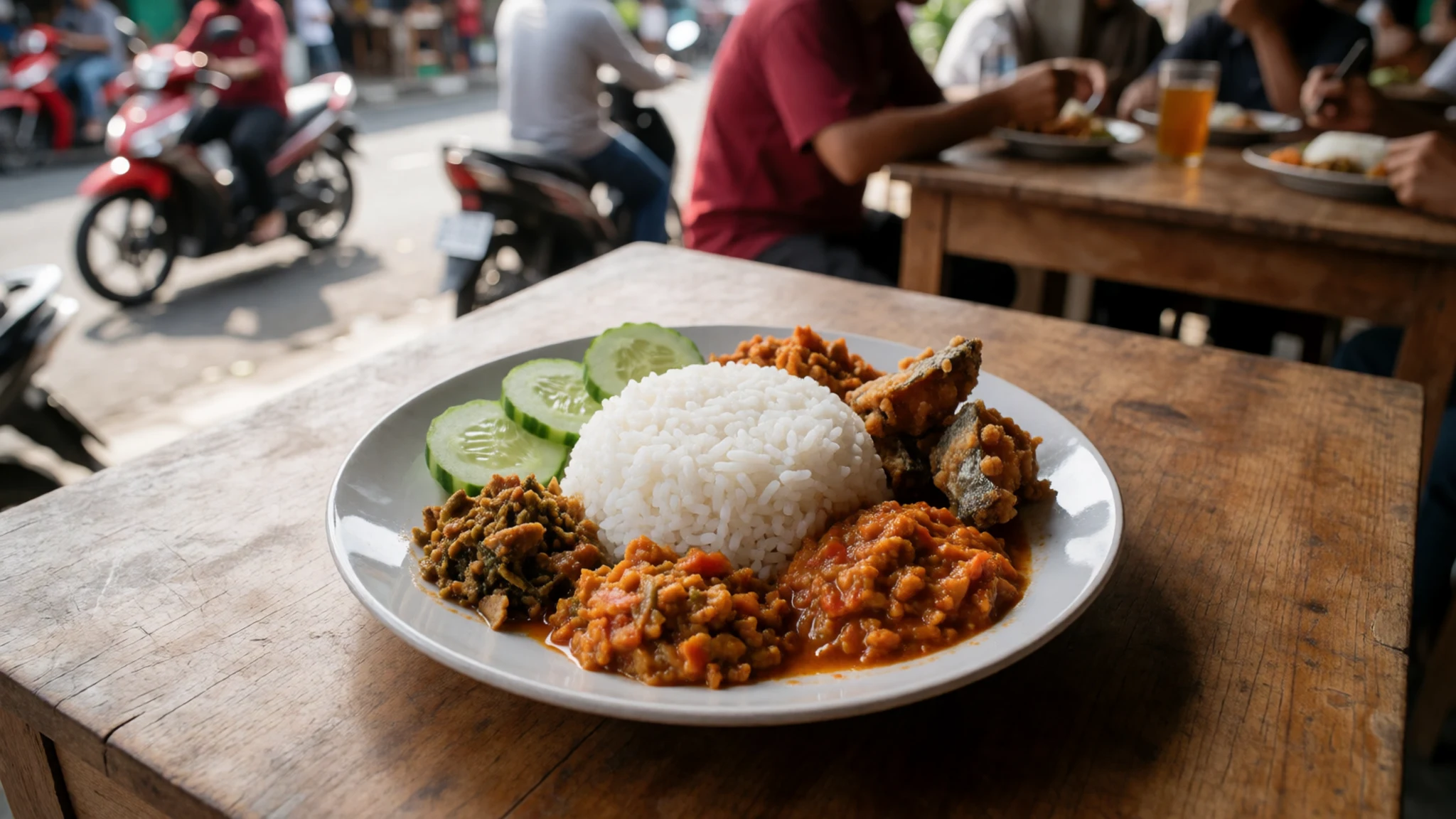
- Pecel — warungs in Wonorejo and Banyuwangi
Pecel is boiled vegetables in peanut sauce, with rice, from warungs on the north-coast road through Wonorejo and in Banyuwangi. It carries well if food has to come into Baluran National Park for a lodge kitchen or a camp supper at Bekol.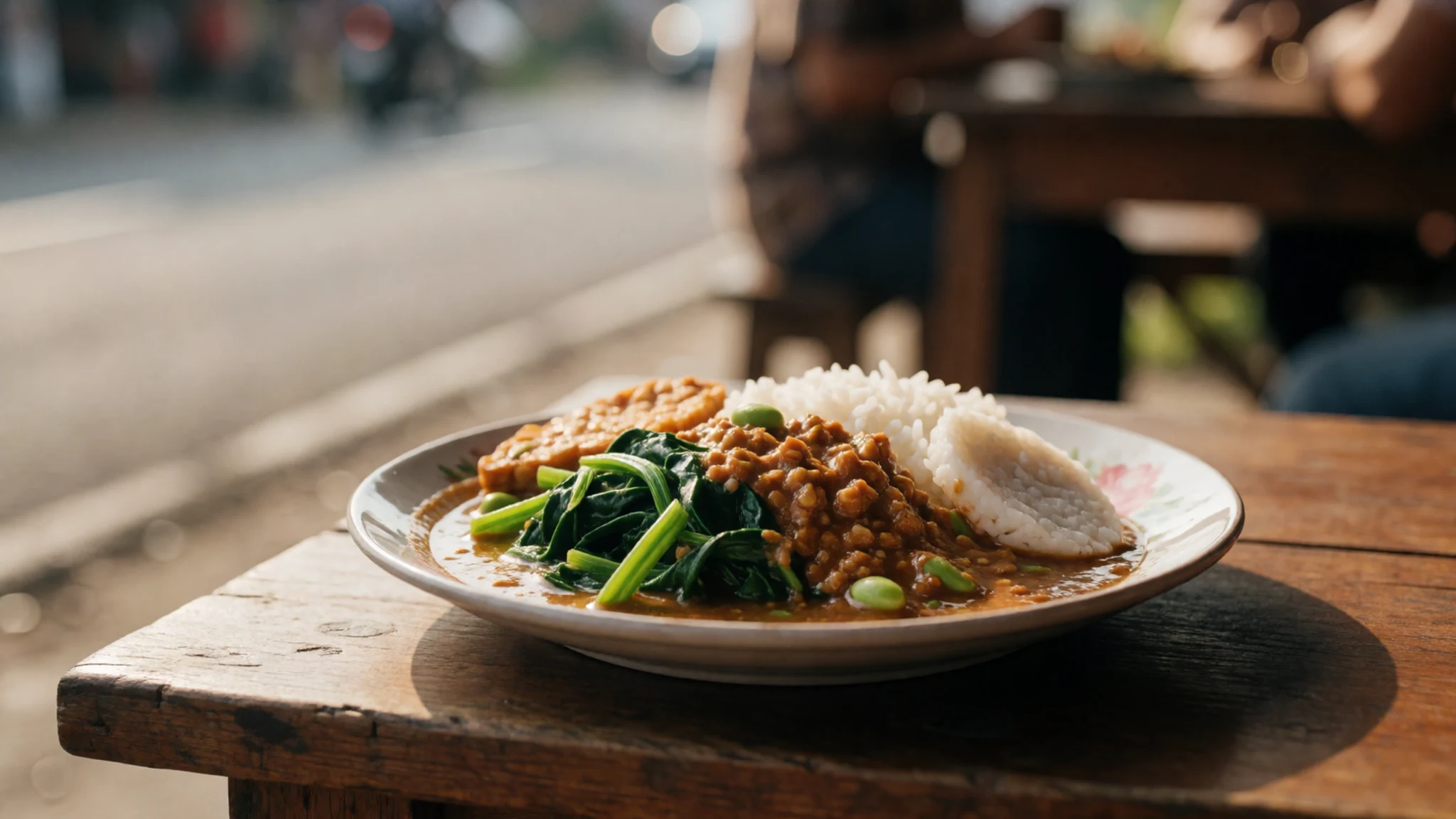
- Ikan bakar — coastal eateries in Wonorejo and Banyuwangi
Ikan bakar, fish grilled over charcoal with sambal, is the logical coastal meal near Baluran National Park, in simple eateries at Wonorejo or in Banyuwangi before the ferry. The beach at Bama is for snorkelling, not for a fish grill, and the park shops do not run a seafood kitchen. - Soto — warungs in Wonorejo
Soto, a clear or turmeric-tinted broth with meat and rice cake, is everyday East Java food and a sensible stop in Wonorejo, the last small town before Baluran National Park. It is a poor thing to expect from the drink stalls at Bekol or Bama, which are not kitchens. - Teh manis and kopi — drink stalls at Bekol and Bama
Teh manis, kopi and cold bottled drinks are what the simple shops at Bekol and Bama actually sell. On the dry grass of Baluran National Park that stall is the refreshment, not a dining room. Extra water should come from shops in Wonorejo or Banyuwangi before the gate.
Plan it
Best time. Baluran National Park is relatively dry, which is why the savannah stays open and animals still come to drink at Bekol. January and February bring the heaviest rain, and flooding can make many park areas impassable. Ask the park office in Banyuwangi about the tracks before fixing dates.
How long. 2–3
Getting there. Come via the Bali ferry. The terminal is at Ketapang, in Banyuwangi, and from there a car or a Wonorejo-bound bus reaches the gate of Baluran National Park within 30 minutes. Wonorejo is the small town on the north-coast road that continues west toward Probolinggo. Inside the park the last leg is a rough track to Bekol; motorcycle taxis there cover the ride on to Bama Beach.
Budget. low
Tips
- Book the simple rooms at Bekol through the park office in Banyuwangi before arriving; camping is also possible at the watchpoint.
- Bring food from Banyuwangi or the shops in Wonorejo. Stalls at Bekol and Bama sell drinks, and a lodge will cook only if the stay was booked ahead.
- Give the Bekol waterhole unhurried time; the herds gather there to drink, and the tracks between gate, grass and beach are slow.
- Carry cash for motorcycle taxis and the drink stalls.
- If the plan includes the summit of Mount Baluran or snorkelling at Bama, keep a second day. One hurried loop from the ferry is a short visit.
Etiquette
- Watch deer, buffalo and banteng from the watchpoint. Do not feed them or follow them into the acacia.
- Leave the coral at Bama where it is, and snorkel without standing on the reef.
- Carry rubbish out; rooms, a campground and drink stalls are the services on offer.
- Keep swimwear to Bama Beach, and in Wonorejo and Banyuwangi cover shoulders and legs.
Nearby
Sources
- Wikidata Q181737 (CC0)
- Wikipedia (rev 1362697139) (CC BY-SA 4.0)
- Wikivoyage (rev 5394347) (CC BY-SA 4.0)
- Photo photos/01-wild-deers-near-bama-point-baluran.jpg (CC BY-SA 2.0)
- Photo photos/02-golden-hour-at-bekol-savannah.jpg (CC BY-SA 4.0)
- Photo photos/03-zizip-maurit-110901-17127-h-bal.jpg (CC BY 3.0)
- Photo photos/04-amazing-baluran-national-park-night-view.jpg (CC BY-SA 4.0)
- Photo photos/05-baluran-africa-van-java.jpg (CC BY-SA 4.0)
- Photo photos/06-rusa-dan-kijang-tn-baluran.jpg (CC BY-SA 4.0)
- Photo photos/07-africa-van-java.jpg (CC BY-SA 4.0)
- Photo photos/08-arusmana-tnbaluran-01.jpg (CC BY-SA 4.0)


