Sensō-ji
Sensō-ji, Japan
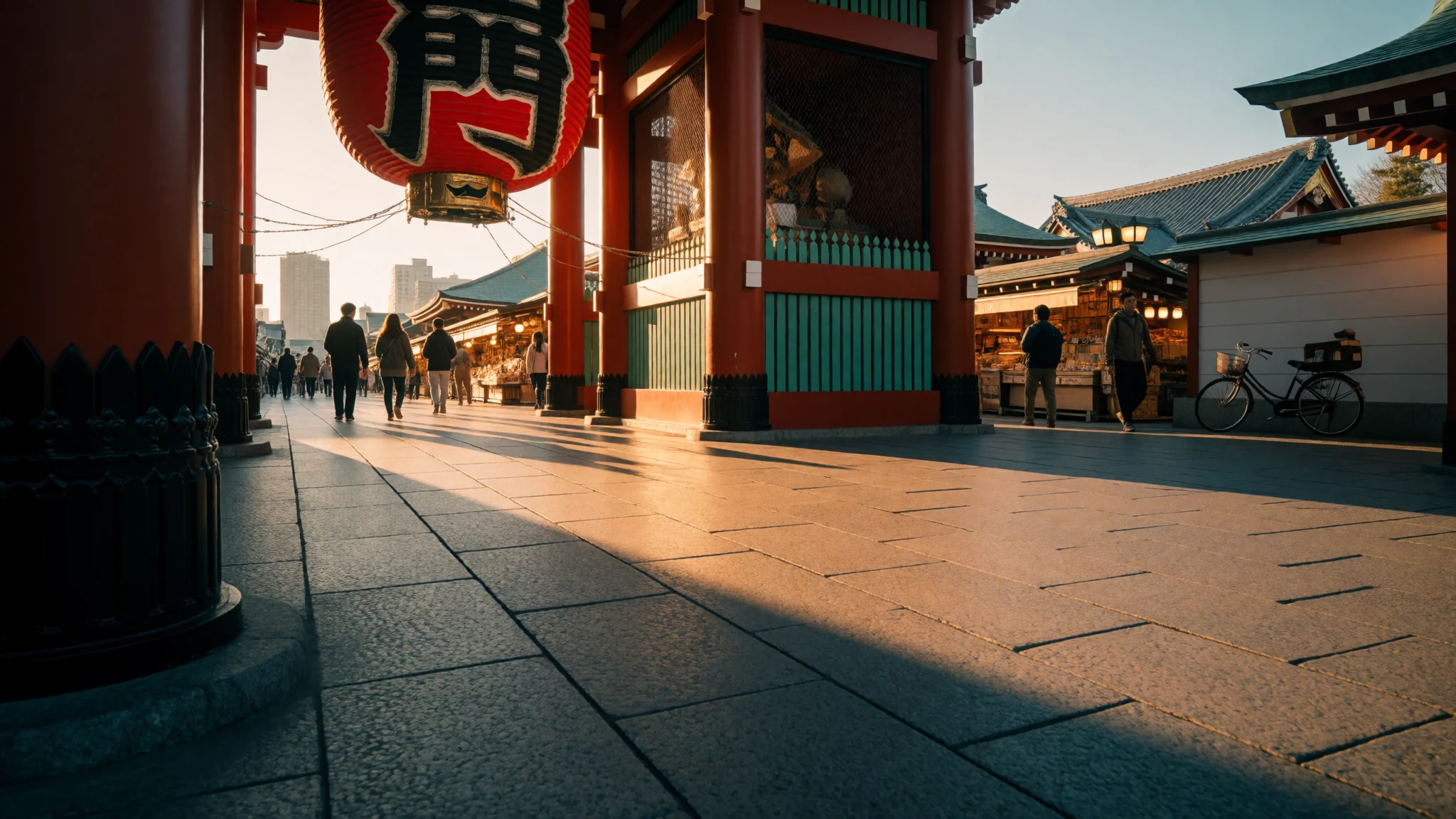
Sensō-ji is a working Kannon temple in Asakusa, where lantern-lit gates, incense smoke and a street of snack stalls sit together in the middle of Tokyo.
The place
Sensō-ji (浅草寺) is a Buddhist temple in Asakusa, a district on the eastern side of Tokyo's Taito ward, close to the Sumida River. Its full name is Kinryū-zan Sensō-ji, and many Tokyo people simply say Asakusa Kannon, after the bodhisattva of compassion to whom it is dedicated. The temple is less a single building than a procession. A giant gate hung with a red lantern opens onto Nakamise-dōri, a pedestrian street of small shops selling traditional goods and snacks. A second gate leads into the courtyard, where the main hall faces the open space and a five-storey pagoda rises to one side. To the east sits Asakusa Shrine, which is Shinto, so a short stroll takes in two religions that Japan has long let overlap without fuss. The temple also belongs to the Bandō Sanjūsankasho, a pilgrimage route of Kannon temples across the Kantō region, which explains the steady flow of people who come to pray rather than to photograph. Both kinds of visitor are present at once, and that mix is much of the appeal. It is also honest to say that this is a very busy place. Nakamise-dōri at midday on a weekend moves at a shuffle, and summer afternoons are hot and sticky with little shade in the courtyard. Early mornings and evenings feel different: shop shutters are down, the main hall is lit, and the courtyard is far calmer. Ceremony dates and current arrangements are on the official site, https://www.senso-ji.jp/.
Its story
Sensō-ji has a founding legend rather than a firm founding record. In the account preserved in the temple's own chronicle, two brothers, Hinokuma Hamanari and Takenari, netted a small statue of Kannon from the Sumida River in 628. Their village headman, Haji no Nakatomo, is said to have become a monk and turned his house into a shrine for the figure. The facts block dates the temple to 645, the year a monk named Katsumi is said to have rebuilt it and, after a dream, declared the statue a hidden image. That image has never been shown to the public, so nobody outside the temple can say what it really looks like. Firm paperwork arrives much later. A Kamakura-period chronicle, the Azuma Kagami, mentions Asakusa carpenters and Sensō-ji monks in the late twelfth century, and a court lady described a visit in her memoir in 1290. Over the following centuries the temple grew into the area's main place of worship and amusement. Its modern look is mostly postwar. Much of the complex burned in the firebombing of Tokyo on 10 March 1945, and the main hall was rebuilt in the 1950s. In 1950 the temple also left the Tendai sect, with which it had long been linked, and became independent. The red gates and the pagoda that visitors photograph today are therefore reconstructions standing on a much older site, which is how many Japanese temples have survived.
What to see
- Kaminarimon (Thunder Gate) — Asakusa, southern entrance
Kaminarimon is the outer gate of Sensō-ji and the usual starting point. Its giant red paper lantern is the most photographed object in Asakusa, so the crowd gathers beneath it. Look underneath for the carved dragon on the lantern's base. After dark the gate is lit and the crowd thins noticeably.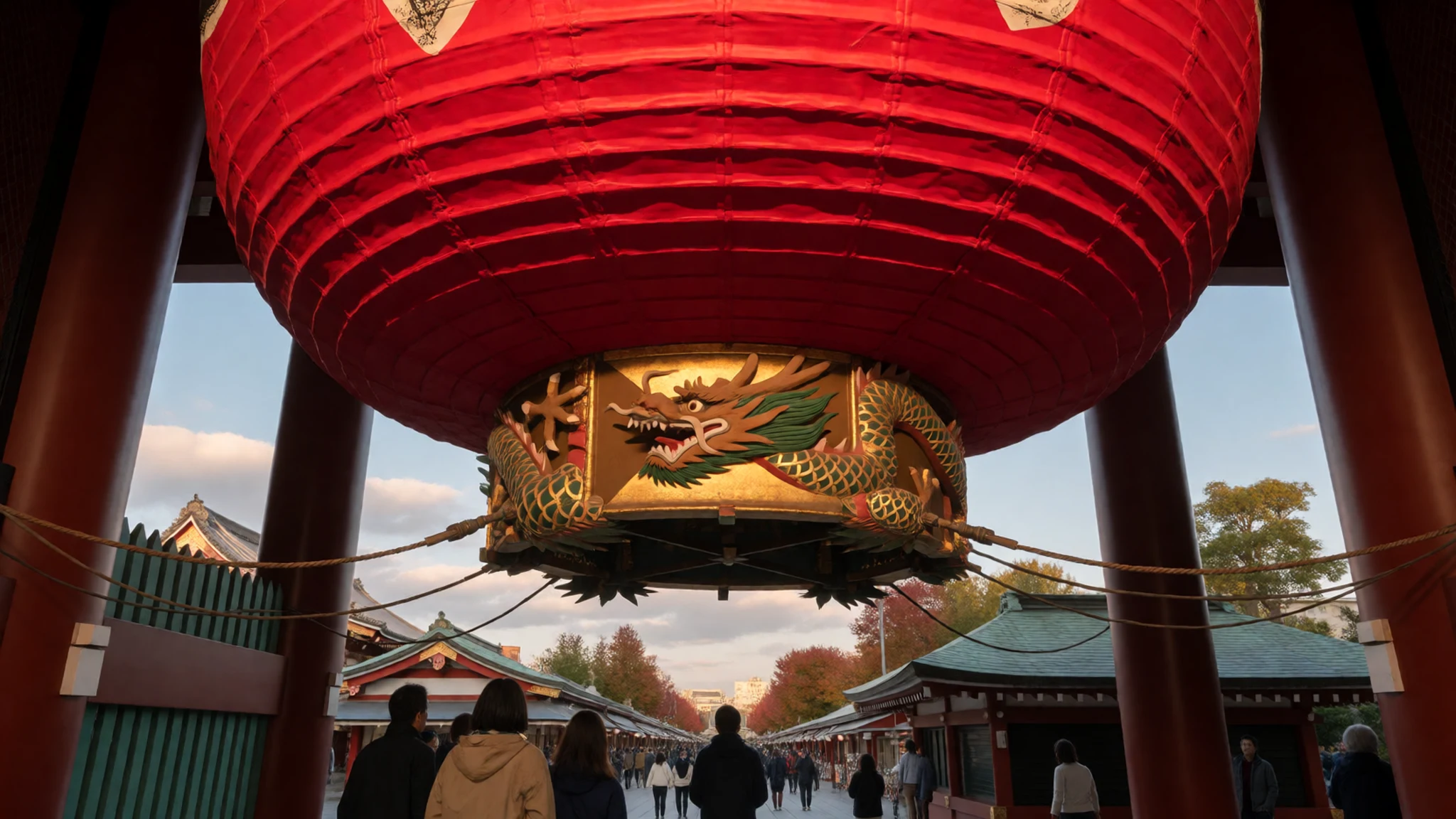
- Nakamise-dōri — Asakusa, between Kaminarimon and Hōzōmon
Nakamise-dōri is the approach street between the two gates, lined with small shops selling fans, souvenirs, sweets and rice crackers. It is the slowest part of the visit at midday and the most pleasant early, before shutters rise. The side lanes off it are quieter and good for a break.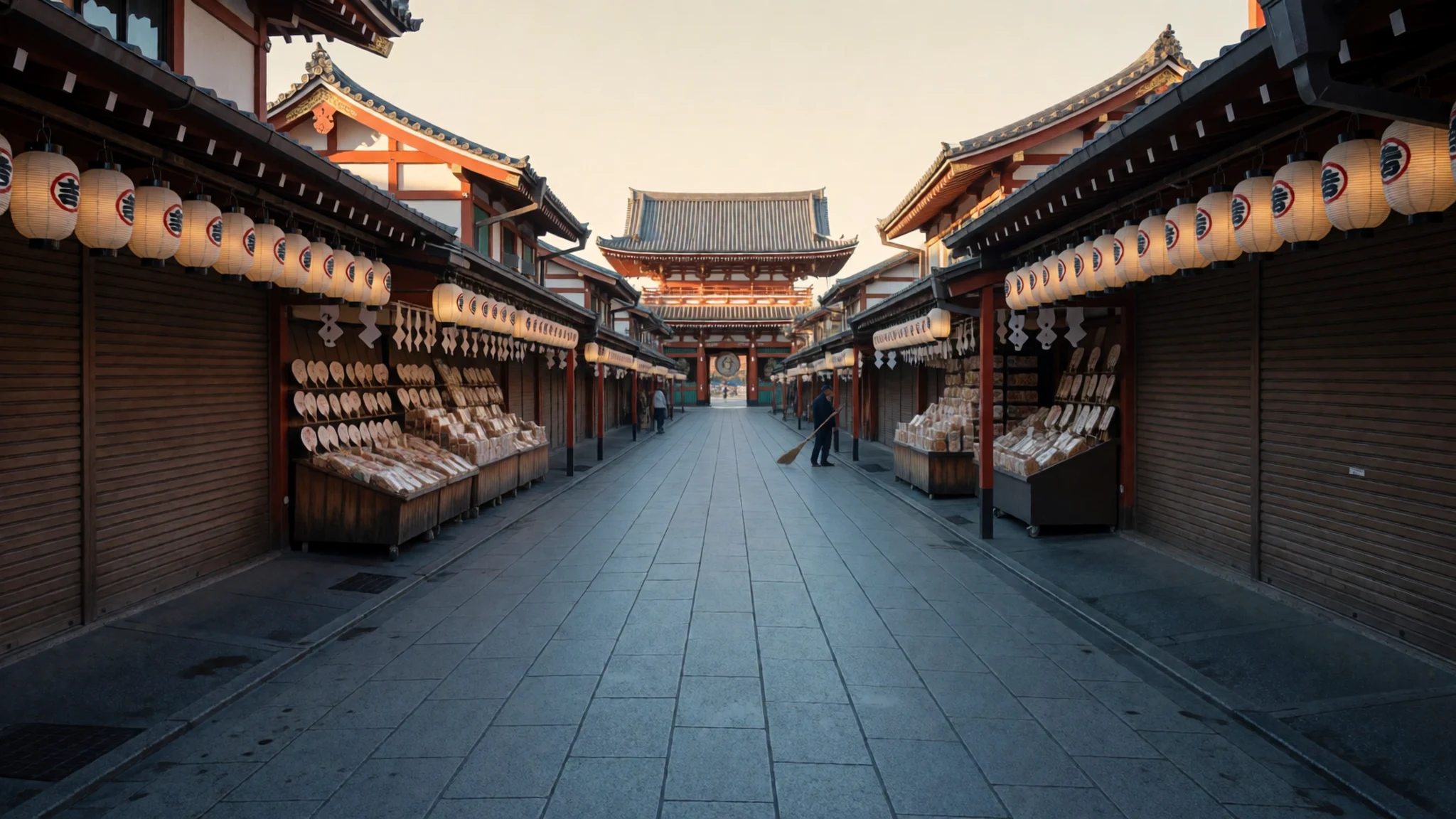
- Hōzōmon and the pagoda — Sensō-ji courtyard entrance
Hōzōmon is the second gate, a large two-storey structure that frames the courtyard beyond. Giant straw sandals hang on its back wall, a symbol of protection. The five-storey pagoda stands just to one side, and the gate and pagoda make the best composed photograph in the compound, especially in soft light.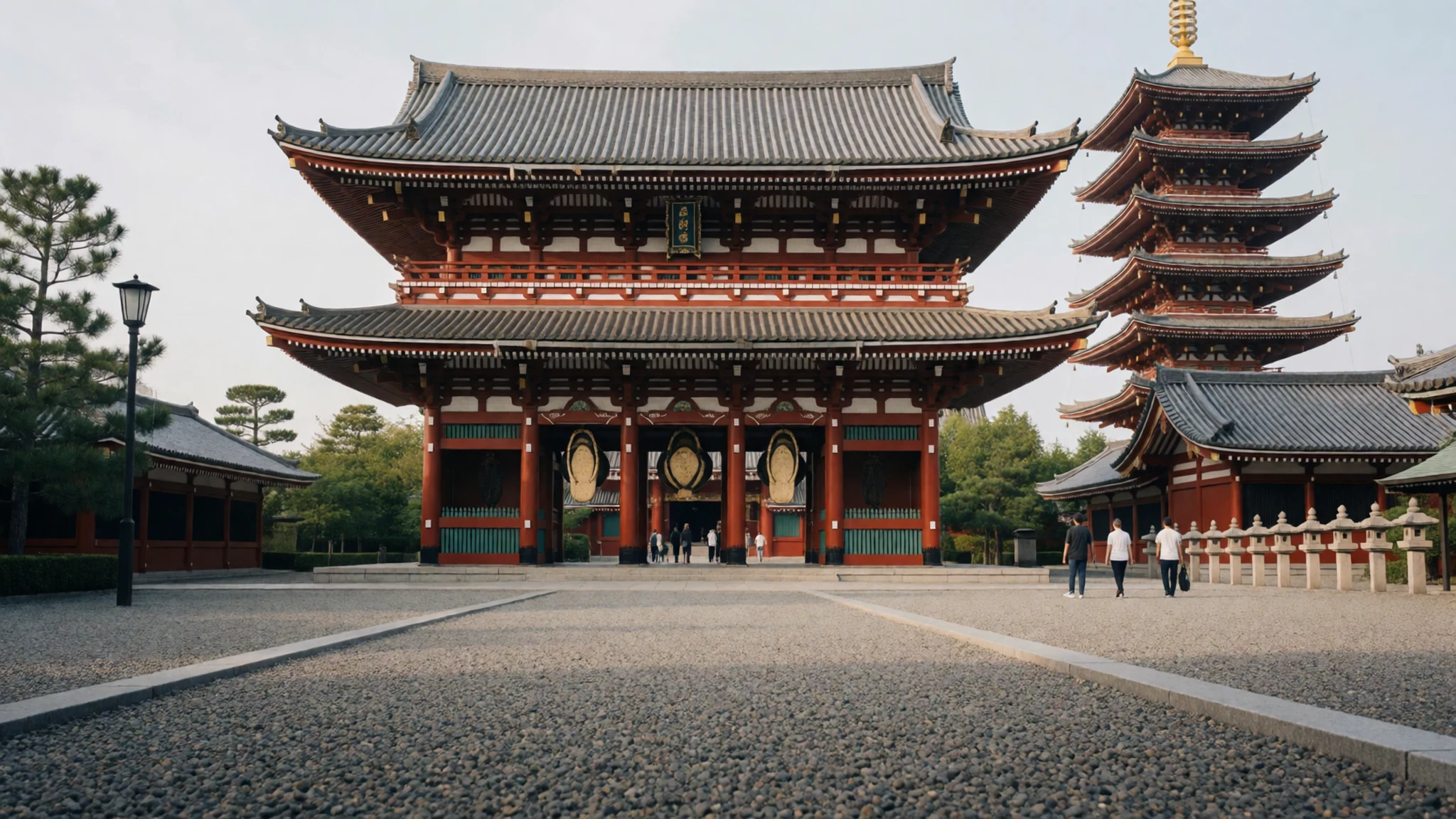
- Main hall (Hondō) — Sensō-ji courtyard
The main hall is the heart of the temple and houses the Kannon worshipped here, though the hidden image itself is never displayed. Worshippers climb the steps to throw a coin and pray, while a large incense burner outside draws crowds who wave the smoke toward themselves. Quietest at the edges of the day.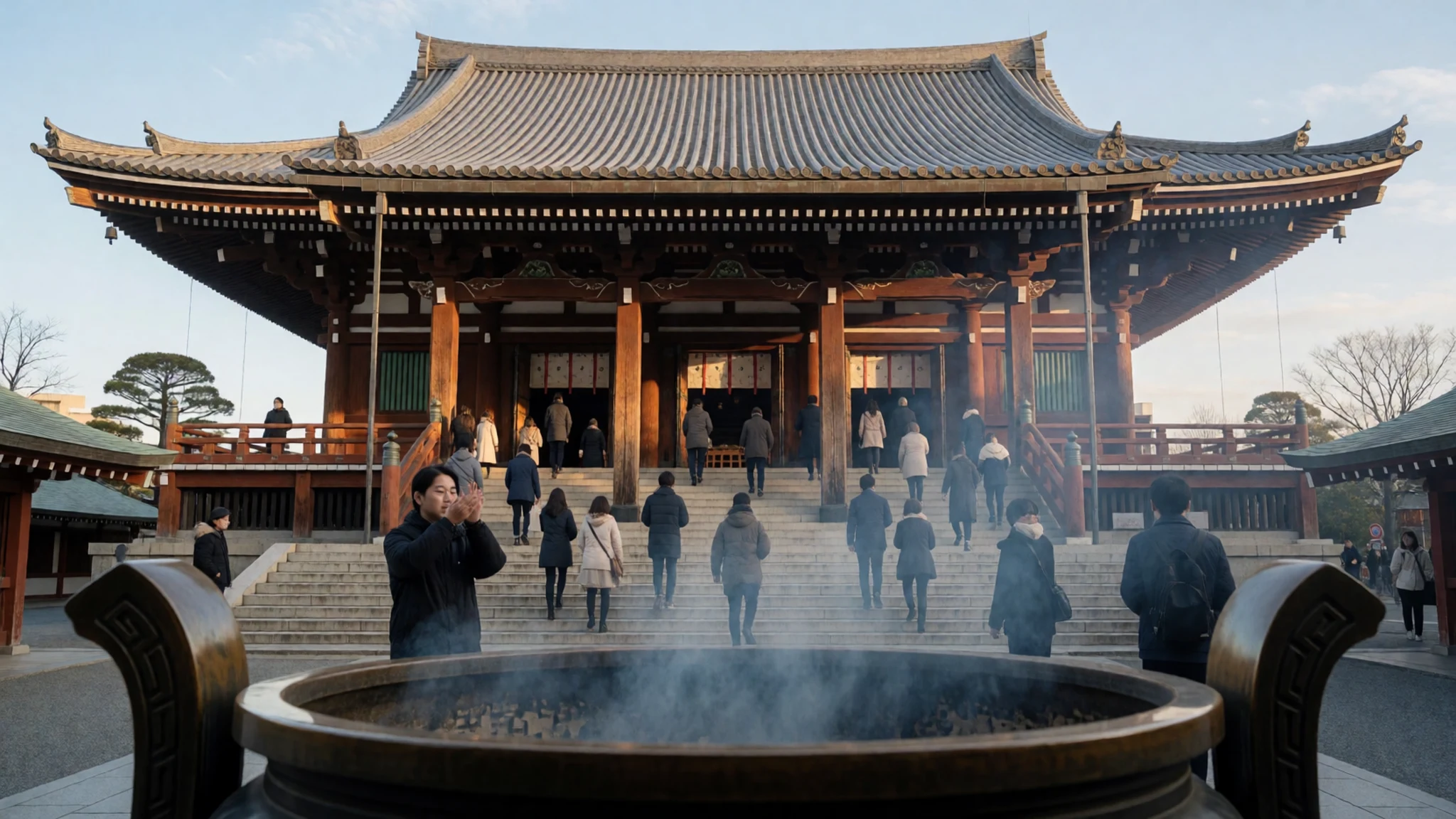
- Asakusa Shrine — Beside Sensō-ji, east side
Asakusa Shrine is the Shinto neighbour on the east side of the temple, smaller and much calmer than the main hall. It shows how closely the two faiths sit together here. Few tour groups come through, so it works well as a quiet five minutes before returning to the crowds.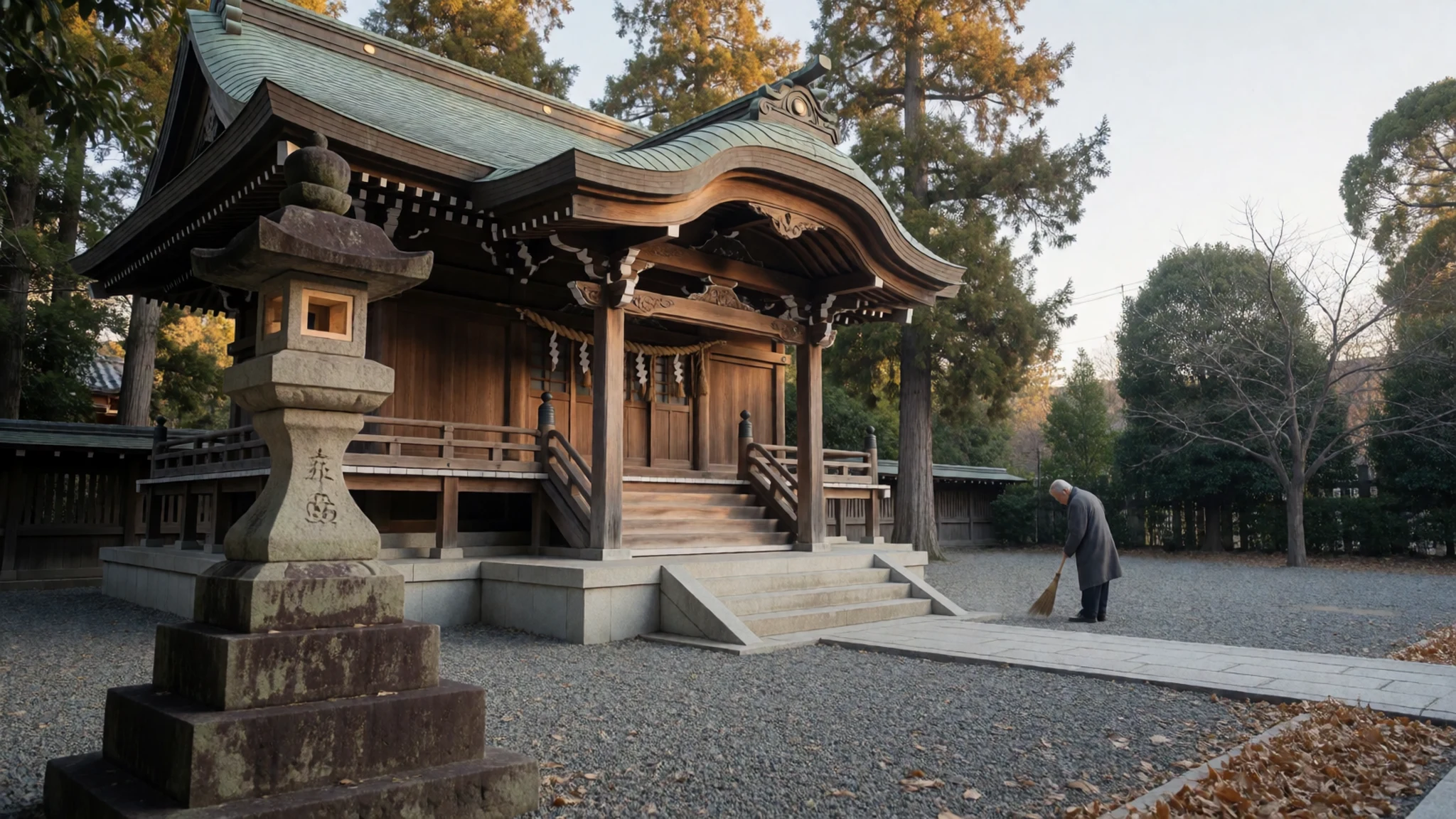
Culture
Sensō-ji is first of all a place of worship for Kannon, the bodhisattva of compassion, and locals come for ordinary reasons: health, family, a new job, an exam. The ritual is simple and worth watching before joining in. People stop at the large incense burner and draw the smoke over themselves, which is believed to help with ailments. Near the main hall they bow, drop a coin in the offering box, and pray briefly. Many also buy a paper fortune, an omikuji, from a stand beside the courtyard. A bad fortune is traditionally tied to a rack on the grounds instead of being carried away. Next door, Asakusa Shrine follows Shinto practice instead, so the gestures differ slightly between the two places, and watching local worshippers is the best guide. Visits mix piety and entertainment in a way that feels natural here: the street of shops has served pilgrims for centuries, and eating, shopping and praying happen within a few hundred metres of each other. Festivals bring portable shrines and large crowds, and ceremonies in the main hall continue on ordinary days, so the building is sometimes closed to casual visitors during services. The rebuilt halls are modern concrete and timber, but the devotion is old and continuous. At the main hall, step aside once you have prayed so others can reach the offering box, and do not point a camera at people while they pray.
What to wear
Around Sensō-ji, traditional dress means the kimono, usually silk for formal occasions and cotton or linen for everyday wear, tied with an obi sash and worn with zōri or wooden geta sandals. In summer the lighter cotton yukata is common, and at festivals in Asakusa some participants wear happi, short cotton coats printed with the name of their neighbourhood group. Many visitors rent kimono from shops nearby for a few hours, so the lanes around the temple are full of people in colourful robes, though most Tokyo residents wear them only for weddings, festivals or New Year. Everyday clothing on the street is the same as elsewhere in the city: neat, plain, fairly muted, with trainers or flat shoes. A visitor should dress for the weather first. The courtyard is paved and open, so summer needs light, breathable clothes, a hat and water, while winter needs a proper coat and layers. Spring and autumn are mild, and a small umbrella is useful in the June rains. Sensō-ji has no strict dress code, but covering shoulders and knees is a courteous choice at a temple, and revealing or beachwear clothing looks out of place. Wear comfortable, easily removed shoes: stone paving tires feet quickly in a day of walking, and some buildings may ask for shoes to be taken off.
What to eat
- Ningyō-yaki — Stalls and small shops along Nakamise-dōri and nearby lanes
Small sponge cakes baked in moulds shaped like pagodas, lanterns or doll figures, usually filled with sweet red bean paste. They are sold warm in paper bags and are the classic Asakusa souvenir to eat on the walk.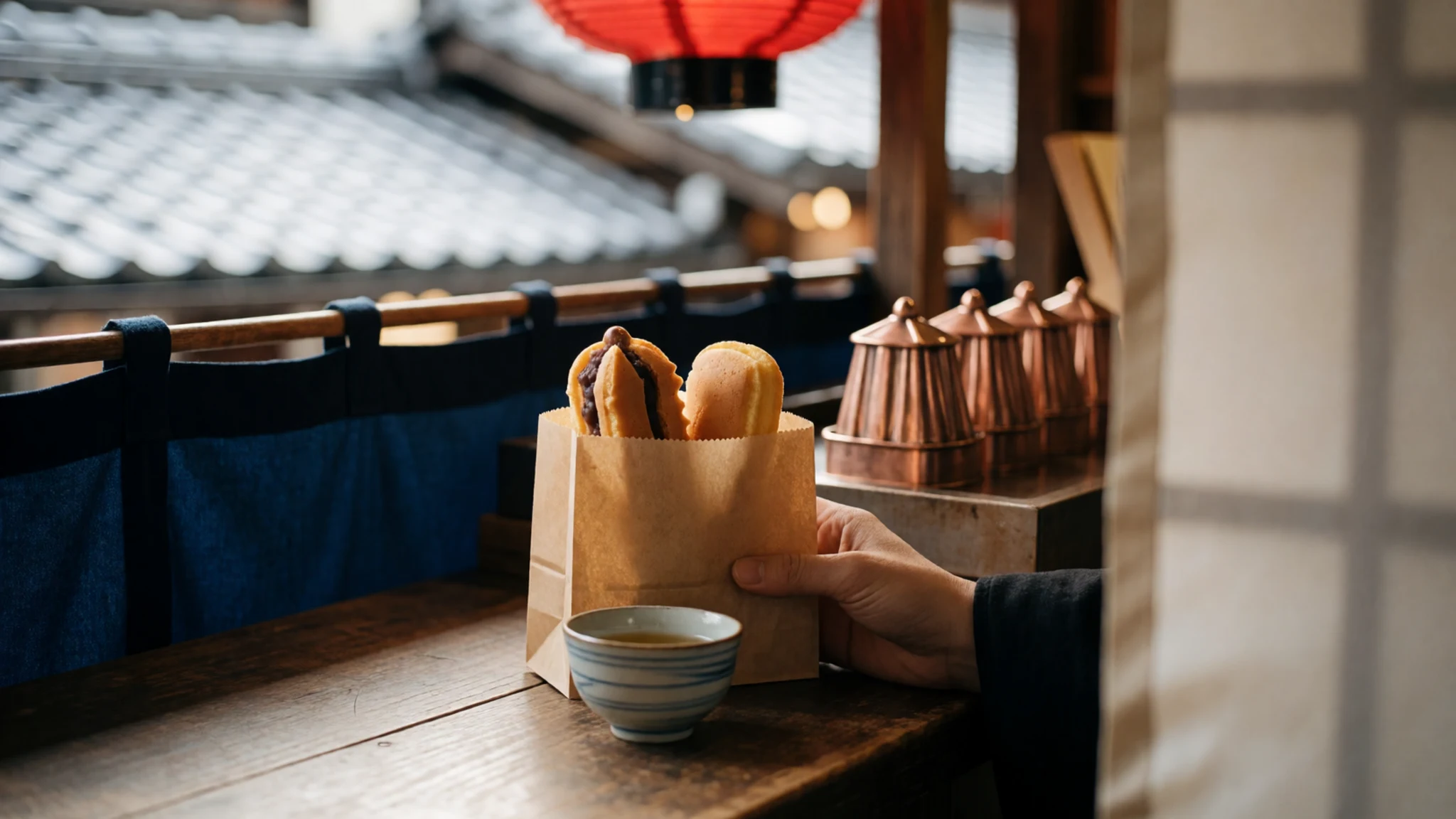
- Senbei — Nakamise-dōri and the shopping arcades around Asakusa
Rice crackers grilled over charcoal and brushed with soy sauce, sometimes with seaweed or sweeter glazes. Many shops bake them in the window, so the smell draws people in. Good for a crunchy snack that travels well.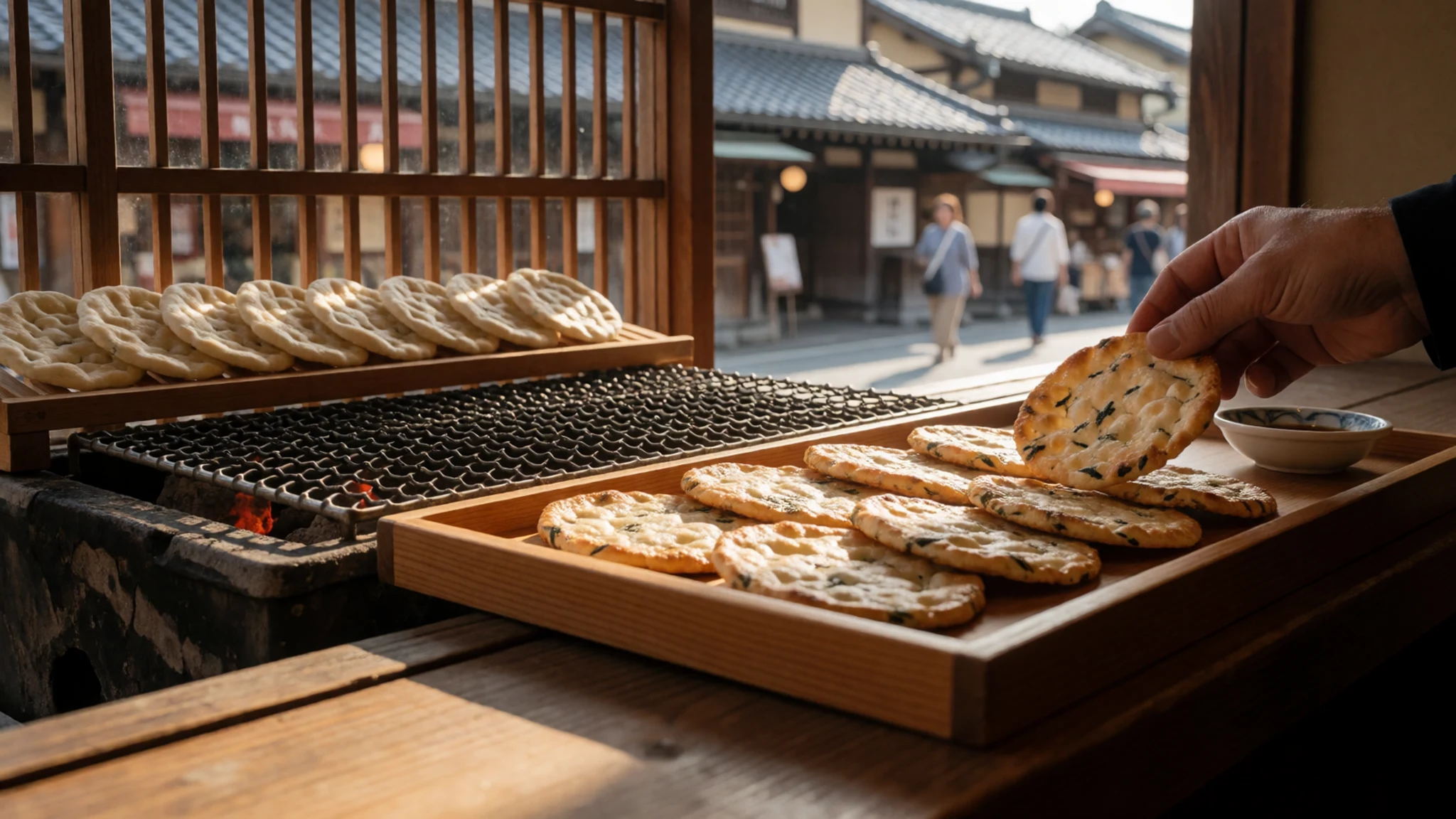
- Age-manjū — Stalls around the Nakamise-dōri area
A deep-fried bun with a sweet bean filling, crisp outside and soft within. Several stalls near the temple make them fresh, in varied flavours that change by season. Best eaten hot and standing to one side of the crowd. - Tempura — Old-style eateries on the side streets around Sensō-ji
Prawns, fish and vegetables fried in a light batter, served with dipping sauce or over rice as tendon. Asakusa is known for older tempura restaurants, and a bowl here makes a proper sit-down meal after the temple. - Monjayaki — Casual griddle restaurants in Asakusa and the nearby Tokyo shitamachi districts
A runny, Tokyo-style griddle dish made from a thin batter mixed with chopped cabbage and other fillings, cooked on a hot plate at the table and scraped up with small spatulas. Casual and social, and a good group meal.
Plan it
Best time. March–April for mild weather and cherry blossom around the nearby Sumida River, and October–November for clear, comfortable days. June is the rainy season, July–August is hot and humid with little shade at the temple, and winter is dry and cool but pleasant for walking.
How long. 1
Getting there. Fly into Haneda or Narita, then take a train or subway to Asakusa Station, where the Ginza line and other lines stop a short walk from the Kaminarimon. From Ueno, the Ginza line reaches Asakusa directly; the Keisei trains from Narita connect at Ueno.
Budget. mid
Tips
- Go before 8 am or after dark to see the courtyard without the crowds
- Weekends and national holidays are the busiest times, so choose a weekday if possible
- Carry some cash for stalls, fortune slips and small offerings, since many small shops do not take cards
- Check the official site, https://www.senso-ji.jp/, for ceremony and festival dates before planning your visit
- Bring water in summer, as shade in the courtyard is limited
Etiquette
- Bow slightly at the gates and keep voices low near the main hall
- Do not photograph worshippers while they are praying
- Finish snacks at the stall or by a bin rather than walking through the temple grounds with them
Nearby
Sources
- Wikidata Q615183 (CC0)
- Wikipedia: Sensō-ji (rev 1383513684) (CC BY-SA 4.0)
- Wikivoyage: Tokyo/Taito (rev 5432482) (CC BY-SA 4.0)
- Photo: Sensoji Main Hall in November 2023 (Akonnchiroll) (CC0 1.0)
- Photo: Natural Location map of Japan (Alexrk2) (CC BY 3.0)
- Photo: Hōzōmon Gate, Five-storied Pagoda and Fortune Slip Shop (Souka Kinmei) (CC BY 4.0)
- Photo: Inside the main hall (Souka Kinmei) (CC BY 4.0)
- Photo: Sensoji at night (Kakidai) (CC BY-SA 4.0)
- Photo: Kaminarimon lantern bottom (Torsodog) (CC BY 3.0)
- Photo: Hōzōmon on an overcast day (Daniel L. Lu) (CC BY-SA 4.0)
- Photo: The back of the Hōzōmon (Everjean) (CC BY 2.5)


