Sea Lion Island
Sea Lion Island, United Kingdom
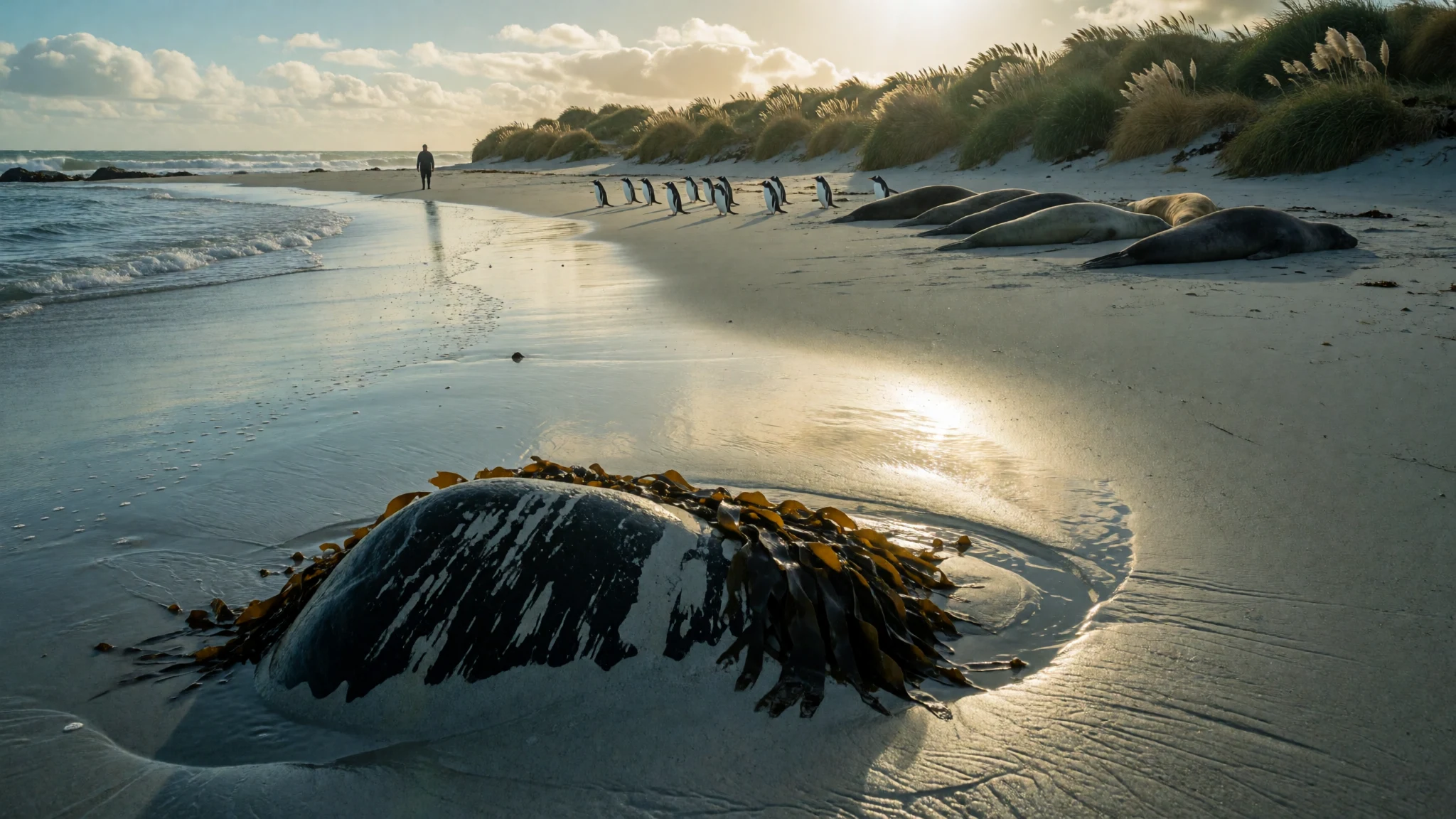
Sea Lion Island is a windy Falklands island where penguins, elephant seals and orcas share the same cold beaches.
The place
Sea Lion Island lies in the Falkland Islands, a low green scrap of tussac, sand and rock set in the cold South Atlantic. The island takes its name from the South American sea lions that haul out along its shores, and the same beaches carry southern elephant seals, gentoo penguins and rockhopper penguins. Inland, the ground is soft and peaty, cut by tracks between tall tussac stands that throw the wind back in sudden lulls. The coast switches quickly from pale sand to kelp-dark rock. There is no town. A small lodge and a compacted-gravel airstrip are the human footprint, and the flight in is on a light aircraft of the Falkland Islands Government Air Service, which lands, turns and leaves. Weather is the other resident. Cloud, sun and hail can all pass through an afternoon, and the wind hardly lets up. Summer brings long daylight and the busy season for breeding wildlife; winter shortens the days and quietens the colonies. The sea is too cold for swimming, and a walk here is about animals and weather, not a deckchair. Magellanic penguins use burrows under the tussac, and kelp geese work the tide line. Striated caracaras patrol the lodge roofs and the grass edge, bold enough to tug at an unwatched glove. Offshore, in season, orcas move through the shallows where seals come and go. It is a working wildlife island, muddy in the dips, and honest about its weather.
Its story
Sea Lion Island entered the written record under a name that already pointed at its animals. The sea lions were the point of the place, and for a long time they were also its misfortune. Through the sealing years, crews working the South Atlantic killed sea lions and elephant seals for oil and skins, and colonies across the Falklands were driven very low. What survived did so on coasts that were awkward to work every season. Later the island was a sheep farm, the usual farm life of that period: a handful of people, fences, dogs, and wool sent off by boat. Sheep and tussac sit badly together. The tall grass shelters birds and holds the peat against the wind, and where it was grazed or burned the ground-nesters lost cover. Sea Lion Island's later turn was to stop keeping stock and hold the place for wildlife and a few guests. Tussac left standing gives ground-nesting birds the cover they need. A gravel airstrip now links the island to Stanley and Mount Pleasant by light aircraft. None of that wipes the sealing story. The sea lions and elephant seals on the beaches are a recovery, and the bargain with guests is to watch without crowding them. The Falklands as a whole also carry a human history of settlement, a population British in language and law, and a sovereignty dispute with Argentina that islanders take seriously. On Sea Lion Island that argument feels far off. The story a guest actually meets is seals, penguins, wind, and a choice to leave the tussac standing.
What to see
- Elephant Beach — Elephant Beach
Gentoo penguins come ashore on the sand a short walk east of the lodge, and southern elephant seals sprawl in heaps on a paler beach farther east. The sand is wide, the kelp line is dark, and the tussac rises just inland. Bulls are huge and quick when disturbed, so the walk stays along the upper beach. Morning light suits the commute between grass and water.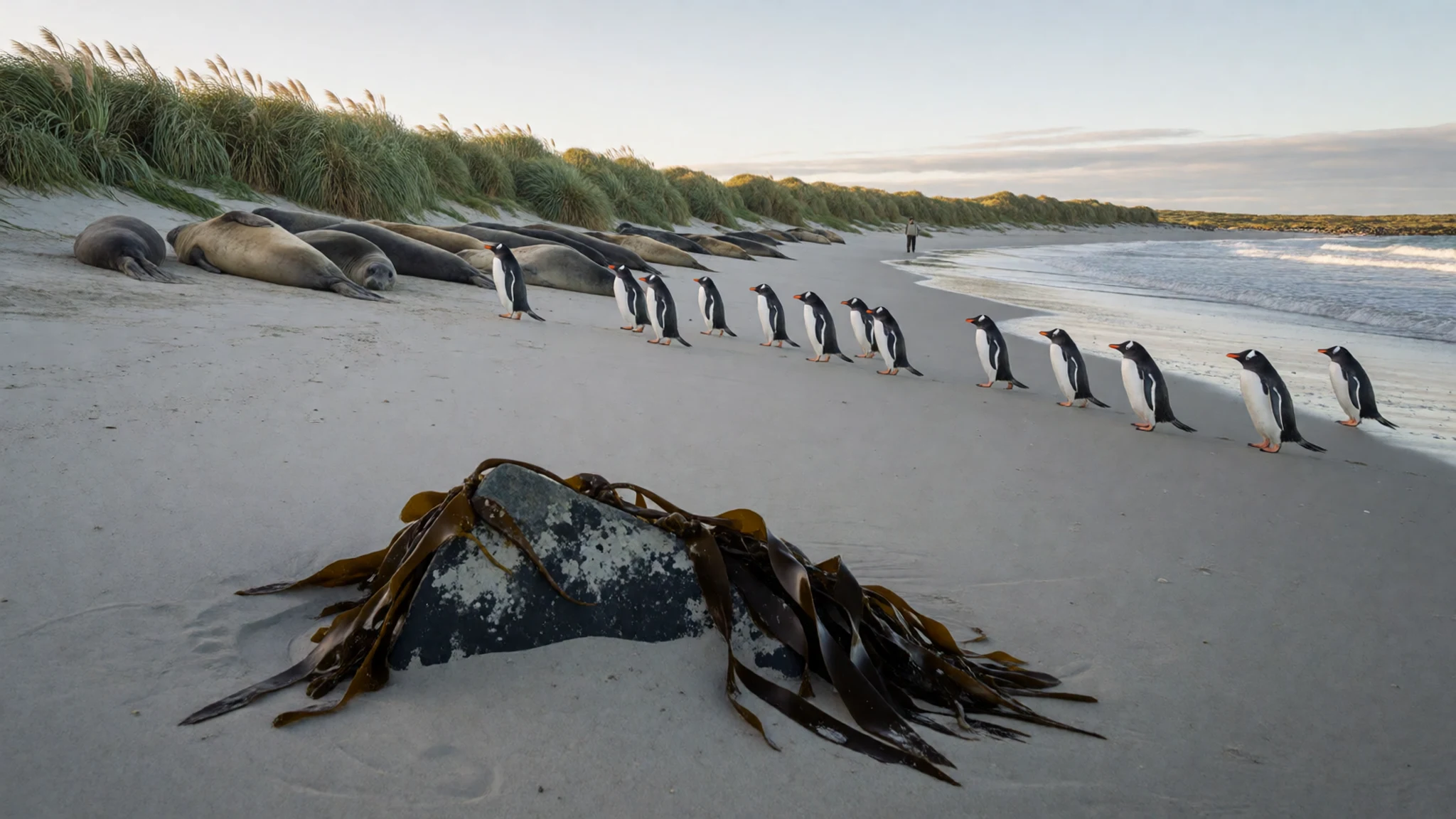
- Rockhopper colony — Rocky shore
Sea Lion Island's rockhopper penguins keep to the rocky edges rather than the long sand. They are smaller than the gentoos, with yellow crests they flick when they argue, and they bounce up steep rock from the surf. The colony smells strong and sounds louder than it looks. The seaward side belongs to the birds; the tussac lip is the place to watch.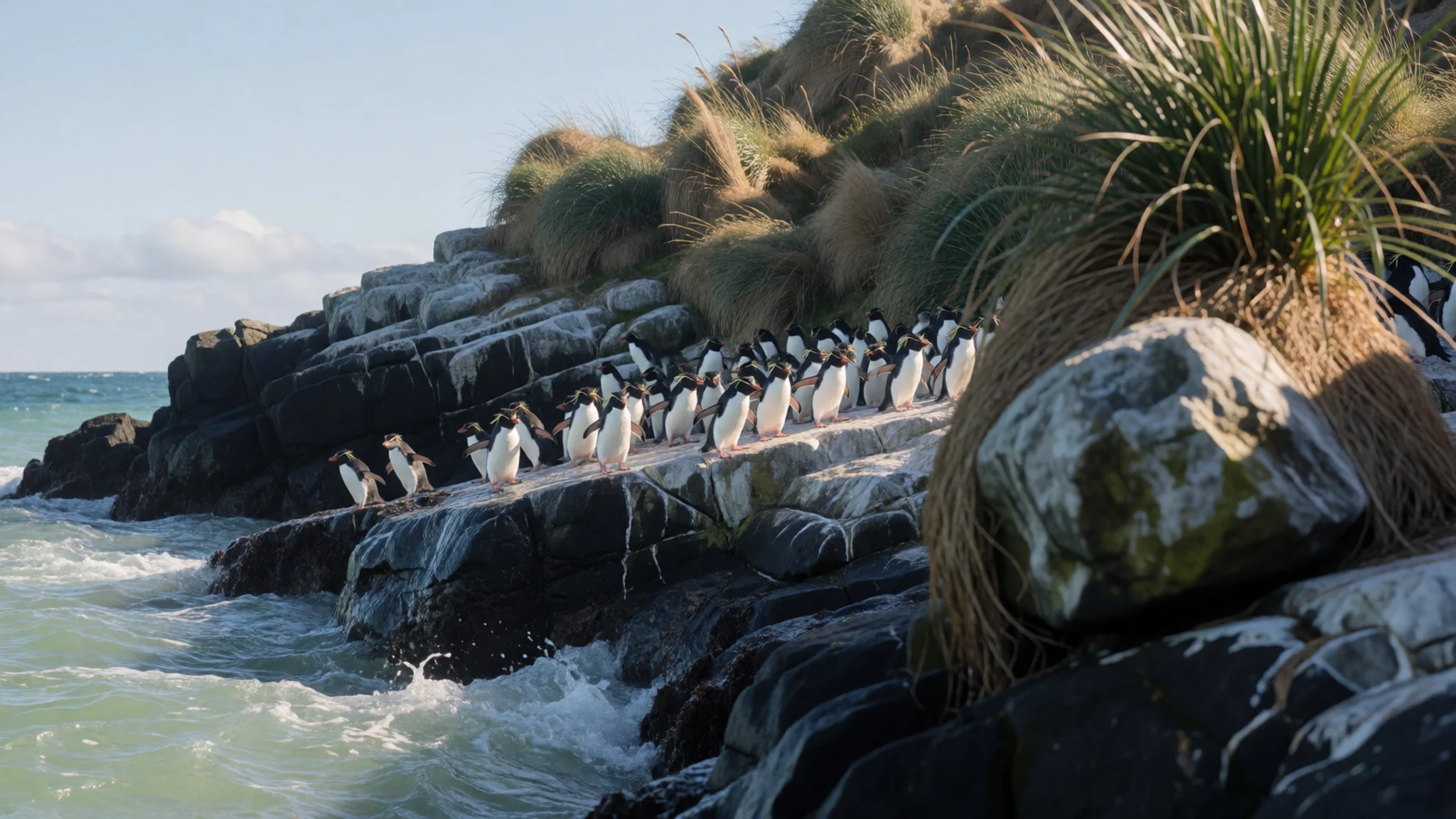
- Striated caracaras — Lodge and tussac edge
Sea Lion Island's striated caracaras, known locally as Johnny rooks, treat the lodge as part of their beat. They are dark, long-legged birds of prey, curious enough to tug gloves, hats and loose zips left on a step. They are wild, and feeding them teaches a habit that ends badly for the bird. The lodge step is the place to watch, with food kept out of it.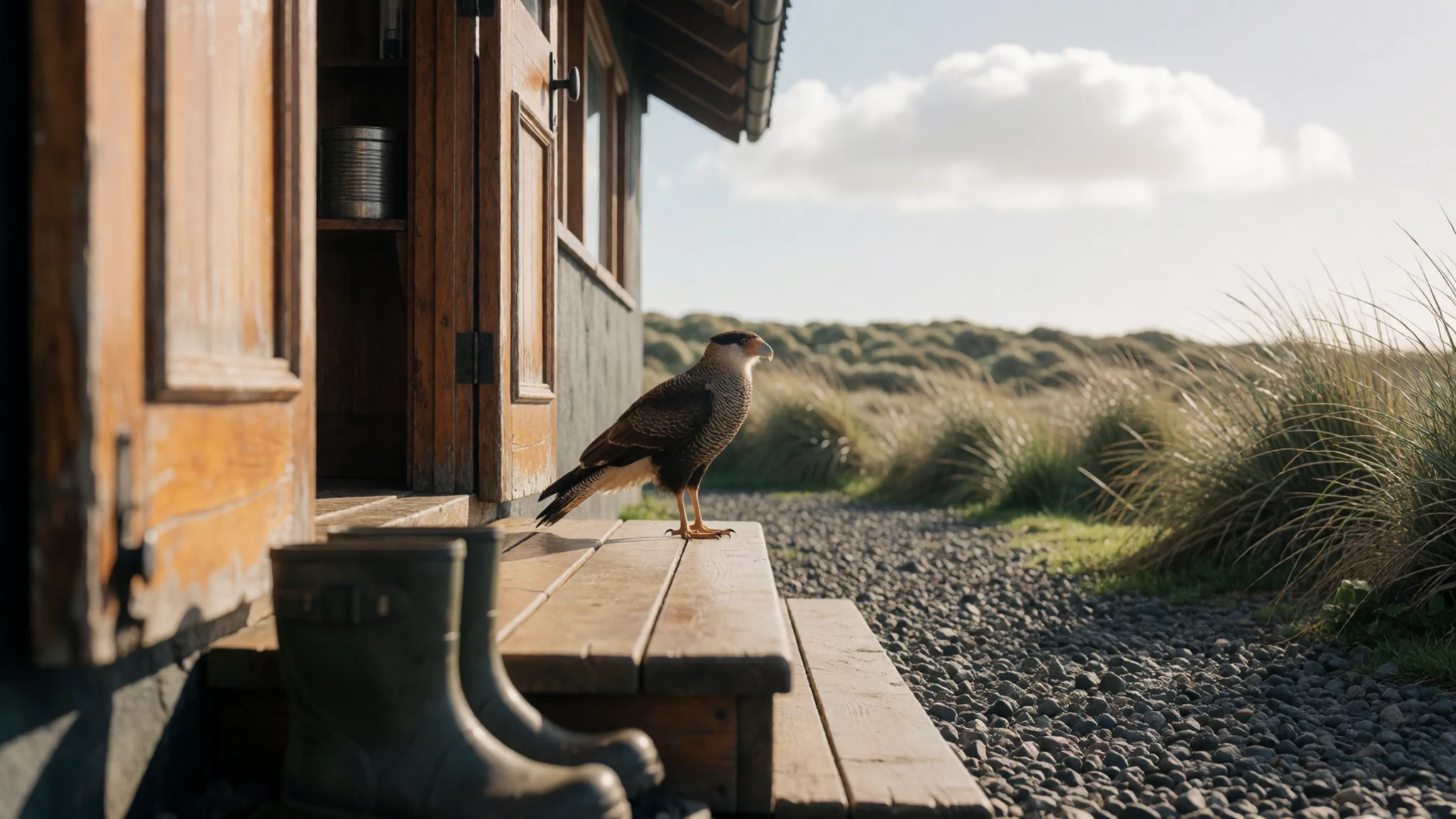
- FIGAS airstrip — Island airstrip
Sea Lion Island's airstrip is a short run of compacted gravel set in the grass. The arrival sets the mood of the place. The Falkland Islands Government Air Service Islander comes in low, lands, and keeps the engines running while bags and people change over. There is no terminal building. Wind does the job of a waiting room.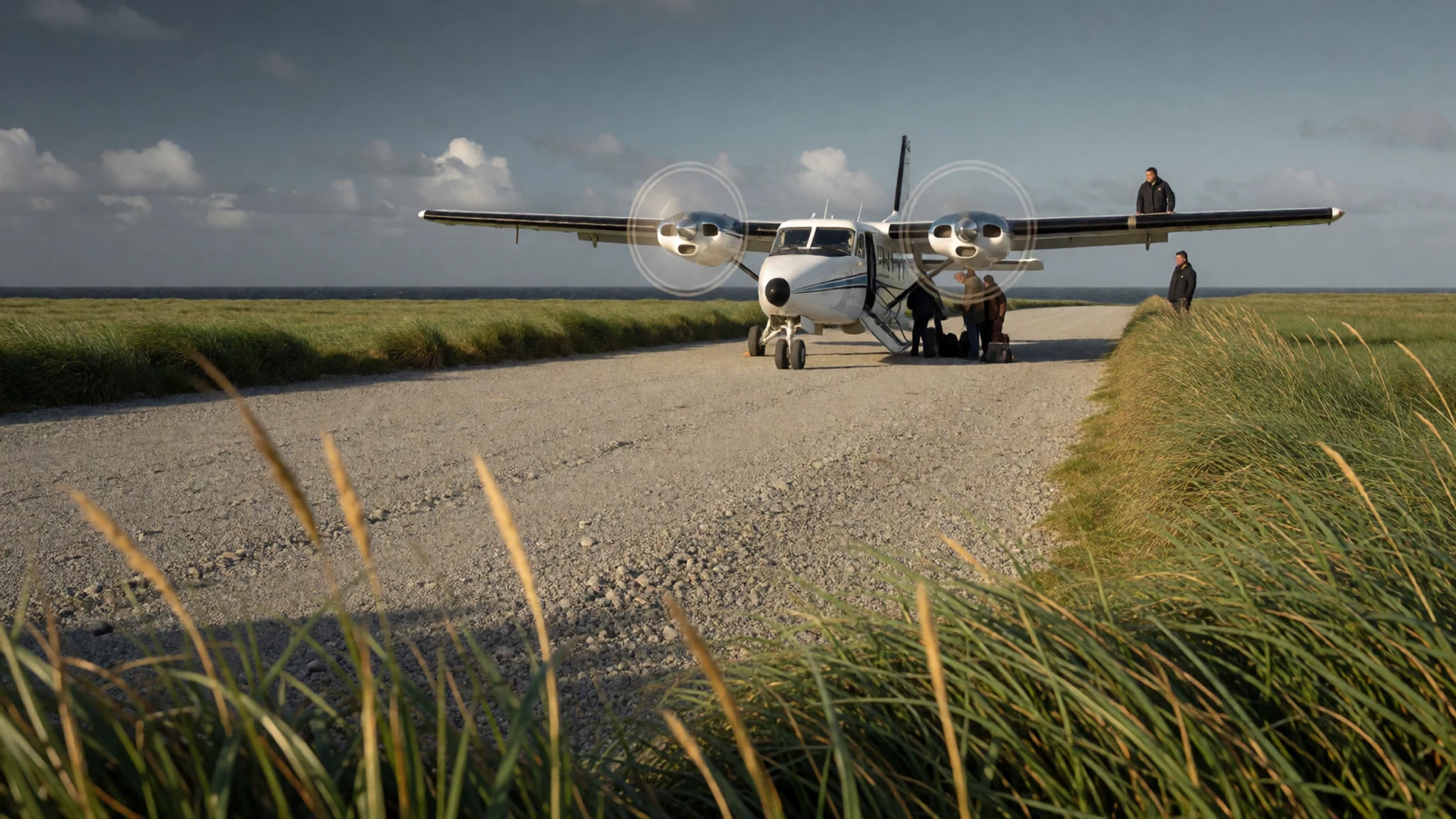
- Sea lion haul-outs — Rocky points
Sea Lion Island's namesake South American sea lions haul out on rocky points away from the main penguin beaches. Males are heavy through the neck and loud, and the smaller animals pile in behind them. A headland view, with the animals between the watcher and the water, is the right distance. Kelp moves in the rock gaps, and the smell of a haul-out arrives first.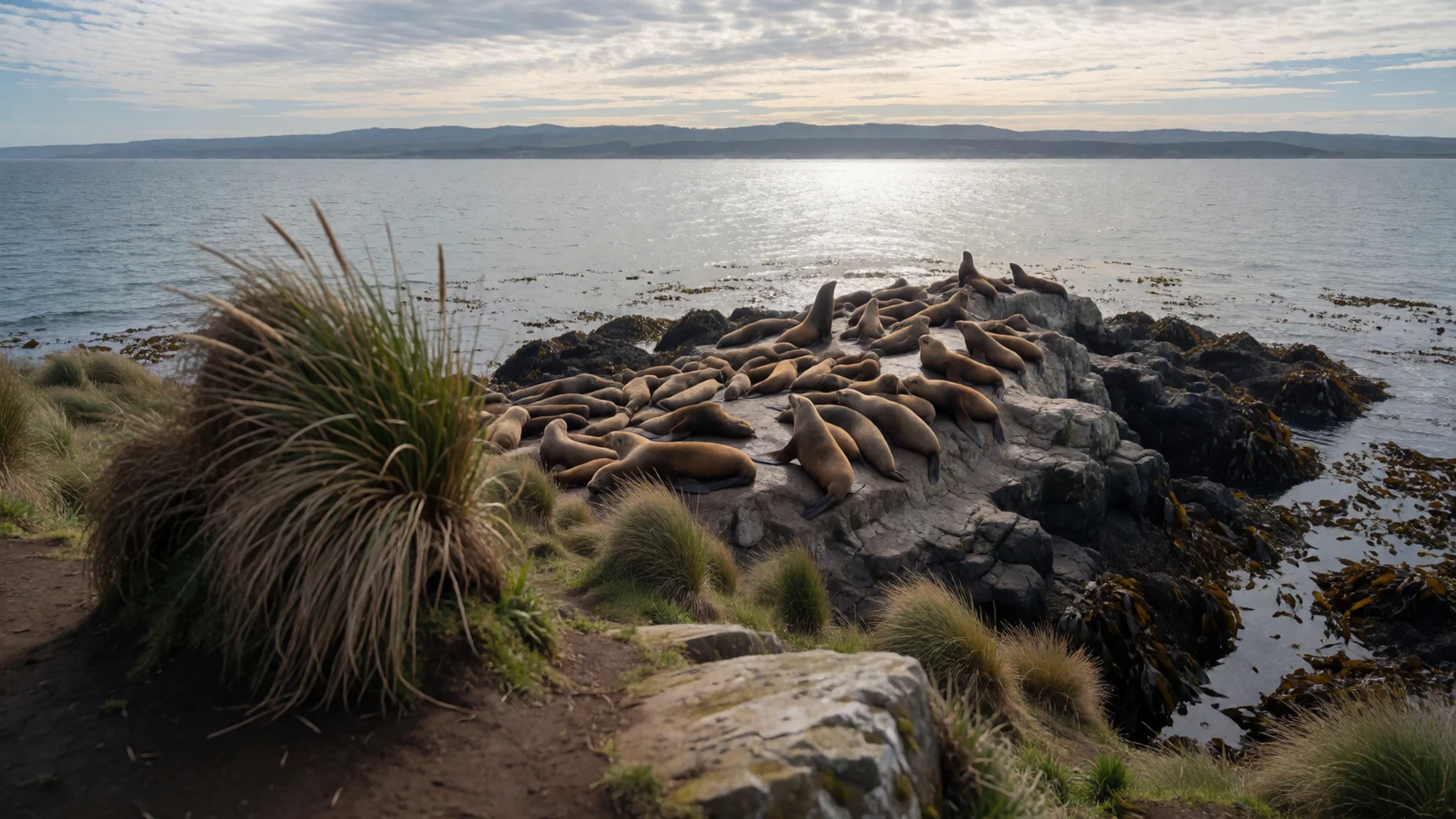
Culture
Sea Lion Island has no village fête and no high street. The culture a visitor meets is Falkland Islands culture, pared down to a lodge and a landing strip. Islanders call themselves Falkland Islanders, or Kelpers, and everyday speech is English, with the tea, understatement and dry humour of rural Britain, plus the local words camp for the countryside, smoko for the tea break, and a long memory of the wool trade. The territory is a British Overseas Territory with its government in Stanley. Argentina also claims the islands, which it knows as the Islas Malvinas, and this island as Isla de los Leones Marinos. People who live in the Falklands do not hear that claim as a friendly quarrel about labels, and a guest does better to listen than to argue it over dinner. What Sea Lion Island adds is a wildlife ethic. Guests are outnumbered by birds and seals, and the understood bargain is that people give way. Guides set the pace on the beaches. Rushing, flying a drone, or cutting a new line through tussac undoes the reason the grass is still tall. Evenings stay quiet. Weather talk stands in for nightlife, and a delayed aircraft is treated as ordinary rather than as a slight. Striated caracaras, Johnny rooks in local speech, share that domestic edge: clever, light-fingered, and not pets. Keep your distance from elephant seals and nesting penguins, and do not feed the caracaras or block a bird's path to the water.
What to wear
Sea Lion Island has no ceremonial costume of its own. Falkland dress is work dress, built on wool from the sheep that have long made the islands' farms a living. The textile is Falklands wool, knitted or woven into heavy jumpers, still often called ganseys or jerseys, and worn with tweed, wool trousers, an oilskin and rubber boots for a day outside. Those clothes belonged to shearing, boats and riding, not to a festival, and they still come out for farm work and for any day of hard wind. What people wear now on Sea Lion Island, and in Stanley, is that habit in newer cloth. Fleece, a windproof shell, denim or hard-wearing trousers, a wool layer when the air cools, and boots that cope with wet grass and sand. Lodge staff dress for the weather, not for show, and guests at dinner move into a cleaner version of the same clothes rather than into formal evening dress. A visitor should pack to match. A waterproof jacket, a warm mid-layer, a wool hat, gloves and a scarf earn their place even in summer, because wind strips the comfort out of sunshine. Waterproof boots with a firm grip matter once the track leaves the lodge, and gaiters help in tussac and on soft ground. Delicate shoes are a mistake here. Quiet, sturdy clothing is simply easier when a caracara is eyeing a loose strap.
What to eat
- Roast Falkland lamb — the lodge dining room, and pubs in Stanley
Sea Lion Island serves Falkland lamb as the everyday roast, cooked plainly, the way camp kitchens have long treated mutton. The meat is local and lightly seasoned, usually with gravy and a root vegetable. It turns up at the lodge table and in Stanley pubs before the flight.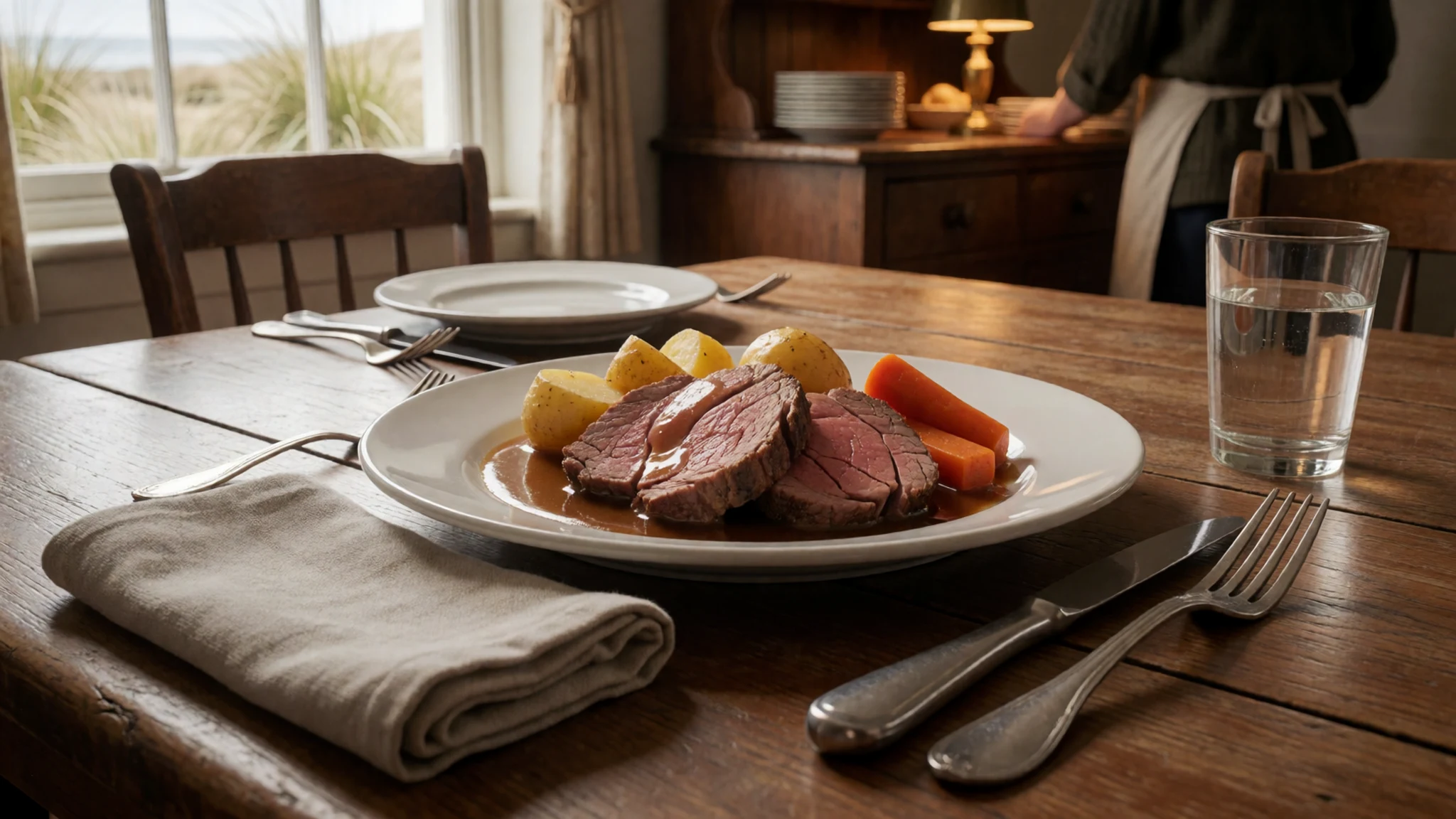
- Falkland calamari — the lodge kitchen when supplies are in, and cafés in Stanley
Sea Lion Island sits on the edge of a cold-water squid fishery, and calamari is how that catch reaches the plate. Rings or strips come fried or in a light stew. The lodge serves it when the supply is in, and Stanley cafés do the same.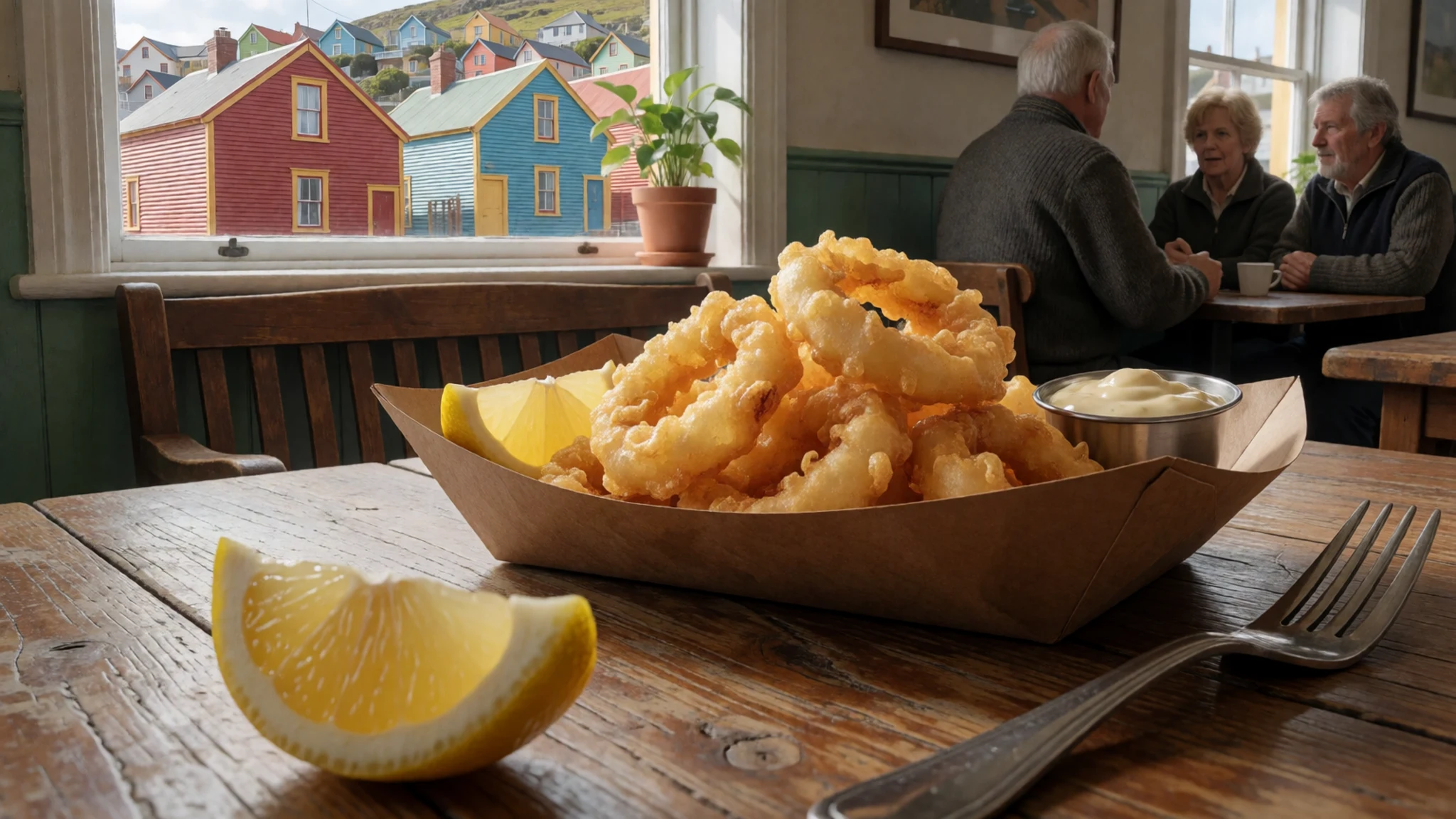
- Diddle-dee pudding — lodge puddings and home baking in Stanley
Sea Lion Island puddings often lean on diddle-dee, the small red crowberry of the heath. The fruit is sharp and seedy, and kitchens boil it into jam, jelly or a crumble served beside the meat. Lodge cooks and Stanley bakers both keep a jar to hand. - Smoko — the lodge between walks, and mid-morning cafés in Stanley
Sea Lion Island keeps smoko, the Falklands tea break, as firmly as any farm in camp. It means a pot of tea and home baking, whether biscuits, a sponge or a fresh slice. Guests meet it at the lodge between walks and in Stanley cafés. - Local white fish — the lodge dining room
Sea Lion Island puts a plain fish course on the table when a boat or the supply plane has brought some in. A local white fish, pan-fried or baked with potatoes, is the usual form. The lodge dining room plates it, and Stanley restaurants keep a longer list.
Plan it
Best time. On Sea Lion Island, elephant seals crowd the coast from September and ease off through November, penguins use the long summer light into March, and sea lions breed later in the year; February is the hottest and most comfortable month, and April the wettest. October brings elephant seal pups on the beaches. Midwinter is dark, windy and thin on animals.
How long. 3–4
Getting there. Sea Lion Island is reached by air. Fly into Mount Pleasant, the Falklands airport, from Britain or from Punta Arenas in Chile. The last leg is a Falkland Islands Government Air Service flight, a small Britten-Norman Islander from Stanley or Mount Pleasant onto the island's gravel strip. Wind can hold that flight, so leave slack in the booking.
Budget. high
Tips
- Book the lodge and the air seat well ahead for summer; the island takes few guests at a time.
- Keep a spare day at either end, because the light aircraft waits on the weather.
- Walk the beaches in the morning, before the wind has built through the day.
- Bring sterling for Stanley; the island stay sits on the lodge account.
- Pack binoculars, a dry bag and a layer that can go on while standing still.
Etiquette
- Stay far back from elephant seals, and never get between an adult and a pup.
- Let penguins keep a clear path from the tussac to the sea.
- Do not feed caracaras, and do not leave hats or gloves on the ground.
- Stay with the guide's line in the tussac and leave any drone at home.
Nearby
Sources
- Wikidata (CC0)
- Wikipedia — Sea Lion Island (CC BY-SA 4.0)
- Wikivoyage — Falkland Islands (CC BY-SA 4.0)
Wildlife
- South american sea lion (animal)
This is the animal that gave the island its name: a big, whiskery sea creature whose males wear a shaggy mane, just like a lion. Look for them resting on the rocky points, away from the busier penguin beaches, so head for the headlands rather than expecting them beside the penguins. Males guard their patch and their females, so give them plenty of room, speak softly, move slowly and, if you can, walk with a guide. Never feed them.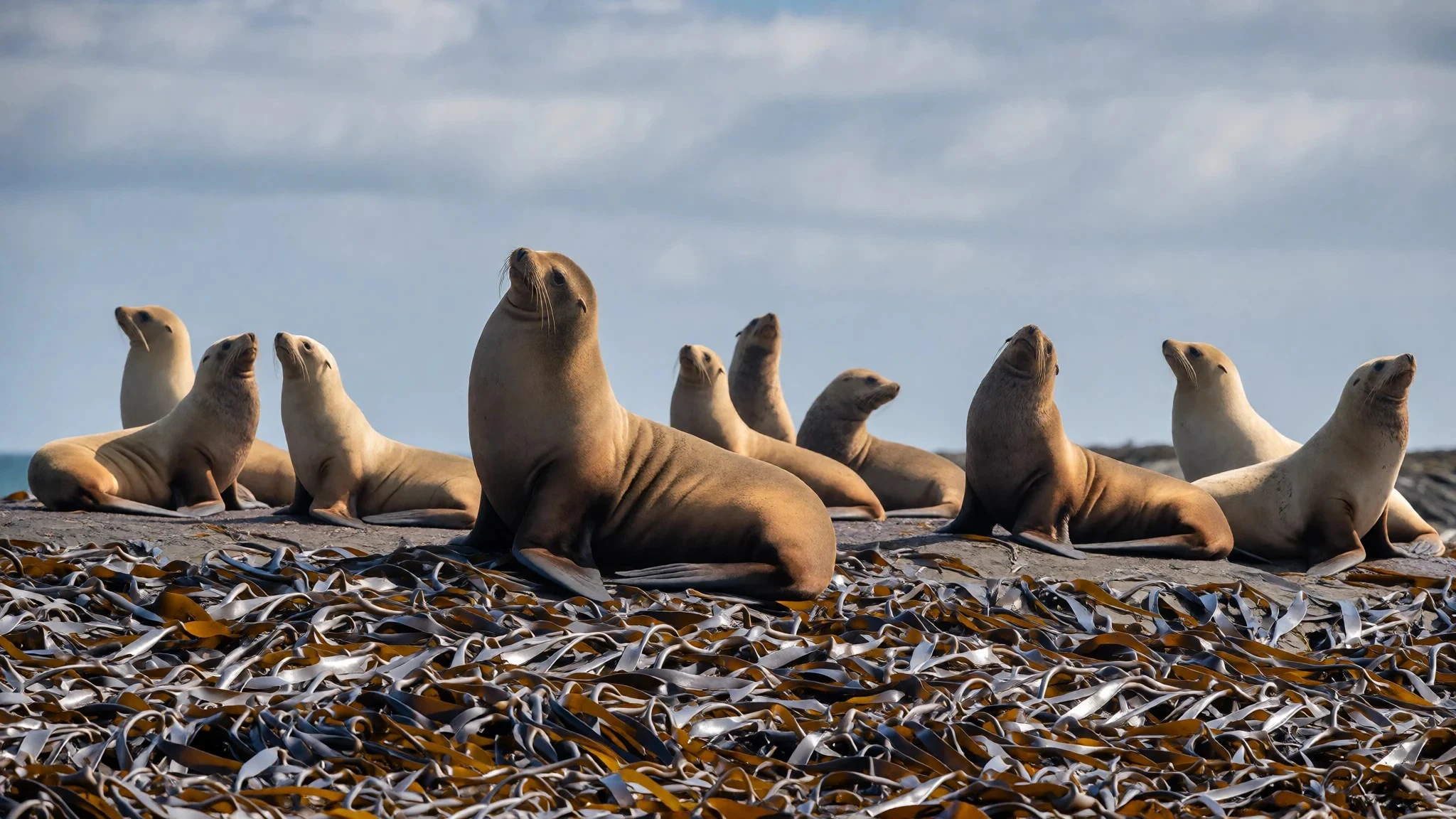
- Gentoo penguin (bird)
The gentoo is the penguin that tips its head back and trumpets like a tiny brass band. On Sea Lion Island you can find them coming ashore on Elephant Beach, the pale sand they share with the elephant seals. Sit low, stay quiet and let them go about their business, keeping a respectful distance. A guide can help you read their mood. Never offer them food.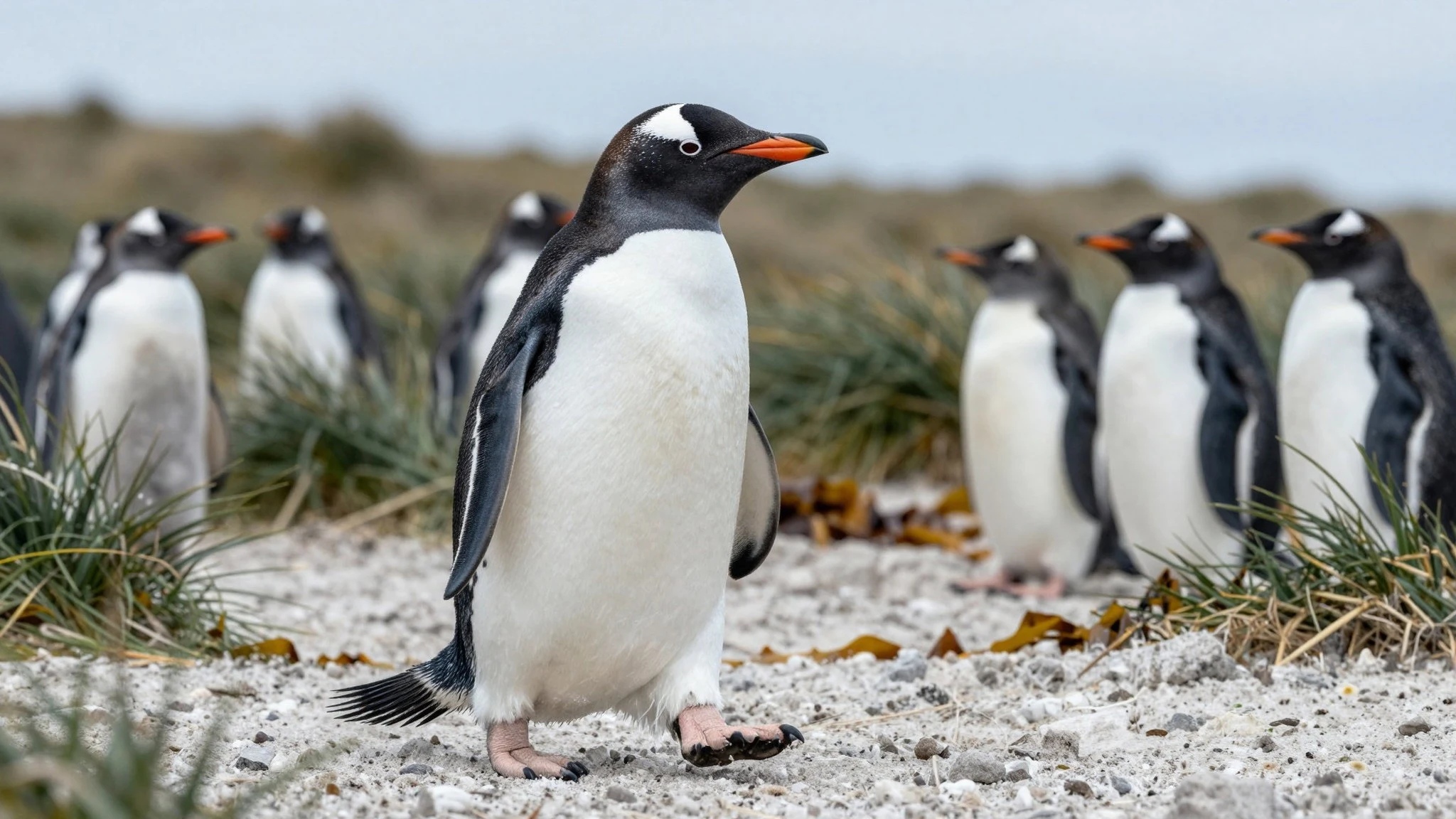
- Southern elephant seal (animal)
Picture a seal as heavy as a boulder, with a male whose swollen nose hangs like a short trunk and who bellows very loudly. On Elephant Beach, a long stretch of pale sand, they lie in untidy piles while gentoo penguins come ashore beside them. Keep well back, stay quiet, listen to your guide, and never feed them. A roaring male is best enjoyed from a good distance. - Magellanic penguin (bird)
This is the penguin that lives underground, rather like a rabbit in a smart black-and-white coat. On Sea Lion Island it makes its burrows beneath the tussac grass, so watch where you step and never peer into the holes. It was named after the explorer Magellan. Keep your distance, speak softly, follow your guide's advice and never feed these shy birds.