Saül
Saül, France
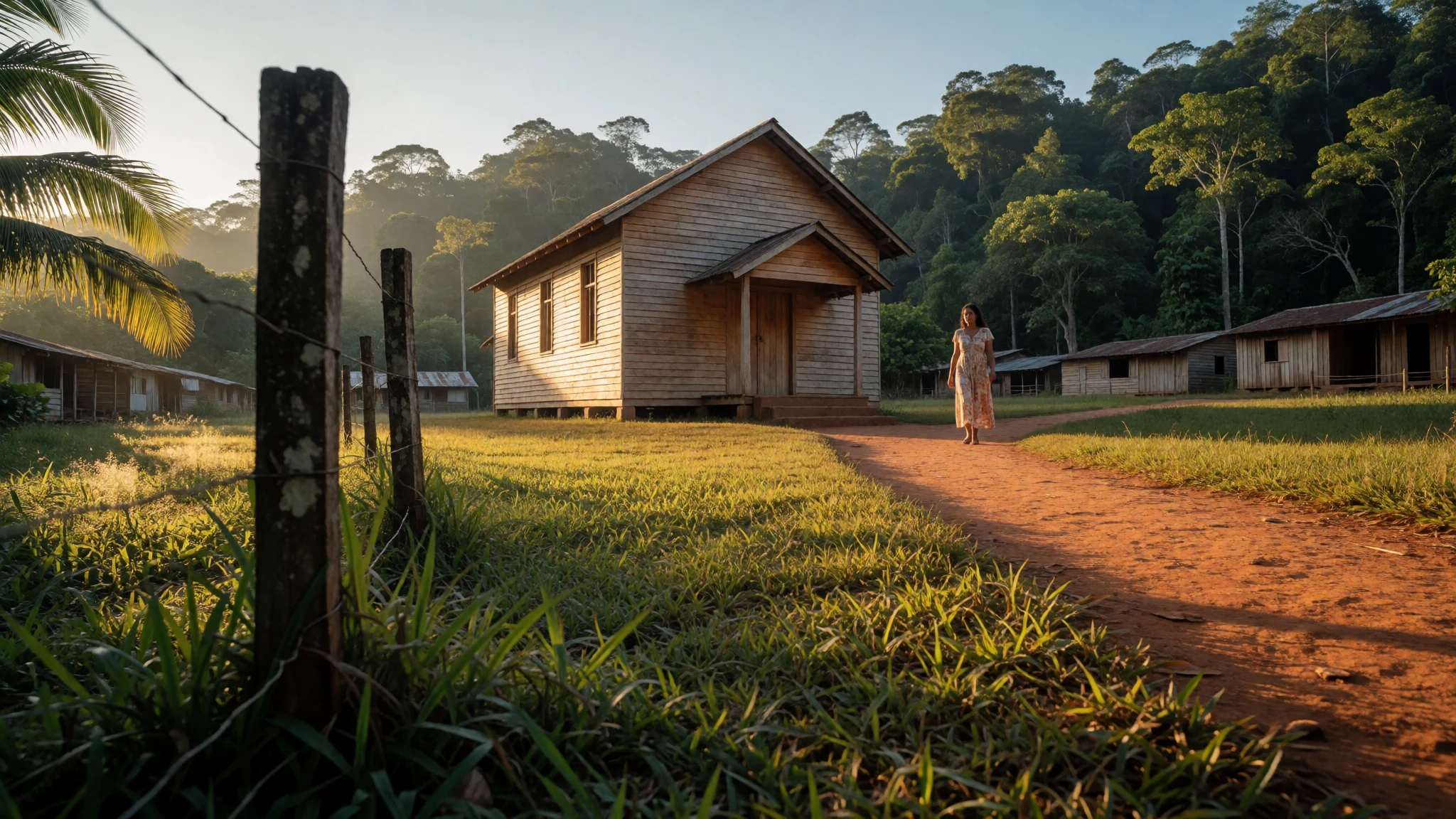
Saül is a forest village in the middle of French Guiana, reached only by air, where the walking starts at the edge of the grass.
The place
Saül sits almost in the middle of French Guiana, a village of fewer than 100 people at 206 metres above sea level, ringed by unbroken Amazon rainforest. No road reaches it. Everything and everyone arrives by small aircraft to the village airstrip, which makes the place feel like an island in a green sea, even though it is a commune of France and so part of the European Union. The surrounding high ground feeds the springs of three major rivers, the Mana, the Inini and the Approuague, so the forest here is also a watershed. It is the most sparsely populated commune in French Guiana, and the village is small enough to cross on foot in a few minutes. Daily life has two threads: gold mining, which founded the settlement, and trekking, which now brings the few visitors. Lodging is limited to a tourist camp and a lodge, so numbers stay low. The climate is hot, humid and wet through most of the year, with the driest spell in September and October, and temperatures barely change from month to month. Rain can arrive at almost any time, trails turn to mud, and the forest is rarely quiet, with insects and birds going at dawn and dusk. Saül suits people who want the forest rather than comforts: slow days, long walks, early nights, and a clear sense of how far from the coast the interior of the Guianas really is.
Its story
Saül owes its existence to gold. In 1910 a prospector called Sahul, who had come from Saint Lucia, found the metal here, and a mining village grew around the strike, reaching about 800 residents at its busiest. Through part of the mid-twentieth century the settlement belonged to the Territory of Inini, an administrative unit that provided no schooling for its people, yet Saül was still among the first villages to get a primary school. The state later tried to link the gold fields to the coast. In 1952 the Guianese mining bureau cut a track of about 150 kilometres from Saül, by way of Bélizon, to the road towards Cayenne. The scheme failed on simple arithmetic: building and maintaining the track cost more than the gold it carried, output was already falling, and the track was abandoned in 1960. That left the airstrip as the only way in, and the isolation shaped everything that followed. In 1962 the wooden church of Saint Anthony of Padua was consecrated, and in 1993 it was protected as a historic monument. The population dwindled far below the mining-era peak, and the local economy tilted from the gold pits towards forest guiding and walking, although small-scale mining still counts among the village's main activities.
What to see
- Church of Saint Anthony of Padua — Village centre
Saül's wooden church stands in a clearing with forest rising behind it, and it is the village's best-known building. It was consecrated in 1962 and later protected as a monument. Its simple timber form suits the setting, and a slow walk around the outside takes in the whole village green.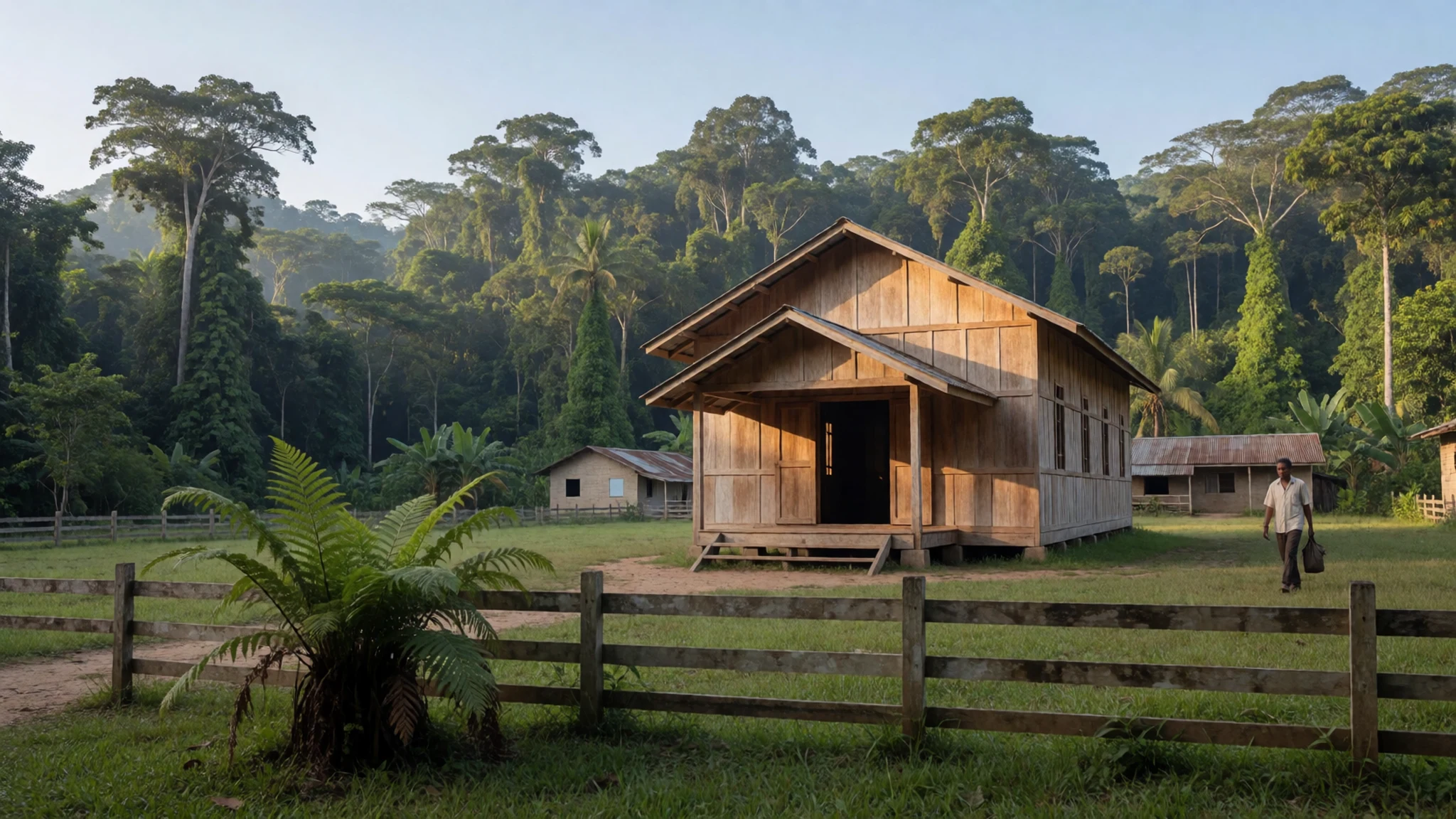
- The village green — Village centre
The open central place is where Saül's few buildings face one another, and it is the natural starting point for any visit. Low houses, a small square and the forest wall on every side explain the scale of the place at a glance. Early morning is the quiet hour, before the heat builds.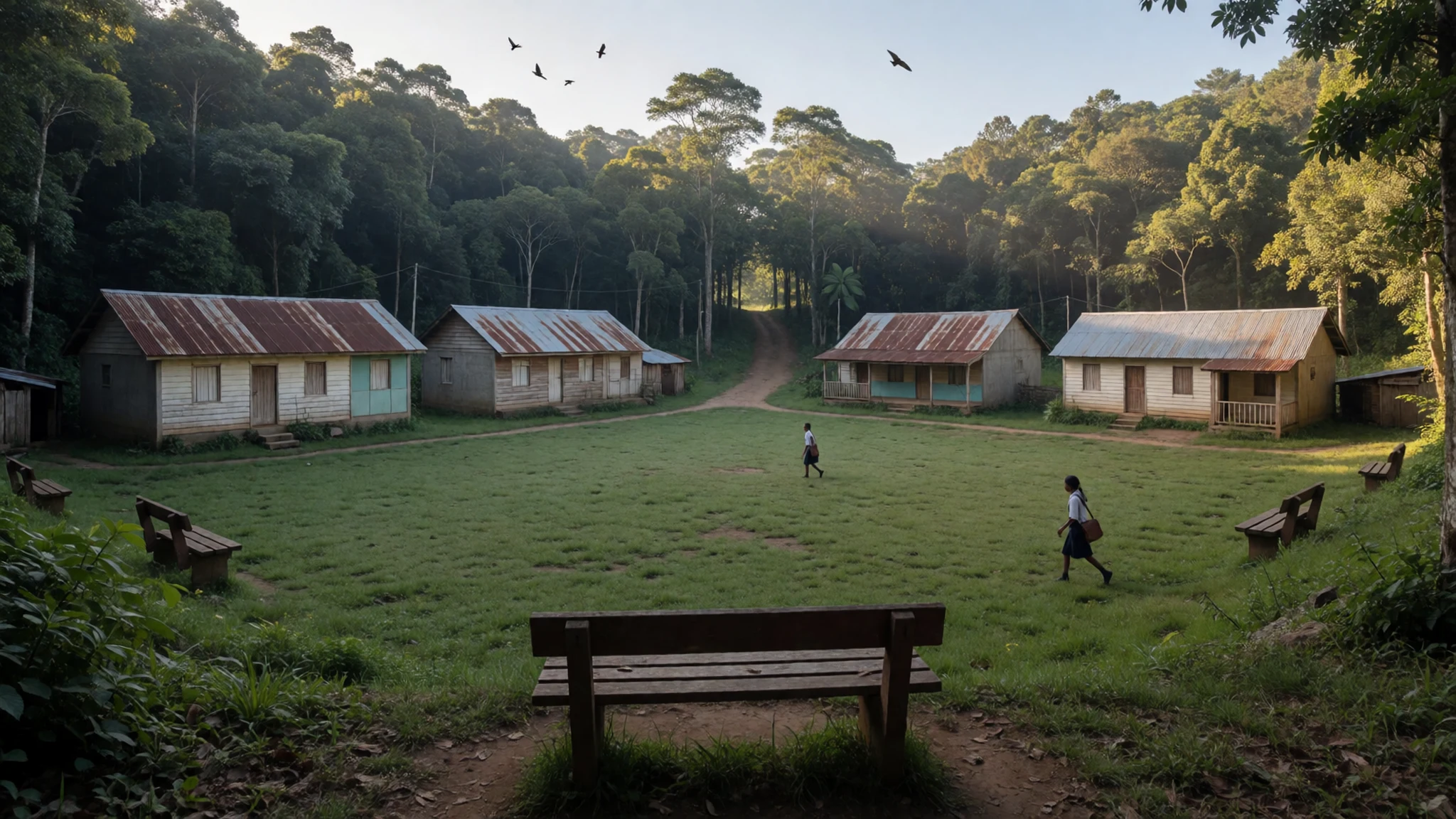
- The belvédère over the village — Hill above the village
A viewpoint above Saül shows the village as a small patch of roofs and grass in an ocean of canopy, which is the clearest way to grasp how remote it is. The climb is short enough for a morning, and clear light early in the day gives the best view.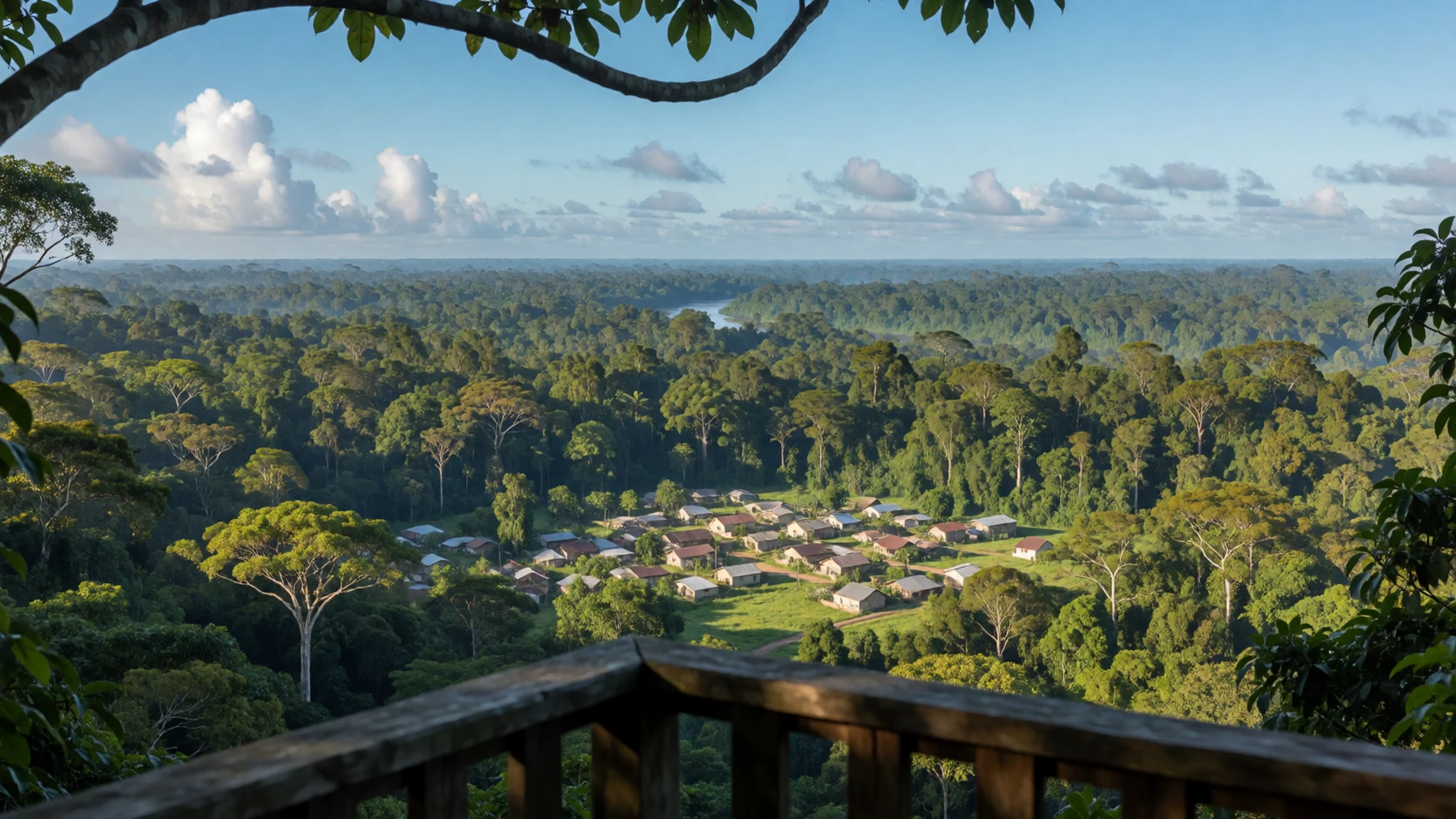
- The airstrip and terminal — Edge of the village
The small airstrip is Saül's only link with the outside, so arrivals and departures are the village's main events. The modest terminal and the strip cut through the forest edge are worth a look, if only to appreciate why no road was ever made to last.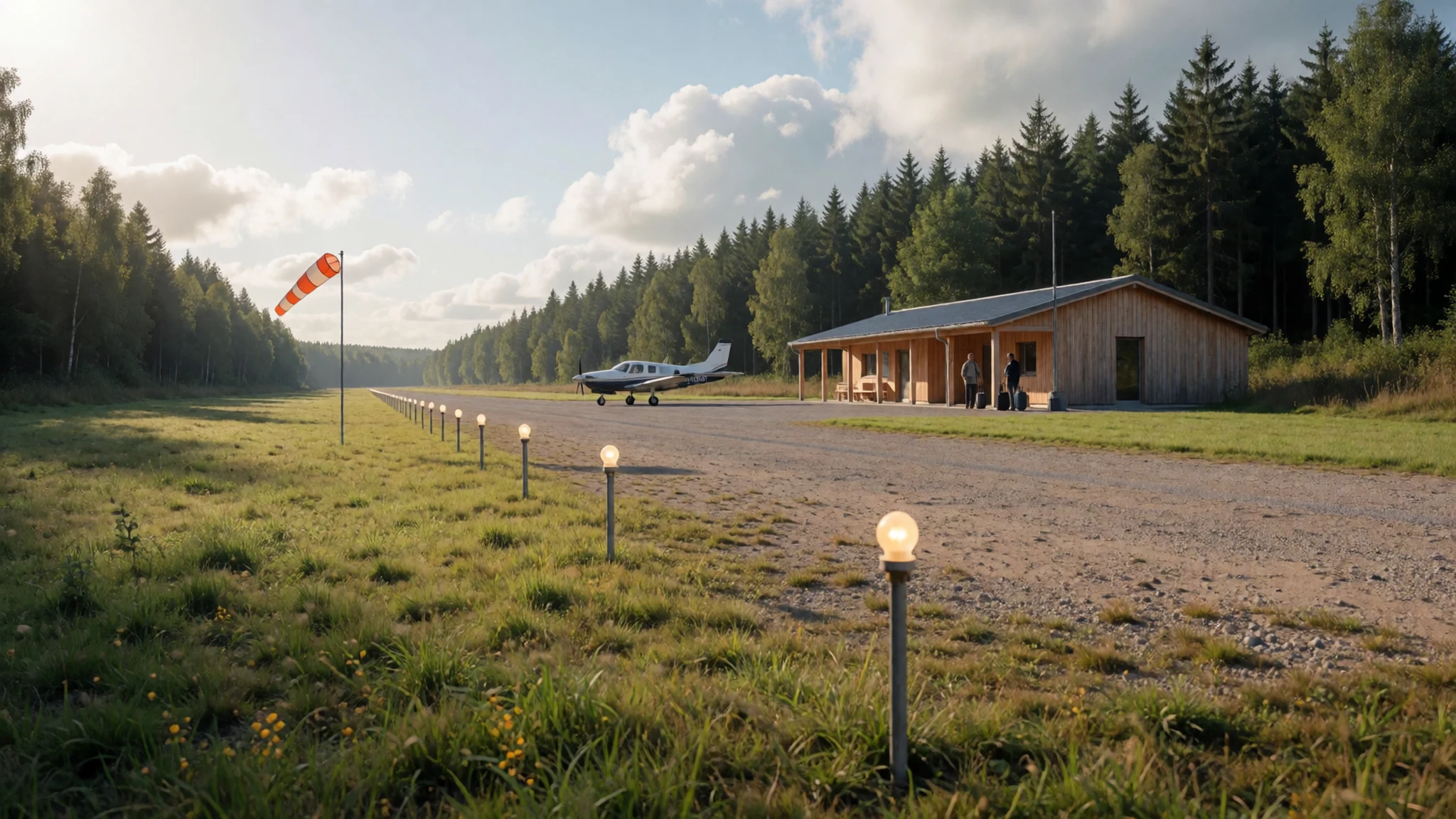
- Rainforest trails — Forest around Saül
Marked paths lead out from the village into the forest of the Amazonian park, ranging from short loops to multi-day treks. Footing is muddy and the heat is constant, so a local guide is a sensible choice. Dawn walks bring the best chance of hearing and seeing wildlife.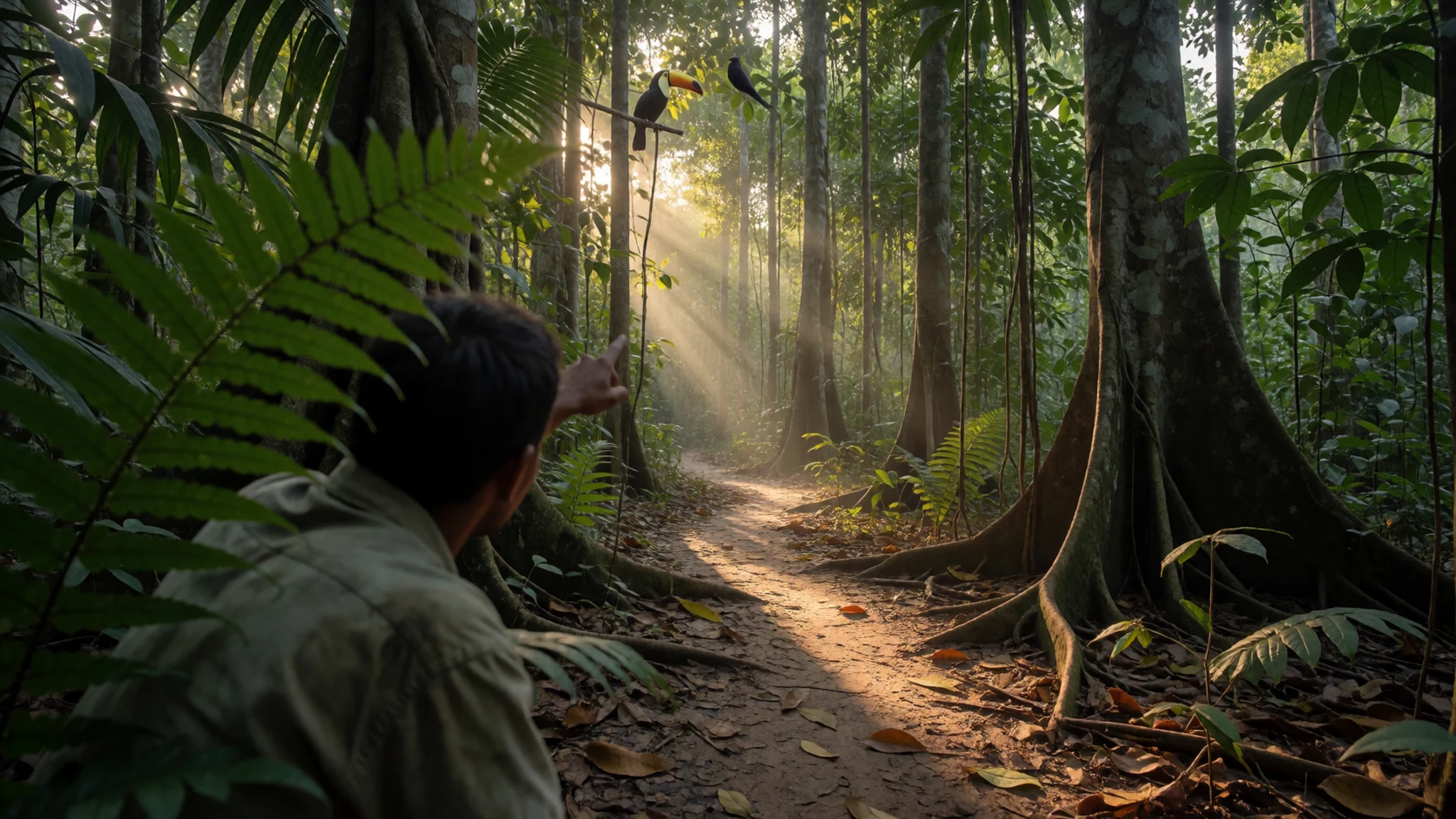
Culture
Saül is tiny, but the culture around it is that of French Guiana as a whole: Creole at its root, with Amerindian peoples such as the Kalina, Arawak, Palikur, Teko, Wayampi and Wayana as the region's original inhabitants. Creole is spoken alongside French, and the village's own name in Creole is Sayil. People in French Guiana are proud of being French, and suggesting otherwise causes offence. Mainland France is called la métropole, not simply France. Residents generally enjoy questions about their culture, history and religion, though slavery is a sensitive subject and is better left alone unless a local raises it. Saül has its own particular character on top of this. It began as a gold camp, and mining and forest work still shape conversation, the working week and who knows whom. With so few residents, everyone is acquainted, and a visitor is noticed at once. Evenings are quiet, the church remains a focus of community life, and the arrival of a plane draws a small crowd. Time moves at the pace of the weather and the flight schedule, and patience is rewarded. Greet people with a friendly bonjour before asking for anything, and ask permission before photographing residents.
What to wear
Saül has no single village costume, so its dress traditions come from the wider Guianese mix of Creole and Amerindian heritage. Creole women's formal dress is built on printed cotton, bright headwraps and gold jewellery, and it appears at festivals and family celebrations rather than on ordinary days. Amerindian communities of the interior are known for fine glass beadwork and woven forest fibres, worn at ceremonies and made for sale. In the village itself, daily clothing is practical and unfussy: light shirts, shorts or work trousers, caps against the sun, and rubber boots for mud and wet trails. Miners and forest guides favour quick-drying fabric and boots over anything smart. Visitors should dress for heat, humidity and rain. Long, loose, lightweight sleeves and trousers in quick-drying fabric protect against insects, thorns and sun far better than bare skin. Pack a light rain jacket, a hat and a spare dry set for evenings. Sturdy trail shoes or boots with good grip matter on slick, muddy paths, and thin socks help avoid blisters. No special dress code applies at the church, but covered shoulders and knees are polite, and swimwear belongs by the river only.
What to eat
- Blaf de poisson — Creole eateries in Cayenne; ask at the tourist camp in Saül
Fish gently poached in a court-bouillon of herbs, lime, chilli and spices. It is a mild, fresh dish compared with most Guianese cooking, and it suits hot weather. Look for it on Creole menus along the coast, and ask at the lodge about home cooking in Saül.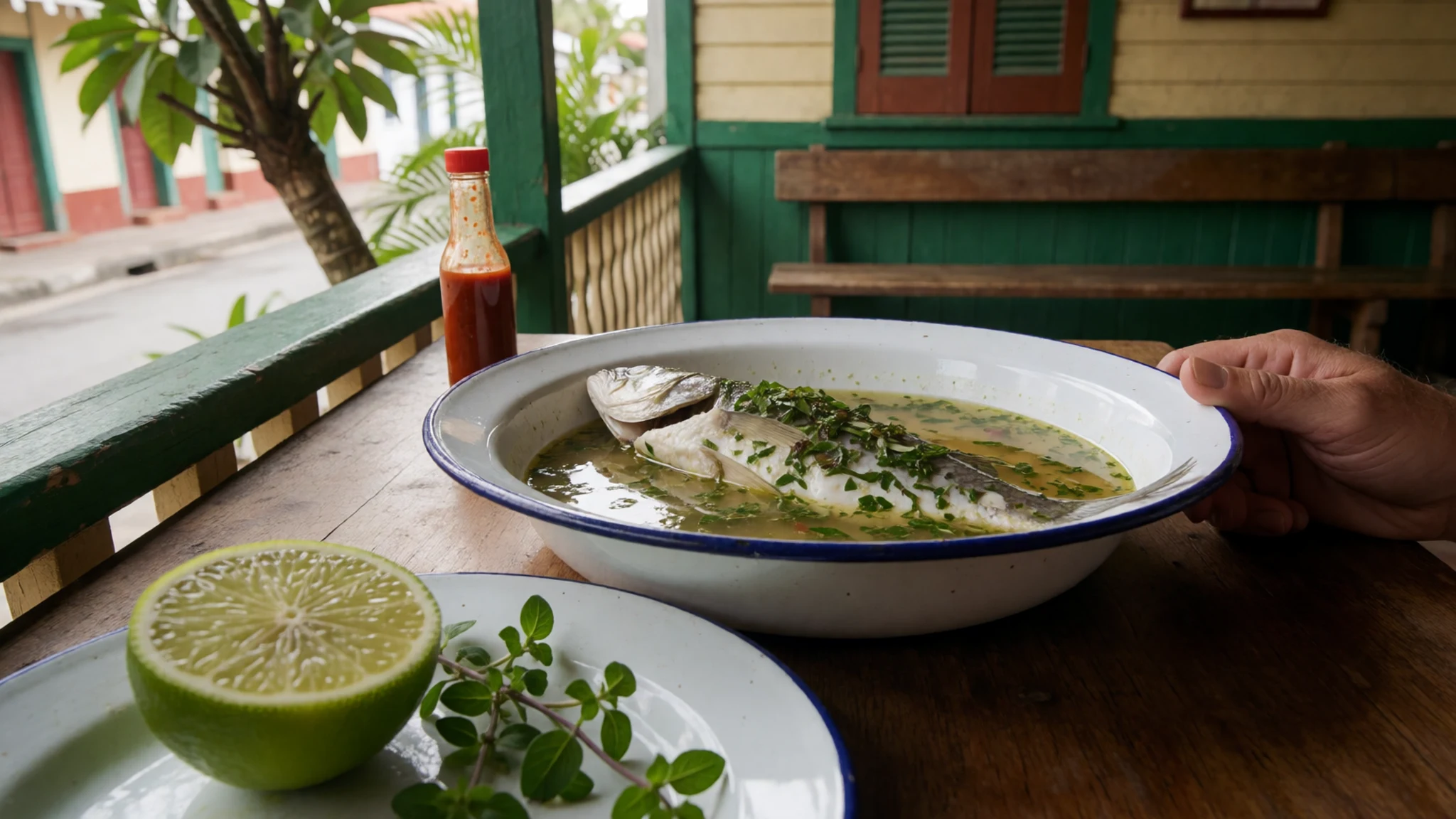
- Colombo — Family-run Creole eateries and market stalls on the coast
A Creole curry-style stew of pork or chicken, coloured and flavoured with a spice blend that reflects the region's mixed heritage. It is served with rice and is usually generous in heat, so ask for it less spicy if chilli is a worry.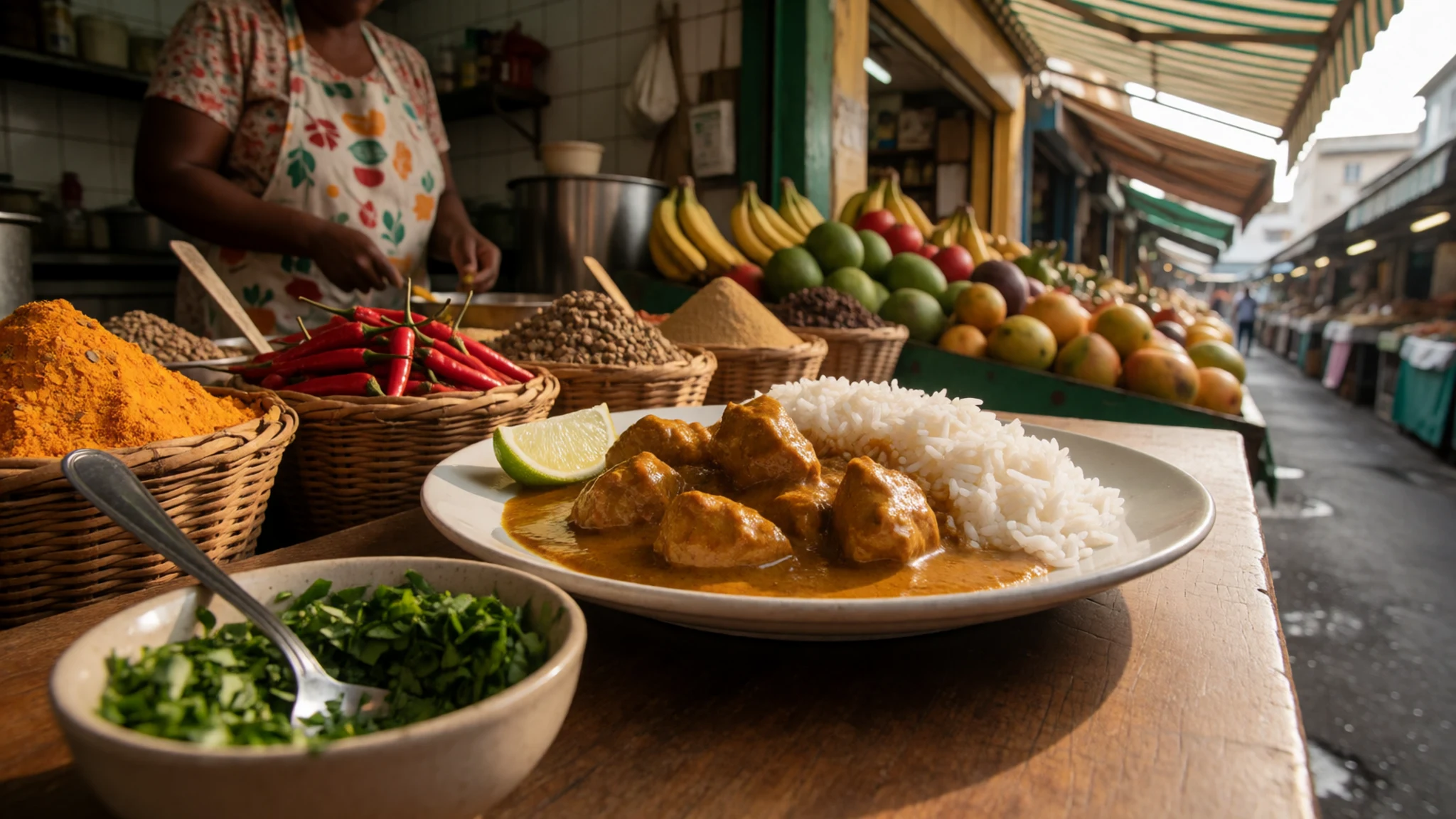
- Pimentade — Cayenne's main market area and neighbouring Creole eateries
Fish seasoned with chilli and lemon, then cooked in a tomato sauce. It shows the fiery side of Guianese cooking, as befits a region that lent its name to cayenne pepper. It is usually eaten with rice or cassava flour. - Kalalou — Creole restaurants and festival tables on the coast
A rich Creole dish of fish with spinach-like greens and okra, cooked down into a thick, savoury stew. It is a good way to taste local vegetables alongside seafood, and it is usually eaten with plain rice. - Wassaï juice — Market juice stalls and home kitchens, including the lodgings in Saül
A creamy, cold drink made by soaking, kneading and straining the pulp of the wassaï palm fruit, better known elsewhere as açaí. It is often sweetened with milk, and sometimes eaten with fish or meat alongside cassava flour.
Plan it
Best time. September and October, when the short dry season makes trails more manageable. Saül is hot, humid and wet for the rest of the year, with little seasonal change in temperature, so rain gear is needed whenever you go.
How long. 3–5
Getting there. There is no road to Saül, so the only route is by air to the village airstrip, normally on a small aircraft from the coast. Most international visitors first fly to Cayenne, sometimes via Paris. Check flight availability with the airline well ahead, as services are limited.
Budget. mid
Tips
- Book flights and lodging early, since the tourist camp and lodge are small and seats on the small aircraft are limited
- Carry the yellow fever vaccination certificate, which is mandatory for everyone entering French Guiana, and expect a passport or ID check on arrival
- Hire a local guide for longer treks, as the forest is dense, muddy and easy to get lost in
- Pack insect repellent, a rain jacket and dry spare clothes, and bring any cash and essentials you need, as services in the village are limited
- Start walks early, before the heat and the afternoon showers
Etiquette
- Greet people with a bonjour before asking for help or information
- Ask before photographing residents, and avoid raising the subject of slavery
- Take rubbish out of the forest and keep to marked trails
Nearby
Sources
- Wikidata Q910382 (CC0)
- Wikipedia: Saül, French Guiana (rev 1382030502) (CC BY-SA 4.0)
- Wikivoyage: French Guiana (rev 5383674) (CC BY-SA 4.0)
- Photo: Central place at Saül, French Guiana (Cayambe) (CC BY-SA 3.0 lu)
- Photo: Village de Saül en Guyane vu depuis le belvédère (Ronan Liétar) (CC BY-SA 4.0)
- Photo: Lage der Gemeinde Saül (Tschubby) (CC BY-SA 1.0)
- Photo: Saül (Guyane française) aérogare fevrier 2005 (broken_rusk) (Public domain)
- Photo: Eglise en bois du village de SAÜL (Andre Gaston Georges) (CC BY-SA 4.0)
- Photo: Randonnée à Saül (Melanie Dinane) (CC BY-SA 4.0)
- Photo: Commune of Saül, French Guiana (Roger Le Guen) (CC BY-SA 2.0)
- Photo: Commune of Saül, French Guiana (Roger Le Guen) (CC BY-SA 2.0)


