San Bernardino
San Bernardino, Paraguay
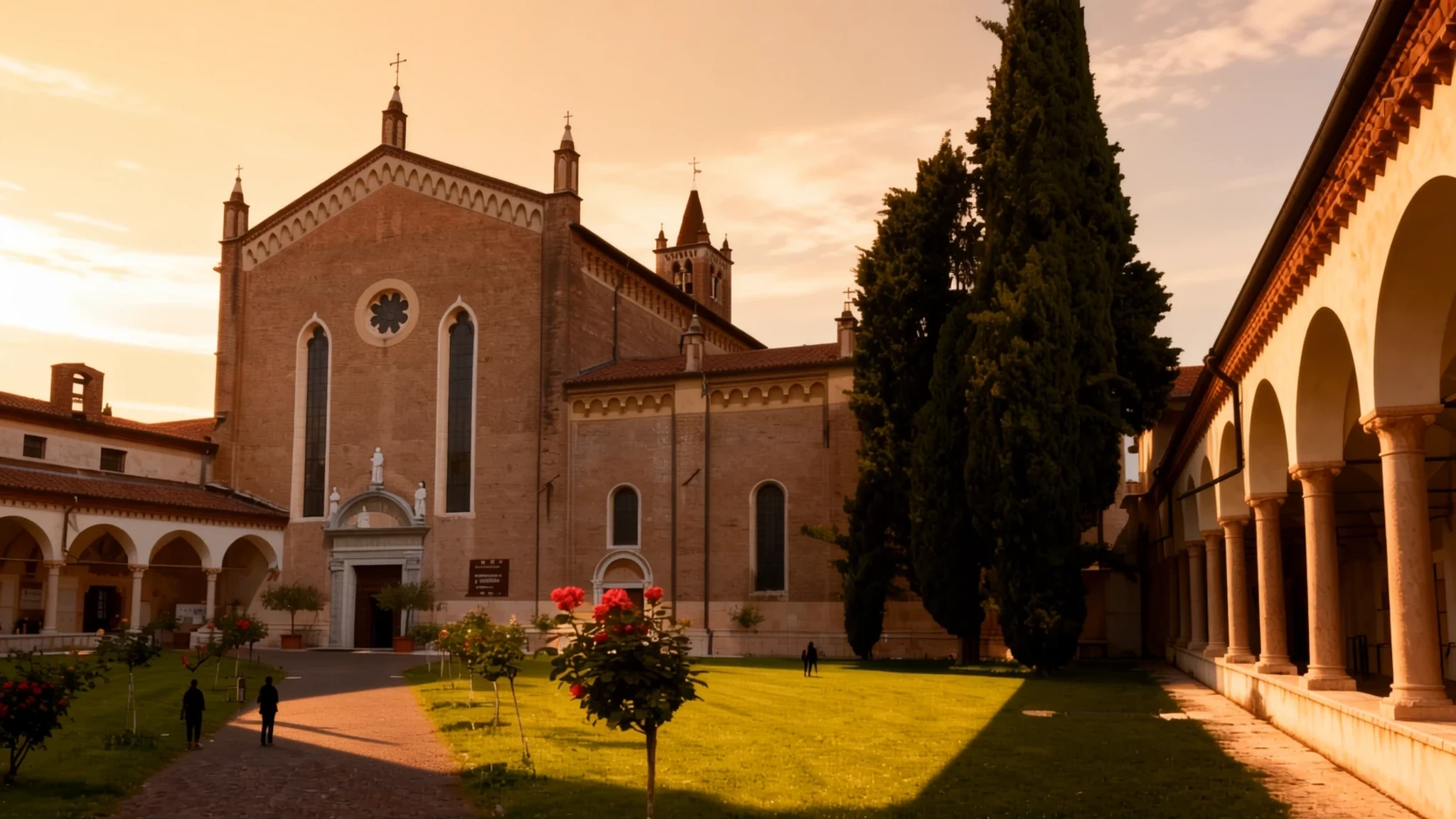
San Bernardino is Paraguay’s old lakeside resort, a town German and Swiss immigrants founded on Lago Ypacaraí where the capital comes to boat and slow down.
The place
San Bernardino sits on the shore of Lago Ypacaraí in Paraguay’s Cordillera department, a low town of gardens, red roofs and weekend traffic rather than a capital skyline. The water is why the place holds a national affection: a broad lake, filled with boats and jet skis through the hot months, with a shore that families treat as a shared living room. From the bank the town reads as beaches, jetties and shaded walks, Playa La Rotonda among the named accesses, and a long view toward low green hills. Inland the streets stay at a small-city scale. Older houses still show the German settlement that set the town apart, while newer villas fill in for the summer rush. Café terraces and a lakeside hotel front stand close to the water, so a day moves between the boats, a long lunch and a slow walk. In the warm season the air is heavy and bright; in the cooler months the same shore is quieter, with more room on the sand and fewer cars on the approach. San Bernardino remains a working town of schools, shops and parish life that also hosts the country’s habit of leaving the capital for the lake. Anyone expecting an empty wilderness shore will meet music and ice-cream queues; anyone expecting a large city will find the lake in the way. The pleasure is that overlap — a resort that never stopped being a neighbourhood.
Its story
San Bernardino was founded in 1881 by German and Swiss immigrants, a beginning the town still prints beneath pictures of itself. The settlement was laid out as a new home on the lake, not as a river port, and German speech, club life and building habits stayed visible long after the first generation. Emil Hassler built a house in 1898 at the place called Bierschlucht, a name that keeps the settlers’ beer-and-ravine geography on the map. Over the following decades the town’s job changed from immigrant colony to the summer address of Asunción. Families who could leave the capital in the heat came for the water, and lodging houses, dance floors and cafés grew up to meet them. Hotel del Lago and Café Francés remain landmarks of that leisure town, sitting in the same mental postcard as the shore. The lake entered the songbook through the guarania Recuerdos de Ypacaraí, so San Bernardino is heard as well as visited: a shore people mention when they mean memory and a first distance from home. Local memory holds both strands at once — German houses and surnames, and the Paraguayan ritual of the hot-season lake. The story on the ground is a colony that became a resort and then remained both, with the water doing the work a monument would do somewhere else. A walk up from the beach toward the older plots finds the founding still in timber, brick and a hillside name, not a single plaque.
What to see
- Lago Ypacaraí — lakeshore
San Bernardino meets Lago Ypacaraí along a soft, inhabited shore. The water is the town’s main open space: boats, jet skis and a long view toward low hills. Mornings are clearer and quieter. By afternoon in the hot months the edge fills with families, music and food stalls. Away from the busiest access the lake is still a wide, calm sheet with trees down to the bank.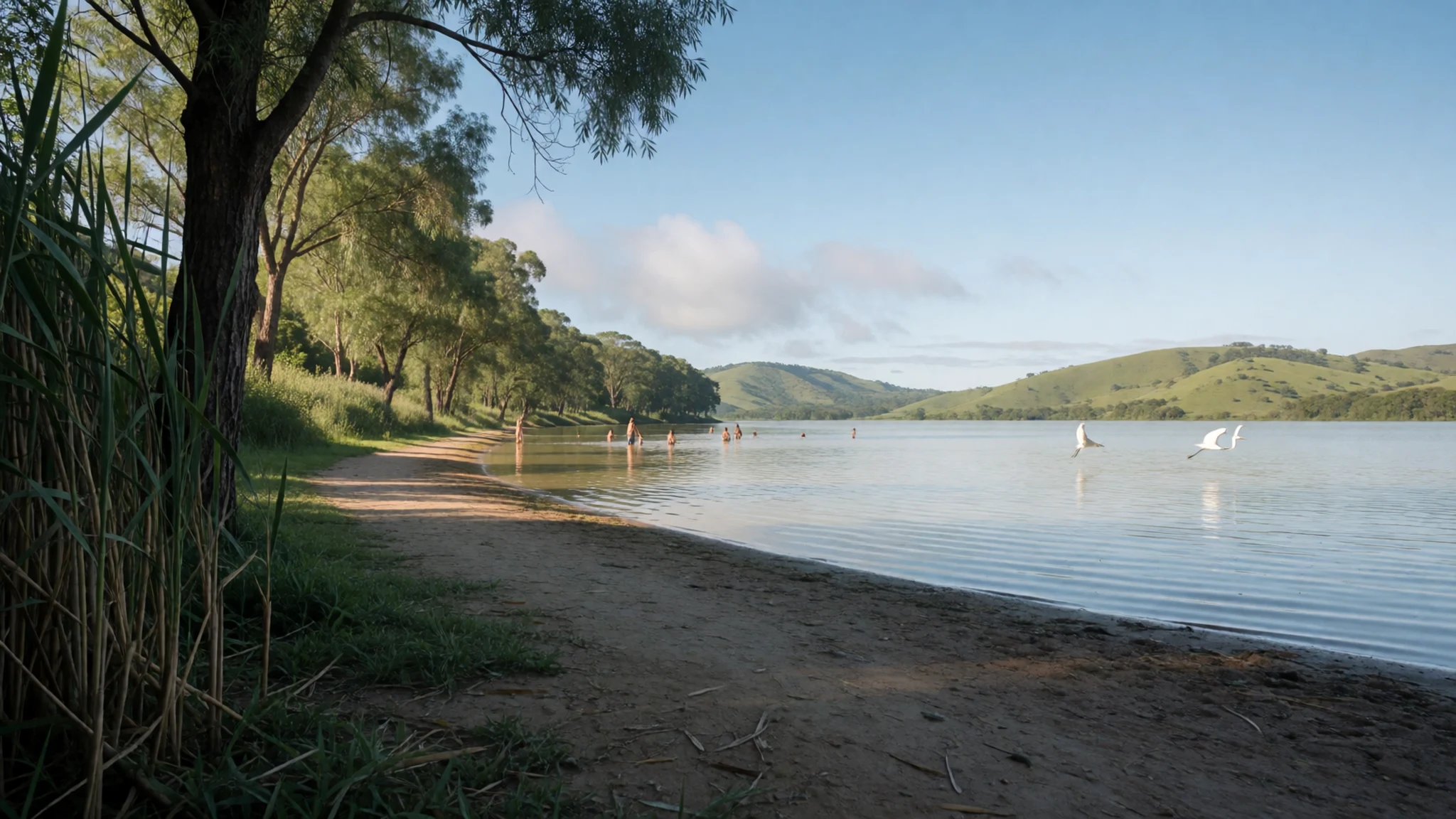
- Playa La Rotonda — Playa La Rotonda
Playa La Rotonda is San Bernardino’s named public door onto the lake. The path down to sand and water is the visit itself, crowded on summer weekends and easy on ordinary mornings. Shade thins once the sun is high, and what stands nearby is kiosks and open shore, not a formal promenade. Boats and jet skis take the water between the houses, with the town’s noise just behind them.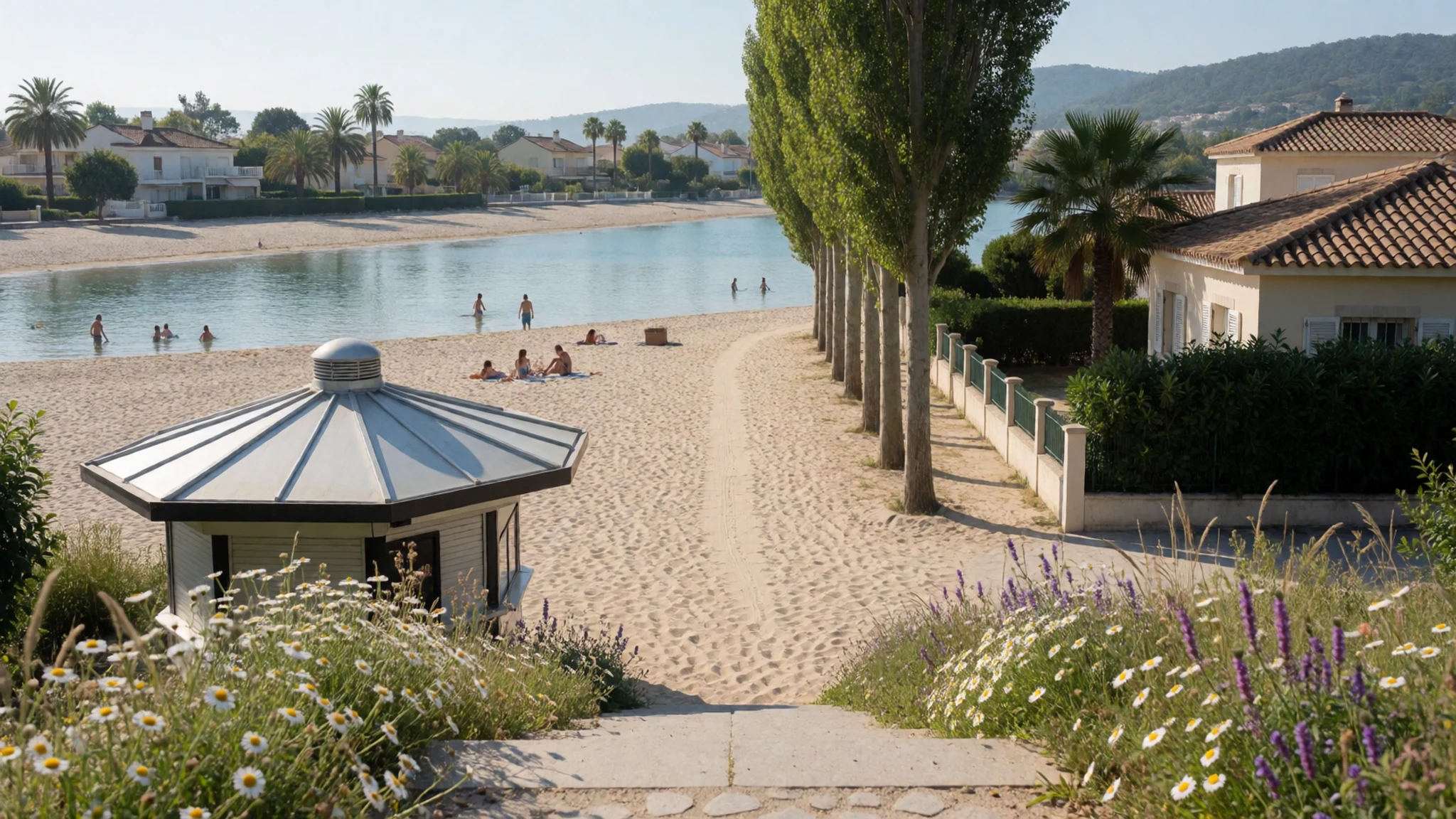
- Hotel del Lago — lakeside
Hotel del Lago is the lodging house that tells San Bernardino’s resort years in its façade, set where the town and the water meet. It is a place to look at as much as a place to sleep: a long-standing address on the lake, with terraces that face the same view the beach crowds come for. A walk past explains the town’s summer economy better than a plaque would.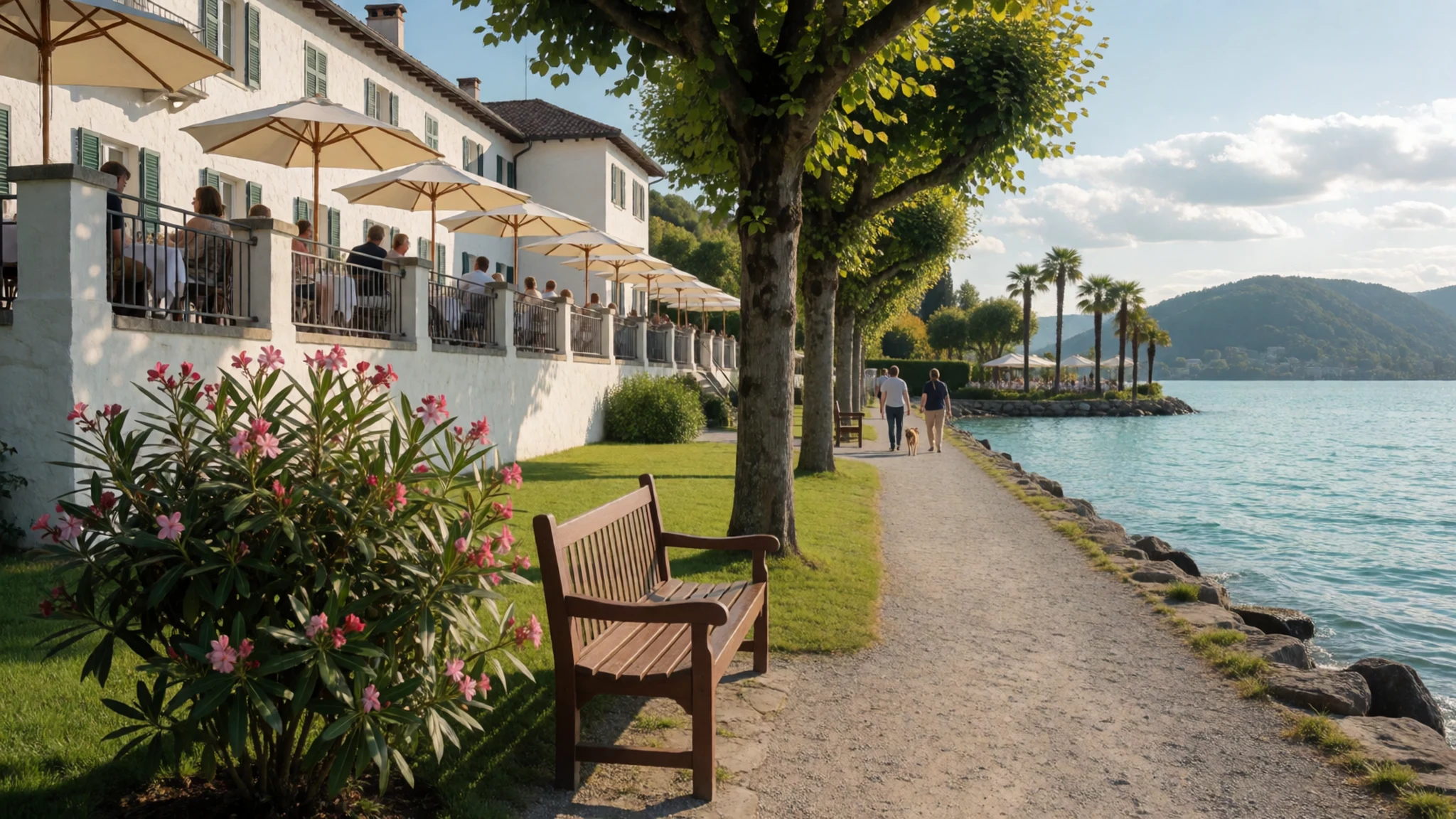
- Café Francés — town centre
Café Francés is a San Bernardino meeting point as much as a place to eat, a small landmark of the lake-town kind. The name nods to a European layer in a town founded by German and Swiss immigrants and later folded into summers from the capital. Coffee, cake and a pause out of the glare are the offer. The room feels a step up from the beach: seated and unhurried.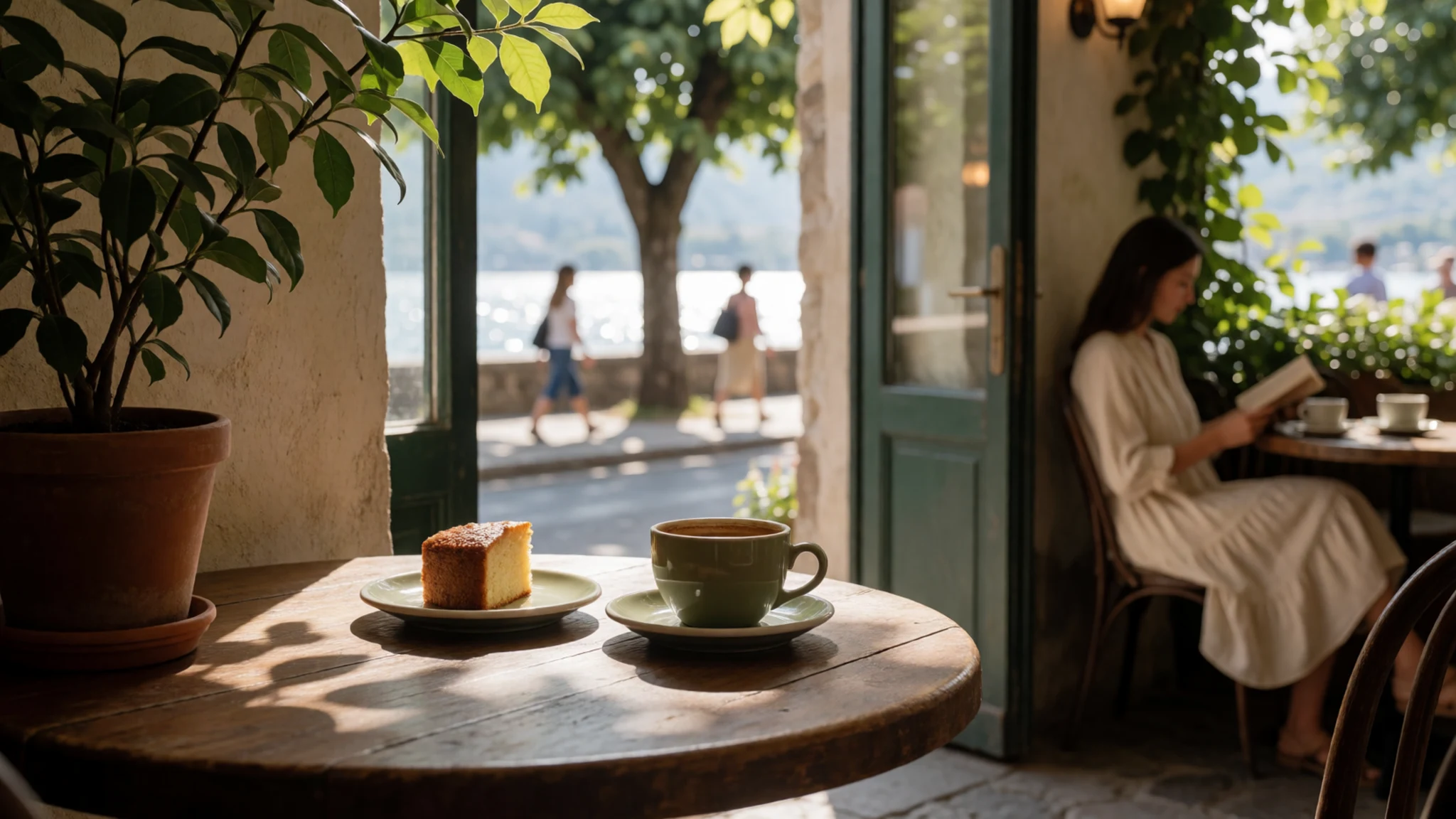
- Hassler house at Bierschlucht — Bierschlucht
The Hassler house at Bierschlucht is a surviving mark of San Bernardino’s founding decades, set away from the beach bustle. Emil Hassler built it in 1898, in a fold of land whose German name still sits on the map. The building is modest, a place to live rather than a palace for show. Seen after a morning on the sand, it puts timber and the colony back beside the resort.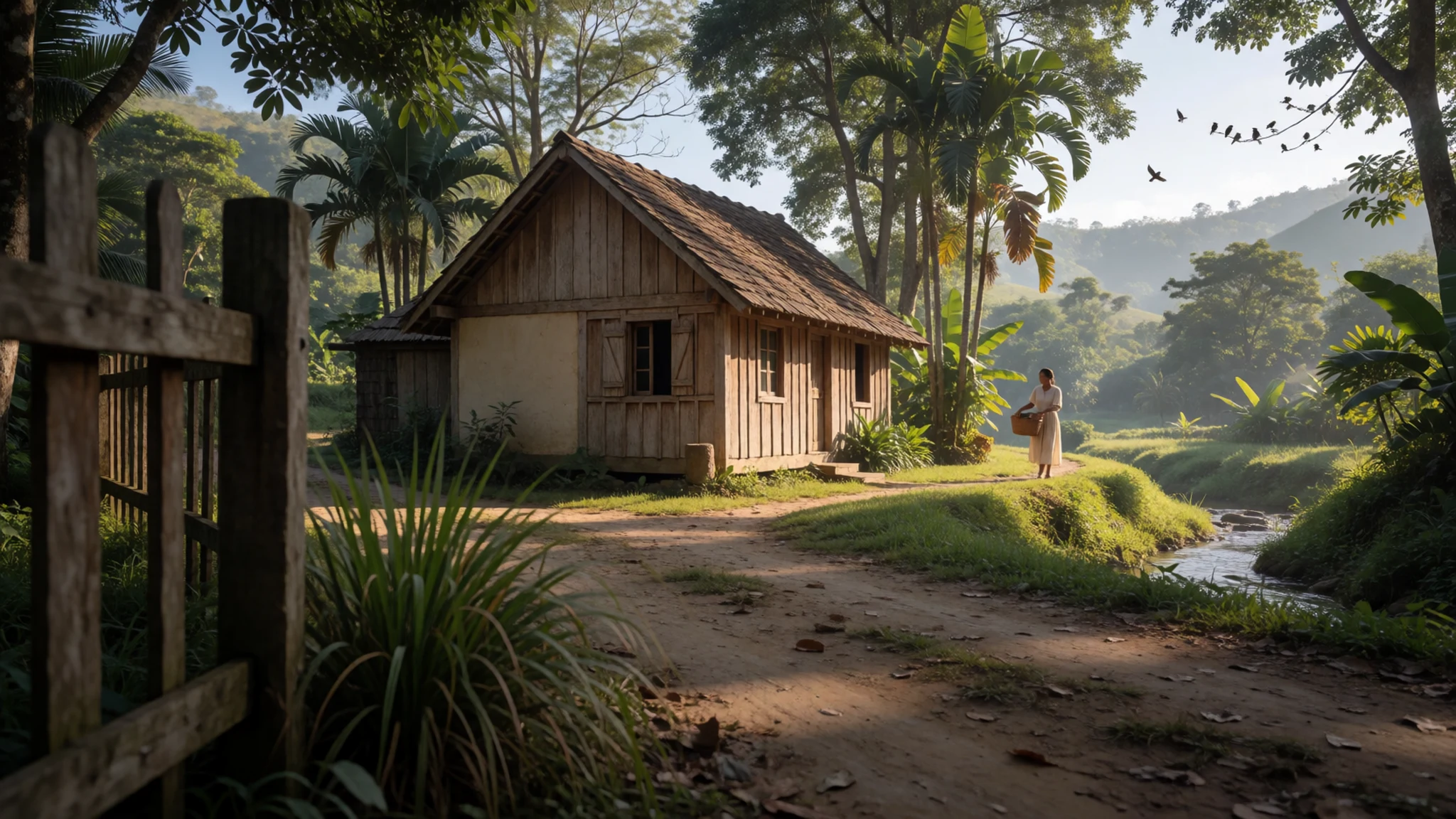
Culture
San Bernardino lives in paired registers that locals do not bother to separate. Spanish runs the shops, the beach and the council, while Guaraní threads through greetings, jokes and the names of everyday things, as it does across Paraguay. Summer weekends belong to families who have driven out from the capital: car boots, boats on the water, tables that begin at lunch and decline to end. The German founding shows itself in surnames, club notices and houses rather than in daily costume. Catholic feast days still organise parts of the year, when a procession can matter more than the sand for an afternoon. Tereré, cold yerba mate passed around a seated circle, is the social habit of the hot hours, and the thermos is an offer of company. Evenings tilt toward grilled food, music and a dance floor more often than toward a formal concert. The lake sits inside that social life as a feeling people already know from songs, so a first visit can feel oddly familiar. Visitors fit in when they join lightly and leave the shore as a neighbourhood rather than a stage. Ask before you photograph people at close range on the beach, and keep your voice down near houses after dark.
What to wear
San Bernardino dresses for heat, water and feast days. Traditional Paraguayan clothes appear at festivals and folk performances: women in a typoi of white cotton, often ao po'i with drawn-thread embroidery, and ñandutí lace on a shawl or collar; men in a plain white shirt and dark trousers, with a poncho when a parade asks for it. Those cloths are cotton, open and made for humidity, and they belong to ceremony, not to an ordinary hour on the sand. German heritage shows more in old houses than in daily dress; folk costume from the founding community is for commemorations, not for the bakery queue. What people wear now is resort clothing. Swimwear under a shirt for the walk to the water, shorts, light dresses, football shirts, straw hats and sandals once the sun is high. Evenings smarten only slightly: a clean shirt for a café terrace, rarely a suit. A visitor should pack the same breathable cotton or linen, plus a hat and shoes that can survive sand and a rougher path up toward Bierschlucht. An outfit that covers shoulders and knees is worth carrying for a church. In the cooler months a warm layer earns its place after sunset, when the nights drop below freezing.
What to eat
- Chipa — lake stalls and neighbourhood bakeries
Chipa is Paraguay’s cheese bread, baked in small rounds and eaten warm at any hour in San Bernardino. Lake stalls and neighbourhood bakeries sell it by the bag, often still soft, to people walking up from the shore. It bridges a late breakfast and dinner without anyone sitting down.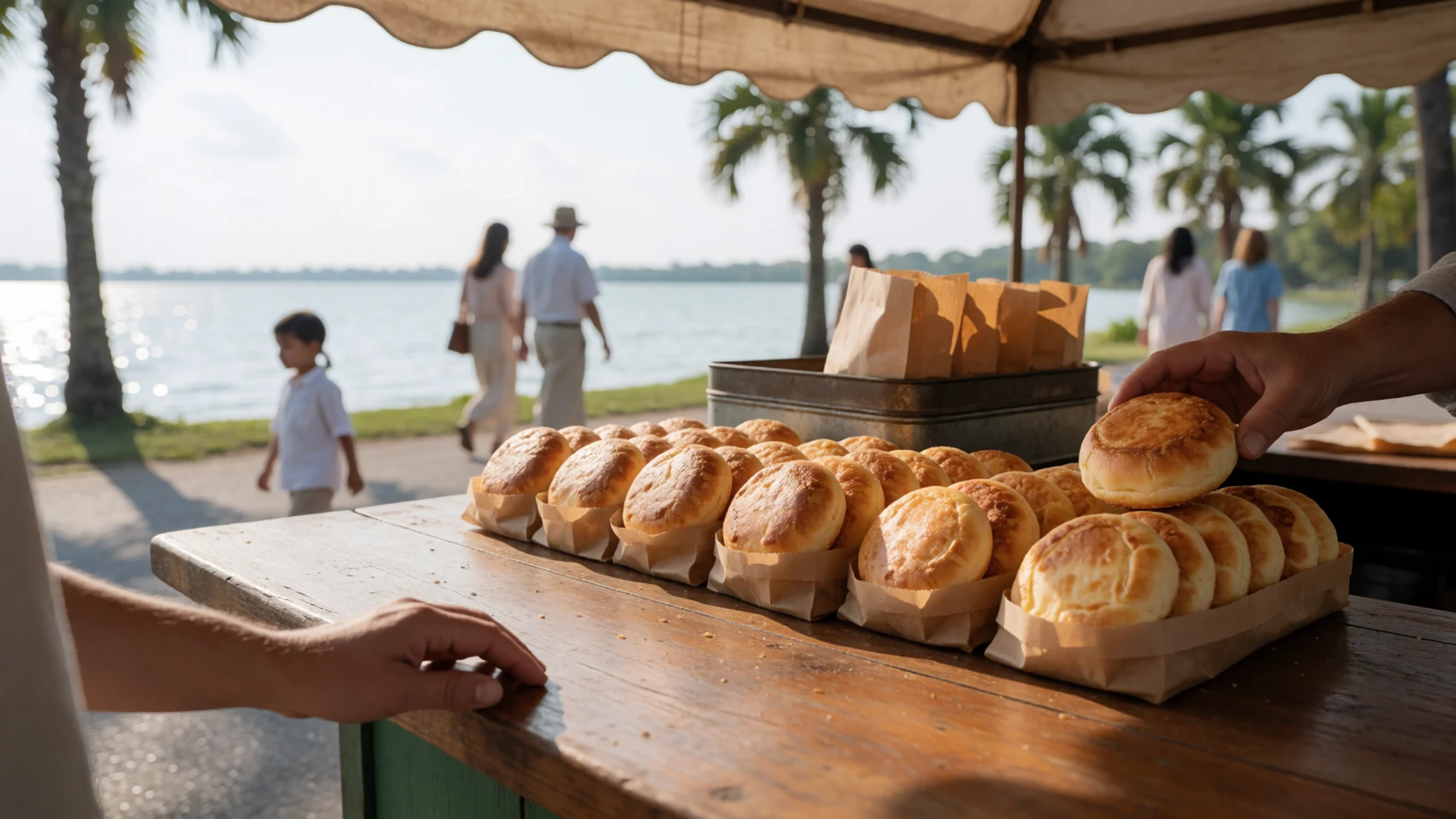
- Sopa paraguaya — neighbourhood eateries and bakeries
In San Bernardino, sopa paraguaya is not a soup but a baked corn bread, rich with cheese and onion, cut in squares at eateries and at weekend family tables. It sits beside grilled meat or stands alone at midday. Bakeries and casual dining rooms keep it on the counter.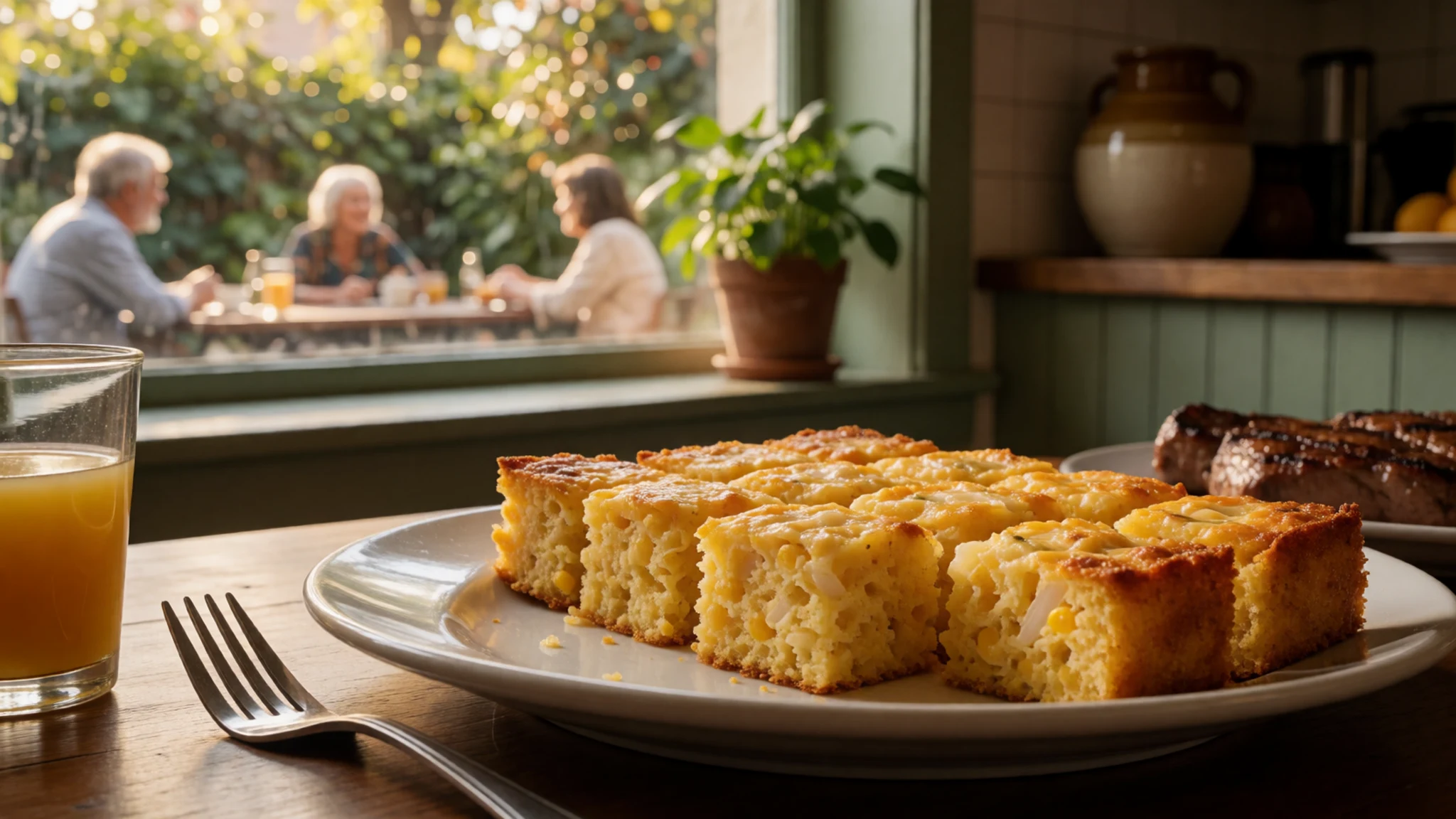
- Mbejú — breakfast counters and stalls near the lake approach
Mbejú is a pan-cooked cake of cassava starch and cheese, thinner than chipa and crisper at the edges. In San Bernardino it turns up at breakfast counters and stalls near the lake approach, beside coffee or cocido. The middle stays chewy and the rim browns where it met the pan. - Chipa guasu — home-style eateries
Chipa guasu is a softer, tray-baked cousin of chipa, made with maize, cheese and egg until just set. San Bernardino eateries serve it in warm squares, often beside salad or a slice of meat. It eats like a meal, which suits midday when the beach can wait. - Asado — parrilla eateries along the lake
Asado is how San Bernardino feeds a Sunday: meat grilled over wood or charcoal. Family houses and parrilla eateries along the lake light the fire at lunch while people come and go from the water. Beef with mandioca or salad is the plate, and the table runs into the afternoon. - Vorí vorí — home-style eateries
Vorí vorí is a soup of maize-and-cheese dumplings in broth, eaten in San Bernardino on evenings and grey days rather than at noon on the sand. Home-style eateries serve it when someone wants a spoon instead of the grill. It is filling and meant for regulars too.
Plan it
Best time. December to mid-February, the summer, is San Bernardino’s busy lake season, hot and humid, when January and February crowd the shore with boats. October is the hottest month and November the wettest; June and July are the most comfortable. The cooler months are quieter and suit walks through the older streets up toward Bierschlucht.
How long. 2–3
Getting there. San Bernardino is reached from Asunción, whose airport is the usual international gate. From the capital, buses and taxis run toward Lago Ypacaraí and on to the town; the last leg is a road arrival, not a rail one. Confirm routes on the operator’s own pages before travelling, since timetables change.
Budget. mid
Tips
- Book a room before the capital’s summer holidays if you want a choice of lodging.
- Visit the shore on a weekday, or early in the day, when the sand is less full.
- Carry cash for beach stalls and small bakeries; card payment is patchy away from larger lodgings.
- In the hot months, skip the swim and keep drinking water with you; the glare off the lake is strong.
- Treat the water as a lake, not a supervised pool, and watch children closely.
Etiquette
- Greet shopkeepers and hosts before you ask for something.
- Ask before photographing people at close range on the beach.
- Cover shoulders and knees if you go into a church.
- Do not leave litter on the sand; take it with you if a bin is full.
Nearby
Sources
- Wikidata (CC0)
- Wikipedia (CC BY-SA 4.0)
- Wikivoyage (CC BY-SA 4.0)