Monday Falls
Monday Falls, Paraguay
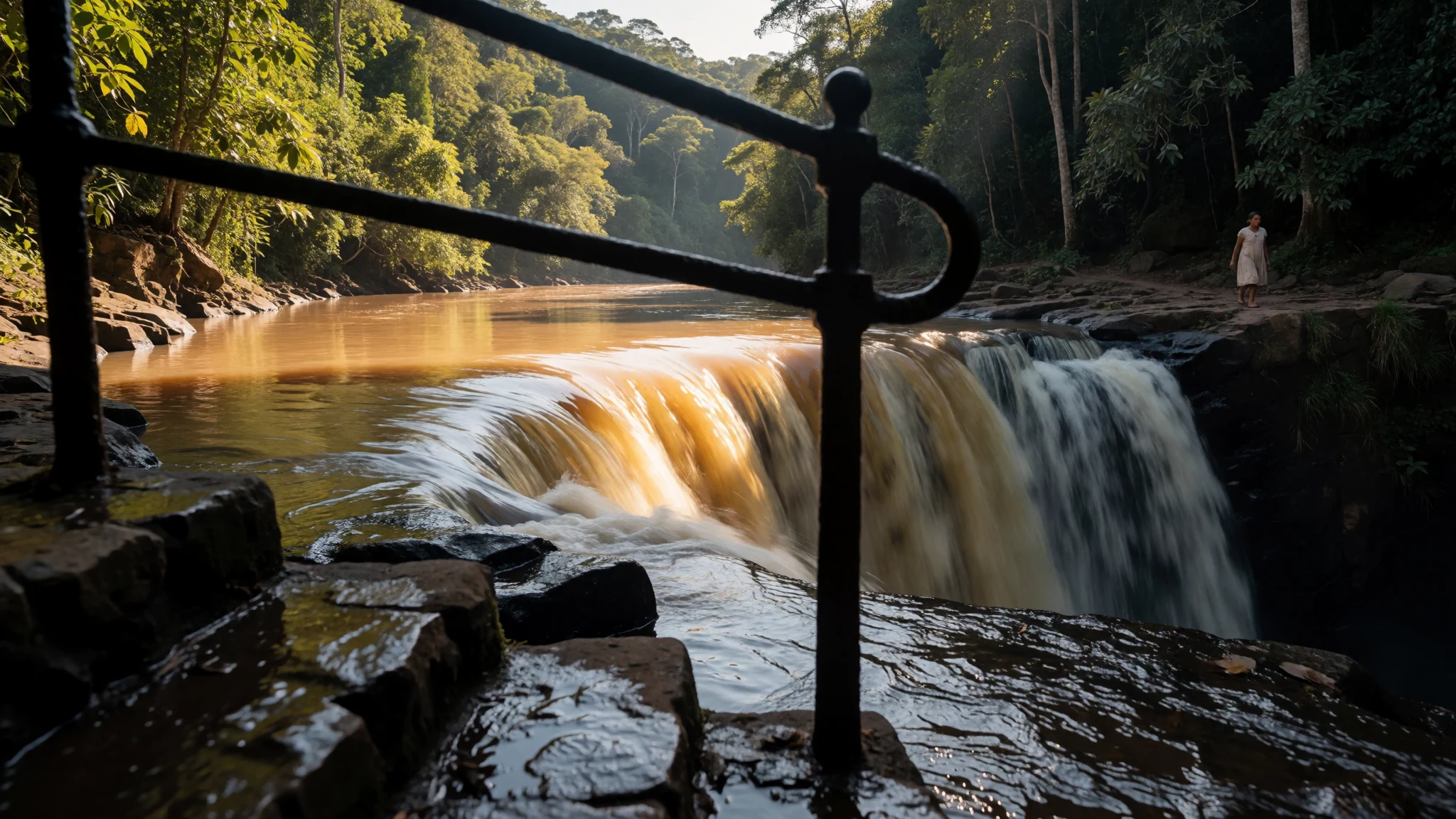
Monday Falls drops through a wooded gorge on the Monday River, an outing from Ciudad del Este.
The place
Monday Falls, also called Saltos del Monday, lies on the Monday River in Presidente Franco, Alto Paraná, within reach of Ciudad del Este. The river moves through humid forest and then tips over a rock lip into a gorge, so the noise arrives along the path before the whole drop comes into view. From the rim it reads as three main falls, with smaller ones near the mouth, and spray hangs in the foliage when the flow is strong.
The setting is Parque Municipal Cataratas del Monday. Paths and lookouts are the infrastructure; the forest along the gorge is the place itself. Walkers move between upper viewpoints, where the Monday is still a river, and angles that face the plunge and the pool beneath it. The Anfiteatro Tape Aviru, an open-air theatre in the same park, means the grounds are used for gatherings as well as for watching water.
Presidente Franco sits in the border country of eastern Paraguay, beside Ciudad del Este and the Brazilian city of Foz do Iguaçu. The falls draw families, school groups and people stepping away from a border shopping day. This is a city park with a serious river in it, not a wilderness camp.
Flow changes with the weather. After rain the lip looks heavier and spray reaches farther into the trees. In drier spells more rock shows and the paths are kinder underfoot, though stone near the edge stays slick. Late light is the hour the overlooks are known for: the gorge goes dark and the falling water still catches the sun.
Its story
The story of Monday Falls is mostly a river story and a border story, not a chronicle of kings. The Monday River drains a stretch of eastern Paraguay and meets the gorge at Presidente Franco, where the town has folded the drop into a municipal park. Saltos del Monday is the name on local signs; Monday Falls is the English form travellers use.
What the park records in its buildings is use. The Anfiteatro Tape Aviru stands among the trees as a place for performances and civic gatherings, which shows the falls were never only a scenic overlook. Residents of Presidente Franco and Ciudad del Este treat the gorge as an ordinary outing: a school trip, a Sunday walk, an escape from the commercial streets. Across the border, Foz do Iguaçu built its name on falling water, while Monday stayed a Paraguayan town park, busy at weekends and quiet on an ordinary morning.
Guaraní is the older layer of naming in this part of Paraguay. Tape Aviru, the amphitheatre's name, keeps a Guaraní phrase in a municipal park that otherwise speaks Spanish on its signboards. Spanish and Guaraní share official status in the country, and in Alto Paraná both turn up in the same family, often in the same sentence.
The modern frame is the triple border. Trade and shopping pull people through Ciudad del Este; the park is where that traffic slows down. Visitors who come for the falls on the Argentine and Brazilian side sometimes add Monday on the same trip, a town park in a different country.
What to see
- Saltos del Monday — Parque Municipal Cataratas del Monday, Presidente Franco
Saltos del Monday is the drop itself, where the Monday River leaves a calm lip and falls into the gorge at Presidente Franco. From the facing lookouts the water reads as three main falls, with smaller ones beside them, breaking into spray where it meets the pool. After rain the falls run heavier and the near bank stays wet; in lower water the rock line shows at the edges.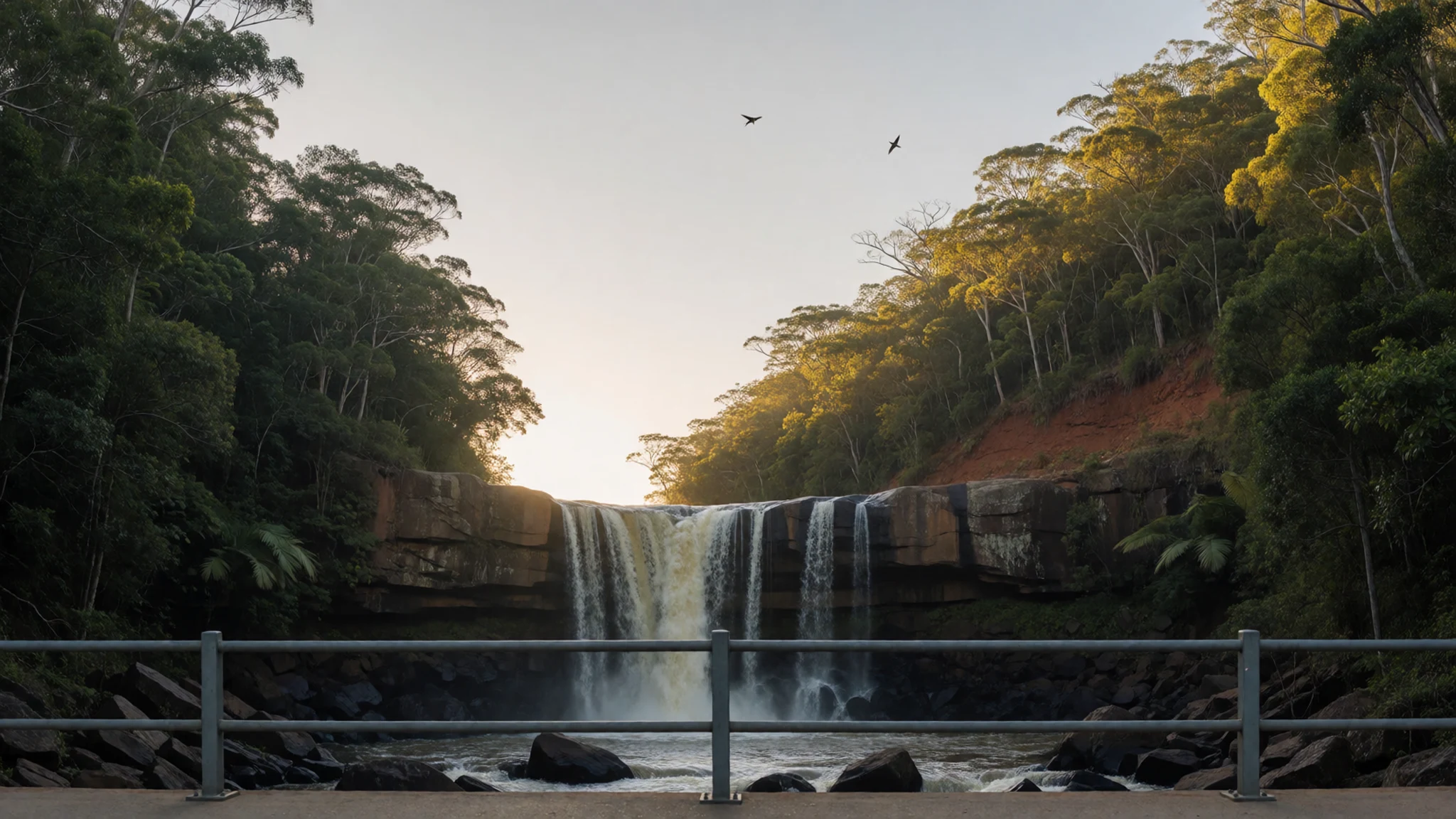
- Upper viewpoints — Rim of the gorge, Parque Municipal Cataratas del Monday
The upper viewpoints at Monday Falls look along the Monday River before it falls, then open to a panorama of the whole lip. They are the place to understand the shape: forest on both banks, a dark gorge below, and the town's park rather than open country beyond the trees. The wide frame shows how the drop sits inside the forest rather than above a bare cliff.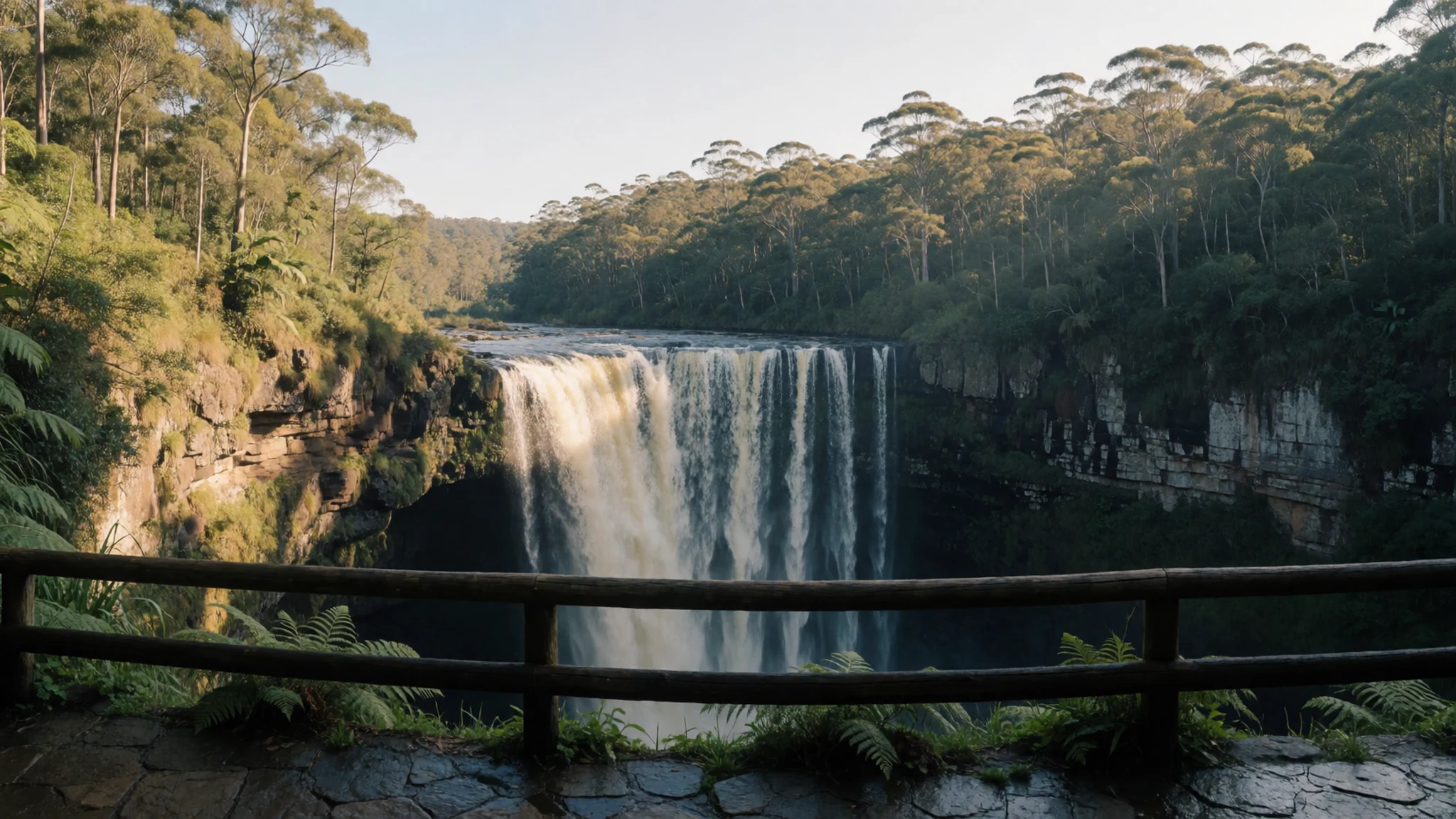
- Anfiteatro Tape Aviru — Parque Municipal Cataratas del Monday
The Anfiteatro Tape Aviru sits inside the municipal park at Monday Falls, an open-air theatre among the trees rather than a viewpoint over the water. Its Guaraní name marks a gathering place: performances, civic events and the ordinary life of Presidente Franco share the same grounds as the gorge. Empty seating still explains the park: it was built for gatherings as well as for looking at water.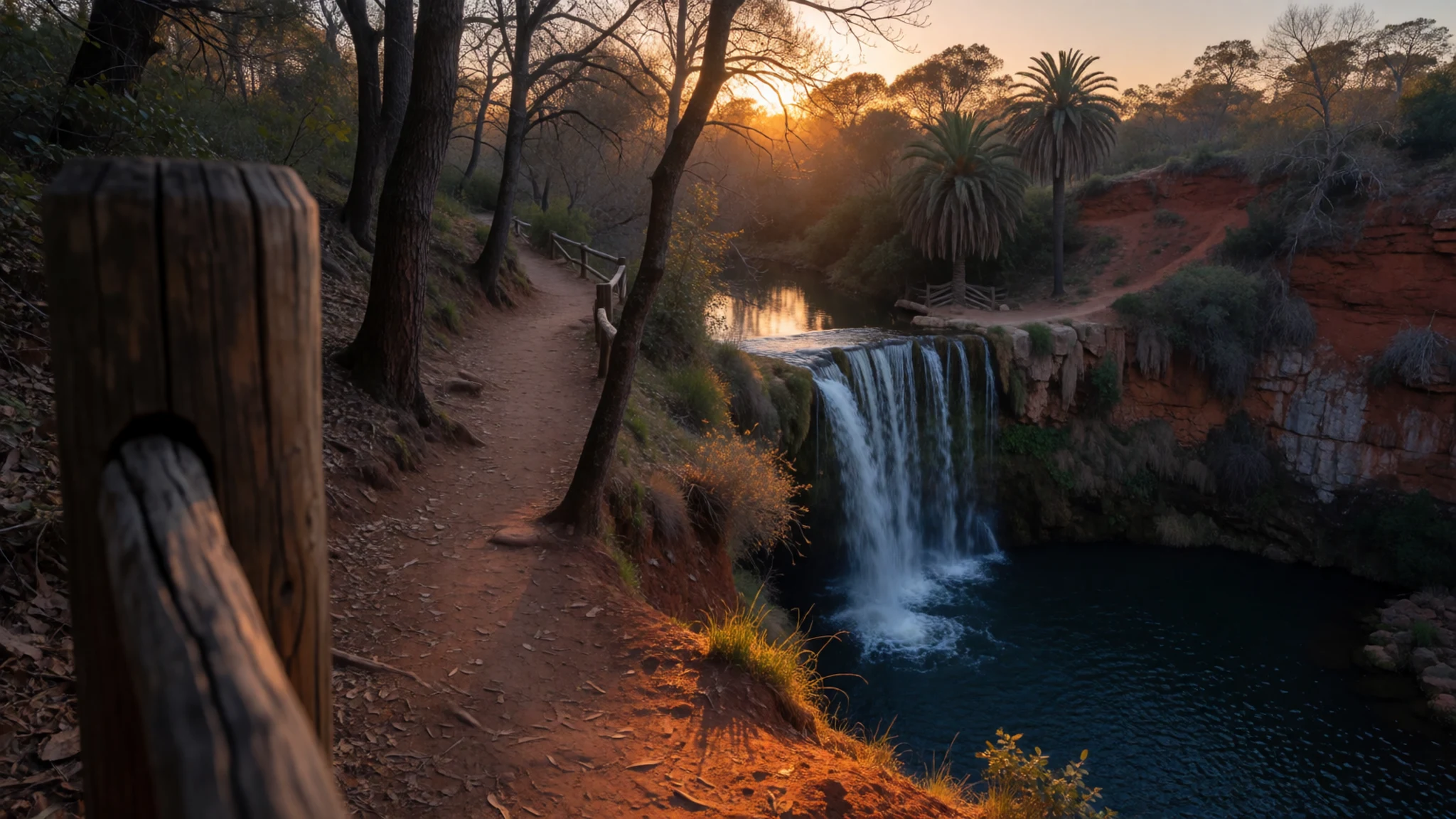
- The Monday River — Above and below the lip, Presidente Franco
The Monday River is the reason Monday Falls exists, and the walk makes sense only when the water is read as a river rather than as a single picture. Above the lip the surface is comparatively quiet, a broad reach under the trees. Below, it collects in the gorge and continues towards the Paraná system that shapes this border.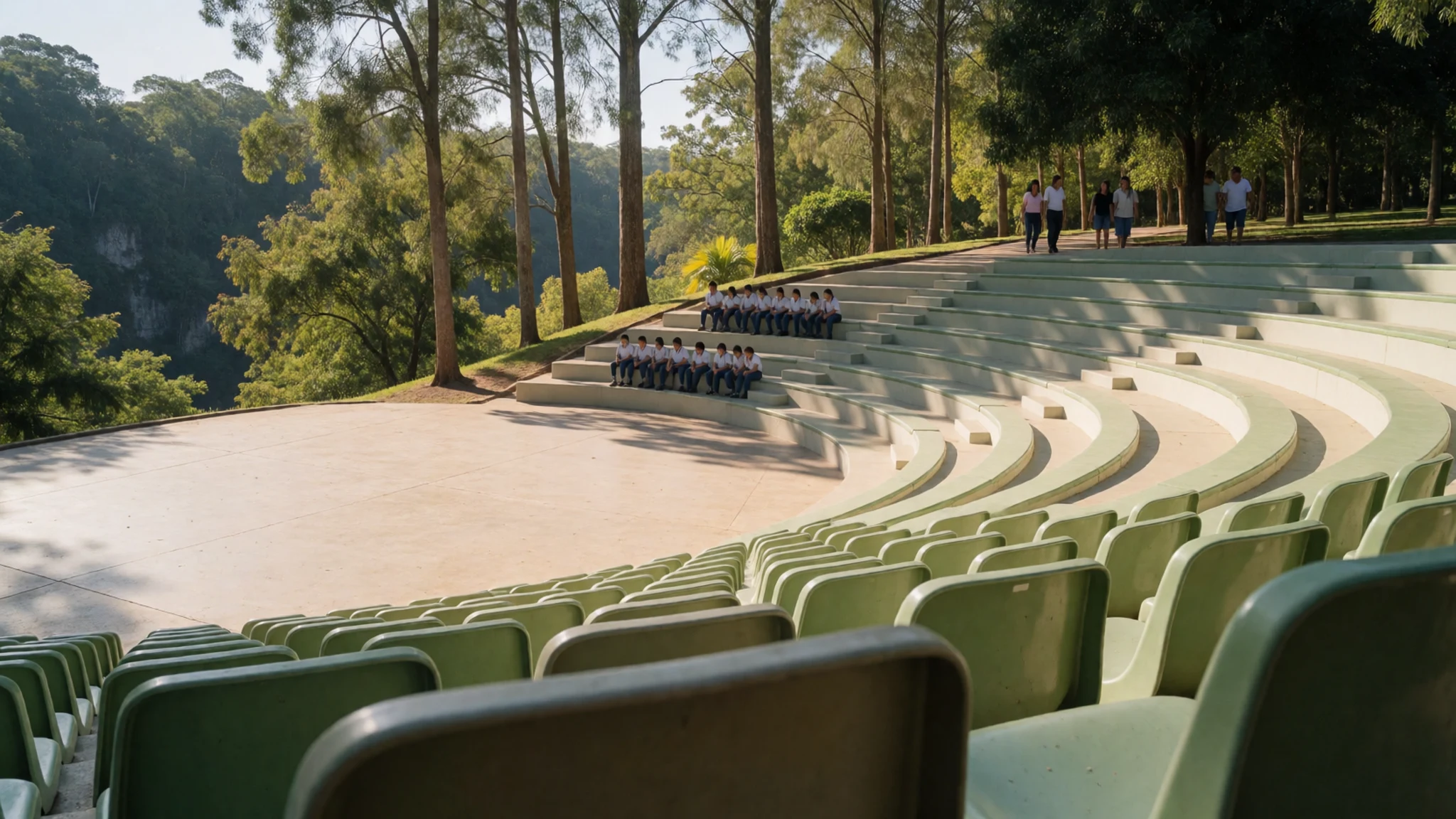
- Sunset over the gorge — Overlooks facing the gorge, reached via Ciudad del Este
Sunset at Monday Falls is the view the aerial photographs favour: the lip still lit, the gorge already dark, the forest closing in on both sides. Ciudad del Este is the usual base, and Presidente Franco holds the park, so an afternoon that starts in town can end at the rim. Broken cloud and a low sun are enough, and the spray catches whatever light is left.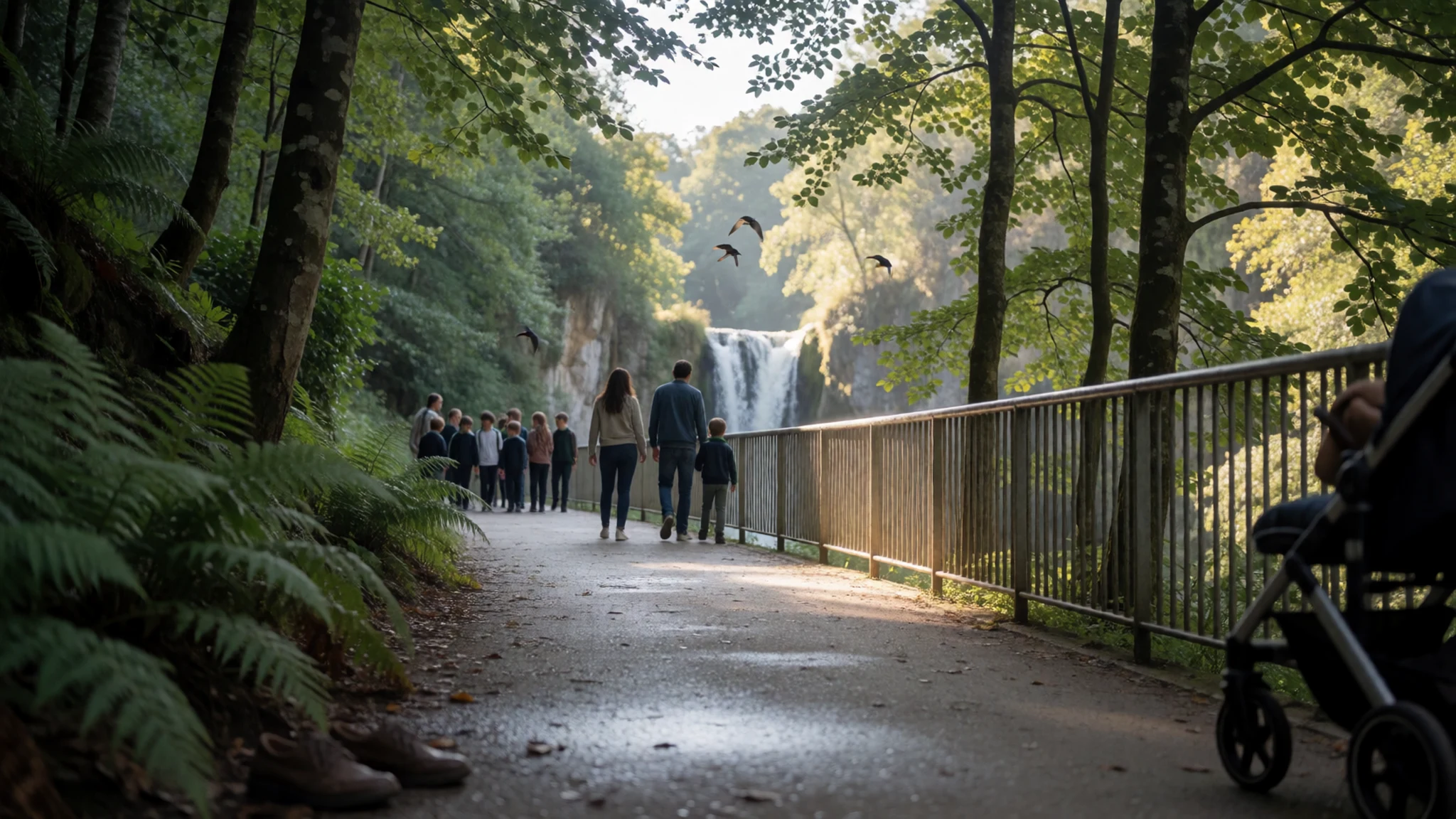
Culture
Culture at Monday Falls follows the border cities around it, not a rite that belongs only to the waterfall. In Presidente Franco and Ciudad del Este, Spanish runs public life while Guaraní runs home, humour and many place names. Tape Aviru, on the park amphitheatre, is one of those names left in plain view. People do not come to the gorge as pilgrims. They come as they come to any city park: in family groups, after school, on a Sunday, with a thermos of tereré.
Tereré, cold yerba mate passed from hand to hand, is the habit visitors notice first. It is ordinary hospitality in Paraguay, and in hot Alto Paraná the cold infusion is the everyday form. A shared round is social. Chipa, sopa paraguaya and grilled meat belong to the same weekend rhythm, carried from home or bought on the way to the park.
Ciudad del Este is a trading city. Brazilian and Argentine visitors cross for commerce and for the waterfalls on their own side of the border, and some add this park because it is an easy stop on Paraguayan ground. The trails pick up that mix even when a sign stays in one language.
Stay on the built paths at Monday Falls, keep back from wet rock at the lip, and ask before photographing people who are sharing tereré or a family picnic.
What to wear
Fashion around Monday Falls is eastern Paraguayan dress, shaped by heat, humidity and a city that dresses up only when the occasion asks. The textile to know is ao po'i, a light cotton worked with drawn-thread embroidery, traditionally white or pale and worn for weddings, festivals and formal family events. Women may still wear a typói, a loose traditional dress, on those days. Ñandutí, the spider-web lace of central Paraguay, appears on collars, cloths and gifts more often than as a full garment at a park. These cloths are about occasion and skill, not about hiking.
On an ordinary day in Presidente Franco and Ciudad del Este people wear what the climate demands: T-shirts, light trousers or jeans, shorts, simple dresses, sandals or trainers. Football shirts and shopping-centre clothes are as common as anything handmade. Guaraní and Paraguayan motifs show up on festival days and on souvenirs, not as a uniform. At the falls, local visitors look like people who left the house for a few hours, not like a troupe in costume.
A visitor dressing for Monday Falls should plan for wet stone, strong sun and sudden rain. Breathable cotton or linen, a hat, and shoes with a grip beat open sandals once the paths turn slick. A light rain layer is more useful than a heavy coat.
What to eat
- Chipa — Bakeries and roadside stalls in Presidente Franco and Ciudad del Este
Chipa is the cheese-and-cassava bread to eat on the way to Monday Falls. Small rings or loaves, baked until the crust is firm and the inside stays rich, turn up at bakeries and roadside stalls in Presidente Franco and Ciudad del Este. Anise marks a fresh tray.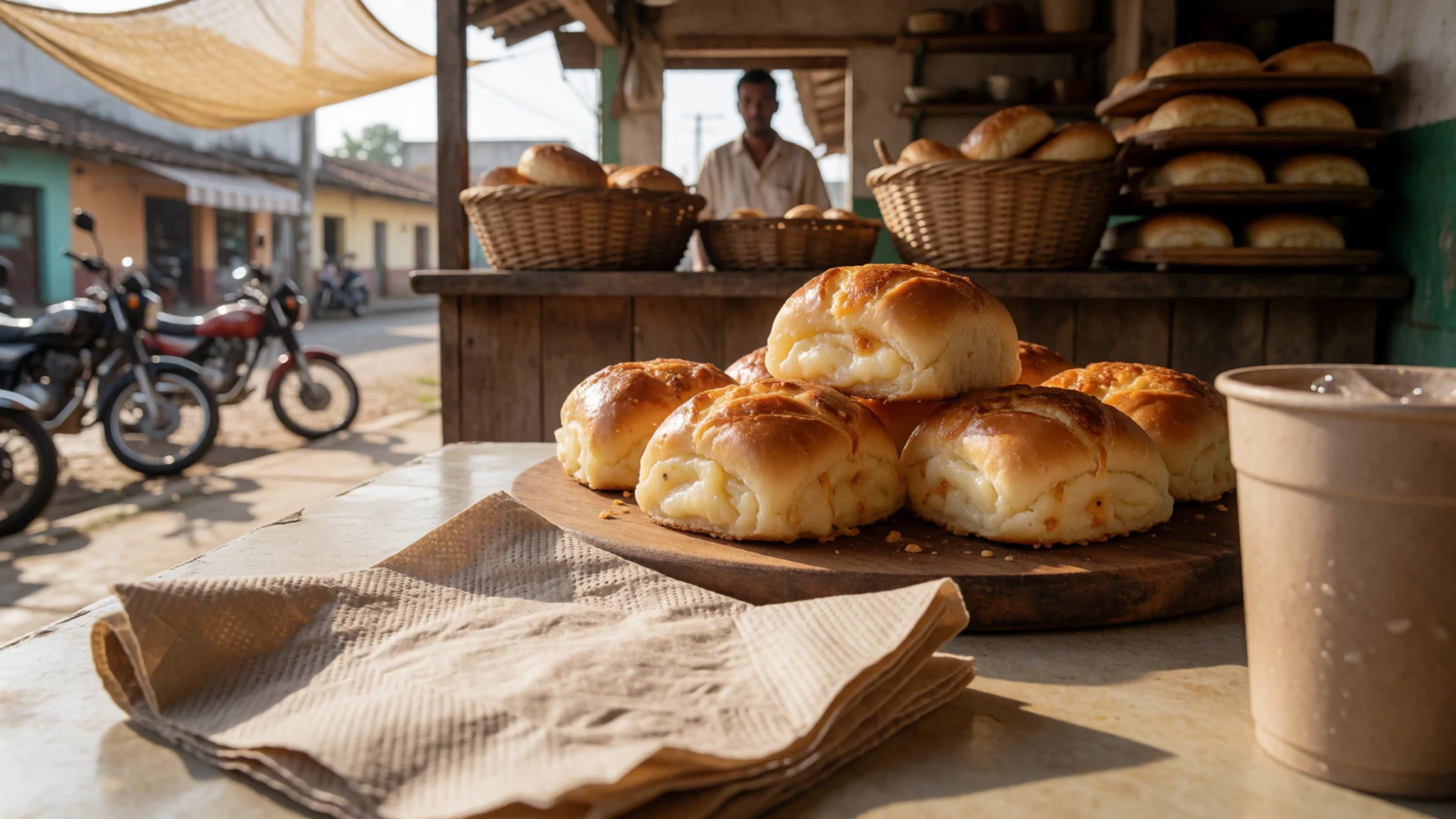
- Sopa paraguaya — Family eateries and weekend stalls in Presidente Franco
Sopa paraguaya is not a soup, despite the name, and it is standard comfort food near Monday Falls. Cornmeal, cheese and onion bake into a thick savoury pudding, cut in squares and served with meat. Family eateries and weekend stalls around Presidente Franco sell it by the portion.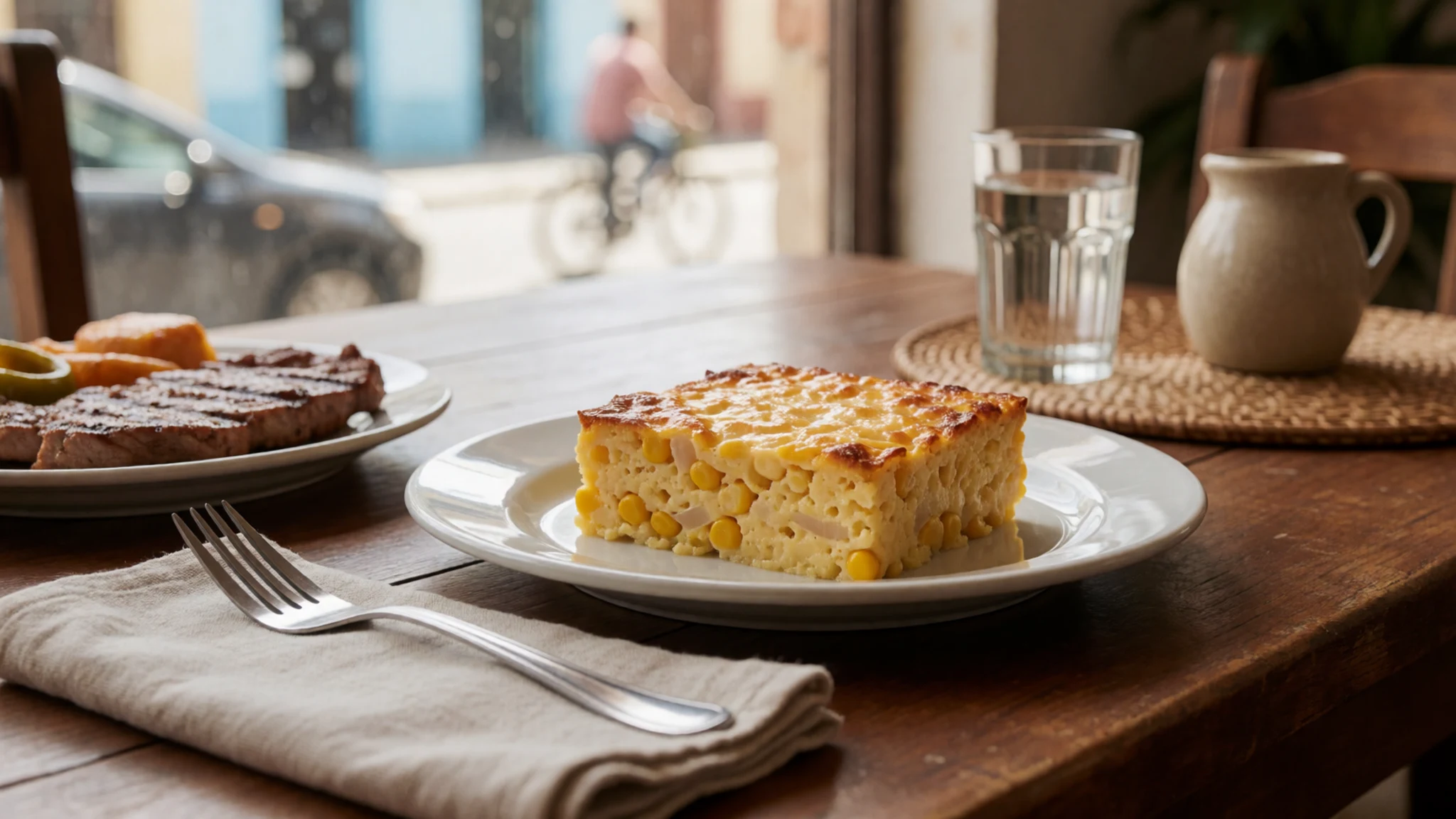
- Mbejú — Stalls and simple eateries in Ciudad del Este and Presidente Franco
Mbejú is a crisp cassava-starch cake, closer to a flatbread than to a bun, and a common plate around Monday Falls. Cheese or cracklings go into the mix, and stalls in Ciudad del Este and Presidente Franco sell it from a morning tray. - Vorí vorí — Home-style eateries in Presidente Franco
Vorí vorí is the soup to look for on a cooler day near Monday Falls, not as a trail snack but as a proper meal back in town. Small balls of cornmeal sit in a chicken broth with vegetables, a bowl that is gentle and filling. - Parrilla — Grill houses between Presidente Franco and Ciudad del Este
A parrilla plate is how many groups end a visit to Monday Falls. Beef ribs, sausage and chicken come off a wood or charcoal grill, with mandioca, boiled cassava, on the side instead of bread. Grill houses and open-air eateries between Presidente Franco and Ciudad del Este run this menu.
Plan it
Best time. June–August is the easier season for walking at Monday Falls. Summer heat has eased, and long downpours are less common than in the hotter months, though the gorge is still humid. October brings the most rain and February the highest heat, so the river runs full and afternoons burn, and a storm can make the stone slick.
How long. 1–2
Getting there. Guaraní International Airport serves Ciudad del Este; from there a road transfer reaches Presidente Franco and Parque Municipal Cataratas del Monday. Overland, the Friendship Bridge joins Foz do Iguaçu to Ciudad del Este, and the falls are a local ride onward. Check the park's own notice for access on the day.
Budget. low
Tips
- Arrive early at the weekend if you want the rim before local crowds build.
- Wear shoes with a grip; the stone stays wet even when the path looks dry.
- Carry cash for bakeries and small stalls; cards are less reliable outside the big shops of Ciudad del Este.
- Bring drinking water and a hat in the humid months, and a light rain layer in any month.
Etiquette
- Greet people in Spanish; Guaraní is welcome and never required of a visitor.
- Ask before photographing families, picnics or a shared round of tereré.
- Stay on the marked paths and do not climb out onto the wet lip.
- If someone offers tereré, accept or refuse with a smile; it is a courtesy, not a transaction.
Nearby
Sources
- Wikidata (CC0)
- Wikipedia (CC BY-SA 4.0)
- Wikivoyage (CC BY-SA 4.0)