Laguna Blanca
Laguna Blanca, Paraguay
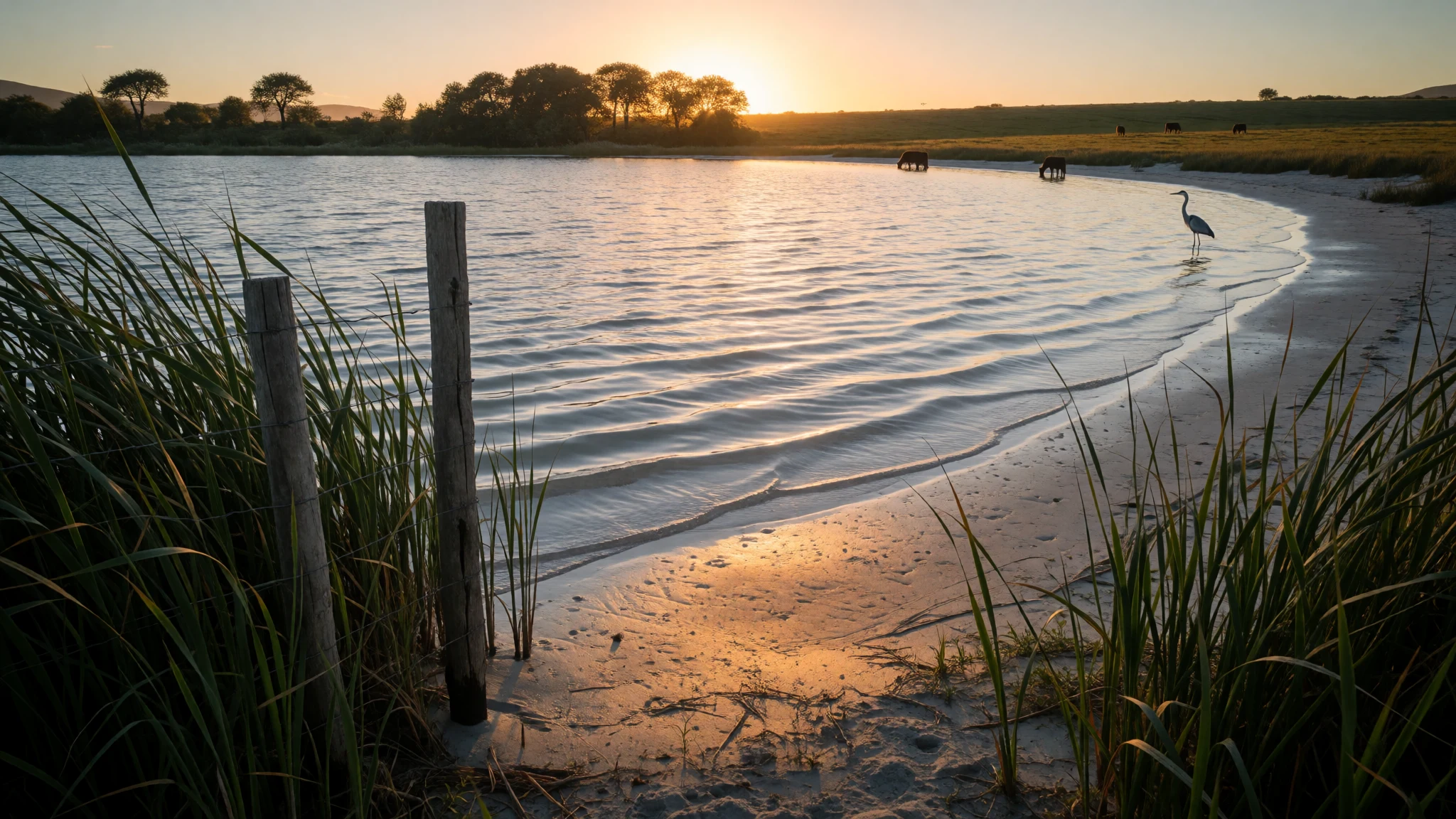
Laguna Blanca in San Pedro Department is a clear, sand-bottomed lake on a working Paraguayan ranch, where swimming, paddling and birdwatching come together.
The place
Laguna Blanca is a lake in San Pedro Department, in the district of Santa Rosa del Aguaray. The town that shares the district's name lies about 28 km to the west, so the lake feels like a rural destination rather than a day trip from a city. The setting is an agricultural and cattle property, not a national park with a gate and a ticket office, and that shapes the visit: farm tracks, fences, pasture and working buildings all sit beside the water.
What sets the lake apart is its bed. It rests on calcareous sand, a pale, lime-rich material, and the water above it runs clear enough for the bottom to show and for diving to be practical. The pale sand is a natural explanation for the name, which means 'white lagoon'. Photographs from the site show a broad, calm surface edged by low vegetation, with sunrise and sunset light doing most of the work on colour.
The site is more than a swimming spot. It is recognised internationally as an Important Bird Area and carries the code PY030, so birdwatching is a serious reason to come. Scientists have visited as well as holidaymakers. The owners are also working towards formal Private Natural Reserve status, which signals that the lake is treated as something to protect as well as to show.
Expect a quiet, low-key place with rural-tourism arrangements rather than resort amenities. Facilities, activities and access are best confirmed with the ranch beforehand through its official site, https://ecoturlagunablanca.com.py/.
Its story
Laguna Blanca's modern story is less about ancient history than about one family's decision to open a working ranch to visitors. The Duarte family has owned the property since 1997, and rural tourism grew there from that point, alongside cattle and farming. The ranch joined APATUR, the Paraguayan rural tourism association, at its founding and has stayed a member, which places it within a wider national effort to let travellers stay on farms and see how the countryside works.
The second chapter came through science. Researchers recorded what the lake and its surroundings hold, and the publication of those findings carried the place's name well beyond San Pedro Department. Scientists arrived, then more travellers. The lake was named an Important Bird Area under BirdLife International's worldwide programme and given the code PY030. Guyra Paraguay is BirdLife's representative in the country and remains one of the partners around the lake.
The third chapter is still being written. The owners are seeking Private Natural Reserve status, backed by non-governmental groups including the Paraguayan Network of Private Land Preservation, IDEA, Natural Land Trust and Guyra Paraguay. If granted, it would turn long-standing family stewardship into a formal designation. Until then, Laguna Blanca sits in an in-between state: privately owned, openly welcoming, and increasingly recognised as worth keeping intact.
What to see
- The lake at first light — Laguna Blanca, Santa Rosa del Aguaray district
Laguna Blanca is at its calmest early in the day, when the surface is usually still and the shoreline picks up the colour of the sky. The reference photographs of sunrise show a broad, open sheet of water. Early starts also suit birdwatching, so binoculars and a camera can share the same walk.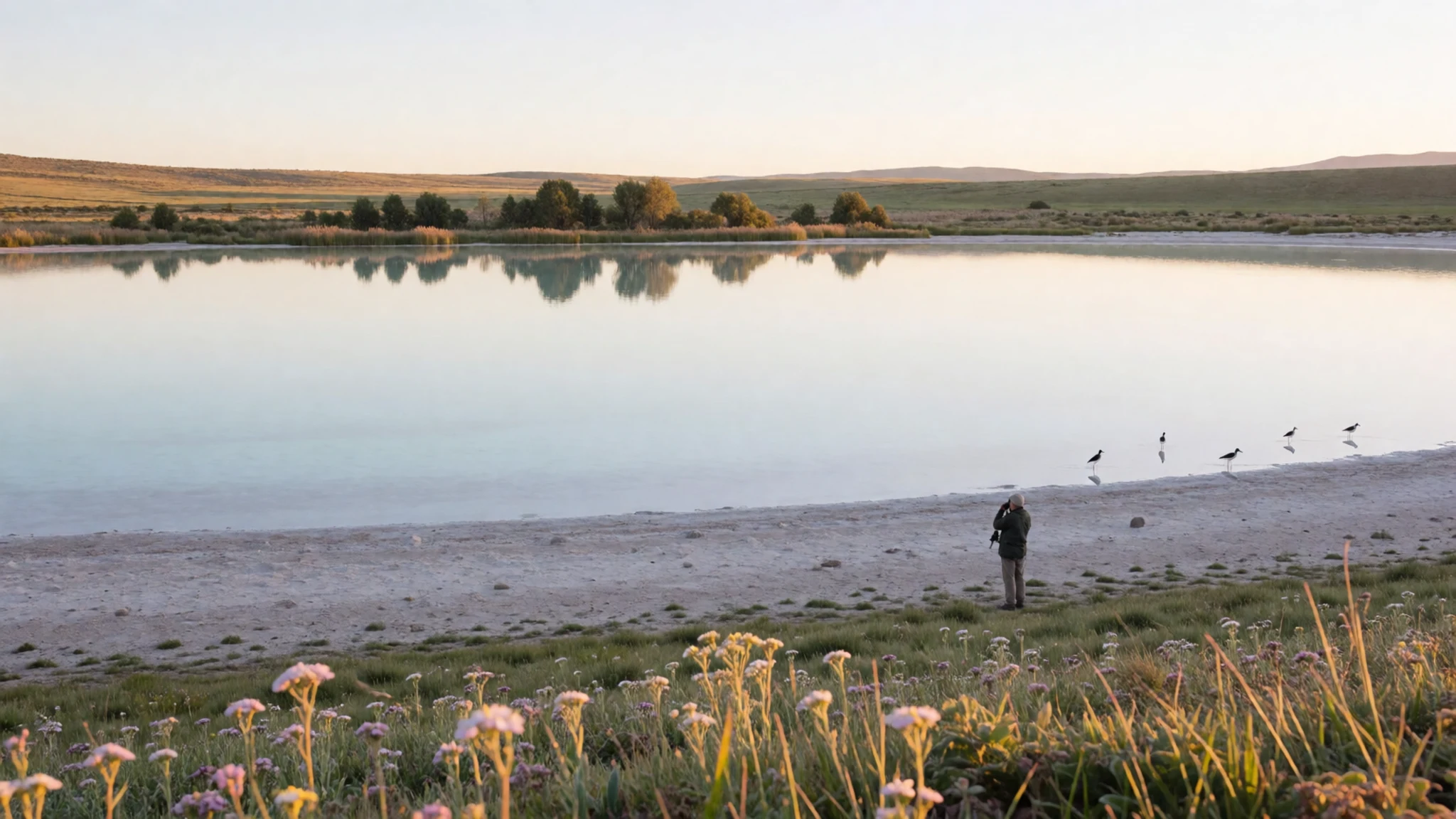
- Evening on the shore — Laguna Blanca, Santa Rosa del Aguaray district
Laguna Blanca in the evening turns warm and quiet, and the sunset photographs show the sky reflected across the whole surface. The air is cooler than at midday in the hotter months, which makes it a comfortable time for a slow walk by the water. Insect repellent is sensible, as on any rural shoreline.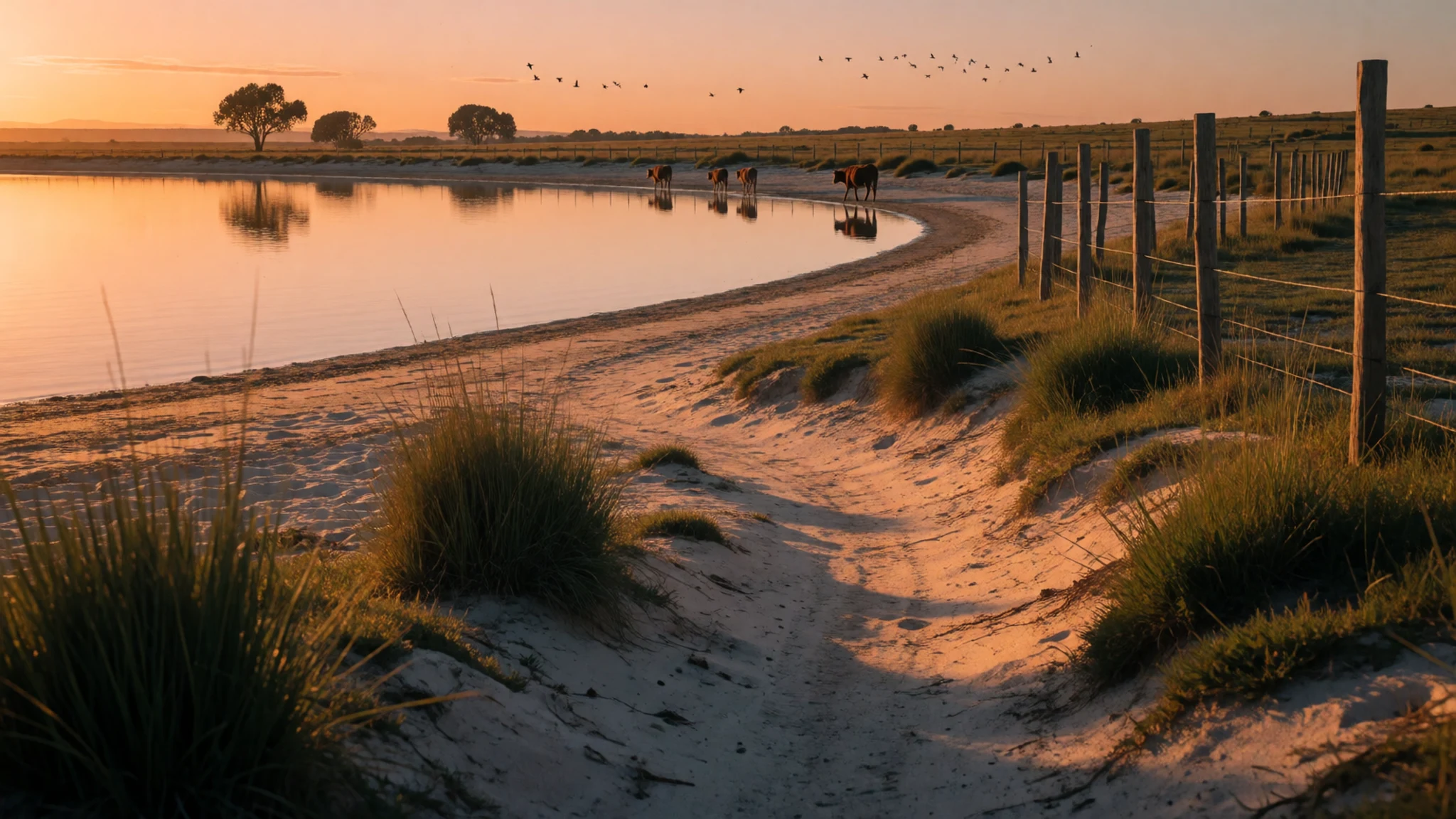
- Paddling the lake — Laguna Blanca, Santa Rosa del Aguaray district
Laguna Blanca is calm and open enough for kayaking, and kayaks appear in photographs taken at the site. Paddling over clear water lets the pale bottom slide past below and allows a quieter approach to birds than walking. Ask the ranch what boats, guidance and safety equipment it provides before relying on any of it.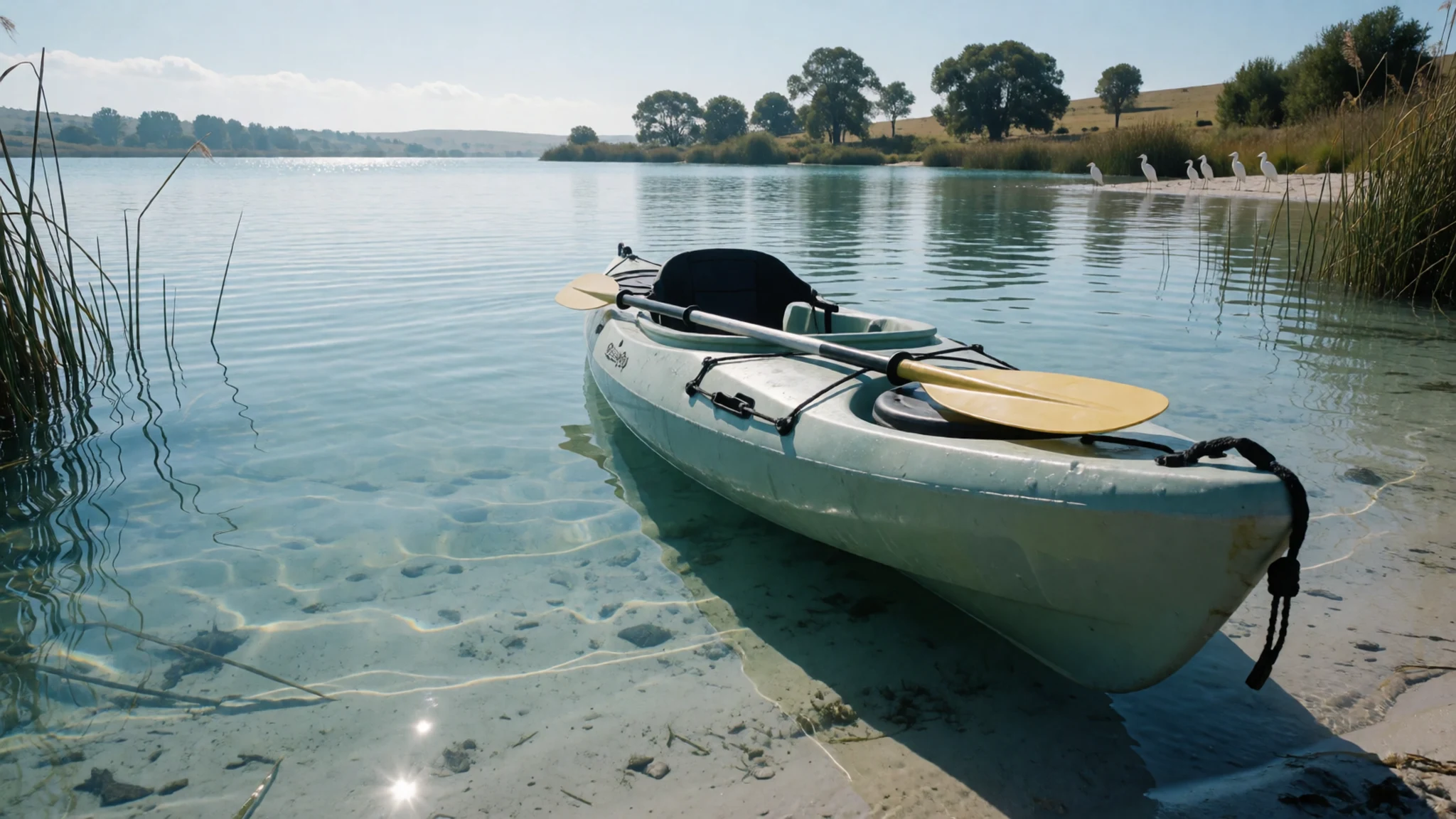
- Swimming and diving over white sand — Laguna Blanca, Santa Rosa del Aguaray district
Laguna Blanca lies over calcareous sand, and the water above it is clear enough to suit diving. Visibility is the attraction: swimmers and divers can see the sandy bed and anything moving across it. Anyone planning to dive should check with the ranch about rules, supervision and equipment well before arriving.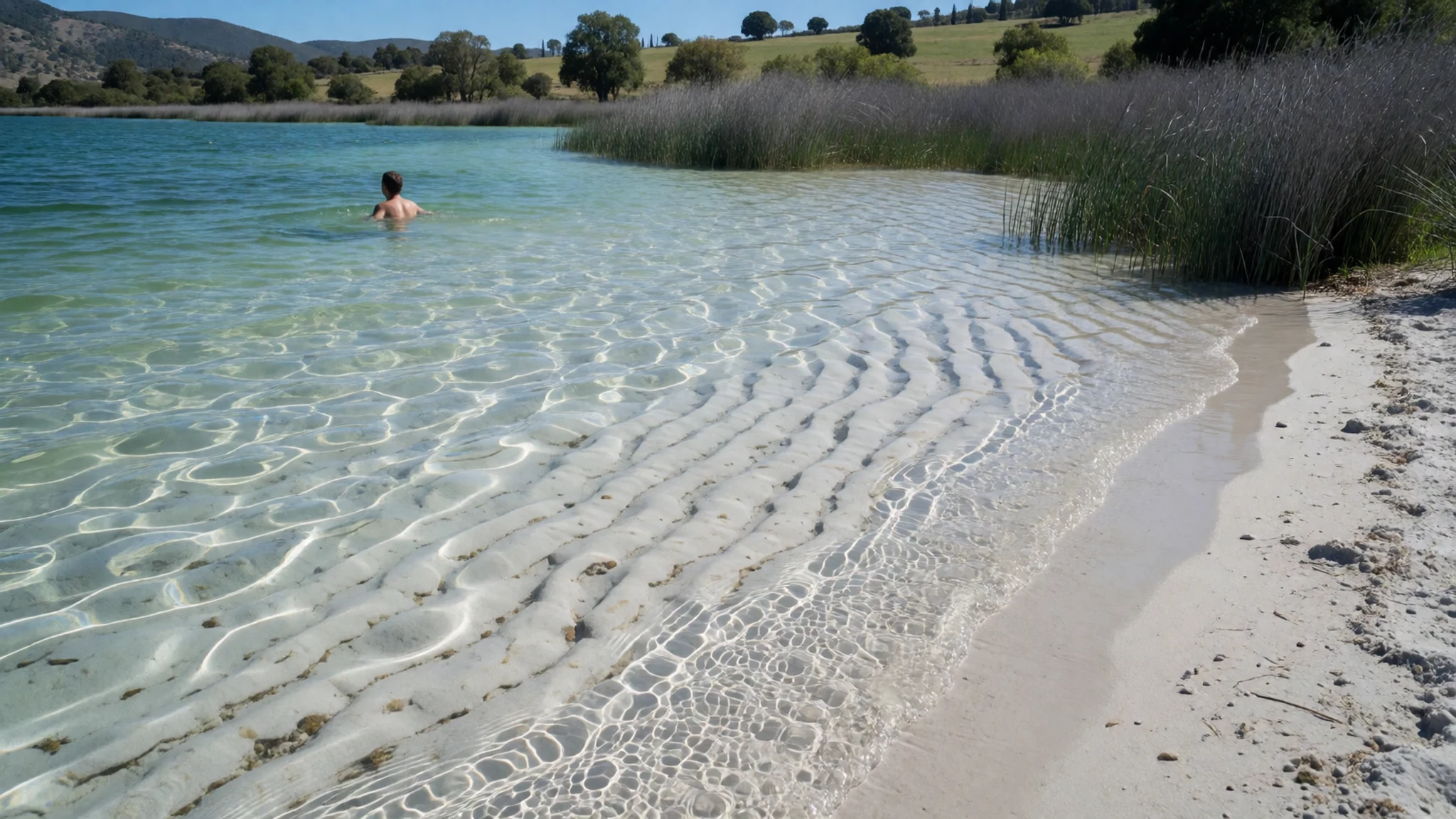
- Birdwatching in an Important Bird Area — Around the lake and ranch land
Laguna Blanca holds the BirdLife International code PY030, so the land around the water matters for birds as well as for swimming. Early morning and late afternoon are the usual times to watch. Binoculars, a South American field guide and a slow pace count for more than any particular spot; the ranch can suggest where to look.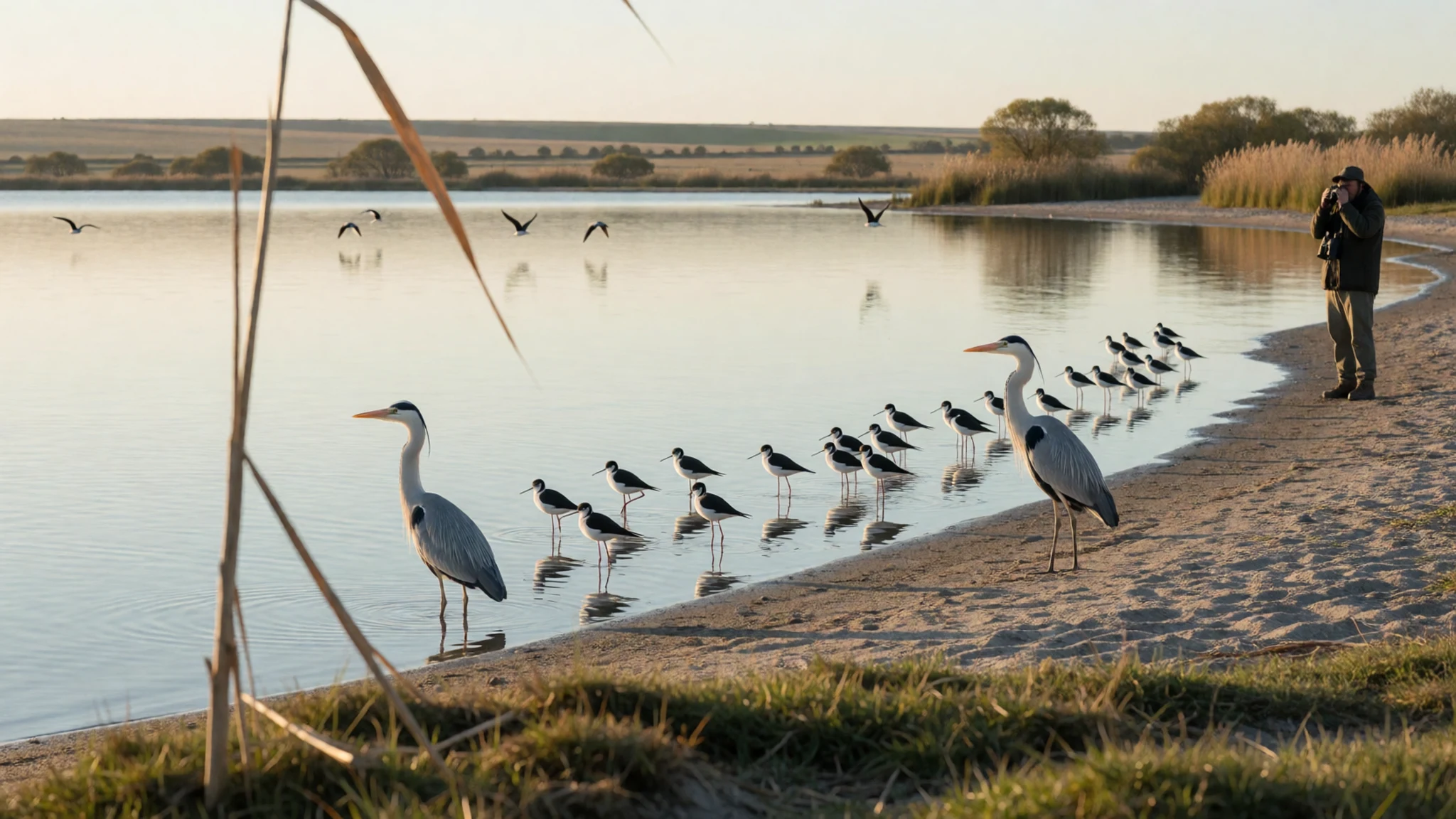
- Laguna Blanca Ranch — Laguna Blanca estate
The ranch around the lake has welcomed visitors since the Duarte family began rural tourism there. It is still a working agricultural and cattle property, so a visit mixes lake time with farm tracks, pasture and rural routine. Ask about guided walks and farm activities; the official website is the place to check what is on offer.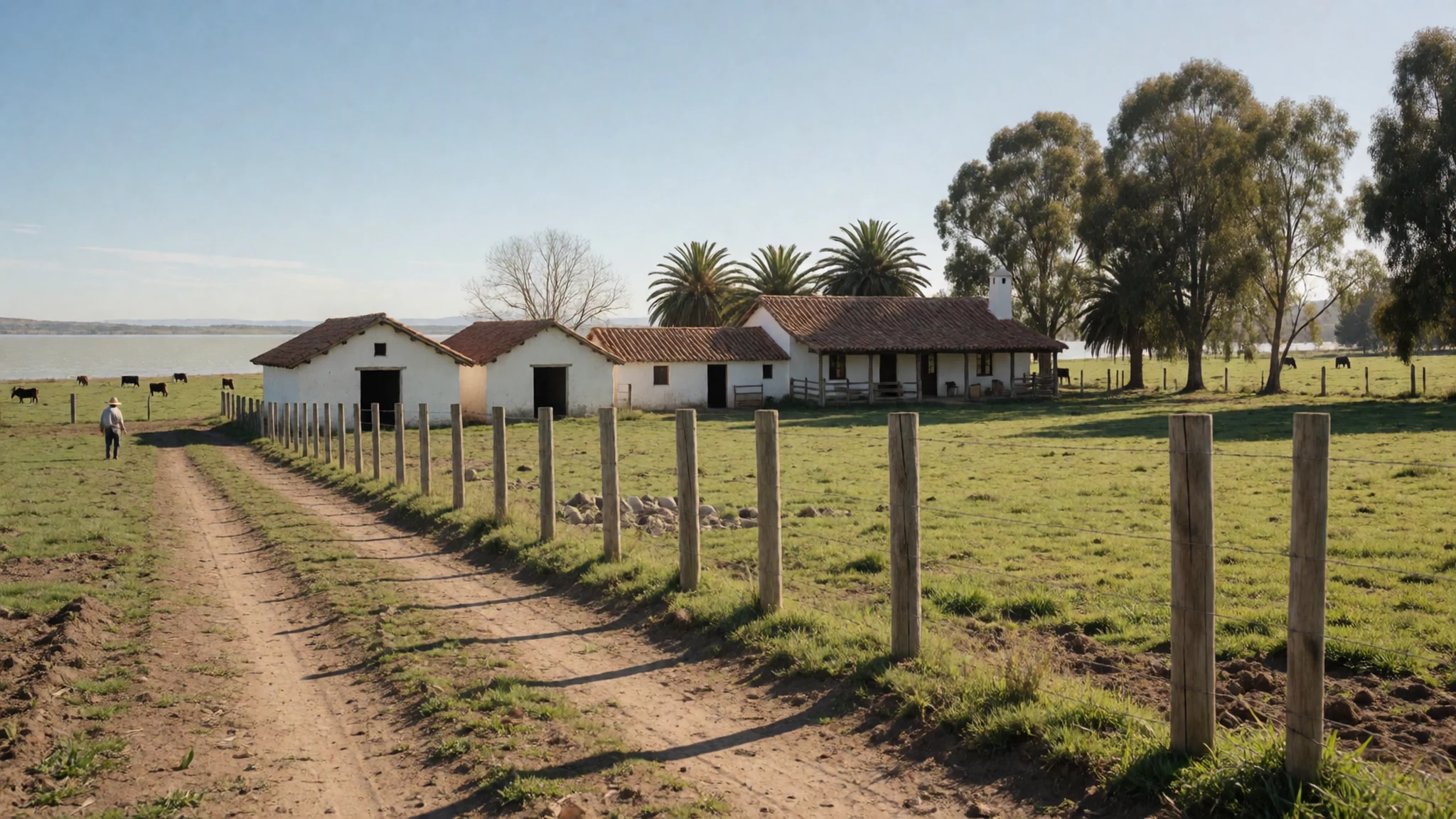
Culture
Laguna Blanca sits in rural San Pedro Department, where culture is shaped by farm life and by Paraguay's unusual bilingualism. Spanish and Guaraní are both widely spoken, and the Guaraní heritage shows in place names, food and daily habits. Cattle ranching is the backdrop, and a family-run property like Laguna Blanca Ranch behaves more like a hosting household than an anonymous resort.
Tereré, cold yerba mate sipped through a metal straw from a shared cup, is the social ritual of the countryside. A cup passed round a group is a sign of welcome, usually made with iced water and sometimes crushed herbs. Being offered a turn is ordinary hospitality. The custom is to drink the cup down, say gracias and hand it back, which also tells the server that the turn is finished.
Conservation is a newer layer of local culture. The ranch's move towards Private Natural Reserve status, with Guyra Paraguay and other groups, reflects a growing view that private land can protect nature as well as produce food. Visitors are guests in a place where livelihoods and wildlife share the same ground, so ordinary farm courtesies apply: closing gates, leaving livestock alone and respecting working hours.
Close every gate behind you, keep to tracks and the shoreline, and ask before photographing ranch staff or neighbours.
What to wear
Laguna Blanca lies in rural Paraguay, where traditional dress is mainly kept for celebrations. The best-known textiles are ao po'i, a fine, lightweight cotton cloth that is often embroidered, and ñandutí, a lace of radiating, web-like stitches associated with the town of Itauguá. Women's folk costume uses white ao po'i blouses and full skirts, sometimes with a shawl, and appears at festivals, dance performances and national celebrations. Men's rural dress includes bombachas de campo, loose gaucho-style trousers, with a hat and neckerchief.
Everyday clothing around the lake is practical: jeans or bombachas, cotton shirts, football shirts, caps or straw hats, and boots or rubber boots on the ranch in wet weather. A tereré flask and cup are a common accessory. Dress in the countryside is relaxed and informal.
For a visit, climate and terrain decide. Lightweight long sleeves and trousers protect against sun and insects, and a wide-brimmed hat, sunscreen and sunglasses are worth packing. Bring swimwear and a quick-dry towel for the lake, sandals or water shoes for the shore, and sturdy closed shoes for farm tracks and pasture, which can turn muddy after rain. A light rain jacket suits the wetter months, and a warm layer helps on cooler winter evenings. Modest dress is expected in town and near farm buildings, so swimwear is best covered away from the water. No religious dress code applies at the lake itself.
What to eat
- Sopa paraguaya — Ranch meals, family eateries in Santa Rosa del Aguaray, local bakeries
Despite the name, sopa paraguaya is a firm, baked cake of cornmeal, cheese, milk and onion, golden outside and moist within. It accompanies meat at family meals and festivals and is best eaten warm. Availability at the lake depends on the ranch kitchen, so ask when booking.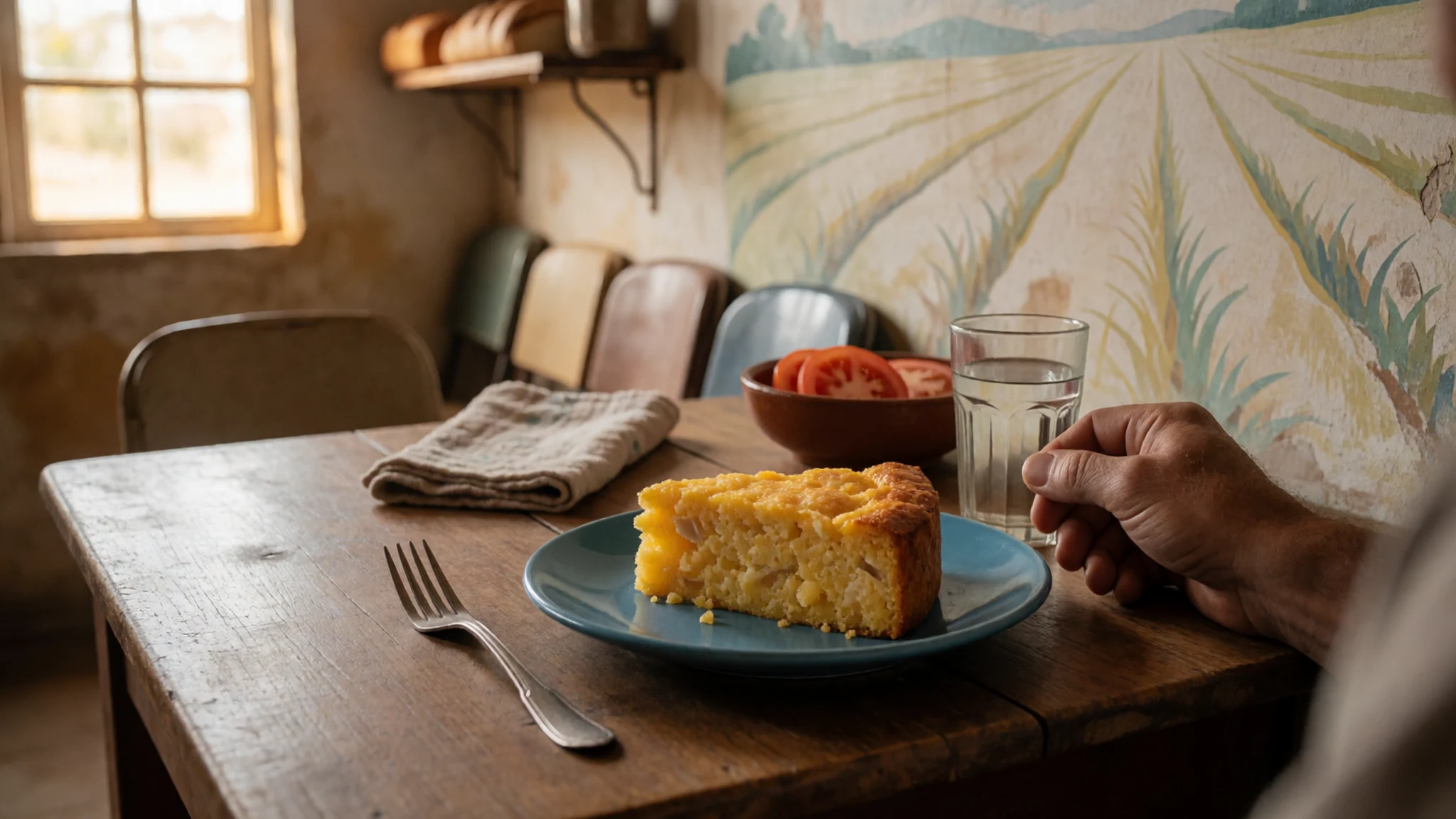
- Chipa — Roadside stalls, bakeries and bus stops in the district
Chipa is a dense, chewy bread made with cassava starch and cheese, shaped into rings, rolls or small loaves. It is a standard snack across Paraguay, eaten warm in the morning or with tereré in the afternoon. Quality varies, so a busy bakery or stall is the safer choice.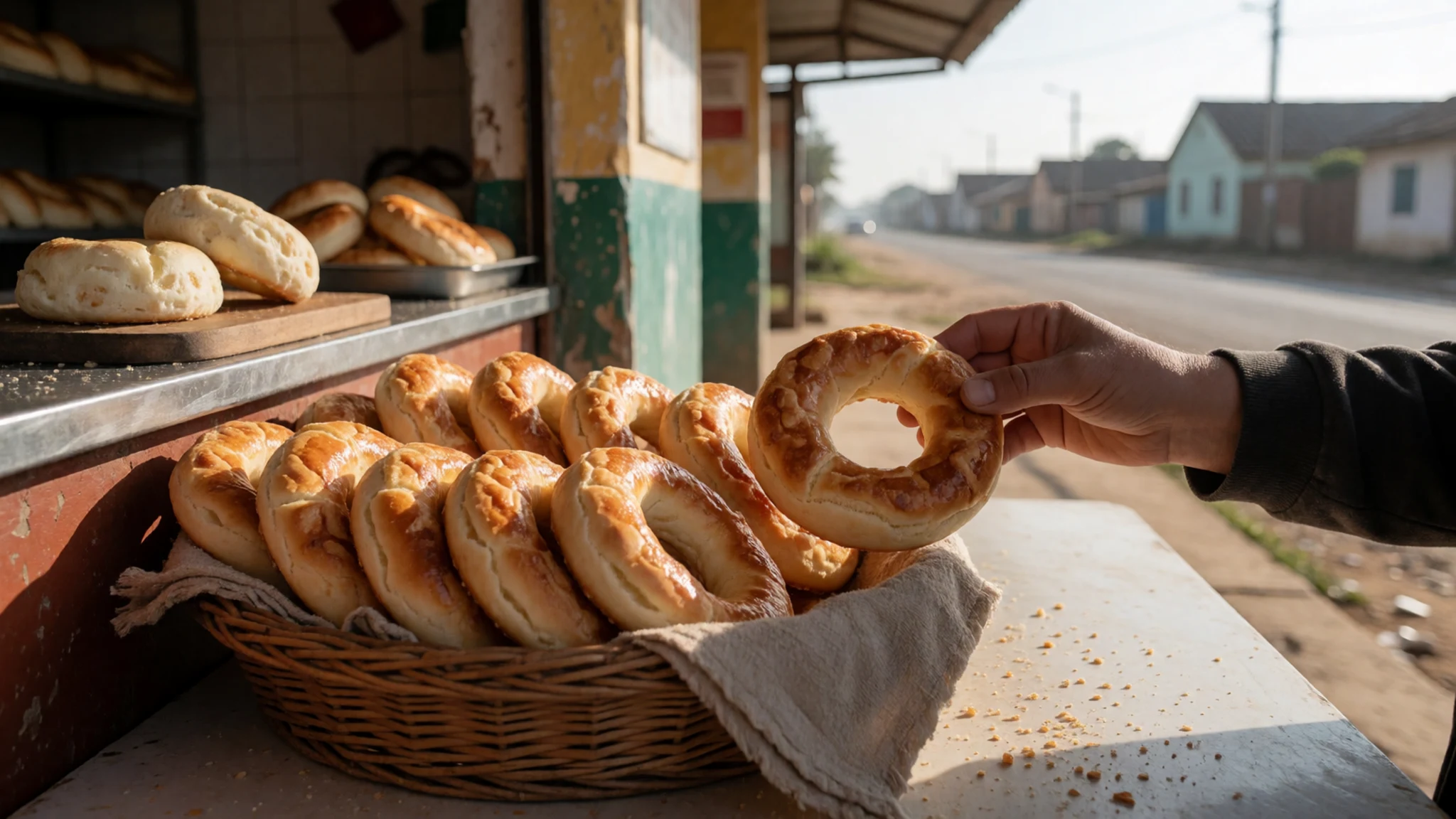
- Asado — Ranch meals and grill eateries (parrillas) in town
Asado is beef cooked slowly over embers, the natural meal in cattle country. Cuts arrive in generous quantities alongside cassava and salad. It is usually a shared, unhurried lunch, and a ranch setting suits it well, though the menu depends on what the kitchen serves that day. - Mbejú — Roadside stalls and small bakeries
Mbejú is a flat, griddled pancake of cassava starch and cheese, crisp at the edges and chewy in the middle. It turns up as a snack or light meal beside coffee or tereré. Eaten fresh from the griddle, it is far better than anything reheated. - Tereré — Offered in homes and on farms, carried in thermoses everywhere
Tereré is cold yerba mate, sipped through a metal straw and often flavoured with crushed herbs, passed round a group from one cup. It is the countryside's daily drink and a sign of welcome. In the heat it is refreshing and not sweet unless sugar is added.
Plan it
Best time. April–May and September–October, when the heat is easier and the lake is still pleasant for swimming. The height of summer is hot, humid and prone to storms, and winter nights can be cool. This reflects the general climate of inland Paraguay, so ask the ranch about current conditions before booking.
How long. 1–2
Getting there. Asunción is the usual gateway for Paraguay. From there, travel by road to the town of Santa Rosa del Aguaray in San Pedro Department, then about 28 km east to the lake. Ask the ranch about directions, transfers and the state of the last stretch after rain.
Budget. mid
Tips
- Contact the ranch through https://ecoturlagunablanca.com.py/ before travelling and book activities, meals and any stay ahead, as it is a small rural operation
- Go early or late in the day for birds and cooler air, as midday sun is strong in the warmer months
- Carry some cash and snacks, since shops and card facilities may be limited in the countryside
- Bring insect repellent, sun protection and plenty of drinking water
- If diving, ask the ranch about certification, equipment and supervision well in advance
Etiquette
- Close gates behind you and leave livestock alone
- Keep to tracks and the shoreline, and do not disturb birds
- Ask before photographing people, and accept a tereré offer politely
Nearby
Sources
- Wikidata Q2985933 (CC0)
- Wikipedia: Laguna Blanca (Paraguay), rev 1368273889 (CC BY-SA 4.0)
- Wikivoyage: Laguna Blanca (CC BY-SA 4.0)
- Amanecer en laguna blanca largo (Hugo Diaz Lavigne) (Public domain)
- Laguna blanca atardecer (Hugo Diaz Lavigne) (Public domain)
- Kayac de laguna blanca (Hugo Diaz Lavigne) (Public domain)
- Laguna Blanca 1010825 (Hugo Diaz Lavigne) (Public domain)
- Altiplano vicuña alrededores Laguna Blanca (Oswaldobarbabernal) (CC BY-SA 4.0)
- Altiplano, Bolivien 11214119644 (M M) (CC BY-SA 2.0)
- Altiplano, Bolivien 11214162655 (M M) (CC BY-SA 2.0)
- Altiplano, Bolivien 11214207074 (M M) (CC BY-SA 2.0)


