Asunción
Asunción, Paraguay
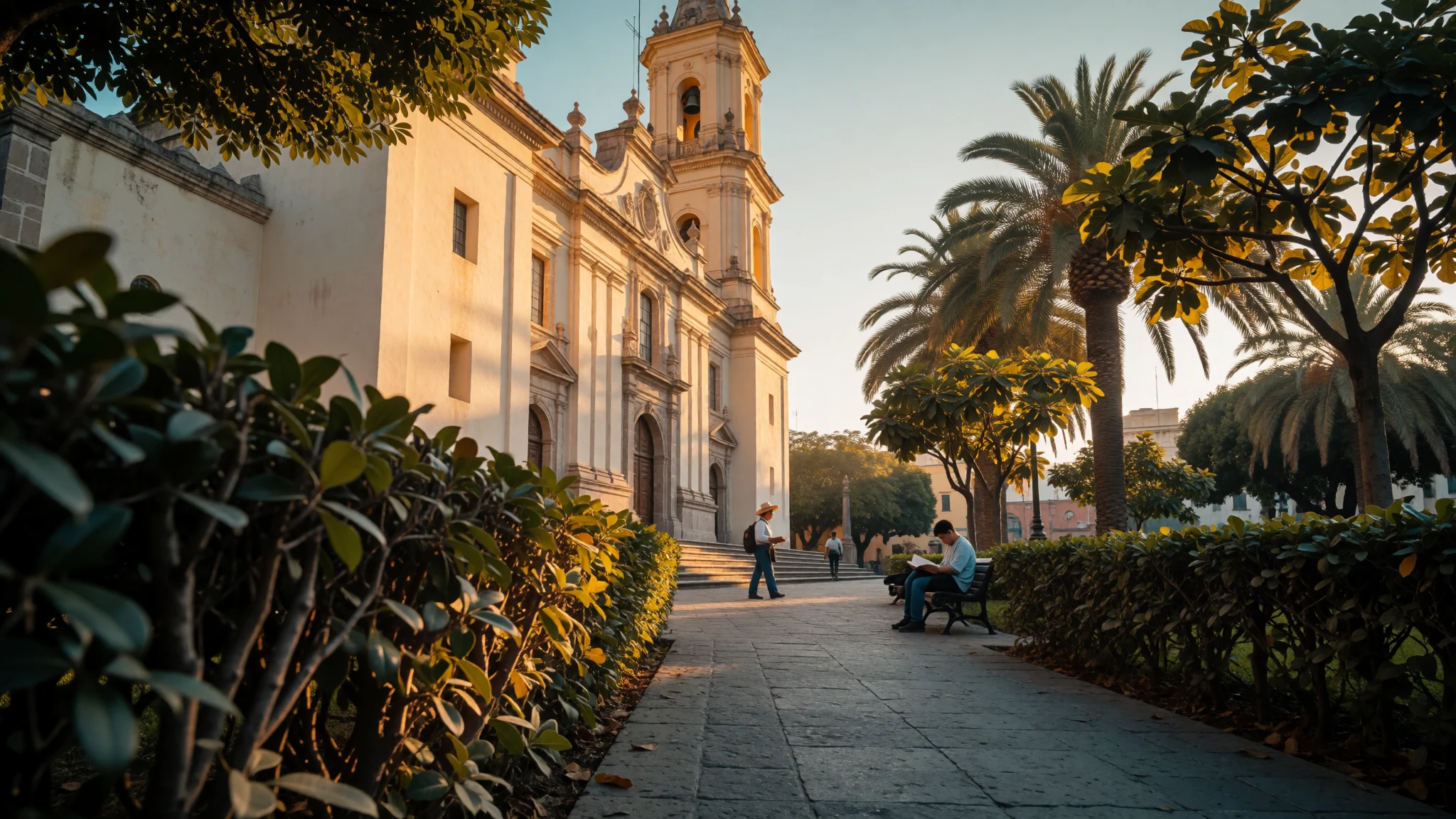
Asunción is a slow, shaded river capital where colonial streets, Guaraní-flavoured food and tereré circles make for a relaxed few days.
The place
Asunción sits on the eastern bank of the Paraguay River, about 43 metres above sea level, just upstream of the point where the Pilcomayo joins it. It is the capital of Paraguay and home to about 460,000 people, though the suburbs spilling into the surrounding Central Department make the wider metropolitan area far bigger than the city proper. The capital is its own district rather than part of any department. Across the water to the northwest lies the thinly settled Occidental Region, and to the southwest lies Argentina, so the river is a border as well as a view. The centre is compact enough to cover on foot. The cathedral, the Plaza de la Independencia, the Palacio de López, the Panteón and a string of small museums stand within a few streets of one another, with the riverside avenue, the costanera, just beyond. Past that core the city opens out into leafy residential districts, shopping malls and busy avenues where buses and motorbikes compete for space. Asunción is not a city of grand set pieces. Its appeal is slower: shaded plazas, old cafés, a river that creeps over low ground when it rises, and a social life organised around tereré, the iced herbal infusion carried everywhere in a thermos. Guaraní is spoken alongside Spanish, and the mix shows up in street names, jokes and menus. Visitors should expect heat for much of the year, uneven pavements and a quieter pace outside working hours. It suits a short stop of two or three days, either on its own or before heading on to the Argentine and Brazilian borders.
Its story
Asunción began as a riverside fort in August 1537, when the Spanish officer Juan de Salazar y Espinosa put in at a bay on the Paraguay River while hunting for a missing colleague. That colleague, Juan de Ayolas, had gone upriver hoping to find a route towards the silver of Upper Peru, and he never came back. Salazar found the local Guaraní welcoming, built a stockade, and named it after the Catholic feast of the Assumption, celebrated in mid-August. The settlement soon outgrew its purpose. Alliances between Spanish newcomers and Guaraní leaders, sealed partly by the handing over of women under the cuñadazgo custom and later by violent raids, produced a mixed society that made Asunción the main population and trading centre of the colony. A priest writing in 1545 sneered that it was a 'paradise of Muhammad', a jibe at the settlers' loose habits that stuck to the city as a nickname. From here, expeditions set out to found or refound towns across the region, among them Buenos Aires for the second time, Santa Fe, Corrientes, Córdoba and Santa Cruz de la Sierra. That record earned Asunción the title 'Mother of Cities'. Centuries later, in 1811, conspirators met in a house in the old centre to plan Paraguay's break from Spanish rule, and the building survives as a museum. The story is not a tidy one. The colonial relationship with the Guaraní involved coercion as well as cooperation, and the blend of Spanish and Guaraní heritage is its lasting result.
What to see
- Palacio de López — Historic centre, near the river
The Palacio de López houses Paraguay's executive government and stands a short walk from the river. The façade is lit well after dark, which makes an evening stroll past it worthwhile, when the heat has eased and the streets are calmer. Do not assume the interior is open; check the official city site for any visits.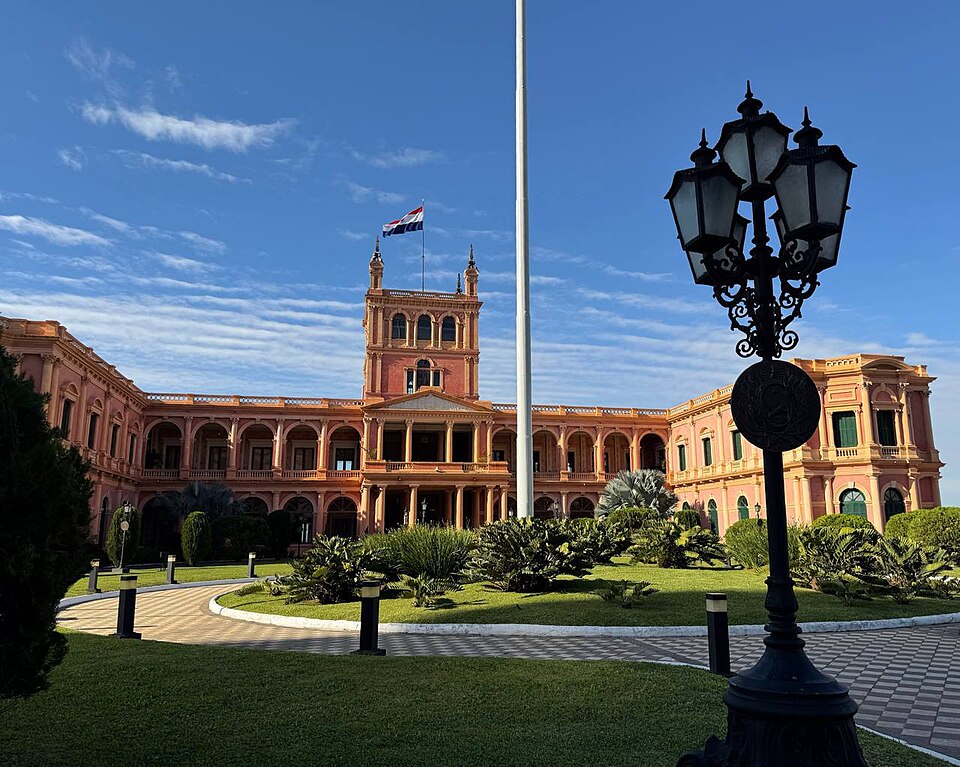
- Panteón Nacional de los Héroes — Historic centre
The Panteón Nacional de los Héroes holds the tomb of the unknown soldier and the remains of figures from Paraguay's past, with plaques for those who fought in the Triple Alliance War and the Chaco War. Guards stand watch, with a changing ceremony on alternate days. It is small and quiet, and worth a respectful visit.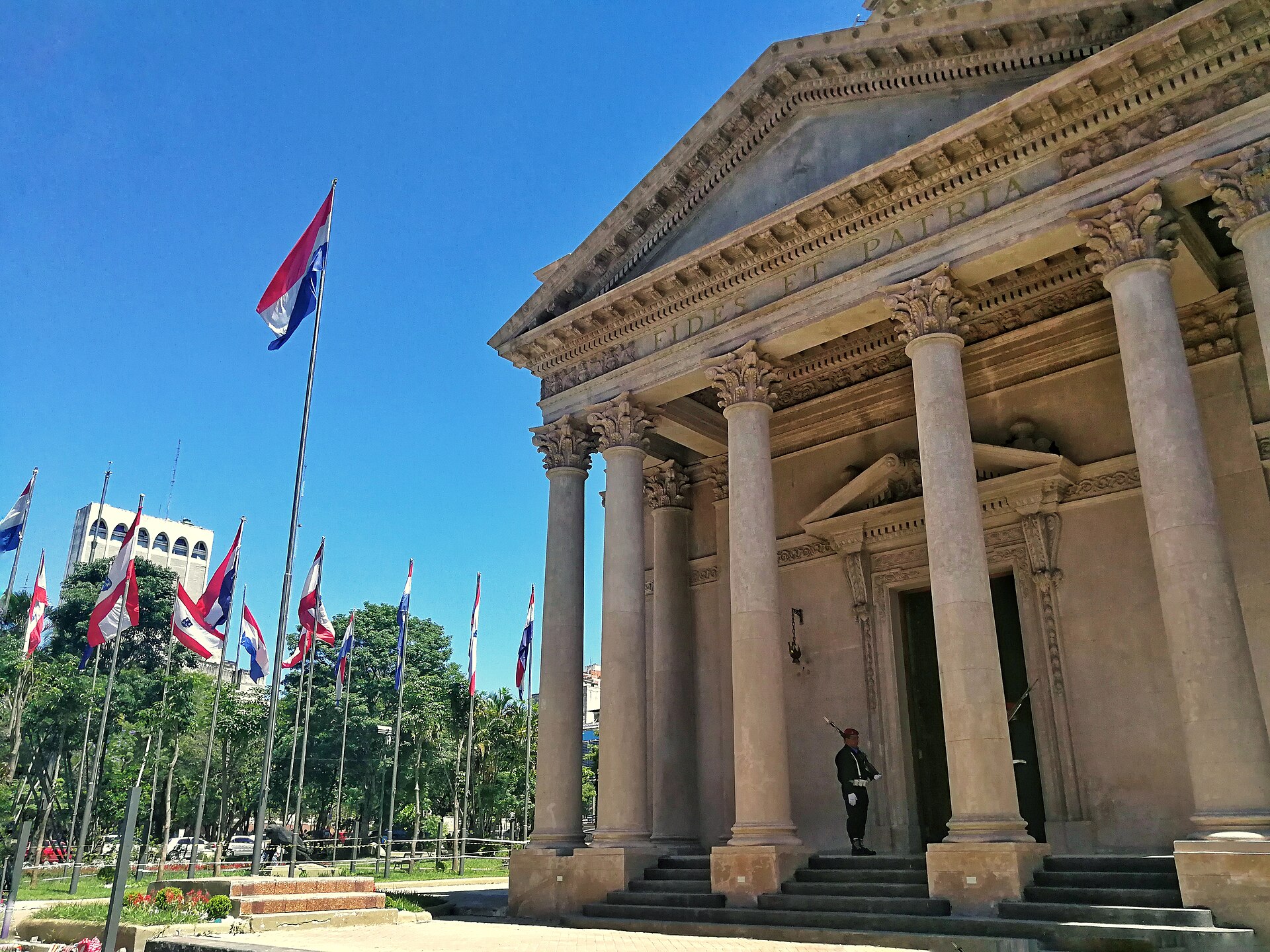
- Metropolitan Cathedral — Plaza de la Independencia
The Metropolitan Cathedral is the national cathedral and faces the broad Plaza de la Independencia, where office workers and students share the shade of the trees. Step inside for the cool air and the quiet, then sit out on the plaza for a while. Dress modestly, and check locally for service times.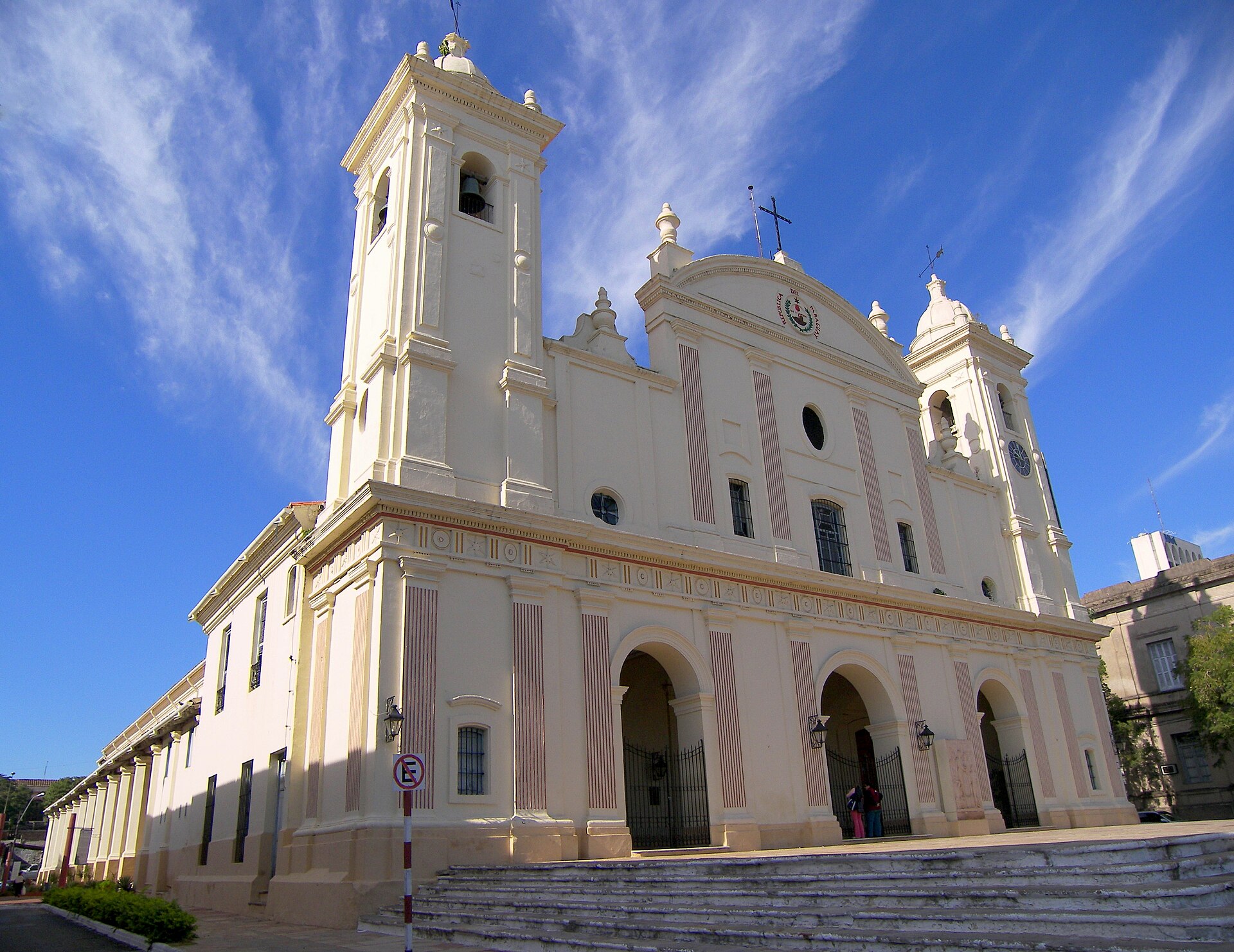
- Casa de la Independencia — Historic centre
The Casa de la Independencia is a house built in 1772 where the break from Spanish rule was secretly planned in 1811. It is kept as a small museum, furnished with period pieces and items of artistic interest. The rooms are modest, so it suits a short, focused visit rather than a long one. - Centro Cultural El Cabildo — Near the costanera
The Centro Cultural El Cabildo occupies an old colonial building that served as the Congress Palace until 2003. It stands close to the riverside costanera and has several exhibition spaces. It makes a useful stop in midday heat or rain, and has been one of the few museums open at weekends, though opening patterns change, so confirm first. - National Congress of Paraguay — Historic centre
The National Congress is a modern building, a striking contrast to the colonial streets around it, and its construction was funded by a donation from Taiwan. It is a reminder that the city is not all old stone. Walk past it on the way between the plaza and the riverfront and compare the two eras.
Culture
Asunción carries its culture lightly. Colonial-era buildings in styles from Baroque to neo-Gothic mix with museums, parks and a lively performing arts scene that includes symphony orchestras such as the City of Asunción Symphony Orchestra and the National Symphony Orchestra, municipal and national ballet companies, an opera company and long-running theatre groups. Spanish and Guaraní share daily life, and many residents switch between them mid-conversation, so a few Guaraní words are received with real warmth. Music matters here: the Paraguayan harp and the guarania and polka rhythms turn up at festivals, family parties and small venues, and a night out often includes someone with a guitar. Social life revolves around tereré, cold herbal tea sipped from a shared cup through a metal straw, with one person pouring and passing it round in turn. It is the main way friends, colleagues and neighbours spend time together, and it is frequently what people mean by an invitation to sit down for a while. Football also shapes the city's loyalties, and the colours of the big local clubs are worn with pride. The pace is unhurried, appointments are loose, and politeness and greetings count for more than efficiency. Visitors should lower their voices in the cathedral and the Panteón, and ask before photographing people, especially guards on duty, and when a tereré cup is passed to them, drink it through and hand it back with thanks.
What to wear
In Asunción, traditional dress is something seen at festivals, folk dance shows and school celebrations rather than on the street. The best known textile is ñandutí, a fine, spider-web lace embroidered in white or bright threads, made in towns nearby and used on blouses, tablecloths and fans. Alongside it is ao po'i, a light cotton cloth, often white and embroidered, from which women's blouses and dresses and men's loose festival shirts are made. Ao po'i means 'fine cloth' in Guaraní, and its lightness suits the climate. Everyday clothing is much plainer. People wear cotton and linen, jeans, sandals and trainers, and the shirts of local football clubs are common, particularly on match days. Office and government workers dress more formally than the heat might suggest, with tailored trousers and closed shoes. Visitors should pack light, breathable fabrics in loose cuts, a sun hat and sunglasses, and a thin rain layer, because storms can arrive quickly and be heavy. Comfortable closed shoes are wise, since pavements are uneven and can be broken, and puddles gather after rain. Churches and the Panteón call for covered shoulders and knees, so a light scarf or overshirt is handy. Evenings are usually casual, but smart casual is the safer choice for restaurants and theatres.
What to eat
- Sopa paraguaya — Home-style eateries and lunch counters in the centre
Despite its name, sopa paraguaya is a dense, moist cornbread made with cheese, onion and milk, baked until golden. It is served as an accompaniment to grilled meat and at family gatherings, and works as a filling lunch dish on its own. - Chipa — Bakeries, street vendors and bus stations
Chipa is a chewy, cheesy bread made with cassava starch, eaten warm at any time of day, often alongside coffee or mate cocido. It is traditionally ring-shaped or in small rolls and is a standard snack for travellers. - Bori bori — Family-run restaurants and eateries
Bori bori is a hearty chicken soup with small dumplings made from cornmeal and cheese. It is comfort food for cooler days, usually served in a deep bowl, and is a good introduction to how maize shapes the local kitchen. - Mbejú — Street stalls and neighbourhood cafés
Mbejú is a thin, pan-cooked cake made from cassava starch and cheese, crisp at the edges and soft inside. It is a common snack with a hot drink in the afternoon and is simple, savoury and not at all sweet. - Asado with mandioca — Grill restaurants (parrillas) across the city
Asado is grilled beef cooked slowly over embers and served with boiled mandioca, the local name for cassava. It is the centrepiece of weekend lunches and celebrations, and it is worth seeking out on a day when you can linger.
Plan it
Best time. April–May and September–October bring milder, more comfortable days. December–February is hot, humid and prone to heavy storms, while June–August can feel cool in the evenings.
How long. 2–3
Getting there. Fly into Silvio Pettirossi International Airport, which has links to cities such as Madrid, Buenos Aires, São Paulo, Santiago, Lima, Bogotá and Panama City. Taxis run to the centre at a fixed rate, so agree it before you leave. A city bus stops on the road outside the terminal, but the stop is poorly signed. Long-distance buses link the city with neighbouring countries.
Budget. low
Tips
- Explore the centre on foot in the morning or evening and rest during the hot midday hours
- Carry some cash for small stalls and taxis, and use cards in larger restaurants and shops
- Drink bottled or filtered water and carry a refillable bottle
- Check museum and tour times on the official city site, as hours can change
- Keep valuables out of sight and take a licensed taxi after dark
Etiquette
- Greet people politely before asking for anything
- Drink the tereré cup through when it is passed to you, then return it
- Ask before photographing people, especially guards on duty
Nearby
Sources
- Wikidata Q2933 (CC0)
- Wikipedia: Asunción (rev 1384662445) (CC BY-SA 4.0)
- Wikivoyage: Asunción (rev 5393965) (CC BY-SA 4.0)
- Photo: Asunción Paraguay (CC BY-SA 4.0)
- Photo: Aspecto de Asunción desde La Costa (FF MM) (CC BY 3.0)
- Photo: The Palacio de los López in Asunción (MosheA) (CC0 1.0)
- Photo: Panteón de los Héroes (Garcia.dennis) (CC BY-SA 4.0)
- Photo: Asunción desde el barrio Herrera (Overkill53) (CC0 1.0)
- Photo: Catedral de Asunción (FF MM) (CC BY-SA 2.0)
- Photo: Asunción del Paraguay, 1892 (E. C. Moody) (Public domain)
- Photo: Asunción tram, ex-Brussels 9003 (Steve Morgan) (CC BY-SA 4.0)


