Jesús de Tavarangüé
Jesús de Tavarangüé, Paraguay
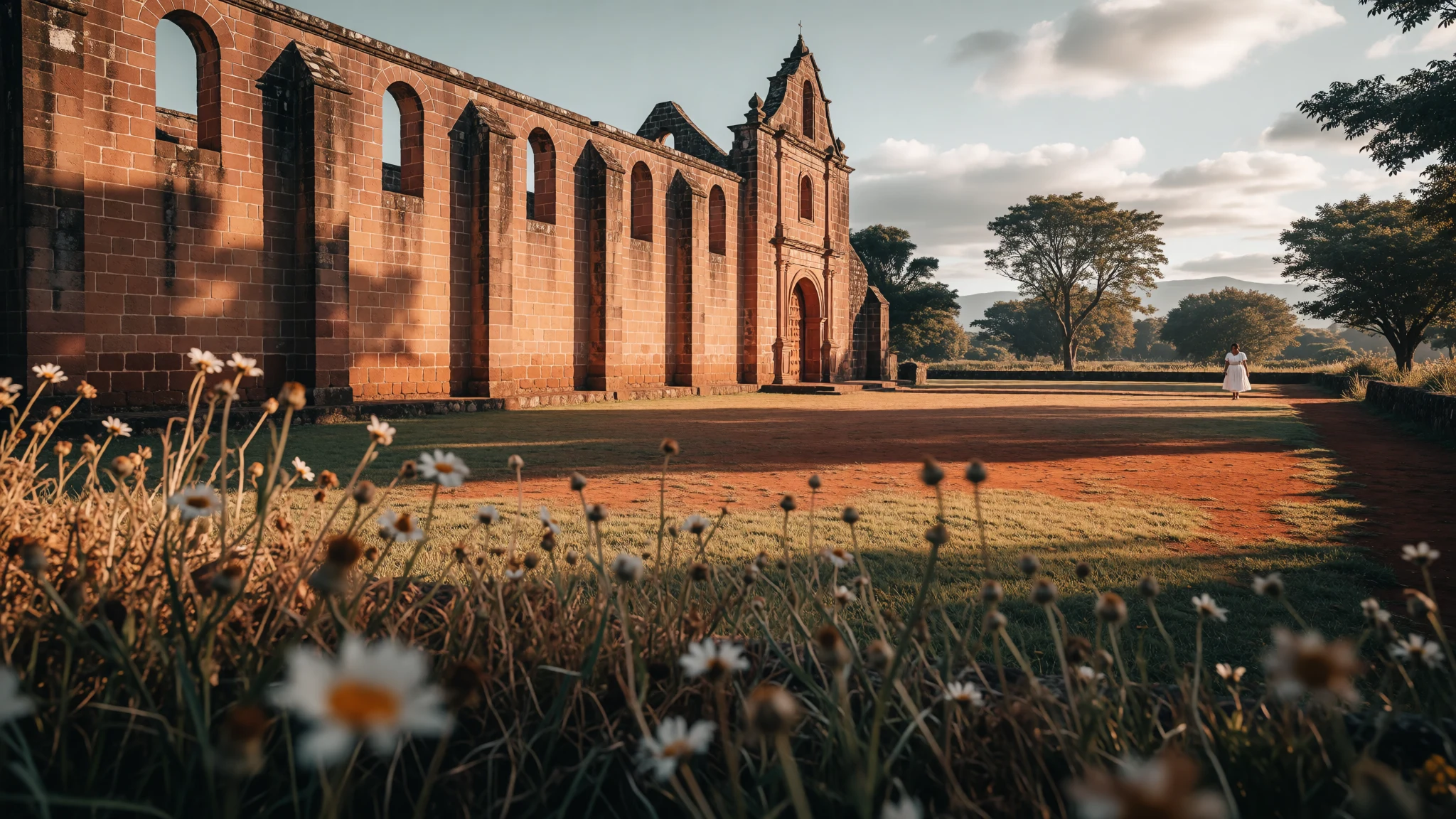
Jesús de Tavarangüé is a quiet, roofless Jesuit church in Paraguay's red-earth south, worth a slow visit with its sister mission at Trinidad.
The place
Jesús de Tavarangüé sits in the rolling farmland of Itapúa department in southern Paraguay, a short drive from the Trinidad mission. Together the two sites hold a World Heritage listing. What survives here is a roofless church built of red sandstone, the stub foundations of a cloister and college, and a broad lawn where a Guaraní town once stood. It is a calm place. Paraguay draws far fewer visitors than its neighbours, and most of those who do come are from Argentina, so the ruins often feel like a large country park with an enormous church shell in the middle of it. A visit is short rather than all-day: the draw is the church itself, the carved detail around its doorway and windows, and the sense of scale once you stand where the altar would have been. Summer heat and sun are the main trials, because the open ground offers little shade. Facilities are modest, so water and a little cash are sensible. The nearest city of any size is Encarnación on the Paraná river, facing Argentina, and many travellers see Jesús and Trinidad together in one unhurried day. The land around is red soil, crop fields and small towns where life runs to the rhythm Paraguayans call tranquilo. Further mission ruins lie across the borders in Argentina and Brazil, so this stop fits naturally into a longer regional journey.
Its story
Jesús de Tavarangüé began as a Jesuit reduction, one of the mission towns where the order gathered Guaraní communities under its guidance. The first settlement was founded in 1685 in what is now Alto Paraná, close to a river called the Monday. It did not stay there. The community moved several times, and only reached the present site in 1760, which means the stone buildings visible today belong to a surprisingly short final chapter. Work was far from finished when the Jesuits were expelled from Paraguay in 1767. That timing explains much of what a visitor sees: a church with an ambitious plan, some walls carved and finished, others stopped part-way. The design was modelled on a famous Jesuit church in Italy, and had it been completed it would have ranked among the large churches of its day, with a central body about 70 metres long. Masons and carvers were Guaraní people working alongside the missionaries, and the quality of the stonework on doorways and window surrounds reflects that skill. After the expulsion the settlement lost its organisers, the population drifted away, and the buildings were left to weather. The ruins and those of Trinidad were inscribed as a World Heritage Site in 1993. Today the story is one of unfinished ambition, shared craft, and a political decision that stopped construction mid-course.
What to see
- The church shell — Main site, Itapúa
The roofless church at Jesús de Tavarangüé is the reason to come. Walk its length slowly, from the entrance to where the altar stood, and notice how thick the sandstone walls are and how unfinished some parts remain. Late afternoon light turns the red stone warm and gives good contrast for photographs.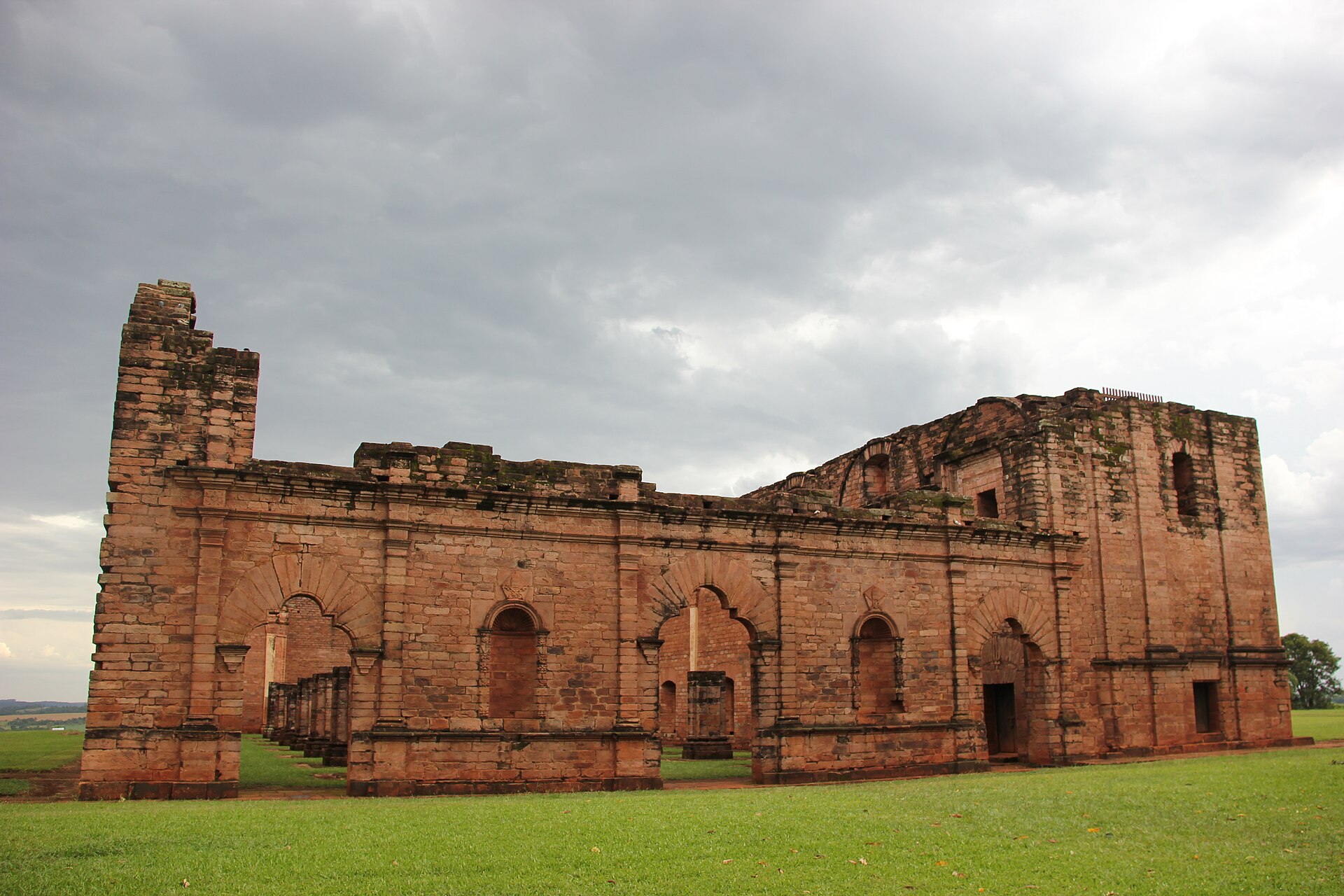
- View from the altar — Inside the church
Standing at the altar end and looking back down the nave at Jesús de Tavarangüé gives the clearest idea of the intended scale. Walls frame the sky where a vault was meant to be. It is also the spot where visitors tend to linger, so a quiet moment may need patience.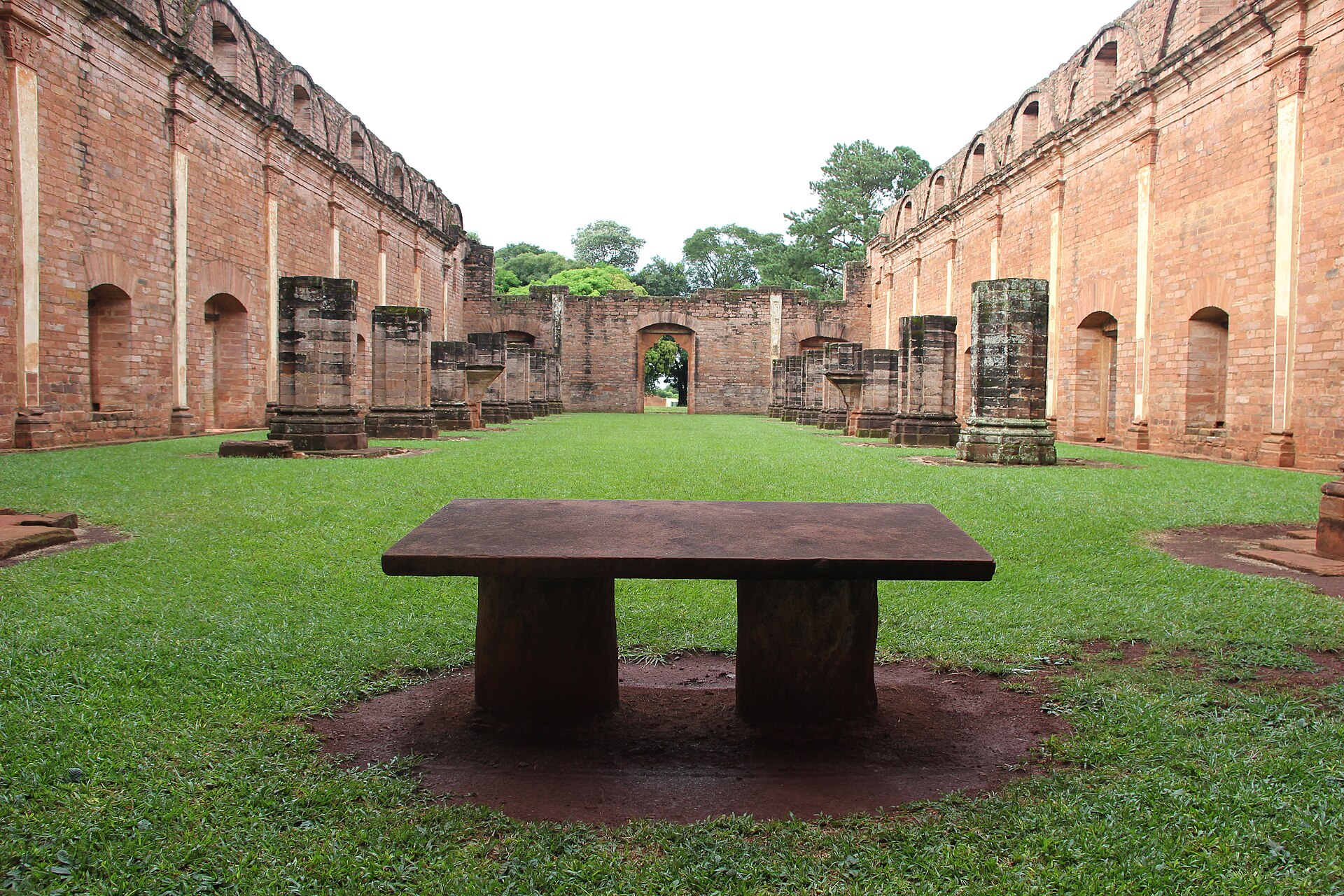
- Carved window and doorway — Church facade and walls
Look closely at the openings in the church walls at Jesús de Tavarangüé. The window frames and doorway surrounds carry decorative stonework that shows the hand of Guaraní carvers. Public-domain photographs of the arched window show the detail well, but it repays a slow look in person, especially in raking light.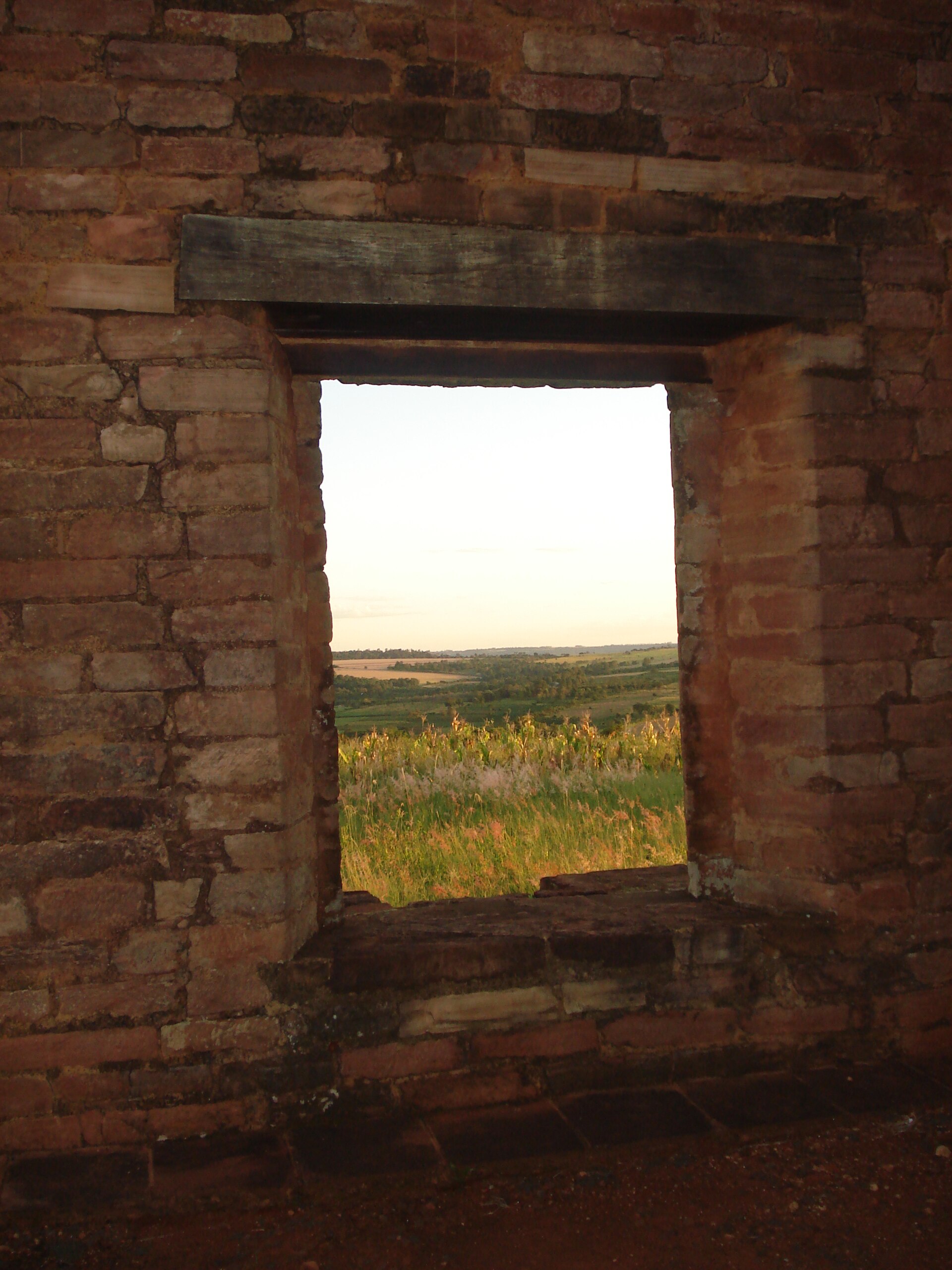
- Cloister and college foundations — Beside the church
Beside the church at Jesús de Tavarangüé, low foundations mark where the cloister and college stood. Little rises above knee height, but the outline shows how the mission was organised around its church. Viewed from the north, the stubs of the western wing make the layout easy to read.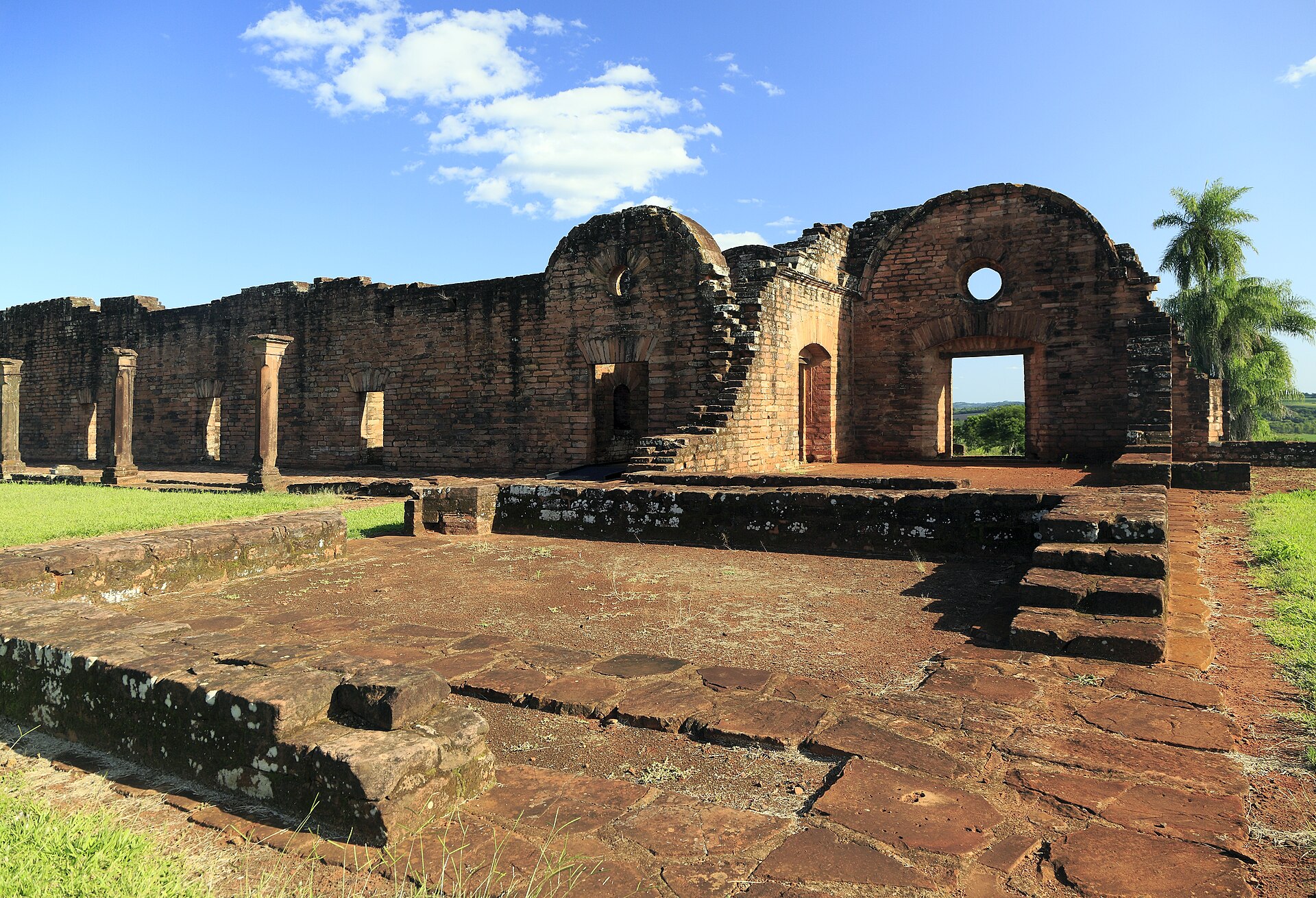
- Interior of the temple — Nave of the church
Inside the walls at Jesús de Tavarangüé, the interior gives a feeling of enclosure that the exterior does not. Grass underfoot, sky overhead and carved stone all round make a good place to sit briefly. Quiet visits early or late in the day are the most atmospheric.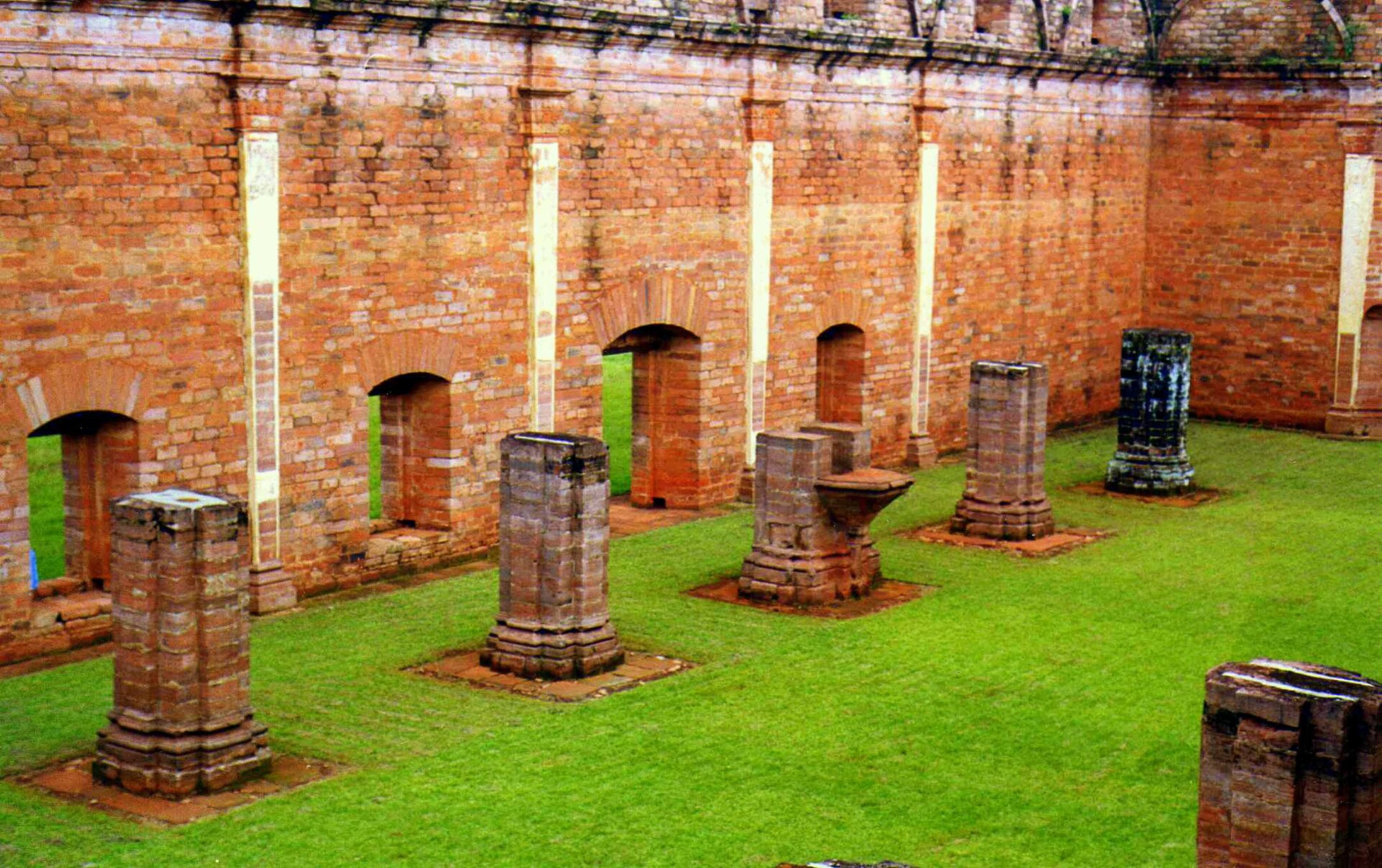
- Trinidad mission — Trinidad, Itapúa
Near Jesús de Tavarangüé lies the La Santísima Trinidad de Paraná mission, listed with it as one World Heritage property. It is larger in extent and has more standing buildings, so it makes a natural companion stop. Visiting both in one day gives a fuller picture of mission life.
Culture
Jesús de Tavarangüé sits in a country where people are generally friendly, polite and soft-spoken. Paraguay is not heavily visited, so travellers may find locals openly curious about them, and conversations often start easily. Guaraní is spoken widely alongside Spanish, and the mission story is part of how many Paraguayans understand their own history, since the Guaraní people built much of what stands here. Time is held lightly: appointments, buses and even meals can run late, and this is not meant as disrespect. Patience is valued, and raising your voice or losing your temper in public goes down badly. Food is central to social life, and if a host offers something, accepting and saying something kind about it matters more than any gift. Tereré, the cold herbal infusion shared from a single cup and guampa, is a daily ritual of friendship, and being offered a turn is a sign of welcome. Rural Itapúa is a farming region, so a relaxed, courteous tone suits it better than hurry. The ruins are protected heritage and also a place with real religious and historical meaning for local people. Treat the site quietly, and do not climb on the carved stonework, lean on the old walls or take stones as souvenirs.
What to wear
Jesús de Tavarangüé lies in a region where the traditional cloth is ao po'i, a fine, light cotton with white-on-white embroidery, worn for celebrations, folk dances and national occasions. Women's dresses and men's shirts in this style are often paired with ñandutí, the delicate spider-web lace associated with the town of Itauguá. Guaraní communities historically wove and dyed their own fibre cloth, and some craft shops still sell hand-woven pieces. Day to day, people in Itapúa dress simply and practically: jeans or light trousers, cotton shirts, football shirts, and sandals or trainers, with a hat or cap against the sun. Farm work means sturdy boots and long sleeves. Smart casual is usual in town for church or meetings, but nothing is formal. Visitors should plan for heat and strong sun in summer, with light, breathable cotton, a wide-brimmed hat, sunscreen and sunglasses. The ruins are open ground with uneven stone and grass, so closed shoes or sturdy sandals are better than flip-flops. In the cooler months a light jacket helps in the morning, and a thin waterproof is useful because rain can arrive suddenly. There is no strict dress code at the ruins, but modest clothing, with shoulders and knees covered, is respectful given the site's religious past and suits the local style.
What to eat
- Asado — Grill houses and family eateries in Encarnación
Grilled beef is the national habit, usually good quality and reasonably priced. Cuts come off the grill with salad, manioc and a squeeze of lemon. Look for it at roadside grill houses and family eateries in Encarnación, or at weekend gatherings. - Chipa — Bus station vendors and roadside stalls
A chewy, baked cheese-and-manioc bread, often shaped as rings or small rolls and best eaten warm. It is sold by vendors near bus stations and at roadside stalls, and it makes a cheap, filling snack before or after the ruins. - Sopa paraguaya — Local restaurants and market food stalls
Despite its name this is a dense, moist cornbread made with cheese and onion, served as a side with grilled meat or on its own. Find it at local restaurants and in the market food halls, where it is cut into thick squares. - Empanadas — Street stalls and bakeries in town centres
Fried or baked pastry pockets filled with minced beef, chicken or cheese. They are a staple of street stalls and bakeries and travel well, so they suit a picnic at the ruins. Spice is mild, as in most Paraguayan cooking. - Mbejú — Market counters and small cafés
A flat, griddled cake made from manioc starch and cheese, crisp at the edges and soft inside. It is often sold alongside coffee or mate in small cafés and at market counters, and it is a good morning treat. - Tereré — Anywhere locals gather, from shops to gardens
Cold yerba mate infused with water and often crushed herbs, sipped through a metal straw from a shared cup. It is a drink and a social ritual, and it is offered all day in gardens, shops and at roadside gatherings.
Plan it
Best time. April–May and September–October, when the days are mild and walking the open ruins is comfortable. Summer is hot and sunny with little shade on site, and sudden rain can arrive in any season.
How long. 1–2
Getting there. Fly to Asunción, the main international airport, then take a long-distance bus south to Encarnación on the Paraná river. From there, hire a taxi or take local transport on the last leg to Trinidad and Jesús de Tavarangüé. Check current bus and tour options locally.
Budget. low
Tips
- Go early or late in the day to avoid the strongest sun and catch softer light on the stone
- Carry water, a hat and sunscreen, as shade is limited on the open ground
- Bring small cash for entry, snacks and local transport, and check opening arrangements locally before you travel
- Combine Jesús with the Trinidad mission to make the trip worthwhile
- Allow slack in your schedule, since buses and plans in Paraguay often run late
Etiquette
- Do not climb on or lean against the carved stonework or take stones away
- Keep your voice down and stay patient, as shouting or temper is frowned upon
- If offered food or tereré, accept graciously and say something kind
Nearby
Sources
- Wikidata Q318338 (CC0)
- Wikipedia: Ruins of Jesús de Tavarangue (rev 1365869860) (CC BY-SA 4.0)
- Wikivoyage: Paraguay (rev 5395653) (CC BY-SA 4.0)
- Falk2, Jesús de Tavarangüé, colegio (CC BY-SA 4.0)
- Lars Curfs (Grashoofd), Main building from the left (CC BY-SA 3.0 nl)
- Lars Curfs (Grashoofd), View from the altar (CC BY-SA 3.0 nl)
- Patty P, Ruinas jesuiticas Paraguay Acceso (Public domain)
- Patty P, Ruinas jesuitica de Jesús. Ventana (Public domain)
- KANESHIMA Muneharu, Jesús de Tavarangüé (Public domain)
- rodoluca, Interior del Templo (CC BY 3.0)
- Falk2, Nordfassade der Kirche (CC BY-SA 4.0)


