Samburu
Samburu, Kenya
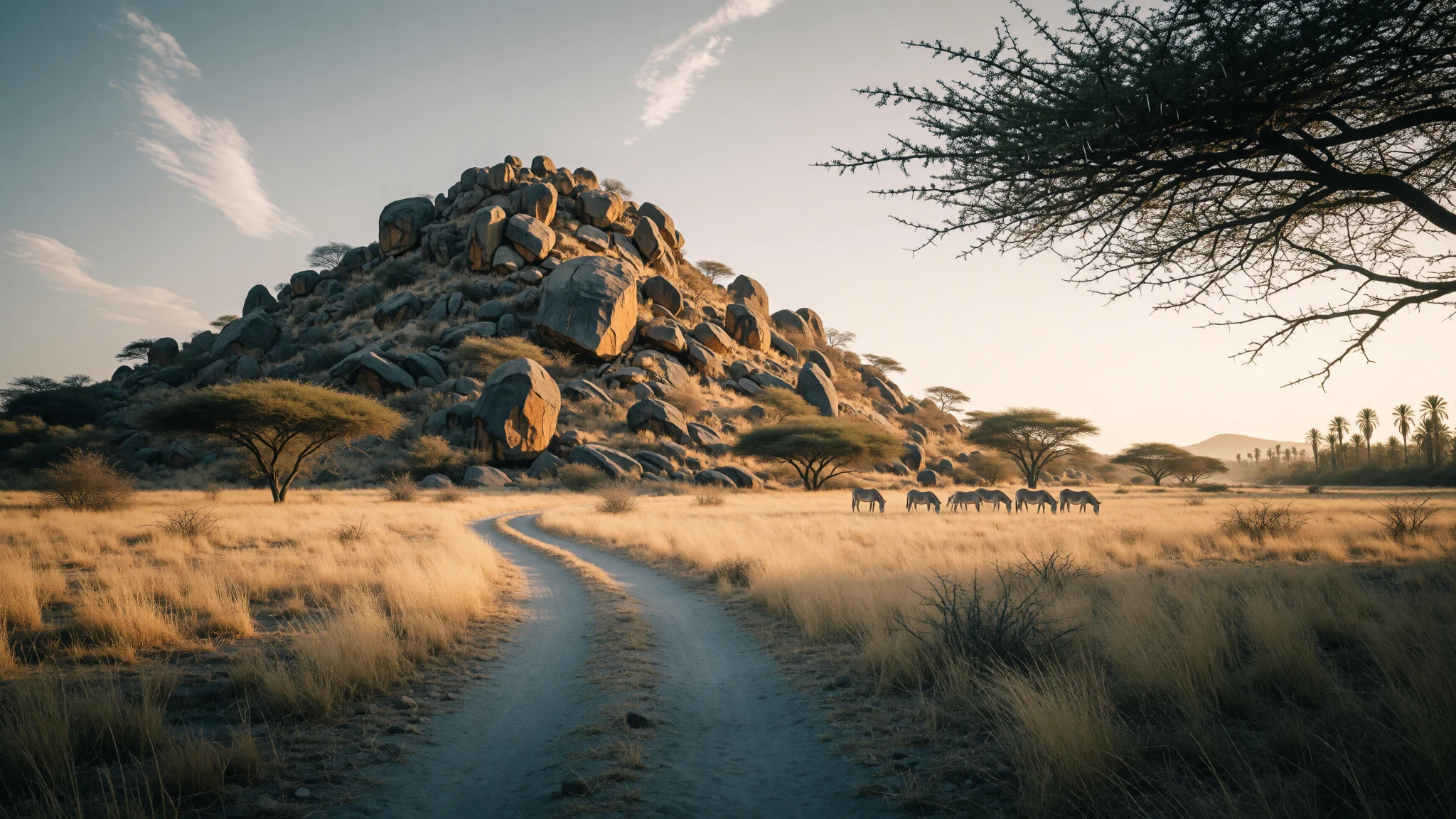
Samburu puts elephants, reticulated giraffe and northern-only dry-country species along one green river in Kenya's hot north.
The place
Samburu National Reserve lies in northern Kenya, in Samburu County, on the Ewaso Ng'iro river. It covers about 165 sq km and sits roughly 350 km from Nairobi, on ground that climbs from 800 to 1,230 m above sea level. Management rests with the county government rather than a national agency. This is semi-arid lowland north of Mount Kenya, and the contrast is the point: a green ribbon of doum palms, figs and acacias runs through country of thorn scrub, open grass and rocky hills. The river is the reserve's centre of gravity. It marks the southern edge and divides Samburu from Buffalo Springs National Reserve in Isiolo County. In dry spells animals converge on its banks, elephants arrive to drink and bathe, and predators lie up in the thick cover. The reserve is small, but it is not sealed off. Wildlife drifts between it and neighbouring community conservancies such as Kalama and West Gate, so what turns up on a drive depends partly on where the animals have chosen to be that week. Because the north is drier than Kenya's southern parks, the species list differs, with several animals found here that the Maasai Mara largely lacks. Most visitors arrive by road through Isiolo and Archer's Post, stay in a lodge or tented camp, and spend two or three days on dawn and late-afternoon drives, resting through the midday heat.
Its story
Samburu National Reserve owes part of its fame to a lioness. George and Joy Adamson, the conservationists behind Born Free, raised Elsa here and in one other area, and the book and film carried the name of this corner of Kenya to readers far from Africa. Decades later another lioness, Kamunyak, drew attention by repeatedly adopting oryx calves, a reversal of the usual order of hunter and prey. The formal history of protection is patchier. In 1948 the land was folded into a wider protected area tied to the Marsabit reserve system, and officials afterwards argued that the plains beyond the river deserved separate status. The Samburu National Reserve was established in 1962. The reserve is now run by Samburu County, and its fortunes are bound up with the pastoral families who graze livestock around it. Conservation here increasingly means shared land: unfenced corridors, community conservancies and camps that employ local staff. Elephant Watch Camp, directed by Saba Douglas-Hamilton, stands inside the reserve and is devoted to the river's elephant families. None of this removes the pressures of drought, grazing and tourism, but linking a small reserve to a larger landscape is the reason it can still hold such a varied cast of animals.
What to see
- The Ewaso Ng'iro river — Southern boundary of the reserve
The river is the best first stop. Elephants wade in to drink and bathe, baboons and vervet monkeys work the banks, and antelope edge down at the quieter bends. Doum palms and dense riverside forest make a cool green strip against the dust. Stay in the vehicle: crocodiles live in the water.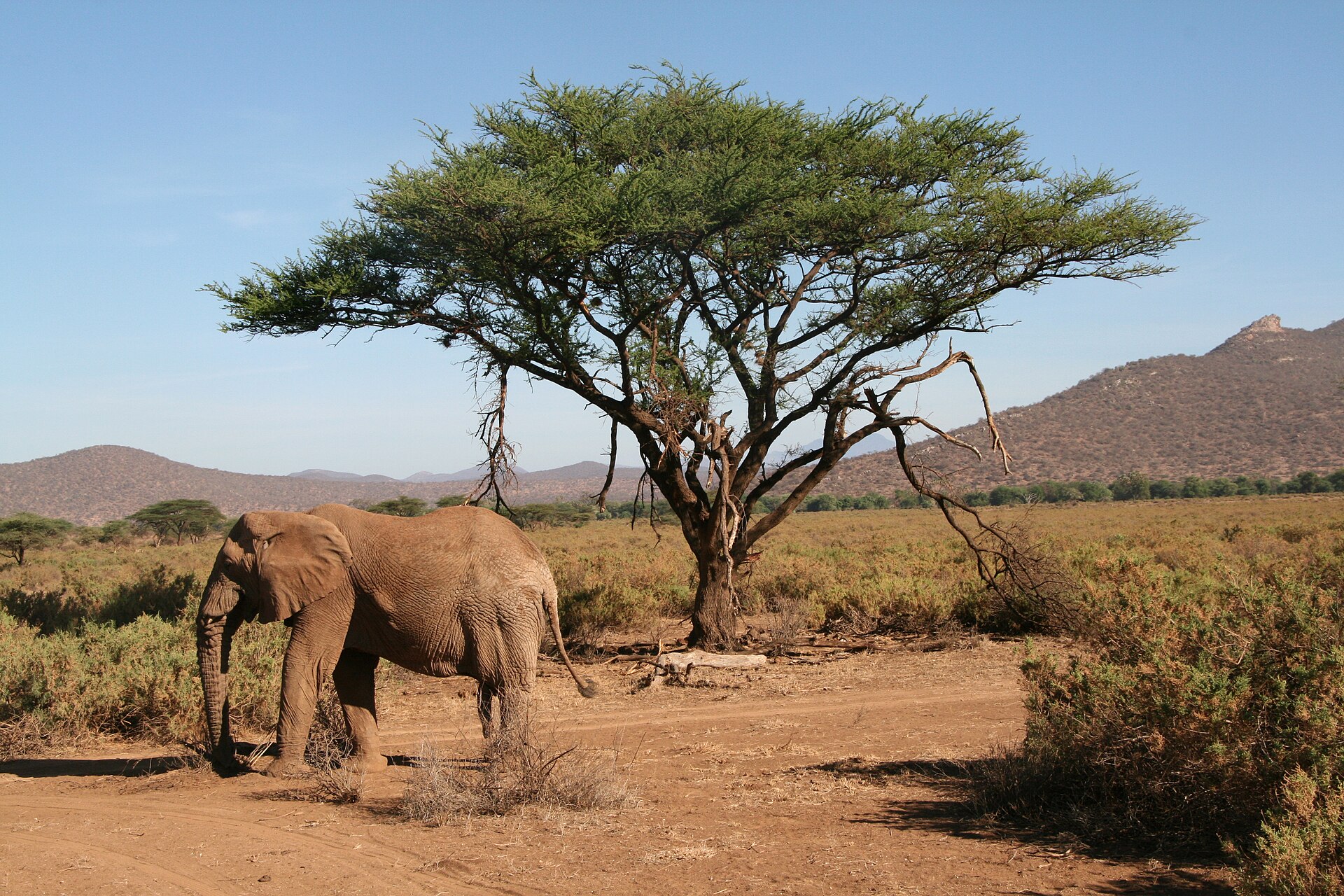
- The Special Five — Open plains and dry scrub
Samburu's northern location brings a set of species rarely met in southern Kenya: the Somali ostrich, the long-necked gerenuk, the Beisa oryx, the reticulated giraffe with its tidy net of patches, and Grevy's zebra with narrow stripes. Spotting all five is a favourite game among guides, and the plains north of the river are the likeliest ground. - Big cats and riverine forest — Tracks along the river
Lions turn up regularly, and the reserve has a name for leopard and cheetah as well. Leopards favour the tangled riverside woodland, so slow drives along the river tracks repay patience, though no sighting is promised. Early morning and late afternoon give the best odds, when the cats are active and the light is kind.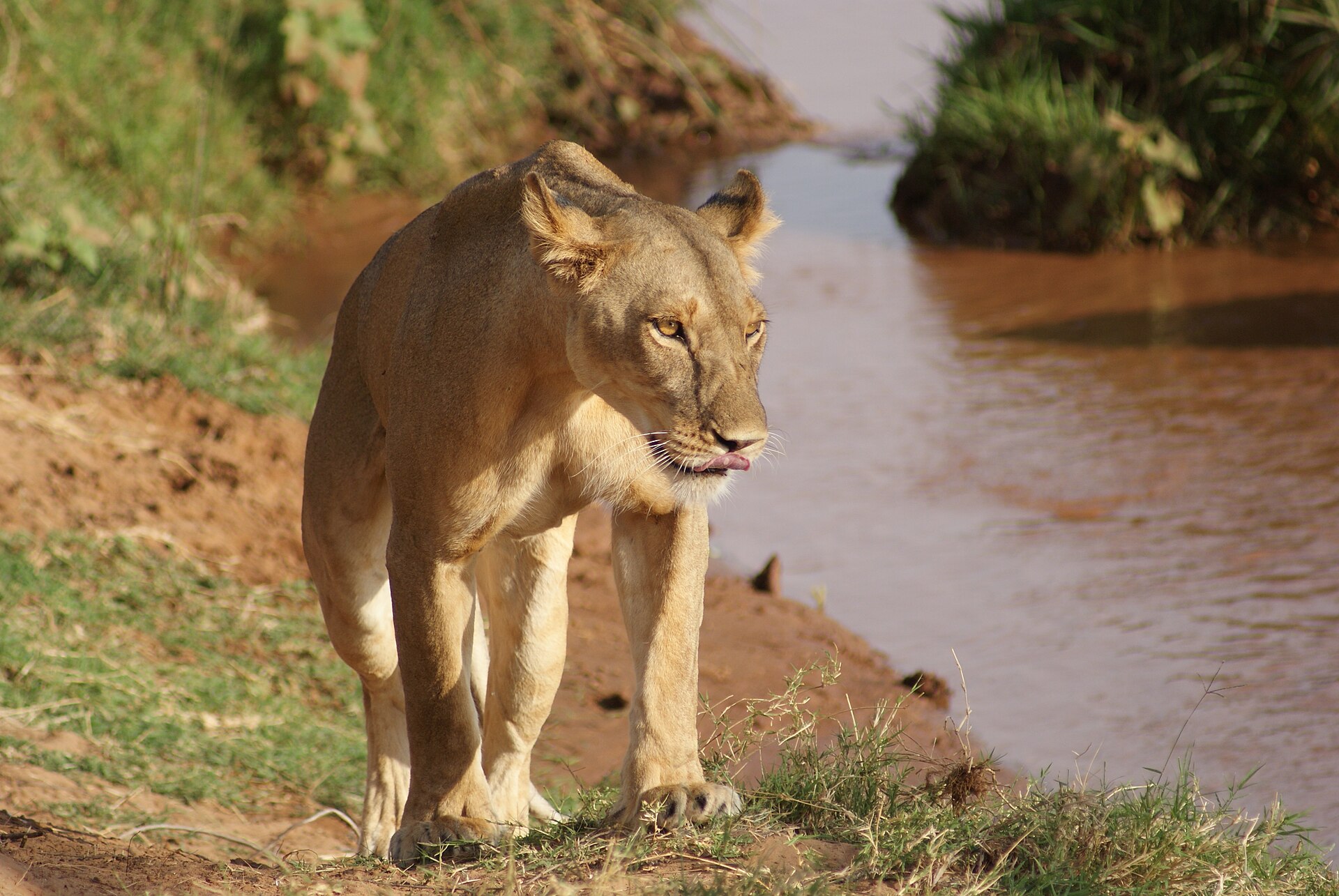
- Koitogor Hill — Within the reserve
Koitogor is a rocky rise that stands clear of the plains and serves as a landmark for drivers finding their bearings. The country around it suits landscape photography, circling raptors and general game viewing. It is also a useful reminder that Samburu is not only river and palm, but rock, grass and wide horizon. - Birdlife — Acacia woodland and river edge
The meeting of dry plain and river woodland supports a rich bird list. Vulturine guineafowl, with their blue-and-white plumage, are the signature sight. Keep watch for martial eagles, tiny pygmy falcons, hornbills, bee-eaters, bustards and vultures. Weaver nests hang from many acacias, and a guide with good ears makes a real difference.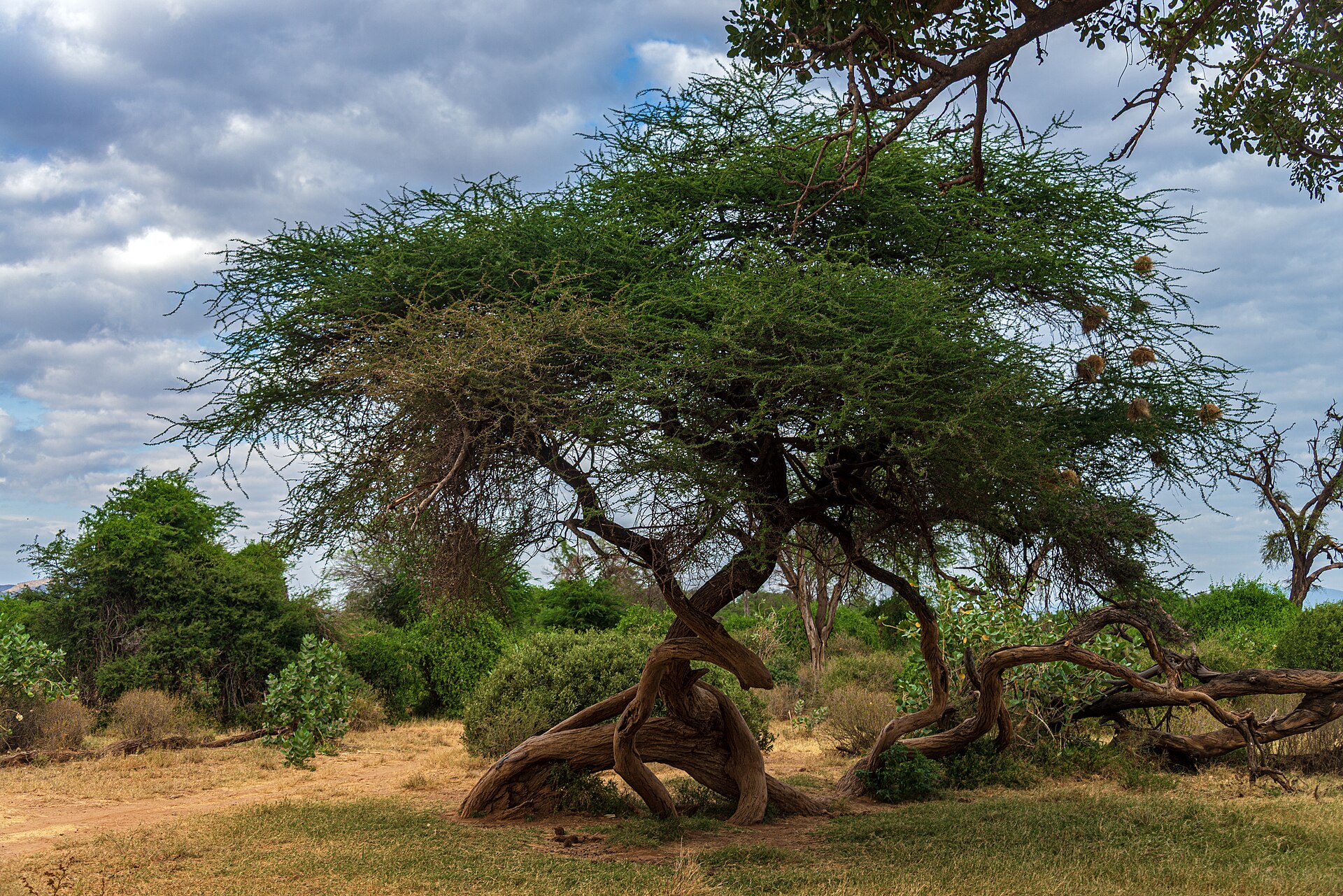
Culture
Samburu National Reserve takes its name from the Samburu people, semi-nomadic pastoralists who speak Maa and are closely related to the Maasai. Their lives have long revolved around cattle, goats and camels, and the movement of herds in search of grazing shapes much of the surrounding land. Young men known as morani traditionally serve as warriors and herders, and age sets mark the stages of a person's life. Beadwork carries meaning here: colours, patterns and the number of strands can signal age, marital status and family ties. The reserve itself is under county government, so local people are part of how it is run rather than bystanders. Many lodge and camp staff, guides and drivers come from nearby communities, and some conservancies share tourism income with the families who live there. Visits to a village can be arranged through camps, but they work best when treated as an exchange rather than a show: arrange the terms beforehand through your guide, and expect conversation, songs and a chance to see how homes are built and herds managed. Livestock and wildlife share this country, and respect for both is part of the local outlook. Ask permission from a person before photographing them or their home, and agree any fee with your guide beforehand rather than offering money on the spot.
What to wear
Samburu dress is among the most recognisable in Kenya. The traditional garment is the shuka, a length of cotton cloth worn wrapped at the waist or over the shoulders, often in bright red, blue or checked patterns. Women wear layers of beaded collars and necklaces in many strands, as well as beaded earrings and bracelets, while men may wear beads, painted ochre and elaborate braided hair, especially the morani for ceremonies and special days. These outfits appear at weddings, initiations and gatherings, and in village visits arranged for guests. Everyday life is more mixed. In Archer's Post and Isiolo people wear T-shirts, trousers, school uniforms and trainers, sometimes with a shuka thrown over the top against the wind or the evening chill. Visitors should dress for dust, sun and early starts. Khaki, olive and sand tones are practical and blend into the bush; very bright colours and black or dark blue are best avoided. Bring a wide-brimmed hat, sunglasses, sunscreen and closed shoes with grip, plus a fleece or light jacket for dawn drives when the open vehicle feels cool. A scarf helps against dust. In villages and small towns, shoulders and knees covered is the polite choice.
What to eat
- Nyama choma — Lodge barbecues and basic eateries in Archer's Post
Grilled goat or beef, cooked over charcoal and cut into pieces for sharing, is the classic Kenyan meal. Camps often lay on a barbecue evening under the stars. In Archer's Post, simple eateries serve it with salt, chilli and a cold soft drink. - Ugali with sukuma wiki — Local eateries in Archer's Post and Isiolo
Ugali is a firm maize-meal porridge, torn off by hand and used to scoop up stewed greens called sukuma wiki. It is cheap, filling and eaten across Kenya. Some lodges serve it alongside a stew at lunch. - Chapati and chai — Lodge breakfast tables and roadside stalls
Soft, layered flatbread with sweet milky tea is a standard start to the day. Camps often serve it before dawn drives, and roadside stalls on the way north sell it warm. Bush breakfasts can be arranged in advance. - Mandazi — Small shops and stalls in Isiolo and Archer's Post
These lightly spiced fried dough triangles, a little like a plain doughnut, suit a mid-morning snack or a packed lunch. They keep well on long drives, but store them securely, because baboons and monkeys are quick to notice. - Fermented milk — Village visits and some camp breakfasts
Milk is central to Samburu life, and soured or fermented milk is a traditional drink in pastoral households. If it is offered on a village visit, accept a small taste. Lodges generally serve fresh and pasteurised milk instead.
Plan it
Best time. January, February, June, July, August and September are the drier months, when animals gather at the river and tracks are firmer. The rainy seasons in April, May, October and November turn the bush green and the tracks muddy, and some may become impassable. Midday is hot year-round, so plan around early mornings and late afternoons.
How long. 2–3
Getting there. Most visitors start in Nairobi and drive north on the A2 through Nanyuki and Isiolo to Archer's Post, then follow the approach to Archer's Gate, the main entrance. Allow most of a day: the total is roughly 320–350 km and normally takes six to seven hours. Fuel up in Nanyuki or Isiolo. A 4WD is strongly recommended in wet weather.
Budget. high
Tips
- Book lodges and camps well ahead for the dry-season months; most are sold full-board
- Carry plenty of drinking water on drives and never drink untreated river water
- Store food and drinks out of reach of baboons and vervet monkeys
- Take early-morning and late-afternoon drives, and rest at midday
- Carry some cash for Archer's Post, where services are basic
Etiquette
- Stay inside your vehicle unless a ranger, guide or marked area says it is safe to get out
- Keep well back from elephants and never wedge your vehicle between a female and her young
- Ask before photographing people or their homes
Nearby
Sources
- Wikidata Q1817380 (CC0)
- Wikipedia: Samburu National Reserve (rev 1362903637) (CC BY-SA 4.0)
- Wikivoyage: Samburu National Reserve (rev 5388305) (CC BY-SA 4.0)
- Dreamdan, Paysage de la Réserve nationale de Samburu (CC BY 3.0)
- ninara, An entrance to Samburu National Reserve, Kenya (CC BY 2.5)
- Uwe Dedering, Kenya relief location map (CC BY 3.0)
- Antony Trivet, Mt Ololokwe (CC BY-SA 4.0)
- JULIAN MASON, Lioness at Samburu National Reserve (CC BY 2.5)
- Daniel Case, Acacia tree with twisted roots, Samburu National Reserve (CC BY-SA 4.0)
- David Hewitt, In Samburu National Park 8 (CC BY 3.0)
- Gkamadi, Sunrise at Samburu National Reserve (CC BY 4.0)


Wildlife
- African bush elephant (animal)
The African bush elephant is the biggest animal that walks on land, with a trunk that works like a hand, big ears that help it keep cool, and curving tusks. In Samburu, look for it at the water, where it steps into the shallows to drink and wash while baboons, vervet monkeys and antelope share the banks and quieter bends. Watch from a respectful distance with an experienced guide, keep your voice low, and never offer food, however calm it seems.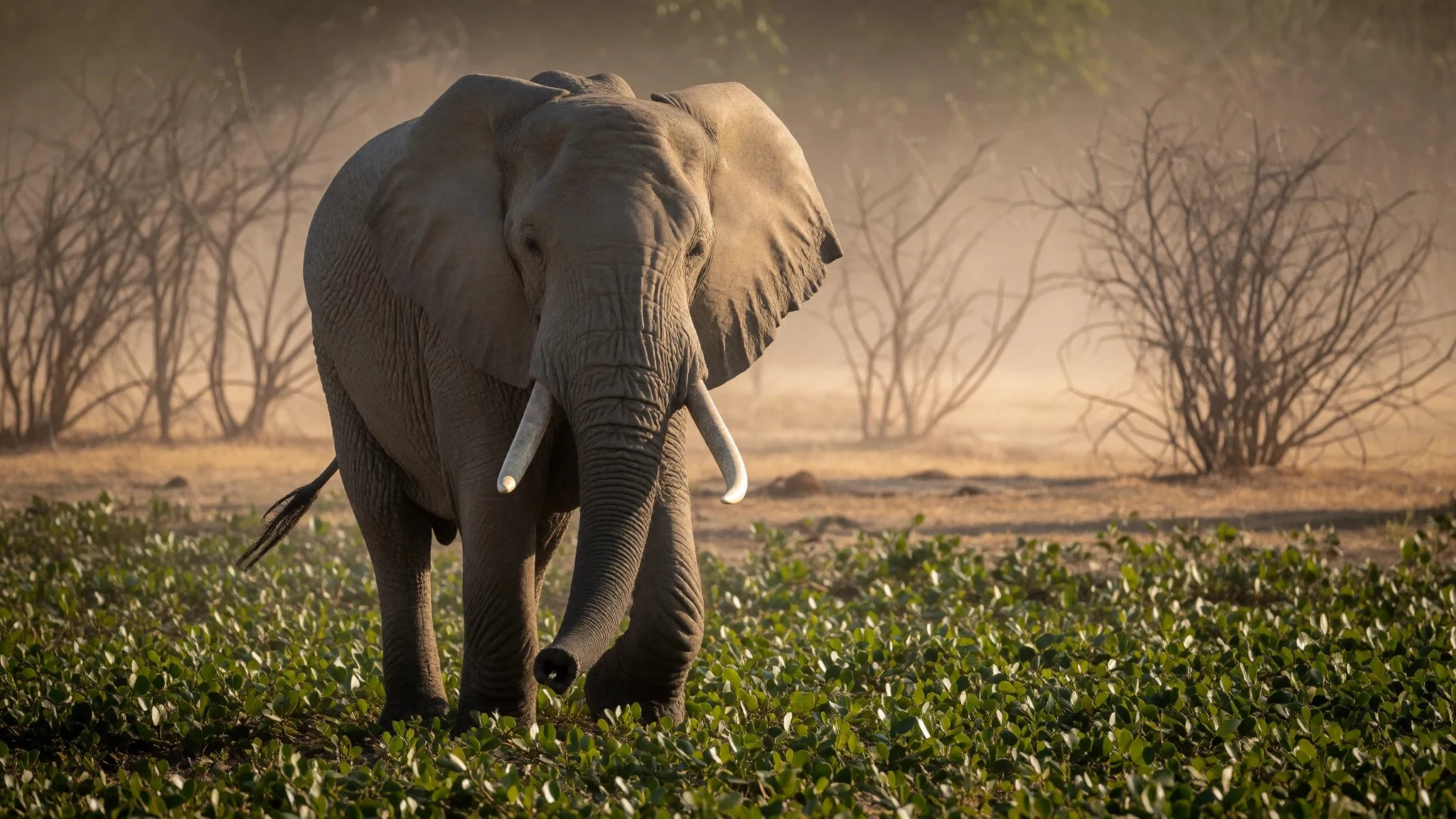
- Reticulated giraffe (animal)
The reticulated giraffe is the tallest animal on land, dressed in large, tidy, reddish-brown patches divided by thin pale lines, as if wrapped in a net. Samburu lies far enough north to offer it, a sight rarely found in southern Kenya. Keep well back, move and speak softly, and let your guide read the animals' mood so you never crowd them. Admire it from afar, and never feed it.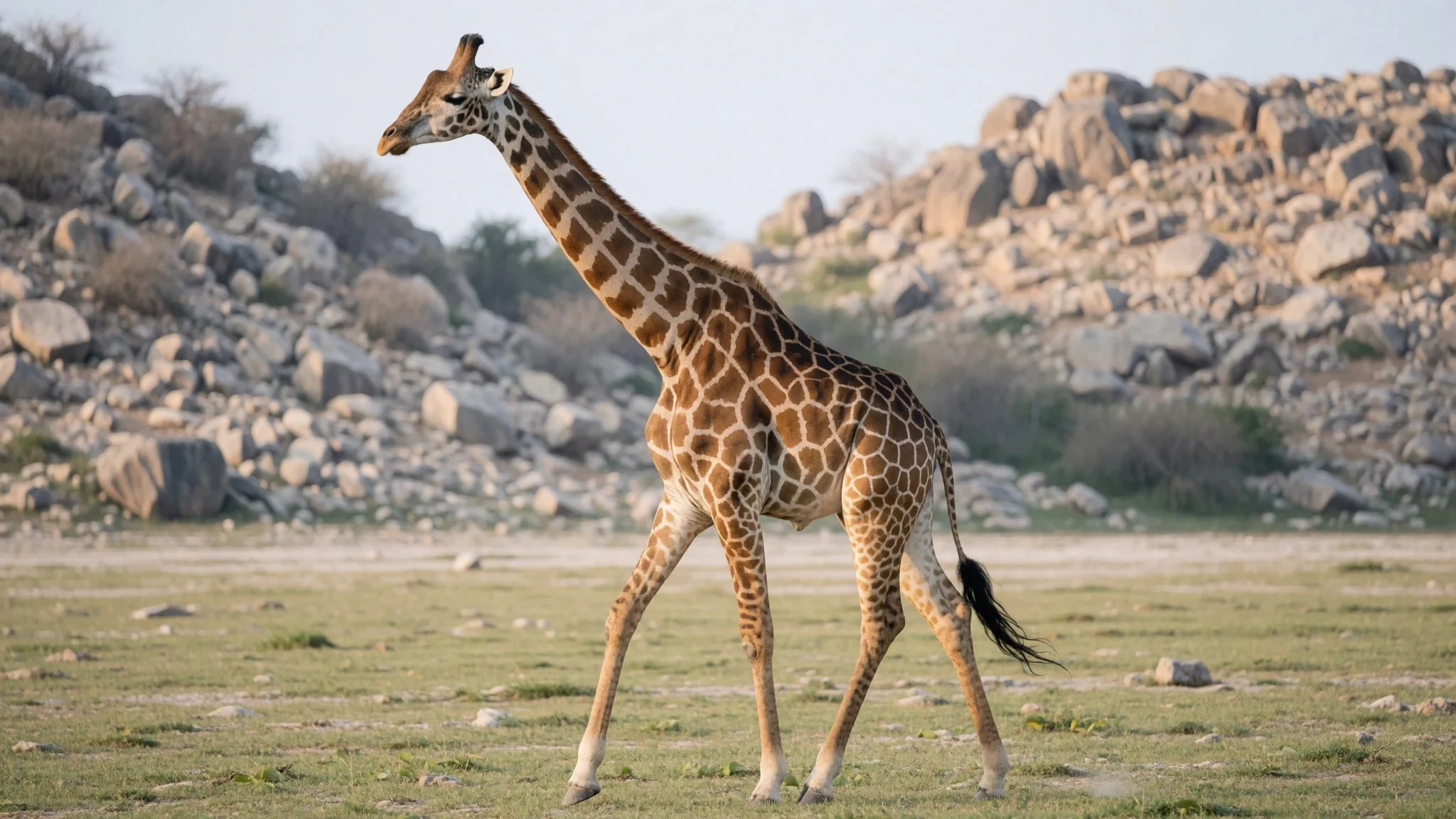
- Somali ostrich (bird)
The Somali ostrich is a huge bird that cannot fly, easily remembered by its blue neck. It belongs to the northern set of species that Samburu offers and that are seldom met in southern Kenya. Give it plenty of space, keep your voice low, and let your guide choose the best spot for watching. Binoculars bring it close without worry, and it should never be fed or chased.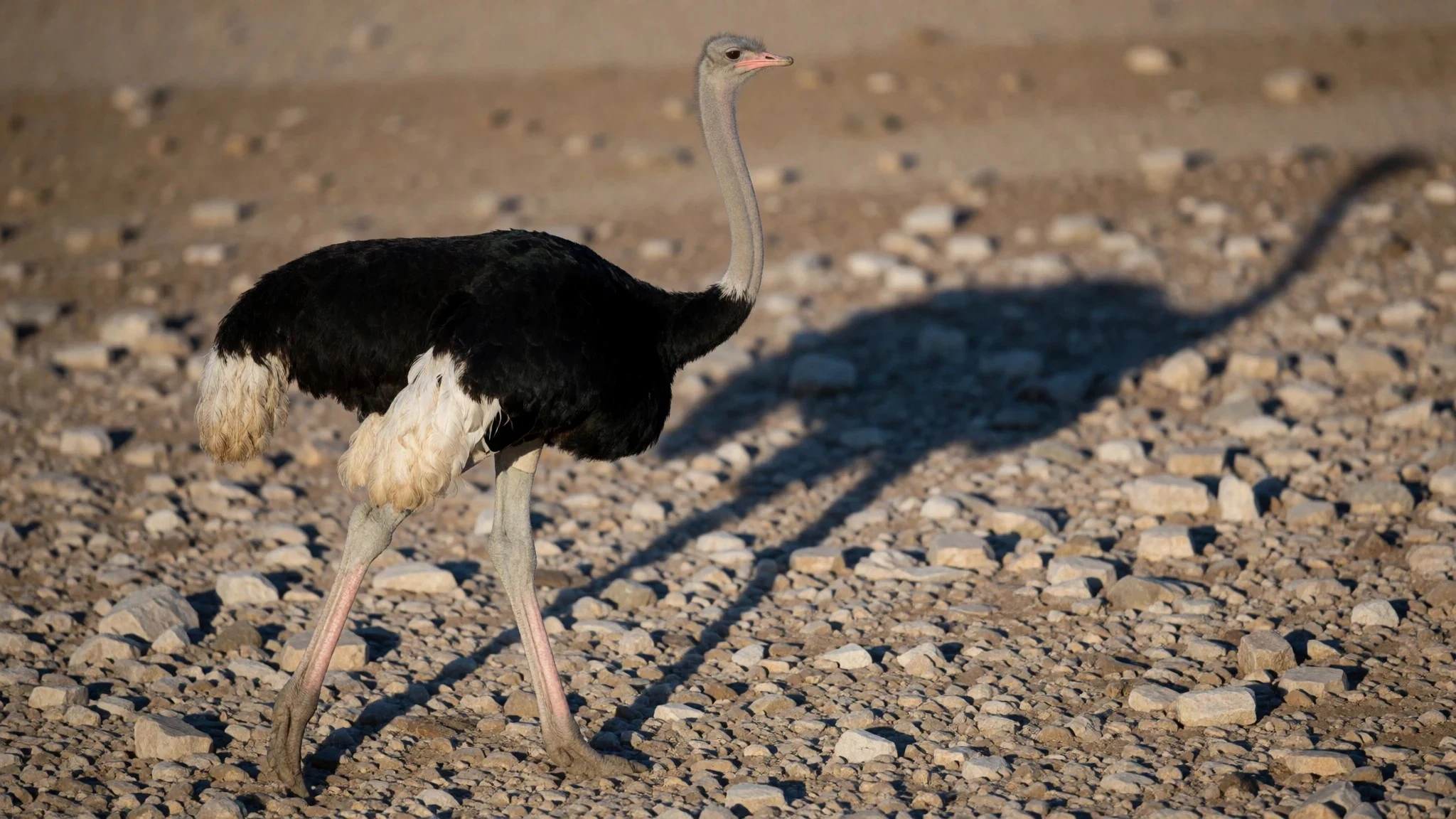
- Vulturine guineafowl (bird)
The vulturine guineafowl is the biggest of all the guineafowl, a striking blue-and-white bird you will not easily forget. In Samburu it is the signature sight, so keep an eye out as you travel. Walk or drive slowly, stay quiet so the birds keep going about their business, and ask your guide where to find them. Watch from a distance, and never toss them crumbs or seeds.