Saleaula
Saleaula, Samoa
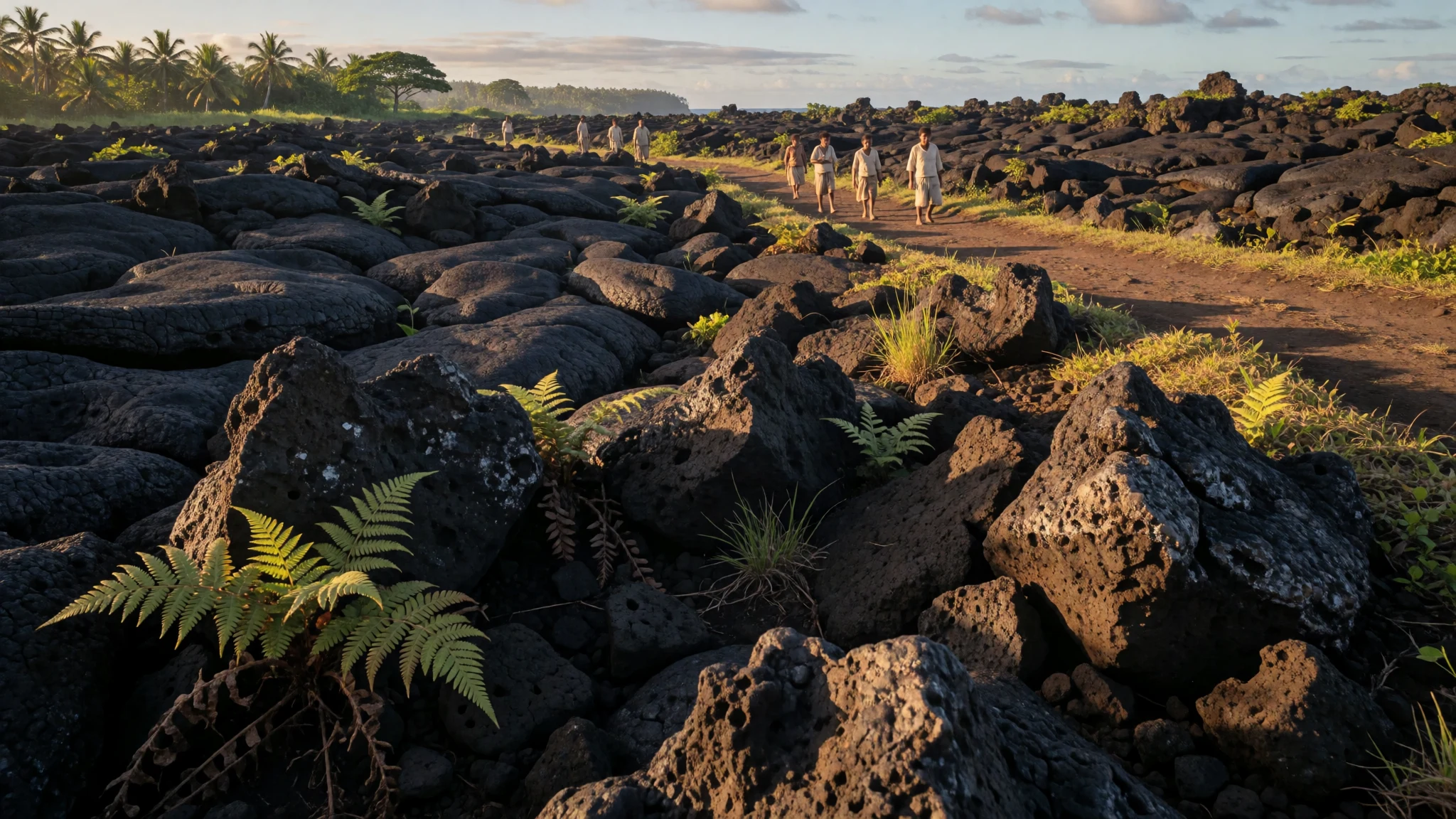
Visit Saleaula to witness dramatic black lava fields that swallowed villages on Savai'i island and experience traditional Samoan village life.
The place
Saleaula is a quiet coastal settlement positioned on the central northern shore of Savai'i island in Samoa, serving as the traditional political heart of the Gaga'emauga district. Chief council meetings take place at the local Vaitu'utu'u malae, anchoring the community's deep heritage. The settlement supports a small population of six hundred residents, where daily rhythms are closely tied to the land and the surrounding sea.
The broader archipelago was shaped by countless volcanic events that left distinctive cones scattered across the islands. Although none of the craters remain active today, gentle seismic tremors occasionally ripple through the ground, serving as a subtle reminder of the fiery forces beneath the surface. The landscape is enveloped in lush greenery, though almost none of it is primeval rainforest; generations of farming and semi-cultivated woodland have covered the interior.
Because the islands have sustained human life for thousands of years, cultivated plots near rural communities often resemble dense tropical jungle. The climate remains tropical throughout the year, featuring a warm rainy period from October to March alongside a drier season from May to October. Travellers journeying along the north coast find an extraordinary contrast between the vivid green foliage and the dark, barren rock expanses left behind by historical eruptions.
Its story
Samoa preserves a rich oral heritage explaining the beginnings of its communities and geographical features through ancient legends passed down across generations. The establishment of Saleaula is tied to a traditional narrative involving two brothers named Le'aula and Letufuga. According to local lore, Le'aula established the settlement that bears his family name, Sa Le'aula, while his brother Letufuga founded nearby Safotulafai.
The dramatic modern history of the area is defined by the earth itself rather than ancient dynastic disputes. In the early twentieth century, Mt Matavanu erupted continuously for several years, pouring vast rivers of molten rock toward the northern shore. These fiery flows overwhelmed several coastal villages, including parts of the local settlements, turning fertile farming land into an eerie, lifeless expanse of black stone.
Among the structures consumed by the advancing magma was a large church, whose ruined concrete walls still stand amid the hardened basalt waves as a poignant monument to the cataclysm. Today, the only sealed road on Savai'i passes directly through these stark volcanic flats, allowing visitors to contemplate the raw power of nature that reshaped the island's coastline and left an unforgettable mark on local memory.
What to see
- Saleaula Lava Fields — Central north coast of Savai'i
Explore the stark, silent expanses of black basalt rock created by the historical eruptions of Mount Matavanu. The site includes the haunting ruins of a concrete church half-swallowed by the hardened magma, providing a powerful window into the island's volcanic past. - Falealupo Rainforest Preserve — Western Savai'i
Wander through protected lowland forest on the western end of Savai'i. The reserve features a short canopy walkway suspended high among ancient tropical trees, offering adventurous travellers the unique opportunity to spend a night sleeping high up in the leafy branches. - Traditional Samoan Fales — Village settlements across Samoa
Observe open-sided architectural marvels scattered throughout village compounds across the islands. These circular or oval structures use stout wooden posts to support domed roofs without permanent walls, relying on woven blinds that lower for privacy during heavy tropical downpours. - Local Kilikiti Matches — Village greens across Savai'i and Upolu
Witness lively community games of kilikiti, the energetic local adaptation of cricket played by both men and women. The matches feature modified rules, handmade bats of distinct shapes, and enthusiastic crowds cheering on opposing village teams with singing and drumming.
Culture
Samoan society is deeply religious, with the majority of the population following Christian denominations. Sunday is observed strictly as a holy day when commerce halts, and visitors should refrain from walking through villages during this time. Samoan society places a strong emphasis on respectful behavior, and visitors should always be mindful of local customs and community guidelines when exploring rural settlements.
The social fabric is guided by strict protocols overseen by village chiefs, known as matai. While urban Apia maintains a relaxed atmosphere, rural settlements expect modest behaviour and adherence to local customs. Traditional authority ensures that community rules are upheld firmly across the districts. Always avoid walking through village settlements during sacred Sunday hours.
What to wear
Traditional Samoan attire reflects the tropical climate and cultural identity, historically crafted from natural plant materials like pounded bark cloth, known as siapo. While modern garments are common today, cultural pride remains strong through the everyday wearing of the lava-lava, a versatile rectangular wrap-around cloth worn by both men and women.
In daily life across villages, contemporary clothing is practical and casual, though modesty is paramount. Visitors should dress respectfully to align with local customs and religious values. Women should wear skirts or shorts that reach the knees and avoid walking around villages in swimwear or topless attire, reserving swimwear strictly for the beach. Shirts or t-shirts must be worn at all times outside coastal sand areas, and light, breathable fabrics are ideal for coping with the persistent tropical heat and humidity.
What to eat
- Umu — Prepared in family courtyards across villages
The traditional cooking method where hot stones are layered with ingredients such as breadfruit, taro, pork, and fish, then covered entirely with banana leaves to bake slowly in the residual heat. - Oka — Local eateries and guesthouses throughout the islands
Fresh raw fish finely diced and marinated in a refreshing blend of citrus juice, rich coconut cream, salt, and crisp onions. - Palusami — Traditional Sunday lunches and village feasts
A celebrated delicacy made from tender taro leaves filled with rich coconut cream and onions, wrapped securely and baked inside an underground stone oven. - Taro and Breadfruit — Markets and family meals across Samoa
Essential starchy root and tree crops that form the backbone of the local diet, typically boiled, roasted, or cooked within traditional umu feasts.
Plan it
Best time. May to October offers the dry season with lower humidity and pleasant breezes, while November to April brings the warmer rainy season and tropical cyclone risks.
How long. 2–3
Getting there. Fly into Faleolo International Airport on Upolu, take a taxi or transfer to Apia, then catch the inter-island ferry across to Savai'i and drive to the north coast.
Budget. mid
Tips
- Carry sufficient cash as rural shops and village fees rarely accept cards
- Arrange transport ahead or use local daytime buses from main roads
- Respect village boundaries and local customs when exploring independently
- Pack lightweight, modest clothing suitable for tropical heat and humidity
Etiquette
- Avoid walking through villages during Sunday church hours
- Refrain from wearing swimwear outside the beach and keep knees covered
- Observe Sunday rest and do not wander through settlements on holy days
Nearby
Sources
- Wikidata Q2728814 (CC0)
- Wikipedia Saleaula (CC BY-SA 4.0)
- Wikivoyage Samoa (CC BY-SA 4.0)
- NASA Photo (Public domain)
- Thomas Andrew Photo (Public domain)
- Neil Photo (CC BY 2.5)


