Falealupo
Falealupo, Samoa
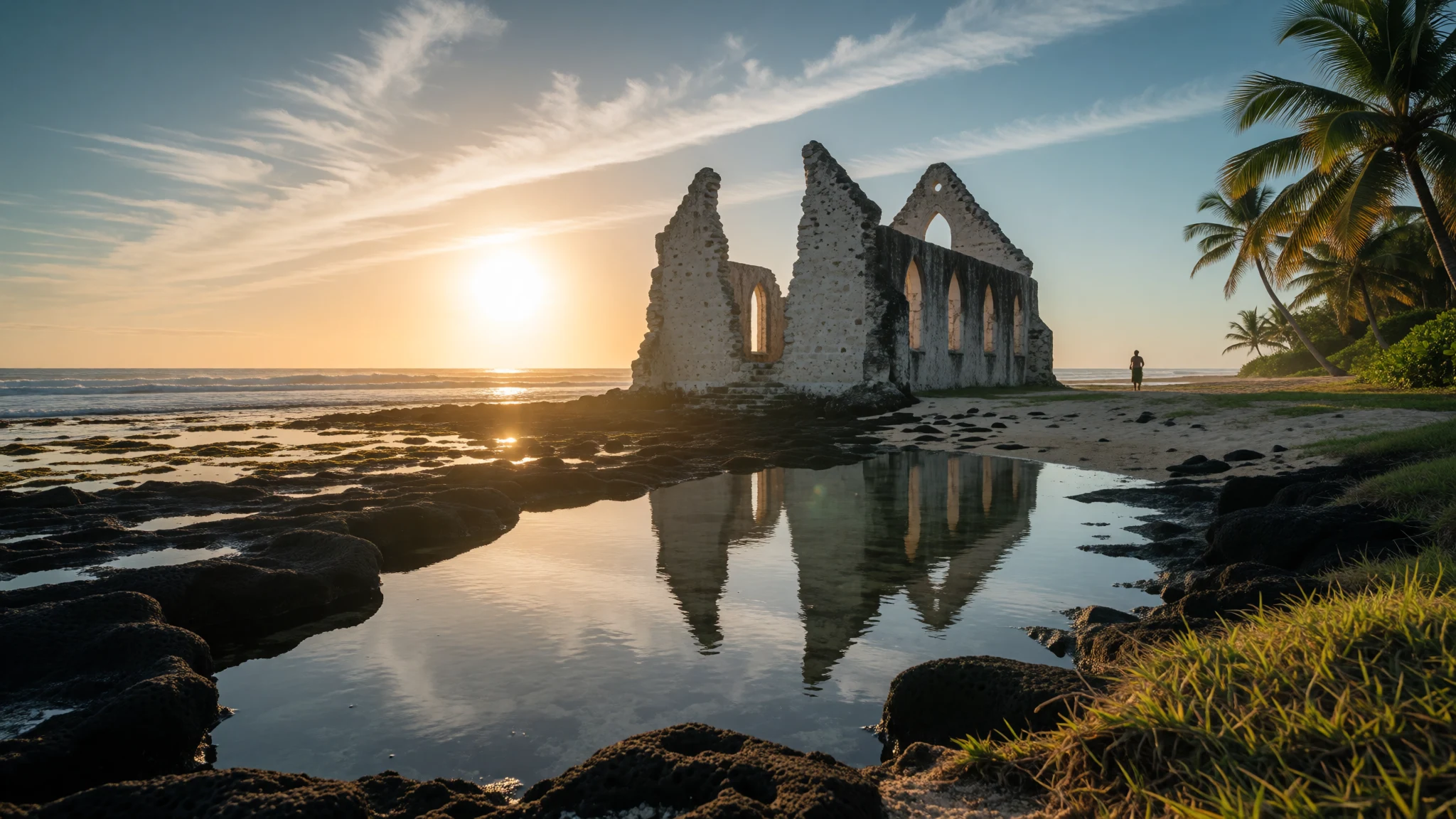
Falealupo is a quiet village at Savai'i's western tip, where sunsets, rainforest and ruined coastal churches reward the slow, unsealed journey.
The place
Falealupo sits at the western end of Savai'i, one of Samoa's two main islands, at an elevation of just 9 m. The village is really two settlements. Falealupo-Uta lies inland beside the island's main road, with a few small shops and a money-transfer counter. Falealupo-Tai lies by the sea, reached along a track of about 9 km that is mostly unsealed, and it has beach fale accommodation and a shop. Between the two, the land is a patchwork of family plots, coconut groves, rainforest, rock pools, caves and sandy coves. The whole island is volcanic, and low cones rise here and there across the landscape. Most families now live inland, close to the road and the buses, so the coast feels sparse: few houses, open grass, and old church walls standing without roofs. Falealupo is also its own electoral constituency within the larger Vaisigano district. Visitors come for quiet rather than facilities. Expect simple rooms, limited choice at mealtimes and long stretches without another traveller in sight. Heat and humidity are constant, so walking is far more pleasant in the early morning and late afternoon. Rain turns the unsealed road slow and muddy, and it is sensible to sort out cash in Falealupo-Uta or before leaving the main road, then head to the coast.
Its story
Falealupo's reputation for a long time rested on its position. Samoa then lay just east of the International Date Line, and this village at the island's far west was described as the last place in the world to watch each day's sunset. In 2011 the government moved the line to the east of the country, so the boast no longer holds, although the view over open ocean is still the reason many people make the journey. The coast has lived through upheaval too. A run of cyclones damaged the shoreline settlement badly, and families chose to rebuild nearer the highway, with its buses and shops. What stayed behind were church ruins close to the water, which now work as quiet markers of that move. Faith runs deep in the village's story. A monument at Falealupo commemorates the arrival of Catholicism in Samoa, and the village school once taught a boy who became Cardinal Pio Taofinu'u, the first Polynesian cardinal. Alongside the church history sits a more recent chapter in conservation: the rainforest behind the village is now a preserve, with a short canopy walkway that lets visitors see the treetops without felling a thing. Old and new sit side by side here, in a place small enough that everyone seems to know who has come to stay.
What to see
- Sunset at Falealupo-Tai — Falealupo-Tai, the coastal settlement
Falealupo-Tai faces open ocean with nothing to the west, so the evening sky is the main event. Locals once called this the last sunset on Earth; the date line has moved, but the show has not. Arrive early, bring a torch for the walk back, and leave before the dusk prayer hour.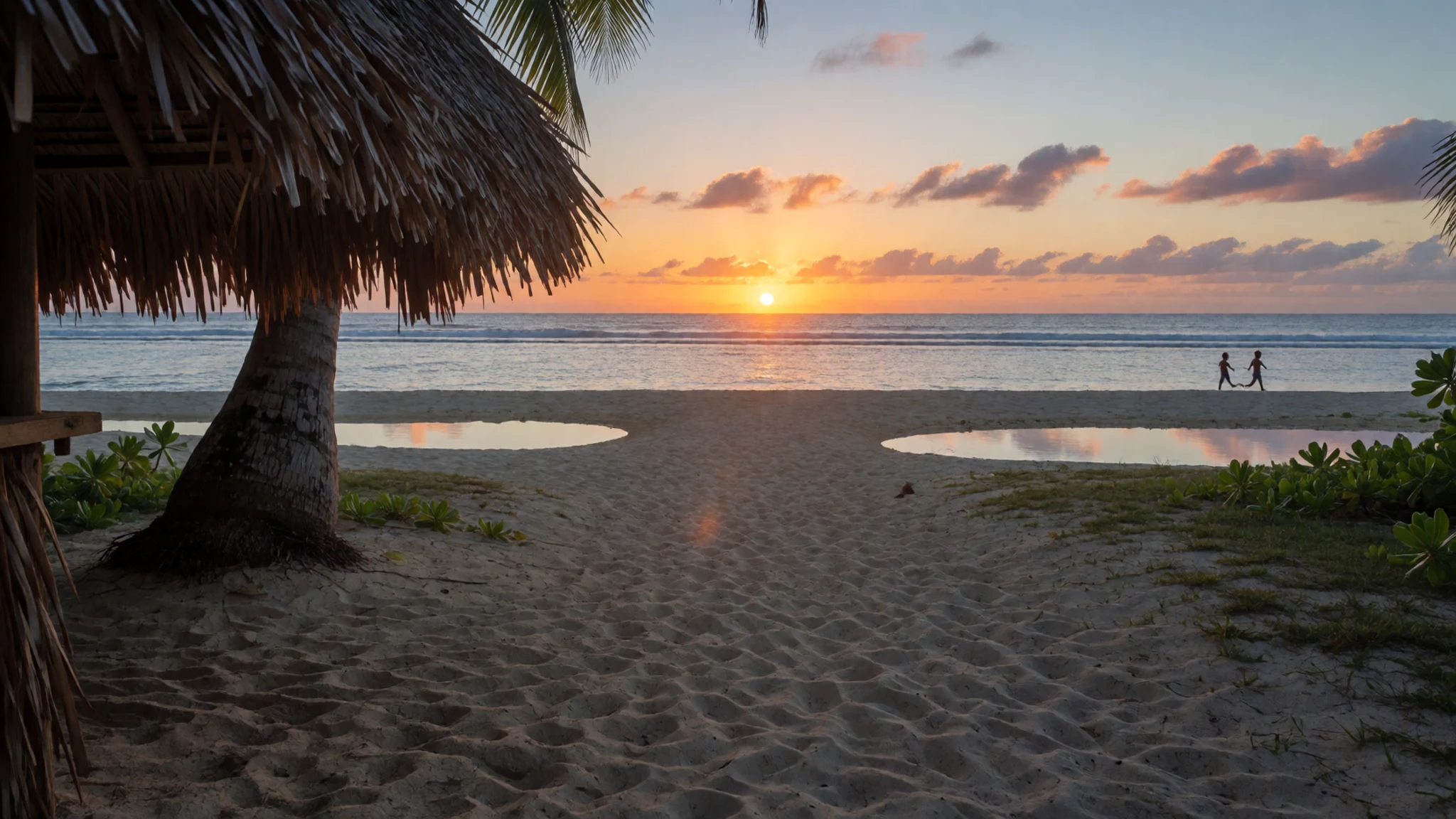
- Falealupo Rainforest Preserve — Inland from the coast, near Falealupo
Behind Falealupo stands a patch of lowland rainforest with a short canopy walkway reached by a tower. Climbing it puts visitors among the upper branches, among birds and hanging vines. It is a gentle outing rather than a trek, and sleeping in the trees is possible. Check arrangements locally before going.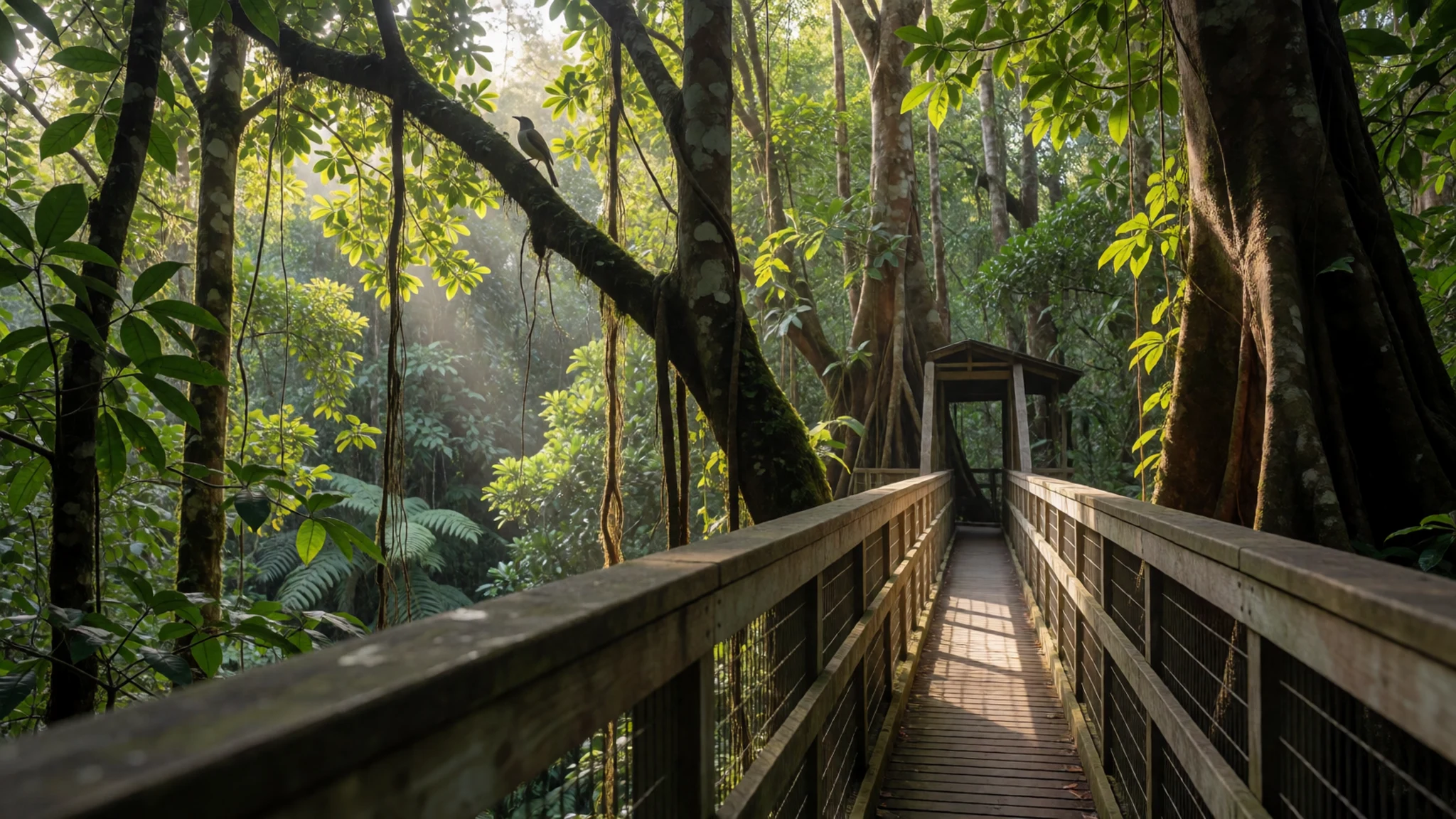
- The western tip of Savai'i — Coast west of Falealupo-Tai
Walking the shoreline near Falealupo shows how thin and low the island's western edge is. Lava rock, scrub and surf meet along the coast, and the horizon is clear on three sides. Wear sturdy sandals, because the rock is sharp and wet in places, and keep an eye on the tide.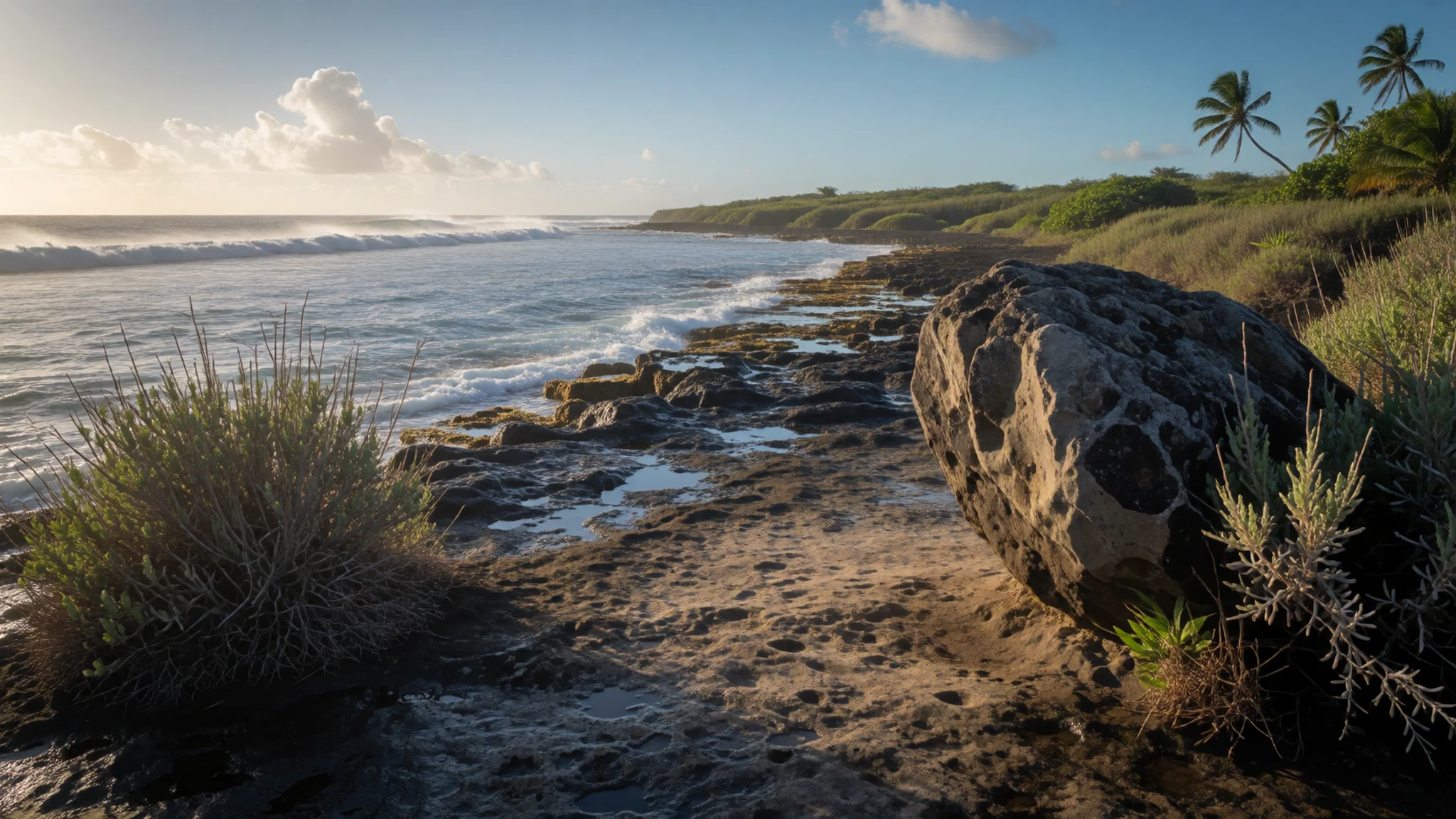
- Roofless church ruins — Along the Falealupo shoreline
Along the coast near Falealupo are the remains of churches left standing after cyclones drove families inland. The walls are quiet, overgrown and photogenic, and they tell the story of the village better than any sign. Treat them as places of respect, not as props, and ask before photographing nearby homes.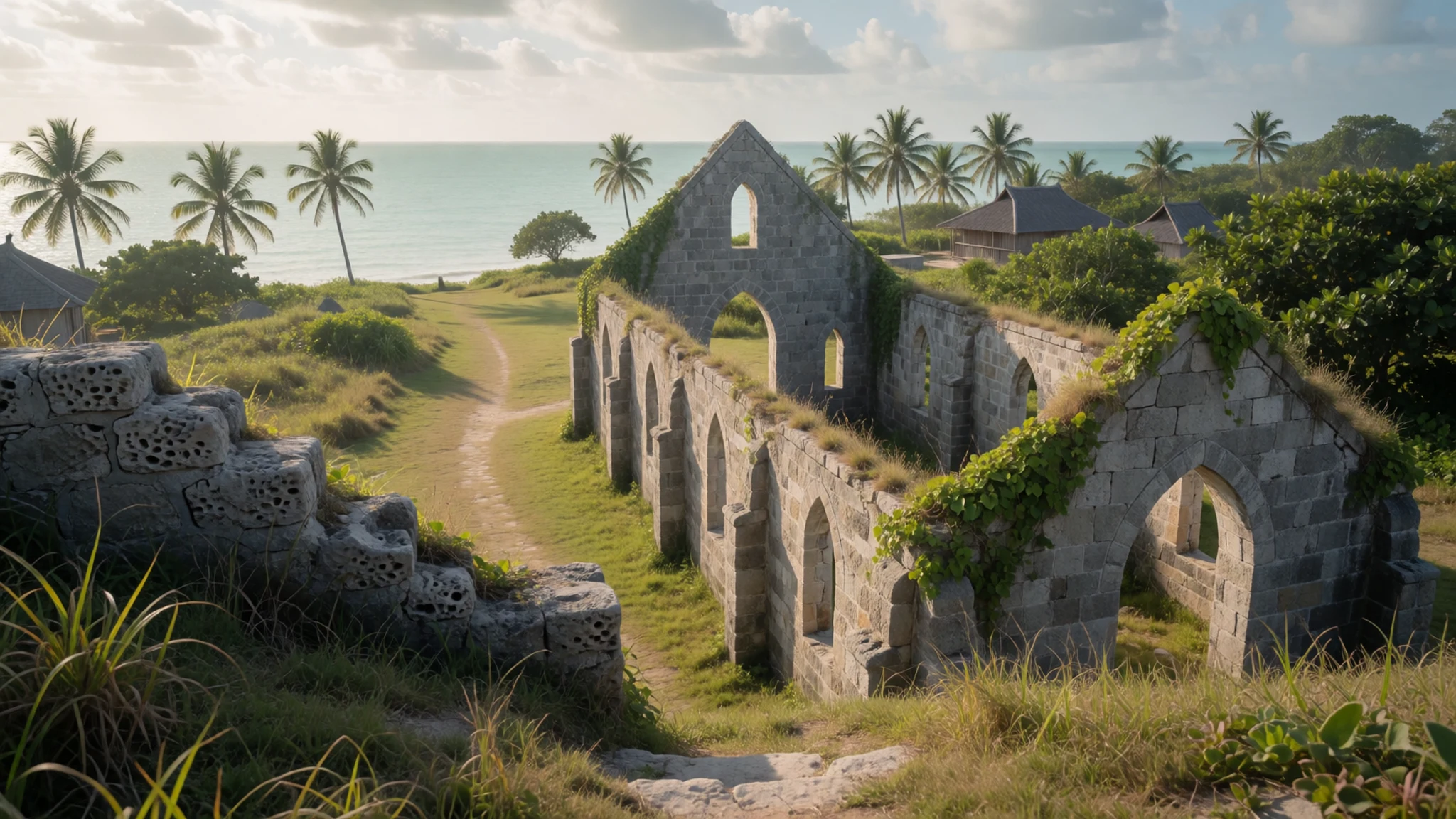
- Catholic arrival monument — Falealupo village
A monument in Falealupo marks the arrival of Catholicism in Samoa, and it ties the village to the wider religious life of the islands. It is a short stop by the road rather than a destination, but it explains why Sundays and prayer times matter so much here.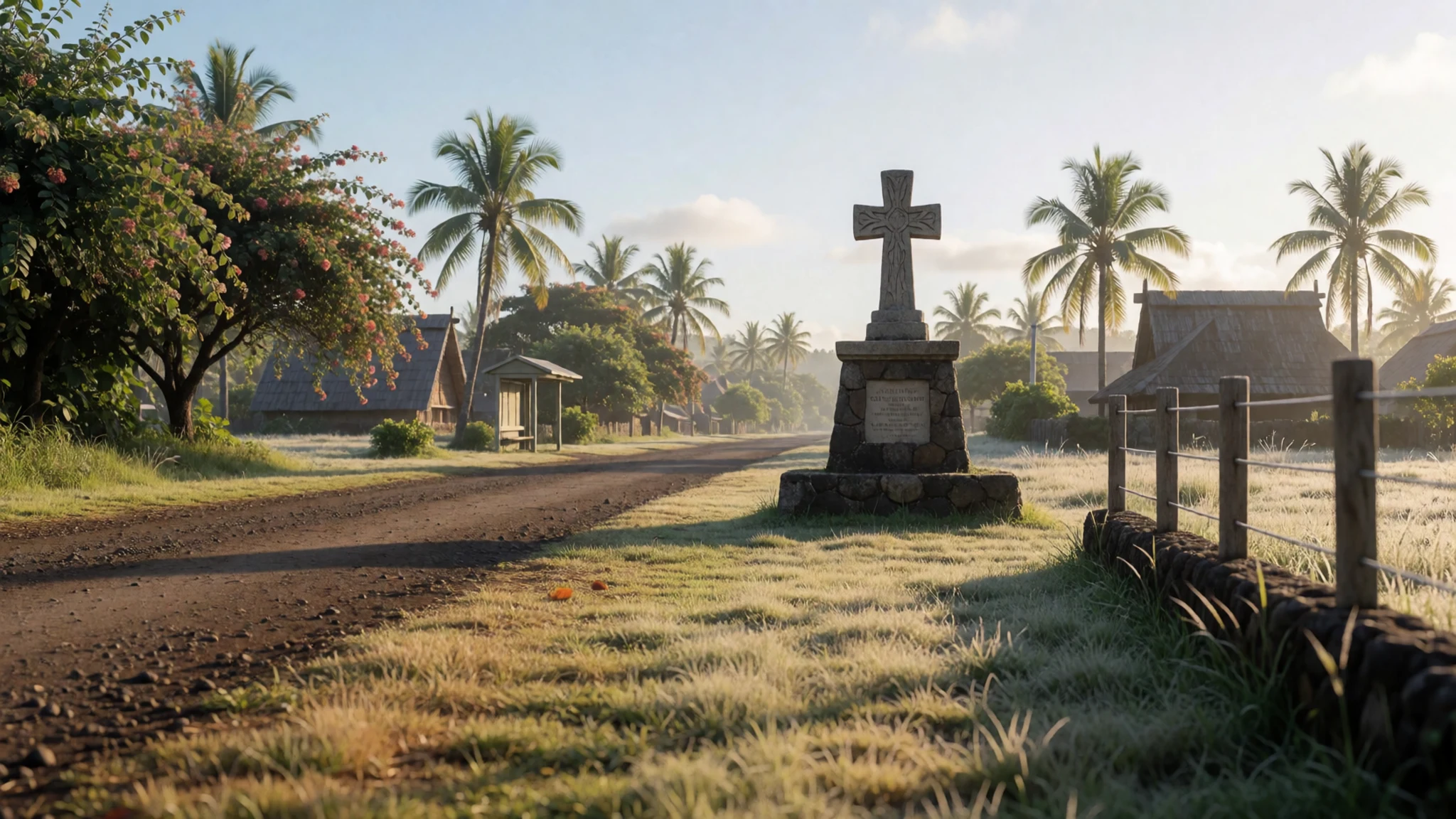
Culture
Falealupo is a village that runs on shared rules, and church and chiefly authority shape the day. Samoan life is governed by strict protocol, and the village matai, the chiefs, enforce local rules. Visitors are given some leeway as outsiders, but they are expected to follow the village's way of doing things. Sunday is a day of rest and worship, with shops and businesses closed and most people at church or at home with family. Many villages also keep a short prayer period at sundown, usually around half an hour, when people stay indoors and quiet is expected. Meals and hospitality matter enormously. Food is shared generously, and guests are often fed before anyone else eats. Gifts, kindness and patience count for more than haste. Visitors staying at a beach fale are usually hosted by a family, so the stay is part of village life, not a separate hotel-style experience. Church ruins, the Catholic monument and the school connect the place to a long religious history. Music, singing and the sound of services drift across the village on Sundays. Walk gently, greet people with a smile, and ask before taking photographs of anyone's home or family. Stay out of the village lanes during Sunday and the evening prayer hour, and ask your host or a chief before swimming or walking on anyone's land.
What to wear
Falealupo follows the wider Samoan way of dressing, in which a wrapped cloth is the everyday basis. The lavalava is a length of cotton tied at the waist, worn by both men and women, and men's formal wear includes the ie faitaga, a tailored wrap in a plain or dark cloth. Women wear the puletasi, a matching tunic and skirt, especially for church and celebrations. Ceremonial occasions bring out the ie toga, a fine mat woven from pandanus leaves and prized as a gift, and siapo, bark cloth printed with patterns by hand. Day to day, people in the village wear light T-shirts, shorts, lavalava and rubber sandals, with their best clothes kept for Sundays. A visitor should dress to match the climate and the village. Pack light, quick-drying cotton, shorts that reach the knee, and shirts for walking through the village. Swimwear belongs on the beach only, and topless sunbathing is taboo. For Sunday church, bring something modest that covers the shoulders and knees. Sturdy sandals or water shoes help on rock pools and unsealed tracks, and a hat, sunscreen and a light rain jacket are worth carrying.
What to eat
- Umu feast — Family cookhouses in the village, usually on Sundays
The umu is Samoa's traditional earth oven: hot stones, then breadfruit, taro, green bananas, fish and pork covered with banana leaves. Around Falealupo it is cooked for family meals, mostly on Sundays. Ask your host whether you can join one.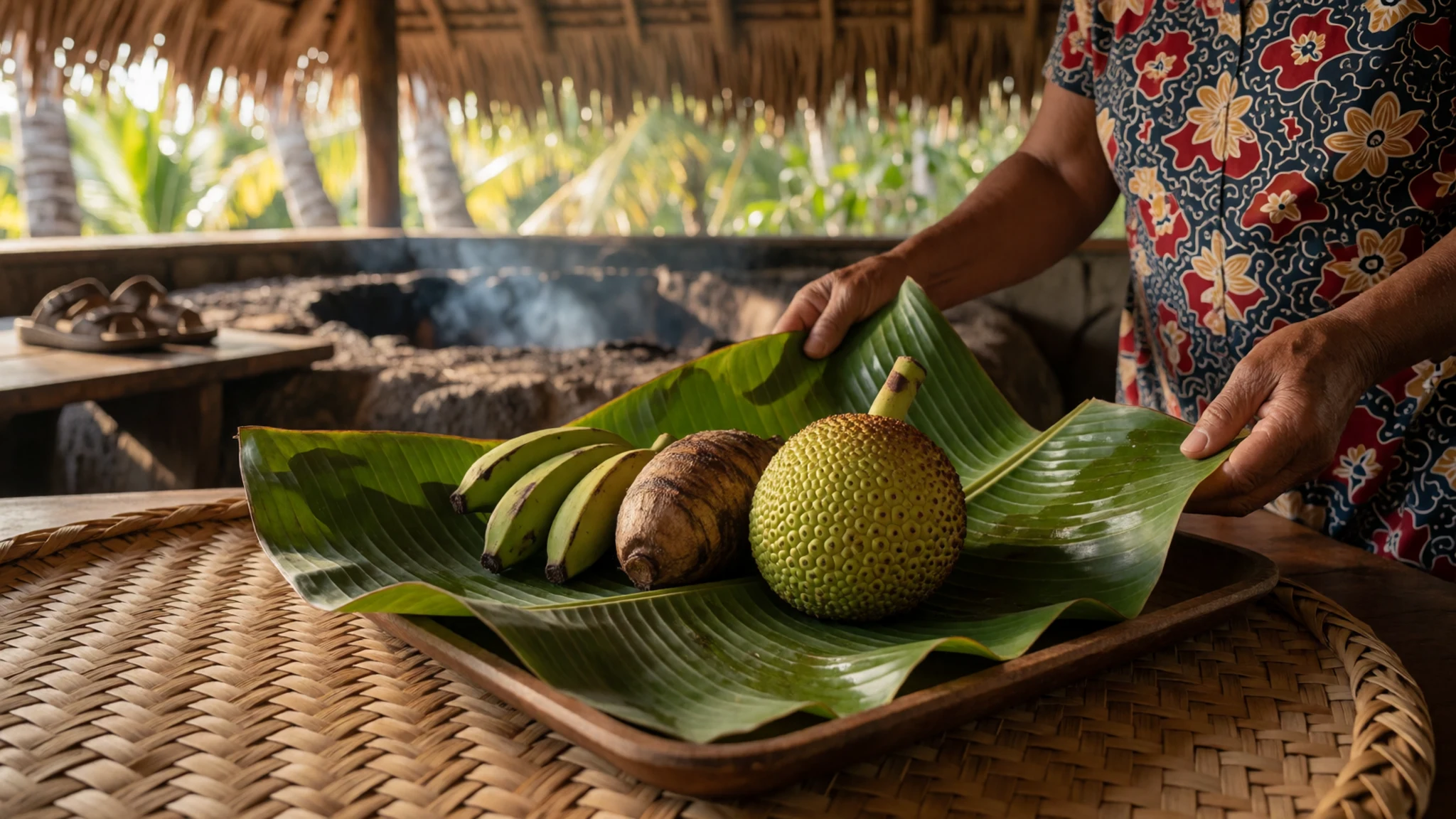
- Palusami — Beach fale kitchens and family umu
Palusami is taro leaves wrapped around coconut cream and onion, then baked in the umu until soft and rich. Done well, it is one of the dishes most worth tasting in Samoa. Ask at your beach fale if a family is cooking.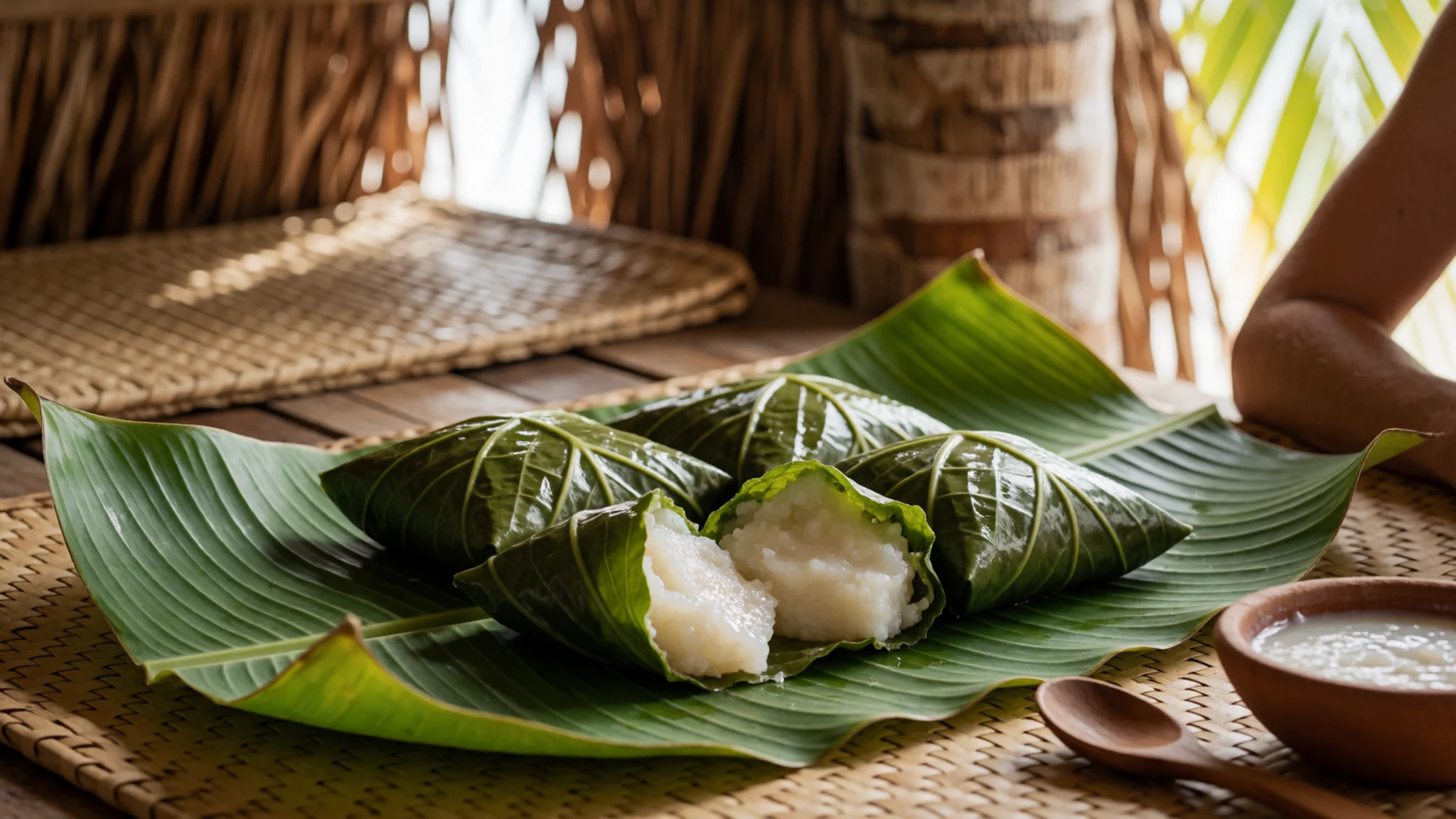
- Oka — Beach fale meals and village family tables
Oka is raw fish cut small and marinated in lemon or lime juice, coconut cream, salt and chopped onion. It is fresh, cool and mild, and works well on a hot day. Fish comes straight off local boats. - Taro and breadfruit — Any village meal, and roadside stalls near the main road
Taro and breadfruit are the staples beside most plates, boiled or baked in the umu. They taste soft and starchy, a bit like potato, and they soak up the coconut cream and fish juices around them. - Corned beef — Small village shops in Falealupo-Uta and Falealupo-Tai
Tinned corned beef is a long-time Samoan favourite, served with umu food and in cooked dishes. It sits oddly with the island's fresh produce but remains popular, and is easy to find when other dishes are not on offer.
Plan it
Best time. May to October, when the weather is generally drier and a little less humid; the wetter months make the unsealed road to the coast slow and muddy, and the heat is constant year-round.
How long. 2–3
Getting there. Fly to Faleolo airport (APW) near Apia on Upolu, then take the inter-island ferry to Savai'i (check the official timetable). From the ferry, take the main island road west by local bus or taxi to Falealupo-Uta, then the last stretch, mostly unsealed, to the coast.
Budget. low
Tips
- Arrive in daylight if possible, since the road to the coast is unsealed and unlit
- Bring cash and sort money out in Falealupo-Uta, where services are limited
- Carry water, insect repellent, a torch and sun protection
- Book beach fale accommodation ahead and confirm how to reach it
- Check the ferry and bus timetables locally, because services thin out at weekends
Etiquette
- Stay off village paths on Sundays and during the sundown prayer period
- Dress modestly in the village, with swimwear on the beach only
- Ask your host or the village chief before swimming, walking on land or taking photographs
Nearby
Sources
- Wikidata Q5431839 (CC0)
- Wikipedia: Falealupo (rev 1381796551) (CC BY-SA 4.0)
- Wikivoyage: Samoa (rev 5362689) (CC BY-SA 4.0)
- Photo: Falealupo sunset, Samoa (CC BY 3.0)
- Photo: Main road in Falealupo village in the afternoon (CC BY 3.0)
- Photo: Canopy, Falealupo Rainforest, Savaii (CC BY 3.0)
- Photo: West end of Savai'i (NASA ISS018-E-38788) (Public domain)
- Photo: Samoa, Savaii western tip (CC BY 3.0)
- Photo: Falealupo Beach Fale accommodation (CC BY 3.0)
- Photo: Canopy walkway tower in Falealupo (CC BY 3.0)
- Photo: Catholic Monument, Falealupo, August 2016 (CC BY-SA 4.0)


