Apia
Apia, Samoa
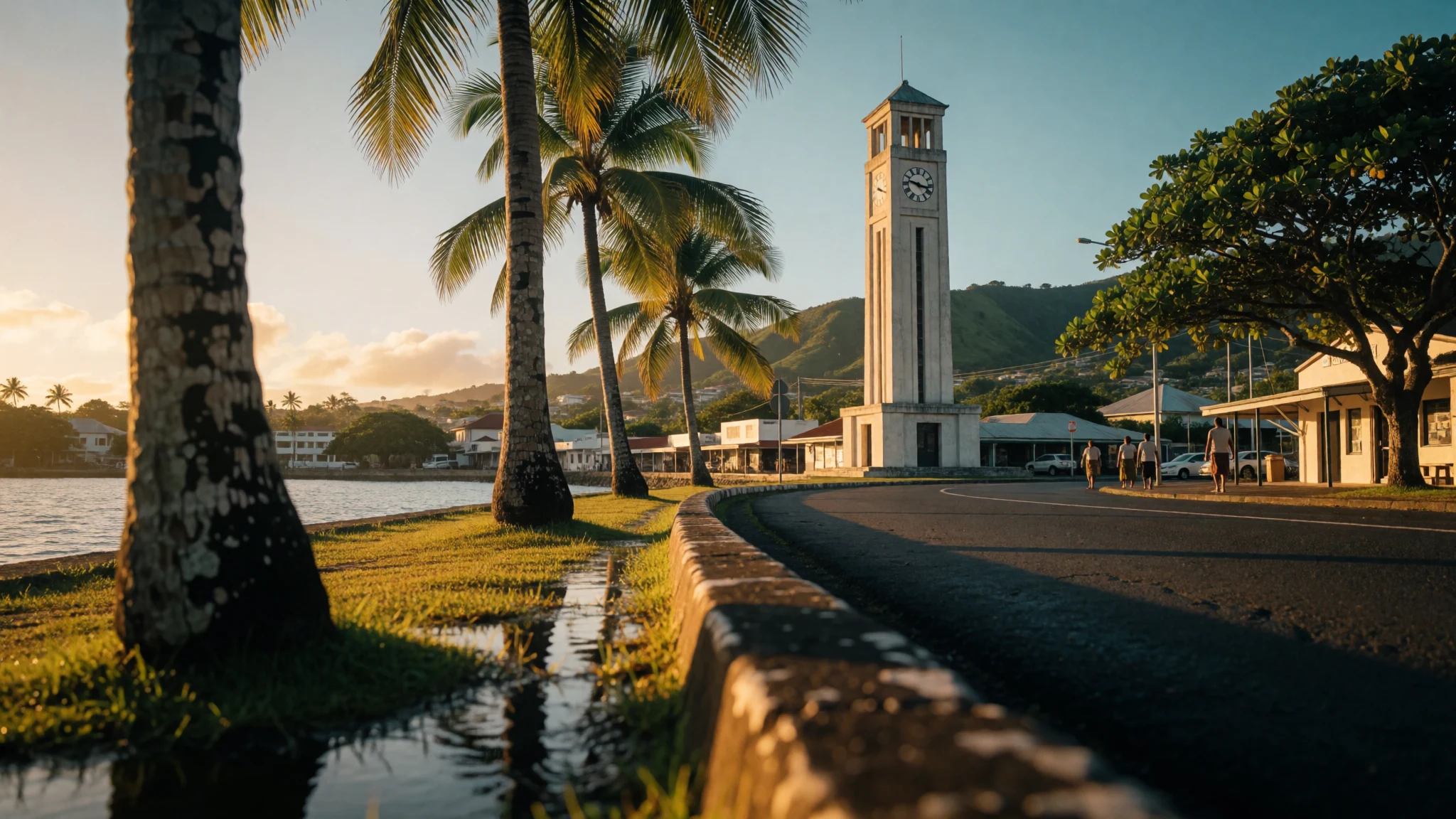
Apia is a small Pacific capital where chiefly tradition, Sunday church and a working harbour sit beside Robert Louis Stevenson's hillside grave.
The place
Apia sits on the central north coast of Upolu, the second-largest island of Samoa, and is the country's capital and largest city. About 37,700 people live here, on a narrow coastal plain only about 2 metres above sea level. Behind the town the land climbs fast: Mount Vaea, 472 metres high, rises directly to the south, and two ridges run inland on either side of the Vaisigano River, each carrying a road. The western road, Cross Island Road, is one of the few routes that crosses Upolu to the south coast. The harbour is natural, formed at the river mouth, and it still shapes the town: the fish market, the clock tower, the cathedral and the main shops are all within a short walk of the waterfront. Apia is less a tidy grid than a spread of villages, with government buildings, churches, shops and family compounds mixed together, and newer industrial districts stretching to the west. It is not a beach resort. The better sand lies elsewhere on Upolu, and Apia works best as a base for markets, history, a climb up Vaea and a feel for daily Samoan life. The climate is tropical and humid, averaging about 26 °C through the year, with trade winds that take the edge off the heat and very heavy rain from December to March. Sundays are quiet and built around church and family meals, so it pays to plan around them.
Its story
Apia began as a small village, with only a few hundred residents at the start of the nineteenth century, and that village still exists inside the modern city, with its own matai, the chiefly title-holders, and its own customary greetings under fa'a Samoa. The town grew as a port from 1850, the founding date in the facts, drawing traders and consuls from Germany, Britain and the United States. Their rivalry produced one of the Pacific's best-known disasters. In the late nineteenth century, warships from the three powers sat in the harbour as a typhoon closed in, each captain unwilling to be the first to back down. Nearly all the vessels were wrecked and many sailors died. Only the British cruiser Calliope escaped, crawling out to open water under full steam. Germany then governed the territory for the first years of the twentieth century, until a New Zealand force took Apia during the First World War and New Zealand stayed on. Resistance grew through the Mau movement, which pressed for self-rule. In the last days of 1929, police fired on a peaceful Mau procession in the town, and Tupua Tamasese Lealofi III was among those killed. Samoa later became independent, and Apia has been the capital since 1959. Today the harbour front carries that memory quietly, in a clock tower built as a war memorial, a parliament on the Mulinu'u peninsula, and a Sunday calm that shows how deeply church and village authority run through public life.
What to see
- Robert Louis Stevenson Museum — Vailima, hills above Apia
This is the house Robert Louis Stevenson built on the slopes above Apia in his last years. The author of Treasure Island and Dr Jekyll and Mr Hyde settled in Samoa and stayed until his death. Check opening arrangements locally before going, as they can change. The rooms show how a Victorian household adapted to the tropics. - Mount Vaea and Stevenson's grave — Mount Vaea, south of the town
Mount Vaea rises 472 metres directly behind Apia, and Stevenson's grave sits at the top, looking back over his house and the sea. Early morning is best, while it is cooler. The longer, shallower path takes about an hour and is easy walking after dry weather, but slippery after heavy rain. - Falemata'aga – Museum of Samoa — Central Apia
Apia's national museum, Falemata'aga, occupies a colonial building more than a century old that began life as a German school. It is a sensible first stop for background on Samoan history and the colonial years before heading out to villages. Check current opening days locally, as they vary.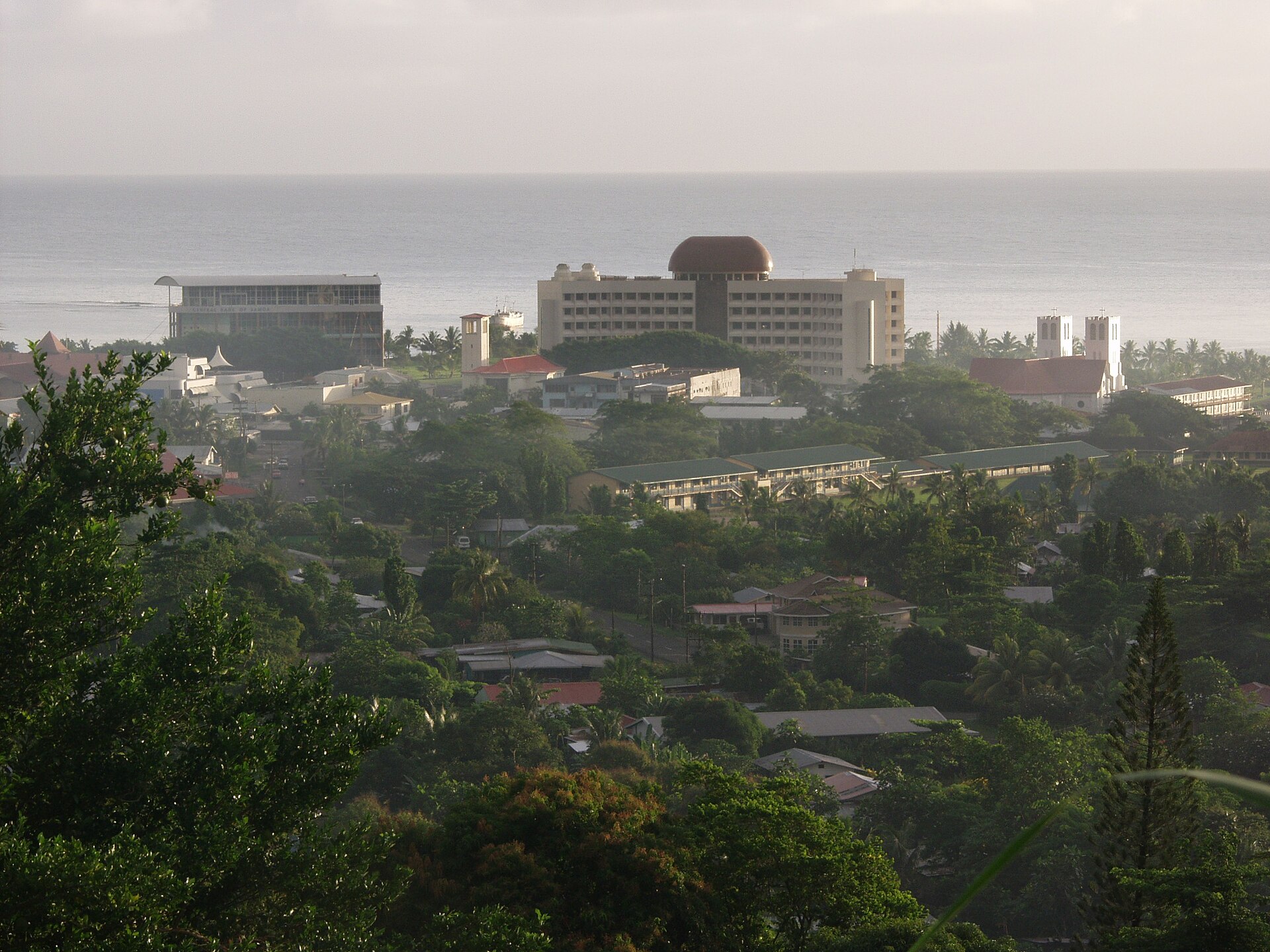
- Clock tower — Waterfront, central Apia
The clock tower stands in central Apia, built as a war memorial and treated by locals as the middle of town. It is a handy meeting point and a reference for the waterfront road, with the cathedral, the fish market and many shops within a short walk. Early morning or late afternoon makes the stroll more comfortable.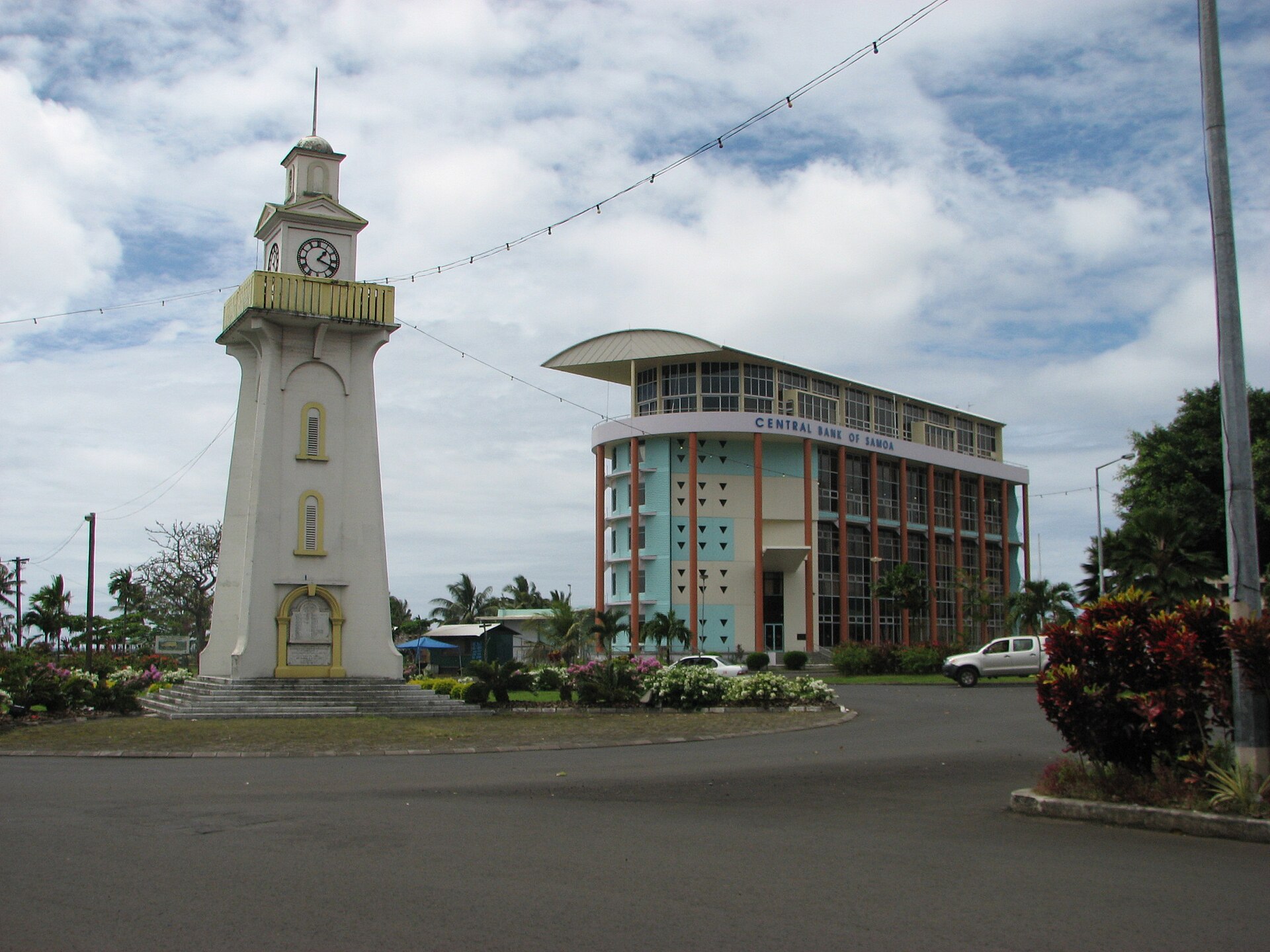
- Immaculate Conception Cathedral — Near the harbour, central Apia
The Catholic cathedral is one of the larger buildings in Apia, set apart from its neighbours by its cupolas and ornament. Church singing is central to Samoan Sundays, but visitors attending a service should dress modestly, sit quietly towards the back and ask politely before going in at other times. - Mulinu'u peninsula — West of central Apia
Mulinu'u peninsula juts out west of the centre and holds the parliament house, the law and titles court, the old observatory and many important tombs. It is a quiet place to see how government and chiefly tradition share the same ground. Stay on the roads and paths, and keep clear of fenced family graves.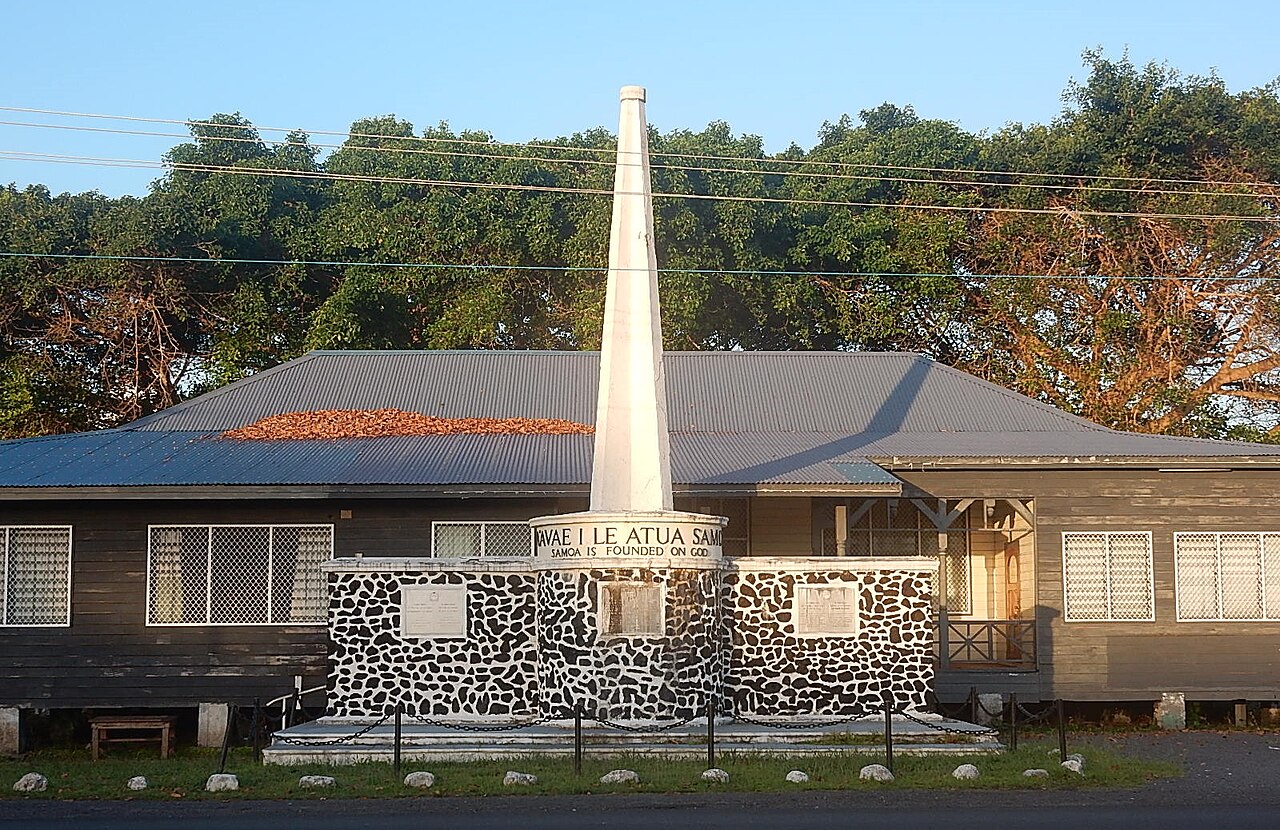
Culture
Apia is the capital, but daily life still runs on fa'a Samoa, the Samoan way, in which family, church and chiefly title shape almost everything. Each village, including the original Apia Village inside the modern city, has its own matai, who hold authority and speak for their families, and formal greetings follow long-established customs. Christianity is woven through the week. Sunday is for church, often in white, followed by a large family meal, and the fish market fills early with people buying for the Sunday tonai. Many shops and eateries slow down or close that day, so plans work better when made around it. Singing is central to worship, and walking past a church on a Sunday morning is often enough to hear it. The historic Mau movement, the struggle for self-rule against New Zealand administration, is remembered with pride, and the monument to Samoa being founded on God, along with the parliament and the law and titles court, shows how faith and chiefly tradition continue to sit inside public life. Respect is shown through a lowered voice, modest dress, patience and a willingness to be hosted. Ask permission before photographing people or entering a village, and keep quiet and still during Sunday worship rather than wandering around with a camera.
What to wear
In Apia, traditional dress centres on the lavalava, a wrapped cloth worn at the waist by men and women. Men's formal versions, the ie faitaga, are tailored with pockets and worn with a shirt, while women wear the puletasi, a matching tunic top and wrapped skirt. Ceremonial occasions bring out siapo, bark cloth printed with patterns, and the ie toga, a finely woven mat that is exchanged at weddings, funerals and title ceremonies. Everyday dress in town is light and practical: cotton shirts, lavalava in offices and at government buildings, and sandals in the heat. Church on Sunday calls for the smartest clothes, often white. Visitors should pack lightweight cotton or linen that dries quickly, since humidity is constant and rain can arrive at any time. Cover shoulders and knees for church, villages and government buildings; swimwear belongs at the beach and not in town. A hat, sun protection and a light rain jacket help year-round. Sturdy shoes with grip are worth bringing for the Mount Vaea path, and reef shoes help on rocky shorelines, while sandals cover most other days. A wrap or sarong is useful for covering up quickly.
What to eat
- Fresh fish — The fish market on the harbour front
Locals buy fish at Apia's harbour-front market for the Sunday tonai, so it is busiest in the early morning before the weekend meal. Tuna and reef fish are sold whole, and nearby vendors often cook simple portions with rice or taro. - Oka — Market stalls and casual takeaway eateries
Oka is raw fish, usually tuna, marinated in lime juice and mixed with coconut cream, onion and sometimes cucumber or tomato. It is served cold and fresh. Look for it at casual takeaway counters and market stalls, and choose busy ones with fast turnover. - Palusami — Local-food eateries and family Sunday meals
Palusami is made from young taro leaves wrapped around coconut cream and baked, traditionally in an earth oven. The result is soft, rich and savoury. It appears at Sunday family meals and beside fish or pork at feasts and eateries serving local plates. - Taro, green banana and breadfruit — Marketi Fou, the main produce market
Marketi Fou, Apia's main produce market, sells the starches that anchor a Samoan meal: taro, green bananas and breadfruit, plus coconuts and tropical fruit. It runs six days a week, with extra traders on Saturdays. Fruit stalls make an easy breakfast. - Local food by the scoop — Casual eateries along the central streets
Several casual eateries in central Apia serve local dishes by the scoop, such as taro, fish, chicken and greens in coconut cream, for takeaway or eating in. It is the practical way to try several dishes at once, and gentle on the budget.
Plan it
Best time. June to September, when the weather is driest, with July and August the driest months. December to March is the wettest period, with monthly rainfall often above 300 millimetres and a cyclone risk; temperatures stay near 26 °C all year.
How long. 2–3
Getting there. Fly to Faleolo International Airport on Upolu, west of town, then take a taxi or pre-booked shuttle along the coast road into Apia. Cross Island Road links the southern villages with the capital. Occasional cargo ships call at the port, a ferry runs to Tokelau twice a month, and yachts can berth in the harbour.
Budget. mid
Tips
- Climb Mount Vaea early in the morning, and skip it after heavy rain when the path is slippery
- Plan around Sunday, when many shops and eateries are closed and church is the focus of the day
- Carry some cash for markets and small stalls, and check opening arrangements for museums locally
- Keep a rain jacket and water with you, since showers are frequent and the air is humid
- Ignore free-roaming dogs calmly rather than reacting to them, and take care around closing time in the nightlife areas
Etiquette
- Dress modestly for church, villages and government buildings, with shoulders and knees covered
- Ask before photographing people or entering a village
- Stay quiet and respectful near Sunday worship
Nearby
Sources
- Wikidata Q36260 (CC0)
- Wikipedia: Apia (CC BY-SA 4.0)
- Wikivoyage: Apia (CC BY-SA 4.0)
- Samoa - Apia Govt buildings.jpg (CC BY 3.0)
- Clocktower in Apia, 2009 (Central Bank of Samoa) (CC BY-SA 2.0)
- Samoa - flight from Apia to Niue.jpg (CC BY 2.5)
- Samoa Apia Map.png (CC BY 3.0)
- Seumanutafa Pogai, photograph by Thomas Andrew (Public domain)
- Apia, Samoa (NASA astronaut photo) (Public domain)
- Apia Mall (CC BY-SA 2.0)
- 'Samoa is Founded On God' Monument (CC BY-SA 2.0)


