Mount Vaea
Mount Vaea, Samoa
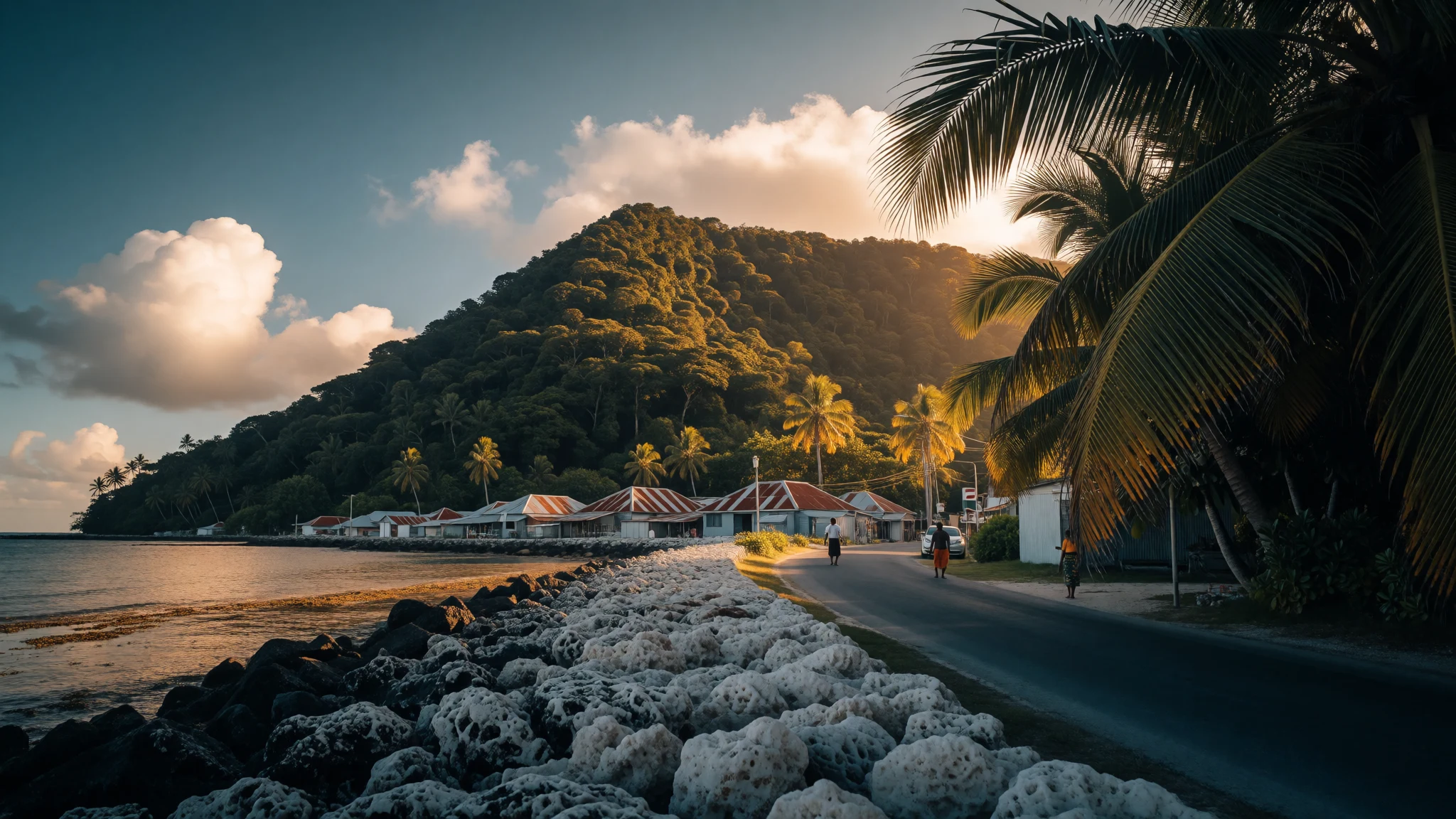
Mount Vaea is a forested summit above Apia, where a steep walk ends at Robert Louis Stevenson's grave and a view over the sea.
The place
Mount Vaea rises to 472 m on Upolu island, about 3 km inland from Apia, the capital of Samoa. By world standards it is a modest height, but it stands straight up behind the town, so from the harbour and the main road it reads as a green wall. The settlement at its northern foot is Lalovaea, a name that means "below Vaea" in Samoan. Beside it lie the grounds of the old Vailima estate, where the lower slopes were once cleared for gardens and a house. Higher up, the ground turns to damp tropical forest: tall trees, ferns, vines, birdsong that carries a long way, and a path that stays slippery for days after rain. The route to the top is a single steep track, and in the humid air the effort adds up quickly. Most walkers go slowly, stop often and are done within a morning. The summit is a small clearing rather than a viewpoint with railings. A tomb sits at its centre, and gaps in the trees look north over Apia's roofs, the reef line and the open Pacific. Away from the town it is quiet. The busiest moments are cruise-ship days and weekends, when local families also make the climb. Heat, mud and mosquitoes are the real hazards, not crowds. As a half-day out of the capital it works well: a short ride, a proper climb and a destination with a story attached.
Its story
Mount Vaea is known far beyond Samoa because of one burial. Robert Louis Stevenson, the Scottish writer of Treasure Island and Strange Case of Dr Jekyll and Mr Hyde, left Europe in search of a climate kinder to his fragile health and settled on Upolu. He built a house on the slopes below the mountain and called it Vailima. There he wrote, farmed, entertained visitors and took a close interest in Samoan affairs, which earned him the respect of many local people. They called him Tusitala, "teller of tales". When he died, his wish was to be laid to rest at the top of Vaea, and Samoan friends are remembered for cutting a path up the mountain so that the burial could take place there. His own verse, "Requiem", is the epitaph on the tomb, and its lines about the sailor home from the sea and the hunter home from the hill are among the best-known he wrote. For Samoans the mountain is also simply the green backdrop to Apia and to the villages around it, with its own place in local geography and memory. Visitors today walk the same route to the same summit, which gives the climb an unusual quality: it is a literary pilgrimage that happens to be a rainforest hike.
What to see
- Stevenson's tomb at the summit — Summit of Mount Vaea
The grave sits in a clearing at the top of the climb, a plain tomb of concrete and stone carrying his "Requiem" verse. It is the point of the whole walk. Sit for a while, read the inscription, and look through the trees towards Apia and the sea beyond the reef.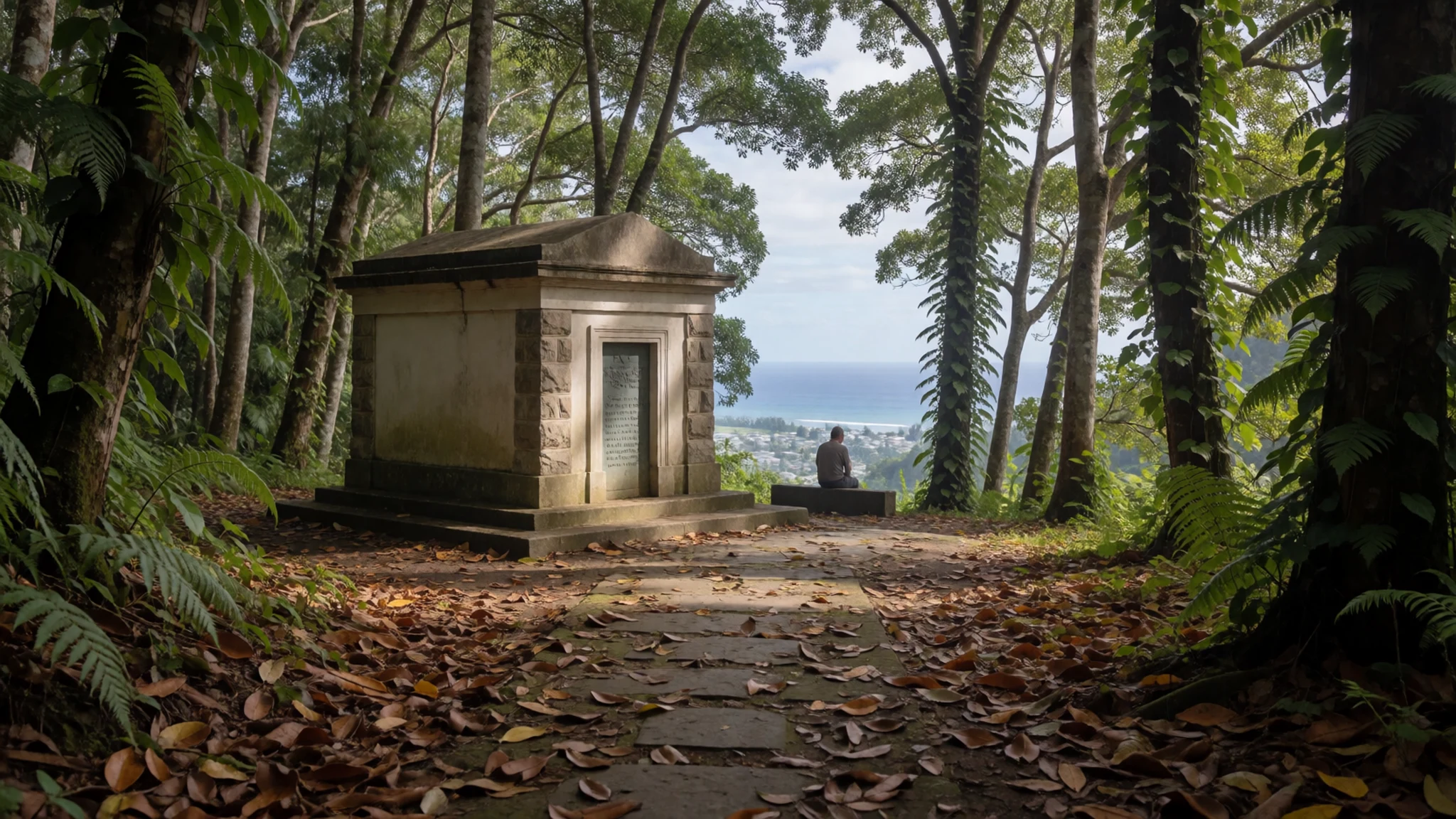
- The forest track — Slopes of Mount Vaea
The climb itself is the main attraction. The track passes through dense tropical forest with ferns, large roots and a canopy that muffles the town noise. Steps and slopes can be muddy and slick, so allow plenty of time, carry water, and watch for roots underfoot.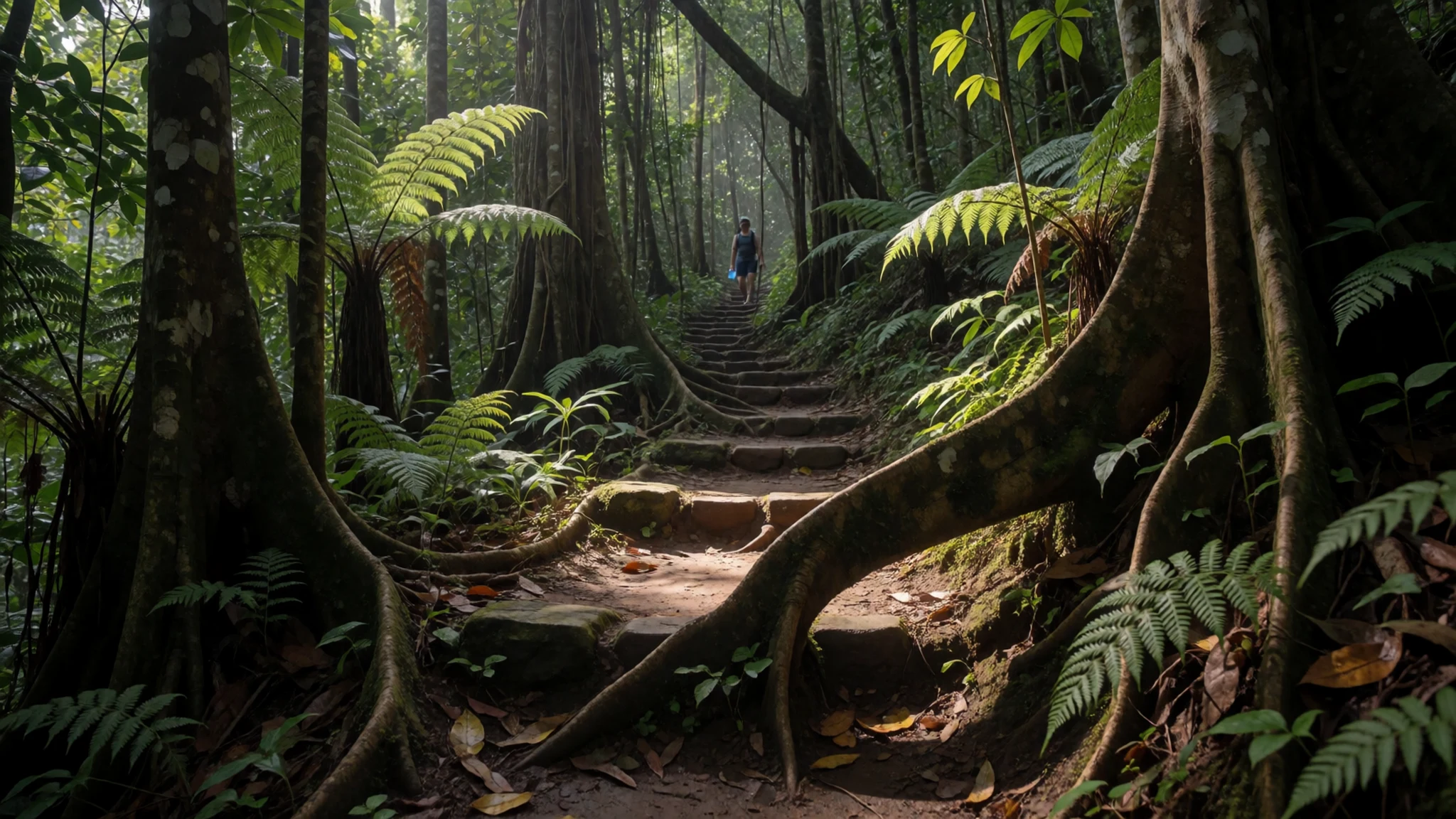
- Vailima estate gates and house — Vailima, south of Apia
Vailima, Stevenson's old home at the foot of the mountain, is now a museum. The gates mark the approach, and the grounds are the usual starting point for the climb. Opening arrangements and any entry charges change, so check locally before planning the visit around them.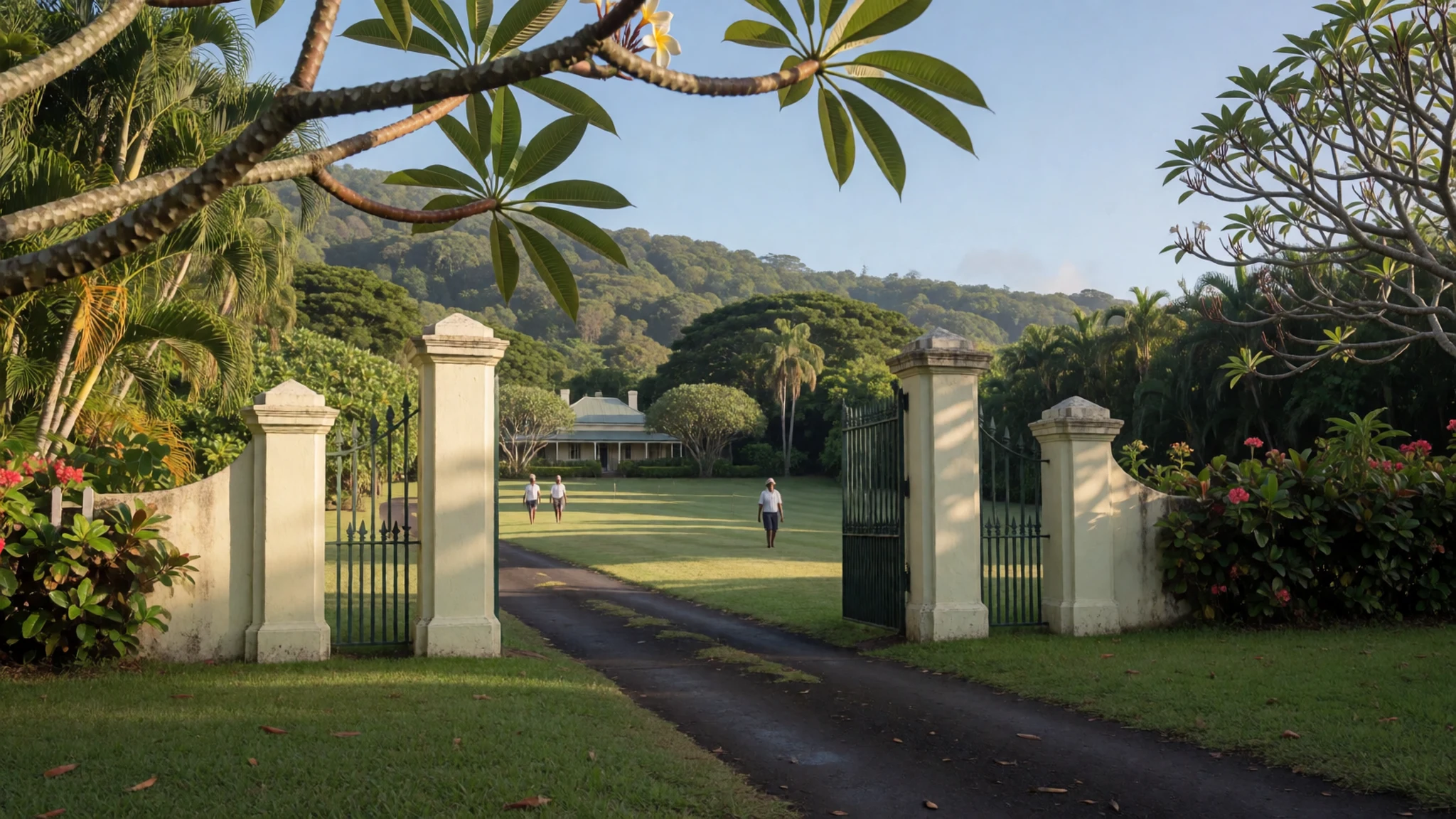
- Fale tele at Lepea — Lepea village, east of Apia
East of Apia, the village of Lepea has large round Samoan houses, fale tele, with blue roofs, and Mount Vaea sits on the horizon behind them. It is a useful place to see how the mountain frames the coast, and to see traditional architecture still used in daily village life.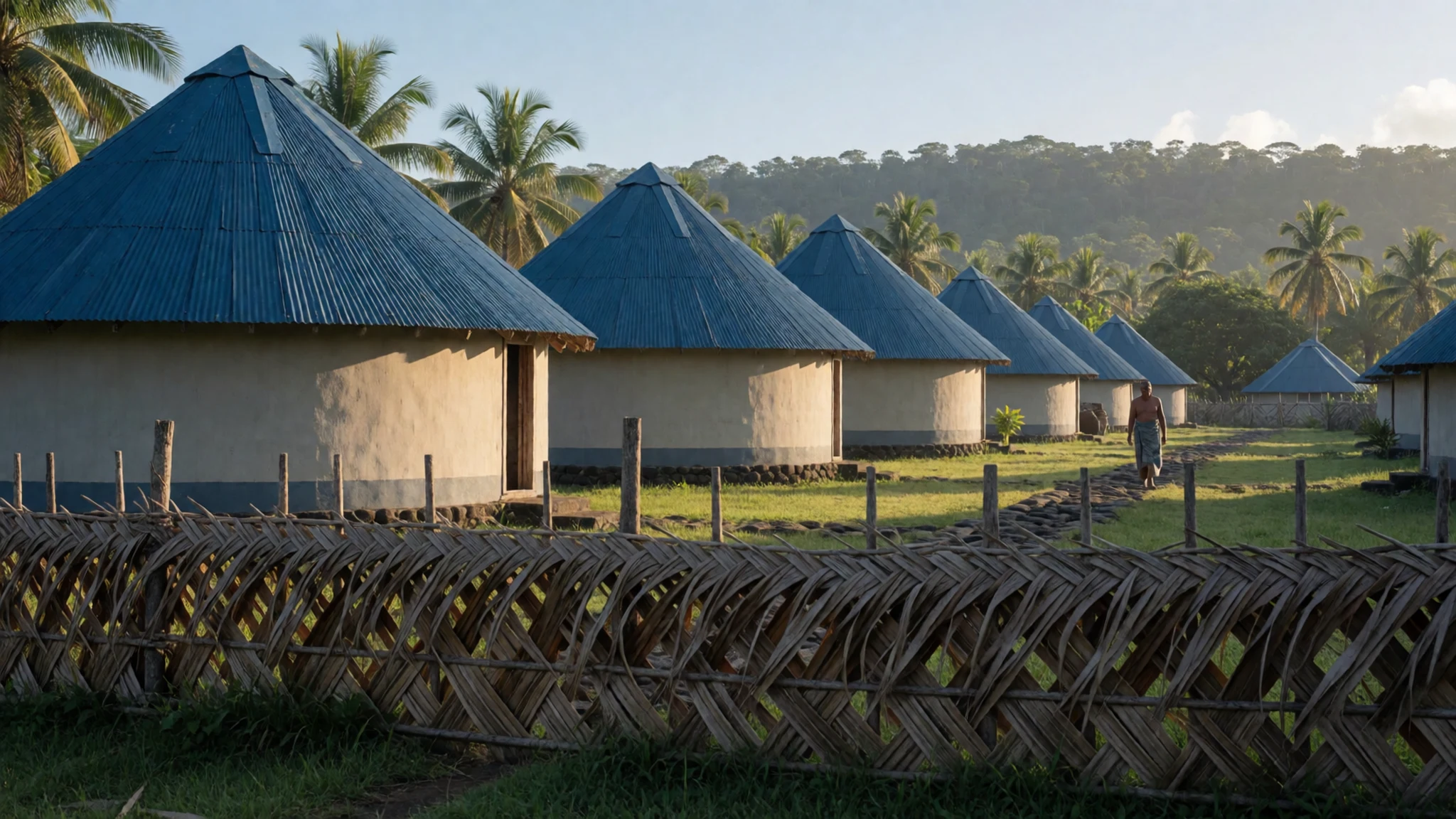
- Apia harbour looking up — Apia waterfront
From the waterfront in Apia, Vaea is the dark green ridge behind the town. It makes a good first or last look: the view that explains why the summit has long been a local landmark, and a way to judge the slope before deciding to climb it.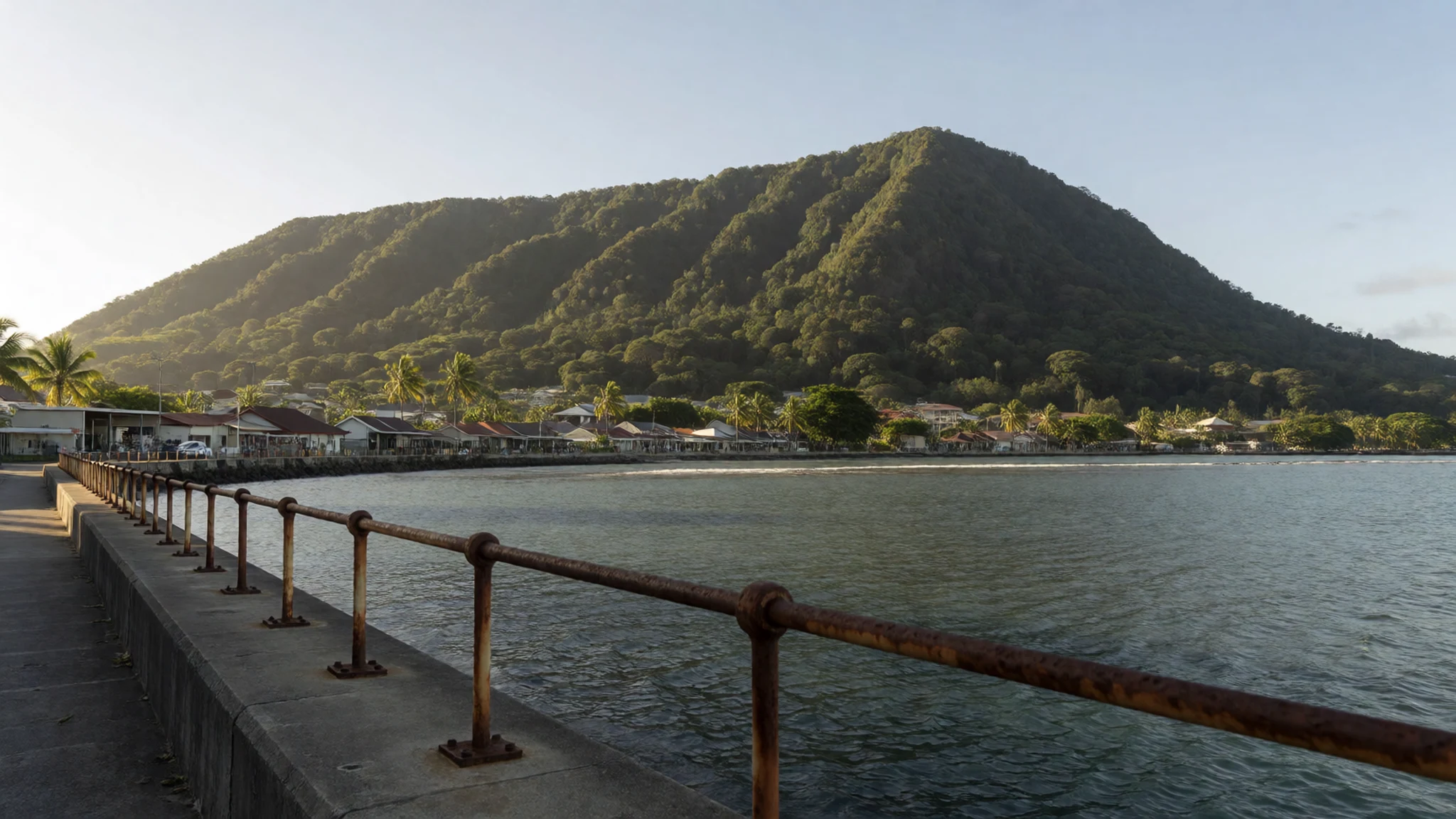
Culture
Mount Vaea sits within fa'a Samoa, the Samoan way, in which family, village and church shape daily life. Land is usually held by families and villages under chiefly (matai) authority, so even a path up a mountain can belong to someone, and a polite greeting or a small customary contribution at a village is normal. Sundays matter greatly: church services in white clothing, hymns drifting out of open buildings, and a late, shared family meal from the earth oven. Many shops and activities slow down or close, and visitors are expected to keep noise down. The Stevenson grave also has a particular tone. For some it is a literary pilgrimage, for others simply a quiet viewpoint, and the Samoan reverence for burial sites and for the dead applies here as it does anywhere. Dressing modestly, speaking quietly and leaving no litter in the clearing are all taken as respect. Hospitality is warm and people are generally happy to talk, but they appreciate being asked before being photographed. Dress modestly, stay away from villages and churches during Sunday services, and ask permission before photographing people or family property.
What to wear
Mount Vaea belongs to a culture where traditional dress is still worn, not kept for display. The central garment is the lavalava (ie lavalava), a rectangle of cloth wrapped around the waist, in cotton or similar fabrics, worn by men and women. Women also wear the puletasi, a matching tunic and wrap skirt, and fine mats (ie toga), woven from pandanus leaf, are exchanged at weddings, funerals and chiefly occasions. Siapo, bark cloth made from the paper mulberry and patterned by hand, is used for ceremonial and decorative purposes. Today people wear a mix. Lavalava are common for men in offices and at home, puletasi appear in schools, government and church, and white clothing is typical on Sundays. Elsewhere, T-shirts, shorts and sandals are everyday wear around Apia. A visitor should dress for heat, humidity and rain, with a light, quick-drying top and trousers or knee-length shorts for the climb, plus a hat and a thin rain jacket. Footwear needs real grip because the track is steep and muddy, so trainers or light walking shoes are better than sandals. In villages and near churches, cover shoulders and knees, and keep swimwear for beaches and resort pools. Insect repellent is part of dressing sensibly here.
What to eat
- Oka — Apia's central produce market and waterfront eateries
Raw fish, usually tuna, cured in lime or lemon juice and mixed with coconut cream, onion and sometimes cucumber or tomato. It is fresh, sharp and cooling after a hot walk, and a good first dish to try in Samoa.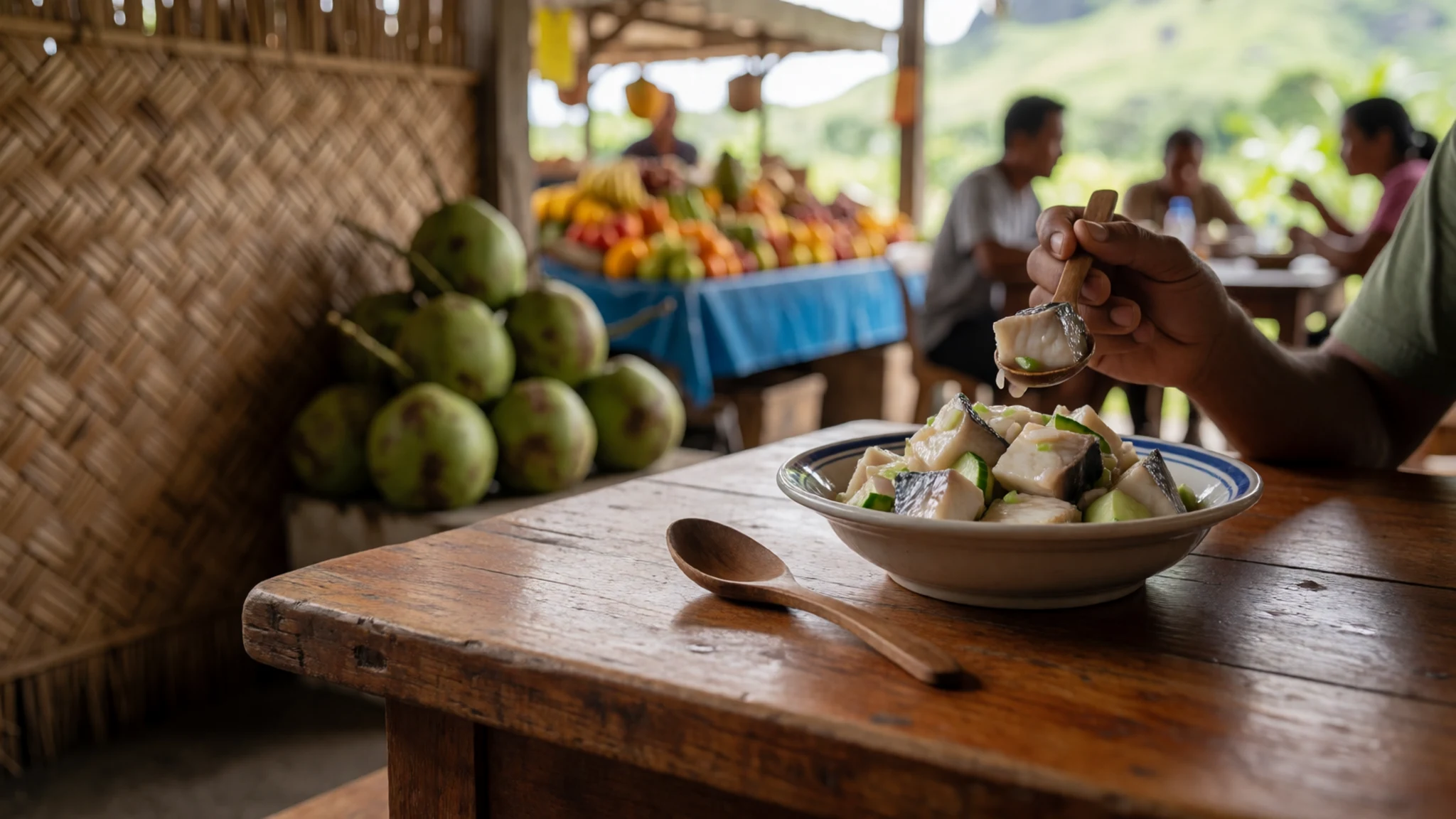
- Palusami — Sunday family meals, village food stalls and local eateries
Young taro leaves wrapped around coconut cream, sometimes with onion, then cooked until soft and rich. It is served as a side or a light meal and is usually cooked in the earth oven, which gives a gentle smoky flavour.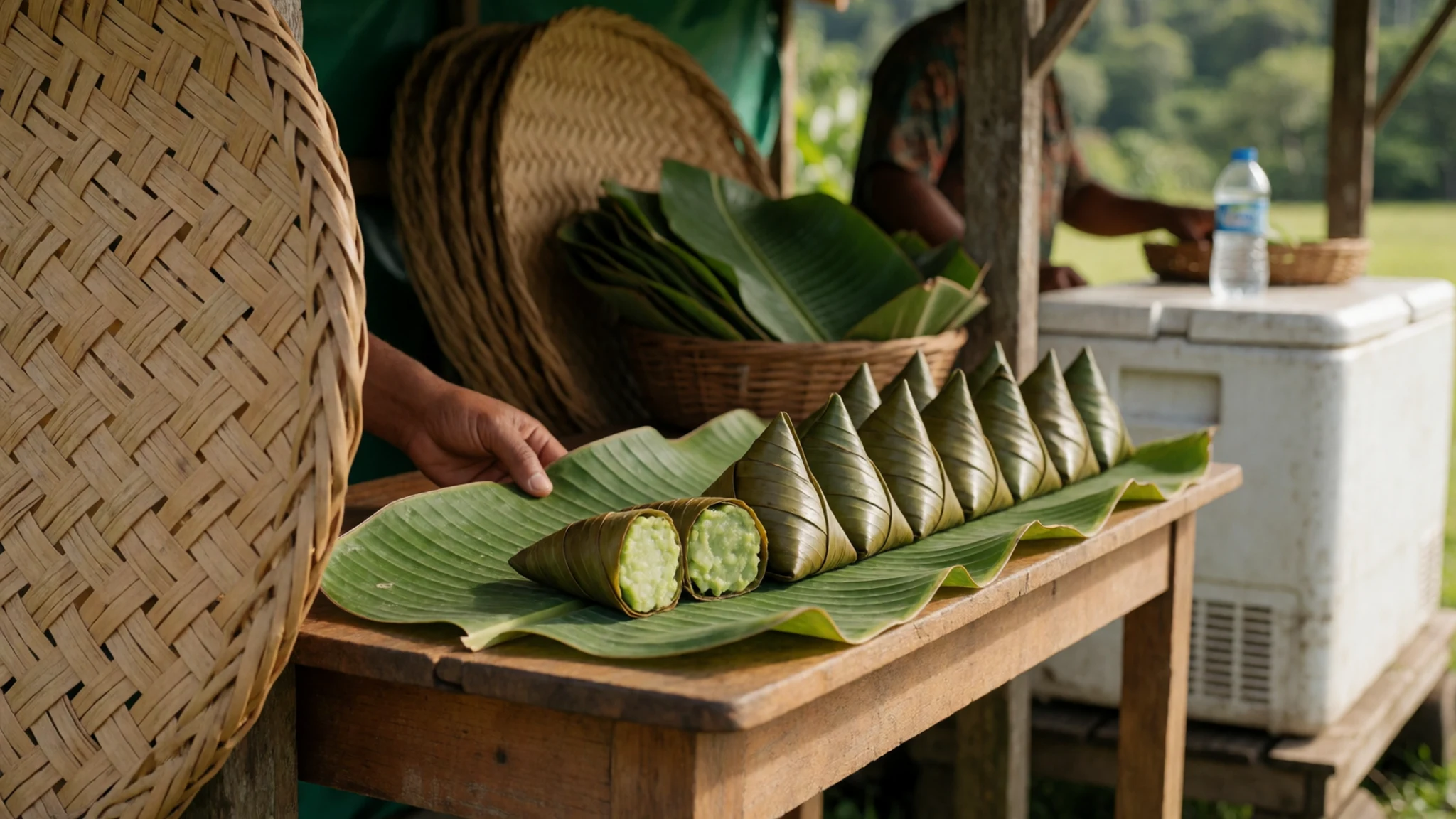
- Taro and breadfruit from the umu — Village homes on Sundays and the stalls by Apia's market
The umu is the traditional earth oven, heated with stones, in which taro, breadfruit, fish and pork are cooked. The root vegetables are starchy and filling, and they are the base of a Samoan feast, especially on Sundays. - Panipopo — Bakeries and market stalls around Apia
Sweet bread rolls baked in a sticky coconut sauce, soft and sugary. They are an easy snack to carry for the walk and are a favourite at church events and family gatherings, though they are very sweet. - Koko Samoa — Cafés and roadside stalls in and around Apia
Samoan cocoa, made from locally roasted and ground beans and served as a hot drink with sugar. It is thick, earthy and less sweet than commercial cocoa, and comes with fresh bread or fruit at breakfast.
Plan it
Best time. May to October is the drier, slightly cooler part of the year, which makes the climb easier and the track less slippery. The wetter season, roughly November to April, brings heavy showers and more mud, and humidity is high all year. Go early in the day whatever the month.
How long. 1
Getting there. Fly to Faleolo International Airport on Upolu, then take a taxi or arranged transfer into Apia, the capital. From the town, Vailima and the foot of Mount Vaea are a short drive south, and a taxi to the trailhead is the simplest last leg.
Budget. low
Tips
- Start early in the morning, before the heat and the afternoon showers
- Carry plenty of drinking water and a snack, as there is nothing to buy on the track
- Wear shoes with grip, as the path is steep and often muddy
- Check locally for opening arrangements and any charges at Vailima and the trailhead
- Bring insect repellent and a light rain jacket
Etiquette
- Dress modestly and greet people politely when passing through villages
- Keep Sundays quiet and avoid walking past church services
- Ask before photographing people, and take your litter back down
Nearby
Sources
- Wikidata Q3322165 (CC0)
- Wikipedia — Mount Vaea (rev 1369585997) (CC BY-SA 4.0)
- Wikivoyage — Samoa and Apia travel guides (CC BY-SA 4.0)
- Fale tele i Lepea — Teinesavaii (CC BY 3.0)
- Entrance gates to Vailima — Peter Gill / UK (CC BY 3.0)
- Famous tomb of Robert Louis Stevenson on Mt Vaea above Vailima — Peter Gill / UK (CC BY 3.0)
- Forest on Mount Vaea, August 2016 — Rickard Törnblad (CC BY-SA 4.0)
- Garage Under Mt Vaea — Michael Coghlan (CC BY-SA 2.0)
- Grave of Robert Louis Stevenson, August 2016 — Rickard Törnblad (CC BY-SA 4.0)
- Historical marker on Mount Vaea — Pi3.124 (CC BY-SA 4.0)
- Maota (white house) at Lepea — Teinesavaii (CC BY 3.0)


