Piula Cave Pool
Piula Cave Pool, Samoa
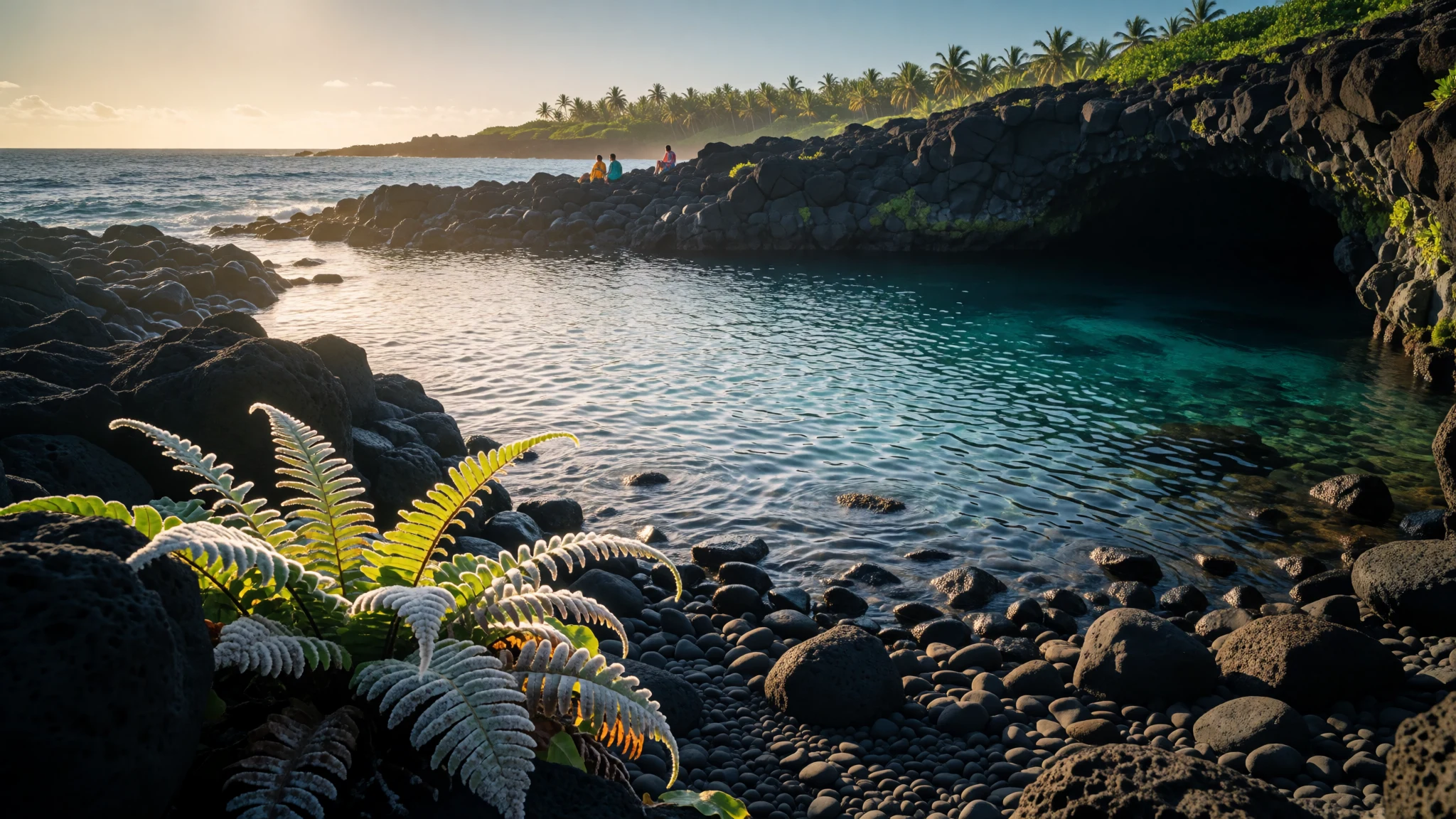
Piula Cave Pool is a freshwater spring pool beside the sea on Upolu, where cool water pours from a volcanic cave beneath a chapel.
The place
Piula Cave Pool lies on the north coast of Upolu, the island that holds Samoa's capital, in the village of Lufilufi, part of the Atua district. Apia is about 26 km to the west, and the drive east follows a coast road lined with villages, white churches and glimpses of reef. The pool is also called Fatumea Pool, and either name works when asking for directions.
The pool belongs to the grounds of a Methodist theological college. Visitors enter off the main road beneath a painted stone wall, then walk down steps to the water. At the bottom, a spring wells out of a cave in volcanic rock and spreads into a freshwater pool that drains straight into the sea. The water is usually clear and cool, and the sea is only a few paces away, so fresh and salt water sit side by side.
Inside the pool, the main cave mouth faces north. A short submerged tunnel connects it to a smaller opening on the east side. A strong swimmer can pass through, and anyone unsure can stay in the open water. Simple fale, the open-sided Samoan buildings, give shade beside the pool, and there are changing rooms. A small fee is collected at the entrance, and the site is closed on Sundays, so a visit belongs on another day of the week.
Spring-fed pools like this one dot the shores of both Upolu and Savai'i, because the islands are volcanic. Where lava once cooled into hollow tunnels, groundwater now runs through them and reaches the coast. Piula is easy to reach because it sits beside the road, and it suits a swim and a rest on a drive along the north coast. The pool is small, so it feels busy whenever a group arrives.
Its story
Piula Cave Pool takes its name from the Methodist college whose grounds hold it. In 1868 the Methodist Mission in Samoa bought land at Lufilufi to train church ministers, and called the institution Piula Theological College. Piula is the Samoan rendering of Beulah, a biblical name for a promised, well-tended land, which suits a green coastal site with a spring at its edge.
The college still stands beside the pool, and the pool sits inside its grounds rather than apart from them. That explains the character of a visit: there is a gate, a small fee, a closed day and an expectation of good manners. This is institutional land first and a swimming spot second, though it is popular with local people as well as travellers.
The older story is geological. Upolu was built by volcanic eruptions, and lava that cooled in channels left tunnels running through the rock. Rain that falls inland sinks into the porous ground, finds those voids and travels underground until it reaches the shore, where it breaks out as springs. Piula is one such outlet, with a main cave and a short flooded passage to a second opening.
No single dramatic event defines the place. It is a layering of quieter things: rock shaped by fire, water finding its way to the sea, and a mission school that arrived in the nineteenth century and remains. The pool is best understood as a working part of that landscape, not a separate attraction added to it.
What to see
- The pool and cave mouth — Piula, Lufilufi, Atua district, Upolu
The main pool is a spring-fed basin where water pours out of a cave in volcanic rock and runs on to the sea. The cave mouth faces north. Swim slowly, look up at the rock overhead, and notice how the water changes where the pool meets the sea.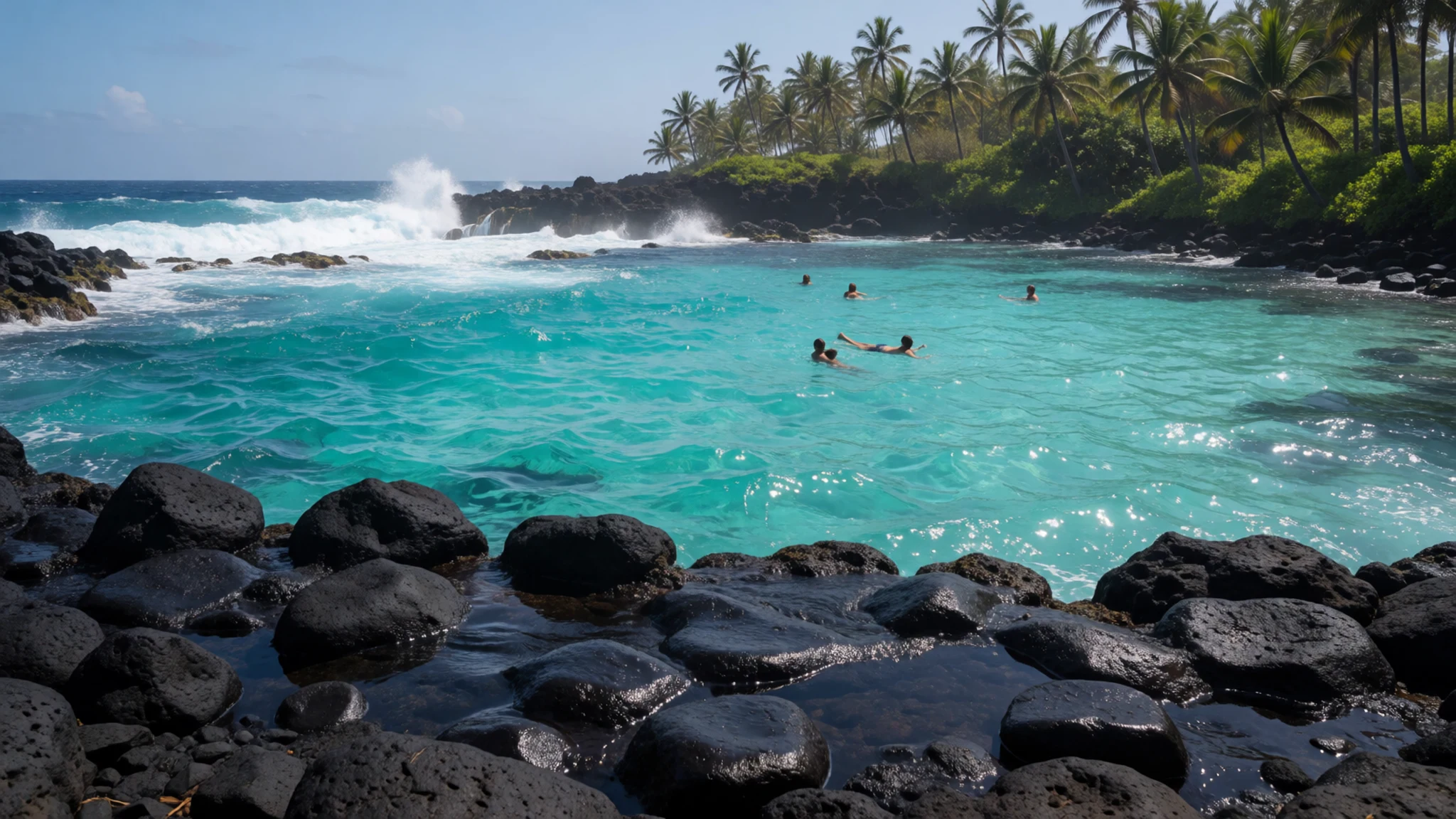
- The submerged tunnel — East side of the pool, Piula
A short flooded passage joins the main cave mouth to a smaller opening on the east side of the pool. Strong swimmers can go through; others can watch from the edge. Use it in daylight, look at the depth first, and ask staff at the entrance if in doubt.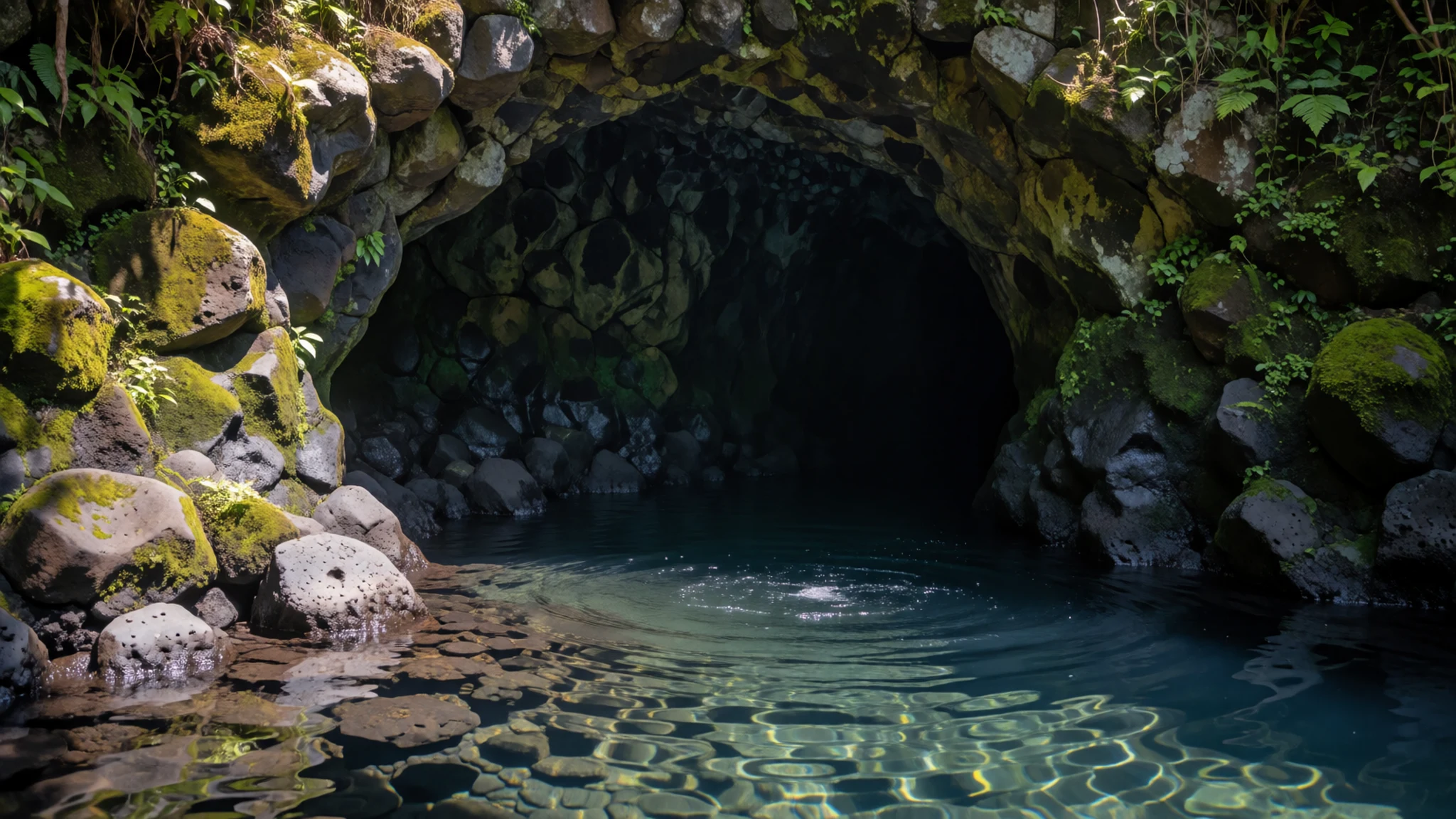
- The fale and changing rooms — Seaside edge of the pool, Piula
Small fale stand by the sea next to the pool, giving shade and somewhere to sit between swims, with changing rooms close by. The setting is plain: palms, short grass, and the pool's outflow meeting the ocean. It is a good place to dry off slowly.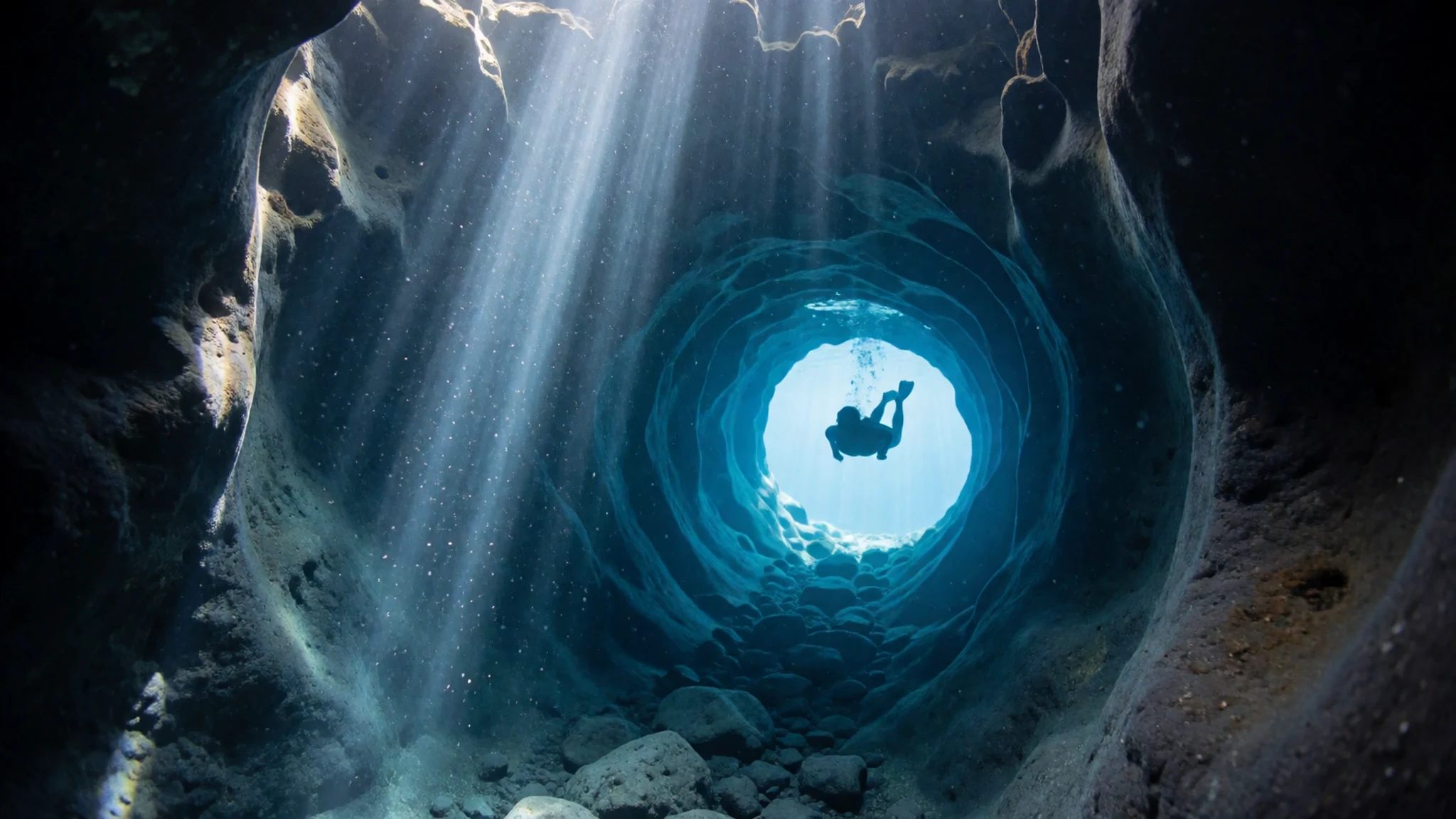
- Piula Theological College and its painted wall — Main road, Lufilufi
The Methodist college gives Piula its name and its house rules. The painted stone wall beside the main road marks the entrance, and the college buildings and chapel stand above the pool. People live and study here, so walk through quietly and treat the grounds as a shared space.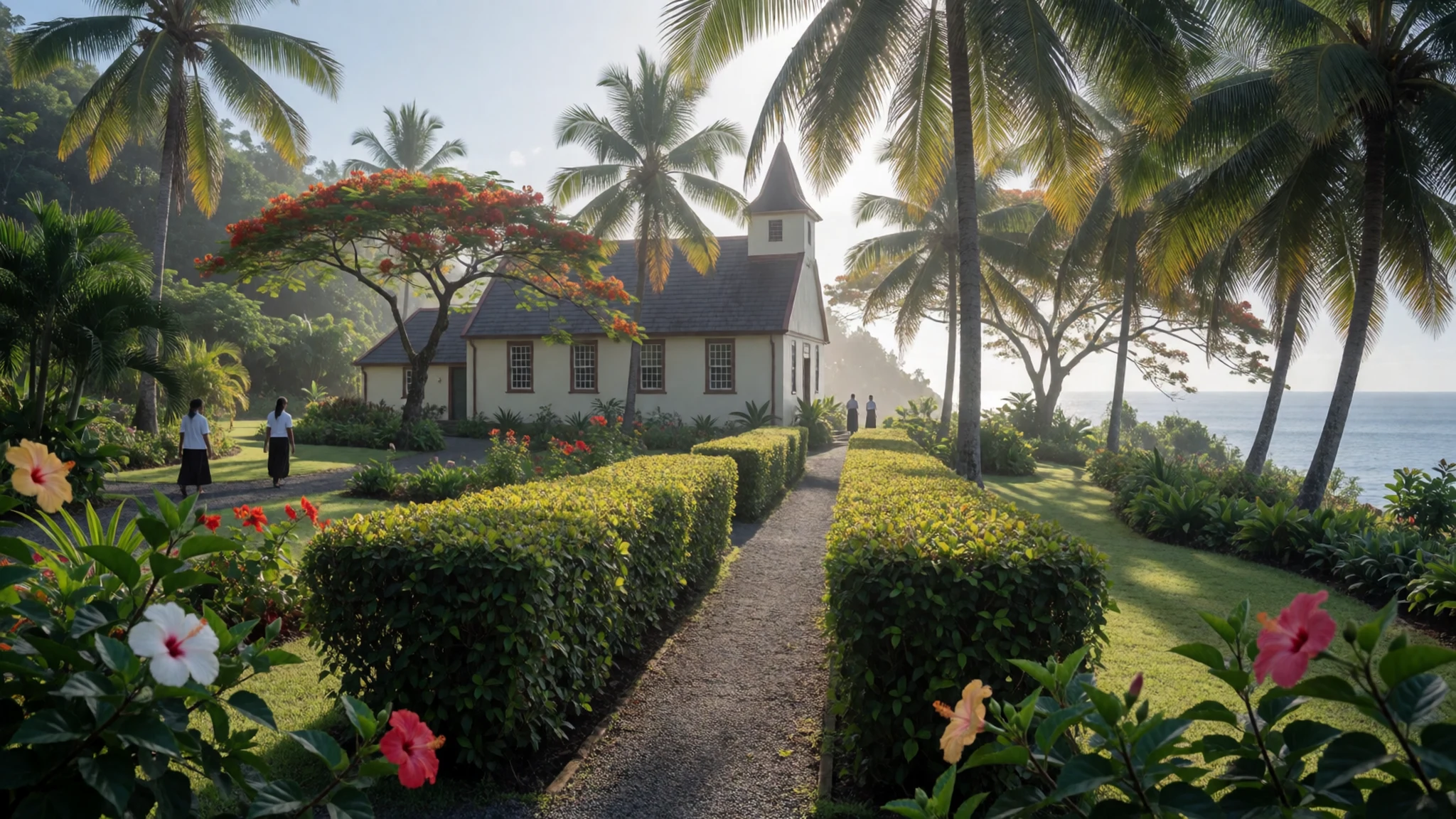
- Mata o le Alelo pool, Savai'i — Matavai village, Savai'i
Mata o le Alelo is a freshwater pool at Matavai village on Savai'i, shown in the reference photographs with a child drinking from the water. It is a good example of the island's spring pools, but reaching it needs a ferry crossing and a separate trip, not a quick detour from Piula.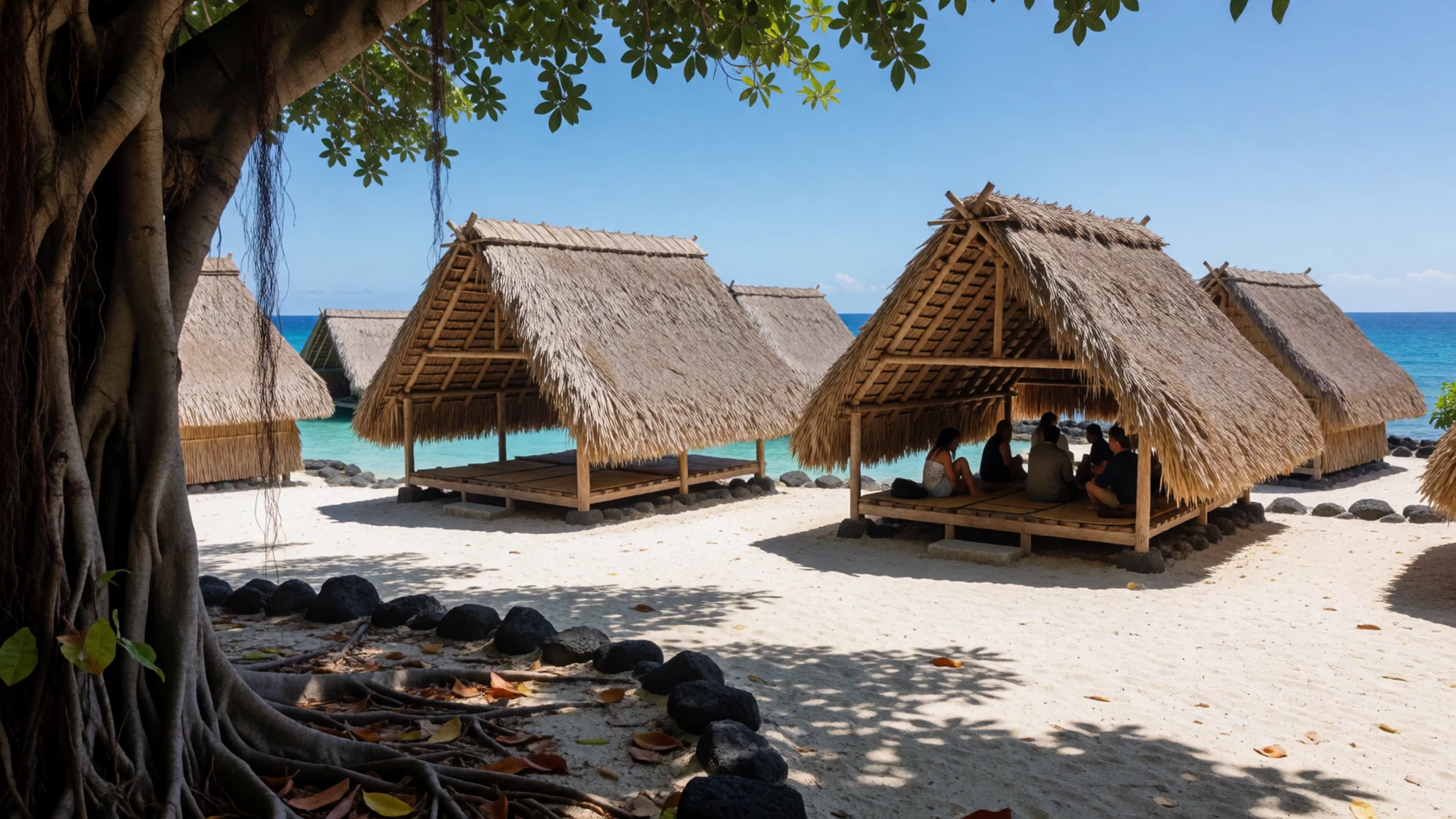
Culture
Piula Cave Pool sits on Methodist college land, and that shapes how the place is used. Christianity is central to daily life in Samoa, and church sets the rhythm of village weeks. Sunday is given over to worship, family meals and rest, which fits the pool's closure on that day. Noisy outings and swimming parties are better kept for other days.
Behind this sits fa'a Samoa, the Samoan way, a framework of family, village and respect. Villages are led by chiefs called matai, and courtesy counts for a lot: greeting people, asking before photographing anyone, and not walking through the middle of a gathering. Many villages along the coast road keep a quiet period at dusk for evening prayers, when shouting and loud music would be unwelcome. In a fale, people sit cross-legged and avoid pointing their feet at others.
Pools such as this one are shared spaces, used for washing, swimming and children's play as well as by visitors. Locals are generally relaxed about travellers who are relaxed themselves, and a smile and a friendly talofa (hello) goes a long way. Fees and rules here support a church institution, so following them is part of being a good guest.
Dress modestly away from the water's edge, keep voices low near the college buildings and chapel, and do not plan a visit for a Sunday.
What to wear
Traditional dress in Samoa, including around Piula, centres on the lavalava, a rectangle of cloth wrapped at the waist and worn by both men and women. Men also wear the ie faitaga, a tailored wraparound skirt with pockets, usually with a plain shirt. Women wear the puletasi, a matching tunic and long wrap skirt, often in printed cotton. These are the clothes for church, school and formal events, and white is common for Sunday worship. Ceremonial textiles include siapo, bark cloth made from paper mulberry and decorated with stamped or painted patterns, and ie toga, fine mats woven from pandanus leaf and exchanged at weddings, funerals and title ceremonies.
Day to day, people wear lighter things: T-shirts, shorts, a lavalava tied over them, and flip-flops. At the pool, local swimmers often wear shorts and T-shirts as readily as swimwear.
Visitors should dress for heat and humidity, so quick-drying cotton or linen works well. Swimwear under a cover-up makes changing easier, and a sarong or lavalava, easy to buy at markets, serves as a towel and as cover for shoulders and knees in villages and near the college and chapel. Sandals with grip or water shoes help on the steps and the wet rock. A hat and sun protection are worth carrying. Bare chests and very brief swimwear away from the water would be out of place.
What to eat
- Palusami — Family kitchens and roadside stalls along the coast road; the market in Apia
Palusami is young taro leaves folded around coconut cream, often with onion, then baked in an earth oven until soft and rich. It sits somewhere between creamed spinach and a savoury pudding, and appears at most Samoan feasts.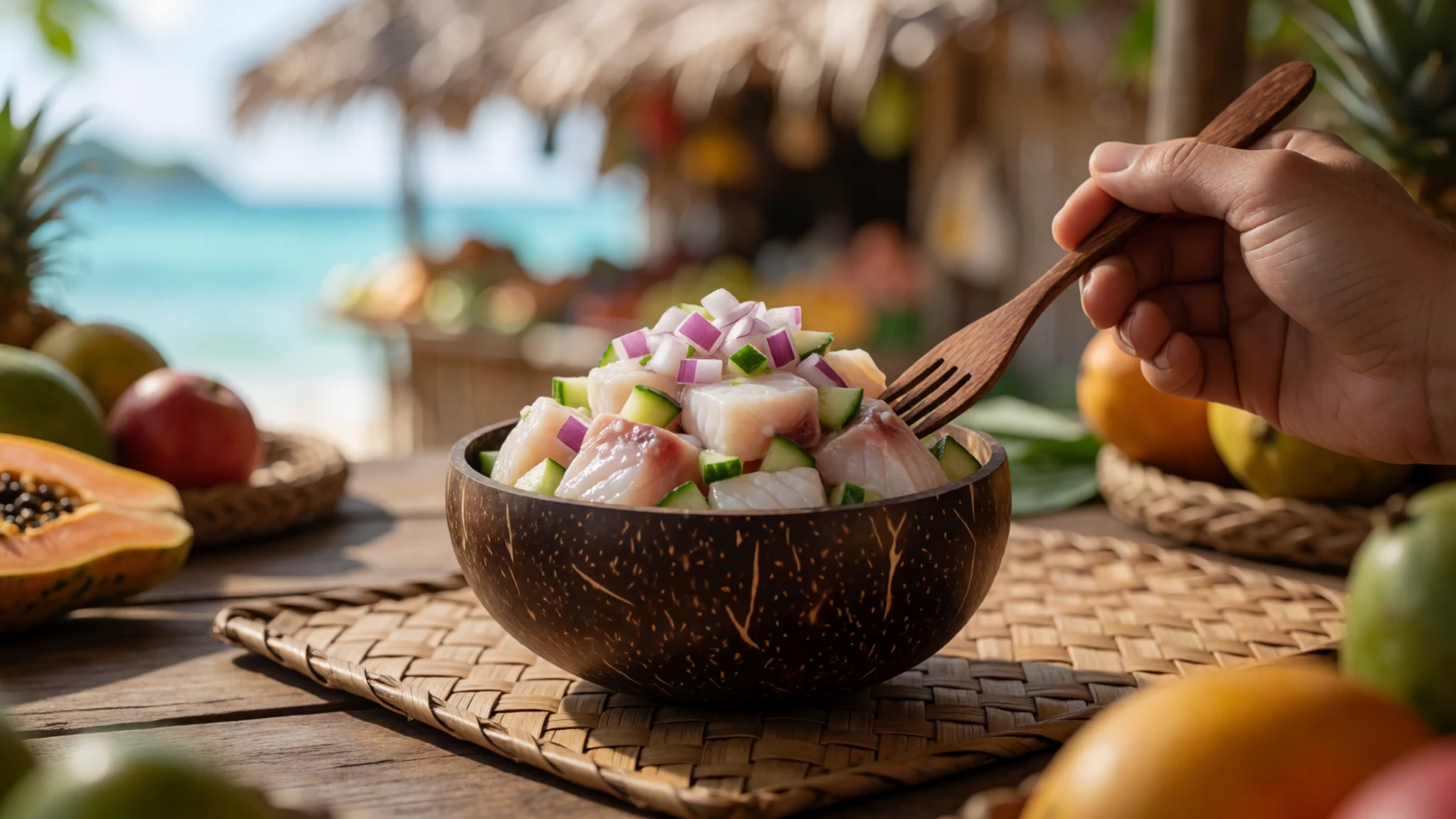
- Oka — The fish market in Apia and seaside eateries near the harbour
Oka is raw fish cut into pieces and dressed with lime juice, coconut cream and chopped onion or tomato. It is served cold and tastes bright and slightly sweet. Freshness matters, so it is best eaten where fish is landed or sold the same day.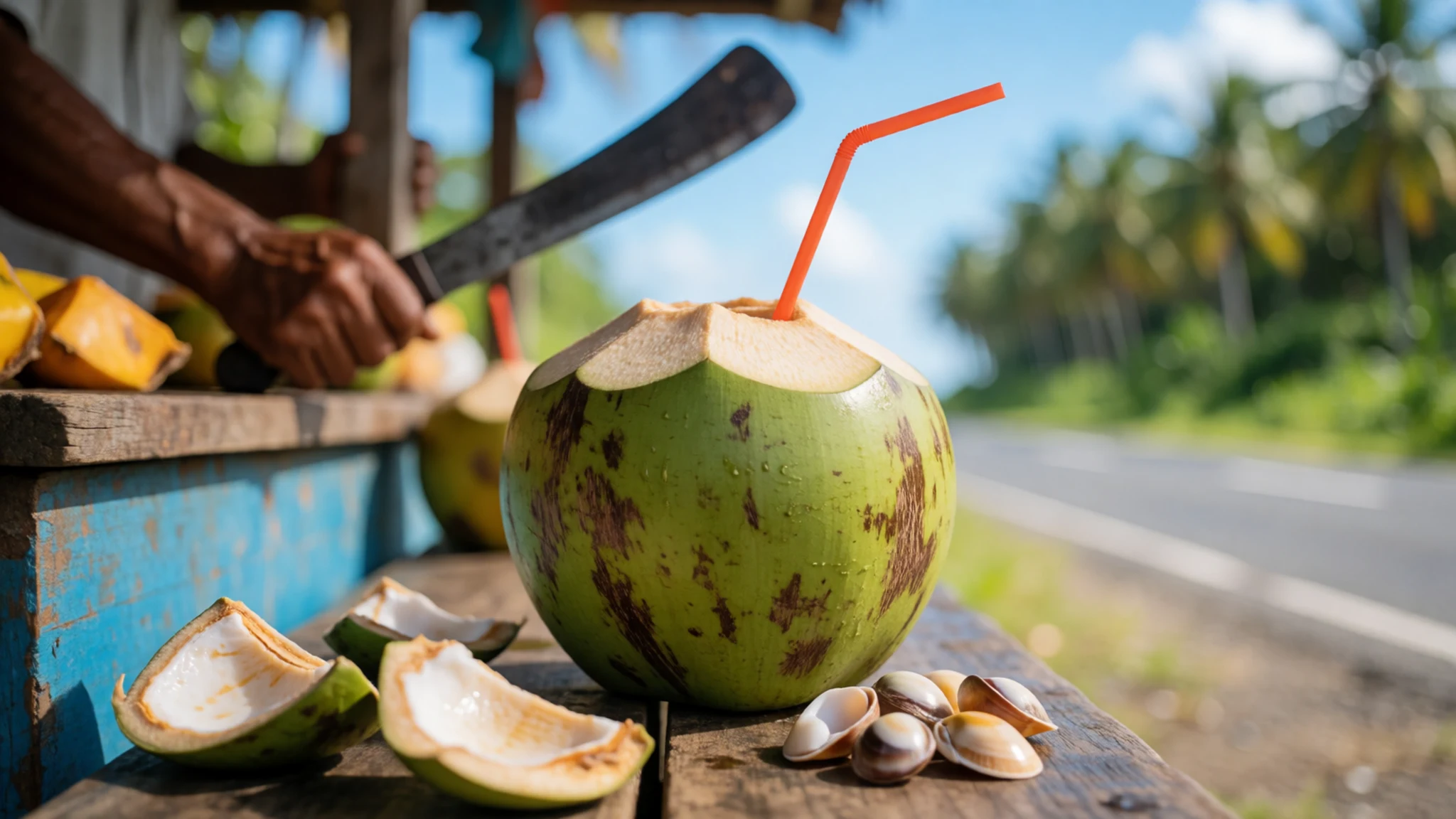
- Umu meal of taro, breadfruit and fish or chicken — Family meals, village feasts, and eateries that cook an umu on Sundays
The umu is the Samoan earth oven, and its food usually includes taro, breadfruit or green banana with fish or chicken, wrapped in leaves. It is slow-cooked, filling and starchy, and it is the main Sunday meal in many homes. - Panikeke — Morning market stalls and roadside stands in Apia and along the coast road
Panikeke are Samoan banana pancakes: ripe banana mashed into batter and fried until golden, sold hot as a snack or breakfast. They are sweet and a little chewy, and they travel well in a bag for a swim. - Fresh coconut (niu) — Roadside stalls and village stands along the north coast
A coconut is cut open on the spot and the water drunk straight from the shell, then the shell is split so the soft flesh can be scooped out. After a swim in a hot, humid climate, it is the natural drink.
Plan it
Best time. May to October, the drier months, when the humidity eases and the steps and coast road are less likely to be slippery. November to April is wetter and hotter, with a risk of heavy rain and tropical storms.
How long. 1
Getting there. Fly to Faleolo International Airport near Apia, then travel east along the north coast road to Lufilufi; Piula is about 26 km from Apia. Taxi, hired car or local bus all work, and the entrance is off the main road at the painted stone wall of Piula Theological College.
Budget. low
Tips
- Go on a weekday morning, before groups arrive; the pool is closed on Sundays, so confirm opening arrangements locally before setting out.
- Carry small cash for the entry fee, as cards are unlikely to work at a village site.
- Bring a towel, drinking water, sun protection and shoes with grip for the steps and wet rock.
- Combine Piula with other stops on the north coast, since the pool itself needs only an hour or two.
- Leave valuables at your accommodation rather than in the changing rooms or fale.
Etiquette
- Dress modestly away from the water and do not plan a visit for a Sunday.
- Ask before photographing people, especially children and families bathing.
- Keep noise low near the college and chapel, and keep soap and rubbish out of the pool.
Nearby
Sources
- Wikidata Q7199581 (CC0)
- Wikipedia: Piula Cave Pool (rev 1366609964) (CC BY-SA 4.0)
- Stephen Glauser, Piula cave pool by the Piula Monastery, Upolu island, Samoa (Wikimedia Commons) (CC BY-SA 2.0)
- Stephen Glauser, Fale by Piula Cave pool on Upolu (Wikimedia Commons) (CC BY-SA 2.0)
- Stephen Glauser, Piula Theological College, Upolu island, Samoa, 2009 (Wikimedia Commons) (CC BY-SA 2.0)
- Teinesavaii, Child leaning down to take a drink of water at the Mata o le Alelo fresh water pool, Matavai village, Savai'i, Samoa, 2009 (Wikimedia Commons) (CC BY 3.0)
- Wikivoyage (CC BY-SA 4.0)


