Lalomanu
Lalomanu, Samoa
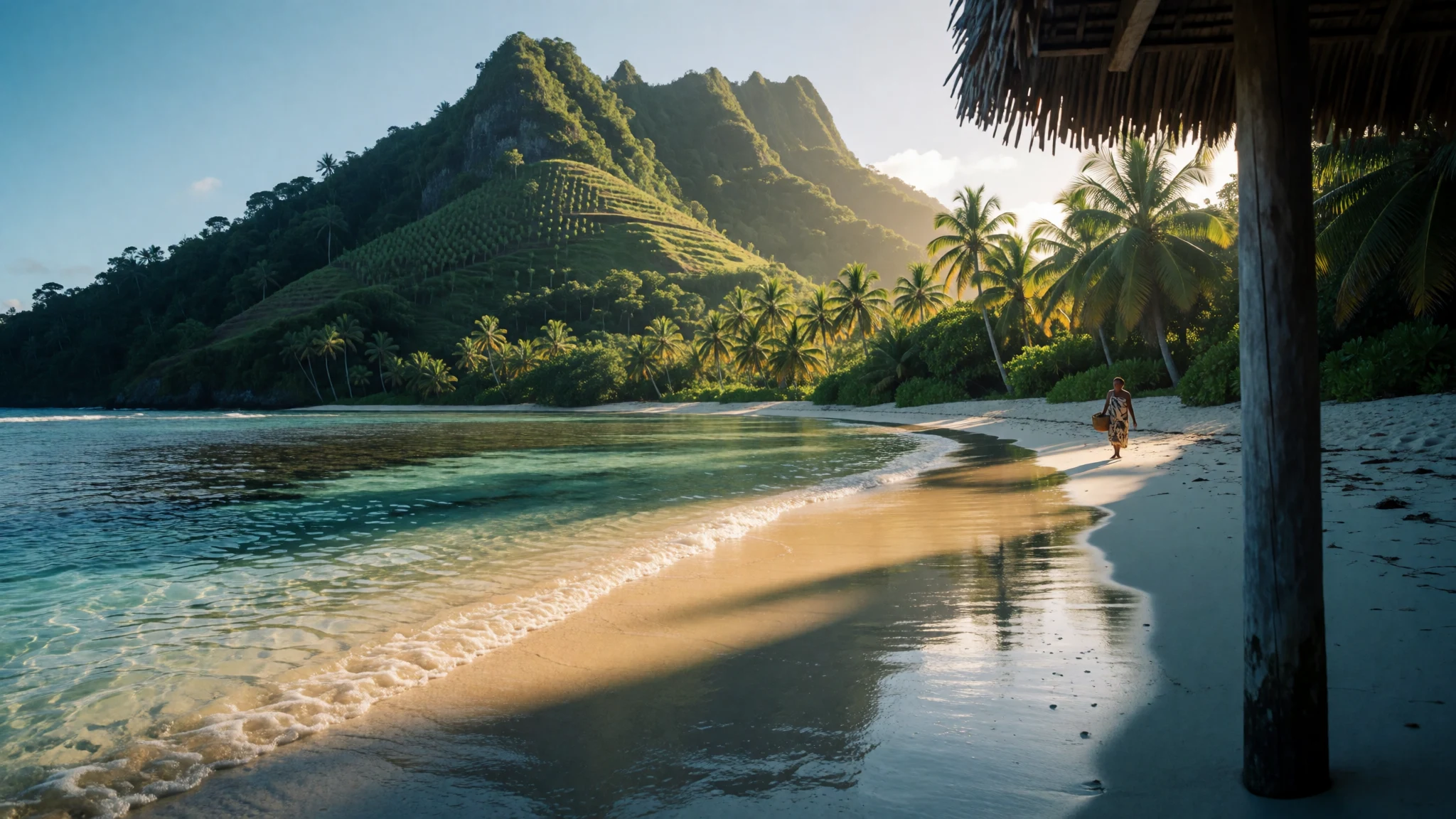
Lalomanu is a village beach on Upolu's east coast, with pale sand, reef swimming and Nu'utele standing offshore.
The place
Lalomanu sits on the eastern shore of Upolu, where a long pale beach faces the open Pacific and the steep green island of Nu'utele. The village is a line of houses, churches and beach fales just behind the sand, with a coastal road running through it and gardens of coconut, breadfruit and taro climbing inland. From the shore the water moves from pale turquoise over the reef to a deep blue channel, and Nu'utele closes the view to the east. Mornings are often bright; afternoons can stack cloud along the island's ridge. This is a living village rather than a resort row: children use the road, families fish, and Sunday turns the village towards church. The sand works as a front yard. Shade comes from palms and from the open-sided fales, raised a step above the ground so the trade wind can pass through. Inland the land rises quickly into planted slopes, so the settled strip stays narrow — beach, road, houses, then bush. After the tsunami that struck this coast, much of daily life was rebuilt a little farther from the water, and that memory still shapes where people sleep and how they watch the sea. The easy water is in front of the fales; the islands stay offshore, studied from the sand more often than they are landed on.
Its story
Lalomanu's longer story is a family story of land, titles and the church, lived on a shore the ocean has already overwhelmed. People here have fished, gardened and kept fa'a Samoa, the Samoan way, across generations. Land sits with the aiga, the extended family, and a matai carries the title that lets that family speak in the village. The beach was work and departure — canoes in the morning, children in the shallows, taro and breadfruit from the slopes — long before it was a view. Sunday belonged to worship and the shared meal, and that rhythm is still the spine of the week. The shock in living memory is the tsunami that struck Samoa in 2009 and hit this east-coast sand with great force. Images of the aftermath show Lalomanu in ruins: houses reduced to remains, the shore scraped bare. Homes that had stood on the beach were gone. Families then rebuilt, many of them set back from the water, while the road, the churches and the hosting of guests in fales returned piece by piece. The matai system and the congregations had never been only buildings. Anyone on this sand for the view is also standing in that aftermath. Nu'utele carries older local stories of refuge and of places one does not casually enter, and those accounts belong to the village. The coast is plain about the recent past: people love this shore, and it has shown how fast it can take the houses built on it.
What to see
- Lalomanu Beach — Lalomanu village shore
Lalomanu Beach is the long pale strand in front of the village, with Nu'utele standing offshore across clear water. Swimming starts from the sand beside the fales, where the bottom shelves from turquoise to a darker channel. The beach is also a yard: fishing, children and washing share it with anyone who has come to swim.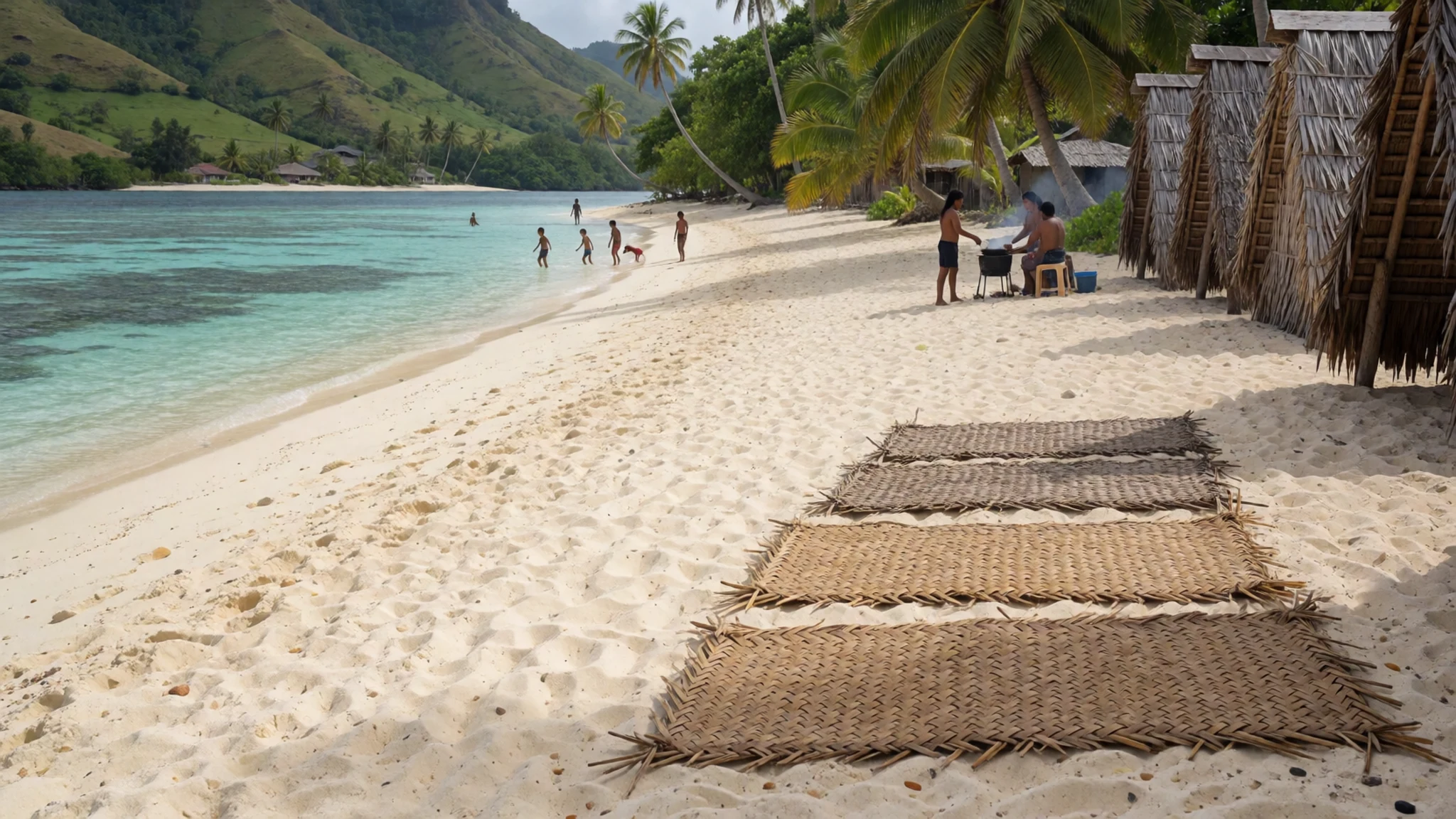
- Nu'utele — offshore east of Lalomanu
Nu'utele is the steep, forested island that fills the view east from Lalomanu Beach, across a channel of deeper water. Most visitors know it from the sand rather than from a landing. Any boat crossing is arranged in the village and should not be assumed to run on a schedule. The slopes are thick and green, and local stories about the island are best heard from residents.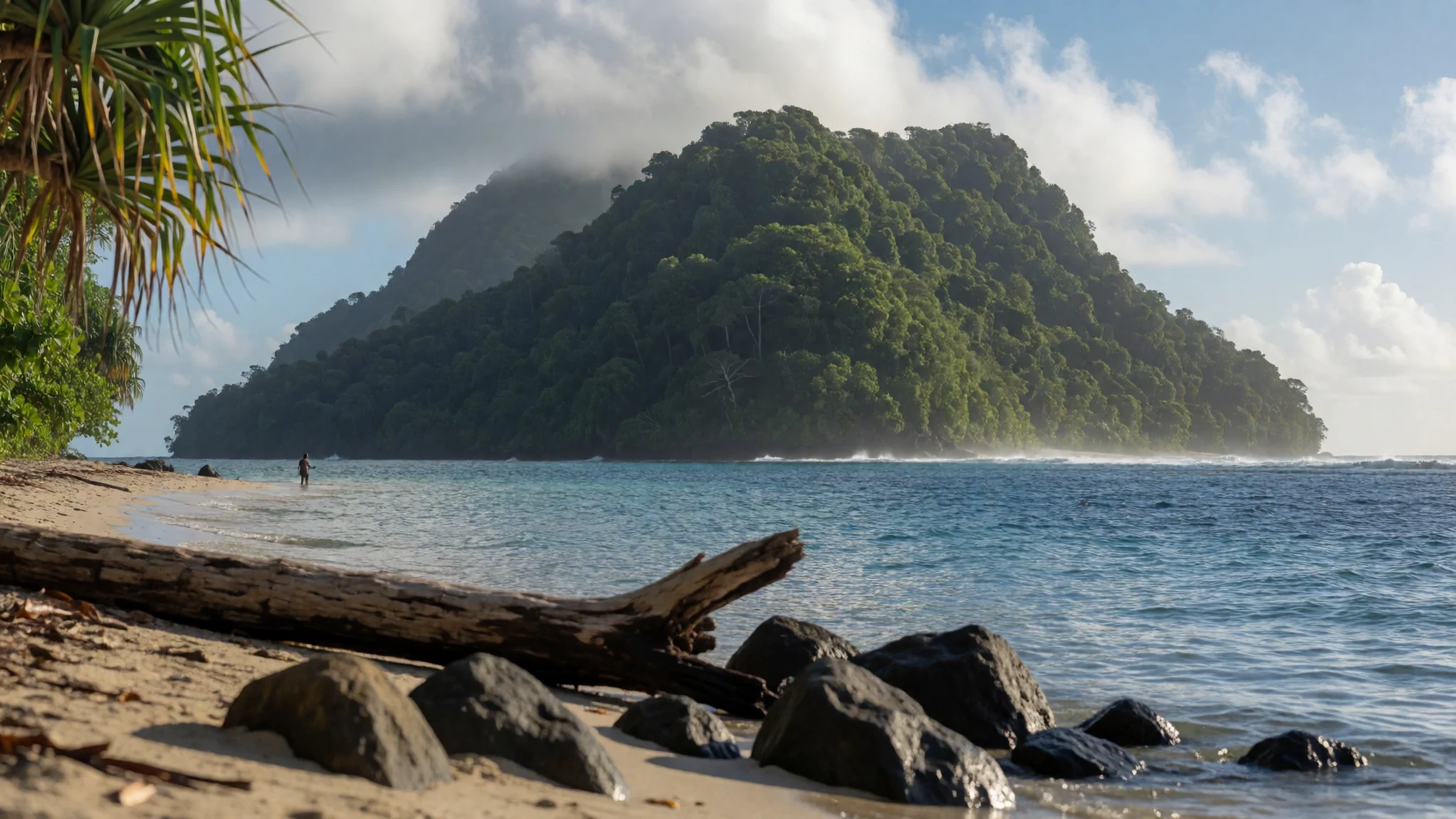
- East-coast road — through Lalomanu and neighbouring villages
The coastal road runs through Lalomanu and the neighbouring villages, with churches, houses and gardens pinched between the beach and the bush. From above, the settled strip looks narrow, a thread of roofs along the water. Walking a short length of it shows Upolu's east coast as a chain of villages rather than a single beach.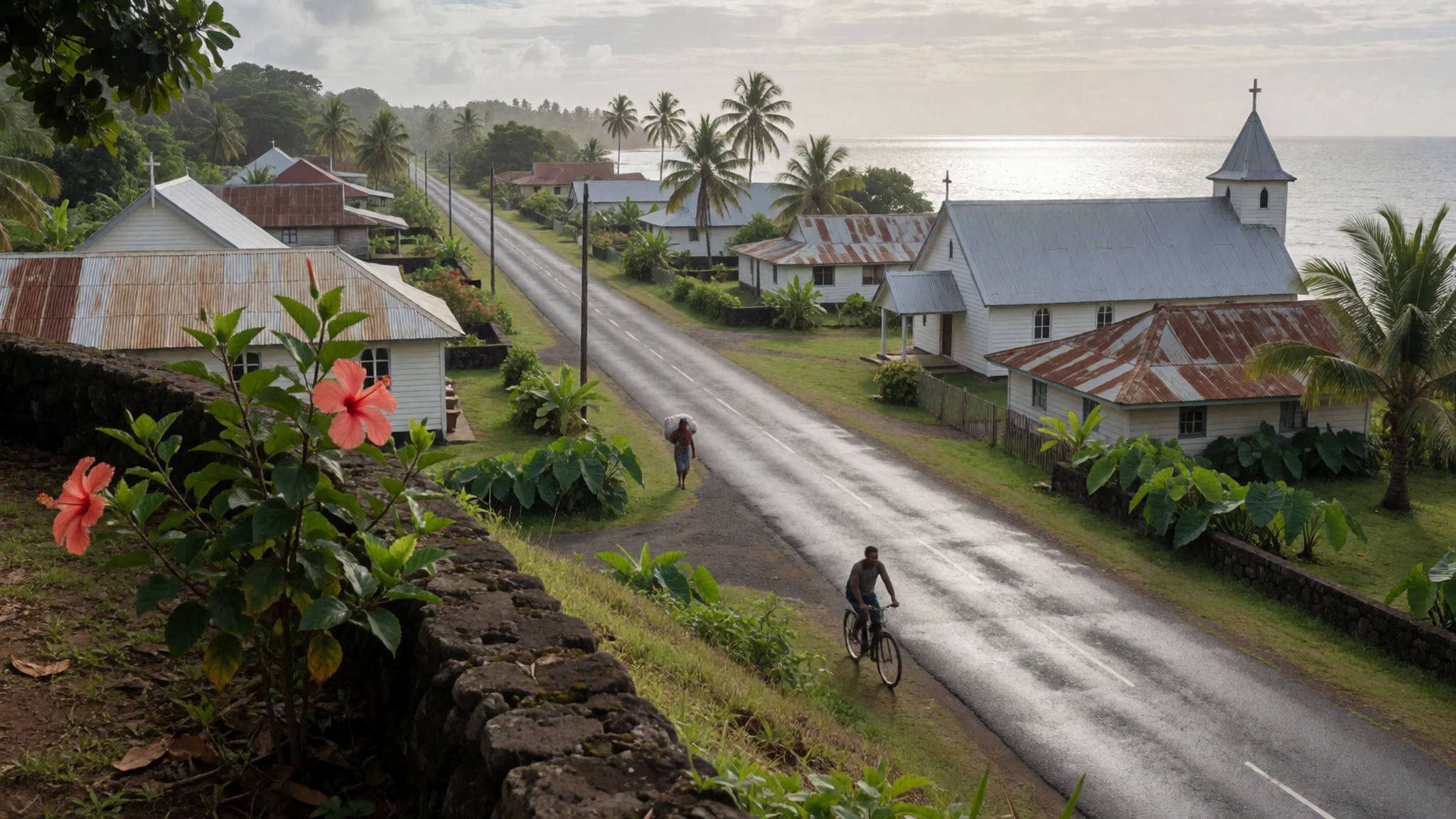
- The rebuilt village — Lalomanu
Lalomanu still lives with the tsunami that struck Samoa in 2009. Pictures from the aftermath show the village as remains: houses gone, the shore torn up. Families rebuilt, many of them back from the sand, and church, road and fale life returned around that loss.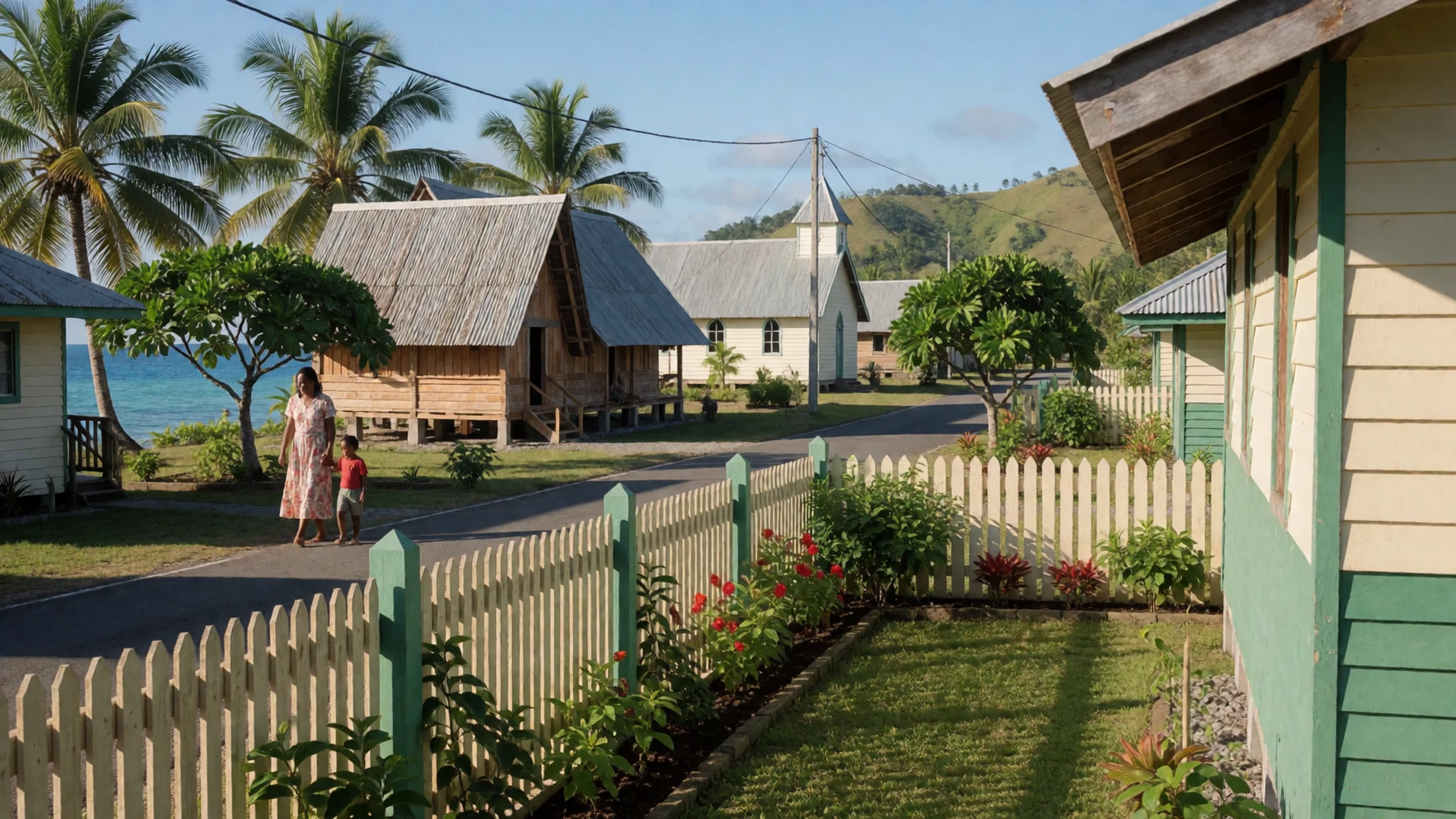
- Beach fales — along Lalomanu Beach
Beach fales are the open-sided houses on platforms along Lalomanu Beach, built to let the trade wind through, with simple beds or mats and a shared evening meal. They are the ordinary way to stay, and they put the night's weather and the morning reef a few steps from sleep.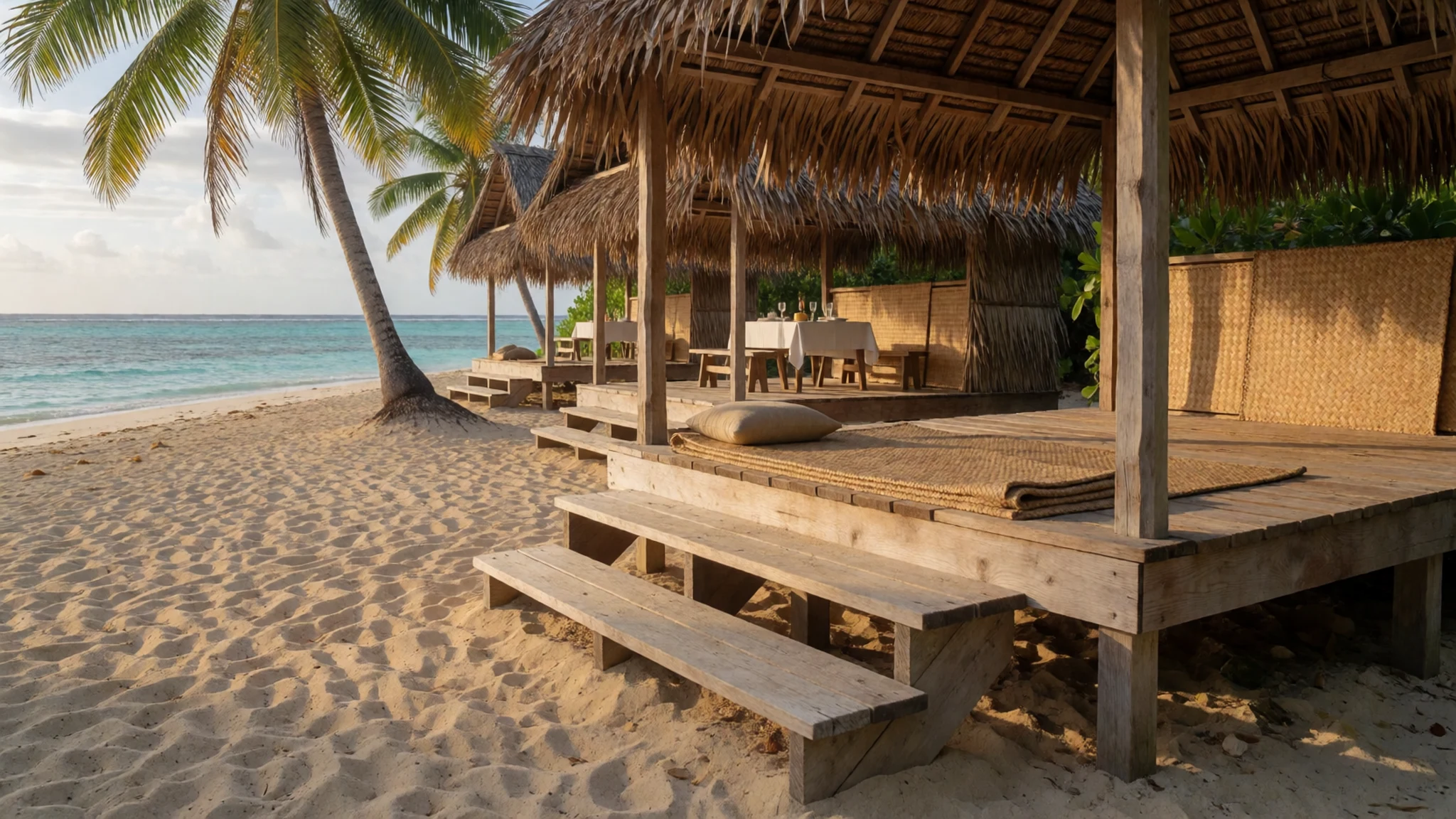
- The reef — in front of Lalomanu Beach
The reef in front of Lalomanu is where snorkelling happens, in clear water close to shore on a calm morning. Coral and small fish sit within an easy swim of the fales, while the channel towards Nu'utele is deeper and not a casual crossing. The sensible habit is to enter where village swimmers are already in the water.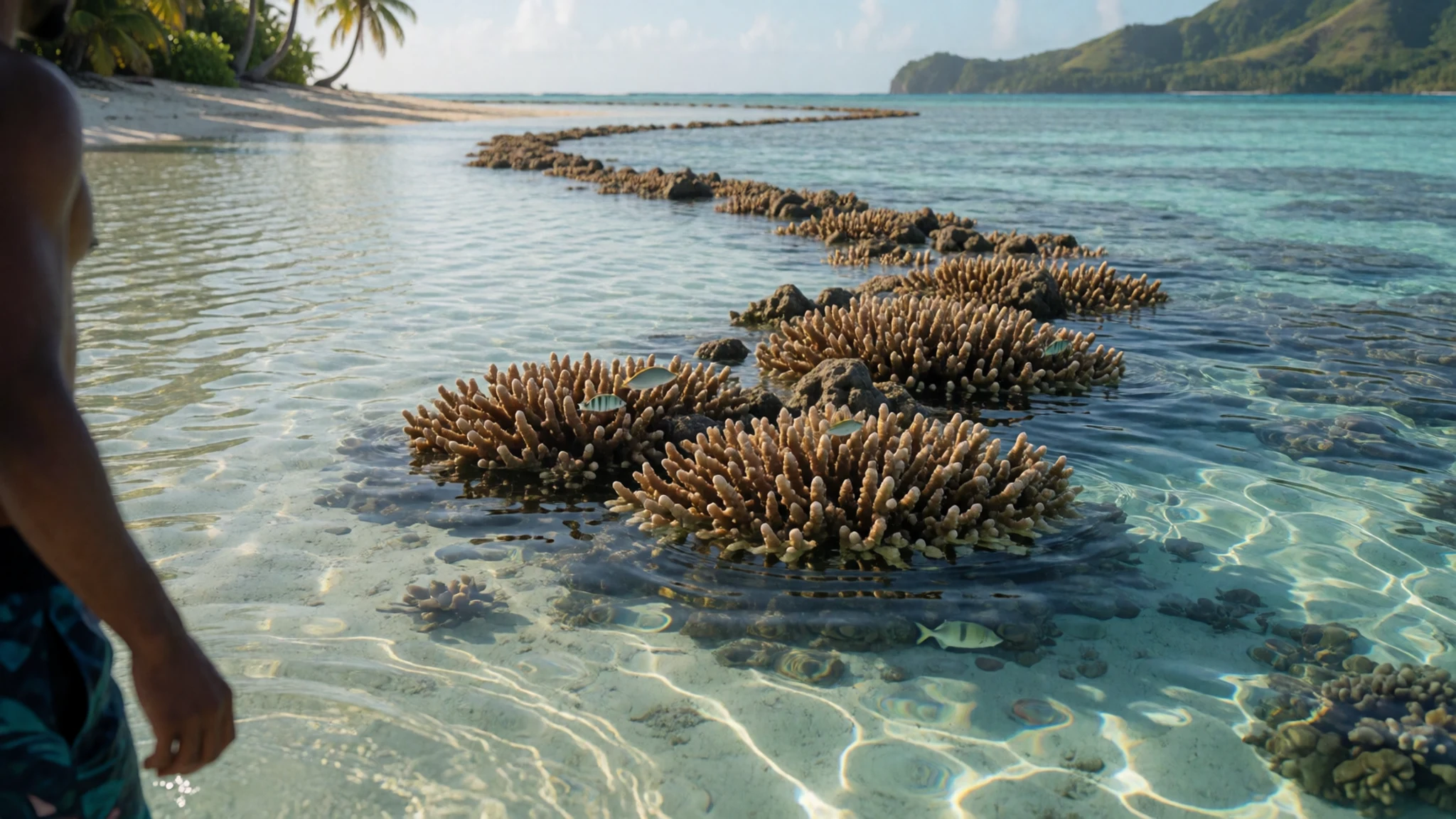
Culture
Culture in Lalomanu is fa'a Samoa as a coastal village lives it, not a show put on beside the beach. The aiga, the extended family, holds the land and shares food, work and decisions. A matai speaks for that family; a visitor may never see a formal council, yet will meet the result in who offers a meal, who is hosted, and whose fale is opened. Church is the other pillar. In a village on this coast, Sunday is given to worship: long services, careful dress, and a quiet afternoon afterwards. The to'ona'i, the Sunday meal, brings the family to one table, with taro, palusami and other dishes cooked in quantity. Respect for elders, titles and the church shows in a lower voice and in waiting to be shown a seat. On some evenings there is music, and at times an 'ava ceremony, in which a drink prepared from the ava root is mixed and served according to rank. Children are part of every yard and every road, and they are greeted as members of families, not treated as a photo stop. A guest here is closer to a visitor in someone's home than to a customer on a promenade, which is why warmth and restraint arrive together. Ask before you photograph people, and keep shoulders and knees covered once you step off the sand.
What to wear
Fashion in Lalomanu begins with the 'ie, the cloth wrap widely known as a lavalava, worn by men and women from the house to the garden and often on the road. For church and ceremonies, men wear the 'ie faitaga, a tailored lavalava cut with pockets, usually with a collared shirt; women wear the puletasi, a long tunic over a matching ankle-length skirt, in colours chosen for the occasion. The older ceremonial textile is siapo, bark cloth beaten from the paper mulberry and patterned with natural dyes and carved rubbing boards. Siapo is for gifts, weddings and formal rooms now, not for swimming. An ula, a necklace of flowers, seeds or shells, still marks a welcome or a celebration. Everyday clothes mix those wraps with T-shirts, shorts and sandals; the lavalava is still what makes a person look dressed in the village. A visitor should follow the same split. Swimwear stays on the beach and in the water. A lavalava or a long shirt over it is the step onto the road, into a shop or towards a house. Church and a family meal need covered shoulders and knees. Sandals suit the road, and something that can get wet suits the reef. Evenings stay warm, so a light wrap is enough if rain comes off the ridge.
What to eat
- Oka — beach-fale kitchens along Lalomanu
Oka is raw fish, often tuna, cut into cubes and mixed with citrus juice, coconut cream, onion and a little chilli. Lalomanu meets it cold, beside taro, at a beach-fale supper or in a family kitchen along the shore.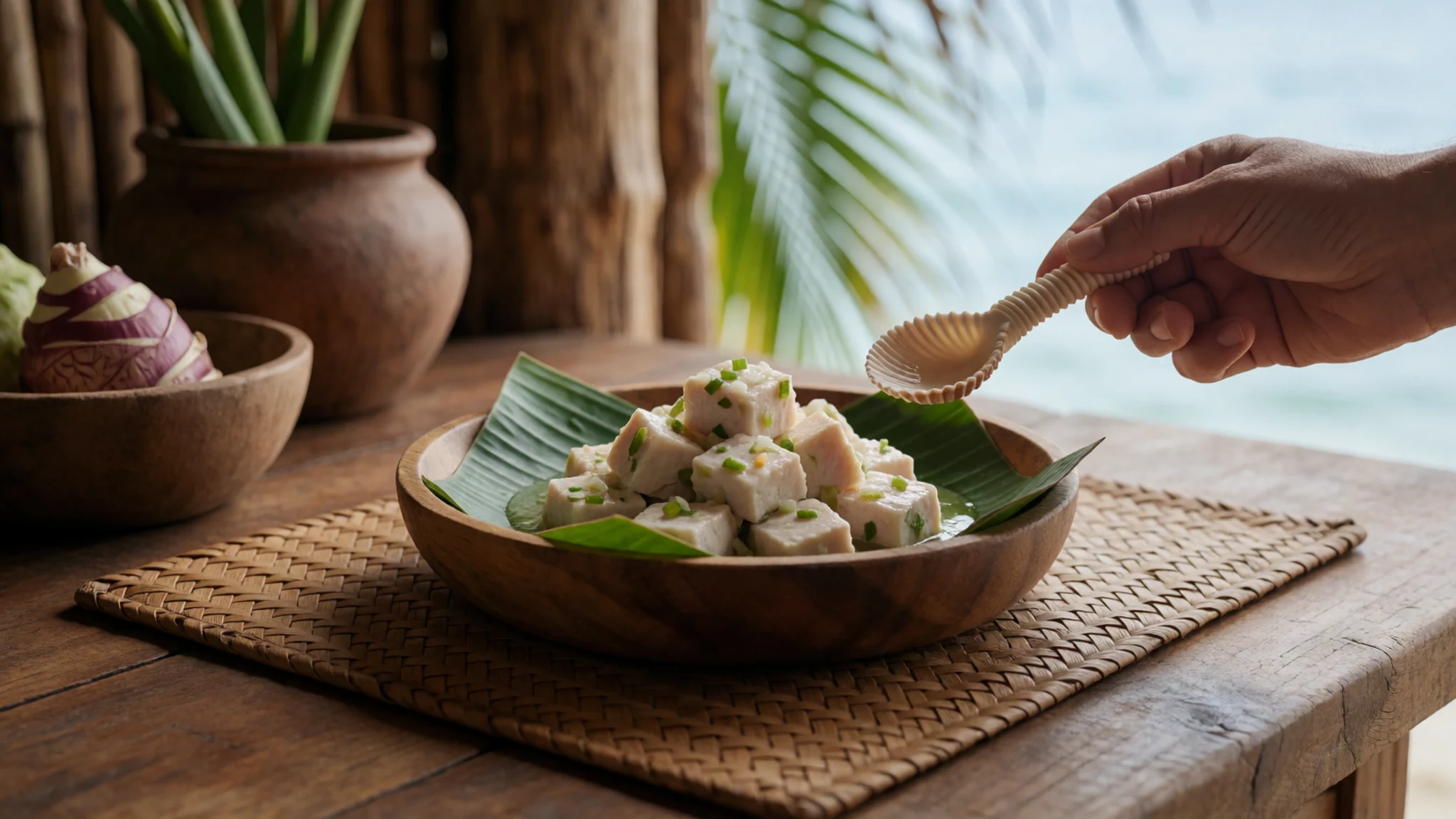
- Palusami — Sunday meals in village fales
Palusami is young taro leaves parcelled around coconut cream, sometimes with onion, and baked until soft and rich. It is a centrepiece of the Sunday to'ona'i and of larger family meals in the village fales behind Lalomanu Beach. The leaf tastes green; the cream does the seasoning.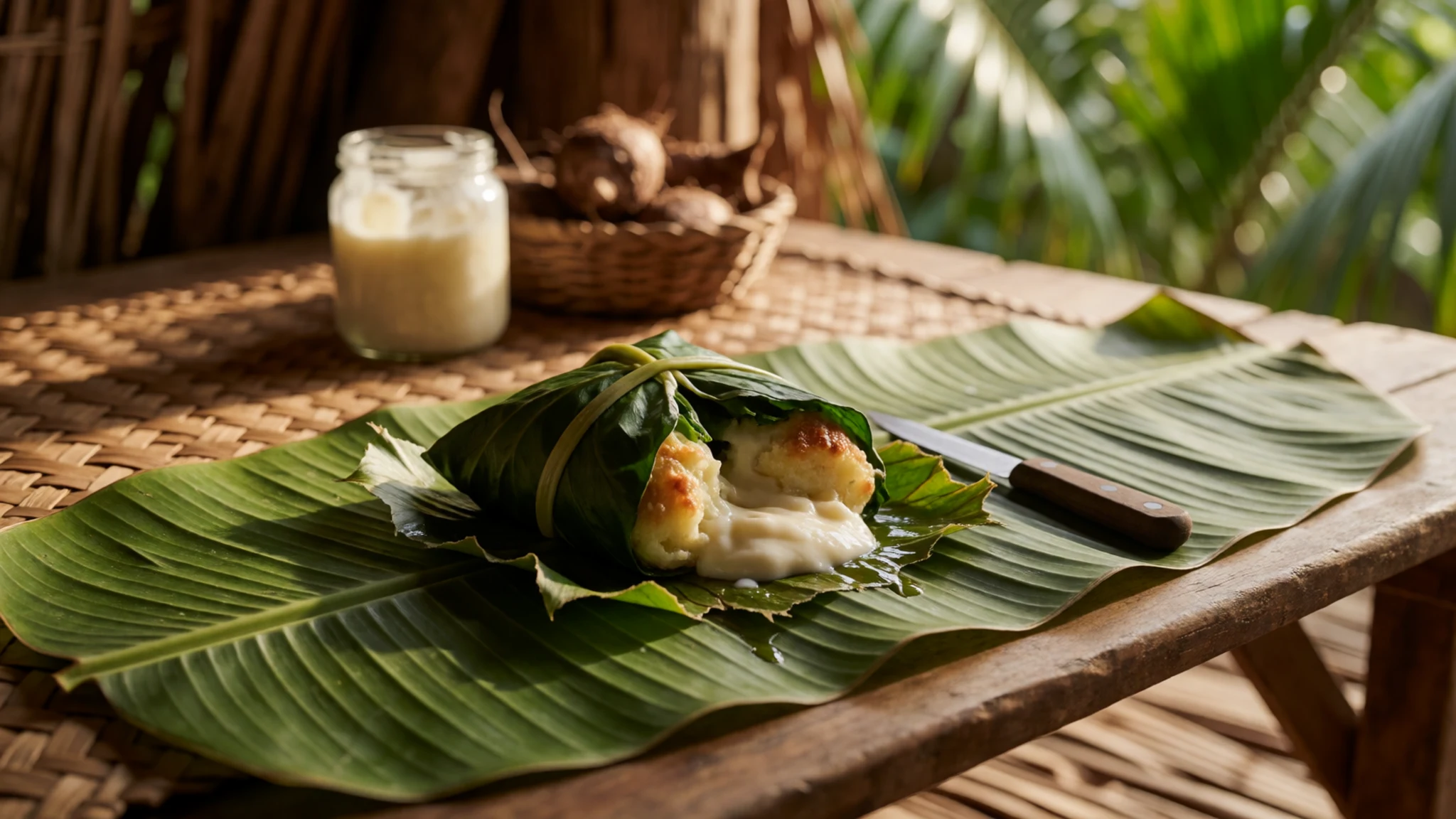
- Taro — beach-fale dinners and Sunday family tables
Taro is the dense root that fills the plate in Lalomanu, boiled, baked in the umu or sliced and cooked in coconut cream. It is a staple rather than a side, and it appears at beach-fale dinners and at family tables on Sunday. - Fa'alifu fa'i — village kitchens and Sunday spreads
Fa'alifu fa'i is green banana cooked in coconut cream, mild, soft and filling, and often set next to fish. In Lalomanu it comes from the same village kitchens and Sunday spreads as taro, a tree crop treated with the same seriousness as the reef. - Umu — family compounds and beach fales on occasion
An umu is the earth oven of hot stones in which Lalomanu families bake taro, breadfruit, palusami and fish. It marks a special occasion rather than a daily stall. Guests of a beach fale or a family may be called when the food is opened. - Koko Samoa — village houses
Koko Samoa is cocoa roasted, pounded and boiled with water, drunk hot and often with little or no sugar. In Lalomanu it is a house drink of morning and evening, offered to a guest as ordinary hospitality, not ordered from a café counter.
Plan it
Best time. May to October is the drier, more settled stretch, with easier sun and calmer mornings for the beach. November to April is wetter and more humid, with heavier showers and a real chance of tropical storms; swimming can still be good between squalls, but the week is less predictable.
How long. 2–3
Getting there. Fly into Faleolo International Airport on Upolu, then cross the island by road to the east coast. The last leg follows the coastal road through the villages into Lalomanu. There is no passenger rail; use a bus, a transfer or a hire car, and confirm transport in the village rather than from a fixed timetable.
Budget. mid
Tips
- Book a beach fale before the drier months; the shore has only a modest number of beds.
- Plan Sunday as a quiet day built around church, and do not expect shops or village activities to run as on a weekday.
- Bring cash for fale stays, meals and small shops. Card machines are not something to rely on in the village.
- Swim in the morning and stay on the part of the beach where local people are swimming.
- Carry drinking water and sun protection. Village shops are small, and the midday glare off the sand is strong.
Etiquette
- Cover shoulders and knees in the village and at church, and keep swimwear for the beach and the water.
- Take shoes off before entering a fale or stepping onto a woven mat.
- Ask before photographing people, and keep Sunday quiet around church.
Nearby
Sources
- Wikidata (CC0)
- Wikipedia (CC BY-SA 4.0)
- Wikivoyage (CC BY-SA 4.0)