Manono
Manono, Samoa
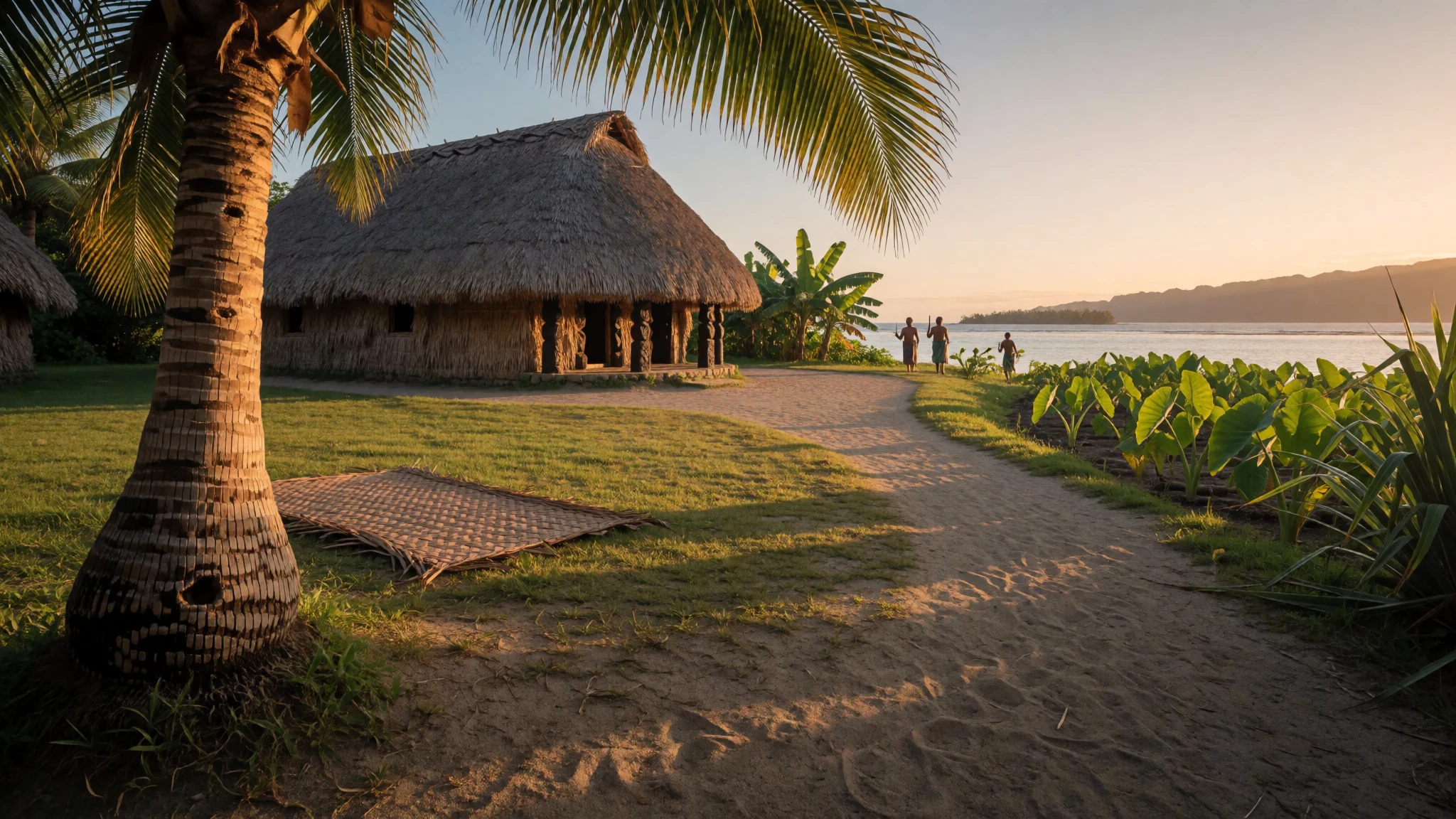
Manono is a car-free feeling island village life, with beach fale stays, a calm lagoon and a boat crossing from Upolu that sets the pace.
The place
Manono is a small volcanic island in the Apolima Strait, the channel between Samoa's two big islands, Upolu and Savai'i. It lies just off the western tip of Upolu, close enough that the boat crossing is short, yet the island feels like a separate world. About 889 people live here, spread across four villages that hug the shoreline. The high point reaches only 67 m, so a walk over the top is gentle rather than a climb. Politically Manono belongs to the Aiga-i-le-Tai district, whose mainland communities sit at the western end of Upolu, so family ties run constantly back and forth across the water. The island is green with coconut palms, banana plants and food gardens, edged by a reef and a pale lagoon. Almost none of the original rainforest survives on either big island; farmland and semi-cultivated bush took over long ago, and Manono follows the same pattern. Neighbouring Apolima, with its own small village, and the little islet of Nu'ulopa are both within sight. The volcanic origins are real but quiet: none of Samoa's volcanoes are active, though small tremors are felt from time to time. Life here is slow, church-centred and communal. People come for beach fale stays, swimming, and the chance to see a working village rather than a resort.
Its story
Manono's story begins with fire under the sea. Like Upolu and Savai'i, it is the product of countless eruptions that piled up volcanic rock until it broke the surface, and the cones that dot the larger islands are the same family of landforms. Polynesian voyagers settled the Samoan islands long before any European ship appeared, and they organised life around extended families, land held in common and chiefs called matai. That system still governs Manono today. Each village has its council, its own rules and its own rhythm, and the island's links to the mainland districts of western Upolu are old and personal rather than administrative. Christianity arrived in the nineteenth century and became woven into everything; the churches that now dominate every village are as much a part of the island's identity as the meeting houses. The sea has shaped the story too. Manono's position in the strait made it a natural stopping point for canoes and later for boats, and families still depend on fishing and on gardens of taro and breadfruit. The islanders also know how fragile the coast can be. A tsunami struck the south coast of Upolu in recent years with heavy loss of life, and the memory shapes how people talk about the shore. Today Manono is quiet, but it is not a museum.
What to see
- The Apolima Strait crossing — Apolima Strait, between Upolu and Manono
The boat ride from Upolu's western tip to Manono crosses the Apolima Strait and is a sight in its own right. On a clear day the outline of Apolima island sits on one side and the end of Savai'i on the other, with the reef changing colour beneath the hull. Keep cameras in a dry bag, because spray comes aboard when the wind is up.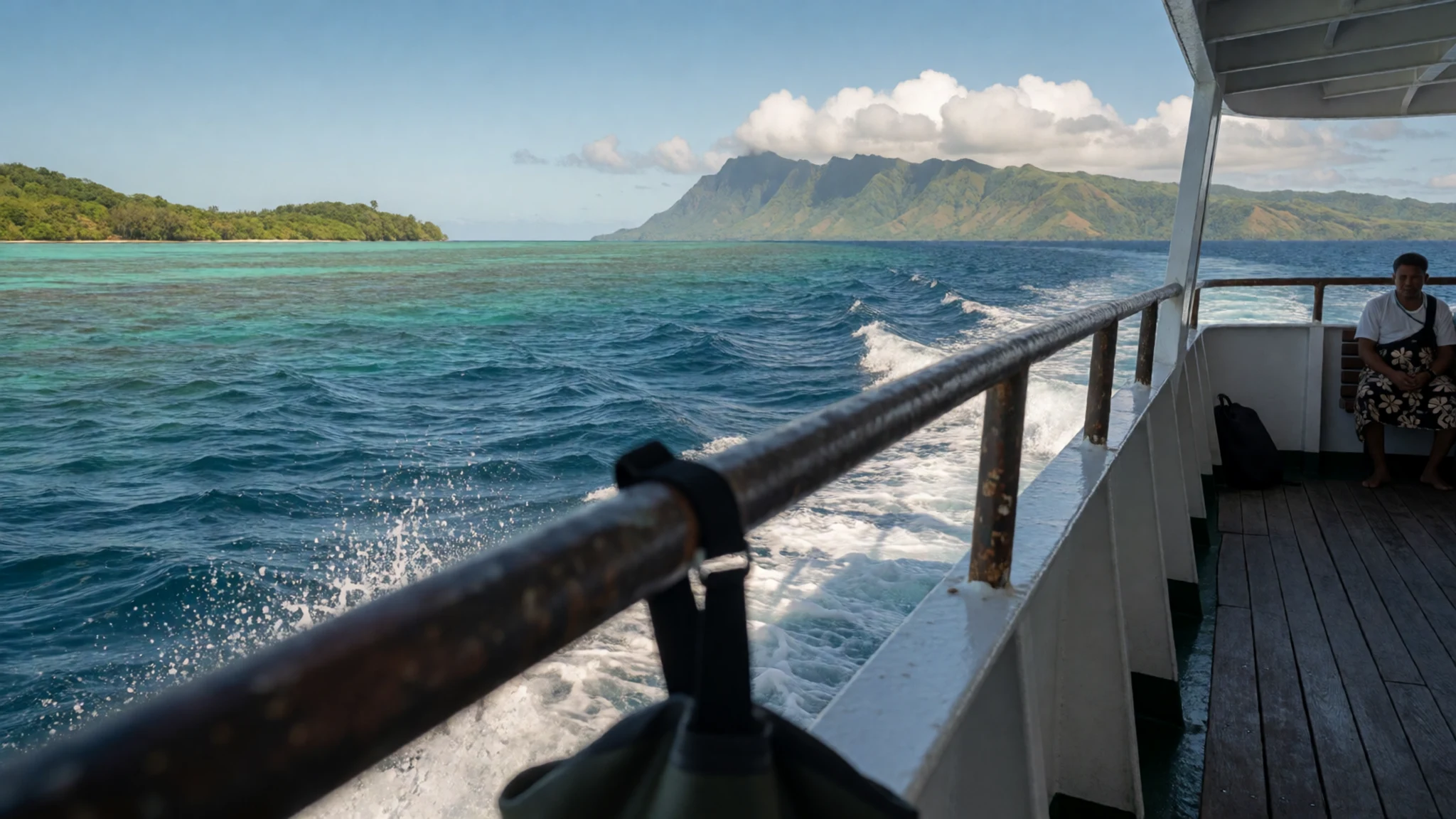
- The village path and the fale tele — Coastal path around the island
A path follows the shoreline through all four villages, passing family compounds, taro gardens, pigs and open-sided houses. The fale tele, the large oval meeting house where chiefs gather, is the most striking building. Admire it from the path unless invited in. Allow a slow half day and carry water, because shade thins out between the villages.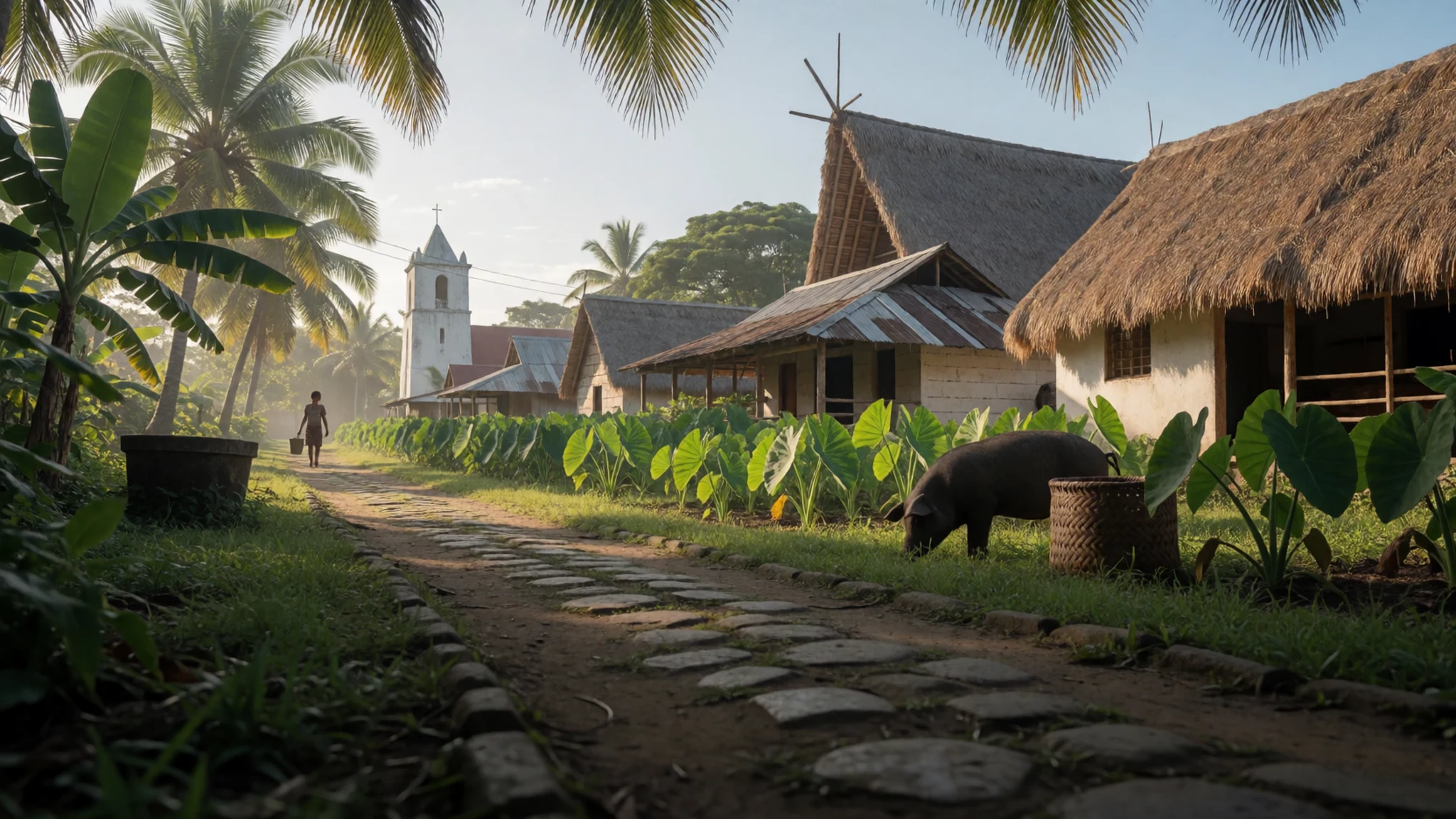
- Village churches — In each of the island's villages
Each village has its own church, usually whitewashed or pastel-coloured and large for the size of the community. They anchor the week: on Sunday families walk to service in white. Visitors can look from outside at quiet times, and may be welcomed at a service if they dress modestly and sit where the congregation directs them.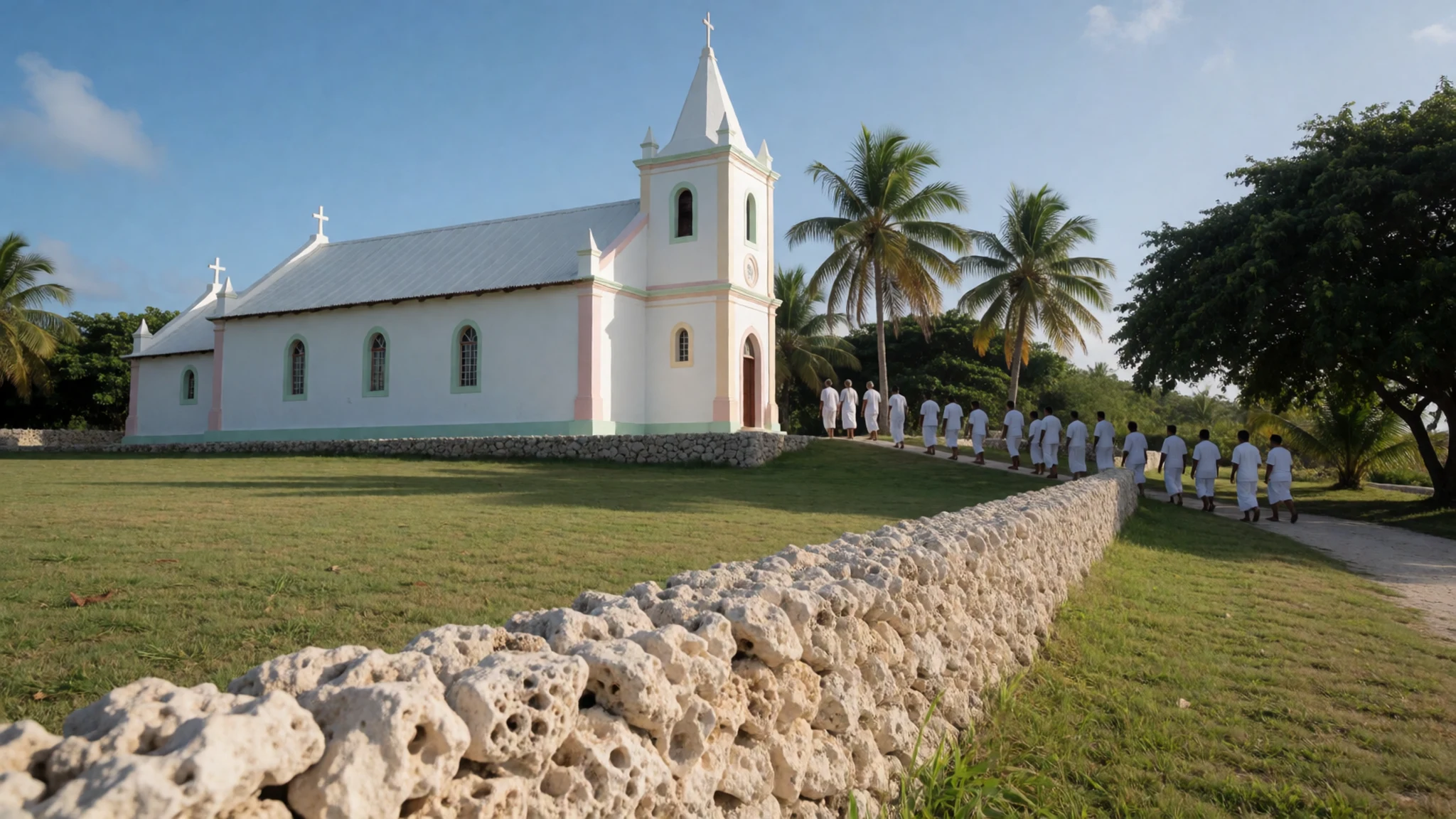
- Beach fale and the lagoon — Lagoon shoreline
Simple open-sided beach fale stand beside the lagoon, with mats for sleeping and a roof of thatch or tin. The water inside the reef is calm and good for swimming and snorkelling, though coral cuts are easy to pick up, so reef shoes help. Swim in daylight only and follow your hosts' advice on tides and channels.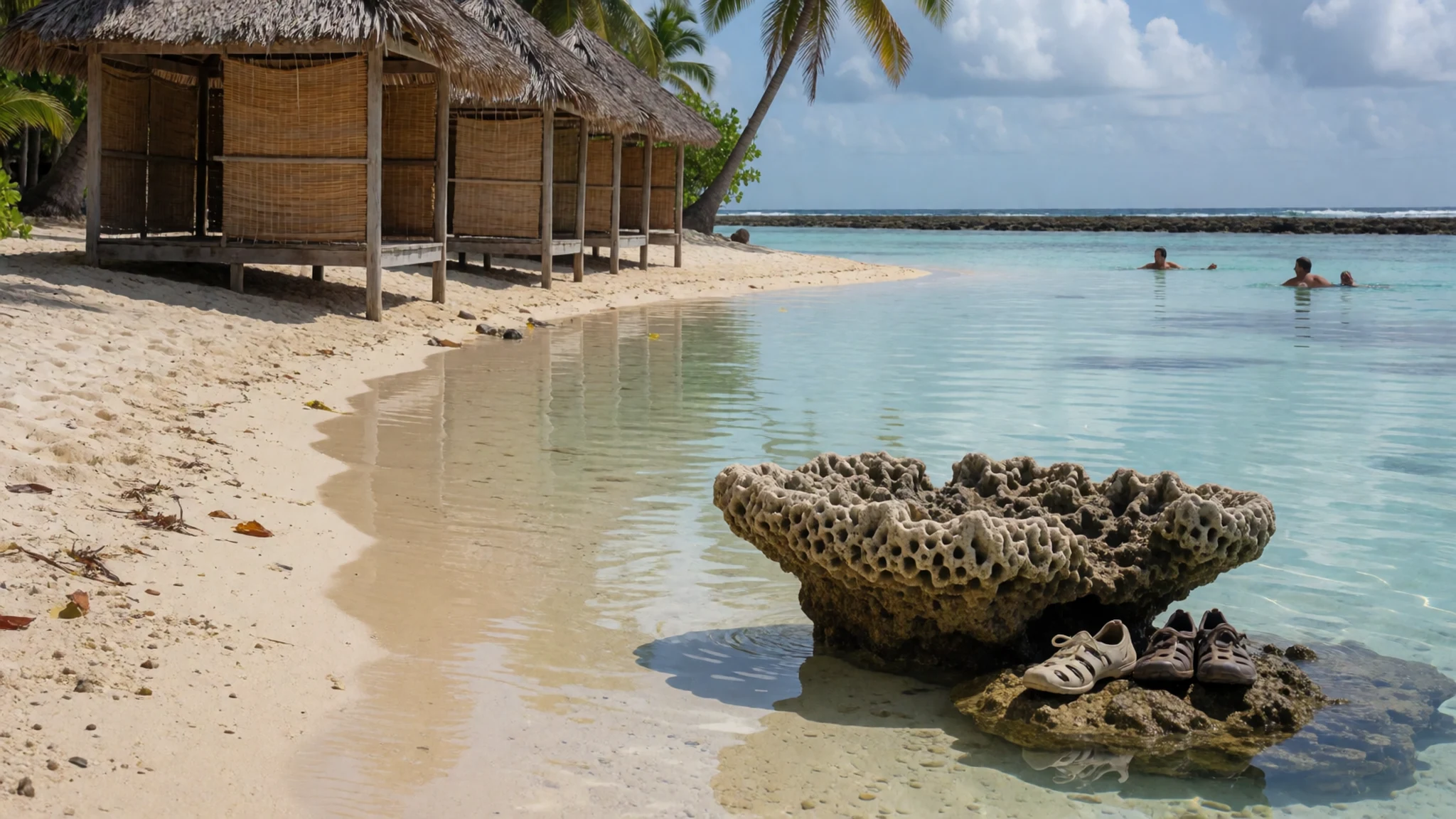
- The island's high point — Island interior
The highest ground, 67 m above sea level, can be reached by a track inland through plantations. The effort is modest, but the reward is a view over the lagoon towards Upolu, Apolima and Savai'i. Go in the cool of early morning, ask a villager about the route, and expect mud after rain.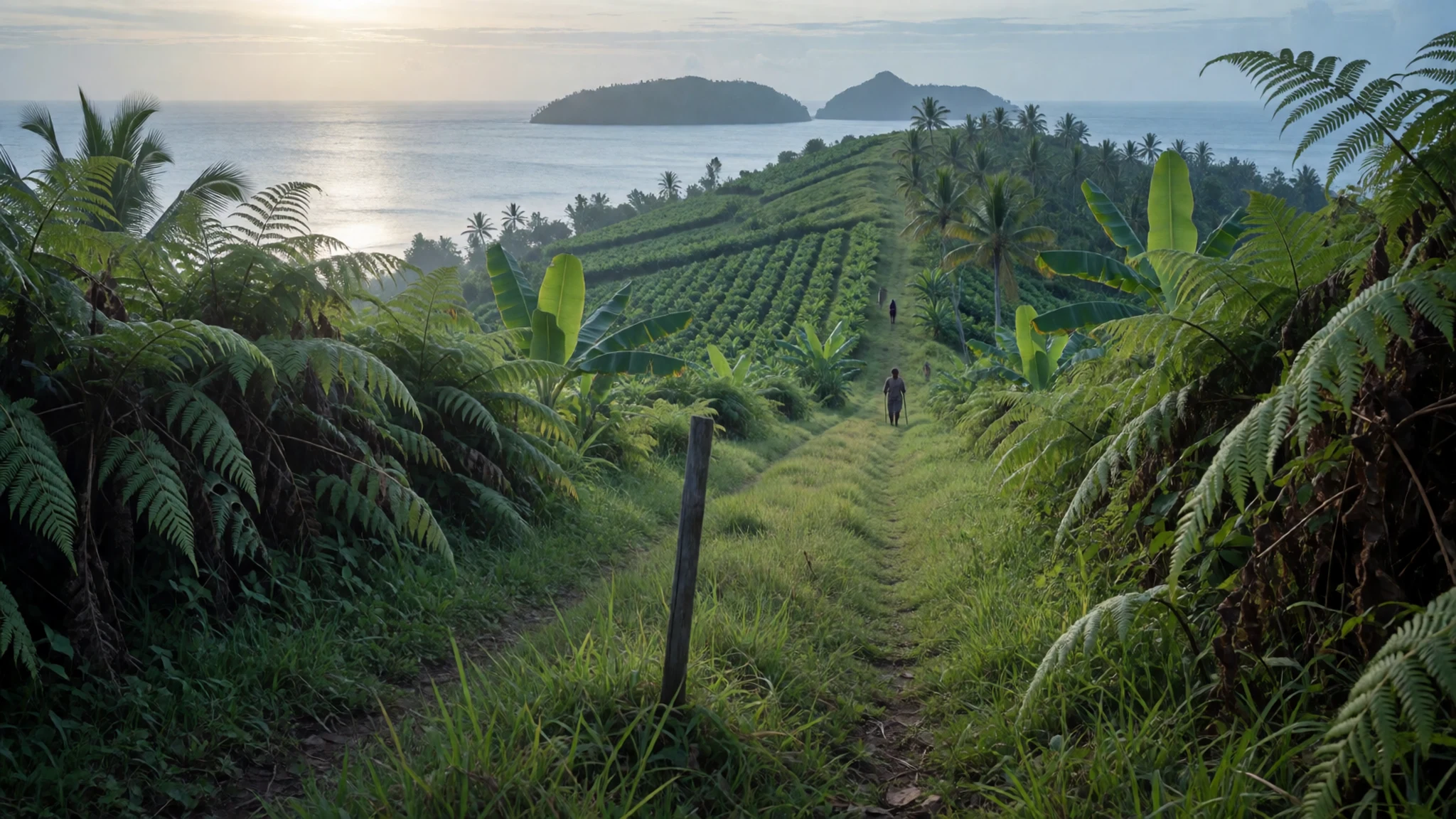
Culture
Manono follows fa'a Samoa, the Samoan way, in which family, church and chiefly authority shape daily life. Each village is run by its matai, who set the rules visitors are expected to respect; allowances are made for outsiders, but ignorance is not an excuse for causing offence. Samoa is deeply religious, and on Manono the church is the centre of the week. Sunday is a day of rest and worship, with services, big family meals and very little else going on. Many villages also keep a short prayer time at sundown, when people stay indoors or sit quietly and visitors are expected to stop wherever they are. Hospitality is central: guests are fed generously, and food is often carried as a gift when people travel. Modesty matters. Revealing clothing, topless sunbathing and swimwear away from the beach all cause real offence, and village rules on these points are enforced. Asking before photographing people, their houses or a church service is simple courtesy. Hosts will usually explain local rules at arrival, and it is worth listening carefully, since they differ slightly between villages. Stay off the village paths on Sundays and during the evening prayer time, and keep shoulders covered and shorts to the knee away from the beach.
What to wear
Manono dresses in the Samoan manner, built around the lavalava, a length of cloth wrapped at the waist and worn by both men and women. For formal and church occasions men wear the ie faitaga, a tailored wrap skirt with a shirt or jacket, and women wear the puletasi, a matching tunic and long wrap skirt, often in printed cotton. Fine mats called ie toga, woven from pandanus leaf, are valued gifts at weddings and funerals, and siapo, patterned bark cloth, is made for special occasions. Everyday dress now is simple: t-shirts, shorts or lavalava, and flip-flops, with white worn on Sunday for church. Visitors should pack light cotton or linen that dries quickly, because the island is hot and humid. Choose shorts to the knee and tops that cover the shoulders for walking through villages, and keep swimwear for the beach and lagoon. A wide-brimmed hat and strong sun protection are essential. Reef shoes protect against coral, and sandals that slip off easily suit a culture where shoes come off at the door of a house. A lavalava bought locally is cheap, practical, and well received.
What to eat
- Umu feast — Village family meals, especially on Sundays
The umu is the traditional earth oven, where stones are heated in a fire and food is covered with banana leaves to cook slowly. It produces taro, breadfruit, fish and pork with a gentle smoky flavour. Look for it at Sunday family meals.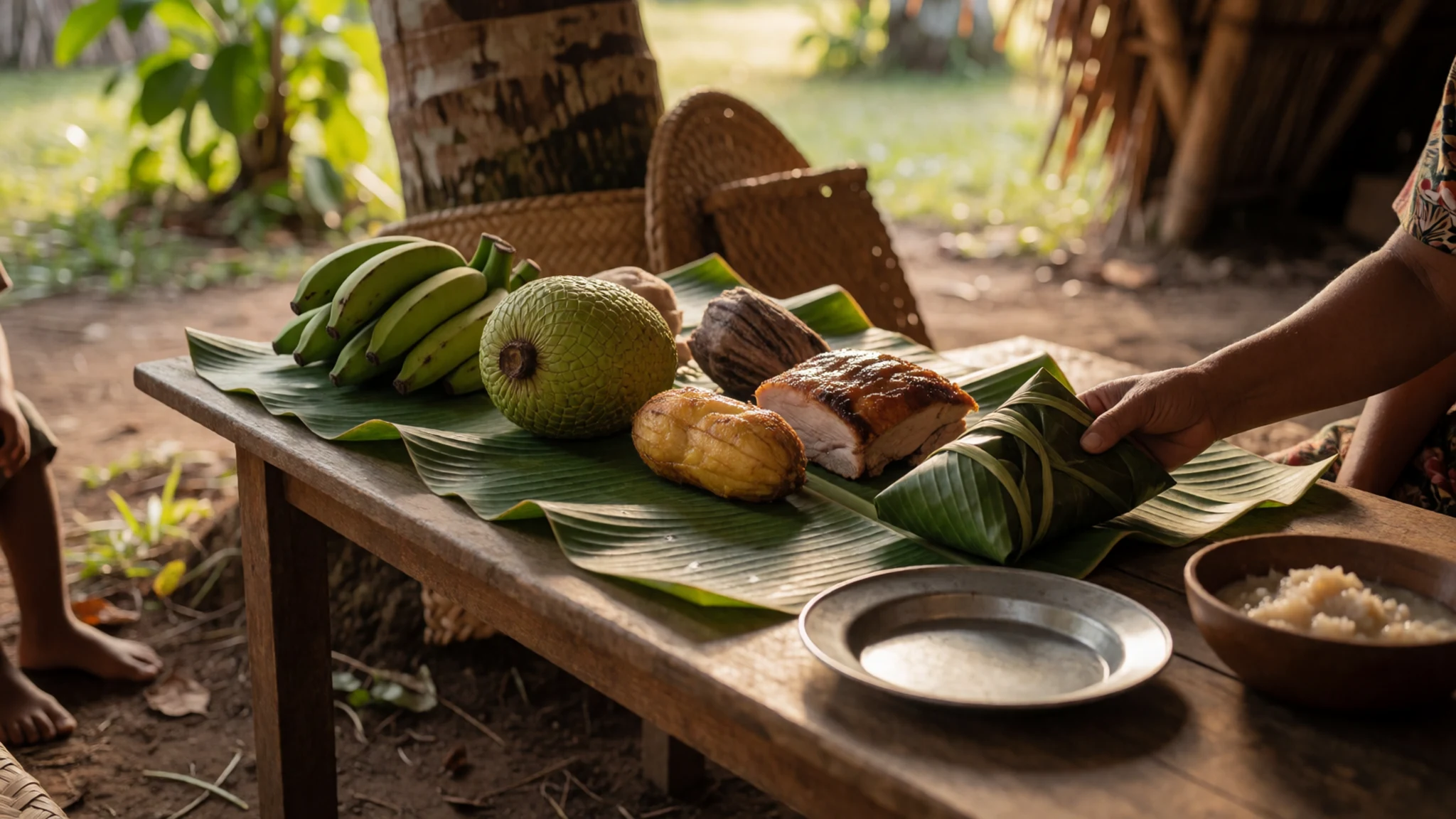
- Palusami — Beach fale stays and village family meals
Palusami is taro leaves wrapped around coconut cream and onion, then baked in the umu until soft and rich. Well made, it is the dish many visitors remember longest. Ask your host whether it is being cooked that day.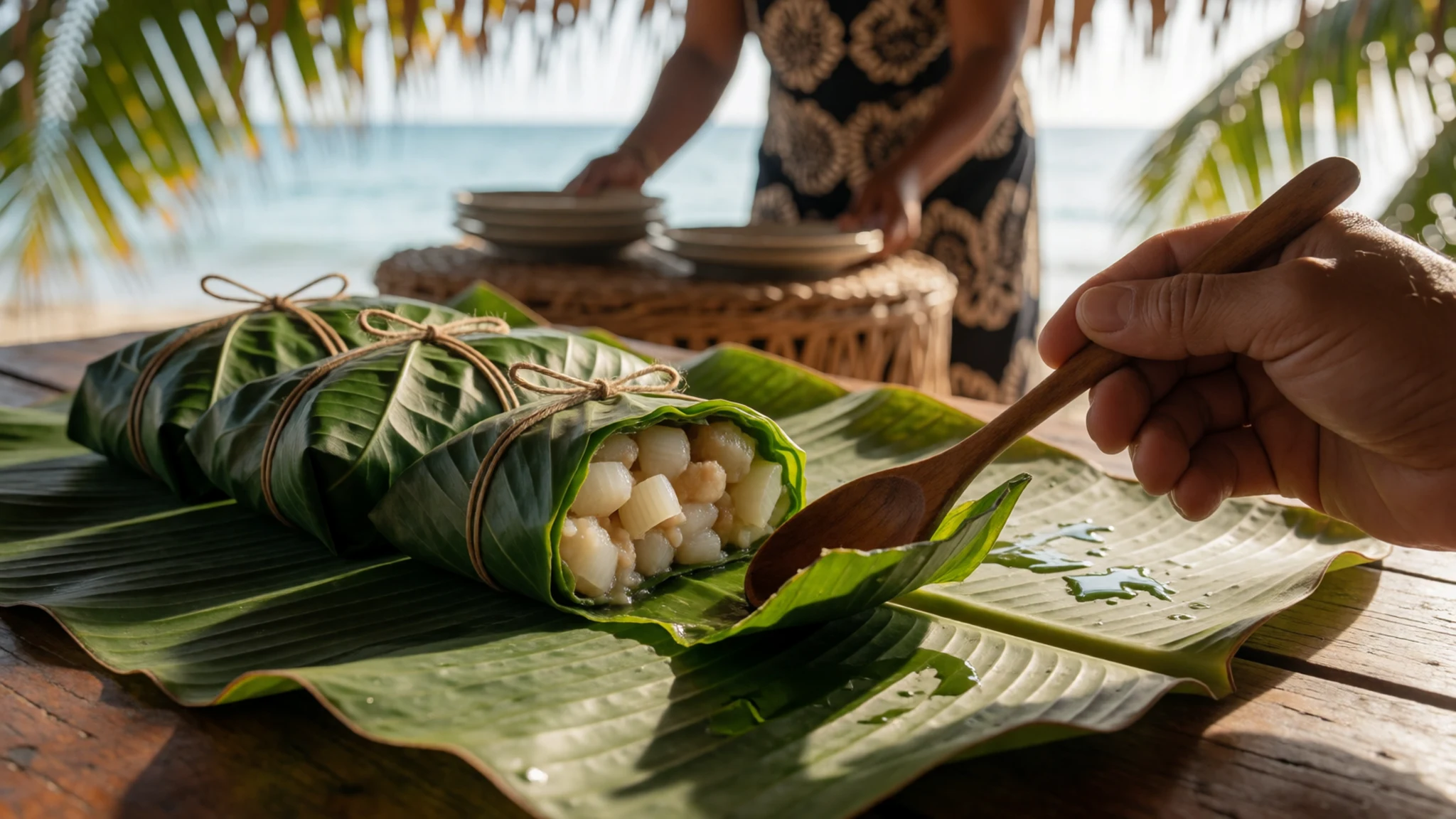
- Oka — Village kitchens; the fish market in Apia on the mainland
Oka is raw fish cut small and marinated in lemon juice, coconut cream, salt and chopped onion. It is fresh, cool and mildly tangy, much like ceviche, and best eaten the day the fish is caught. - Taro and breadfruit — Any village meal; family gardens on the island
These starchy staples take the place of rice or bread. Taro is boiled or baked, breadfruit is roasted until it turns soft and slightly sweet, and both come with fish or meat. Seasoning is light. - Corned beef — Village meals and small shops on the island
Tinned corned beef arrived as an import and Samoans took to it enthusiastically. It turns up beside umu dishes and in family meals, often with taro or coconut cream. It is not traditional, but it is everywhere.
Plan it
Best time. May to October is the drier, cooler part of the year, with less humidity and calmer seas for the boat crossing. November to April is hotter, wetter and carries the risk of tropical storms, so check forecasts before travelling.
How long. 2–3
Getting there. Fly to Faleolo International Airport on Upolu, then travel by road to the village landing at the western tip of Upolu. A short boat crossing of the Apolima Strait takes you to Manono. Ask your host to arrange the boat in advance.
Budget. low
Tips
- Arrange your beach fale and the boat crossing with your host before you arrive
- Carry enough cash for the island, as card payment is unlikely to be available
- Bring drinking water and sun protection, because shade is limited on the coastal path
- Allow time on arrival, since flights often land at awkward hours
- Check weather and sea conditions before crossing the strait
Etiquette
- Stay off village paths on Sundays and at the evening prayer time
- Dress modestly in villages and keep swimwear for the beach
- Ask before photographing people, houses or church services
Nearby
Sources
- Wikidata Q681871 (CC0)
- Wikipedia, Manono Island (rev 1386315623) (CC BY-SA 4.0)
- Wikivoyage, Samoa (rev 5362689) (CC BY-SA 4.0)
- Photo 01-manono.jpg, NASA (Public domain)
- Photo 02-view-from-ferry-in-apolima-strait-2009.jpg, Sarah Kelemen (CC BY 2.5)
- Photo 03-fale-on-manono-island.jpg, Sonja Pieper (CC BY-SA 2.0)
- Photo 04-manono-island.jpg, yashima (CC BY-SA 2.0)
- Photo 05-.jpg, Виктор Пинчук (CC BY-SA 4.0)
- Photo 06-.jpg, Виктор Пинчук (CC BY-SA 4.0)
- Photo 07-.jpg, Виктор Пинчук (CC BY-SA 4.0)
- Photo 08-.jpg, Виктор Пинчук (CC BY-SA 4.0)


