Saint-Émilion
Saint-Émilion, France
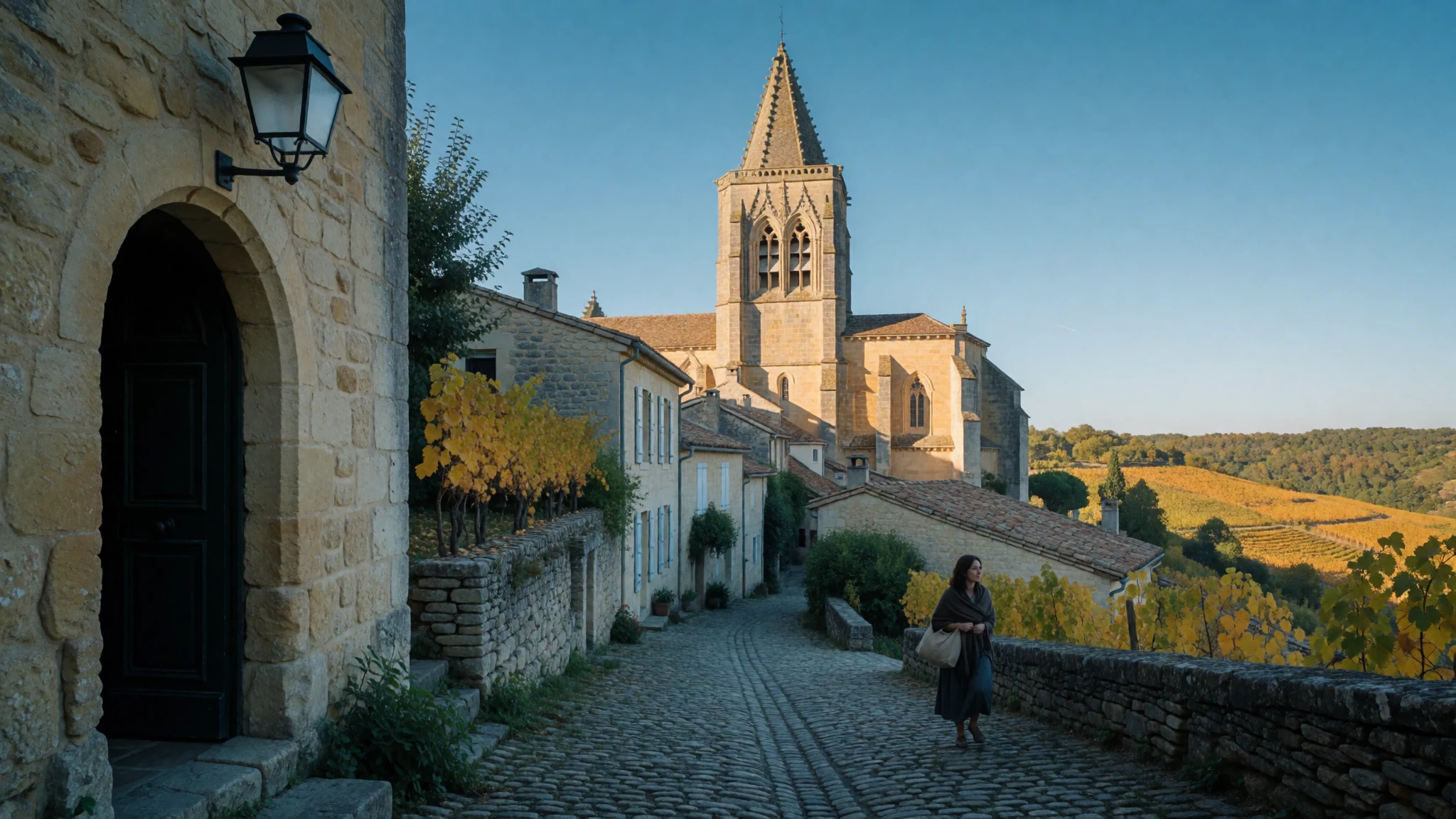
Saint-Émilion is a small medieval wine town where cobbled lanes, a church carved from rock and working cellars sit among the vines.
The place
Saint-Émilion is a small town in the Gironde department of Nouvelle-Aquitaine, home to 1,608 people and set at an elevation of 23 m on a limestone slope above the Libournais vineyards. It lies east of Bordeaux, on the way towards the Périgord, and around Libourne the land rolls into low wine hills. Vines cover most of the commune, so the town reads less as a settlement with fields around it than as a stone cluster dropped into a vineyard. Streets run steeply downhill, narrow and often cobbled, lined with honey-coloured houses, wine shops, and the ruins and bell-towers of Romanesque churches. Away from the centre, the buildings are mostly modest single-storey stone houses of the nineteenth century, while the grand wine estates called châteaux date from the eighteenth and nineteenth centuries. The town and its vineyards were inscribed as a UNESCO World Heritage Site in 1999, recognising a winemaking tradition that is still working today. That living quality matters: this is not a museum, and the cellars, tasting rooms and growers' houses are all in use. Size shapes the visit. The old centre can be crossed on foot in minutes, though the gradient and the cobbles make it slower than the map suggests. In summer, day-trippers from Bordeaux fill the main lanes by late morning, and the place is noticeably calmer early and in the evening, once the coaches have left.
Its story
Saint-Émilion has traces of human life going back some 35,000 years, to the Upper Palaeolithic, and a Gaulish hill-fort once stood above the present town before Augustus annexed the region in 27 BC. Romans were planting vines here as early as the second century AD, and by the fourth century the poet Ausonius was praising the local vintage. The settlement, once called Ascumbas, took its present name from Émilion, a Breton monk who died in 767. Tradition says he began as a baker in the household of the Count of Vannes. Stopped by a suspicious lord while carrying bread to the poor, he claimed it was firewood, and the loaves turned to wood inside his coat. Émilion later withdrew to a rock shelter in a deserted forest and made a hermitage there, and the monks who followed him began selling wine commercially. Because the area lay on a pilgrimage road to Santiago de Compostela, monasteries and churches multiplied through the Middle Ages, and in 1199, under Plantagenet rule, the town received full rights. Its wines earned a good name in the centuries after, but the wars of religion damaged the vineyards, and recovery came only in the late nineteenth century. Another local survival is the macaroon, made continuously since 1620 to a recipe handed down by Ursuline nuns.
What to see
- The monolithic church — Old centre
Saint-Émilion's underground church was cut directly out of the limestone beneath the town, and its tower rises above the roofs. Inside, the air is cool and the walls bear the marks of the quarrying. Entry is usually by guided visit, so check the tourist office and the official website for current tours.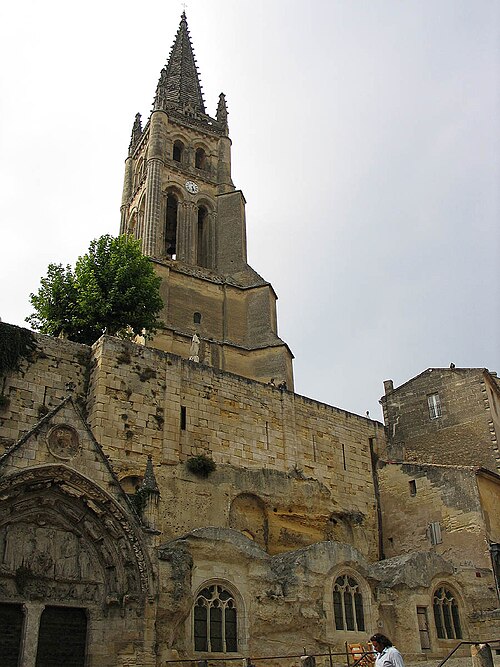
- The Tower of the King — Upper old town
The Tour du Roi is a surviving medieval keep on the high ground of the old town. Its upper level gives the clearest overview of the roofs, the monolithic church tower and the vineyards beyond. It is a good first stop for working out how the town is laid out.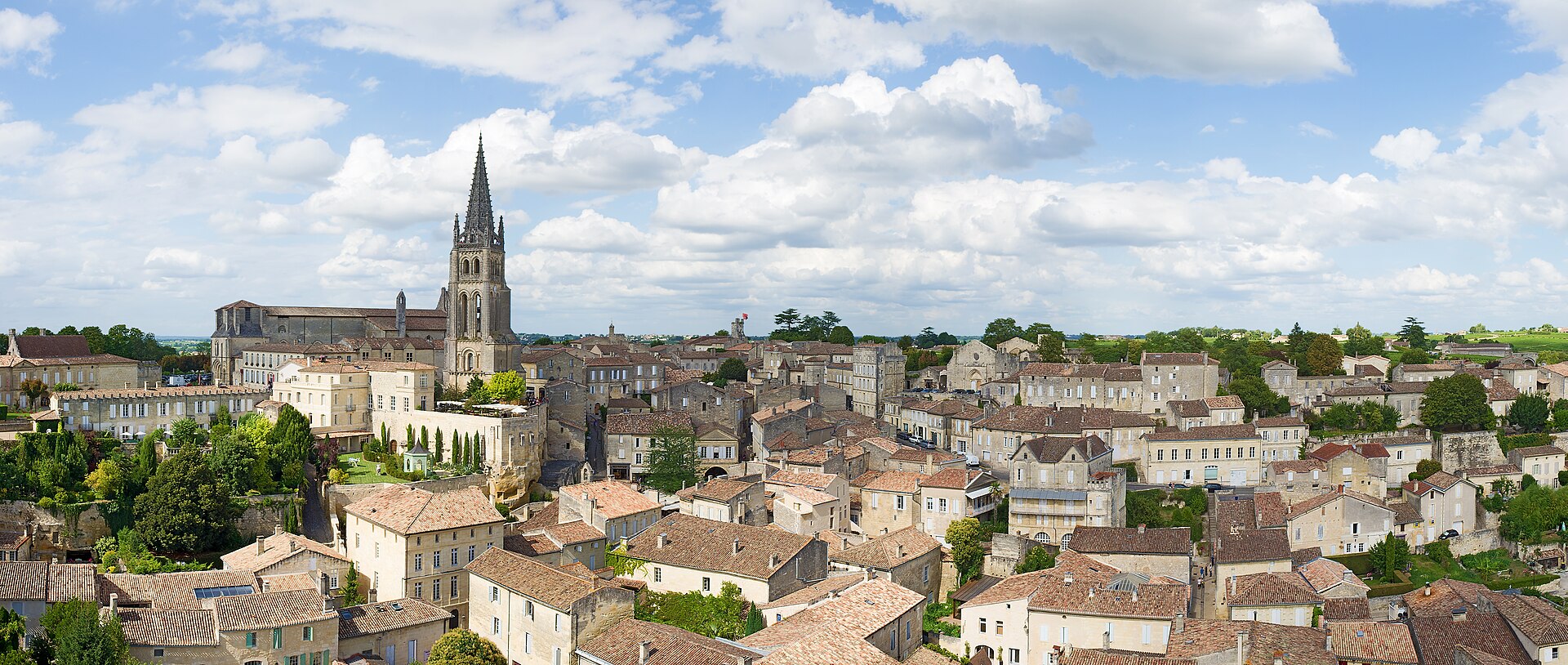
- Émilion's hermitage — Beneath the old centre
The rock shelter where the monk Émilion is said to have lived and prayed lies at the origin of the town. It is carved into the hill, small and plain, and rewards a slow visit. Guided tours of the underground sites are run by the tourist office, some in French only. - The steep lanes — Whole old town
The best sight in Saint-Émilion is the walk itself, down narrow stone streets between pale houses, cellar doors and small squares. Wear sturdy shoes, because the slopes are steep and the cobbles uneven. Mornings and early evenings are quieter and show the town more as residents know it.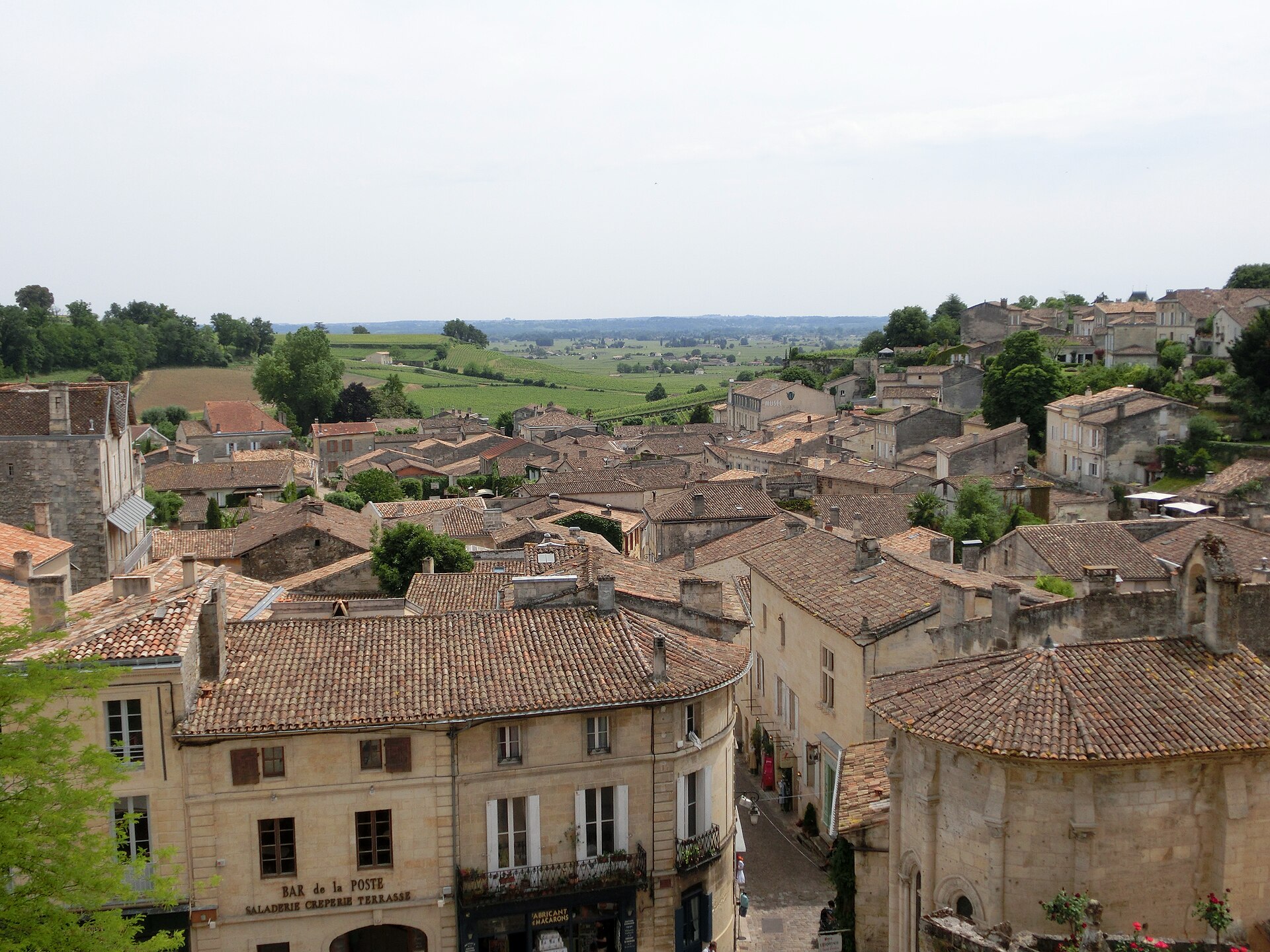
- The vineyards around the town — Surrounding countryside
Vines surround the town and cover most of the commune, and walking or cycling a short loop out of the centre shows the estates and their châteaux. The wine hills look different with each season: bare in winter, green in summer, and gold and red at harvest.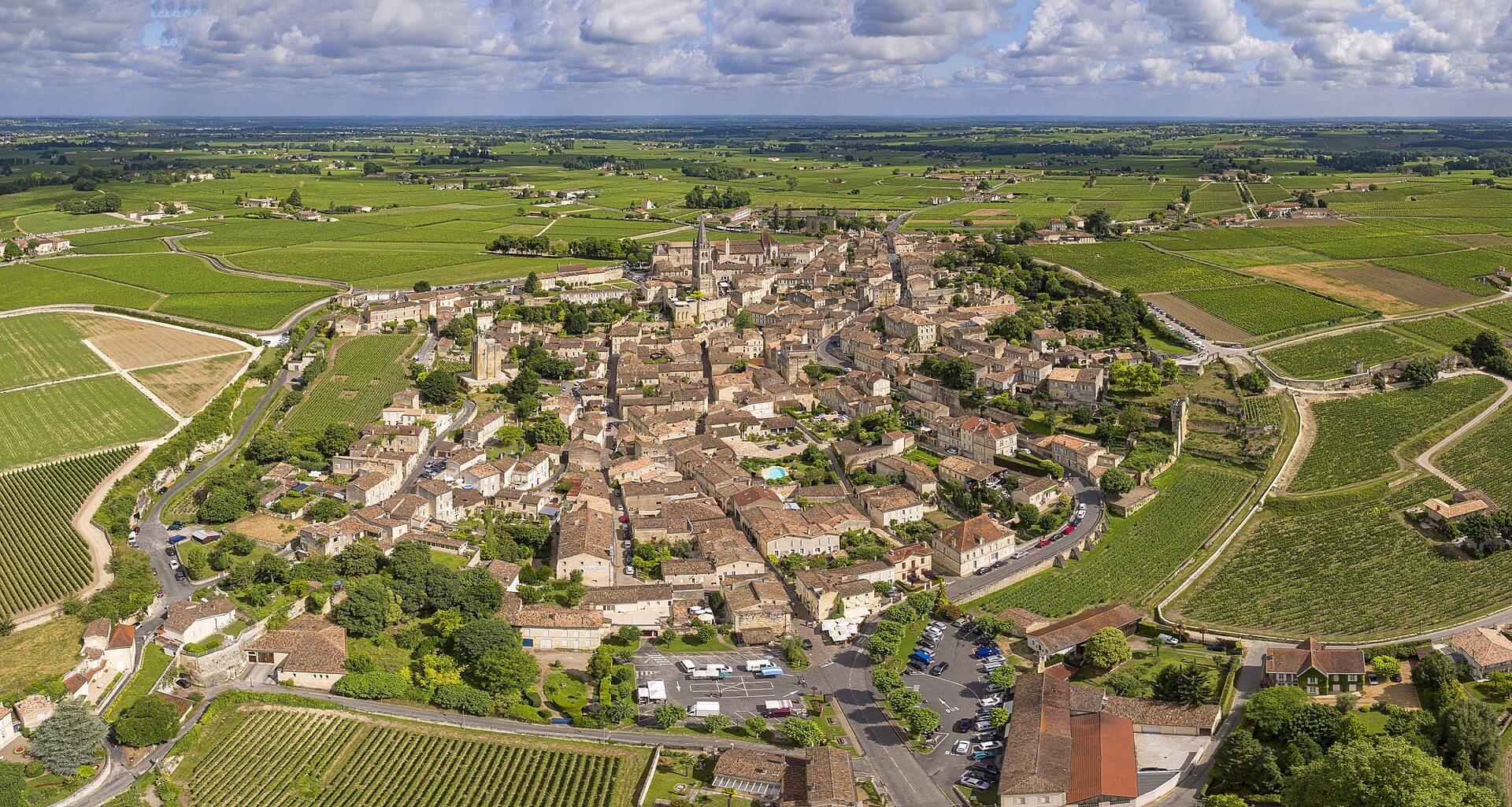
- Wine school and cellar shops — Old centre
A wine school, a museum and several cellar shops in the town help visitors make sense of what they taste. Sessions and tastings vary through the year, so check the official site before travelling. Shops are happy to explain a bottle, and shipping or carrying options are worth asking about.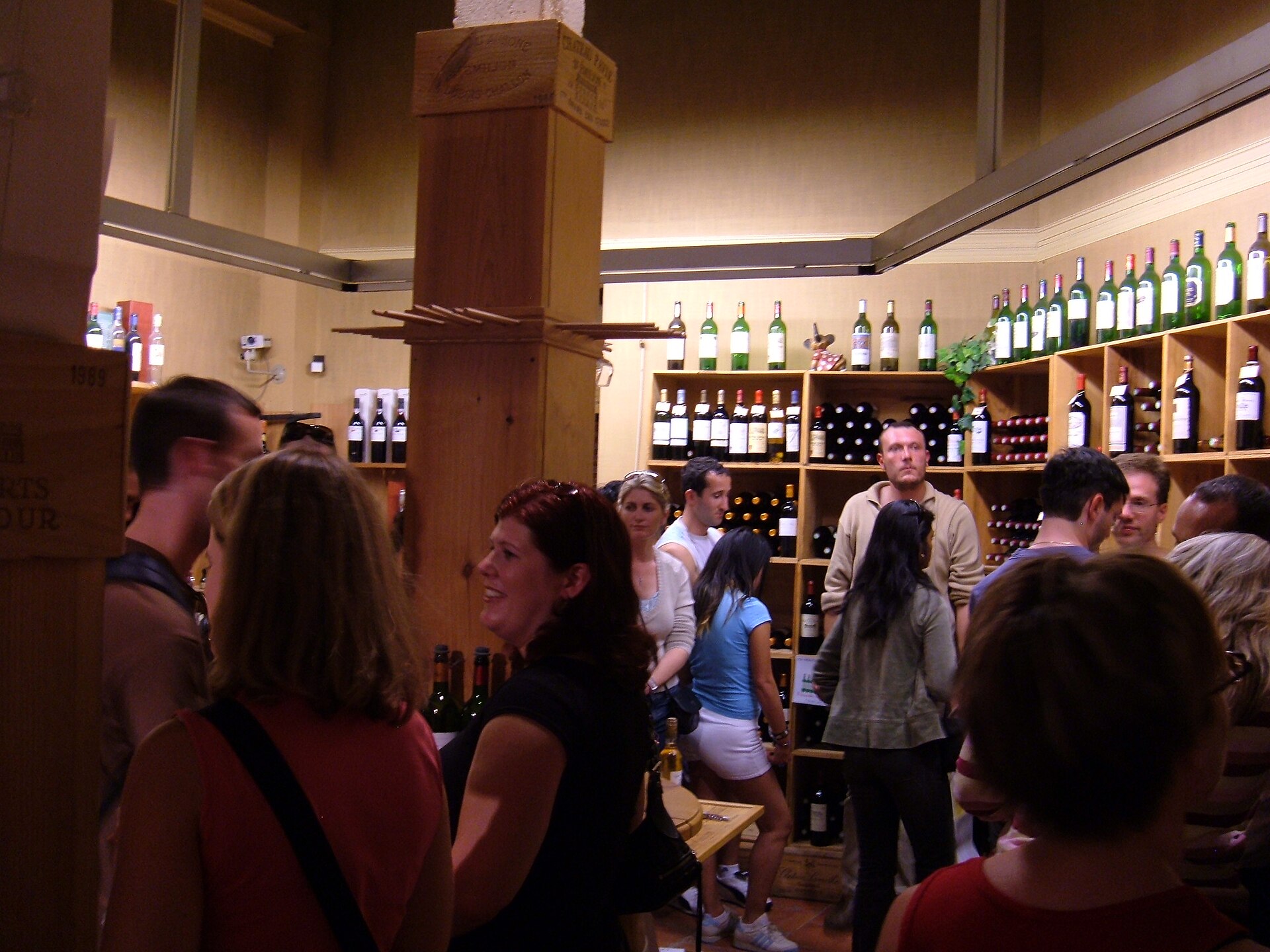
Culture
Saint-Émilion's culture is bound up with wine, and the calendar and manners of the town follow the vine. Growers belong to long-established families and cooperatives, and the vintage, usually gathered in early autumn, sets the rhythm of the year. A wine brotherhood, the Jurade, keeps up ceremonies in which members process in formal robes, a reminder that the reputation of the wines was defended by guilds for centuries. Faith shaped the place too. Pilgrims heading for Santiago de Compostela passed through, and the Romanesque churches and the rock-cut church below the streets are legacies of that traffic and of the monks who followed Émilion. Daily life is small-scale: a baker, a few wine merchants, cafés that fill at lunch, and shutters pulled down at quiet hours of the afternoon. French is the working language, and a greeting in it helps more than any amount of pointing. Wine is discussed with seriousness but without fuss; producers are happy to explain a vintage to someone who listens, and less keen on being treated as a photo backdrop. Visitors who linger into the evening, after the coaches leave, see the town at its most local. Say "bonjour" when you enter a shop or tasting room, and do not expect to be served without it.
What to wear
Saint-Émilion has no everyday traditional costume to speak of; the dress most tied to the town is ceremonial. Members of the Jurade, the wine brotherhood, wear formal robes and hats at their processions, in rich red tones and heavy cloth suited to stone churches and cold cellars. Older regional dress from south-west France, with linen shirts, wool and cotton skirts and shawls, survives mainly at folklore festivals rather than in the streets. What people wear now is ordinary French smart-casual: linen shirts, chinos, light jackets, and in cooler months wool jumpers and scarves. Growers and cellar staff wear work boots, fleeces and waterproofs, because cellars stay cool even in summer. Visitors should dress for cobbles, slopes and weather. Flat, grippy shoes matter more than anything else, as the streets are steep and uneven, and wet limestone is slippery. Summers are warm, so pack light cotton and a hat, but add a layer for the cellars and the evenings. Winters are cool and damp, so bring a waterproof. There is no formal dress code, though covered shoulders and knees are polite inside churches, and a smart-casual outfit suits a long dinner or a formal tasting.
What to eat
- Saint-Émilion macaroons — Bakeries and confectioners in the old centre
Soft, almond-based biscuits made to a recipe the town credits to Ursuline nuns and says has been made continuously since 1620. They are chewier than the colourful Parisian kind. Look for them in the old centre's bakeries and confectioners, often sold in paper bags or tins. - Canelés — Bakeries in town and nearby Libourne
Small fluted cakes from the Bordeaux area, with a dark caramelised crust and a custardy centre flavoured with vanilla and rum. They are best eaten fresh, with coffee. Bakeries in town and in nearby Libourne sell them in the morning. - Entrecôte à la bordelaise — Bistros around the main squares
Grilled rib steak served in a sauce of red wine and shallots, a classic of the Bordeaux region. The sauce is the point, and the local red in the glass often goes into the pan as well. Bistros around the main squares usually carry it. - A wine-bar board — Wine bars in the old centre
Charcuterie, regional cheeses and bread, set out on a board for sharing and meant to accompany a glass or two of local red. It is an easy lunch after a morning of climbing lanes, and the staff will suggest wines to match. - Local red by the glass — Wine bars and cellar shops
The red wines of the appellation are the town's real product, usually blended from grapes such as Merlot and Cabernet Franc. Ordering by the glass in a wine bar is a cheap way to compare styles, and many cellar shops pour small tastings.
Plan it
Best time. May–June and September–October. Spring is green and mild, early autumn brings the grape harvest, and both are quieter than July and August, when the town fills with day-trippers and afternoons are hot. Winters are cool and damp, and some places close.
How long. 1–2
Getting there. Fly to Bordeaux, then take the regional train towards Saint-Émilion station. The journey is under an hour, followed by a short uphill walk of about ten minutes into town. Buses from Bordeaux take roughly twice as long, and driving takes a little over half an hour. From Paris, the fast TGV to Bordeaux takes about three hours.
Budget. mid
Tips
- Arrive early or stay the night; the lanes are far quieter before late morning and after the coaches leave
- Check the official site, https://www.saint-emilion.org/, for guided tours of the underground sites and book ahead in high season
- Wear flat, grippy shoes for steep, uneven cobbles
- If driving, do not drink and drive: arrange a taxi, a guided tour or a designated driver for tasting days
Etiquette
- Greet shop and tasting-room staff with "bonjour" before asking anything
- Ask before photographing people or private cellars
- Spit or pour away excess wine at tastings if you are not drinking it all
Nearby
Sources
- Wikidata Q192548 (CC0)
- Wikipedia: Saint-Émilion (rev 1382264607) (CC BY-SA 4.0)
- Wikivoyage: Saint-Émilion (rev 4607631) (CC BY-SA 4.0)
- Didier Descouens, Panorama from the Tower of the King (CC BY-SA 4.0)
- Chensiyuan, Saint-Émilion aerial panorama 2016 (CC BY-SA 4.0)
- Luidger, Église monolithe (CC BY 3.0)
- Chensiyuan, Saint-Émilion panorama 2016 (CC BY-SA 4.0)
- Didier Descouens, Panorama from the monolithic church tower (CC BY-SA 4.0)
- Jossguerin, monument à St Émilion (CC BY-SA 4.0)
- Orikrin1998, Village de Saint-Émilion (CC BY 3.0)
- BrokenSphere, Chez Mil & Zim interior (CC BY 3.0)


