Remire-Montjoly
Remire-Montjoly, France
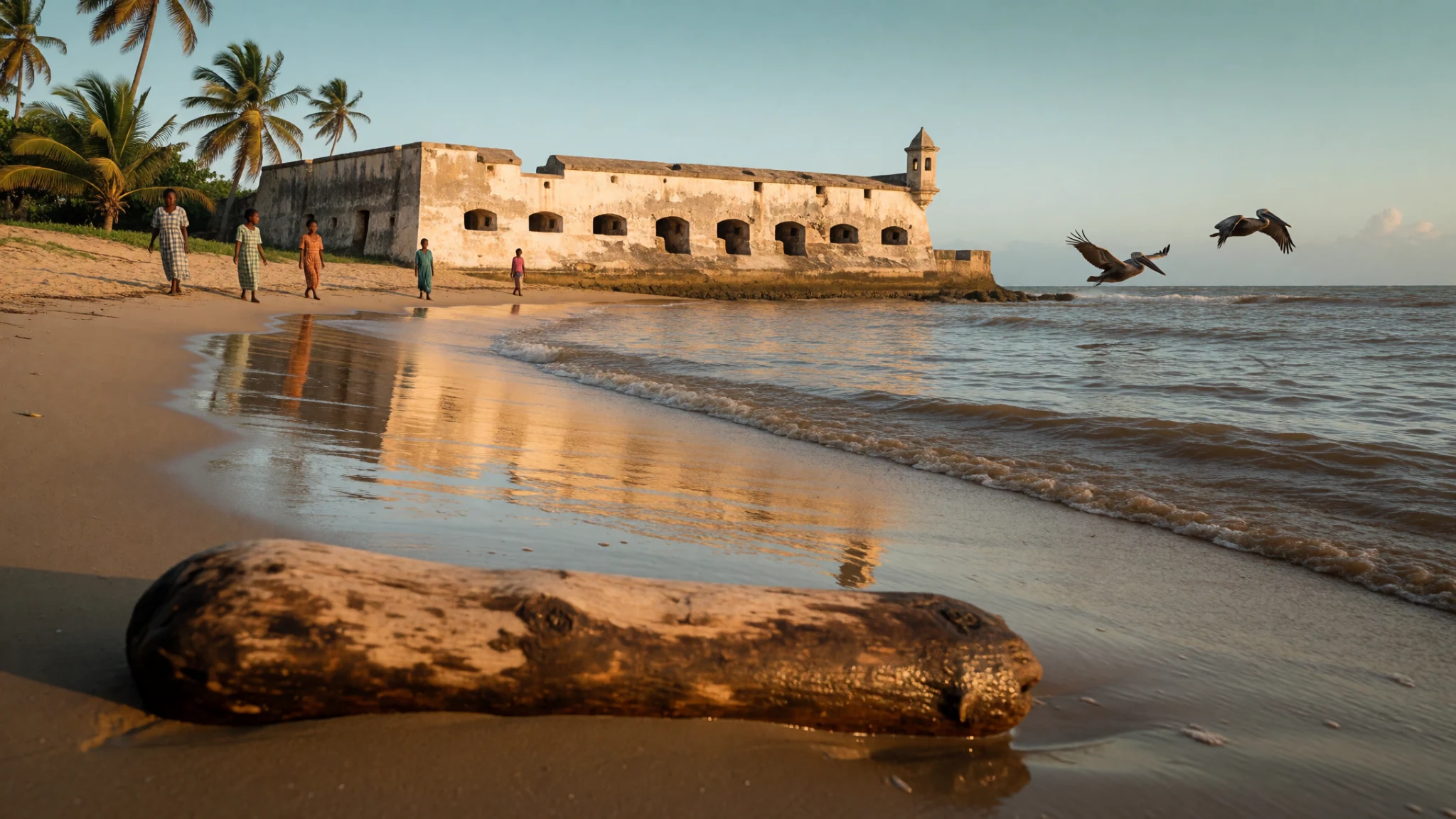
Remire-Montjoly offers quiet, palm-backed beaches, forest trails and old sugar estates, all within a short drive of Cayenne, in a French corner of South America.
The place
Remire-Montjoly is a coastal commune on the northeast edge of South America, in French Guiana, which is a full part of France and of the European Union. It lies south-east of Cayenne and has grown into the same built-up area as the capital, though it keeps its own mayor and administration. Around 27,723 people live here, on land that sits only 3 metres above sea level.
In practice it works as Cayenne's seaside residential district. Houses and apartment blocks run behind a string of beaches, where locals swim, jog and picnic at weekends. The sand is brownish and the sea is cloudy with river silt rather than clear turquoise, which surprises people expecting the Caribbean. A short way inland the ground rises into forested hills with walking trails and the remains of old plantation estates.
The commune also holds the port of Dégrad des Cannes, on the Mahury estuary, through which nearly all of the territory's seaborne trade is handled. So the area is working rather than purely scenic: container cranes at one end, sunbathers at the other. The marina here also serves boat trips to small offshore islets.
Anyone planning a stay should allow for heat, humidity, strong equatorial sun and a long wet season with heavy downpours. Crowds are rarely a problem. The beaches fill on Sunday afternoons, and even then it is mostly local families. Costs follow European rather than South American levels, so budget accordingly.
Its story
Remire-Montjoly takes its name from the Galibi language, in which the town was once written Armire. Missionaries founded the settlement in October 1652, on a coast already home to Amerindian peoples such as the Kalina, Arawak, Galibi and Palikur. Four years later, in 1656, Dutch Jewish refugees who had fled Pernambuco in Brazil arrived and built a sugar mill. When the French regained control of the area, most of them moved on to Suriname.
In 1666 the Jesuits settled and started their own sugar plantation, the beginning of an estate economy that relied on enslaved labour. Their property was seized in 1765, and Remire shrank back into a small village in the shadow of Cayenne. It gained its own mayor in 1879. After Mount Pelée erupted on Martinique in 1902, many people from that island resettled here, adding to the Creole character of the place.
The name changed again in 1969, when the commune became officially Remire-Montjoly to recognise how much Montjoly, its second settlement, had grown. Since then both settlements have merged with Cayenne into one urban area, yet the commune is still administered separately. The cauldrons, plantation houses and forest paths on the hills are the physical trace of this layered past, and a reminder that the story of French Guiana includes colonial struggle as well as Creole endurance.
What to see
- The Remire-Montjoly beaches — Coastal strip, Montjoly
The beaches along the Remire-Montjoly shore are the commune's everyday attraction: long, gently shelving and backed by palms, with some shade and parking nearby. Go early for cooler air and expect brownish water. Weekdays are quiet and weekends bring local families. Heed any swimming warnings, since currents and tides vary along this coast.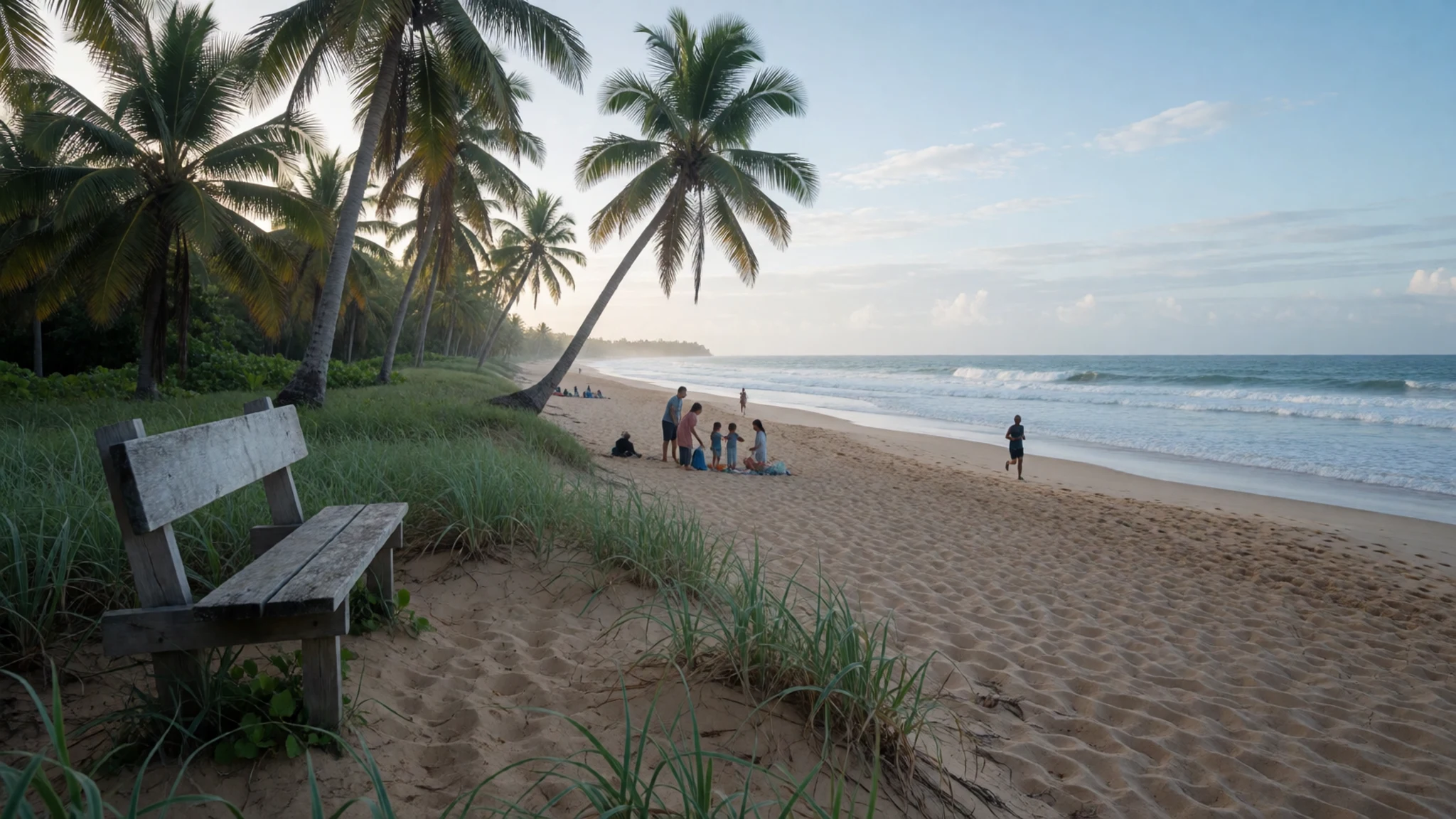
- Fort Diamant — Montjoly coast
Fort Diamant is an old coastal fortification on the Remire-Montjoly shore, often photographed from the air but also worth a look from the surrounding paths and shoreline. Whether you can go inside depends on restoration work and events, so check the commune's official website first. Morning light is softer and the heat lower.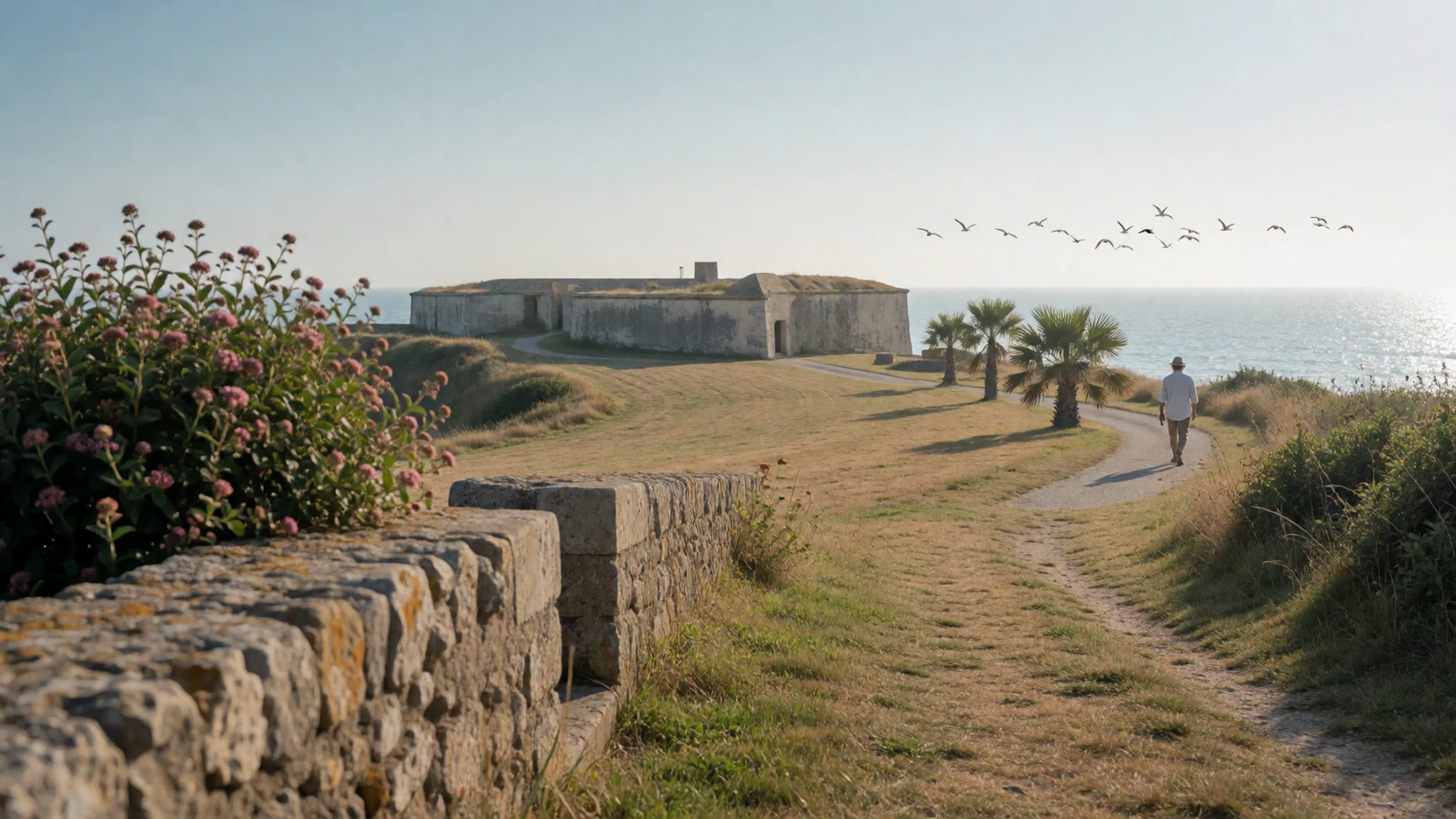
- Habitation Le Diamant — Remire hills
Habitation Le Diamant is a surviving plantation house in the commune, with a distinctive staircase that shows the colonial building style of Guiana. It is a useful way to understand the sugar-estate era that shaped Remire. Opening and tour arrangements vary, so confirm them locally or through the commune before travelling.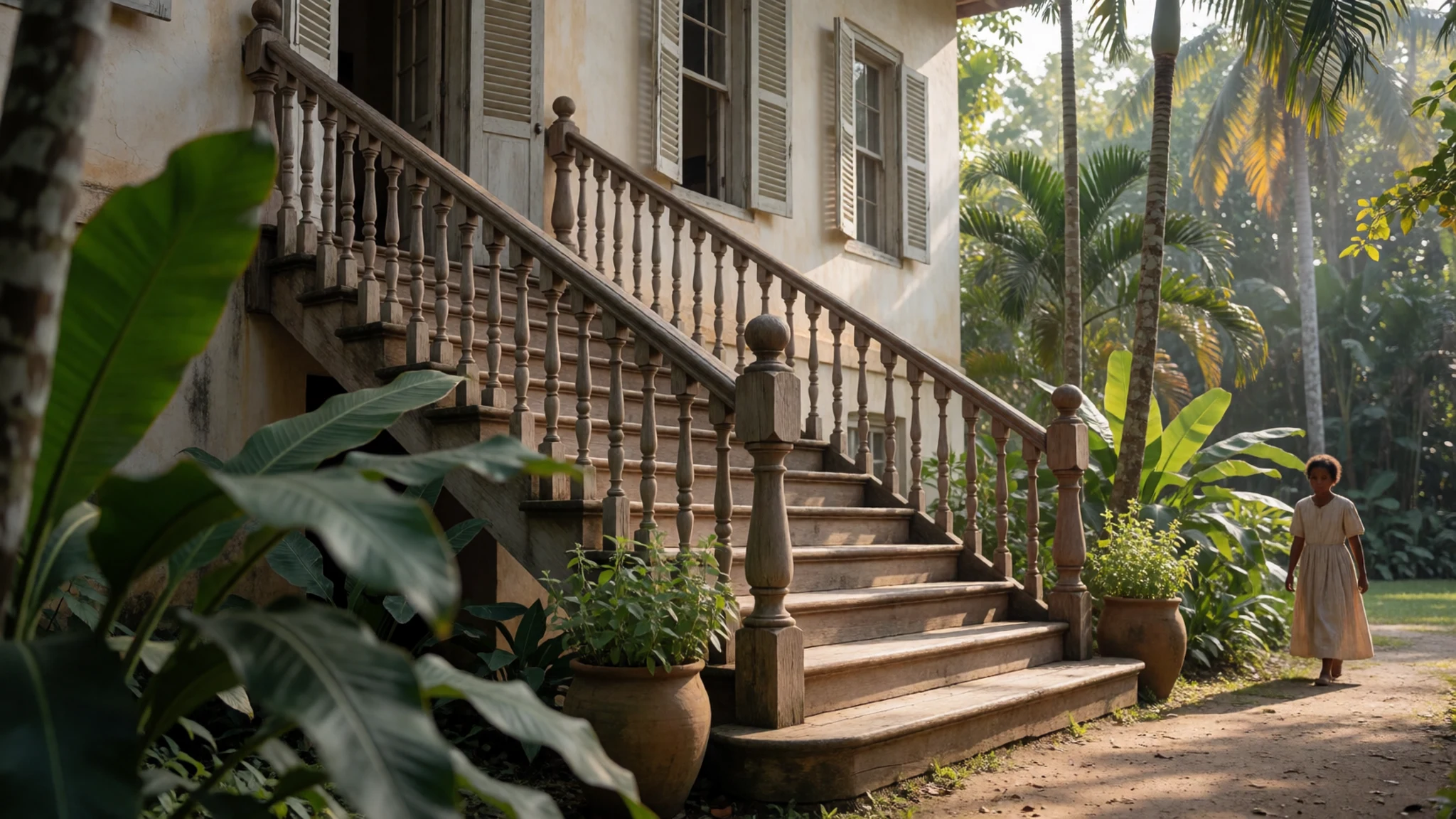
- Habitation Vidal — Remire hills
Habitation Vidal keeps the large iron cauldrons once used to boil cane juice down towards sugar. They make the plantation economy easy to picture: heat, fire, and long hours of labour. Treat the site with the seriousness its history deserves, and check access and any guided visits before going.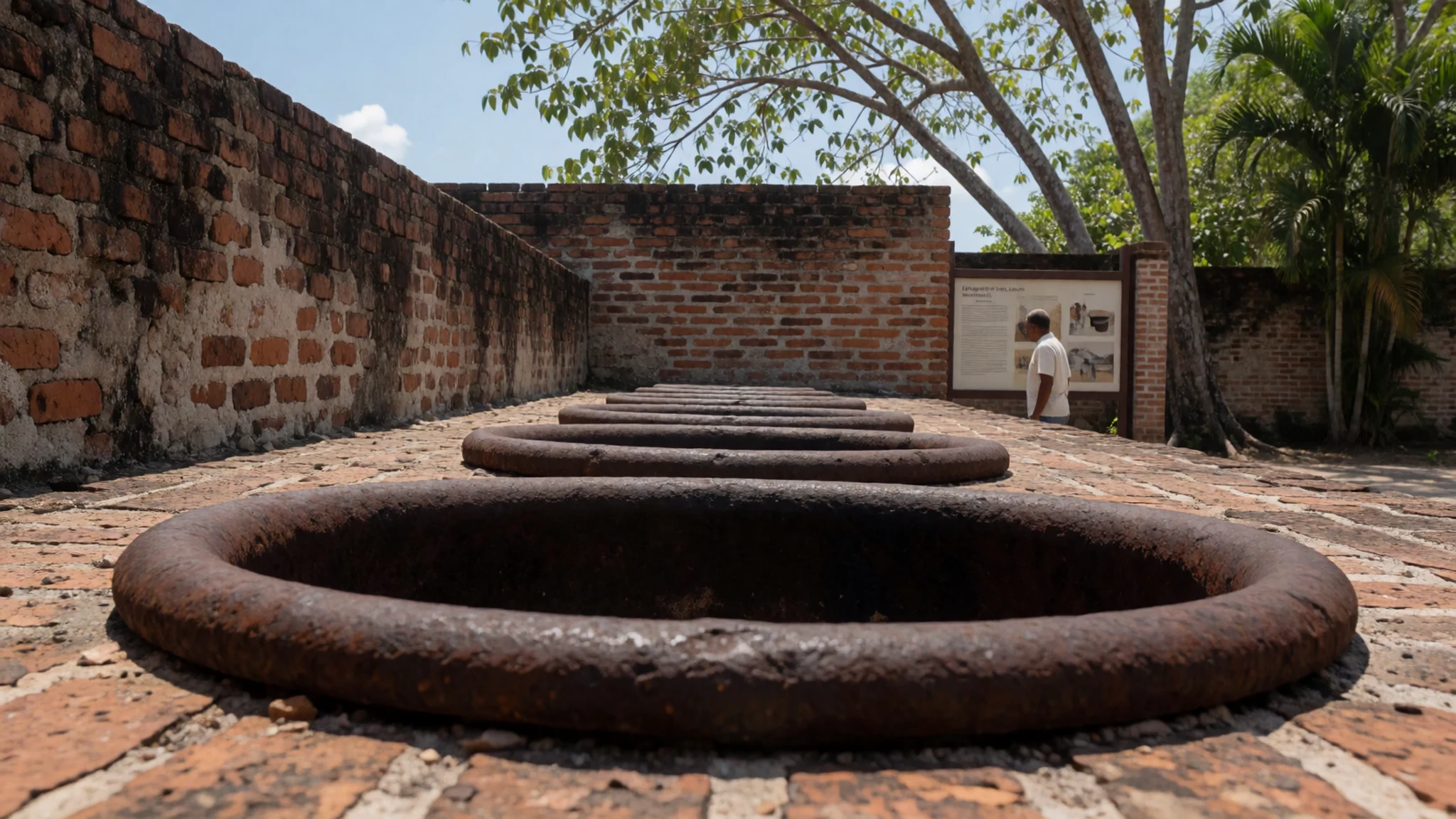
- Loyola forest trail — Hills above Remire
The Loyola trail runs through forest on the commune's hills, shaded by tall trees including a giant fromager (Ceiba pentandra) where bats sometimes roost. Wear closed shoes, carry water and repellent, and choose the drier months when paths are less muddy. It is a convenient first taste of rainforest near Cayenne.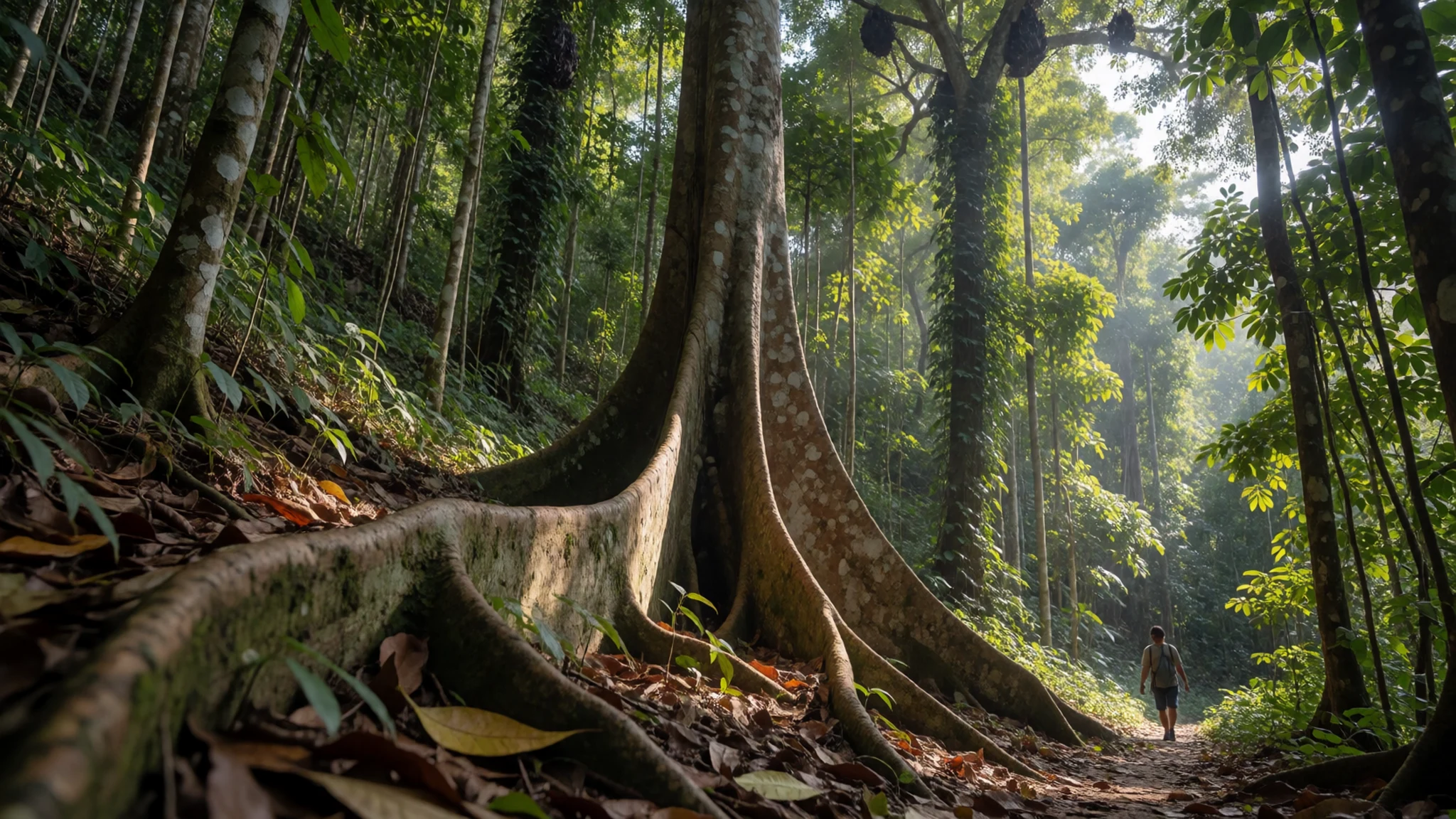
- Dégrad des Cannes and Îlet la Mère — Mahury estuary
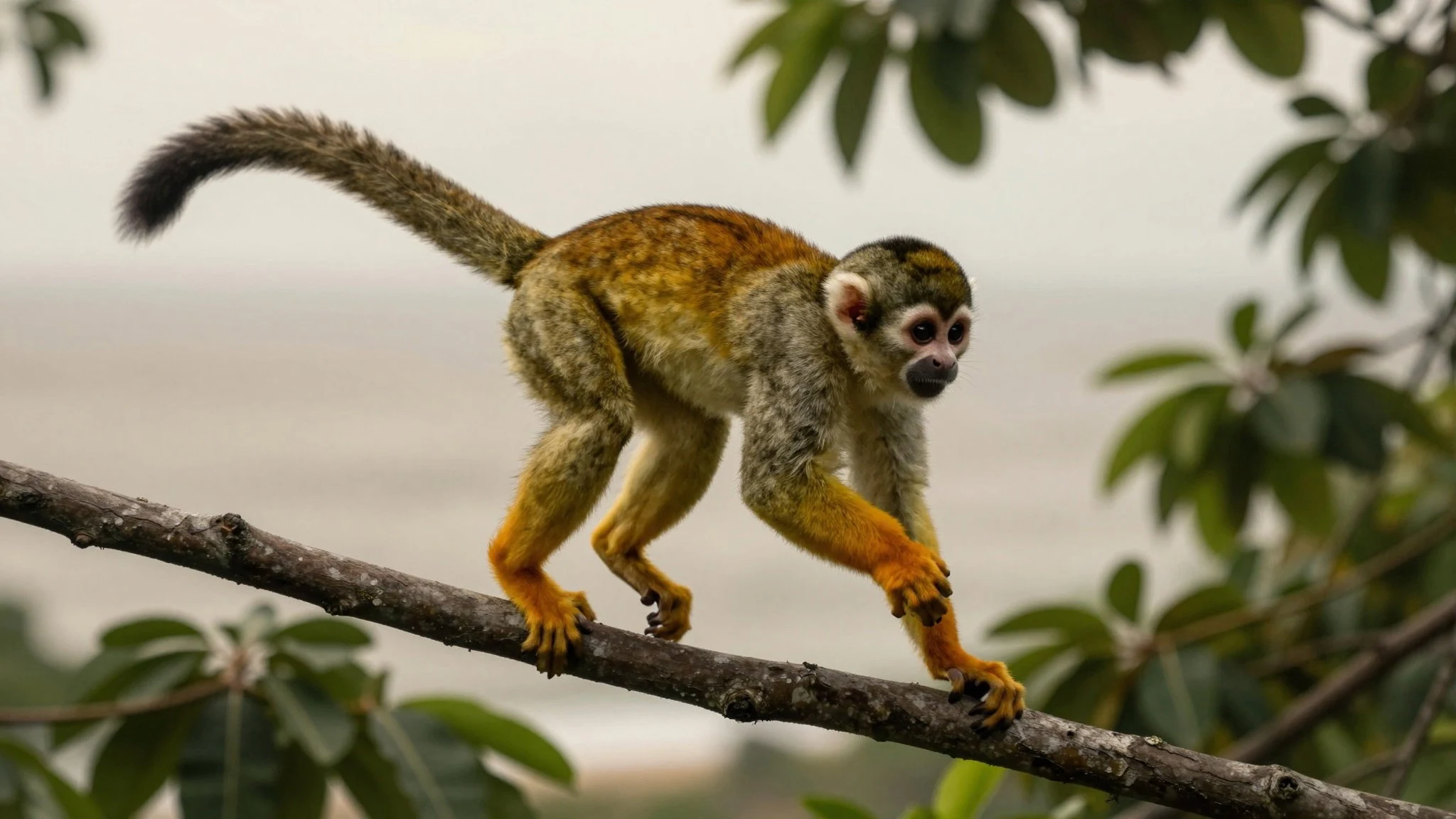
Dégrad des Cannes is the commune's port and marina on the Mahury estuary. Boats leave from here for Îlet la Mère, an uninhabited island about a 30-minute crossing away, where squirrel monkeys live. Book through an operator, keep your distance from the animals and do not feed them.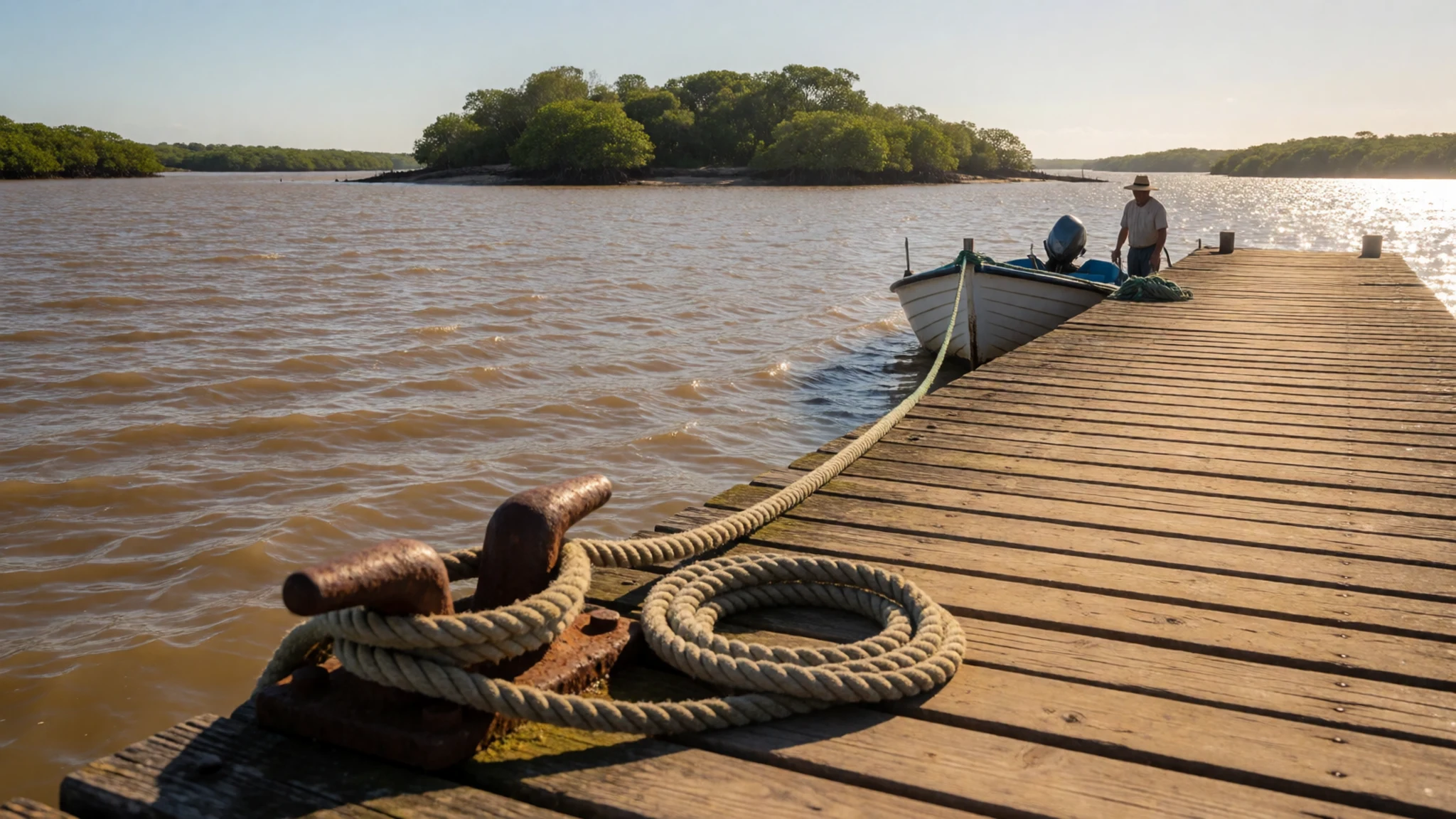
Culture
Remire-Montjoly shares the culture of French Guiana, where Creole traditions run deep and people are also firmly proud to be French. The local Creole name for the town, Rémir-Monjoli, shows how the two sit side by side. The population is a mix of Creole families, descendants of Martinicans who arrived after 1902, Amerindian communities and newer arrivals from the Caribbean, Brazil and Asia, and the result is a lively, relaxed coastal life.
Daily rhythms revolve around the beach, Sunday family lunches and church. Carnival season, in the weeks before Lent, is the high point of the year, with parades and dance evenings in Cayenne that draw in people from across the urban area. Music, cooking and storytelling remain strongly Creole, and the use of French and Creole together is normal.
Locals are usually glad to talk about their history, food and beliefs, so questions asked with curiosity are welcome. Slavery is the exception: it is a sensitive subject, best left alone unless someone raises it themselves. Suggesting that Guiana is not really France causes offence. Greet people with a polite 'bonjour' before asking anything, and call mainland France 'la métropole' rather than simply 'France'.
What to wear
Remire-Montjoly's traditional dress belongs to Guianese Creole culture, which draws on French and Caribbean models. Festive outfits use cotton in madras checks, full skirts, lace trim and head wraps tied in elaborate styles. They appear at weddings, folklore events and carnival, when Cayenne's parades also draw in people from the commune. Carnival's best-known figure is the touloulou, a woman fully covered in a lacy costume, hood and gloves so that nobody can recognise her at the dance evenings. Other communities in the territory keep their own dress, such as Amerindian beadwork and the cloth wraps of Maroon women.
Everyday clothes are what you would see in a hot French town: light cotton shirts, shorts, sundresses, flip-flops and trainers, with swimwear on the beach and smart casual for restaurants. Sportswear is common, and people dress up for church and Sunday family lunches.
Visitors should pack light, loose, quick-drying clothing, a hat, sunglasses and high-factor sun cream. Bring a thin waterproof layer for sudden downpours, closed shoes with grip for forest trails and insect repellent. Beachwear is fine on the sand but cover up when walking into shops, a market or a church.
What to eat
- Bouillon d'awara — Creole eateries around Cayenne
Bouillon d'awara is a broth built on the fruit of the awara palm, simmered with fish or meat and vegetables into a thick, savoury dish. Look for it at Creole eateries around Cayenne and Remire-Montjoly, especially at weekend lunch.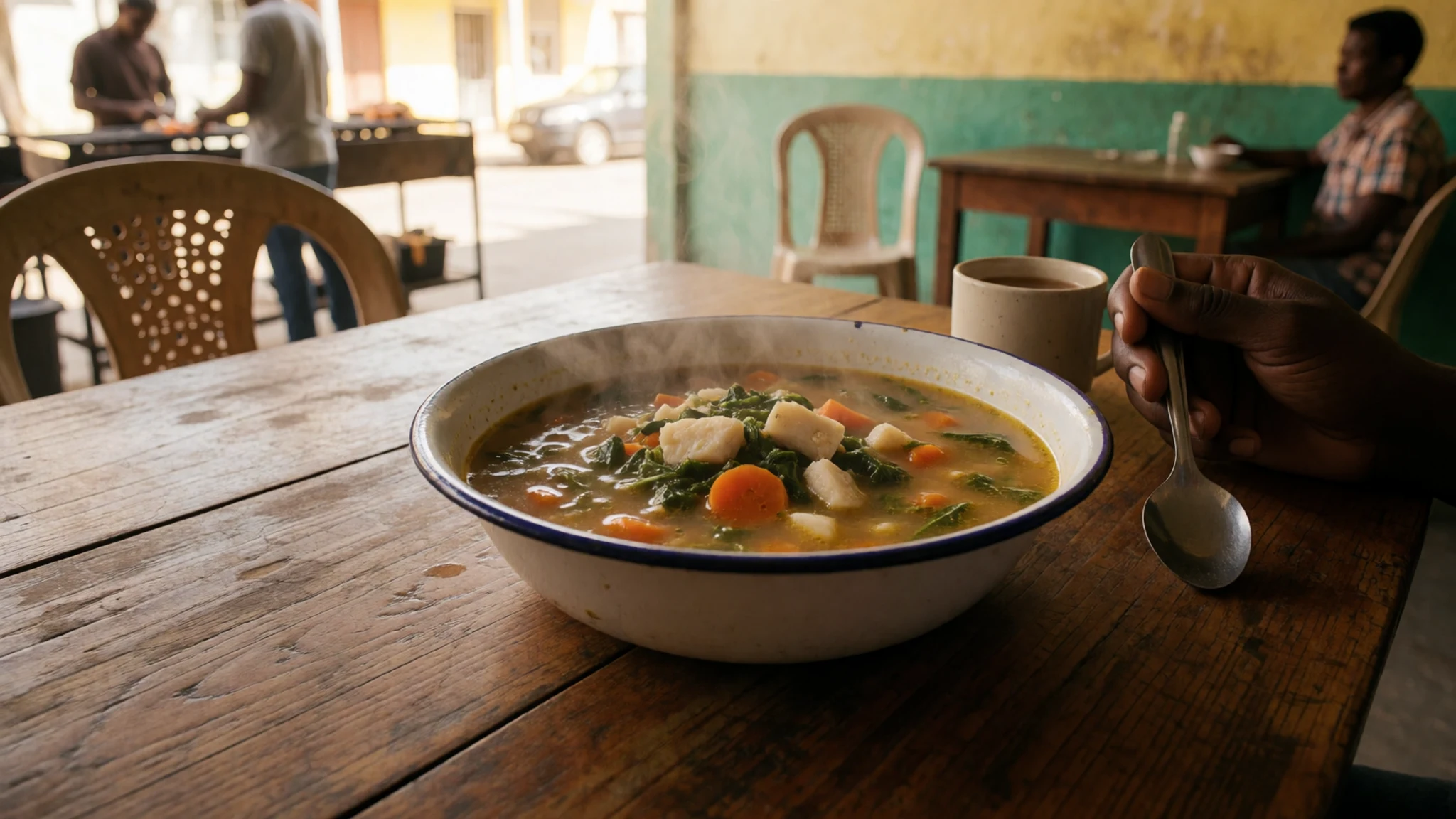
- Colombo — Home-style Creole eateries
Colombo is a Creole stew of pork or chicken cooked in a curry-style spice blend and served with rice. It is a home-style favourite across the French Caribbean and Guiana. Try it at family-run eateries and Sunday lunches.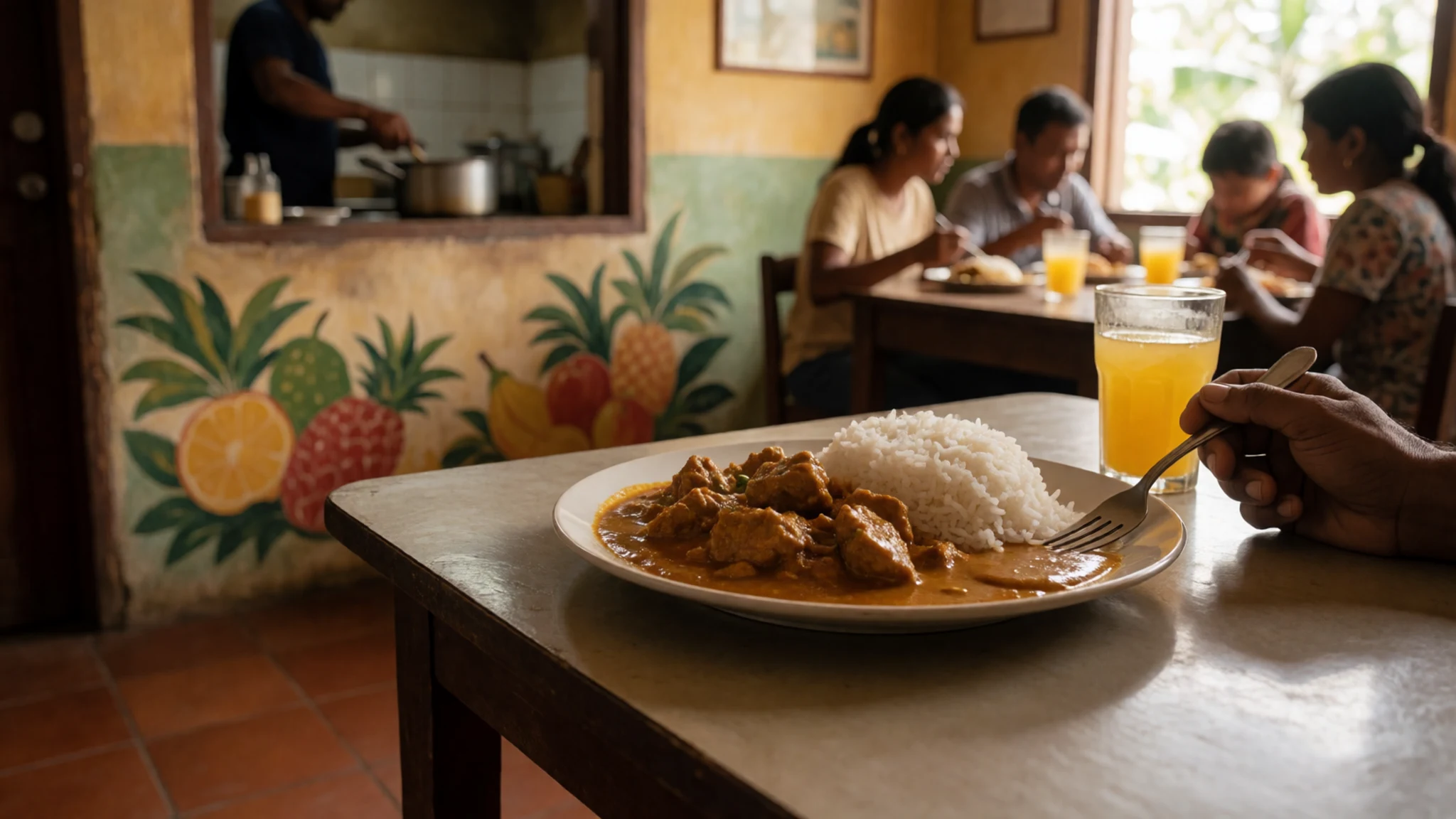
- Blaf de poisson — Seafront eateries along the beaches
Blaf de poisson is fish poached in a seasoned court-bouillon, a light, herby stock, and usually served with rice or cassava. It is a gentler dish than most local cooking. Look for it at seafront eateries along the beaches. - Pimentade — Cayenne market lunch counters and Creole eateries
Pimentade is fish in a tomato sauce sharpened with chilli and lemon. Local cooking is often fiery, and the cayenne pepper is named after this region's capital. Ask for it less spicy if you are cautious about heat. - Kalalou — Traditional Creole restaurants
Kalalou is a fish stew with spinach and okra, rich and slow-cooked, and eaten with rice. It is a good example of the African and Creole roots of Guianese cooking. Order it at traditional restaurants, especially at weekends. - Wassaï juice — Market stalls and juice sellers in Cayenne
Wassaï, also called açaí, is a cold drink made from palm-fruit pulp that is soaked, kneaded and filtered. It is thick and slightly earthy, and refreshing in the heat. Find it at market stalls and juice sellers around Cayenne.
Plan it
Best time. August to November is generally the drier stretch, with fewer downpours and easier beach and trail days. December to July is wetter, and paths are muddier. It is hot and humid all year, so go early in the day.
How long. 2–3
Getting there. Félix Eboué Airport (CAY), located just outside Cayenne, serves as the sole international gateway and primary entry point for the region. From there take a taxi or hire car to Remire-Montjoly, a short drive south-east of Cayenne.
Budget. mid
Tips
- Carry your passport: French Guiana is not in the Schengen Area, and ID is checked on arrival even from mainland France.
- A yellow fever vaccination certificate is mandatory for every traveller, so arrange it well before departure and keep it with your passport.
- Without a visa you can stay up to 90 days if your nationality is exempt for Schengen; Schengen visas for mainland France are not valid here, so check with a French diplomatic mission.
- Use repellent, drink plenty of water and visit beaches and trails early, before the heat and the afternoon showers.
- Check the official site (http://www.remire-montjoly.fr/) for events and access to sights, and think twice about menu items such as caiman or turtle, which come from threatened species.
Etiquette
- Greet people with 'bonjour' before asking for anything.
- Call mainland France 'la métropole', not just 'France'.
- Avoid raising slavery as a topic; let locals lead.
Nearby
Sources
- Wikidata Q996222 (CC0)
- Wikipedia: Remire-Montjoly (rev 1385078180) (CC BY-SA 4.0)
- Wikivoyage: French Guiana (rev 5383674) (CC BY-SA 4.0)
- Photo: Plages de Rémire-Montjoly, Lebrouillard (CC BY 3.0)
- Photo: Lage der Gemeinde Remire-Montjoly, Tschubby (CC BY-SA 1.0)
- Photo: Fort Diamant vue aérienne, mon.nini (CC BY-SA 4.0)
- Photo: Ceiba pentandra, sentier Loyola, Trevalb (CC BY 4.0)
- Photo: Chaudrons pour le sucre, Andre Gaston Georges (CC BY-SA 4.0)
- Photo: Habitation Le Diamant 1, BrPwl (CC BY-SA 4.0)
- Photo: Habitation Le Diamant 2, BrPwl (CC BY-SA 4.0)
- Photo: Habitation Le Diamant 3, BrPwl (CC BY-SA 4.0)


Wildlife
- Squirrel monkey (animal)
The common squirrel monkey is a small, nimble monkey from the warm forests of South America, and the name once covered several close cousins. In Remire-Montjoly, boats set off for Îlet la Mère, an uninhabited island about thirty minutes across the water, where these monkeys live. The best season and time of day aren't given here, so ask your boatman. Watch from a respectful distance, keep your voice low, and never offer food.