Redang Island
Redang Island, Malaysia
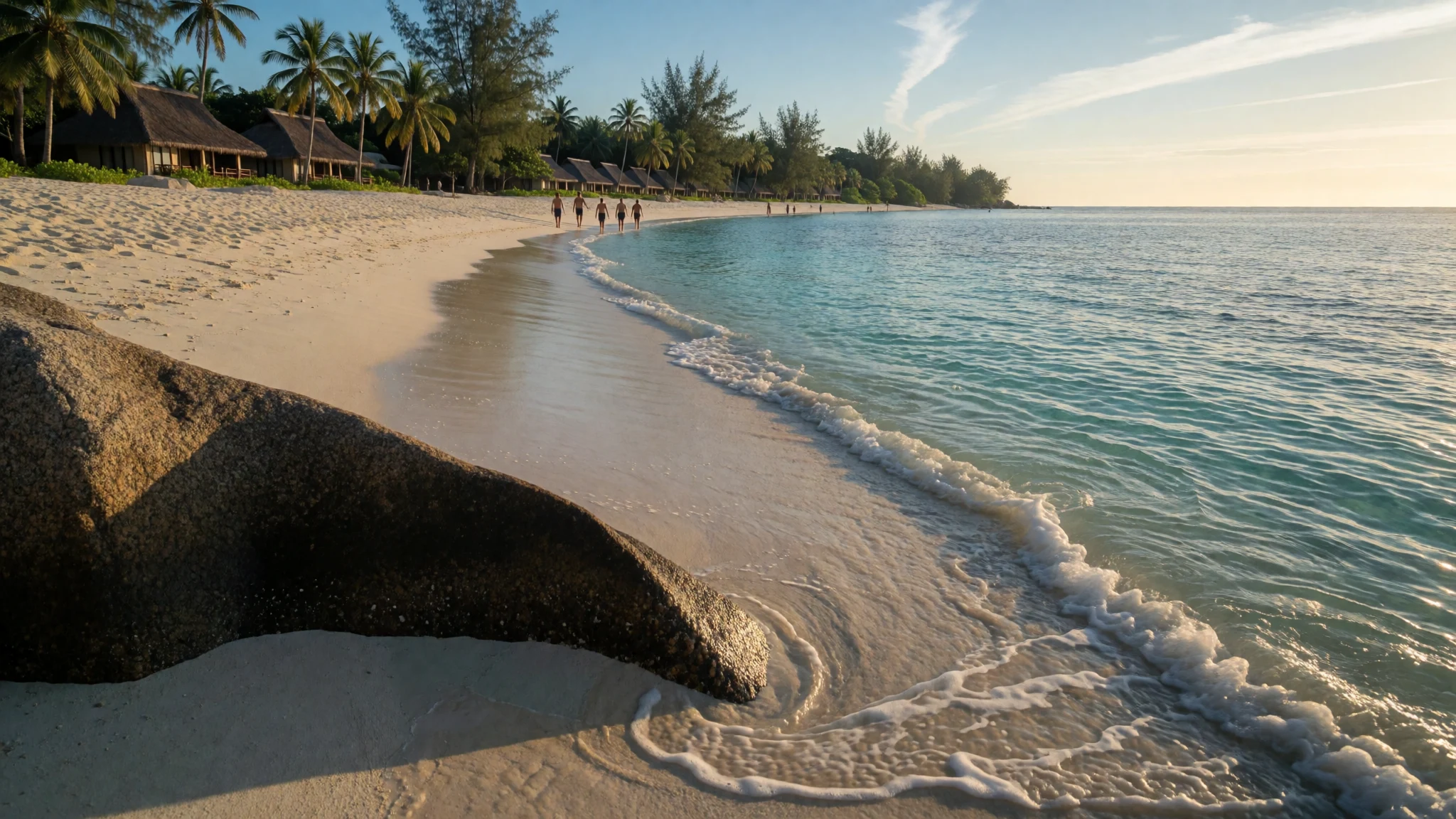
Redang Island pairs long white beaches and granite headlands with reef water that stays calm through the dry months.
The place
Redang Island lies off the Terengganu coast of Peninsular Malaysia, in the South China Sea. Granite hills, still mostly forest, come down to a shore that changes from pale sand to piled boulders inside a single walk. A marine park takes in the island and the smaller islets beside it, so the visit is shaped by water: reef close to the beach, boat hops between coves, and a horizon with almost no buildings on it. Flat ground is scarce. People live on the sand's edge, in a small Malay settlement of gardens and livestock and along the resort beaches.
Pasir Panjang, on the eastern side, is the long beach where the bigger resorts stand in a row, dive boats at one end and swimmers at the other. Laguna Redang is a resort on that same beach, not a lagoon tucked behind rock. The settlement keeps its own hours, with a mosque and kitchens that feed residents as well as guests. The two sides of Redang Island sit close together and do not always feel like the same place.
Weather splits the year. The northeast monsoon roughens the crossing and many resorts close until the sea settles. In the calmer months the island is busy with snorkellers, divers and families, and the sand is bright and hot by late morning. Shade is thin. Nights are quiet because there is no town beyond the resort strip and the village, and once the beachfront lights drop the sky is properly dark. Turtles nest on these beaches in season, and the shallows hold the coral the marine park was set up to keep. The boat timetable, more than any landmark, sets the day.
Its story
Redang Island's older name on British charts, Great Rydangh, already marks a harbour on the south side, which is where shelter from the sea would always have mattered. Long before resorts, this was a Malay island under Terengganu: a settlement, gardens, and a living taken from the soil and the pens. The forest on the hills was a backdrop above small fields and animal pens. People stayed near the shore because that is where the flat ground for gardens was.
The shift came when the surrounding waters were declared a marine park. Farming did not vanish, but it had to share the coast with rules about coral and turtles, and with visitors who arrived for exactly those things. Resorts grew along Pasir Panjang, turning a beach the village already knew into a strip of rooms, dive shops and jetties. The island's year acquired a second calendar: open when the monsoon eased, shut when the northeast wind made the mainland boat a poor bet. That closure is not a modern inconvenience tacked on for tourists. It follows the same sea the island has always watched.
What remains is a layered place. The settlement still tends its gardens and still gathers at the mosque. Conservation work around nesting turtles sits beside honeymooners on the sand. An old chart and a new snorkel mask describe one coast. Redang Island did not stop being a farming island when it became a holiday island; both are visible before lunch, on the walk along the resort beach.
What to see
- Pasir Panjang — east coast
Pasir Panjang is the long eastern beach of Redang Island, a pale crescent with resorts set just behind the tree line and reef water close to shore. Swimmers and snorkellers share it with boats ferrying guests. Morning is the kinder hour, before the sand glare builds and the day boats add noise. The beach is the island's social centre, so space eases in school holidays.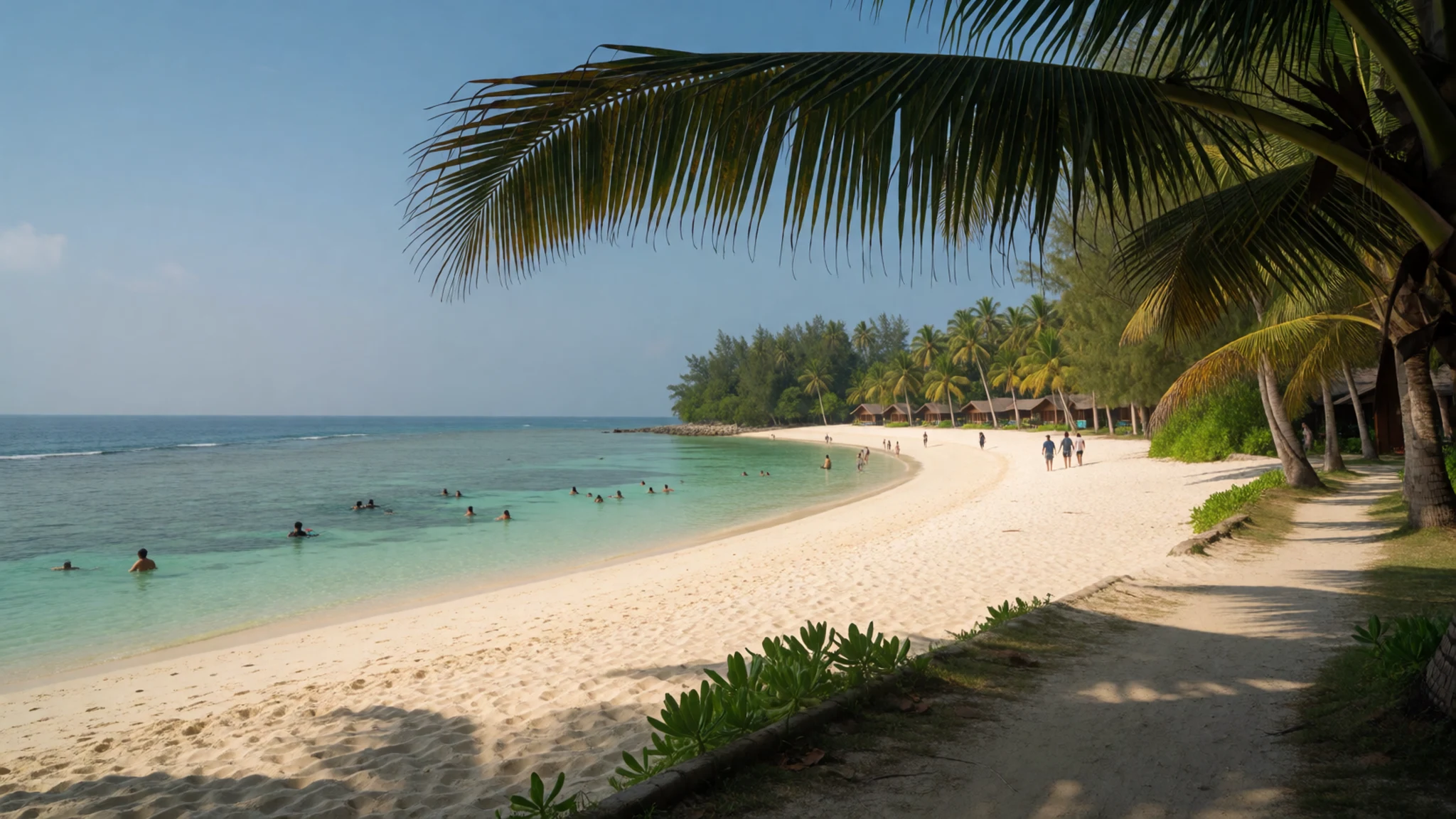
- Laguna Redang — lagoon beach
Laguna Redang is a resort on Pasir Panjang, the open east beach of Redang Island, with the same sand as the hotels beside it and a short walk back to the rooms. Granite still marks the headlands, and the water stays shallow for a long way out. It is a resort beach, with the usual chairs and a short walk back to rooms, and it quiets down once day visitors leave.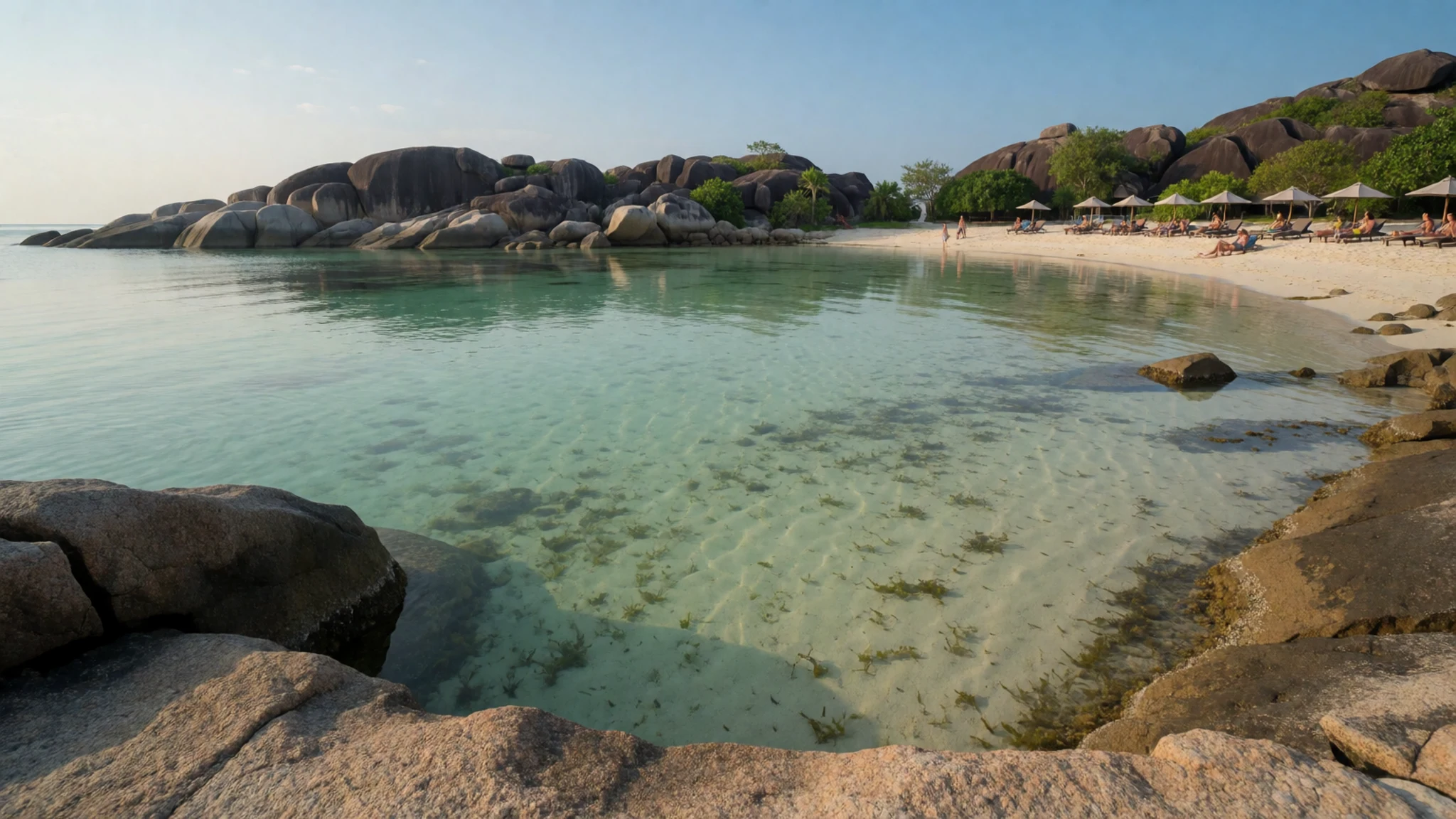
- Boulder shores — rocky headlands
The boulder shores of Redang Island are as much a part of the coast as the sand. Smooth granite stacks sit in the shallows, with sandy pockets between them and small fish in the gaps. Footwear matters here: the rock is hot at midday and slippery where algae grows. These stretches are good for a slow swim when the open beach feels crowded.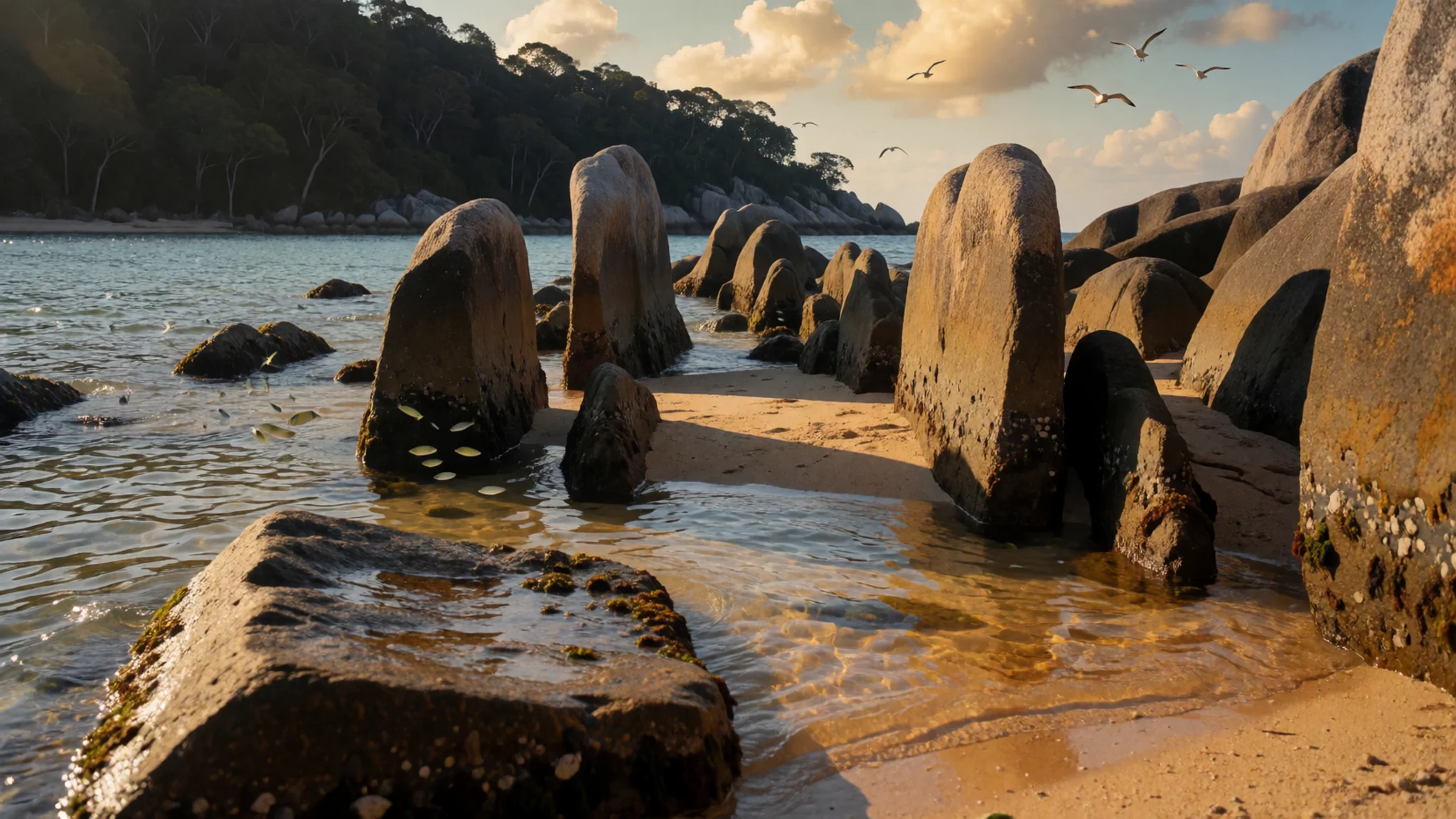
- The fringing reef — fringing reef
Snorkelling off Redang Island starts close to the beach, where sand gives way to coral heads and reef fish. The marine park is why boats use fixed moorings and why standing on coral is forbidden. Visibility is kinder in the calm season and poorer after rain or a busy afternoon. A rash vest saves the shoulders.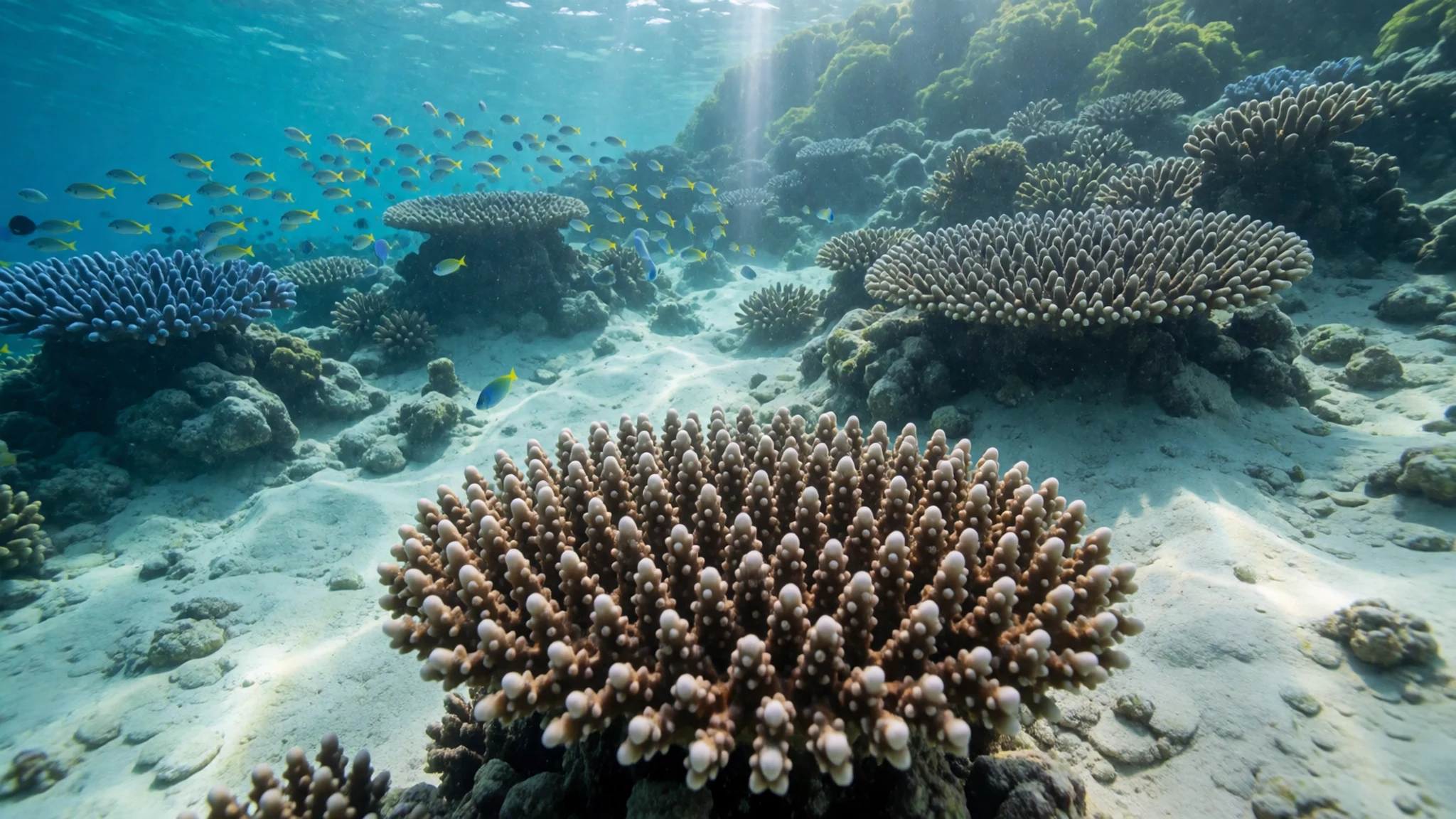
- The fishing village — fishing village
The village on Redang Island is a farming settlement, not a resort annexe. Houses, a mosque and small kitchens cluster around gardens and pens for goats, cows and chickens. Visitors are welcome to eat and to walk through, and they are guests in a neighbourhood. Evenings bring people home; mornings send them out to the fields. Dress and noise should match a residential lane, not a beach party.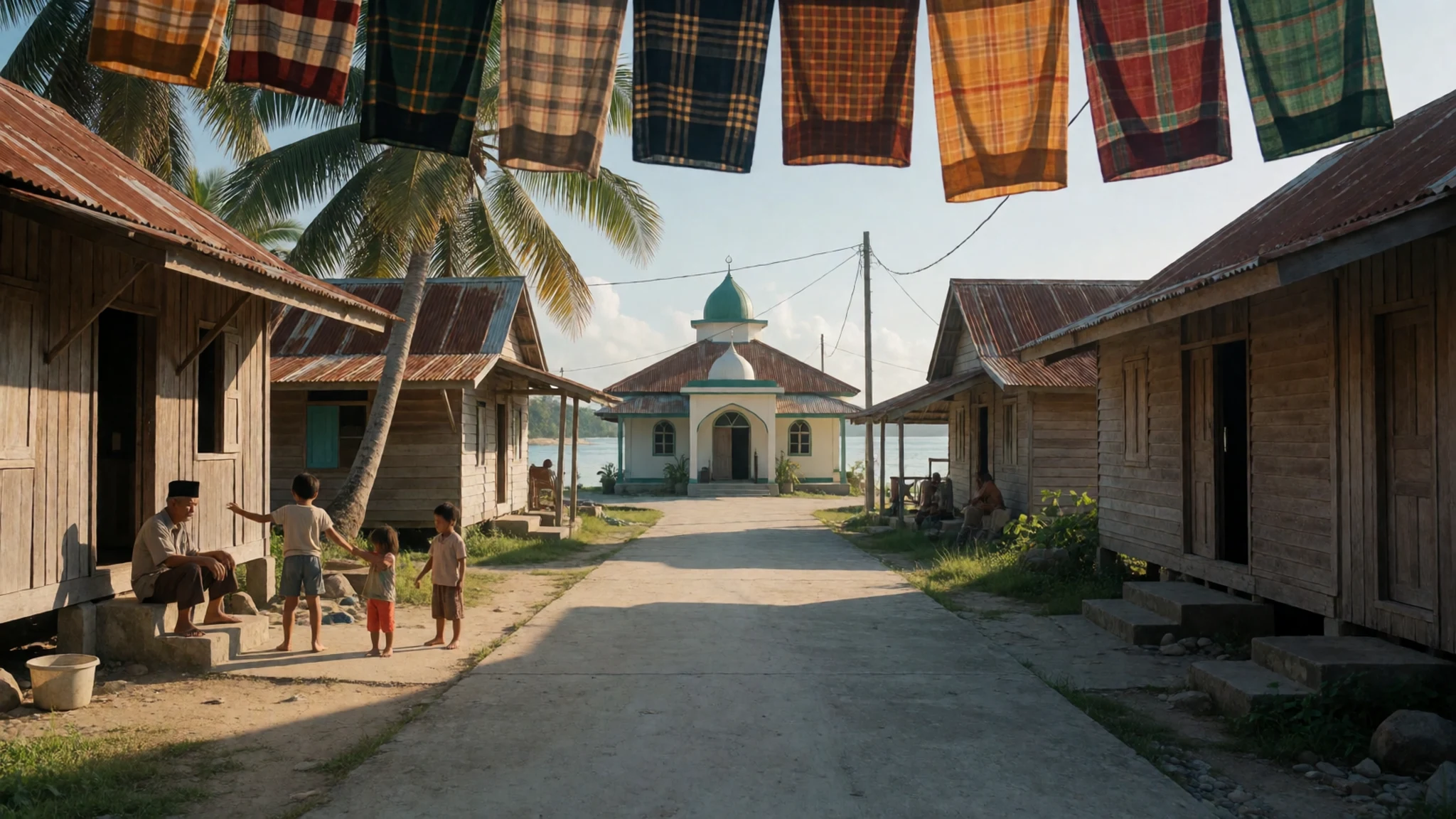
Culture
Redang Island's daily life is Malay and Muslim, in the manner of coastal Terengganu, even where the resorts feel international. The village organises itself around the mosque, Friday prayers and work in the gardens; resort staff move between that world and a service culture of check-in desks, dive briefings and buffet hours. Language on the island is Bahasa Malaysia, with Terengganu dialect in the village and English wherever guests need it. Hospitality is real and unfussy: people will point a stranger towards a jetty or a kitchen, and they expect the same courtesy back.
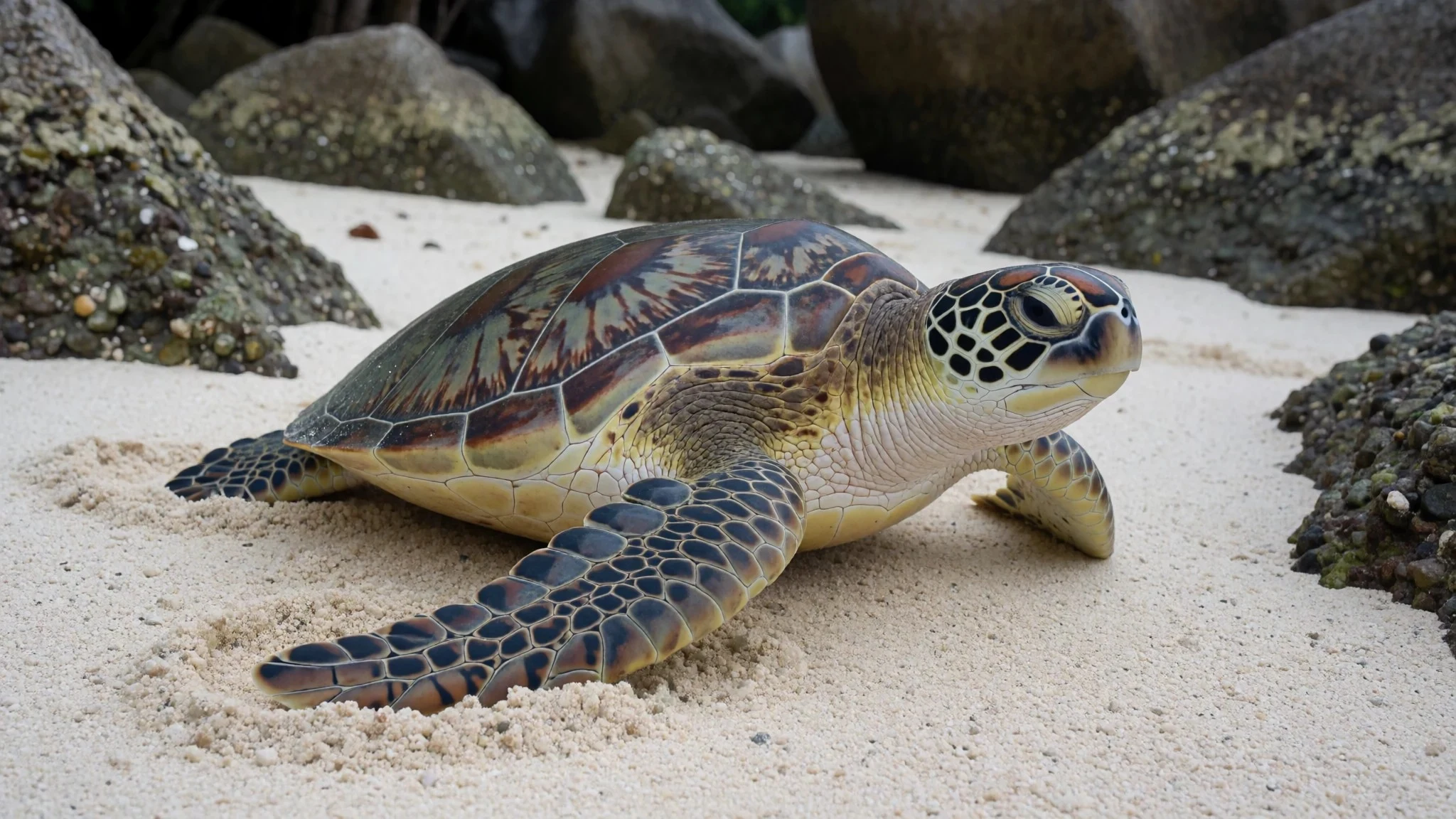
Turtles are not a mascot here so much as neighbours. Nesting season brings wardens, marked nests and a firm local view that the animals are to be left alone — no lights in the face, no touching, no crowding a female up the beach. Children grow up with that rule alongside the ordinary ones about the mosque and the boats. The marine park adds another layer: coral is not a playground, and shells and coral pieces are not souvenirs.
The resort beach and the village lane are different rooms. Swimwear that is ordinary at Pasir Panjang is out of place on the path to the mosque. Music, drones and loud groups carry further than visitors expect on a small island. Ask before you photograph people in the village, and keep shoulders and knees covered away from the resort beach.
What to wear
On Redang Island the traditional clothes are those of the Malay east coast. Women wear baju kurung — a long tunic over a sarong — and men wear baju melayu with a samping, often in songket, the silk brocade Terengganu still weaves with gold or silver thread. Batik, printed or drawn in wax, appears as shirts, sarongs and the kain used at home. These are Friday, wedding and festival clothes, and they are still what people put on for the mosque, not costumes for the beach. Ordinary days look simpler. Village men wear T-shirts and a pelikat or shorts; women wear baju kurung in cotton, or a tunic and a headscarf, when they are out of the house. Resort staff dress in polo shirts and long trousers or modest uniforms. On the sand, guests and some younger locals swim; the village path does not. A visitor does well with light, covering cotton, a hat and sandals that can get wet. Swimwear belongs on the resort beach, with a shirt or sarong for the walk to lunch and something longer for the village and the mosque. The rocks want shoes with a grip, not flip-flops. A rash vest earns its place in the water: it saves skin from the sun during long snorkels and reads as modest when a boat stops near a populated beach. Evenings stay warm, so a layer is for the boat wind, not for cold.
What to eat
- Nasi dagang — resort breakfasts and village kitchens
On Redang Island, nasi dagang is the Terengganu breakfast of coconut rice with fenugreek, served with fish curry. Resort kitchens plate it in the morning, and so do village stoves that feed the households. It is a full dish, meant to last until a late swim.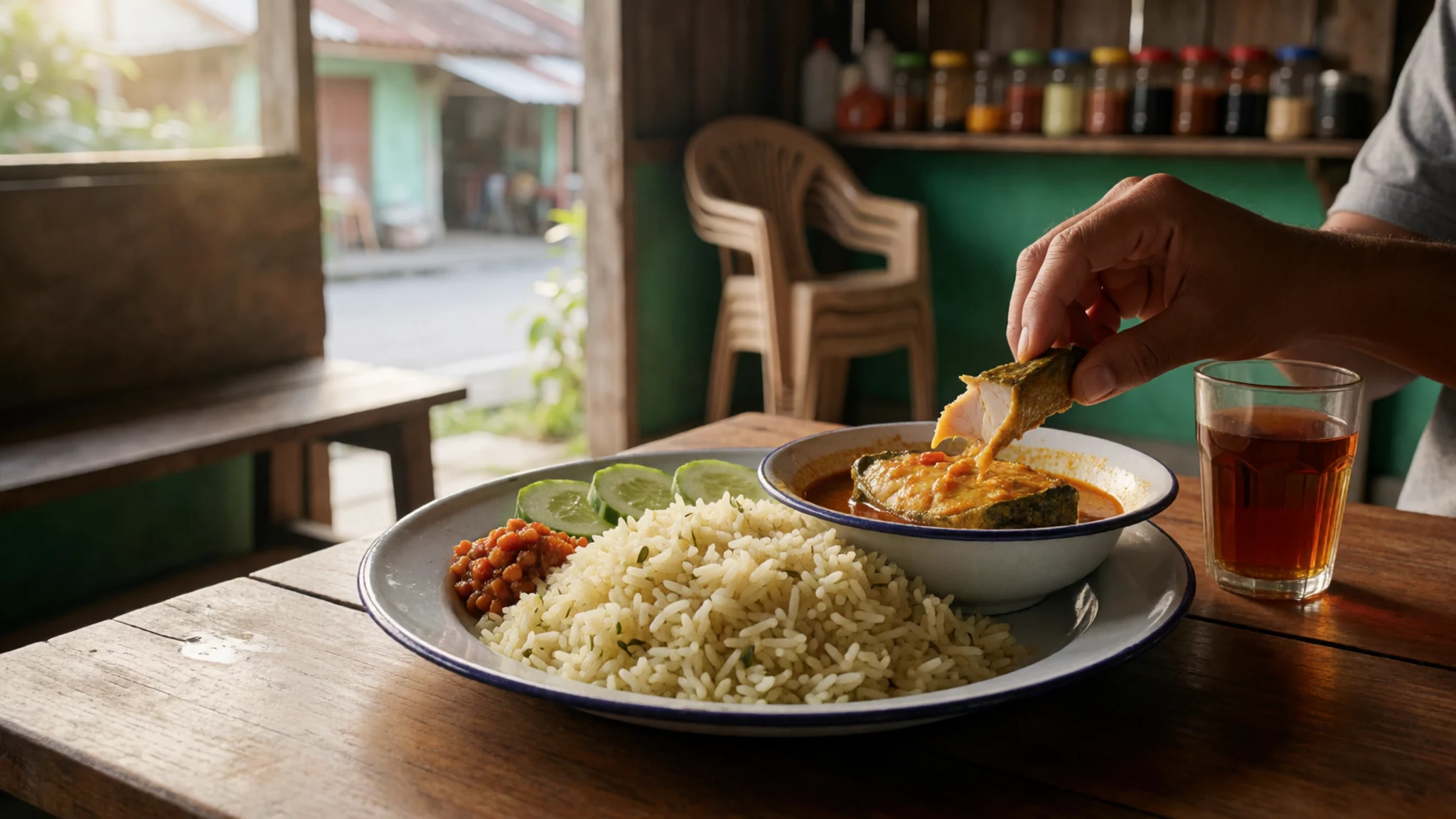
- Ikan bakar — jetty stalls and village eateries
Ikan bakar on Redang Island is the day's catch split, rubbed with spice and grilled over charcoal, usually with sambal and rice. Village eateries do it better than a resort buffet when the grill is going properly. Bones, lime and smoke come with the plate.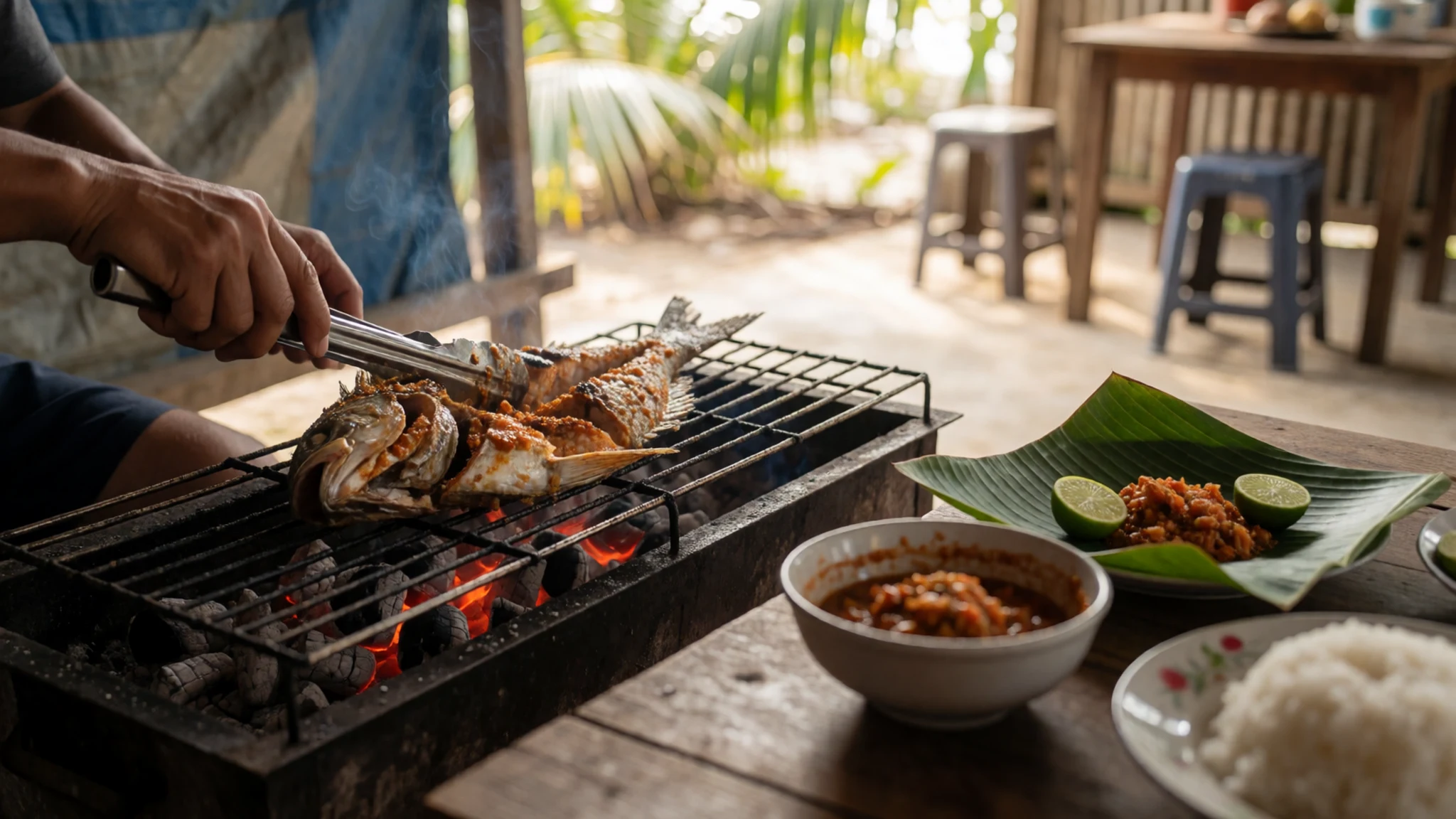
- Keropok lekor — jetty stalls
On Redang Island, keropok lekor is the Terengganu fish sausage, boiled or fried and dipped in chilli sauce. A restaurant at Laguna Redang on Pasir Panjang serves it hot in the evening. It is eaten at a table, slightly chewy, and finished before the evening is over. - Sata — village eateries and resort grills
On Redang Island, sata is grilled fish paste in a banana leaf, a Terengganu cousin of otak-otak with a drier, smokier taste. Village eateries set it beside the grilled fish, and some resort grills do the same. It belongs with rice and sambal, while the leaf is still warm. - Nasi lemak — resort coffee shops and village eateries
On Redang Island, nasi lemak is coconut rice with sambal, egg, peanuts and anchovies, often plus a piece of fried fish. Resort coffee shops serve it early, and small village eateries keep it going through the morning.
Plan it
Best time. April to September, when the northeast monsoon has eased, boats run and the sea is calm enough for snorkelling, with May the hottest month and April the most comfortable. October to March is the wet, rough season, wettest in November and December, and many resorts on Redang Island close.
How long. 3–4
Getting there. Fly to Kuala Terengganu, then take a boat from the Merang jetty or the city jetty to Redang Island. A short airstrip on the island has handled seasonal flights; confirm any current service before you rely on it. In the shoulder months, leave a spare day for a rough sea.
Budget. mid
Tips
- Book the resort and the boat together, though around Malaysian school holidays the beaches thin out.
- Carry cash. Card payments are unreliable in the village and at small stalls.
- Snorkel in the morning, before day-trip boats arrive and the sand glare peaks.
- Use reef-safe sunscreen and a rash vest; the midday sun on pale sand is strong.
- If you travel near March or October, confirm the resort is open and that boats are running.
Etiquette
- Cover shoulders and knees in the village and at the mosque; swimwear stays on the resort beach.
- Do not touch turtles, shine lights on nesting females, or crowd them on the sand.
- Do not stand on coral, and do not take shells or coral as souvenirs.
Nearby
Sources
- Wikidata (CC0)
- Wikipedia (CC BY-SA 4.0)
- Wikivoyage (CC BY-SA 4.0)
Wildlife
- Green sea turtle (animal)
The green sea turtle is a big sea reptile that eats only seagrass, and it is named for the green tint of the fat beneath its shell, not for the shell itself, which runs from olive to nearly black. At Redang, turtles nest on the island's beaches in season, and the nearby shallows hold the coral that the marine park was created to protect.