Danum Valley
Danum Valley, Malaysia
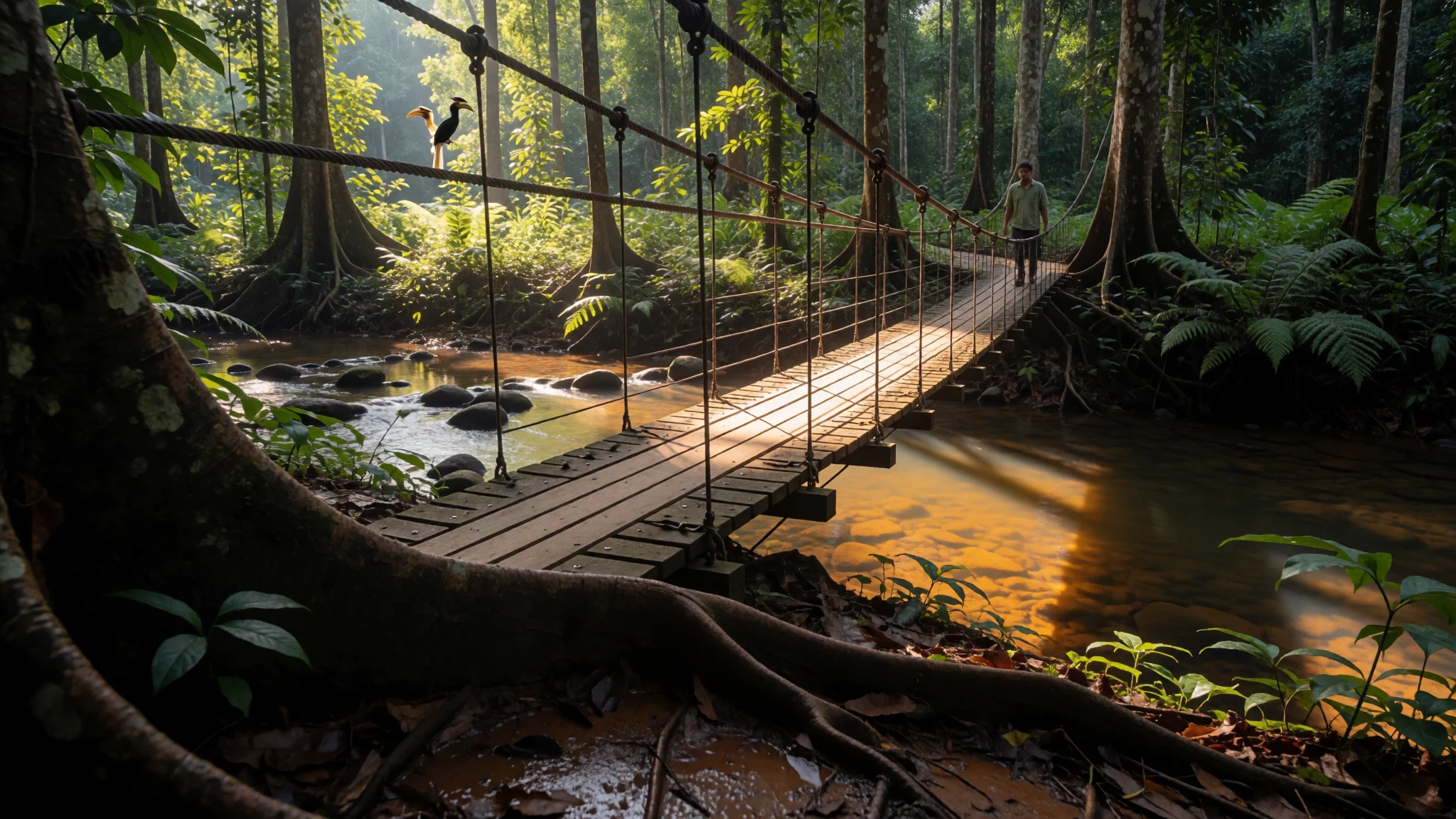
Danum Valley is unlogged lowland rainforest in Sabah, reached by a long logging road and walked with a guide.
The place
Danum Valley sits in eastern Sabah, on the island of Borneo, inside a conservation area of lowland dipterocarp rainforest that logging trucks skirt but do not enter. The forest here is primary: huge hardwoods, a closed canopy, and a forest floor that stays dim, damp and busy with leaf litter. Morning mist often sits in the crowns until the sun burns it off, and by midday the air is thick, warm and loud with insects and birds. Streams, including Sungai Palum Tambun, cut through the trees, and a suspension footbridge carries walkers from the lodge side into the forest proper. Orangutans, gibbons, hornbills and clouded leopards live in this tract, though most visitors see far less than the forest holds; a monitor lizard on a riverbank is a more reliable sight than a cat. Leeches are part of the bargain after rain. The valley is also a working scientific site. Researchers use the field centre to study how an unlogged Bornean forest functions, from the canopy down to the soil, while the surrounding landscape still shows the timber concession the reserve was cut out of. There is no town in the valley. Nights are dark, generator-quiet or lodge-quiet, and the road in is the same rough logging road that keeps casual traffic away. Danum Valley feels less like a viewpoint and more like a few days spent inside a forest that is still doing its own work. Rain can arrive in a hard afternoon burst in any month, and the paths turn to mud that asks for proper shoes rather than sandals.
Its story
Danum Valley's modern story is a decision to leave a piece of forest standing while the timber around it came down. Sabah's lowland rainforest was being logged hard when this tract was held back as a conservation area and given over, in large part, to research. A field centre grew beside the forest, and scientists began the slow work of counting trees, following primates and watching how a primary canopy stores and cycles what a cleared hillside loses. The approach road is itself a relic of that era: visitors still come in along a logging track, through a junction at Silam after Lahad Datu, and the contrast at the reserve boundary is the point of the journey. Inside, the trees were not taken. Outside, the concession landscape tells the other history of Borneo's east coast. Before it became a protected zone, the area remained a pristine wilderness, free from human settlements and the impact of logging or hunting. The conservation area now has to hold those layers at once: a scientific benchmark, a place where wildlife still moves under a continuous canopy, and a tightly managed visit that depends on guides, permits and a long ride in. Guides who work the trails are often from nearby settlements, and a night drive or a dawn walk is as much their reading of the forest as it is a visitor activity. Danum Valley matters because it shows what unlogged lowland forest in Sabah still looks like, and how narrow the margin is between keeping it and losing it.
What to see
- Footbridge over Sungai Palum Tambun — Sungai Palum Tambun, lodge edge of the forest
The footbridge over Sungai Palum Tambun is the step from the lodge clearing into Danum Valley's forest. It crosses a tea-coloured stream into closed canopy, leaf litter and mud. Morning, before the heat, is the time to cross; after rain the boards are slick and the water louder. The span is short; the forest on the far bank is the walk.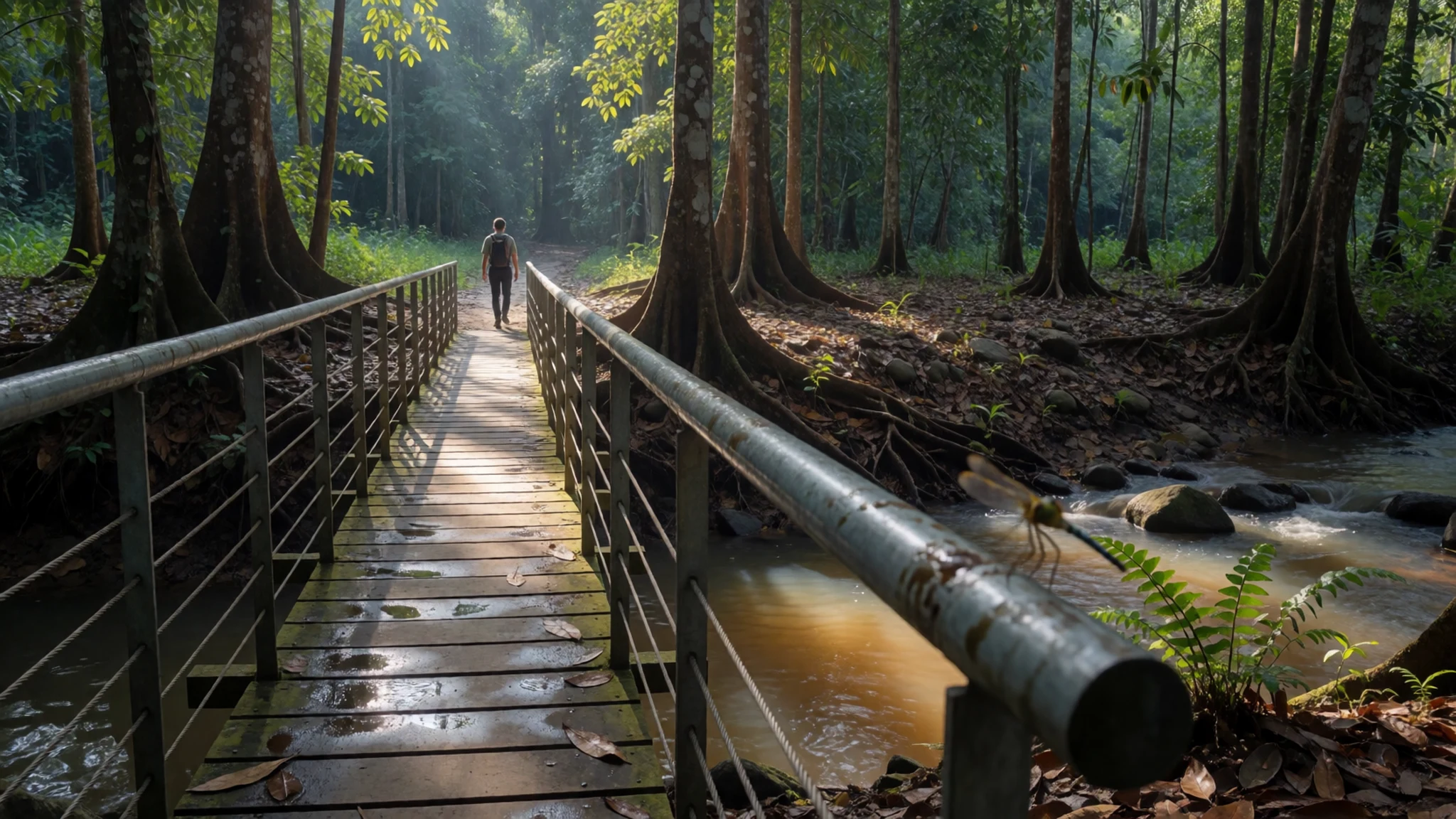
- Sunrise mist — canopy and stream gullies
Mist at sunrise is a quieter hour in Danum Valley. It pools over the canopy and in the stream gullies, then lifts as the sun reaches the crowns and the forest noise picks up. From a lodge viewpoint or a trail that breaks the tree line, the white layer shows how folded the land is. By mid-morning the mist has usually gone and the heat has arrived.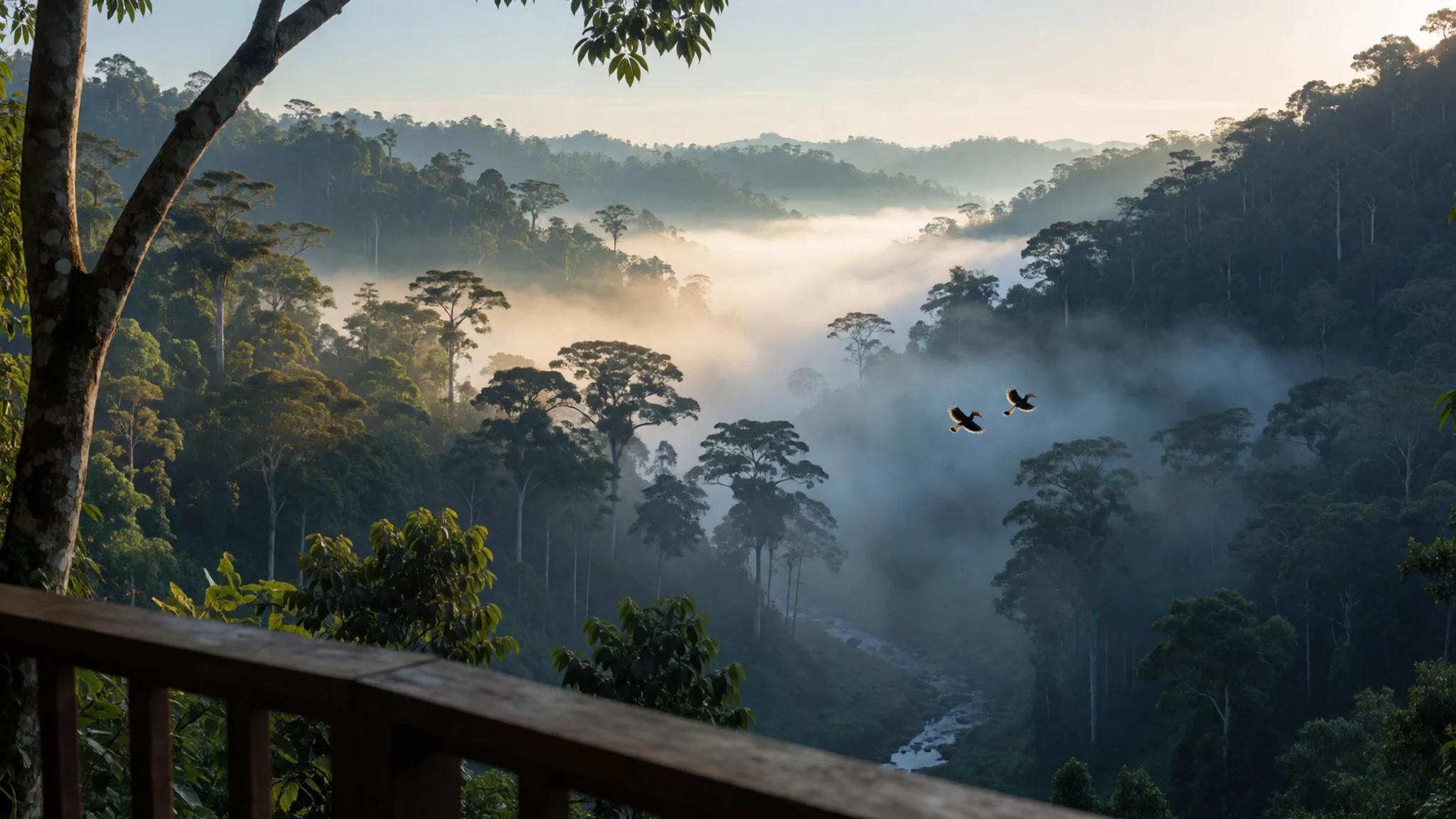
- Dipterocarp trails — marked trails inside the conservation area
The walking trails in Danum Valley wind under dipterocarp hardwoods whose trunks rise clear before they branch. Light on the floor stays low, roots cross the path, and after rain the clay is slick enough to need a handhold. Hornbills pass in the canopy, gibbons call at dawn, and an orangutan is a matter of patience rather than a promise. A guide reads tracks and fruiting trees along the way.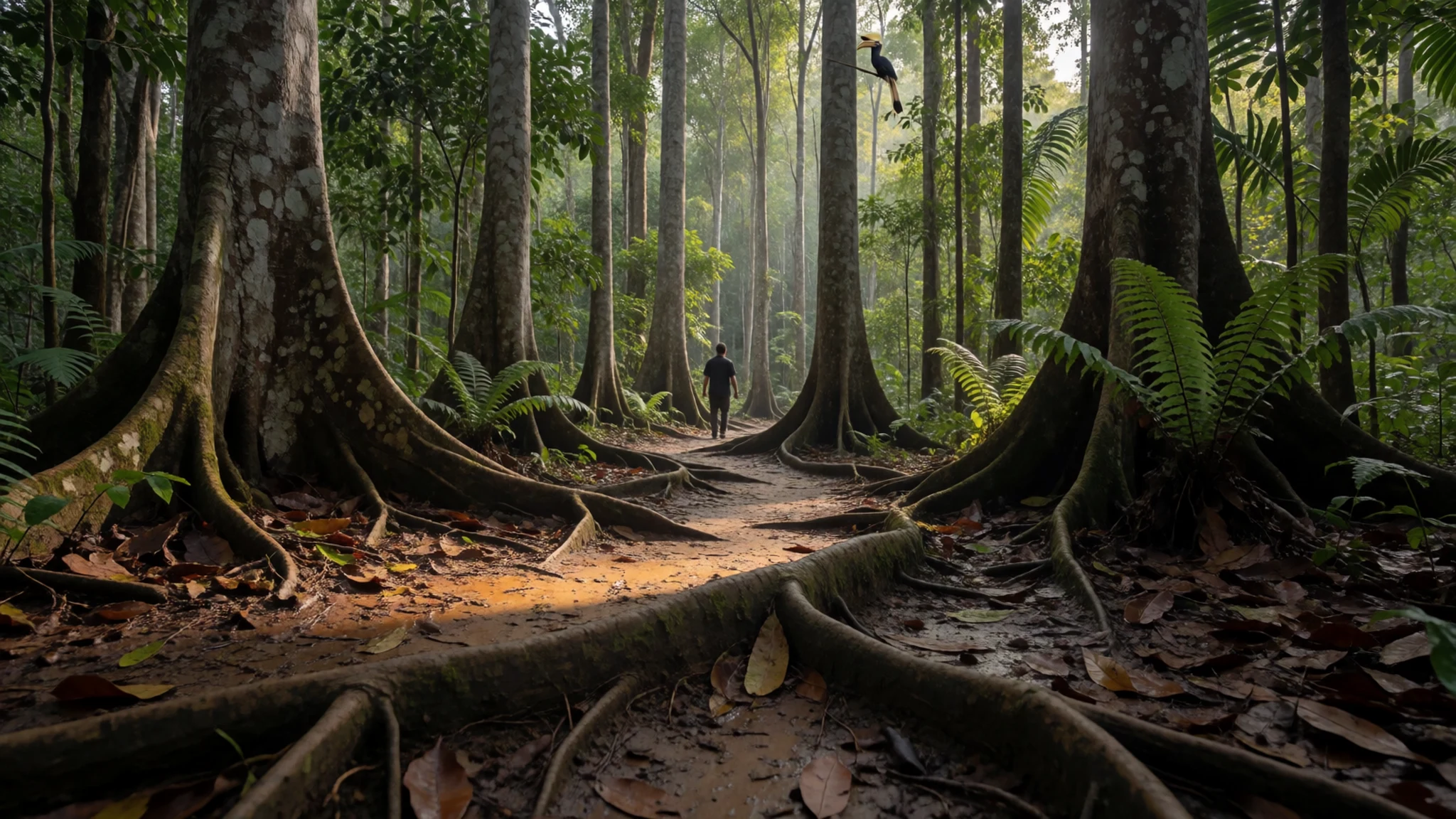
- After-dark forest — access road and trails after dark
After dark, Danum Valley is a different forest. A slow drive along the access road, or a walk with a guide and torches, picks out eyeshine: deer, civets, sleeping birds, and sometimes a slow loris or a cat that vanishes before the shape settles. Frogs take over the soundscape near the streams. The same trees from the morning are still there; only the traffic in them has changed.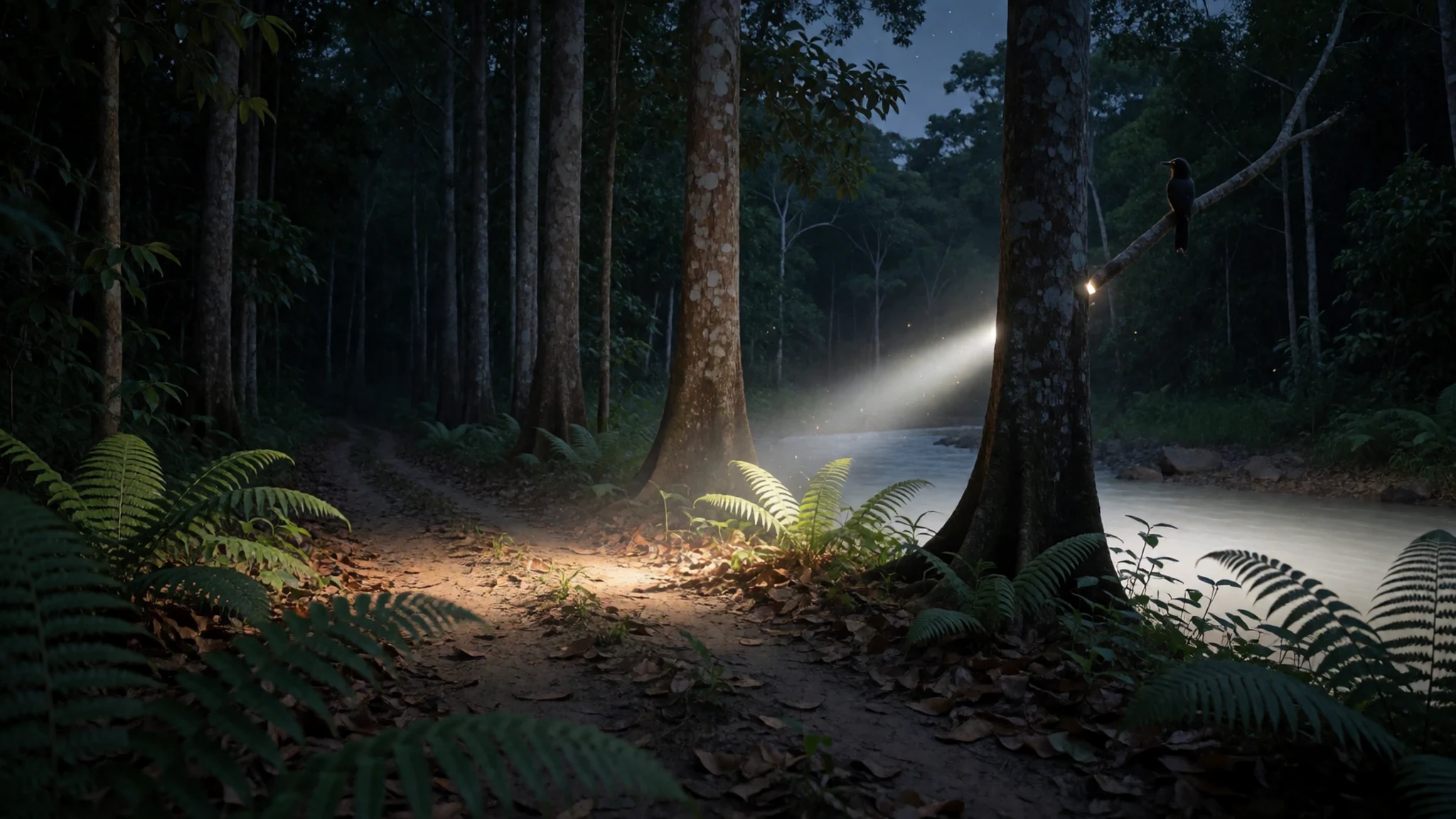
- Water monitors — streams and riverbanks
Water monitors work the streams and banks of Danum Valley in plain sight, which is more than can be said for most of the valley's mammals. They bask, slip into the water, and move with a heavy confidence along the mud. Visitors do better watching from the path than crowding an animal off its rock. Kingfishers share the same stretches of water.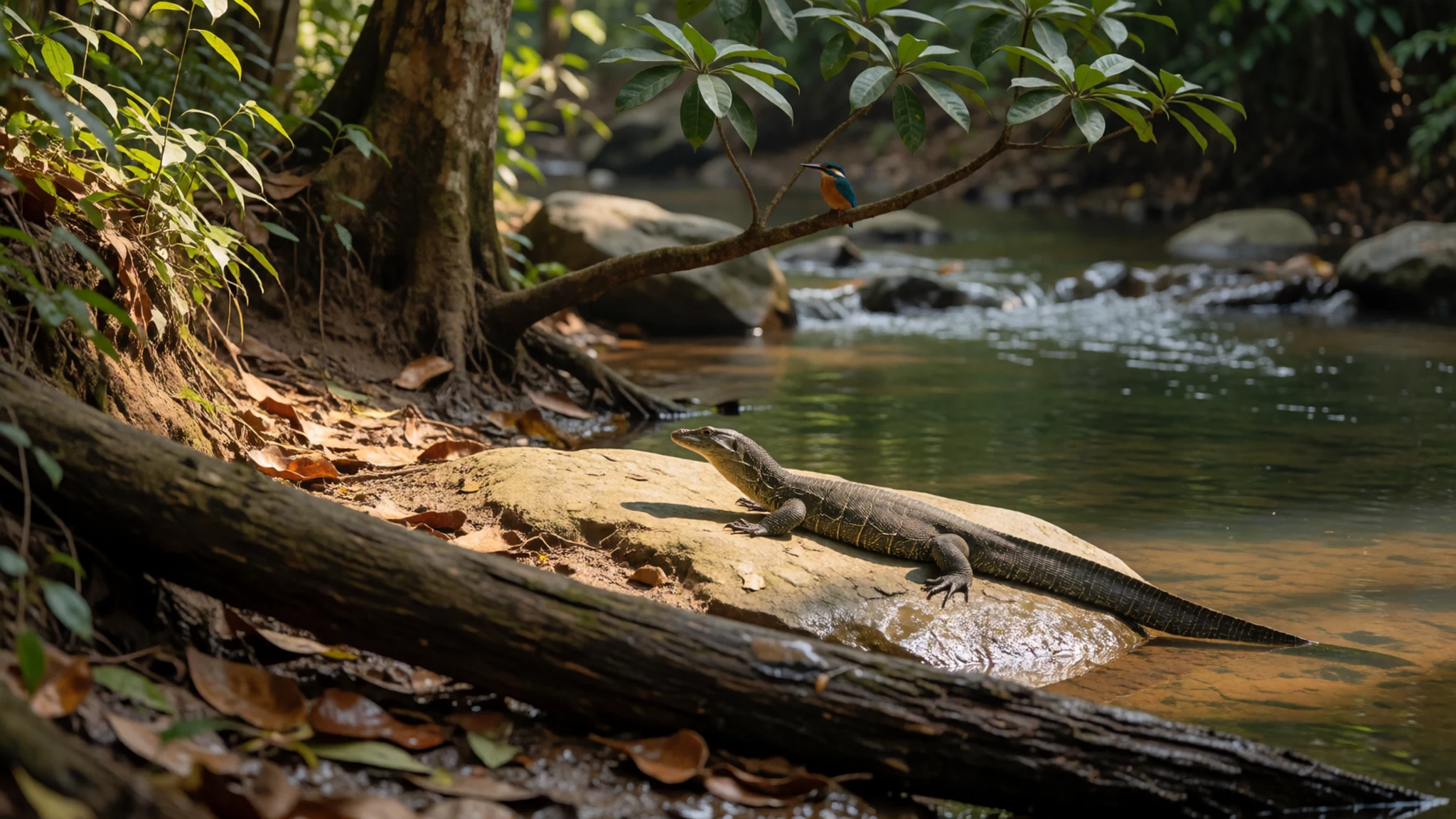
Culture
Danum Valley is not a city with a festival calendar; its culture is the culture of eastern Sabah meeting a forest that people study and host for a living. Kadazan-Dusun and Orang Sungai communities around this part of Sabah carry harvest festivals, rice traditions and a long knowledge of rivers and forest foods, even when the valley itself is now a conservation area rather than a village. Kaamatan, the harvest festival, is a public face of that Kadazan-Dusun year, though it belongs to towns and villages rather than to the reserve. Staff and guides at the lodges and the field centre are often local, and the stories they tell on a trail — which tree fruits, which call belongs to which bird — are the living part of a visit. Islam is widely practised in Lahad Datu and along the coast, alongside Christian and older customary practice inland, so the towns on the way in are culturally mixed. The research station adds another layer: scientists from Malaysia and elsewhere treat the forest as a long-term record, and visitors are guests in that work as much as in a landscape. Keep to the marked trails, do not feed wildlife, and ask before photographing guides or anyone you meet on the road.
What to wear
Danum Valley has no dress of its own, so what people wear comes from Sabah around it. Kadazan-Dusun formal dress is a black outfit edged and patterned in gold thread, worn with beads and a sash for weddings, harvest festivals and official ceremonies; men add a headcloth, and women a structured traditional costume that reads as ceremonial rather than daily. Bajau and other coastal communities bring bright woven cloth and, among some Bajau groups, the fine linangkit embroidery seen at gatherings in town. In Lahad Datu and on the road, everyday clothes are practical: T-shirts, long trousers, a tudung for women who wear it, rubber shoes, and a jacket against shop air-conditioning rather than the forest. For a visitor inside Danum Valley, the forest sets the rules. Lightweight long sleeves and long trousers protect against sun, mosquitoes and scratchy undergrowth; neutral colours make more sense on a wildlife walk than white. Leech socks, or trousers tucked into socks, matter after rain. Closed shoes with grip beat sandals on clay. A light rain jacket lives in the daypack all year. In town, covered shoulders and knees are the comfortable choice if a mosque or a village invitation appears, and swimwear stays at the river rather than in the lodge dining room.
What to eat
- Hinava — lodge kitchen or a Lahad Datu eatery serving Sabah food
In Danum Valley, hinava is a Kadazan-Dusun dish of raw fish cured in lime, ginger and chilli, closer to a sharp salad than to a cooked curry. It also appears in Lahad Datu, at eateries serving local food, when the lodge kitchen is cooking something else.
- Tuhau — lodge table or a simple eatery in Lahad Datu
At a Danum Valley lodge table, tuhau is a pounded relish of a wild ginger relative, fierce, sour and salty, eaten in small amounts with rice. The same relish shows up at a simple eatery in Lahad Datu beside grilled fish or vegetables, and a little goes a long way.
- Nasi lemak — lodge breakfast, or a Lahad Datu coffee shop or market
Nasi lemak in Danum Valley is the usual Malaysian breakfast of coconut rice with sambal, egg, peanuts and anchovies. Lodges serve a version before a dawn walk, and in Lahad Datu it is coffee-shop and market food, in paper or on a plate. - Ikan bakar — lodge dinner or a Lahad Datu night market
Ikan bakar at Danum Valley is fish grilled over charcoal and finished with sambal, a coastal habit adapted with river fish or seafood brought from Lahad Datu. The point is the char and the chilli, eaten with rice and cut cucumber. - Wild ferns and tapioca tips — lodge meal, or markets and casual eateries in Lahad Datu
Wild ferns and tapioca tips in a Danum Valley meal are stir-fried with belacan or garlic and served as the green side. Lahad Datu markets and casual eateries sell the same greens on the way to the valley.
Plan it
Best time. Rain falls on Danum Valley in every month. February to September is the more comfortable window for eastern Sabah, with less rain than the wettest months of December and January, though a heavy afternoon storm is still normal. Trails are kinder at dawn, before heat settles under the canopy.
How long. 3–4
Getting there. Fly into Lahad Datu, usually connecting through Kota Kinabalu or Tawau, then continue by road through the Silam junction. The last leg is a logging road into the Danum Valley conservation area, booked with the lodge or the field centre rather than ridden as a public bus.
Budget. high
Tips
- Book the lodge or the field centre well ahead, because beds inside the conservation area are limited.
- Give the arrival and departure half-days to the road, and keep long walks for the full days in the valley.
- Start at dawn for gibbons, birds and cooler air.
- Pack for rain and mud in every month, with leech socks and a bag that can take a soaking.
- Carry cash for Lahad Datu; card payment becomes scarce once the logging road begins.
- Drink more water than thirst suggests, and treat forest streams as scenery rather than drinking water.
Etiquette
- Stay on marked trails, and do not feed or crowd wildlife.
- Ask before photographing guides, staff or people met on the road.
- Keep voices down on night drives and dawn walks.
- Leave plants, seeds and stones where they are, and take muddy shoes off where the lodge asks.
Nearby
Sources
- Wikidata (CC0)
- Wikipedia — Danum Valley Conservation Area (CC BY-SA 4.0)
- Wikivoyage — Danum Valley (CC BY-SA 4.0)
Wildlife
- Orangutan (animal)
The Bornean orangutan is a big, shaggy, russet-coated ape with arms so long it can reach through the branches like a living rope bridge. Males are heftier than females and grow broad cheek pads. Orangutans live in Danum Valley's forest, but most visitors glimpse far less than it holds, so do not count on one. Go with a guide, keep a respectful distance, stay quiet, and never offer food, however curious it seems.
- Water monitor (animal)
The Asian water monitor is a huge lizard, second only to the Komodo dragon, rather like a small dragon that loves a swim. In Danum Valley it patrols streams and their banks in plain sight, which makes it a far surer sight than most of the valley's mammals. Watch from a calm distance, move slowly, keep your voice low, follow your guide's lead, and never feed it, however bold it looks.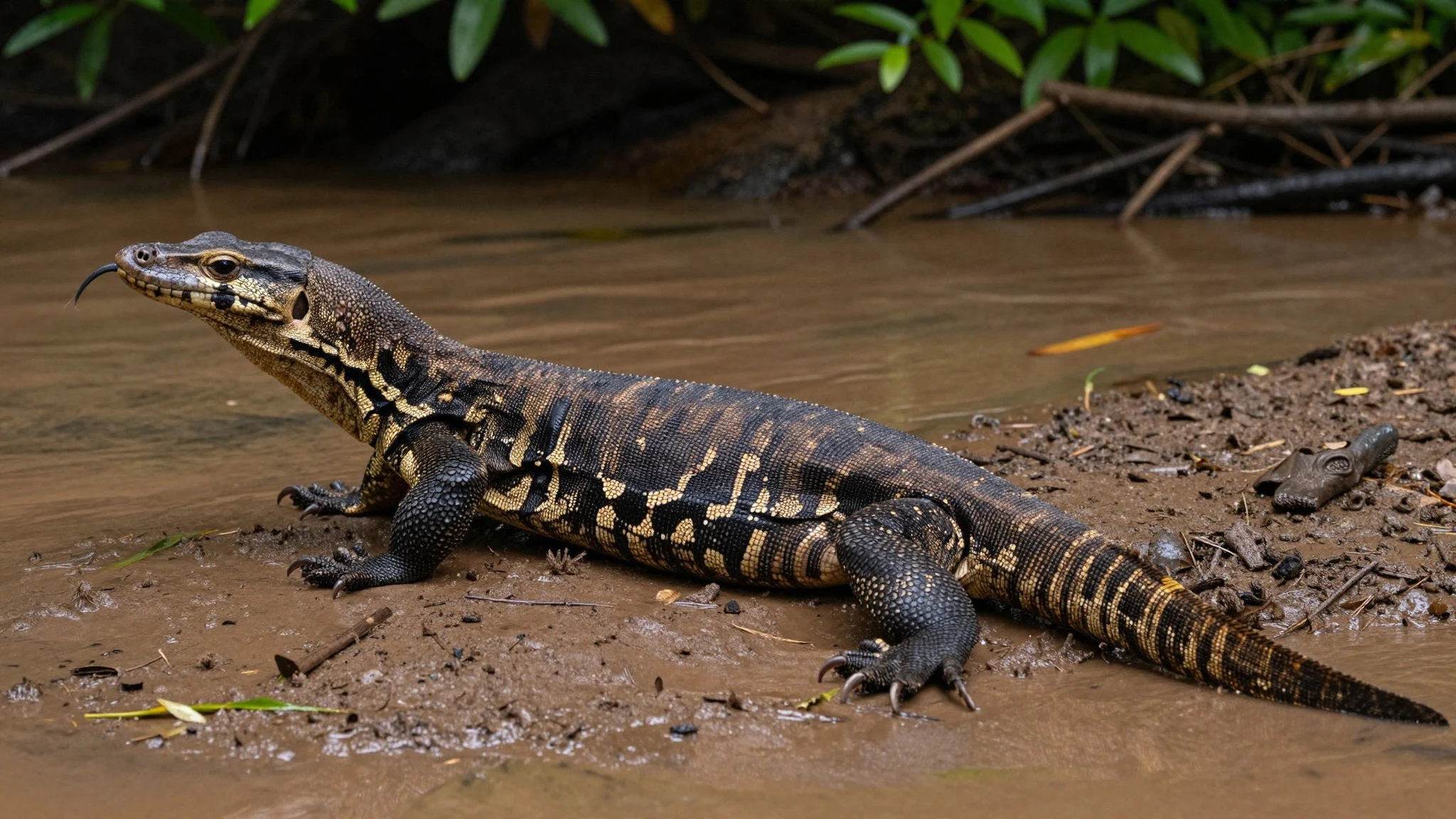
- Rhinoceros hornbill (bird)
The rhinoceros hornbill is a very big forest bird that shares its name with a rhinoceros. Hornbills live in Danum Valley's forest, though visitors often see less than the forest holds, so a sighting is a treat rather than a promise. Scan the canopy with binoculars from a respectful distance, stay still and quiet, let your guide lead, and never feed it. - Stork-billed kingfisher (bird)
The stork-billed kingfisher is a big bird with a brown head and a heavy bill, made for fishing by the water. It likes streams and ponds beneath tree cover, and in Danum Valley it haunts the same waterways as the monitors. It stays in one place rather than wandering, so be patient. Sit quietly at the water's edge, keep your distance, let your guide spot it, and never feed it.