Batu Caves
Batu Caves, Malaysia
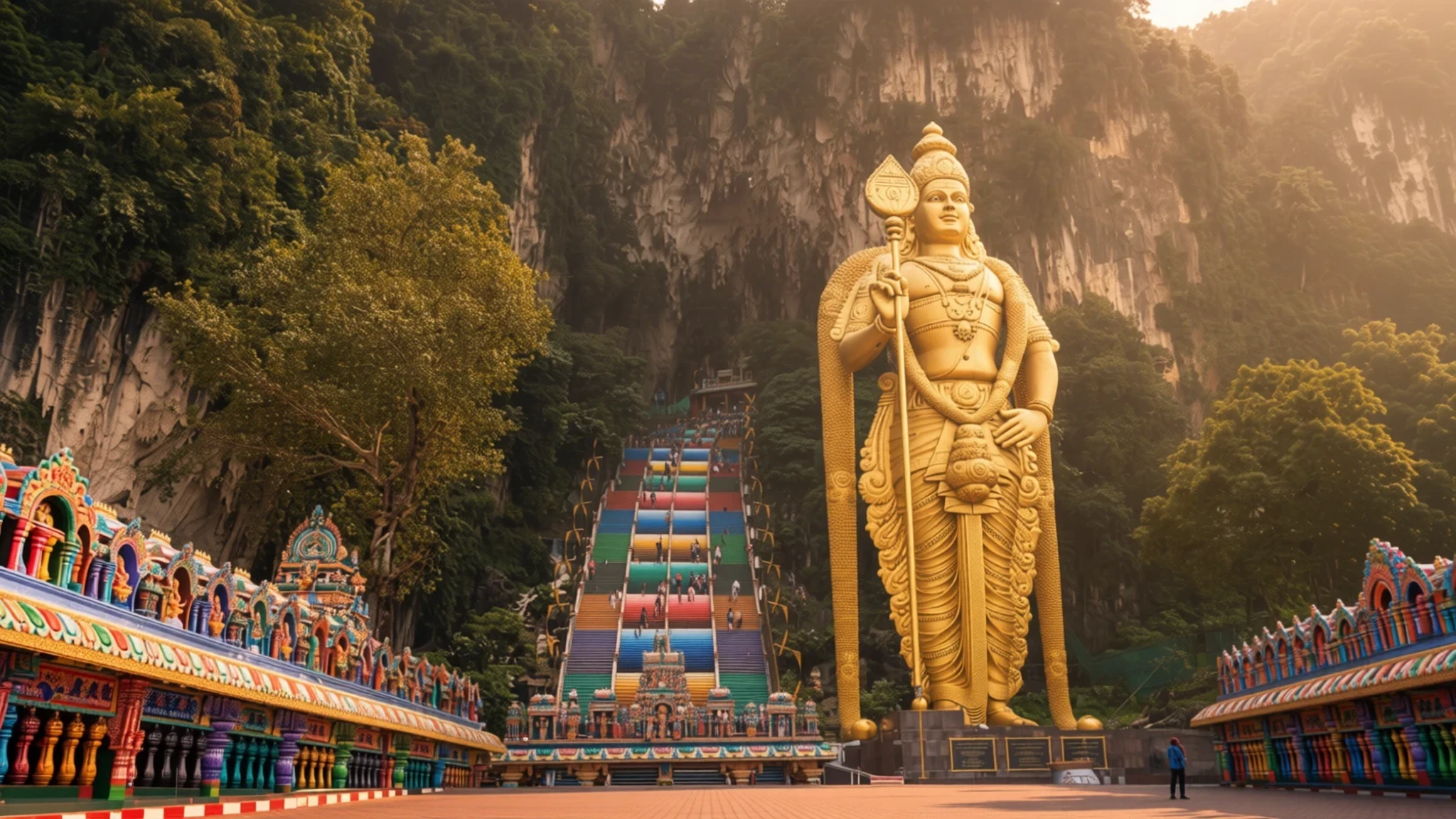
Batu Caves pairs a towering gold Murugan statue and a staircase into a limestone cave temple, minutes from Kuala Lumpur's centre.
The place
Batu Caves is a limestone hill in Gombak, Selangor, about 13 km north of Kuala Lumpur, and it is both a geological site and a working Hindu pilgrimage place. The hill is a mogote, a steep, isolated tower of rock, rising 325 m from flat ground that is now largely suburb. Inside it are 20 recognised caves, four of them large systems of linked chambers. Rainwater seeping through the stone slowly dissolved it, leaving stalactites hanging from the ceilings, stalagmites rising from the floors and smooth sheets of flowstone on the walls. The limestone is much older than the caves cut into it. The rock formed first, and the hollowing-out began tens of millions of years later, so popular claims that the caves themselves are hundreds of millions of years old blur two different ages. The best-known chamber is the Temple Cave, reached by a long straight staircase, and it holds a shrine to Murugan, a Tamil Hindu deity. Beside the steps stands a gold-painted statue of Murugan 43 m tall, visible from the approach road. Because the site is a short rail ride from the capital, it draws devotees, school groups, tourists and troops of macaques in roughly equal measure. It is a place of worship first, and its mood shifts sharply between a quiet weekday morning and a festival day.
Its story
Batu Caves was first a shelter. The Temuan, one of the Orang Asli peoples of the peninsula, used the caves long before outsiders took an interest. In the 1860s Chinese settlers began digging out bat guano, which was sold as fertiliser, and the hill became a small extractive site. In 1878 the American naturalist William Hornaday visited and wrote about the caves, which brought them to wider notice. The turn towards worship came through K. Thamboosamy, a Tamil trader, who promoted the caves as a place for Hindu devotion. A temple to Murugan was completed in 1891, and the first Thaipusam celebrations were held there in 1892. Thaipusam has been held at the caves every year since, and it grew into the focal point of the festival in Malaysia. More shrines and cave temples have been added over the decades. From the late twentieth century, housing spread across the land around the hill, and conservation groups voiced concern about over-development pressing against the limestone. That tension, between a sacred site, a natural one and a fast-growing metropolitan area, still shapes the place. The caves began as a refuge, passed through a commercial phase and settled into their present role as a centre of Tamil Hindu life in Malaysia.
What to see
- The Murugan statue and the staircase — Entrance, Batu Caves
The gold Murugan statue, 43 m tall, stands at the foot of the staircase and is the usual first photograph. Batu Caves' long straight climb begins right behind it. Go early, because the open steps and the concrete forecourt get very hot and crowded by late morning.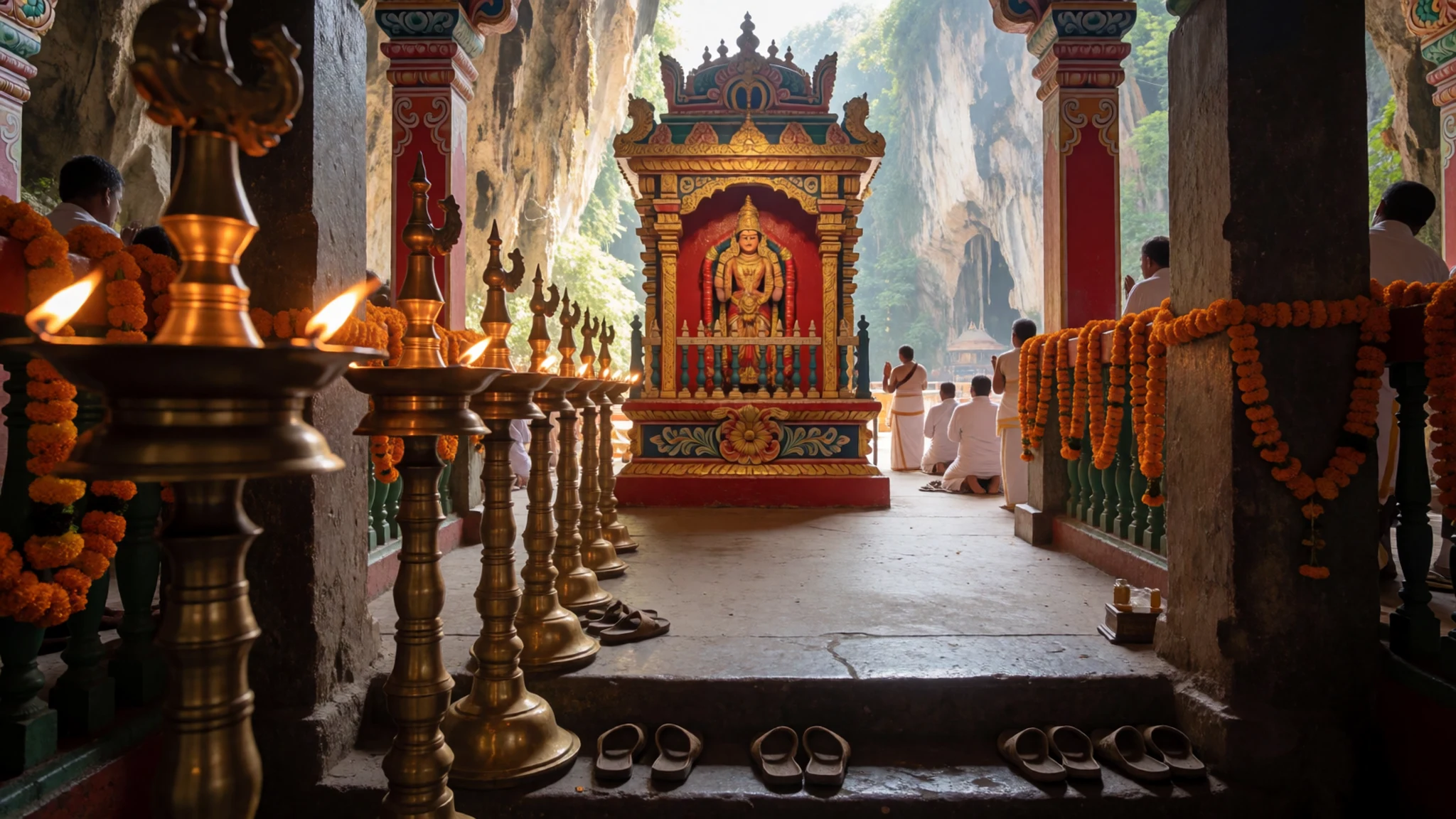
- The Temple Cave — Top of the staircase
At the top of the stairs, the Temple Cave at Batu Caves opens into a huge vaulted chamber with a hole in the roof that lets daylight fall on the shrines below. Worshippers make offerings at the Murugan shrine here. Stay quietly to the side while services are on.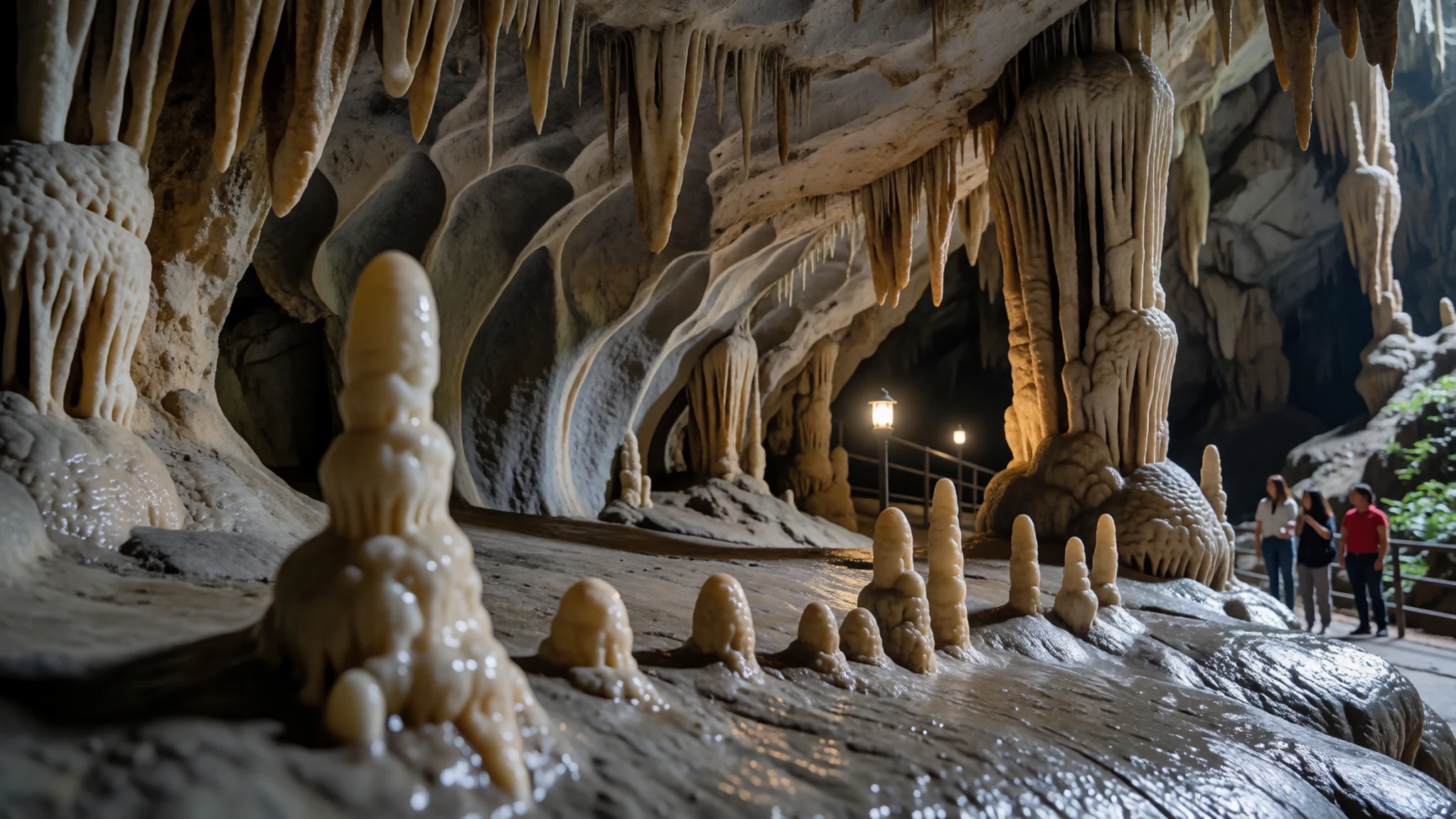
- Thaipusam procession — Forecourt and approach roads
Batu Caves is the focal point of Thaipusam in Malaysia, when devotees carry offerings and processions of Murugan idols wind towards the hill. It is intense, devout and very crowded. Visit knowing that movement is slow and that the festival is worship, not a show.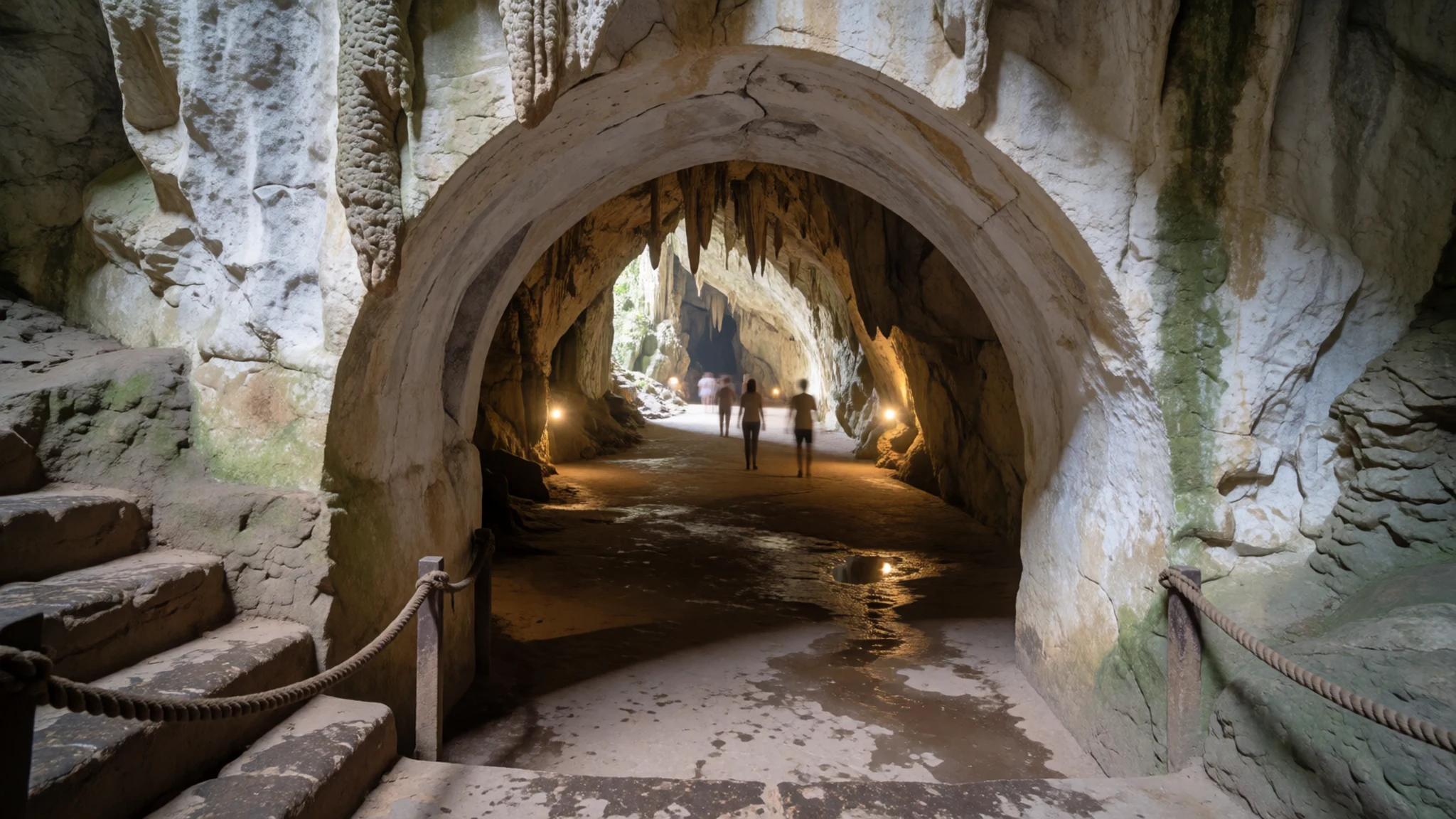
- The limestone hillside and its wildlife — Base of the hill
The cliffs of the hill at Batu Caves are worth a slow look: rough grey limestone, scrub clinging to ledges, and peacocks and macaques around the lower slopes. Keep food hidden, as the monkeys are bold and will grab bags and bottles.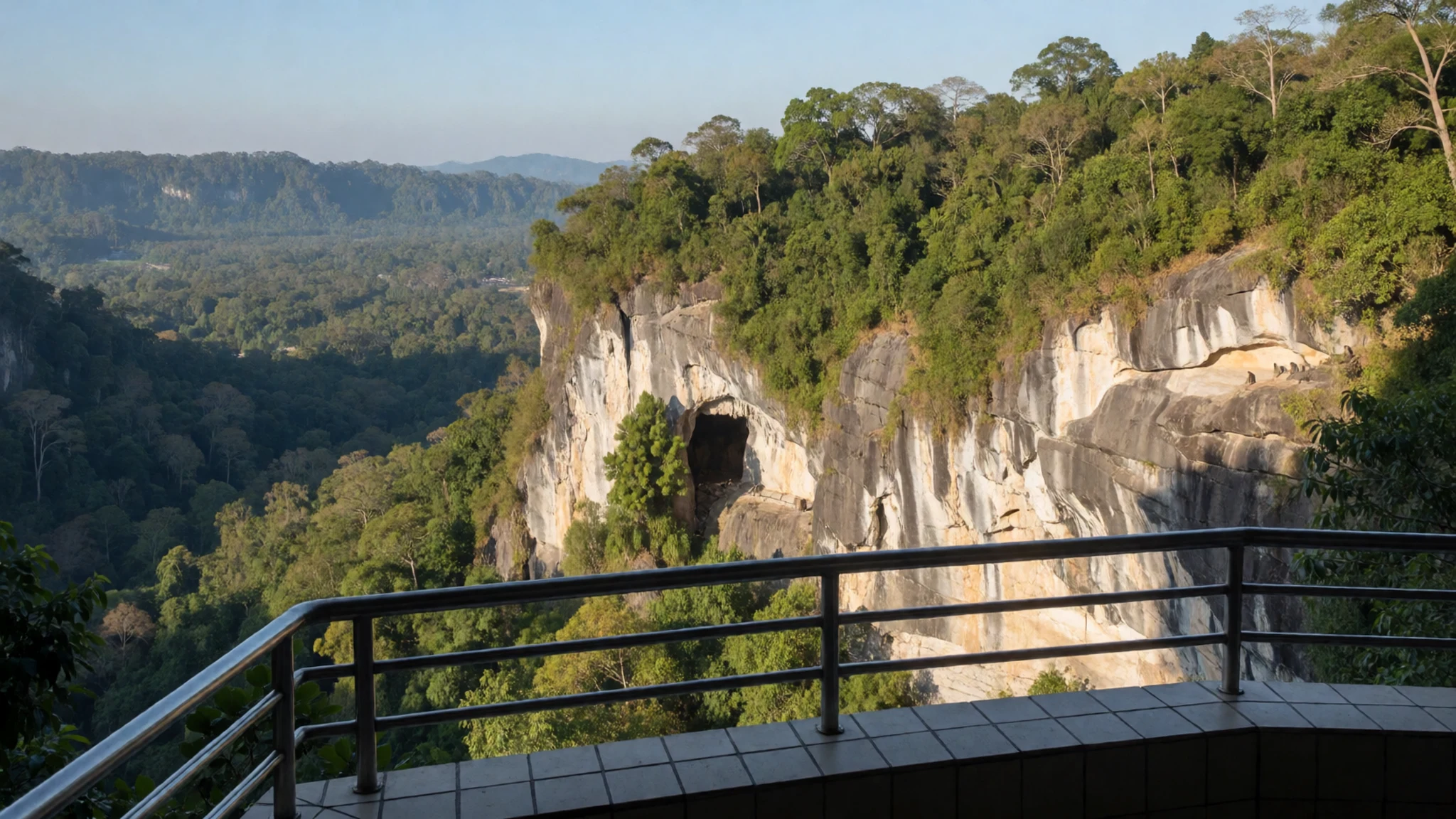
- The darker cave systems — Base and sides of the hill
Batu Caves has 20 recognised caves, and besides the main temple there are quieter ones with stalactites, flowstone and dim chambers. Some are reached by separate paths and entry arrangements change, so ask at the site or check the official channels before planning a visit.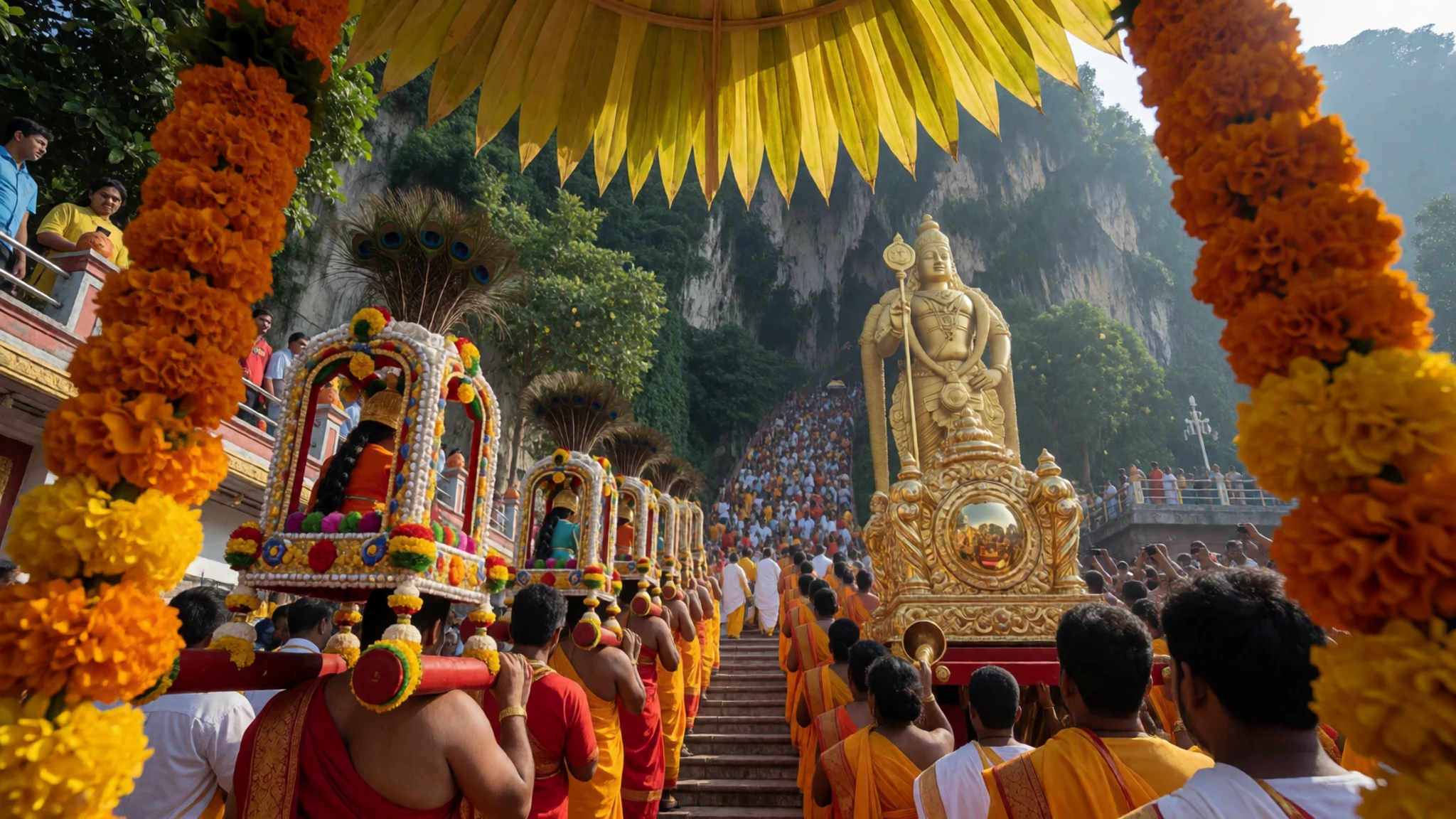
Culture
Batu Caves is above all a Tamil Hindu holy place, and the culture around it is the culture of Murugan devotion. Murugan is honoured with prayers, offerings of flowers and fruit, lamps and chanting, and the temple at the top of the staircase has been the centre of worship here since the late nineteenth century. Thaipusam, the annual festival, is the great occasion, when families walk long distances, carry milk pots and make vows, and some devotees take on physical penance as an act of thanks or petition. Outside festival days the site is gentler but still active: priests perform rituals, families bring children for blessings and small shops sell garlands, incense and sacred items. Malaysia's population is a mix of Malay, Chinese, Indian and Indigenous communities, and Batu Caves is one of the places where Tamil culture is most visibly on show to everyone else. Visitors of all faiths climb the stairs, and most are welcomed as long as they behave respectfully. The surrounding town has Indian restaurants, sweet stalls and shops that give the area its own flavour. Remember that the cave temple is a working place of worship, not a museum, and that its rhythms follow prayer times and festival calendars rather than tourist schedules. Remove your shoes before entering any shrine area, dress modestly with shoulders and knees covered, and do not photograph worshippers at prayer without asking.
What to wear
Batu Caves sits at the meeting point of Tamil dress traditions and everyday Malaysian clothing. Traditional Tamil women's dress is the sari, usually silk or cotton, often with a woven gold border, and many women wear one for temple visits and festivals. Men wear the veshti or dhoti, a wrapped cloth of white or cream cotton, sometimes with an angavastram draped over the shoulder. At Thaipusam, many devotees dress in yellow, orange or saffron, colours associated with the festival. In daily life, most people around Batu Caves wear ordinary Malaysian urban clothes: lightweight shirts, long skirts, trousers and the occasional salwar kameez or kurta, chosen for heat and humidity. Visitors should dress for the weather and for a temple at once. Choose breathable cotton or linen that covers shoulders and knees, and carry a scarf or light wrap if you plan to go into shrine areas. Women in short skirts or sleeveless tops may be asked to cover up, and wraps are sometimes available near the entrance. Footwear matters: the staircase is long and can be hot and slippery, so wear sturdy sandals or trainers that come off easily, because shoes are removed at shrines. Bring a hat or cap, sunglasses and a bottle of water, and avoid dangling jewellery or open bags, since monkeys will grab at loose items.
What to eat
- Banana leaf rice — South Indian restaurants near the Batu Caves entrance
Rice served on a banana leaf with vegetable curries, pickles, papadum and a choice of sauces, eaten with the right hand. It is a staple of South Indian eateries in the town below the caves and across Kuala Lumpur.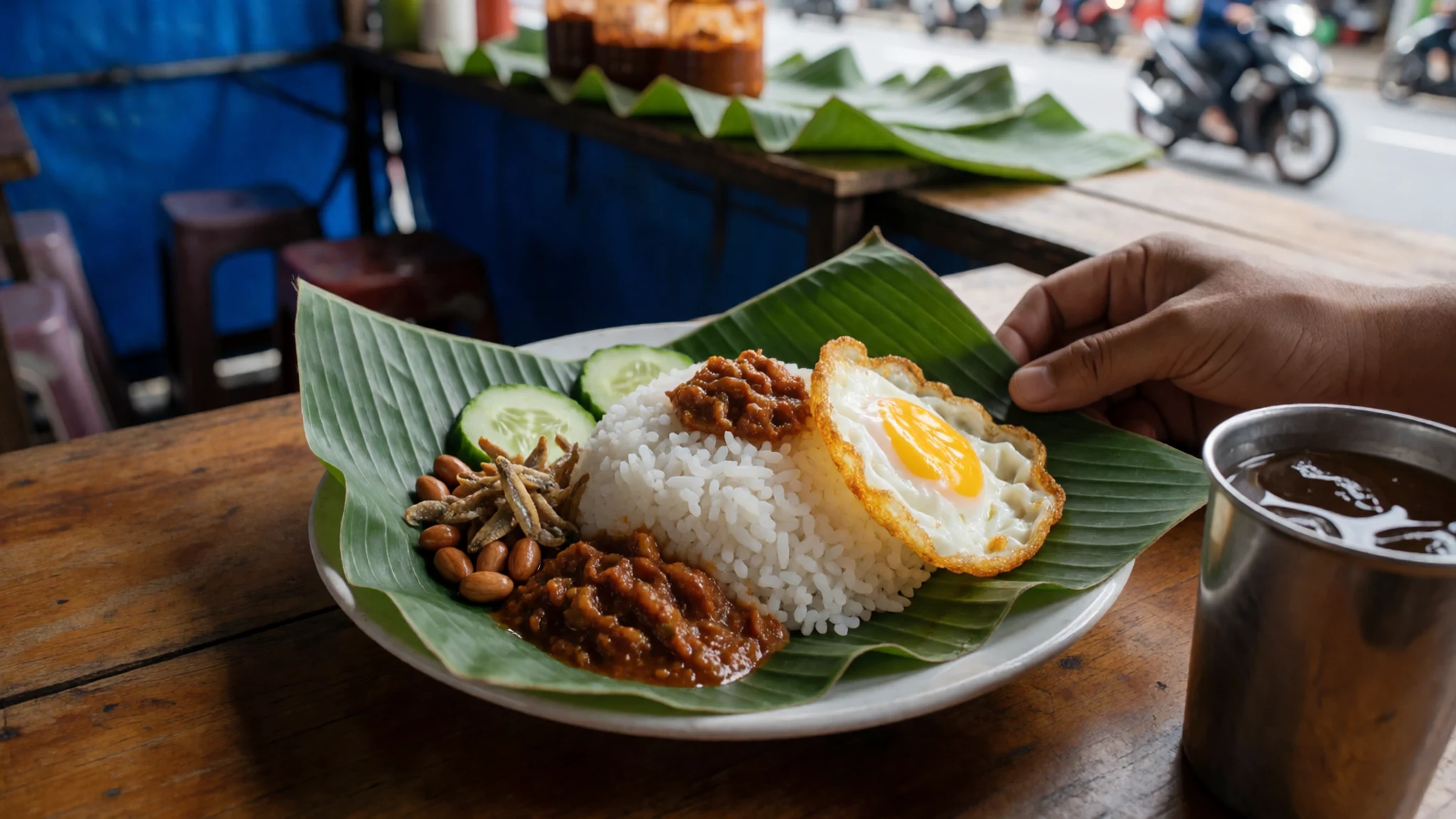
- Dosa — Vegetarian eateries around Batu Caves town
A thin, crisp pancake made from fermented rice and lentil batter, folded or rolled and served with coconut chutney and a lentil-vegetable sambar for dipping. Order one fresh from the griddle for a light breakfast before the climb.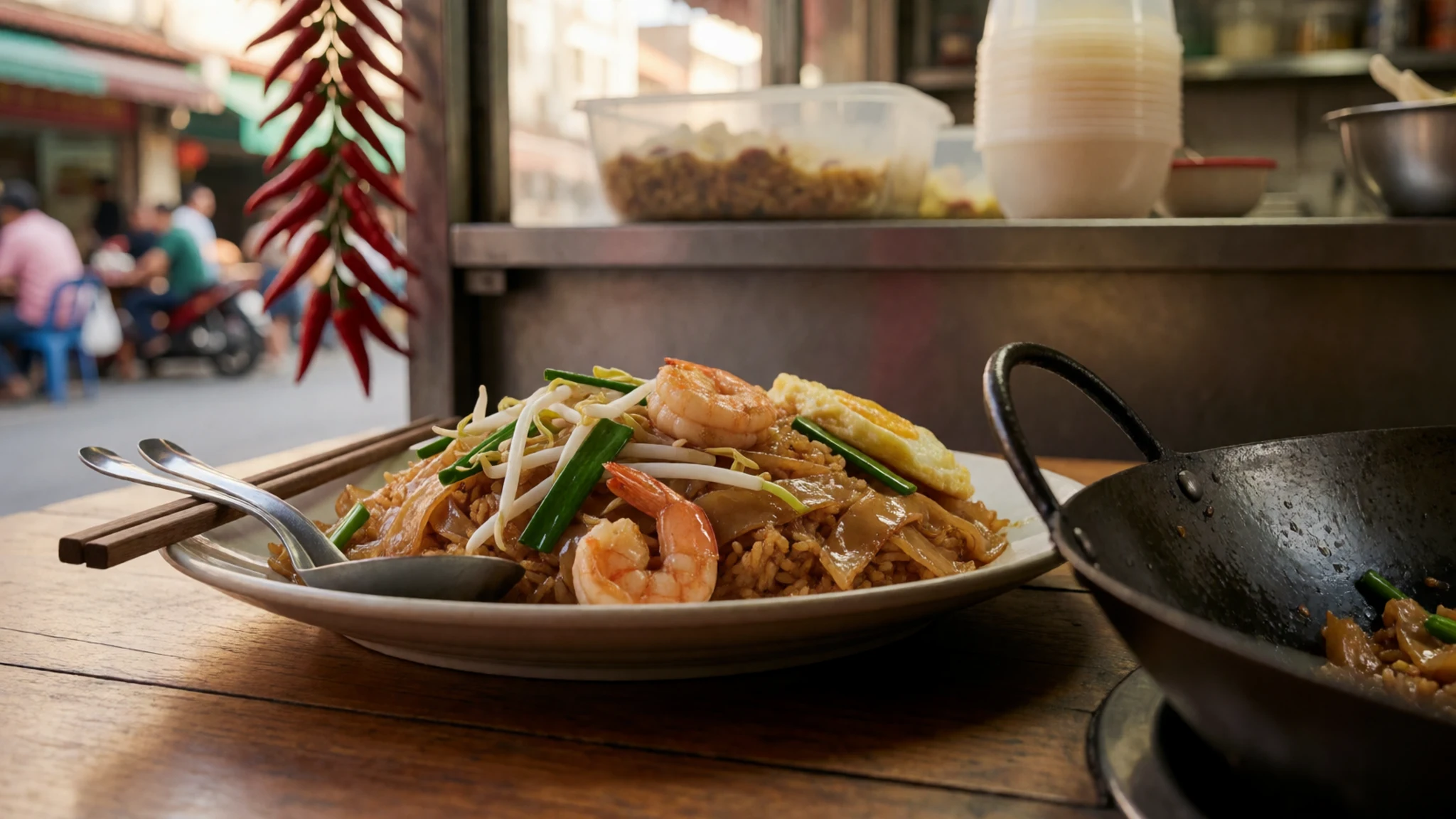
- Vadai and murukku — Snack stalls and sweet shops near the temple forecourt
Vadai are savoury fried lentil snacks, crisp outside and soft within, while murukku are crunchy spiral rice-flour twists. Both are easy to carry and common around temples and festivals, and they are good for a snack on the way home. - Thosai and idli sets — Indian breakfast restaurants in the Batu Caves area
Soft steamed idli rice cakes and crisp thosai, as dosa is also called, come together on one plate with chutneys and sambar. It is a filling, mild and mostly vegetarian meal that suits visitors worried about heavy or spicy food. - Teh tarik and fresh cane juice — Tea stalls and juice carts by the entrance
Teh tarik is sweet milky tea poured back and forth between two vessels until frothy, a Malaysian everyday drink. For something cooler, stalls near the caves press sugar cane or serve coconut water, welcome after the stairs in the heat.
Plan it
Best time. Malaysia is hot and humid all year, so go early in the day whatever the month. Thaipusam falls in January or February and is the most atmospheric time, but also the most crowded; check the date each year. Afternoon showers are common, so mornings are best.
How long. 1
Getting there. Fly into Kuala Lumpur International Airport, then take a train or road transfer into the city. Batu Caves is about 13 km north of central Kuala Lumpur and is reached by a commuter rail line, taxi or ride-hailing car; the station is a short walk from the steps. Check current services before travelling.
Budget. low
Tips
- Arrive early, before the heat and the tour groups build up
- Take water and a hat, as the stairs are exposed to the sun
- Keep food and loose items hidden from the macaques
- Check the official site for any entry arrangements to the cave sections
- If you want Thaipusam, book transport and expect large crowds and road closures
Etiquette
- Dress modestly and remove shoes before entering shrine areas
- Ask before photographing worshippers or priests
- Do not feed the monkeys
Nearby
Sources
- Wikidata Q687629 (CC0)
- Wikipedia: Batu Caves (rev 1369995302) (CC BY-SA 4.0)
- Wikivoyage: Selangor (rev 4960954) (CC BY-SA 4.0)
- Batu Caves, 2022 — Chainwit. (CC BY-SA 4.0)
- Sunshine on the Rocks — MithunAhamed (CC BY-SA 4.0)
- Batu Cave looking forwards — Passengerpigeon (CC BY-SA 4.0)
- Murugan statue beside the staircase — Uwe Aranas (CC BY 3.0)
- A temple inside the Batu Caves — Unknown author (CC0 1.0)
- Thaipusam idols — tajai (CC BY 2.5)
- Batu Caves Hillside — Photo Dharma (CC BY 2.5)
- Peacock in Silhouette — Photo Dharma (CC BY 2.5)


