Bako National Park
Bako National Park, Malaysia
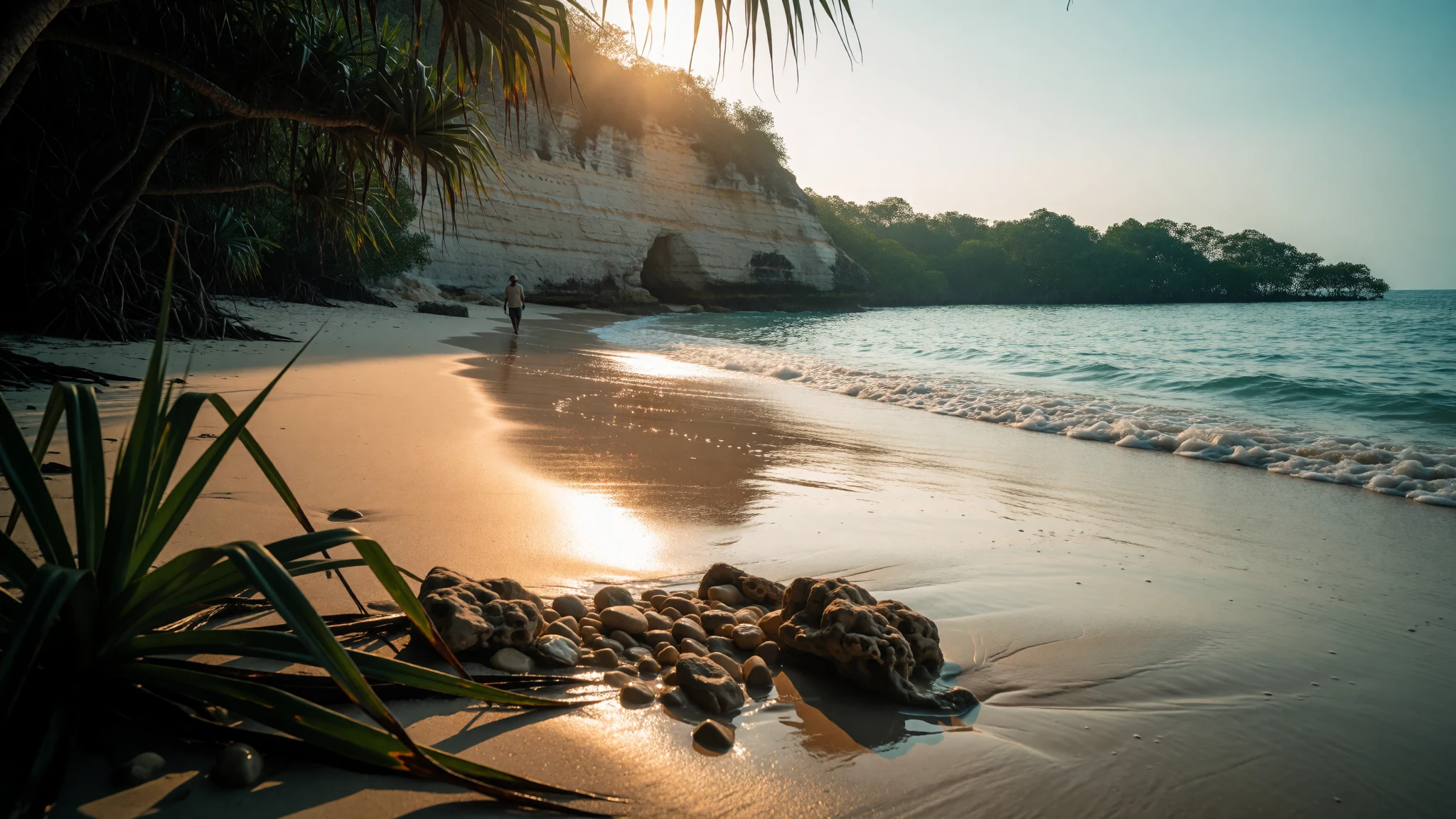
Bako National Park packs rainforest, kerangas scrub, mangroves and a wild sandstone coast into a road from Kuching, then a short boat from Kampung Bako.
The place
Bako National Park occupies a sandstone peninsula where the Bako River meets the South China Sea, north of Kuching in Sarawak. The entrance is a beach, Telok Assam, rather than a road gate. Boats from Kampung Bako come through shallow water, and people wade the last steps onto sand beneath a low cliff. Headquarters, chalets and the trailheads share that cove. The peninsula is a lesson in how fast forest can change when the soil changes. Behind the beach, mangroves follow the creeks. Gullies hold taller, darker rainforest, with big-leafed trees and a closed canopy. On the plateau the ground turns to pale sand over rock, the kerangas heath that Borneo grows on starved ridges. Further out, the heath opens into padang scrub: low shrubs, sharp light, and almost no shade. Pitcher plants thread themselves through those shrubs. Nepenthes gracilis sends long stems along the ground, and a sundew known from this park, Drosera spatulata variety bakoensis, sits in the open. The same sandstone that starves the soil also builds the coast: cliffs, arches and sea stacks standing in green water. Animals use every layer. Proboscis monkeys, with their heavy noses and pot bellies, feed in the mangroves and in the trees behind the headquarters, especially when the day is cool. Long-tailed macaques are bolder and will raid an open bag. Bearded pigs wander the paths, silvered langurs keep to the branches, and monitor lizards cross the boardwalks as if the planks were their own. Birds include the white-chested babbler in the undergrowth. None of this is a zoo arrangement. Bako National Park is simply small, sandy and busy with life, and the boat back to the village is what closes the day.
Its story
Bako National Park carries the name of the river and of Kampung Bako, the Malay fishing village that still handles the crossing. Before there was a headquarters on the beach, this peninsula was a working coast: boats, nets, and forest within paddle reach of Kuching. The cliffs were a seamark. The plateau, poor for farming, was left largely alone, which is why the kerangas and the padang survived close to a growing city. The park idea was to hold that peninsula as public forest and to let people walk it without building a road along the shore. A headquarters went up at Telok Assam, trails were cut across the scrub and the gullies, and beds followed, chalets and a campground, so the visit could stretch past the last boat. Keeping the boat as the way in was practical and, in the end, protective. When the sea is rough, the park simply does not fill. The village boatmen remain the gate. What drew naturalists, and later visitors, was the pile of habitats on starved ground. Insect-eating plants do well where ordinary trees struggle. Pitcher plants, Nepenthes gracilis among them, are common enough on the padang that a careful walker meets them at knee height. The sundew variety bakoensis is named for the park and is part of why botanists still bother with the heat of the open plateau. Proboscis monkeys turned the same mangroves into a public spectacle. There is no ruined capital here and no festival calendar that the forest keeps. The story of Bako National Park is a village that stayed at the jetty, a beach that became an entrance, and a sandstone tableland where Borneo's insect-eating plants and a very particular monkey are still ordinary neighbours.
What to see
- Telok Assam — Telok Assam, park headquarters
Telok Assam is the beach where boats from Kampung Bako land and where Bako National Park actually begins. The headquarters, the chalets and the campground sit just behind the sand, under a wooded cliff. Mangroves flank the cove, and a boardwalk leads into them. Proboscis monkeys often feed in those trees, while macaques patrol the bins and the rails.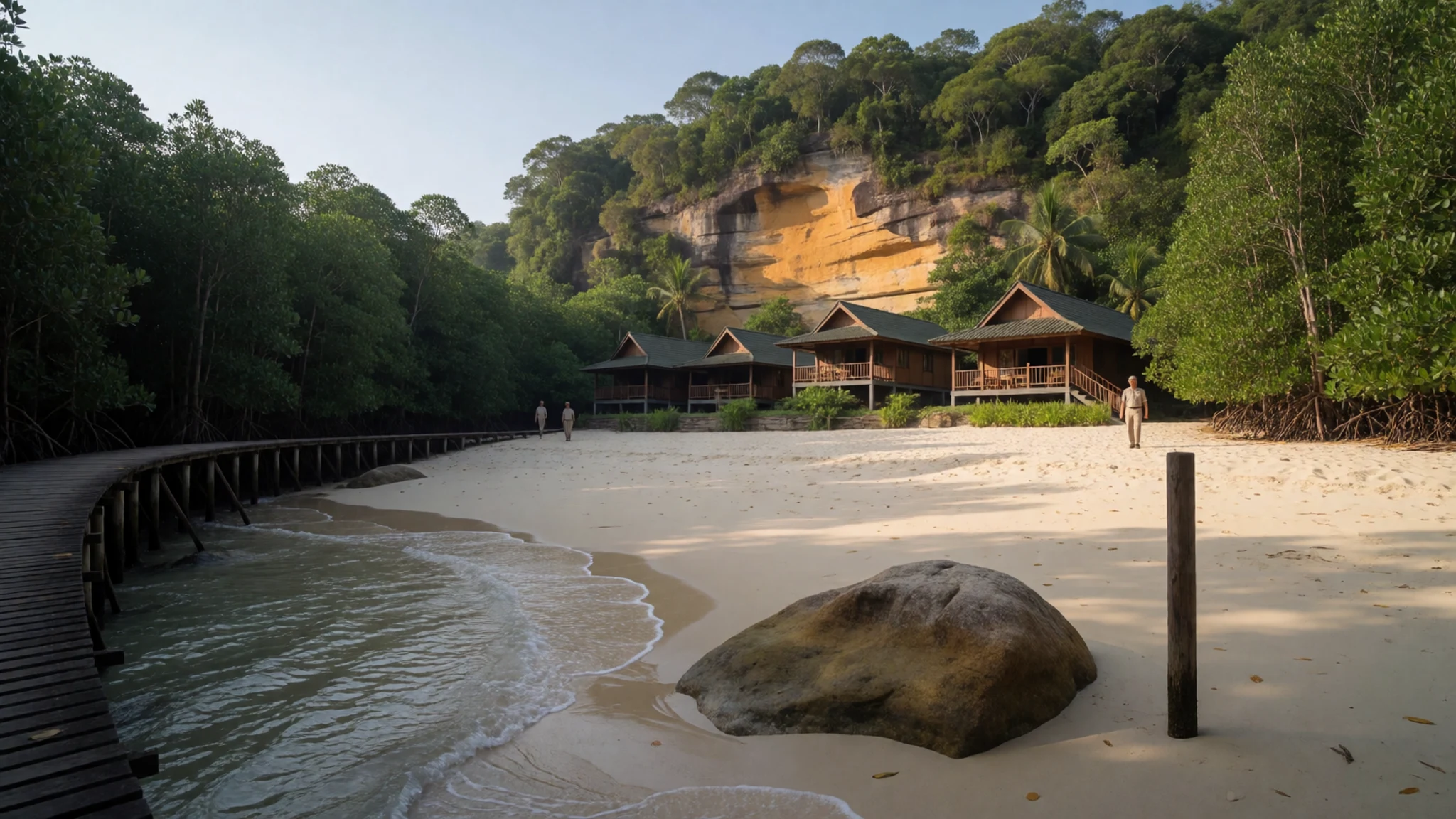
- The padang — Sandstone plateau
The padang is the open scrub on the sandstone plateau of Bako National Park, and it feels like another climate from the gullies below. Shade thins out, the soil is pale and hungry, and shrubs replace tall trees. Pitcher plants are simple to see here. Nepenthes gracilis trails long stems over the bushes, and Nepenthes rafflesiana climbs among them.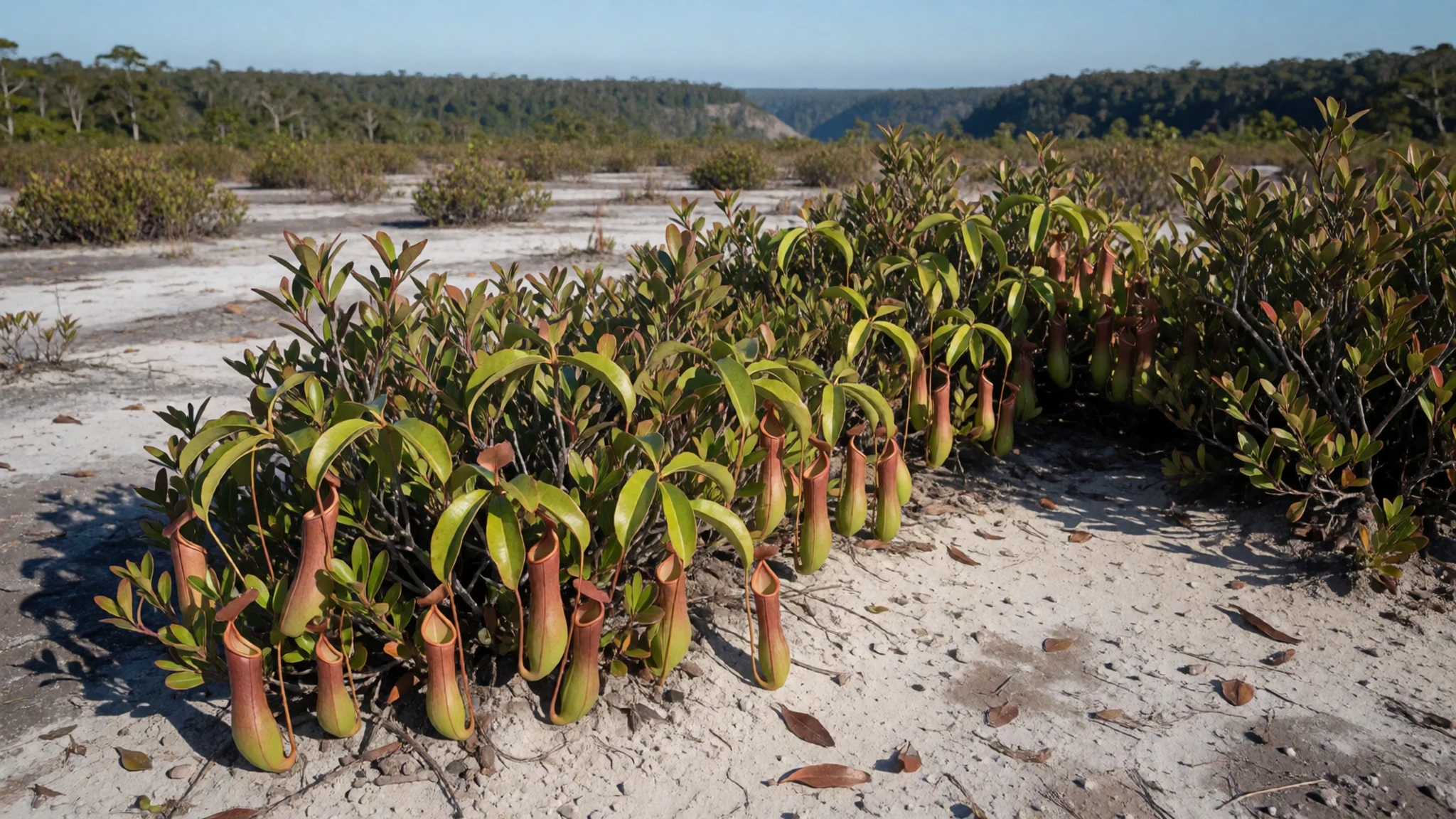
- Proboscis monkeys — Mangroves behind Telok Assam
Proboscis monkeys are the animal visitors most want to see in Bako National Park, and the mangroves behind Telok Assam are the reliable place. Groups feed in the trees along the boardwalk, noses and bellies clear even from the planks. They are wild animals on a familiar beat, and they should be watched without food, calls or a closer step.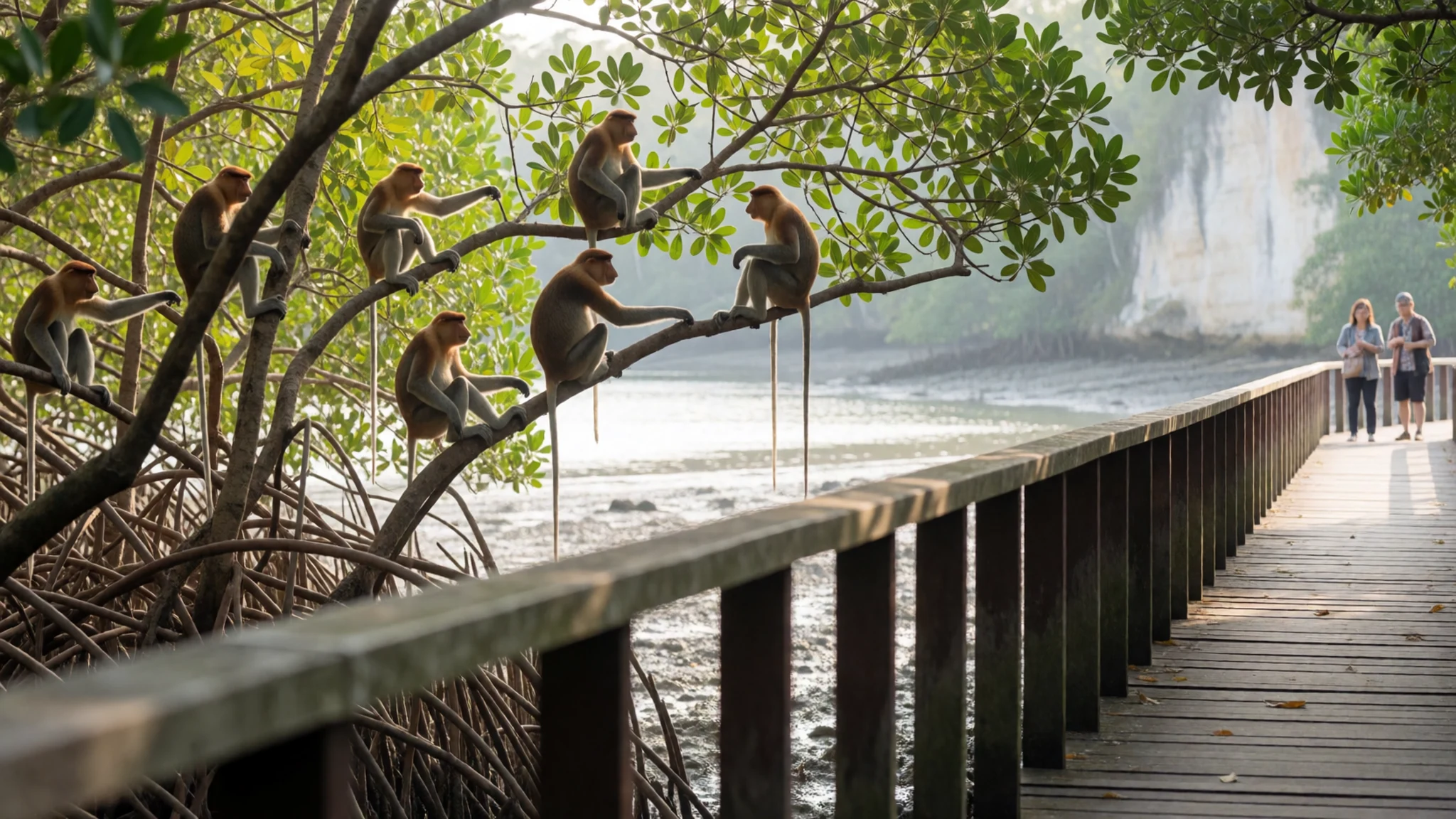
- Telok Pandan Kecil — Seaward cliffs
Telok Pandan Kecil is a small cove on the seaward side of Bako National Park, reached by a walk across the hot padang and a steep path down. The reward is a cliff-framed beach and a view back to pale sea stacks standing offshore. Swimming depends on the tide and the surf; the descent is awkward with a large pack.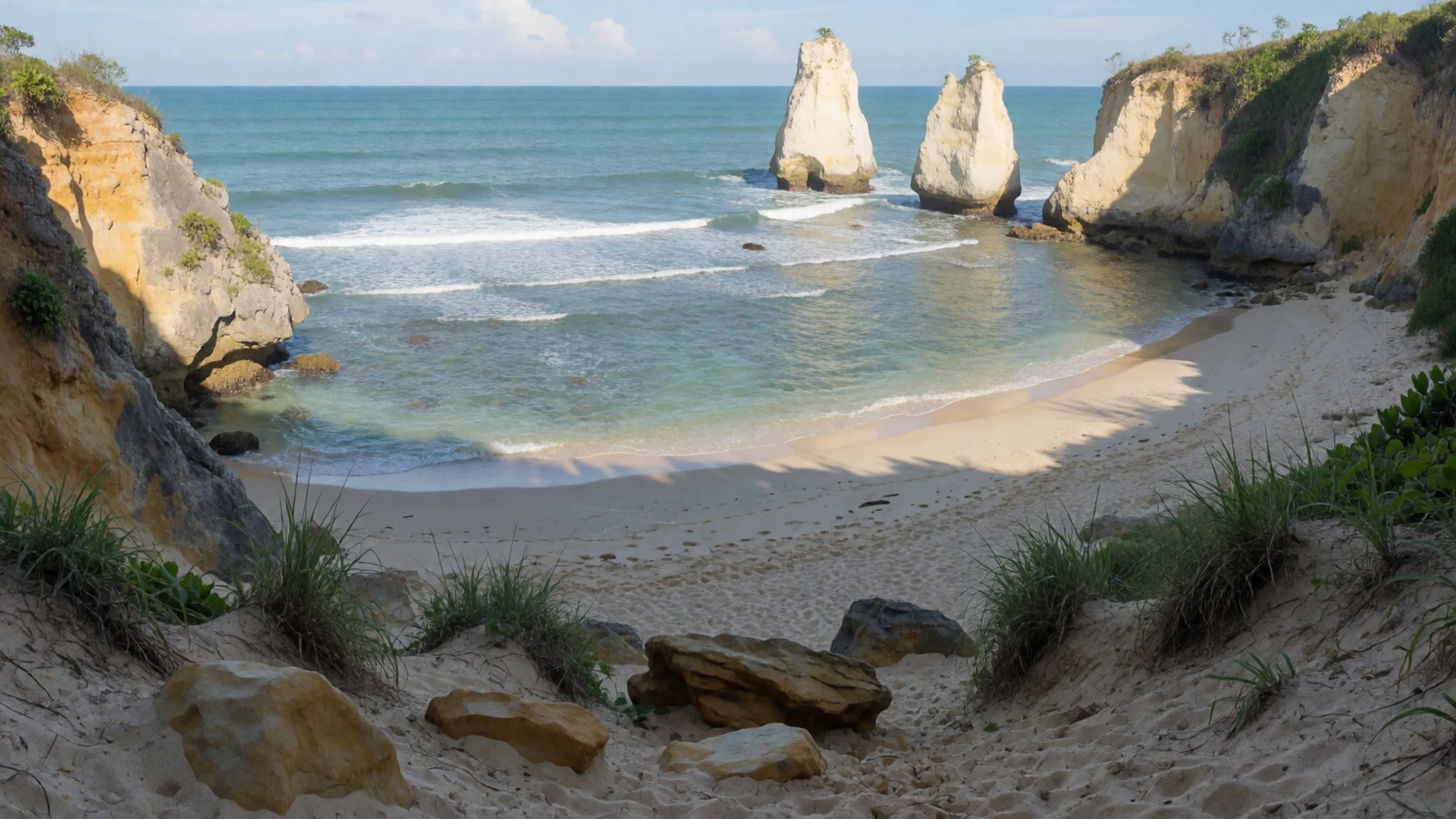
- Bako sundew — Open padang
The sundew Drosera spatulata variety bakoensis grows in open sandy patches of Bako National Park, low enough to miss if the eye stays on the horizon. Its leaves form a small rosette and catch insects on sticky hairs, a quiet plant beside the showier pitchers. The variety is named for this park, which is why patient visitors still scan the padang instead of only the view.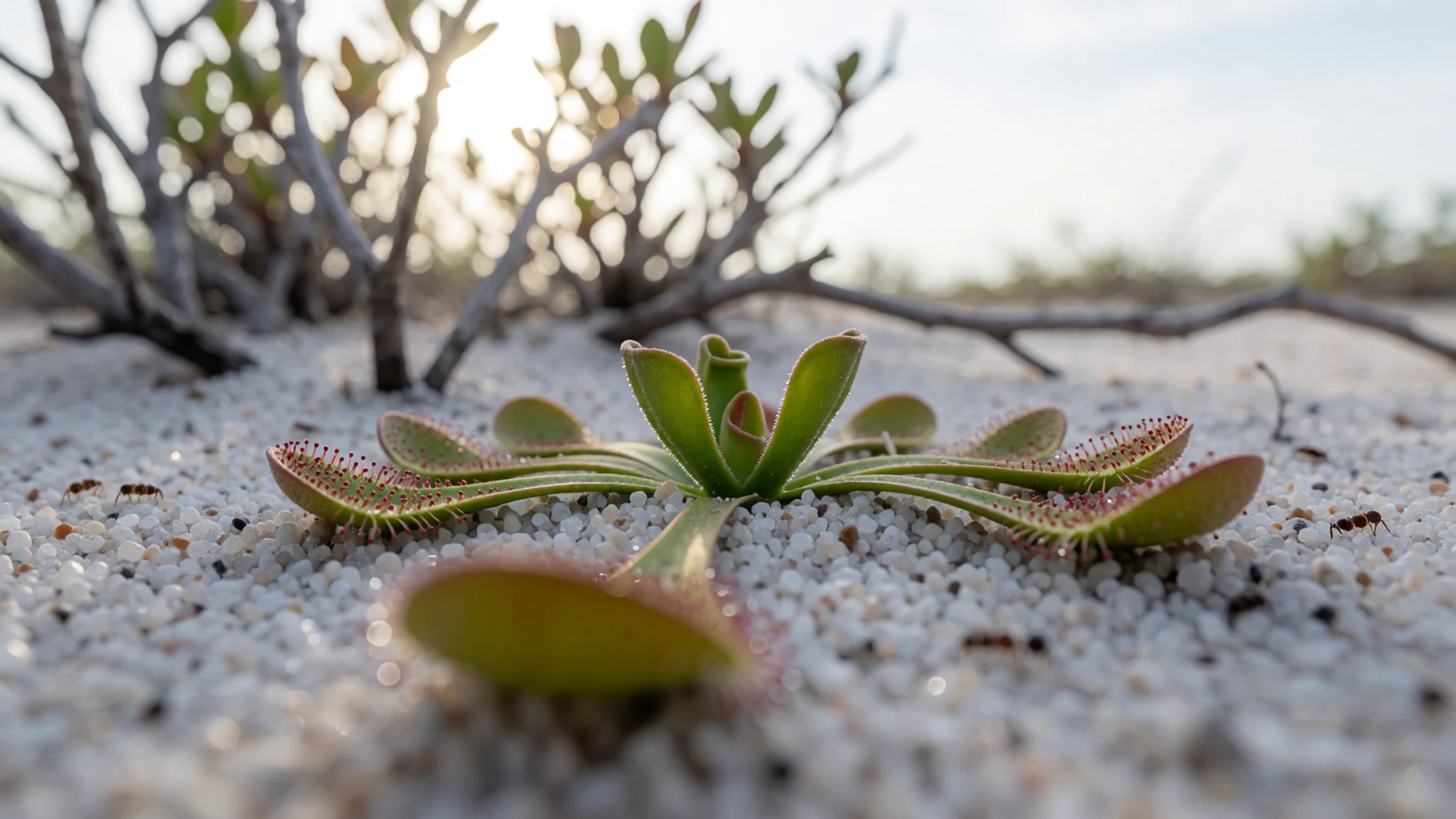
- White-chested babbler — Gully forest off the padang
White-chested babblers keep to the shaded undergrowth of Bako National Park, more often heard as a movement in the leaves than seen in the open. They favour the thicker forest along the trails that drop off the padang into gullies, where the light is low and the path is rooty. Patient standing, rather than fast walking, is what produces a clear look.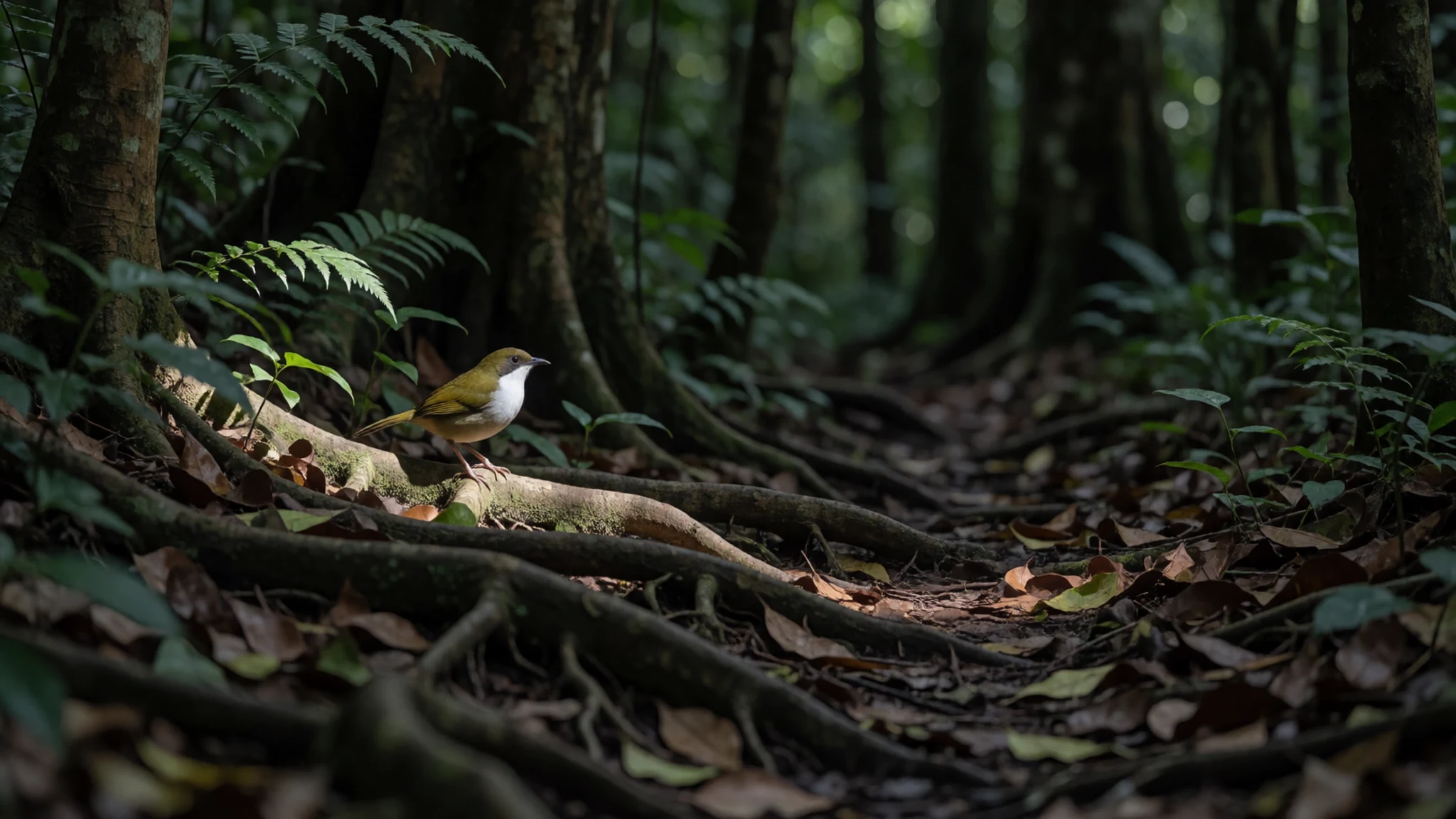
Culture
Bako National Park is held between a Malay fishing village and a forest that Sarawak chose to keep. Kampung Bako is not a theme entrance. It is a living settlement where boatmen, nets and the tide still organise the day, and the crossing to the park is work, not a ride staged for its own sake. The pace is set by weather and by people who have to come back across the same water in the afternoon. Kuching, the city most people sleep in before the boat, is the wider cultural frame: Malay, Chinese and Dayak communities share the streets, the markets and the coffee shops, and that mix is what the visitor eats, hears and walks through on either side of the park. The forest itself has no festival stage. What it asks for is a field etiquette that local guides already practise. Animals are left to feed themselves. Plants on the padang are looked at and not picked. Rubbish comes back to the village. At Bako National Park, do not feed the monkeys or step off the trail onto the pitcher plants and sundews.
What to wear
Bako National Park has no costume of its own, so the dress to understand is Sarawak's, seen in Kuching and at Kampung Bako before anyone boards the boat. Malay formal wear centres on the baju melayu for men and the baju kurung for women, often cut in songket, a silk brocade with gold or silver thread worn for weddings, Hari Raya and other ceremonies. Iban weaving, especially the pua kumbu, is a cotton textile with a strong ritual history, and Bidayuh and other Dayak communities keep their own patterns for dance and festival. On an ordinary day the jetty and the coffee shops look much like the rest of coastal Malaysia: T-shirts, football shirts, sarongs at home, hijab with practical tunics for many Malay women, sandals, and a cap against the sun. Boatmen dress for spray and for the engine, not for display. Visitors to Bako National Park should dress for heat, sudden rain and rough ground. Light, quick-drying cloth, a long-sleeve shirt for the exposed padang, and trousers that can be rolled for the wade ashore are more useful than denim. Closed shoes with a grip beat sandals on roots and sandstone; a pair that can survive wet feet is worth packing. Swimwear makes sense on the coves and should be covered in the village. A hat and a light rain layer matter more than a change of smart clothes.
What to eat
- Sarawak laksa — Kuching coffee shops
Sarawak laksa is the breakfast bowl to know before a day at Bako National Park, and Kuching's coffee shops are where it is served. Rice vermicelli sits in a spiced prawn-and-coconut broth, with chicken, omelette strips, bean sprouts and a calamansi lime on the side.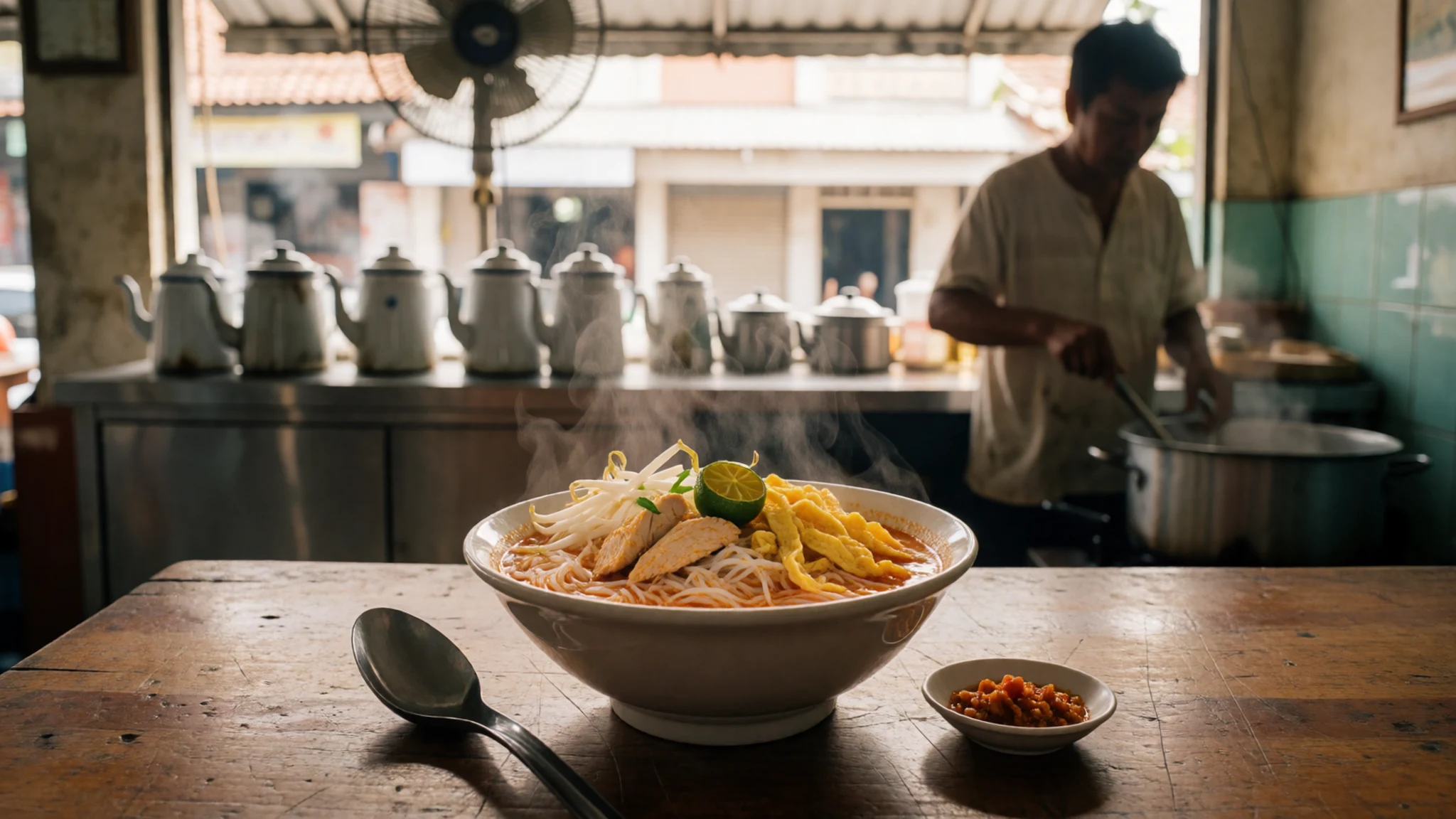
- Kolo mee — Kuching coffee shops
Kolo mee is the other Kuching morning staple, useful on the way back from Bako National Park when a hot soup feels like too much. Springy egg noodles come tossed with minced pork or chicken, shallot oil and slices of char siu.
- Midin belacan — Kuching markets and coffee shops
Midin is a wild fern that turns up constantly on Sarawak tables and is the green vegetable to order around a trip to Bako National Park. The young fronds are stir-fried fast with belacan, the fermented shrimp paste, and sometimes garlic and chilli. - Ayam pansuh — Dayak eateries in Kuching
Ayam pansuh, also called manok pansuh, is chicken cooked in a bamboo tube, an Iban dish that visitors meet in Kuching rather than on the trails of Bako National Park. The meat is sealed with lemongrass, ginger and tapioca leaves and cooked until the bamboo smells sweet. - Umai — Seafood stalls in Kuching
Umai is Sarawak's raw-fish salad, a coastal dish that fits a park reached by boat, and it is easier to find in Kuching than inside Bako National Park. Fresh fish is sliced thin and mixed with lime, chilli, onion and salt, sometimes with a little sago.
Plan it
Best time. Bako National Park is kinder to walk in the drier stretch of the year, when showers are shorter and the boat from Kampung Bako is less often turned back. Rain can fall in any month. The wetter turn of the year brings heavier storms and a rougher landing on the beach at Telok Assam.
How long. 2–3
Getting there. Fly into Kuching, then take the road to Kampung Bako. A boat covers the last stretch to the beach headquarters of Bako National Park; there is no road in.
Budget. mid
Tips
- Reserve a boat, and a chalet if staying overnight, ahead of local holidays, and keep a spare day in case the sea is too rough to cross.
- Take the earliest boat and walk the padang before the full heat of the day.
- Carry more drinking water than feels necessary; the plateau is exposed and the trails have no shop.
- Bring cash for the boatmen and for small meals; do not rely on cards at the village jetty.
- Zip bags and close chalet doors against long-tailed macaques.
Etiquette
- Do not feed monkeys or other wildlife.
- Keep to the trails and leave pitcher plants and sundews unpicked.
- Ask before photographing people in Kampung Bako, and keep voices low when animals are near the boardwalk.
Nearby
Sources
- Wikidata: Bako National Park (CC0)
- Wikipedia: Bako National Park (CC BY-SA 4.0)
- Wikivoyage: Bako National Park (CC BY-SA 4.0)
Wildlife
- Proboscis monkey (animal)
The proboscis monkey is the big-nosed, round-bellied monkey that looks as if it has just finished an enormous dinner. It has reddish-brown skin and a long tail, and it lives only on the island of Borneo. At Bako, look for it feeding among the mangroves and in the trees behind the park headquarters, especially when the air is cooler. Keep well back, speak softly, walk with a guide, and never offer food.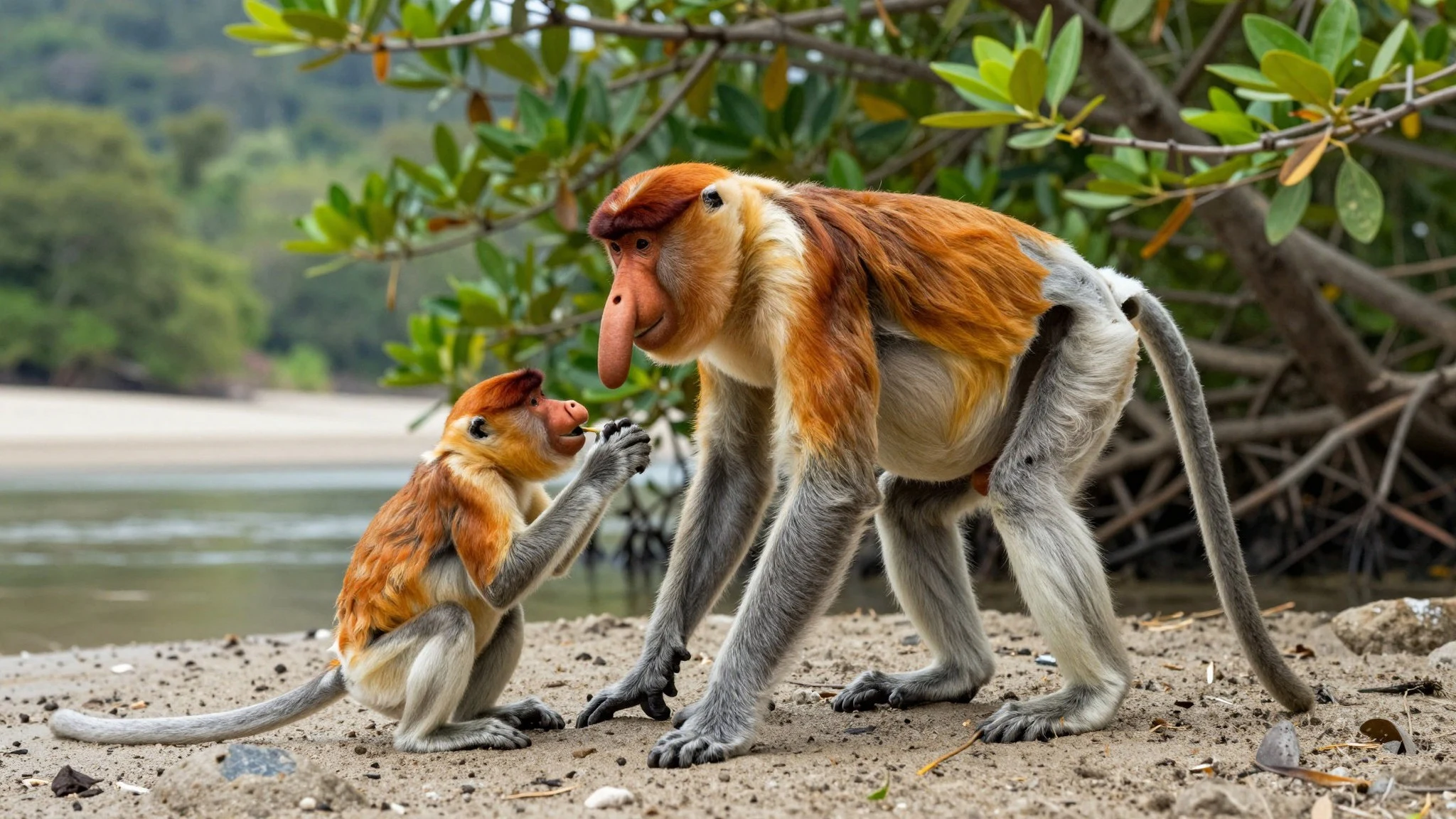
- White-chested babbler (animal)
Think of the white-chested babbler as a bird that would rather hide in the leaves than perform. Part of the ground babbler family, it lives in the undergrowth at Bako, where a small movement in the foliage is often your only clue. The notes say nothing of season or time of day. Watch patiently and quietly from a respectful distance, let a guide help you find it, and never offer it food. - White-chested babbler (bird)
Think of the white-chested babbler as a bird that would rather hide in the leaves than perform. Part of the ground babbler family, it lives in the undergrowth at Bako, where a small movement in the foliage is often your only clue. The notes say nothing of season or time of day. Watch patiently and quietly from a respectful distance, let a guide help you find it, and never offer it food.