Ipoh
Ipoh, Malaysia
Ipoh pairs tin-fortune shophouses and limestone cave temples with generous noodle bowls, an easy stop between Kuala Lumpur and George Town.
The place
Ipoh is the capital of Perak, a state in the middle of Peninsular Malaysia, and it sits on the Kinta River at about 22 m above sea level. The city has a population of roughly 867,000, which makes it large but noticeably calmer than Kuala Lumpur to the south or George Town to the northwest. Limestone hills rise suddenly from the flat valley floor around the northeast, east and southeast edges of town. Geologists call these isolated towers mogotes, and several hold caves with Buddhist temples built inside them. The Keledang range runs along the northern and western sides. Two smaller streams, the Pinji and the Pari, join the Kinta here, which helps explain why a settlement grew on this spot. The centre divides roughly in two: the Old Town on the western bank, with shophouses, colonial buildings and narrow lanes, and the New Town across the river, with wider streets and more recent shopfronts. Ipoh lies on both the West Coast railway line and the North–South Expressway, so it works as a natural halt between the capital and Penang, and many people treat it as a long-weekend break. Heat and humidity are constant, and afternoons are best spent in a café, a cave or a museum. Sultan Azlan Shah Airport serves the city, though most visitors arrive overland from Kuala Lumpur or Penang.
Its story
Ipoh began as a village, and tin turned it into a city. When rich deposits were found in the Kinta Valley in the 1880s, miners and traders poured in, among them Hakka Chinese, and the settlement swelled around the river. In 1892 a great fire destroyed over half the town, yet the rebuilding that followed laid the streets out in a tidier grid than before. Tin money kept flowing, paying for shophouses, clubs and mansions. A Hakka miner turned millionaire, Yau Tet Shin, began developing the New Town on the eastern bank of the Kinta, stretching as far as Greentown. In 1937 Ipoh replaced Taiping as the capital of Perak. War arrived on 15 December 1941, when Japanese forces invaded, and the occupiers later based their civil administration for Perak at St. Michael's Institution, a school. After liberation the city kept its status as state capital. Then the tin ran low and prices collapsed in the 1970s, and Ipoh went through decades of decline and neglect. One odd result is that many old buildings survived simply because nobody could afford to replace them. Conservation efforts have since revived the colonial-era streets, and that restored character is a large part of why travellers now return to a city that once looked finished.
What to see
- Ipoh Railway Station — Old Town, near the Town Hall
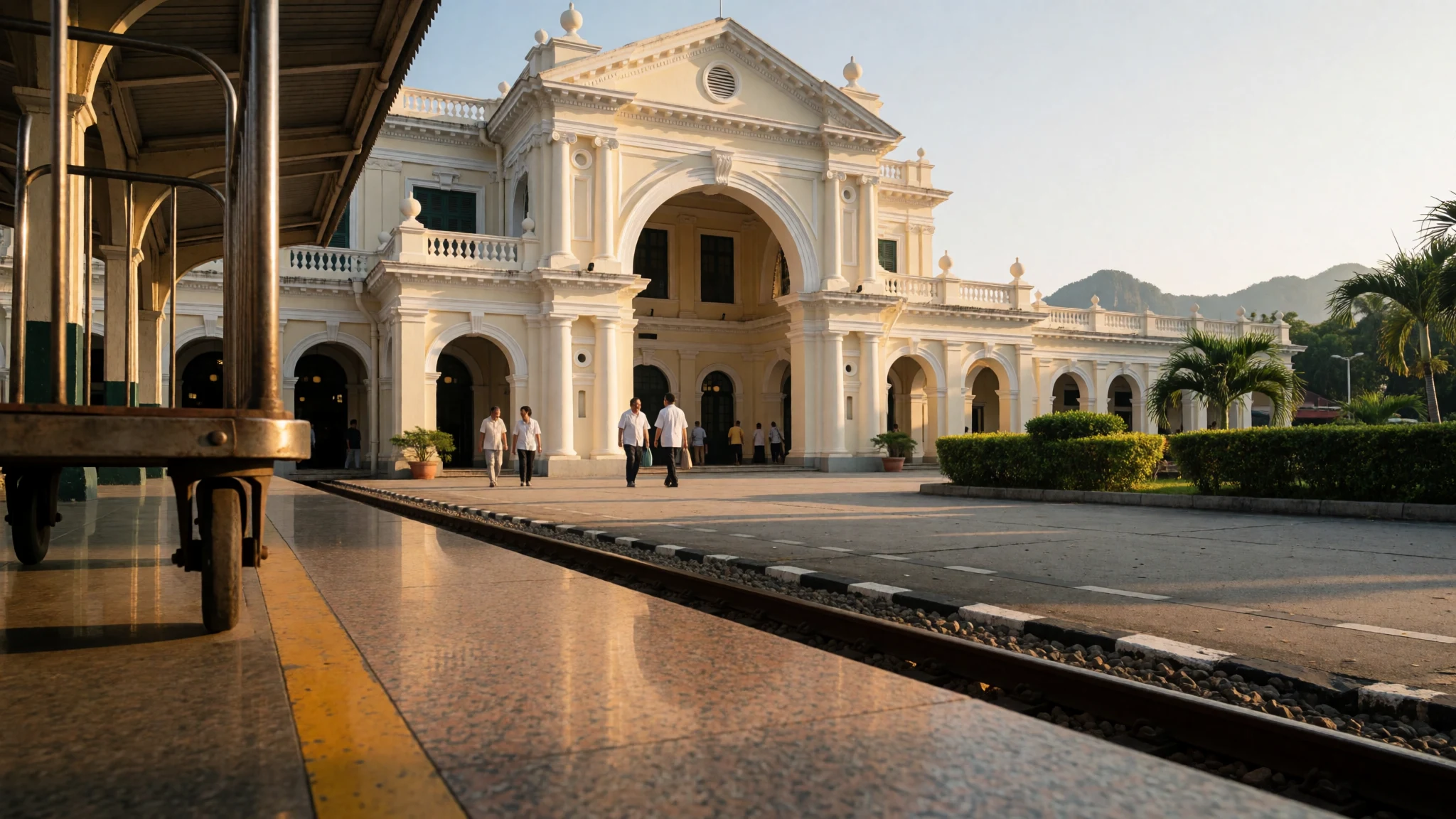
Ipoh Railway Station is a colonial-era building of white arches and domes that locals affectionately call the Taj Mahal of Ipoh. It is one of three grand stations the British built on the old Malayan network. Electric ETS trains still pull in here, so it is both a sight and a working station, and weekends can be crowded.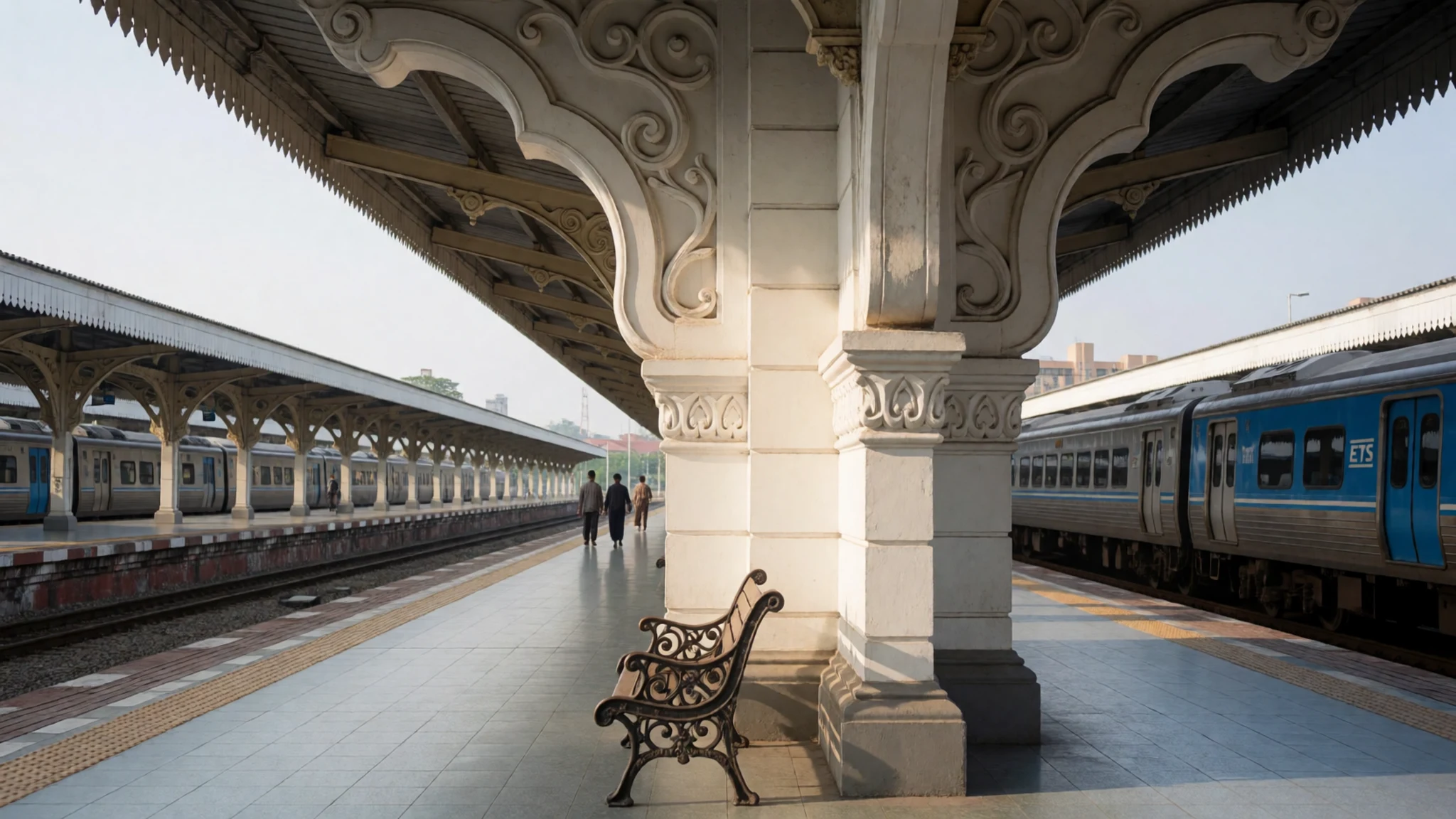
- Ipoh Town Hall and Law Courts — Opposite the railway station
Ipoh Town Hall and the Law Courts face the railway station across the road, both in a neoclassical style with columns and symmetrical fronts. Together with the station they make a compact colonial group, easy to photograph in early light before traffic and heat build. They are working civic buildings, so admire them from outside.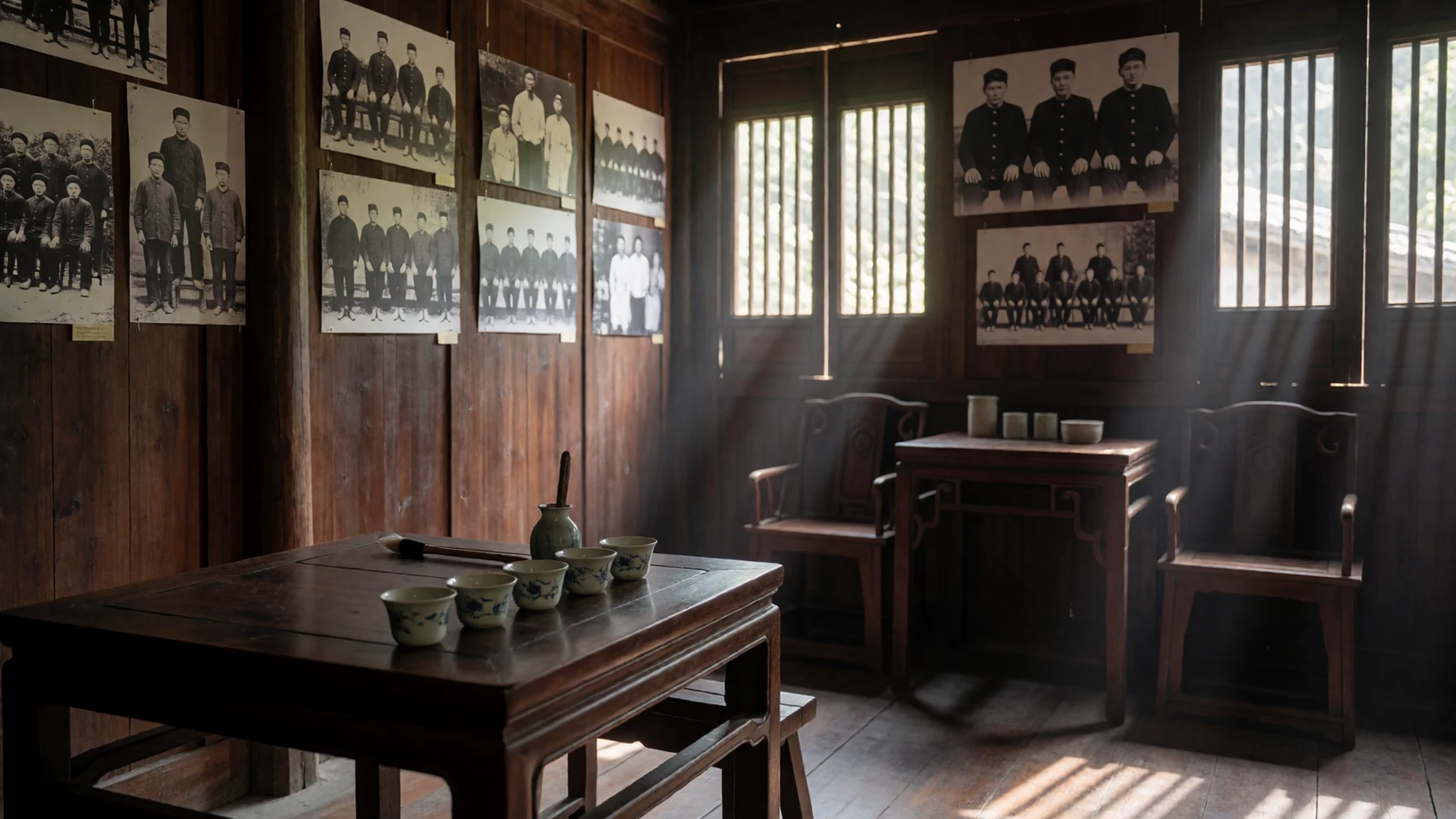
- Han Chin Pet Soo — Old Town
Han Chin Pet Soo is a carefully restored Hakka miners' club in the Old Town. It documents the lives of tin miners who lived far from home and had money to spend on leisure. It is a good place to understand what paid for the shophouses outside. Check current opening arrangements locally before going.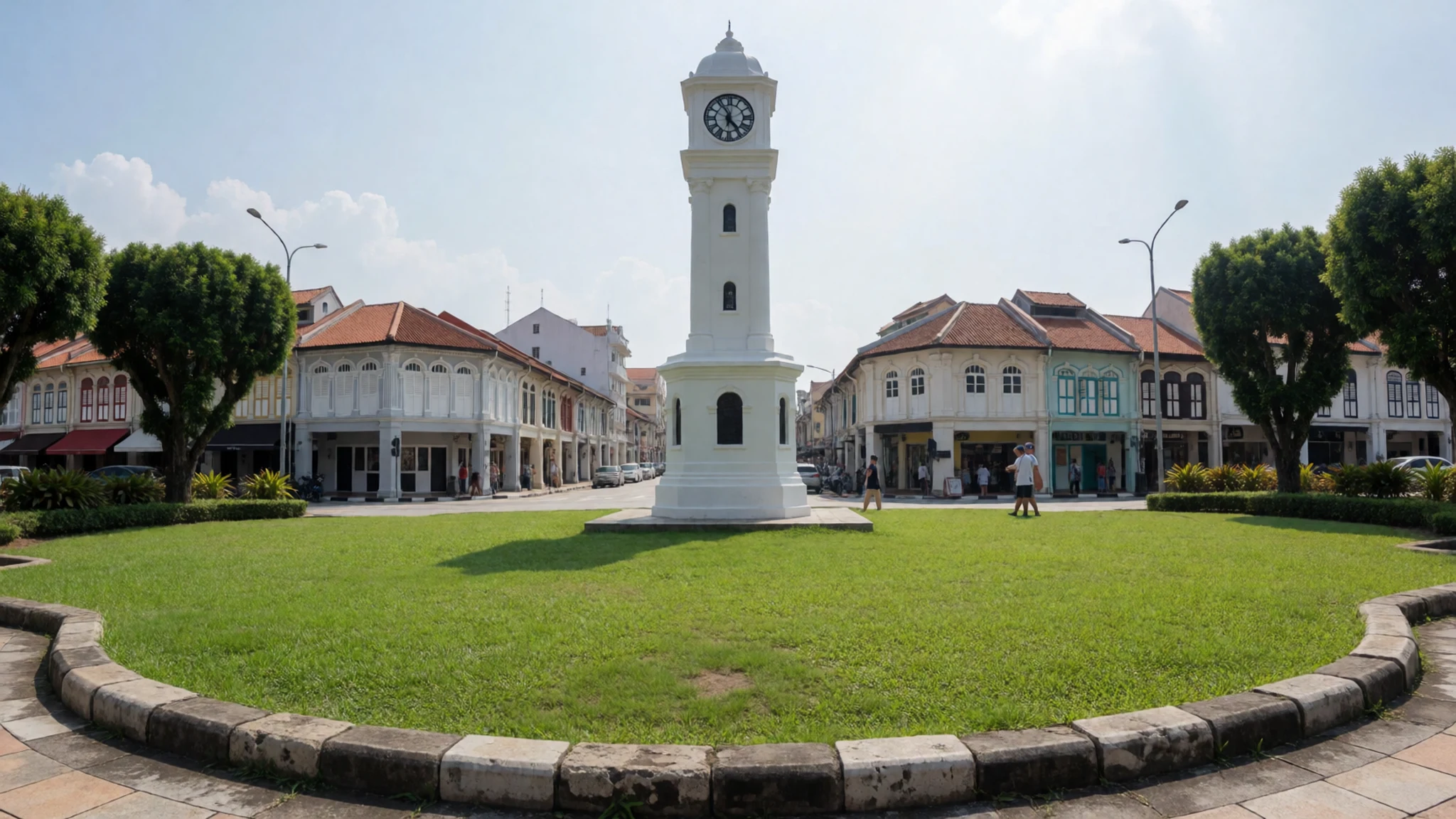
- Muzium Darul Ridzuan — North of the Old Town
Muzium Darul Ridzuan is a history museum of Perak housed in the former mansion of a tin-mining tycoon. The building is as much the draw as the displays, showing how Kinta Valley wealth shaped domestic architecture. It makes a sensible indoor stop in the hottest part of the afternoon.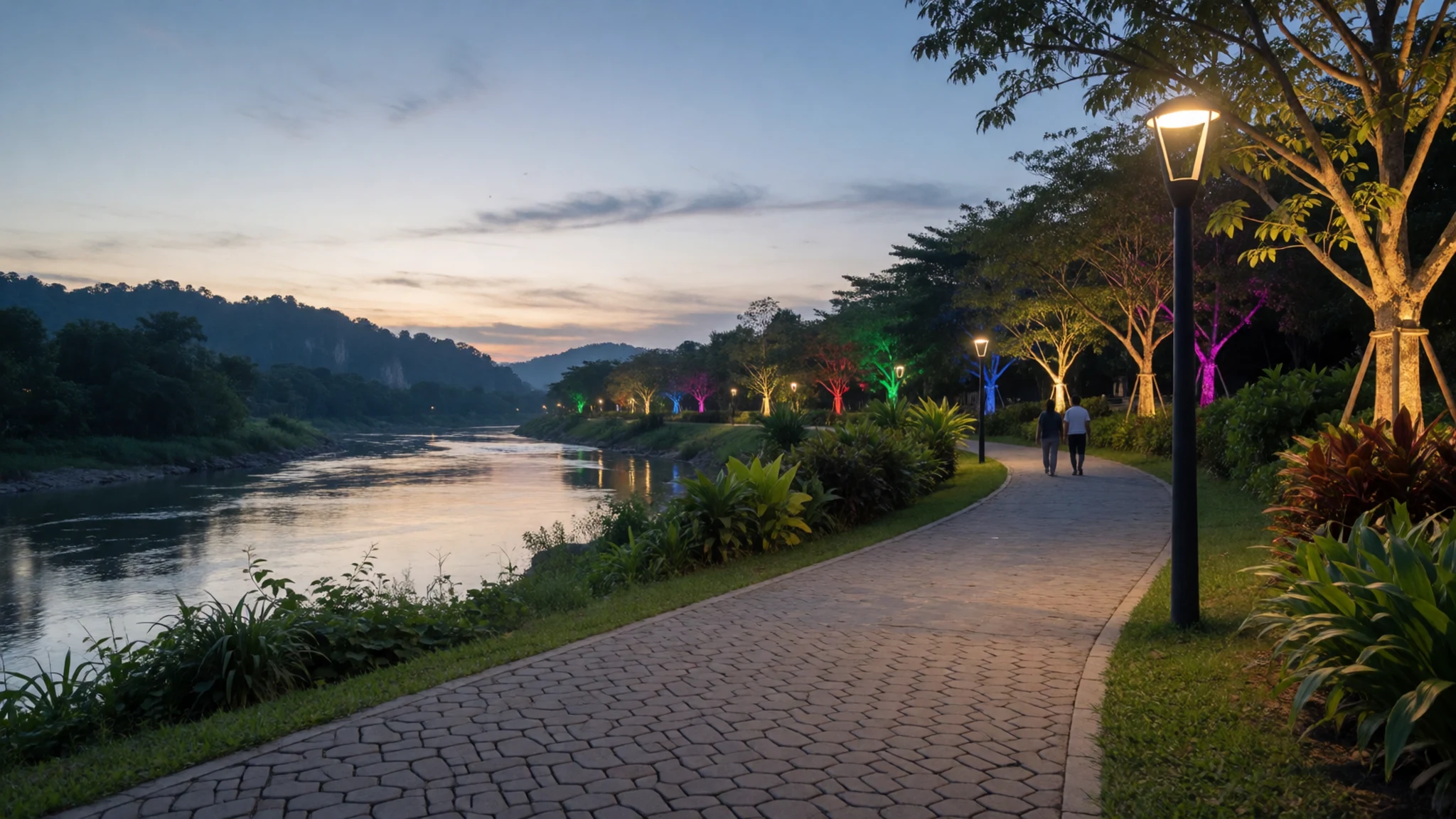
- Padang Ipoh — Town centre
Padang Ipoh is a broad lawn in the centre of town, laid out by the British as a cricket ground for the Ipoh Club, which then admitted only white members. The grass is still green and open, ringed by colonial buildings, and it is a useful spot to get oriented and read the layers of the city's past.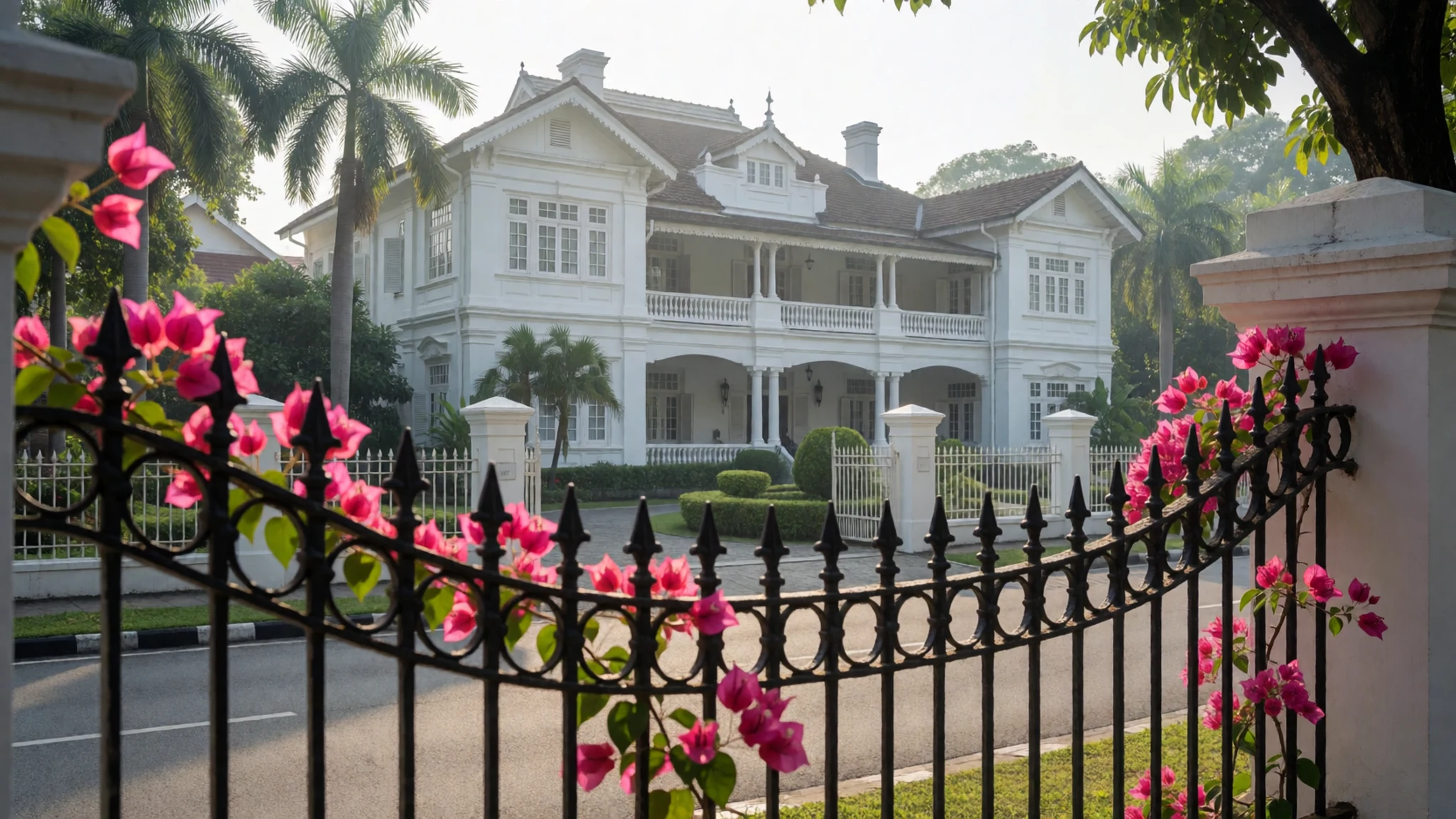
- Kinta Riverfront Walk — Along the Kinta River
The Kinta Riverfront Walk follows the river that gave the valley its name. Evening suits it better: the heat eases, trees along the bank are lit up, and the path becomes a quiet stroll between the Old Town and the newer streets. Keep to well-lit sections after dark.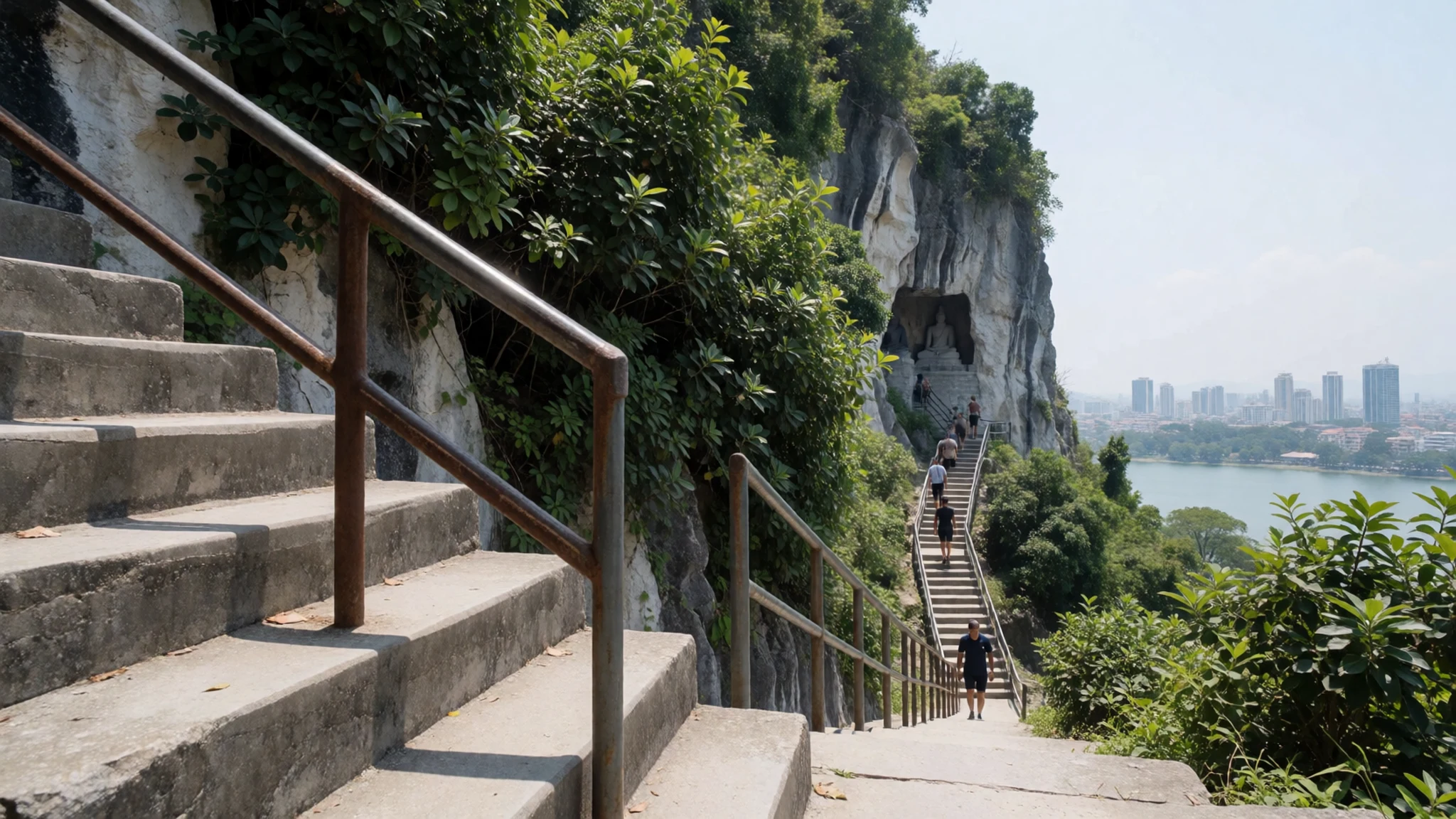
Culture
Ipoh's culture is a layered mix of Malay, Chinese and Indian traditions, and it shows most plainly at the table, in the temples and along the shophouse streets. The tin boom brought Hakka and other Chinese miners and traders, whose clubs, clan houses and temples still shape the Old Town; Han Chin Pet Soo is one example. Many of the city's Buddhist temples were built inside the limestone caves ringing the town, so visiting a shrine often means climbing steps into cool, dim rock. Malay life centres on mosques, family gatherings and festival seasons, while Indian communities add their own temples, sweets and festivals. Ipoh has also served as a film location, appearing in productions such as Indochine, Sepet and Lust, Caution, drawn by its old streets and colonial façades. For green space, locals use Coronation Park, the Polo Ground recreation park and the forest eco parks at the edge of the city, and families head to Sunway Lost World of Tambun for a theme-park day. The daily rhythm is relaxed: coffee shops fill early, shops slow in the heat, and evenings are for eating outdoors. At cave temples and mosques, remove your shoes where others do, keep shoulders and knees covered, speak quietly and ask before photographing worshippers.
What to wear
Ipoh's traditional dress follows the communities who live here. Malay women wear the baju kurung, a long loose tunic over a matching skirt, in cotton or silk, and many add a tudung headscarf; men wear the baju Melayu, a loose shirt and trousers, sometimes with a songket sampin, a short wrapped cloth woven with gold or silver thread. Batik, wax-resist dyed cotton, is common for both everyday and formal shirts. Chinese families bring out the cheongsam and embroidered silk jackets at Lunar New Year and weddings, while Indian communities wear saris, salwar kameez and kurtas, especially at Deepavali and temple festivals. These outfits appear at Hari Raya, weddings and festivals; the rest of the year people dress for a hot, humid climate in light cotton shirts, T-shirts, knee-length skirts or trousers, and sandals. Office workers dress neatly but lightly. Visitors should pack breathable fabrics such as cotton or linen, with a light scarf or shawl for covering shoulders and trousers or a skirt reaching the knee for temples and mosques. Footwear matters: shoes with good grip for wet cave steps and uneven pavements, and sandals that slip off easily at doorways. Bring a compact umbrella or rain jacket and sun protection; shorts are fine around town but not inside religious buildings.
What to eat
- Hor fun with fishballs — Old Town noodle shops and traditional coffee shops
Hor fun is a bowl of wide, slippery rice noodles in a clear, light soup, with fishballs, fish cakes and fish-paste dumplings alongside. It is a typical morning or lunch dish, eaten at plain tables with chopsticks and a spoon.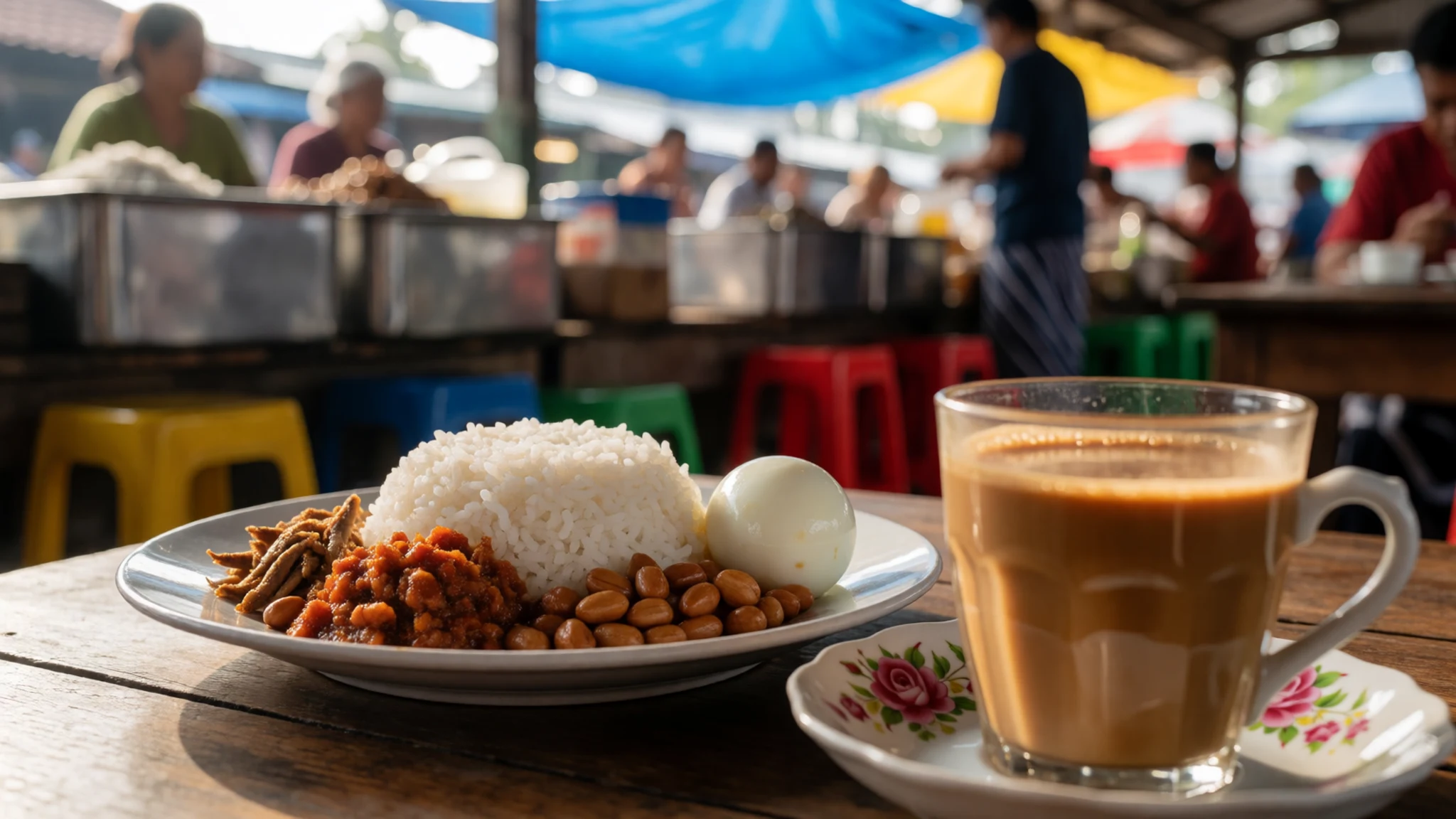
- Dry curry noodles — Old Town noodle shops
Dry curry noodles come without broth: the noodles are tossed, then topped with roast pork, chicken and prawns, and a ladle of thick, spiced curry gravy goes over everything. It is a filling lunch, best eaten before the afternoon heat sets in.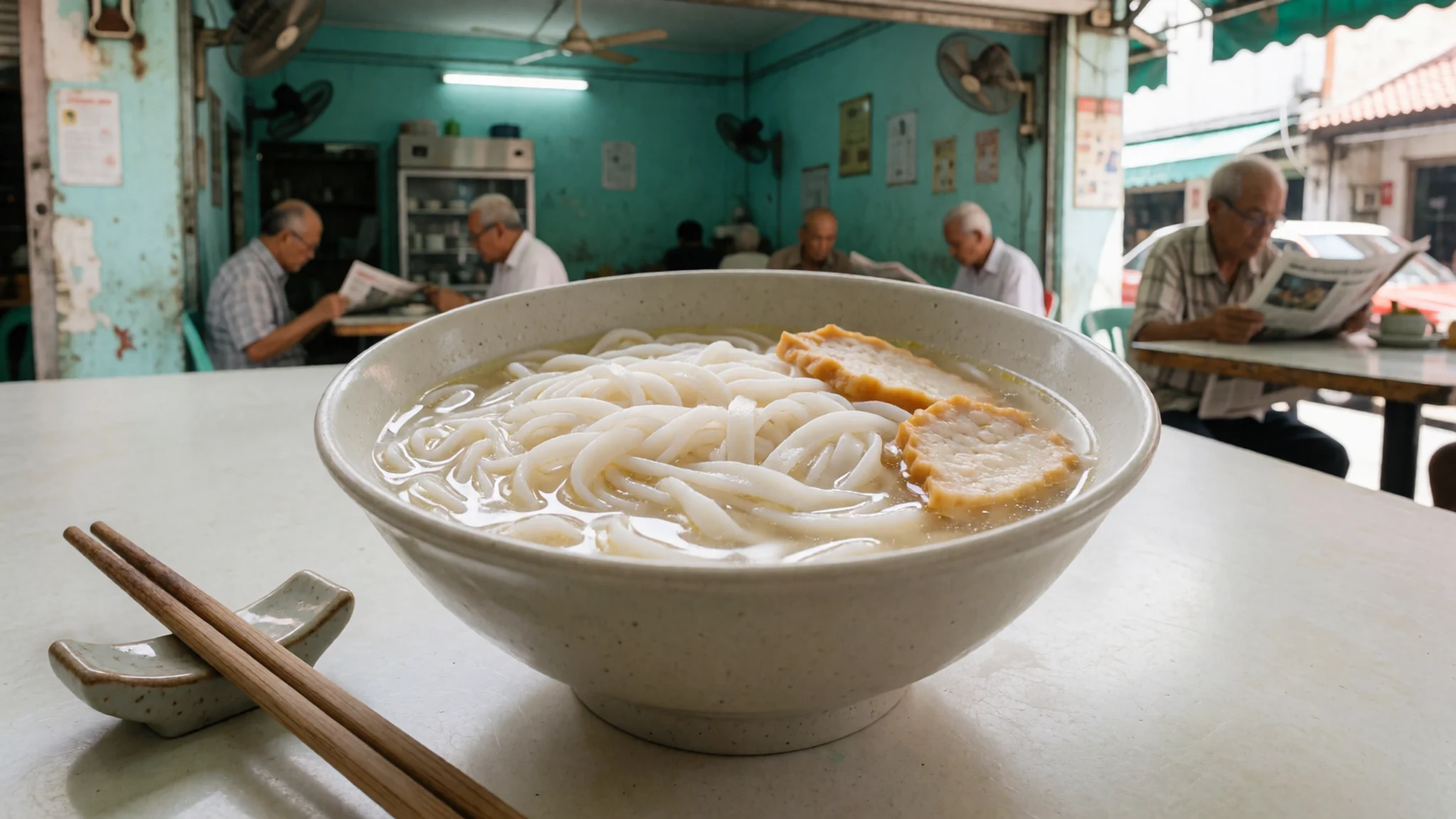
- Yong tau foo — Noodle stalls and hawker centres across town
Yong tau foo is vegetables and tofu stuffed with fish paste, served in soup or dry beside a bowl of noodles. Diners pick pieces from a counter, so it suits groups who like to mix and choose. - Chinese breakfast pastries — Neighbourhood bakeries away from the main tourist streets
Savoury Chinese breakfast pastries such as prawn fritters and pork buns are the kind of snack locals pick up early with strong coffee. Bakeries away from the main tourist streets tend to keep older recipes, so a short detour pays off. - Vegetarian rice with mock meat — Chinese vegetarian eateries in the Old Town and New Town
Chinese vegetarian rice plates pair rice with a choice of toppings, including mushrooms and mock meat made from soy or wheat. Visitors who avoid meat will find the choice wide, and the cooking is simple and homely.
Plan it
Best time. Ipoh is hot and humid all year, so the choice is about rain rather than cool weather. January–February and June–July are usually the drier spells; at other times expect heavy afternoon downpours, so carry an umbrella whatever the month.
How long. 2
Getting there. Most visitors fly into Kuala Lumpur or Penang, which have larger airports, then continue overland; Sultan Azlan Shah Airport also serves Ipoh directly. ETS trains run from Kuala Lumpur to Ipoh Railway Station, in the centre; check KTM for timetables and fares. Long-distance buses use Terminal Amanjaya north of the city, from where a local bus runs to the centre and needs a Touch 'n Go card.
Budget. low
Tips
- Do sightseeing and cave visits in the morning and keep the hottest part of the afternoon for museums, cafés or a rest
- The railway station area can be crowded and jammed with traffic at weekends, so allow extra time
- Carry some cash for hawker stalls and small bakeries, and keep a water bottle with you
- Walk the Kinta riverfront in the evening, when it is cooler and the trees are lit
- For local information, check the city council's official site at https://mbi.gov.my
Etiquette
- Remove shoes at cave temples and mosques wherever others have done so
- Cover shoulders and knees for religious sites and keep your voice low
- Ask before photographing worshippers or people at work
Nearby
Sources
- Wikidata Q271619 (CC0)
- Wikipedia: Ipoh (rev 1386164826) (CC BY-SA 4.0)
- Wikivoyage: Ipoh (rev 5430260) (CC BY-SA 4.0)
- Photo: Ipoh 62, Adiyon84 (CC BY-SA 2.5)
- Photo: Ipoh skyline, HundenvonPenang (CC BY-SA 4.0)
- Photo: Ipoh Town, Marufish (CC BY-SA 2.0)
- Photo: St. Michael's Institution, Bvs (Public domain)
- Photo: Ipoh Train Station At Night, Leonardo0511 (CC BY-SA 4.0)
- Photo: City Hall Building, Fairuskhafiz (CC BY-SA 4.0)
- Photo: Landmark of Ipoh, Insankerdilmahubersuara1993 (CC BY-SA 4.0)
- Photo: Gunung Lang, Colourportal (Public domain)


