Kinabatangan River
Kinabatangan River, Malaysia
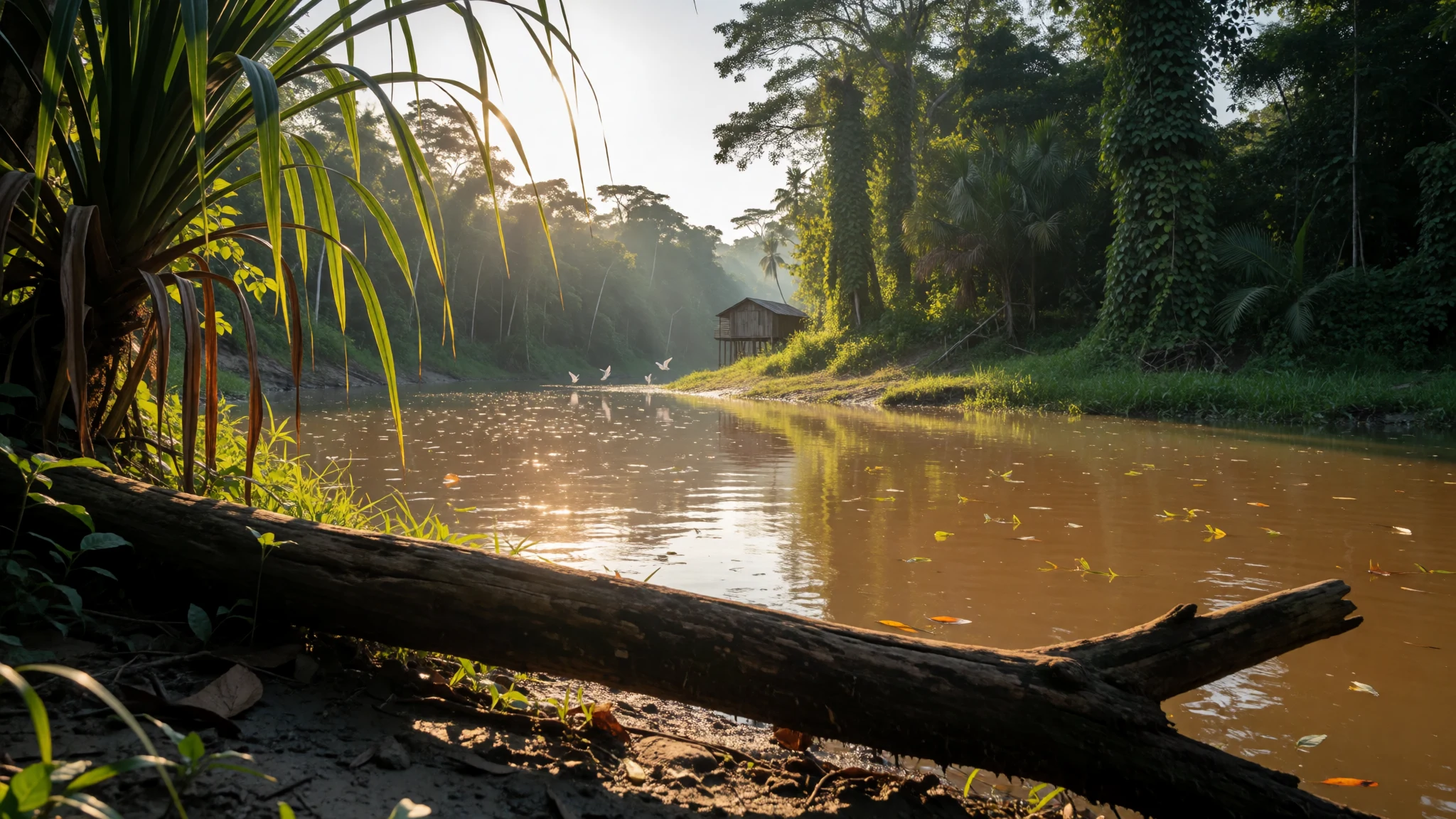
The Kinabatangan River is where Sabah's floodplain forest still puts orangutans, proboscis monkeys and pygmy elephants on the same brown water.
The place
The Kinabatangan River rises in the mountains of southwest Sabah and wanders, slow and tea-coloured, across a wide floodplain before it meets the Sulu Sea east of Sandakan. In its lower reaches the channel bends into oxbow lakes, side creeks and quiet backwaters, with nipah and tall riverside trees on the banks and, beyond them, a patchwork of remaining forest and oil-palm estates. Villages of the Orang Sungai, the people of the river, sit on stilts above the water, and small boats are still the ordinary way from a jetty to a lodge, a garden or a neighbouring house. The water rises and falls with the rains: in drier months the banks show more mud and the forest edge is easier to read from a boat; after heavy rain the river spreads into the floodplain and some tracks become boat routes. This is not a waterfall or a mountain lake. It is a working tropical river, warm, humid and often hazy at midday, with kingfishers, hornbills and monitor lizards as ordinary company and, if the timing is kind, orangutans in the canopy, proboscis monkeys in the riverside trees and Bornean pygmy elephants on the fringe between forest and field. The bridge near Batu Tulug gives a high, wide view of the channel; most of the river is seen from water level, where the banks feel close and the forest noise carries.
Its story
The Kinabatangan River has long been a road that happens to be water. Communities along it — Orang Sungai in the lower settlements, and inland neighbours whose trade reached the river — moved rice, forest goods, fish and news by boat long before a road linked the east coast to the rest of Sabah. Sandakan grew as the coastal town where river traffic met the sea, and the Kinabatangan stayed the route into an interior known along its water more than along its roads. In living memory the same access that had carried boats began to carry logging, then oil palm. Large stretches of lowland forest were cleared, and what remains along the lower river is a narrower ribbon of trees, swamp and oxbow, pressed against estates. That ribbon is why the wildlife is so visible: orangutans, proboscis monkeys and pygmy elephants still use the forest that follows the water, and a boat on the main channel or a tributary such as the Menanggul can pass close to them because the habitat has been squeezed towards the banks. A wildlife sanctuary was later set aside in pieces along this floodplain, and villages, lodges and rangers now share the job of keeping the corridor from breaking. Plantations, floods, and the pressure of visitors all sit on the same bends. Travellers who come for the animals are also looking at a river that still feeds people, and at a forest that survives because someone kept arguing for the trees between the palms.
What to see
- A boat on the lower river — Sukau and Bilit jetties
The Kinabatangan River opens up from a small boat on the lower channel, setting out from a jetty near Sukau or Bilit. The water is wide and brown, the banks low, and side creeks slip off into darker shade. Early and late in the day the forest edge is busy; at midday the heat sits on the water and the animals retreat into the leaves.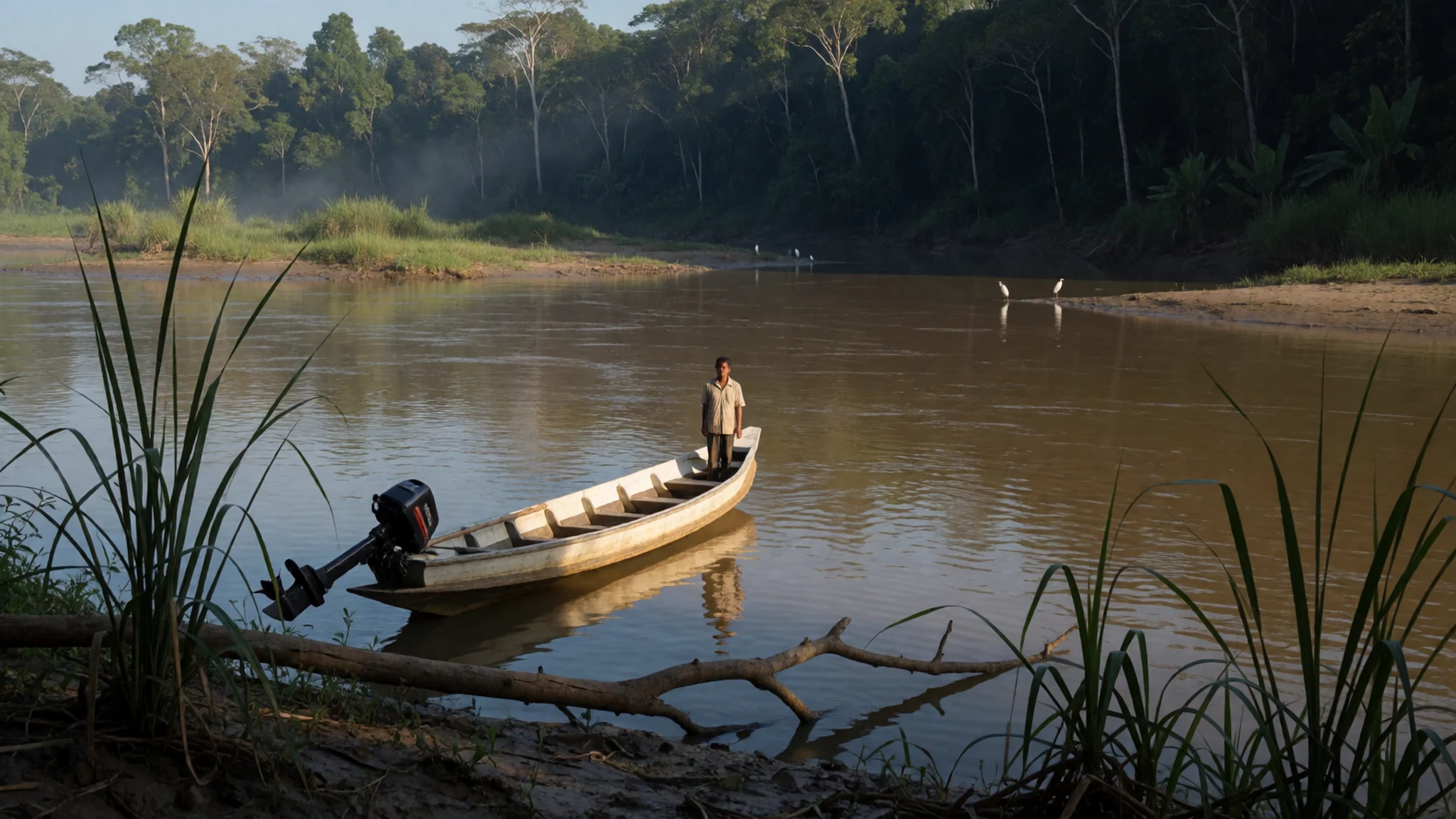
- Proboscis monkeys — Forested banks of the lower river
Proboscis monkeys keep to the trees along the Kinabatangan River, especially where the bank is still forest rather than plantation. The males are unmistakable, with a long nose and a heavy belly, and the troops move as a group, leaping between branches and sometimes dropping close to the water. Boats drift and cut the engine so the animals can feed without a chase.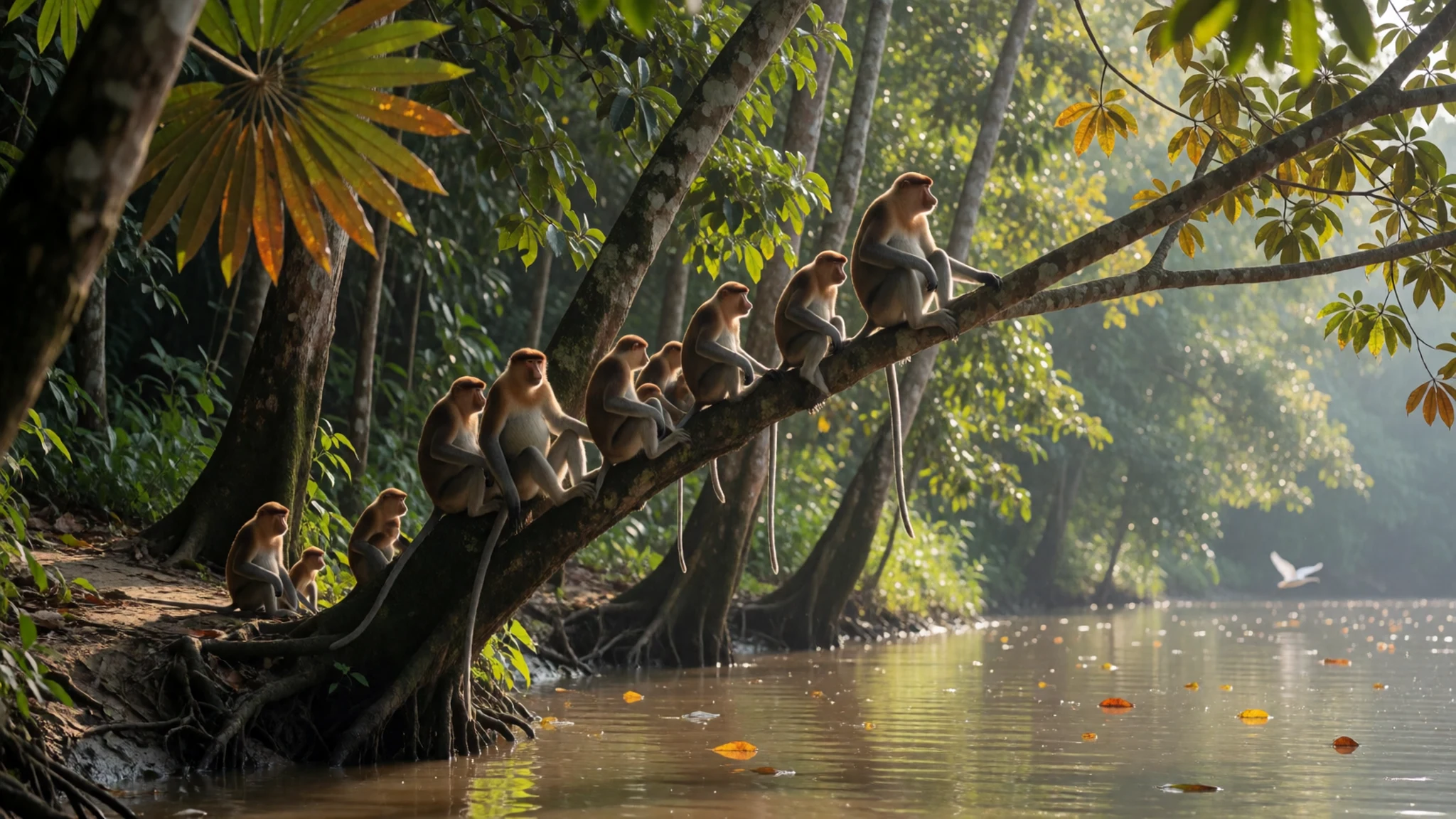
- Orangutans — Canopy along the lower river
Orangutans appear along the Kinabatangan River as rust-coloured shapes in the canopy, often a mother with a young one holding on. They use the thin strip of forest that still follows the water, so a boat can come close while the animal stays high and unhurried. Guides look for nests and for branches moving against the still ones.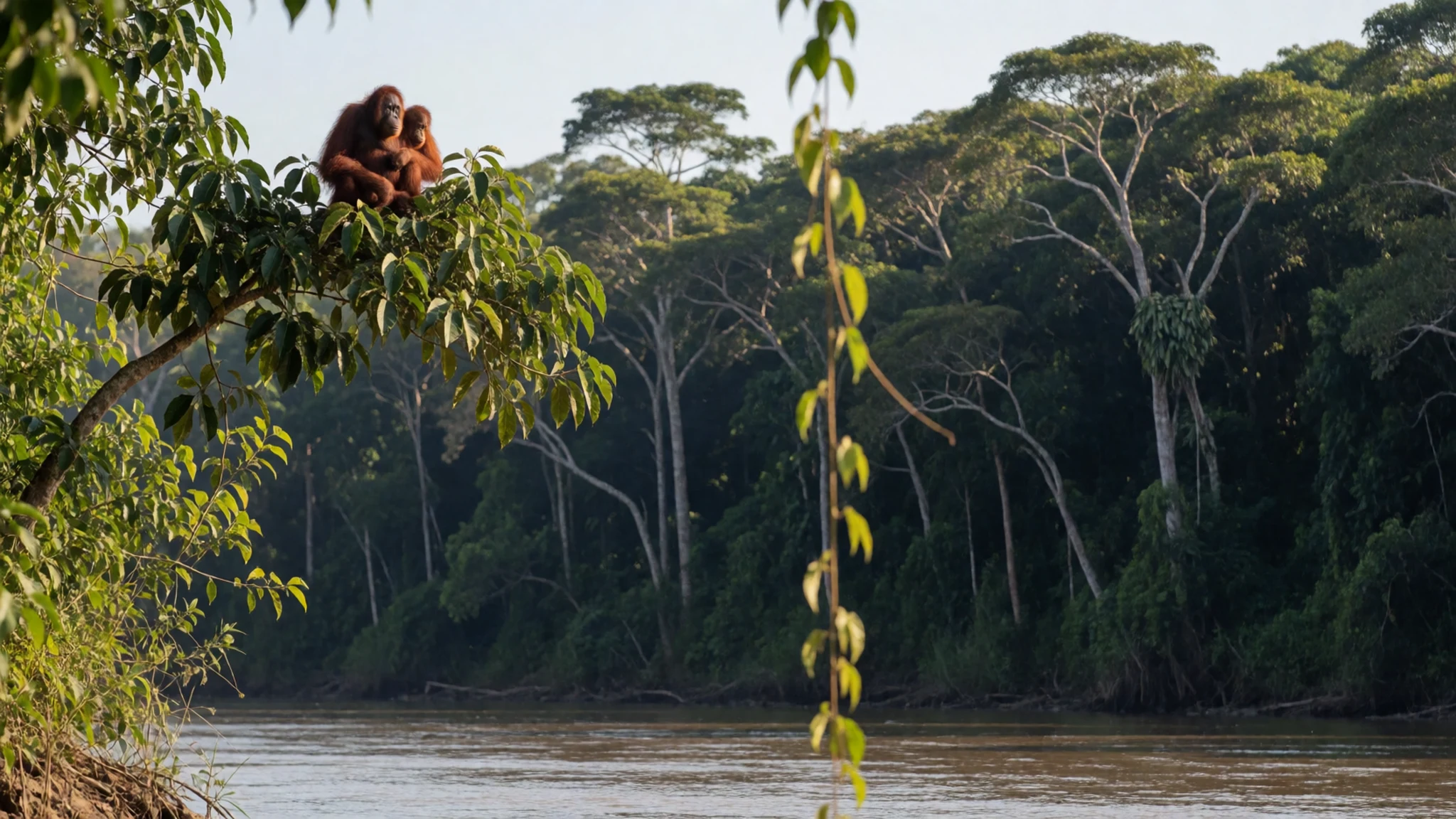
- Bornean pygmy elephants — Floodplain edges and farm margins
Bornean pygmy elephants use the Kinabatangan River floodplain as a corridor between forest patches and the edges of farms. A herd may be feeding in tall grass beside a field, or filing along a side track, with calves kept in the middle of the group. They are part of the same riverside day as the monkeys, not a separate park with a gate.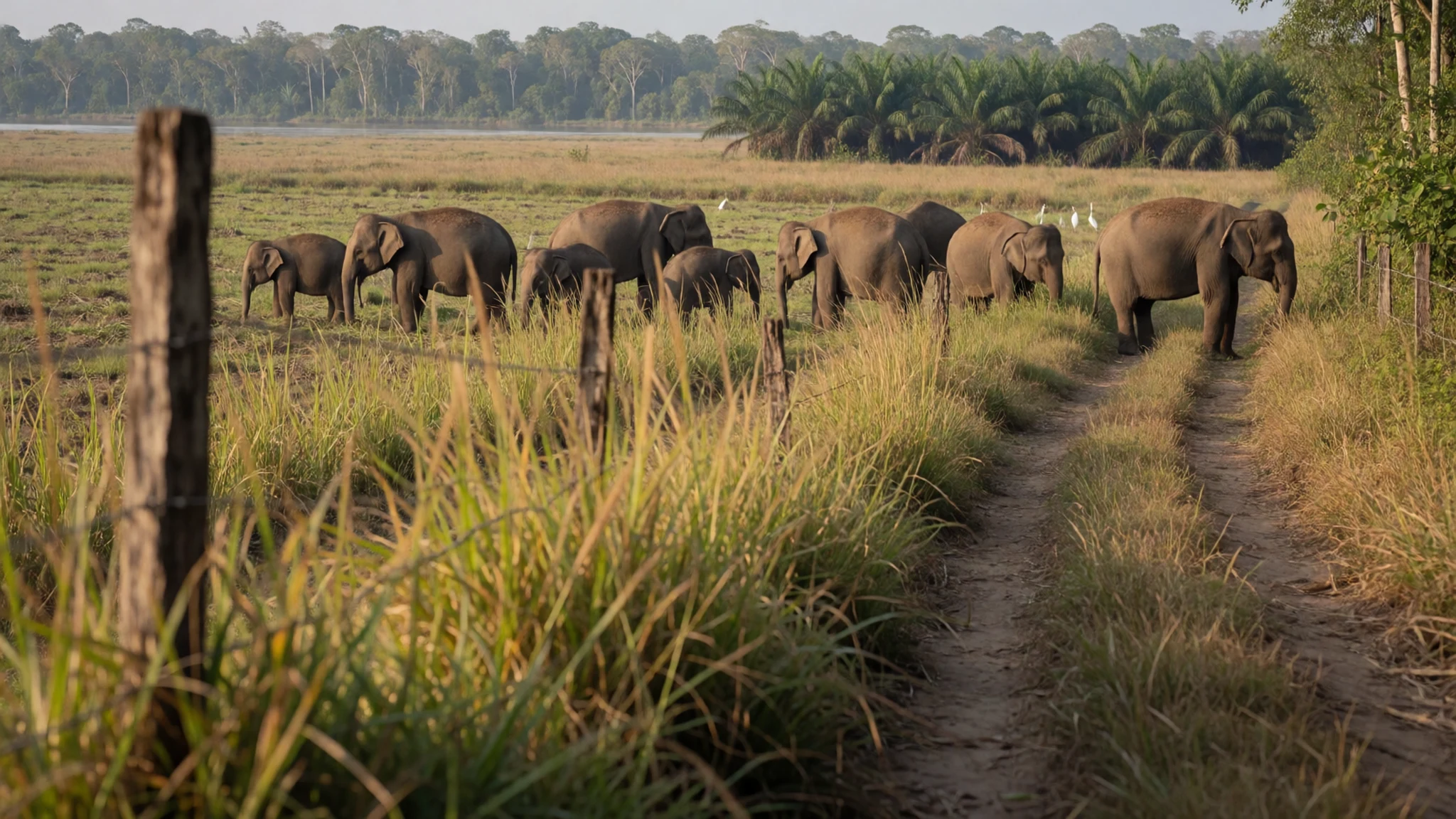
- Batu Tulug — Batu Tulug
Batu Tulug stands above the Kinabatangan River, and the bridge nearby is where many people see the channel from above rather than from a boat. In the limestone caves are wooden coffins of earlier communities, set high over the water. The site is a short stop on the road towards the lower river, more archaeology than wildlife.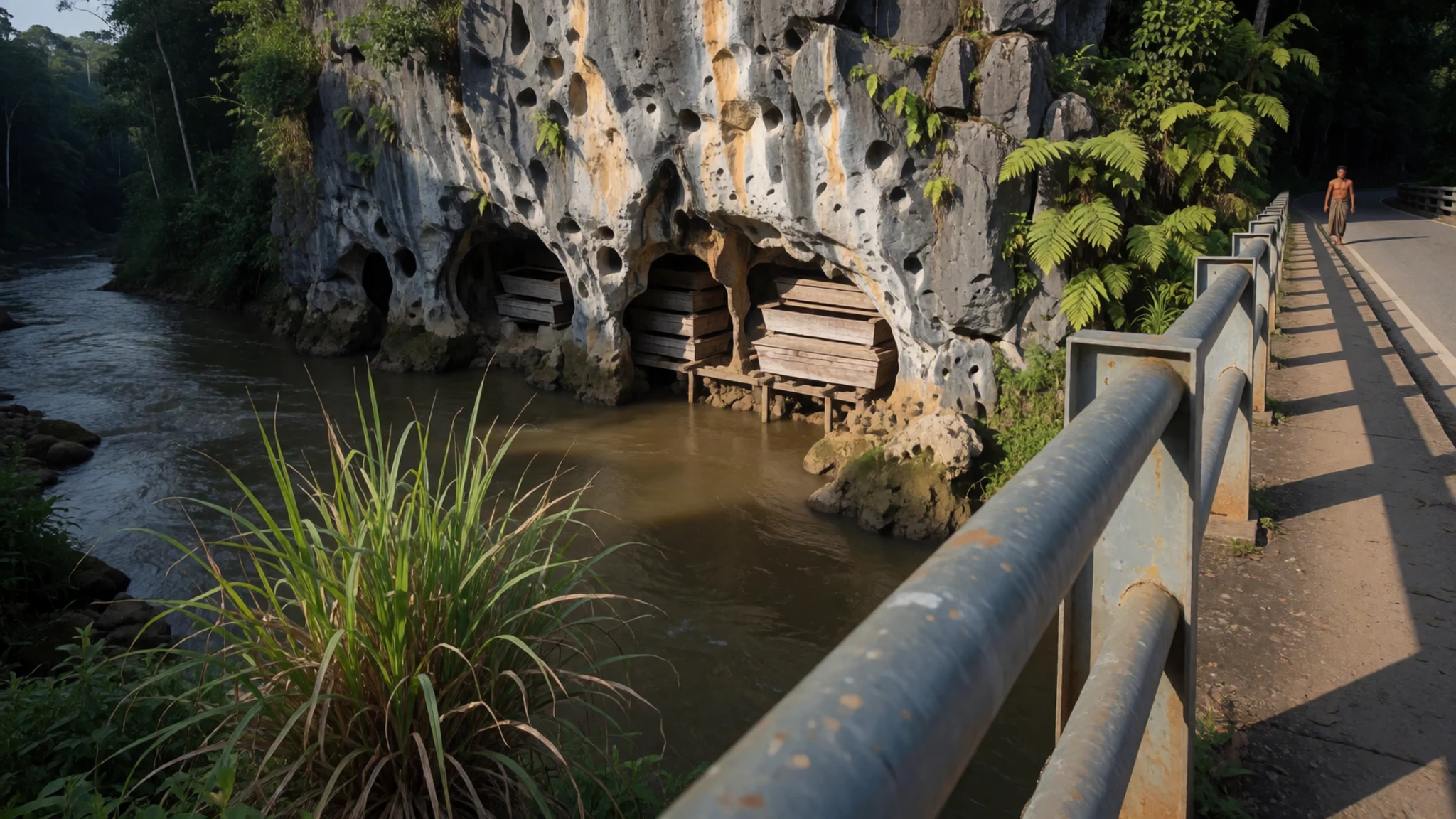
- Kinabatangan Wildlife Sanctuary — Lower Kinabatangan floodplain
The Kinabatangan Wildlife Sanctuary is the broken ribbon of protected floodplain forest, swamp and oxbow along the Kinabatangan River, not a single gate with a ticket window. It sits between villages and oil palm, which is why a boat ride feels both wild and hemmed in. Replanting, including riverside trees such as Nauclea subdita, is part of the effort to keep the banks from thinning further.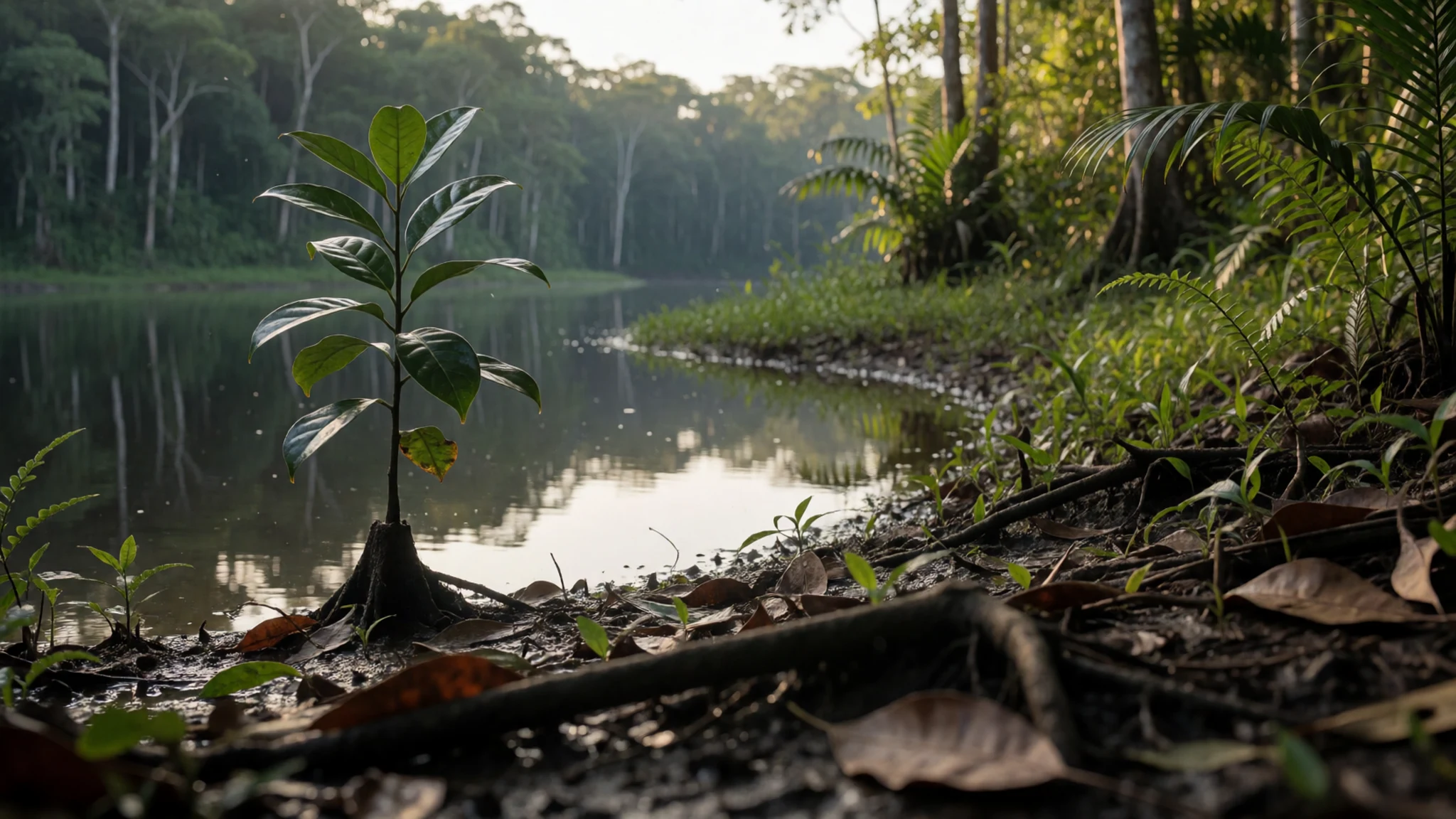
Culture
Life on the Kinabatangan River is organised around the water. The Orang Sungai, Muslim communities of the lower river, build houses on stilts, keep small boats at the step, and measure the day by the river's height as much as by the clock. Malay is the shared language, with local speech and, in Sandakan, a mix of Chinese, Suluk and other east-coast voices in the markets. Hospitality is practical: a visitor who arrives with a guide is folded into the lodge or the village schedule, and meals are eaten together when the boat comes back. Islam shapes public manners. Dress in the villages is modest, Friday has a quieter rhythm, and homes and prayer rooms are entered without shoes. Wildlife has become part of the local economy as well as part of the forest, so guides, boatmen and lodge staff are often people from the same kampungs the boats pass. Tourism brings work, and also noise and the urge to crowd an animal. On the Kinabatangan, speak softly on the boat, never feed the wildlife, and ask before you photograph people.
What to wear
Dress on the Kinabatangan River follows the east-coast Malay pattern more than any single ceremonial costume. In the villages, traditional clothes for prayers and festivals are the baju Melayu for men — a long-sleeved tunic over trousers, often with a sampin, a short sarong of songket or a plain woven cloth tied at the waist — and the baju kurung for women, a loose long tunic over a skirt, in cotton for daily wear and in silk or songket when the occasion is formal. A tudung, the headscarf, is ordinary for many women in public. Songket, with its metallic thread, and batik, with its wax-drawn patterns, are the textiles people still bring out for weddings and Hari Raya; they are not what anyone wears to haul a boat. Day to day, people on the Kinabatangan River wear t-shirts, sarongs and caps, and lodge staff wear a simple uniform that survives the spray. A visitor should copy the practical layer, not the wedding cloth. Light cotton that covers shoulders and knees works in the villages and on the boat; long sleeves and trousers also take the edge off mosquitoes at dawn. Sensible sandals come off easily at a doorway; a hat and a light rain jacket cover sun and sudden rain. Heavy boots are a poor match for mud, jetty and deck, and the heat is the real condition to dress for.
What to eat
- Hinava — Sandakan market stalls and village kitchens
Hinava is Sabah's raw-fish salad: firm white fish turned in lime, shallot, ginger, chilli and salt until it is bright rather than rich. Along the Kinabatangan River, look for it at Sandakan market stalls and in village kitchens that cook for the lodges.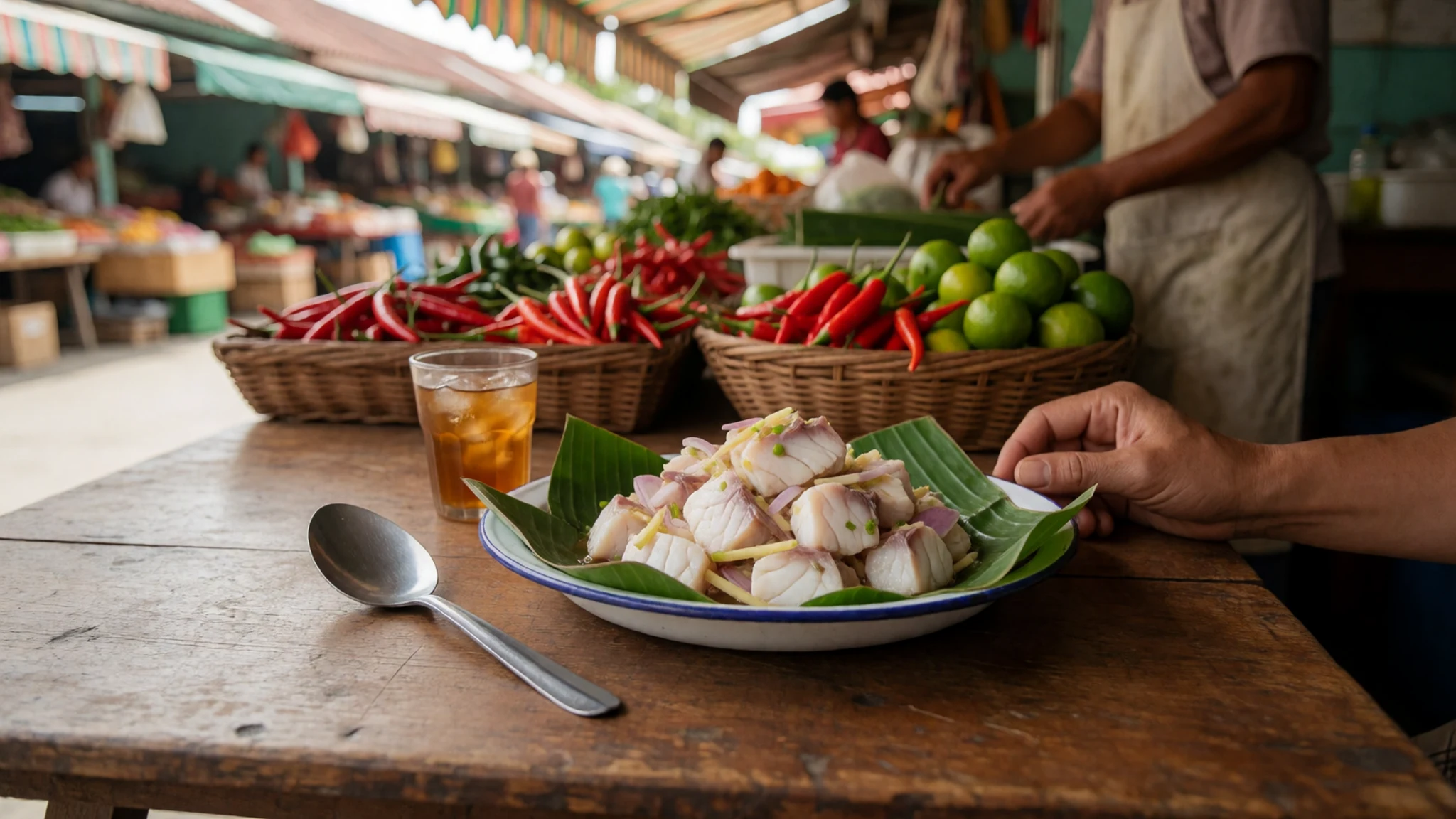
- Ikan bakar — Open air eateries in Sandakan and stalls near the jetties
Ikan bakar is fish grilled over charcoal and brushed with a chilli sambal so the skin chars and the flesh stays moist. On the Kinabatangan River it is the evening meal, eaten with rice. Find it at open air eateries in Sandakan and at riverside stalls near the jetties.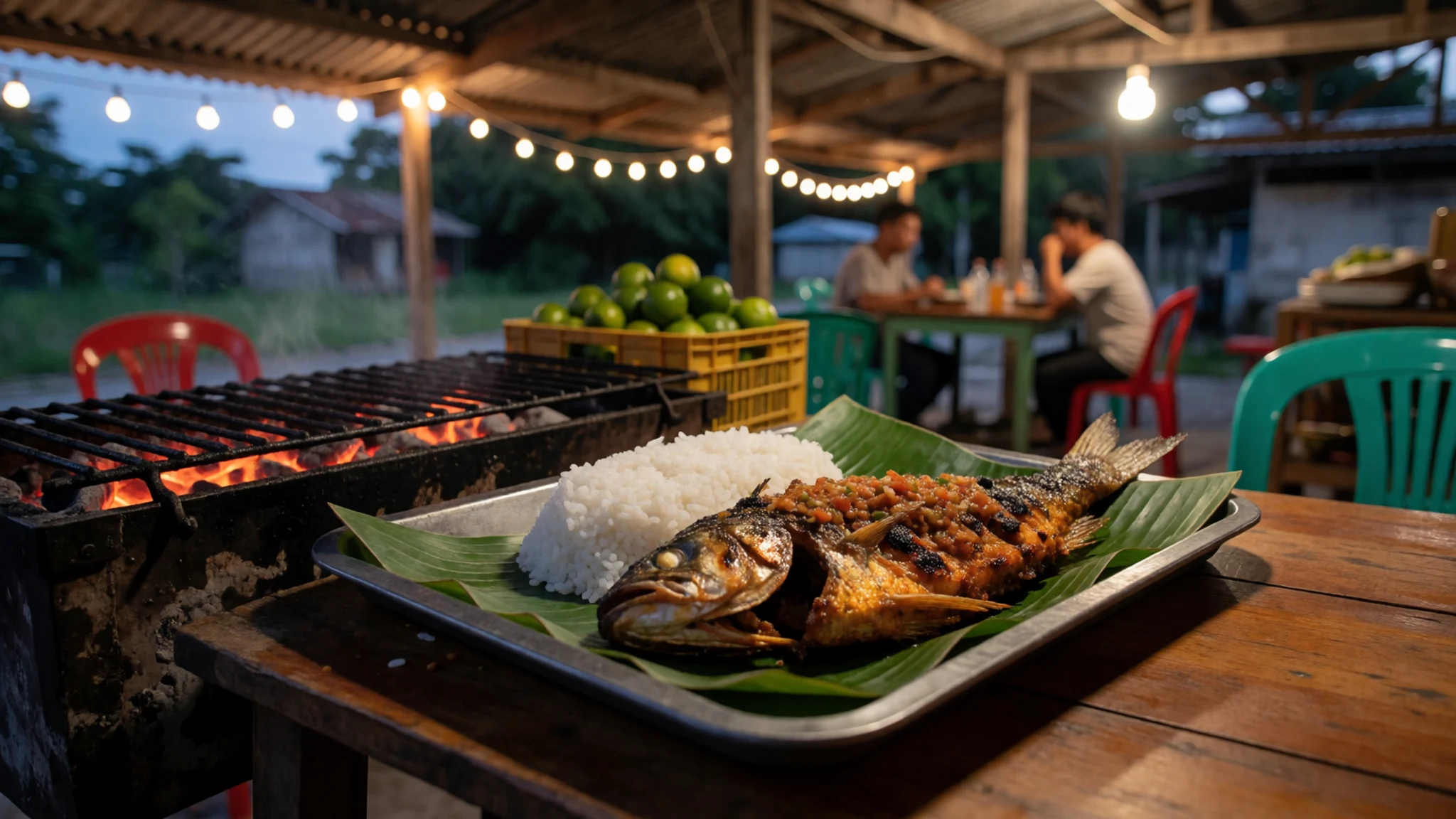
- Pinasakan — Sandakan coffee shops and lodge dining rooms
Pinasakan is fish simmered sour and savoury, often with bambangan, a wild mango. On the Kinabatangan River it is home cooking, salty and hot, meant for rice. Try it in Sandakan coffee-shop kitchens and in lodge dining rooms that serve village-style meals. - Amplang — Sandakan markets and provision shops
Amplang are crisp fish crackers, pounded fish and starch fried into light puffs. They are salty, dry and easy to carry on a boat. On the way to the Kinabatangan River, buy them at Sandakan markets and provision shops rather than expecting a bakery upriver. - Nasi lemak — Coffee shops in Sandakan and lodge kitchens upriver
Nasi lemak, coconut rice with sambal, egg, peanuts and dried anchovies, is the sensible breakfast before the drive to the Kinabatangan River. Coffee shops in Sandakan serve it from early morning. Upriver, the lodge kitchen takes over, usually with rice, egg and fruit rather than a street stall.
Plan it
Best time. April to October, the drier flowering and fruiting season, is the kinder window on the Kinabatangan River: less rain, a lower river, and banks that are easier to read from a boat, with April and May the hottest and June to September the most comfortable. The northeast monsoon, November to March, is wetter, December and January the wettest with the water running high, and some minor roads and jetties are awkward, though animals still use the forest edge. Whenever you go, check the lodge's own site before paying a deposit, because the river, not a calendar, decides whether the last boat can run.
How long. 2–3
Getting there. Fly into Sandakan, the east-coast airport for the Kinabatangan River, usually via Kota Kinabalu or Kuala Lumpur. There is no railway. A lodge-arranged car covers the road to a jetty such as Sukau or Bilit, and a boat does the last stretch to the guesthouse or lodge. Agree the meeting point in Sandakan before you fly, and check the lodge site for the current pickup, because it changes with the height of the river.
Budget. mid
Tips
- Book the lodge and the boat transfer together, and reconfirm if heavy rain has been falling.
- Take the dawn and dusk boats. The middle of the day is hot and the banks go quiet.
- Carry cash for village shops and small eateries. Card payment is unreliable upriver.
- Pack insect repellent, a light rain layer and a torch. Download anything you need while you still have signal in Sandakan.
- Tell the lodge about mobility limits. Steps at the jetty and muddy paths are the usual terrain.
Etiquette
- Do not feed wildlife or play calls to draw animals closer.
- Ask before photographing people in the villages.
- Remove shoes before entering homes and prayer rooms.
Nearby
Sources
- Wikidata (CC0)
- Wikipedia: Kinabatangan River (CC BY-SA 4.0)
- Wikivoyage: Kinabatangan (CC BY-SA 4.0)
Wildlife
- Proboscis monkey (animal)
The proboscis monkey is the one with a nose so big you will never forget it, plus reddish-brown skin and a long tail. It lives up in the trees, and beside the Kinabatangan River it favours stretches of bank where real forest still stands instead of plantation. Ask your guide about the best time to look. Watch from a respectful distance, keep your voice low, let a guide lead you, and never offer it food.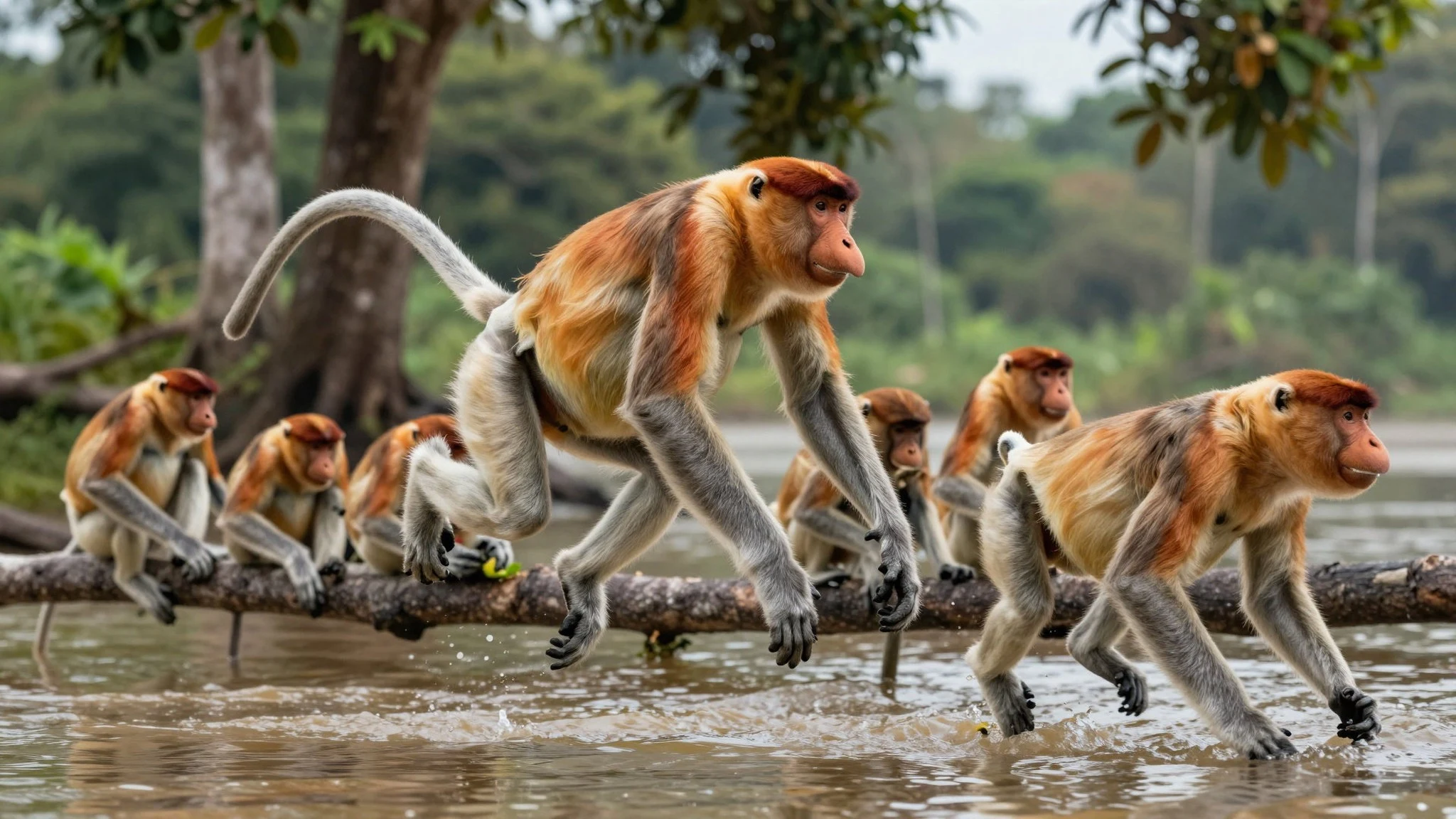
- Bornean pygmy elephant (animal)
The Bornean elephant is a pygmy kind of Asian elephant, so remember it as the little giant of north-eastern Borneo. Sadly, it is Endangered, because its forest home keeps being lost and broken up. Along the Kinabatangan River it uses the floodplain as a pathway between forest patches and the fringes of farmland. Ask your guide about the best time to look. Keep well back, stay quiet, go with a guide, and never feed it.