Kelabit Highlands
Kelabit Highlands, Malaysia
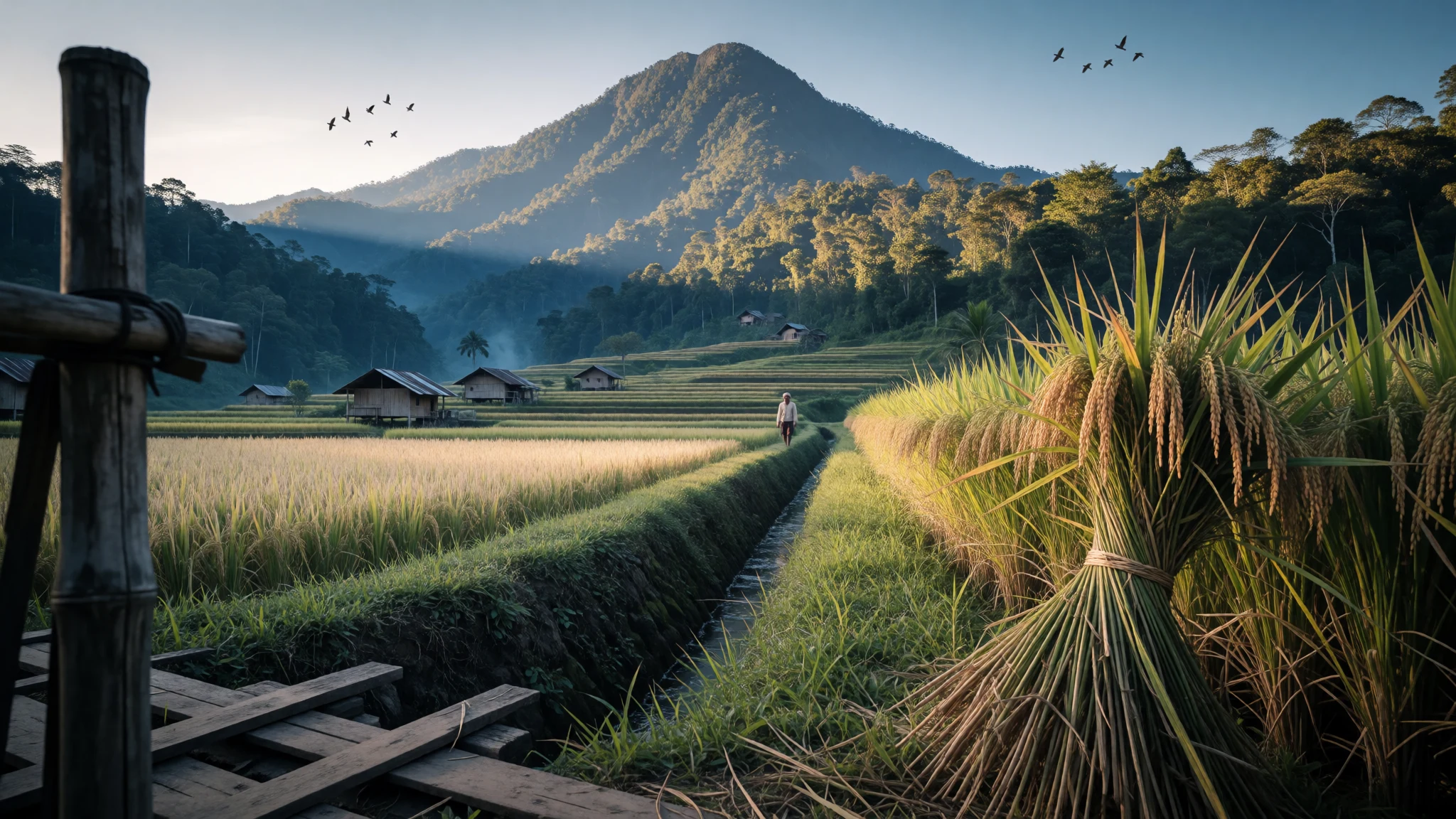
The Kelabit Highlands offer cool air, padi fields and jungle trails in northern Sarawak, usually reached by small plane from Miri.
The place
The Kelabit Highlands sit in the far north of Sarawak, on the Malaysian side of Borneo, close to the border with Kalimantan in Indonesia. This is a plateau above 1,000 metres, set between the Tama Abu and Apo Duat ranges, and it feeds the Baram, Limbang and Lawas rivers. Administratively it falls partly under Miri Division and partly under Limbang Division.
Bario is the main village and the usual point of arrival, with the airport, most homestays and a handful of shops. Ba Kelalan, in the neighbouring Maligan Highlands to the north, is the second hub and is mainly a Lun Bawang village. Smaller places such as Pa' Umor lie within walking distance of Bario and feel quieter, with no working power lines.
The landscape is a series of valleys with cottage-like houses and padi fields, edged by forested ridges. Mount Murud reaches 2,423 metres and is the highest mountain in Sarawak. Bukit Batu Buli rises to 2,082 metres and Bukit Batu Lawi to 2,046 metres.
Because most of the plateau is high, nights can be chilly, while days are warm and humid, particularly under forest cover. The rainy season runs from October to February. Services are thin: there are few restaurants, and meals normally come with the bed. People come mainly to walk, from a couple of hours across the padi to multi-day treks with a guide.
Its story
The Kelabit Highlands have a long geological story and a more recent human one. The rocks are mudstones, sandstones and limestones laid down between the Oligocene and Miocene periods. The area began as a basin, then was pushed upwards as continental crust was forced up near a subduction zone. Uplift is estimated at 20 mm per century over the last two million years. Records from Bario also show cooler temperatures during the Last Glacial Maximum.
The Kelabit people, about 6,800 today, are mostly highland farmers. Most belong to the Sidang Injil Borneo, the Borneo Evangelical Assembly, and the community has put great weight on schooling; Kelabits have reached senior professional posts, Malaysia Airlines among them. Other groups share the plateau, including the Penan and the Lun Bawang, who are the same people as the Lun Dayeh of Sabah and form the majority around Ba Kelalan. Together they are called Orang Ulu, the 'People of the Highlands'.
Farming keeps changing. Bario is known for its short-grained rice, grown in the padi fields around the village, and in 2011 a Malaysian agricultural company, Ceria Group, introduced mechanised rice growing to the region. Small airstrips now link settlements once reached only on foot, and flights remain the lifeline for residents, who are given preference on seats.
What to see
- Bario and its padi fields — Bario
Bario is the main village and the usual first stop, set among padi fields in a high valley. The airport, homestays and small shops make it the base for most walks. A gentle first afternoon among the fields, schools, churches and monoliths shows how the community is laid out before heading further out.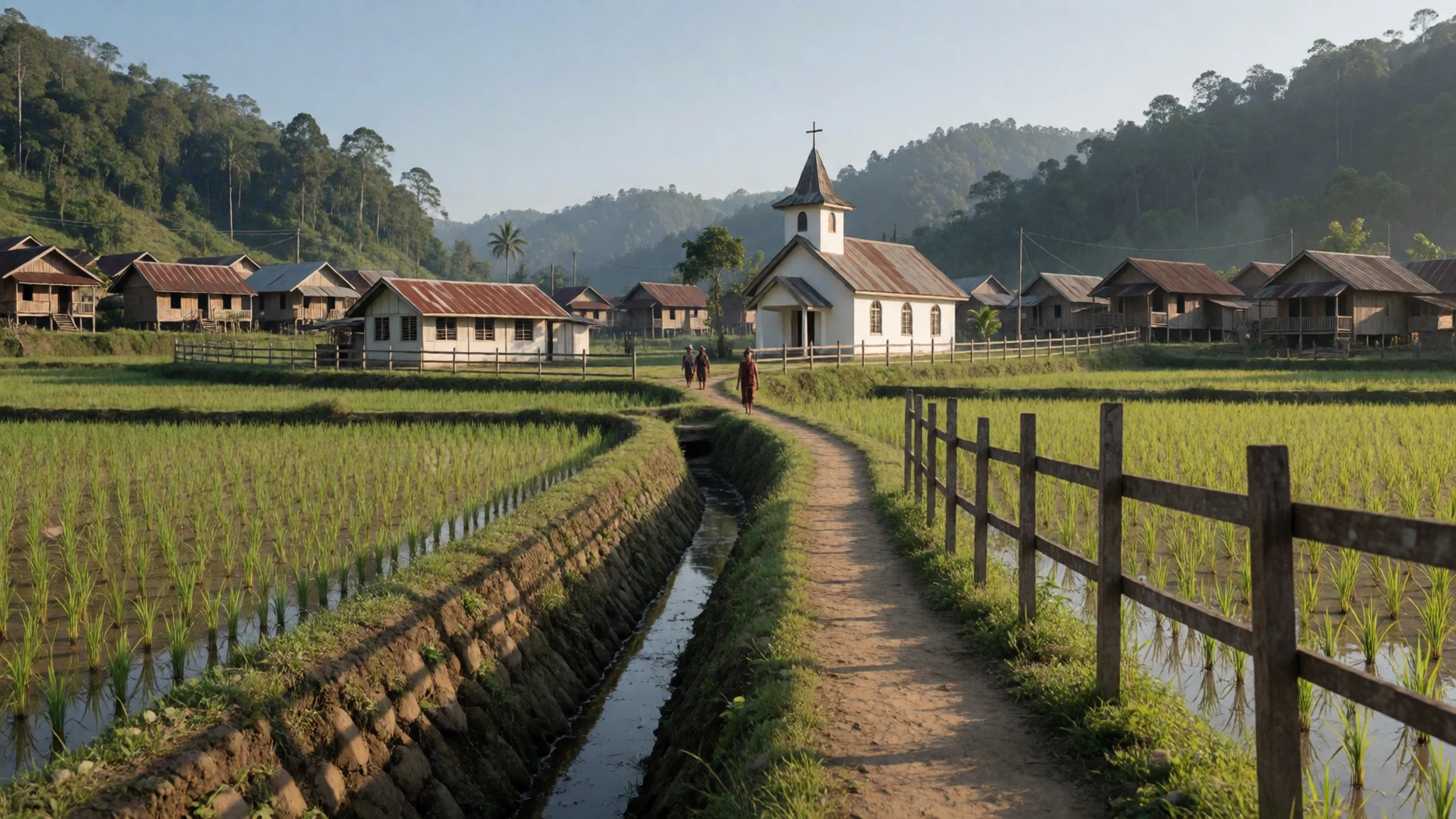
- Bario to Pa' Umor walk — Bario to Pa' Umor
The walk from Bario to Pa' Umor takes about 50 minutes at a brisk pace, but most people stretch it to one to three hours for the orchids, plants, wildlife and views. It ends near a homestay and needs no guide, only a rough map. Pa' Umor feels more remote than Bario.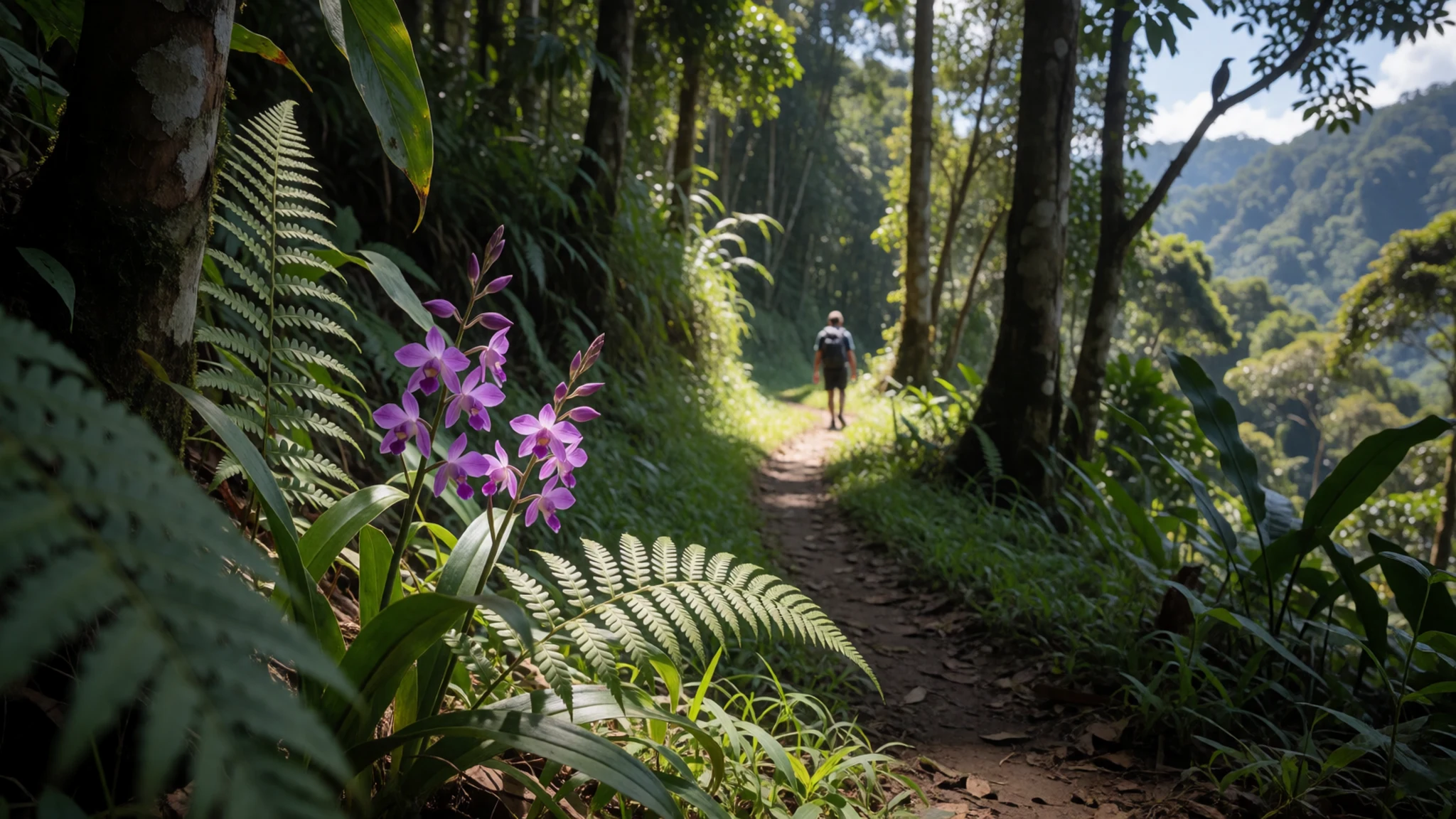
- Pa' Umor salt spring and monolith — Pa' Umor
From Pa' Umor, two short outings are possible: a salt spring, roughly 50 minutes or more on foot and a moderate walk, and a standing monolith nearby. Both are day trips that normally need no guide. Ask your host for directions first, since muddy paths can change after rain.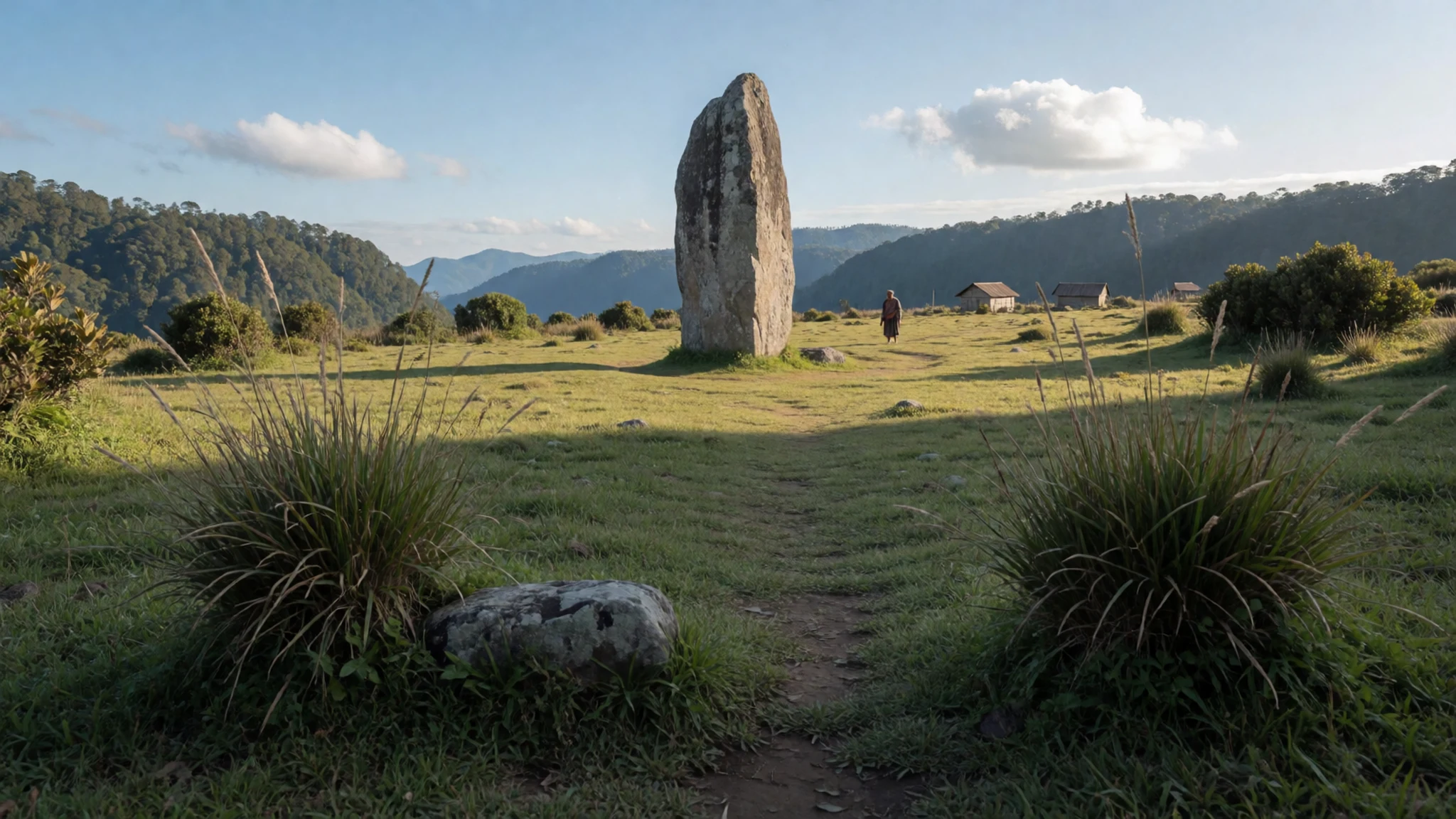
- Ulong Pallang and Pa' Lungan walks — Around Bario
Two further easy day walks start from Bario. The route to Ulong Pallang crosses padi fields and passes monoliths, two schools, churches and the police station. The Pa' Lungan walk takes two to three hours. A local host can add stories that a rough map cannot.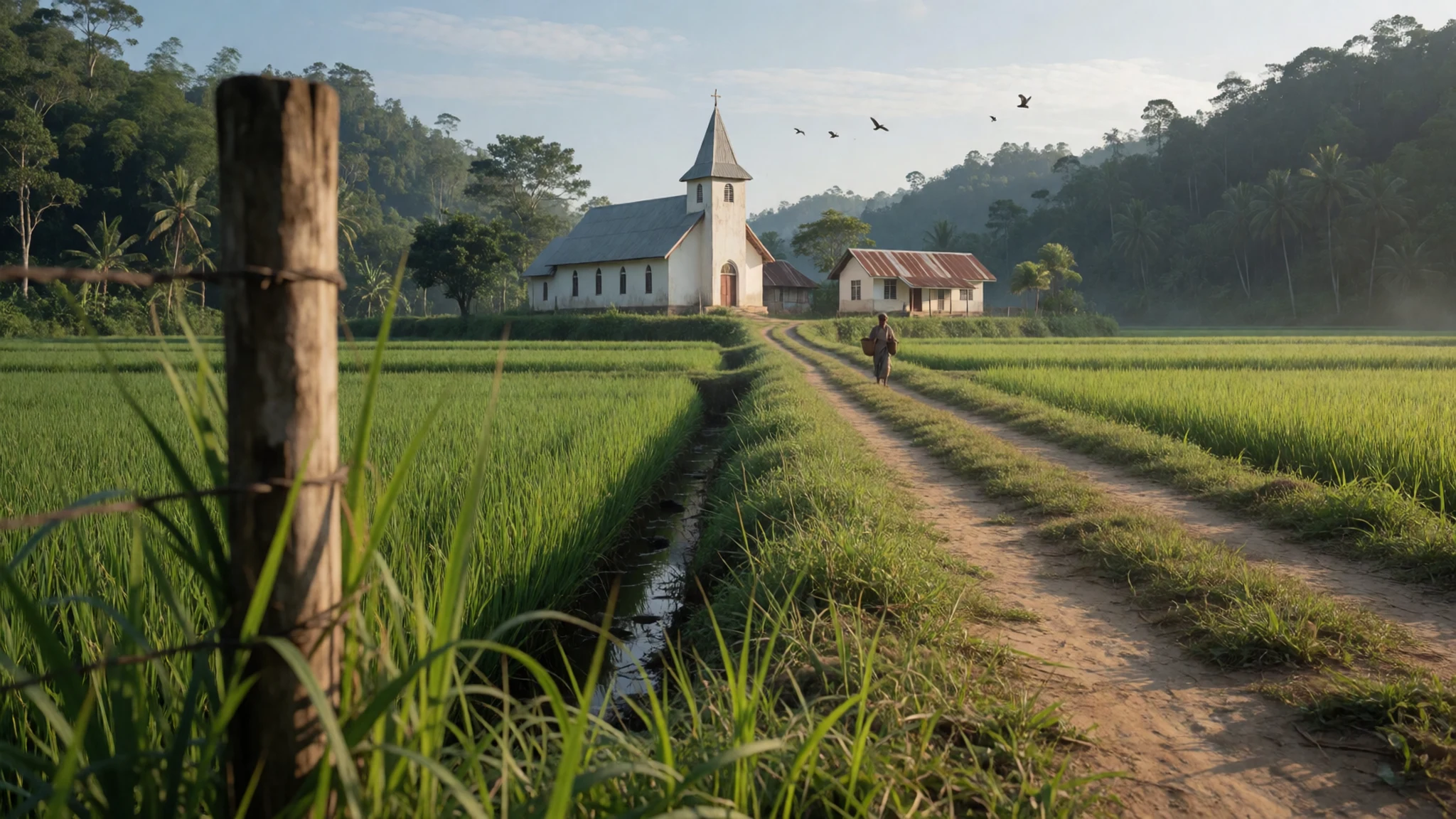
- Ba Kelalan to Bario trek — Between Ba Kelalan and Bario
A popular two-day trek links Bario with Ba Kelalan, the Lun Bawang village in the Maligan Highlands, and it can be walked in either direction. A guide is sensible. Overnight stops are rough huts, where you carry your own food, or longhouses that provide a bed and meals.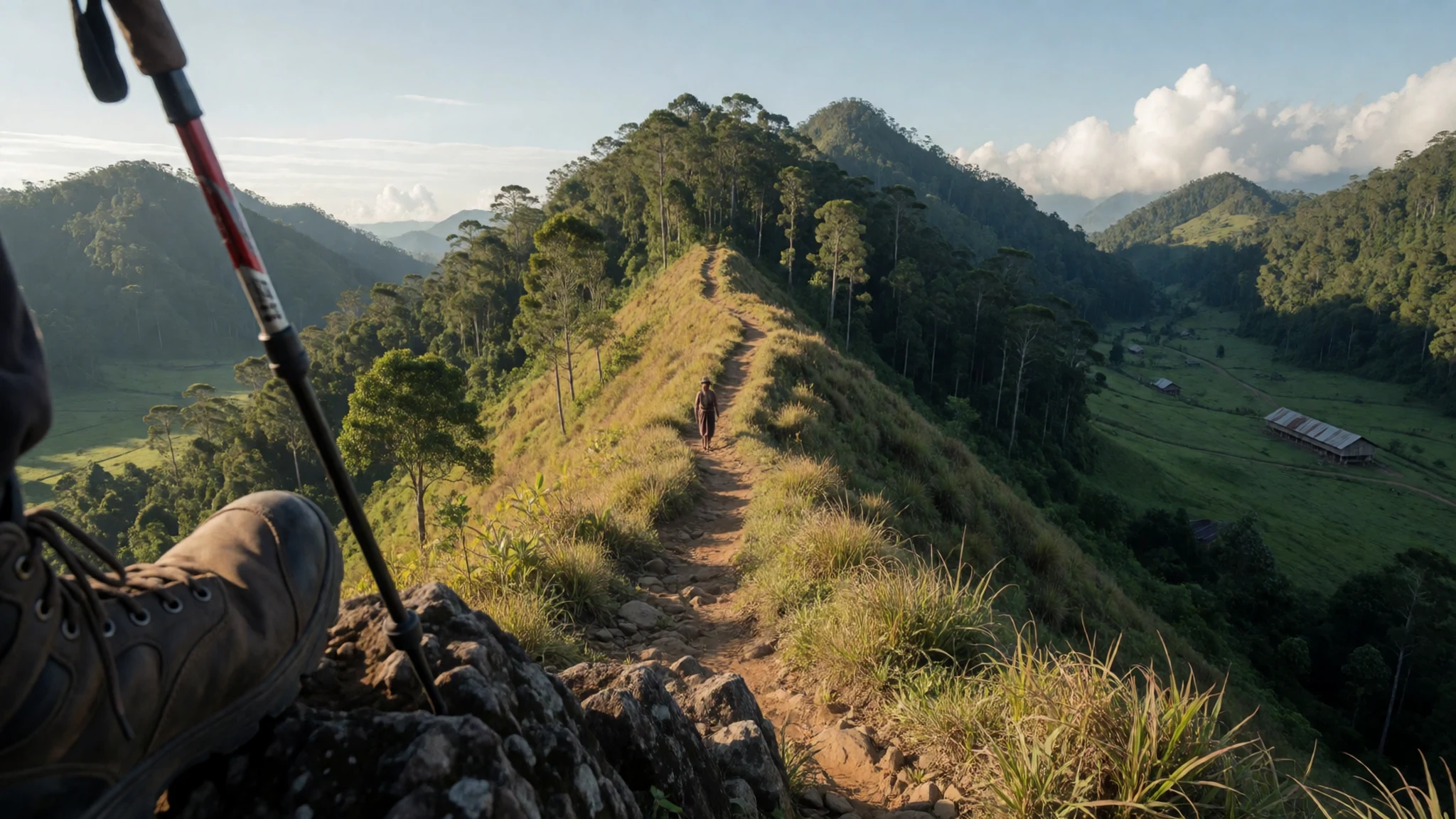
- Mount Murud and Bukit Batu Lawi — Highland ridges
The high peaks are for multi-day trips with a guide, not casual outings. Mount Murud, at 2,423 metres, is the highest mountain in Sarawak, and Bukit Batu Lawi, at 2,046 metres, is another landmark of the range. Arrange routes and camping through a local lodge well ahead.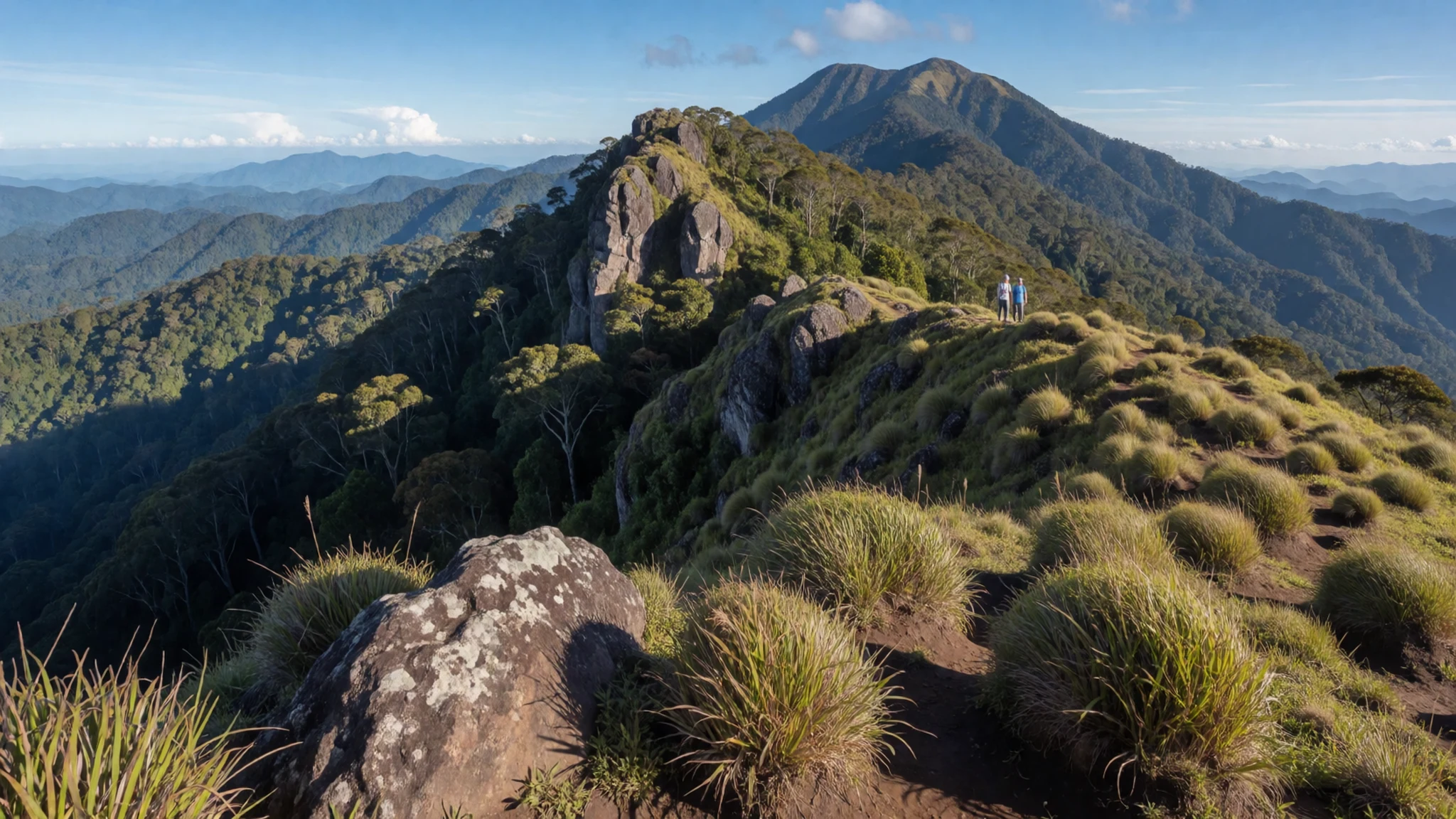
Culture
Culture in the Kelabit Highlands is shaped by the Kelabit, the Lun Bawang, the Penan and other Orang Ulu communities, who share a plateau but not always a language or history. Rice farming sets the rhythm of the year, and the padi fields around Bario are as much a community landscape as a pretty one.
Church is central to village life. Most Kelabits belong to the Sidang Injil Borneo, and Sunday is likely to be quiet, with services shaping the day and some activity paused. Education is also valued, which explains why such a small community appears across professions well beyond the highlands.
Standing stone monoliths are dotted around Bario and Pa' Umor, often beside paths or fields. Their stories belong to local families, so ask a host rather than assuming. Hospitality is real here: visitors usually stay in homestays or longhouses, eat with their hosts and are given a sense of daily routine, which is the best way to learn about the place.
Guides and homestay owners are the main link between visitors and the community, so book through them and tell them early about dietary needs, plans and timing. Visitors can seem a lot in a small village, and a little patience goes a long way. Ask permission before photographing people, their homes or the monoliths, and keep noise and plans low-key around church and on Sundays.
What to wear
Fashion in the Kelabit Highlands has a traditional side and an everyday one. Beadwork is the best-known element of Orang Ulu dress, seen in necklaces, headbands and decorated caps that are worn for church celebrations, festivals and special family occasions. Details and meanings differ between the Kelabit, Lun Bawang and Penan, so it is better to ask a host about a particular piece than to guess. The brief for this reading names no specific textiles, so none are claimed here.
Day to day, people dress for farming, school and church. That means simple shirts, trousers, rubber boots for the padi and mud, and smarter clothes on Sundays. Mobile phones and modern brands sit comfortably alongside older ways, and most heritage dress comes out only for occasions.
Visitors should dress for a cool, damp highland. Bring lightweight, quick-drying long trousers and long-sleeved tops for brush and insects, plus a warm layer for chilly nights and a proper rain jacket for the wet months from October to February. Footwear matters most: sturdy trail shoes or boots with good grip suit muddy paths and padi bunds. In villages and around church, keep shoulders and knees covered, particularly on Sundays.
What to eat
- Bario rice — Homestay tables around Bario
Bario rice is known for its short grains and is grown in the padi fields around the village. It is the centre of most meals served in homestays and longhouses. Outside Bario it is hard to find, so a plate eaten here is worth noting.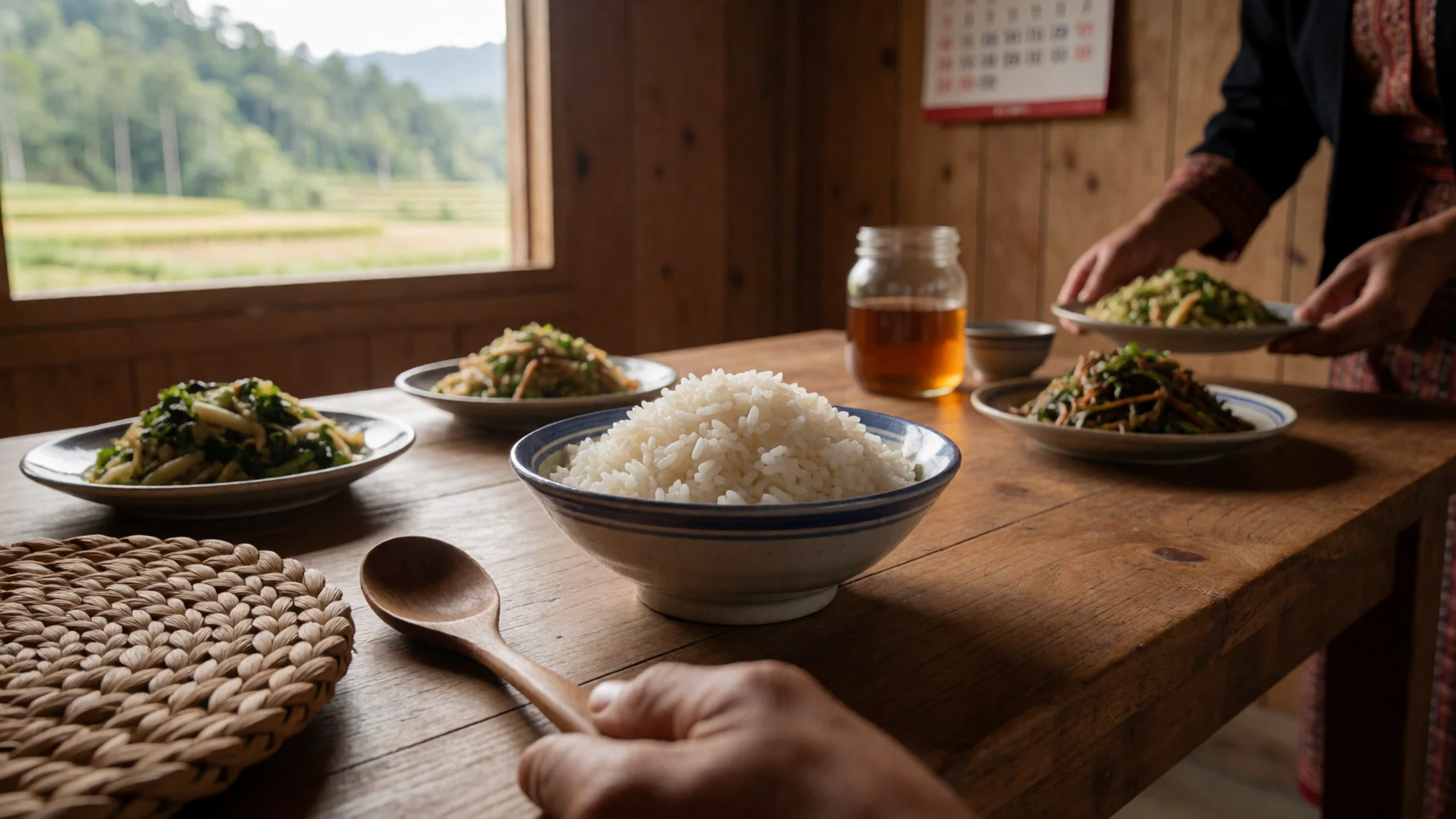
- Bario pineapple — Village gardens and homestay meals
Pineapples from the highlands are also well regarded. They turn up in curries and in desserts, so they may appear in both savoury and sweet courses at the same meal. Ask your host what is in season rather than expecting a fixed menu.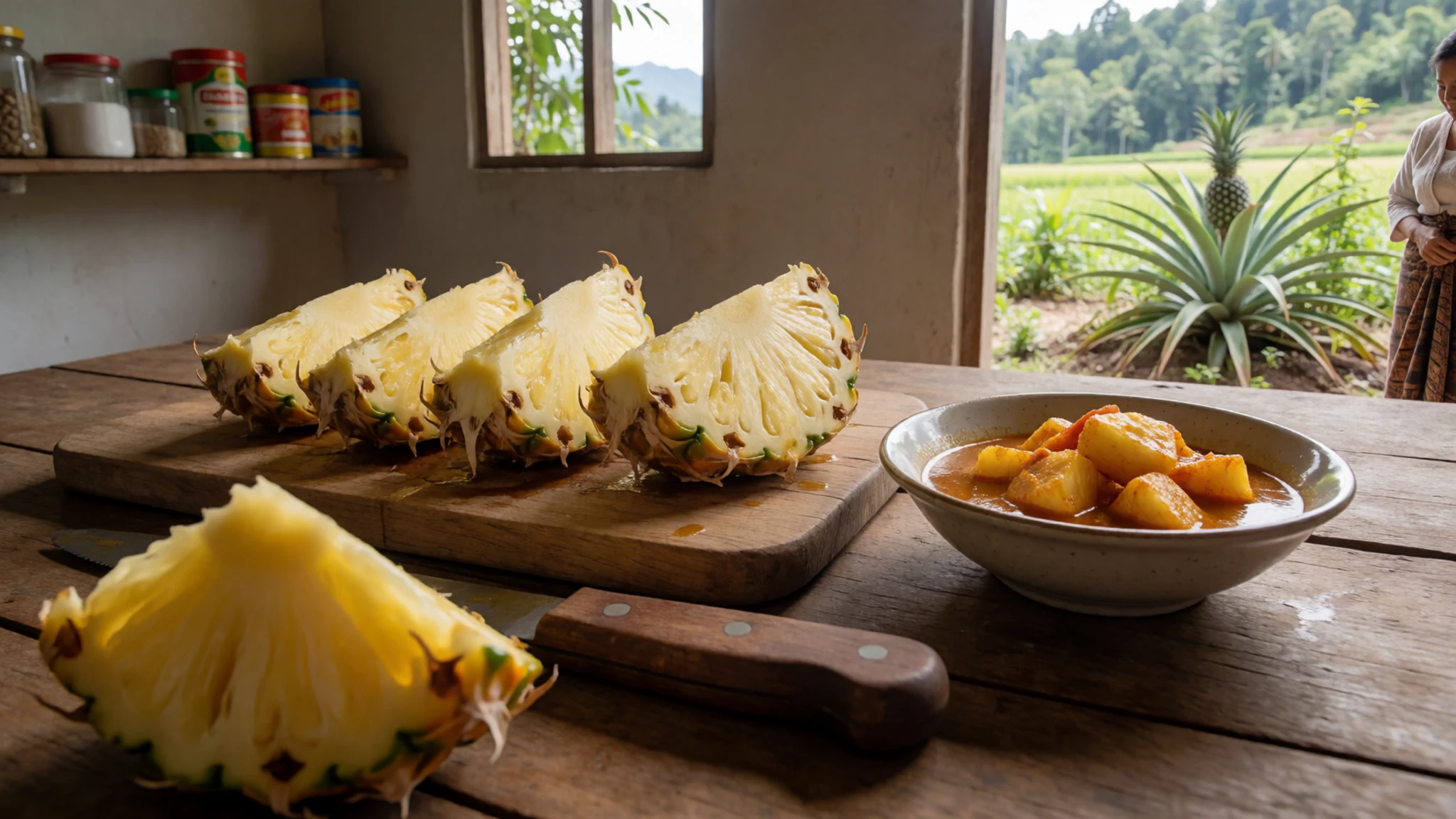
- Wild ginger flower and edible ferns — Homestay and longhouse kitchens
Jungle plants are a staple, and vegetarians do well here. Wild ginger flower and edible ferns are the best known, cooked simply and served with rice. They are foraged or grown nearby, so taste and availability change with the day. - Wild boar and deer — Longhouses and village homes
Game meat such as wild boar and deer is part of the local diet, usually cooked in the kitchen of the home where you stay. Tell your host in advance if you do not eat it, so alternatives can be prepared. - Homestay set meals — The place you stay
Food is usually included in the price of accommodation because there are few restaurants or eateries. Expect rice, a vegetable dish or two, and a meat or jungle ingredient, made from local produce. It differs sharply from food elsewhere in Malaysia.
Plan it
Best time. March to September, outside the October–February rainy season, when paths are drier and flights less likely to be disrupted. Days are warm and humid and nights are chilly year round.
How long. 4–6
Getting there. Fly from Miri to Bario (BBN) with MASWings; there are two daily flights, though on Mondays one carries cargo only. Ba Kelalan (BKM) is the other main entry point. Bario village is close to the airstrip, and most onward trips are on foot or arranged through your host.
Budget. mid
Tips
- Book flights and homestays well ahead, as local residents get preference on seats.
- Non-Malaysian cards sometimes fail on the airline website, so talk to your card issuer or book through a local contact.
- Bring cash and warm layers from Miri, as shops are few and nights are cool.
- Confirm that meals are included when you book a homestay.
- Day walks near Bario need only a rough map; hire a guide for multi-day treks.
Etiquette
- Ask before photographing people, homes or monoliths.
- Dress modestly in villages and around church, especially on Sundays.
- Tell hosts about dietary needs early and eat what is offered graciously.
Nearby
Sources
- Wikidata Q6385444 (CC0)
- Wikipedia: Kelabit Highlands (rev 1317261260) (CC BY-SA 4.0)
- Wikivoyage: Kelabit Highlands (rev 5247663) (CC BY-SA 4.0)