Rakhigarhi
Rakhigarhi, India
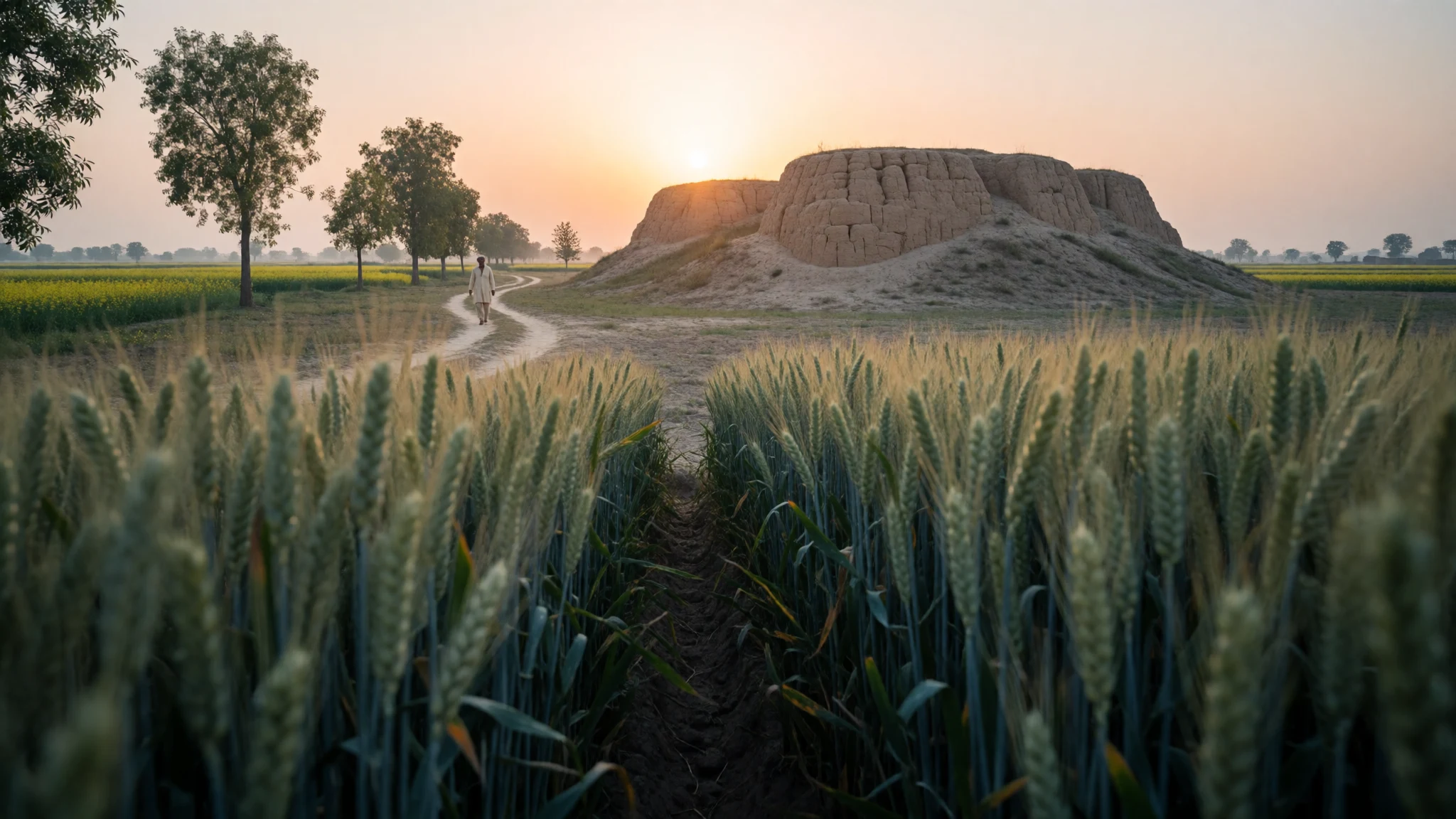
Rakhigarhi is a quiet Haryana village built around mounds that hide one of the great cities of the Indus Valley Civilisation.
The place
Rakhigarhi is a village and archaeological site in Hansi district, Haryana, northwest of Delhi. It sits on the flat Ghaggar plain, well away from the seasonal river that gives the plain its name. Wikidata describes it as the largest Indus Valley civilisation site, though scholars still debate how much of the surrounding ground was a single living city at any one time.
What visitors actually see is modest. The ancient city survives as a group of low, grassy mounds, some of them crossed by village lanes and edged by houses, fields of wheat or mustard, and the occasional buffalo. Excavation trenches and protective fencing mark the parts that have been opened. Nothing here resembles the standing ruins of Egypt or Greece. The interest lies in what the earth has yielded: brick-built houses, drains, pottery, beads and burials.
The settlement belongs to three overlapping phases, beginning before the Harappan period, running through an early phase and reaching a mature urban phase. Some mounds were homes and workshops, one was a cemetery, and another represents an older, separate settlement.
There is little tourist infrastructure. Expect a village, not a heritage park, with limited shade, few signs and food mostly from small local eateries. Rakhigarhi rewards people who like to stand on a quiet field and work out what lies under it, preferably with some reading done beforehand. Many of the finds are better displayed in Delhi's National Museum than on site.
Its story
Rakhigarhi's story is one of long habitation and slow discovery. People lived here before the Harappan civilisation took its familiar urban form, and the settlement then grew through an early phase into a mature city of planned brickwork, craft production and trade. After that phase the Indus cities declined, and the mounds were left to farmers who ploughed over them for centuries.
Modern archaeology reached the site in the mid-twentieth century, with a later round of digging toward the end of that century. The most sustained campaigns came in the 2010s and again in the early 2020s, and much of the area remains unexcavated and unpublished. Nearby sites such as Mitathal and the smaller Lohari Ragho are still waiting for their turn.
A discovery of two further mounds, announced by the Archaeological Survey of India, led to claims that Rakhigarhi was the largest known Harappan site. Other scholars point out that this figure counts outlying remains that probably were not one unified town at the same moment, so the ranking is argued over.
The site also entered public debate through ancient DNA. A study of a single skeleton found no steppe ancestry, which researchers read as consistent with the view that Indo-Aryan speakers arrived after the Harappan cities had begun to fade. It is one individual, and scholars are cautious about how much it can carry. The honest summary is that Rakhigarhi has already changed what is known about the Indus world, and has far more still to tell.
What to see
- The excavated mounds — Rakhigarhi village, Hansi district
The main group of mounds is the heart of the visit. Walk the grassy rises and look for the fenced trenches where brick walls and floors have been exposed. The scale is clearer on foot than from a photograph, and the surrounding fields show how the ancient town spread. Go with a guide if one can be arranged.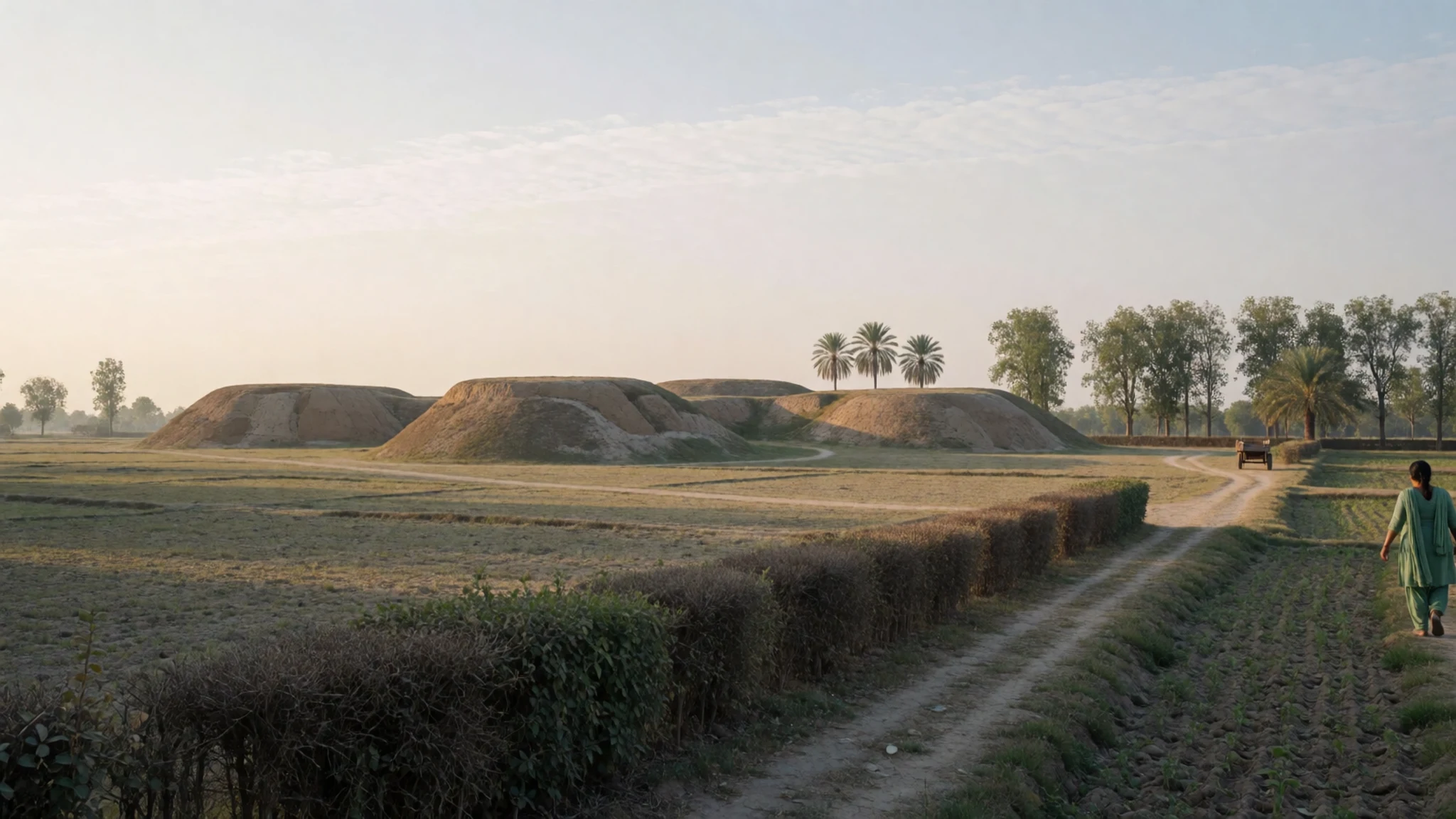
- The burial mound — Rakhigarhi village, Hansi district
One mound was a cemetery of the mature phase, and it is where several skeletons were recovered, including the one used for the DNA study. There is little to see above ground beyond the contour of the mound itself, but it brings home that this was a community of families, not just a collection of bricks.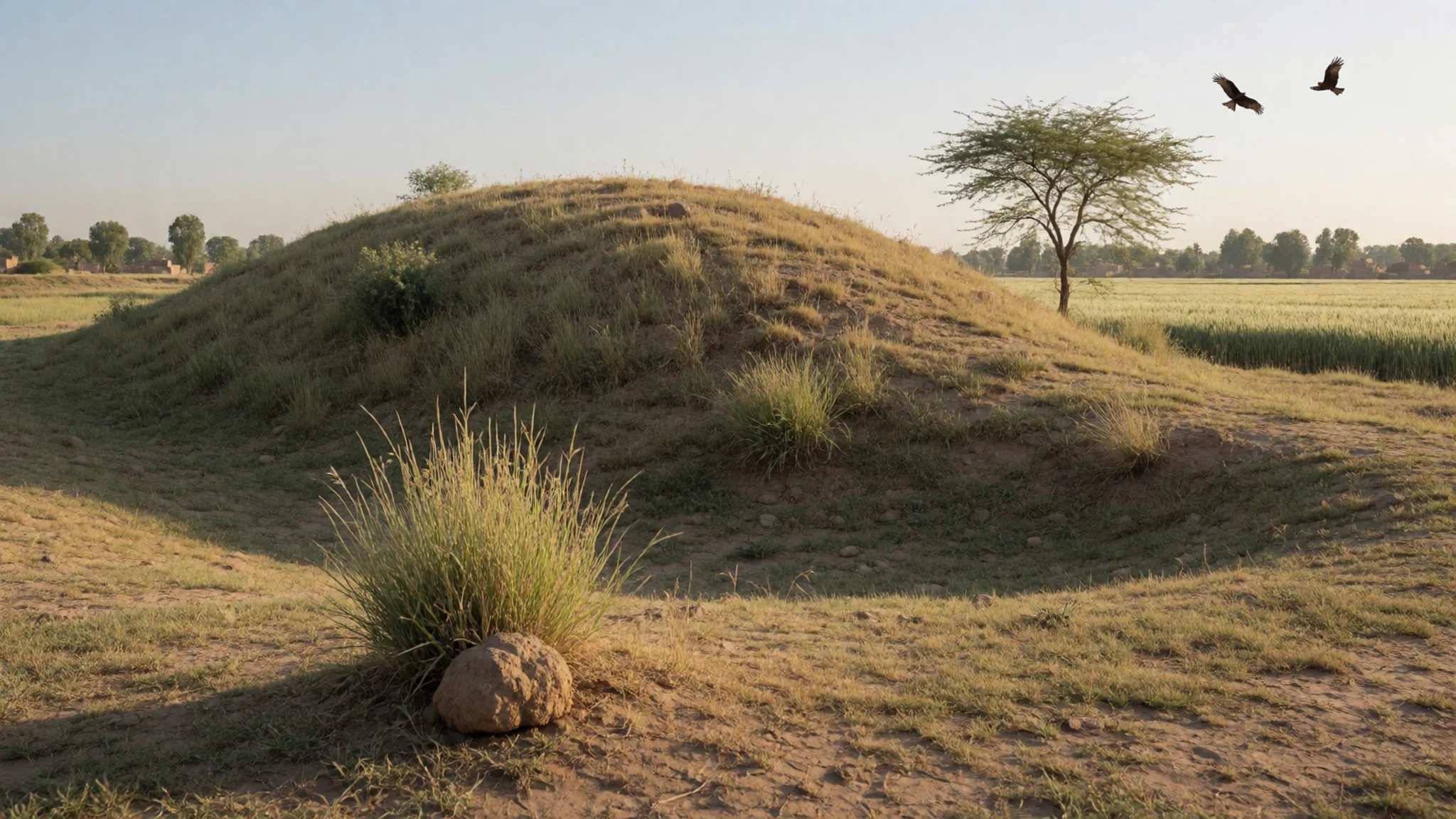
- Village lanes and fields — Rakhigarhi village
Rakhigarhi is still a working farming village, and the walk between the mounds is part of the experience. Houses, courtyards, cattle sheds and crop fields sit directly against the archaeological land. Stop for tea, ask permission before photographing people, and notice how ancient and modern settlement share the same ground.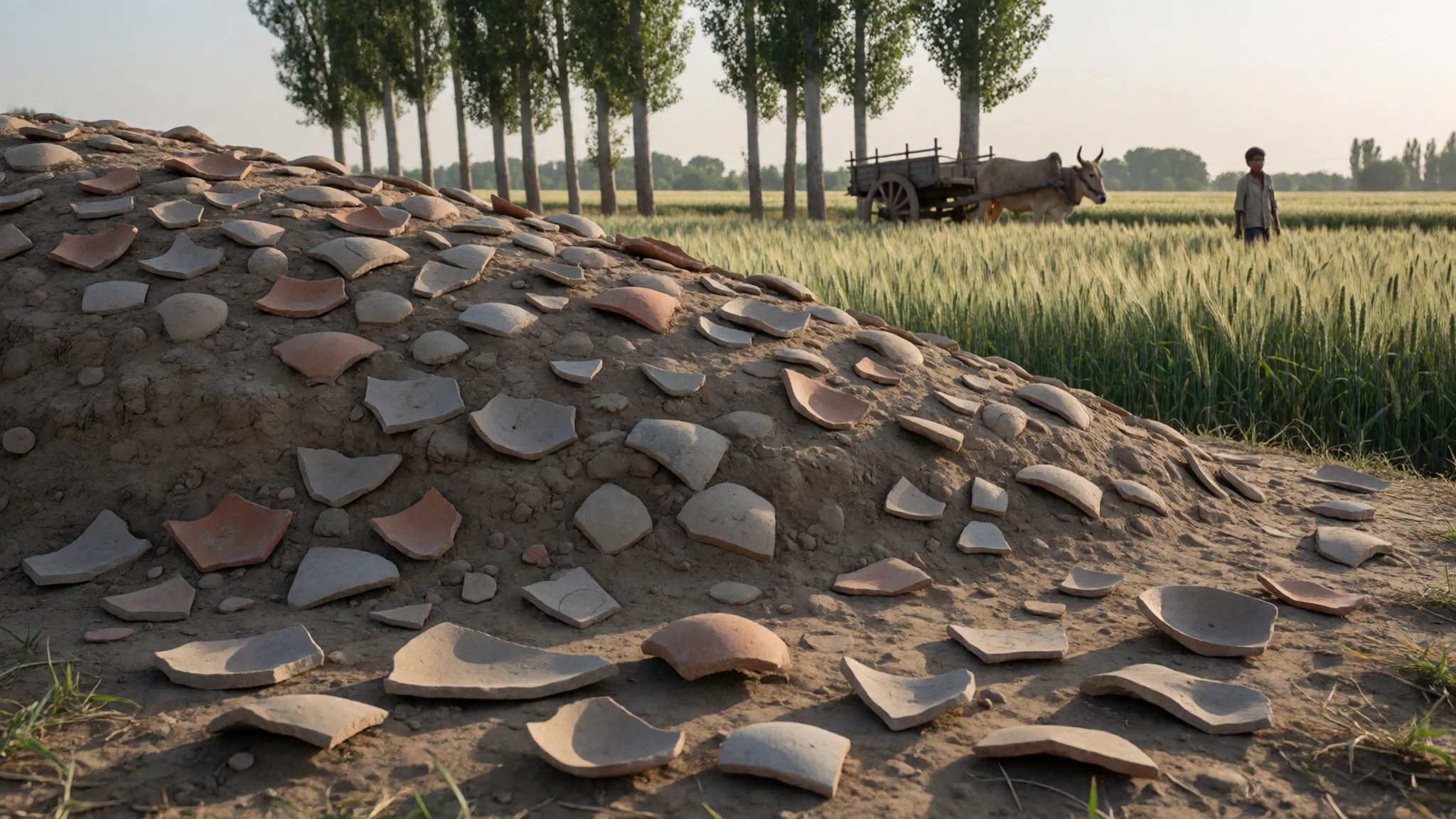
- Harappan Gallery, National Museum — Janpath, New Delhi
The best-preserved finds from Rakhigarhi, including a burial of a middle-aged woman, are displayed in Delhi rather than at the site. A museum visit before or after the village fills in what the fields cannot show: pottery, ornaments and the skeletons themselves. Check the museum's official site for opening days.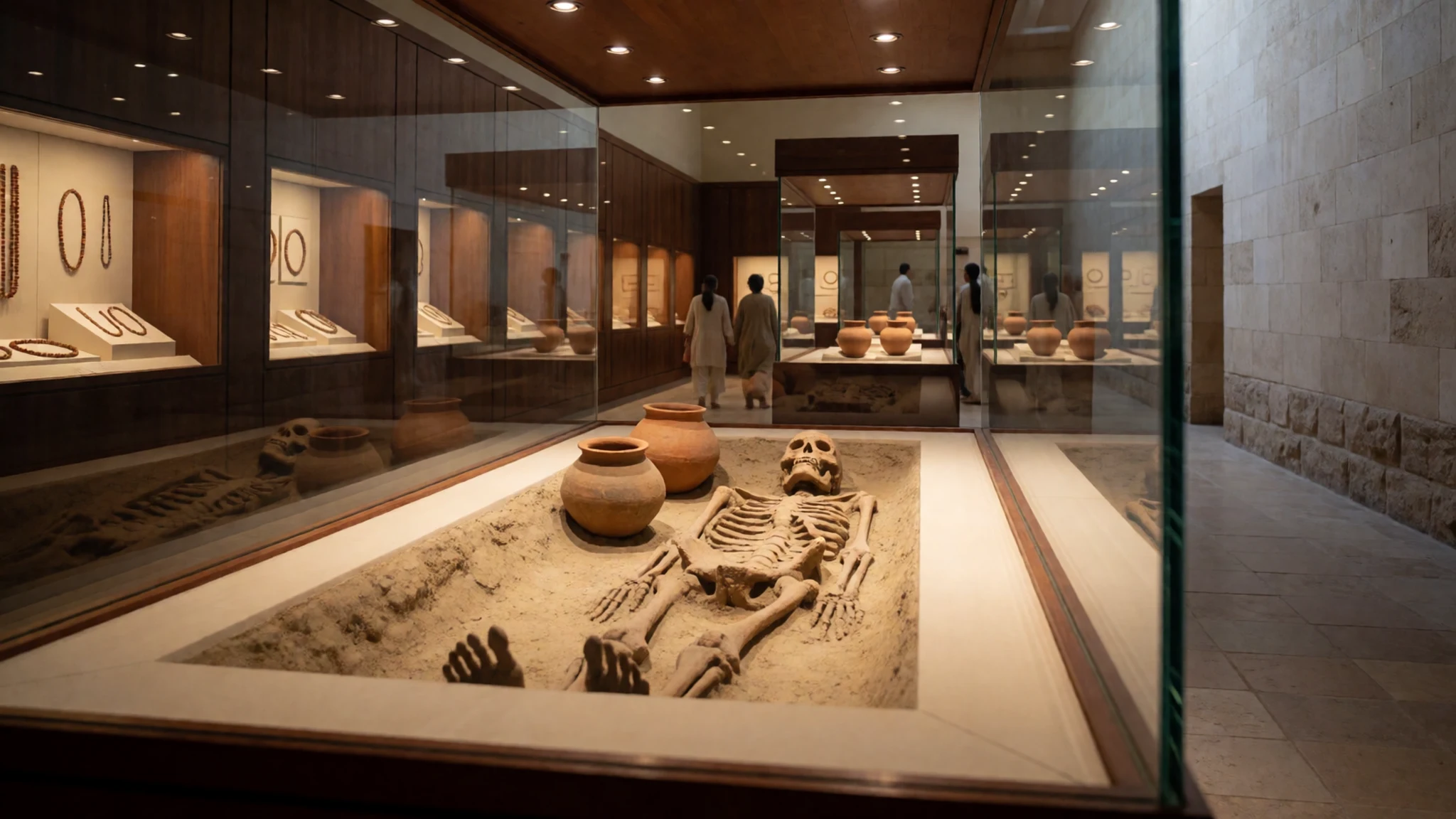
- Hisar as a base — Hisar, Haryana
Hisar is the nearest city with an airport and a reasonable choice of places to stay and eat, so it works as a base for the village. It is a practical, unglamorous town. Use it for transport, supplies and a proper meal, then head out to the mounds early.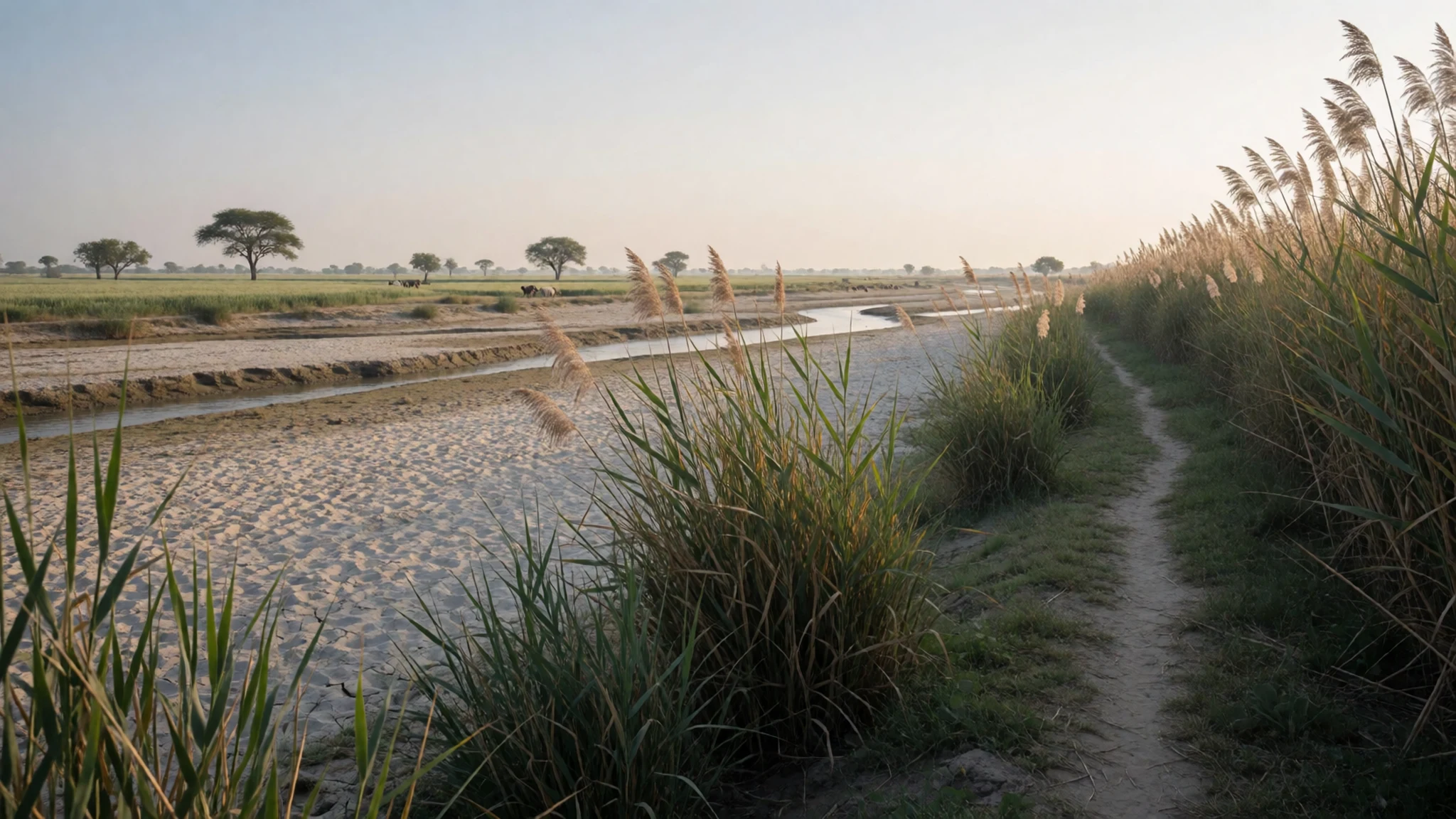
Culture
Rakhigarhi's culture is layered. On the surface it is rural Haryanvi: Hindi and the Haryanvi dialect, farming calendars, village councils, wrestling traditions and a strong dairy culture of buffalo, ghee and buttermilk. Under the surface lies the Indus Valley Civilisation, which left no readable literature, since its script is still undeciphered. What is known comes from objects, buildings and bodies rather than words.
That gives the village an unusual relationship with its past. Residents have lived beside the mounds for generations, and local feeling about the excavations mixes pride, curiosity and sometimes impatience, since protected land affects farming and building. National debates about who the Harappans were, and how they relate to later Indian cultures, also arrive here through the news, so questions from locals and visitors can be lively.
Haryana itself is a young state, formed in 1966 when Hindi-speaking areas separated from Punjab, and its identity is still bound up with agriculture, sport and the army. Festivals follow the farming year, with songs, folk theatre and fairs bringing the village together.
Visitors will usually be welcomed warmly, especially if they show real interest in the site and its people. Ask before photographing anyone, particularly women, and do not climb over fenced trenches or pick up pottery fragments from the mounds.
What to wear
Rakhigarhi's everyday dress is that of rural Haryana, and it is mostly cotton. Traditional men's clothing is the dhoti or kurta-pyjama, often with a turban called a pagri or safa, worn at weddings, fairs and by elders. Women traditionally wear the ghagra, a full gathered skirt, with a kurti or angrakha-style top and a long odhni or chunni over the head and shoulders. Handloom cotton and khadi are common, with bright borders and simple block prints on festival clothing. Silver anklets and bangles are still worn, echoing the beads and bangles that excavations at Harappan sites have turned up.
Day to day, most people now wear what is common across north India. Men wear shirts and trousers or kurtas, sometimes a towel or scarf against the sun. Women wear salwar kameez or saris, and younger people often wear jeans and T-shirts. Sports kit is common, given the state's wrestling and athletics culture.
A visitor should dress for heat, dust and village modesty. Light cotton shirts or kurtas with loose trousers or long skirts work well, with shoulders and knees covered. Bring a hat or scarf for the open mounds, sunglasses and sunscreen. Footwear should be closed, sturdy and comfortable, since the ground is uneven, dusty and in the monsoon muddy. In winter mornings can be cold, so pack a light jacket or shawl.
What to eat
- Kadhi pakora — Dhabas and small eateries in Hisar and along the highway
A sour yoghurt and gram-flour curry with soft fried fritters, usually eaten with rice or roti. It is a staple of Haryanvi home cooking and a common lunch dish. Look for it at roadside eateries and family-run places in Hisar and nearby towns.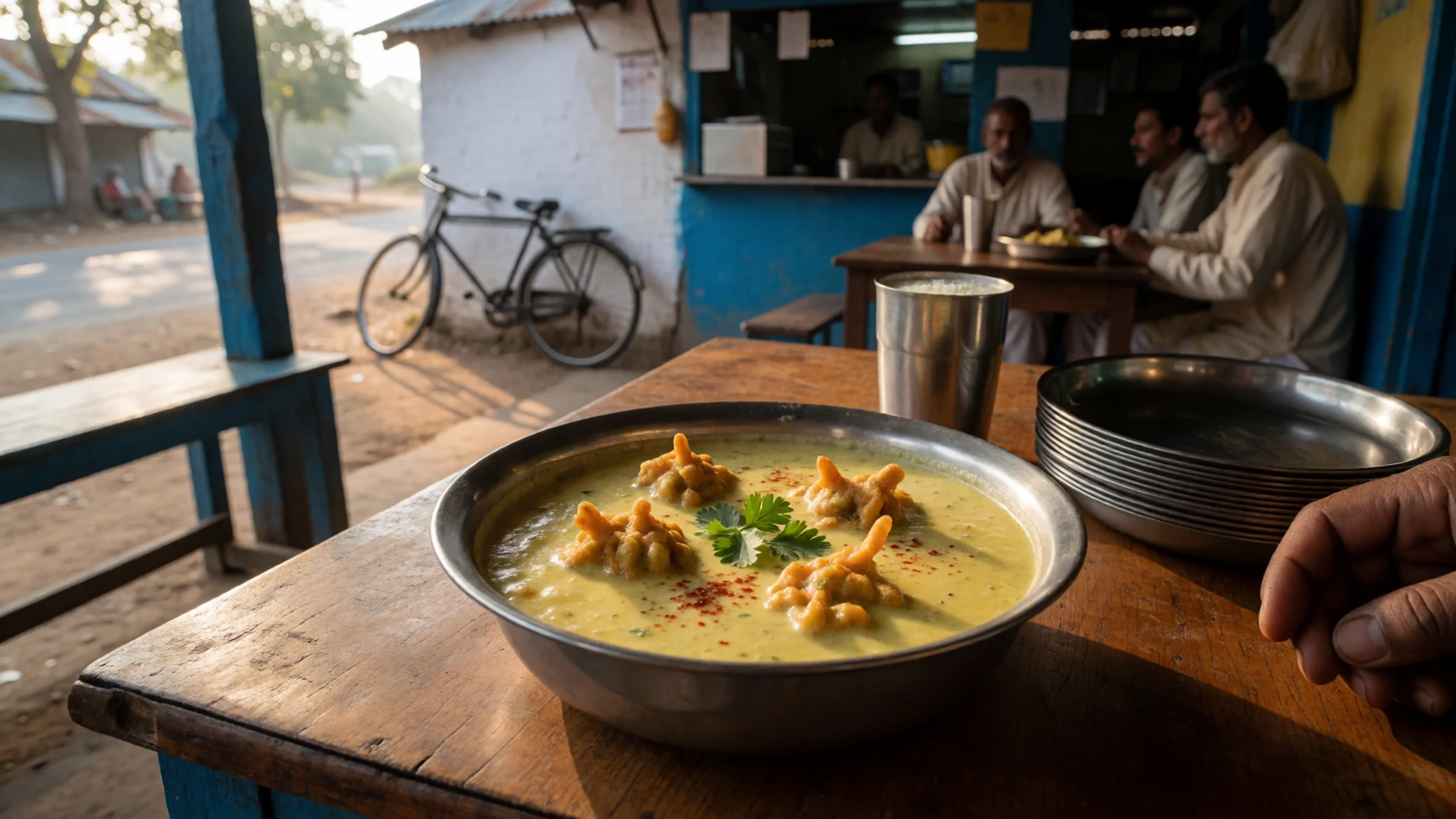
- Bajra aloo roti — Village homes and rural eateries around Rakhigarhi
Flatbread of pearl millet, often mixed with mashed potato, eaten hot with white butter or ghee. Bajra is a traditional grain of the dry plains and is especially welcome in cooler months. Home kitchens serve it, and village eateries often do too.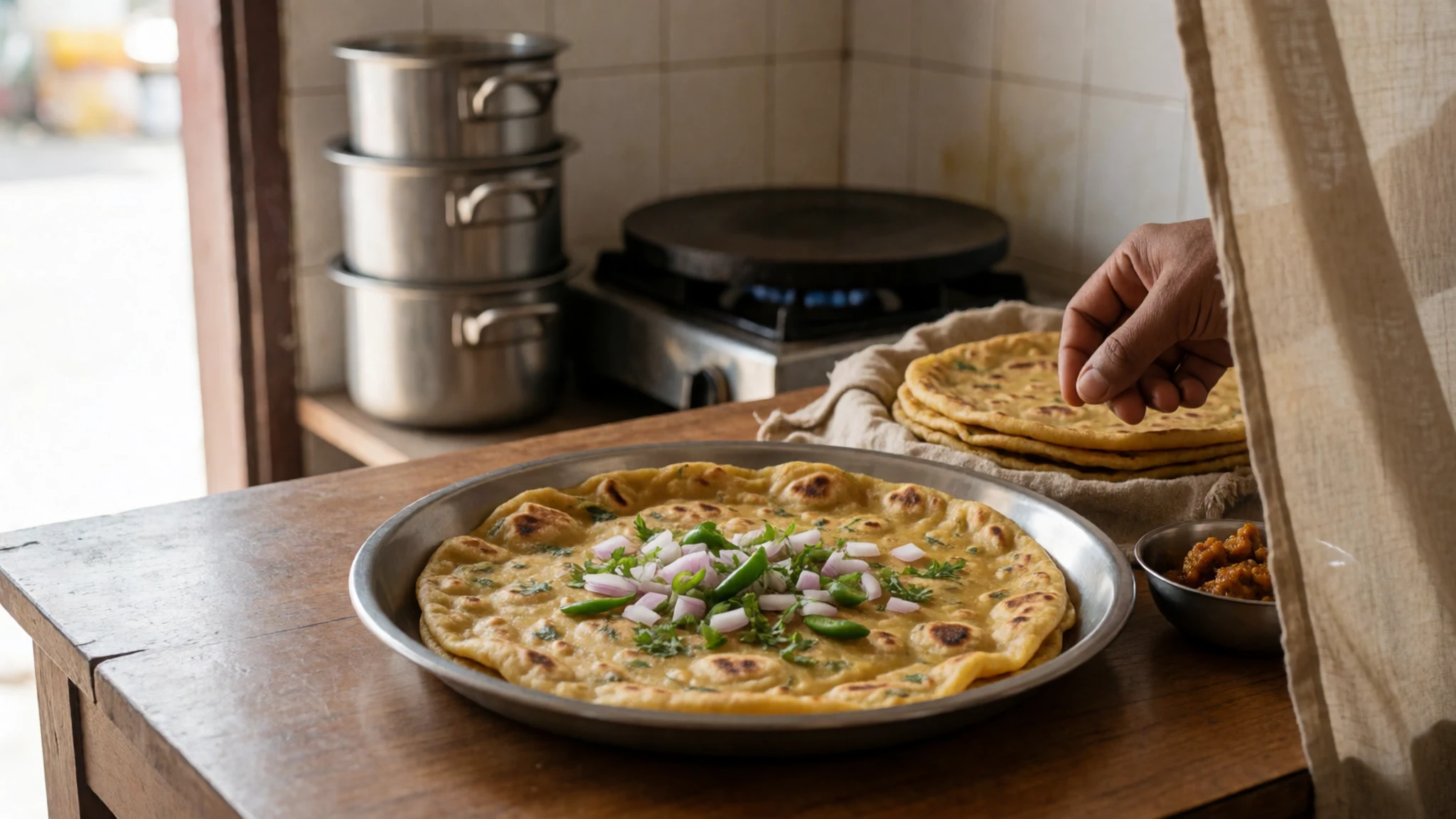
- Churma — Sweet shops and festival meals in Hansi and Hisar
Coarsely crumbled wheat flatbread mixed with ghee and jaggery or sugar, served as a rich sweet at festivals and family meals. It is filling and heavily sweet. Sweet shops in market towns often sell it, and it appears at celebrations. - Bathua raita — Family-run eateries and homes, mainly in winter
Yoghurt whisked with boiled bathua, a leafy winter green, and lightly spiced. It is cooling and slightly earthy, and pairs well with parathas. Best sought in the cooler months, when the leaf is in season. - Lassi and sherbet — Roadside stalls and market stands in nearby towns
Thick, salted or sweet lassi and fruit or rose sherbet are the usual answer to Haryana's heat. A glass of lassi after a morning on the mounds is hard to beat. Choose busy stalls with fresh ingredients and bottled or filtered water.
Plan it
Best time. October to March, with the cooler months of November to February the most comfortable for walking the open mounds. Summer, from April to June, is very hot and dusty, and the monsoon months turn fields and lanes muddy.
How long. 1
Getting there. Fly to Hisar (HSS) or to Delhi's Indira Gandhi International Airport (DEL). From either, the last leg is by road, by hired car or taxi, as the village is not on a major rail station. Haryana's rail network is wide, and tickets can be booked on the IRCTC site or app. Delhi makes a long but workable day trip.
Budget. low
Tips
- Start early, as the mounds have little shade and the middle of the day is hot for most of the year
- Carry water, snacks, sun protection and some cash, since village shops may not take cards
- Read up or visit the National Museum's Harappan Gallery first, as the site has few information boards
- Hire a driver for the day, since public transport to the village is limited
- Check with the Archaeological Survey of India or Haryana Tourism about access before travelling, as excavation areas can be closed
Etiquette
- Ask before photographing villagers, especially women and children
- Stay out of fenced trenches and do not remove pottery or bricks
- Dress modestly in the village, with shoulders and knees covered
Nearby
Sources
- Wikidata Q3418050 (CC0)
- Wikipedia: Rakhigarhi (rev 1382767862) (CC BY-SA 4.0)
- Wikivoyage: Haryana (rev 5370151) (CC BY-SA 4.0)
- Nomu420, Skeleton harappa (CC BY 3.0)
- Durgeshkushvaha, Rakhigarhi Harappan civilization (CC BY-SA 4.0)
- Uwe Dedering, India relief location map (CC BY 3.0)
- DEMIS Mapserver, South Asia non political, with rivers (CC BY 3.0)
- Gary Todd, Harappan (Indus Valley) Burial from Rakhigarhi (CC0 1.0)
- Aadrit28, Harappan Burial Remains from Rakhigarhi (CC BY-SA 4.0)
- juggadery, National Museum in Delhi 3 - visitors (CC BY-SA 2.0)
- juggadery, National Museum in Delhi 4 - Harappan burial (CC BY-SA 2.0)


