Alchi Monastery
Alchi Monastery, India
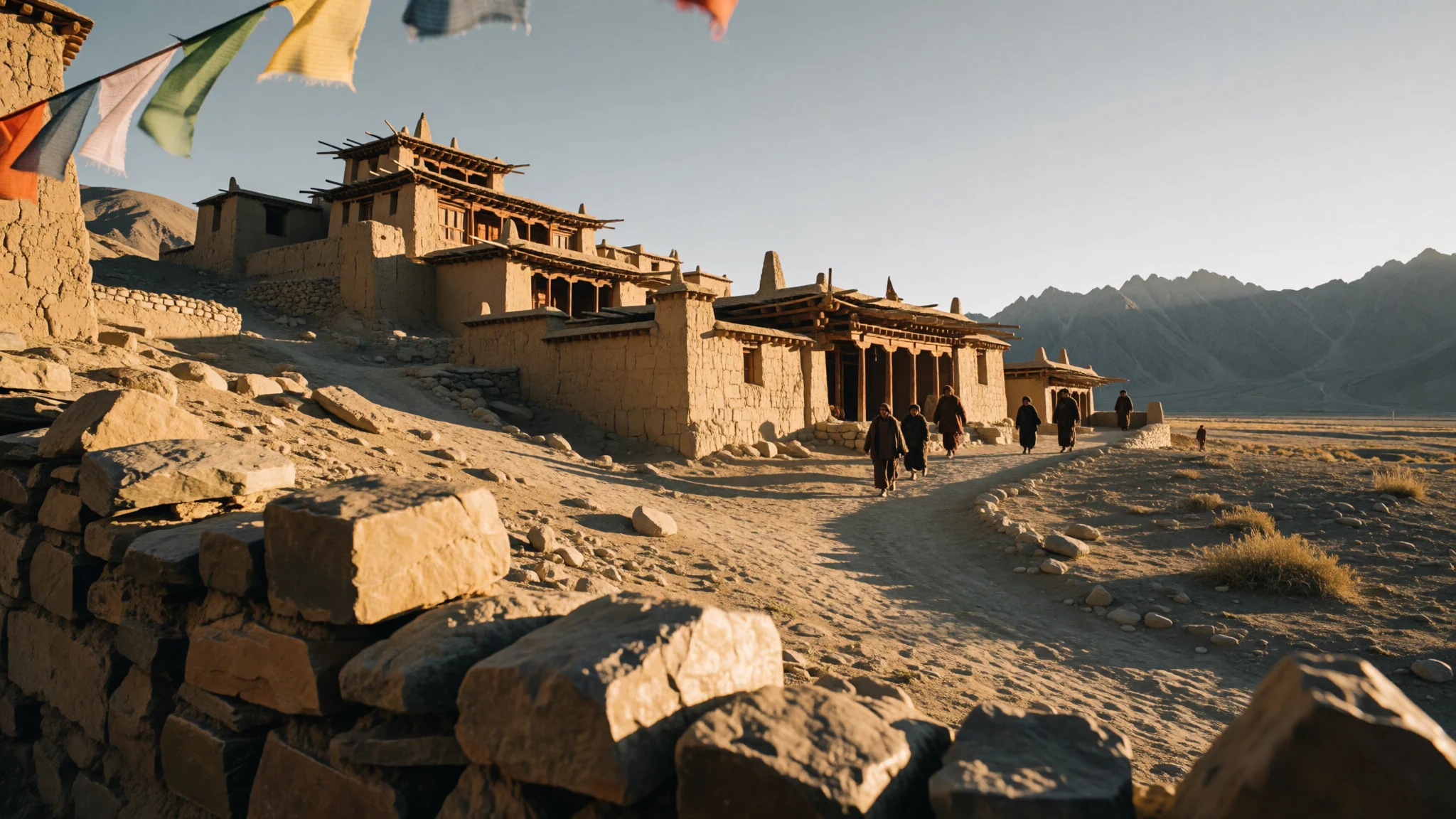
Alchi Monastery is a small temple complex beside the Indus in Ladakh, where painted walls hold more art than its modest size suggests.
The place
Alchi Monastery stands in Alchi village in Leh district, Ladakh, on the Leh–Kargil highway west of Leh. Strictly it is less a single monastery than a chos-'khor, a cluster of temples, and the village holds four separate settlements with buildings from different periods. The complex is administered from Likir Monastery. Alchi belongs to a loose group of three villages with early monuments, the other two being Mangyu and Sumda Chun. The temples there share a distinctive style and workmanship, though Alchi is the one most travellers come for. The core of the site is small: an assembly hall called the Dukhang, a three-storey temple called the Sumtseg, and a temple to Manjushri, with chortens scattered between them. The architecture follows a Kashmiri model rather than the fortress look of many Ladakhi gompas, and Alchi sits on low ground by the river, not on a crag. It reads as a quiet village with temples folded into it, not a monastery looming over a valley. The landscape around it is barren brown and pale grey, broken by irrigated strips of barley and orchard along the valley floor. The interiors are dim and compact, and the paintings are what matter. Alchi is usually taken in as a stop on the Leh–Kargil road or as a half-day trip from Leh, so the courtyard can fill with tour groups around midday and fall quiet by late afternoon.
Its story
Alchi Monastery's origins are told in two ways, and they do not quite agree. Local tradition credits Rinchen Zangpo, the scholar-translator known as Lochen, the Great Translator, with founding the complex in the tenth century, alongside neighbouring sites such as Lamayuru, Wanla, Mangyu and Sumda. His world was that of Yeshe-Ö, the lama-king of Guge, who sent a party of scholars across the Himalaya to spread Buddhist learning in the region. The climate and terrain were so harsh that only two of them survived, and Zangpo was one. He went on to work in Ladakh, Spiti and Sikkim, and travelled into Nepal, Bhutan and Tibet. He is credited with founding a great many monasteries across the trans-Himalaya. The second account comes from the walls themselves. An inscription names a king and a queen as the patrons who founded the monastery. The royal drinking scene beside the Dukhang entrance is thought to show them, and it is dated to around the turn of the thirteenth century. Plenty of inscriptions and texts survive, yet the exact history of Alchi and its sister villages remains uncertain. Many scholars therefore treat the Zangpo attribution as tradition rather than record. For a visitor the uncertainty is part of the interest: the temples are plainly old, plainly royal in taste, and still open to argument.
What to see
- The Dukhang (Assembly Hall) — Alchi village, Leh district
The Dukhang is the main assembly hall at Alchi Monastery, built in the Kashmiri style. Its entrance wall carries the royal drinking scene, a painted court gathering usually linked to the founding patrons. Inside, the walls are densely painted. Let your eyes adjust to the dim light before judging what is there.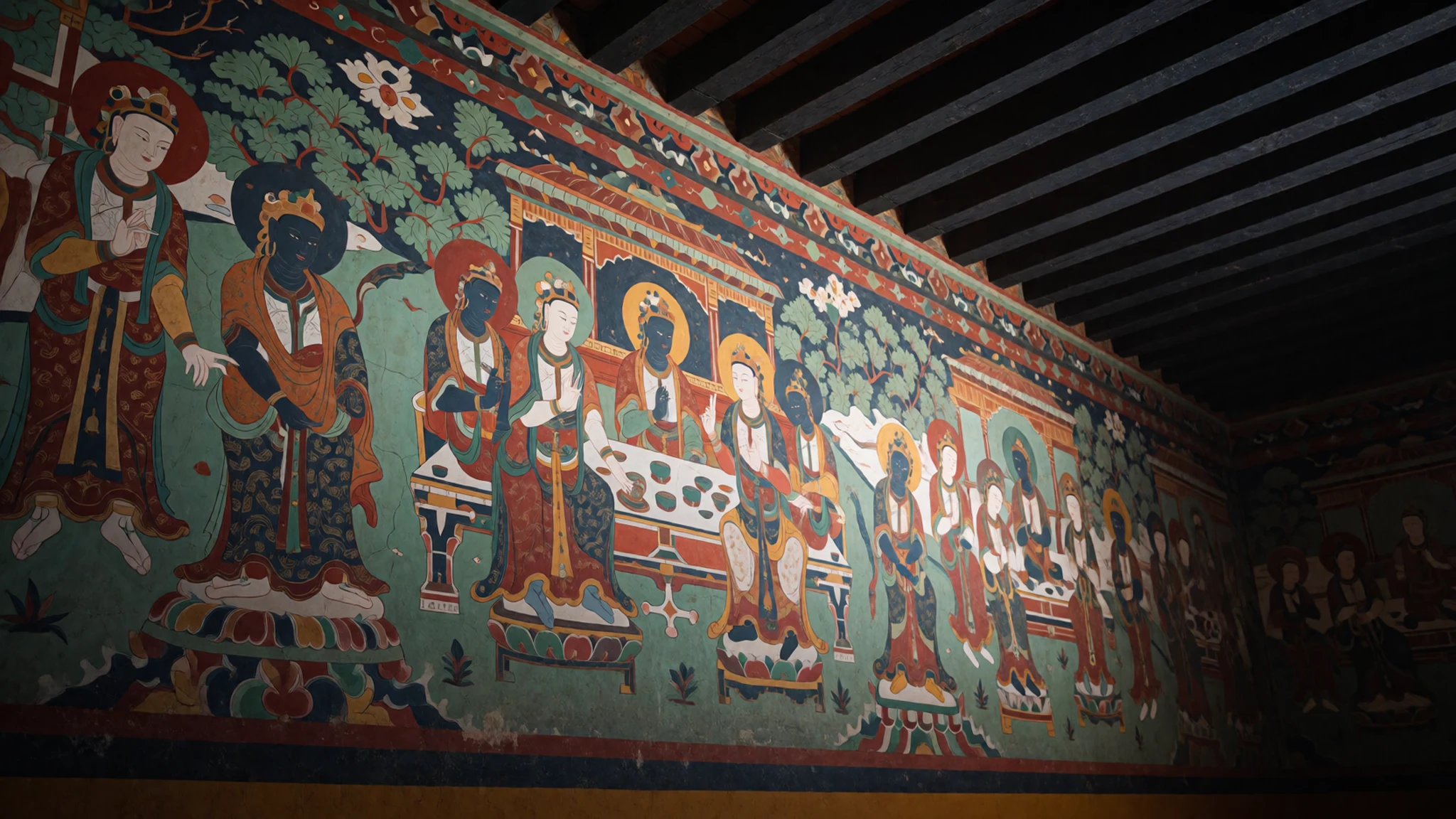
- The Sumtseg — Alchi village, Leh district
The Sumtseg is the three-storey main temple, and its name means exactly that in Tibetan. At Alchi Monastery it is the building where the Kashmiri influence is easiest to read, in its woodwork and in the large painted figures. A quadruple Manjushri sculpture stands inside, under a canopy of painted ceiling.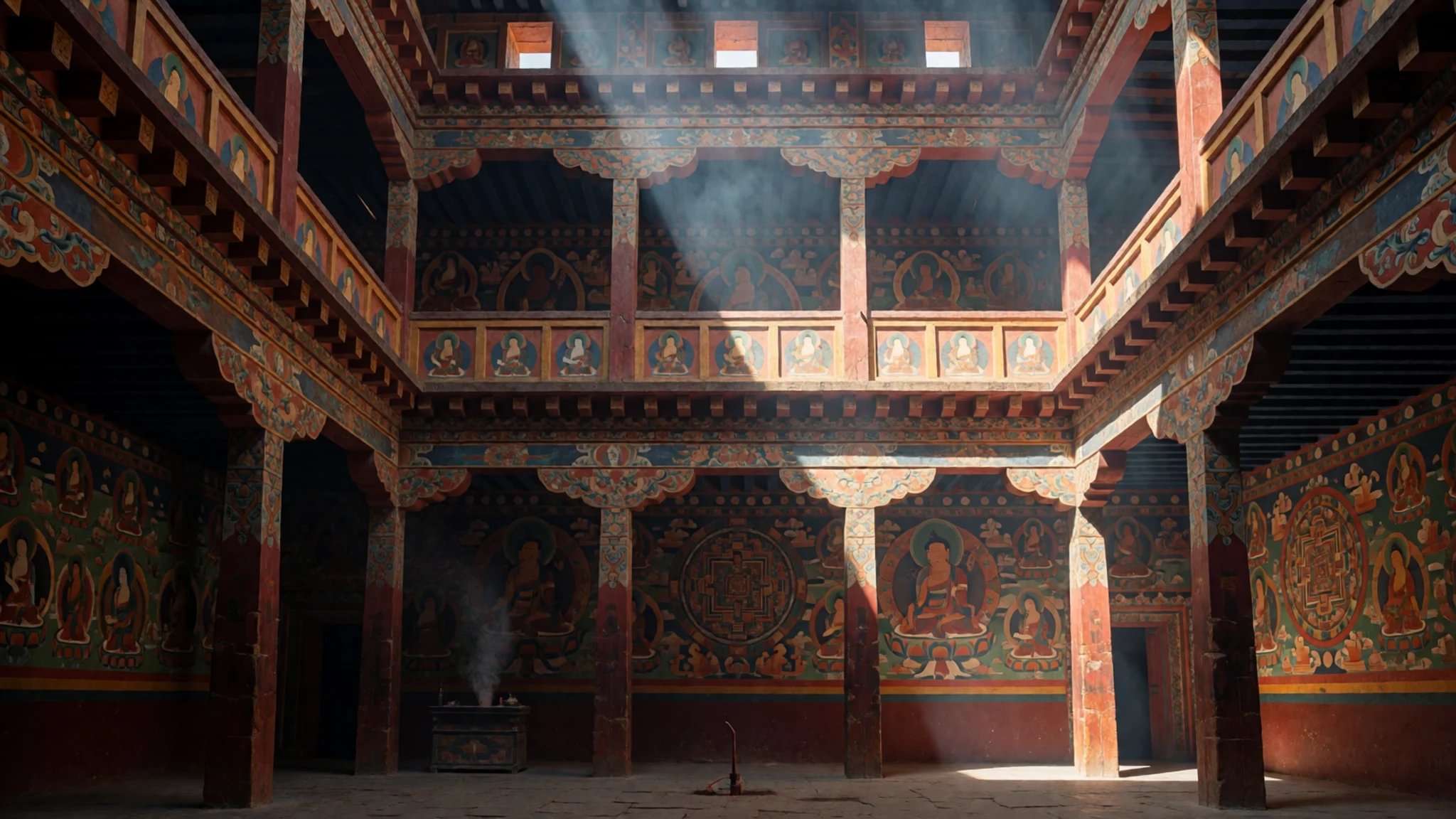
- The Lotsawa temple frescoes — Alchi village, Leh district
The Lotsawa temple at Alchi Monastery is a small chamber, and its frescoes reward slow looking. Figures, ornament and deities are packed into every panel. The paint is old and delicate, so keep hands behind your back and check at the door whether photography is permitted.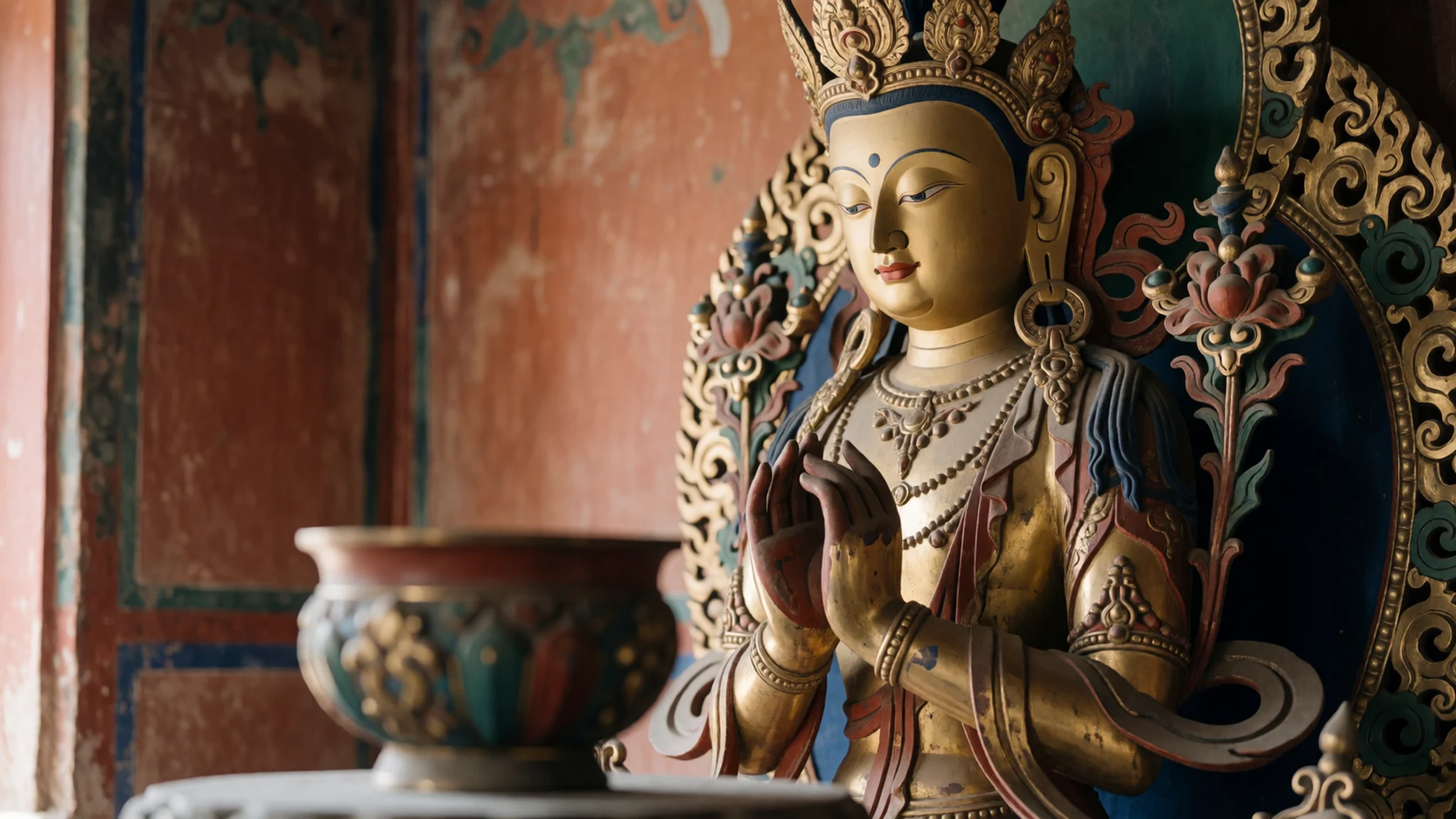
- The Tara shrine in the courtyard — Alchi village, Leh district
A Tara shrine stands in the courtyard of the Dukhang at Alchi Monastery. It is easy to walk past on the way to the larger buildings, but the courtyard is a good place to pause between temples, watch the light change on the whitewash, and get a sense of the complex's scale.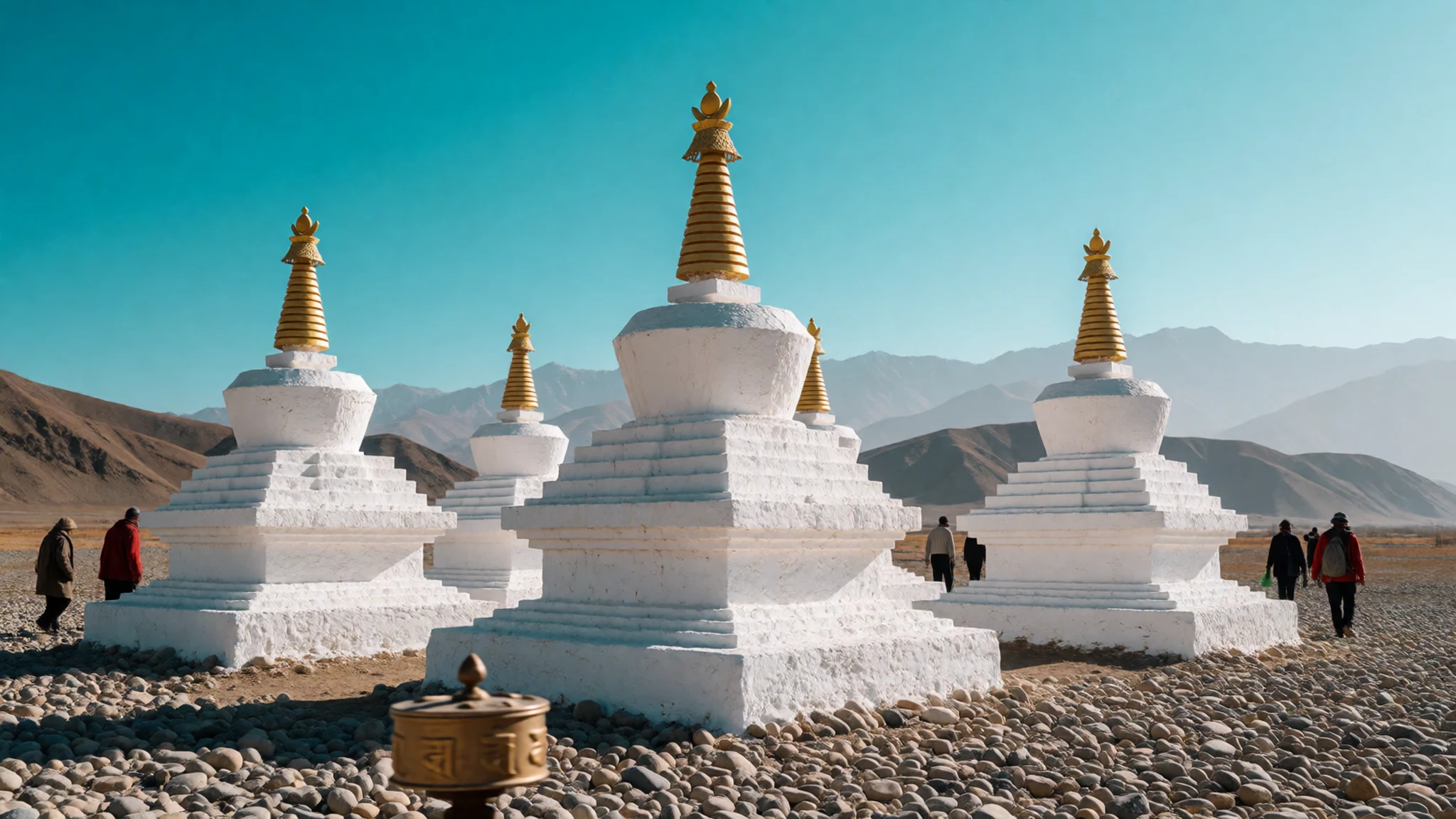
- Chortens and the village lanes — Alchi village, Leh district
Chortens, the stupa-shaped Buddhist monuments, mark Alchi village and form a real part of the complex. Walk the lanes between temples, keeping any monument on your right, and notice the stone walls, irrigation channels and apricot trees. The village is as much part of the visit as the buildings.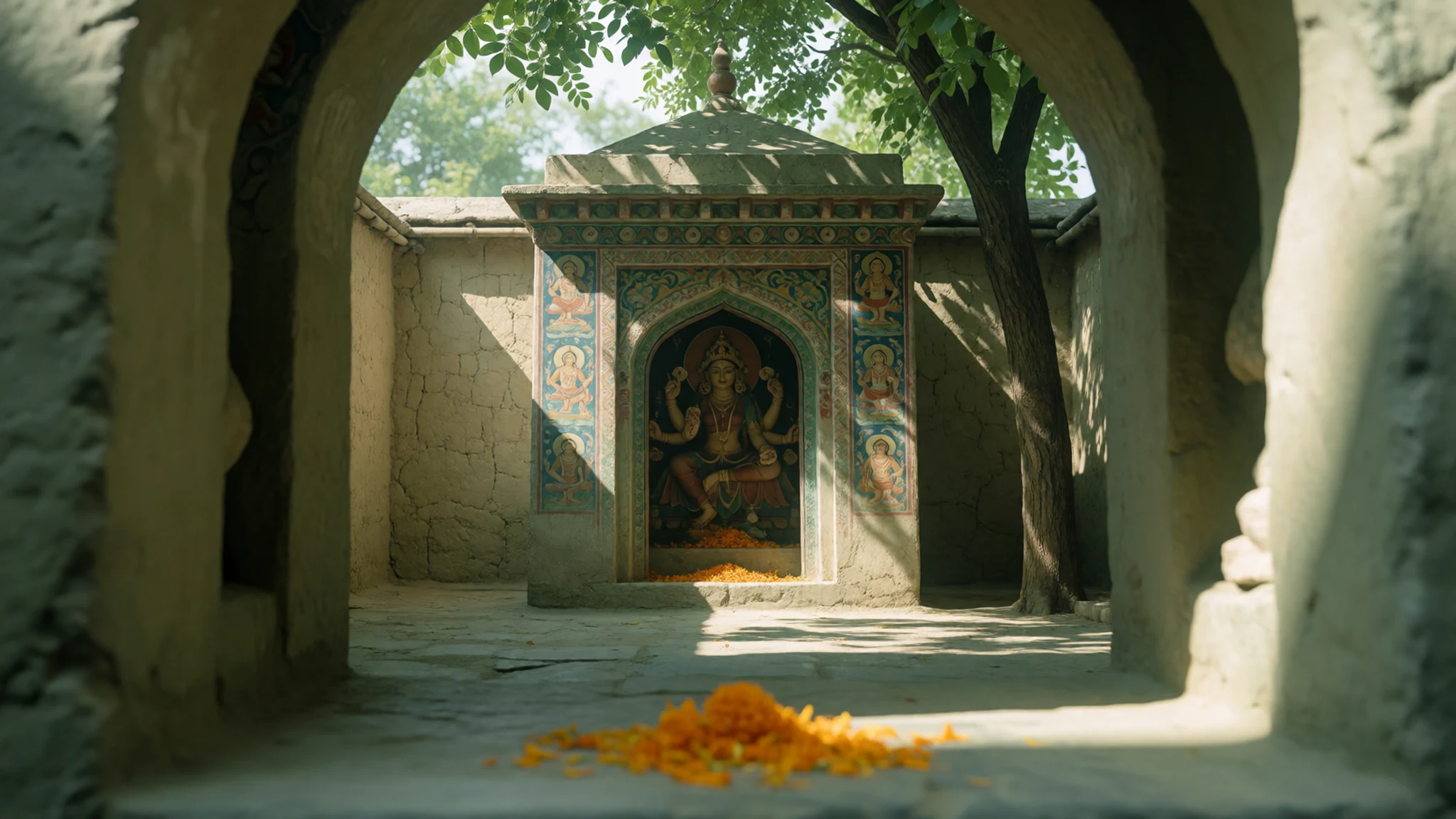
Culture
Alchi Monastery belongs to Ladakhi Buddhism, and religion is central to daily life in the Indus valley. Ladakhis are their own ethnic group, and calling them Kashmiris tends to cause offence, particularly now that Ladakh is a Union Territory separate from Jammu and Kashmir. People are generally friendly and understated, and women are a visible presence in shops, restaurants and on the road, which is not the case everywhere in India. Around the village stand chortens, prayer wheels and mani walls, and the custom is to pass them with the monument on one's right, so that every circuit runs clockwise. The monastery is overseen from Likir, and its temples are small working places of worship rather than museums. A caretaker or monk may be present, and the rooms are cramped, so groups need to take turns. The paintings are centuries old and fragile, which is why touching is firmly discouraged and photography rules are set at the door. Tea and conversation are part of village life, and a guesthouse host will often ask where a visitor has walked from. Those who show curiosity rather than haste are usually met warmly. Walk clockwise around chortens, mani walls and temples, take your hat off inside, do not smoke, and never touch the frescoes.
What to wear
Traditional dress in Alchi and across Ladakh is built for cold, dry, high-altitude weather. The goku is a long, heavy robe of handwoven wool, belted at the waist and tied with a sash. Women traditionally wear the perak, a headdress covered in turquoise that falls down the back, and wool or sheepskin caps are common for men as well. These garments appear at weddings, festivals and religious occasions, and many older villagers still wear robes day to day. Most people now dress in a practical mix: jeans or trousers, fleece, down jackets, sturdy shoes, and a cap or scarf against sun and wind. Younger people in Leh often wear the same clothes as in any Indian city. Visitors should dress for strong sun, thin air and cool evenings, even in summer. Wear layers, sun protection, and a hat for outdoors, remembering that hats come off inside the temples. Because Alchi Monastery is a place of worship, cover shoulders and knees, and avoid anything very tight or revealing. Sturdy, closed shoes with good grip suit the dusty lanes and uneven courtyards. Socks are useful, since shoes may need to come off at some doors. A light shawl or scarf is handy for warmth and modesty alike.
What to eat
- Thukpa — small eateries and village guesthouses along the Leh–Kargil road
Thukpa is the noodle soup that anchors Ladakhi eating, served with pieces of mutton and boiled vegetables and often with a spicy chutney on the side. It is easy to find, filling after a cold morning, and a sensible first order.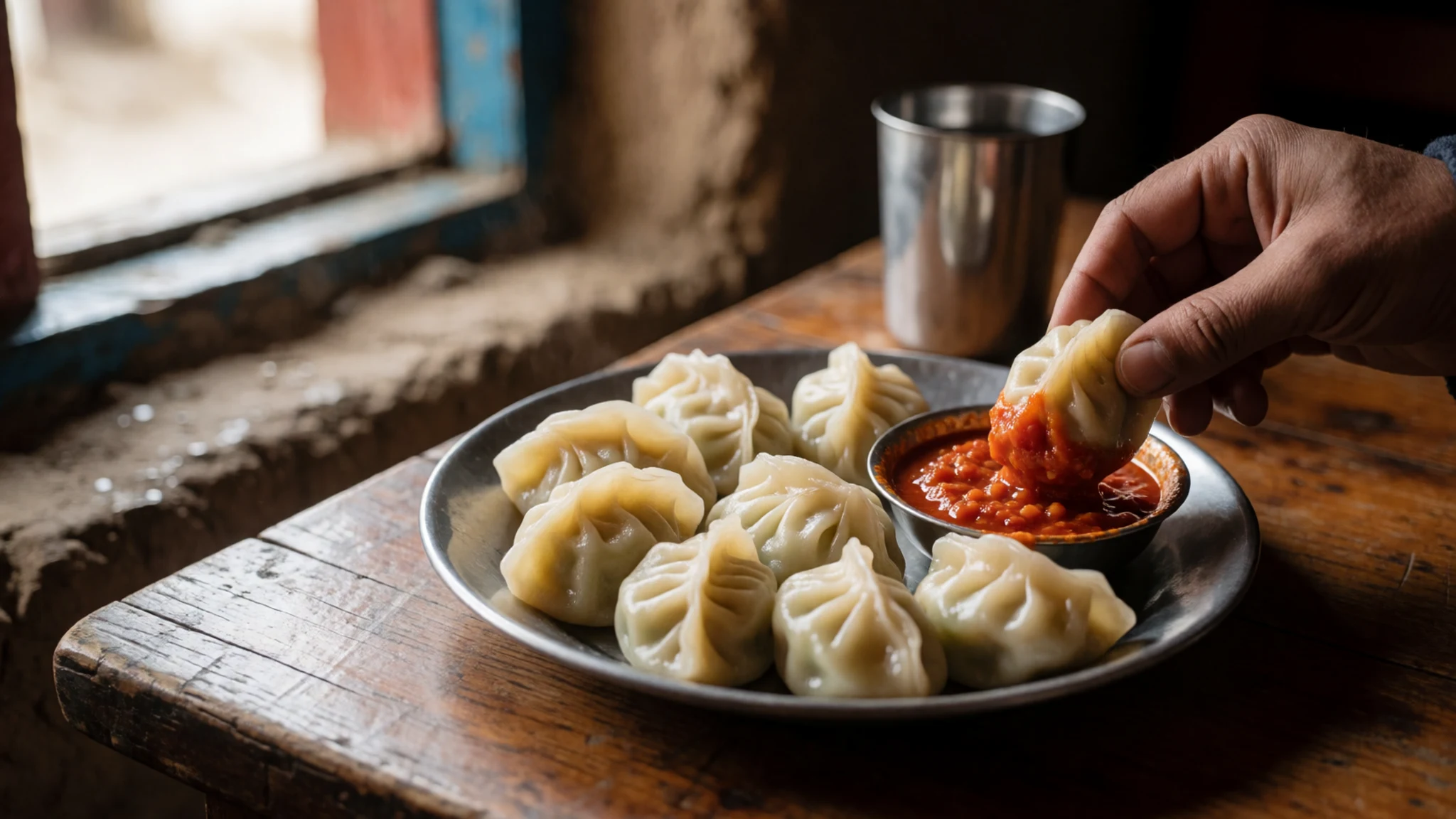
- Momos — tea stalls and eateries in Leh and larger roadside villages
Momos are dumplings with a meat or vegetable filling, served with a sharp, spicy chutney. They are a favourite across Ladakh and borrow heavily from Tibetan cooking. Steamed is the usual version, and the portions work well as a light lunch.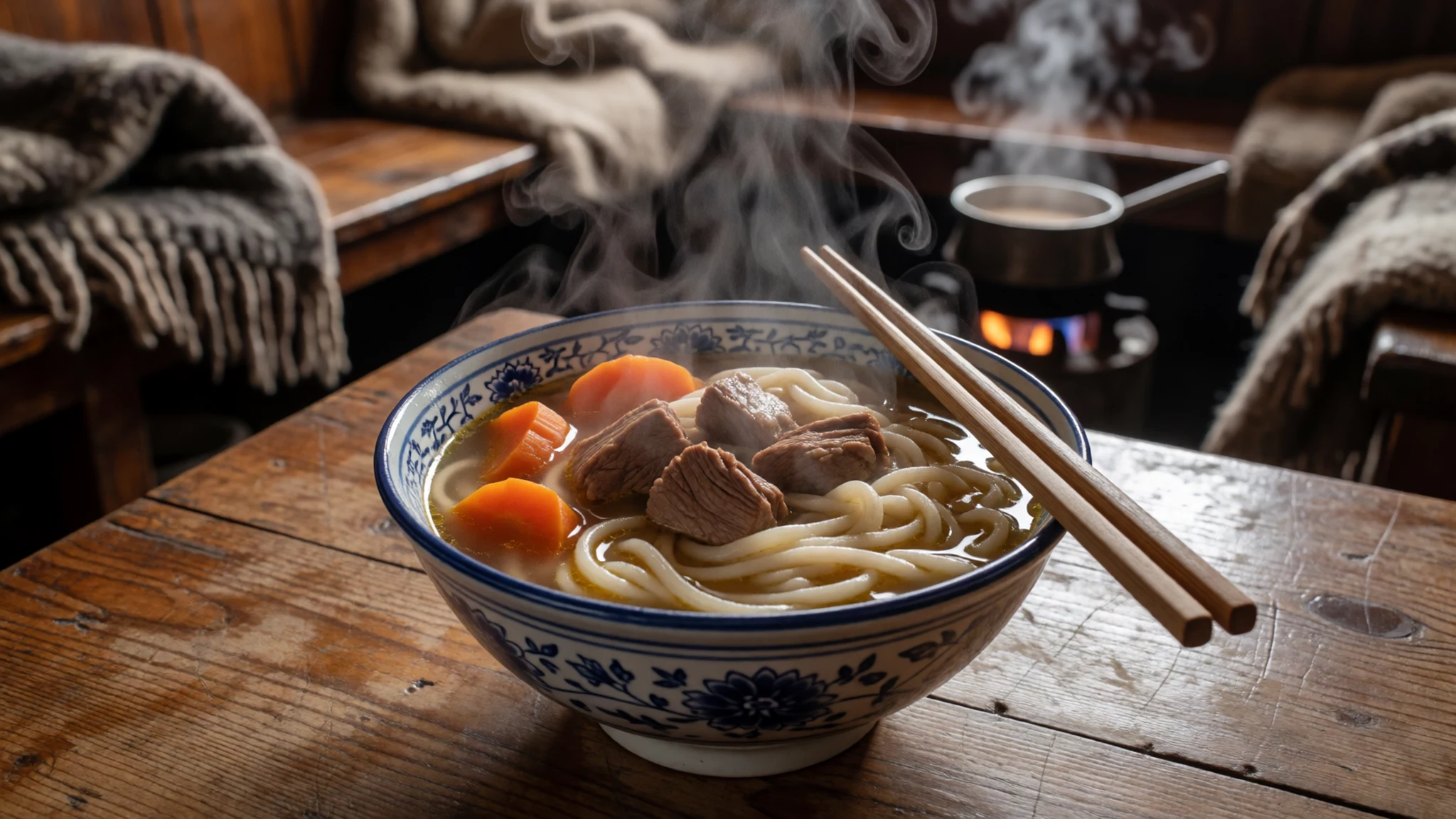
- Skyu — family guesthouses and home kitchens in the villages
Skyu is a heavy pasta dish of small hand-shaped pieces cooked with root vegetables in a thick broth. It is a home-style dish, hearty enough for cold evenings, and tends to appear on guesthouse menus more than in tourist cafés. - Tsampa (ngamphe) — village kitchens and shops selling local grains
Tsampa is roasted barley flour that can be eaten without cooking, which has made it useful trekking food. It is often mixed with hot salt tea, and sometimes with hard cheese. Plain, it is a bit dull, but it is a real taste of the region. - Ladakhi pulao — sit-down restaurants in Leh and larger towns
Ladakhi pulao is rice cooked in mutton stock and seasoning, layered with caramelised onions, carrots and nuts. It is not a street food, so look for it on a restaurant menu where the kitchen has time to prepare it properly.
Plan it
Best time. June to September is the practical window, when Ladakh's roads are open and the valley days are warm and dry. Nights stay cool, and winters are severe, so many guesthouses and services slow down or close outside the main season.
How long. 1
Getting there. Fly to Leh's Kushok Bakula Rimpochee Airport (IXL), which has several flights from Delhi daily. From Leh, Alchi lies west along the Leh–Kargil Highway, reached by taxi, bus or motorbike.
Budget. mid
Tips
- Give yourself a day or two in Leh to adjust to the altitude before heading out
- Visit early or late in the day, when tour groups are fewer and the light is softer in the temples
- Carry cash and water, since village shops are small and card machines are unreliable
- Bring a torch or phone light for the dim interiors, and check at the door whether photography is allowed
- Check current permit rules and the official site for temple opening arrangements before travelling
Etiquette
- Remove your hat and shoes where asked, and do not smoke inside the temples
- Walk clockwise around chortens, mani walls and temples
- Never touch the frescoes
Nearby
Sources
- Wikidata Q2705908 (CC0)
- Wikipedia: Alchi Monastery (rev 1377612705) (CC BY-SA 4.0)
- Wikivoyage: Leh district (rev 5393479) (CC BY-SA 4.0)
- Photo: Alchi Gompa, Drmaliktariq (CC BY 3.0)
- Photo: Government Middle School Alchi, Steve Hicks (CC BY 2.5)
- Photo: Royal drinking scene in the Dukhang, Yaroslav Poncar (Public domain)
- Photo: Tara shrine, Y.Shishido (CC BY 3.0)
- Photo: Sand Mandala, John Hill (CC BY-SA 4.0)
- Photo: Manjushri sculpture, Bernard Gagnon (CC BY-SA 2.0)
- Photo: Fresco in Lotsava temple, Bernard Gagnon (CC BY-SA 2.5)
- Photo: Chorten in Alchi, Vyacheslav Argenberg (CC BY 4.0)


