Andaman Islands
Andaman Islands, India

Andaman Islands offer forested hills, mangrove coasts and coral reefs far out in the Bay of Bengal, with beaches that are still quiet.
The place
The Andaman Islands are a long chain of islands and islets strung from north to south across the Bay of Bengal, lying nearer to Myanmar than to the Indian mainland. With the Nicobar Islands further south, they form a loose barrier between the open bay to the west and the Andaman Sea to the east. Most of the chain is part of the Andaman and Nicobar Islands, a Union Territory of India, while a few northern outliers belong to Myanmar. Geographically the archipelago is a drowned mountain range. It carries the Arakan Yoma ridge of Myanmar southwards and points on towards the Indonesian islands. The highest ground reaches 732 m, and the hills are cloaked in evergreen forest, with mangrove fringing many of the shores and coral growing in the shallows. The weather is warm all year, cooled by sea breezes. Rain is irregular: the north-east monsoon is mostly dry, while the south-west monsoon brings very heavy rain. The islands are also home to the Andamanese peoples, including the Jarawa and the Sentinelese. Some islands can be visited with permits, but others, North Sentinel among them, are closed by law, and boats are kept well away from its shores to protect its residents' privacy. In practice, most visitors fly into Port Blair on South Andaman and then travel by ferry to Havelock, Neil and a handful of other islands. Tourism is still young here, and the pace is slow, the roads are few and the sea is the main highway.
Its story
The Andaman Islands appear in written records surprisingly early. A thirteenth-century Chinese work by Zhao Rukuo, describing the seas between Sumatra and Ceylon, mentions ships being blown towards the islands when the wind turned against them. In the fifteenth century the group turns up on a Chinese navigational map from the era of Zheng He as a mountain landmark. Sailors, in other words, knew the islands as a hazard and a marker long before they were a destination. The human story is much older. The oldest archaeological evidence of settlement is from the first millennium BC, but genetic studies point further back, to settlement more than 26,000 years ago, probably around the end of the last glacial period, when lower seas shortened the crossing from the mainland. The Andamanese peoples descend from a common origin and are genetically distinct from other Asian populations. Their two main language groups seem to have split from each other many thousands of years ago. Later, the Chola ruler Rajendra I brought the Andaman and Nicobar Islands under his control, a sign that Indian maritime power reached these waters in the medieval period. Maps drawn from the era of British contact show how many distinct peoples, languages and dialects once existed across the chain, and how much smaller that picture is today. That loss is part of why the protected tribal reserves matter so much now.
What to see
- Mahatma Gandhi Marine National Park — Wandoor, South Andaman
Mahatma Gandhi Marine National Park, reached from the small town of Wandoor on South Andaman, protects a scatter of islands with reefs and clear water. Boats leave from the jetty for snorkelling and glass-bottom viewing. Overnight stays need permission, and a few islands inside are closed, so check the current rules with the forest department before booking.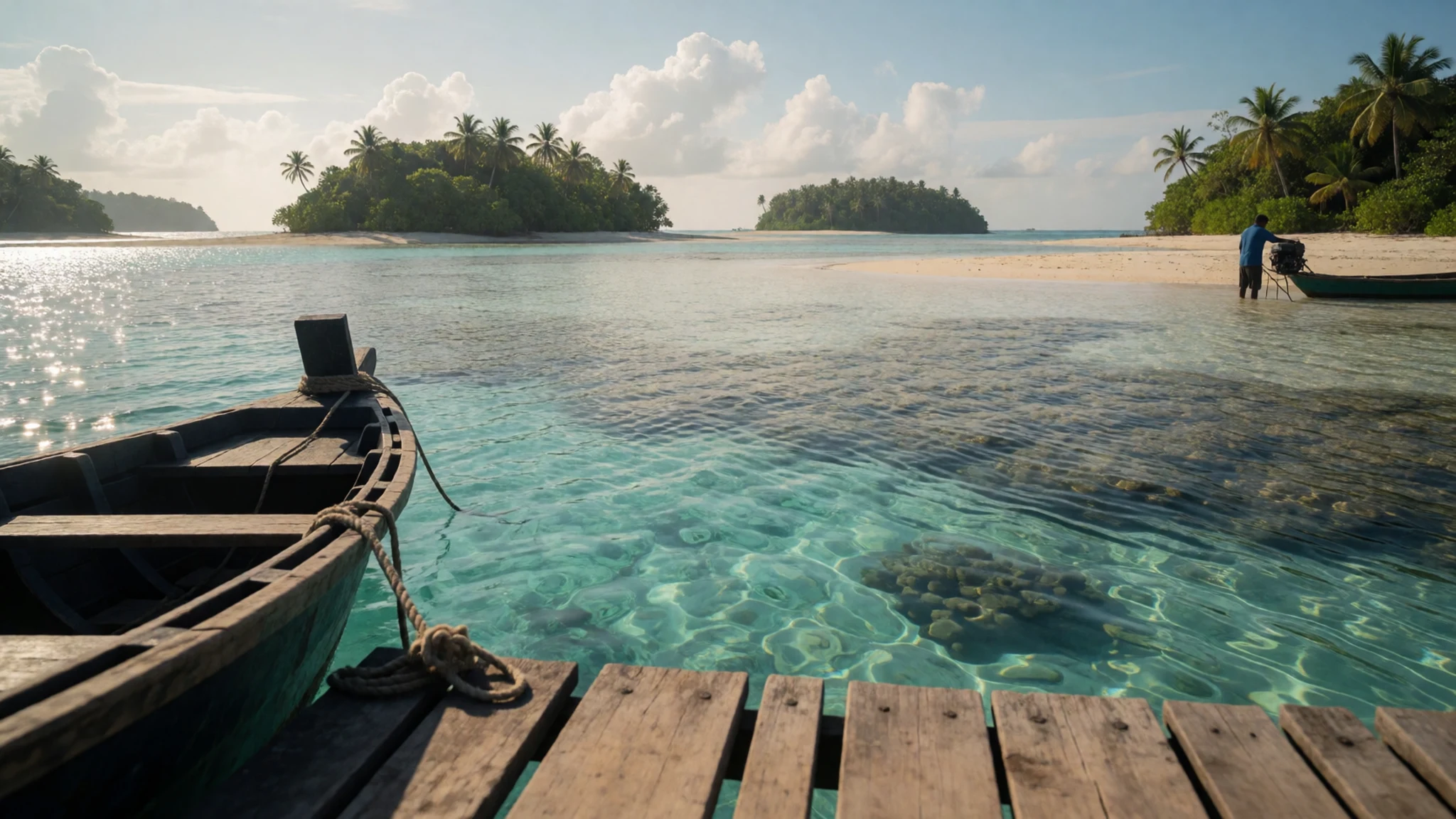
- Mahatma Gandhi Marine National Park — Off Middle and North Andaman
Mahatma Gandhi Marine National Park is known for its coral reefs and the marine life that lives around them. It lies off the northern end of the main chain and is best for people who want reef time rather than a sunbathing beach. Conditions vary with the monsoon, so ask a local operator about visibility.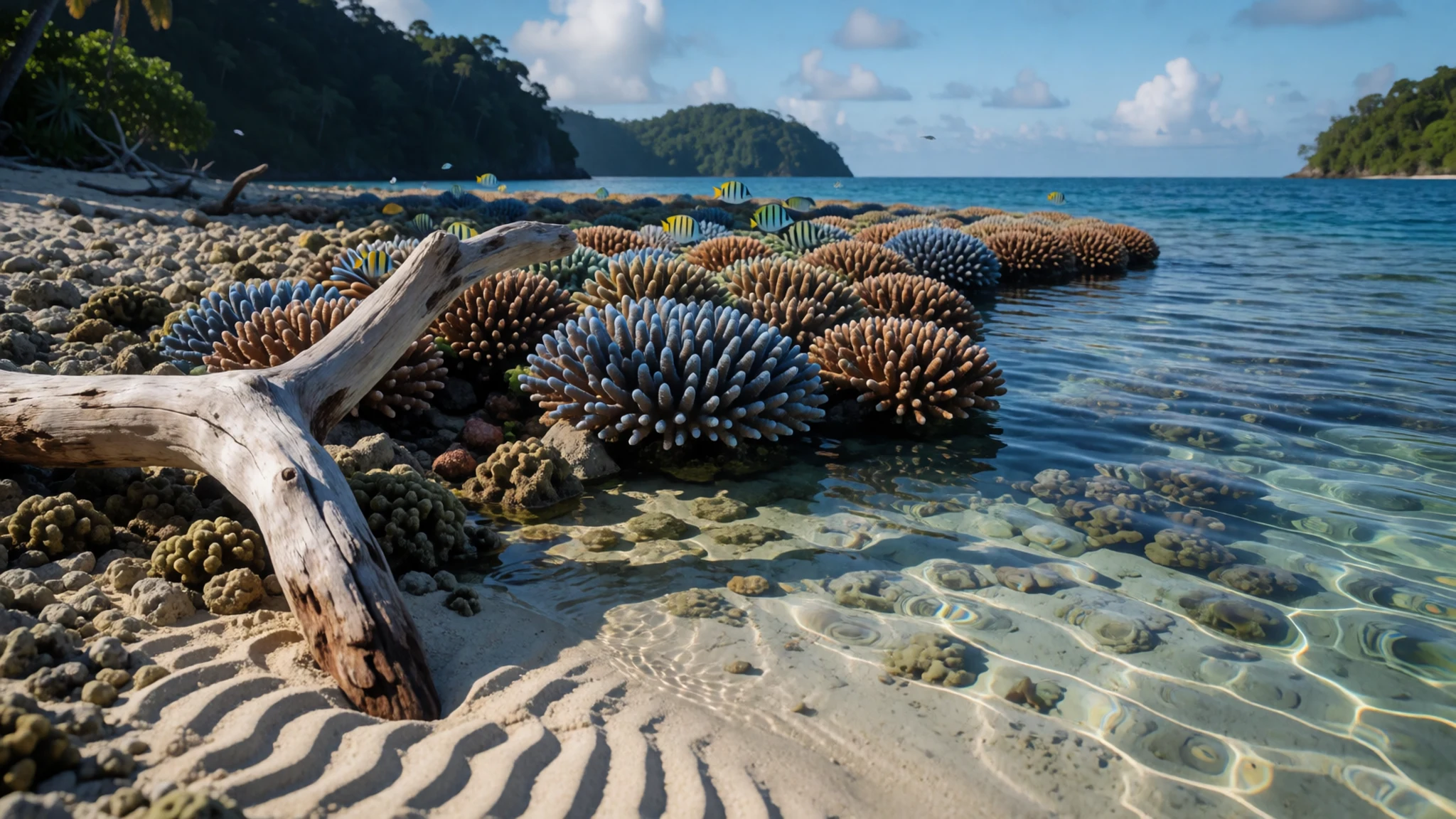
- Mount Harriet — South Andaman, near Port Blair
Mount Harriet covers forested hills above Port Blair, and it makes a gentler day than a boat trip. The peak offers a high vantage point over the surrounding islands. The walking is shaded, the views reach over the bay, and mornings are cooler and clearer than the afternoon heat.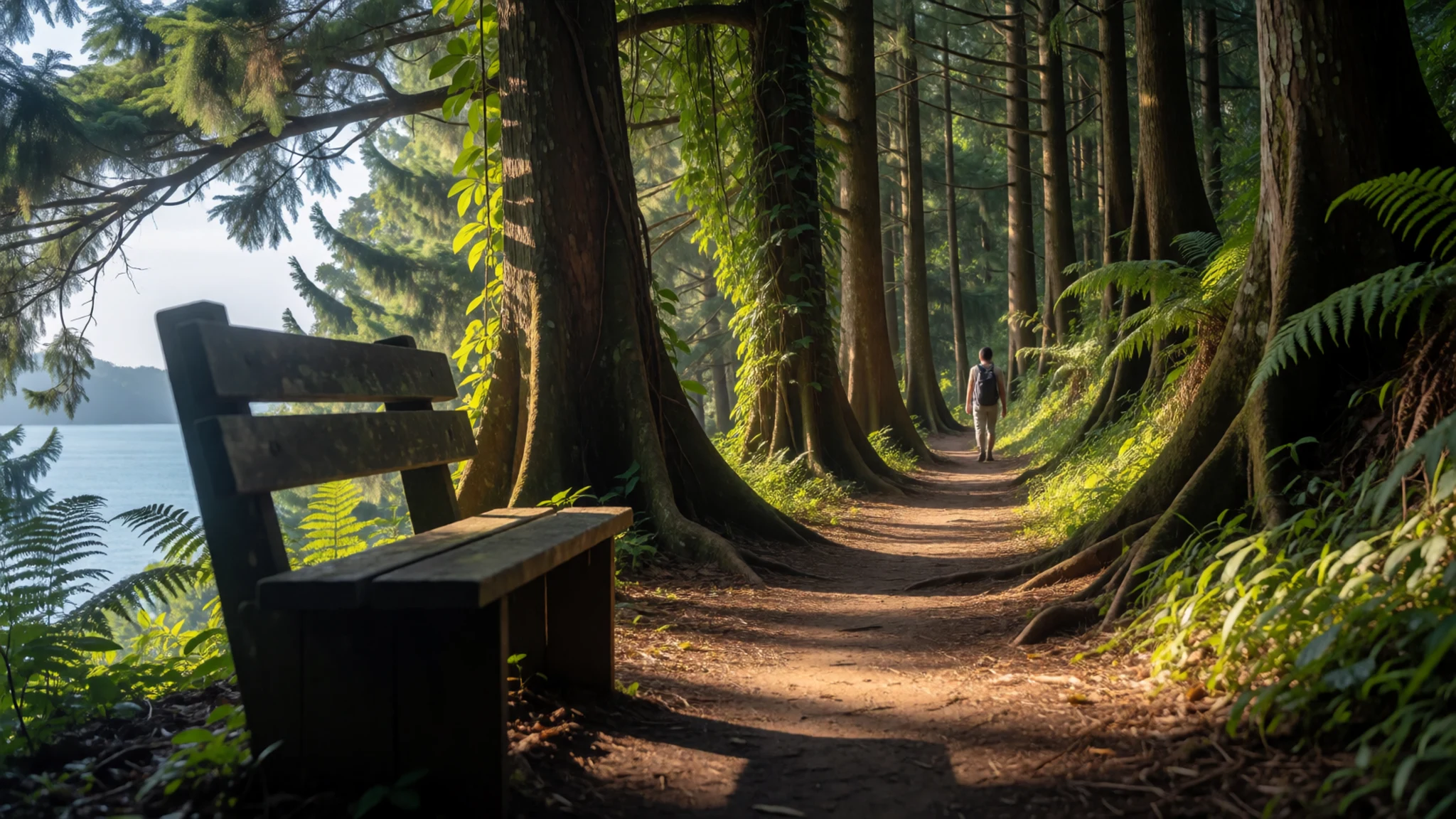
- Saddle Peak — North Andaman
Saddle Peak sits in the far north of the Andamans, surrounded by tropical forest and rich in plant and animal species. It is a trip for people happy to go a long way for quiet trails. Allow extra time for ferries and roads, and check conditions before setting out.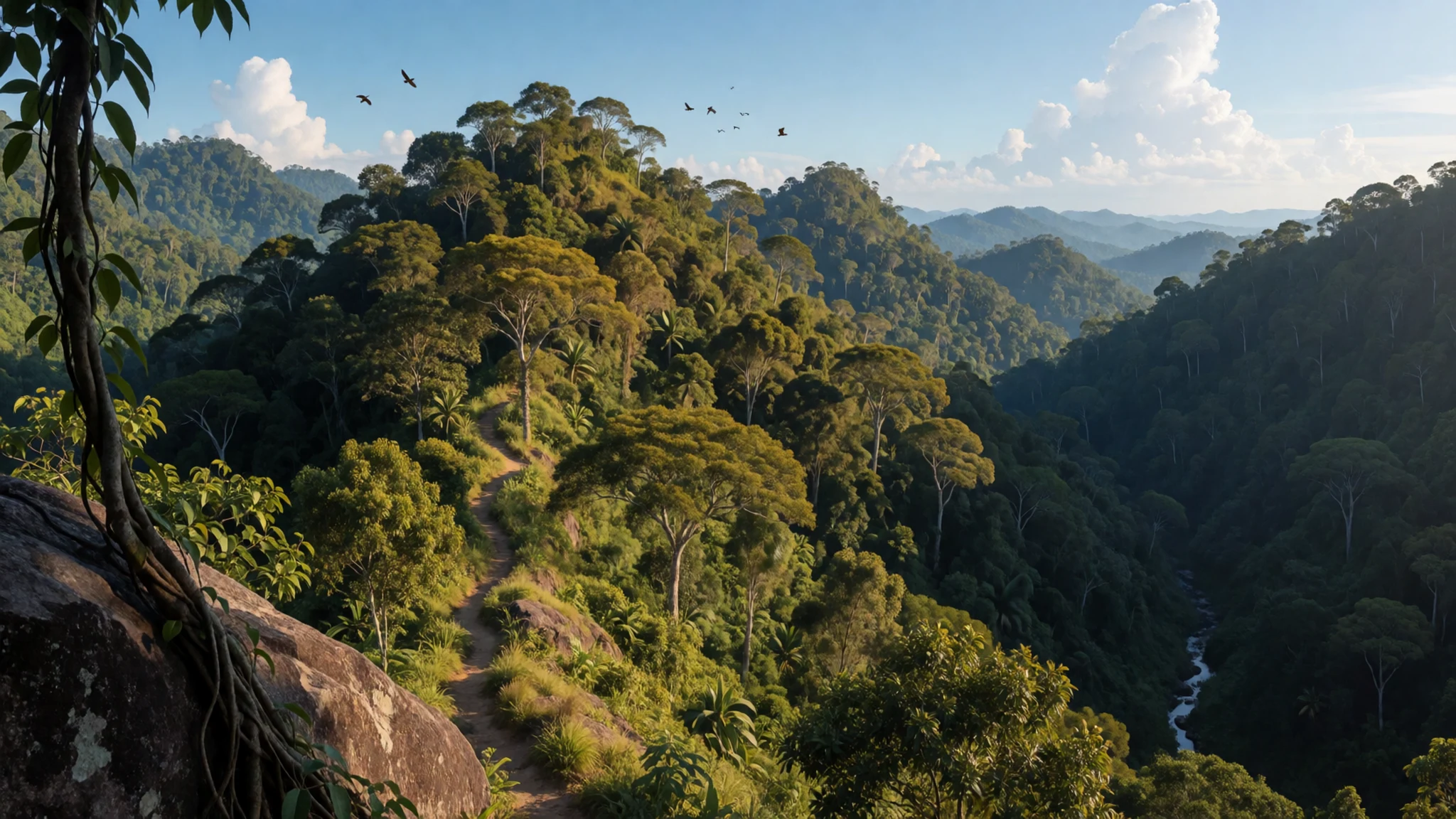
- North Button Island — Button Islands, off Middle Andaman
North Button Island is a small, protected island group whose waters shelter dugong, dolphin and water monitor, among other animals. Access is controlled, and the point of a visit is to look from a boat or the shore and leave the wildlife undisturbed. Ask the park authorities what is currently allowed.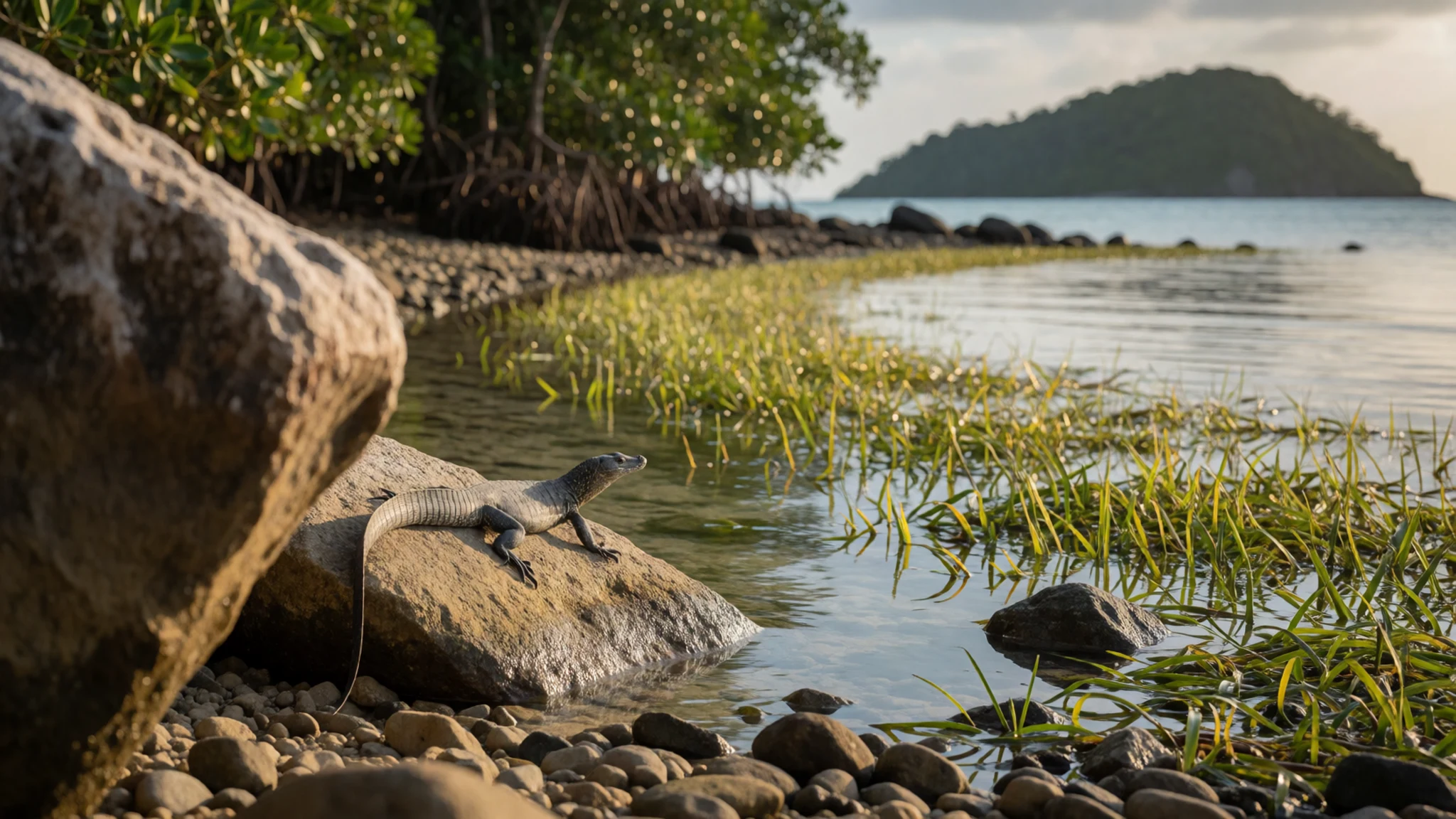
- South Button Island — Button Islands, off Middle Andaman
South Button Island has shallow coral reefs that are popular with scuba divers. The water over the reef is clear on calm days, and dive operators from the main islands run trips here. Divers should use a licensed operator and avoid touching or standing on the coral.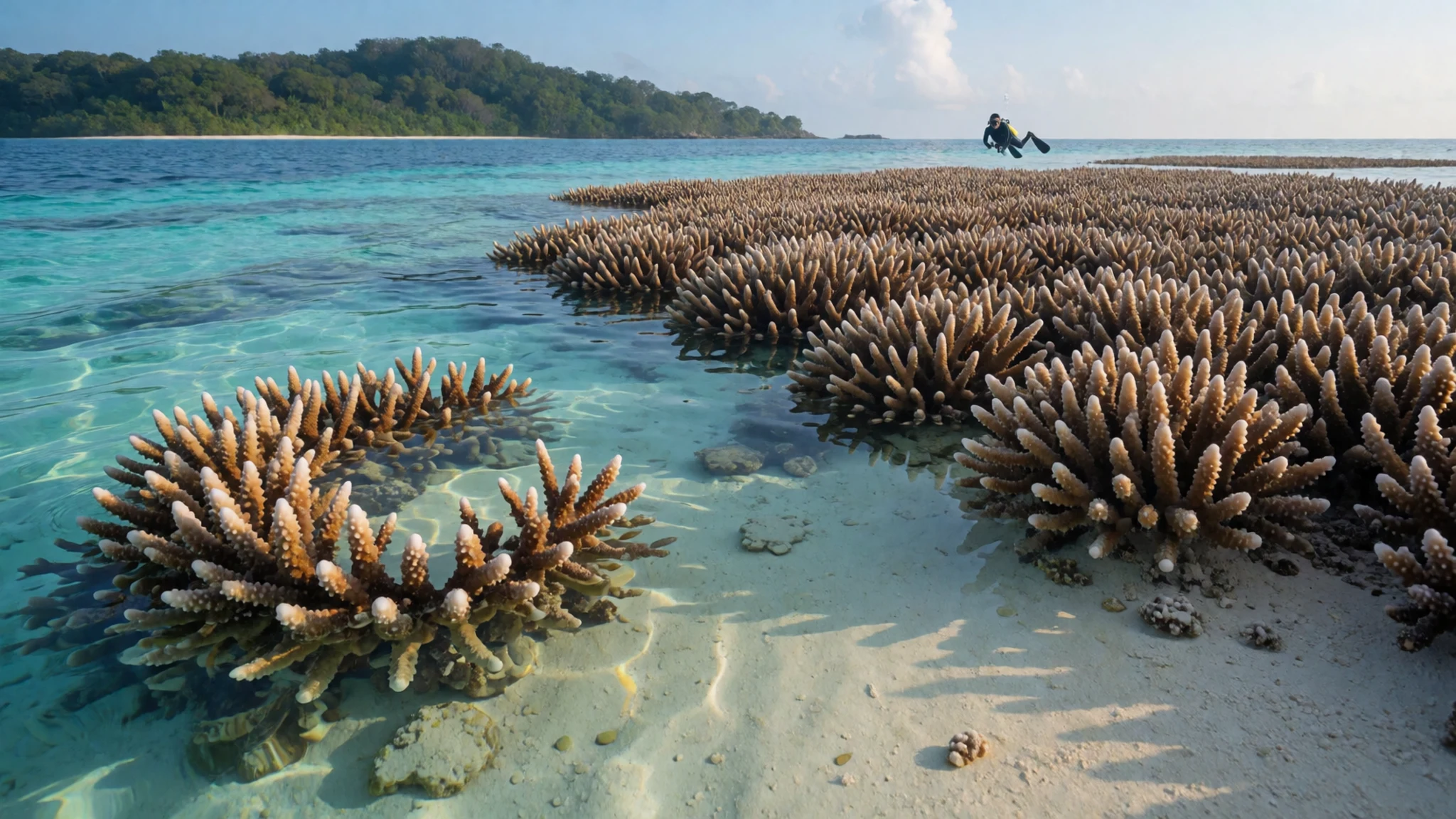
Culture
The Andaman Islands blend several communities. Many residents trace their families to the Indian mainland, so Bengali, Tamil, Telugu, Malayalam and Hindi are all heard, while the original Andamanese peoples live largely apart in protected reserves. Tourism is still young here, and visitors have a real say in how it develops. Daily life is quiet and unhurried. Fishing boats leave at dawn, small shops close for the afternoon heat and evenings are early, with little in the way of pub culture or nightclubs. Local women dress conservatively, and visitors who follow that lead are noticed and appreciated. Alcohol is sold in a few restaurants and at licensed beer and wine shops in Port Blair and on Havelock, but it is not part of public life, and drinking in public spaces causes offence. The calm of the islands is one of their main assets, and residents notice when groups bring loud music to beaches or villages. The Jarawa and Sentinelese live in reserves where outsiders have little place, and contact is restricted for the sake of the communities' health and privacy. Photographing, feeding or stopping near tribal people on the roads is not acceptable. Dress modestly away from the beach, keep noise down, drink only where it is permitted, and never photograph or stop for tribal people on the road.
What to wear
The Andaman Islands do not have a single traditional dress, because most residents come from mainland communities and keep their own clothing. Women often wear cotton or silk saris, or salwar kameez, and men wear shirts with trousers or a lungi, the wrapped cloth common across southern and eastern India. Cotton is preferred because it copes with heat and humidity. The Andamanese peoples have traditionally worn very little, using bark, shell and plant fibre for ornament, and their way of life is not something visitors should photograph or imitate. Day to day, people in Port Blair and the larger villages dress in light cotton, with shirts, kurtas and simple dresses. Beach clothing is for the beach: swimwear in town draws stares, and many local women swim in everyday clothes. Visitors should pack light, loose, quick-drying cotton or linen, a wide-brimmed hat, sunglasses and high-factor sun cream, which is costly and hard to find on smaller islands. Cover shoulders and knees when walking through villages or markets. Bring a light rain jacket for the wet season. Sandals suit boats and beaches, but closed shoes with grip are better for forest trails and wet jetties, and reef shoes help on rocky shores. A sarong is useful as a cover-up, a beach mat and a sun shield.
What to eat
- Grilled or fried fresh fish — Seafood restaurants in Port Blair and beach-side eateries on Havelock
Fish caught the same day is the staple here, and it is usually grilled with spices, fried in a light masala or served whole. Prices run a little higher than for ordinary Indian dishes, and the quality justifies it.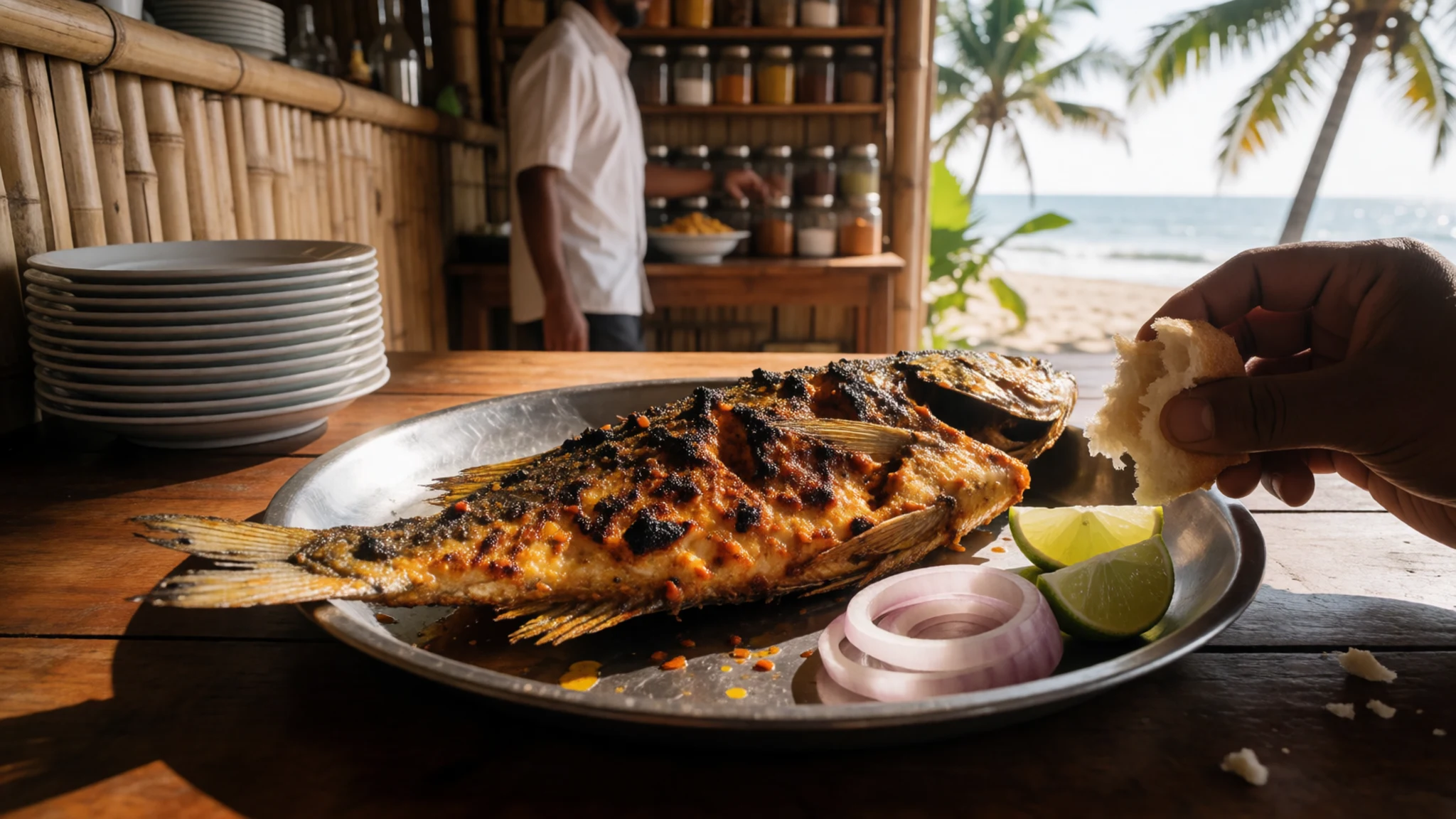
- Fish curry and rice — Small family-run eateries and dhabas across the main islands
A home-style curry of local fish simmered in a coconut or tomato-based gravy, served with steamed rice. Spice levels vary, so ask for a milder version if heat is a concern.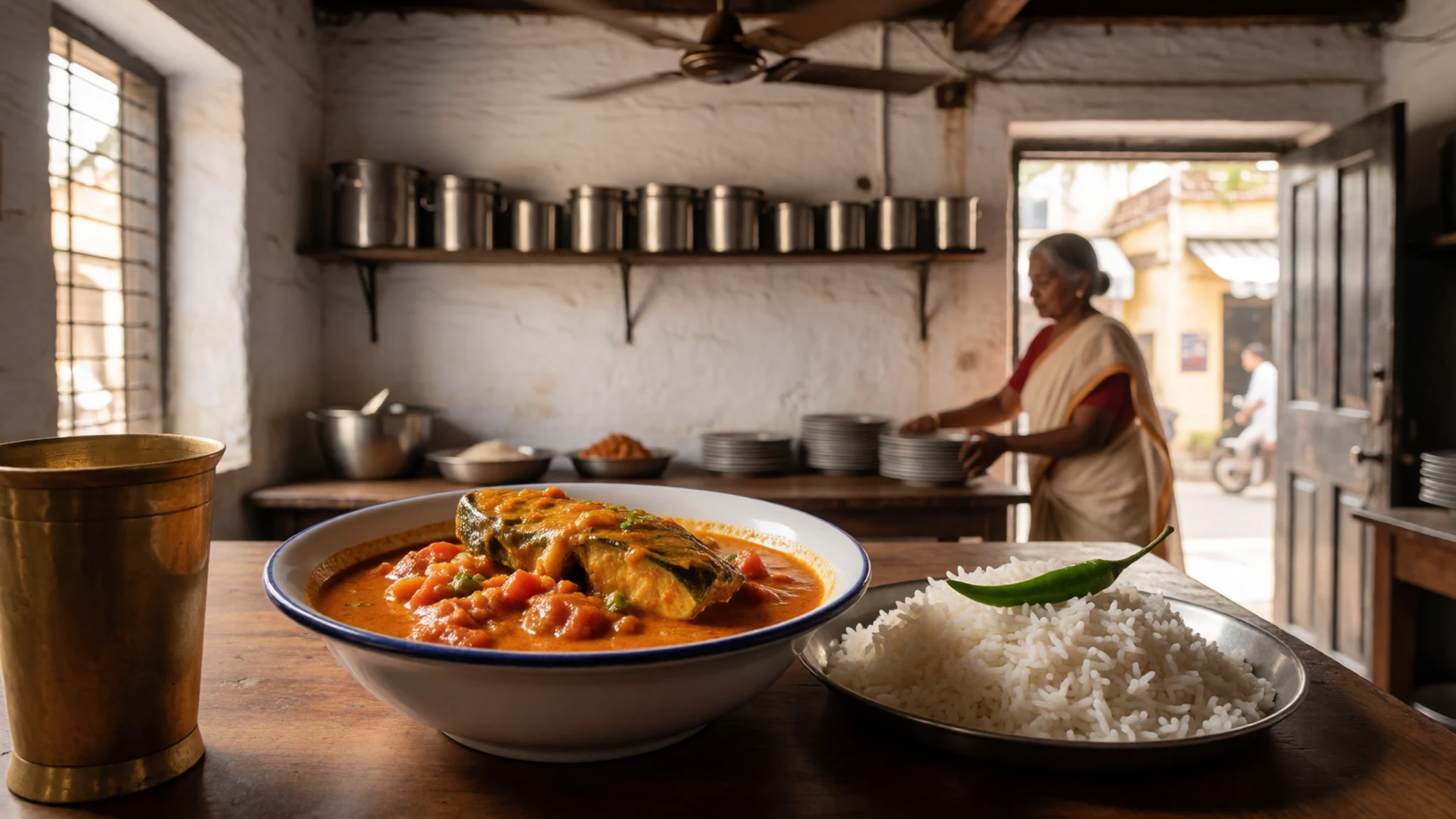
- Prawns and crab — Waterfront restaurants in Port Blair and on Havelock
Prawns and crab are cooked in butter-garlic, masala or coconut styles, depending on the kitchen. They are best eaten in the cooler months when supply is steadier, and ordering by weight is common. - Fresh coconut — Roadside stalls, jetties and beach approaches
Green coconuts are sold widely and are drunk straight from the shell, then split open so the soft flesh can be scooped out. They are a cheap, safe way to cool down on hot beach days. - Everyday Indian meals — Local dhabas and the market streets of Port Blair
Rice, dal, vegetable curries and rotis are available everywhere and cost about the same as on the mainland in small dhabas. They are reliable options for vegetarians and for anyone tired of fish.
Plan it
Best time. November to April is the usual window: the north-east monsoon keeps it mostly dry, seas are calmer and visibility is better for diving and snorkelling. The south-west monsoon brings very heavy rain and rough seas, which can disrupt ferries. It is warm all year.
How long. 5–7
Getting there. Fly from a mainland city to Veer Savarkar International Airport (IXZ) at Port Blair; there are no direct international flights at present, and flights run in daytime because the airport is handed to the air force in the afternoon. Passenger ships also run from Kolkata, Chennai and Visakhapatnam, and take several days. From Port Blair, government and private ferries link Havelock, Neil and other islands.
Budget. mid
Tips
- Since 2018 most foreigners can visit around thirty islands, including the usual tourist ones, without a Restricted Area Permit, but check current rules before travel, and note that some nationalities still need one.
- Book ferries and island stays early in the dry season, since boats fill and schedules can change with the weather.
- Carry cash for small islands, as cash machines and card readers can be unreliable away from Port Blair.
- Keep an air-travel buffer: afternoon airport closures and weather can delay onward flights.
- Take sun protection and a refillable bottle, and buy water where you can verify it is sealed.
Etiquette
- Dress modestly away from the beach, as local women do.
- Drink alcohol only where it is permitted and never on public beaches.
- Never approach, photograph or feed tribal people, and keep to permitted areas.
Nearby
Sources
- Wikidata Q186233 (CC0)
- Wikipedia: Andaman Islands (rev 1386028108) (CC BY-SA 4.0)
- Wikivoyage: Andaman and Nicobar Islands (rev 5368104) (CC BY-SA 4.0)
- Andamanen (Satellitenaufnahme).jpg (Public domain)
- Map of the Nicobar and Andaman Islands (Pyramide~commonswiki) (Public domain)
- Distribution of different Andamanese peoples, languages, and dialects (Talašais Republike) (CC0 1.0)
- Andaman Ross Island (Kotoviski assumed) (CC BY 3.0)
- Andaman Islands from the air (Venkatesh K) (CC BY 2.5)
- Shaheed Island, Andamans, Tropical forest (Vyacheslav Argenberg) (CC BY 4.0)
- Havelock Island, Mangrove trees in tropical sea (Vyacheslav Argenberg) (CC BY 4.0)
- Timber (Aliven Sarkar) (CC BY 3.0)


Wildlife
- Dugong (animal)
The dugong is a gentle sea mammal, a distant cousin of the manatees: think of a sea cow that never leaves the water. In the Andamans, it finds shelter in the protected waters around North Button Island, a small island group. Ask a local guide when sightings are likely, since nothing certain can be promised. Keep a respectful distance, stay quiet in the boat, and never feed or chase it; let it carry on undisturbed. - Water monitor (animal)
The water monitor is a huge lizard, bigger than any other except the Komodo dragon, so picture a small dragon strolling about. It lives across the Andaman and Nicobar Islands, and the waters around North Button Island shelter it too. Ask a guide when it is best to look. Watch from a good distance, stay calm and quiet, and never feed it, however bold it seems.