Ahmedabad
Ahmedabad, India
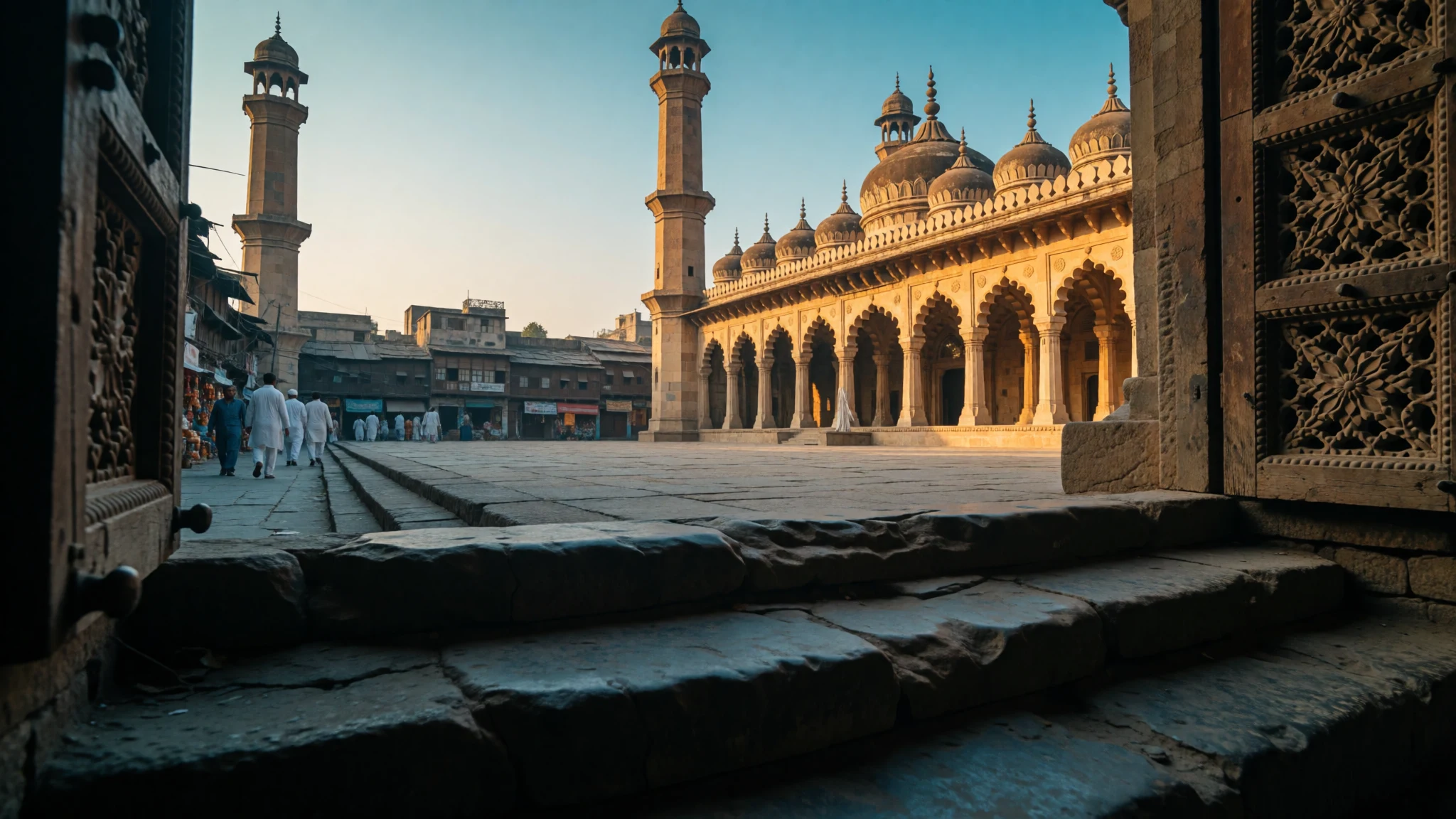
Ahmedabad pairs a walled old city of carved wooden houses and sultanate mosques with Gandhi's riverside ashram and a lively, vegetarian-leaning food scene.
The place
Ahmedabad is a city of about 7.6 million people in the state of Gujarat, set on the flat plain of the Sabarmati River at an elevation of 53 m. The river divides it into two moods. On the east bank sits the old walled city, a dense grid of lanes, carved wooden houses, mosques, Jain temples and bazaars, and it carries UNESCO World Heritage status. On the west bank, newer Ahmedabad spreads out in wide roads, universities, malls, office towers and the long commercial strip of SG Highway. The riverfront has been turned into a promenade with a pedestrian bridge that is lit up at night, and it is where many residents walk once the heat drops.
Ahmedabad is also a working, mercantile city. Cotton and textiles built its fortunes, and trading families still shape its habits: thrift, practicality, a fondness for a bargain and a sweet tooth. Gandhinagar, the state capital, lies a short drive to the north and is often treated as a twin. Cricket takes over the city on match days, and the huge stadium at Motera is a landmark for the sport.
For a visitor the appeal is not one famous monument but the layering: a sultanate-era mosque, a Jain temple, a Gandhi ashram, a modernist campus, all within a few kilometres of each other. Heat is the main hardship, and the old city is crowded and noisy, so the place rewards early starts and slow walking.
Its story
Ahmedabad's recorded story begins before the city had its present name. A settlement called Ashaval stood on the Sabarmati's bank, linked in tradition to a Bhil tribal community. A Chaulukya ruler from Anhilwada, now Patan, is said to have campaigned against it and founded a town called Karnavati nearby. Nobody has pinned down where Karnavati stood, and later medieval writers mention Ashaval rather than Karnavati. Control then passed to the Vaghela dynasty and afterwards to the Delhi Sultanate.
The turning point came in 1411, when Ahmad Shah I of the Gujarat Sultanate moved his capital to Ashaval and named the city after himself, as rulers then commonly did. The sultans raised mosques, tombs, gateways and tanks in local sandstone, in a style where Islamic design met the carving traditions of Gujarati Hindu and Jain craftsmen. In later centuries the city passed through Mughal and Maratha hands, then Company rule and the British Raj.
The industrial age brought cotton mills along the river and a reputation as India's answer to an English mill town. Mill-owning families paid for schools, museums and temples, and their wealth still shows in the old city's mansions. Mahatma Gandhi made his base beside the Sabarmati and set out from there on the Salt March, tying Ahmedabad to the independence movement. Today the layers sit side by side, and it is the sultan's name that stuck.
What to see
- Sabarmati Ashram — Sabarmati, west bank
Gandhi lived here beside the river and set out from it on the Salt March against the colonial salt tax. The ashram is a calm, shaded complex with his simple living quarters, a museum, and spinning and handmade-paper work still going on. Go early, before the heat builds.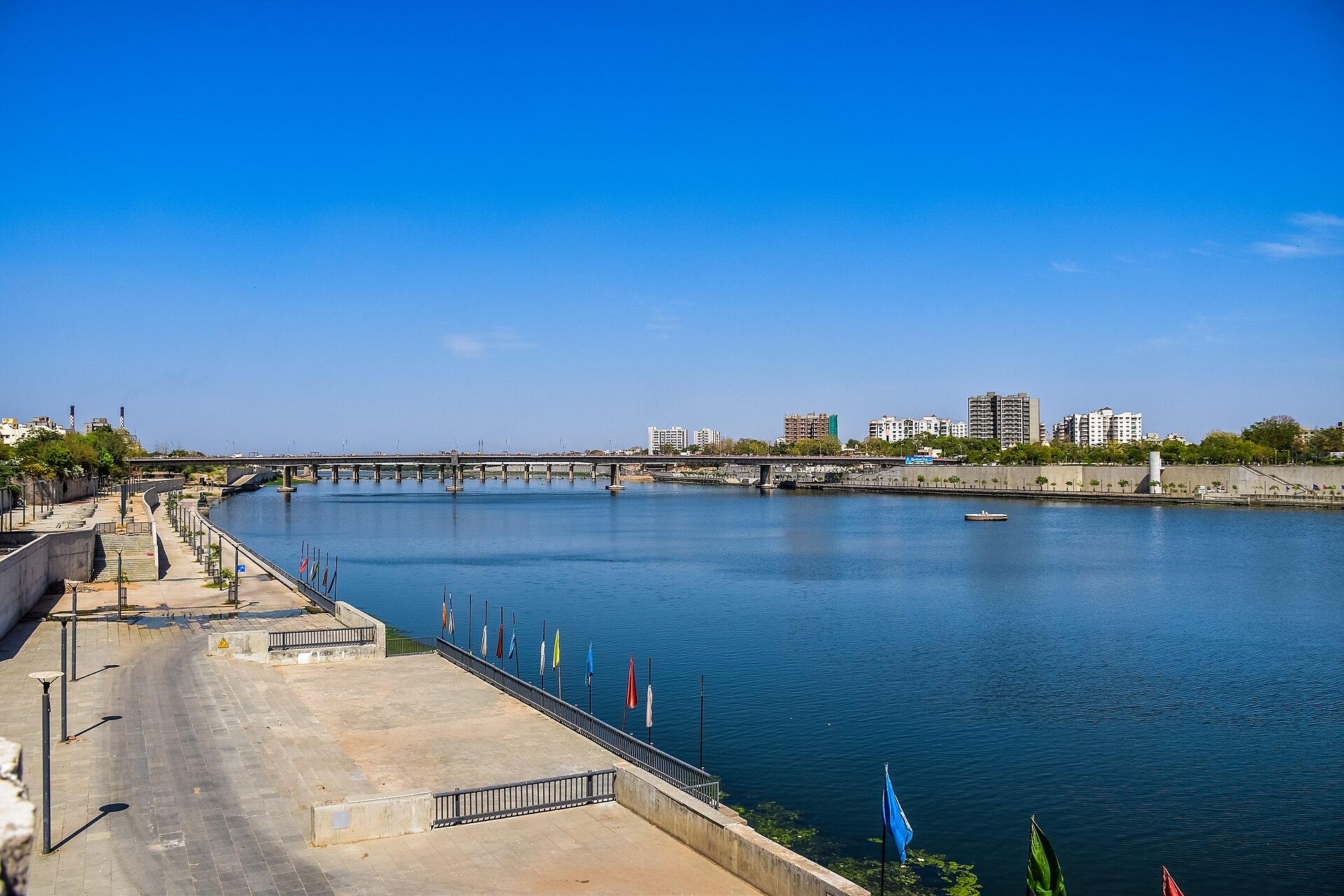
- Jama Masjid — Old city, near Manek Chowk
This sultanate-era congregational mosque in the old city is built of yellow sandstone, with a forest of carved pillars carrying many small domes. The prayer hall is cool and hushed after the bazaar outside. Visit outside prayer times, and cover shoulders and knees.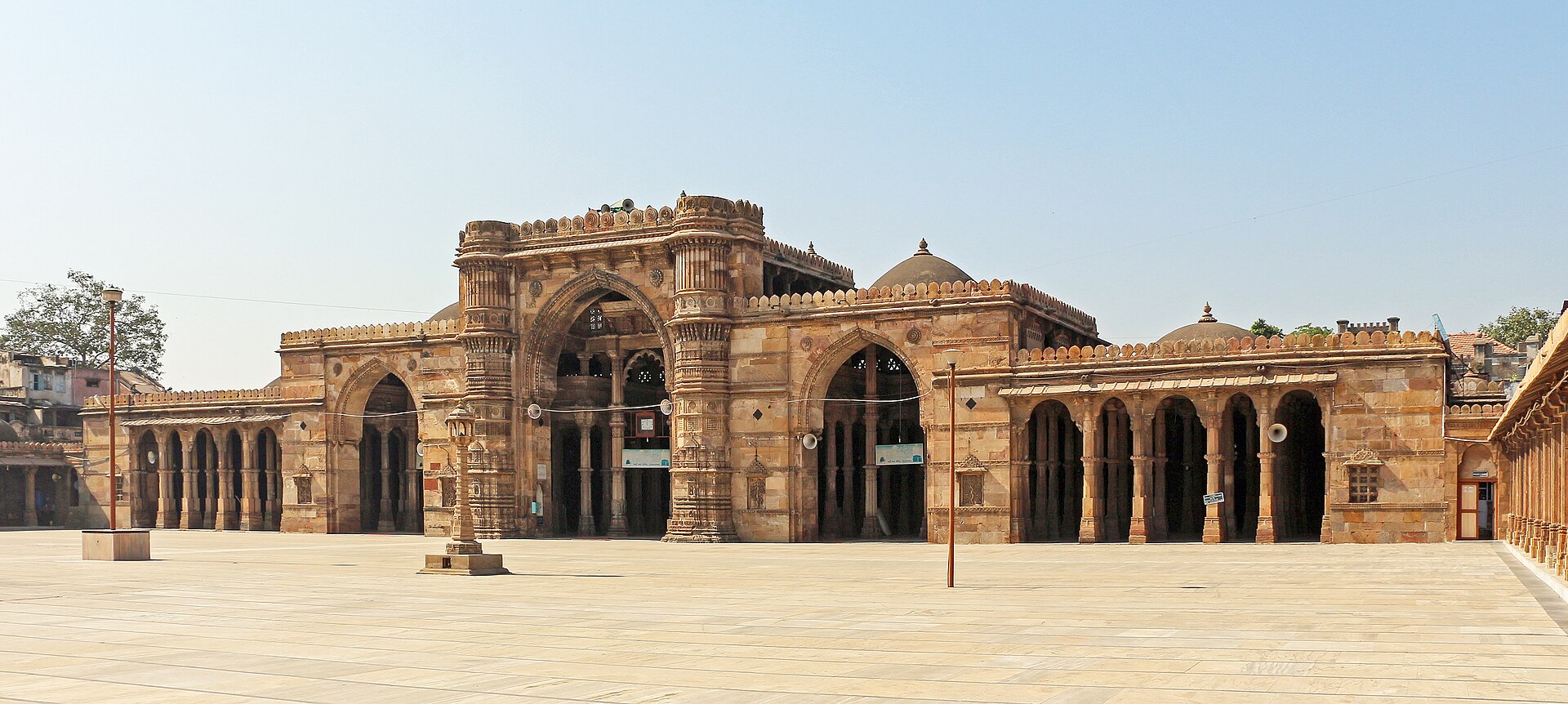
- The pols of the old city — Walled city, east bank
Pols are gated residential clusters of narrow lanes, timber-fronted houses with carved brackets, shared courtyards and small towers for feeding birds. The lanes twist and confuse, so a local guide or organised heritage walk helps. Mornings are quietest and best for photographs.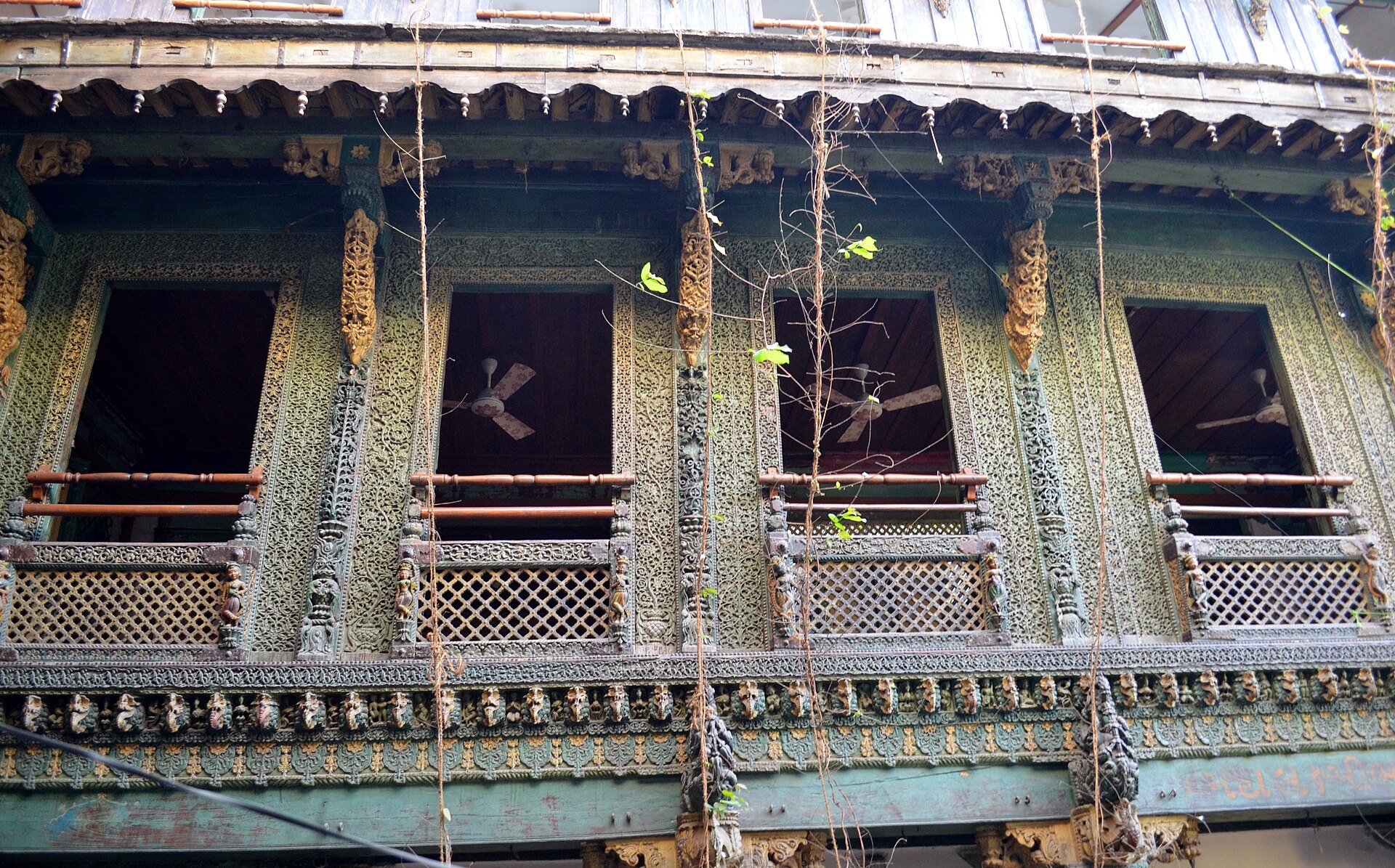
- Sheth Hutheesinh Jain Temple — Northern edge of the old city
A Jain temple of finely carved stone with a pillared porch, a courtyard of small shrines and intricate figures on nearly every surface. Its detail repays slow looking. Check local guidance on visiting times, and expect to leave shoes and leather items outside.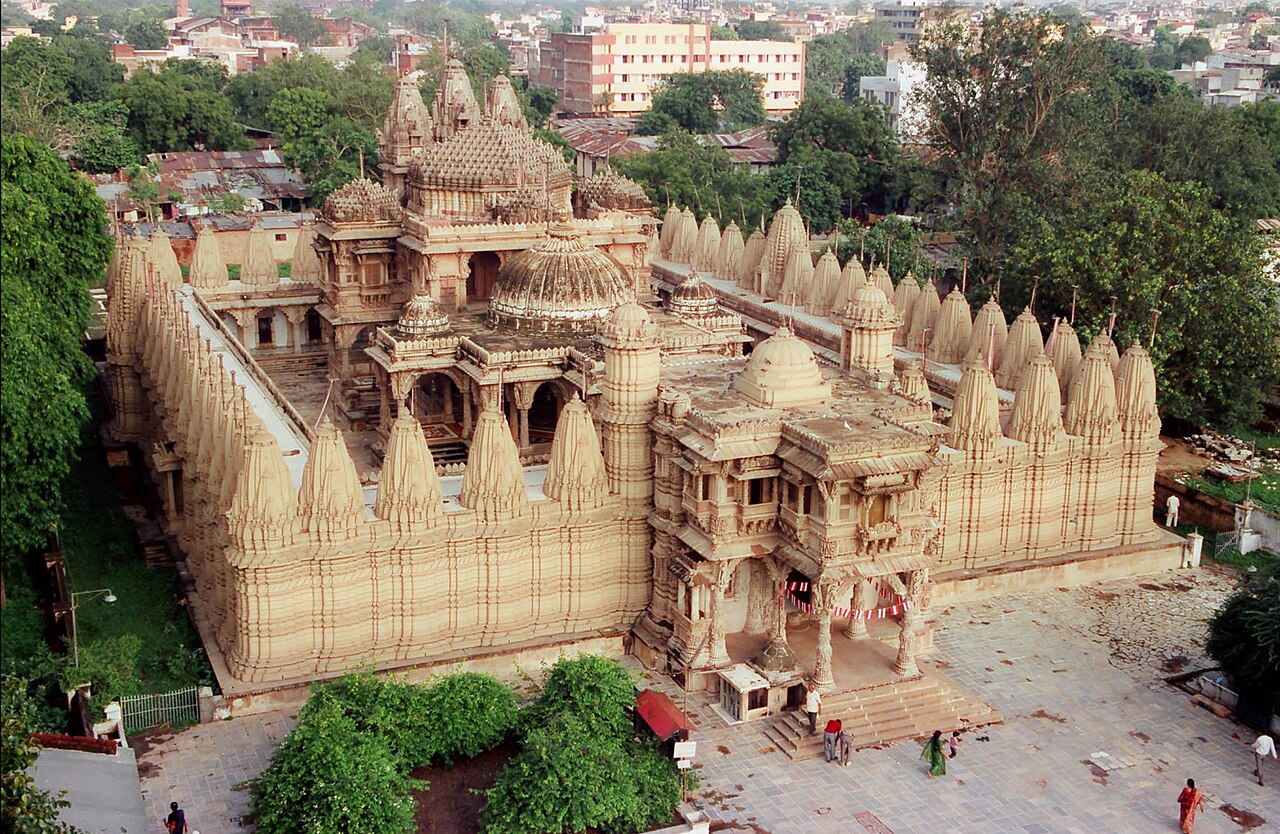
- Calico Museum of Textiles — Shahibaug
This museum holds centuries-old Indian textiles: woven silks, block prints, embroidery and temple hangings, reflecting the city's cotton heritage. It suits anyone curious about how cloth is made and worn. Check the official arrangements for visiting before you plan a day around it. - Adalaj Stepwell — Adalaj, near Gandhinagar
North of the city towards Gandhinagar, this stepwell descends in carved levels to cool water. Such wells were water stores and meeting places in a dry region. Morning or late afternoon light is gentlest; a cab makes an easy half-day trip.
Culture
Ahmedabad is a city of mixed communities: Hindu, Jain, Muslim, Parsi and others share the old lanes, and a merchant outlook runs through all of them. Gujarati is the everyday language, and Gandhi's influence on dress, simplicity and public life is still visible. The city is largely vegetarian in its habits, and many eateries do not serve meat or eggs at all.
The festival calendar is full. Uttarayan in mid-January fills the sky with kites, and rooftops become social spaces from dawn, with sharp glass-coated string a real hazard for birds and for passers-by. Navratri, nine nights in autumn, turns neighbourhoods and open grounds into dance floors for garba, the circling folk dance of Gujarat. The Rath Yatra procession leaves the Jagannath Temple on its set date in the Hindu calendar, drawing large crowds. Diwali, Holi, Christmas and Muharram are all marked as well.
The city's craft traditions, from block printing to bandhani tie-dye, come from the same trading culture and are sold in the old bazaars. Community life is organised around the pols, whose residents often know each other across generations. Hospitality is real but unshowy, and a polite question about a dish or a craft usually opens a conversation.
At Jain temples and mosques, remove your shoes at the entrance and leave leather items such as belts and wallets outside when asked.
What to wear
Fashion in Ahmedabad draws on Gujarat's textile traditions. Women's festival dress centres on the chaniya choli, an embroidered, often mirror-worked skirt and blouse worn with a dupatta, and it appears everywhere during Navratri. Bandhani, a tie-dyed cotton or silk, is a regional signature, and patola, a double-ikat silk woven in Gujarat, is kept for weddings. Men's traditional wear includes the kediyu, a short jacket worn with a dhoti or churidar for festivals. Khadi, the hand-spun cotton Gandhi promoted, is still worn as a statement of simplicity.
Day to day, people wear what suits the heat. Cotton kurtas, sarees and salwar kameez are common, alongside jeans and shirts for office work on the western side, where the dress code resembles any large Indian city. Colour is welcome, and festivals turn the streets bright.
Visitors should dress for heat and for religious sites. Choose light, loose cotton in long sleeves and trousers or long skirts, which also protect against sun. Carry a scarf to cover shoulders or hair at mosques and temples, and keep knees covered everywhere in the old city. Wear sandals or shoes that slip off easily, since shoes come off often, but sturdy enough for uneven lanes. A hat, sunglasses and sunscreen matter more than any outfit between April and June.
What to eat
- Gujarati thali — Traditional thali restaurants across the old and new city
A platter of roti, dal, rice, seasonal vegetable shaak, pickles and roasted papad, often with a sweet. Gujarati food leans sweeter than much of India. Order it at a traditional thali restaurant in the old city or near the river. - Dhokla — Farsan and sweet shops across the city
A soft, steamed, lightly sour cake made from fermented gram flour, cut into squares and eaten with chutney and fried green chilli. It is a breakfast and snack staple, best bought fresh and still warm. - Khandvi — Farsan shops, especially in the older neighbourhoods
Thin sheets of gram flour and yoghurt batter, rolled into small scrolls and tempered with mustard seed, sesame and coconut. Delicate and mildly tangy, it is sold by weight and keeps well for a train journey. - Srikhand — Dairy and sweet shops; also on thali menus
Strained, sweetened yoghurt thickened into a creamy dessert, often flavoured with saffron, cardamom or mango. It suits the heat, and pairs well with a hot puri at a family meal or festival. - Cheese and pineapple jam sandwich — Sandwich stalls and street vendors, especially in the evening
A typically Gujarati street snack: spiced vegetables, grated cheese and a spoonful of pineapple jam between slices of toasted bread. It sounds odd, and it tastes sweet, salty and sharp at once.
Plan it
Best time. November to February, when days are warm and dry and nights are cool enough for long walks. Mid-January brings the Uttarayan kite festival, and autumn brings Navratri. April to June is very hot, and the monsoon months from July bring humid, wet weather.
How long. 2–3
Getting there. Ahmedabad's airport is at Hansol, on the river's northern side; the last leg is a taxi or app cab towards Shahibaug and the centre. Check international terminal opening times if arriving in the morning. Trains reach Ahmedabad Junction (Kalupur) on the east bank, close to the old city.
Budget. low
Tips
- Start old-city walks early, before the heat and the bazaar crowds build
- Agree the fare before setting off in an auto-rickshaw, or use a ride-hailing app
- Carry some cash for small eateries, bazaars and temple donations
- Drink bottled or filtered water and carry a refillable bottle in hot months
Etiquette
- Remove shoes at temples and mosques, and leave leather items outside Jain temples when asked
- Cover shoulders and knees at religious sites
- Ask before photographing people in the pols
Nearby
Sources
- Wikidata Q1070 (CC0)
- Wikipedia: Ahmedabad (rev 1384901021) (CC BY-SA 4.0)
- Wikivoyage: Ahmedabad (rev 5423680) (CC BY-SA 4.0)
- Skyline of Ahmedabad's SG Highway — Kushagra140 (CC BY-SA 4.0)
- Sabarmati riverside — Tarun802 (CC BY-SA 4.0)
- Sheth Hutheesinh Temple — Kalyan Shah (CC BY 3.0)
- Atal Pedestrian Bridge at Night — KartikMistry (CC BY-SA 4.0)
- Ahemdabad Skyline — Anmay204 (CC BY-SA 4.0)
- Pole Area of Ahmedabad — Tarkik Patel (CC BY 3.0)
- Jama Masjid, Ahmedabad — Bernard Gagnon (CC BY-SA 2.5)
- Louis Kahn Plaza, IIM Ahmedabad — Perspectives, The Photography Club, IIM Ahmedabad (CC BY-SA 4.0)


