Araku Valley
Araku Valley, India
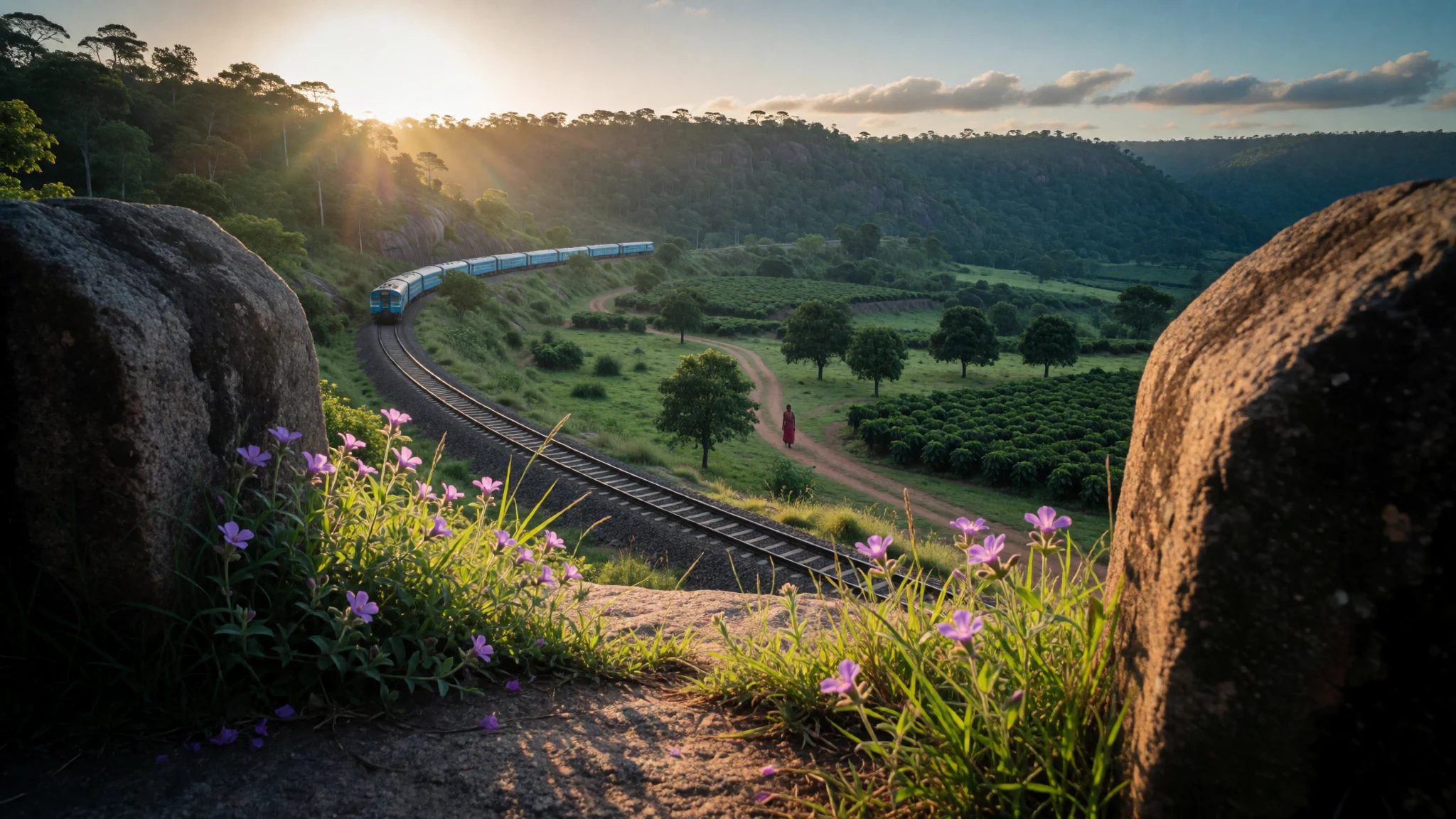
Araku Valley is the cool, misty Eastern Ghats escape from Visakhapatnam, with coffee farms, tribal culture, waterfalls and a scenic train ride.
The place
Araku Valley sits in the Eastern Ghats of Andhra Pradesh, in the Alluri Sitharama Raju district, at an elevation of 910 m. It is the hill station for Visakhapatnam, reached by a long climb inland towards the Odisha border, and the drop in temperature on arrival is the main reason people make the trip. The landscape is folded green hills, forest, coffee grown under shade trees, and small streams that swell in the rains. Mornings often begin in fog that clears slowly, and walkers and photographers tend to be out before it lifts. The valley is home to several tribal communities, and their villages, markets and farms are as much part of the place as the viewpoints. Parts of the surrounding reserved forest are also mined for bauxite, so these hills are working land as well as scenery. Rain falls mostly between June and October, which makes the waterfalls loud and the slopes lush, but it also makes roads slick and views cloudy. Winter is drier and cooler, and that is when the valley fills with weekenders from the coast. Accommodation is limited, with only a modest number of lodges and resorts, so Araku works best when booked ahead rather than treated as a casual day out from the city. Beyond the valley floor, the route carries on through forest and hill towns towards Odisha, which makes Araku a base for slower exploring rather than a single stop.
Its story
Araku Valley's modern story is largely a coffee story. Farming here long predates tourism, with tribal communities growing crops on the hill slopes and gathering food and materials from the forest. Tea was tried in the Eastern Ghats under British rule, but the crop that took hold in Araku was coffee. After independence the state forest department began developing plantations in the valley. The Coffee Board then brought in the Girijan Cooperative Corporation, a state body working with tribal communities, to promote coffee through local farmers rather than outside estates. Later, plantations managed by forest and cooperative agencies were handed over to tribal families, each receiving a small plot of its own. That transfer is why the valley's coffee is usually described as smallholder and community grown, and why the region markets it as organic. Alongside coffee, beekeeping spread through the valley, and several flavoured honeys are now made for sale. Bamboo is another everyday resource, used in cooking and in building. Tourism came later, as rail and road links from Visakhapatnam made the cool uplands easy to reach, and the lodges, gardens and viewpoints followed. The tension today is familiar from other hill stations. Visitors bring income, but they also bring winter crowds, traffic on narrow roads and pressure on forest land that local communities depend on for their living.
What to see
- Borra Caves — Eastern Ghats, near Araku Valley
Borra Caves lie in the hills on the route towards Araku, and are known for their stalactite and stalagmite formations. Inside, the rock has been shaped into curtains and columns that guides light up with coloured lamps. Expect queues and a damp, slippery floor, so wear shoes with grip.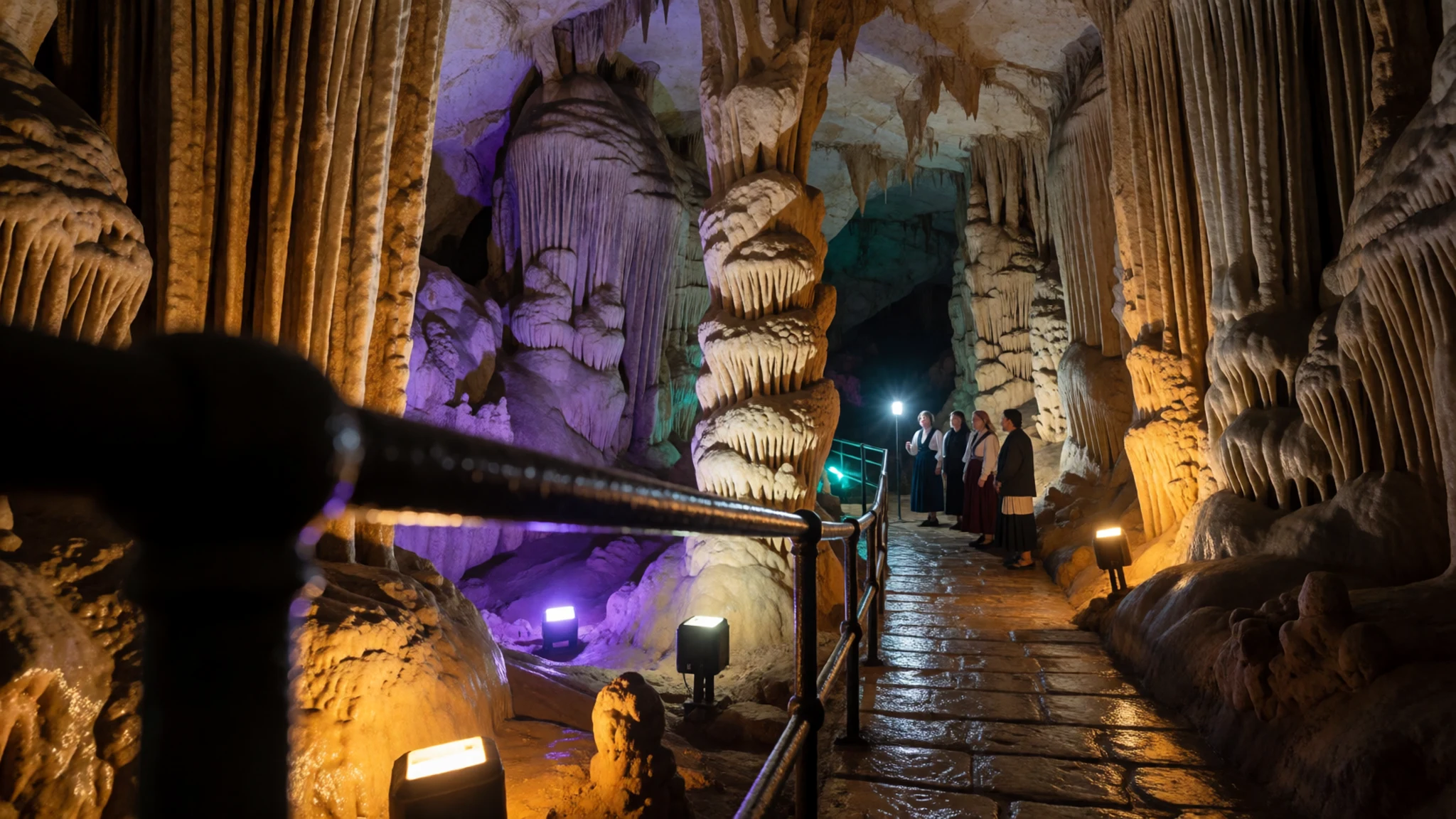
- Katiki Waterfall — Near Borra Caves, Eastern Ghats
Katiki Waterfall is among the most visited natural stops around Araku Valley, close to the Borra Caves in the Eastern Ghats. It runs strongest in and just after the monsoon, and thins out in the dry months. The approach is through forest, so allow time for a short walk.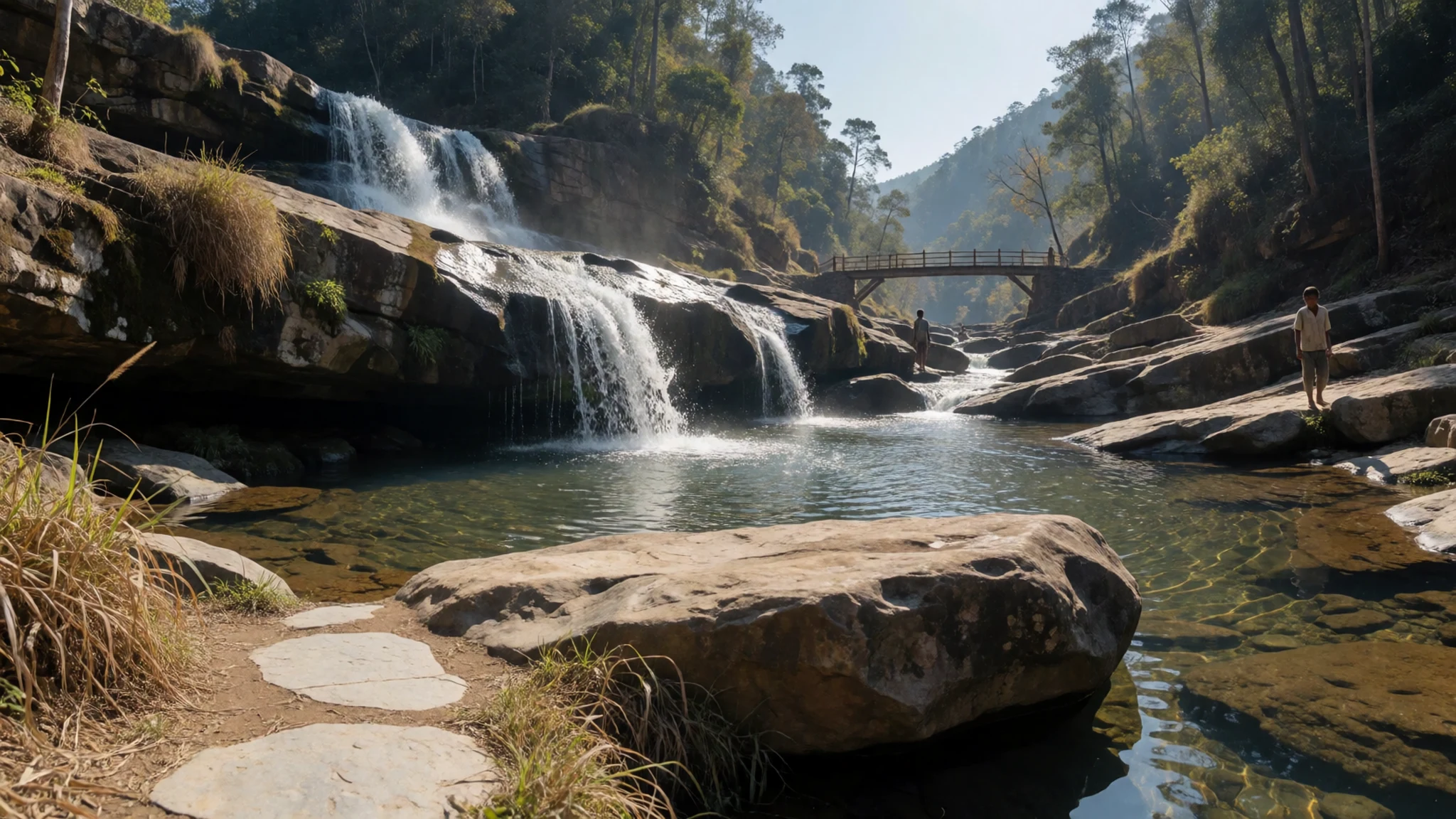
- Padmapuram Gardens — Araku Valley town
Padmapuram Gardens in Araku Valley is a botanical garden with a mix of plant species and tree-top huts. It is calm, shaded and easy walking, which suits families and anyone needing a gentle afternoon after the winding road. Weekends in winter bring the most visitors.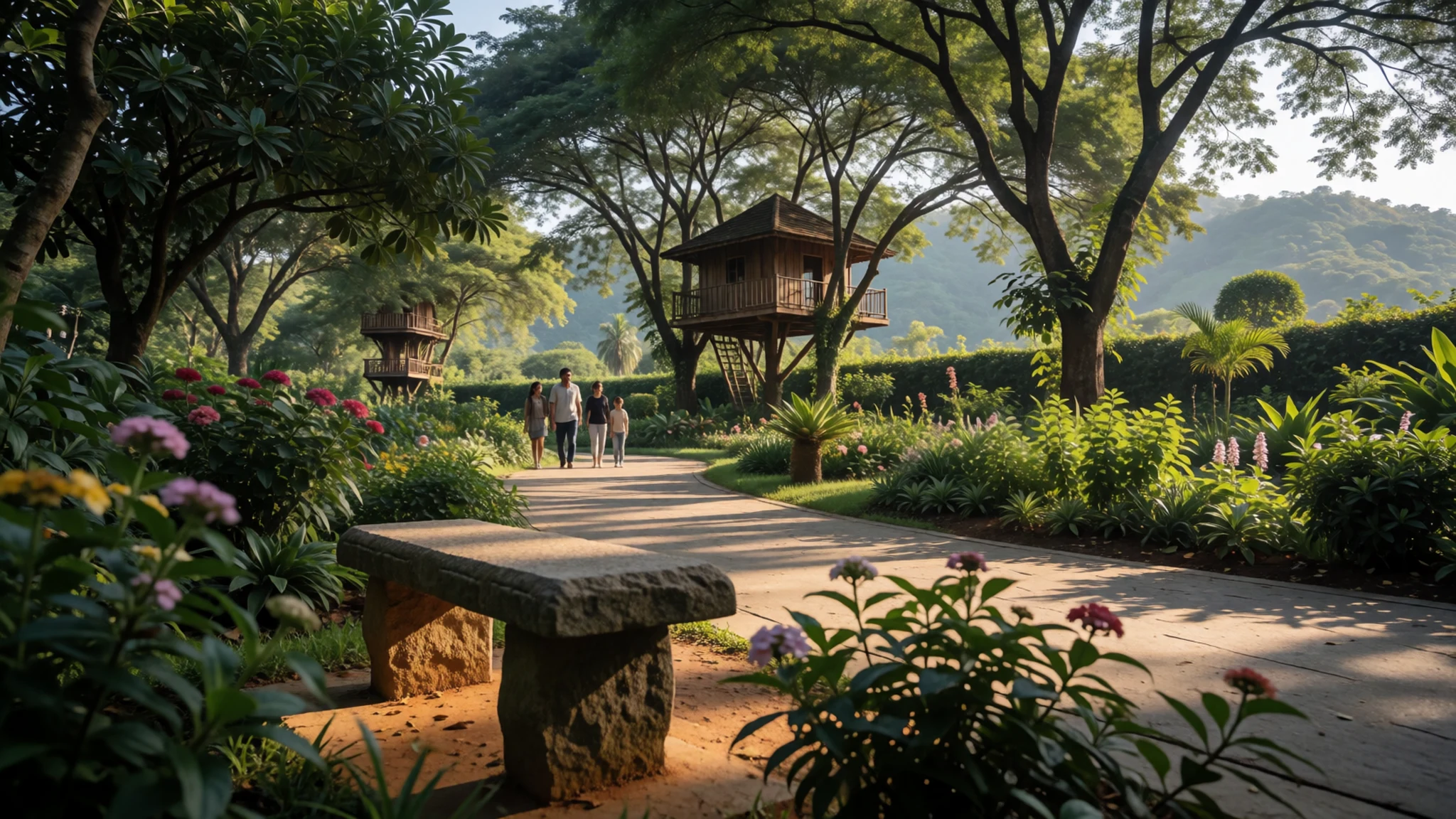
- Araku Tribal Museum — Araku Valley town
The Araku Tribal Museum in Araku Valley is the best starting point for understanding the people who live here. Its displays cover the lifestyle, traditions and culture of the region's indigenous communities. Visit it before the villages and markets, so that what is seen on the road makes more sense.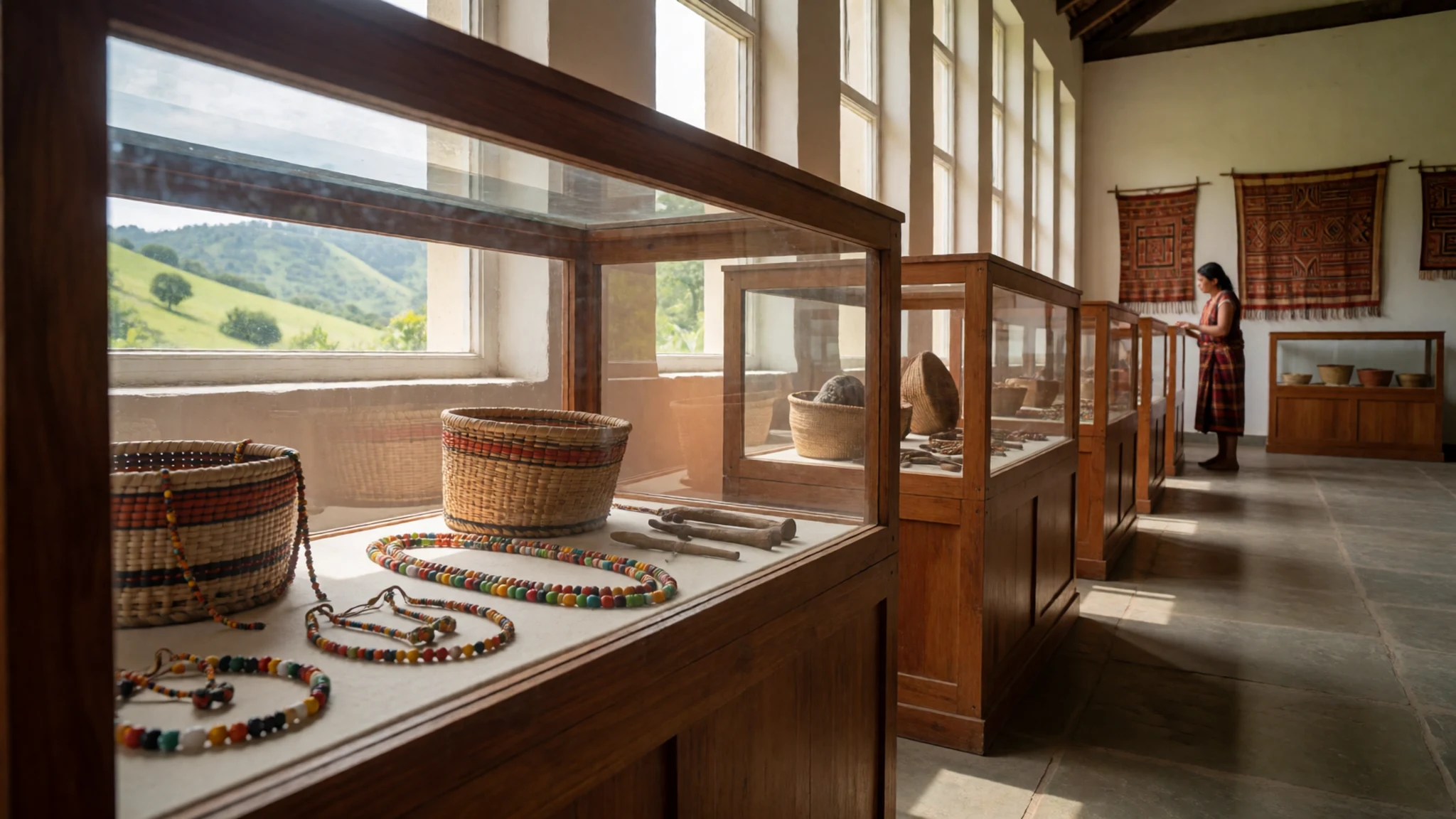
- Ananthagiri Hills — On the route from Visakhapatnam
The Ananthagiri Hills form the forested, cooler stretch of the road between Visakhapatnam and Araku Valley, with coffee plantations along the slopes. Many travellers stop here on the way up. It makes a good pause to stretch the legs, drink coffee and watch the mist.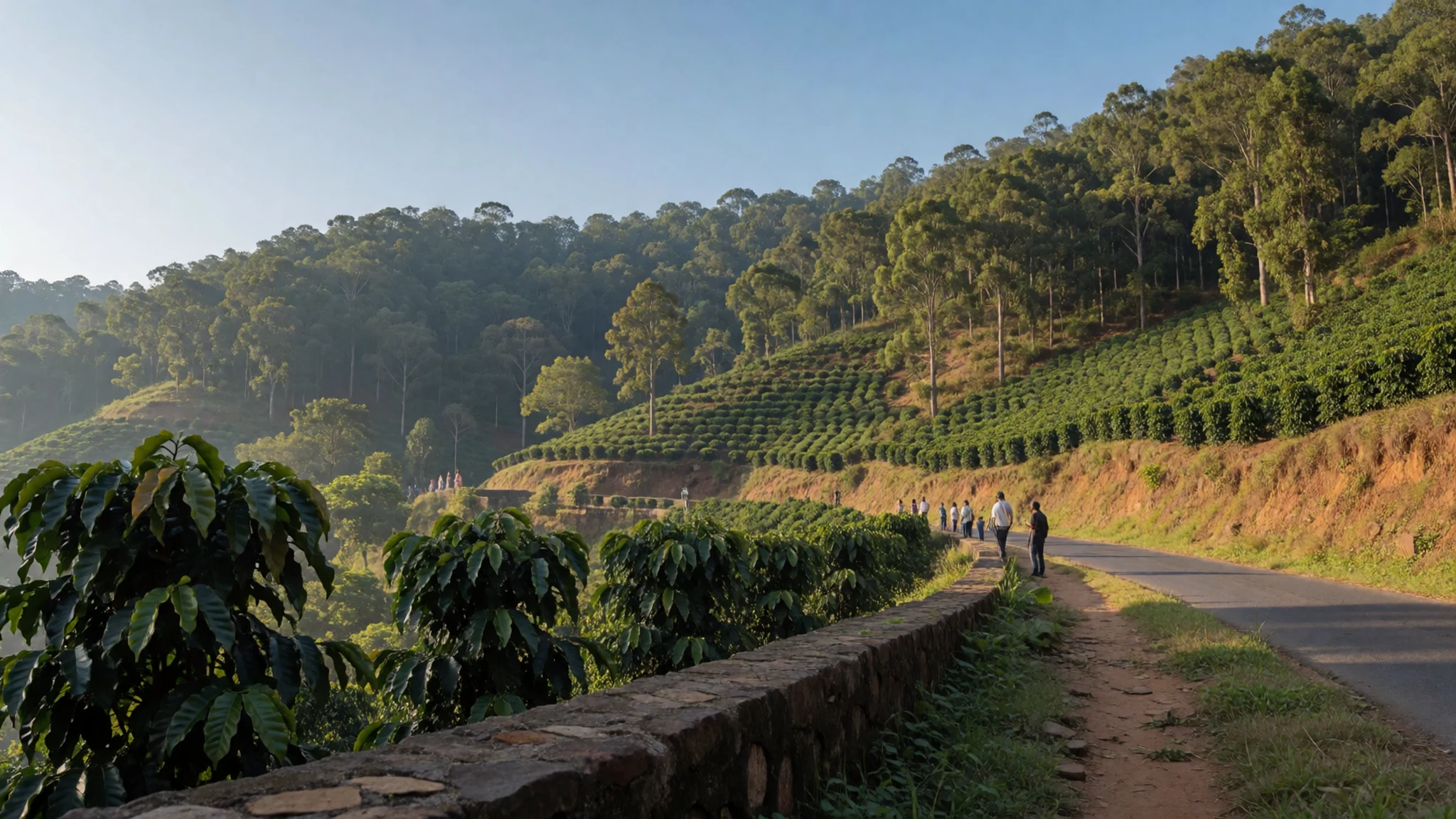
- Galikonda View Point — Araku route, Eastern Ghats
Galikonda View Point is a high lookout along the Araku route in the Eastern Ghats, with wide views over valleys and hills. Trains sometimes pass below, which adds scale to the picture. Clear mornings in the cooler months give the best visibility, while monsoon cloud can hide everything.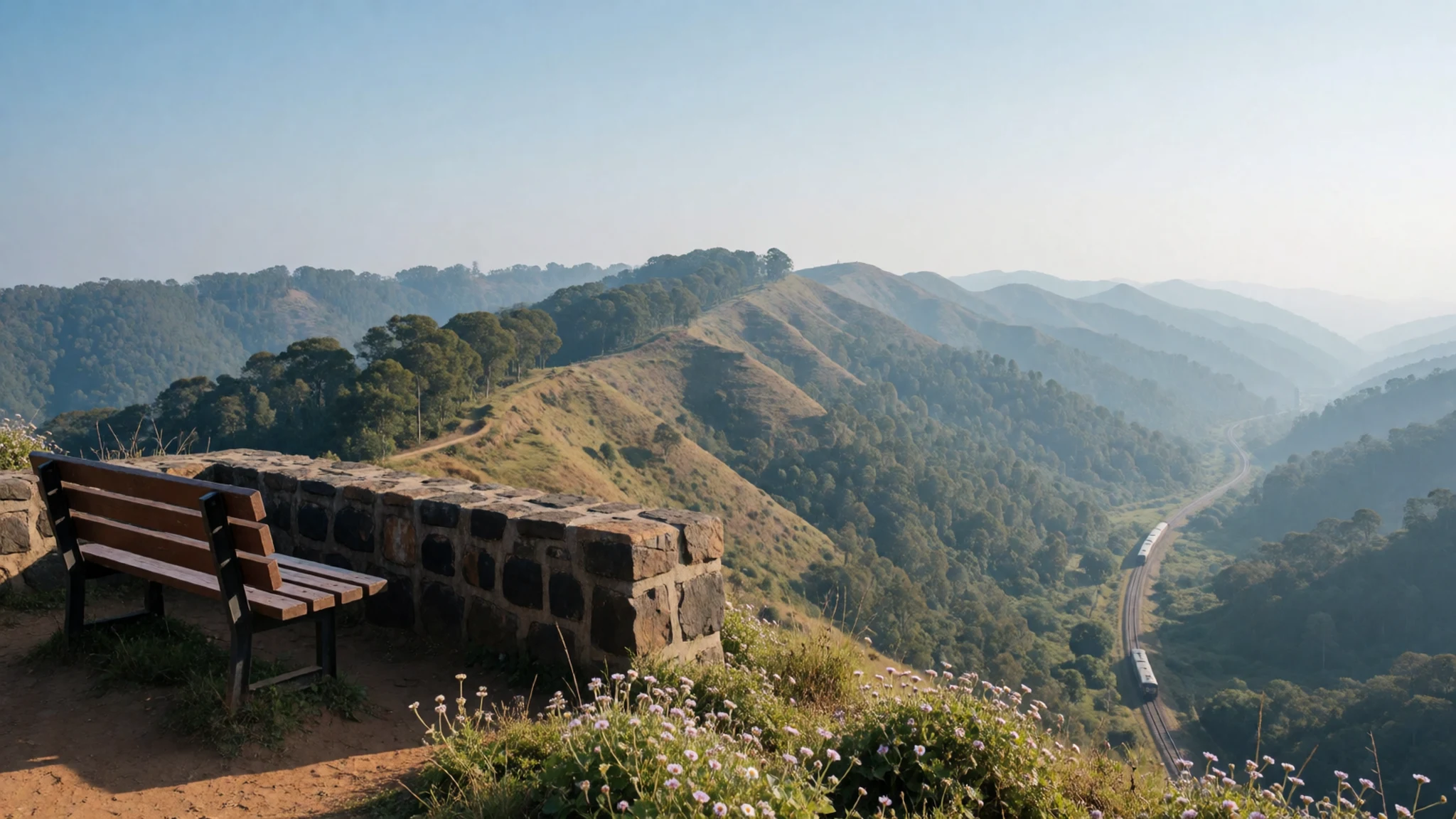
Culture
Araku Valley is tribal country, and the culture of the area is shaped by the communities who farm its slopes, tend its coffee and live in its forest villages. Several different groups share the valley, each with its own customs, so it is more accurate to speak of tribal cultures than of one. Coffee is the clearest meeting point between that culture and the wider economy, since many growers farm family plots handed over through cooperative schemes. Markets are where daily life is easiest to see, with farm produce, forest goods and honey changing hands among villagers. The Araku Tribal Museum gives useful background on the traditions and way of life of the region's indigenous peoples, and it is worth a visit before wandering into villages. Dance and music are part of community celebrations, but festival dates and programmes vary, so check locally rather than planning around a fixed show. Not everything is staged for tourists, and the pleasant ones among the encounters tend to be quiet: a cup of coffee at a stall, a chat with a farmer about the harvest, a purchase of honey straight from a producer. Visitors who treat villages as living places rather than backdrops get the most from the valley. Ask before photographing people or their homes, and accept a refusal with a smile.
What to wear
Araku Valley's traditional dress belongs to the tribal communities of the Eastern Ghats, and details differ from group to group. Women commonly wear sarees draped for work on the hillside, often with beaded necklaces, metal bangles and other handmade jewellery. Men's everyday wear is usually a dhoti or lungi with a shirt, and festival days bring brighter cloth, headgear and ornaments. The brief used for this reading does not name specific community textiles, so ask at the tribal museum or a cooperative shop rather than assuming. Day to day, most people now wear what is common across Andhra Pradesh: sarees, salwar kameez, shirts and trousers, with jeans and T-shirts among younger people and those working in tourism. For visitors, the valley is cooler than the coast, especially in winter mornings and evenings, so bring a light jacket or shawl and a layer for early viewpoint visits. In the rainy months, a lightweight waterproof and quick-drying clothes make more sense than an umbrella on slippery paths. Wear shoes with real grip for the caves, waterfalls and forest paths. Modest, loose clothing covering shoulders and knees is sensible in villages and at any local shrine, and it also protects against insects and sun.
What to eat
- Bamboo chicken — Roadside stalls and eateries along the tourist routes
Bamboo chicken is the signature tribal dish of Araku Valley, with chicken packed into a bamboo section and cooked over an open fire. The bamboo adds a smoky, slightly sweet taste. Look for it at roadside stalls and eateries on the main tourist routes.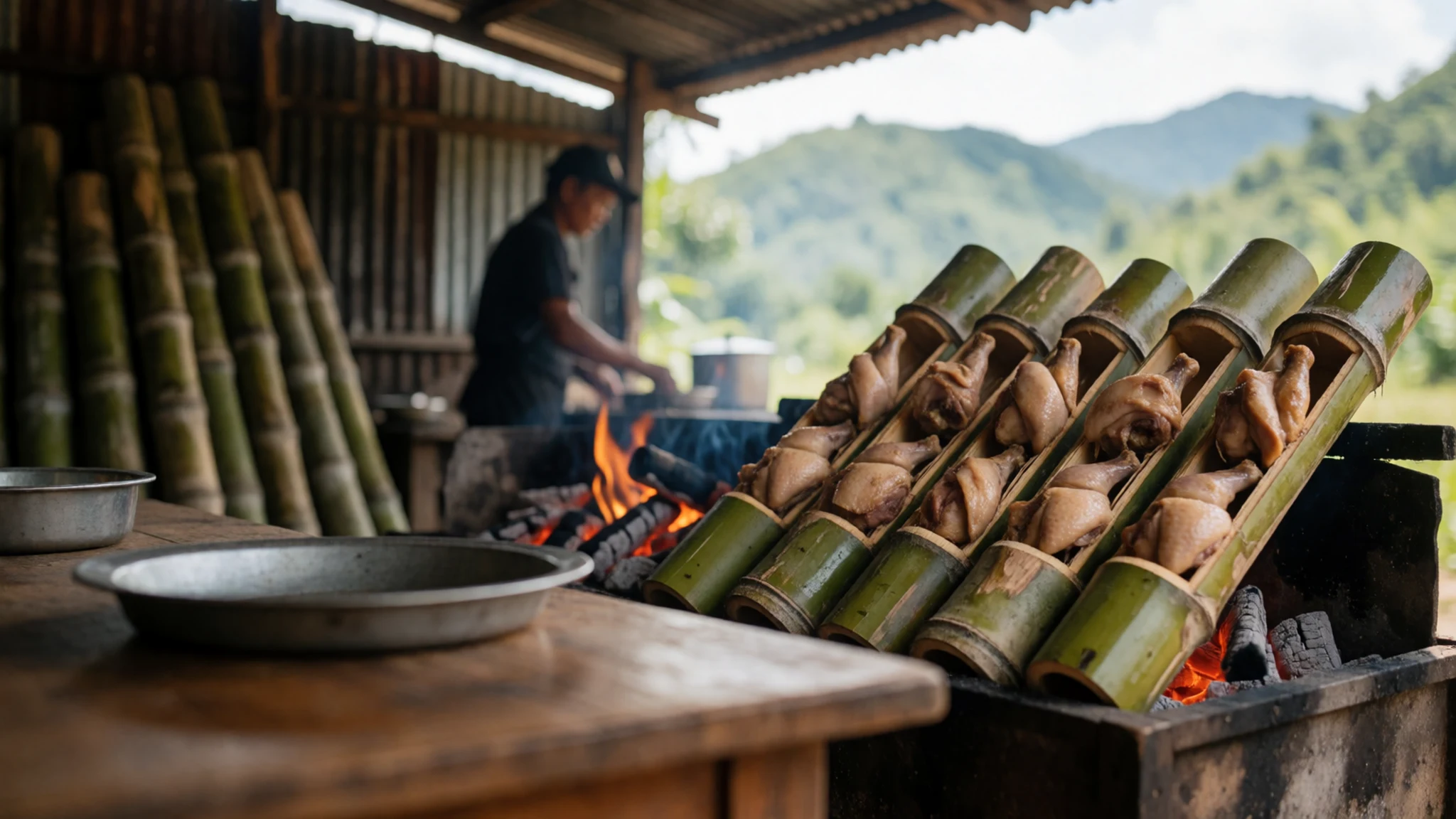
- Araku coffee — Coffee house near the bus station in Araku, and plantation-side stalls
Araku coffee comes from smallholder plantations in the valley and is usually served hot with milk, South Indian style, or as a filter brew. Buying packets to carry home supports local growers directly. It is a good excuse for a slow morning stop.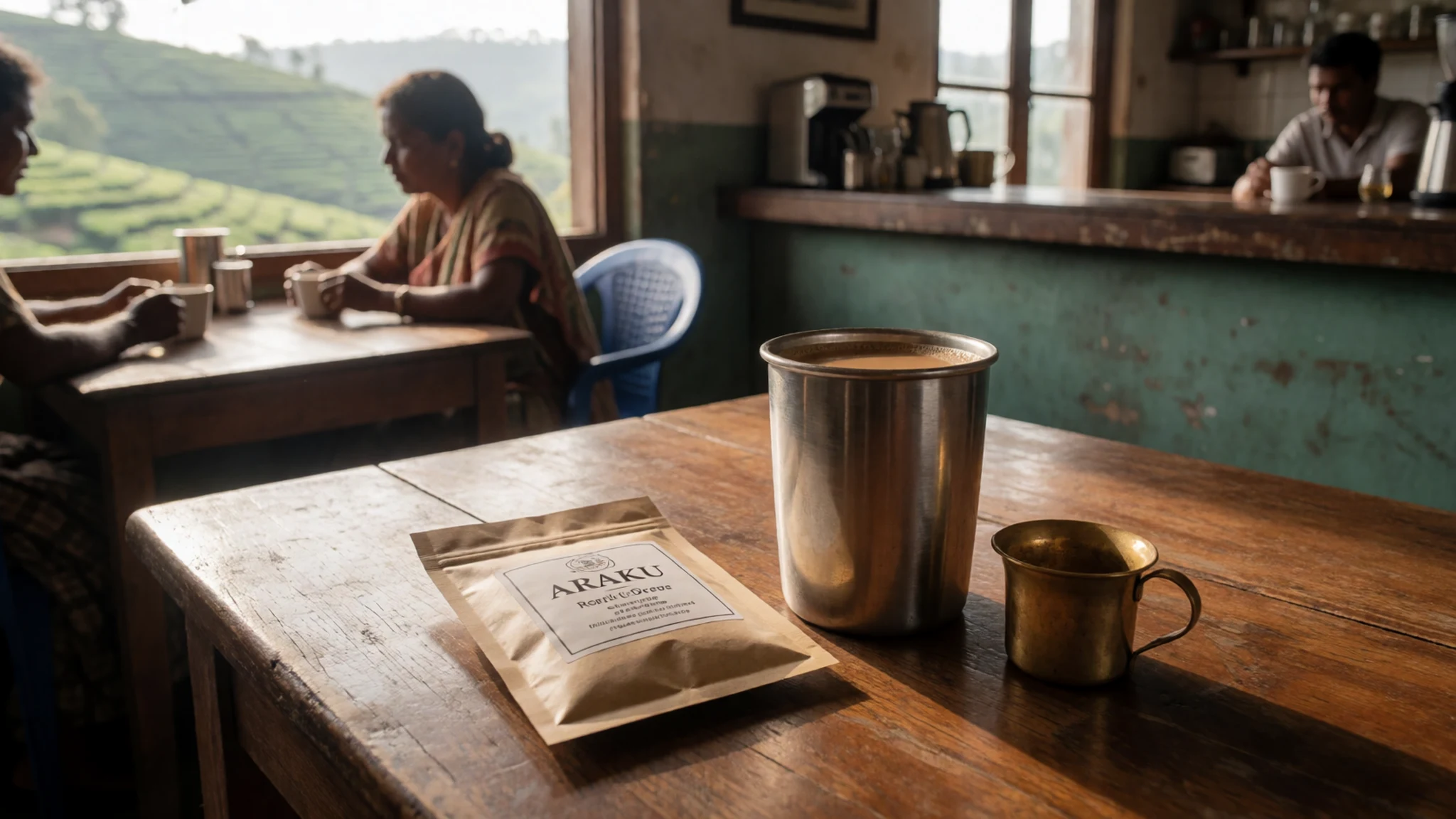
- Bamboo fish — Local eateries and stalls around Araku town
Bamboo fish uses the same cooking idea as bamboo chicken, with fish and spices sealed in a hollow bamboo section and cooked over a fire. It tastes lighter and smokier than a pan-fried version. Ask how fresh the catch is before ordering. - Local honey — Village stalls and the weekly market
Beekeeping is widespread in Araku Valley, and producers make several flavoured honeys for sale. It is easy to carry, keeps well, and is one of the more useful souvenirs. Taste a spoonful first, since quality and sweetness vary between sellers. - South Indian meals and tiffin — Simple eateries near the bus station and main road
Plain South Indian meals are widely available in Araku, along with Indian, Chinese and continental options at the larger resorts. Rice, sambar and vegetable curries are the reliable choice after a day of walking. Simple eateries are cheaper and quicker than resort dining rooms.
Plan it
Best time. November to February, when the valley is cool and dry, with mist in the mornings. June to October is the rainy season, with lush slopes and strong waterfalls but slick roads and cloudier views.
How long. 2–3
Getting there. The nearest city and main gateway is Visakhapatnam, with an airport and a major railway station. From there, Araku is reached by the scenic hill train, by APSRTC bus or by hired car or taxi through the Eastern Ghats. Check official railway and APSRTC sites for current timetables.
Budget. mid
Tips
- Book lodging early in winter, because Araku has only a modest number of lodges and resorts
- Treat Araku as an overnight stay rather than a day trip from Visakhapatnam, so mornings in the mist are not missed
- Start sightseeing early to beat tour groups at the caves and waterfalls
- Carry some cash for village stalls, markets and small eateries, as card acceptance is patchy
- Keep a light layer for cool mornings and a waterproof if travelling in the monsoon
Etiquette
- Ask before photographing people, homes or farms
- Buy coffee and honey directly from growers or cooperative outlets where you can
- Take litter back out of forest and waterfall areas
Nearby
Sources
- Wikidata Q3536505 (CC0)
- Wikipedia: Araku Valley (rev 1379568085) (CC BY-SA 4.0)
- Wikivoyage: Araku Valley (rev 5433520) (CC BY-SA 4.0)
- Katiki waterfall, Araku, Andhra Pradesh — Arkadeep Meta (CC BY-SA 4.0)
- Araku Valley, Andhra Pradesh — Arkadeepmeta (CC BY-SA 4.0)
- Rock cut inside borra caves — Imahesh3847 (CC BY-SA 4.0)
- Scenic view in Araku Valley — Raj (CC BY 2.5)
- Image of the forest in Araku Valley — Lucario 298 (CC BY-SA 4.0)
- Tree houses of Araku Valley — Billjones94 (CC BY-SA 4.0)
- A view of Araku Valley, a hill station in Visakhapatnam district — Billjones94 (CC BY-SA 4.0)
- Araku Valley hill station view in Andhra Pradesh — Billjones94 (CC BY-SA 4.0)


