Amer Fort
Amer Fort, India
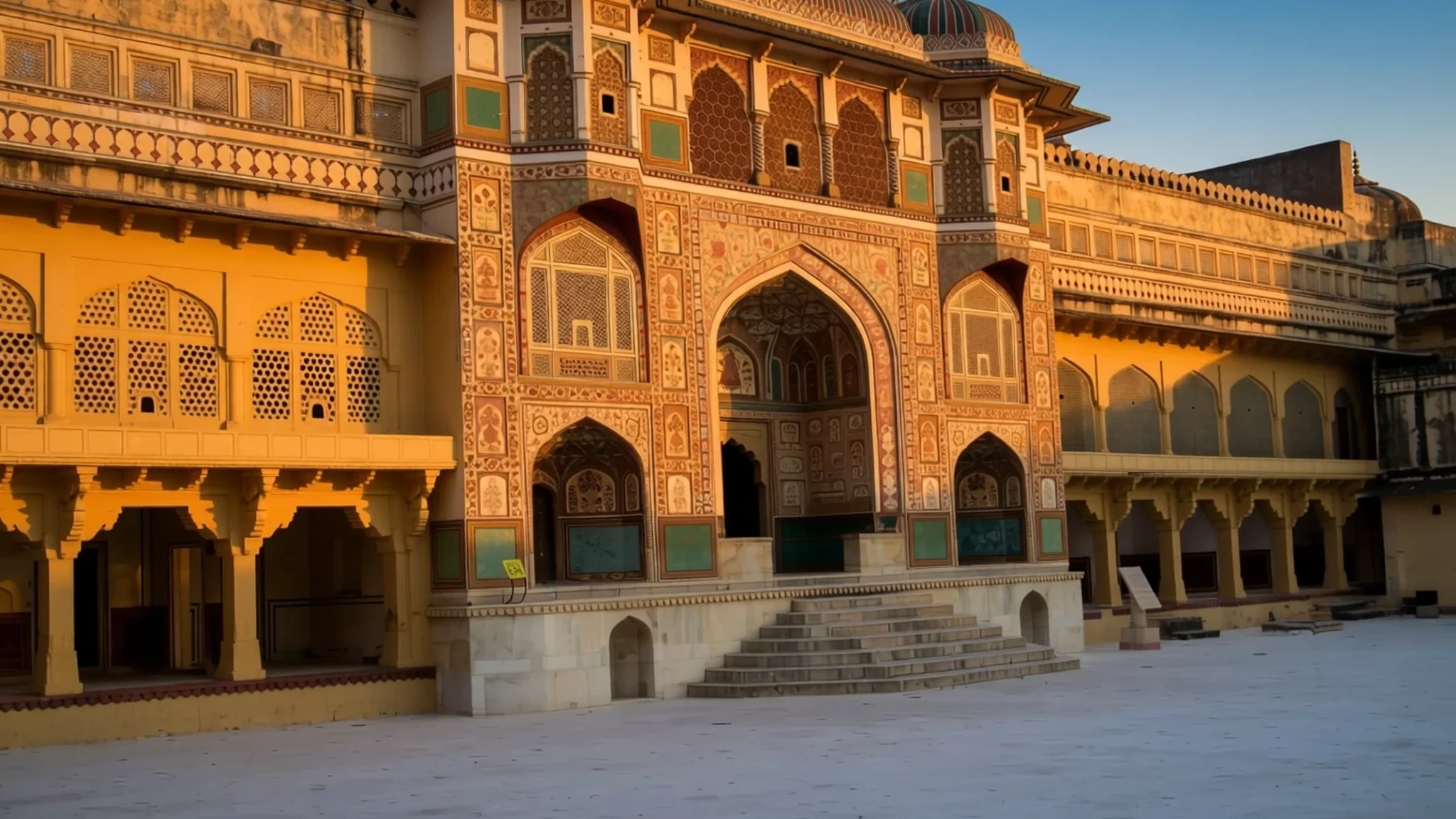
Amber Fort is a red sandstone palace on a hill above Maotha Lake, reached by a cobbled climb through its gates.
The place
Amber Fort, also spelt Amer, sits high on a hill in the town of Amer, a short drive from Jaipur, and it is the first thing most visitors come to see in the area. Its walls are substantial: long ramparts, a run of gates and cobbled paths climb toward the palace, and below them Maotha Lake spreads out as the main water source for the complex. The building is made of red sandstone and marble and arranged over four levels, each with its own courtyard. The architecture is Rajput at its core, though a few rooms show Mughal influence in their arches and inlay. Inside you find the Diwan-e-Aam, the Hall of Public Audience, and the Diwan-e-Khas, the Hall of Private Audience, which is known as the Sheesh Mahal for its mirror work. The Sukh Niwas is kept cool by air blowing over a water cascade, a clever piece of natural cooling that gives the site its alternative name, Amer Palace. A subterranean passage links the palace to Jaigarh Fort on the ridge above, a route meant for escape in times of war. Expect crowds: the site draws thousands of visitors a day in peak season, so the early hours feel very different from midday.
Its story
Amer Fort stands on land that Meena chiefs held long before the Kachhwaha rulers arrived. Amber was then a Meena state ruled by a Susawat clan, and the wider region of Dhundhar was controlled by Meena chiefs drawn from several tribes. A Kachhwaha prince, Dulha Rai, later overthrew Meena power and brought Dhundhar fully under Kachhwaha rule. From then on Amer was the seat of that line, and the family's influence spread across the region. The fort itself was begun by Raja Man Singh and is dated to 1592 in the record for this place. Jai Singh I extended it, and later rulers added courtyards, halls and gates over the following decades. In time the court moved to the newer city of Jaipur under Sawai Jai Singh II, and Amer lost its place as the capital. The palace continued as a residence for the Rajput maharajas and their families. The local account of the queens' rooms, each linked by a staircase to the king's chamber, is a story to hear with some caution. Today the fort reads as a palace shaped by warfare, succession and a long handover of power to Jaipur.
What to see
- Ganesh Pol — Main approach, Amer
Ganesh Pol is the gate into the private palaces of the maharajas, named for the elephant-headed god Ganesh and marked by painted and carved decoration, so you reach it only after passing the main entry, the Suraj Pol. Its arches frame the approach, and the stone has been worn smooth by generations of feet. Stop here for a photograph before the courtyard fills, and keep an eye on the ground, which is uneven.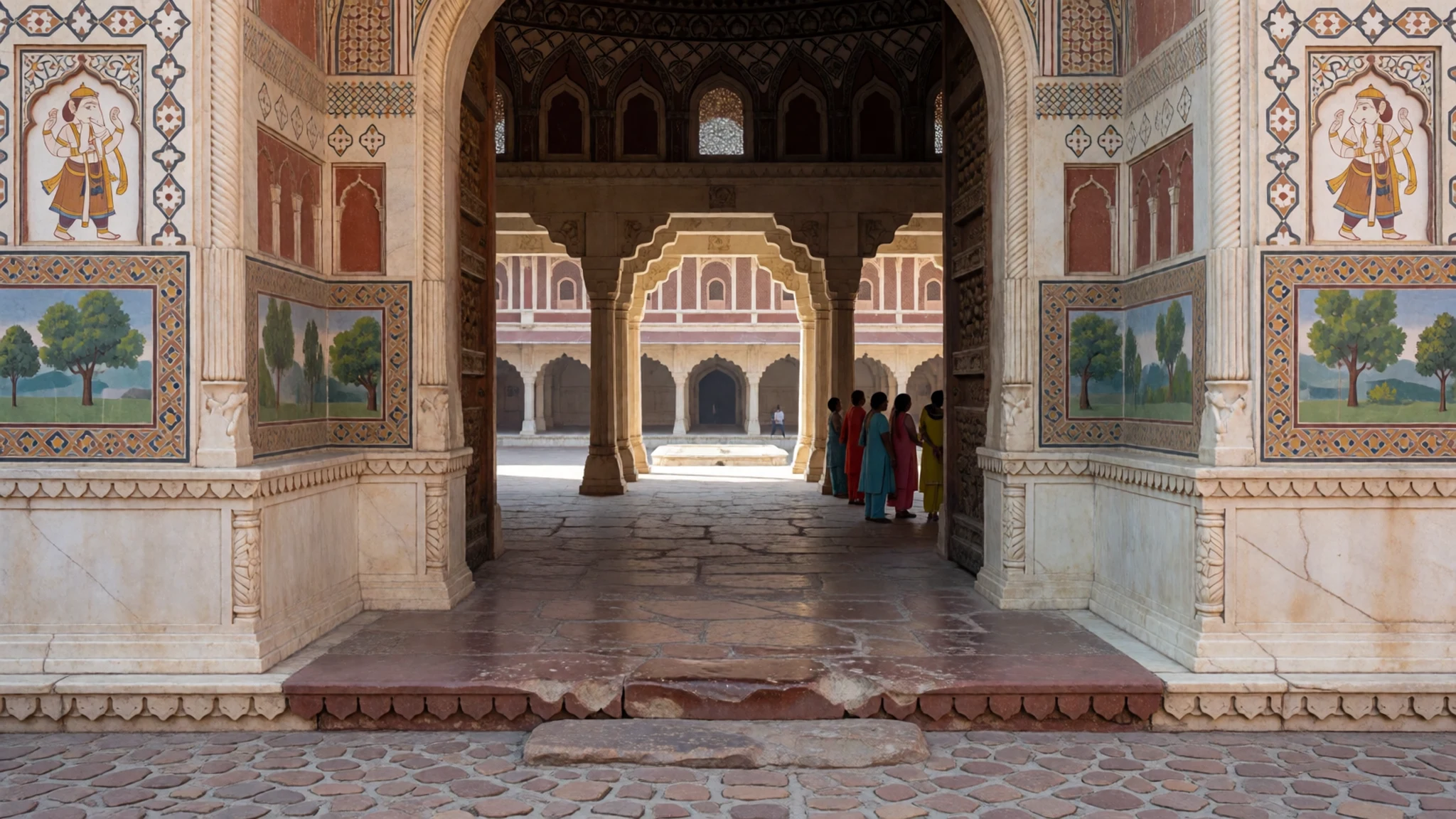
- Sheesh Mahal — Upper palace, Amer Fort
The Sheesh Mahal, or mirror palace, is the Diwan-e-Khas, the private audience hall. Its walls and ceilings are covered in small mirror pieces set into patterned plaster, so a single candle or lamp throws light in every direction. Visit in the morning, when the light through the openings is soft and the rooms are less crowded. Expect it to be busy by late morning.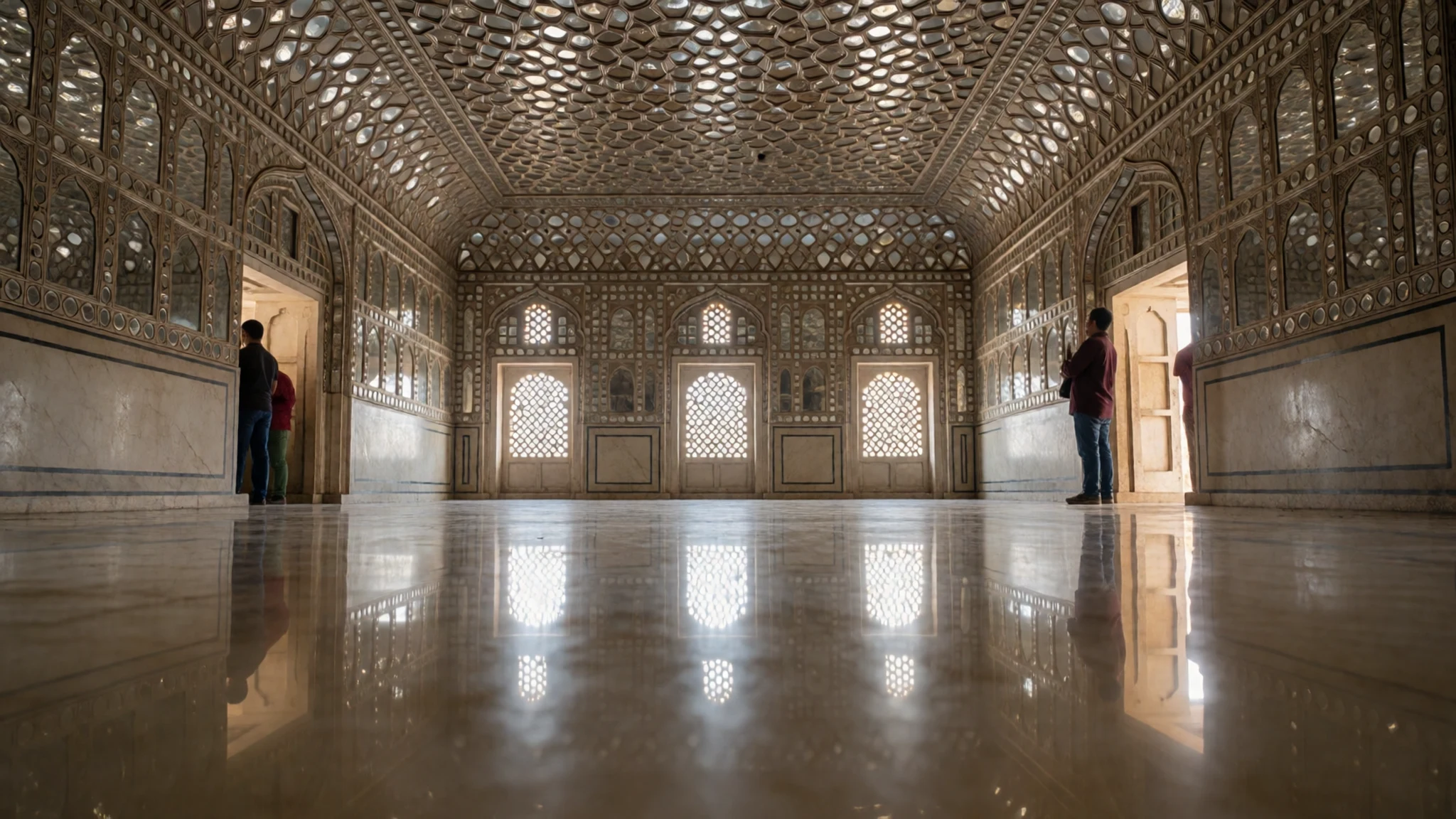
- Man Singh Palace courtyard — Man Singh Palace, Amer Fort
The Baradhari pavilion stands at the centre of the Man Singh Palace courtyard, its open sides giving the square a sense of air. Ranges of red sandstone rise around it, and the Diwan-e-Aam, the Hall of Public Audience, lies within the same palace complex. Go early, because the square fills quickly once the tour groups arrive, and shade is limited by midday.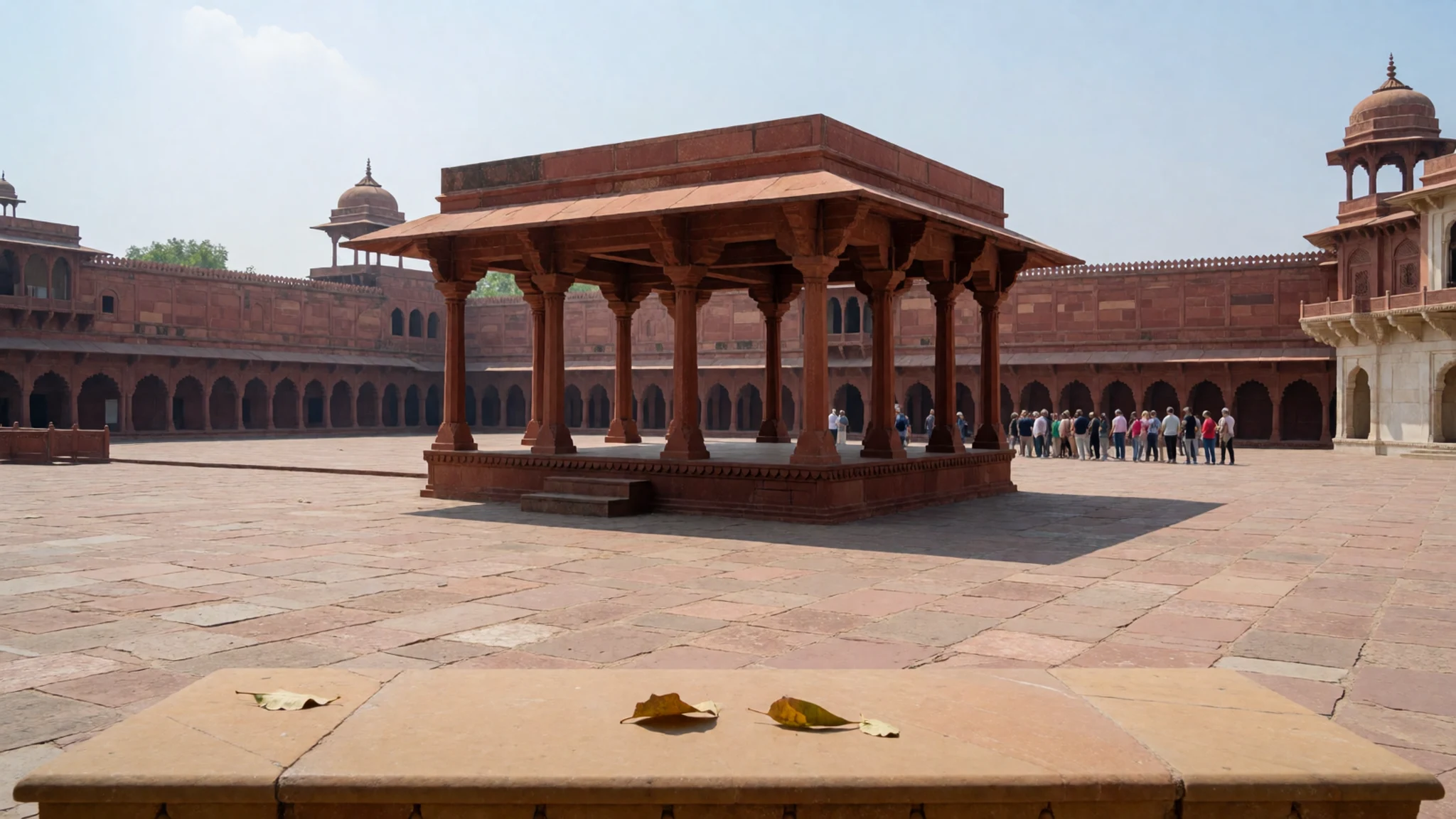
- Maotha Lake viewpoint — Lakeside below Amer Fort
Maotha Lake sits below the fort, and the view back up to the ramparts is one of the best reasons to make the trip. The lake is the main water source for the palace. Jaigarh Fort is visible on the hills behind, linked to Amer by an underground passage. Bring water and sun protection, because the stretch by the shore has little shade.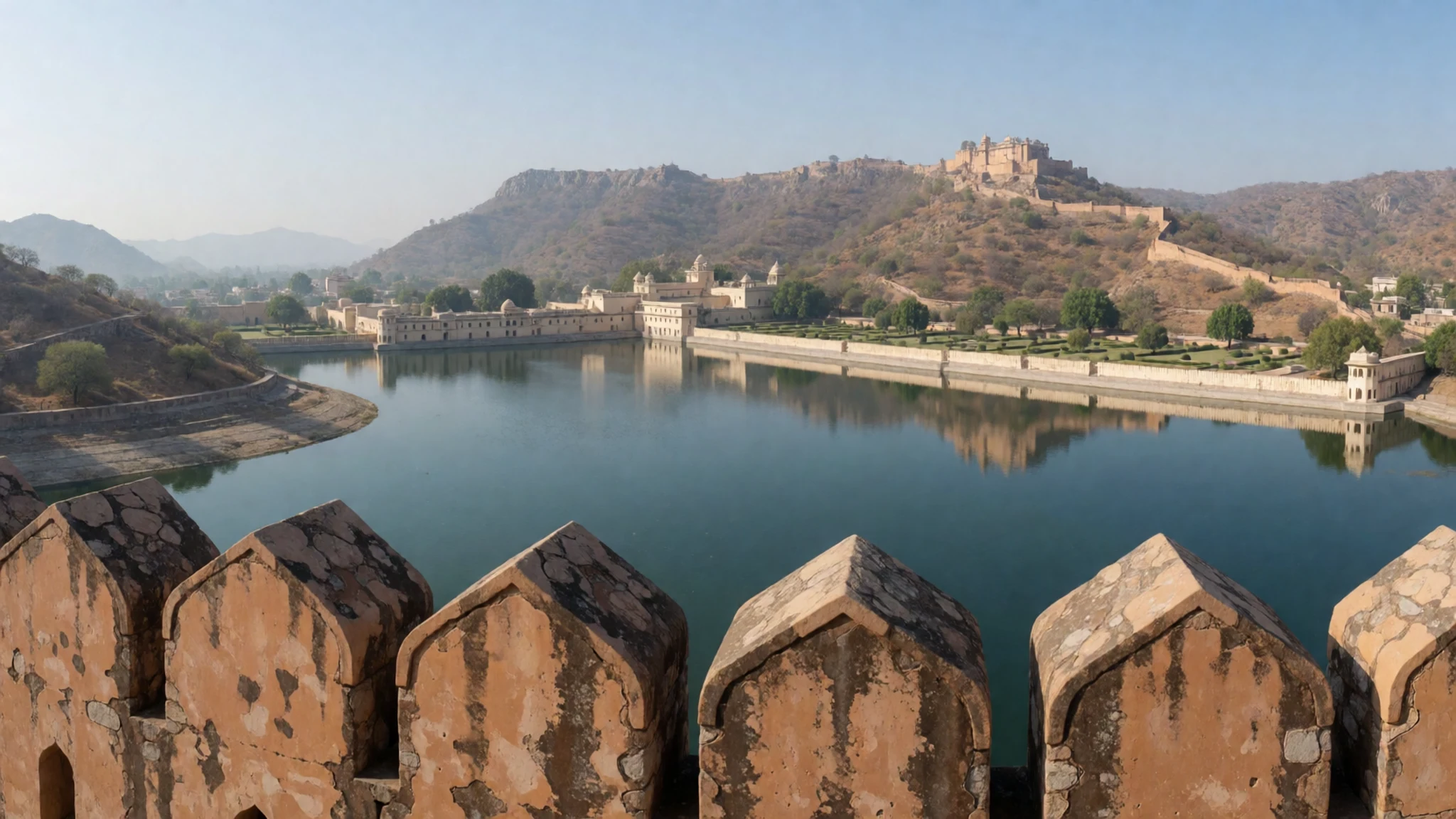
- Shila Devi temple — Entrance to the palace, near Ganesh Gate
At the palace entrance, near Ganesh Gate, stands a temple to Shila Devi, a goddess of the Chaitanya tradition. It was given to Raja Man Singh after he defeated the ruler of Jessore in Bengal. Jessore is now in Bangladesh, so the link reaches well beyond Rajasthan. Take off your shoes where custom asks, and keep your voice low while worshippers pray.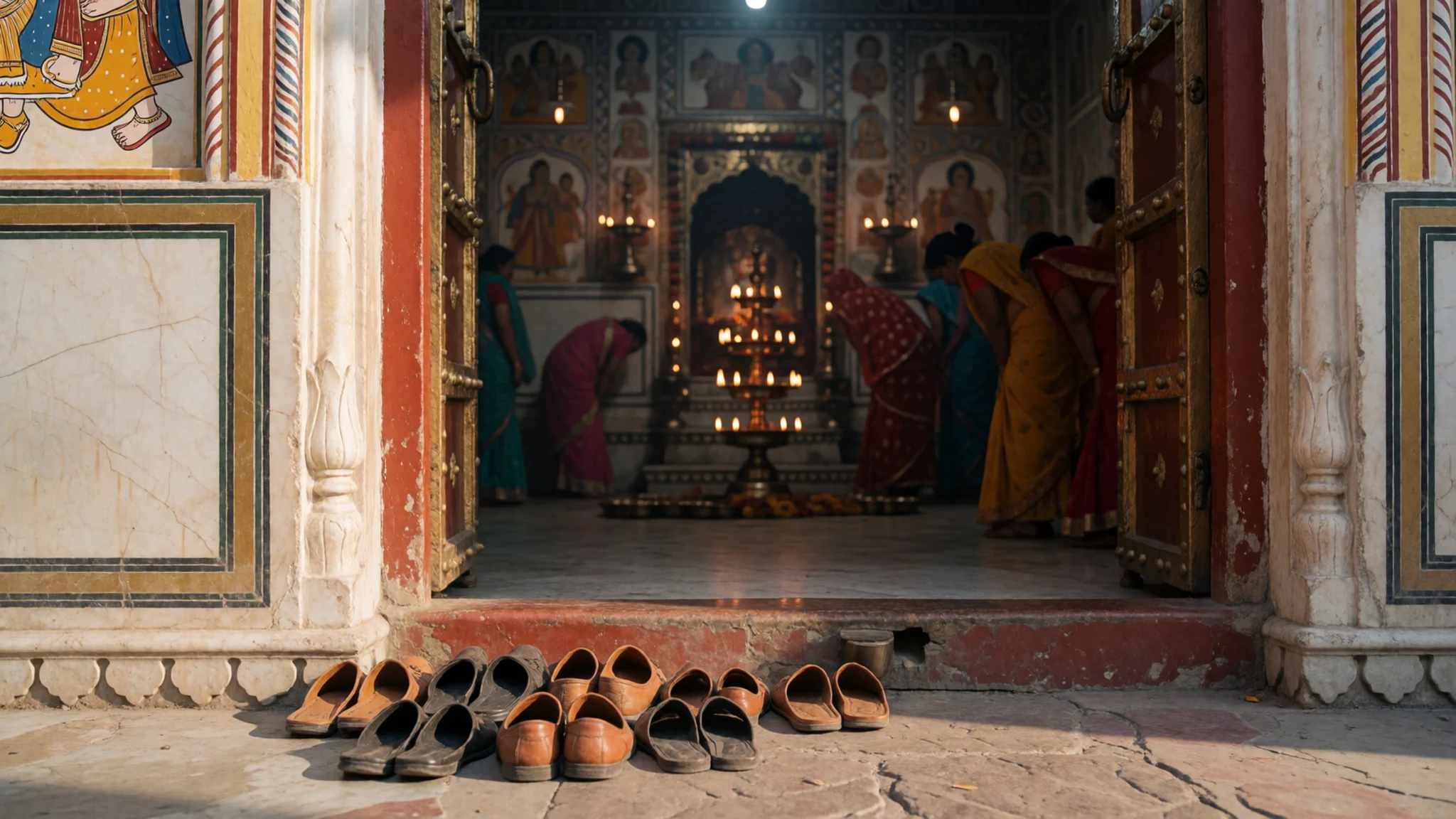
Culture
Amber Fort is still a place of worship as well as a historic palace, so a few habits make a visit smoother. The paths are cobbled and uneven, and the climb is steep, so wear shoes with good grip and carry water. Temples inside the complex are active shrines, so keep your voice low and do not step over people sitting on the floor. Guides can explain the rooms in detail, and it is sensible to agree a fee before the tour begins. Ask before photographing people, particularly those praying or working, and do not touch carvings, mirror work or painted walls, which are fragile. Flash can damage old pigments, so switch it off in the halls. Queues at the gates can be informal, so wait your turn rather than pushing forward. Remove your shoes before you enter any shrine, and keep your voice low inside the halls.
What to wear
Amer Fort sits in a region where dress has long been tied to community, season and ceremony, so what you see there mixes old and new. Traditional Rajasthani women wear the ghagra, a full pleated skirt, with a choli blouse and an odhni, a long scarf, often in bright cotton or silk. Bandhani, a tie-dye technique in which cloth is knotted and dyed in small dots, is one of the best-known textiles of the state. Men traditionally wear the angrakha, a wrapped tunic, with a turban, the pagri or safa, which still appears at weddings and festivals. Most people in Jaipur and the surrounding towns now dress in everyday Western or Indian clothes, saving the traditional outfits for celebrations. For a visit, dress for the sun and the stone: loose cotton or linen, long trousers or a knee-length skirt, and sleeves that cover the shoulders if you plan to step inside temples. Choose shoes with good grip, since the cobbled paths are uneven. In the cooler months, a light layer helps in the shaded halls.
What to eat
- Dal baati churma — Thali eateries on the road into Amer and in Jaipur's old quarter
Dal baati churma is Rajasthan's signature meal: baked wheat balls dipped in ghee, with lentil stew and a sweet crumbled wheat mix. Share a plate, as it is heavy. Find it at thali eateries on the road into Amer and in Jaipur's old quarter.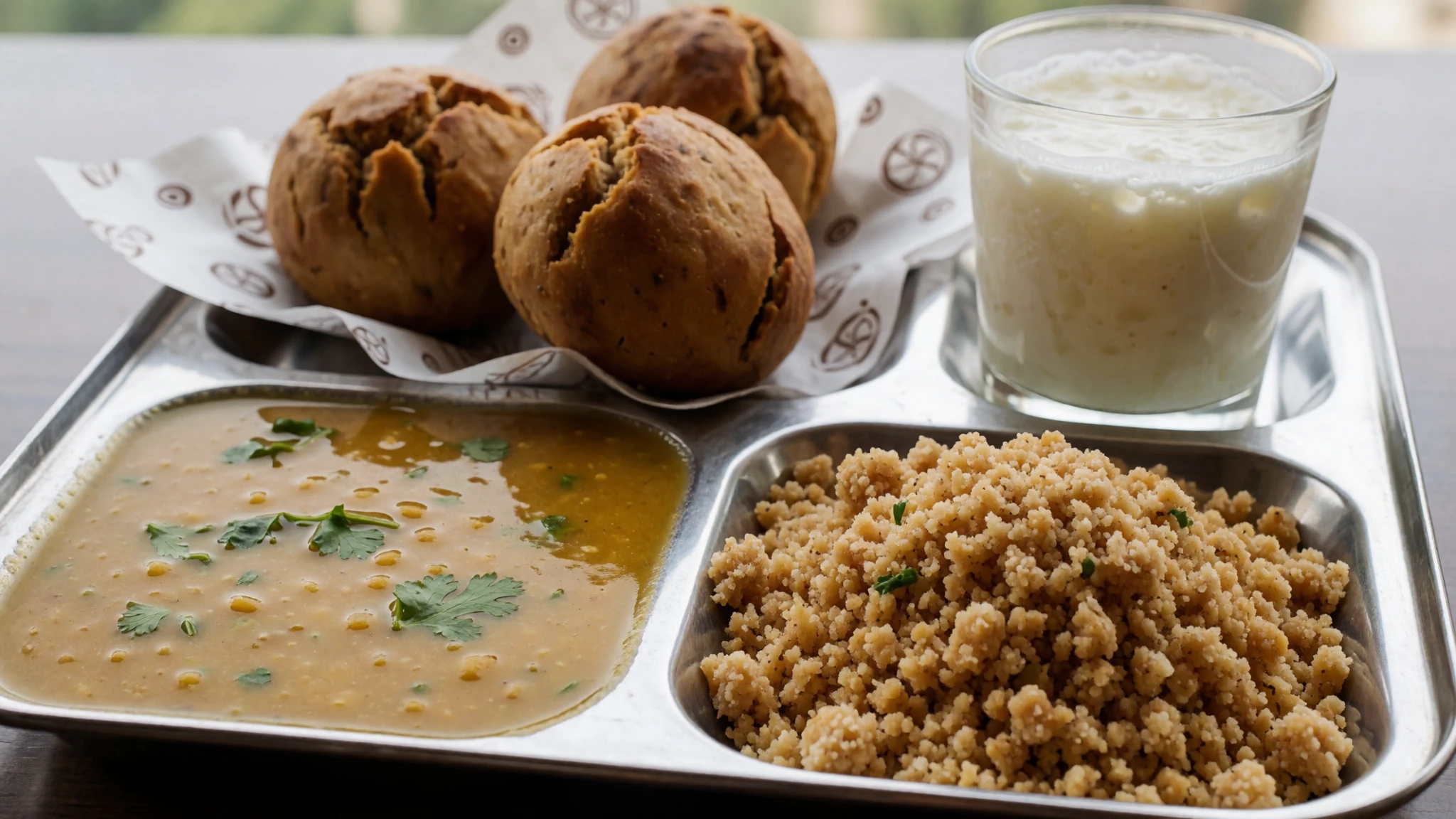
- Ghevar — Sweet shops in Jaipur's bazaars
Ghevar is a disc-shaped sweet of fried batter, soaked in sugar syrup and topped with nuts. It is strongly tied to festivals. Look for it in the sweet shops of Jaipur's bazaars, especially before a festival.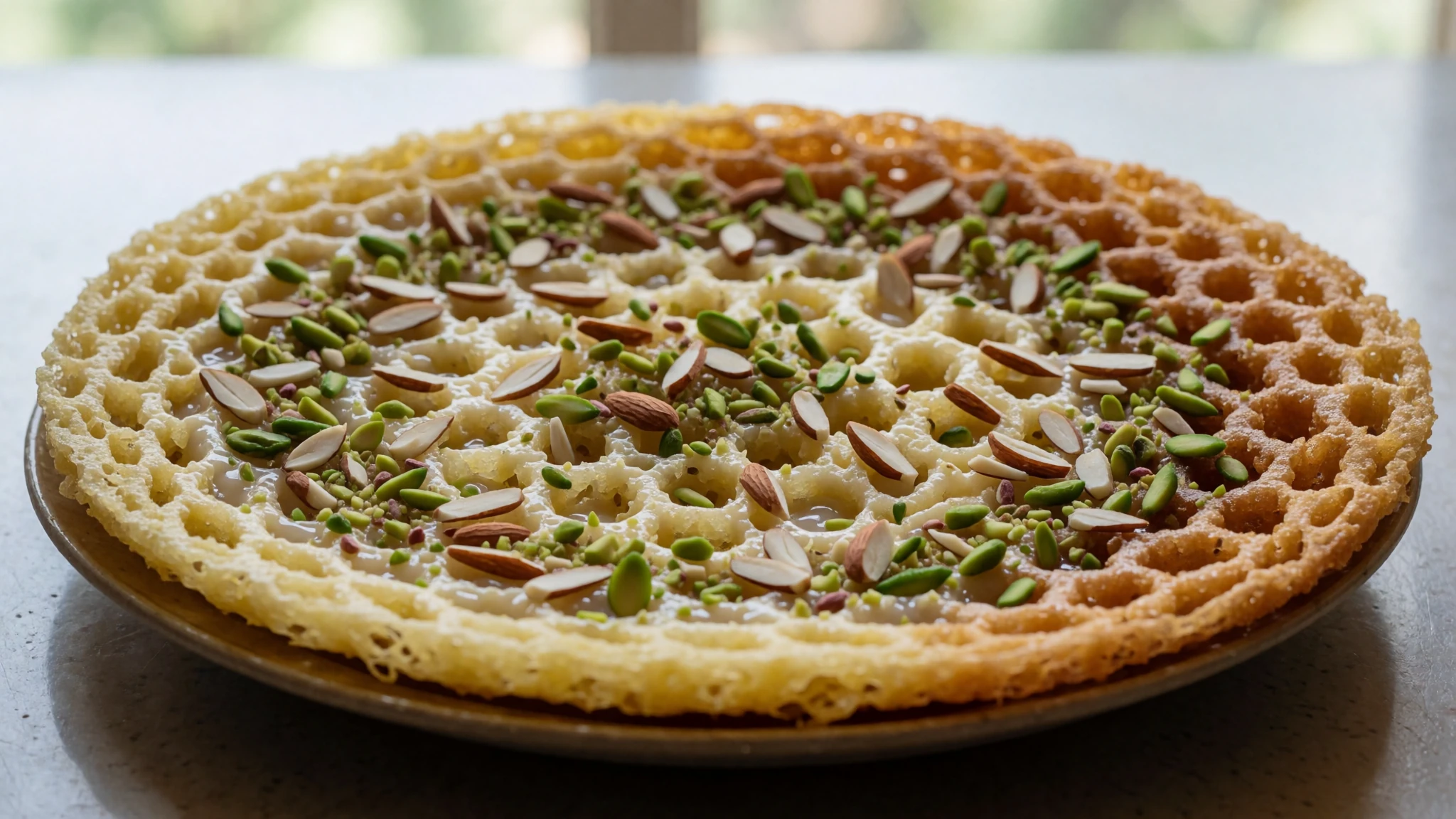
- Pyaaz kachori — Street stalls near the bazaar in Amer town and the main roads of old Jaipur
Pyaaz kachori is a crisp fried bread filled with spiced onion. Go for the morning batch, when the pastry is freshest. Find it at street stalls near the bazaar in Amer town and along the main roads of old Jaipur. - Laal maas — Older meat eateries in Jaipur's old city
Laal maas is a fiery mutton curry coloured deep red with dried chillies, a dish of Rajput kitchens that is still cooked with care. It is served with bajra roti or rice. Look for it in the older meat eateries of Jaipur's old city. - Lassi in clay cups — Sweet shops and lassi stalls near the main bazaar
Lassi is a thick yoghurt drink, sweet or salted, and in Jaipur it is often served in small clay cups called kulhad. Sip it slowly, because it is rich. Find a sweet shop or lassi stall near the main bazaar, especially late in the afternoon.
Plan it
Best time. December to February, when the days are cooler and the nights chilly; April to June is very hot, and the monsoon brings heavy rain from late June into September. Check current forecasts before you go.
How long. 1–2
Getting there. Jaipur Airport is the nearest airport, about a short drive from Amer; take a taxi or app cab to the fort, or a shared jeep from Jaipur.
Budget. mid
Tips
- Go early in the morning, before the tour groups and the heat arrive.
- Check the official site for current ticket and visiting details before you go.
- Carry water and a hat; the climb is long and there is little shade.
- Keep some cash for small purchases, though card payments are common at larger outlets.
- Consider a guide for the history, and agree the fee first.
Etiquette
- Remove shoes before entering any shrine.
- Ask before photographing people, especially those praying.
- Think twice about elephant rides, given reported welfare concerns.
Nearby
Sources
- Wikidata Q456817 (CC0)
- Wikipedia: Amber Fort (rev 1376796735) (CC BY-SA 4.0)
- Wikivoyage: Jaipur Division (rev 5221093) (CC BY-SA 4.0)
- Photo 01: Jakub Hałun, Amber Fort from Maotha Lake (CC BY-SA 4.0)
- Photo 02: Vyacheslav Argenberg, Courtyard of Amer Fort (CC BY 4.0)
- Photo 03: Chainwit., Ganesh Pol, Amer Fort (CC BY 4.0)
- Photo 04: Adamina, Silver door in Amber Fort (CC BY 2.5)
- Photo 05: Roshanrajverma, Amer palace sheesh mahal (CC BY-SA 4.0)
- Photo 06: Amber Fort interior (Public domain)
- Photo 07: Vssun, Amber Fort Sheesh Mahal interior (CC BY 3.0)
- Photo 08: Vssun, Baradhari Pavilion at Man Singh Palace Square (CC BY 3.0)


