Ajanta Caves
Ajanta Caves, India
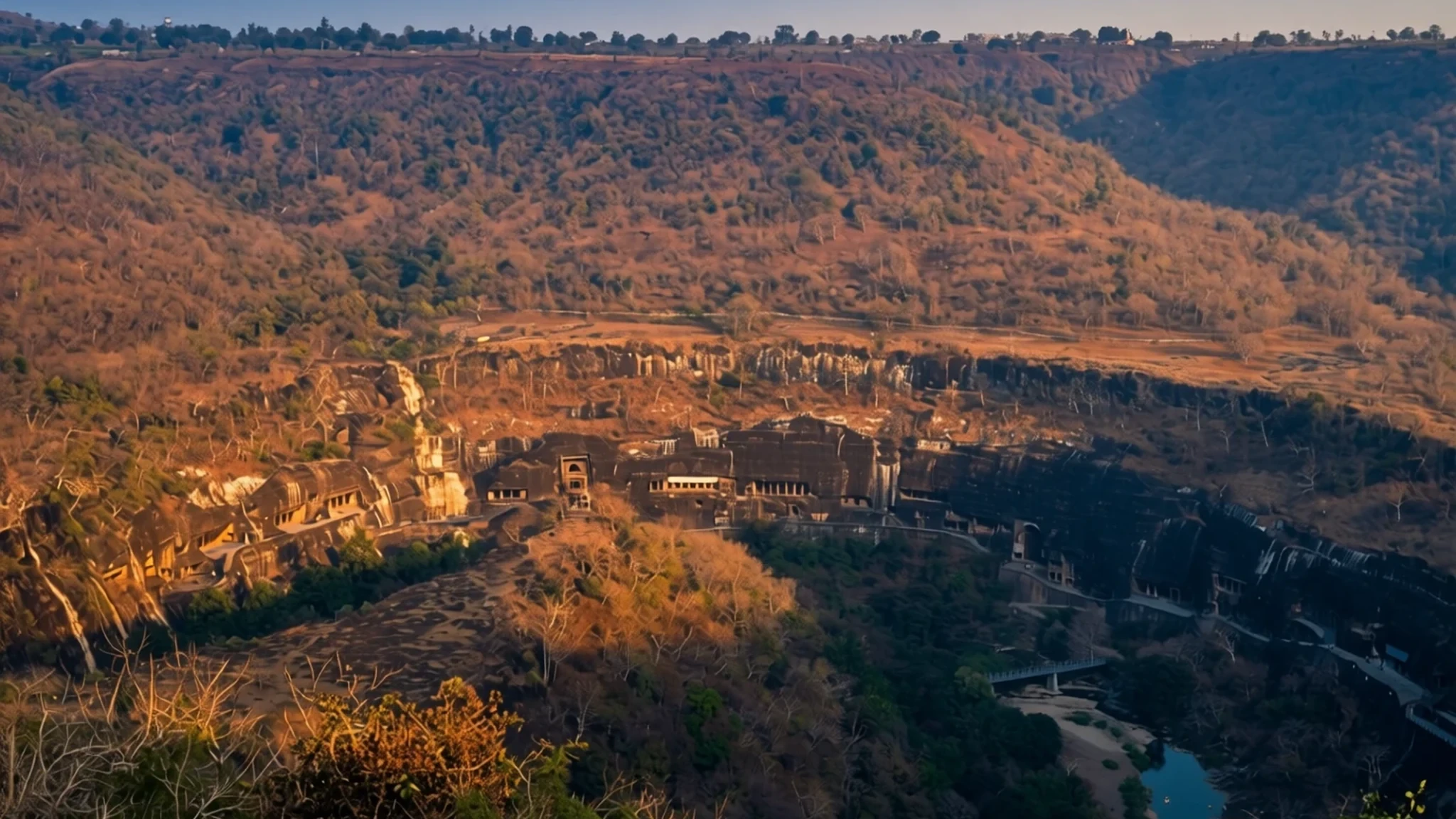
Carved deep into a dramatic river gorge, the Ajanta Caves preserve some of the greatest masterpieces of ancient Buddhist art and monastic architecture.
The place
The Ajanta Caves form a magnificent horseshoe-shaped complex of rock-cut Buddhist monuments set within the Aurangabad district of Maharashtra. Hewn directly out of a sheer basalt cliff wall rising above the Waghora River, the site comprises thirty rock-cut chambers created as ancient sanctuaries and monastic dwellings. These monuments are universally celebrated for containing some of the finest surviving examples of ancient Indian mural painting and stone sculpture. The builders cut deep into the basalt rock, hollowing out vast pillared assembly halls known as chaityas for communal worship, alongside quieter residential cells known as viharas where monks lived, studied, and meditated through the rainy season. Inside these quiet spaces, intricate carvings of deities, floral motifs, and narrative frescoes adorn the stone walls and ceilings. The location itself feels remote and contemplative, shielded from the surrounding plains by the curve of the gorge and the canopy of dry deciduous forest. Walking along the modern pathway carved into the cliff face, visitors trace the footsteps of ancient pilgrims, merchants, and monks who once sought shelter in these cool, shadowy chambers. Light filters gently across the stone verandahs, illuminating carved pillars and faded pigments that have endured for centuries against the elements. The scale of the excavation, achieved entirely with hand tools and chisels, reveals an astonishing mastery of engineering and artistry that continues to draw travellers from across the globe to this quiet river valley in western India.
Its story
The history of the Ajanta Caves unfolds in two distinct eras of ancient Indian civilisation. The earliest phase of excavation began around the second century BCE, during the rule of the Satavahana dynasty. Artisans during this initial period carved foundational chaitya halls and viharas, adorning early walls with murals of Jataka tales alongside their architectural grandeur and sacred stupas. Following this early burst of activity, the site lay largely dormant for centuries before a dramatic revival took place in the mid-fifth century CE. During this second phase, heavily patronised under the Vakataka and Gupta eras, sculptors and painters transformed the earlier chambers and added magnificent new shrines. Painters covered the rock walls with sophisticated mural cycles depicting the Jataka tales—narratives detailing the past lives and rebirths of the Buddha—alongside vivid depictions of courtly life, celestial beings, and natural landscapes. These murals demonstrate an extraordinary mastery of gesture, posture, and shading, conveying complex human emotions through subtle shifts in expression. The abandonment of the caves followed the decline of Buddhism in the region, leaving the sanctuaries hidden beneath thick forest overgrowth until colonial rediscovery brought them back to international attention. Today, the complex stands as a profound testament to the artistic heights achieved during classical Indian antiquity, recording centuries of spiritual devotion in imperishable stone.
What to see
- Cave 1 Principal Vihara
Renowned for housing some of the best-preserved and most vibrant wall paintings at the entire complex, featuring elaborate ceiling designs and striking panels depicting bodhisattvas.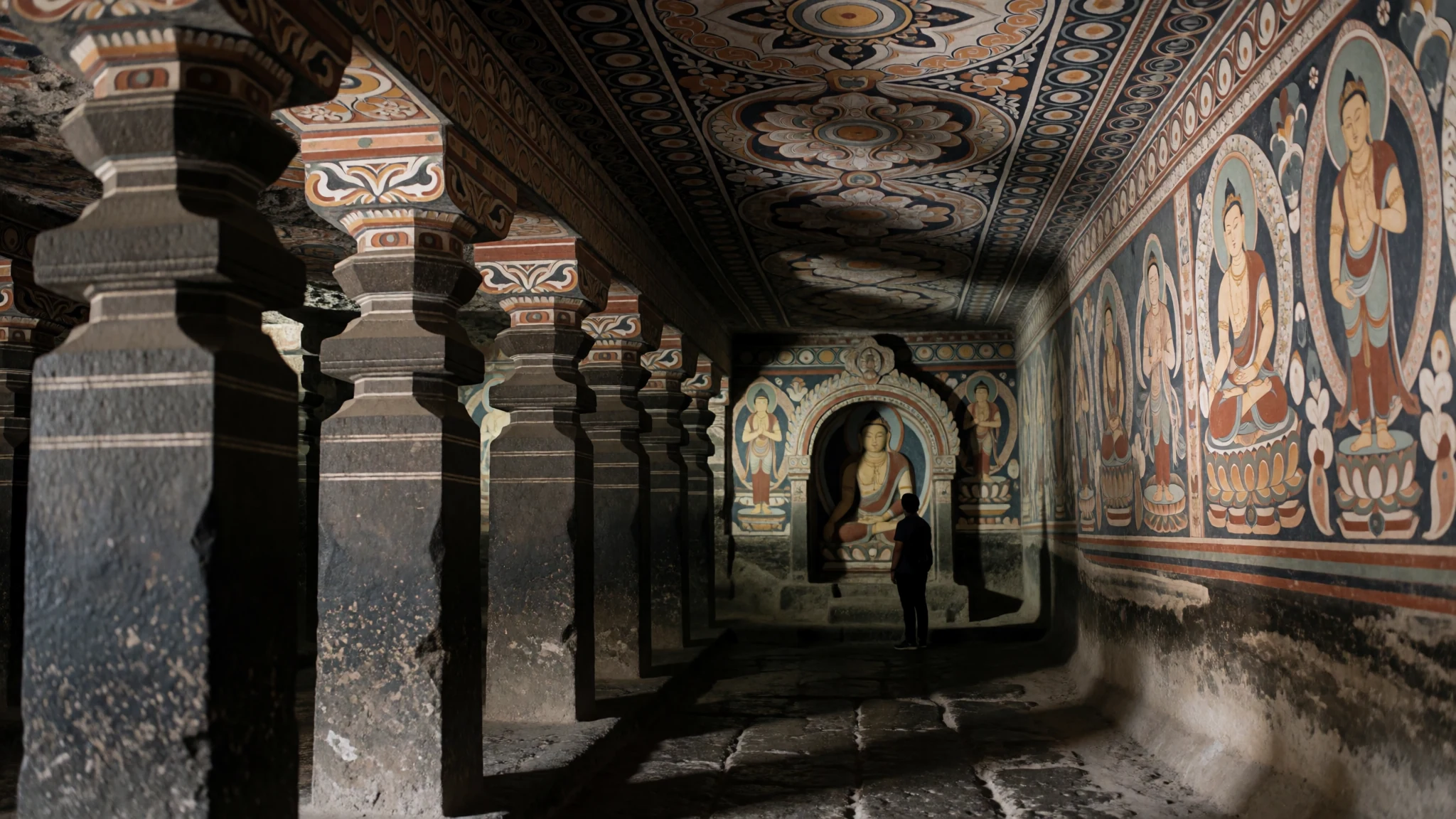
- Cave 9 Chaitya Griha
One of the earliest worship halls built during the initial phase of excavation, featuring a soaring vaulted ceiling once framed with timber ribs and a central devotional stupa.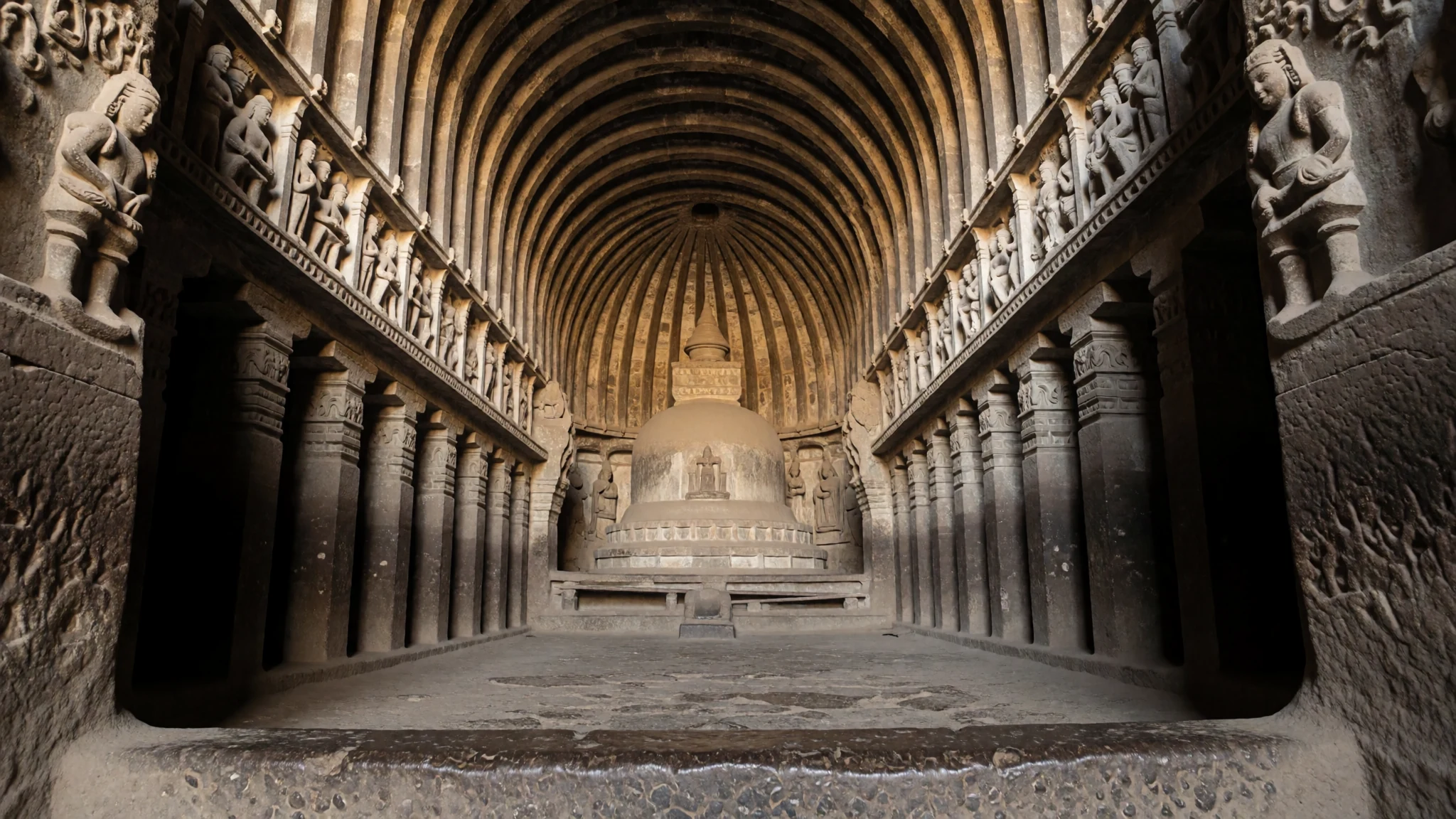
- The Horseshoe Viewpoint
A dramatic elevated vantage point reached via a flight of steps across the valley, offering the classic panoramic perspective of the curving gorge and cave entrances.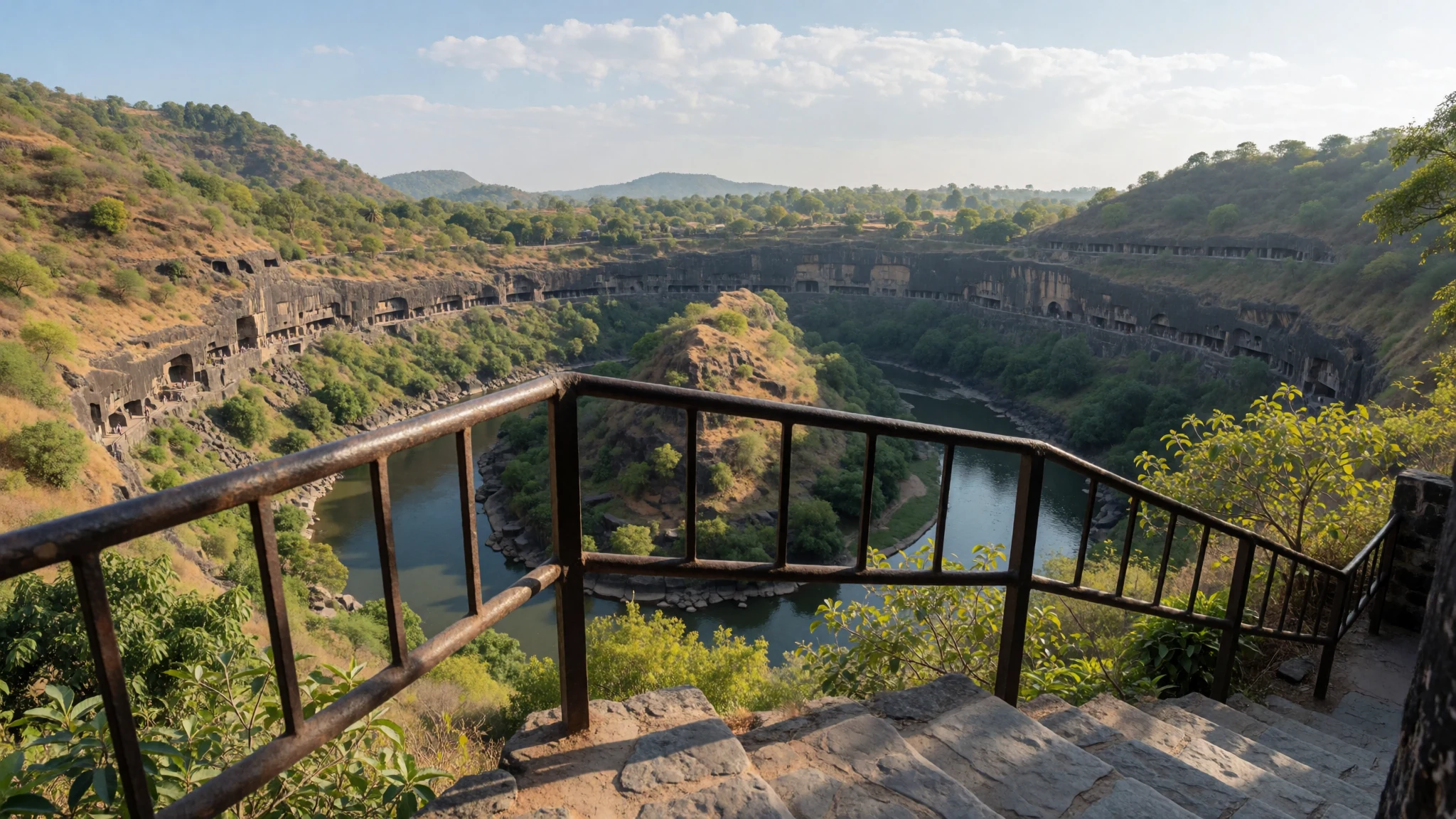
- Cave 10 Inscription Pillar
An ancient prayer hall where early visitors left historical records, including nineteenth-century colonial inscriptions marking the modern rediscovery of the sanctuary.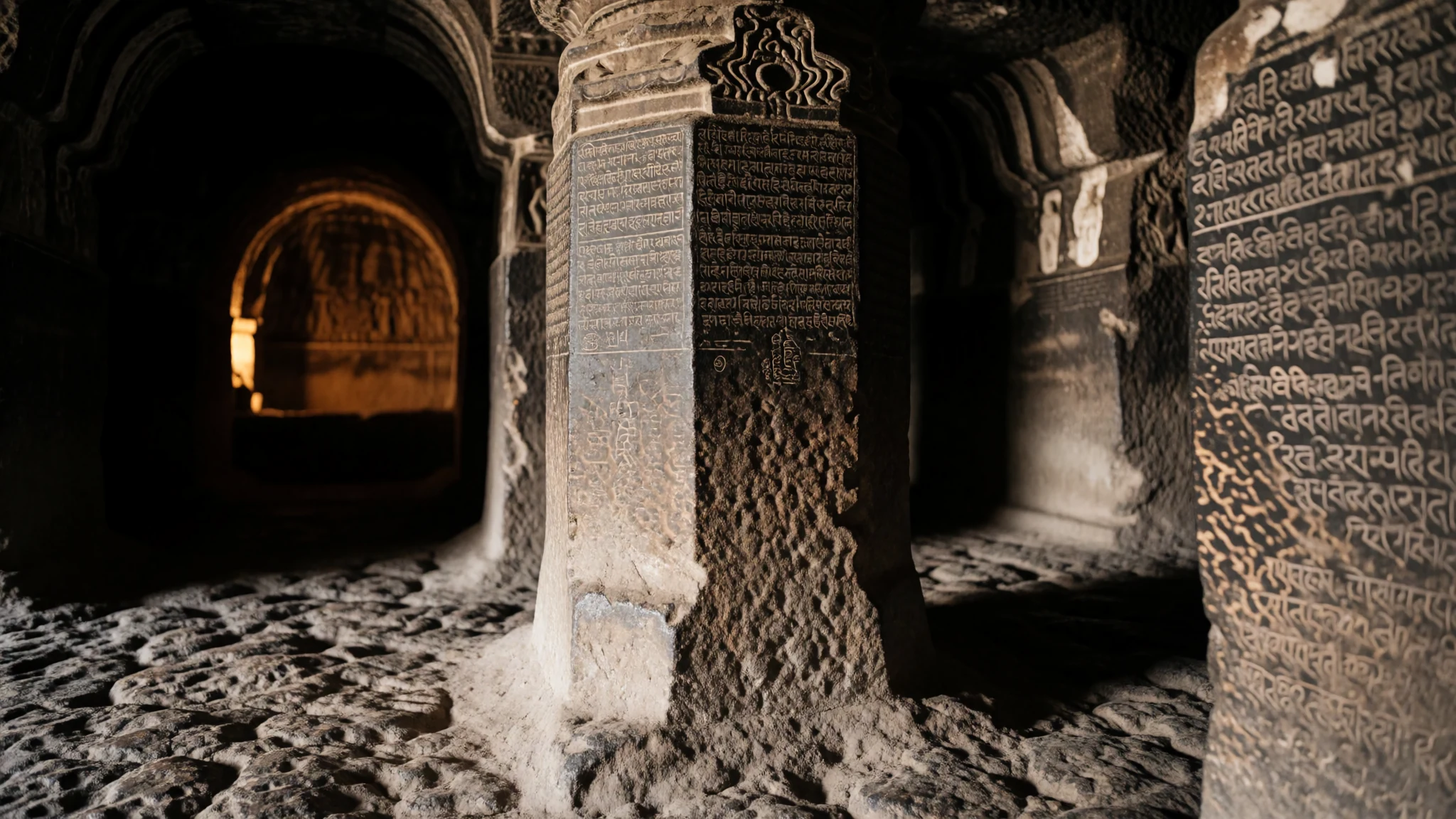
Culture
The cultural fabric of Maharashtra is deeply rooted in literary traditions, devotional poetry, and ancient artistic expression. While the Ajanta Caves themselves are monastic ruins rather than active contemporary temples, they remain deeply sacred as monuments to Buddhist heritage and ancient craftsmanship. Visitors encounter a respectful, contemplative atmosphere across the site, where travellers from diverse spiritual backgrounds gather to admire the ancient rock-cut architecture. Traditional Maharashtrian hospitality is warm and unpretentious, shaped by agricultural festivals, folk music such as lavani, and regional arts. Modern clothing in nearby towns tends towards modest, practical attire, reflecting a blend of traditional kurtas, sarees, and contemporary urban wear. When exploring temple sites or sacred spaces in the wider region, dress modestly with shoulders and knees covered, and remove your footwear before stepping onto raised sacred thresholds.
What to wear
Traditional attire in Maharashtra reflects the warm climate and practical agrarian heritage of the Deccan plateau. The classic garment for women is the nine-yard saree, traditionally draped in a distinctive dhoti style known as nauvari, which offered freedom of movement for farmwork and active daily life. Men traditionally wore a dhoti or loose cotton trousers paired with a cotton shirt and a pheta, a traditional turban wrapped by hand to signify regional identity and social standing. In contemporary towns and cities across Maharashtra, daily wear shifts towards comfortable cotton garments, including kurtas, trousers, and western-casual wear for younger generations. For travellers visiting the Ajanta Caves, practicality and climate dictate wardrobe choices. Daytime temperatures can rise significantly, making lightweight, breathable cotton or linen fabrics essential. Because exploring the complex involves walking along uneven stone paths, climbing stairs, and removing shoes frequently at specific cave thresholds, sturdy and comfortable walking shoes paired with easy slip-on sandals are ideal.
What to eat
- Vada Pav — Street food stalls and roadside eateries across Mumbai and regional towns
Referred to as the Indian version of the burger, this iconic Maharashtrian snack consists of a spiced fried potato dumpling sandwiched inside a soft bun, typically served with fiery garlic chutney and fried green chillies.
- Pohe — Local breakfast cafes and family dining tables throughout Maharashtra
A comforting, light snack prepared from flattened rice tempered with mustard seeds, turmeric, green chillies, and onions, often garnished with fresh coriander and grated coconut.
- Kande Bhaje — Monsoon food stalls and roadside tea shops across the state
Crispy onion fritters made with sliced onions and chickpea flour, especially popular during the monsoon season when enjoyed hot alongside a steaming cup of spiced tea. - Chivda — Traditional sweet shops and neighbourhood markets throughout the region
A spiced, crunchy mixture of flattened rice, peanuts, roasted lentils, and aromatic curry leaves, prized for its long shelf life and savoury crunch.
Plan it
Best time. November to February offers the most comfortable weather for exploring the outdoor cliffside walks, while the hot dry months from March to May bring intense heat and the monsoon from June to September brings heavy rain.
How long. 2
Getting there. Fly into Sambhaji Nagar (Aurangabad) or Jalgaon, the nearest airports, or into Mumbai as a longer alternative, then continue by road; Jalgaon and Bhusawal are the closest railway stations.
Budget. mid
Tips
- Arrive early in the morning to beat the midday heat and daytime tour groups.
- Wear comfortable walking shoes with good grip for the stone staircases.
- Carry bottled water and sun protection as shade along the gorge can be limited.
- Check official notices for cave illumination guidelines to protect ancient pigments.
Etiquette
- Remove your shoes before entering delicate sanctums where requested.
- Refrain from using flash photography inside painted caves to preserve fragile murals.
Nearby
Sources
- Wikidata Q184427 (CC0)
- Wikipedia (CC BY-SA 4.0)
- Wikivoyage (CC BY-SA 4.0)