Porquerolles
Porquerolles, France
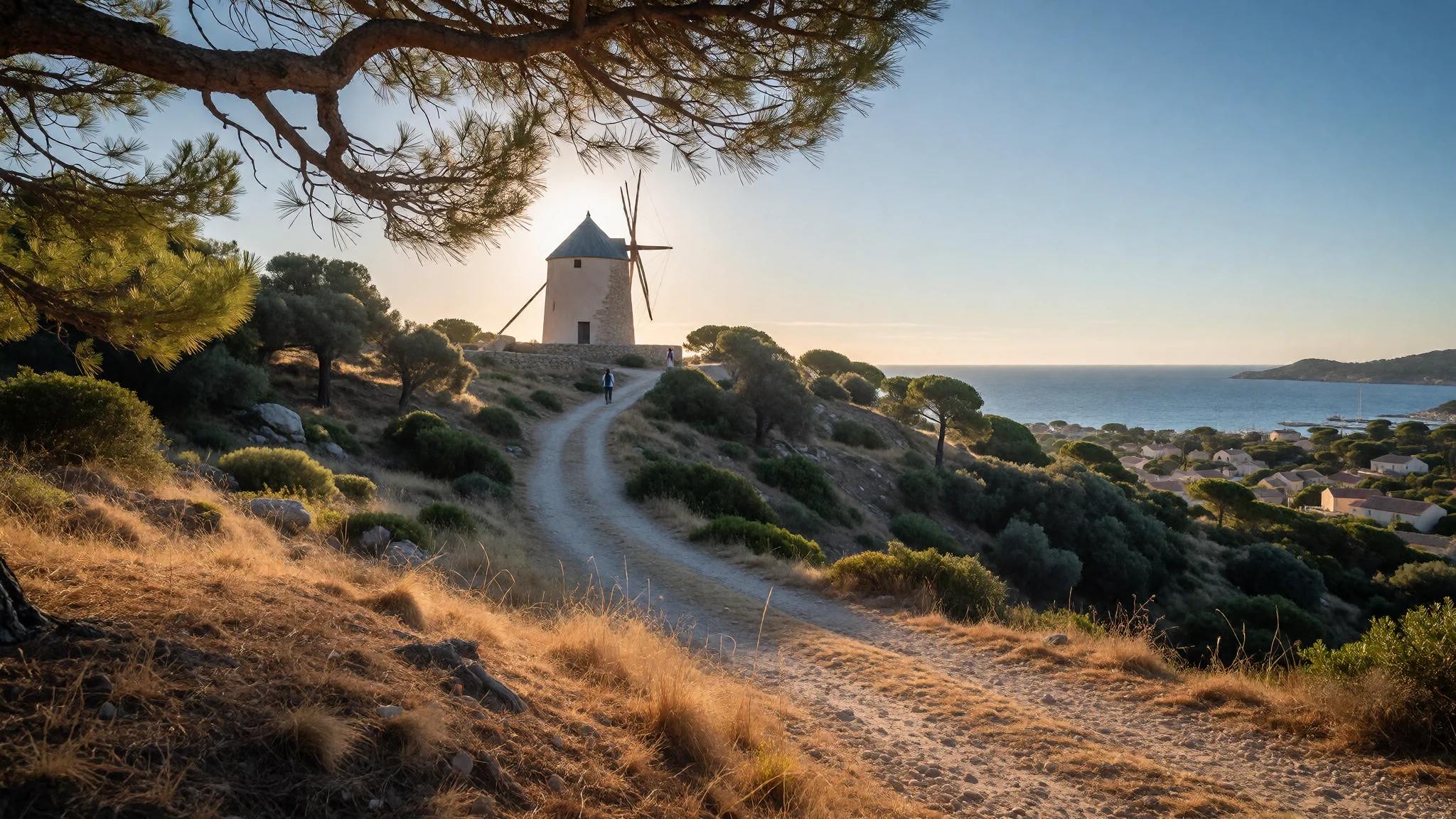
Porquerolles is a car-free Mediterranean island of pine woods, vineyards and quiet sandy bays, best explored slowly by bicycle.
The place
Porquerolles is a car-free island off the Provençal coast, part of the Hyères archipelago in the Var department and administered from Hyères. Only about 200 people live here, mostly in a single village beside the harbour, and the lanes are shared by cyclists, walkers and the occasional service vehicle. The island sits at the western end of its chain, a short boat ride from the Giens peninsula. Its high point is modest, and the elevation figure for the island is just 38 m, so nothing here is a climb so much as a gentle roll through pine, holm oak and scented scrub. The northern shore is the soft side, with sheltered sandy beaches such as Notre Dame, La Courtade and Plage d'Argent facing the mainland. The southern shore is the opposite: cliffs, coves cut into rock, and a lighthouse that is closed to visitors. Between the two, tracks cross vineyards, old forts and woodland, and a windmill stands on a rise above the village. Much of the island belongs to Port-Cros National Park, which is why it feels protected rather than built up. Away from the village there is very little in the way of shops or cafés, so a day out means carrying food and water. In July and August the harbour fills with day-trippers and the beaches are crowded by late morning. In spring and early autumn the same paths are quiet, and the sea is still warm enough for a swim.
Its story
Porquerolles spent much of its past as a quiet outpost of the Hyères islands, and its settled village life is surprisingly recent. The village was founded in 1820, a lighthouse followed in 1837 and the church in 1850. The island's modern character comes from 1912, when François Joseph Fournier bought the whole of it, reputedly as a wedding gift for his wife. He planted vineyards across a sizeable part of the land, and the wine they produced was among the first to carry the Côtes de Provence classification. Vines still grow here, and a few estates welcome tasters. The next turning point came in 1971, when the French state acquired most of the island to keep developers away. That decision explains why the shoreline has no hotel strip or apartment blocks, and why much of the interior is now managed within Port-Cros National Park and a Mediterranean botanical conservatory. Writers and filmmakers found the place along the way. Georges Simenon set Le Cercle des Mahé (1946) and My Friend Maigret (1949) here, Nicolas Freeling used the island in Valparaiso in 1964, and Jean-Luc Godard shot scenes of Pierrot le fou on its shores in 1965. Since 2010 a summer jazz festival has added music to the calendar. The island's story is one of rescue: a private estate that became, almost by accident, a public landscape.
What to see
- Plage de la Courtade — North coast, east of the village
Porquerolles has its gentlest swimming at La Courtade, a curve of pale sand on the sheltered northern shore, a short ride east of the village. Shallow water and pine shade make it popular with families. Come early in summer, since the bay fills by late morning and the cycle path gets busy.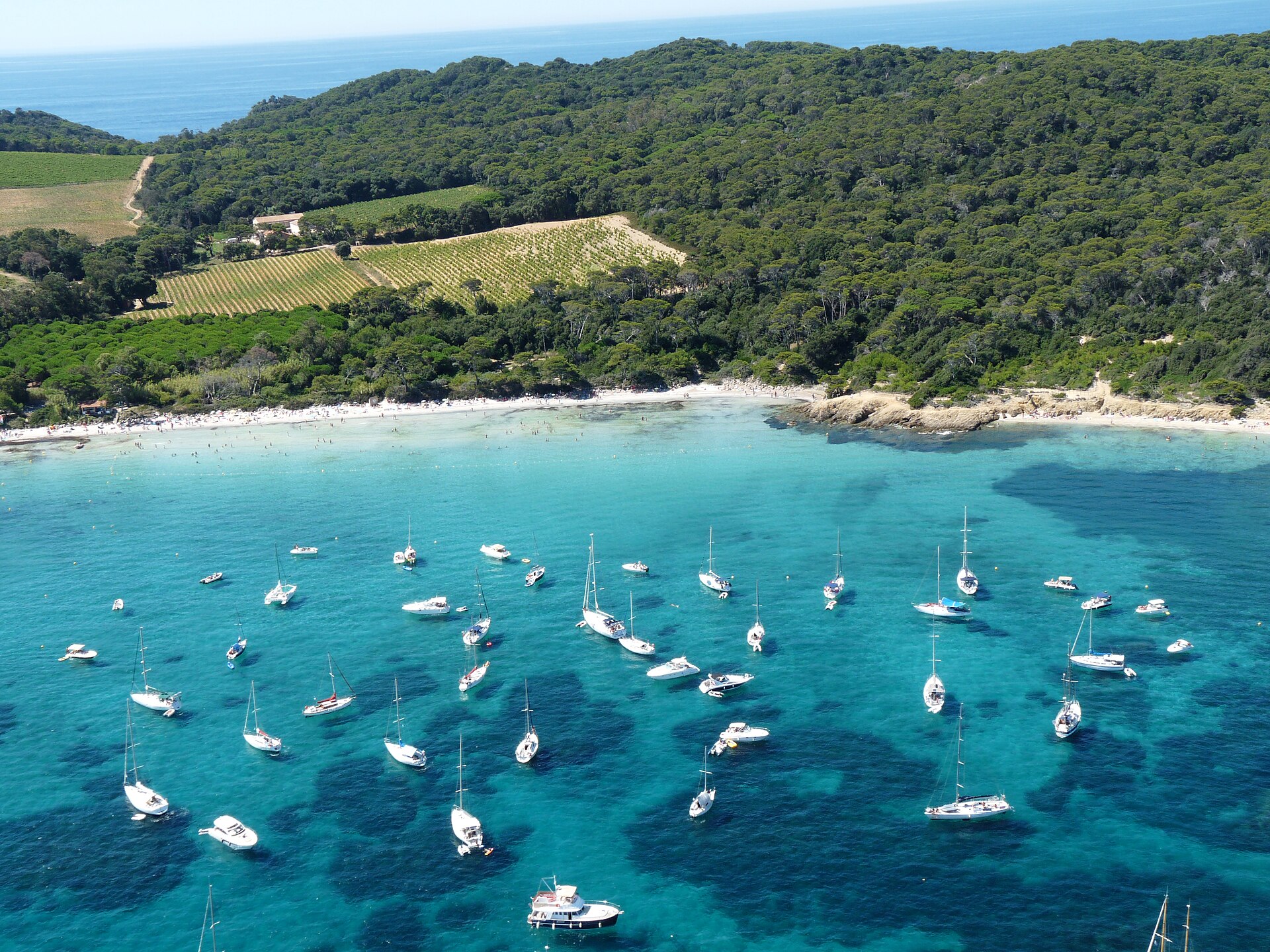
- Plage d'Argent — West of the village
West of the village, Plage d'Argent is a long, pale beach backed by dunes and scrub, reached by an easy track. Beyond the village, it is one of the few places with refreshments, though it is still wise to bring your own water. The sunset light here is lovely on a clear evening.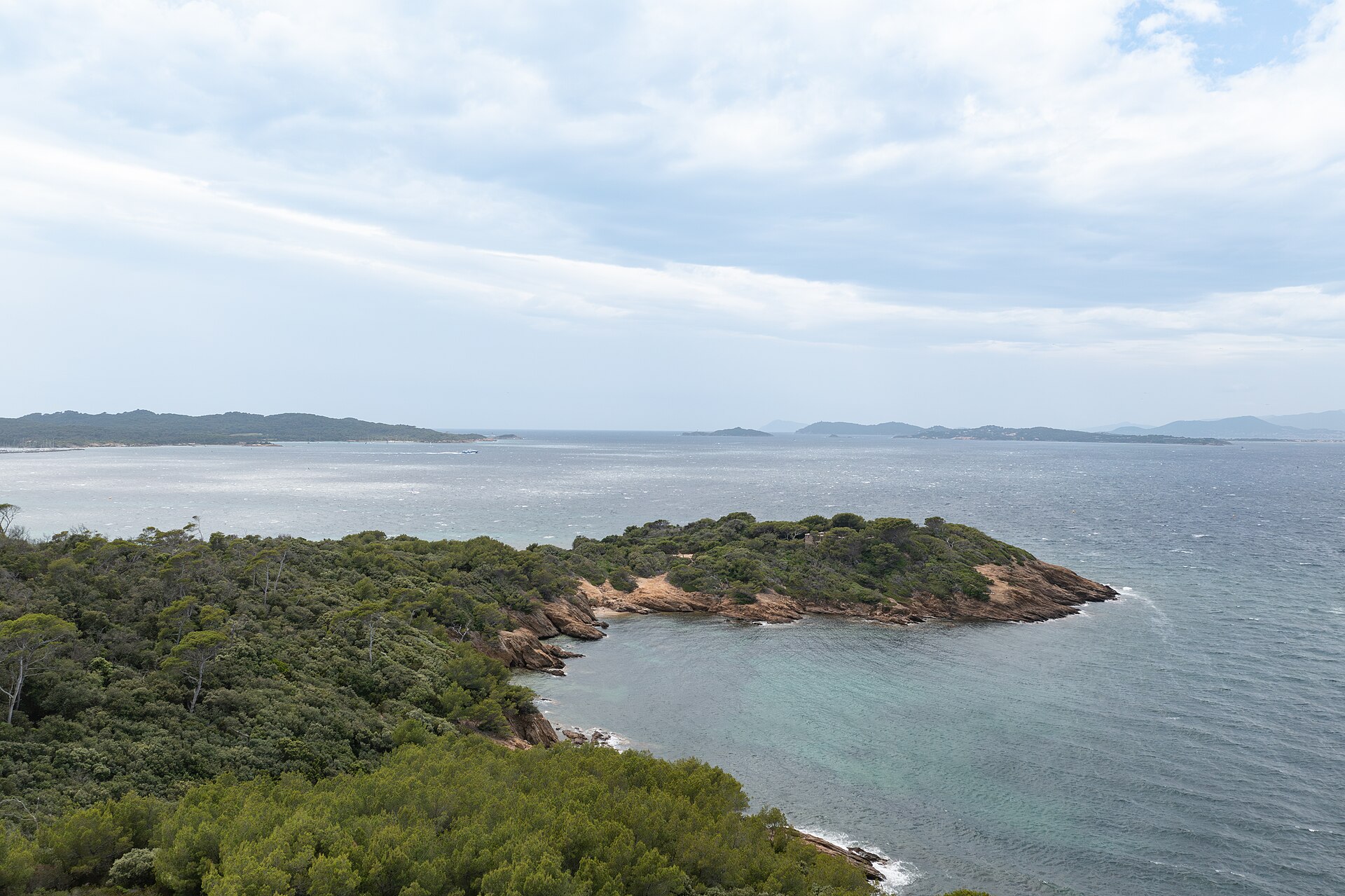
- Le Moulin du Bonheur — Hill above the village
This restored windmill stands on high ground above the village and makes a short, rewarding outing for a first-day orientation. From the hilltop the roofs, harbour and sea open out, and the surrounding paths lead on towards the woods and the southern cliffs. It is a good picnic stop on a bike loop.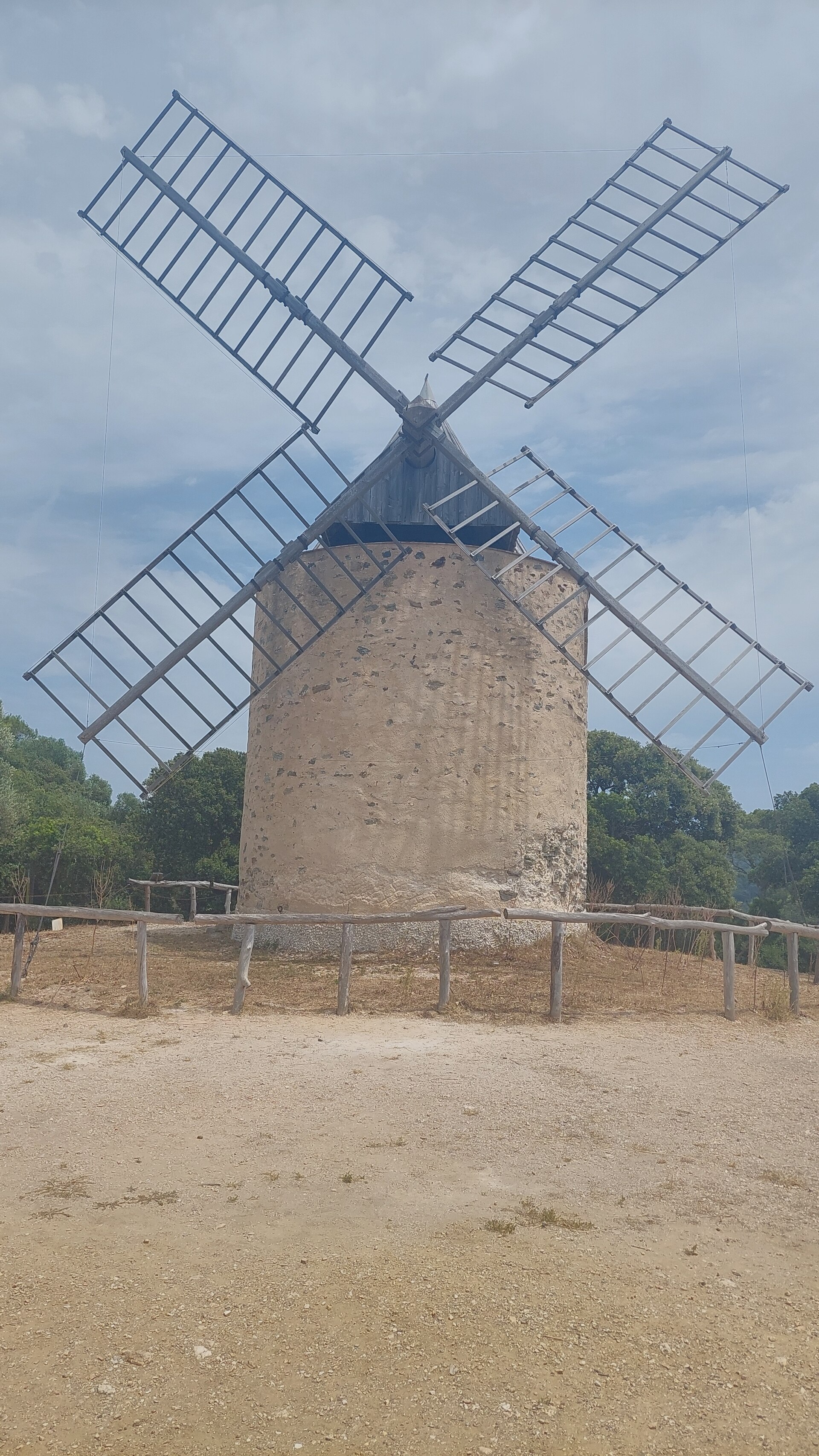
- Fort Sainte Agathe — Headland near the village
The island has several old forts, and Sainte Agathe is the one open to the public. Built to guard the anchorage, it sits on a headland close to the village and gives a sense of how strategic this small island once was. The views over the harbour and the sea reward the short walk. Check the official site for opening arrangements. - Plage Notre Dame — Eastern north coast
Plage Notre Dame lies on the eastern end of the northern shore, a longer ride from the village and usually calmer than the beaches nearer the harbour. The sand is soft, the water clear, and the cycle ride through woodland and vineyards is a pleasure in itself. It suits a slower, half-day trip with a picnic.
Culture
Porquerolles runs on island time, shaped by the national park and a small year-round community. Daily life centres on the village square, where residents, ferry crews and visitors cross paths between the bakery, the bike-hire shops and the harbour cafés. Cycling is the normal way to move, and a ring of the bell or a quick "bonjour" when passing walkers is expected. Most of the island is protected land, so the rules feel serious: fires and smoking in the woods are banned, wild plants are left alone, and in dry summer weather some forest tracks can close because of fire risk. Signs and rangers explain what is shut on a given day. French habits apply. Greeting a shopkeeper or waiter with "bonjour" before asking for anything is routine, lunch is a proper sit-down meal, and kitchens may stop serving mid-afternoon. Evenings are quiet, since the people who live near the harbour are few and close neighbours, and the summer jazz festival is the main burst of noise. Take your rubbish back to the village bins and stay on marked paths so the scrub and dune plants can recover.
What to wear
Porquerolles has no island costume of its own, so the dress tradition here is the wider Provençal one. Its best-known textile is printed cotton in small floral and geometric patterns, long associated with Provençal skirts, aprons and tablecloths, and the regional costume with its shawl and lace cap is worn mainly at festivals on the mainland. On the island itself, everyday clothing is practical and relaxed. Residents and day-trippers wear linen shirts, cotton dresses, canvas shoes or espadrilles, wide-brimmed hats and plenty of swimwear, with a jumper or windcheater for boat crossings and cooler evenings. Smart dress is rare, even in the better restaurants. A visitor should plan for sun, wind and rough ground. Bring a hat, sunglasses and light, breathable layers, plus a windproof top for the ferry and for spring and autumn breezes. Sturdy trainers or walking sandals suit the stony tracks and cliff paths better than flip-flops, which are best kept for the sand. Cover up with a shirt or wrap when walking through the village or going into the church, and carry a small dry bag for swimwear and a towel, since there are few places to change or shop away from the harbour.
What to eat
- Fish couscous — Harbour-side restaurants in the village
A visitor to Porquerolles recommended the fish couscous, a Mediterranean dish of semolina with fish and vegetables in a light broth. It is a good lunch after a morning of cycling, and it reflects the southern French fondness for North African flavours. - Soupe de poisson — Village restaurants near the port
This Provençal fish soup is made from small rockfish and served with rouille, grated cheese and toasted bread. It is a reliable order in a place with a working harbour, and a sensible one on a windy spring or autumn day. - Grilled catch of the day — Restaurants around the village square and harbour
Simply grilled fish with olive oil, lemon and herbs is the island's easiest meal to get right. Ask which fish is local that day and have it with a salad or ratatouille. Prices are higher here than on the mainland, as everything arrives by boat. - Island rosé and Côtes de Provence wine — Island wine estates and village wine shops
Porquerolles has a winemaking history going back to the early twentieth century, and local estates still make Côtes de Provence wines, mostly rosé. A glass with lunch in the shade goes well with fish and salads, and a bottle makes a fair souvenir. - Bakery picnic — Village bakeries and food shops
Many visitors head for the beaches with a baguette sandwich, a fruit tart or a pissaladière, the Provençal onion and anchovy tart. Buy early in the village, since the shops thin out away from the centre and supplies run low by afternoon in high season.
Plan it
Best time. May, June and September are the best months: warm days, a sea fit for swimming and fewer people than in high summer. July and August are the hottest and busiest, with crowded ferries and beaches. November is the wettest month, and some boat services only run from April to the autumn.
How long. 2–3
Getting there. Fly to Toulon-Hyères airport or take the train to Hyères, then continue by bus or taxi to La Tour Fondue on the Giens peninsula for the regular ferry to the island. In season there are also crossings from Le Lavandou, Cavalaire-sur-Mer, La Londe-les-Maures and Bormes-les-Mimosas. Check timetables on the official site, https://www.provencemed.com/hyeres-porquerolles/porquerolles/.
Budget. mid
Tips
- Book the ferry ahead in July and August, and aim for an early crossing to beat the crowds.
- Hire a bicycle early in the day, or bring your own, since the island is car-free and distances are best covered on two wheels.
- Carry water, food and sun protection, because refreshments are scarce away from the village.
- Take a bank card and some cash, as small outlets may prefer one or the other.
- Check for fire-risk closures of woodland tracks in dry summer weather before planning a route.
Etiquette
- Greet people with "bonjour" before asking for anything.
- Keep to marked paths and take all rubbish back to the village.
- Do not light fires or smoke in the woodland.
Nearby
Sources
- Wikidata Q975080 (CC0)
- Wikipedia: Porquerolles (rev 1337992947) (CC BY-SA 4.0)
- Wikivoyage: Porquerolles (rev 5414695) (CC BY-SA 4.0)
- Photo: Porquerolles island (France), Roloff (CC BY-SA 1.0)
- Photo: Anse de la Courtade, Yyuri1989 (CC BY 3.0)
- Photo: Le Moulin du Bonheur, Harald Hetzner (CC0 1.0)
- Photo: Gorge du Loup, Harald Hetzner (CC0 1.0)
- Photo: Calanque du Brégançonnet, Harald Hetzner (CC0 1.0)
- Photo: Calanque du Maure, Harald Hetzner (CC0 1.0)
- Photo: Alycastre Bay aerial, dronepicr (CC BY 2.5)
- Photo: La Courtade Beach aerial, dronepicr (CC BY 2.5)


