Phaistos
Phaistos, Greece
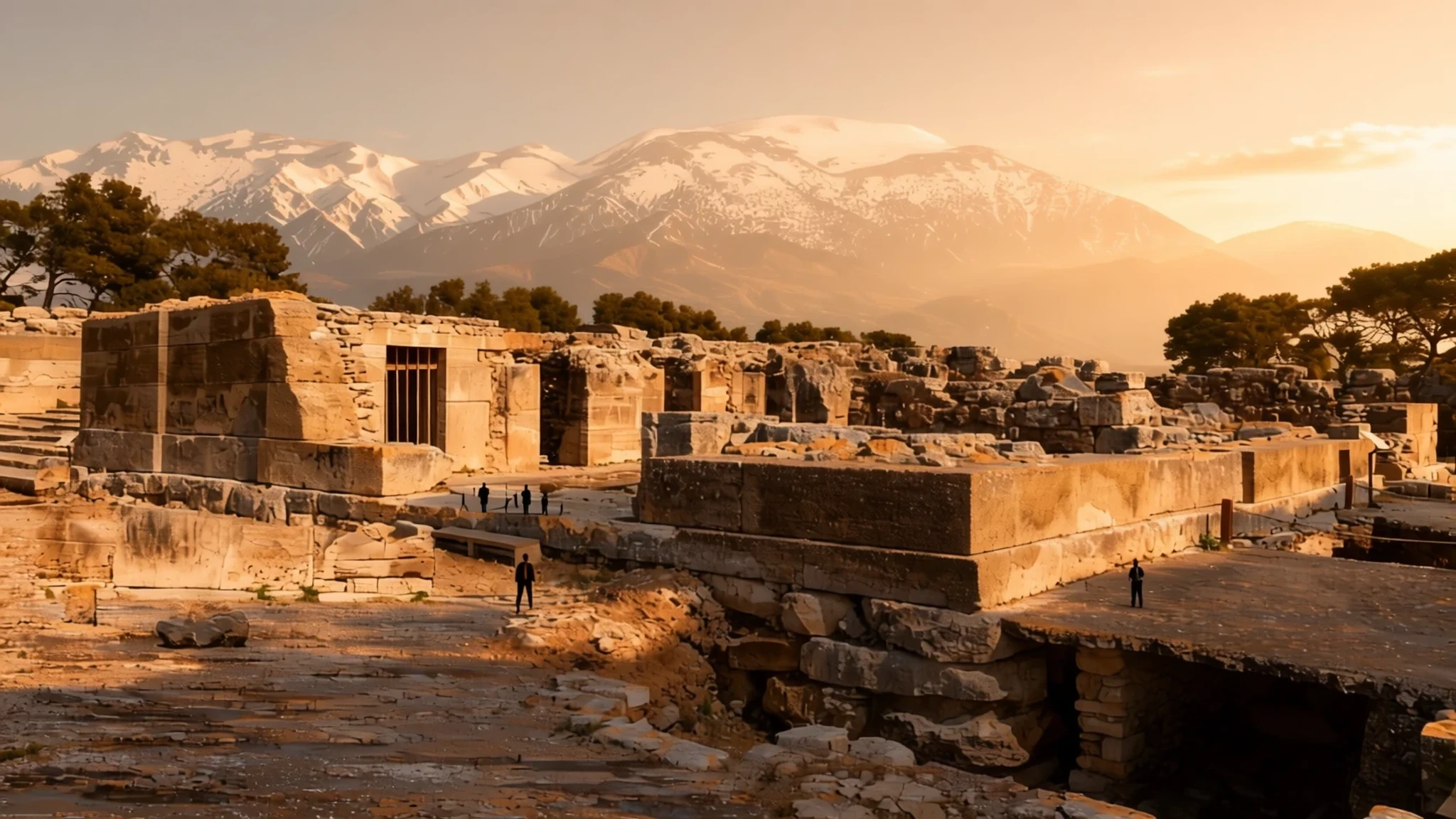
Phaistos is a Minoan palace on a ridge above the Messara plain, quieter and more legible than Knossos, with mountain views.
The place
Phaistos sits on a long ridge in south-central Crete, with the Messara plain spread out below and the Psiloritis and Asterousia mountains closing the horizon. The sea is a short drive to the south, and Heraklion lies across the island to the north. The setting explains much of the site's appeal: the palace was built to look over farmland, and that outlook is still the first thing visitors notice.
What remains is the ground plan of a Bronze Age palace and the town that grew around it. The stone is pale and golden, laid out as courtyards, stairways, storerooms and a ceremonial entrance. Unlike some Cretan sites, it has been left largely as excavated, with very little rebuilding, so walkers read the layout from the footings rather than from reconstructed walls and painted columns. That makes it a calmer, more imaginative place to visit, though it asks for a little patience and a decent site plan.
The name appears in several forms: Phaistos, Phaestos and Festos are all used on maps and road signs, and the modern municipality is called Faistos. Phaistos is listed by UNESCO as part of the wider Minoan Palatial Centres group. Wikipedia describes the Minoan town as one of the three great cities of its age, alongside Knossos and Malia.
In practice, a visit takes a couple of hours on foot. Shade is scarce, the stone reflects the heat, and the walking surfaces can be uneven. Most people combine the palace with the smaller palatial site at Hagia Triada nearby and with the ancient city of Gortyn, which gives a rounded sense of how this corner of Crete was organised over many centuries.
Its story
Phaistos was first settled around 3600 BCE, a little after Knossos. In the Early Minoan period the hills were terraced and early monumental buildings went up, on ground that had previously been used for communal feasting. Facts give the founding as about 3000 BCE, and the story of the place is one of repeated building rather than a single moment.
The first palace rose around 2000 BCE, in the Middle Minoan IB period. Over roughly three centuries it was wrecked and rebuilt three times, which is why archaeologists describe the palace in three construction phases. Around 1400 BCE it was destroyed again and never rebuilt. A large earthquake is one proposed cause, though nobody can say for certain.
Phaistos did not stand alone. It was linked to Hagia Triada, where a smaller palace may have been a residence for its rulers, and to Gortyn. Roads tied it to the other great Minoan centres, and the route towards Knossos looks to have been the busiest, suggesting trade and exchange between the two. Finds include Linear A inscriptions, bridge-spouted bowls, eggshell-thin cups, tall jars and large storage pithoi. Grape pips in storage vessels point to wine-making.
The site was lived in again in the 8th century BCE, in the Geometric Age. By then Phaistos minted its own coins, the stater, and joined alliances with other Cretan cities and with Eumenes II, king of Pergamon. Around the end of the 3rd century BCE, neighbouring Gortyn destroyed the city, and it largely vanishes from Cretan history after that. What visitors walk through today is mostly the Bronze Age palace, with the later town folded into the slopes around it.
What to see
- The main palace entrance and west court — Palace, west side
The approach to the palace begins at a broad paved court, with a grand stairway rising to the main wing. Standing here gives the clearest sense of the ceremonial scale of the building. Stone benches on the court's edge may have served as seating for gatherings, and the view across the plain is excellent.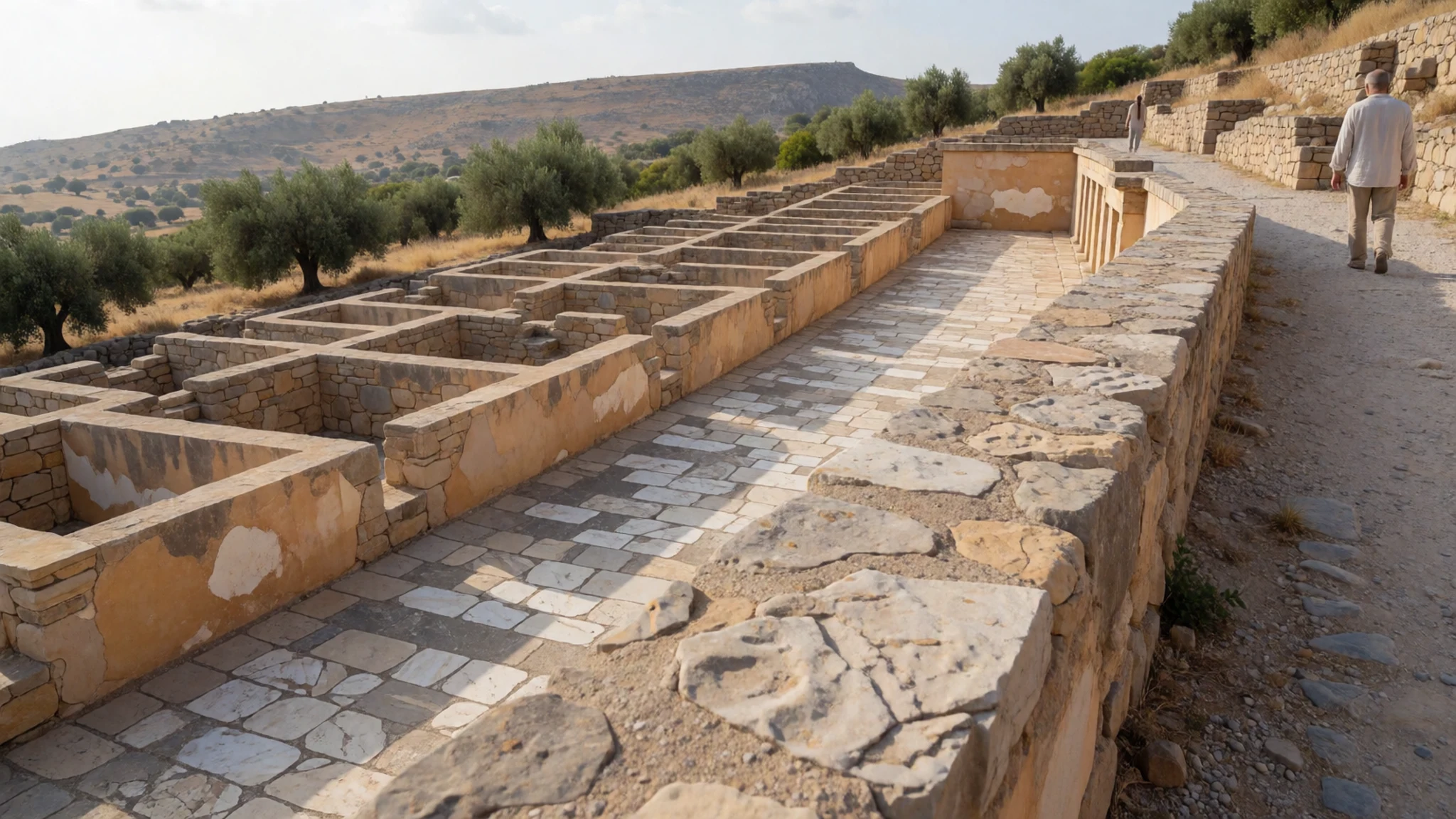
- The central court and storerooms — Palace interior
The long open central court is the heart of the palace, with rooms for storage, ritual and administration around it. Rows of storerooms held large pithoi of oil, grain and wine. Walking the footings with a site plan in hand turns a field of low walls into a readable building.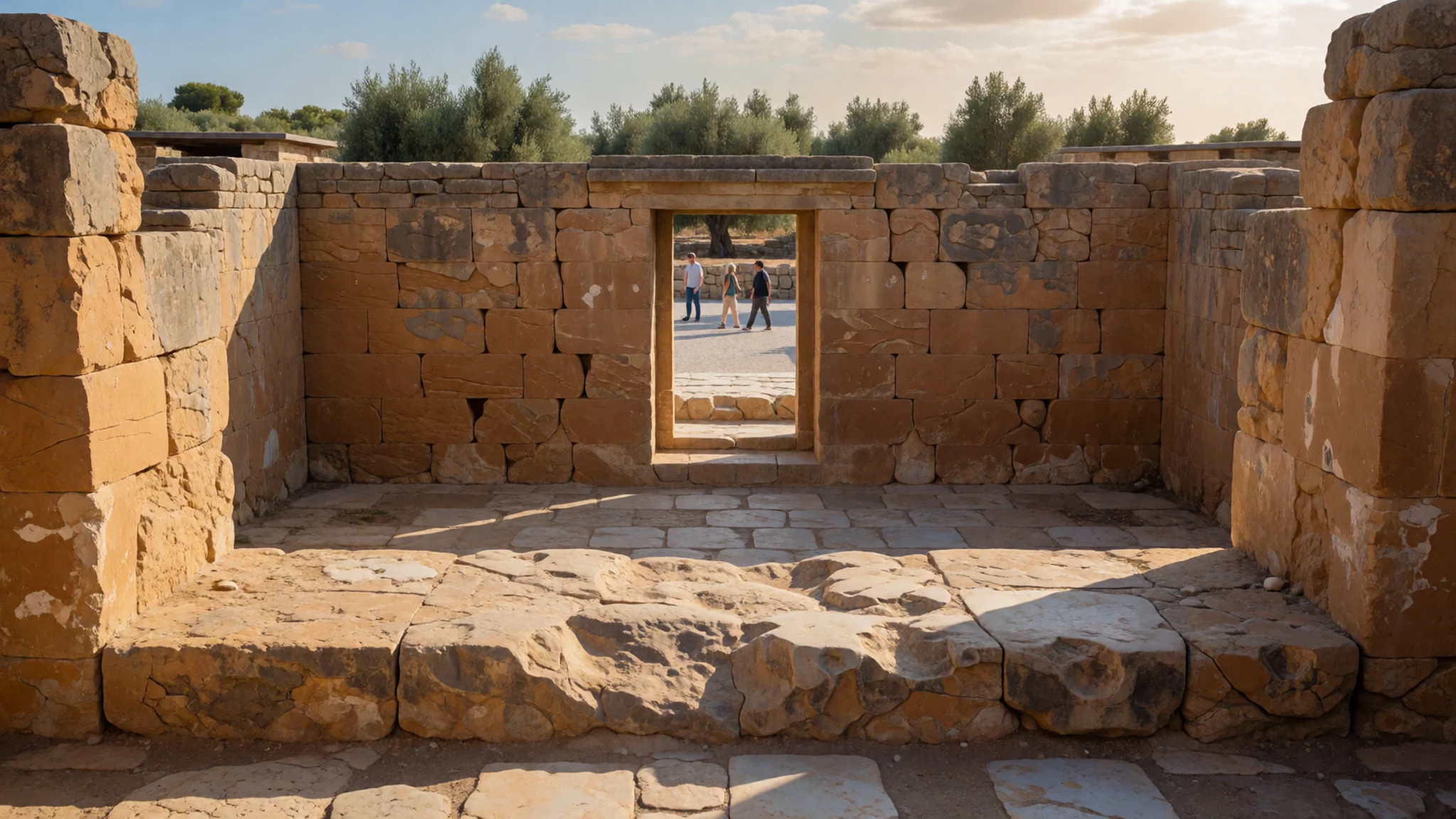
- The palace layout plan — Palace overall
A drawn plan of the palace, such as the early one published by Hawes and Hawes, helps untangle the three building phases. Compare it with the ground as you walk: the overlaid walls of earlier and later palaces are the most revealing detail on the site.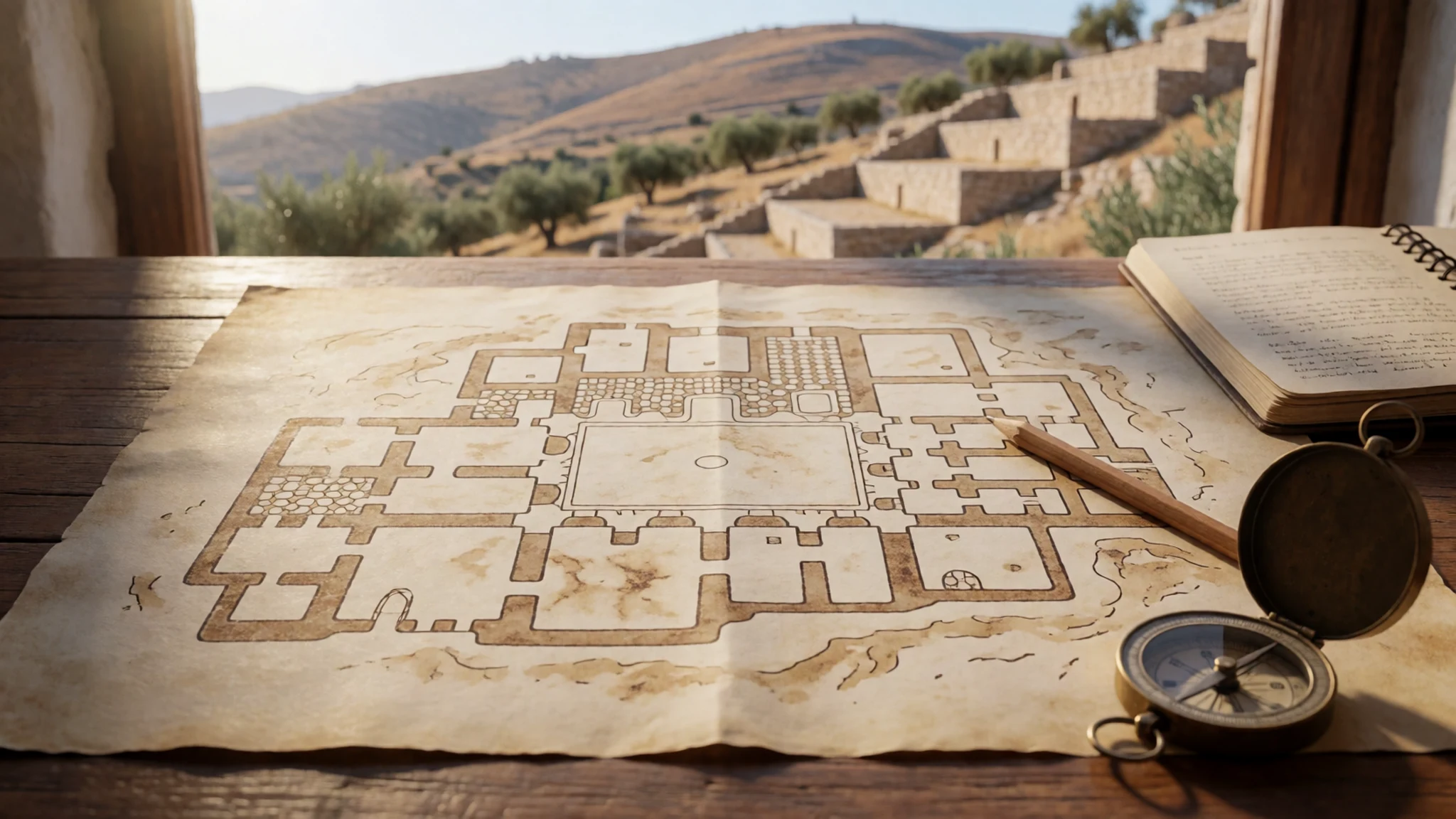
- Hagia Triada — Near Phaistos
A short drive away stands the smaller palatial site of Hagia Triada, possibly a residence linked to the rulers of Phaistos. It is quieter, has its own port connection to the coast, and is a natural second stop for a half-day around the Messara.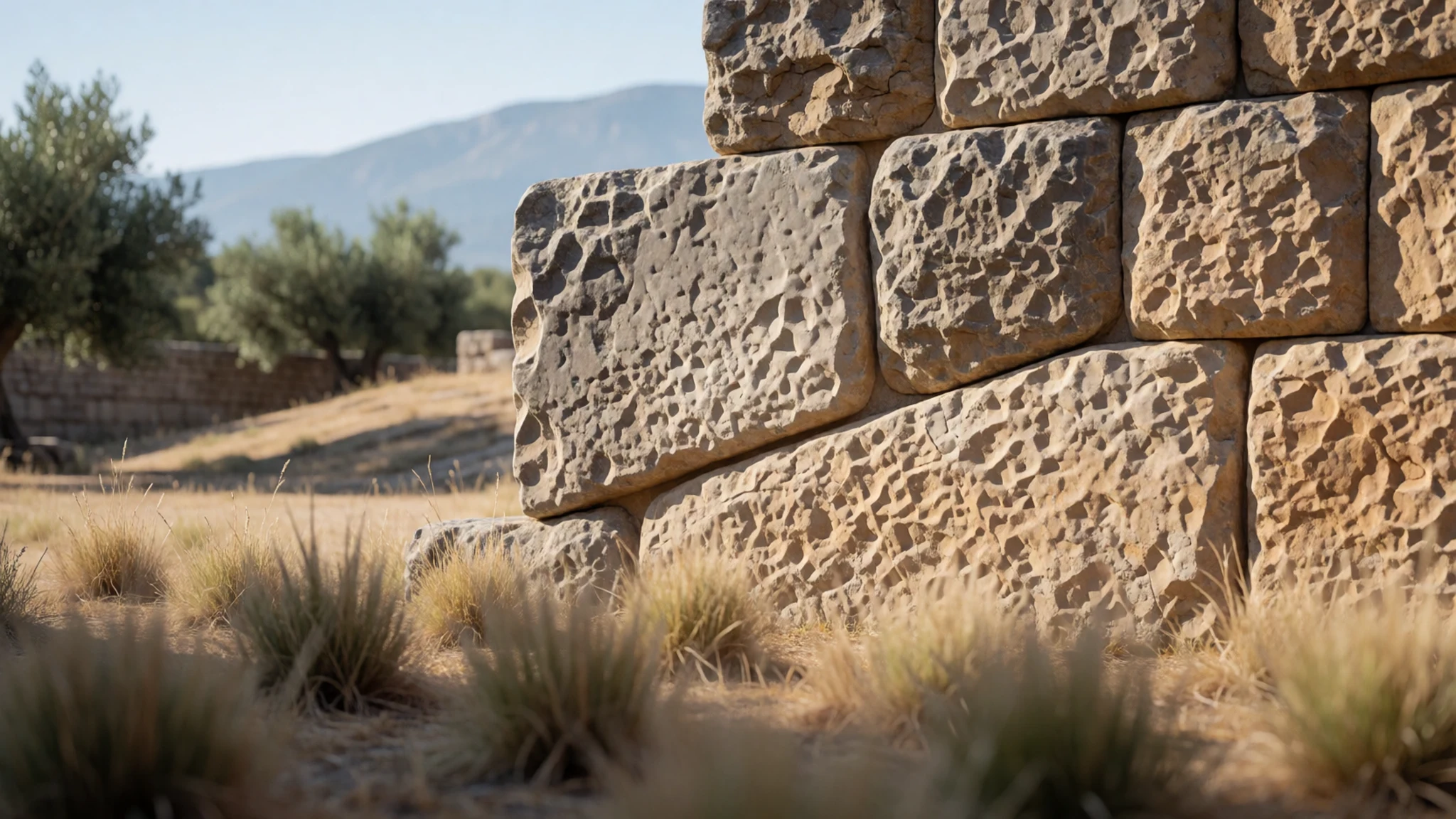
- Heraklion Archaeological Museum — Heraklion
Many finds from Phaistos are displayed in Heraklion, including pottery, Linear A inscriptions and vases painted with fish and birds. It is the best place to see the objects that the bare ruins cannot show, and it pairs well with a day at Knossos.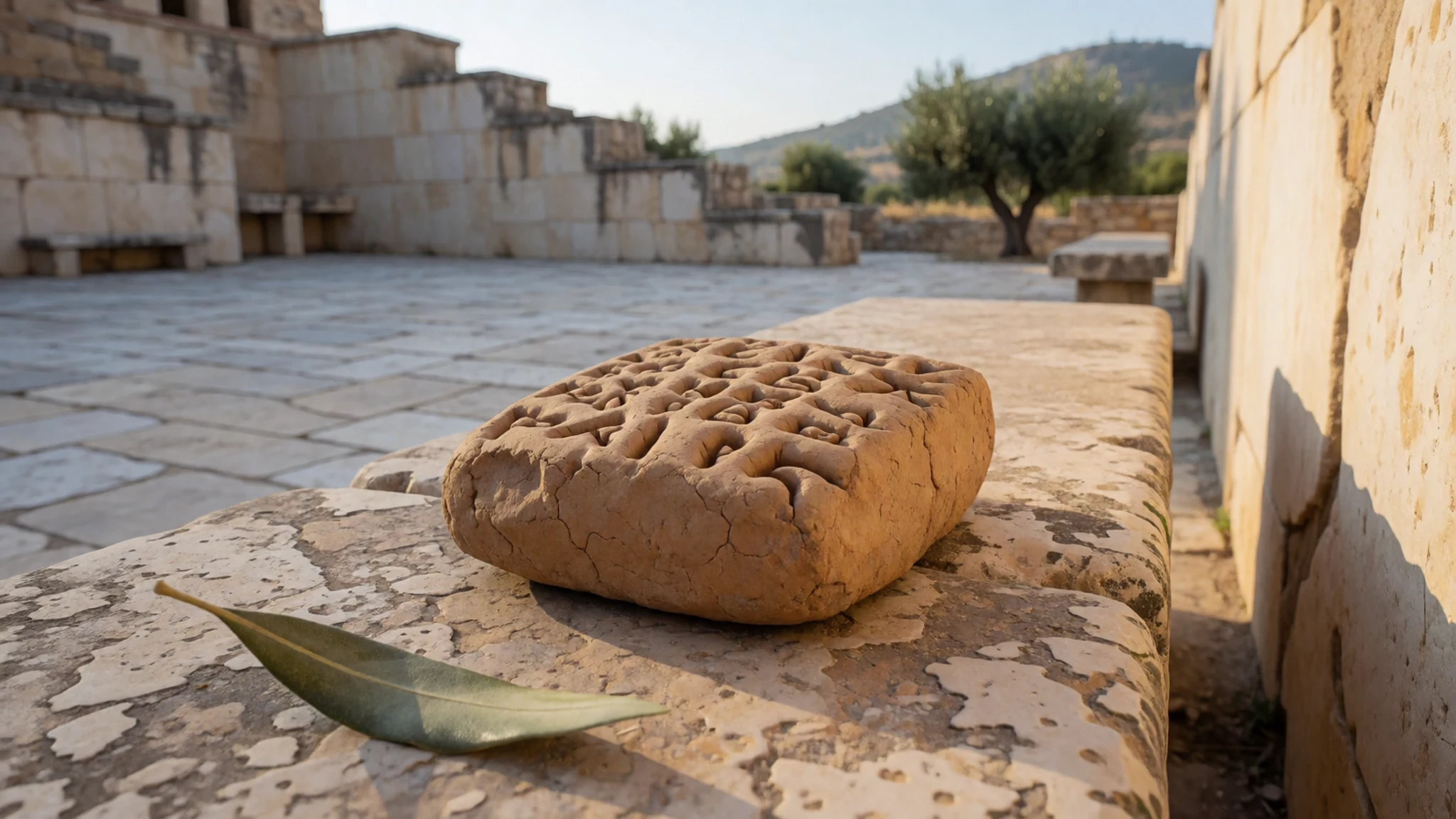
- Epano Vatheia church of Saint Antony — Epano Vatheia
The old church of Saint Antony at Epano Vatheia keeps remains of wall paintings. It is a small, quiet stop among the villages around the site, worth a look for anyone interested in the later layers of local history.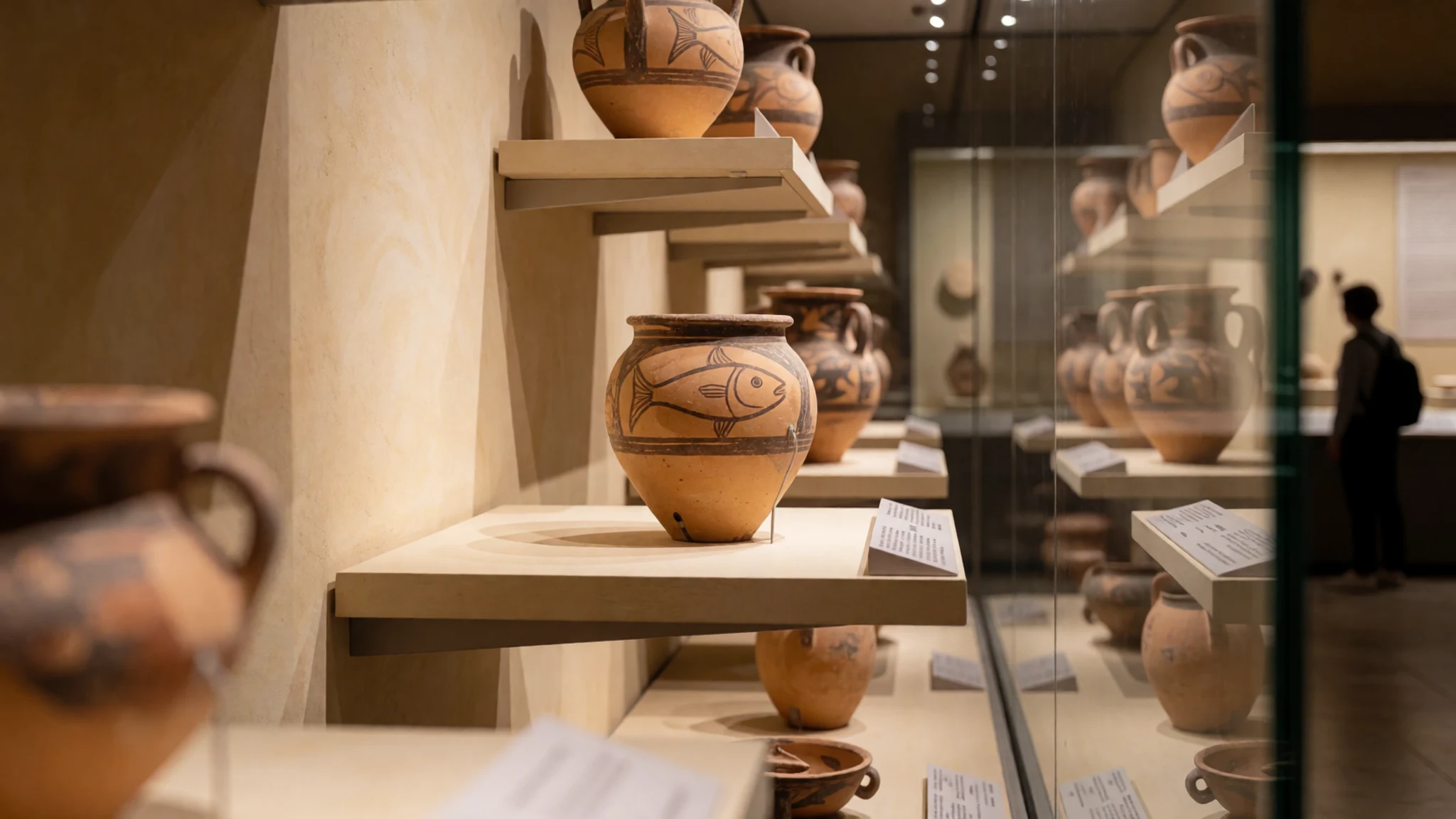
Culture
Phaistos belongs to a culture that left no readable story of itself. The Minoans wrote in Linear A, which is only partly deciphered, so much of what is said about them comes from architecture, pottery and the later Mycenaean script Linear B. The name of the town appears in both as Pa-i-to, which is one of the few things scholars can state with confidence.
The site sits in the Messara, a farming plain where olives, grapes and vegetables still shape daily life. Visitors will find that village life carries on around the ruins: small tavernas, farm lorries, church feast days and coffee in the plateia. Orthodox Christianity is central to local customs, and chapels dot the hillsides around the plain.
Crete's character shows in its hospitality. A coffee or a small glass of raki is often offered at the end of a meal, and it is polite to accept. Conversation is unhurried, and lunch can easily last two hours. Archaeology matters to the community too, as many families have worked on or near the site for generations.
On site, the stones are fragile and the Greek archaeological service is strict about conservation, so keep to the marked paths and do not climb on walls, sit on the footings or take any fragment of stone or pottery away with you.
What to wear
Phaistos was Minoan, and the surviving art shows how its people dressed: men in short kilts or loincloths, women in flounced skirts and fitted bodices, often in bright patterned cloth. Wool and linen were the main fibres, and weaving was an important household craft. Beyond that, most detail comes from wall paintings elsewhere on the island.
Cretan traditional dress in later centuries is better documented. Men wore dark breeches known as vraka, high boots, a fringed black headscarf called a sariki and a woven sash. Women wore long embroidered dresses and woven aprons in wool and cotton. These are now seen mainly at festivals, weddings, dance performances and in village museums, and weaving cooperatives still keep the craft alive.
Day to day, people in the Messara dress simply. Farmers wear work trousers and hats, and in town it is relaxed summer clothing, with smarter outfits for church and weddings.
For a visit, dress for sun and rough ground. Wear light, breathable clothes that cover the shoulders, a wide-brimmed hat and sunglasses, as shade is limited. Sturdy closed shoes with grip suit the uneven stone far better than sandals. Carry a light layer for cooler spring and autumn mornings. If you step into a village church, cover shoulders and knees.
What to eat
- Dakos — Village tavernas around the Messara
A Cretan barley rusk softened with tomato and olive oil, then topped with crumbled soft cheese and oregano. It is a simple, refreshing starter, easy to find in village tavernas and cafés around the Messara plain.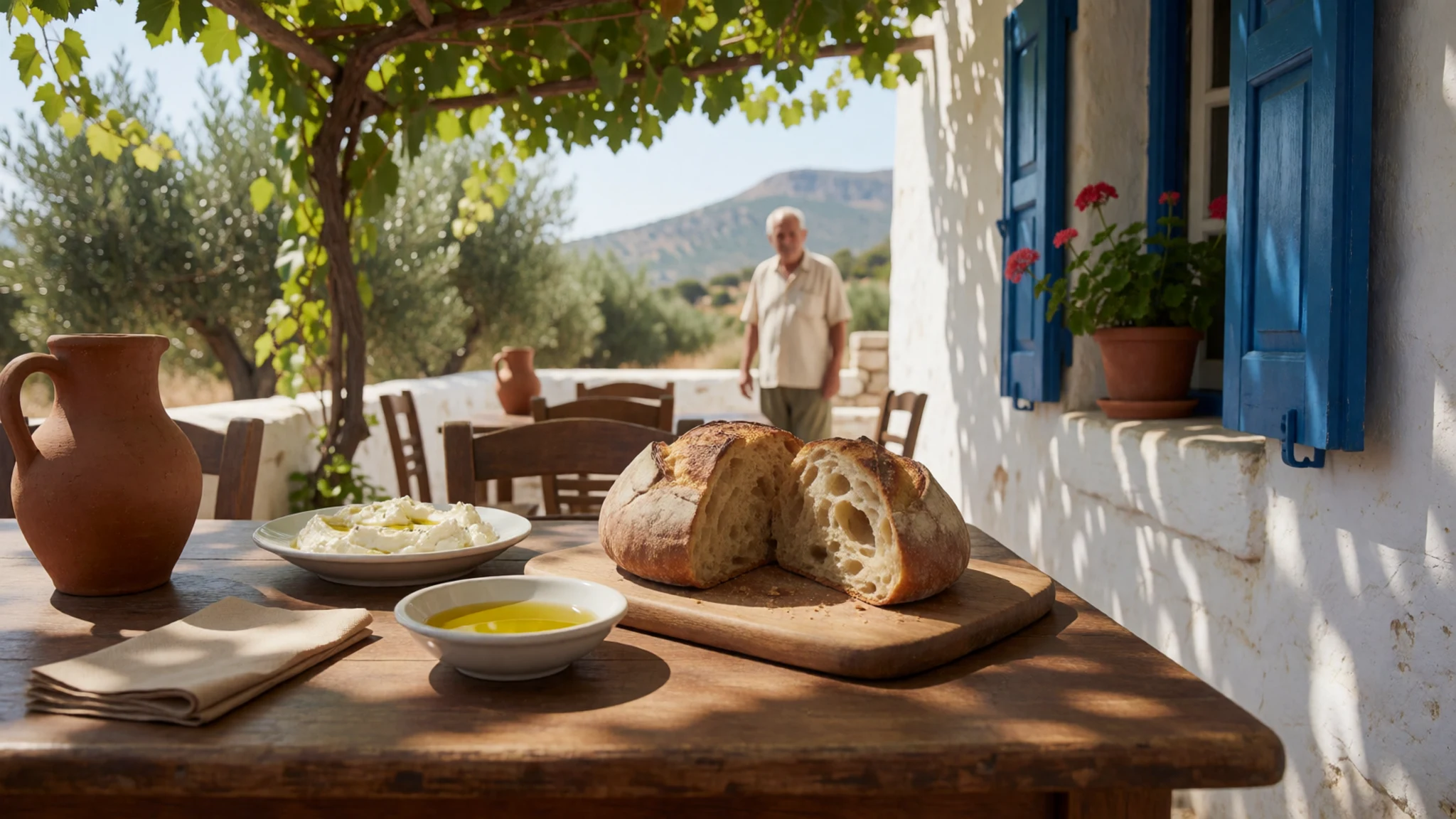
- Lamb with stamnagathi or in the oven — Family tavernas in nearby villages
Slow-cooked lamb or goat is a staple of Cretan feasts, often baked with potatoes and herbs. Wild greens such as stamnagathi sometimes appear alongside. Families order it for Sunday lunch, and local tavernas usually serve it in generous portions.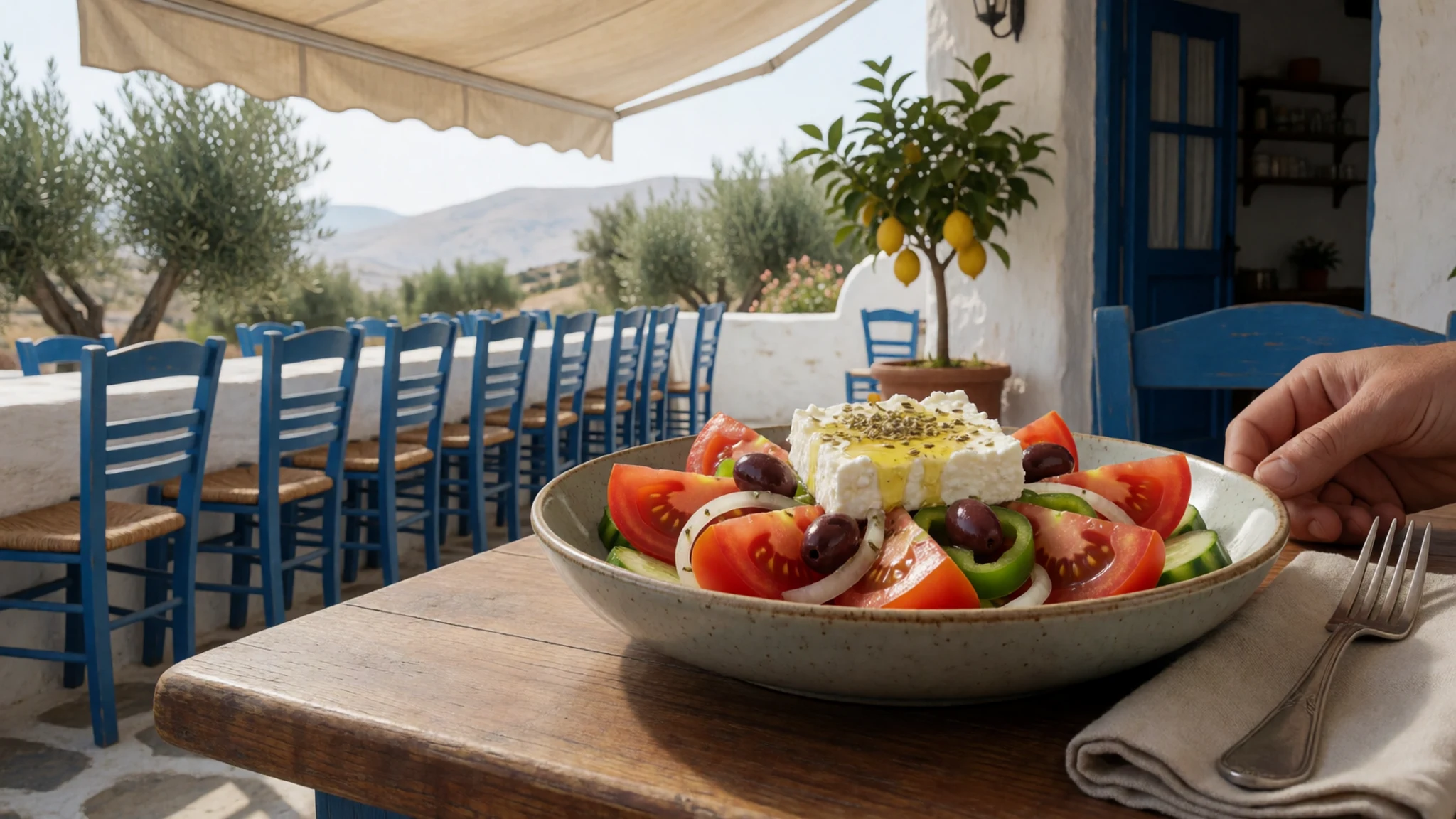
- Gamopilafo — Traditional tavernas, by request
A rich rice dish traditionally served at Cretan weddings, cooked in meat stock until creamy and finished with lemon. It is not always on menus, so ask locally whether a taverna makes it, especially on weekends and around feast days.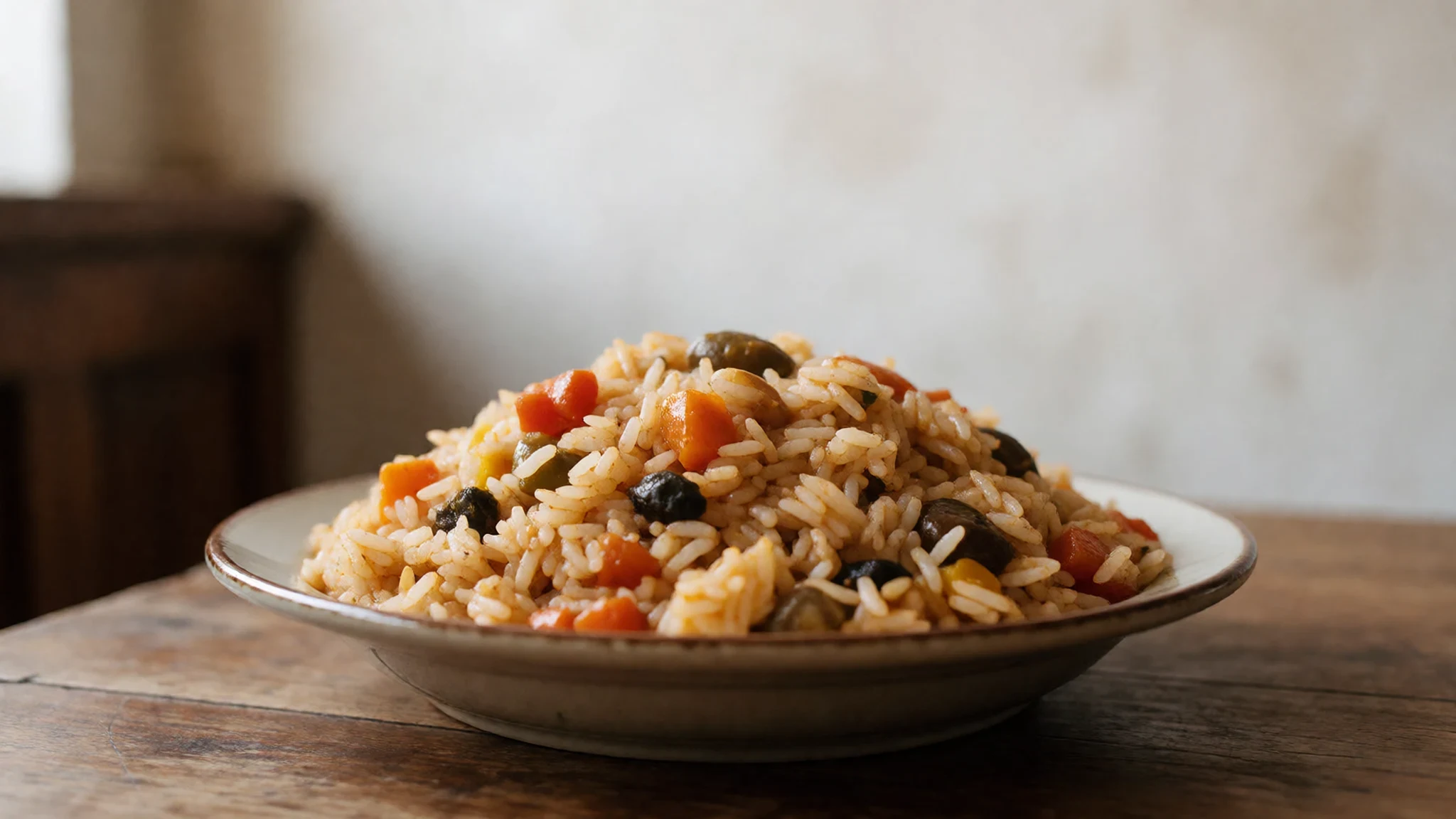
- Snails with rosemary (chochlioi boubouristi) — Village tavernas and meze restaurants
Snails are fried in olive oil until golden, then splashed with vinegar and scattered with rosemary. It is a classic Cretan meze, eaten with bread and wine, and it suits adventurous eaters wanting a real taste of the island.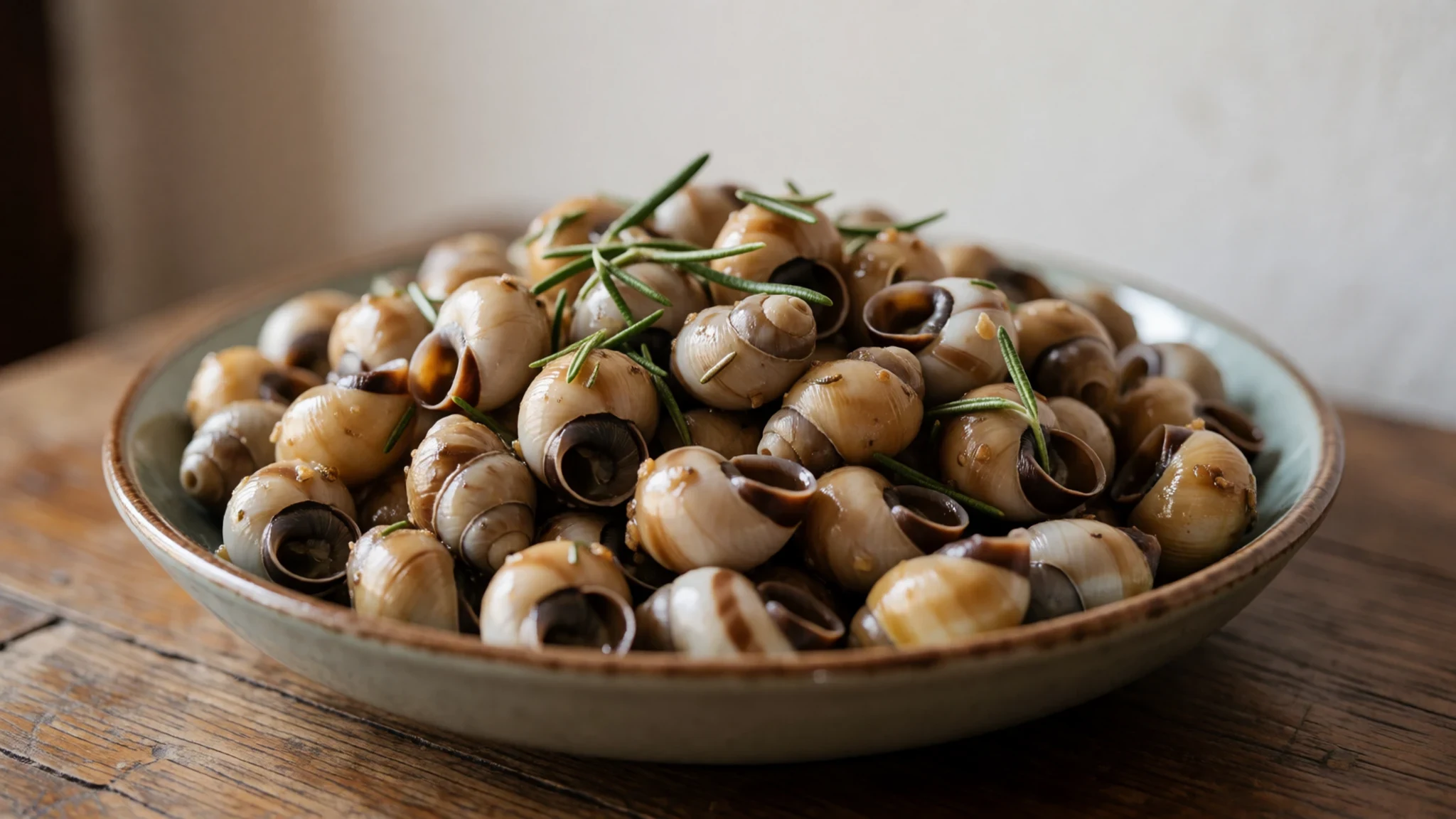
- Graviera and local cheeses — Village shops, farm stalls and tavernas
Crete makes graviera, a firm, slightly sweet cheese, alongside fresh myzithra and tangy anthotyro. They arrive at the table with honey, olives and bread, or baked in pastry. Look for them at village shops, cheese stalls and any good taverna.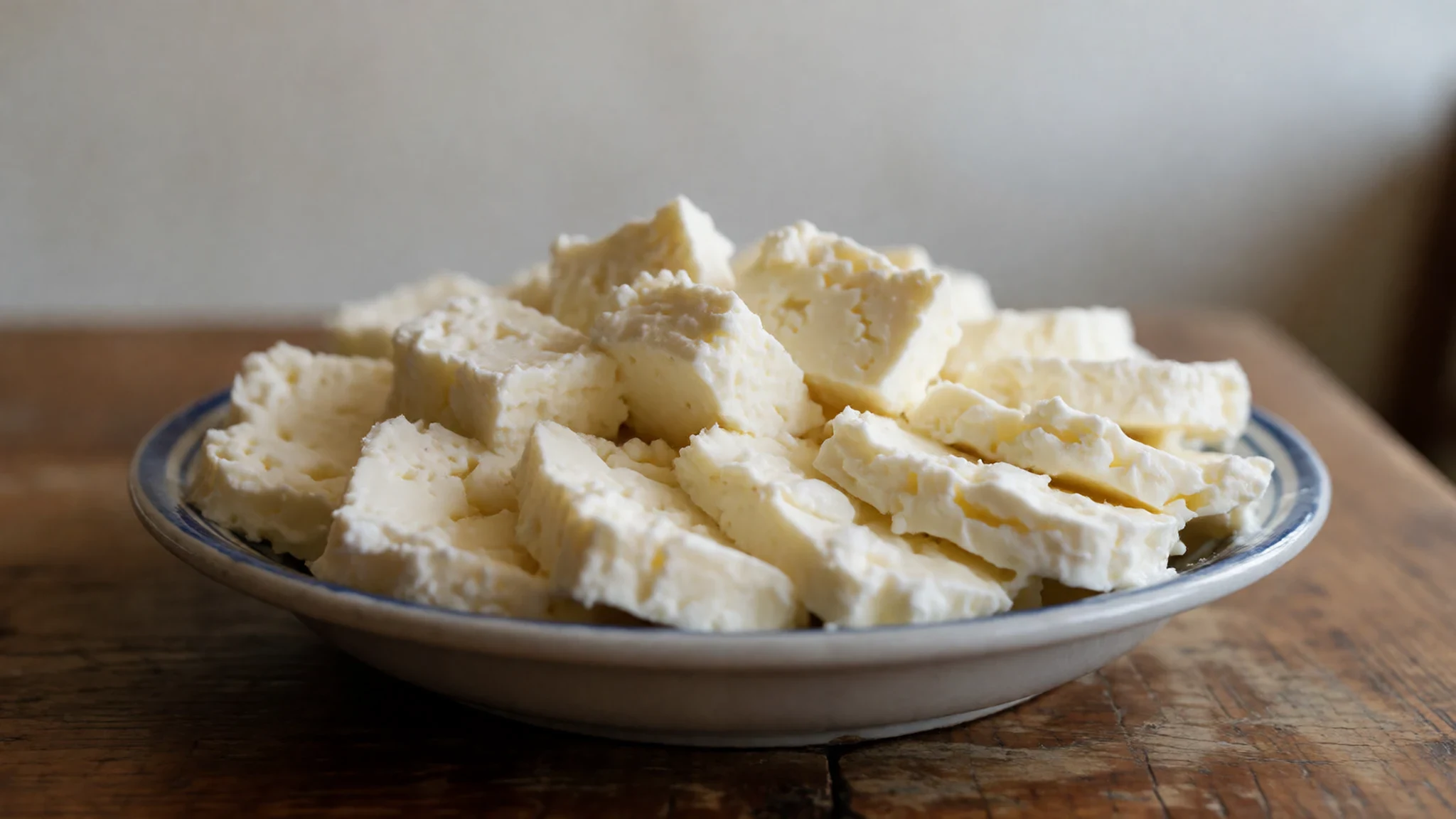
Plan it
Best time. April–May and October–November. Spring is green and mild, while autumn stays warm without peak heat. July and August are very hot, with little shade on the ridge.
How long. 1
Getting there. Fly into Heraklion airport, then drive or take a bus towards Mires and the Messara, with a short local taxi or drive for the final stretch. A hire car makes it easy to combine Phaistos with Hagia Triada and Gortyn.
Budget. mid
Tips
- Arrive early in the day for cooler weather and fewer coach groups
- Carry water, a hat and sun protection, as shade is limited
- Check the official site for opening hours and ticket details before travelling
- Wear sturdy shoes for uneven stone and steps
- Pair the site with Hagia Triada and a late lunch in a village
Etiquette
- Stay on marked paths and do not climb on the walls
- Never take stones or pottery fragments away
- Dress modestly if entering a village church
Nearby
Sources
- Wikidata Q249707 (CC0)
- Wikipedia: Phaistos (rev 1384580965) (CC BY-SA 4.0)
- Wikivoyage: Heraklion (regional unit) (rev 5092381) (CC BY-SA 4.0)
- Photo: View of Paistos, Crete — Jerzy Strzelecki (CC BY 3.0)
- Photo: Phaistos Palace Layout Scan — Hawes and Hawes (Public domain)
- Photo: Entrance to the main wing — Marsyas (CC BY 3.0)
- Photo: Ruins of Phaistos — Olaf Tausch (CC BY 3.0)
- Photo: Archaeological site Phaistos detail — Jebulon (CC0 1.0)
- Photo: Bird clasping a fish — Wolfgang Sauber (CC BY-SA 1.0)
- Photo: Minoan inscriptions, Linear A — Zde (CC BY-SA 4.0)
- Photo: Small pithos, fish in a net — Zde (CC BY-SA 4.0)


