Perge
Perge, Turkey
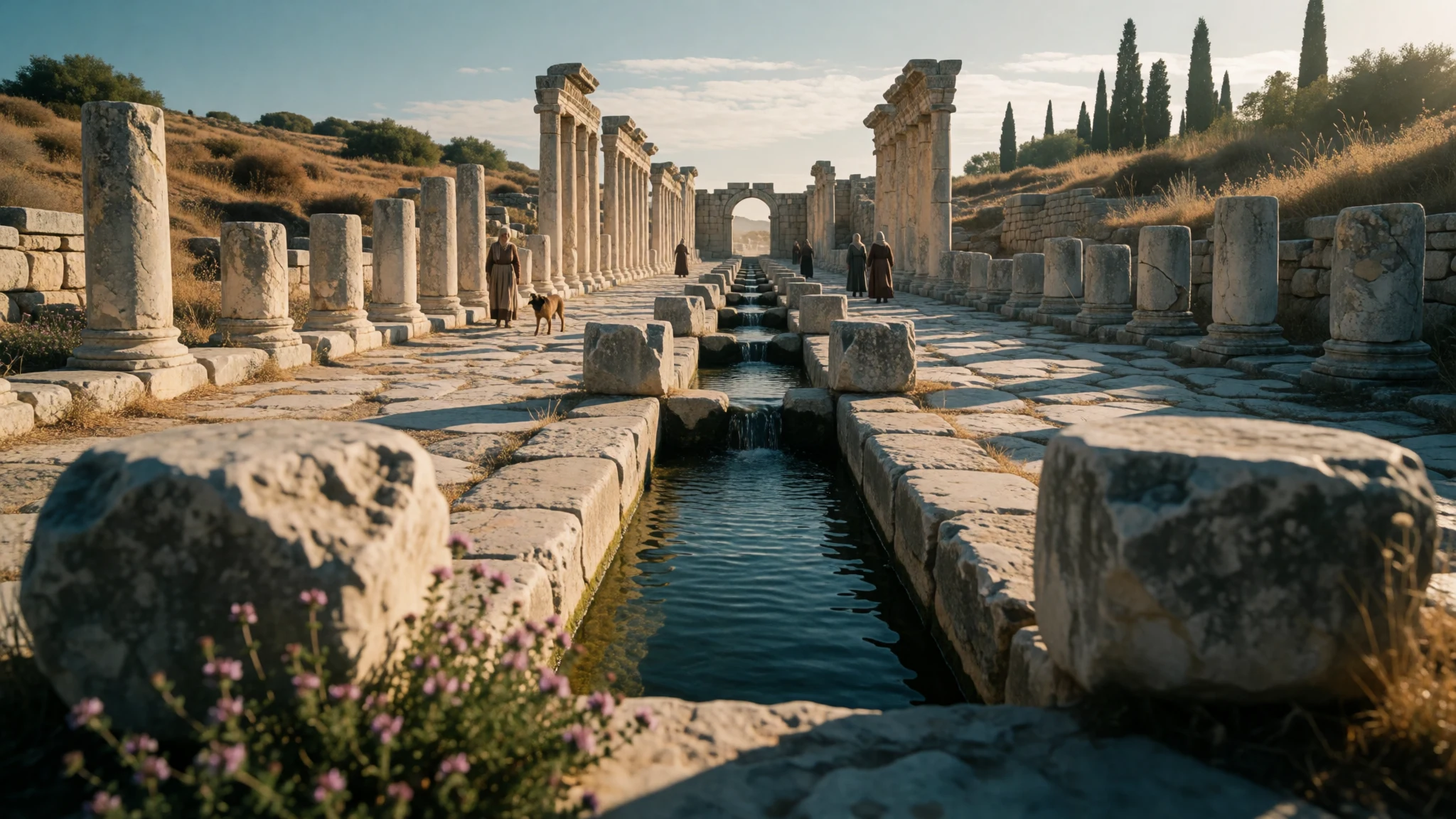
Perge is a Roman-era city of colonnaded streets, a stadium and a theatre, set quietly on the plain east of Antalya.
The place
Perge sits on the flat coastal plain of Pamphylia, in Antalya Province on Turkey's southern Mediterranean shore. The ruins lie about 15 km east of Antalya city, among fields and orange groves, with the Taurus mountains forming a pale wall in the distance. The name appears in several forms: Perga in Latin, Πέργη in Greek, and Parha in Hittite records.
What survives today is mostly Roman. The site is laid out along a straight, colonnaded main street, and down its middle ran a long water channel that stepped through a series of small pools. In a region that is semi-arid and hot through summer, that running water must have made the street feel cooler and grander than almost any other in the province's cities.
The ruins are spread widely, so a visit is a long, gentle walk rather than a quick stop. Marble columns, paving stones, arches and shop fronts lie in open sun, with few trees for shade. Beyond the main street are a theatre, a stadium, an agora, a bath complex and the broken towers of a city gate.
Perge also has a place in the history of ideas. It was the home town of Apollonius, the Greek mathematician remembered for his work on conic sections, the curves that later helped astronomers describe orbits.
The atmosphere is calm compared with the better-known ruins of the Aegean coast. Tour groups arrive in the late morning, but the site is large enough to absorb them, and early or late in the day it can feel almost empty. Its setting, between sea and mountains, is part of the pleasure.
Its story
Perge is older than its Roman marble suggests. Excavations on the acropolis, the small hill above the later city, have found pottery from the Early Bronze Age, and the pieces link to wider traditions across western Anatolia. A Hittite bronze tablet found at Hattusa in 1986 sets out a treaty border at a place called Parha, which most scholars read as Perge. West of it lay the lands of the Lukka people, and the local language was probably close to Luwian and Lycian.
By the seventh century BC the settlement is thought to have become a Greek colony linked to Rhodes, and it grew into a Pamphylian Greek city. Its position on the plain, between the Düden and Aksu rivers and not far from the sea, made it a natural centre for farming and trade. Control passed between powers: the Persians, then the Athenians, then the Persians again. In 540 BC the Achaemenid Empire took Perge along with the other Pamphylian cities, placing it under the satrapy of Ionia in the reign of Darius I, although archaeology has found little physical trace of that rule, and the evidence comes mainly from ancient writers.
Roman rule began in 188 BC, and most of what visitors walk through today dates from that long period. Perge later served as capital of the Roman province of Pamphylia Secunda. That status explains the scale of its public buildings, and the care that went into its water-lined main street.
What to see
- The colonnaded main street — Central ruins
The long central street is the heart of the site. Rows of columns once framed shops on both sides, and a stepped water channel ran down the middle. Walk its length slowly and look for the worn paving, the shop thresholds and the places where carts left grooves.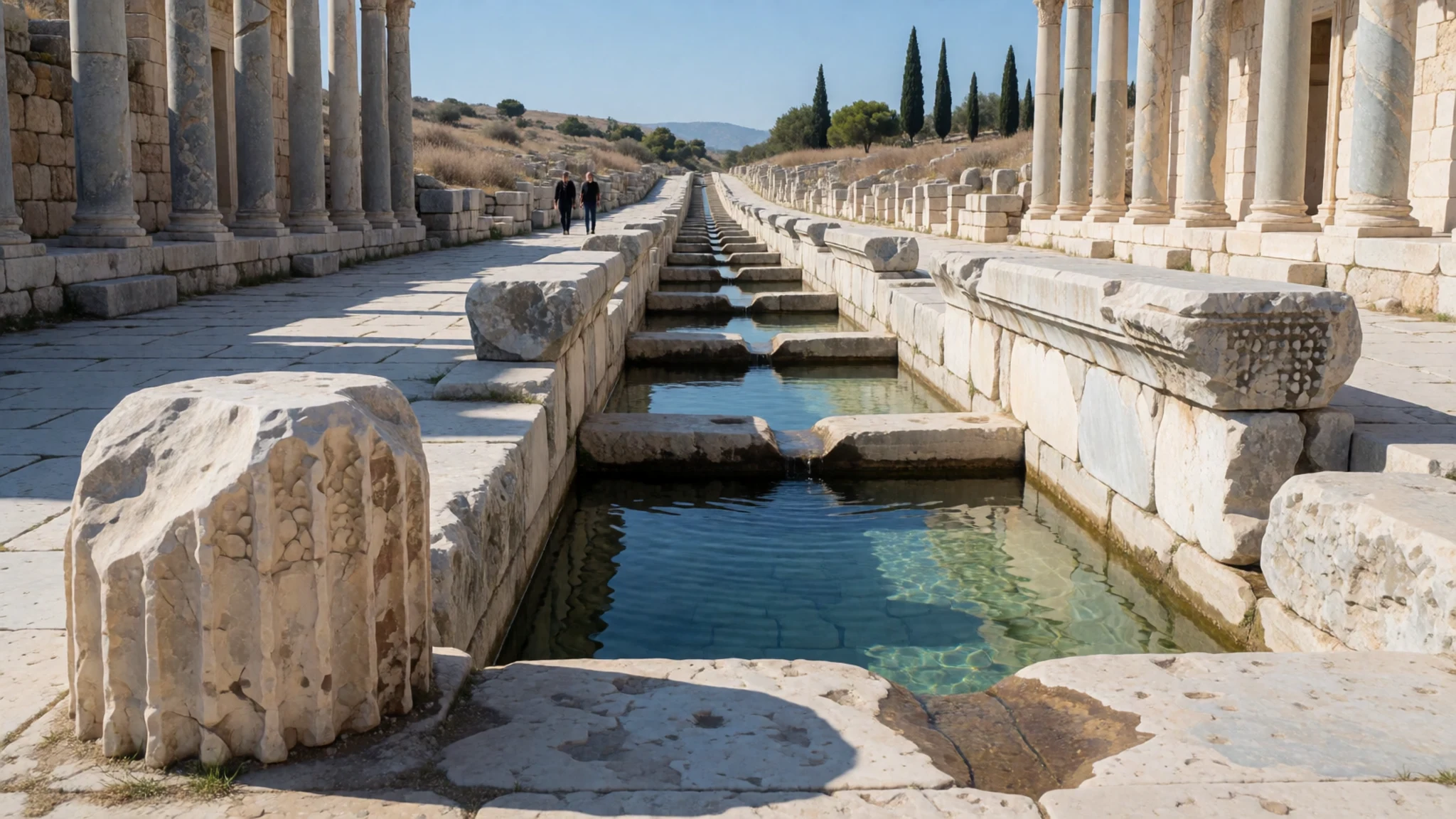
- The theatre — Southern edge of the site
The Roman theatre stands at the edge of the main ruins, its curved seating rising from the plain. Parts of the stage building and decoration survive. Climb to the upper rows for a view across the site towards the mountains, and note how the acoustics carry voices.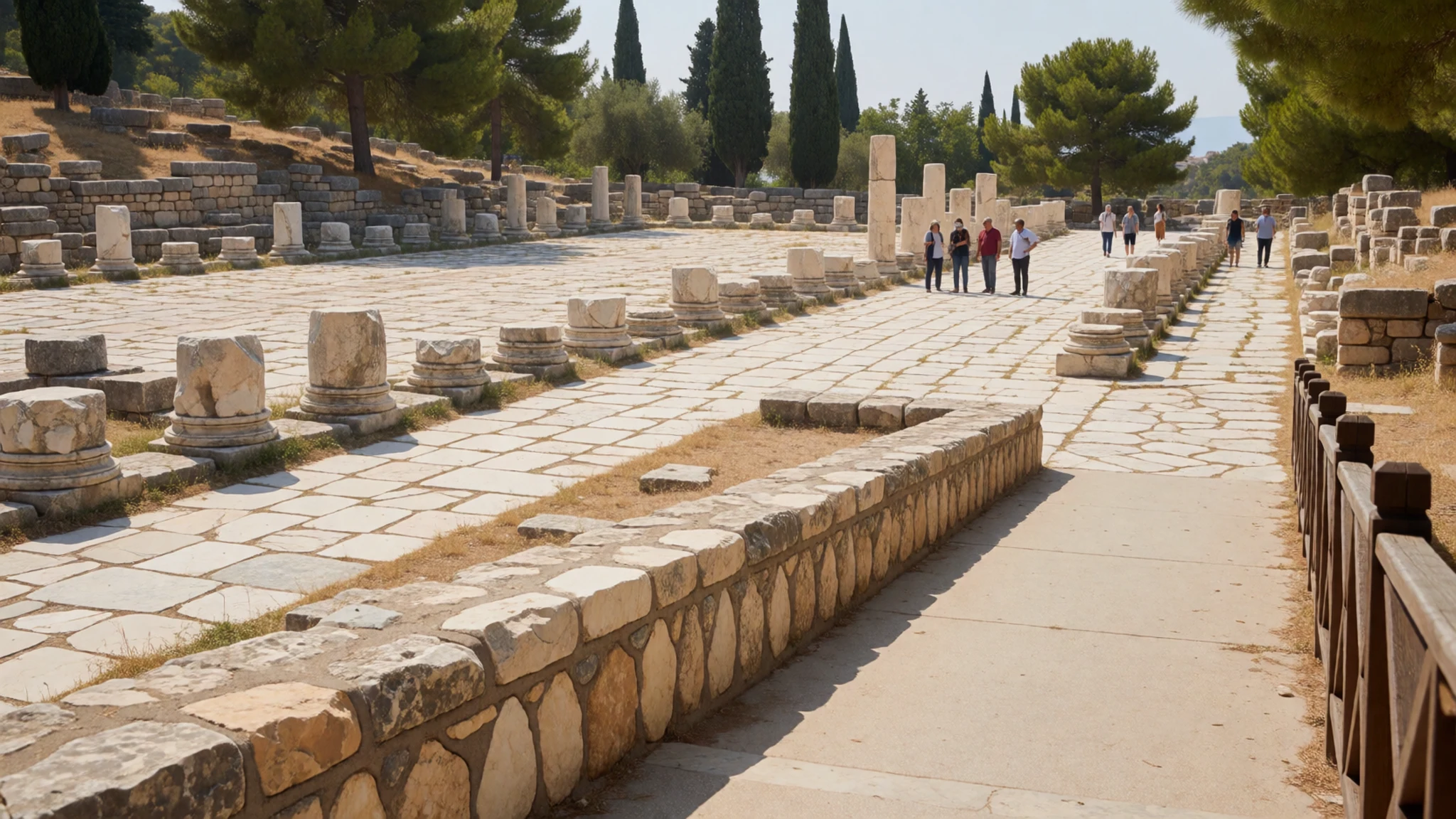
- The stadium — Beside the theatre
Next to the theatre, the long, narrow stadium was built for foot races and athletics. Its vaulted chambers under the seating are still visible, and the shape of the track is easy to read. It gives a good sense of how much entertainment a provincial capital expected.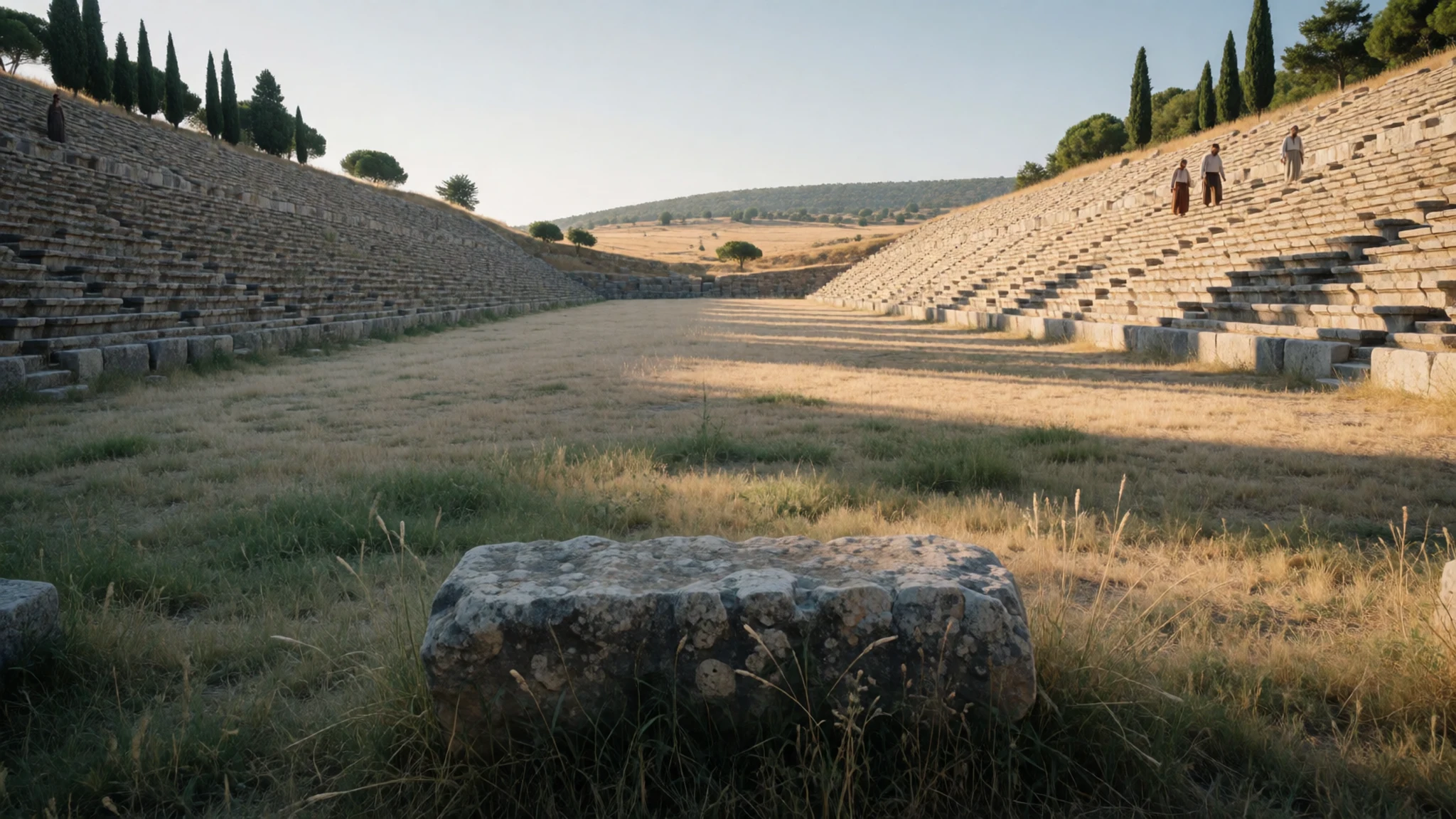
- The agora — Central ruins
The agora was the market square, a courtyard once lined with shops and colonnades. Columns and base blocks mark its outline today. Standing in the middle helps you picture trade, gossip and civic life, and it is easier to read here than on the busier main street.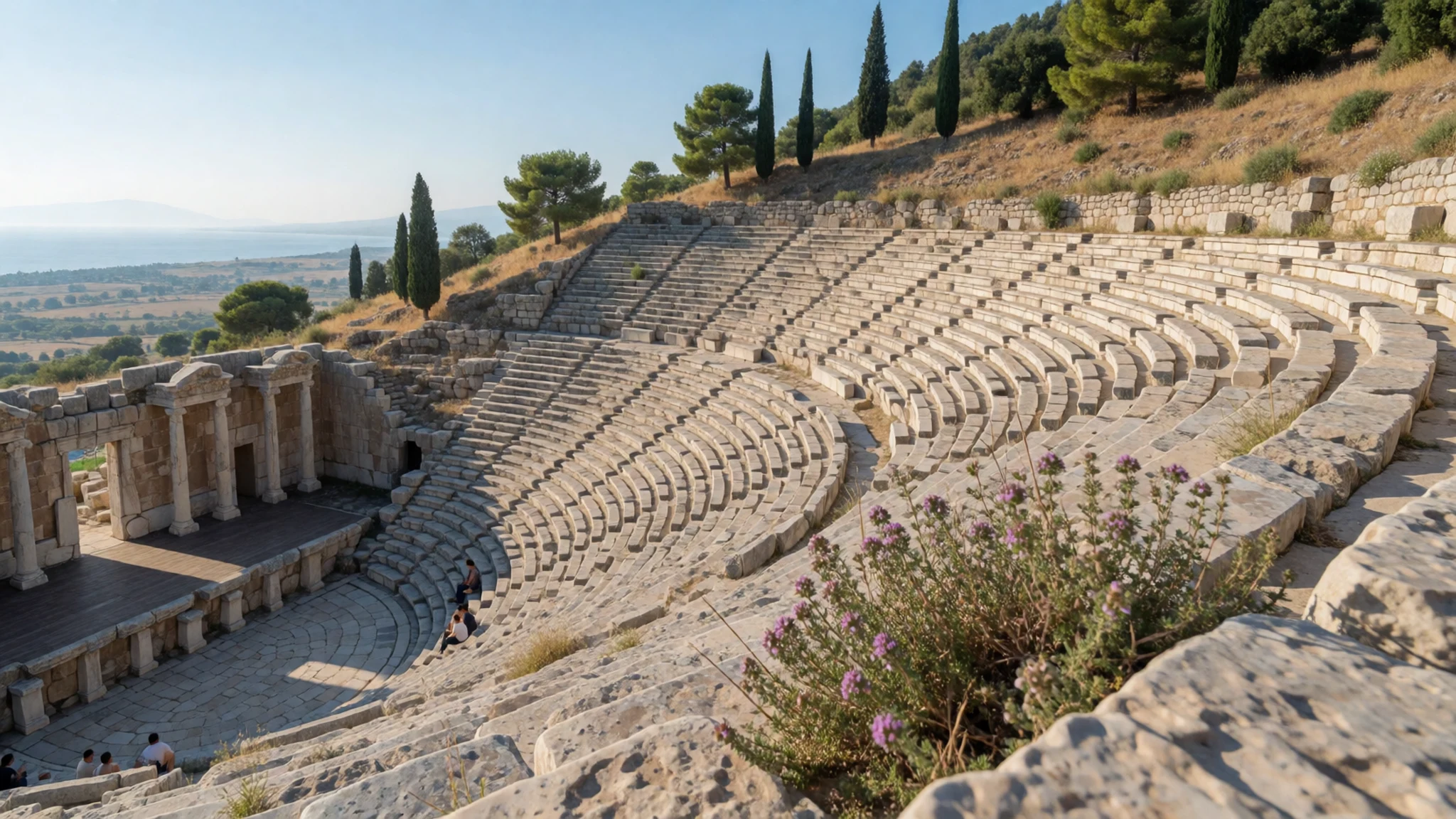
- The Roman baths — Near the entrance
The bath complex shows the heating and plumbing that Roman cities took for granted. Look for the layout of hot, warm and cold rooms and the low pillars that once held up heated floors. The floor plan is clear even where walls have fallen.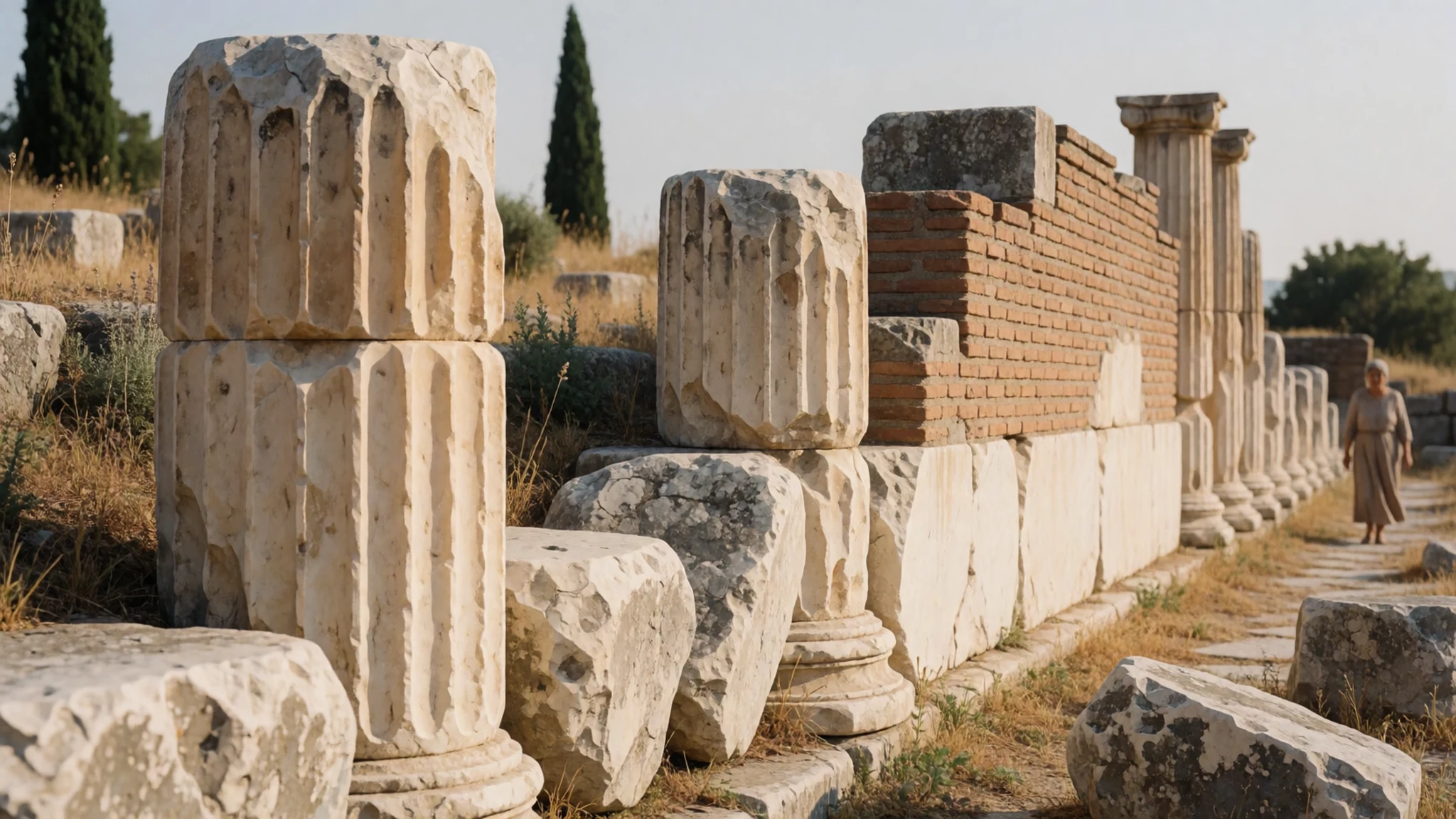
Culture
Perge sits in a part of Turkey where daily life moves around farming, tourism and the nearby resort city of Antalya. Visitors will meet people who are friendly, polite and quick to offer tea, and hospitality is taken seriously across the country. Small gestures are noticed and appreciated: a greeting, a thank you, a few words of Turkish.
The ruins themselves belong to the Greek and Roman layers of the region's past, which Turkey treats as part of its national heritage. Museums and archaeological sites are run by the state, and many follow a weekly closing day, often a Monday, so it is worth checking in advance. A national museum pass exists for many sites, but it does not cover everything, so confirm what is included.
If you are invited into a Turkish home, bring a small gift such as flowers, chocolate or something from your own country. Avoid alcohol unless you know the host well, because many Turks do not drink. Shoes come off at or just inside the door, and it is polite to compliment the host and thank them for the invitation.
Turkey is a mostly Muslim country, but the south coast is relaxed and used to visitors from many places. Still, away from the beach, people notice how you dress and behave, especially in villages around the site.
At Perge, keep to the marked paths and never climb on or remove stones from the ancient walls, columns and carved blocks.
What to wear
Traditional dress around Perge belongs to the wider Turkish countryside and the Taurus uplands. Women's village clothing has long included şalvar, loose trousers gathered at the ankle, worn with a long tunic, a vest and a headscarf. Fabrics were cotton and wool, often woven at home, with embroidered or block-printed borders. Nomadic Yörük families in the mountains are known for hand-knotted rugs and wool kilims. Such dress now appears mostly at weddings, festivals and folk performances.
Everyday clothing in Antalya Province is modern and practical. In the city and resorts, people wear what they would in southern Europe: light shirts, T-shirts, jeans, summer dresses and trainers. In villages and among older residents, clothing is more modest, with long sleeves and headscarves common for women.
Visitors should dress for heat and sun first. Perge has little shade and summer temperatures pass 30 degrees Celsius, so choose breathable cotton or linen, a wide-brimmed hat, sunglasses and high-factor sunscreen. Carry a refillable water bottle.
Footwear matters more than style. The paving is uneven, polished by centuries of use and slippery in places, so wear closed shoes or sturdy sandals with grip. Flip-flops are a poor idea on the stone.
There is no strict dress code at the ruins, but covering shoulders and knees is respectful when stopping in villages or visiting a mosque on the same trip. Pack a light scarf, which also helps against sun.
What to eat
- Piyaz — Local eateries in Antalya
A white bean salad with onion, parsley and a sharp vinegar or lemon dressing, often topped with egg. It is a Antalya speciality and a cool, filling lunch after hours in the sun. Order it at simple local eateries in Antalya.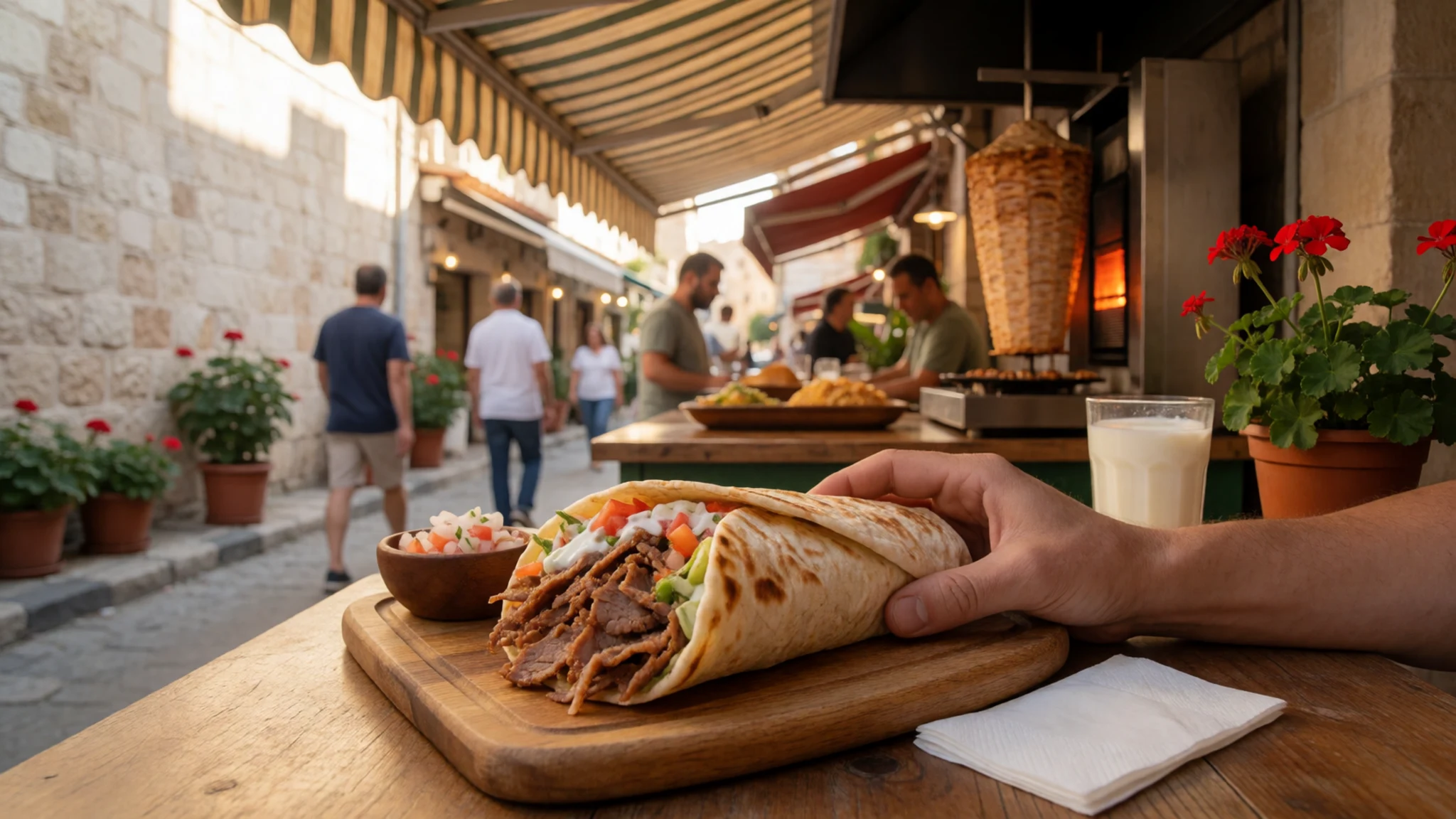
- Şiş köfte — Grill houses and street stalls near the main roads
Spiced minced meat shaped around a skewer and grilled over charcoal, served with flatbread, tomato, onion and green peppers. It is a simple, savoury meal found in small grill houses and street stalls, usually best when freshly cooked and eaten hot.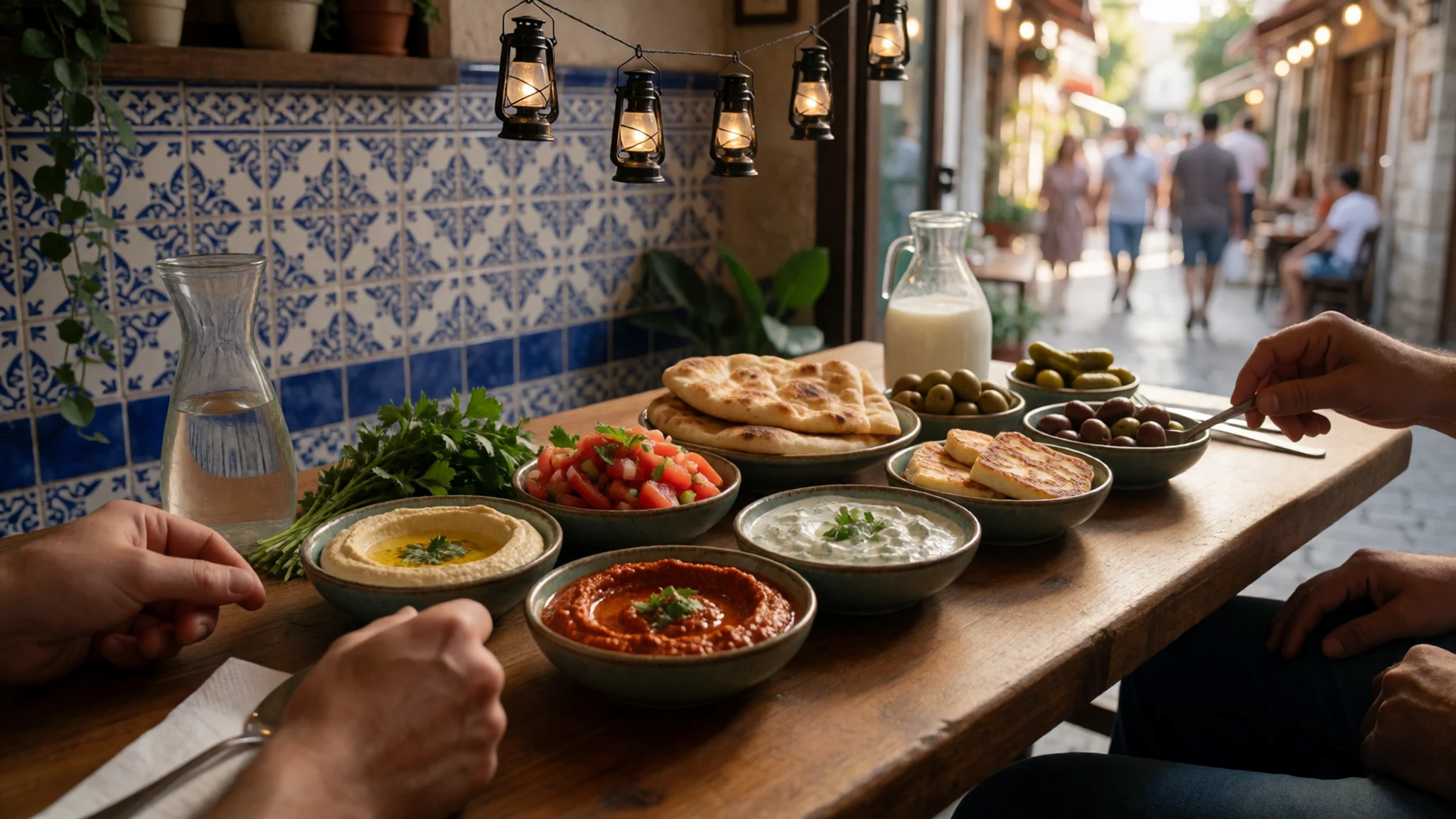
- Gözleme — Village cafés and roadside tents near the site
A thin hand-rolled flatbread filled with cheese, spinach or potato and cooked on a domed griddle. It is often made by women in view of customers. Roadside stalls and village cafés near the site serve it hot with a glass of ayran. - Fresh citrus and juices — Juice stalls and fruit markets in Antalya
The plain around Perge grows oranges and other citrus fruit, and fresh juice is sold everywhere in season. A glass squeezed to order is a cheap and welcome relief in the heat. Look for stalls with fruit piled up beside the press. - Meze and olive oil dishes — Meze restaurants in Antalya old town
Western Turkish cooking leans on olive oil, so vegetables such as aubergine, artichoke and green beans are served cold with a glossy dressing. Order several small plates with bread for a lighter meal, ideal in warm weather.
Plan it
Best time. April–May and October–November, when days are warm but comfortable for walking. Summer in this semi-arid area passes 30 degrees Celsius with little shade, so go early if visiting then.
How long. 1
Getting there. Fly to Antalya Airport, then travel about 15 km east to the site by taxi, dolmuş (shared minibus) or rental car. Check current local transport options in Antalya.
Budget. mid
Tips
- Arrive early in the morning or late afternoon to avoid heat and tour groups
- Bring water, a hat and sunscreen because shade is limited
- Check the official site for opening days, since many Turkish sites close one day a week
- Ask whether a national museum pass covers entry before buying a ticket
- Allow time for walking, as the ruins are spread out
Etiquette
- Keep to marked paths and do not climb on ancient stones
- Do not remove anything from the site, however small
- Dress modestly when visiting villages nearby
Nearby
Sources
- Wikidata Q719815 (CC0)
- Wikipedia: Perga (CC BY-SA 4.0)
- Wikivoyage: Turkey (CC BY-SA 4.0)
- Perge city overview, Saffron Blaze (CC BY 3.0)
- Perge Plan, Paul VanDerWerf (CC BY-SA 4.0)
- Perge agora, Carlos Delgado (CC BY 3.0)
- Perge stadium, Carlos Delgado (CC BY 3.0)
- Perge theatre, Kpisimon (CC BY 3.0)
- The stadium, Seynaeve (CC BY-SA 2.0)
- Roman bath floor plan, Paul VanDerWerf (CC BY 2.5)
- Columns, Paul VanDerWerf (CC BY 2.5)


