Penang National Park
Penang National Park, Malaysia
Penang National Park packs forest trails, quiet coves, mangroves and wild macaques onto the corner of an island otherwise known for its food.
The place
Penang National Park sits at the north-western tip of Penang Island in Malaysia, a protected area of forest, shore and sea declared a national park in 2003. It is small, about 1,213 hectares counting the water, but it holds several habitats in that space. Hill and lowland dipterocarp forest covers the slopes, with stands of seraya trees on the steep ground around Muka Head. Mangroves line the muddy inlets, sandy beaches fill the coves, and a seasonal meromictic lake, one whose water layers do not mix, lies behind the shore. The open sea off the coast is part of the park as well. Botanists have recorded over 1,000 plant species here. Most visitors meet the animals first: crab-eating macaques on the beaches, dusky langurs in the canopy, and white-bellied sea eagles circling above the water. The park is entered from Teluk Bahang, a fishing village with a long beach of its own and a small Scout campsite. From there, tracks run into the forest and out to quiet coves, and fishermen's boats serve the coast. No road crosses the park. Walking is hot, humid and sometimes steep, and the beaches offer only a few tables and toilets. It suits anyone who wants a day of sweat and swimming a short way from George Town's streets, not a resort stay.
Its story
Penang National Park takes its name from the island around it, and the island's name comes from pinang, the Malay word for the betel nut palm. Pulau Pinang therefore means betel nut island. An older name, Pulau Ka-satu or First Island, was used before the colonial period. For a long time the island belonged to the Malay sultanate of Kedah. In 1786 Captain Francis Light, acting for the British East India Company, built a fort on the site of today's George Town and secured the island's cession. It was renamed Prince of Wales Island that August, in honour of the birthday of the future George IV. Together with Malacca and Singapore, it became one of the three Straits Settlements, a trading chain that drew Malay, Chinese, Indian and European communities to the island and made it as mixed as it is today. The park's own history is more recent. The north-western corner was held as a forest reserve called Pantai Acheh before it was declared a national park in April 2003. The aim was to protect plants and animals, and also places of geological, historical and scientific interest. Today it works as an outdoor classroom for researchers as well as a day out for walkers.
What to see
- Teluk Bahang — Northern coast of Penang Island
Teluk Bahang is the fishing village at the park's gate and the usual starting point. It has a long beach, a small Scout campsite and a few eateries. The forest tracks begin here, and boatmen wait for passengers. Fill water bottles before leaving, because the beaches beyond have almost nothing for sale.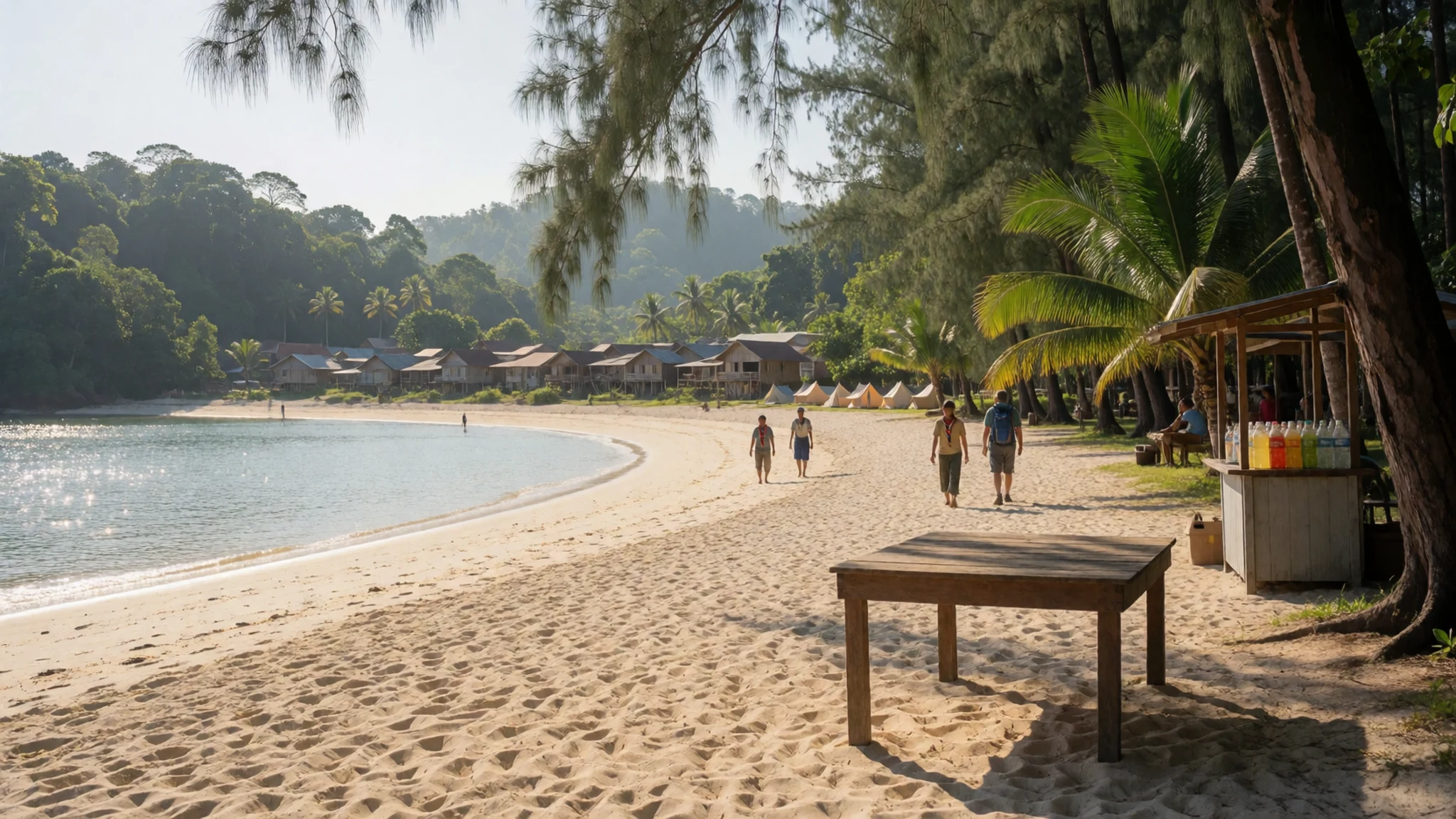
- Pantai Kerachut — Inside the park, north-west coast
Pantai Kerachut is the first real reward on the main trail, a quiet cove reached through forest on a path that is well kept for most of the way. The walk takes well over an hour in the heat. The beach has a few tables and toilets but no shop, and a seasonal meromictic lake lies close behind the sand.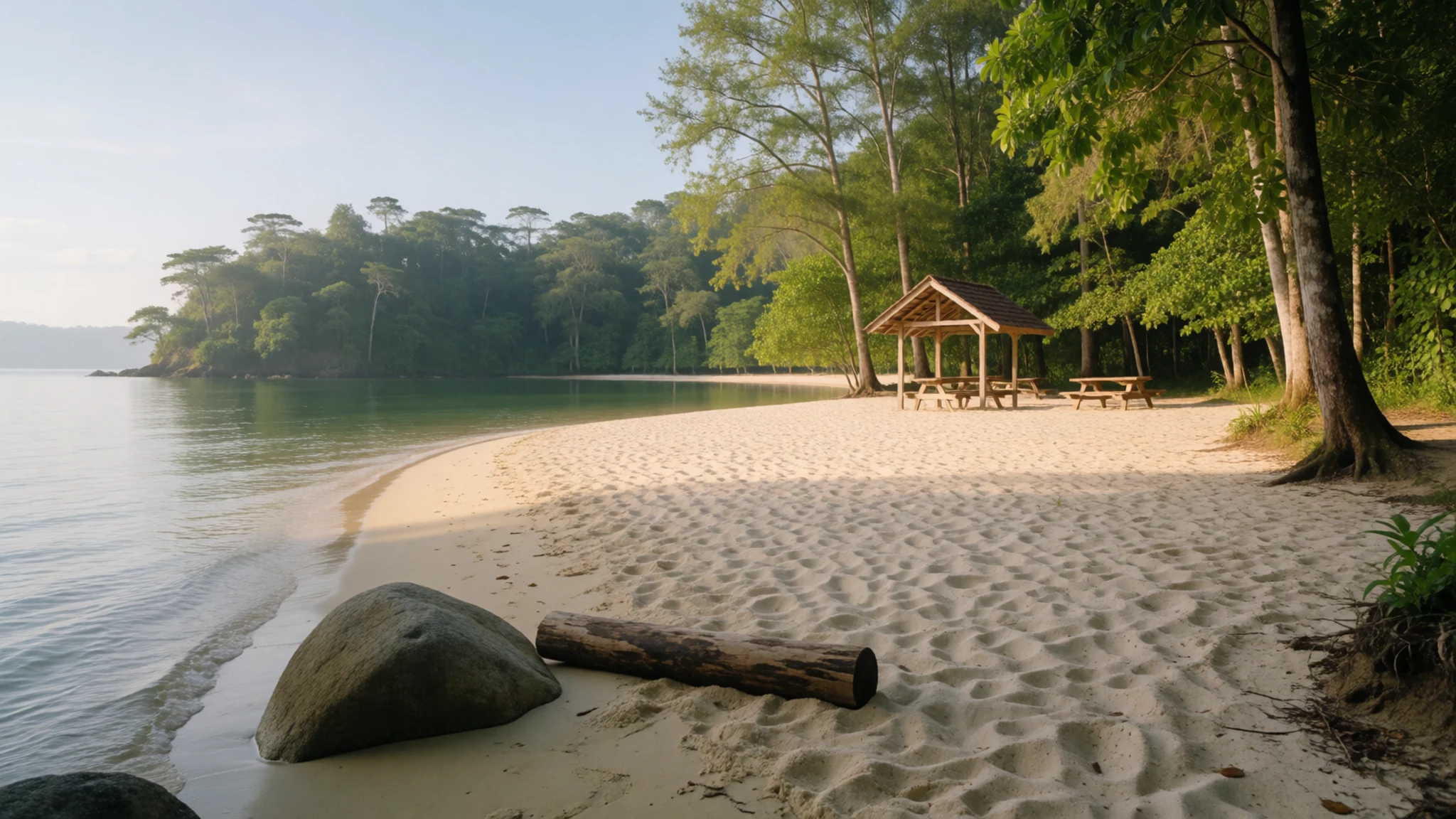
- Muka Head and its lighthouse — Western headland of the park
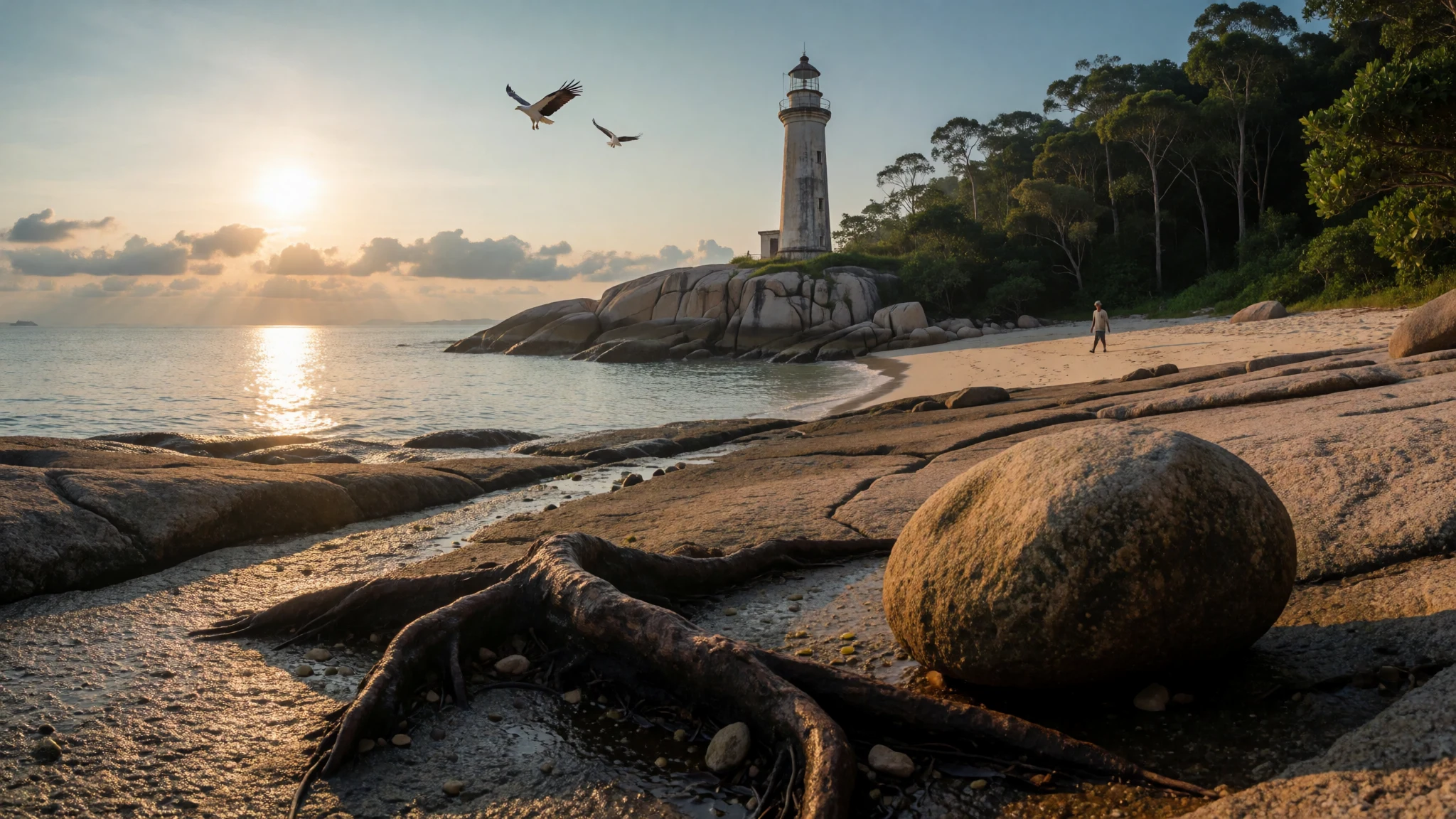
Muka Head is the headland at the park's western end, topped by an old lighthouse above a small beach. Seraya trees grow on the steep slopes around it. Reaching it means hiking for one to three hours, depending on route and pace, or taking a fisherman's sampan from Teluk Bahang. The path can be slippery after rain.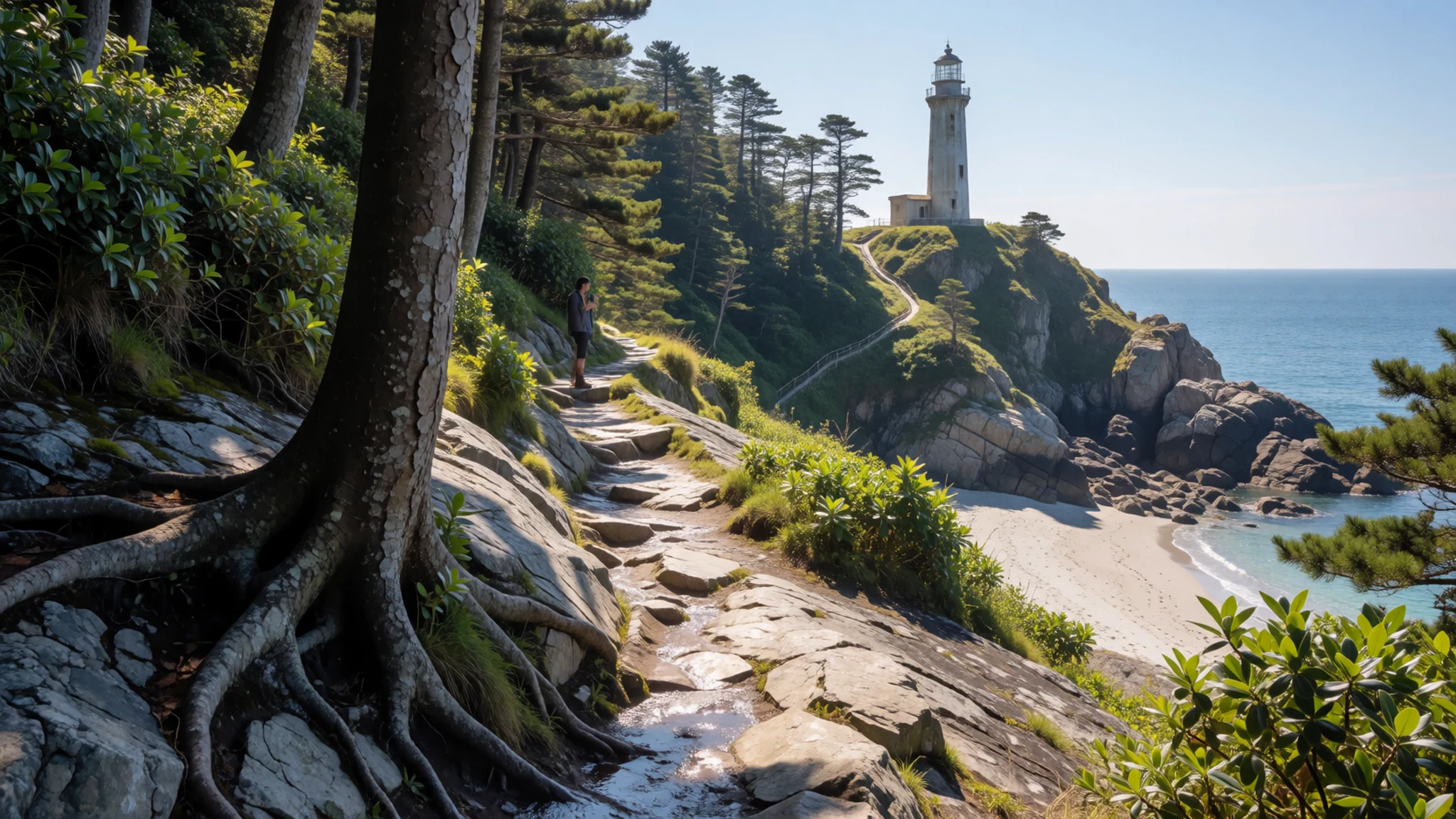
- Teluk Kampi — Northern coast of the park
Teluk Kampi is the farther beach on the northern coast, with a wide view over the bay. The path from Kerachut climbs and drops over a big hill and is barely maintained, so it suits steady walkers in sturdy shoes. Like Kerachut, it is quiet and offers little beyond a few tables and toilets.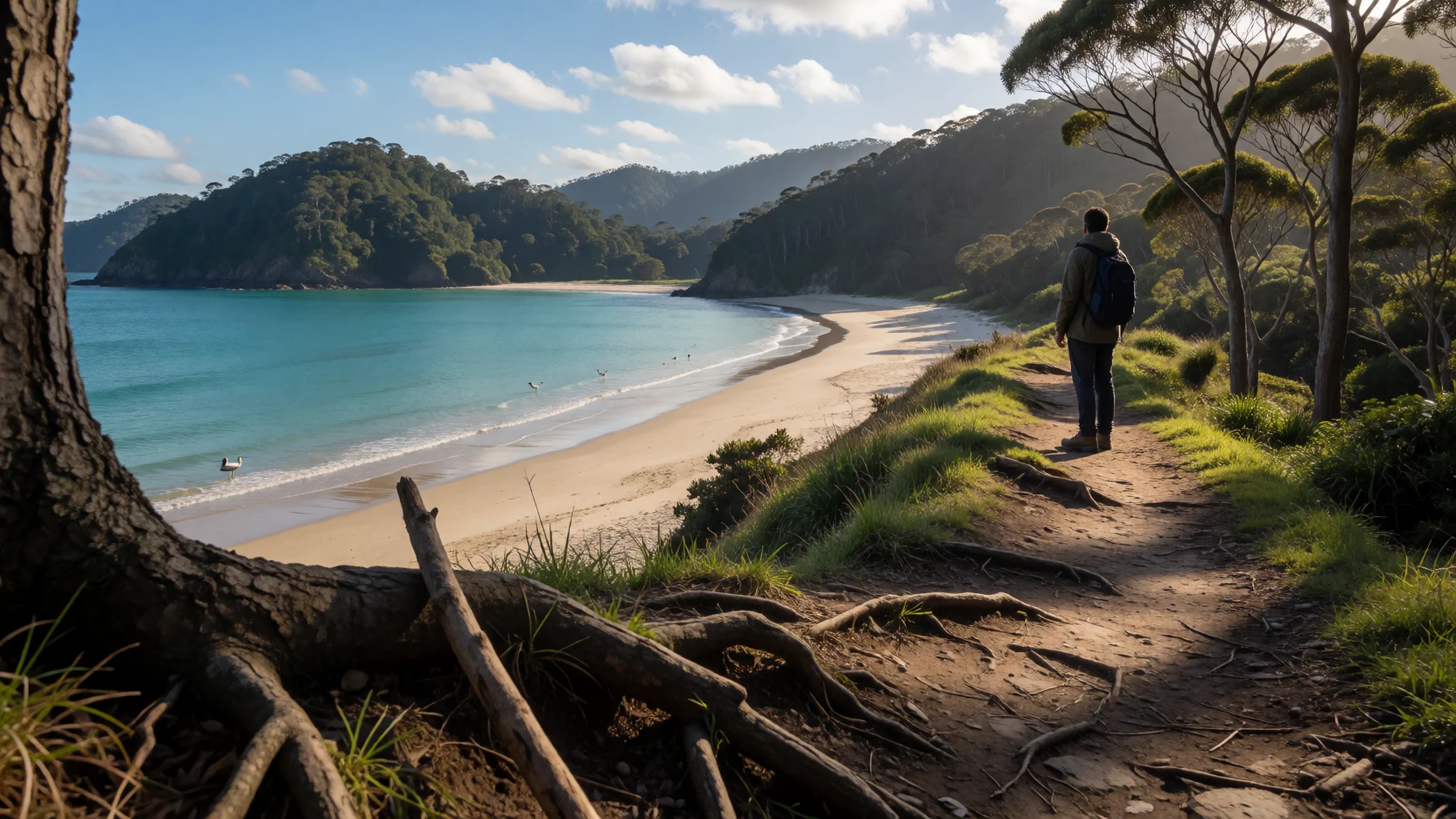
- Monkey Beach — North-western corner of the island
Monkey Beach lies in the island's north-western corner and takes its name from the crab-eating macaques that watch the sand from the trees. It can be reached on foot or by boat. Keep food sealed inside a bag, since macaques learn very quickly where the snacks are kept.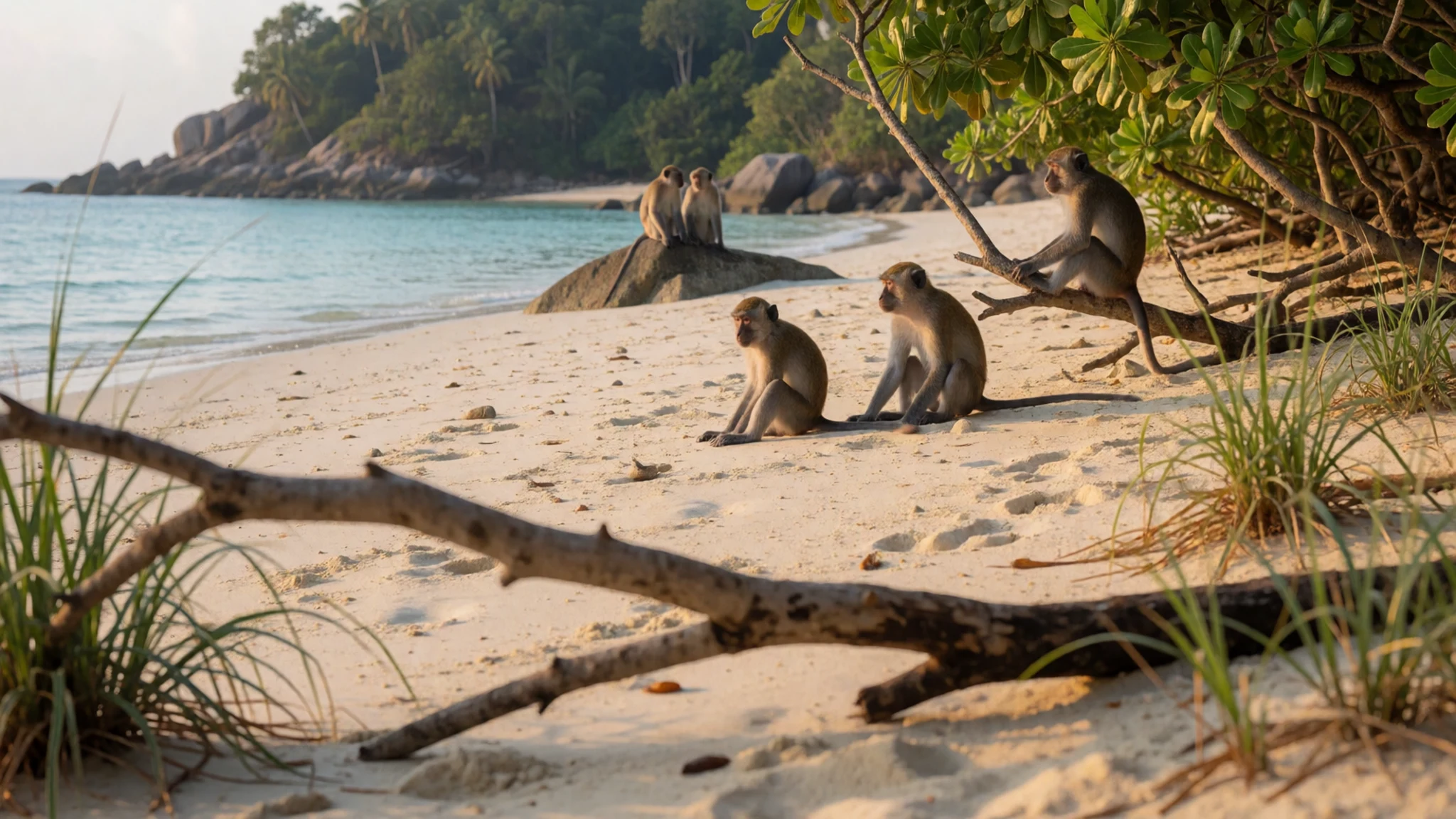
- Forest wildlife — Forest edge and canopy along the trails
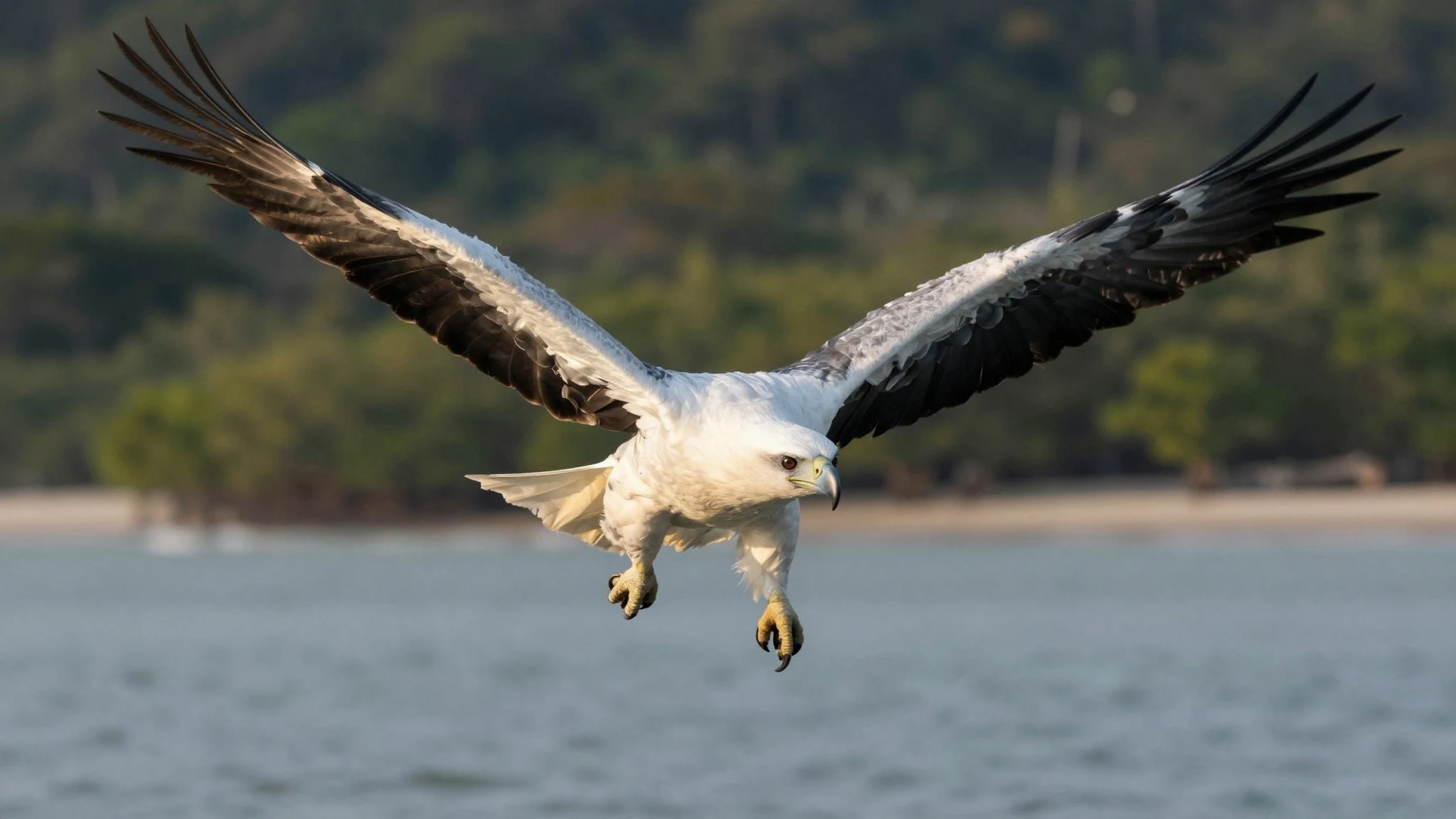
The forest above the beaches shelters dusky langurs, grey-faced leaf-eaters whose infants cling tightly to their mothers as they leap between branches. White-bellied sea eagles nest along the coast. Walking quietly and early gives the best chance of seeing either, and binoculars help far more than a phone camera.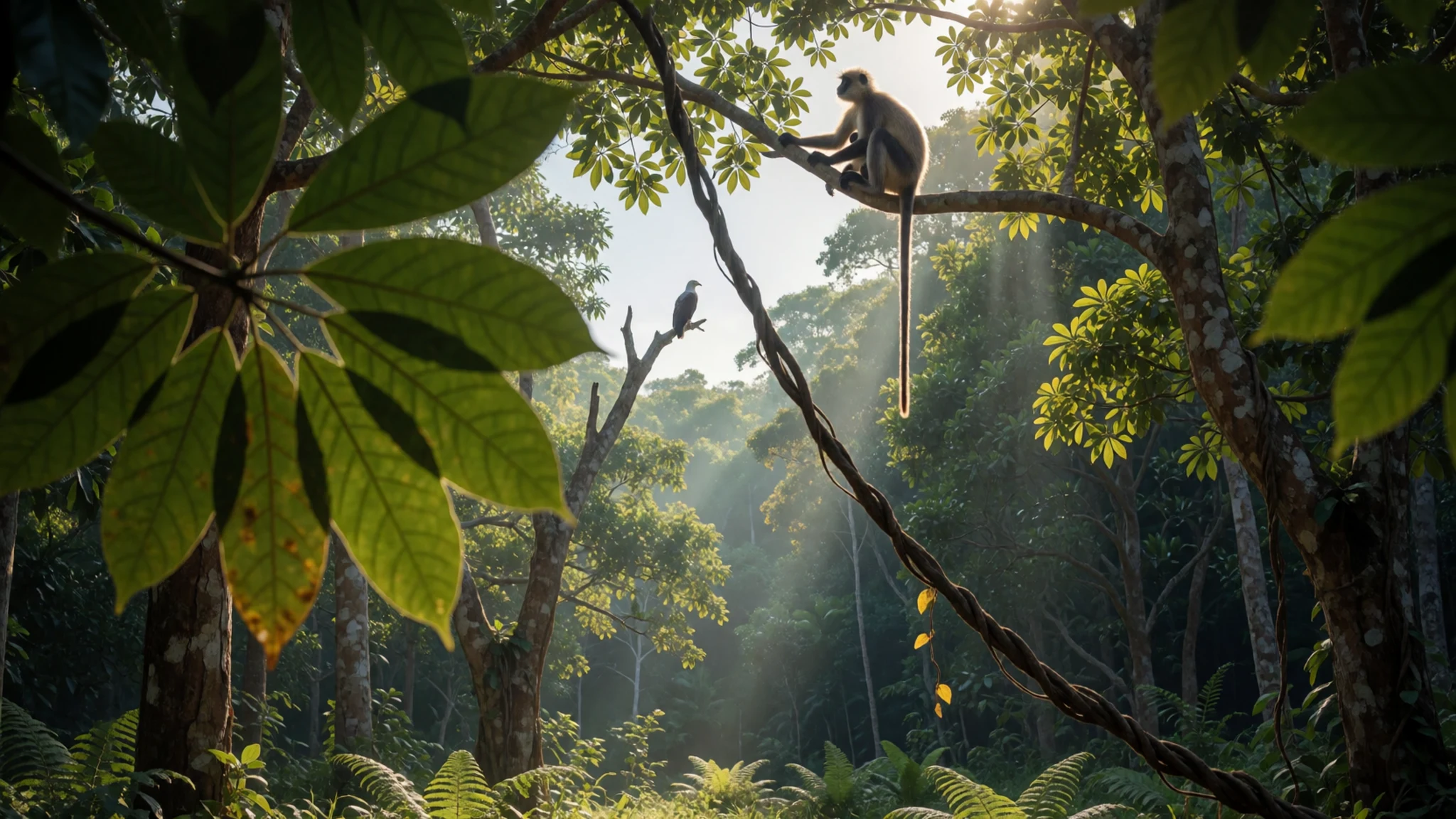
Culture
Penang National Park belongs to an island where several cultures have lived side by side for generations. The name Taman Negara Pulau Pinang is Malay, and the park's signs and papers also appear in Chinese and Tamil, a small reflection of the island's Malay, Chinese, Indian and Peranakan communities. On the coast, Teluk Bahang is a working fishing village, and the sampan boatmen who carry walkers to the beaches are part of a trade older than the park. Their knowledge of tides and swell is worth respecting, and a short chat before a boat trip often brings useful advice on the sea state and the best landing. The park also has a scientific side. It was set up to protect plants, animals and places of geological, historical and scientific interest, and researchers still work here, so some areas can be closed or marked for study. Food is the island's other cultural thread: after a long, sweaty walk, most visitors head back towards George Town's hawker stalls and coffee shops, where the mix of Malay, Chinese and Indian cooking is easiest to see. Mornings at the village are calm, and by midday the beaches fill with day-trippers and families. Do not feed the macaques or leave food in open bags, and carry all your rubbish out with you.
What to wear
Penang National Park is a walking destination, but the island around it has distinct clothing traditions. Malay women wear the baju kurung, a long tunic over a skirt, and men wear the baju Melayu with a sarong or trousers, usually for festivals, Friday prayers and weddings. Batik, wax-resist dyed cotton, and songket, silk or cotton woven with gold or silver thread, are the classic textiles. Peranakan or Nonya women historically wore the sarong kebaya, a fitted lace-trimmed blouse with a batik sarong, while Chinese families may wear the cheongsam at celebrations and Indian families saris and kurtas. Day to day, people on Penang wear light cotton shirts, shorts, T-shirts and sandals because of the heat and humidity, with long, loose clothes common for older people and those heading to prayer. For the park, wear quick-dry clothing, a hat and a thin long-sleeved layer against sun and insects. Shoes matter more than anything else: trail shoes or sturdy sandals with grip, since the forest paths are rooty and slippery after rain. Bring swimwear for the beaches, but carry a cover-up, because modest dress is expected in villages, temples and mosques back in town. A light rain jacket or a small dry bag is useful in any month.
What to eat
- Assam laksa — Hawker centres and street stalls in George Town
Assam laksa is a sharp, sour noodle soup, nothing like the creamy coconut laksa found in Singapore. The broth is built on tamarind, lemongrass, galangal and flaked fish, and is topped with pineapple, mint, onion, prawn paste and plenty of chilli.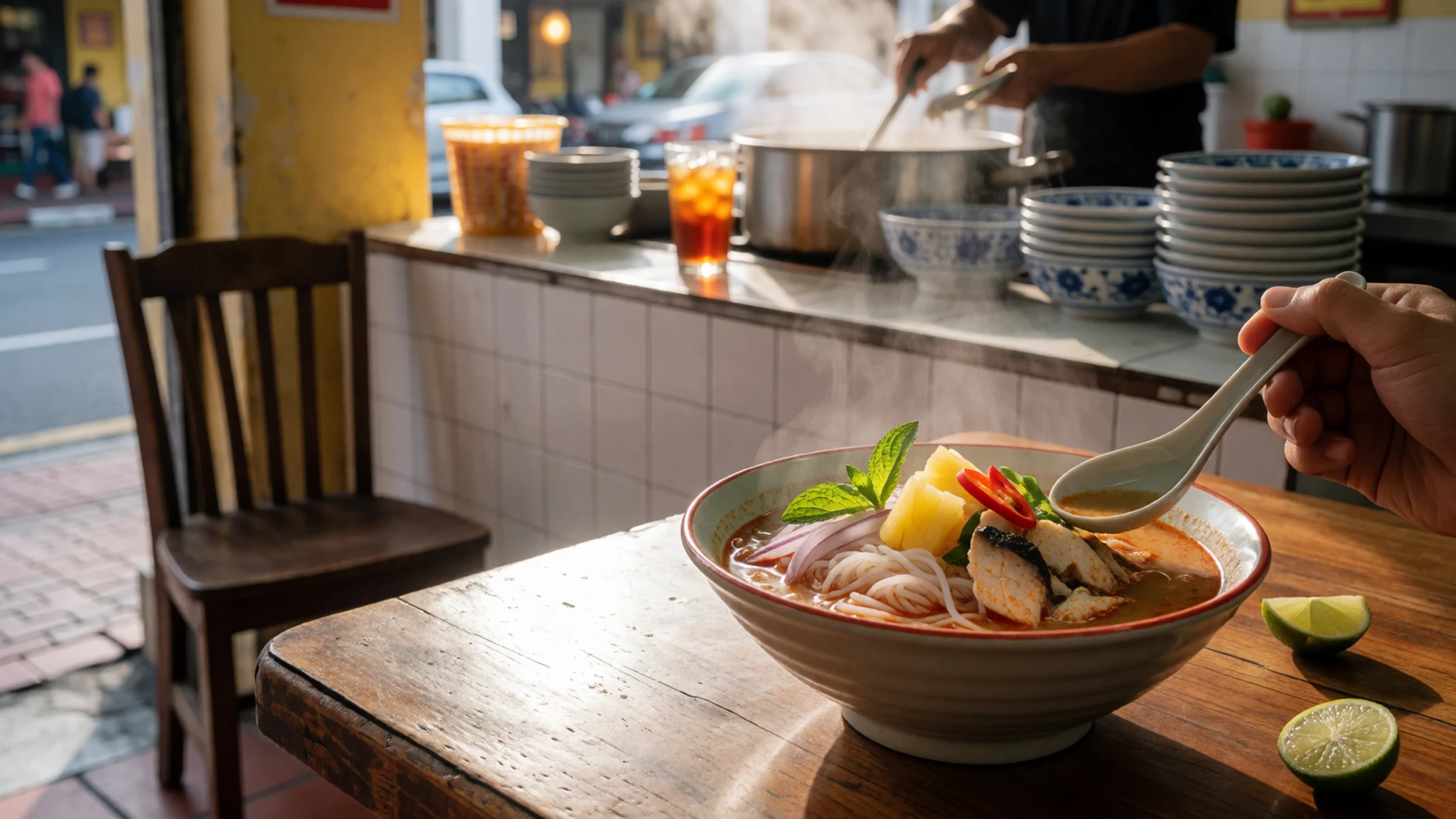
- Char kway teow — Open-air hawker stalls and coffee shops
Char kway teow is flat rice noodles stir-fried over fierce heat with prawns, egg, bean sprouts and chives. Cooked in a wok by the plate, it tastes smoky and slightly sweet. Look for stalls with a steady queue of locals.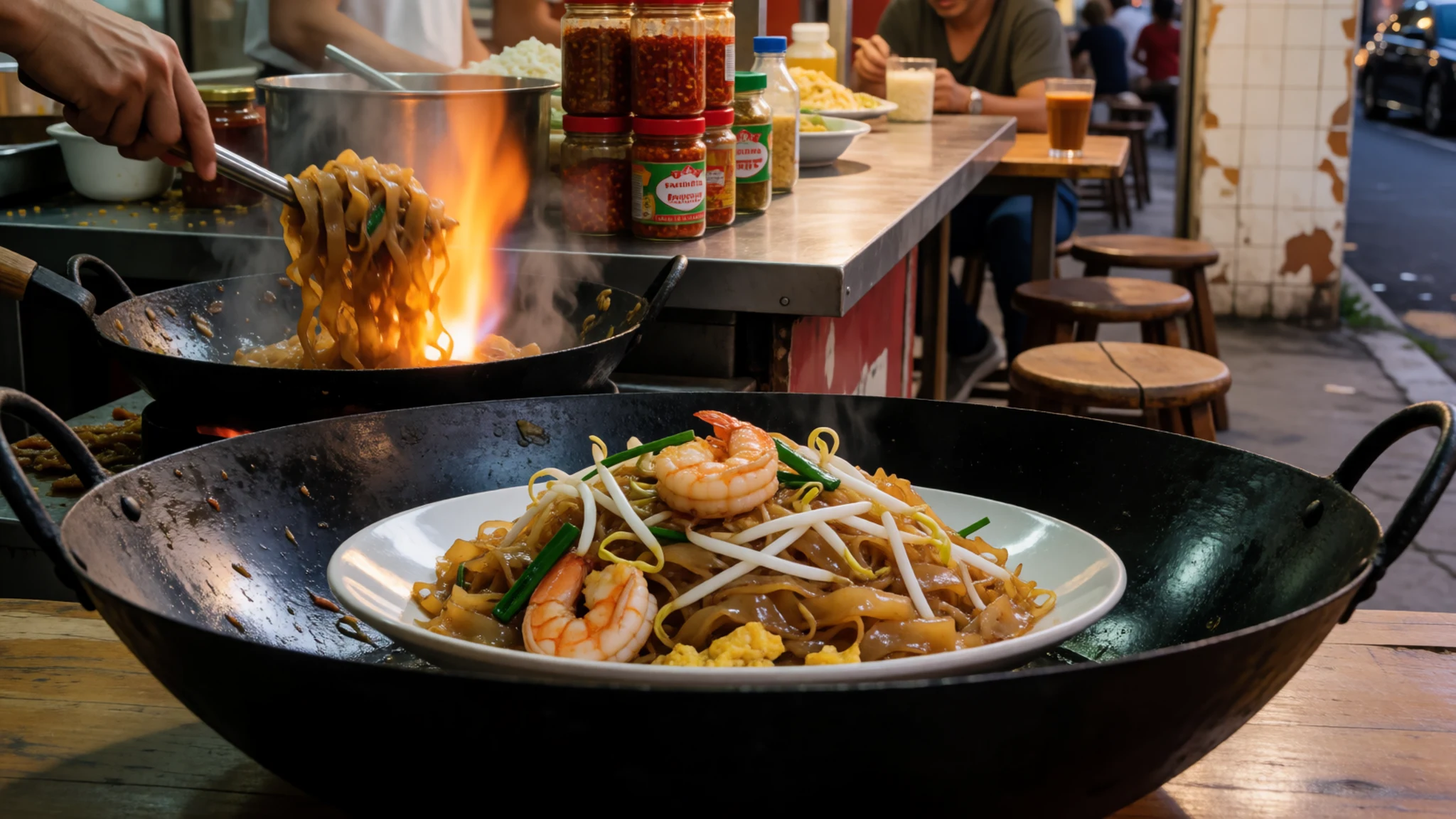
- Nasi kandar — Nasi kandar eateries around George Town
Nasi kandar is steamed rice served with a choice of curries, fried chicken, fish, vegetables and egg, spooned over together so the flavours mingle. The tradition comes from Indian Muslim cooks, and many eateries stay open late into the night. - Cendol — Street stalls and shaded roadside carts
Cendol is the cooling answer to a hot walk: shaved ice with green rice-flour jelly, coconut milk and palm sugar syrup, often topped with red beans. It is sweet, creamy and cheap, and is easy to find near the island's busier streets. - Nyonya kuih — Morning markets and Peranakan bakeries
Nyonya kuih are small steamed or baked sweets made from rice flour, coconut milk, pandan and palm sugar, in bright layers and colours. They are a classic Peranakan snack, best bought fresh from a market stall with a cup of local tea or coffee.
Plan it
Best time. December to March is usually the drier stretch, which makes the forest trails easier, though Penang is hot and humid all year and short heavy showers can come in any month. Go early in the day to beat the heat.
How long. 1–2
Getting there. Fly to Penang International Airport (PEN) in Bayan Lepas, south of George Town. From there take a pre-paid taxi or a Rapid Penang bus to George Town, then onward by bus, taxi or ride-hailing to Teluk Bahang, where the park entrance and the boat landing are.
Budget. low
Tips
- Start walking early, before the heat and humidity build up
- Bring your own water and food, since the beaches have only a few tables and toilets
- Check the official park website for current entry fees, opening hours and trail conditions
- Agree the price and the return time with the boatman before you board a sampan
- Wear proper shoes: the track beyond Pantai Kerachut is steep and poorly maintained
Etiquette
- Do not feed or tease the macaques, and keep food out of sight
- Carry all your rubbish back out of the park
- Dress modestly when you leave the beach for villages, temples or mosques
Nearby
Sources
- Wikidata Q7162231 (CC0)
- Wikipedia: Penang National Park (rev 1362892672) (CC BY-SA 4.0)
- Wikivoyage: Penang (rev 5324269) (CC BY-SA 4.0)
- Photo 01-monkeybeach08.jpg — Asiadetailfeed (CC BY 3.0)
- Photo 02-malaysia-relief-location-map.jpg — Uwe Dedering (CC BY 3.0)
- Photo 03-penangbeachcrabeater08.jpg — Asiadetailfeed (CC BY 3.0)
- Photo 04-at-around-3-to-4-months-the-dusky-langur-infant-gets-more-au.jpg — Roughdiamond21 (CC BY-SA 4.0)
- Photo 05-balik-pulau-banner.jpg — Alexey Komarov (CC BY 3.0)
- Photo 06-couple-of-white-bellied-sea-eagle.jpg — Shahrul Laili (CC BY-SA 4.0)
- Photo 07-dusky-langur-infant-holding-on-while-its-mother-leaps.jpg — Roughdiamond21 (CC BY-SA 4.0)
- Photo 08-dusky-langur-infant-learning-to-eat-leaves.jpg — Roughdiamond21 (CC BY-SA 4.0)


Wildlife
- Crab-eating macaque (animal)
The crab-eating macaque is a clever, long-tailed monkey that is quite happy living close to people. In Penang National Park, look for it at Monkey Beach, in the island's north-western corner, where the monkeys watch the sand from the trees. The notes name no season or hour, so simply go with an open mind. Keep a respectful distance, speak softly, and let a guide show you where to stand. Never offer food; wild monkeys should stay wild.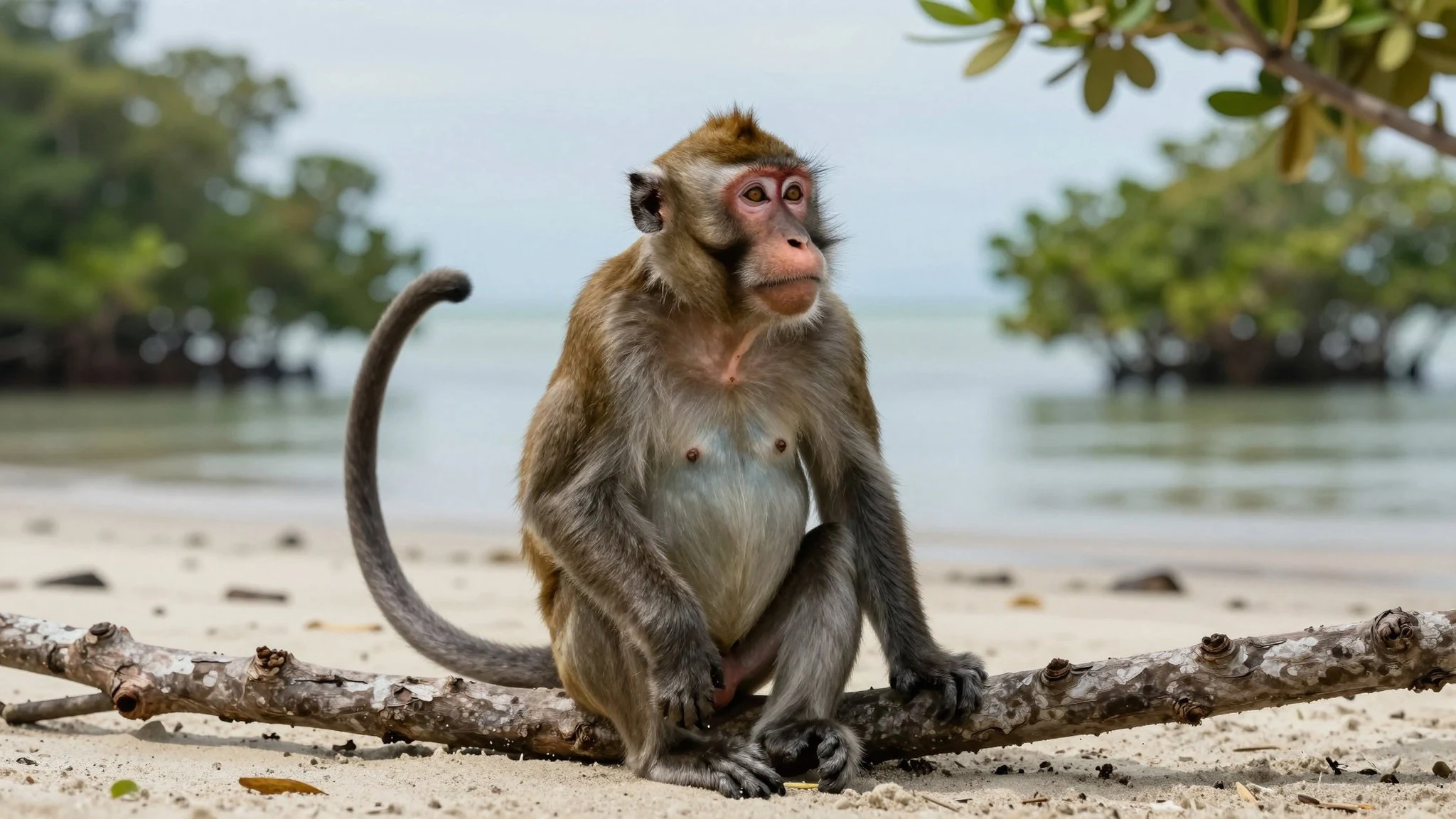
- Dusky langur (animal)
The dusky leaf monkey, or dusky langur, is a grey-faced forest monkey that mostly eats leaves, and its babies cling tightly to their mothers as they leap. In Penang National Park, look for it in the forest above the beaches, where it forages through the daytime. The notes name no season. Watch from a distance, keep your voice low, and ask a guide to help you spot them. Never feed them; this species is endangered.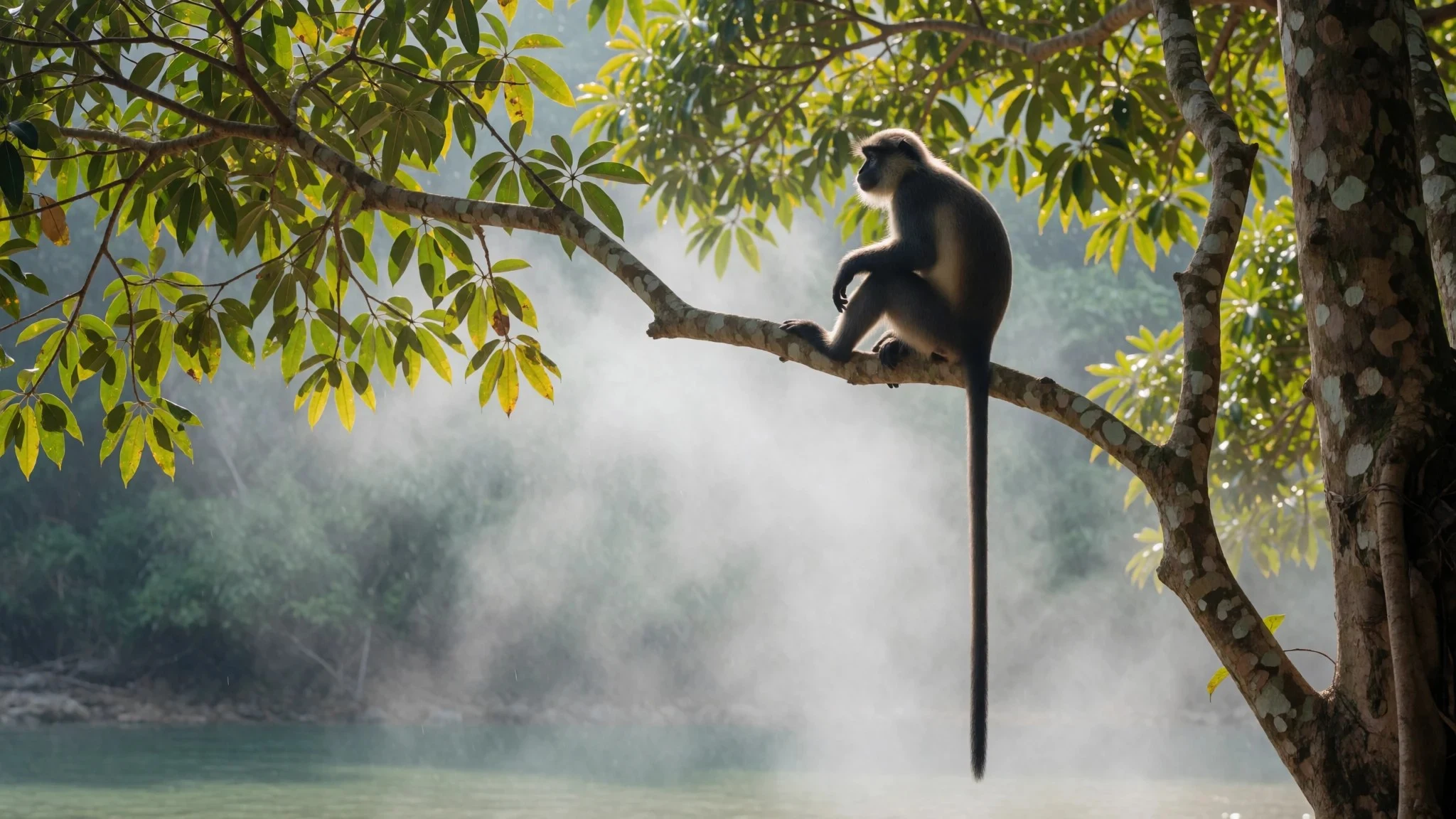
- White-bellied sea eagle (bird)
The white-bellied sea eagle is a big, white-headed bird of prey that rules the sky above the sea. Visitors to Penang National Park often notice it early, circling above the water, and as a daytime hunter it is seen in daylight. Look for a pale head, chest and tail against grey wings, and listen for a loud, goose-like honk. Watch from the shore, stay quiet, keep well back, and ideally have a guide beside you.