Pella
Pella, Greece
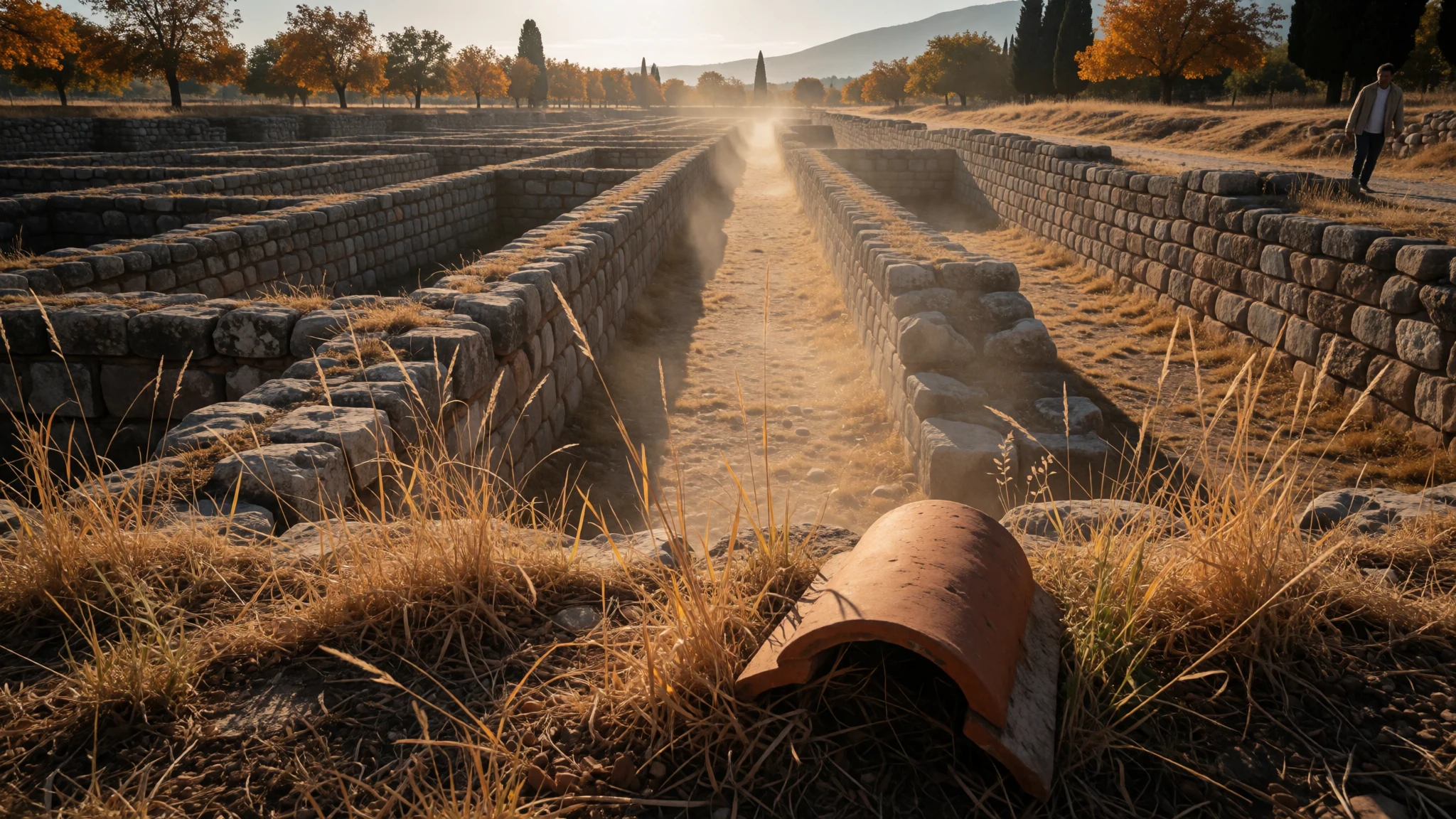
Pella, birthplace of Alexander the Great, offers pebble mosaics and the ruins of a Macedonian capital, with few crowds and plenty of space to wander.
The place
Pella sits on the flat plain of Central Macedonia in northern Greece, about 1 km from the modern town that carries its name. Today it feels rural: fields, low hills, a road, and an excavated city laid out in the open. Few places make it so easy to read an ancient city plan, because the streets still run in straight lines and cross at right angles, forming a grid of blocks. In antiquity the setting was very different. Pella was a port, linked to the Thermaic Gulf by a navigable inlet, but that waterway and the harbour have silted up and the sea is now far off. The site is best understood as a capital of the kingdom of Macedon, a place of palaces, wealthy houses, workshops and a great market square. It is also known as the birthplace of Philip II and of his son Alexander the Great. Visitors should expect a quiet, open-air site rather than a monumental one: you see foundations, courtyards, columns and floors rather than standing temples. The finds that bring it alive are in the museum beside it. The elevation is a gentle 38 m, so walking is easy, but there is little shade. Most people base themselves in Thessaloniki or nearby Giannitsa, since Pella village has almost nothing in the way of lodging, and arrive for a half day.
Its story
Pella rose in the early fourth century BC, when Archelaus I made it the seat of Macedonian power. The older palace-city of Aigai stayed on as the burial ground of the royal family, while Pella took on the business of ruling and trading. Some scholars wonder whether Amyntas III may in fact have started it, so the origin is not entirely settled. Archelaus had ambitions for culture as well as power. He drew the painter Zeuxis to decorate his palace and hosted the poet Timotheus of Miletus. The Athenian playwright Euripides spent his last years here, and his play the Bacchae was first staged in the city around 408 BC. Xenophon described Pella as the largest Macedonian city of his time. Philip II was born here in 382 BC, and his son Alexander in 356 BC. Under later rulers including Cassander and Antigonus II the city grew rich. Then came Rome. In 168 BC, during the Third Macedonian War, Roman forces sacked it, and Pella slid into a long decline. Nearby Thessalonica took over as the regional centre and became the capital of the Roman province. With the harbour silting up, Pella was left stranded inland, which is part of why its remains survived as a field of ruins rather than a living town.
What to see
- Archaeological Site of Pella — Ancient Pella
The excavated city is planned on a grid: parallel streets meet at right angles to form eight rows of rectangular blocks. Walking them gives a clear feel for how a Macedonian capital was organised. Bring a hat and water, as shade is scarce across the open ground.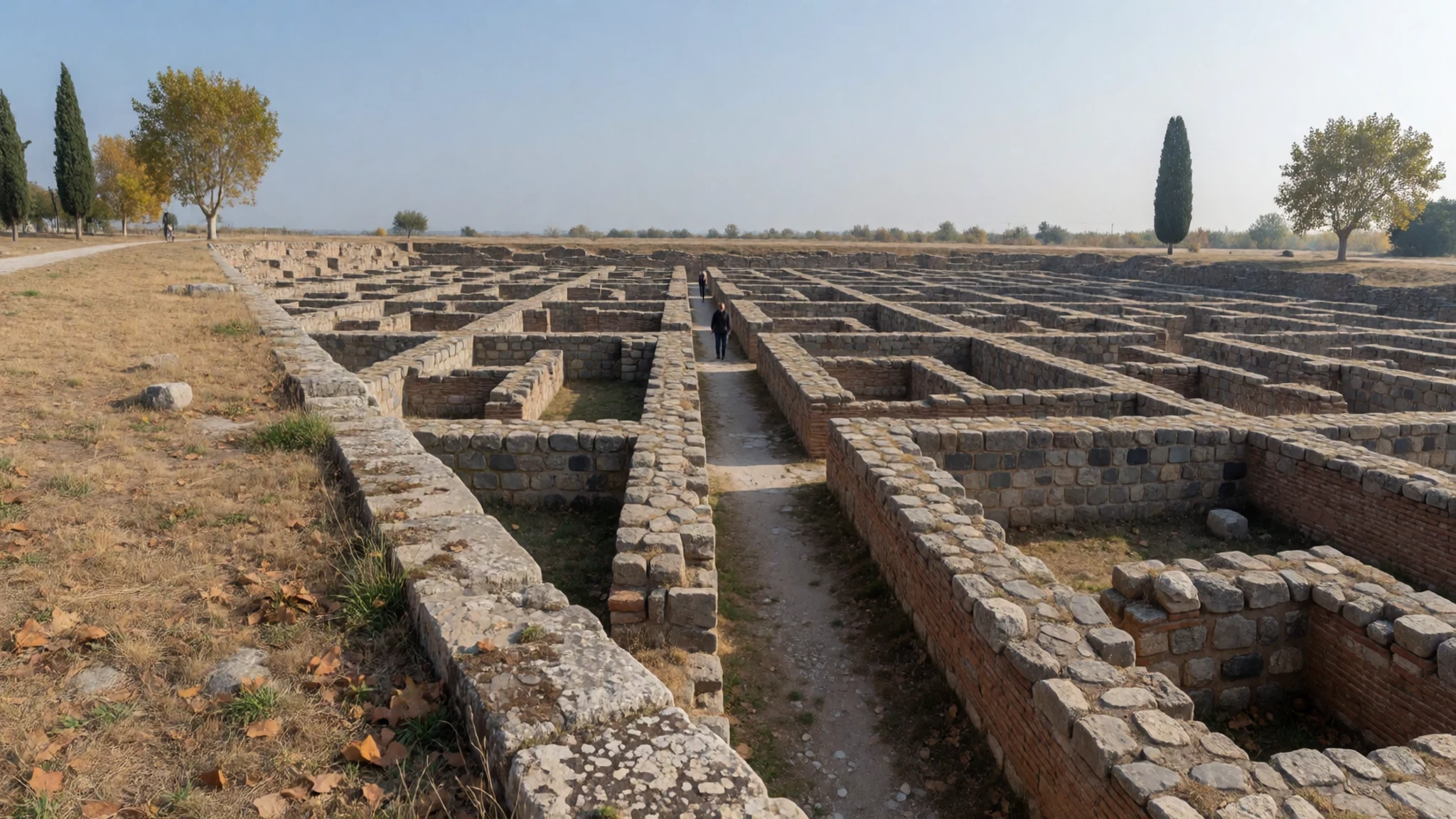
- House of Dionysos — Ancient Pella
One of the richest residences in the city, this large house is notable for its courtyard and its floors. The mosaics found here are displayed in the museum, so on site you mostly see the plan and the surviving columns. It rewards a slow look at how a wealthy family lived.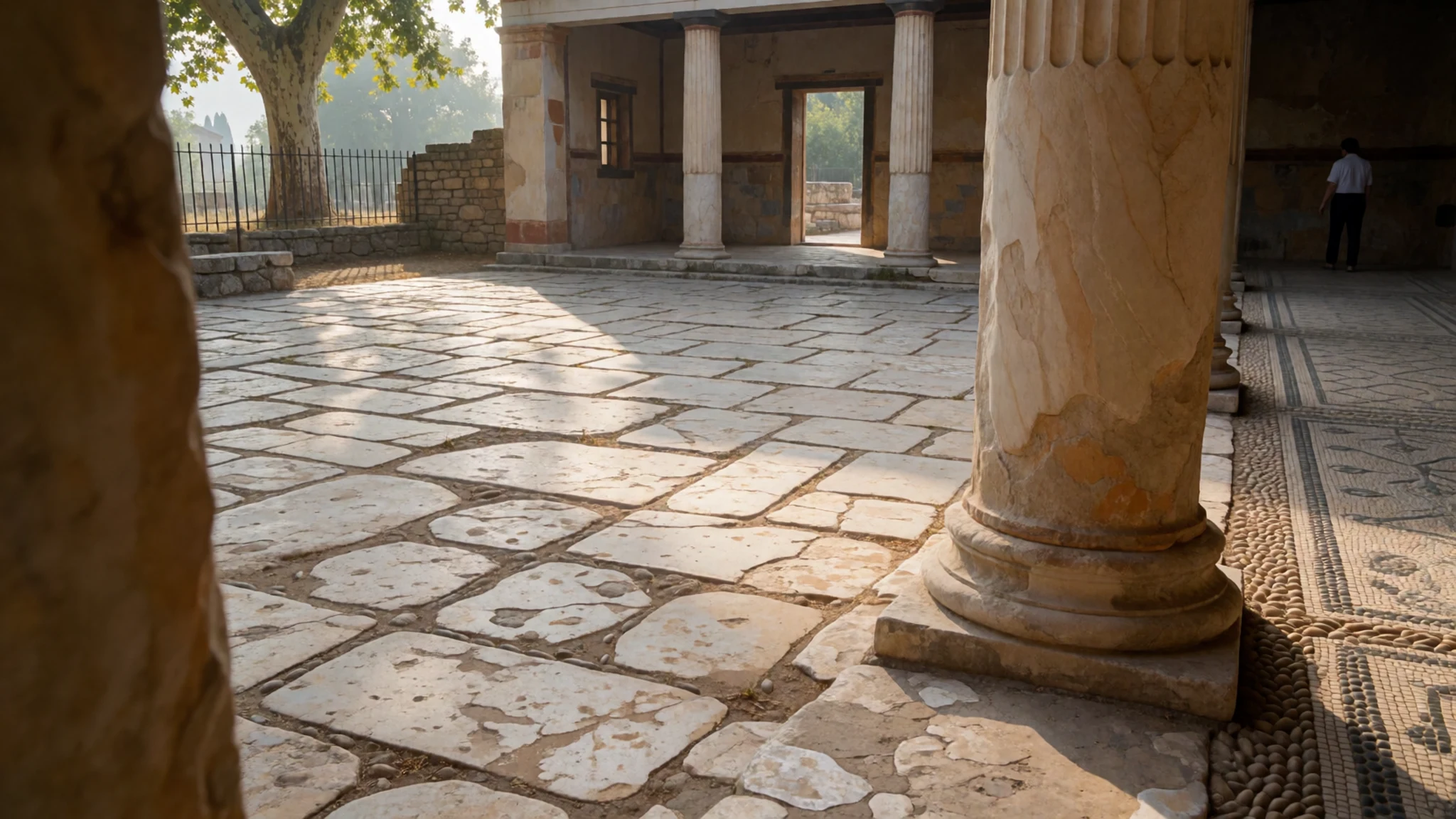
- House of Helen — Ancient Pella
Another wealthy home, and here the mosaics have been left where they were laid, so you can see pebble floors in their original setting. The famous stag hunt panel comes from a house identified with the abduction of Helen, and shows how much skill went into everyday luxury.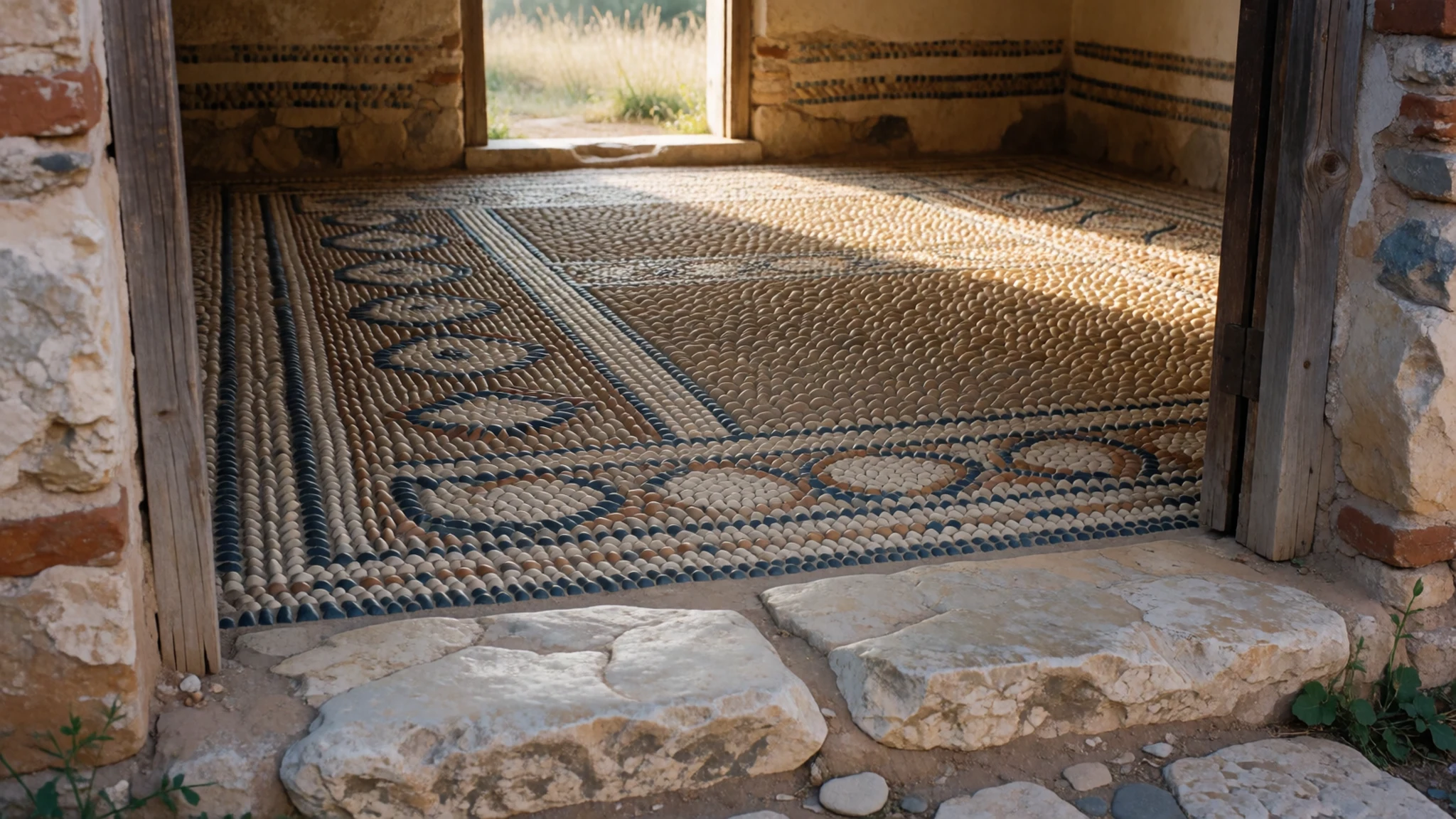
- The Agora — Ancient Pella
The central market square was huge, covering around seven hectares, the equivalent of ten city blocks, and was built in the last quarter of the fourth century BC. Shops lined its edges. Today it is an open space of low walls, good for imagining trade and public life.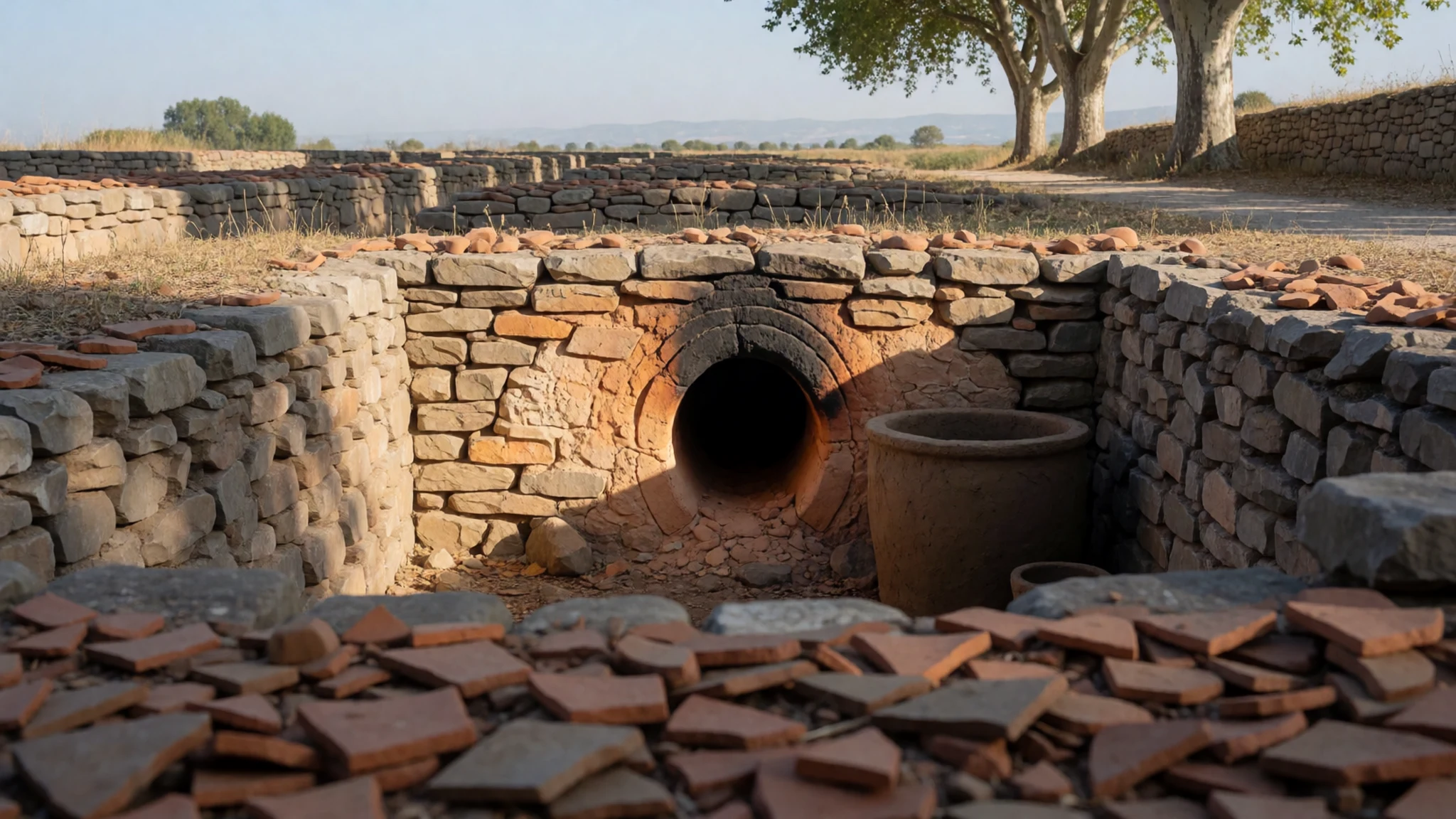
- Potter's Quarter — Ancient Pella
A modest but revealing corner of the site, with pottery workshops, kilns and vats. It shows the working side of the capital, far from the palace and the rich houses. Pause here to think about who actually made the everyday objects that fill the museum cases.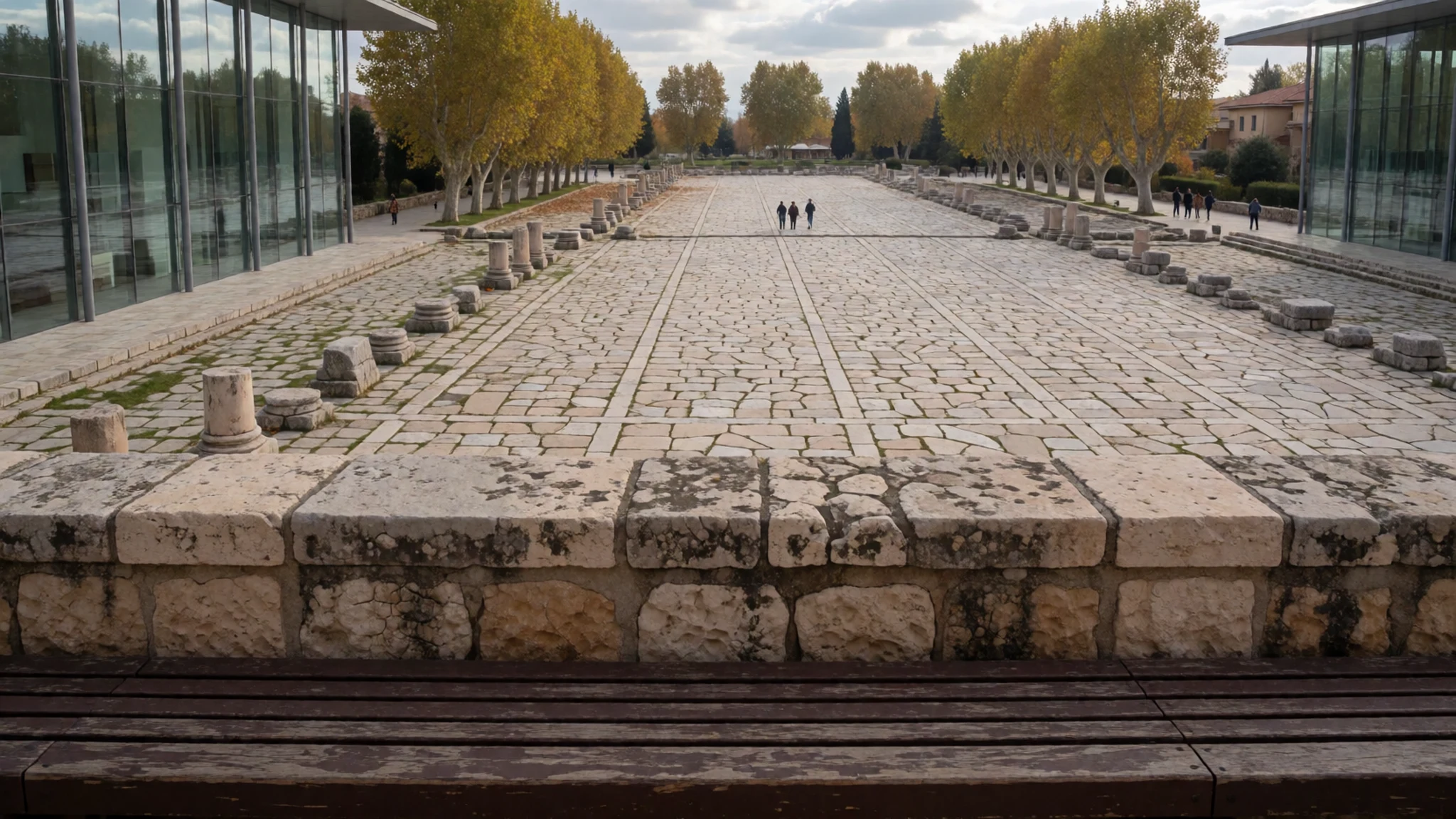
- Archaeological Museum of Pella — Next to the archaeological site
The museum concentrates on daily life in the city, with detailed floor mosaics and objects recovered from the site, including a lion hunt in pebbles. Allow about 60 minutes for the permanent exhibitions. Check the official site, pella-museum.gr, for opening times and ticket details before you travel.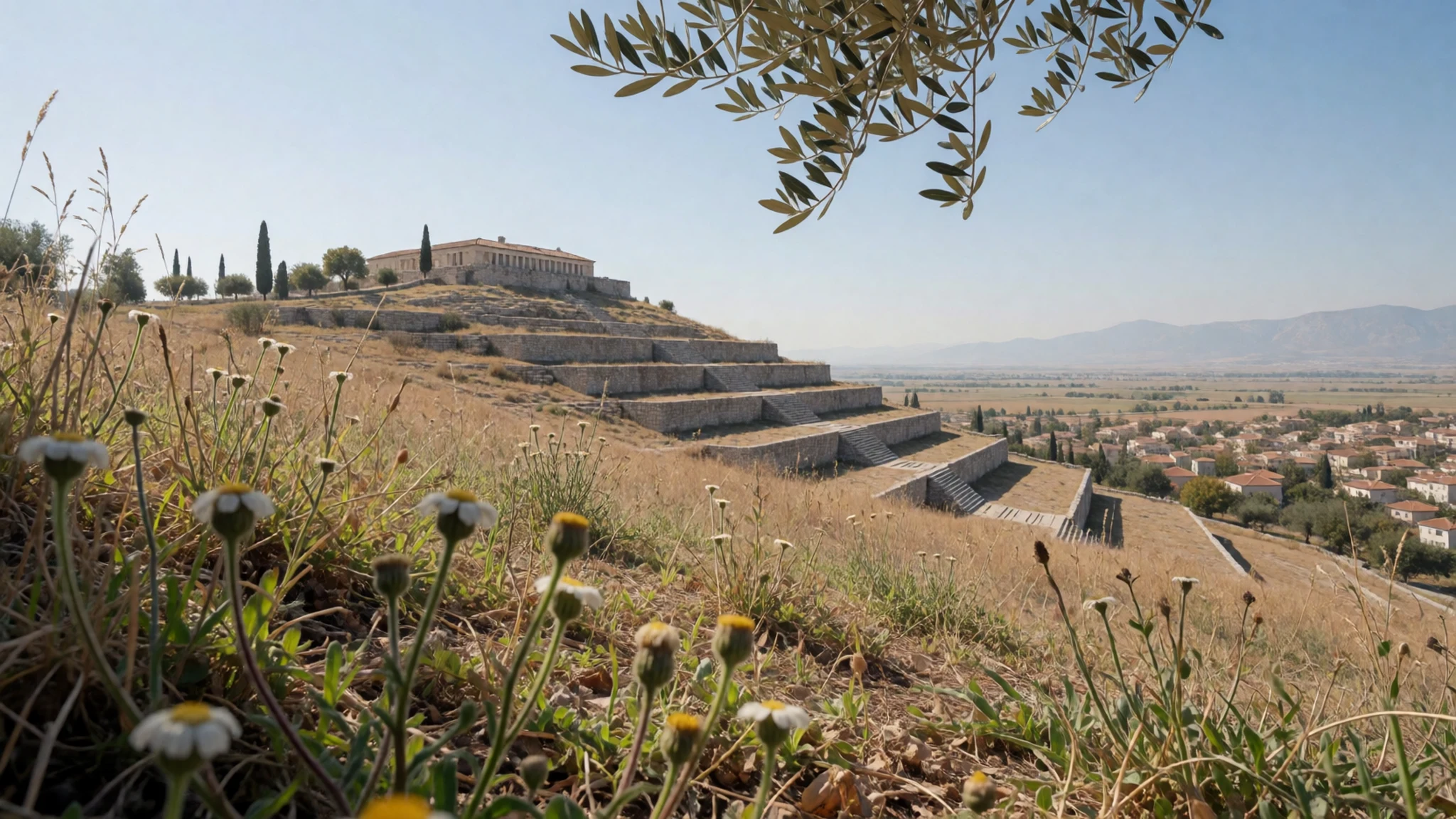
Culture
Pella is a place where Greek identity and history are taken seriously, and the name of Alexander carries real weight in northern Greece. Macedonia is a sensitive word in regional politics, so conversations about it are best led by your hosts rather than by you. The ancient city shows a culture that mixed Macedonian kingship with Greek art and learning: poets and painters were welcomed at court, and drama was staged here. The pebble mosaics are the clearest legacy, made from small natural stones in a time before cut tesserae became common, and signed by named artists, which tells you how highly they were regarded. Everyday belief also survives in small objects, such as the lead curse tablets found in a cemetery near the agora, now in the museum. Modern life around the site is agricultural and quiet. Cafés and tavernas in nearby towns follow a relaxed pace, with long lunches and late dinners, and people are generally happy to help a curious visitor find the right bus or point out the museum. Hospitality matters, so a greeting in Greek goes a long way. Do not step on or lean over fenced mosaics and fragile walls, and follow the guards' instructions about where you may walk.
What to wear
Pella has no single local costume that visitors will see on the street, but the wider region of Macedonia has a rich folk tradition. Traditional dress there used wool, linen and cotton, with embroidered aprons, woven sashes and heavy waistcoats for women, and pleated kilts or dark trousers with embroidered vests for men. These are now worn mainly at festivals, weddings and dance performances, and you may see them in museums or village celebrations rather than day to day. In ancient times, the clothes shown on mosaics and sculpture were draped garments such as the chiton and the cloak, usually of wool or linen. Today people in Pella and nearby Giannitsa dress casually and neatly: light trousers or jeans, shirts and trainers, with warmer layers in winter. For a visit, wear comfortable closed shoes with a good grip, since the ground is uneven, dusty and stony. Summer is hot and shade is thin, so bring a hat, sunglasses, sun cream and a light long-sleeved top. In cooler months a windproof layer and something waterproof help. There is no strict dress code at the archaeological site or museum, though modest, practical clothes are always welcome.
What to eat
- Souvlaki — Grill eateries in Giannitsa and Thessaloniki
Skewered grilled pork or chicken, usually wrapped in pita with tomato, onion and yoghurt sauce. It is the standard quick lunch in northern Greece and easy to find in small eateries in Giannitsa and Thessaloniki.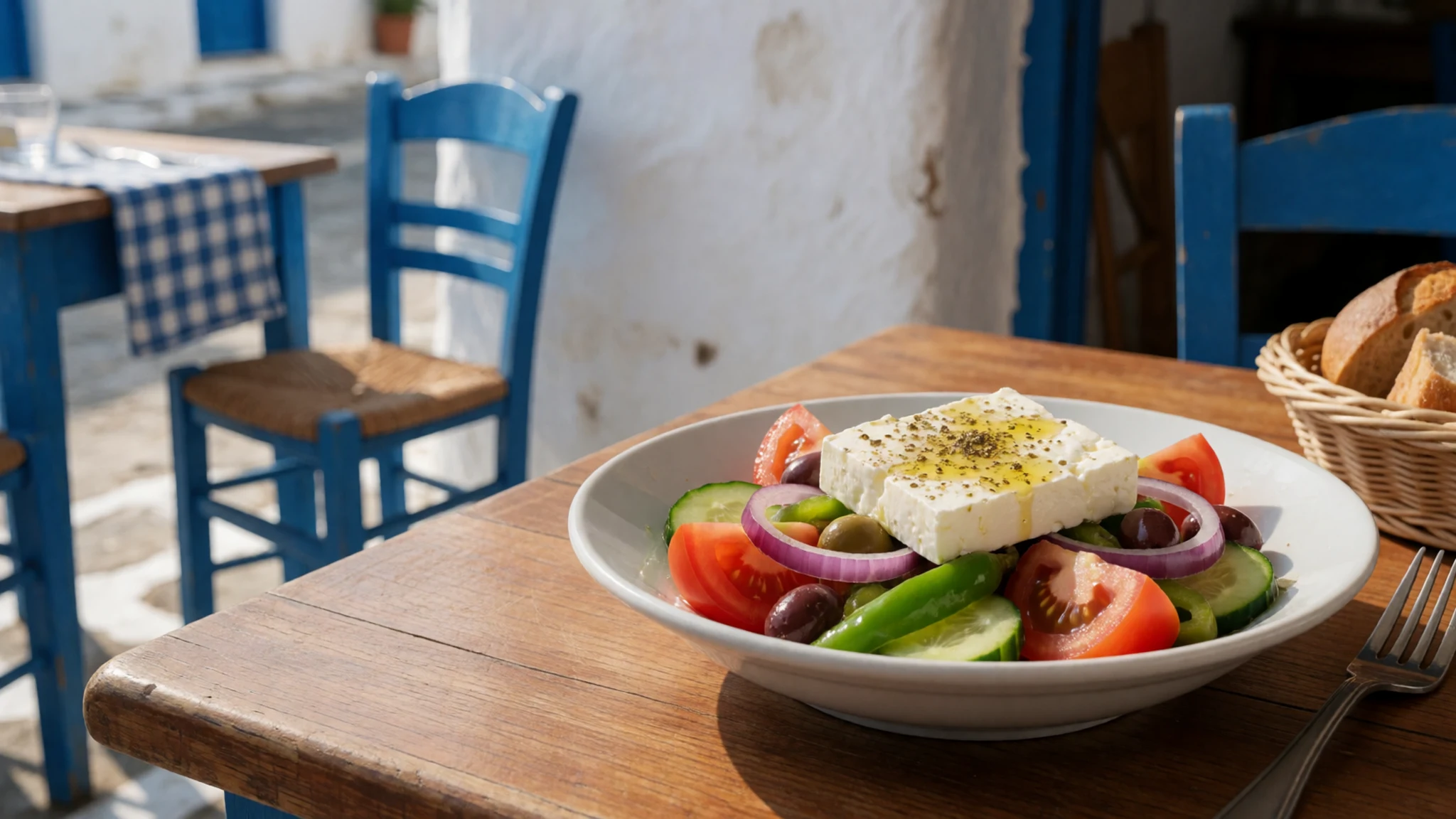
- Bougatsa — Bakeries in Thessaloniki
A breakfast pastry of thin layers filled with custard, cheese or minced meat and dusted with sugar or cinnamon. Thessaloniki is closely associated with it, and local bakeries sell it warm in the morning.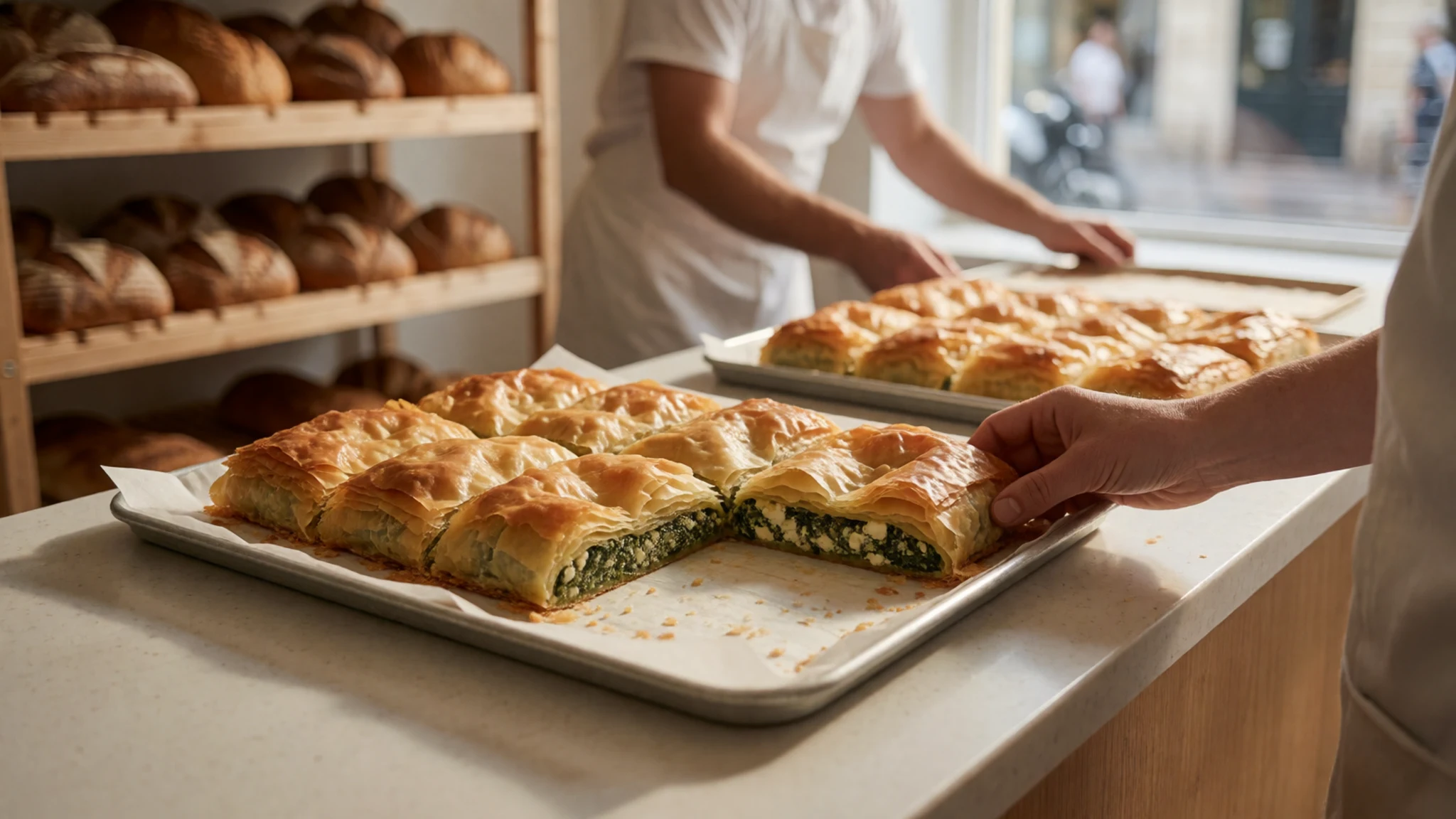
- Gyros — Street counters and snack shops in town centres
Meat cooked on a vertical spit, sliced and rolled in pita with chips, salad and sauce. It is cheap, filling and found everywhere, making a handy refuel after a morning in the sun at the ruins.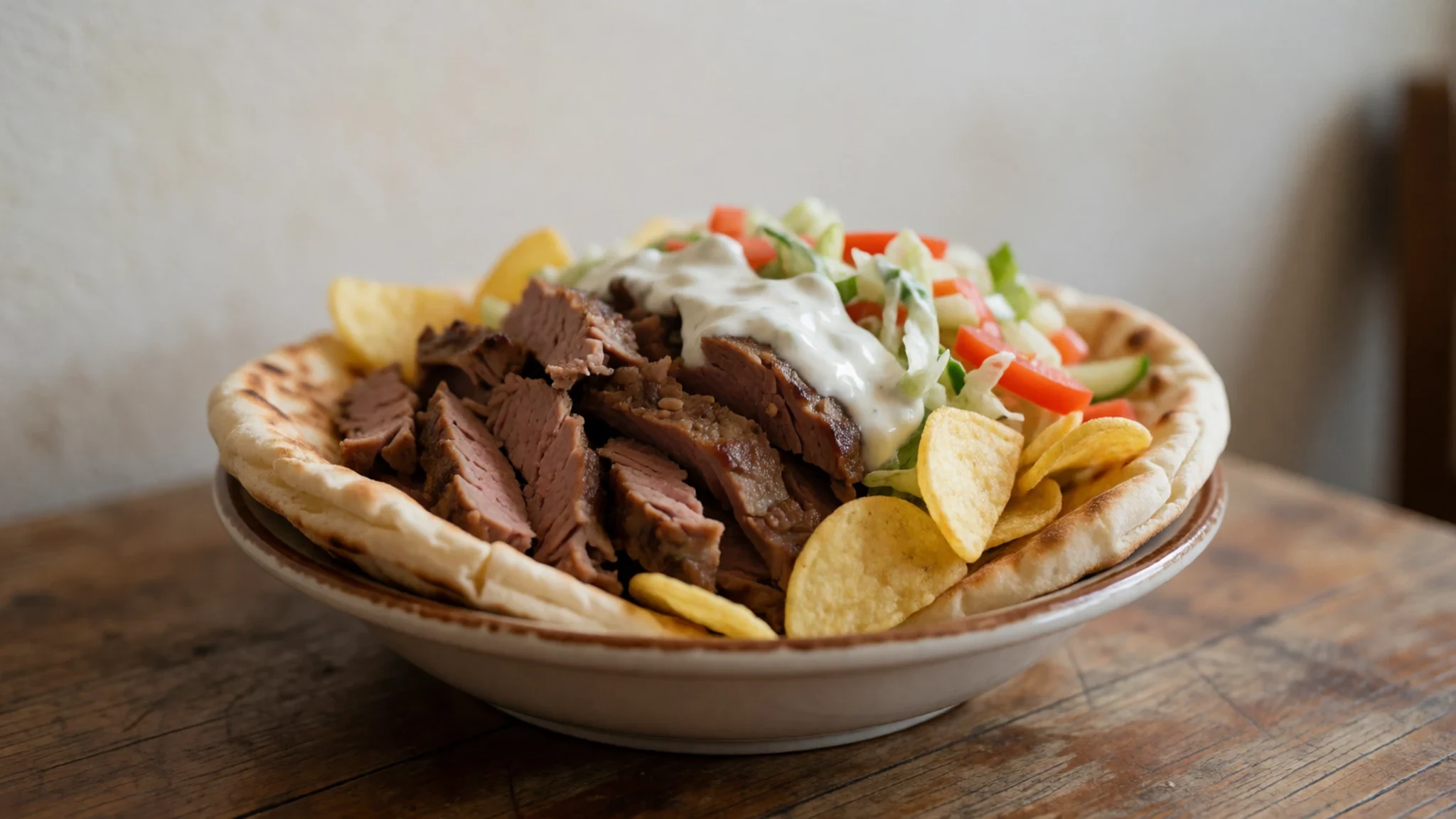
- Spanakopita — Bakeries and village cafés
A crisp pie of filo pastry layered with spinach and feta, sometimes with herbs. It is a good vegetarian option and travels well, so it suits a packed lunch for a day among the ruins.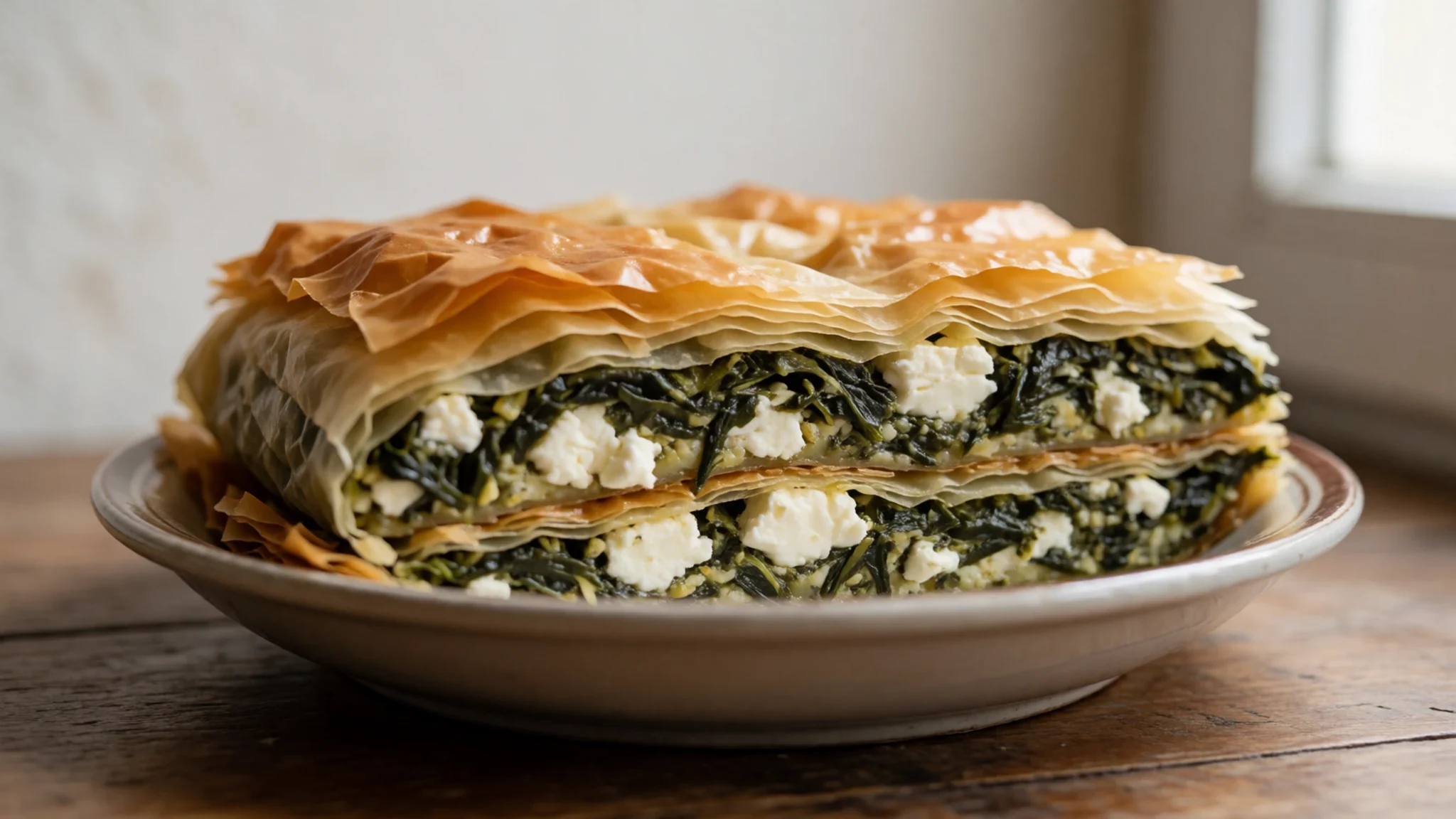
- Horiatiki salad — Tavernas in Giannitsa and the centre of Pella
The classic Greek village salad of tomato, cucumber, onion and olives, topped with a slab of local feta and olive oil. It is refreshing in the heat and comes with bread to mop up the juices.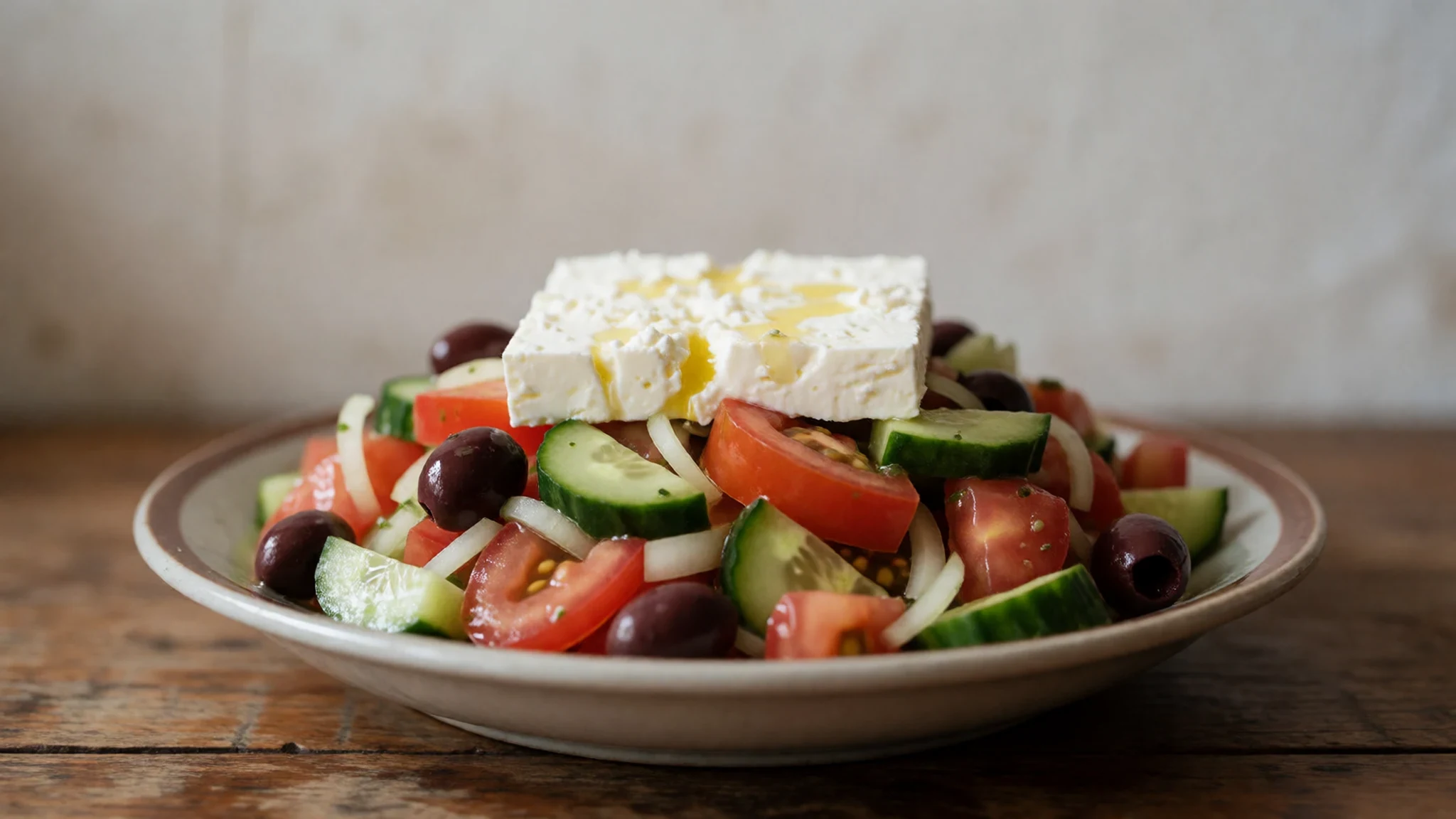
Plan it
Best time. April–June and September–October, when it is warm enough to explore without the midsummer heat. July and August can be very hot with little shade on the open site, and winter is cool and often damp.
How long. 1
Getting there. Fly to Thessaloniki, then take a KTEL Macedonia bus towards Giannitsa, which takes about an hour. Ask the driver to stop near the main road; the site is a short walk away. By car, take National Road 2 and leave at the Pella exit.
Budget. low
Tips
- Go early or late in the day to avoid the heat
- Bring water, a hat and sun cream, as shade is scarce
- Check bus times at the museum before you head back
- Stay in Thessaloniki or Giannitsa, as Pella village has little lodging
- Check opening times and tickets at pella-museum.gr
Etiquette
- Keep to marked paths and off fenced mosaics
- Follow guards' instructions in the museum
- Ask before photographing people
Nearby
Sources
- Wikidata Q213679 (CC0)
- Wikipedia: Pella (rev 1384868163) (CC BY-SA 4.0)
- Wikivoyage: Pella (Greece) (rev 5182111) (CC BY-SA 4.0)
- Jean-Pol Grandmont, lion hunting mosaic (CC BY 4.0)
- Carole Raddato, Dionysos Mosaic place (CC BY-SA 2.0)
- Carole Raddato, House of Dionysos courtyard (CC BY-SA 2.0)
- Carole Raddato, shops by the agora (CC BY-SA 2.0)
- Carole Raddato, Stag Hunt mosaic (CC BY-SA 2.0)
- Filos96, Pella katadesmos tablet (Public domain)
- Carole Raddato, House of Dionysos plan (CC BY-SA 2.0)
- Rjdeadly, Pella baths (CC BY-SA 4.0)


