Pebble Island
Pebble Island, United Kingdom
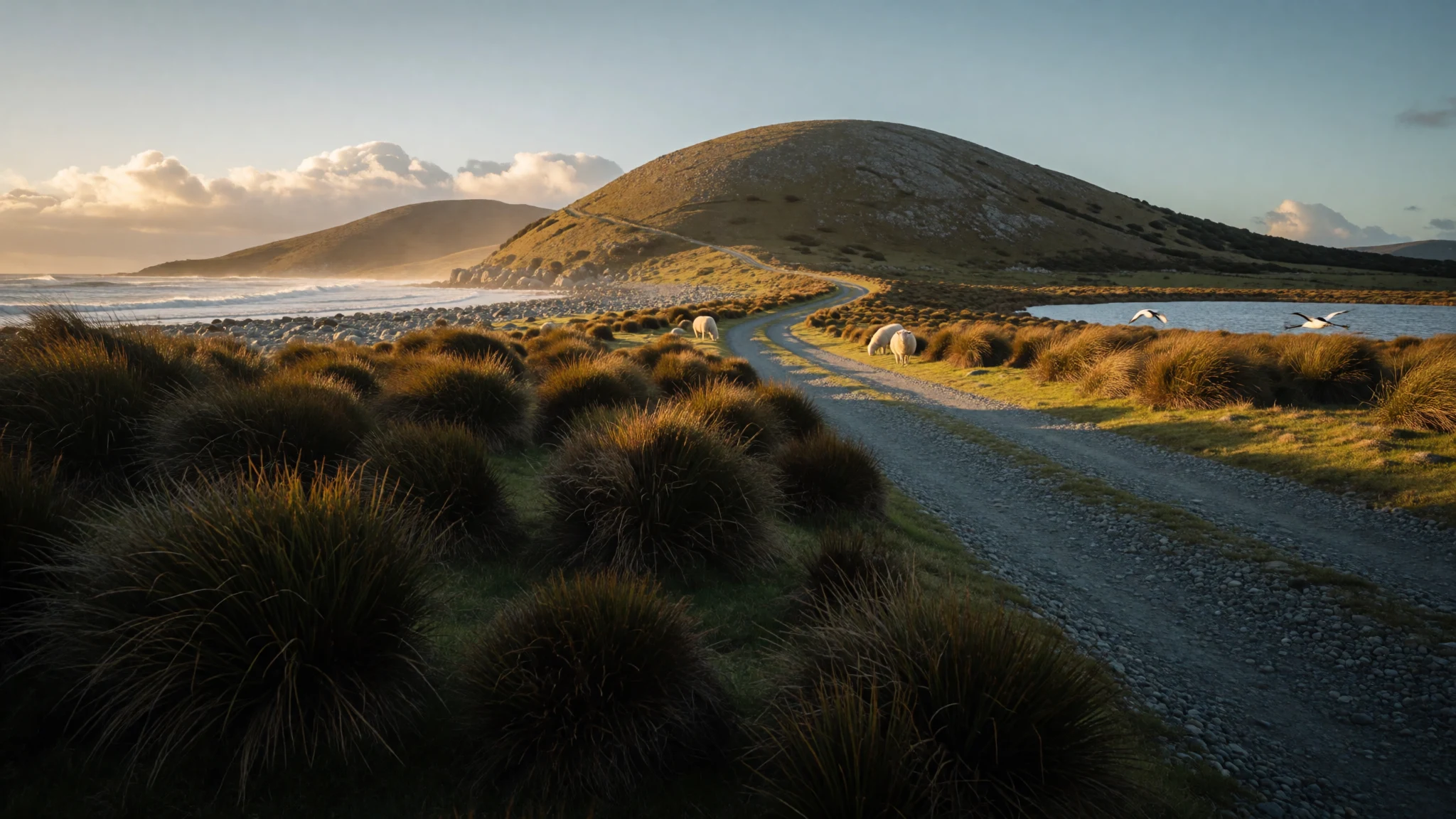
Wind-swept beaches, vast penguin colonies, and rugged South Atlantic landscapes define this isolated island in the Falkland archipelago.
The place
Pebble Island lies off the northern coast of West Falkland, forming the fifth largest landmass within the Falkland archipelago. Stretching 35 kilometres from end to end and measuring roughly 6 kilometres across at its widest point, the island covers an area of 103.36 square kilometres. Its terrain transitions dramatically between two distinct geographical sectors, connected by a narrow central isthmus where the local community resides at Pebble Island Settlement.
To the west, the topography rises into hilly country marked by three distinct summits: First Mountain at 277 metres, Marble Mountain at 237 metres, and Middle Mountain at 214 metres. These rocky elevations drop toward dramatic ocean cliffs and wave-battered shores. By contrast, the eastern half flattens into an extensive network of freshwater lakes, shallow ponds, and coastal marshland. This eastern wetland area holds exceptional conservation value, providing vital habitat for resident and migratory waterfowl.
Working life on Pebble Island has revolved around agricultural pastoralism since 1846. Today, the island functions as a working farm supporting approximately 6,000 Corriedale sheep alongside 125 head of beef and dairy cattle. The pastures extend across open heathland, where white-washed farm buildings and wind-swept paddocks sit against the grey backdrop of the South Atlantic Ocean.
Its story
Pebble Island bears a complex history etched into its landscape, from early maritime exploitation to military conflict. The settlement was originally known in Spanish as Puerto Calderón, a name referencing the large cauldrons used by early sealers and penguin hunters to render animal oil on these shores.
Commercial settlement began in 1846 when John Markham Dean purchased Pebble Island and three adjacent islets for £400, establishing a pastoral concern that remained in his family's stewardship for generations. Ownership passed to the Goulds in 2025. During the early 1900s, Constance Allardyce, wife of the colonial governor, gathered a significant collection of fossils across the island. Her finds, analysed alongside paleontologist John Mason Clarke, helped scientists map the geological history of the South Atlantic.
The island became a focal point of military operations during the Falklands War in 1982. Argentine forces occupied the airstrip, establishing Estación Aeronaval Calderón, which was later targeted in a raid by the British Special Air Service. Off the coast, the Royal Navy destroyer HMS Coventry was sunk approximately 10 miles to the north in May 1982. Today, stone monuments commemorating the crew of HMS Coventry and an Argentine Lear Jet stand on the ridges above the sea. In recent years, Pebble Island shifted toward sustainable technology, becoming one of the first settlements in the region to generate electricity using wind turbines.
What to see
- Elephant Beach — Northeast of Pebble Island Lodge
Elephant Beach stretches for four miles along the northern coast, making it the longest sandy strand in the Falklands. Located a short ten-minute walk from the lodge, this expanse of fine white sand is frequented by gentoo penguins and marine birds, with rolling ocean surf framing the isolated shoreline.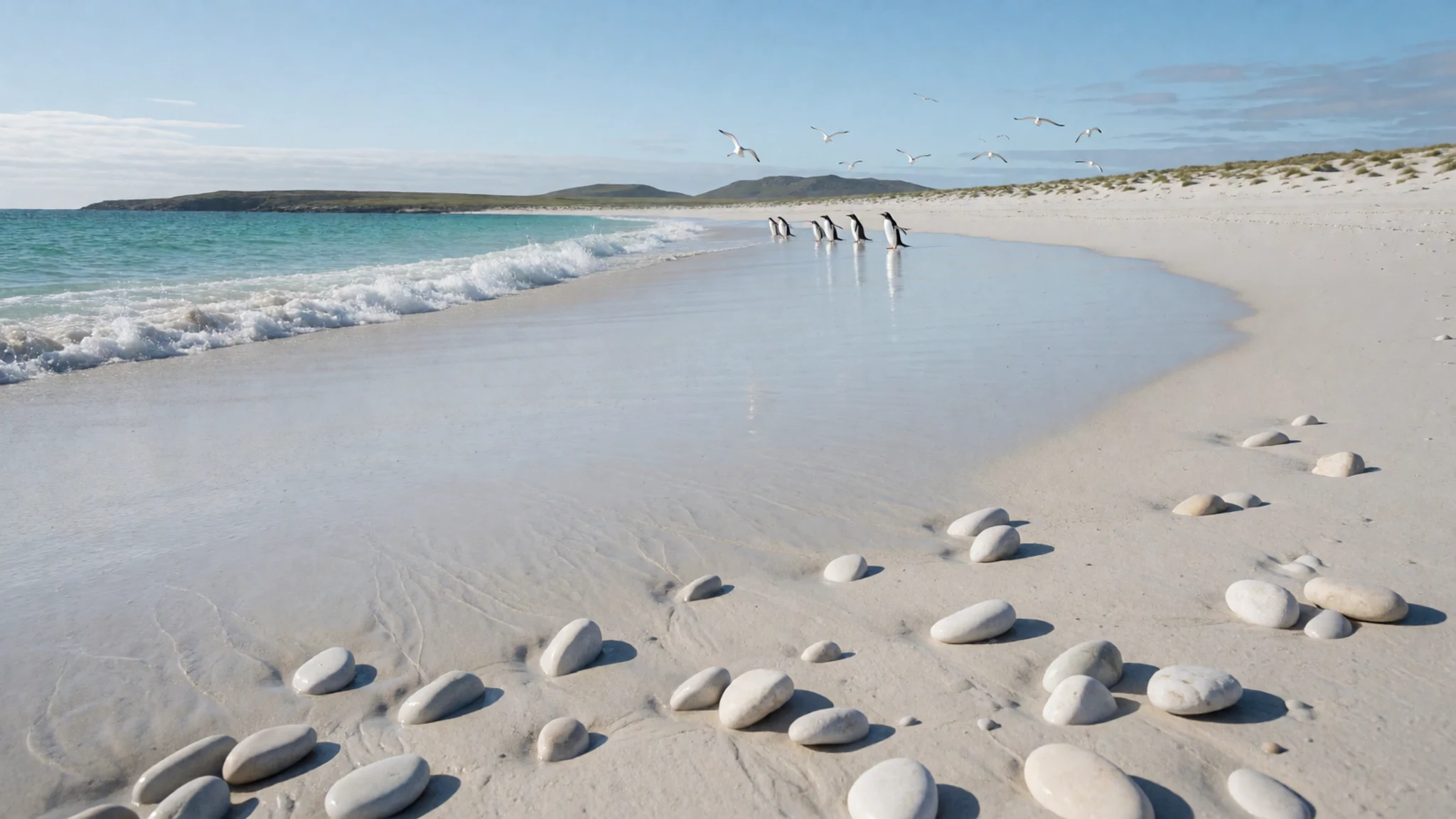
- Big Pond — East of Pebble Island Settlement
Big Pond is one of the largest bodies of fresh water on Pebble Island, situated roughly one mile east of the settlement along the main track. The shallow waters and surrounding reeds attract diverse bird species, including black-necked swans, wild ducks, and turkey vultures resting along the grassy margins.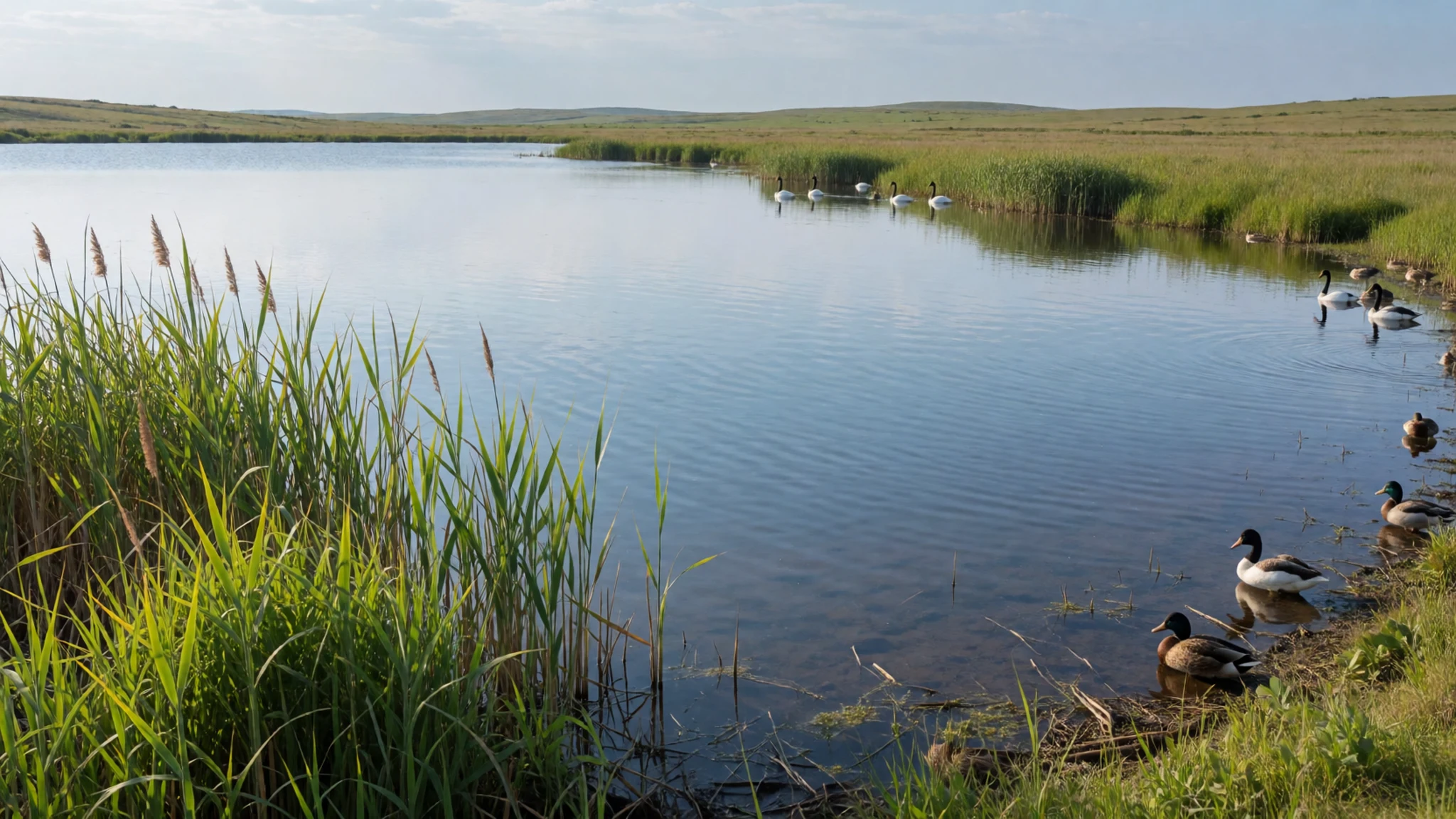
- HMS Coventry Memorial — Western ridges of Pebble Island
HMS Coventry Memorial stands on a windy crest overlooking the ocean, honouring the British destroyer sunk roughly ten miles offshore during the 1982 conflict. The cross stands as a quiet site of remembrance, offering open views across the water where the vessel sank in May 1982.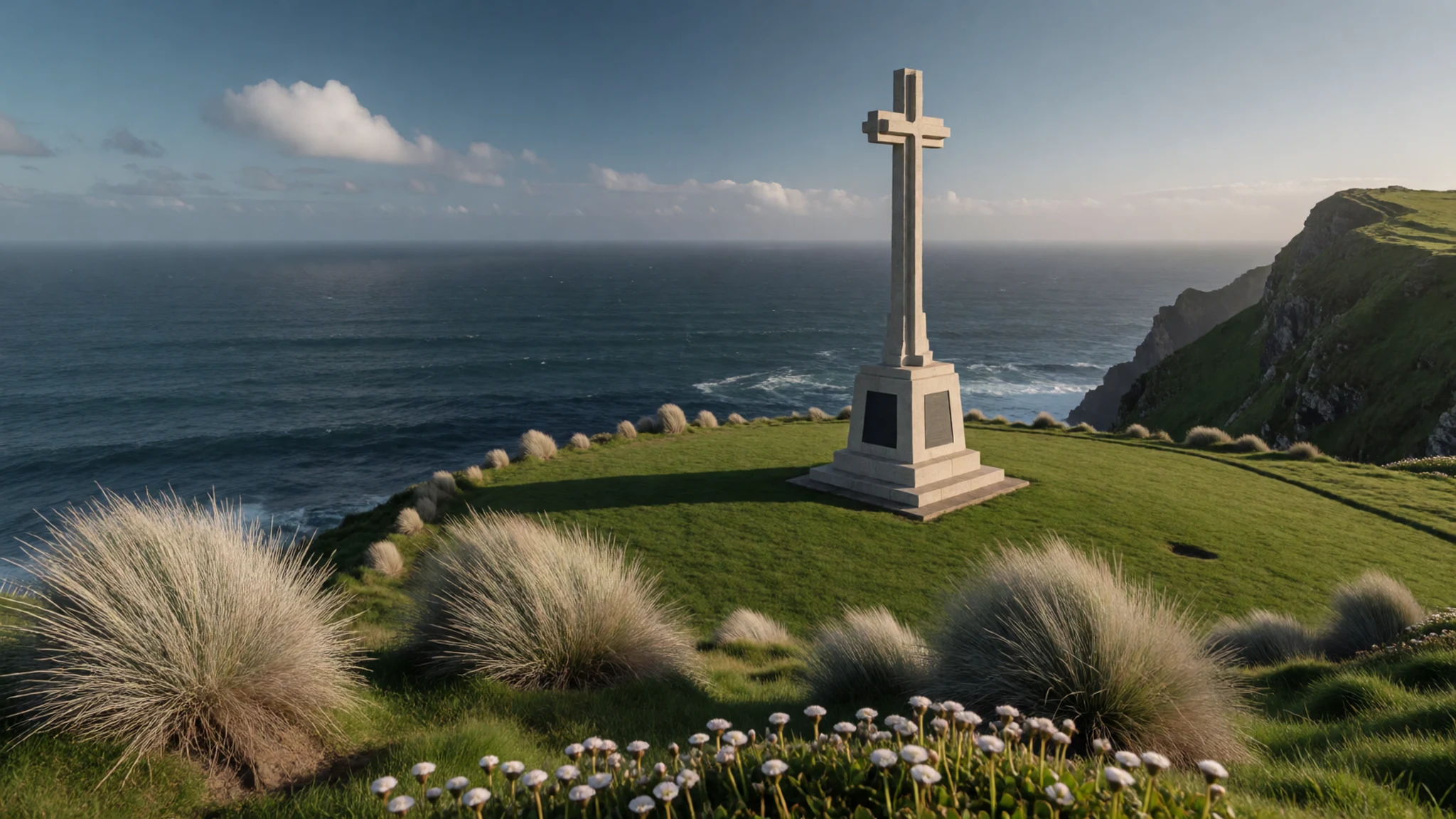
- Northwest Coast Penguin Colony — Northwestern cliffs of Pebble Island
Northwest Coast Penguin Colony occupies the steep rocky bluffs at the western end of Pebble Island. Thousands of rockhopper penguins nest alongside imperial cormorants along the cliffs. Visitors may also spot vagrant species, including rare macaroni penguins and a single vagrant erect-crested penguin nesting among the rockhoppers.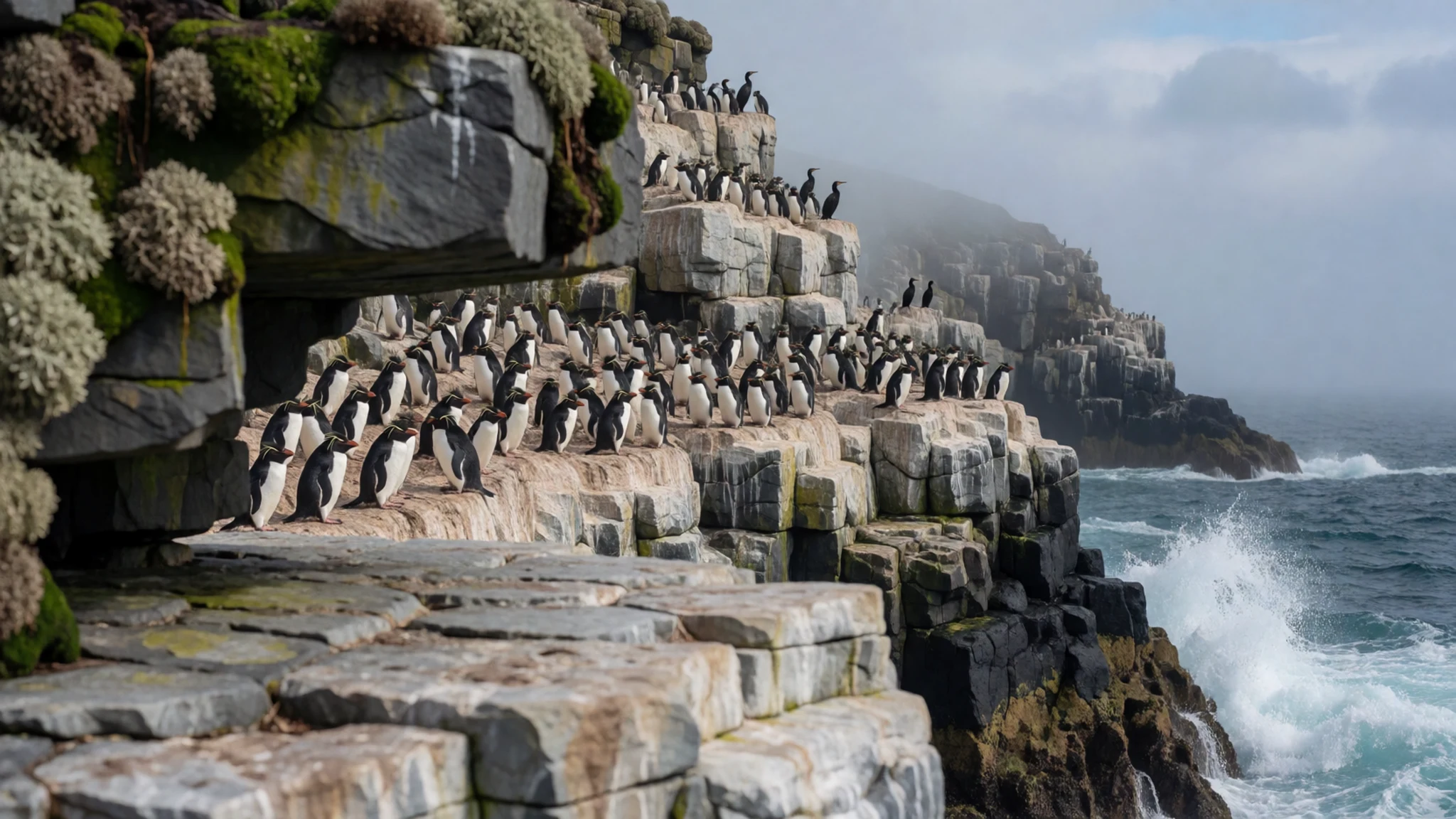
- Calderón Airfield Wreckage — Near Pebble Island Airstrip
Calderón Airfield Wreckage includes the scattered remains of Argentine Pucará aircraft left on the heathland following the 1982 raid. Situated near the modern airstrip, these preserved metallic remnants offer a tangible historical link to the conflict that unfolded across the island's fields.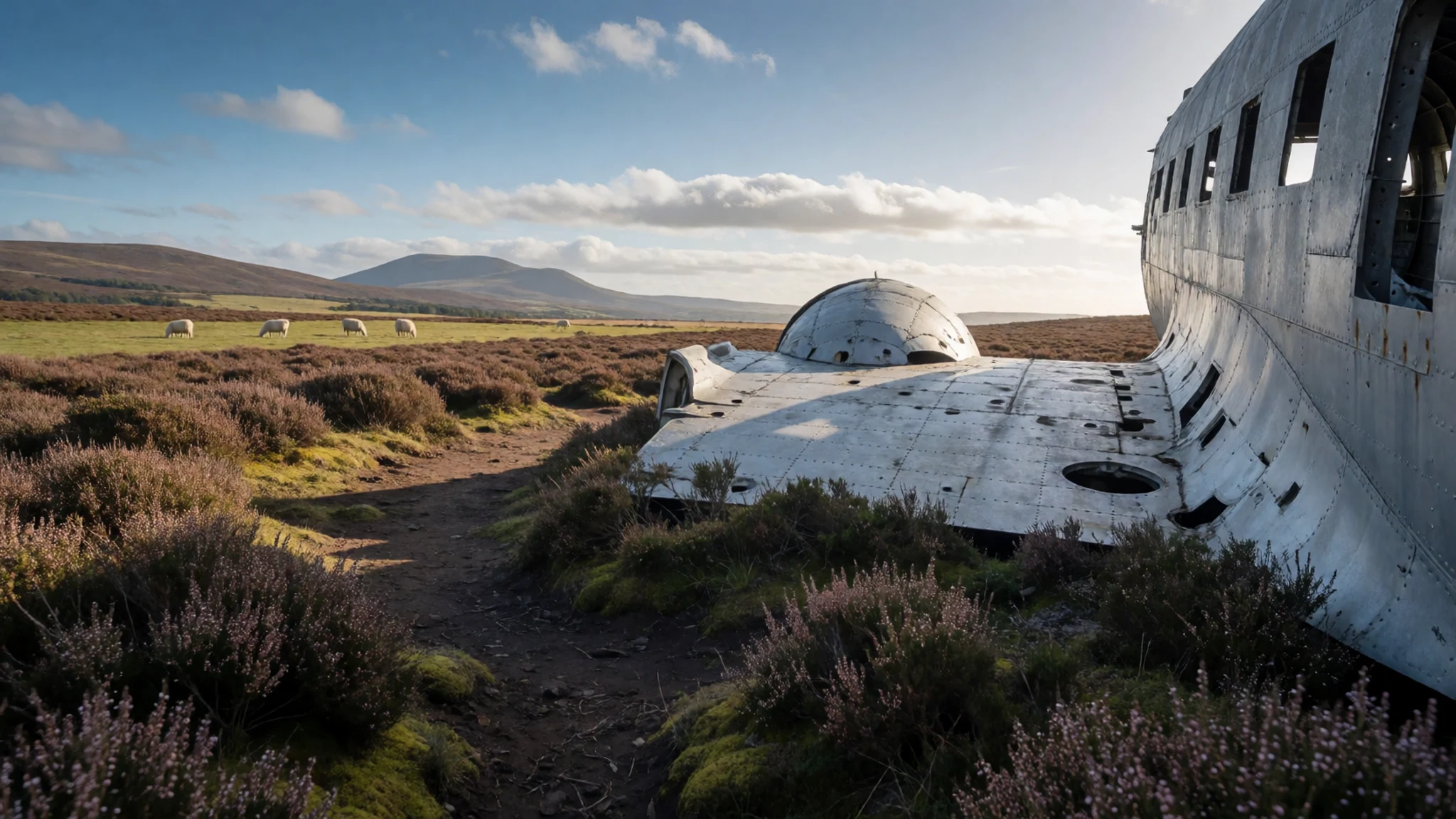
Culture
Life on Pebble Island reflects the self-reliant rhythm of rural Falklands farm communities, locally known as life in the 'camp'. With a permanent population of just a handful of residents, daily routines centre around stock management, sheep shearing, maintaining island infrastructure, and hosting visiting naturalists. Community gatherings are warm and informal, rooted in traditional island hospitality where tea, home-baked cakes, and shared news are central to daily social life.
The human presence is light, leaving vast stretches of coastal wilderness undisturbed. Inhabitants share their surroundings with abundant wildlife, taking pride in environmental stewardship and energy independence through wind generation. The atmosphere is unhurried, shaped by the weather, sheep-farming seasons, and scheduled domestic flights that connect the island to the outside world.
When walking near penguin colonies or wetland nesting sites, maintain a distance of at least six metres from all wildlife and yield the right of way to birds moving between the sea and their nests.
What to wear
Historically, clothing on Pebble Island was designed for rugged pastoral work in a subpolar maritime climate. Traditional rural attire relied heavily on thick local sheep's wool, hand-knitted guernseys, heavy flannel shirts, and tweed coats or oilskin jackets crafted to withstand biting wind and rain. Farmers and shepherds wore sturdy leather work boots and woollen caps while handling livestock in open paddocks.
Today, residents favour practical, durable outdoors gear. Standard workwear consists of waterproof insulated jackets, fleece mid-layers, sturdy canvas trousers or denim, and durable rubber Wellington boots for navigating boggy fields and damp coastal tracks. High-visibility vests are often added when working near airstrips or farm machinery.
Visitors to Pebble Island should pack versatile clothing suitable for rapidly changing Antarctic wind and weather. High-quality waterproof and windproof outerwear is essential, alongside multiple fleece or wool thermal layers. Sturdy, waterproof hiking boots with solid ankle support are necessary for walking across uneven peat tufts, pebble beaches, and rocky ridges. Sun protection, high-SPF sunscreen, and dark sunglasses are also vital due to strong reflection off sand and water, while light gloves and a warm hat protect against wind chill even during summer months.
What to eat
- Falkland Roast Lamb — At the island lodge dining room
Slow-roasted Corriedale lamb is a staple meal served in island guest dining rooms. Seasoned simply with herbs and roasted until tender, the meat is accompanied by roasted root vegetables, rich gravy, and mint sauce, showcasing the island's farm heritage.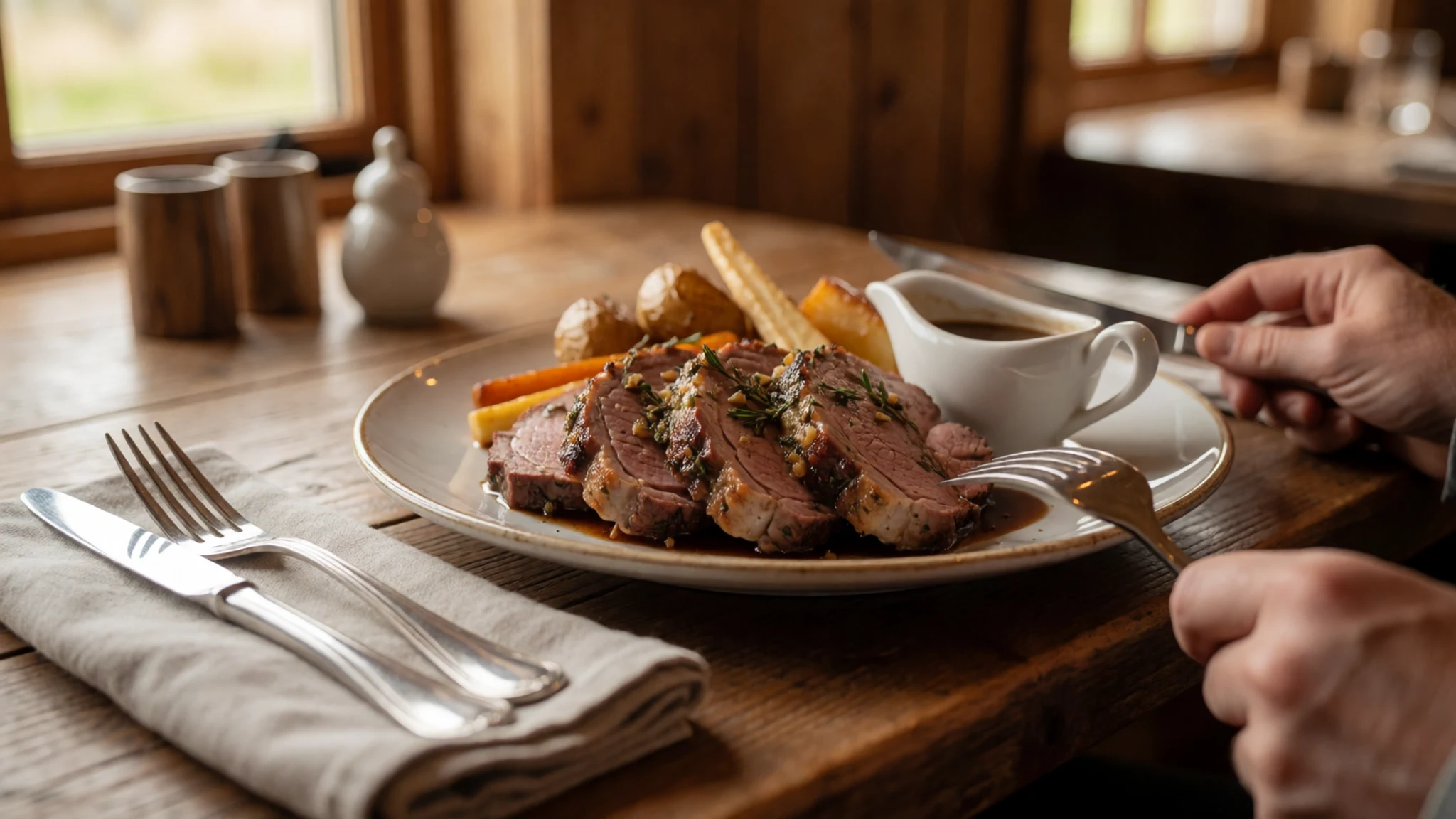
- Fresh Falkland Beef Steak — At local settlement dining tables
Grass-fed beef steaks are sourced directly from the island's cattle herd. Prepared simply over high heat in settlement kitchens, the thick steaks are served with potatoes and fresh garden vegetables for hearty evening dining after full days outdoors.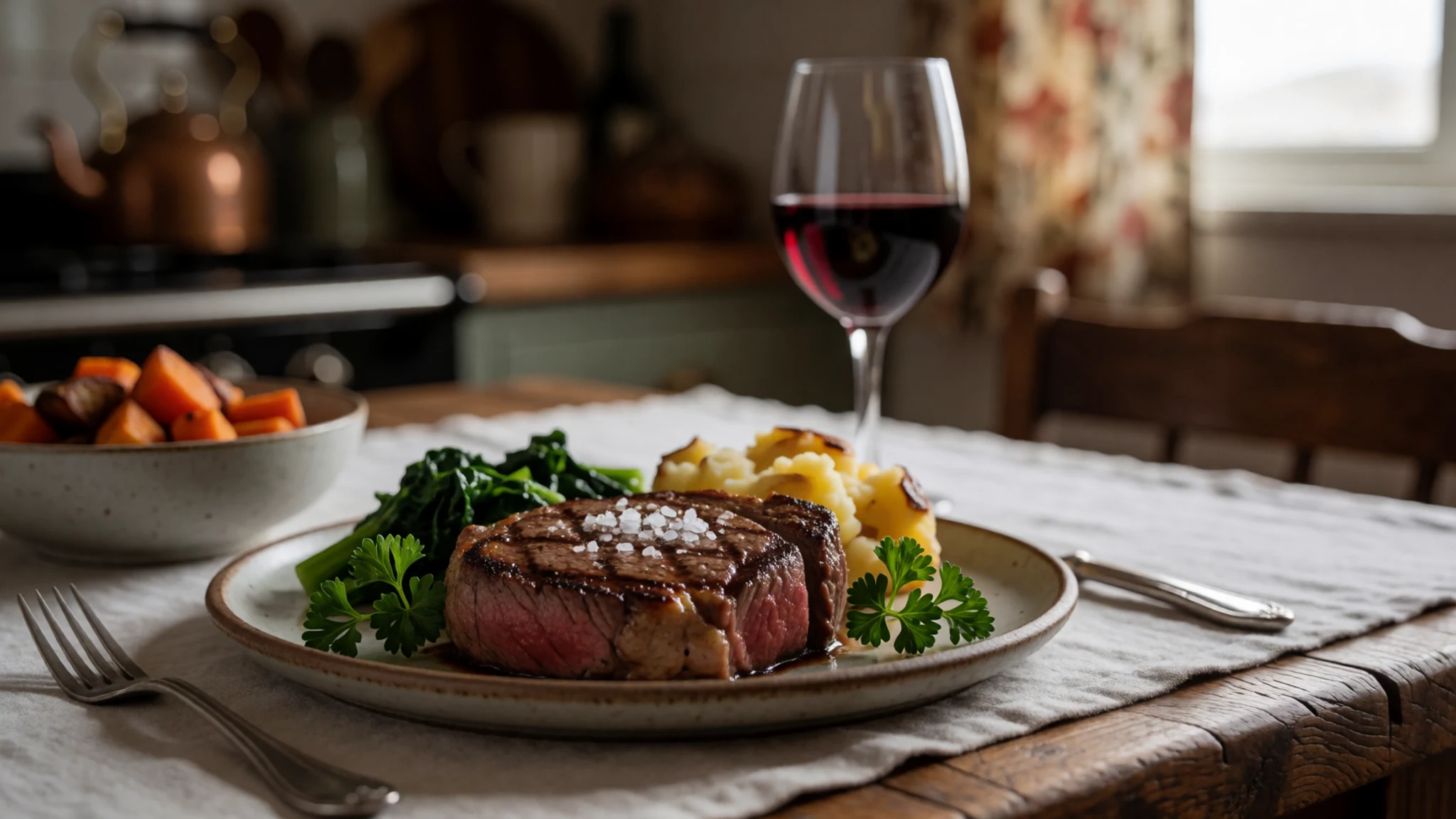
- Smoko Teatime Scones — At island homestead tea rooms
Freshly baked scones served with local jam and thick cream are a highlight of 'smoko', the traditional mid-morning and afternoon tea break. Served hot alongside freshly brewed tea, these baked goods offer warmth during chilly coastal days. - Field Picnic Packed Lunch — On field excursions around the island
Packed lunches prepared by host lodges keep travellers fuelled during full-day coastal treks. Boxes typically contain cold roast meat sandwiches, savoury pasties, fresh fruit, homemade traybakes, and thermoses of hot tea or coffee. - Honour Bar South Atlantic Ale — At the lodge self-service lounge
A selection of canned and bottled regional beers, ciders, and soft drinks is available in self-service honour bars within island lodges. Guests tally their own drinks on a ledger while unwinding by the fire after exploring the coastline.
Plan it
Best time. October to March for mild weather, breeding penguin colonies, and long daylight hours; winter months bring cold winds and reduced flight schedules.
How long. 2–3
Getting there. Falkland Islands Government Air Service (FIGAS) small aircraft flights from Stanley or other island airstrips directly to Pebble Island Landing Strip.
Budget. high
Tips
- Book FIGAS inter-island flights well in advance as passenger capacity is strictly limited.
- Pack all necessary personal medications and supplies since there are no retail shops on the island.
- Bring extra camera batteries and memory cards as cold wind drains electronics quickly.
- Dress in warm windproof layers even during summer days on exposed coastal beaches.
Etiquette
- Maintain a distance of at least six metres from all nesting birds and marine mammals.
- Close all pasture gates behind you to keep sheep and cattle securely enclosed.
- Leave historical relics and war wreckage exactly as found without moving or taking items.
Nearby
Sources
- Wikidata Q1359998 (CC0)
- Wikipedia (rev 1377358281) (CC BY-SA 4.0)
- Wikivoyage (rev 5264638) (CC BY-SA 4.0)
- Photo 01-pebble-island-falkland-islands.jpg (Public domain)
- Photo 02-crested-caracara-51035400493.jpg (CC BY 2.5)
- Photo 03-cute-young-sheep-51078296761.jpg (CC BY 2.5)
- Photo 04-destroyed-argentine-pucara-aircraft-pebble-island-1982.jpg (CC BY 3.0)
- Photo 05-falkland-islands-peble-island.png (Public domain)
- Photo 06-falklands-1982.jpg (CC BY-SA 4.0)
- Photo 07-gentoo-penguin-colony-on-pebble-island-49704817598.jpg (CC BY 2.5)
- Photo 08-magellang-nse-pebble-island-falkland-islands-51108829344.jpg (CC BY 2.5)


Wildlife
- Rockhopper penguin (animal)
The rockhopper is a crested penguin, a small seabird that cannot fly but, as its name hints, bounds from rock to rock. On Pebble Island you will find a large colony on the northern shore at the far western end, while gentoo and Magellanic penguins and imperial cormorants live elsewhere along the coast. I have no word on the best season or hour, so ask locally. Keep your distance, stay quiet, go with a guide, and never feed them. - Black-necked swan (animal)
The black-necked swan is the smallest of the true swans, yet it is the largest waterfowl native to South America, and its black neck gives it its name. On Pebble Island, look for it on the ponds, among geese and other waterbirds. Bring binoculars and some patience, and let the birds come to you. Stay back, keep your voice low, follow a guide's advice, and never feed them. - Rockhopper penguin (bird)
The rockhopper is a crested penguin, a small seabird that cannot fly but, as its name hints, bounds from rock to rock. On Pebble Island you will find a large colony on the northern shore at the far western end, while gentoo and Magellanic penguins and imperial cormorants live elsewhere along the coast. I have no word on the best season or hour, so ask locally. Keep your distance, stay quiet, go with a guide, and never feed them. - Black-necked swan (bird)
The black-necked swan is the smallest of the true swans, yet it is the largest waterfowl native to South America, and its black neck gives it its name. On Pebble Island, look for it on the ponds, among geese and other waterbirds. Bring binoculars and some patience, and let the birds come to you. Stay back, keep your voice low, follow a guide's advice, and never feed them.